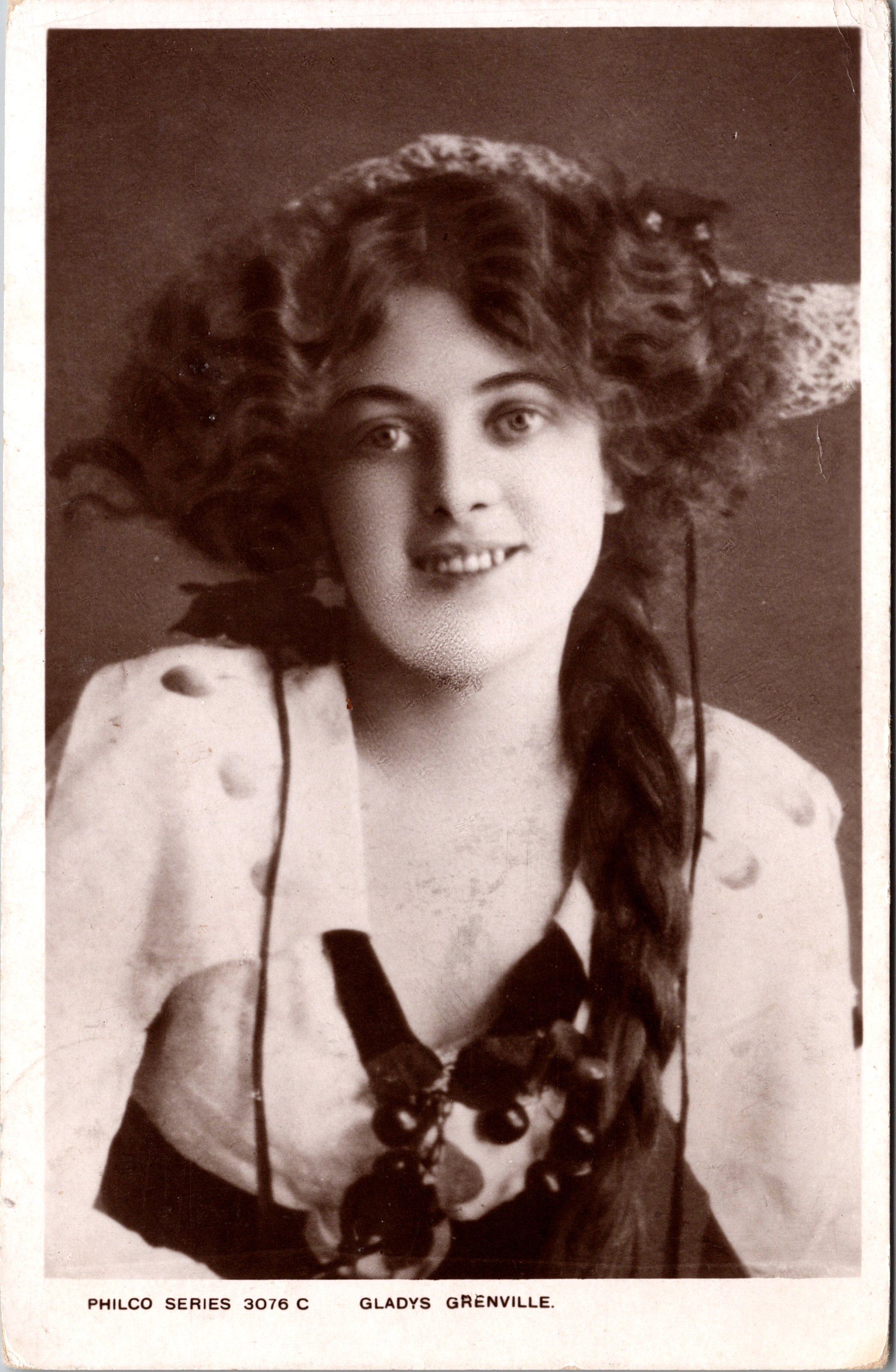
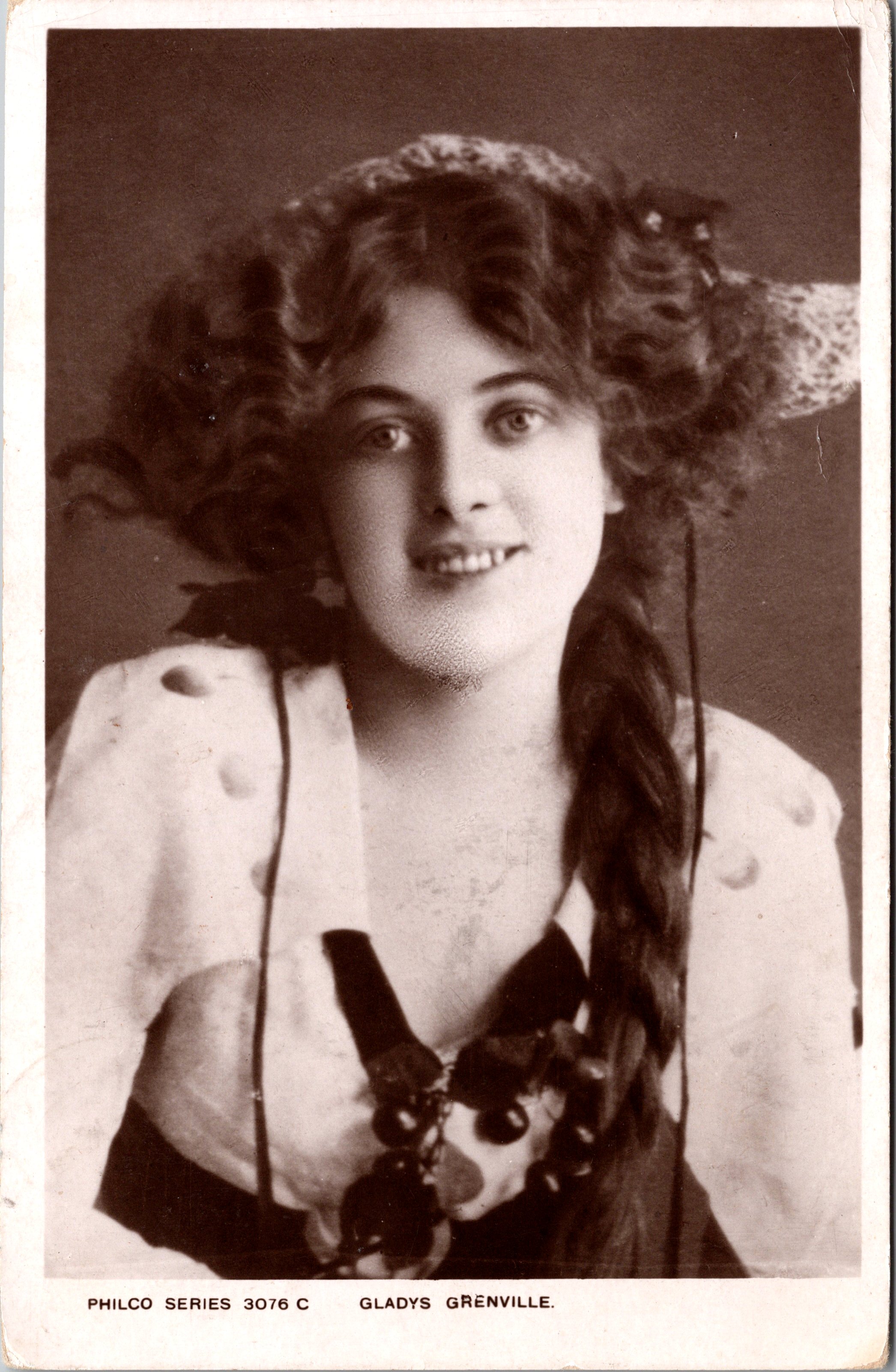
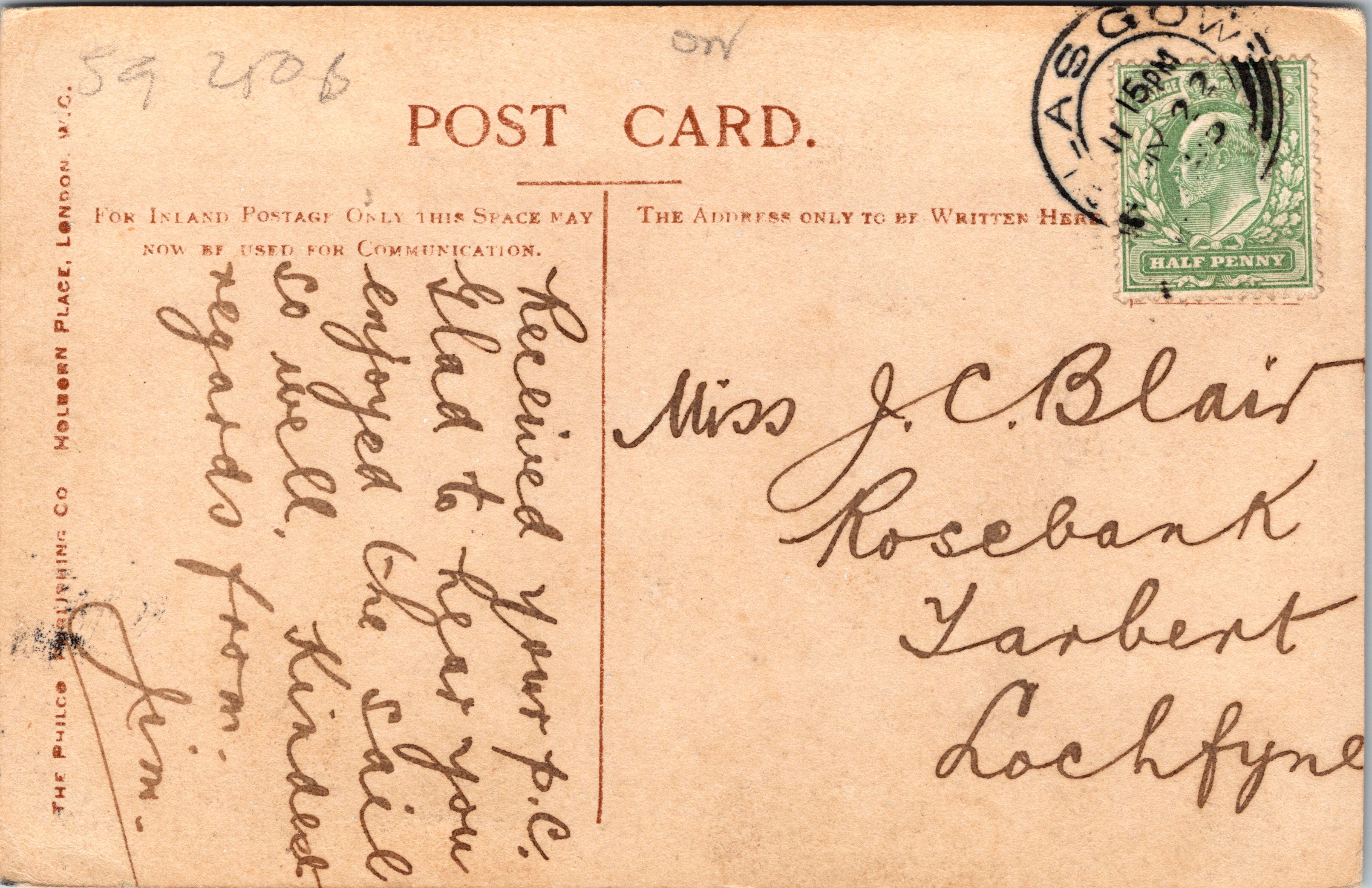
This vintage real photo postcard features British singer and actress, Gladys Grenville. A number of her stage appearances are credited in early British theatrical books and magazines. There is little biographical information about her life and career. She is pretty and has a great smile. The card has a 1905 postmark.This vintage postcard was published by Philco and is in overall good condition (See Scans).
Buy this Vintage Real Photo Postcard (includes shipping within the US) #5317
To purchase this item, click on the Pay with PayPal button below
$16.48
Buy this Vintage Real Photo Postcard (includes International shipping outside the US) #5317
To purchase this item, click on the Pay with PayPal button below
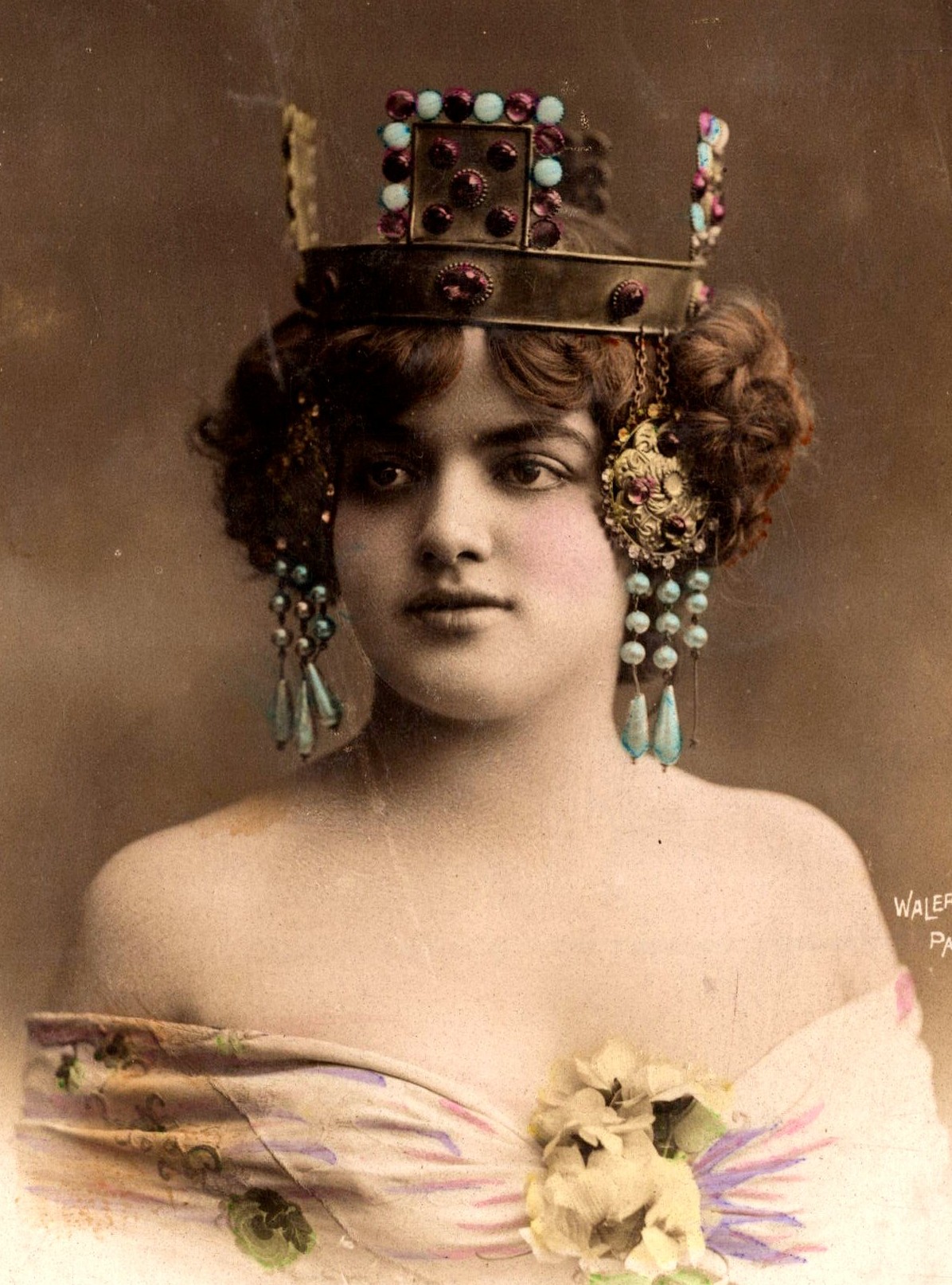
This vintage real photo postcard features performer, Miss Veglia. The title on the card indicates that she performed at the Folies Bergere, in Paris France. This actress may be Tina Veglia who was a silent film actress. One of the films that she is noted for is “The Three Musketeers” (1918).She is also listed as appearing in two Italian silent films. Interestingly, the word “Veglia”, translated from Italian to English, means “Vigil”. The portrait of Miss Veglia was hand tinted. She is wearing quite the interesting head piece. The ornate jeweled piece is crownlike and has a hodgepodge design. The message on this postcard, written in French, is captivating. A translation app translates the message as ” I suffer in silence and I do not complain. Not seeing me, you may think I’ve moved on, but despite that, I will love you always. I’m letting a little bit of hope shine through. Try to guess who is sending you this card…”. This is an extremely dramatic message. I wonder what eventually happened. Did the writer and recipient ever get together and live “happily ever after”? This photo portrait was taken by Walery at his Paris studio. He was a well known and talented celebrity photographer. The postcard was published by SIP as part of a series (no.5026). The postcard has a Belgian stamp and the care is addressed to someone in Courcelles-Pont-à-Celles, Belgium.(SOLD)
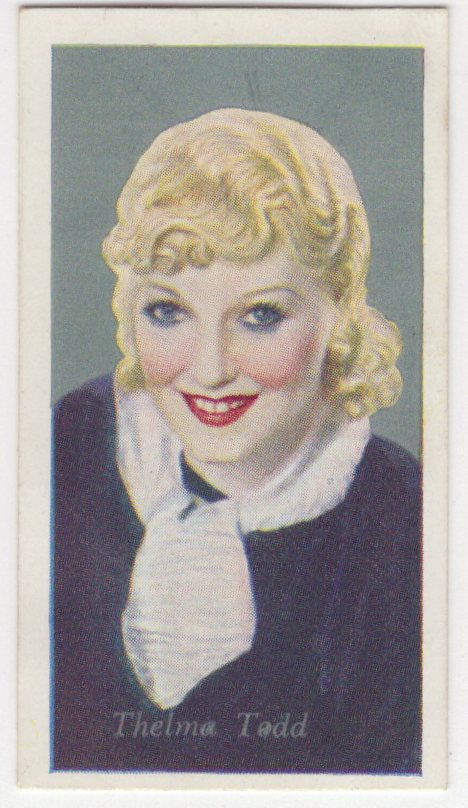
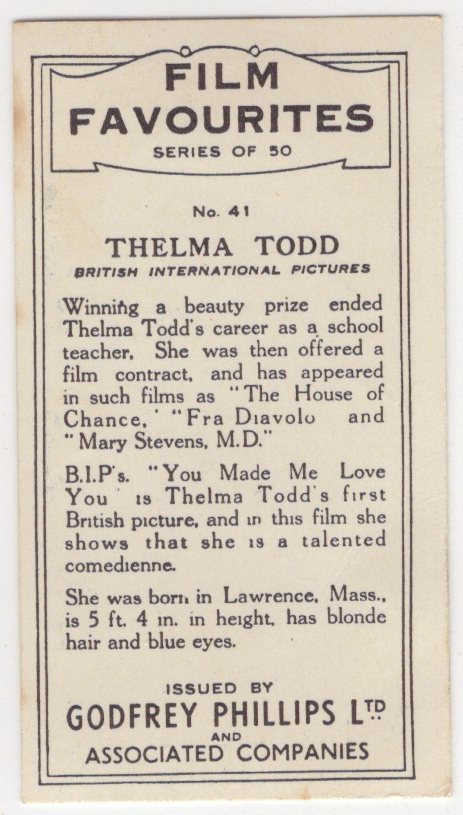
This vintage tobacco card features American silent and talkie film actress, Thelma Todd (1906-1935). She was also a businesswoman. Her nicknames included “The Ice Cream Blonde” and “Hot Toddy”. She appeared in about 120 feature films and shorts between 1926 and 1935. She was known for her comedienne talent. Among the performers she worked with are the Marx Brothers, Laurel & Hardy, and Buster Keaton. In 1934 she opened a restaurant in Los Angeles with two partners. In 1935 she was found dead in her Lincoln automobile. The car was in a garage and had died from carbon monoxide poisoning. Her death was ruled to be accidental but there was much speculation about whether she committed suicide or had been murdered. This cigarette card was published by Godfrey Philips Ltd. The firm was a British tobacco importer and manufacturer of cigars and Cigarettes. The business was established in 1844 and was one of the first tobacco companies to issue cigarette cards. Their first set was published in 1904. The cards were meant to stiffen cigarette packaging, to serve as a collectible, and to advertise the cigarette brand. This cigarette card was issued in 1934. SOLD
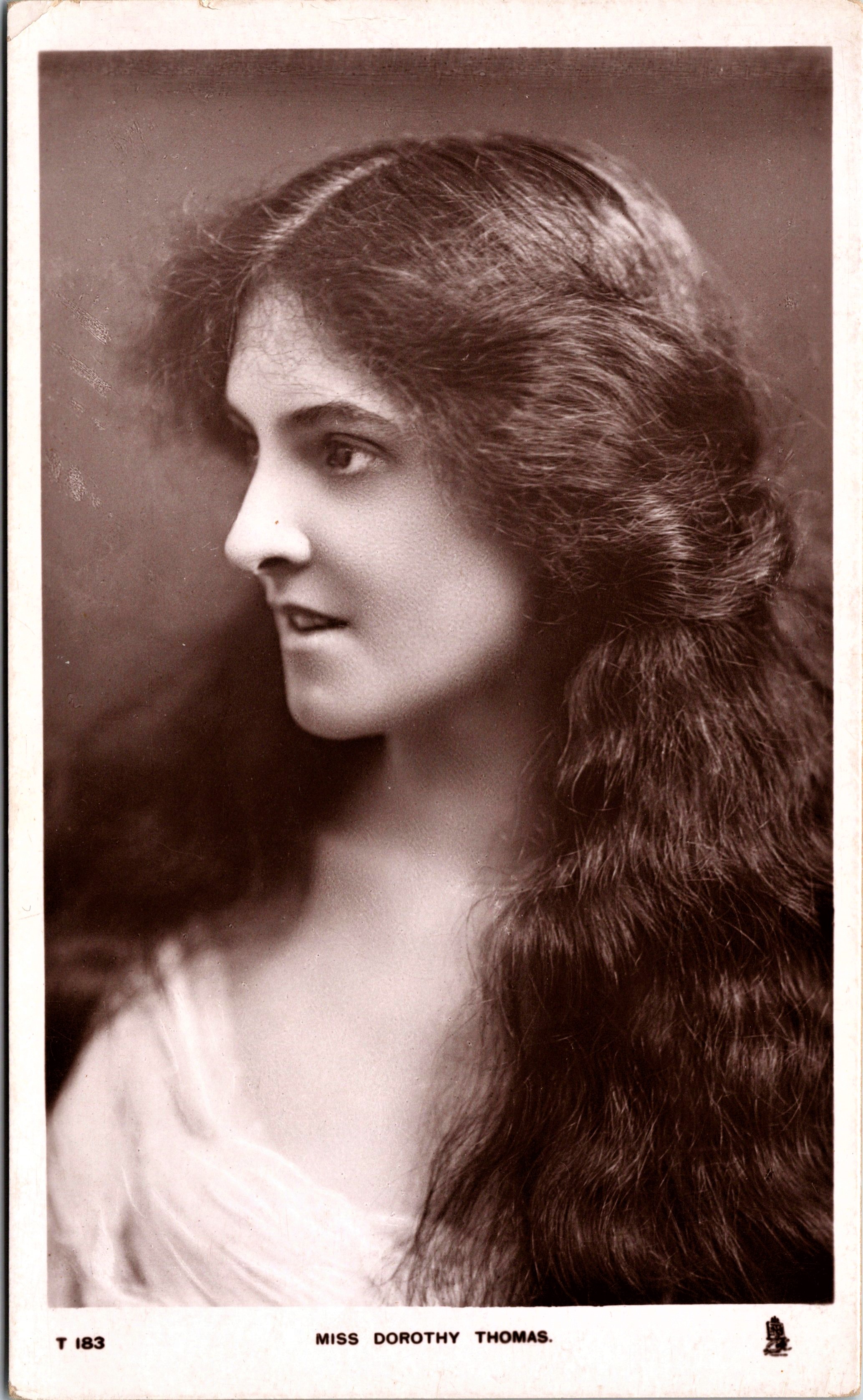
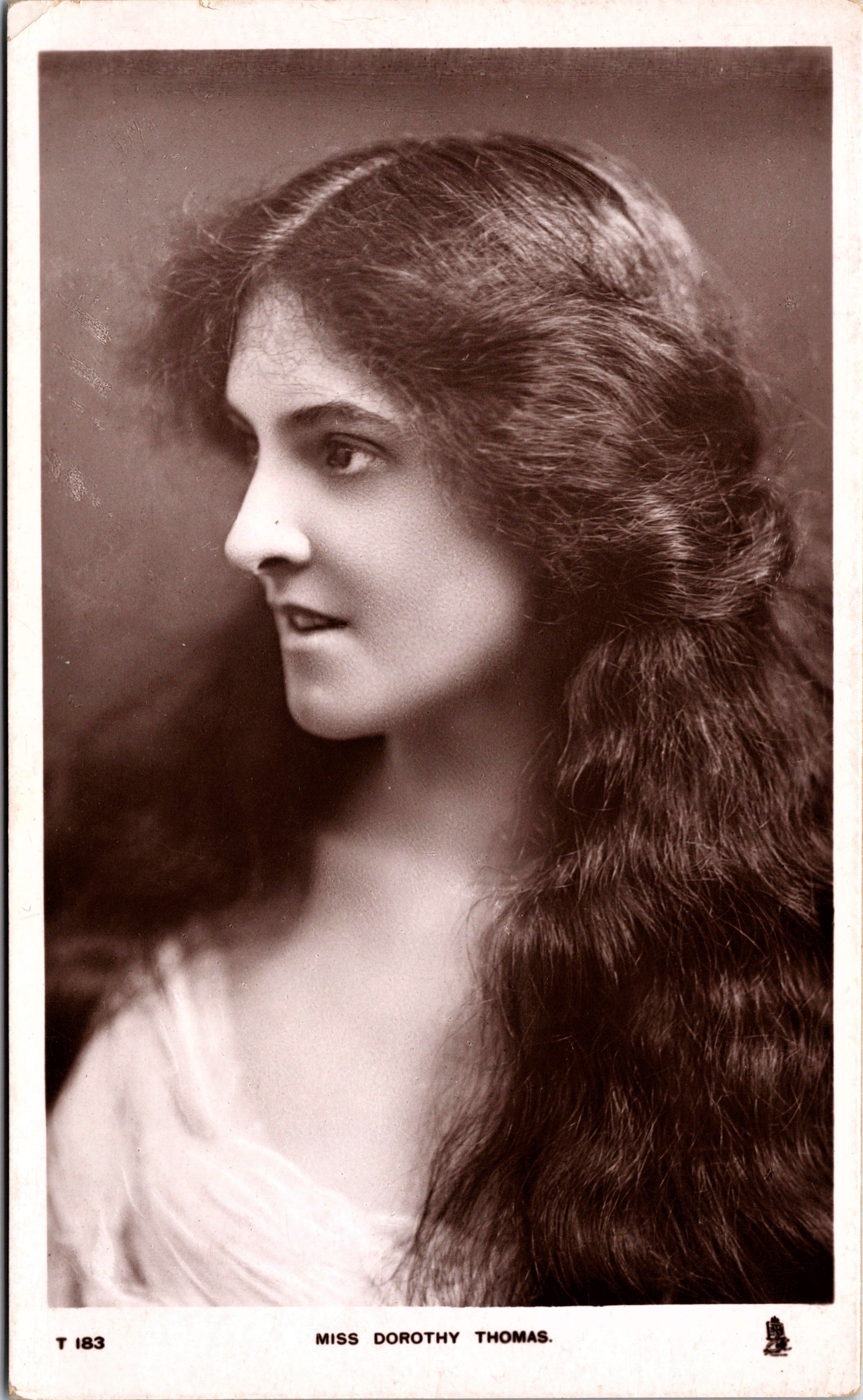
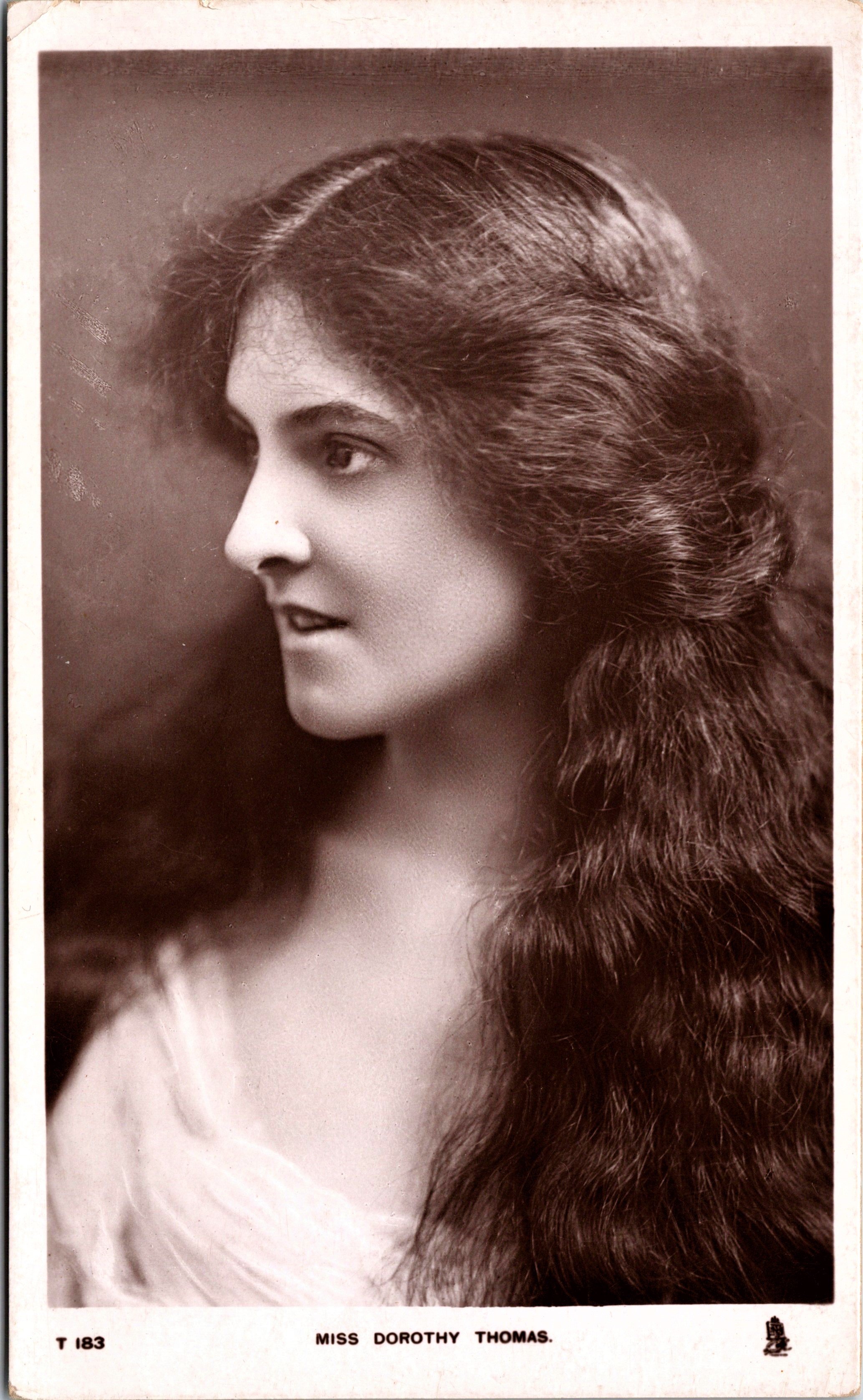
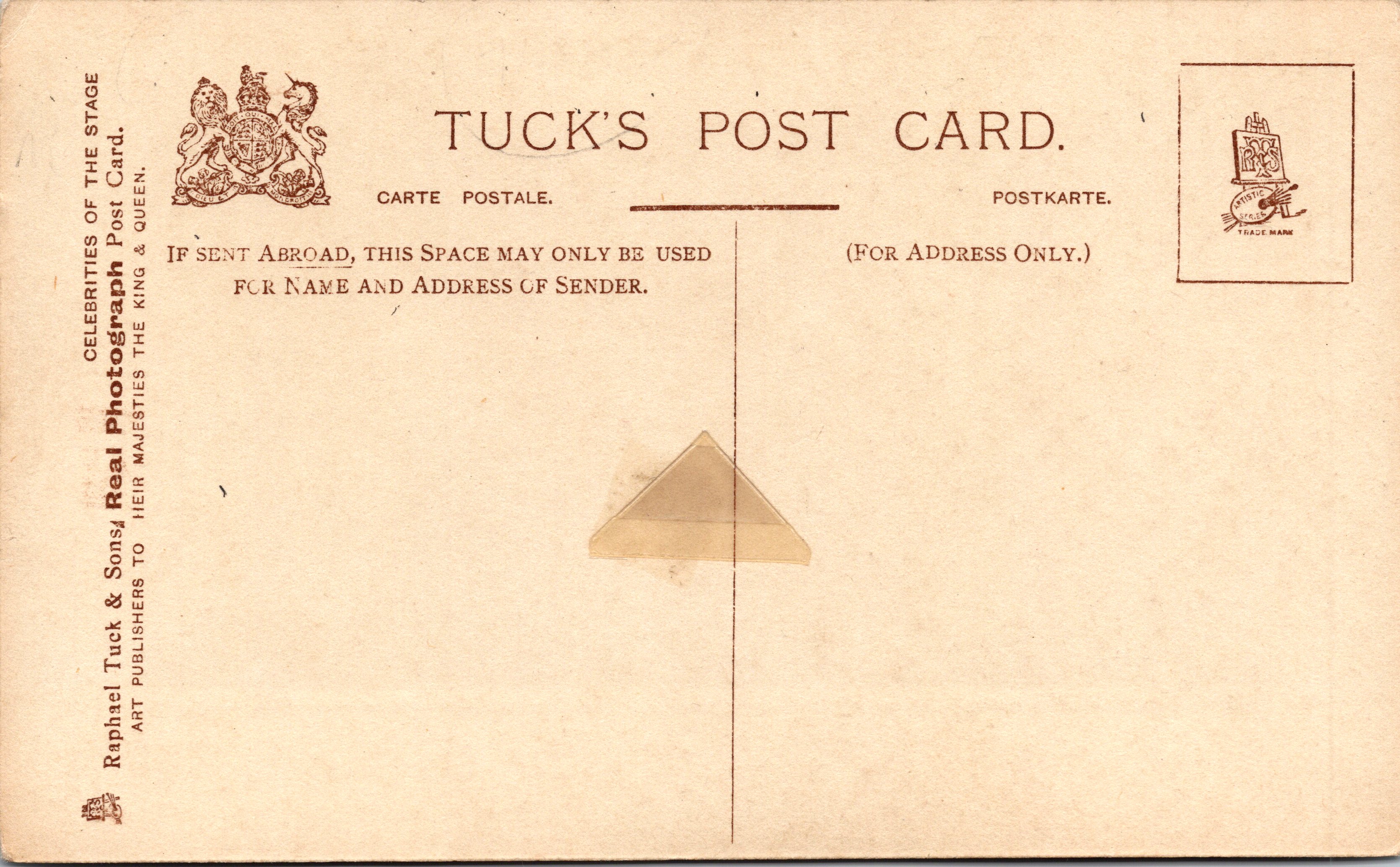
This vintage real photo postcard features stage actress, Dorothy Thomas (1882-?). She sat for five photographs in the collection of England’s National Portrait Gallery. She appeared in “The Prisoner of the Bastille” in 1909. Further research is needed to illuminate details of the pretty actress’s life. This postcard was published by Raphael Tuck & Sons as part of the “Celebrities of the Stage” series (T183).This portrait postcard is in overall good condition. Note the album hinge on the reverse of the card.
Buy this Vintage Real Photo Postcard (includes shipping within the US) #5321
To purchase this item, click on the Pay with PayPal button below
$14.40
Buy this Vintage Real Photo Postcard (includes International shipping outside the US) #5321
To purchase this item, click on the Pay with PayPal button below
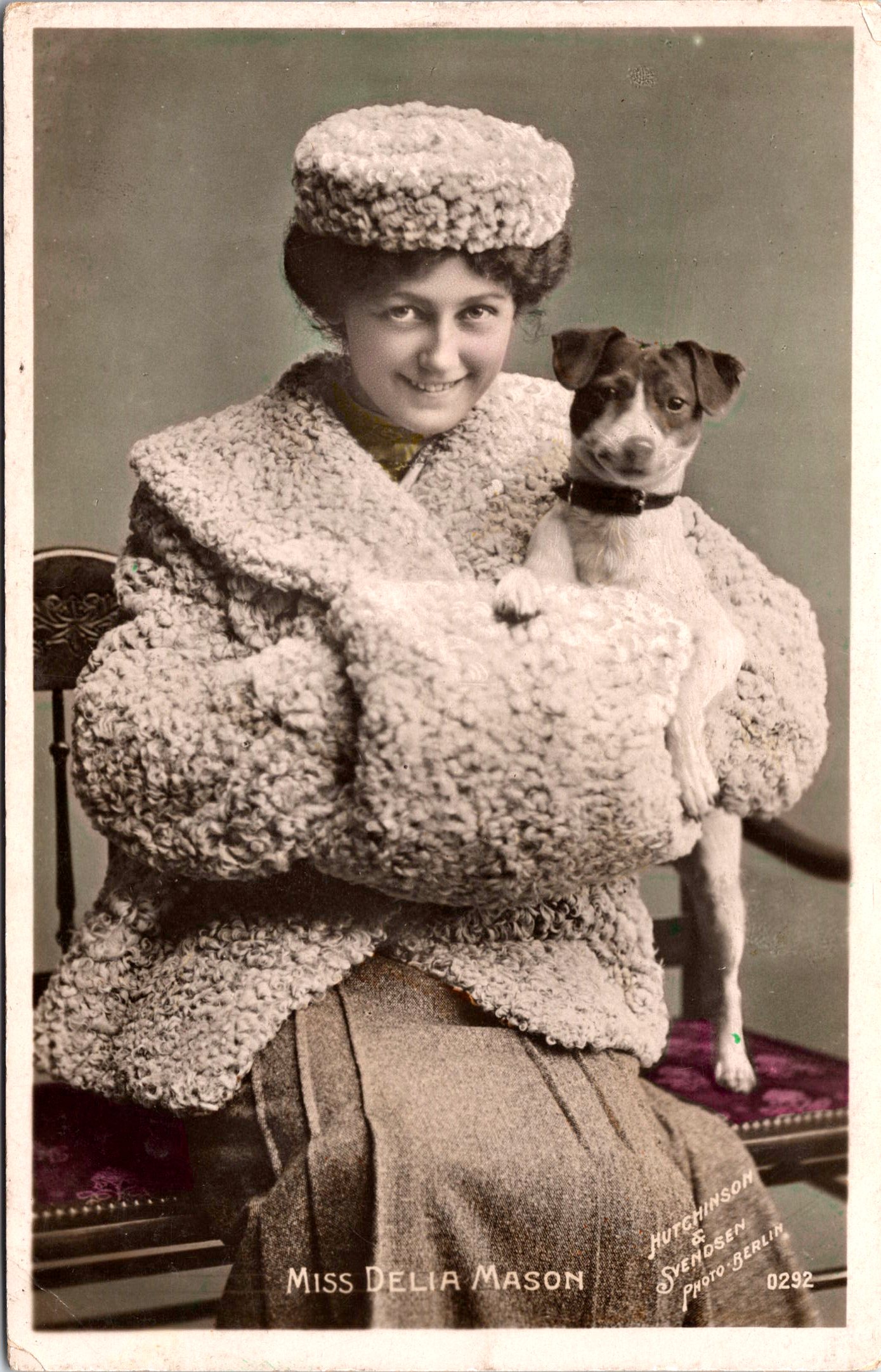
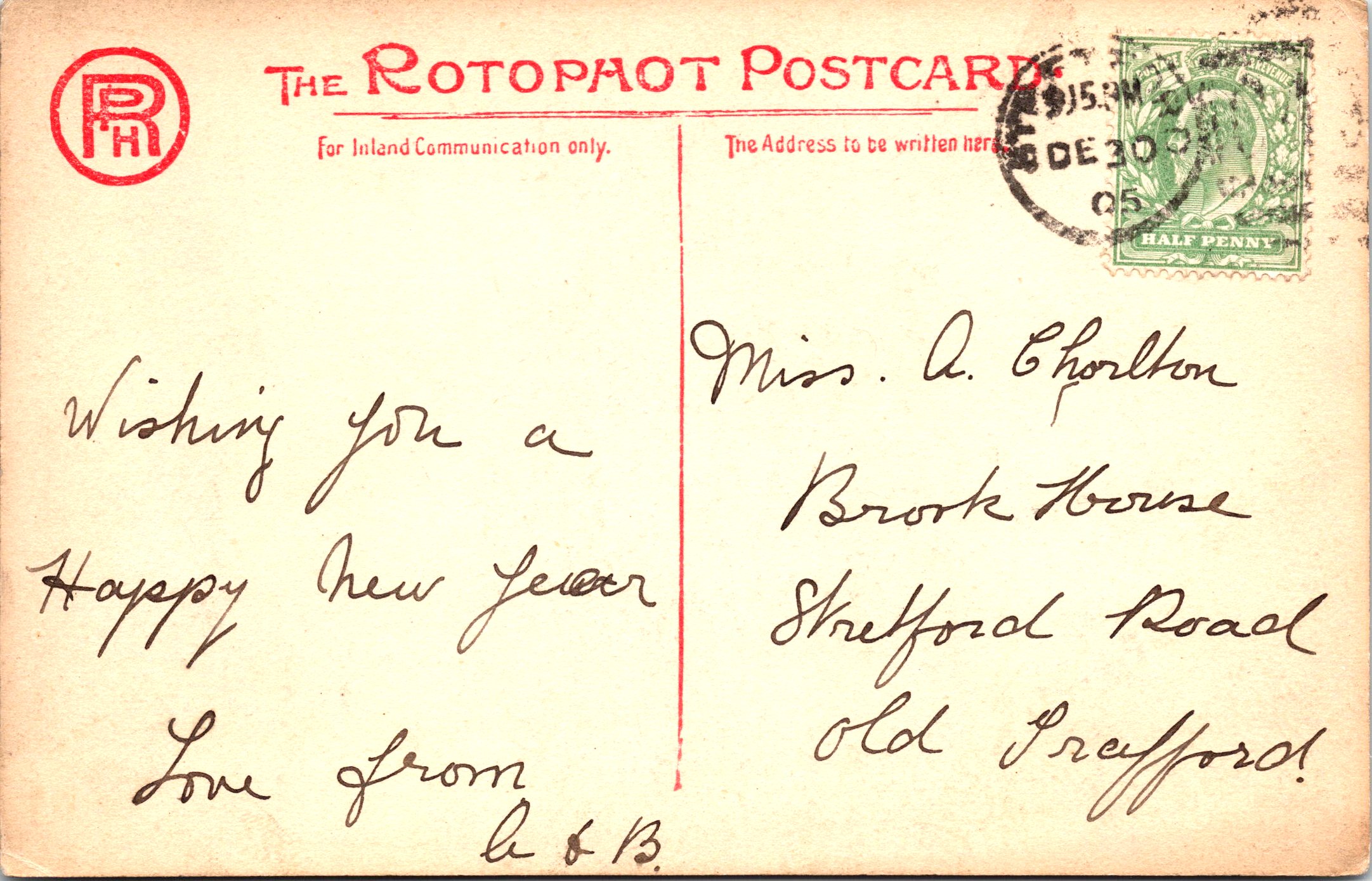
This vintage real photo postcard features pretty stage actress and singer, Delia Mason (1880-1980). She is posed with a dog that appears to be a Jack Russell Terrier. There is little biographical information about her readily available online. She was a native of Coventry, England. There are seven portraits of Mason that can be found in Britain’s National Portrait Gallery. Her first professional appearance was in “Three Little Maids” (1902) at the Apollo Theatre in London. She was “discovered” by English theatre manager and producer, George Edwardes. A reviewer at her first performance, described her as “a tall and extremely good-looking with laughing blue eyes”. The reviewer also stated that she was an expert swimmer and oarsman, as well as an “ardent motorist”. Mason appeared in two Broadway productions; “Three Little Maids” (1903) and “My Lady’s Maid” (1906). She was married to Walter Wysard, a merchant and director of a number of companies. The couples son, Tony Wysard became a well known cartoonist and illustrator. This postcard was published by Rotophot as part of a series (No.0292). The company was based in Berlin, Germany. This postcard was postmarked in 1905. Mason was likely around 25 years of age when her photograph was taken for this card. Her photo was taken by the Hutchinson & Svendsen studio in Berlin, Germany. SOLD
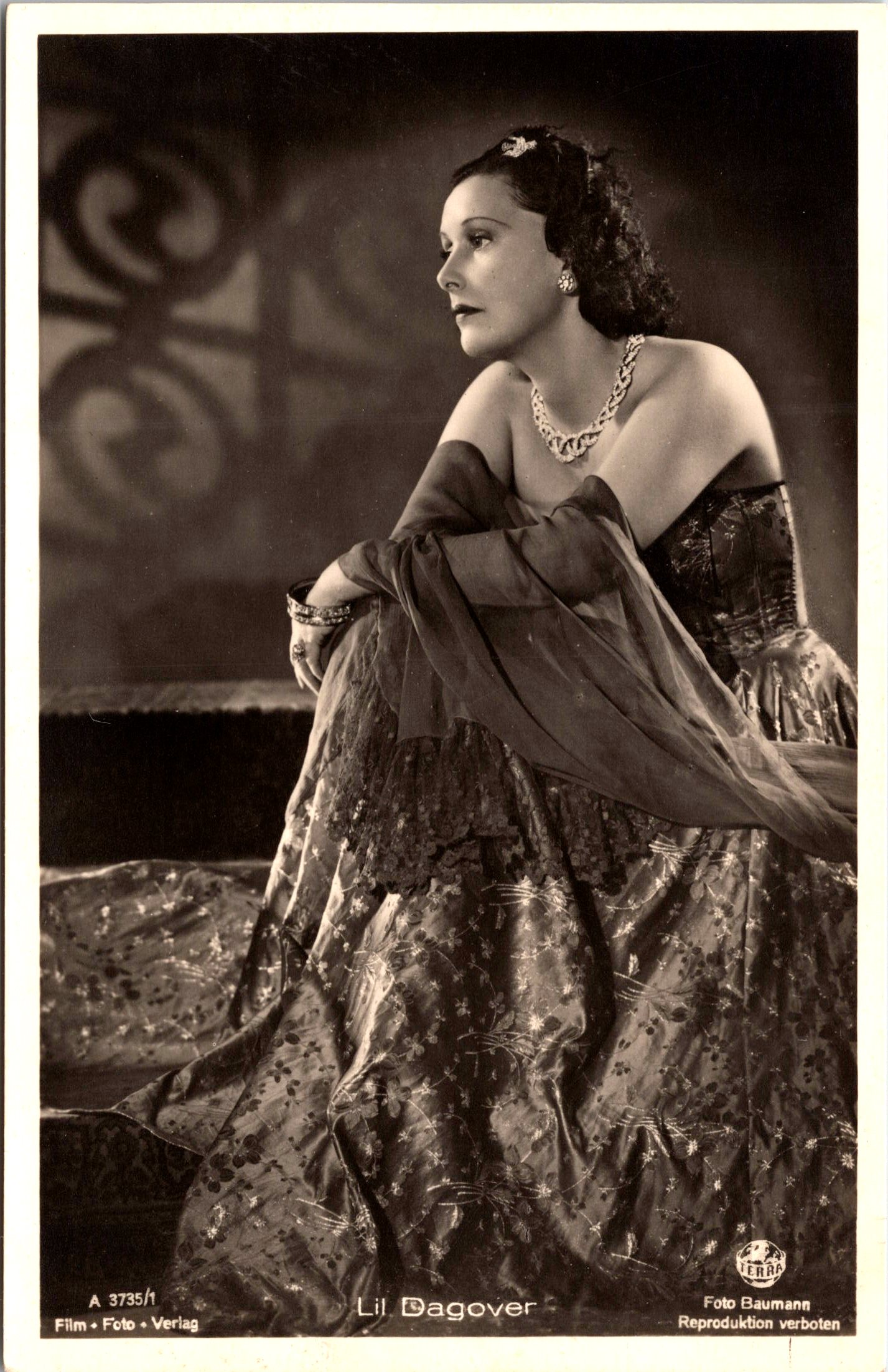
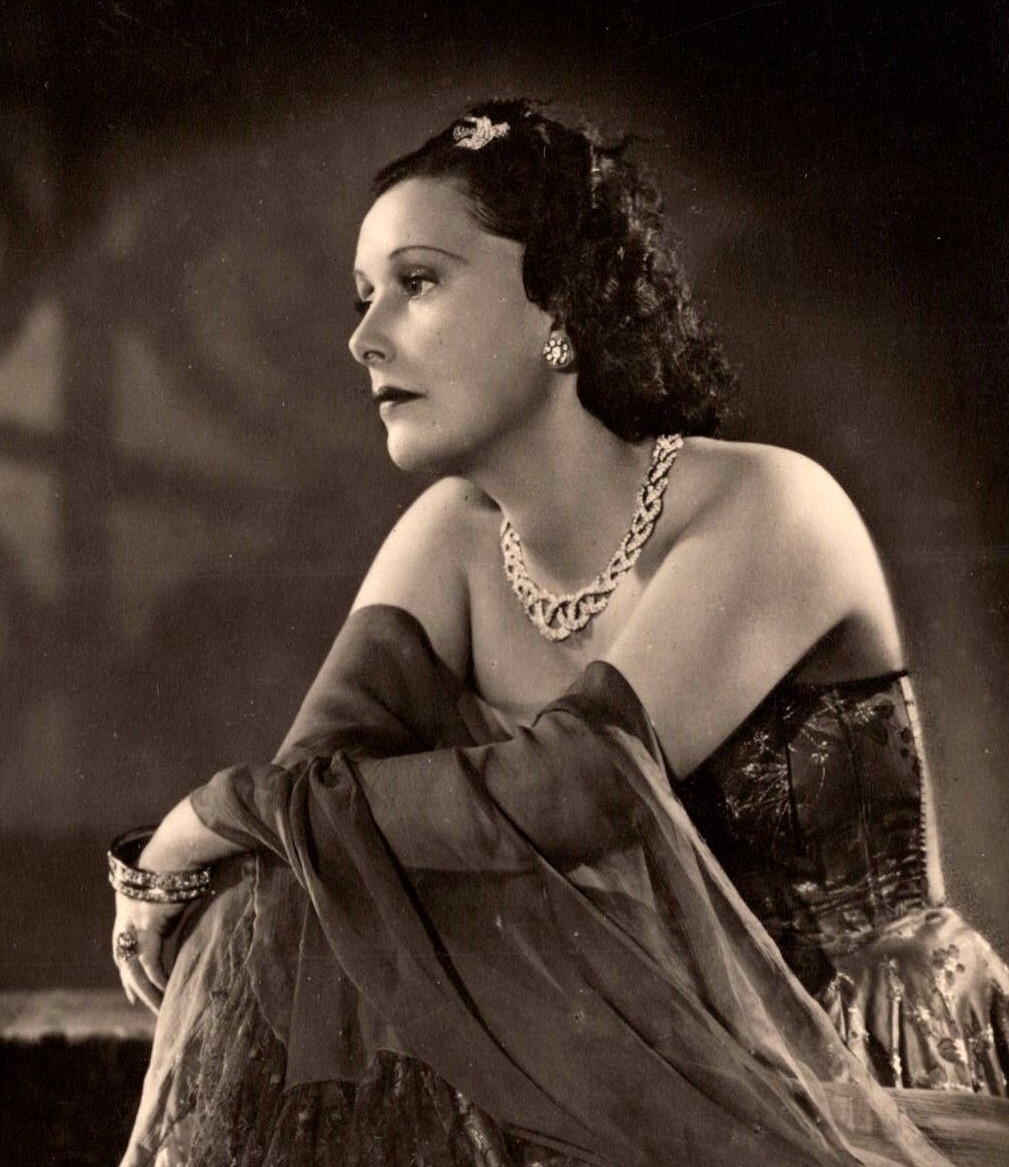
This vintage real photo postcard features celebrated German actress, Lil Dagover (1887-1980). She was renowned for her work in silent films, particularly her collaborations with key figures of German Expressionist cinema. Her striking beauty and ability to convey complex emotions made her one of the most recognizable faces of early 20th-century European cinema. Lil Dagover was born into a well-to-do family in the Dutch East Indies, where her father worked as a forestry officer. After his death, her mother relocated with the family to Europe, and Dagover spent much of her youth in Switzerland and Germany. She was orphaned at 13 years of age and was raised by relatives. She initially planned to become a painter but was drawn to the performing arts, which led her to pursue acting. Dagover’s acting career began on the stage, but her breakthrough came with the advent of film. She made her debut in 1913, though her rise to stardom began in earnest in the early 1920s when she worked with director Robert Wiene in the landmark German Expressionist film The Cabinet of Dr. Caligari (1920). Dagover became a favorite of directors such as Fritz Lang, F.W. Murnau, and Ernst Lubitsch. Her notable silent-era films include “Destiny” (1921), “Dr. Mabuse, the Gambler” (1922), and “The Chronicles of the Grey House” (1925). Her success continued during the sound era, where her aristocratic demeanor and elegance suited roles in historical dramas and comedies. Dagover remained active in German cinema during the Third Reich, a time when the industry was heavily influenced by propaganda. However, she largely avoided overtly political films, focusing instead on character-driven narratives. After World War II, she transitioned to stage work and television, continuing her career well into the 1970s. In regard to her personal life, in 1913 she married Fritz Daghofer, an Austrian officer. They had one child and the marriage ended in divorce. She married for a second time to a German film producer. This postcard was published by Film-Foto-Verlag as part of a series (No.A3735/1). Miss Dagover’s photograph was taken by Baumann between 1941 and 1944. The logo for Terra Film is in the bottom right corner of the image. Terra Film was a Berlin-based film production company. Founded in 1919, it became one of Germany’s largest film production companies in the 1930s under the Nazi regime. SOLD
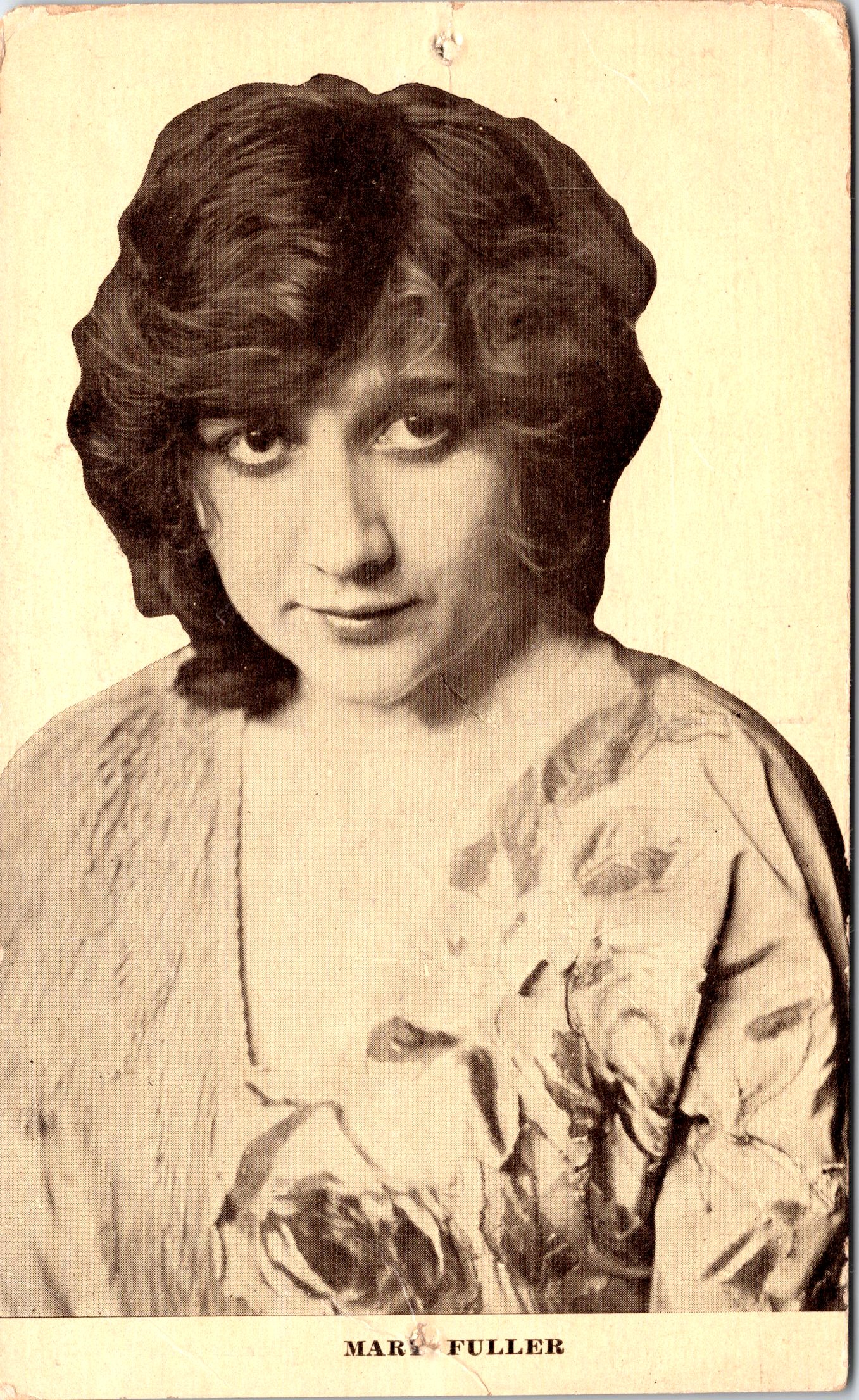
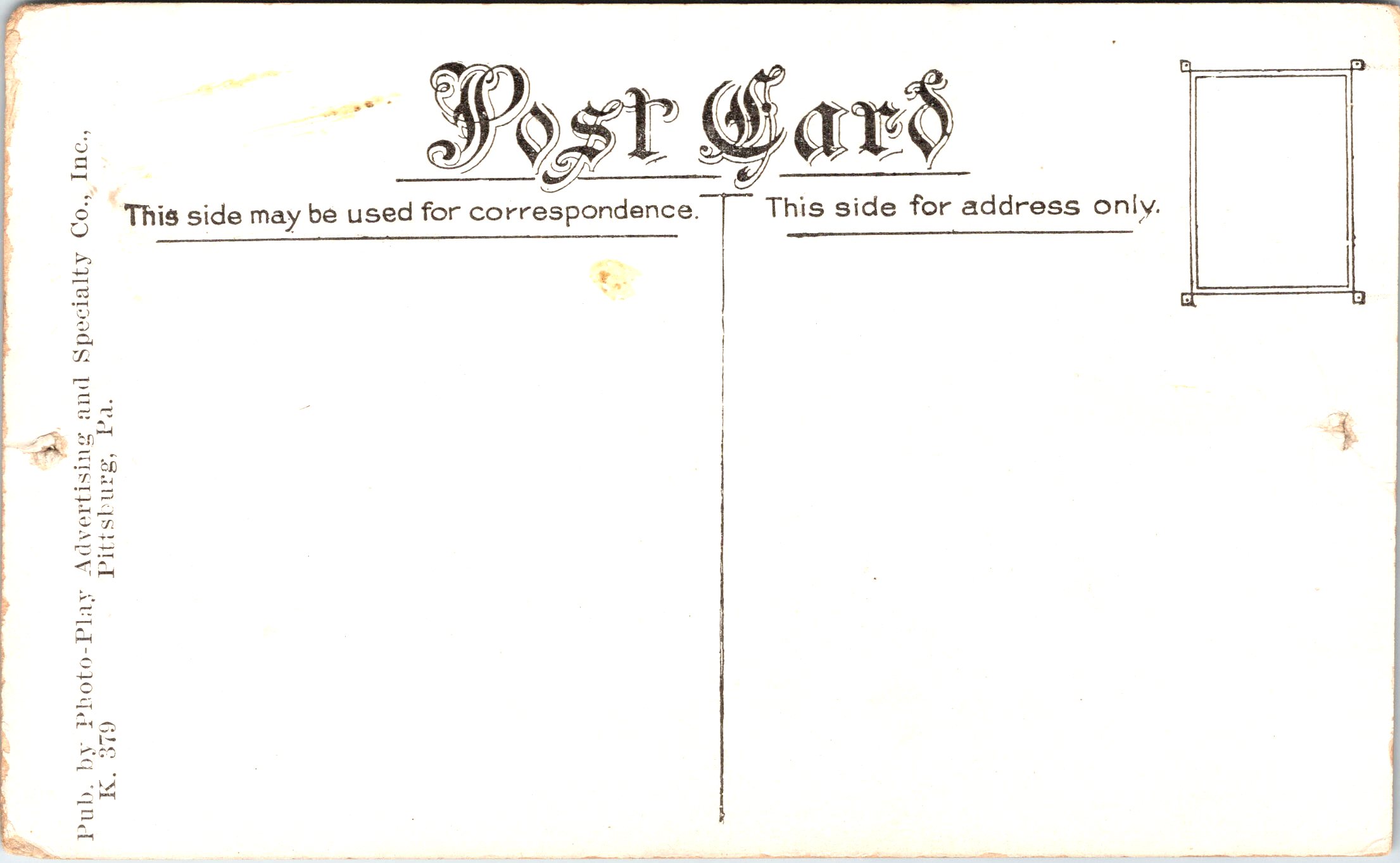
This vintage real photo postcard features American film actress Mary Fuller (1888-1973). She was born in Washington DC. Her father was an attorney. By 1906, she was working on stage. In 1907, signed with Vitagraph Studios to make films. In 1910, she signed with Edison Film Company. That same year, she appeared in the first film version of “Frankenstein”. By 1914, she was a major film star. After starting her career in theater, she made her film debut in 1908 when the industry was still in its infancy. Her work with the Edison Manufacturing Company helped establish her as a leading actress, and she quickly became one of the most recognized faces of silent film. One of her most famous roles was in “The Last of the Mohicans” (1911). In addition to her film work, Fuller was known for her appearances in short films and serials. Fuller was also a screenwriter. She penned eight films. When the film industry entered the sound era, Fuller’s popularity waned. After making a few sound films, she retired. In 1947, she suffered a nervous breakdown and spent the rest of her life (26 years) in a Washington DC psychiatric hospital. Her mental decompensation was precipitated by a failed affair with a married opera singer and later exacerbated by the death of her mother. The IMDb reports that Fuller appeared in 230 film roles between 1908 and 1917. This postcard was published by Photo-Play Advertising and Specialty Company. The firm was based in Pittsburg, Pennsylvania. SOLD
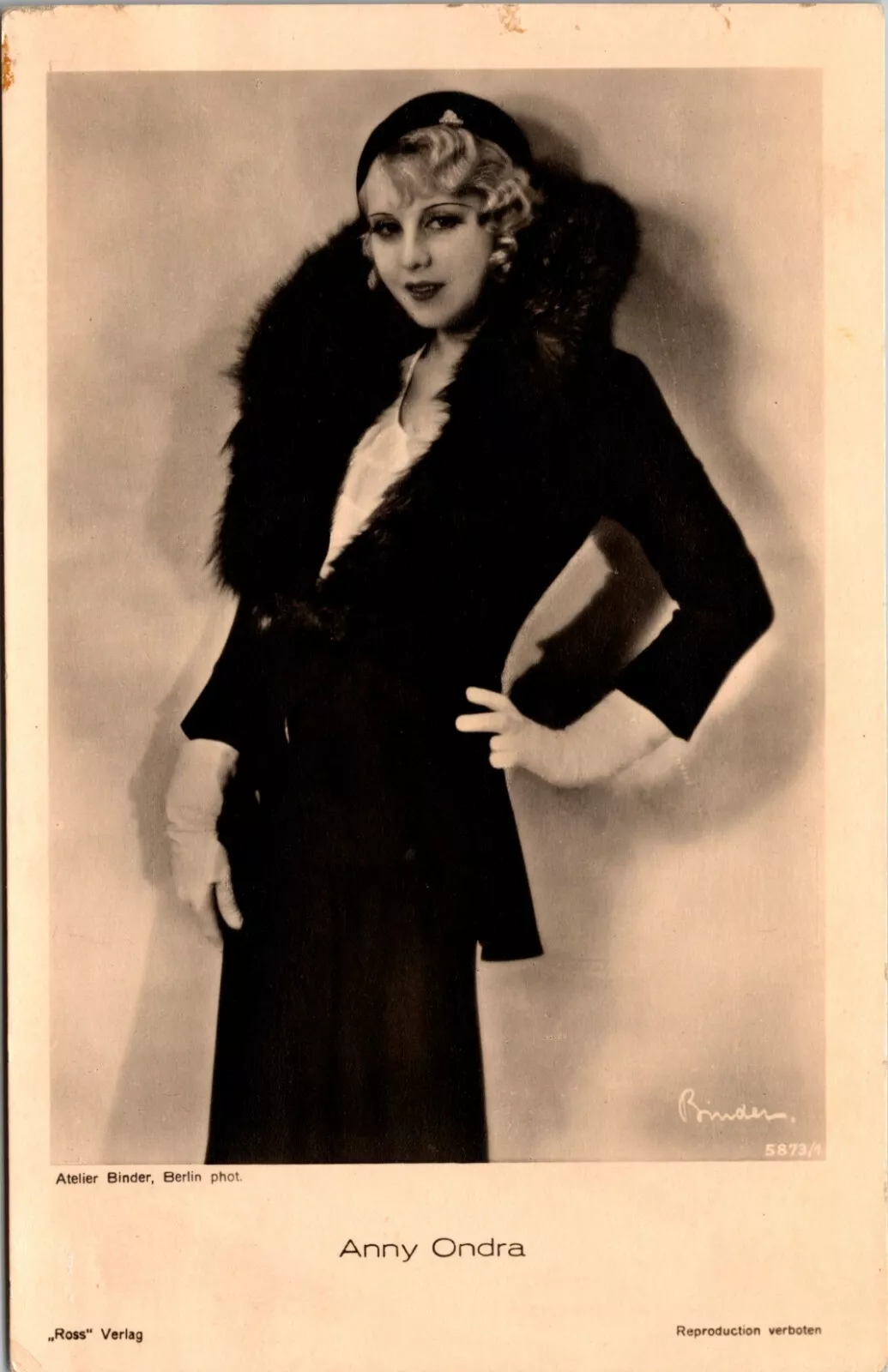
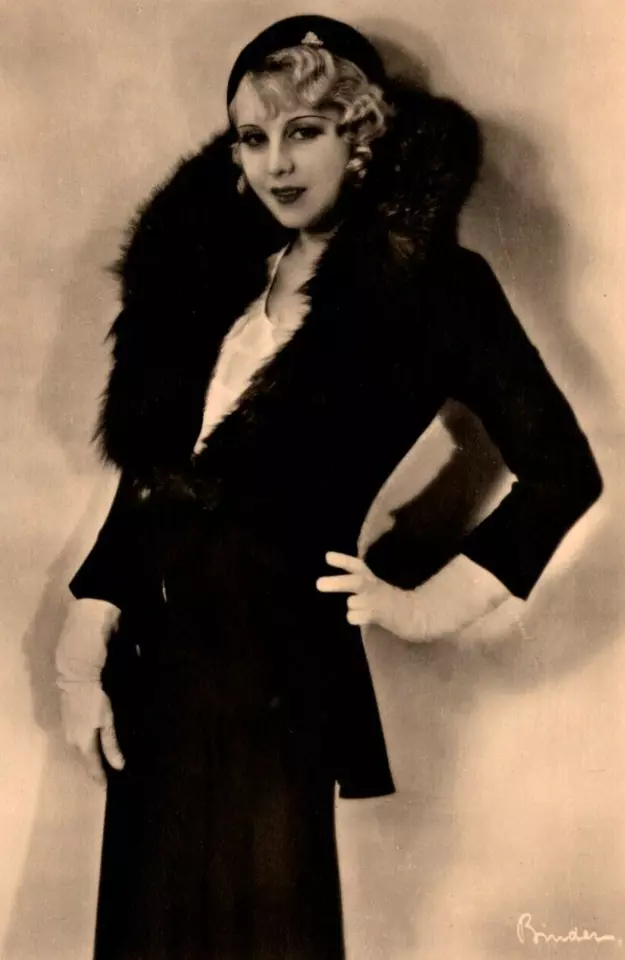
This vintage real photo postcard features actress Anny Ondra. The postcard was published by Ross Verlag. The photograph is by Alexander Binder. The postcard is part of a series (no. 5873/1). Anny Ondra (1903-1987) was a Czech film actress. She was born in Tarnow, Galicia, Austria-Hungary (now Poland). She was active in the movie industry between 1914 and 1957. She acted in Czech, Austrian, and German films in the 1920’s. She appeared in some British dramas, most notably, Alfred Hitchcock’s “The Manxman” (1929) and “Blackmail” (1929). The IMDb credits Ondra with over 90 acting credits between 1914 and 1957. She appeared in more than 40 films in the sound era. However, her career in British films was hurt by her thick accent. Check out the youtube video below. In this “test film”, Hitchcock “interviews” Ondra and makes her visibly uncomfortable and embarrassed by asking her very personal questions. She was married to German boxing champion Max Schmeling between 1933 and 1987. Schmeling was the world champion between 1930 and 1932. He is well known for his fights with African American fighter, Joe Lewis. Ondra’s father was a Czech, Austro-Hungarian military officer and she grew up in Tarnow, Pula, and Prague. At the early age of seventeen, she acted in the theater as well as in a film. When her family learned that she had acted in a film, they were extremely angry. In fact, she reported that she was given a beating by her father. Post World War I was a time, for many people, that being an actress was akin to being a prostitute. Ondra began to live with her boyfriend (her debut film’s director) but after some time, the relationship ended because she wanted a family and he wanted nothing to do with marriage. In 1933, after a three year romance, Anny married Max Schmeling. She had been in a film with the boxer (“Knock-Out”, 1935). It was a “happy” marriage and the couple remained together until her death in 1987. Ondra and Schmeling were hot names in Nazi Germany. German fascists tried to exploit them in order to popularize their movement. Schmeling was seen as a German superman while Ondra represented the blonde Aryan type. The two celebrities refused to collaborate. Schmeling turned down honors and even helped hide two Jewish children, saving their lives. However, because of Nazi propoganda, many believed that the couple had collaborated. As a result, Schmeling and Ondra suffered financially for their fictional cooperation with the Nazis. Ondra was portrayed in two modern day movies, “Ring of Passion” (1978) and Joe and Max (2002). Miss Ondra appears quite thin in this postcards’s photo. Note her fur collared jacket. SOLD
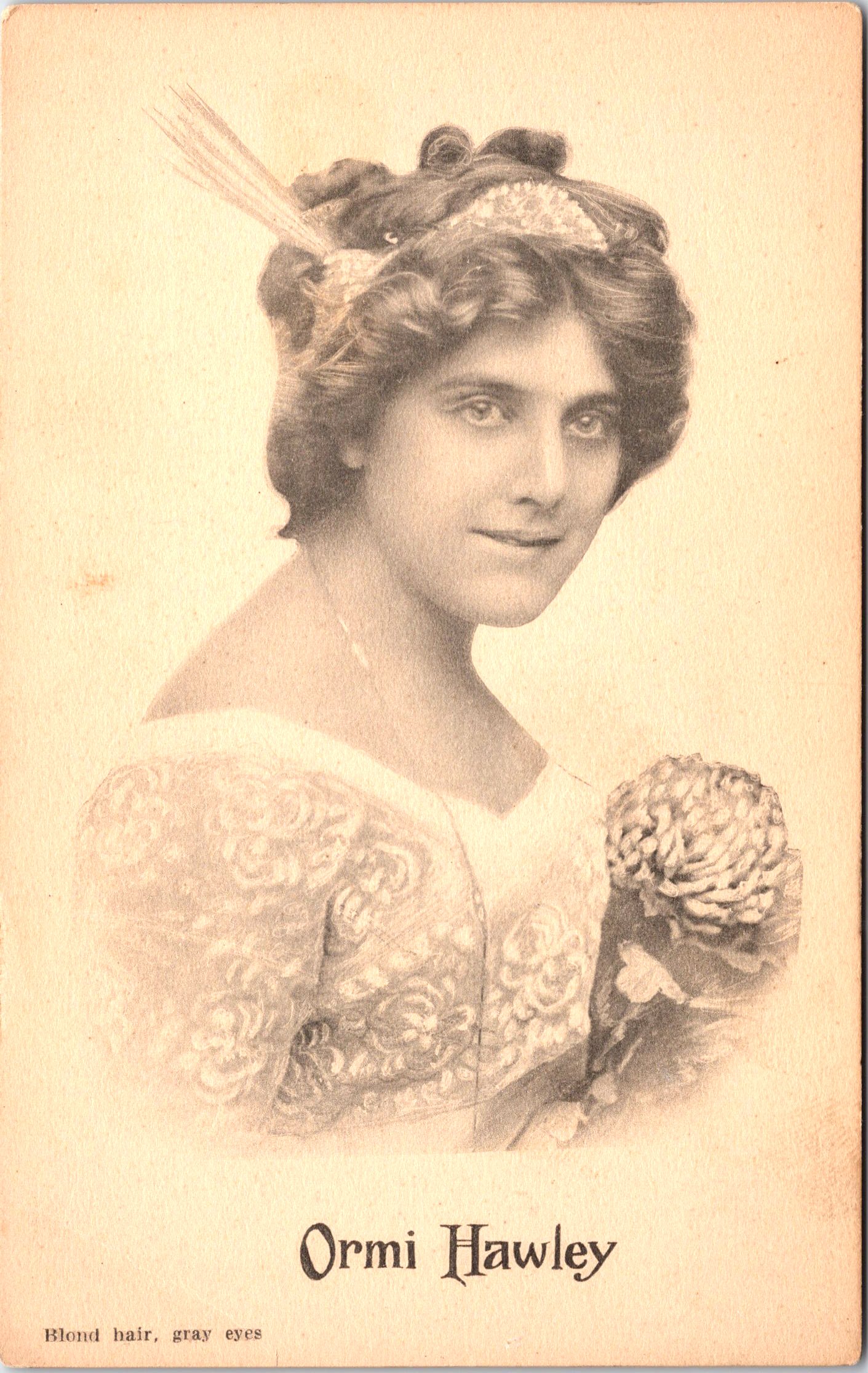
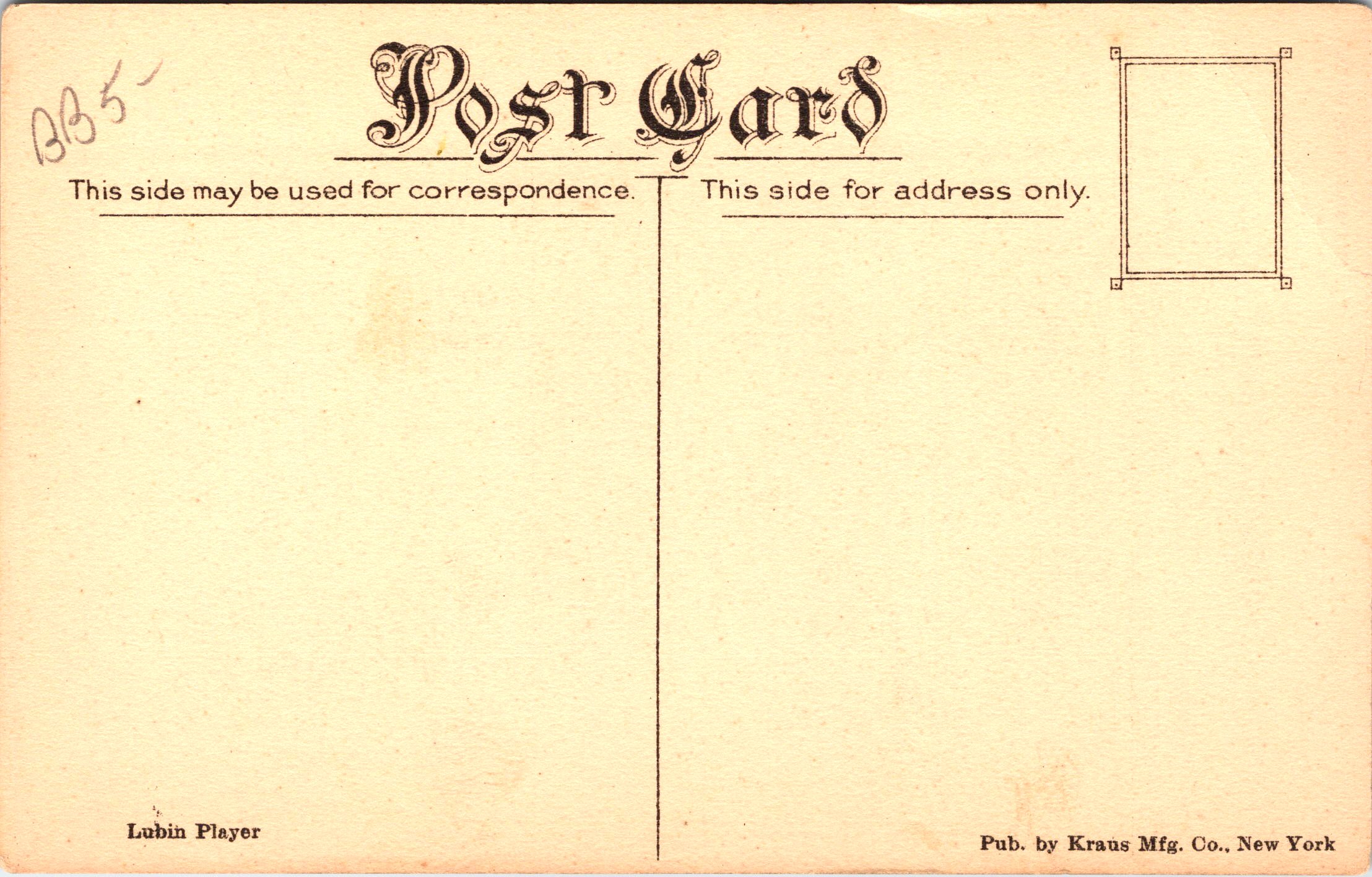
Ormi Hawley (1889-1942) was a pretty and popular American silent film actress. The IMDb reports that she has 129 film credits between 1911 and 1919. She must have garnered a significant amount of money because her nickname was “Opulent Ormi”. She also earned the nickname of “The Lillian Russell of the Pictures” because she frequently played society or aristocratic roles. Like many silent film actresses, she began her career as a teen on the stage. In 1911, she joined the Lubin Stock Company and over the next five years, she starred in dozens of short films. In 1918, she was the leading lady with opera legend Enrico Caruso. Later in her career, she managed the All-American Girls Symphony Orchestra. Upon marriage, she retired to her farm where she painted portraits and wrote children’s stories. This card was published by Kraus Manufacturing Company (New York) for the Lubin film company. Interestingly, the caption on the front of the card describes Hawley’s appearance. She is said to have blonde hair and gray eyes. (SOLD)
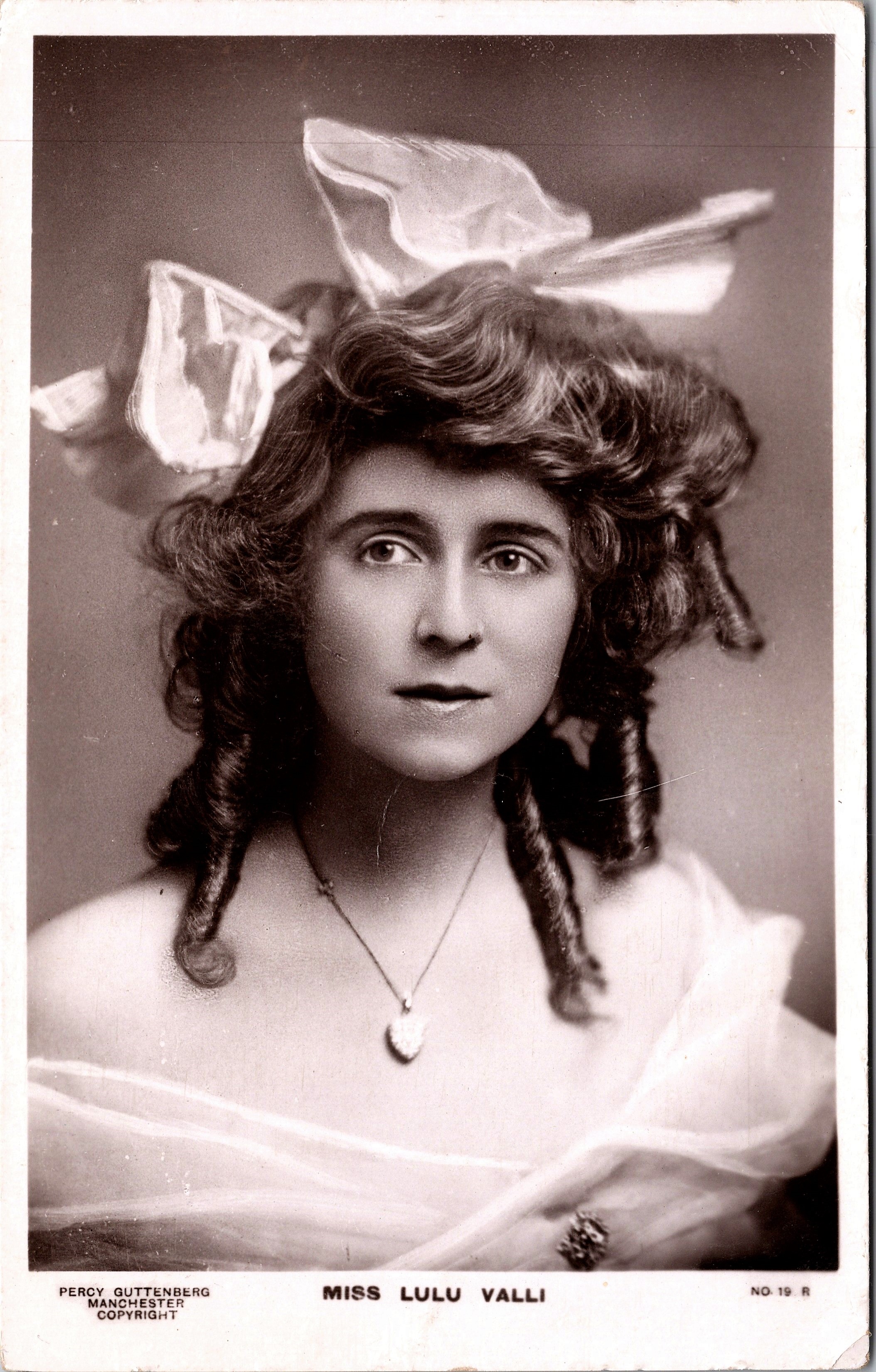
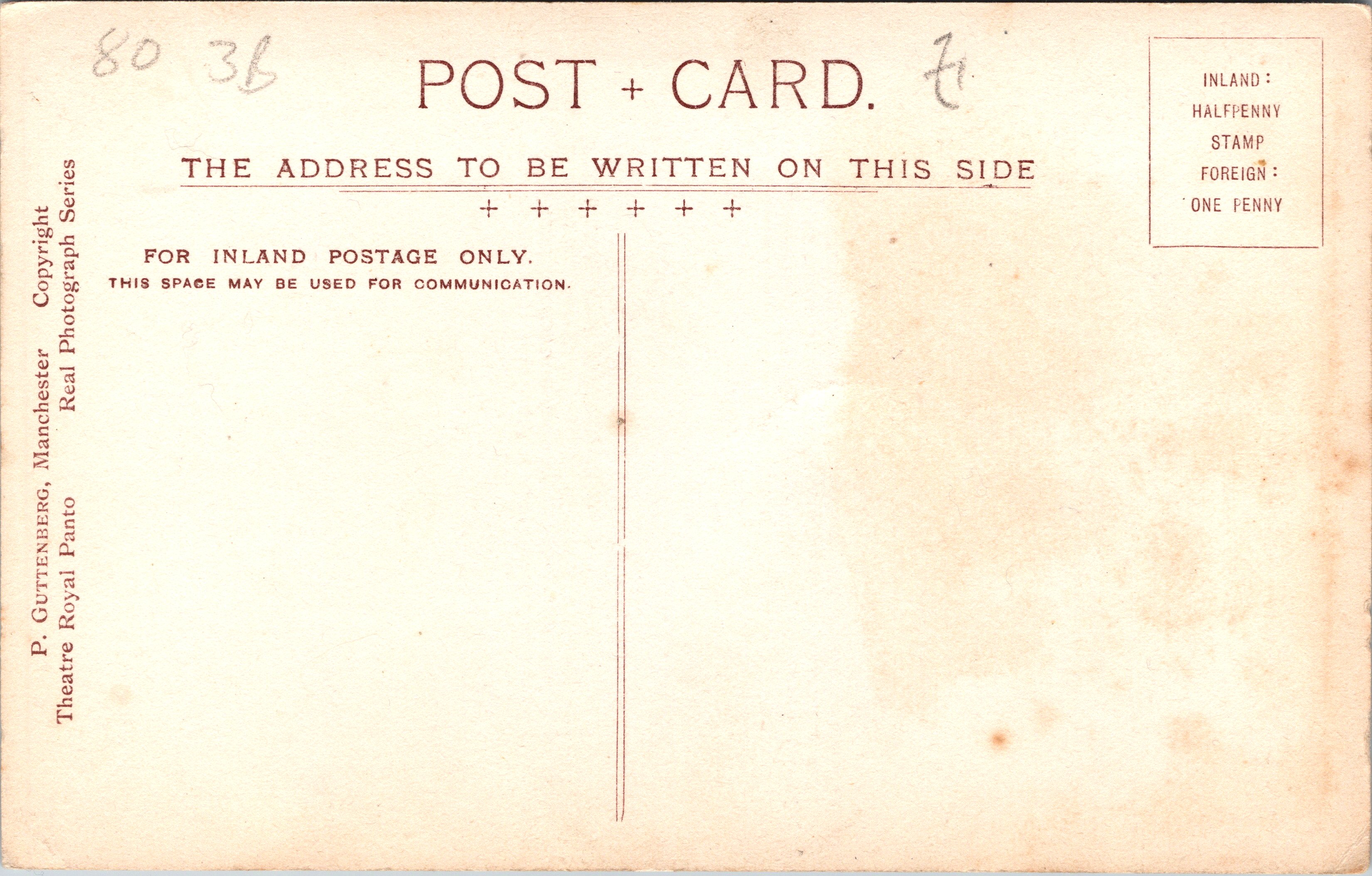
This vintage real photo postcard features British actress, Lulu Valli (1887-1964). She was active in the 1890’s through the1900’s. She began acting as a child. Two of her sisters (Ida and Valli) were also actresses. She was married to hotelier, Edward Parsons. A photograph of Lulu Valli can be found in the collection of England’s National Portrait Gallery. This antique postcard was published by Percy Guttenberg of Manchester, England. The card is part of a series (No.19 R). Printing on the reverse of the postcard mentions “Theatre Royal Panto”. Panto is short for pantomime. This vintage postcard portrait is in good condition (see scans).
Buy this original Vintage Real Photo Postcard (includes shipping within the US) #5307
To purchase this item, click on the Pay with PayPal button below
$22.00
Buy this original Vintage Real Photo Postcard (includes International shipping outside the US) #5307
To purchase this item, click on the Pay with PayPal button below






 THE CABINET CARD GALLERY