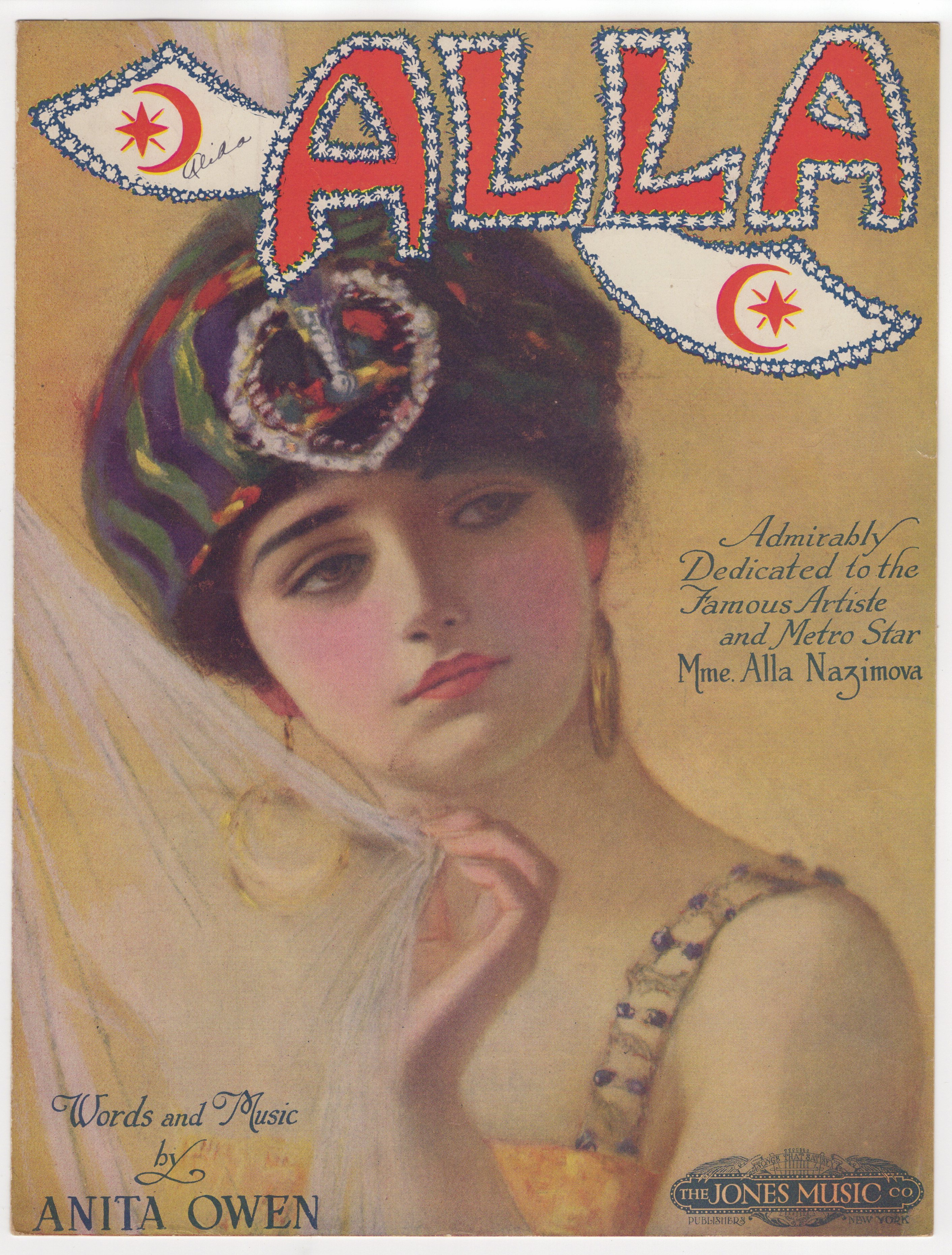
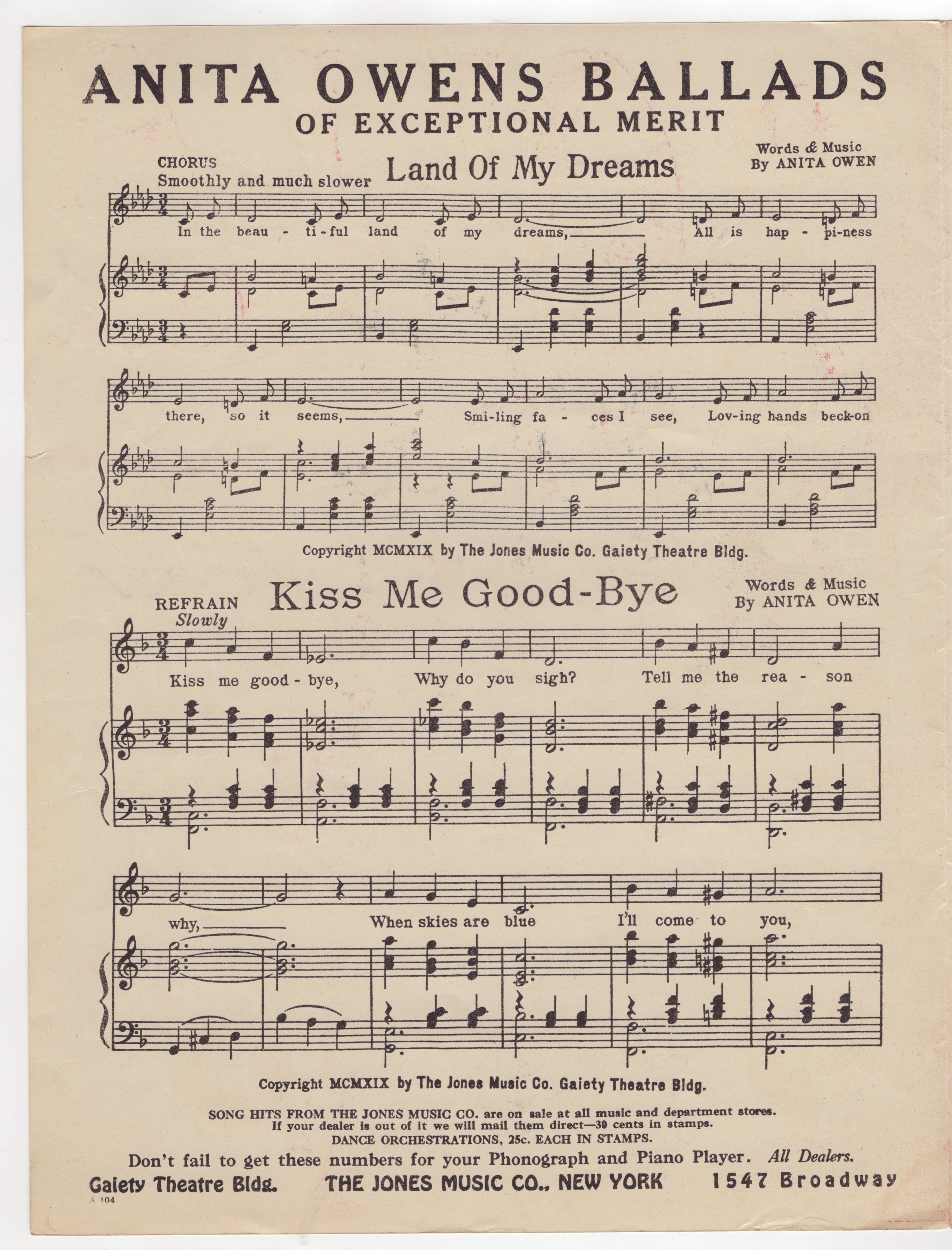
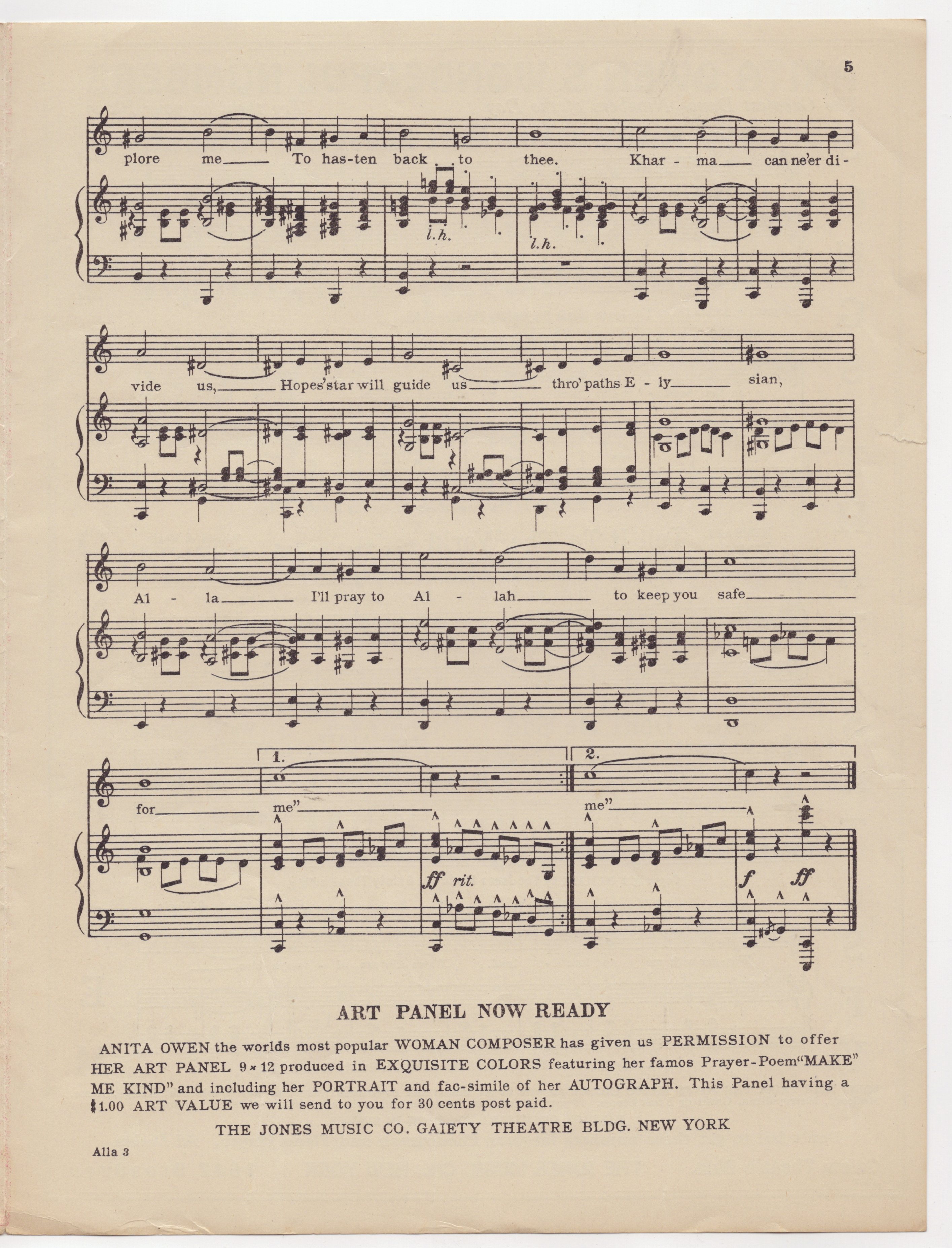
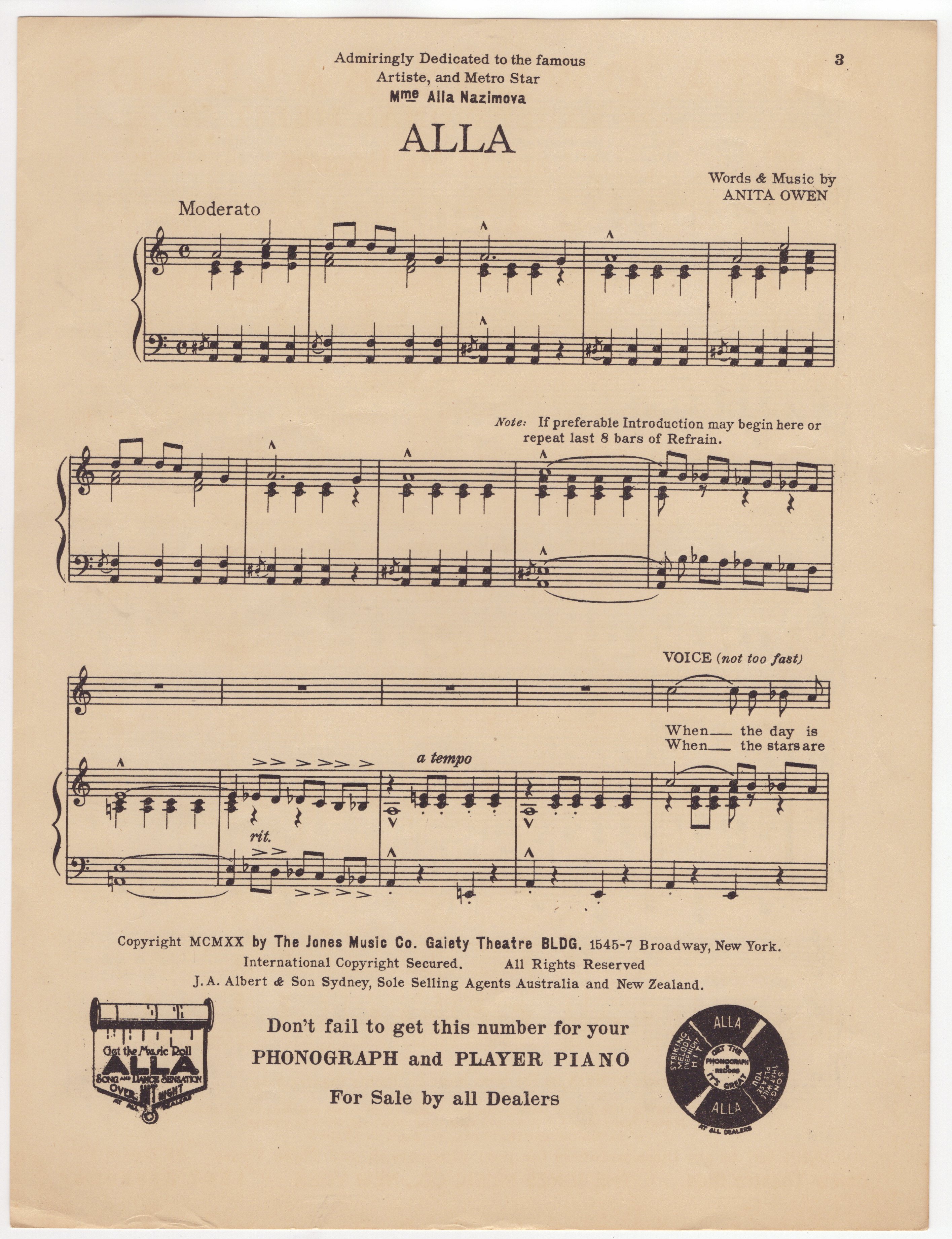
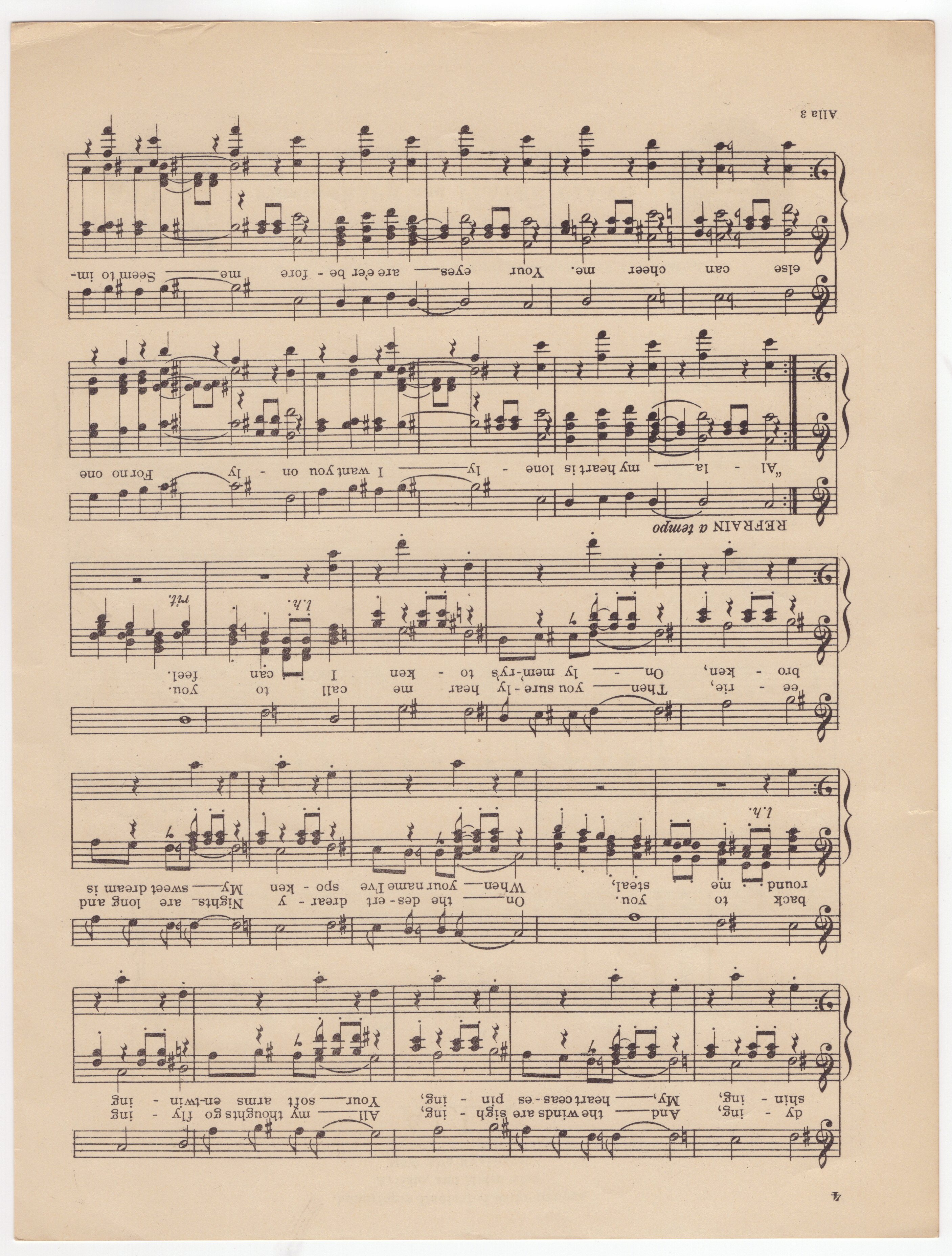
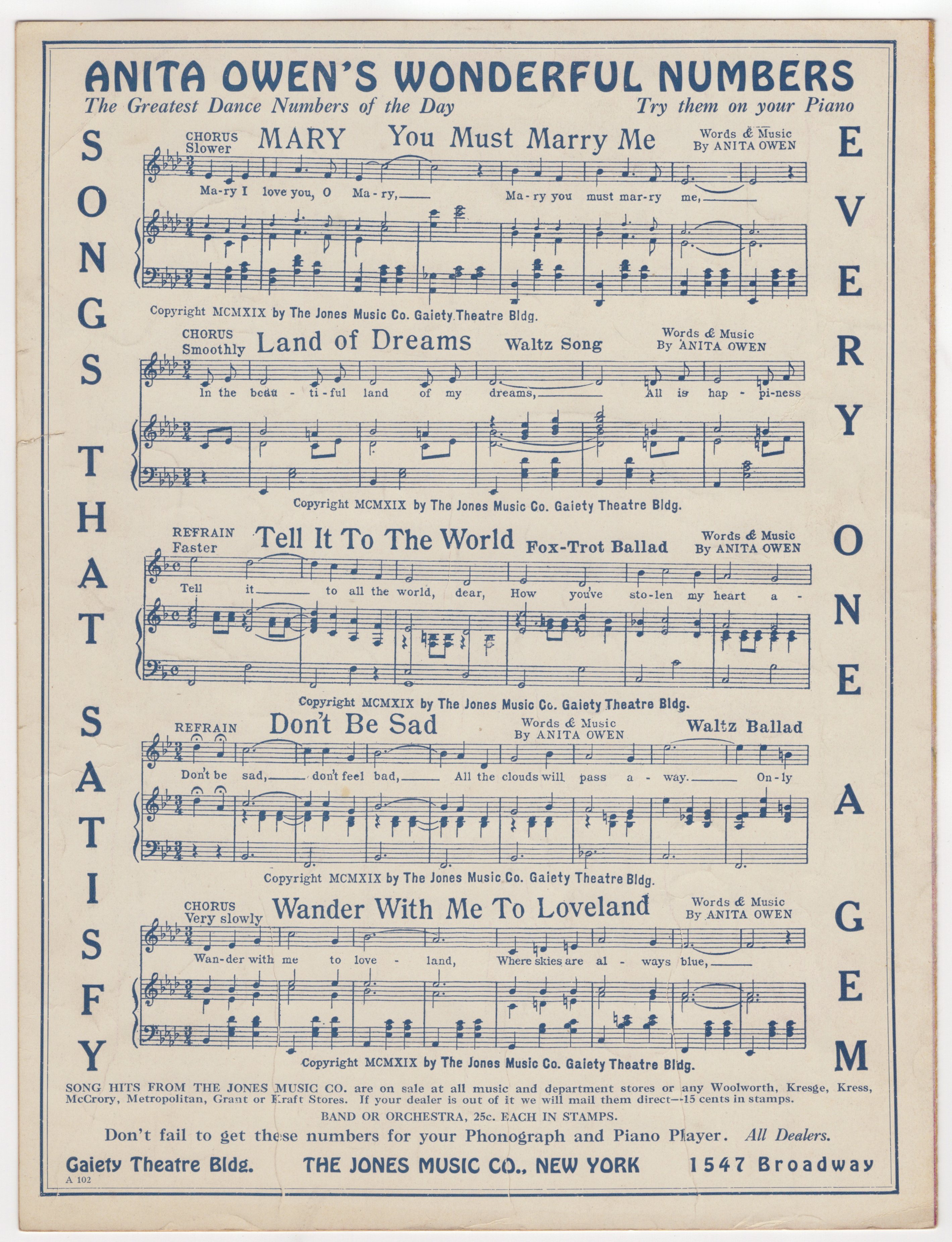
This vintage sheet music is entitled “Alla”. The music is dedicated to the “Famous Artiste and Metro Star”, Mme Alla Nazimova (1879-1945). She was a Russian-American actress, director, producer and screenwriter. She was noted for her classic Broadway work. She acted in the plays of Ibsen, Chekhov, and Turgenev. She later worked in film. She acted, wrote screen plays and directed films. Her film “Salome” (1922) is considered a “cultural landmark”. Nazimova was bisexual and her sexual escapades garnered much public attention. A portrait of Nazimova graces the front cover of this sheet music. This sheet music was published by The Jones Music Company in 1920. The firm was based in New York City. This sheet music is in very good condition (see scans). SOLD
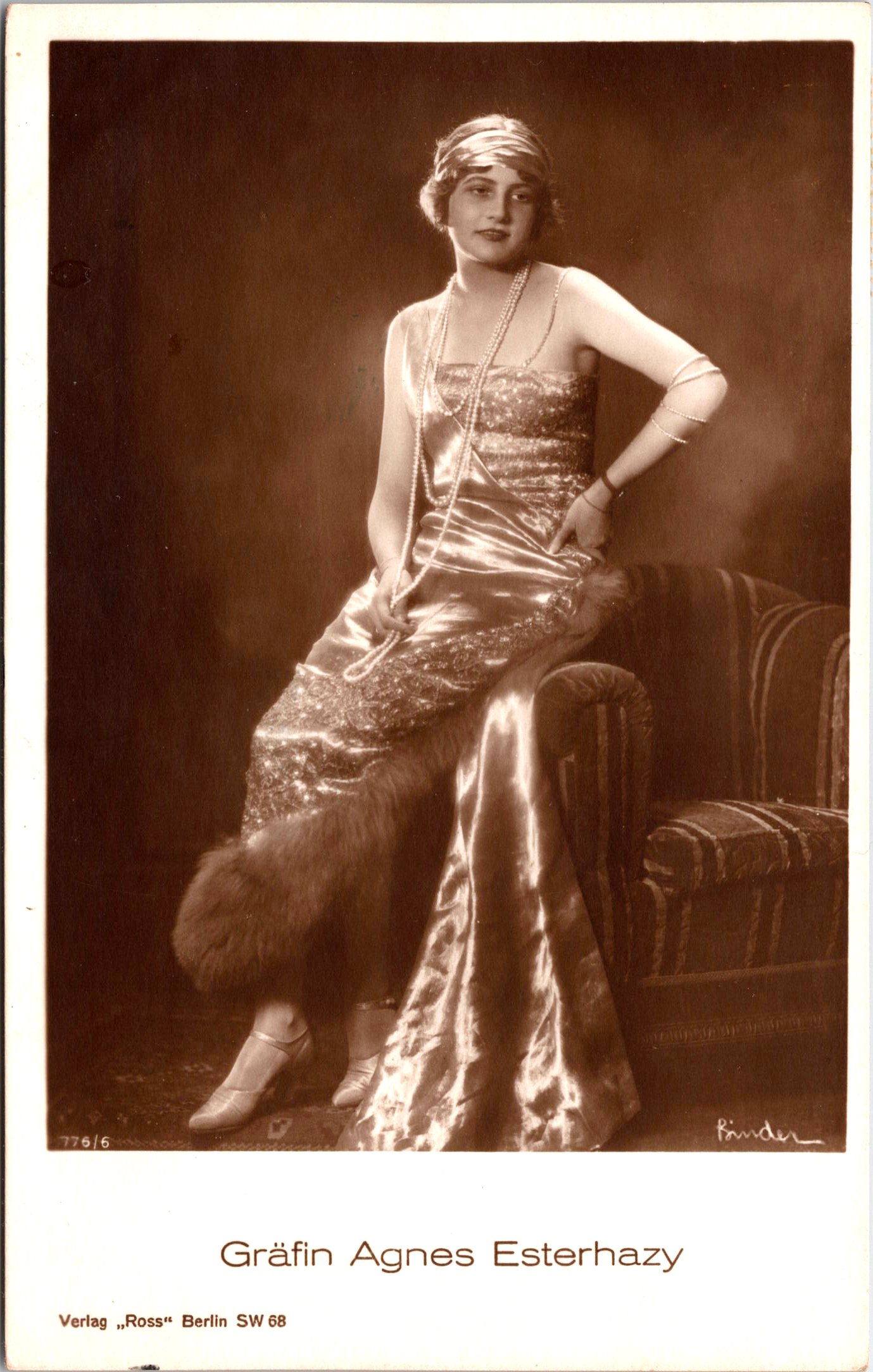
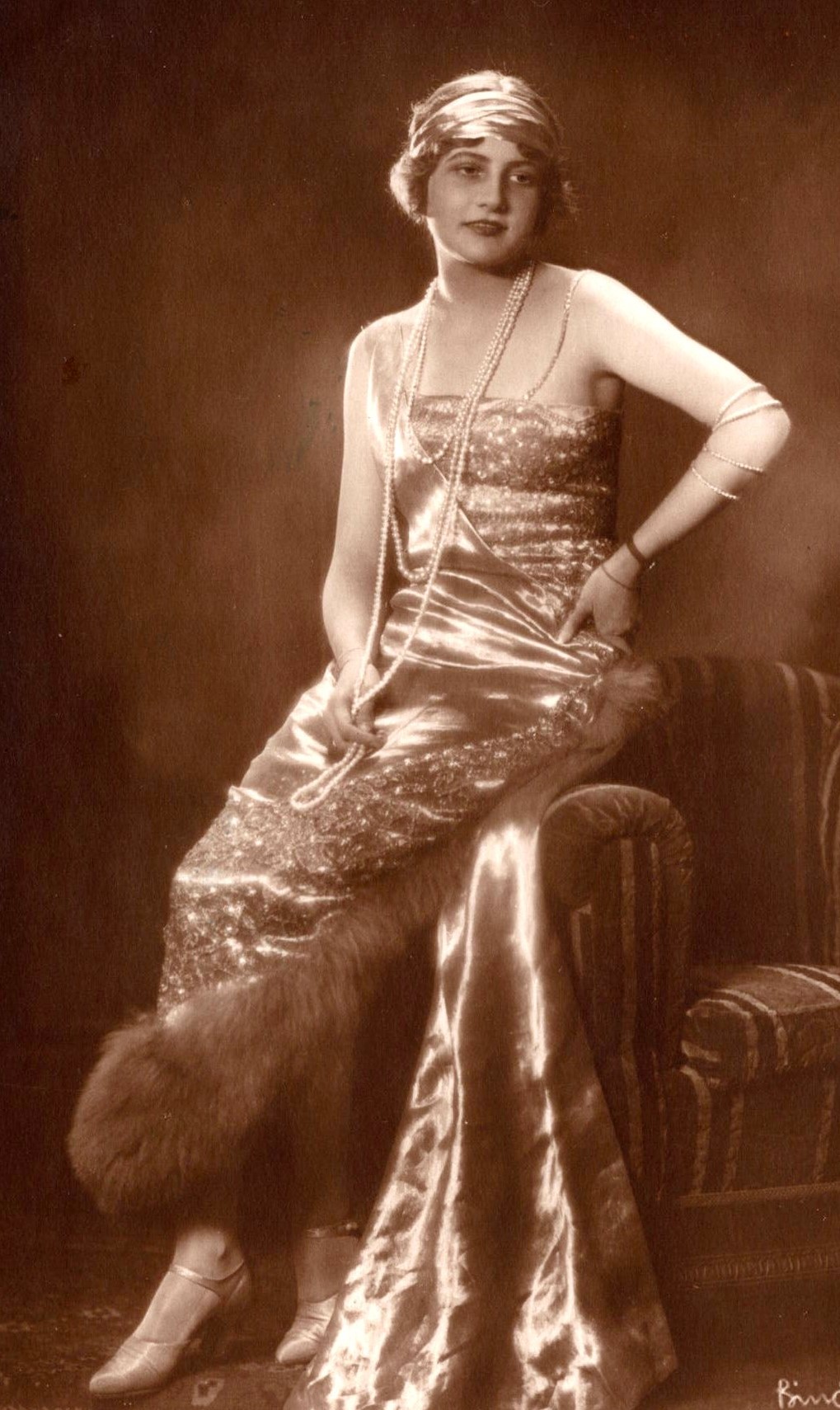
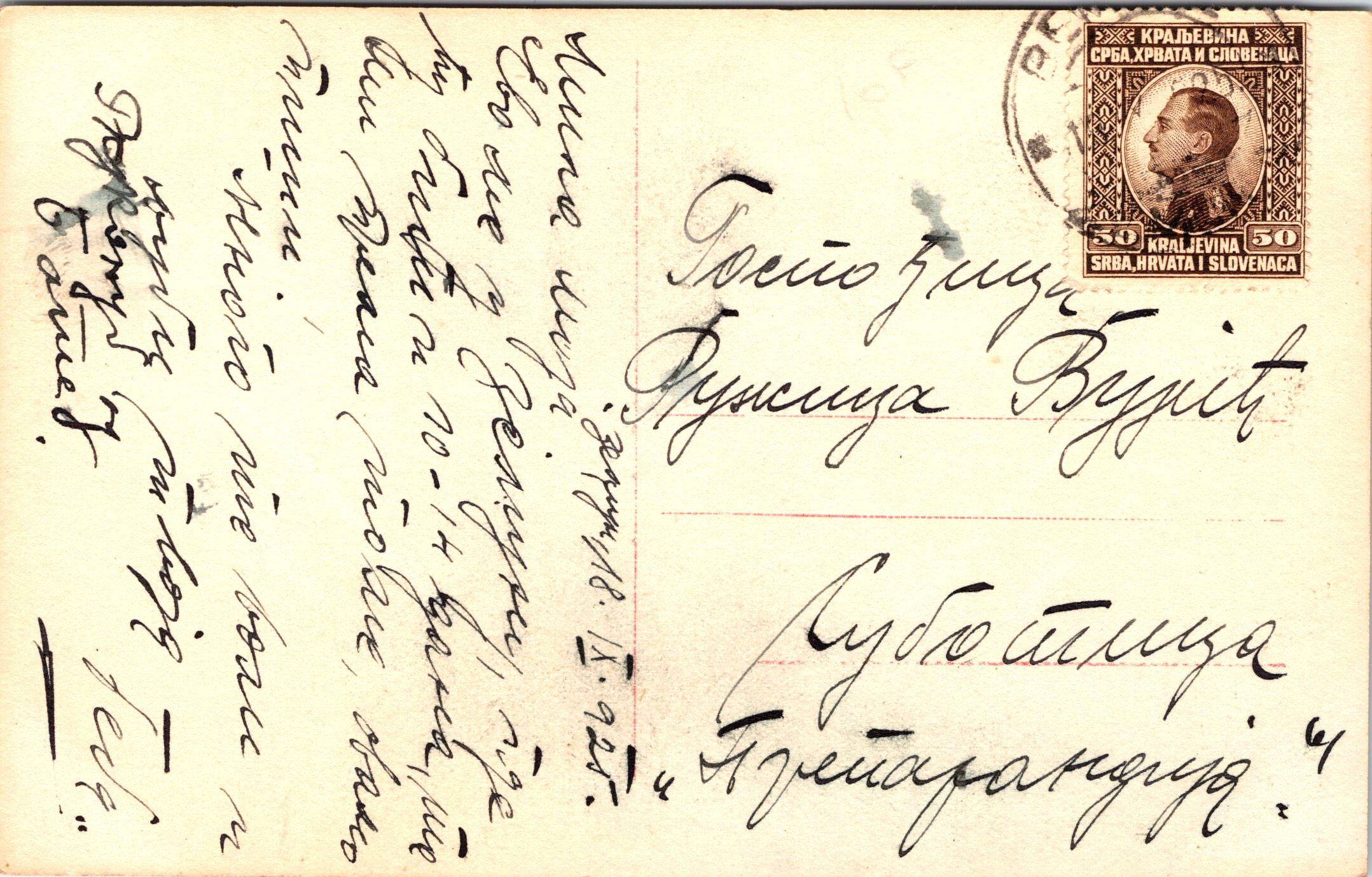
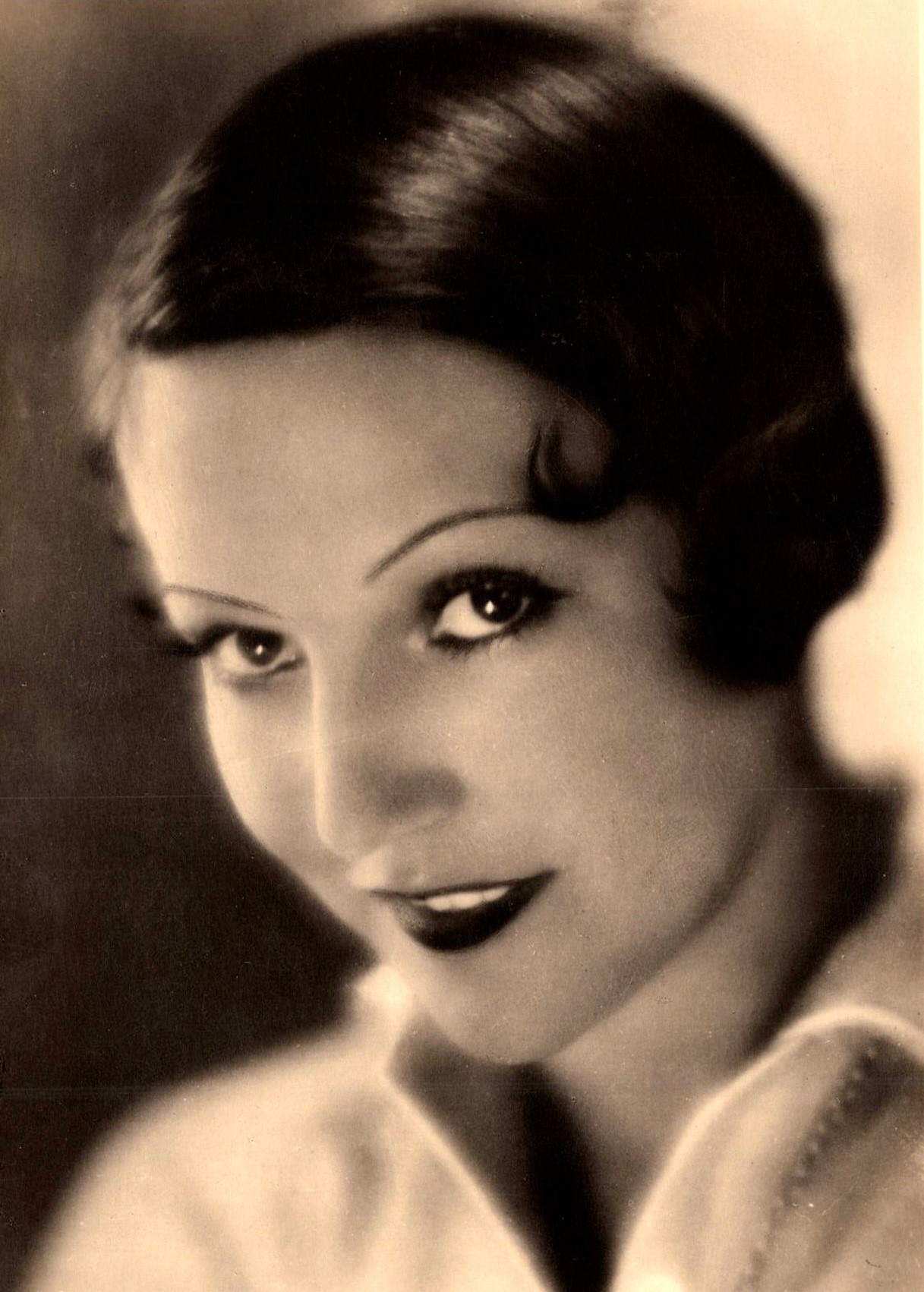
This vintage real photo postcard features Hungarian film actress Agnes Esterhazy (1891-1956). She is quite pretty and is dressed in flapper fashion. Esterhazy predominately appeared in Austrian and German films. In total, her IMDb filmography includes 32 films between 1918 and 1943. Her parents were a Count and Countess. She married actor Fritz Schulz in 1910. He was 14 years old and she was 19 years of age. I am sure there is an interesting story there and a lot of material for armchair psychologists to hypothesize about. After World War I, the pair lived in Budapest and Agnes began acting lessons. She made her film debut in 1918 and many more roles followed. During her career she acted alongside Harry Liedtke, Hanni Weisse, Asta Nielsen and Greta Garbo. Agnes mostly played supporting roles but she also played some leading roles. Esterhazy’s career virtually ended with the arrival of sound films. After her retirement from film, she she acted at various theaters, many of which were in Ostrava (Czech Republic). Esterhazy’s husband (Fritz Schulz) was arrested by the Nazis and held in a Vienna prison. His crime was that he was Jewish. Esterhazy was able to get him released in the Spring of 1938. This portrait postcard was published by Ross Verlag (Berlin). The postcard is part of a series (no.776/6). Esterhazy’s photograph was taken by celebrity photographer, Alex Binder (Berlin). The card is posted and has a stamp that was issued by Yugoslavia in 1921. The message on the postcard is dated 1925. (SOLD)
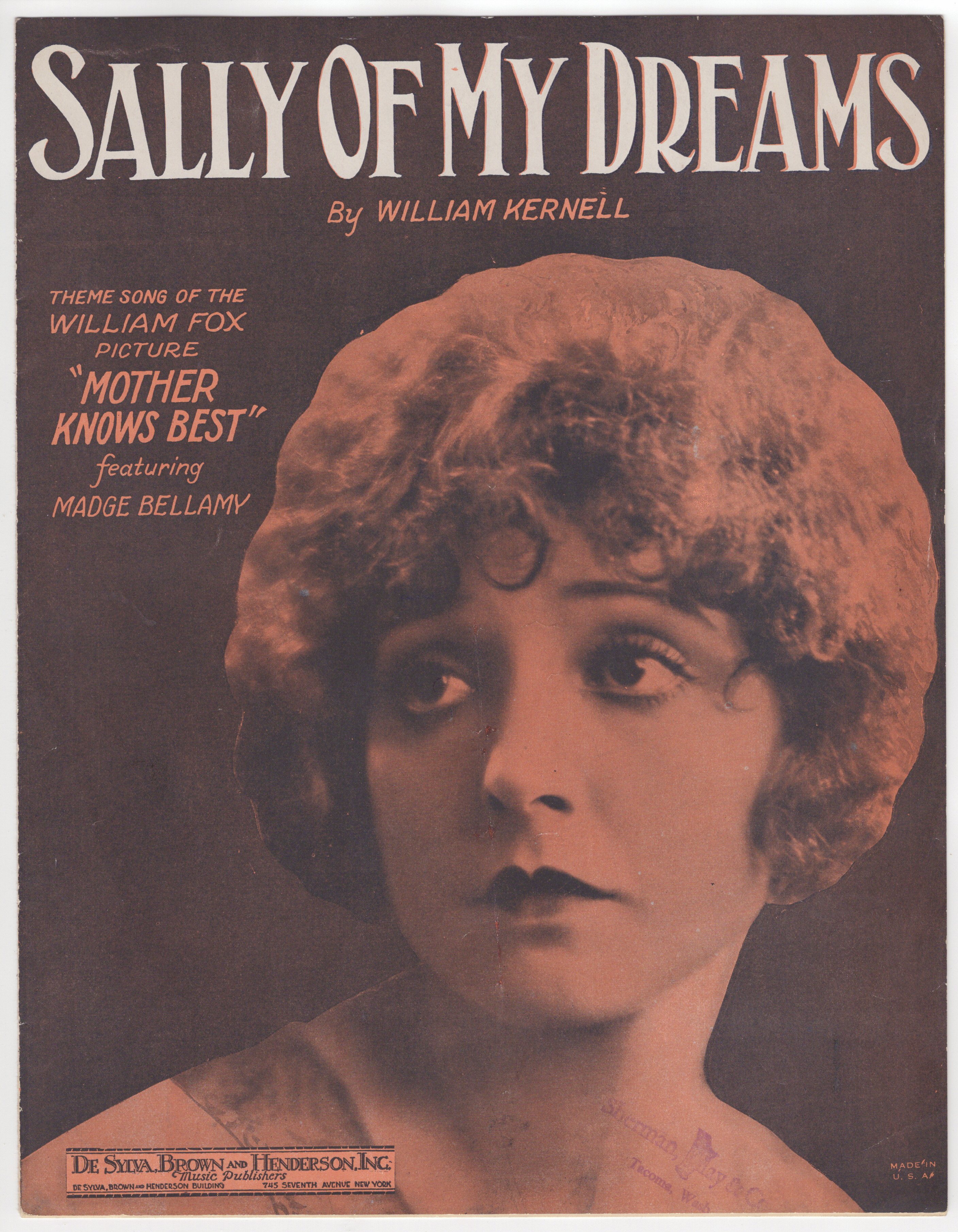
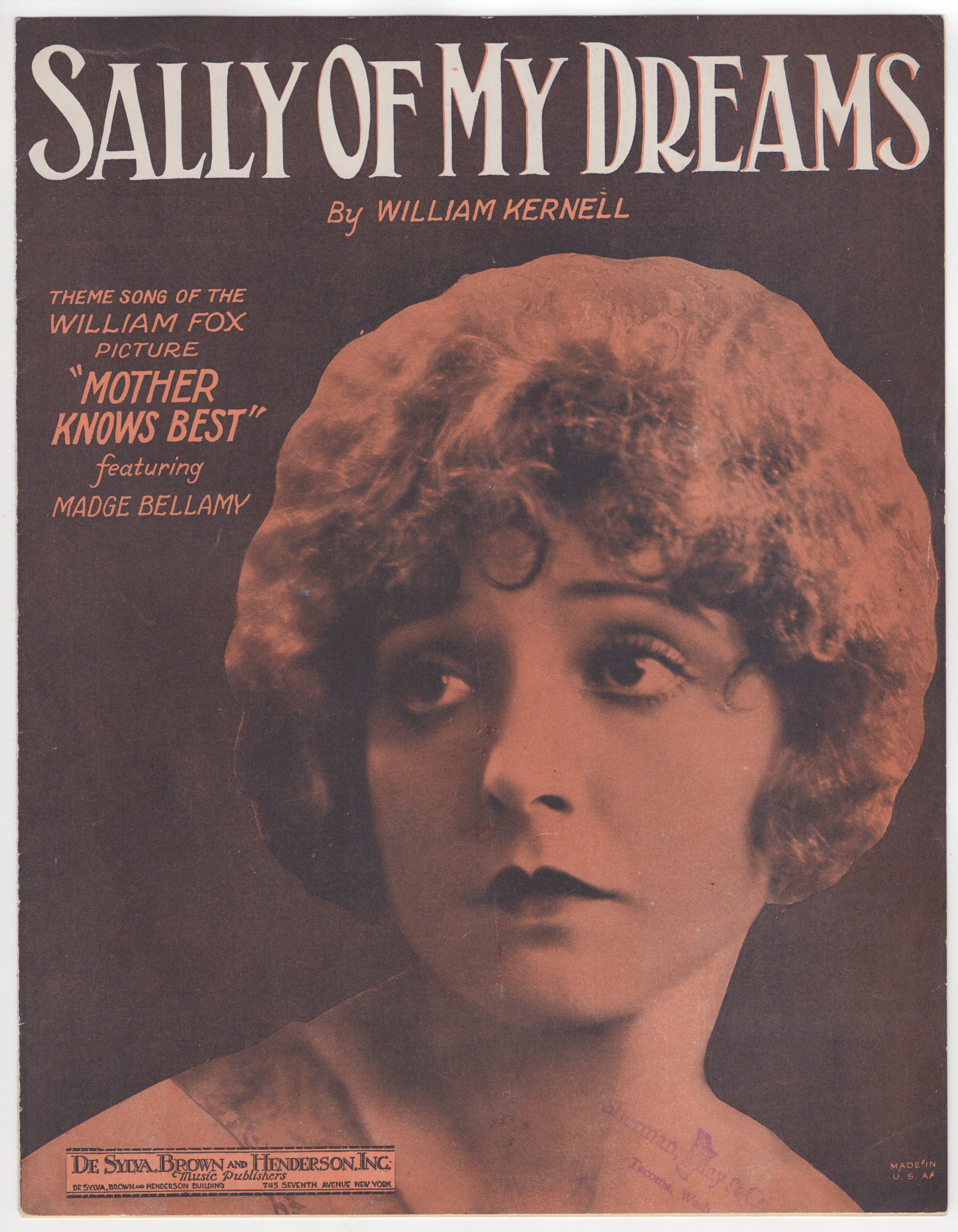
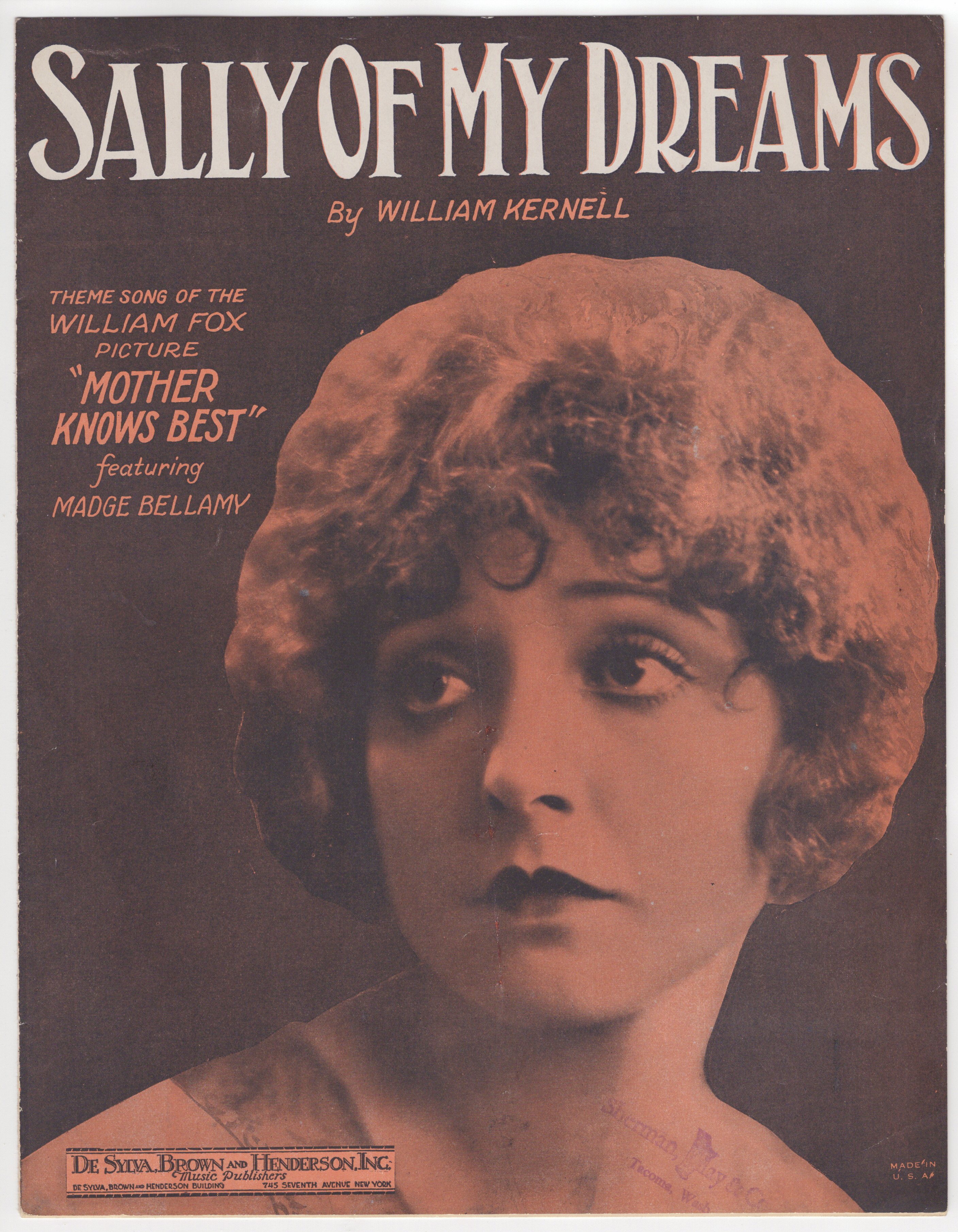
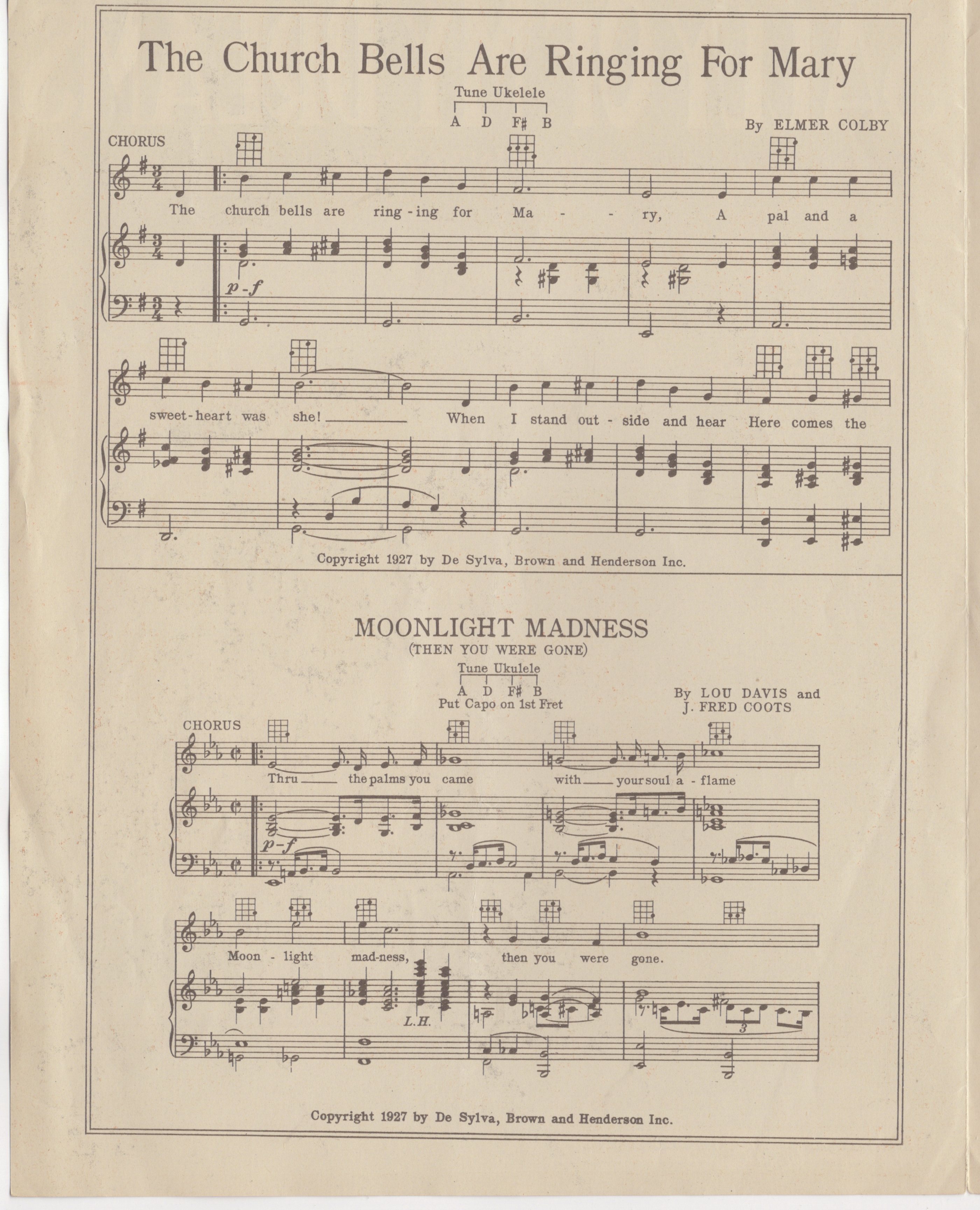
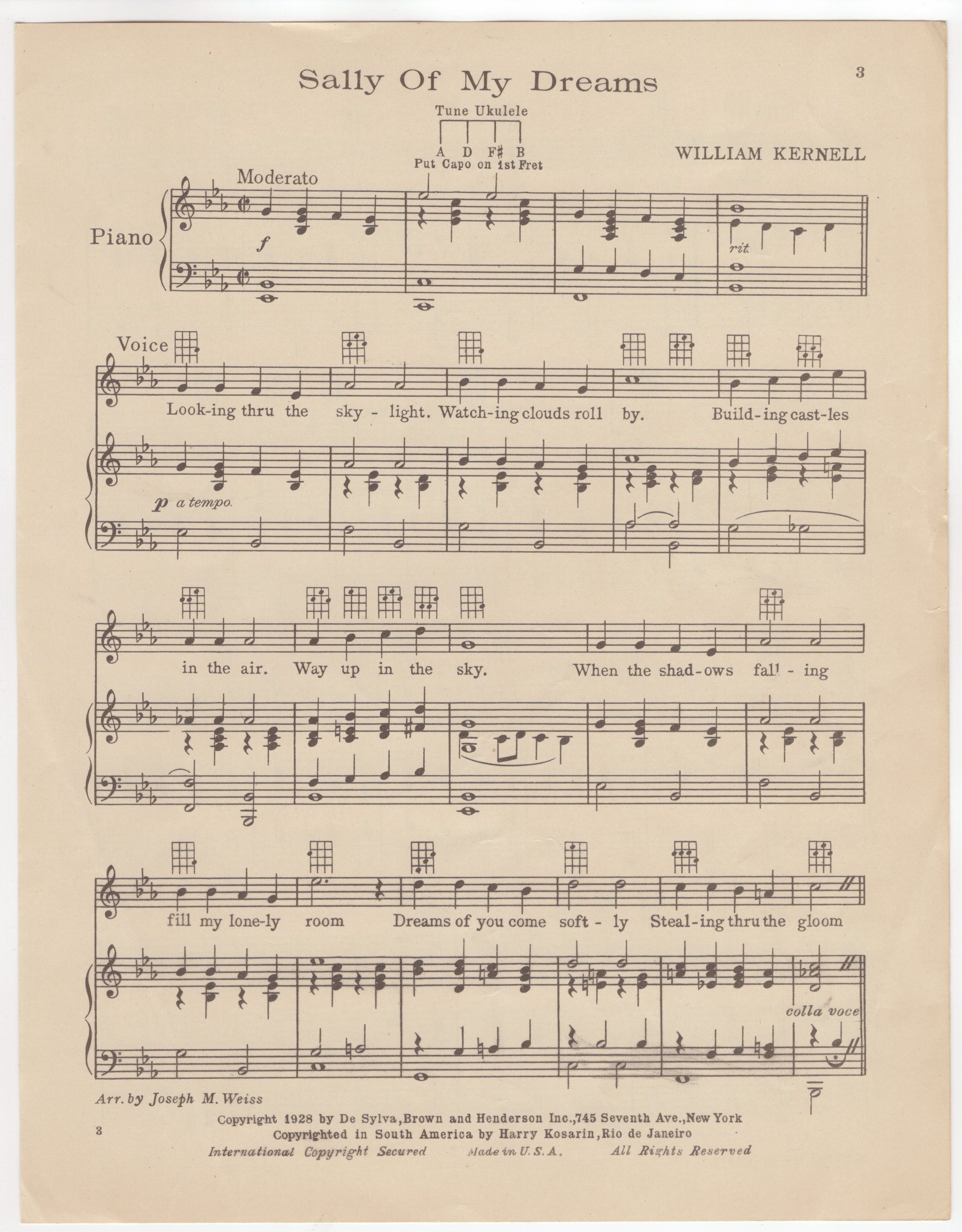
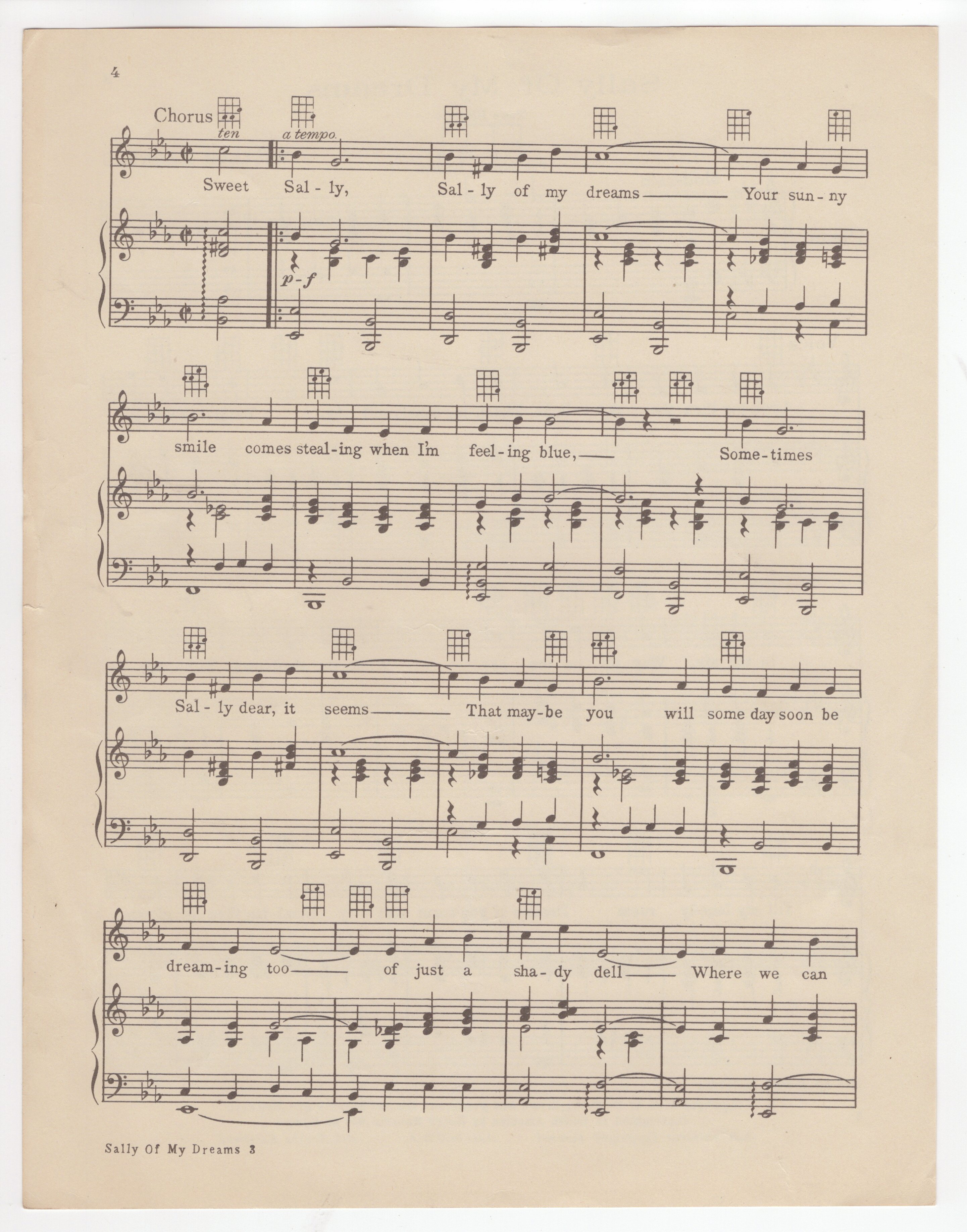
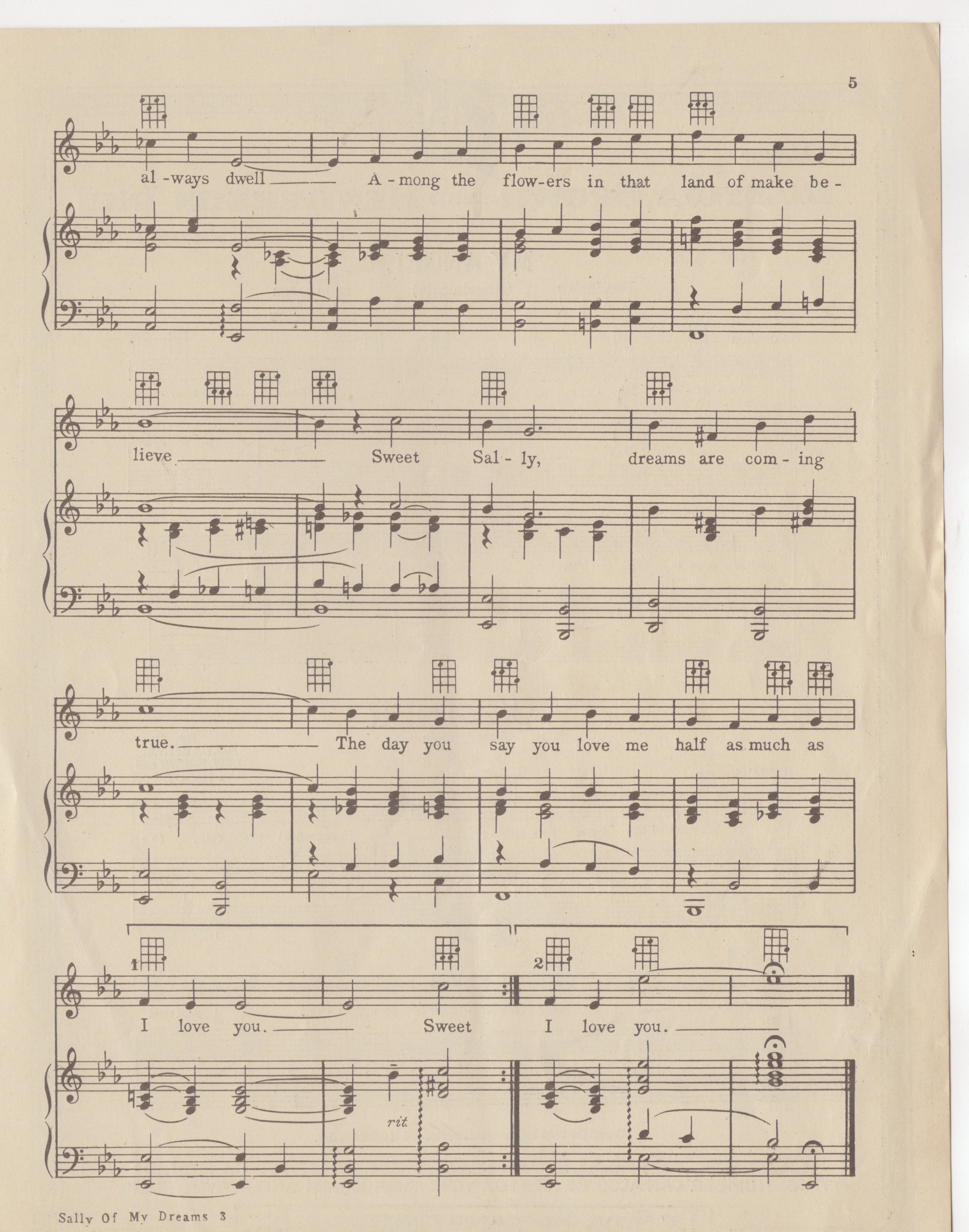
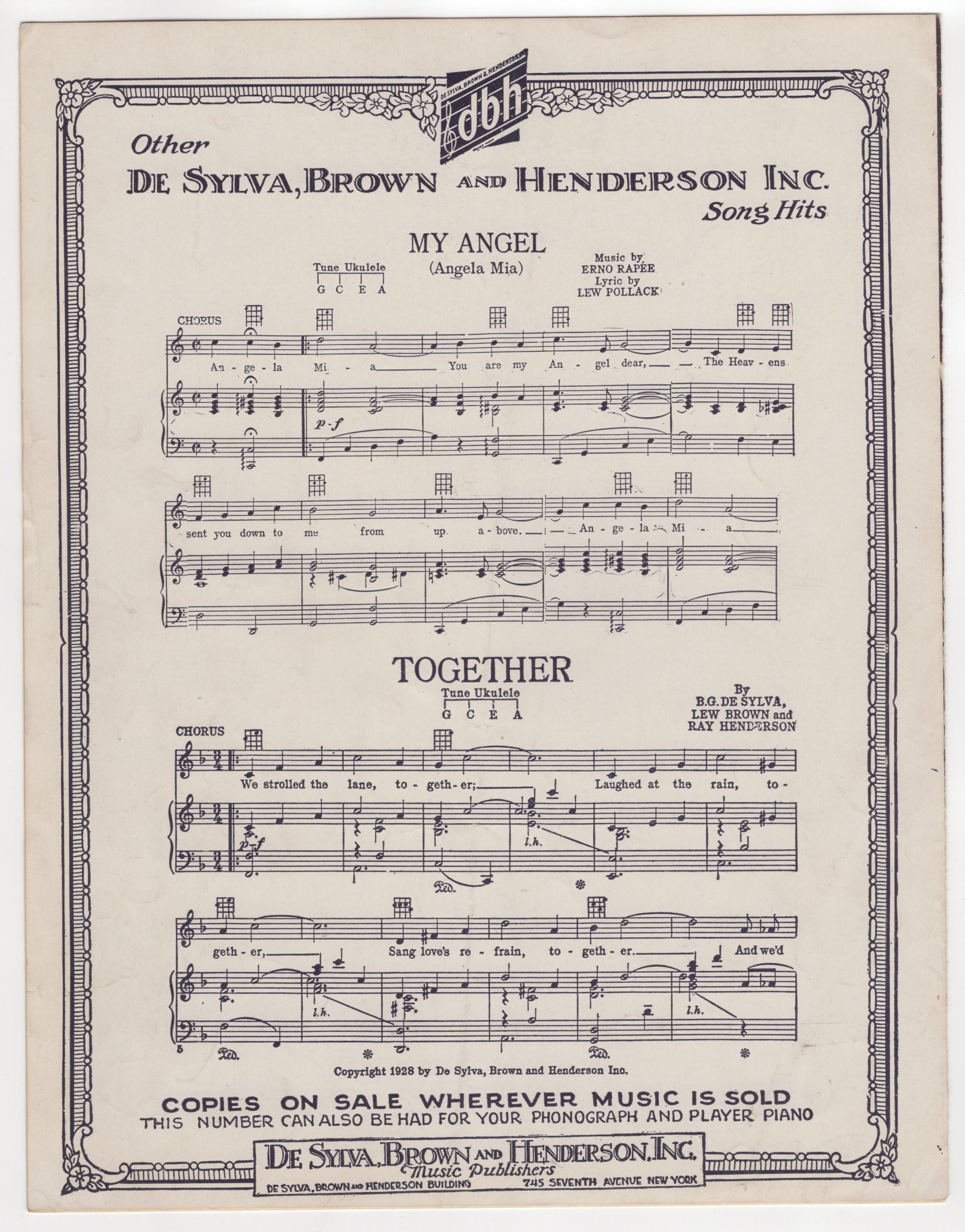
This vintage sheet music is entitled “Sally of My Dreams”. The music is the theme song of the William Fox motion picture “Mother Knows Best”. Starring in the movie was Madge Bellamy (1899-1990). She was an American stage and film actress. Bellamy was a popular leading lady in films of the 1920’s and 1930’s. Her photograph graces the front page of this sheet music. This sheet music was published in 1928 by De Sylva, Brown, & Henderson Inc.. The firm was based in New York City. This sheet music is in very good condition (see scans).
Buy this original Sheet Music (includes shipping within the US) #7678
To purchase this item, click on the Pay with PayPal button below
$8.50
Buy this original Vintage Sheet Music (includes International shipping outside the US) #7678
To purchase this item, click on the Pay with PayPal button below
This vintage real photo postcard features Hungarian actress, singer, dancer, and model, Kathe von Nagy (1904-1973). She performed in both German and French films. Her father was a wealthy bank manager. At the age of sixteen, Nagy wanted to get married but her parents did not approve and sent her to a convent near Vienna, Austria. She stayed there 18 months but finished school elsewhere. Nagy wanted to become an author. She moved to Budapest and wrote articles for a magazine. She became interested in acting and enrolled in an acting school near Budapest. Her parents were none to pleased about her career choices and she was encouraged to return home where she worked in her father’s bank and secretly wrote novels. When she was about 22 years old, she moved to Berlin to pursue a career in film and worked for a Hungarian newspaper. She was given a role in a 1927 comedy film and by 1928, she began starring in films and was considered one of Europe’s top up and coming film actresses. She became a highly successful film actress. The IMDb reports that she appeared in 57 films between 1915 and 1952. She basically retired from film during the second world war. The head of the SS., Heinrich Himmler asked Nagy to be the face and body for “sex dolls” provided to German soldiers. The premise was that the use of such dolls would lessen the syphilis problems encountered by many of the soldiers. Nagy refused the offer. This story may be apocryphal. This postcard was published by Ross Verlag as part of a series (no.6085/2). Nagy’s photo was taken by the Yva studio located in Berlin, Germany. The name Yva is a pseudonym. The photographer was actually a woman named Else Ernestine Neulander-Simon (1900-1944). She was a German Jewish photographer and was well known for her “dreamlike, multiple exposed images”. She was a leading Berlin photographer during the Weimar Republic years of Germany. She specialized in fashion, nudes, and portraiture. Later, she became involved in the early days of producing photographs for advertising. Many of her photographs were published in magazines or were shown in international exhibitions. After the Nazis took power, she was forced to work as a radioagrapher (ie x-ray technician). In 1936 she was offered a job by Life Magazine, but her husband convinced her that life for German Jews would improve over time. He did not want to move and start a new life in a country where he did not speak the language. Unfortunately, she complied with his wishes. In 1938, Nazi regulations prohibited her from working as a photographer. In 1942, the Gestapo deported her and her husband to a death camp (probably Majdanek) where they were murdered. SOLD
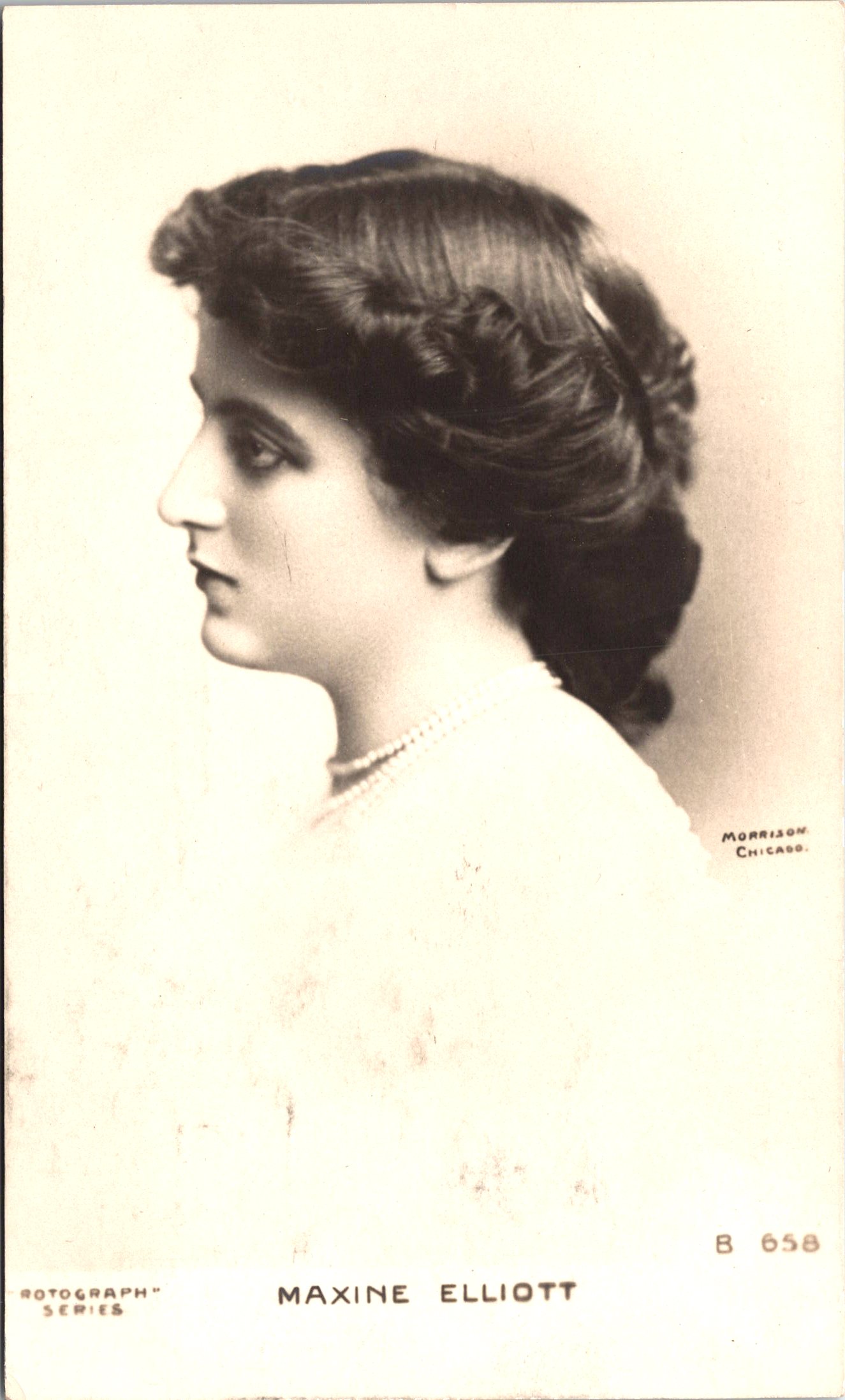
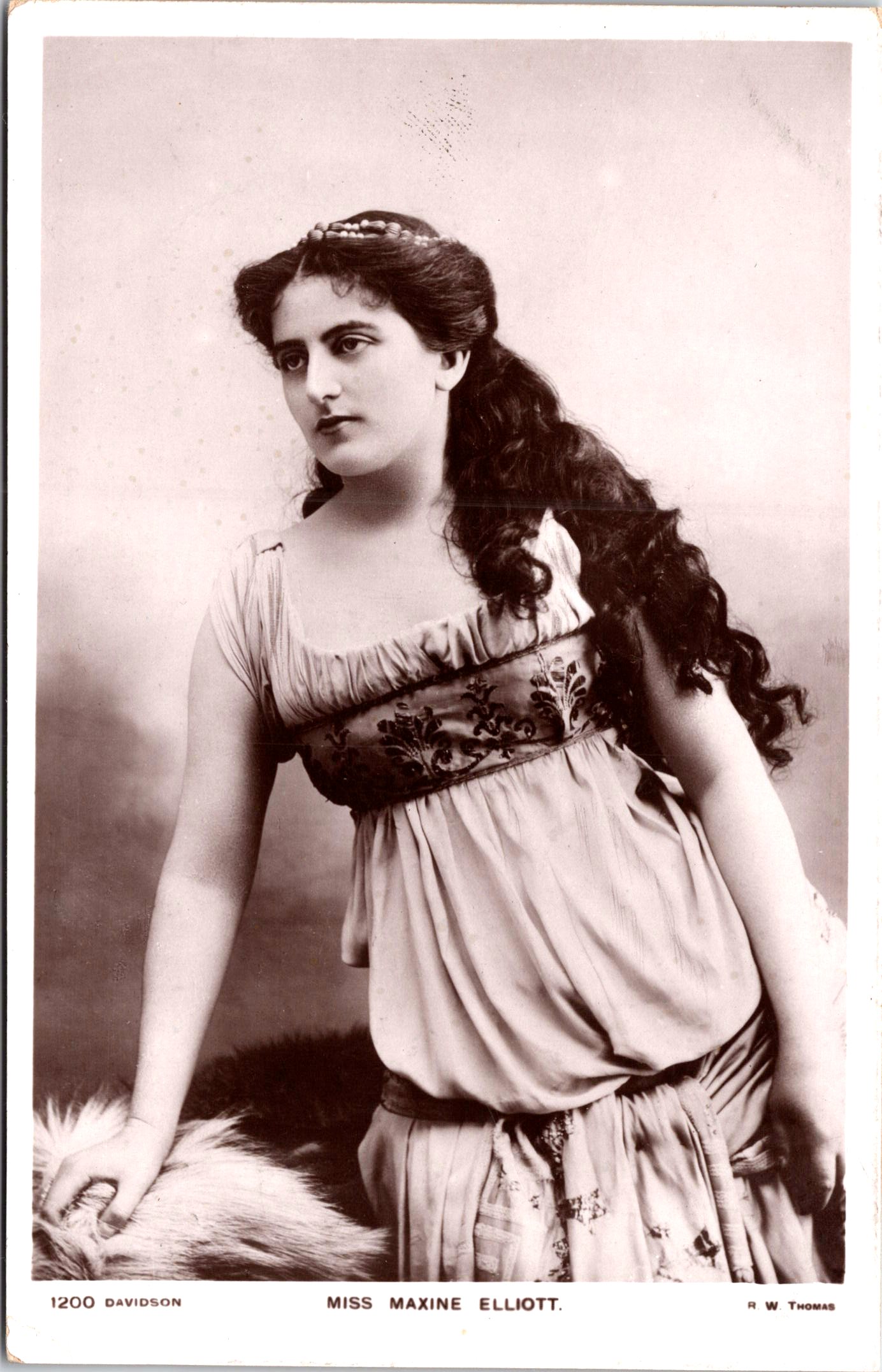
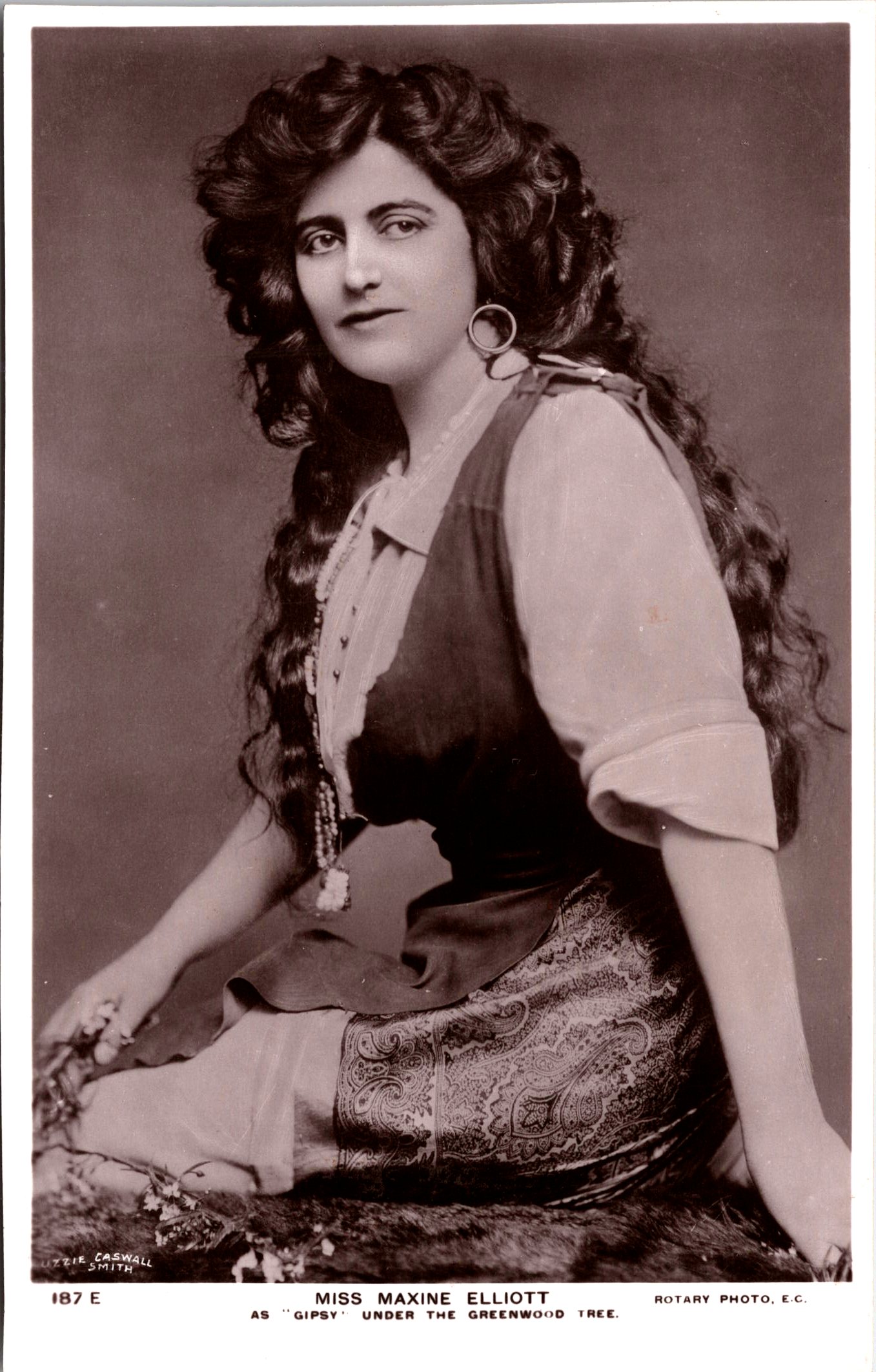
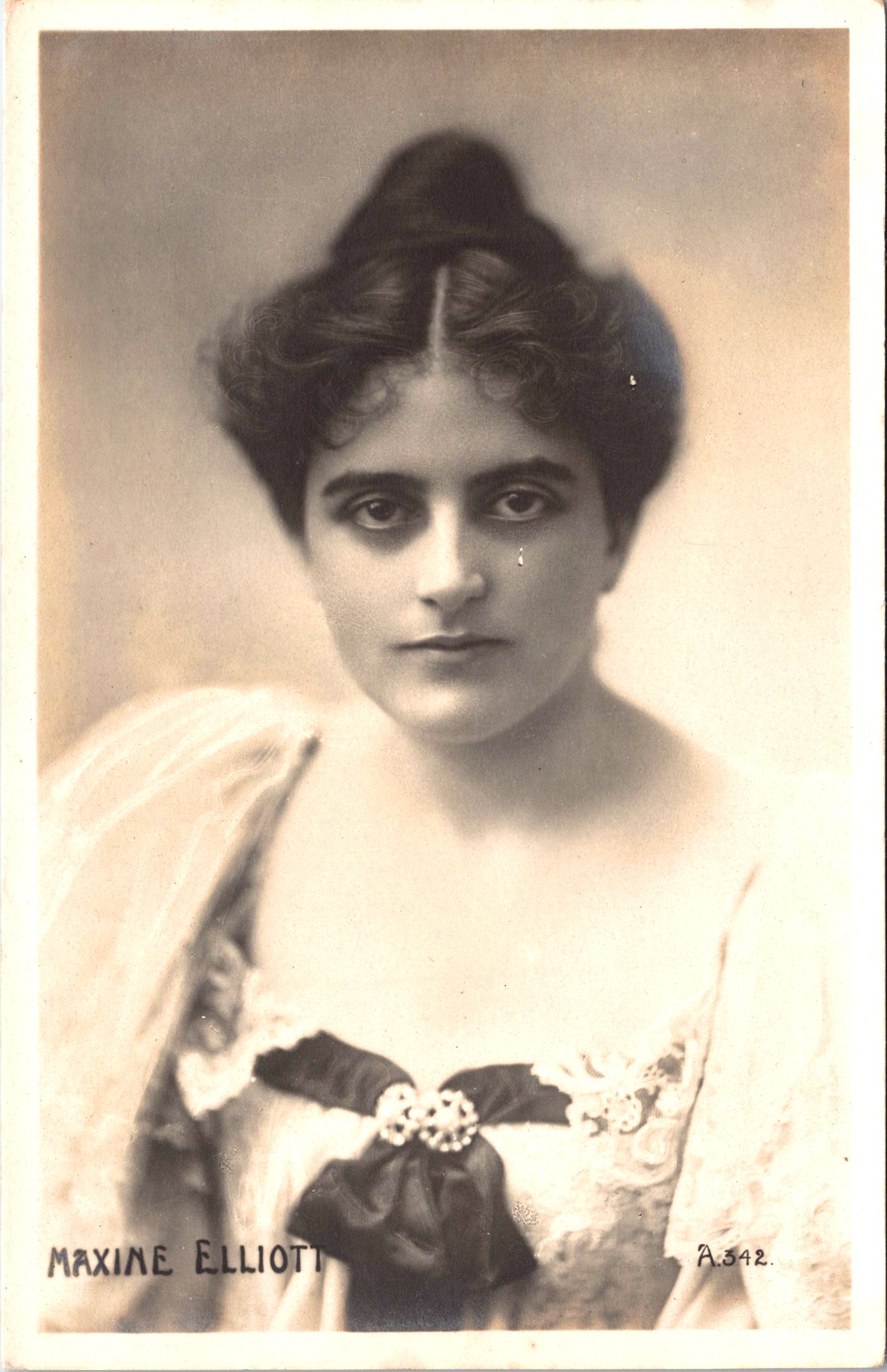
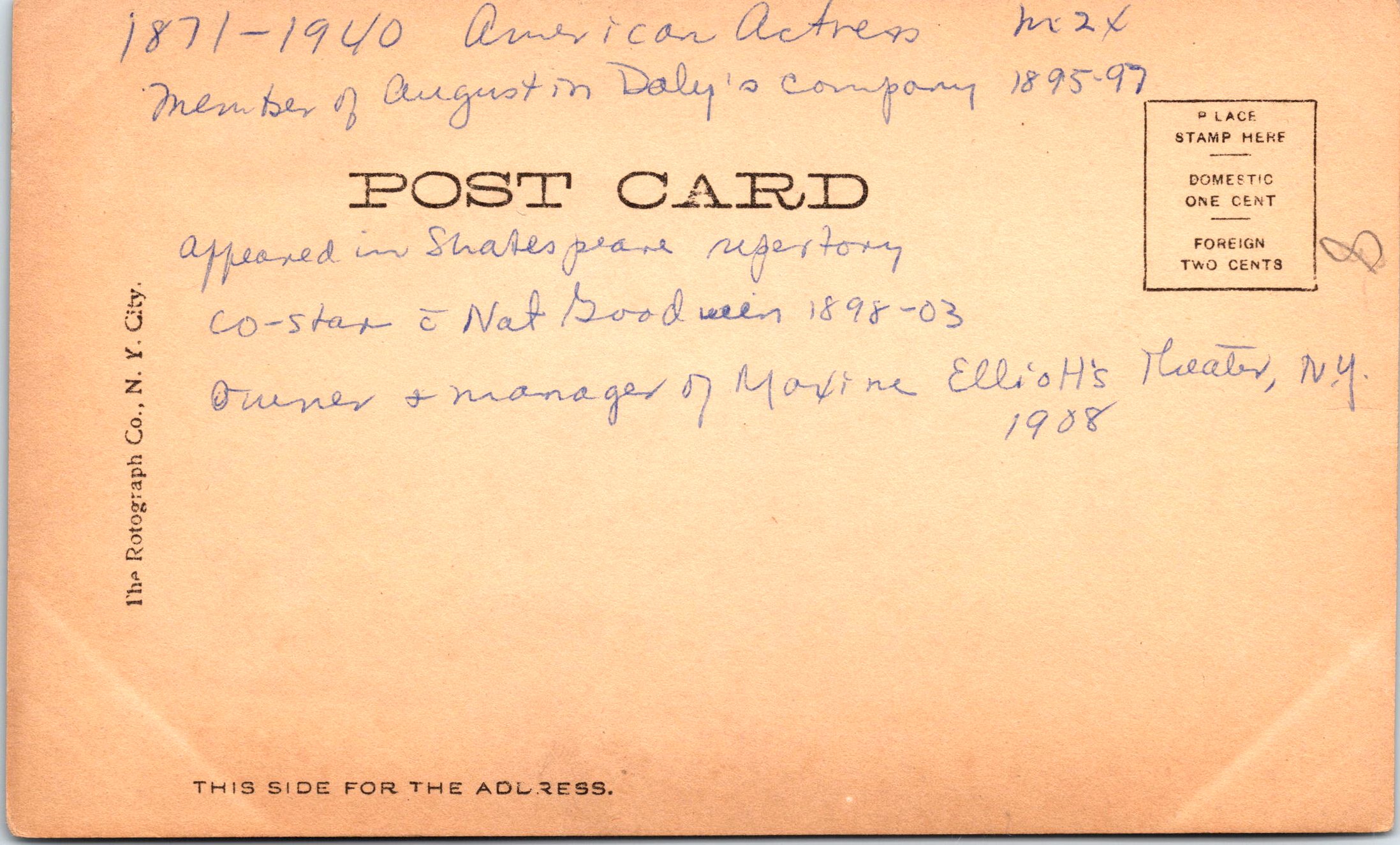
This vintage real photo postcard (Postcard 1) features a portrait of beautiful stage and film actress, and businesswoman, Maxine Elliott (1868-1940). Her photograph was taken by celebrity photographer Benjamin Falk at his New York City studio. Elliott was more than a stage actress. She managed her own theater and experimented with silent films in the 1910’s. Elliott was an extremely popular actress. Apparently she was popular with the men too. It is thought that she had affairs with famous people including King Edward VII and J. P. Morgan. It is also reported that she dated baseball hall of famer, John Montgomery Ward and heavyweight champion Gentleman James Corbett. During World War I she was very involved with the cause for Belgian relief. Elliott was born in Rockland, Maine. Her father was a sea captain. She had at least three siblings including her sister Gertrude Elliott, who also became a successful actress. When Maxine was 15, she was seduced and impregnated by a 25 year-old man. She may or may not have married the man but it is known that she lost the baby. In 1890 she made her first stage appearance. Her big break came in 1895 when she was hired by Augustin Daly to be the supporting actress for the highly acclaimed actress, Ada Rehan. In 1898, after divorcing husband number one, she married comedian Nat C. Goodwin. The two starred together in a number of productions including “Nathan Hale” and “The Cowboy and the Lady”. In 1903, Maxine appeared in the Broadway production of “Her Own Way” (1903). The play launched Maxine into stardom. In 1905, the play went to London where King Edward VII requested an introduction to the pretty actress. They met and then rumors started about the pair having an intimate relationship. In 1908, Goodwin obtained a divorce from Elliott. This is about the time she met 70 year-old J. P. Morgan. They became friends and rumors of their romantic involvement were never confirmed. Financial advice from Morgan helped her become a wealthy woman. The same year as her divorce, she opened her own theater, “The Maxine Elliott” in New York City. She was both the owner and the manager. In fact, she was the only woman in the US, at the time, managing her own theater. In regard to acting on Broadway, Elliott had an extensive resume. She appeared in 22 Broadway productions between 1894 and 1920. In 1913, she began acting in silent films. The IMDb reports that she was in five films including “From Dusk to Dawn” (1913), “Fighting Odds” (1917), and “The Eternal Magdalene” (1919). In 1913, Elliott went to England and started dating tennis star Anthony Wilding, fifteen years her junior. According to one source, the pair planned to marry, but he was killed in action in World War I. As a result, Elliott became obsessed with the war and moved to Belgium where she volunteered her money and time toward Belgian relief. It is reported that she also nursed wounded soldiers. Belgium recognized her by awarding her the Belgian Order of the Crown. Elliott retired from the stage in 1920. She stated that she “wished to grow middle-aged gracefully”. This postcard portrait features a young and beautiful Maxine Elliott. This image is a beautiful remnant of turn of the century theater history. This postcard was published by the Rotograph Company which was based in New York City. The postcard is part of a series (No.B888). SOLD
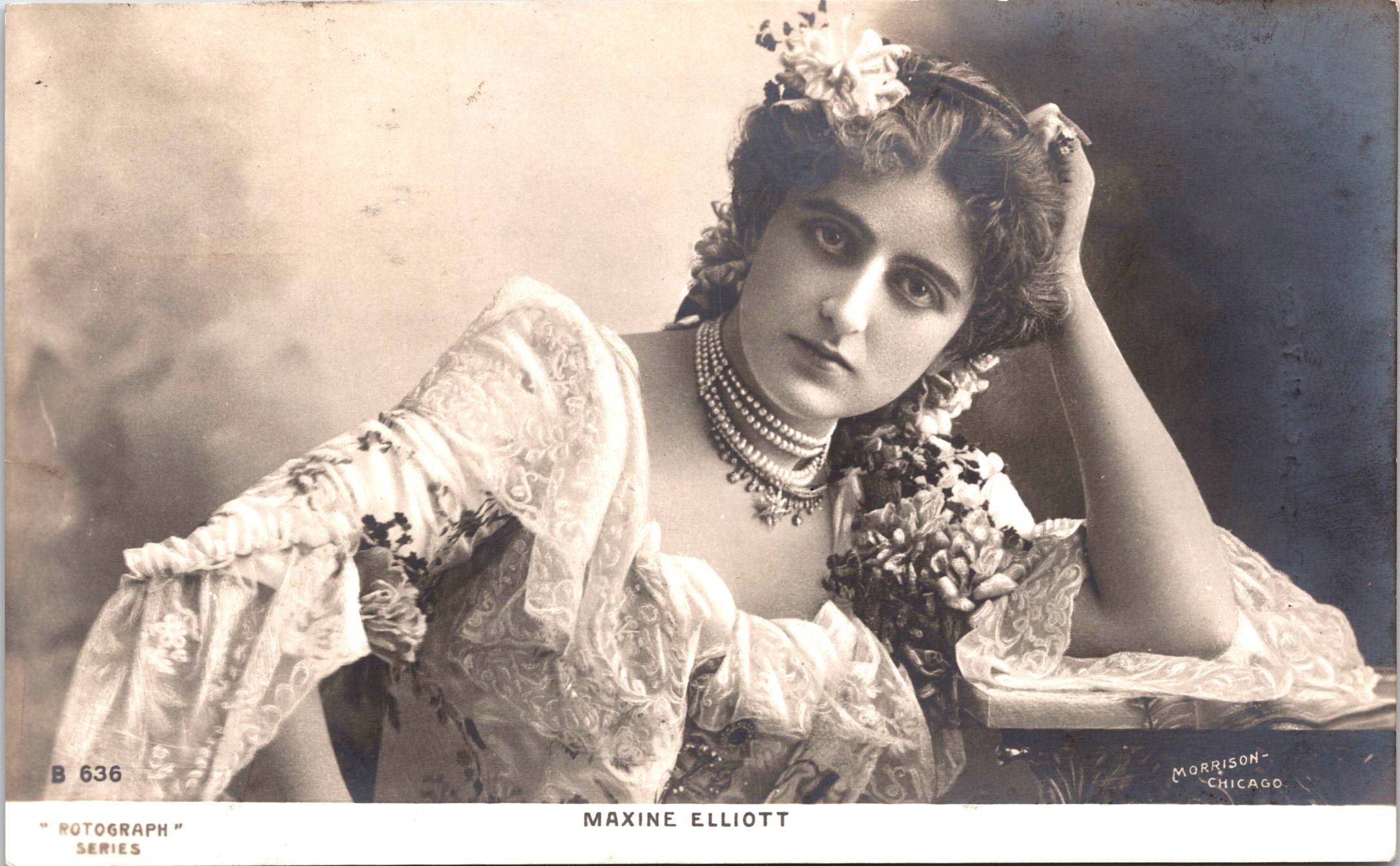
Postcard 2 features a photograph taken by female celebrity photographer, Lizzie Caswall Smith. Lizzie Caswall Smith (1870-1958) was a British photographer who operated in the early 1900’s. She specialized in photographing members of society and celebrities. Many of her photographs were used for postcards. She was involved in the Women’s Suffrage movement and photographed many of the leading suffragettes. She also photographed many actors including Billie Burke and Maude Fealy. She operated the Gainsborough Studio from 1907 through 1920 (309 Oxford Street) and moved to a new location (90 Great Russell Street) where she remained until she retired in 1930 at the age of 60 years-old. Her most famous photograph is a portrait of Florence Nightingale taken in 1910. It was auctioned in 1908 and sold for 5500 pounds which is an equivalent today of nearly 8,000 dollars. The National Portrait Gallery has 84 portraits associated with Lizzie Caswall Smith. This postcard was published by the Rotograph Company which was based in New York City. The postcard is part of a series (No.B636). SOLD
Postcard 3 features a nice portrait of Maxine Elliott. This image, taken by William Morrison (Chicago, Illinois) is a beautiful remnant of turn of the century theater history. This postcard was published by the Rotograph Company, which was based in New York City. The postcard is part of a series (No.B636). (SOLD)
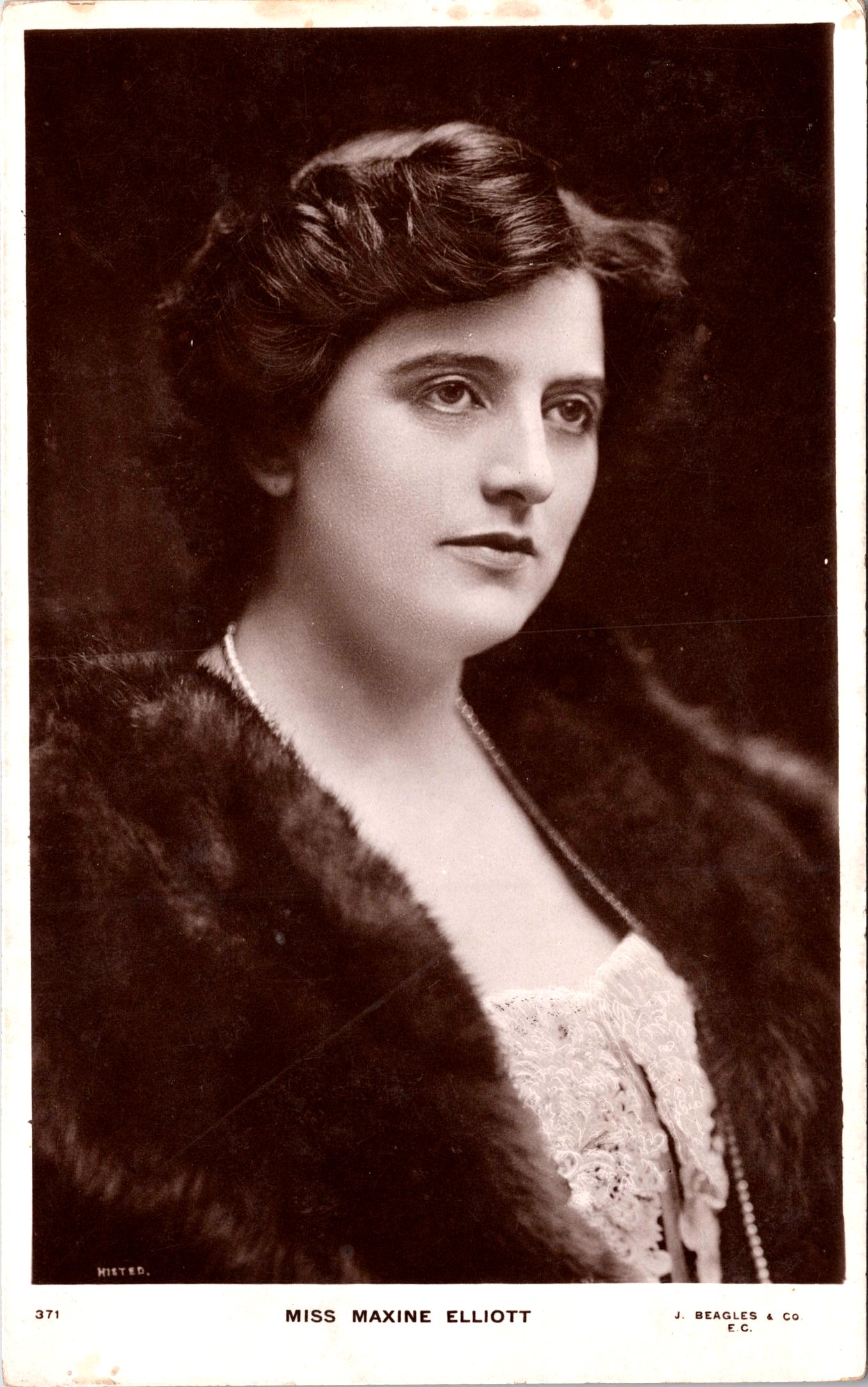
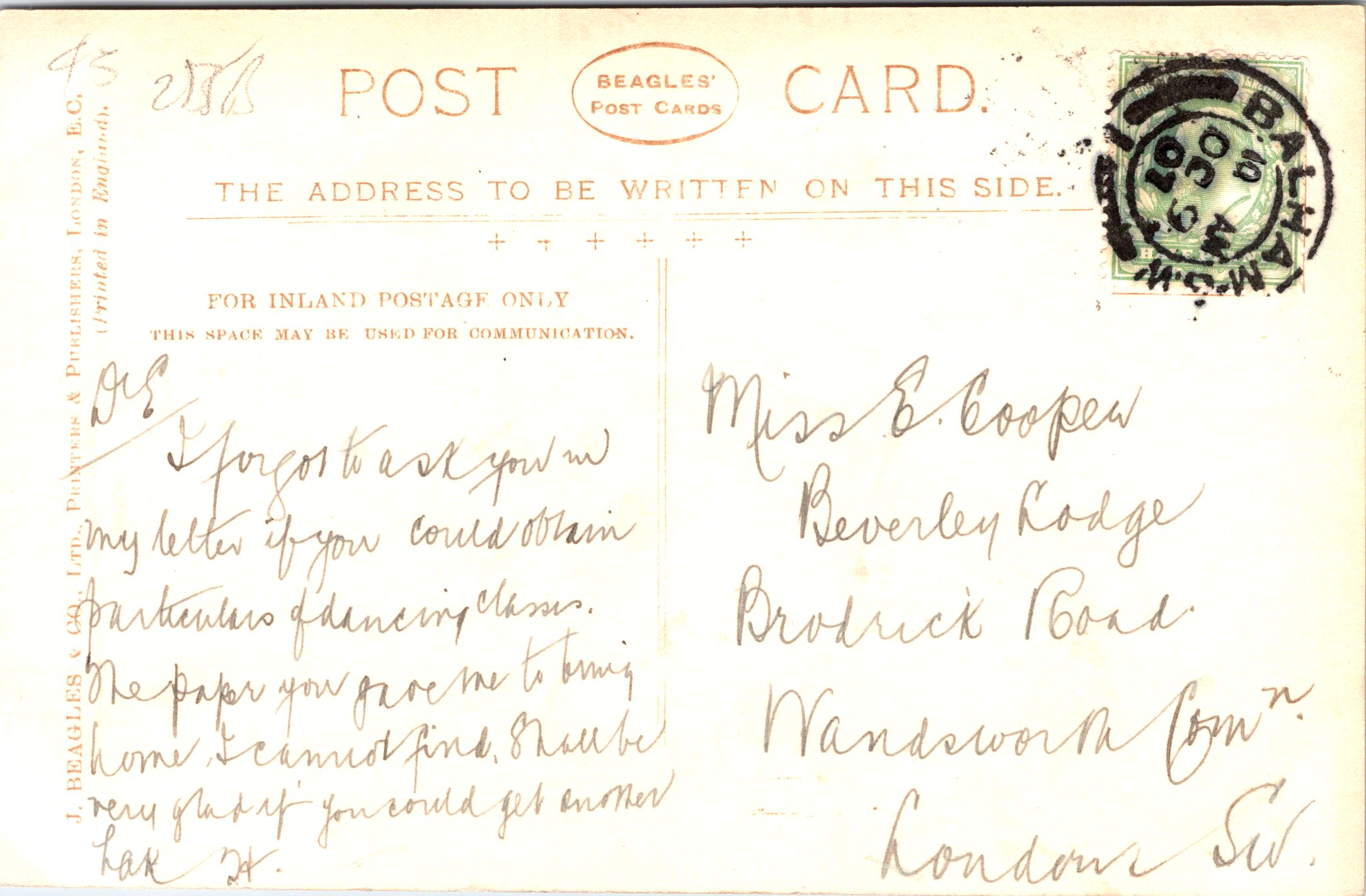
Postcard 4 features Miss Elliott’s portrait by Ernest Walter Histed (1862-1947). Histed was born in England but achieved his success as a photographer in Chicago, and later, in Pittsburgh. He then returned to England and opened a photography studio there. His subjects there included Clara Butt (Opera Star) Pope Pius X, and the Empress of Germany. Histed returned to the US and opened a studio on Fifth Avenue in New York City. He later moved to Palm Beach, Florida and continued his profession until 1934. The Museum of the City of New York has a large collection of his work. The National Portrait Gallery (England) has 32 of his photographs in their collection. This postcard was published by London’s J. Beagles & Co. as part of a series (No. G386).The company was started by John Beagles (1844-1909). The company produced a variety of postcards including an extensive catalog of celebrity (stage and screen) portrait postcards. After Beagle’s death, the business continued as J. Beagles & Co. until it closed in 1939. (SOLD)
Postcard 5 comes from the studio of celebrity photographer, William McKenzie Morrison of Chicago, Illinois. Morrison’s studio was in the Haymarket theater building. This postcard was published by the Rotograph Company which was based in New York City. The postcard is part of a series (No.B658). (SOLD)
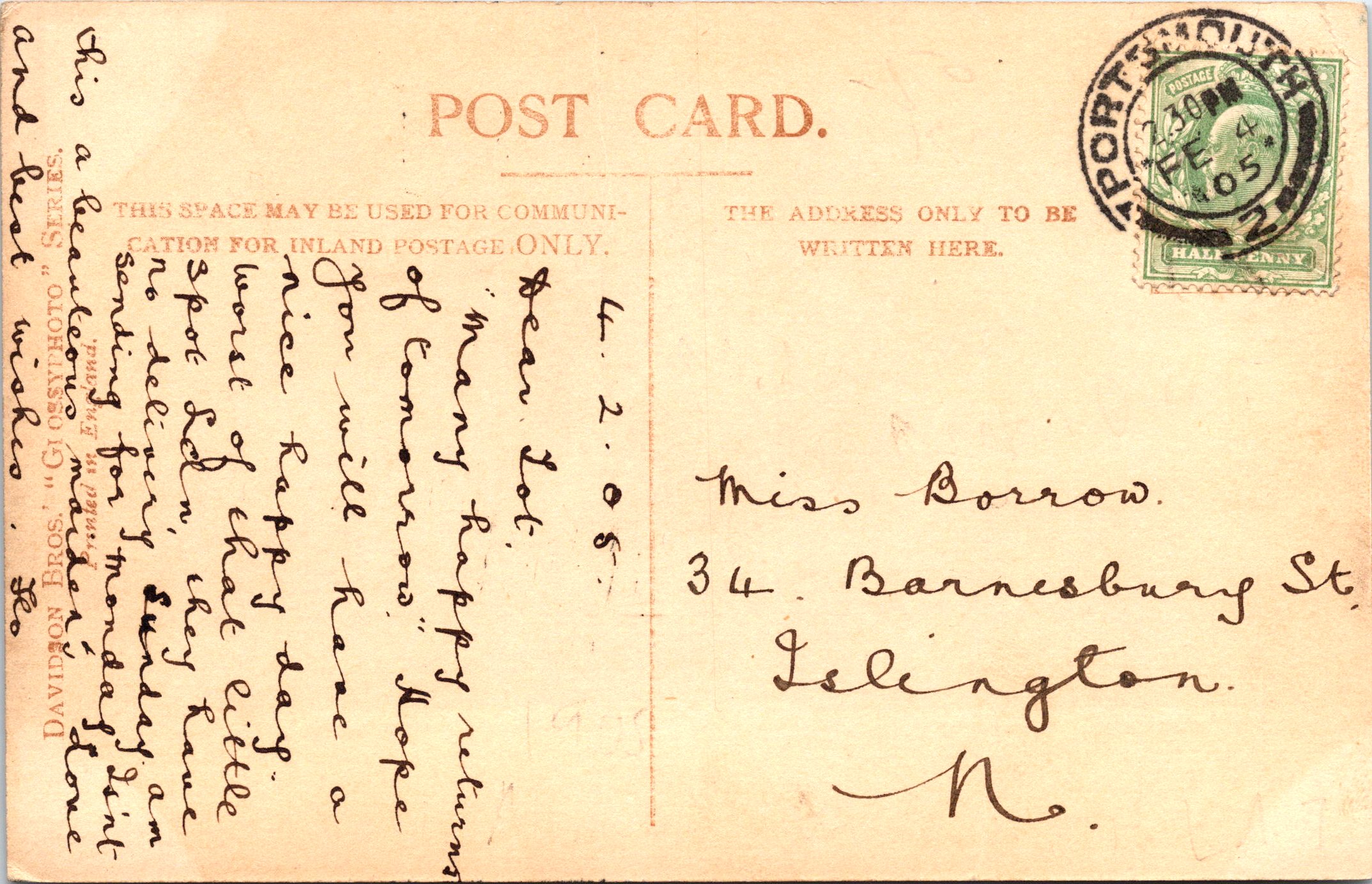
Postcard 6 features a pretty portrait of Miss Elliott taken by R. W. Thomas. It is likely that he is the same man that authored “The Modern Practice of Photography” (1927).This postcard was published by London’s Davidson Bros. as part of a series (No.1200). The message from the sender of this card introduced me to a new word. The writer asks “Isn’t this a beauteous maiden?”. I looked up the word “beauteous” to see if it existed. I learned that the word exists and means “beautiful”. I also learned that “Beauteous” is a word that is customarily used in literature and not conversation. (SOLD)
Postcard 7 Elliott photrographed in costume for her role as Gipsy in “Under the Greenwood Tree”. Her photograph was taken by famed celebrity female photographer, Lizzie Caswall Smith. This image is a beautiful remnant of turn of the century theater history. This postcard was published by Rotary Photo as part of a series (No.187E). (SOLD)
Postcard 8 was published by London’s Ralph Dunn & Co. as part of a series (No. A342). (SOLD)
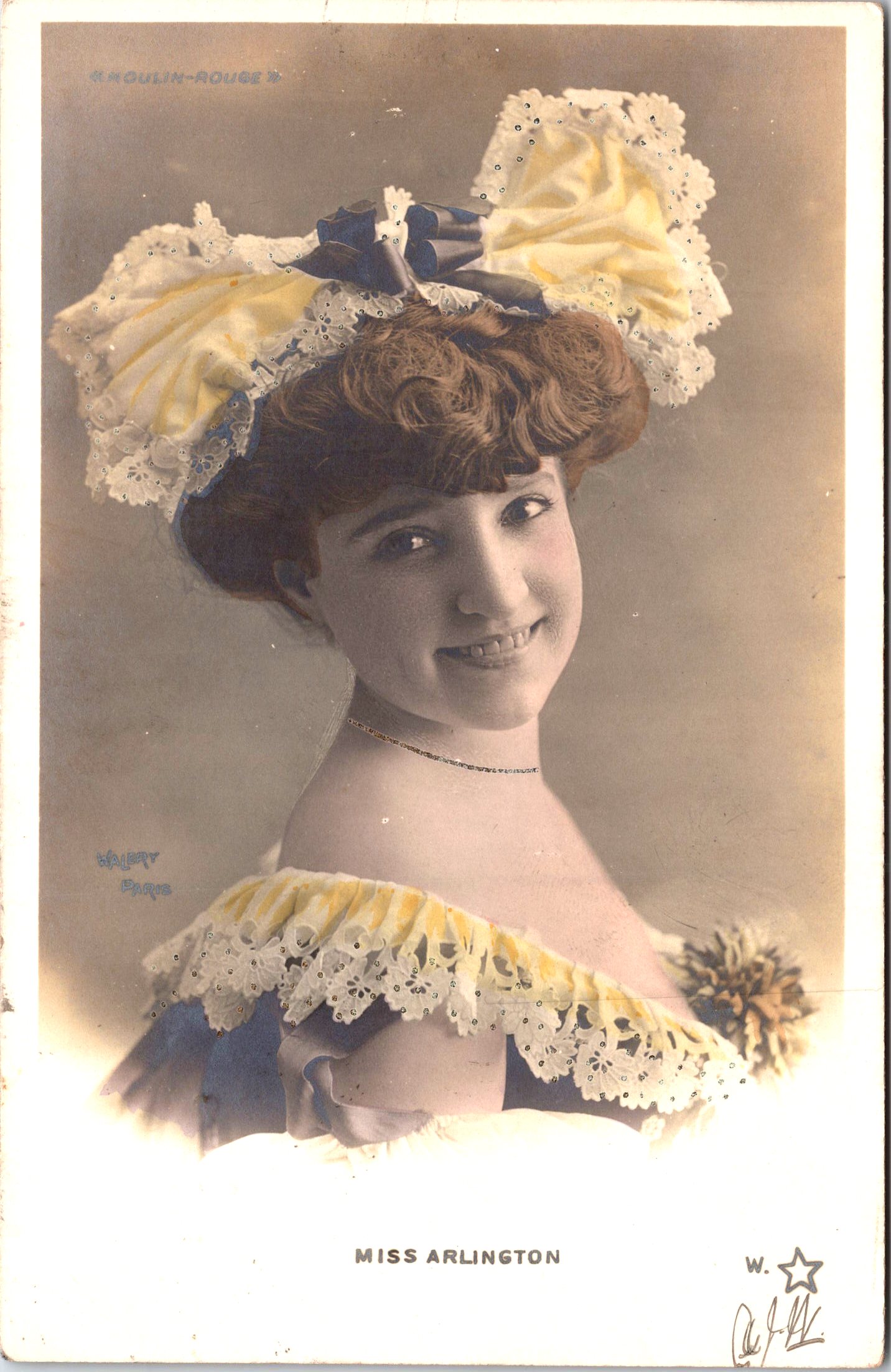
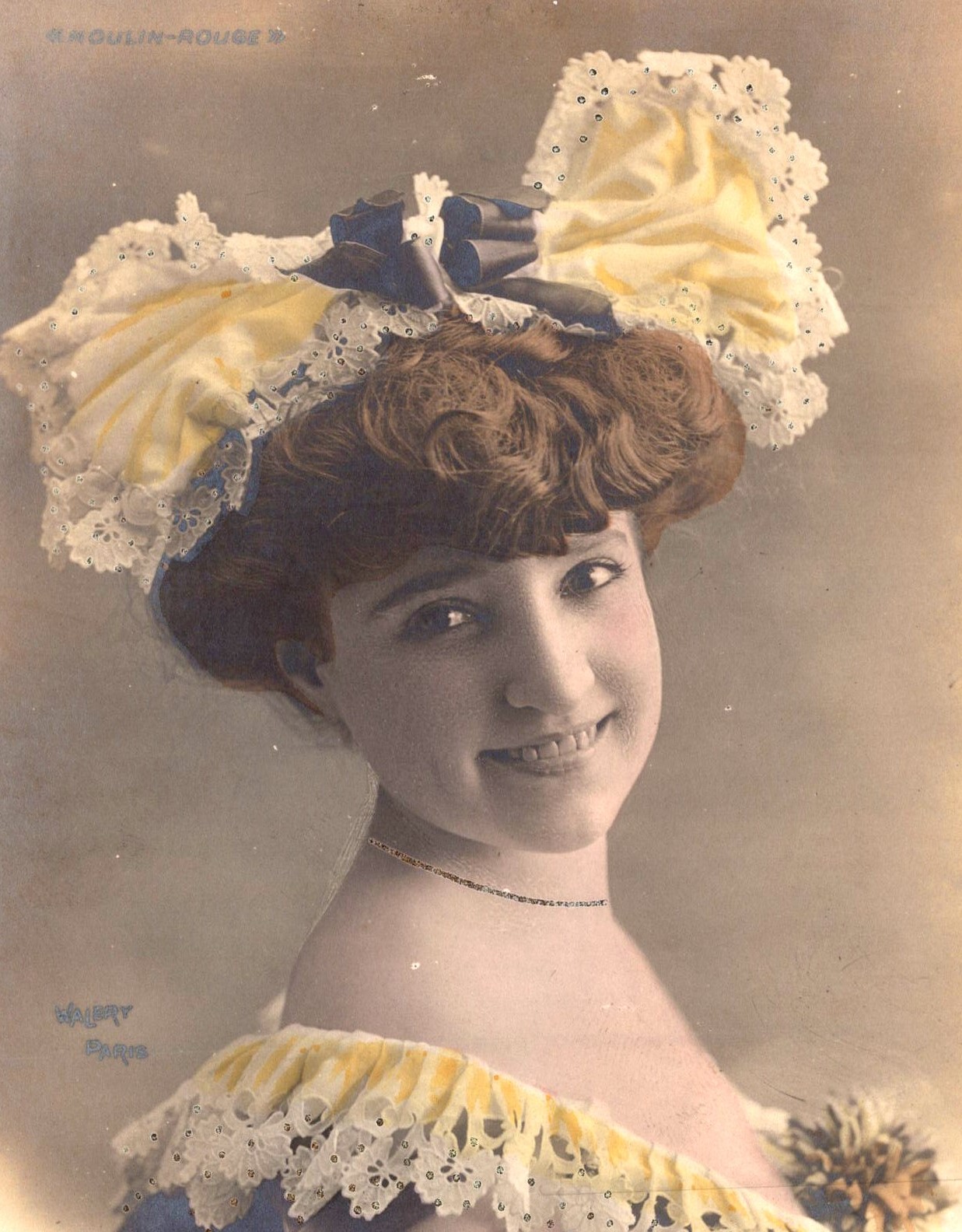
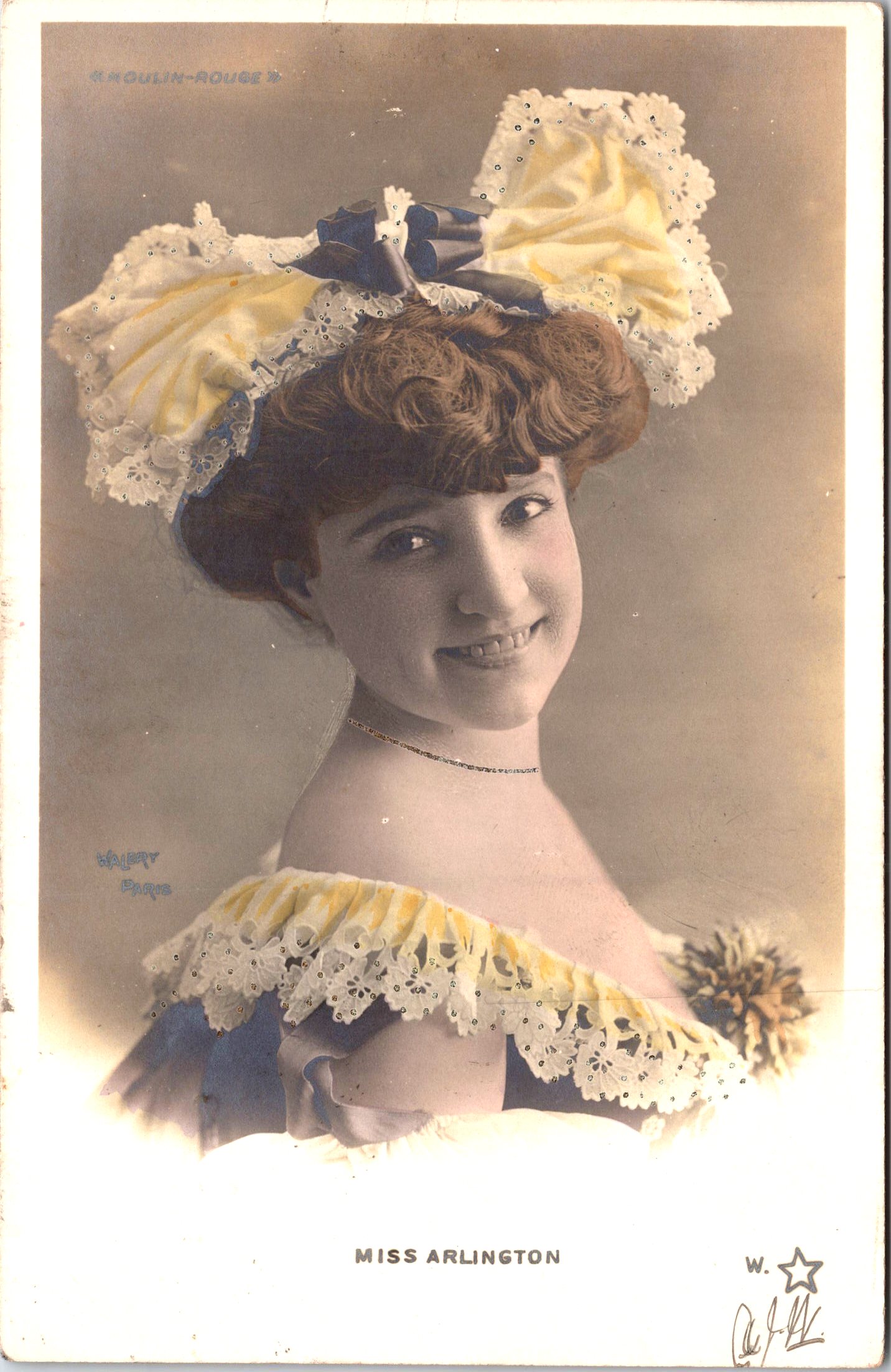
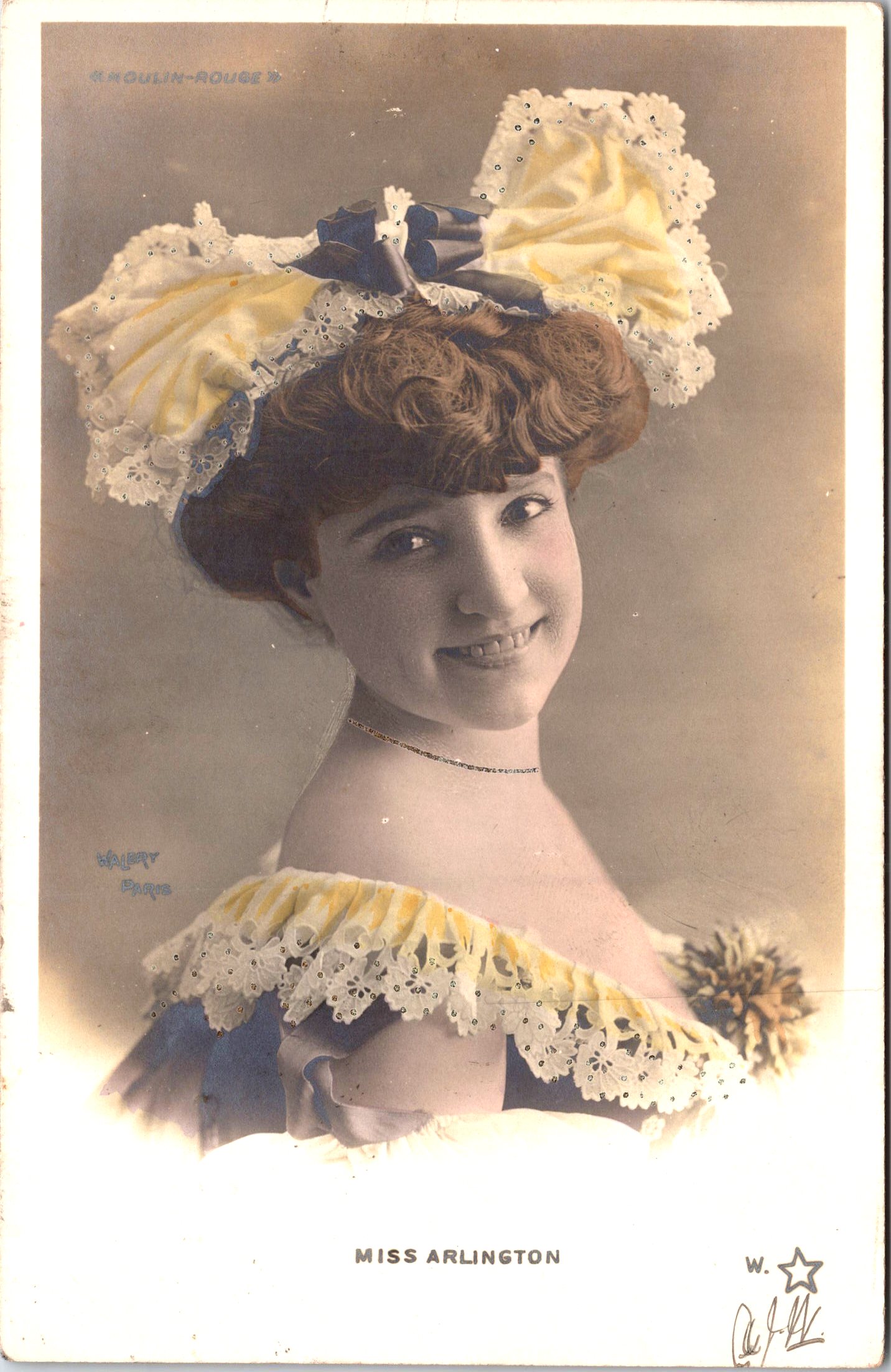
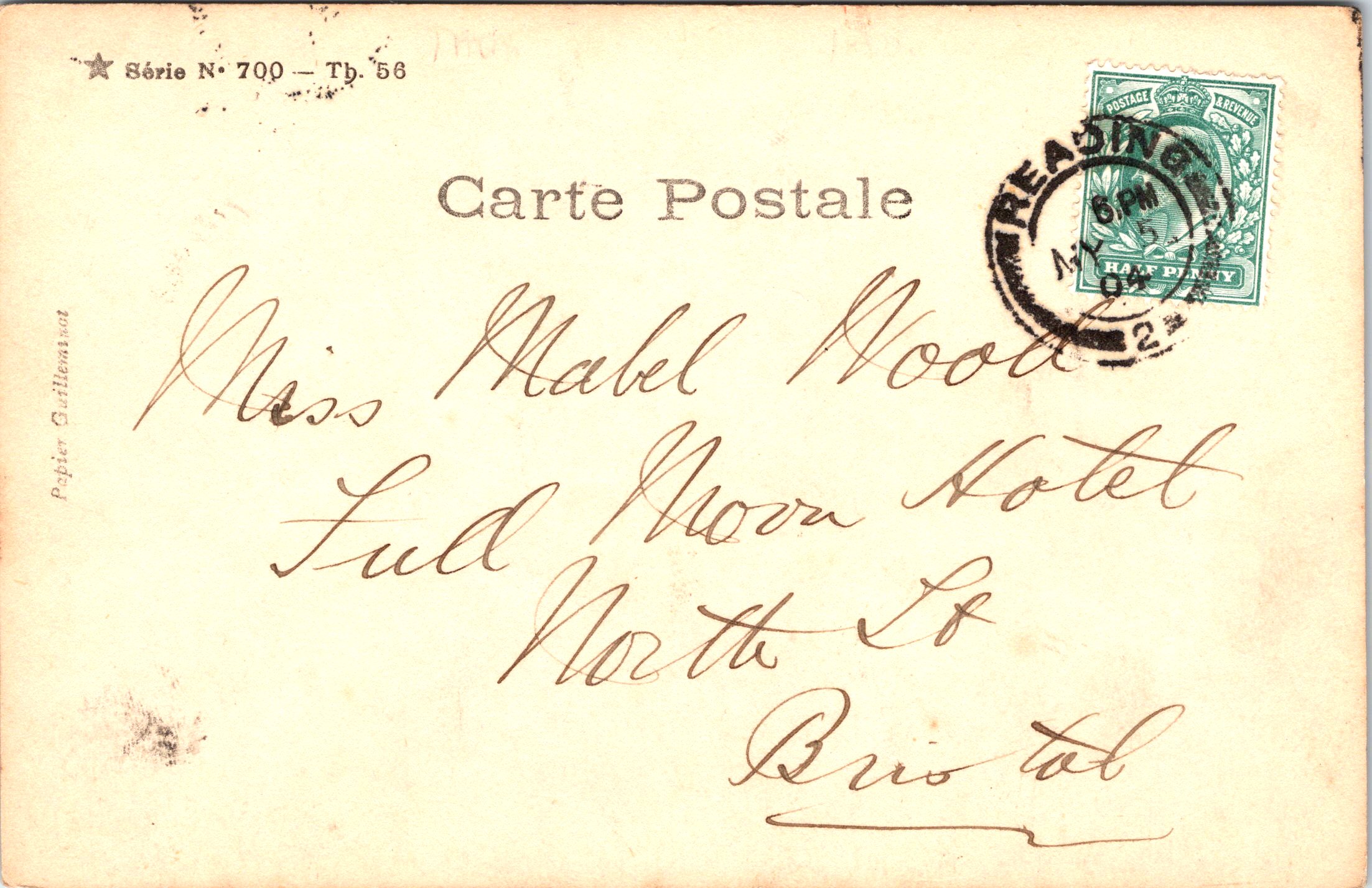
This color tinted vintage real photo postcard features a performer named Miss Arlington. One of the music halls where she performed was the famous Moulin Rouge. Apparently, she was popular enough to merit her own postcard portrait, but not popular enough for me to find information about her online. Arlington was photographed by Lucien Walery. He was a celebrated Paris photographer known for his portraits of artists and cabaret dancers from the city’s music halls. He is very well known for his portraits of Mata Hari and Josephine Baker. Walery did a lot of work in the genre of nude/erotic photography. He photographed the beautiful women of Paris between the early 1900’s and the 1920’s. This postcard has an undivided back and was postmarked in 1904. This postcard is in good condition (see scans).
Buy this original Vintage Real Photo Postcard (includes shipping within the US) #7656
To purchase this item, click on the Pay with PayPal button below
$12.00
Buy this original Vintage Real Photo Postcard (includes International shipping outside the US) #7656
To purchase this item, click on the Pay with PayPal button below
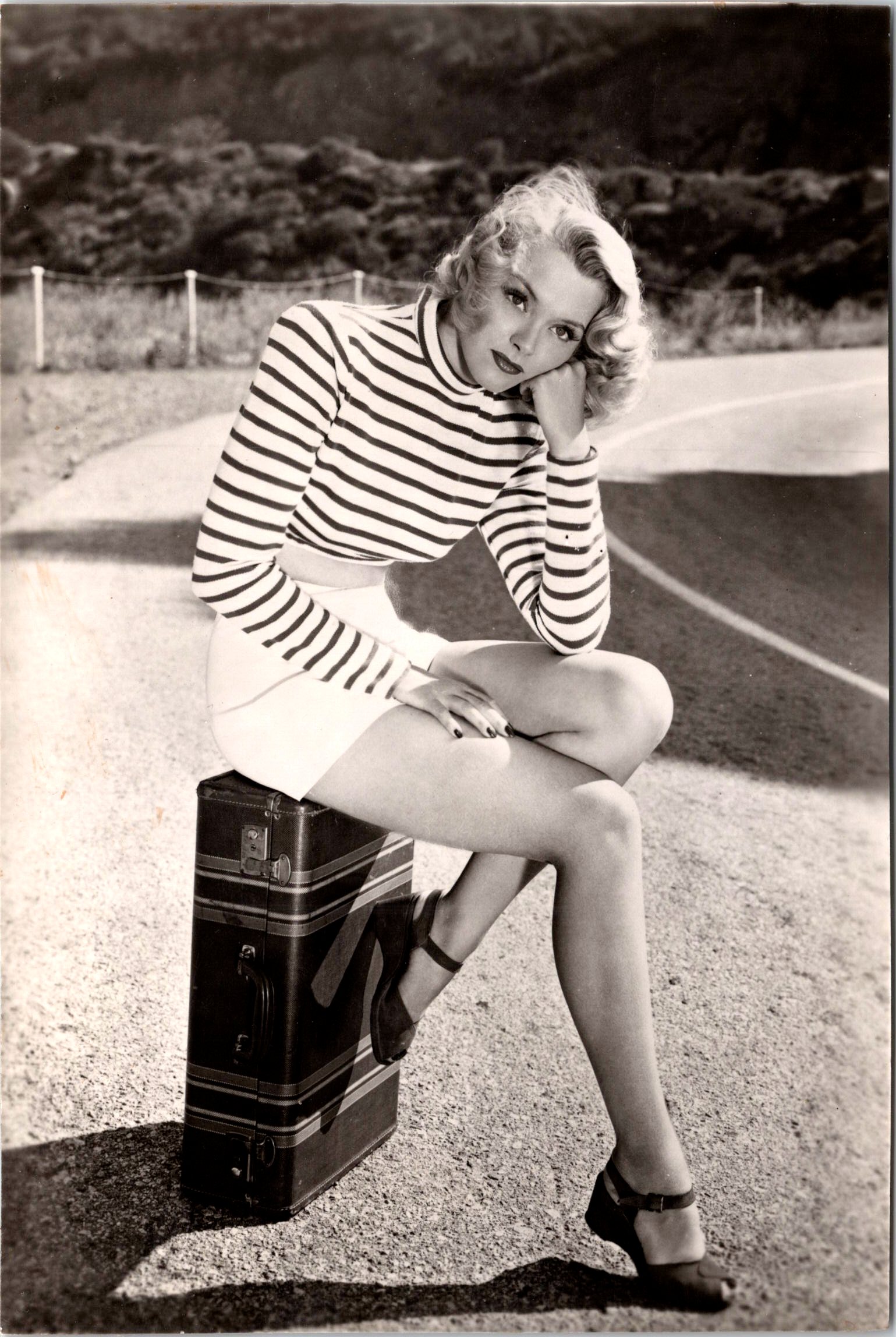
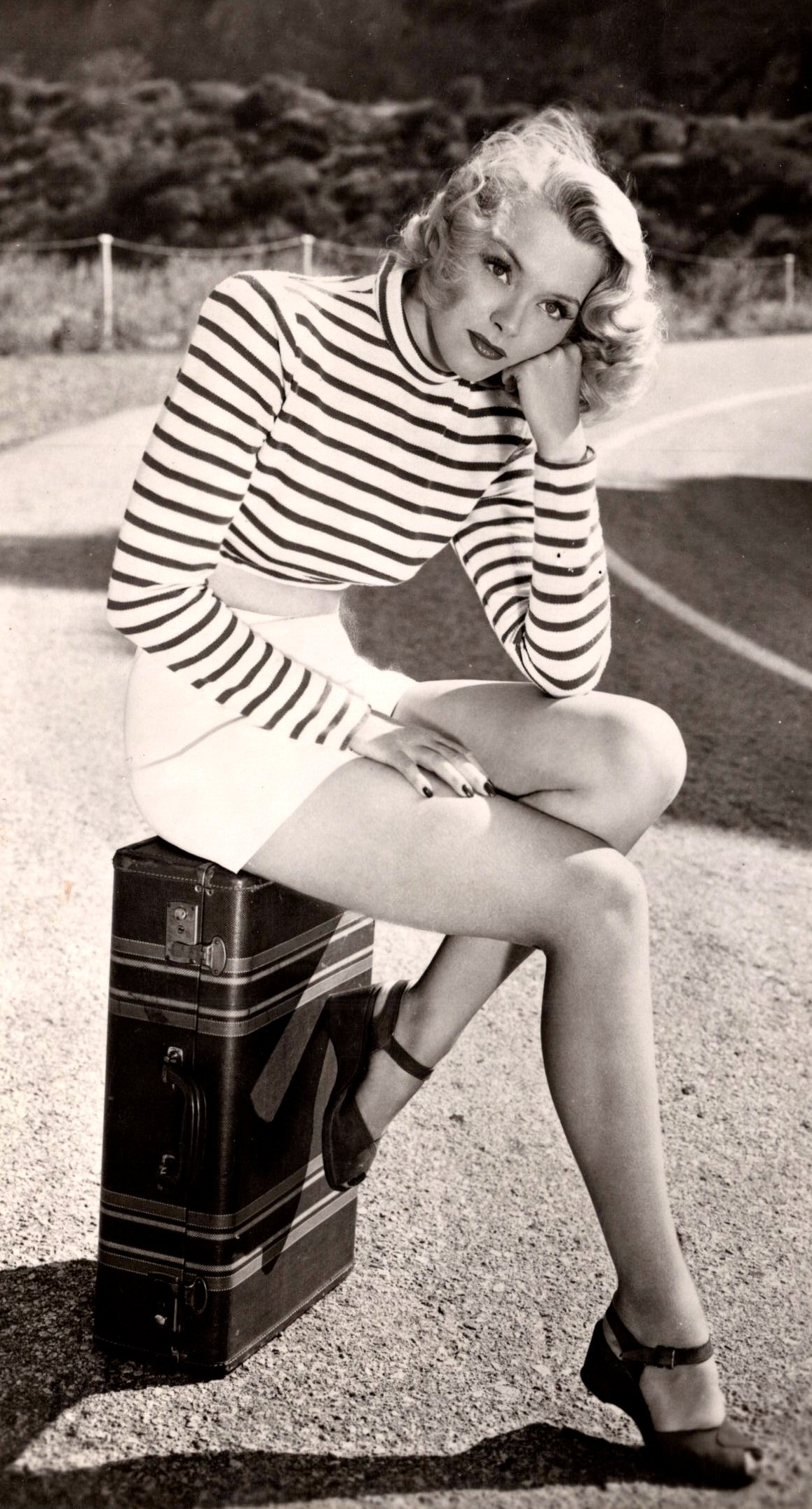
This vintage photograph features a pretty young woman sitting on a suitcase at the side of a road. A viewer of this image could hypothesize that she is looking for someone to stop and give her a ride. Her clothing emphasizes her nice figure and she is quite leggy in this cheesecake photograph. Research reveals the identity of this alluring woman. Leslie Brooks (1922-2011) was an American film actress, model an dancer. She began working as a model at age 18, began playing in bit movie parts in 1941, and by 1944 she was getting bigger roles. She played the lead in the film noir classic, “Blonde Ice” (1948). She retired from the film business in 1949. Research also discovered that this photograph captures Brooks in the film “It’s Great to be Young” (1946). The IMDb lists 29 movie credits for this actress between 1941 and 1949 and one appearance in 1971. SOLD
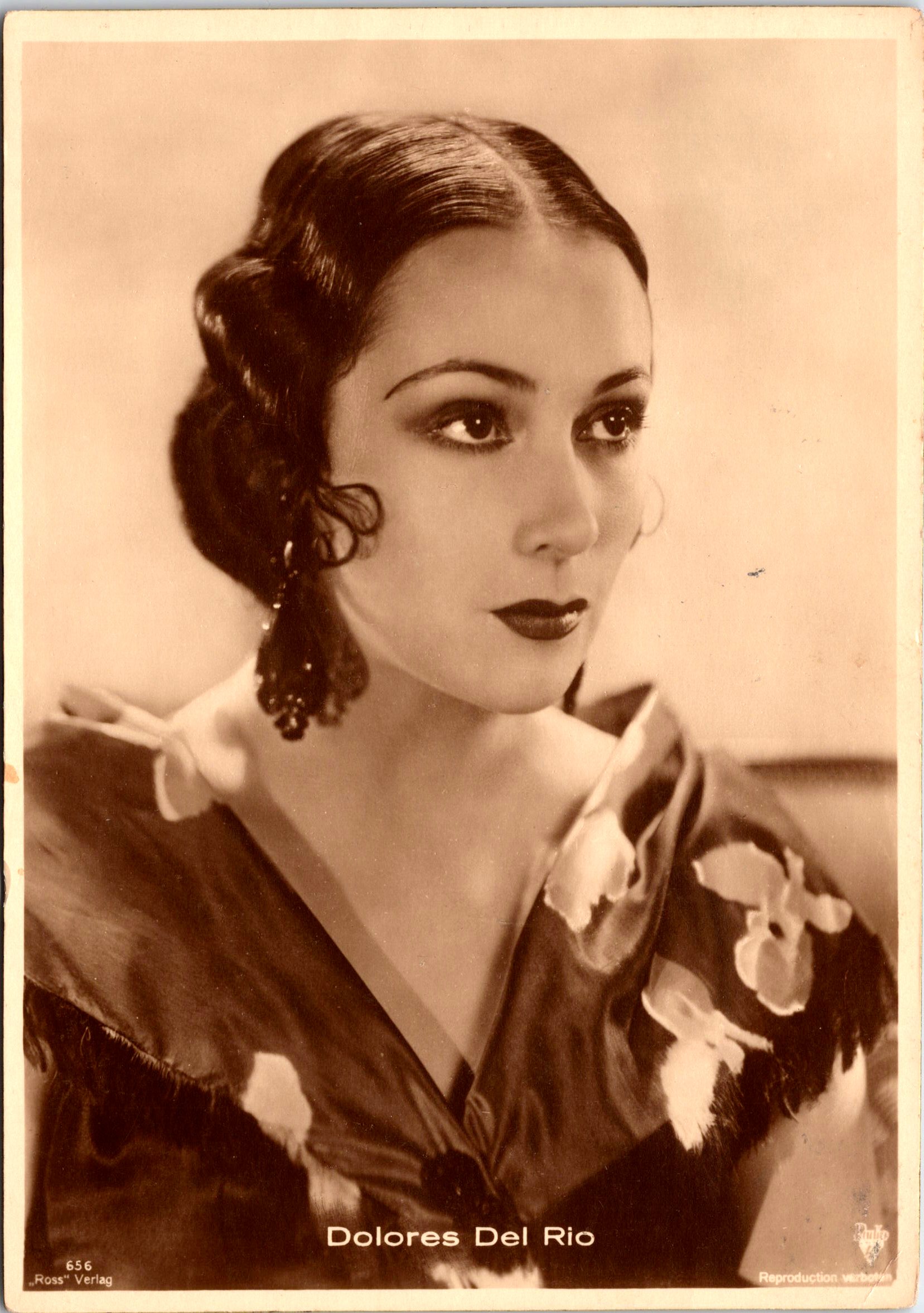
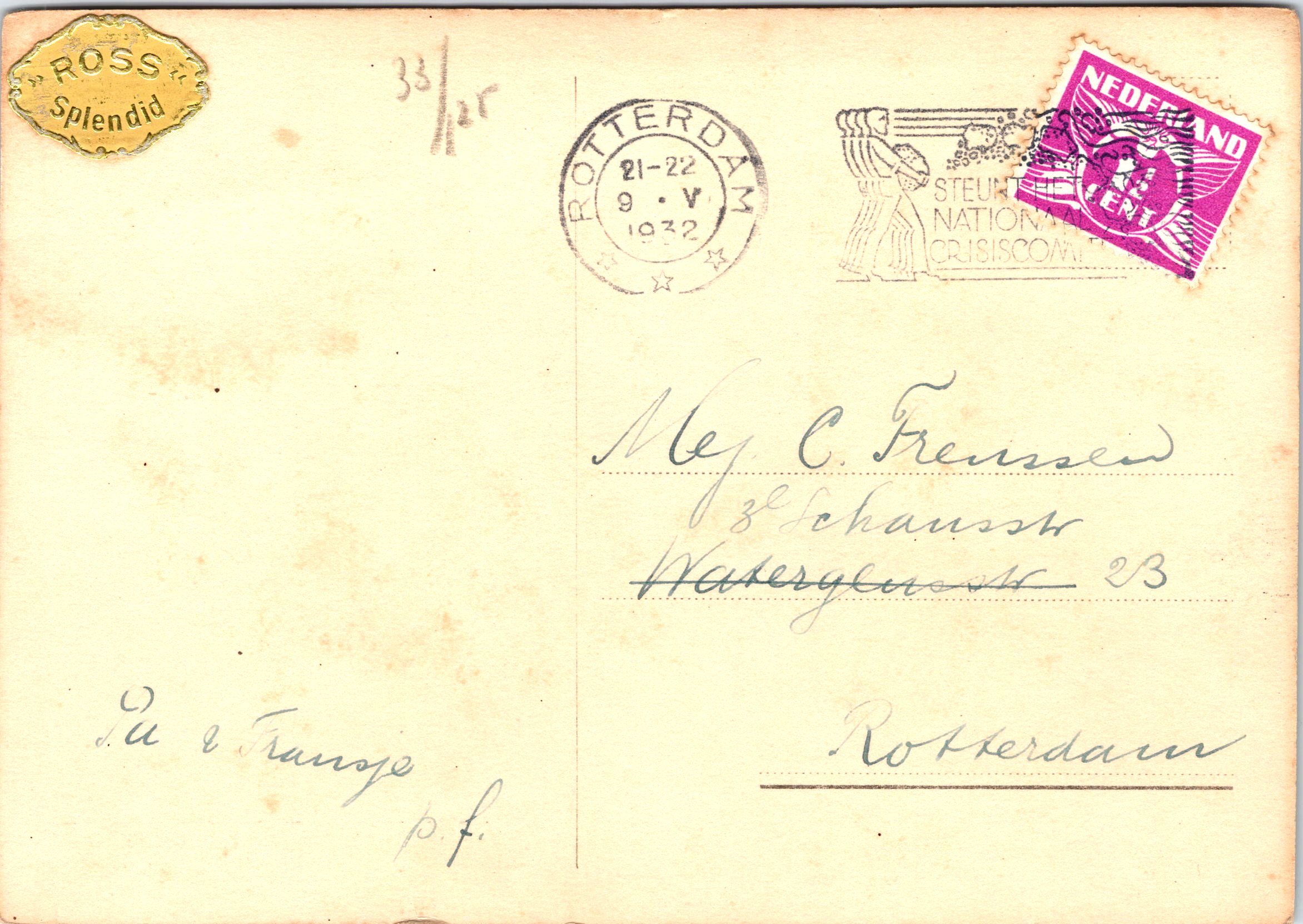
This vintage real photo postcard features pretty Mexican actress, dancer, and singer; Dolores del Rio (1904-1983). Del Rio’s performing career spanned more than half of a century. She was the first major Latin American actress to become an American film star (1920’s & 1930’s). Del Rio was also a major star in Mexican films. Dolores was known for her beauty as well as for her talent. She was discovered in Mexico and her Hollywood film career started in 1925. She began her career with a number of successful films, including “Ramona” (1928) and “Evangeline (1929). During the silent film era, she was considered the female version of “latin lover”, Rudolph Valentino. Del Rio was one of the fortunate actresses whose career was not destroyed by the advent of sound films. She acted in a wide range of film genres. “Bird of Paradise” (1932) and “Madame Du Barry” (1934) were among her successful films of the 1930’s. In the early 1940’s, her Hollywood career began to flounder sparking Del Rio to return to Mexico to become a major star of Mexican cinema. She continued acting in Mexican films through the 1950’s. Beginning 1960 she acted in both Mexican and Hollywood films. During the late 1950’s through the early 1970’s, Del Rio acted in theater and television. Dolores was born in Durango City, Mexico. Her parents were part of Mexican aristocracy whose lineage could be traced to Spain. Dolores was the cousin of actor Ramon Novarro (another silent film”latin lover”), and of Mexican cinema actress, Andrea Palma. During the Mexican Revolution (1910-1920), Dolores’s family lost its fortune. Her family felt threatened by Pancho Villa’s insurgence. It was time to “get out of town”. Her father fled to the United States while she and her mother escaped to Mexico City. Acting was an integral part of Dolores’s getaway. She and her mother felt compelled to dress as peasants to insure safe passage on the train to Mexico City. Her parents reunited there in 1912. Dolores attended a college in Mexico City operated by French nuns. After seeing Russian ballerina, Anna Pavlova perform; Dolores decided to become a dancer and took lessons from a well respected teacher. At age 17, Dolores married Jaime Martinez del Rio. He was from a wealthy family and was educated in England. The couple honeymooned in Europe for two years and Dolores formed close relationships with a number of members of European aristocracy. When the couple returned to Mexico, they settled in Mexico City. In 1925, Dolores met American filmmaker Edwin Carewe, and he was spellbound. He convinced Dolores and her husband to move to Hollywood where he promised to make Dolores a star. Her husband hoped to write screenplays there. When they arrived in Tinseltown, Carewe launched a public relations campaign to raise excitement about his beautiful find. He built up her aristocratic background by saying such gems as Dolores was “the first lady of high Mexican Society” and that she had come to Hollywood with a collection of shawls and combs valued at fifty thousand dollars. Dolores made her film debut in “Joanna” (1925), where she played a vamp of Spanish-Brazilian origin. Her first starring role was in the comedy “Pals First” (1926), directed by Carewe. That same year, Dolores appeared in the war film “What Price Glory?”. The movie was a huge financial success and helped Dolores become one of the “WAMPAS Baby Stars” of 1926. Other members of her “class” were Mary Astor, Joan Crawford, Janet Gaynor, and Fay Wray. By then, her film career was rocketing. Her role in Resurrection” (1927), a popular film based on a Tolstoy novel, further propelled her career. While her career was succeeding, her personal life was a “hot mess”. Her marriage to Del Rio ended in 1928. He had much difficulty being in the shadow of his famous and successful wife. Six months after Dolores filed for divorce, Del Rio died in Germany. While dealing with her grief, she had to deal with constant harassment from her discoverer, Edwin Carewe. He wanted to be more than her agent and her director since he had first launched her career. In 1929, Dolores announced to the press, that despite Carewe’s claims, the pair were just friends and business companions. She added that they had no plans for marriage. Soon thereafter, she cancelled her contract with him. The end result was a legal dispute that was settled out of court. Carewe’s anger did not end there. He disparaged her the press and refilmed “Resurrection” starring Lupe Velez, another popular Mexican film star. In 1930, Del Rio married MGM art director, Cedric Gibbons. They became one of Hollywood’s most followed couples of the early 1930’s. In 1932, the film, “Birds of Paradise”, was released to rave reviews. The film starred Del Rio and actor, Joel McCrea. The movie was a South Seas love story. A scandal arose from the film because of a scene featuring the pair swimming naked. Controversy continued in Del Rio’s appearance in “Flying Down to Rio” (1933). In this film, Del Rio was the first actress to wear a two piece bathing suit on screen. Fred Astaire and Ginger Rogers danced together for the first time on film, in this movie. Del Rio and Astaire also did an “intricate” dance number in the film. Del Rio found herself in political hot water when she and Ramona Novarro and Lupe Velez attended a special screening of a Mexican film which was accused of promoting Communism in California. Del Rio was accused of being a Communist for her attendance at the screening. In 1940, Del Rio began an affair with actor/filmmaker, Orson Welles. The dalliance resulted in Del Rio and Gibbons divorce. In 1954, Dolores was scheduled to co-star in a Spencer Tracy film, but the US government would not give her permission to work in the United States. The government believed she was sympathetic toward communism for attending the aforementioned film screening and for signing a petition supporting a world peace conference. After some time, she was able to remedy the problem by writing a persuasive letter to the US authorities. Later in life Del Rio did express some “political” beliefs. She stated that she wished she could play Mexican roles to show what life in Mexico was really like. She felt such an opportunity could help diminish the ugly stereotypes that existed about Mexicans in American society. She stated that it was her great wish to make fans realize the beauty, wonder, and greatness of Mexicans as a people. She asserted that the great majority of Americans view Mexicans as a “race of bandits, or laborers, dirty, unkempt, and uneducated”. Why do these false negative stereotypes sound so familiar? Del Rio wanted to show “the best that’s in my nation”. It has been pointed out by more than a few writers that Dolores del Rio was no “Latin bombshell”. Instead, she was noted for her elegance. The IMDb reports that Del Rio has 63 film credits ranging from 1925 through 1978. This vintage postcard was published by Ross Verlag as part of a series (no.656). The reverse of the card has a gold seal stating “Ross Splendid”. This postcard has a Netherlands stamp and was postmarked in Rotterdam in 1932. SOLD
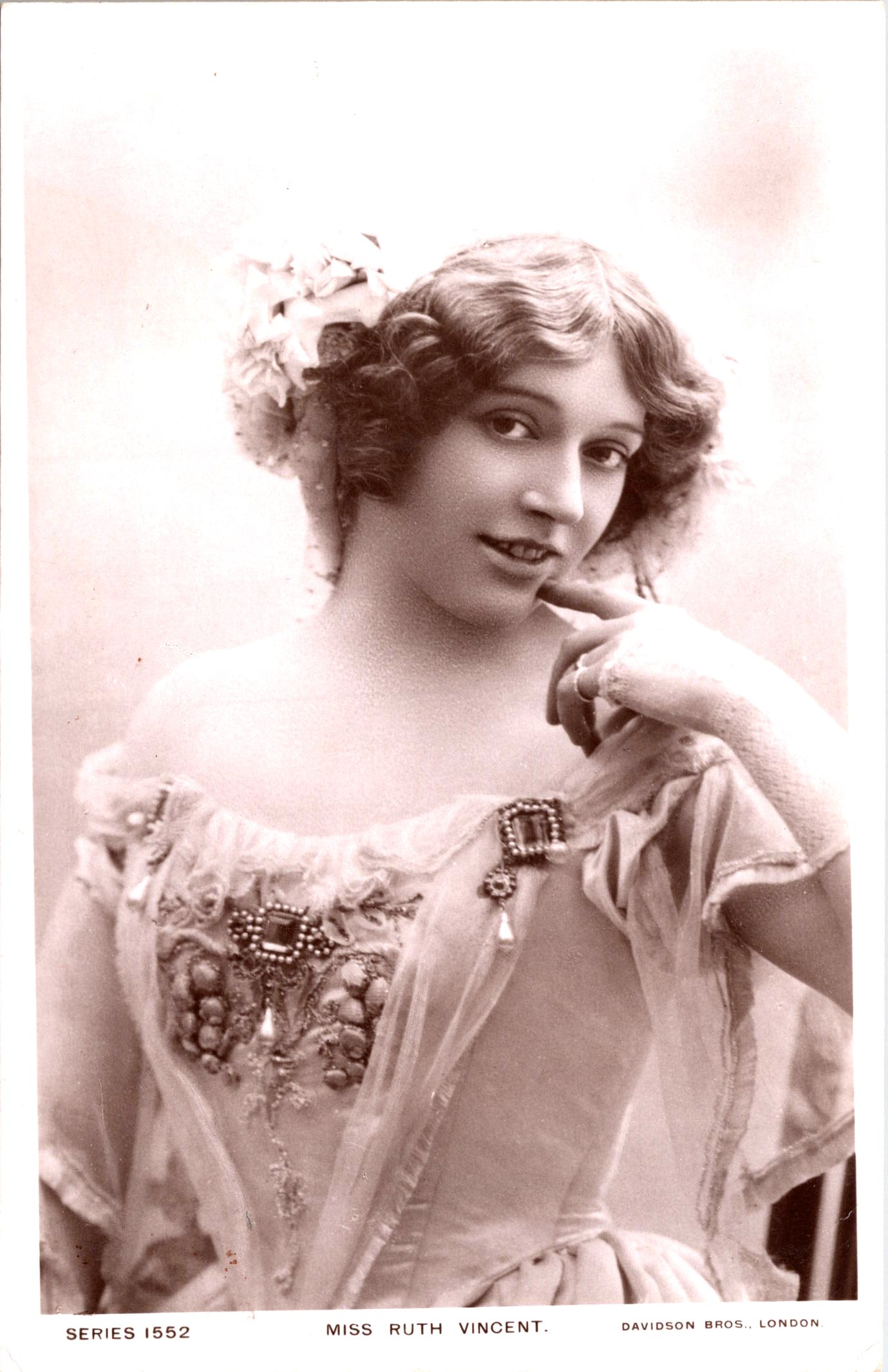
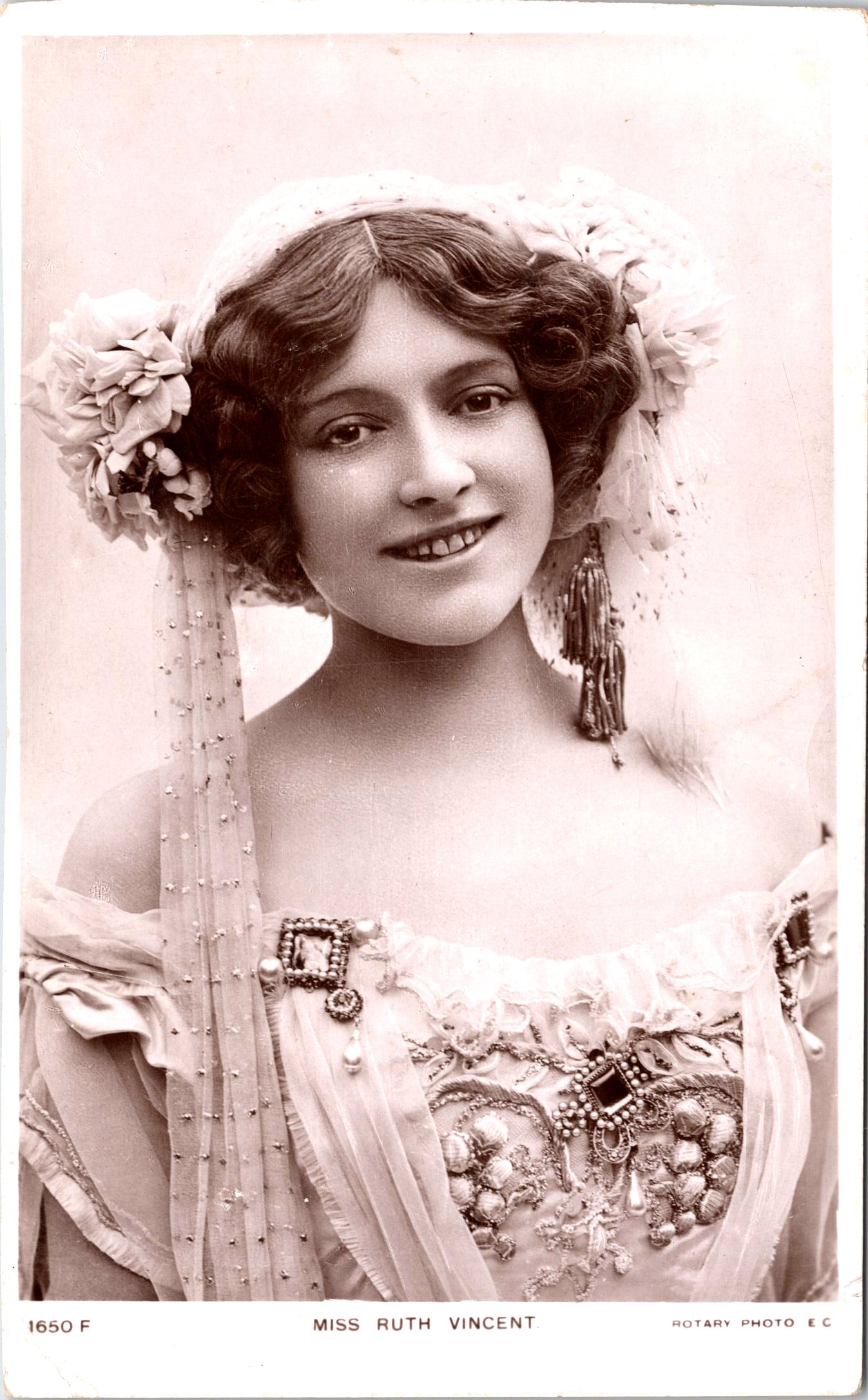
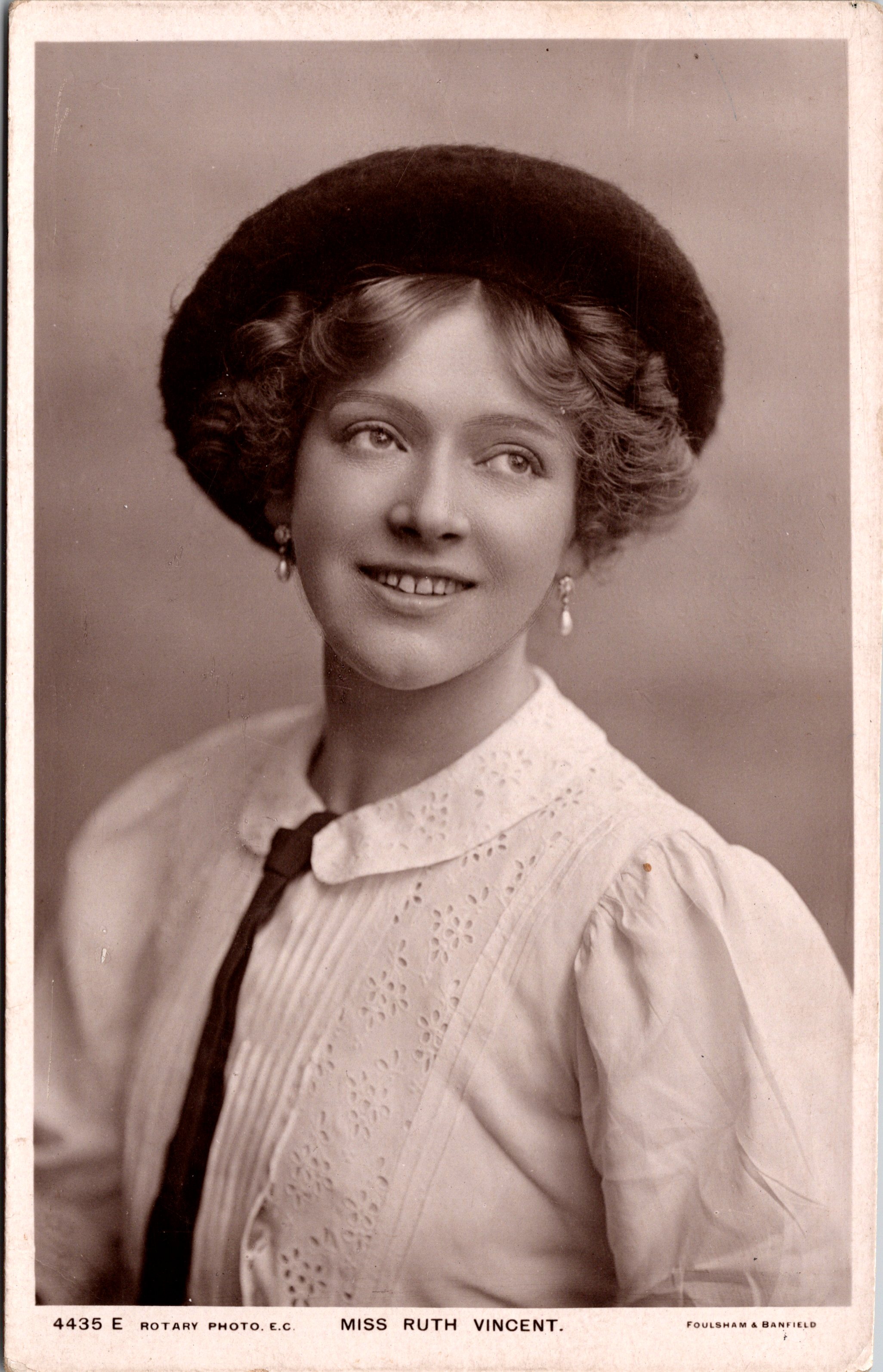
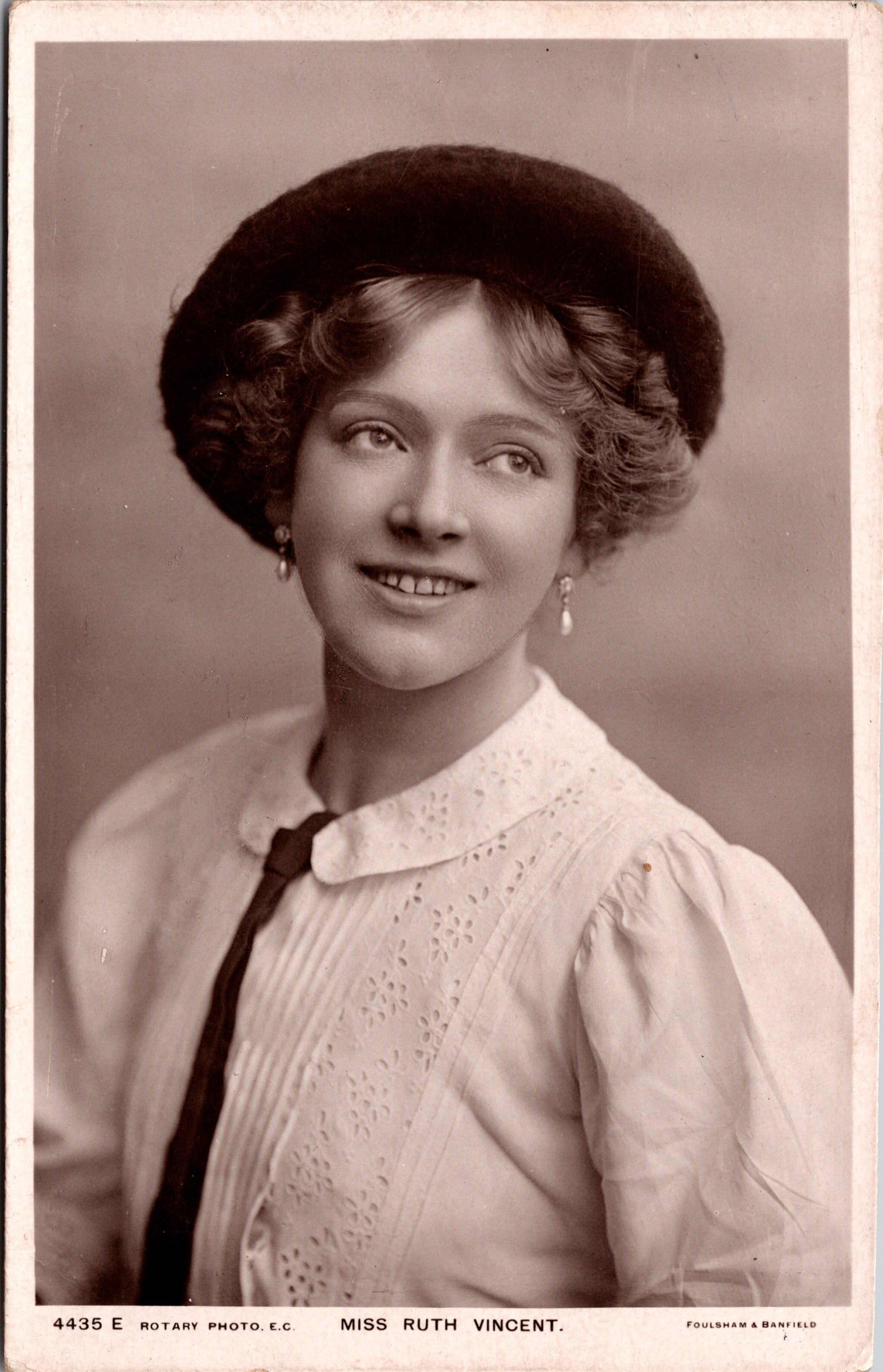
These vintage real photo postcards feature English opera singer and actress, Ruth Vincent (1873-1955). She is most well known for her soprano performances in the Savoy Operas with the D’Oyly Carte Opera Company in the 1890’s as well as in her roles in the West End (London) during the decade after 1900. Most notable was her performance in “Tom Jones”. She joined D’Oyly Carte in 1894, at age 17 as a chorus girl. By 1896, she was playing small roles and quickly was promoted to play leading roles. She left the company in 1899. Her career transitioned into appearing in Edwardian musical comedies, opera, and singing in concerts. Vincent also performed on Broadway. The IBDb reports that she had three Broadway appearances between 1900 and 1905. Vincent continued to sing and act until 1930.
Postcard 1 : Vincent’s photograph on this card was taken by the Foulsham & Banfield studio. This postcard was published by Rotary Photo as part of a series (4435 E). The firm was located in London. This postcard is in very good condition (see scans).
Postcard 2 : This postcard was published by Davidson Brothers as part of a series (no.1552). The firm was located in London, England.
Postcard 3 : This postcard was published by Rotary Photo as part of a series (1650F). The firm was located in London, England.
Buy this original Vintage Real Photo Postcard (includes shipping within the US) #5217
To purchase this item, click on the Pay with PayPal button below
$12.85
Buy this original Vintage Real Photo Postcard (includes International shipping outside the US) #5217
To purchase this item, click on the Pay with PayPal button below










 THE CABINET CARD GALLERY