ANDREINA ROSSI : SILENT FILM ACTRESS :BY VETTORI (BOLOGNA) : CIRCA 1920’s 

This vintage real photo postcard features Italian silent film actress, Andreina Rossi. She looks beautiful in her lovely hat. She appeared in “The Veil of Guilt” (1923). In 1960 she appeared in two films including “Daughter of Cleopatra”. The photographer of Miss Rossi’s portrait seen on this card is the Vettori studio in Bologna, Italy.  (SOLD)

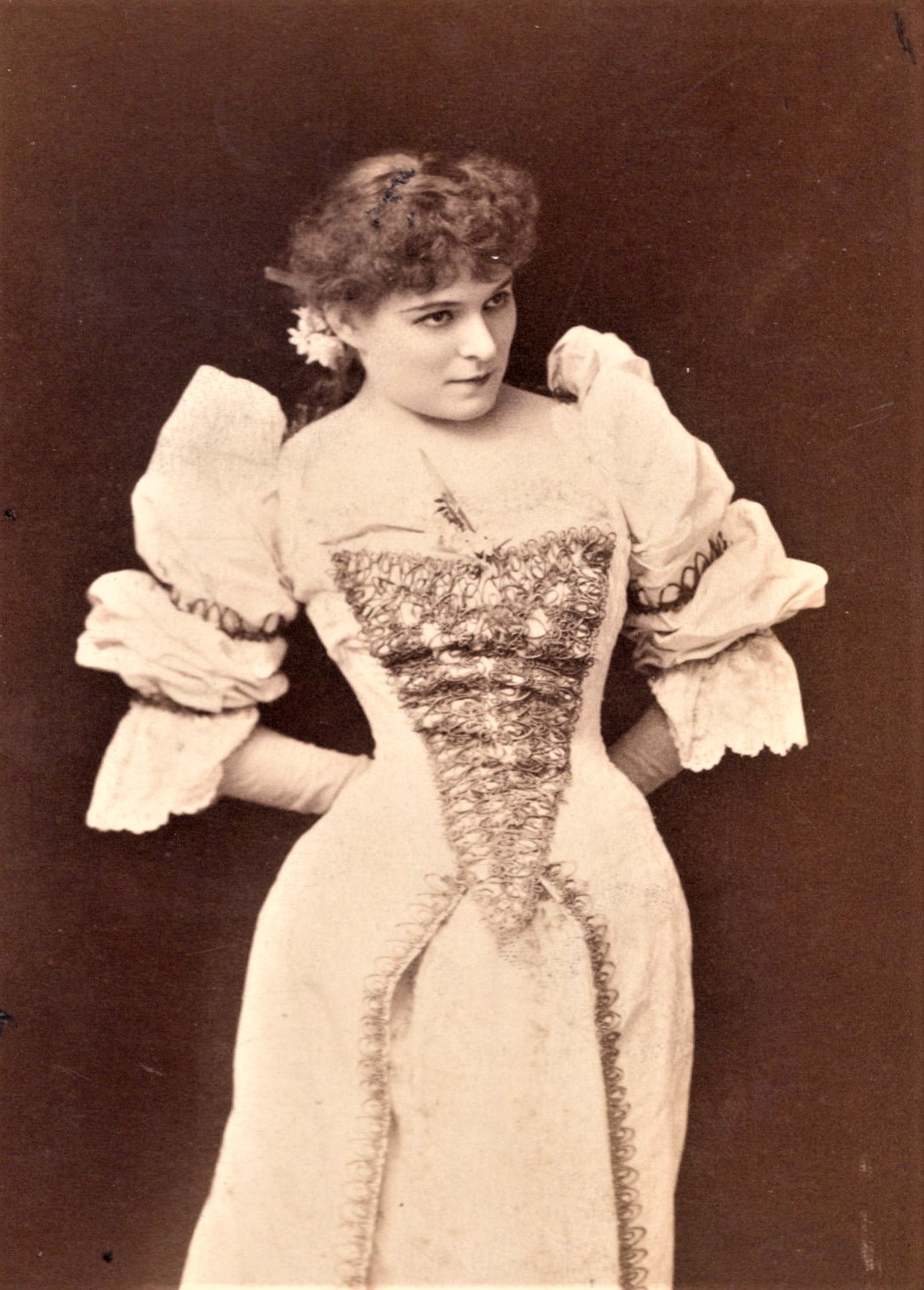
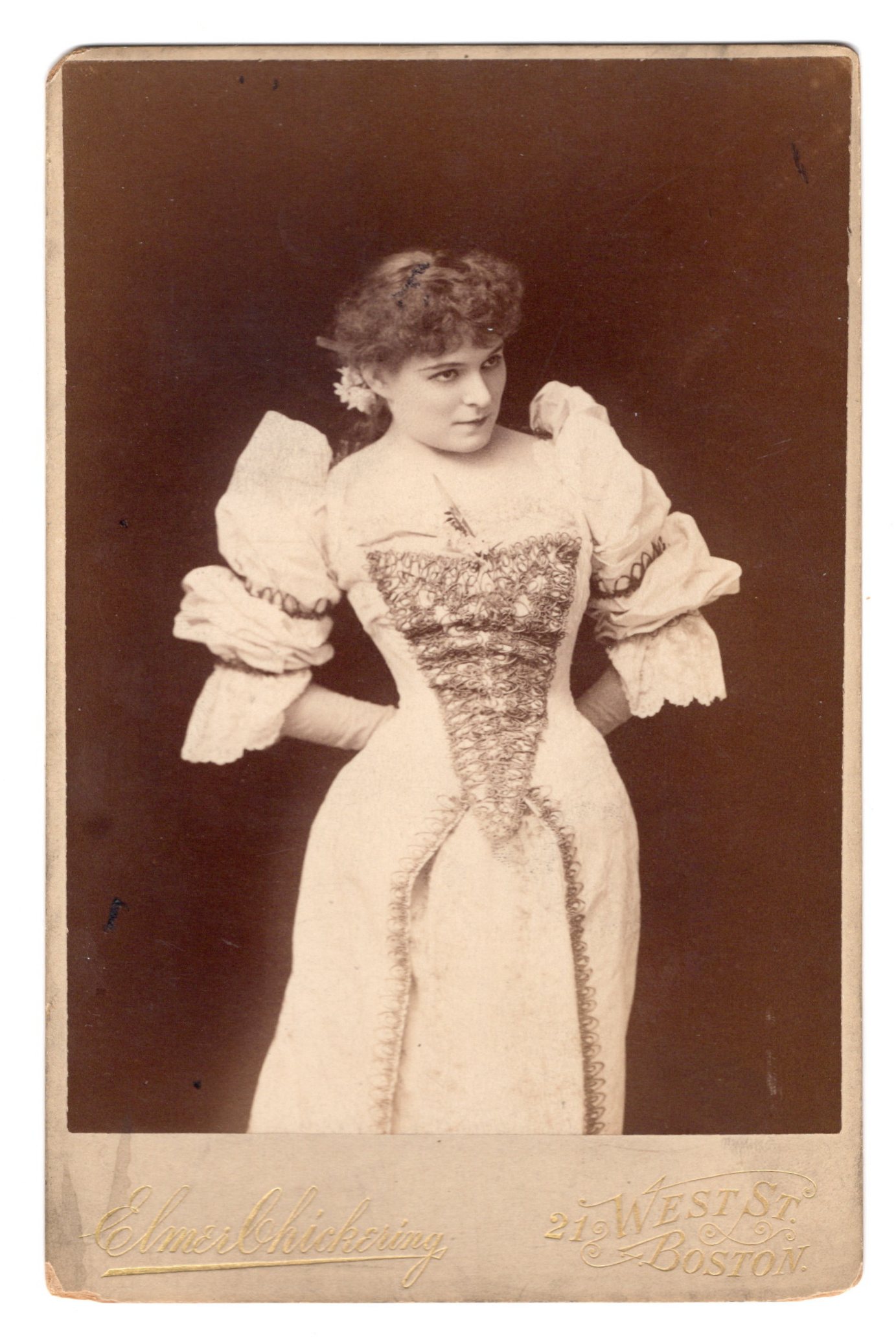
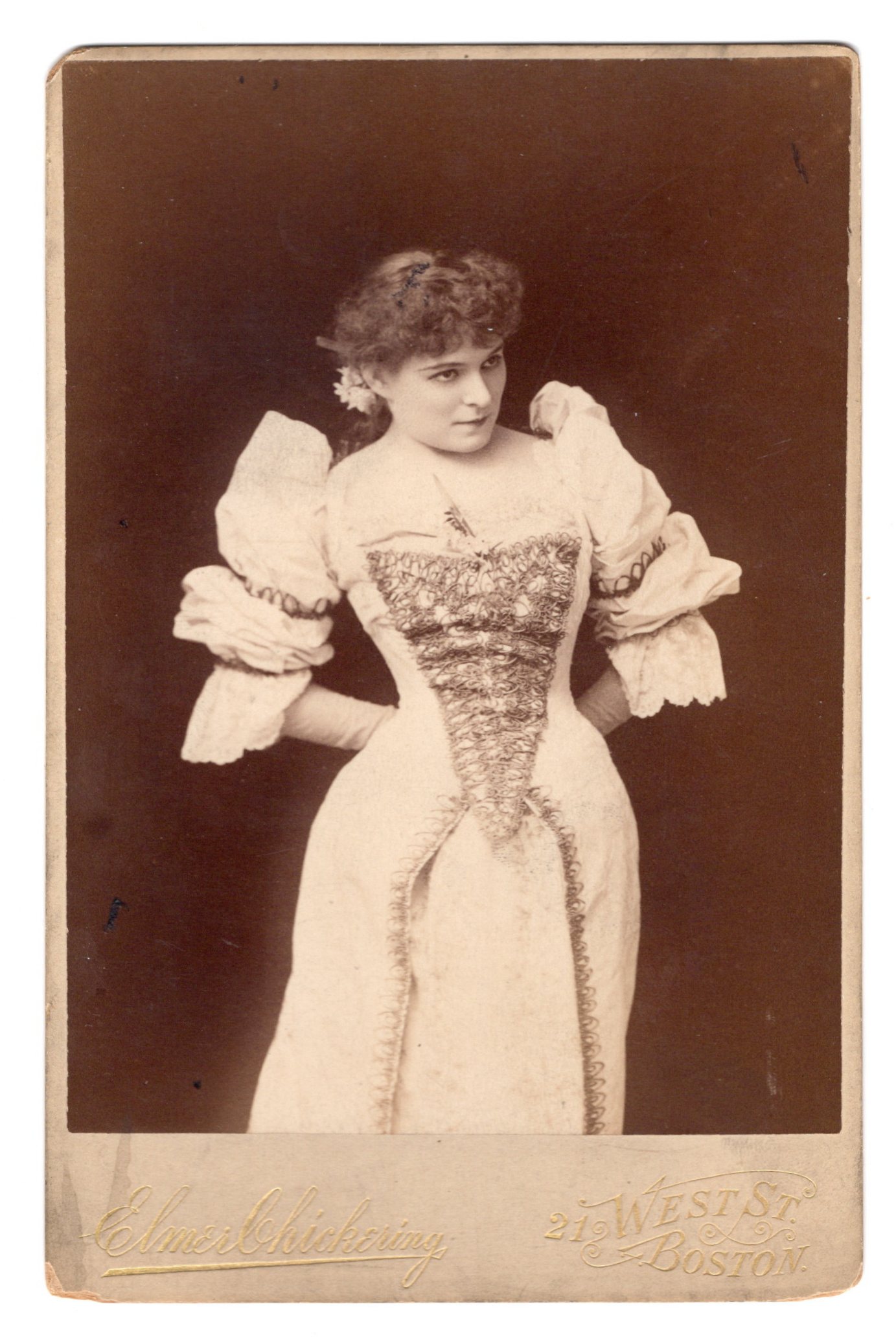
MYSTERIOUS STAGE ACTRESS: HELENE VERDES

helene-yerkesPOSTCARD 1

This image has an empty alt attribute; its file name is helene-verdes_0001.jpgPOSTCARD 2  (SOLD)

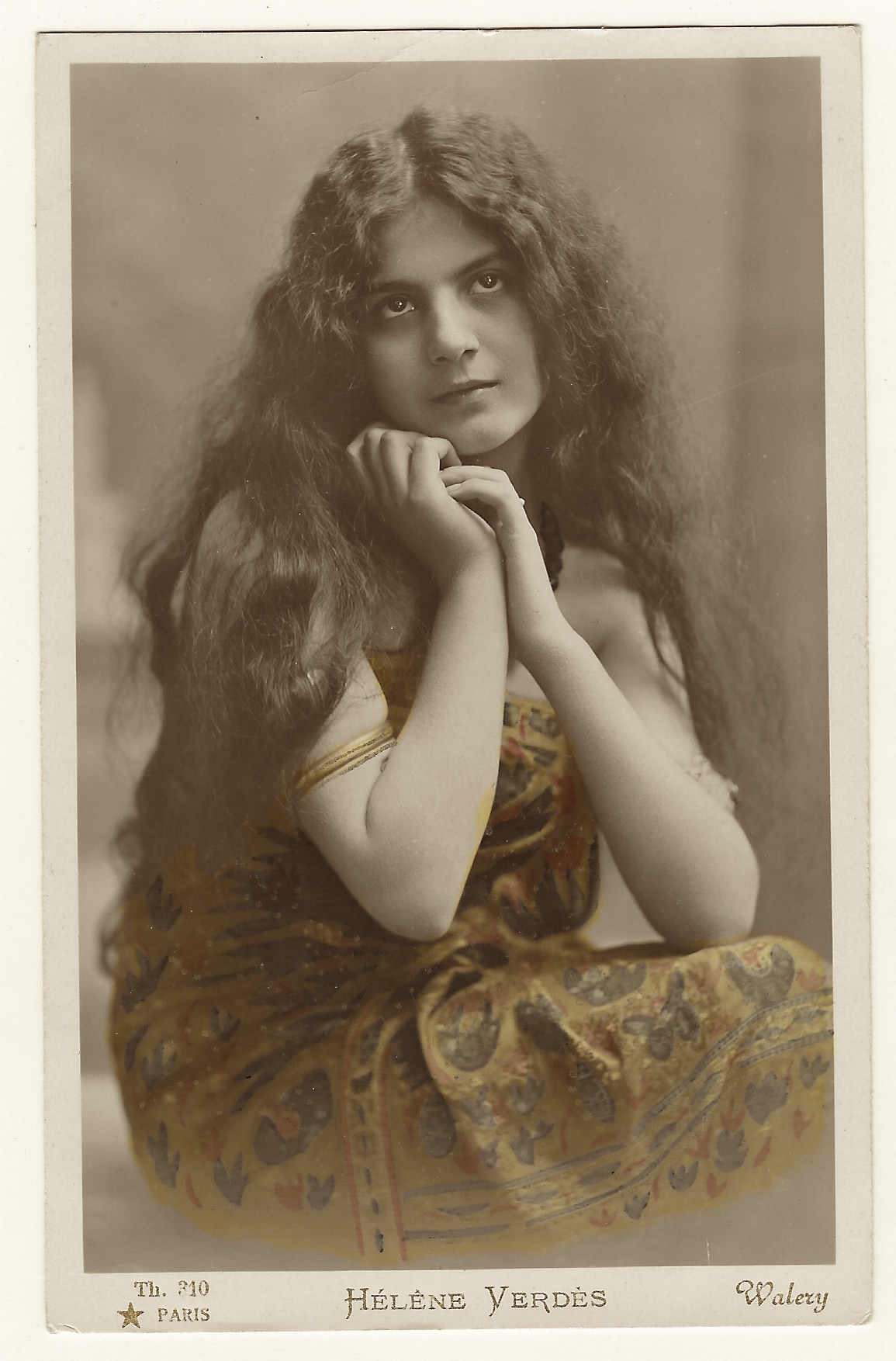
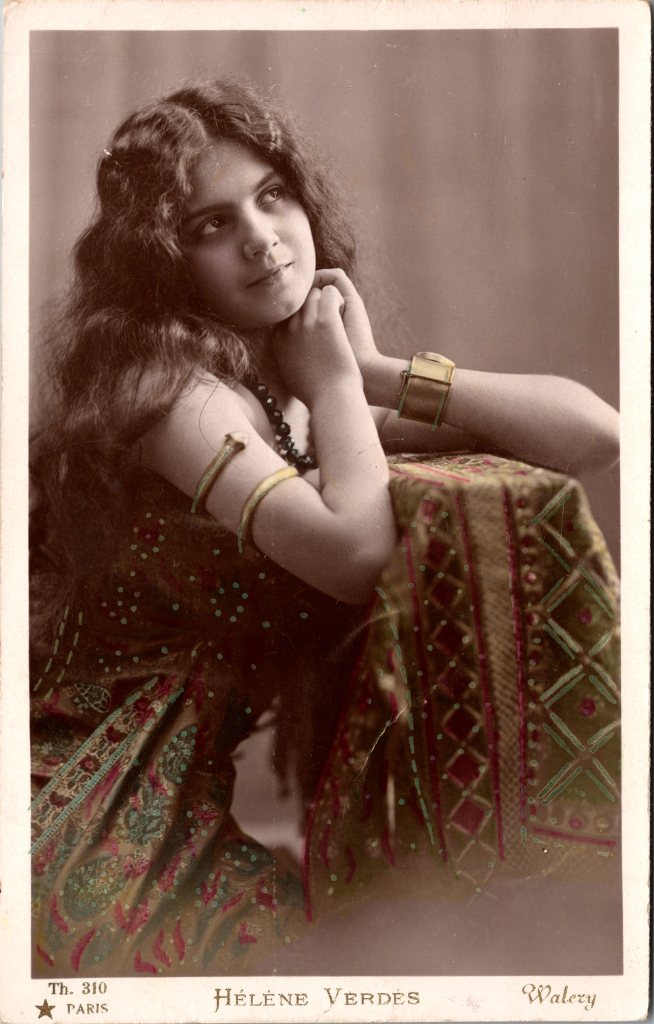
Vintage real photo postcard 1 and 2 features actress Helene Verdes. At least I think that she is a stage actress. Perhaps a cabinet card gallery visitor knows something about her and will leave some biographical information in the form of a comment. I tried to research her but drew blanks. The photographs of Miss Verdes are by Lucien Walery and he certainly is known for his postcard portraits of theatre performers. Miss Verdes apparently didn’t receive much fame from her theatrical endeavors despite her great beauty.  Lucien Walery was a celebrated Paris photographer known for his portraits of artists and cabaret dancers from the city’s music halls. He is very well known for his portraits of Mata Hari and Josephine Baker. Walery did a lot of work in the genre of nude/erotic photography. He photographed the beautiful women of Paris between the early 1900’s and the 1920’s. Apparently there is considerable debate about Walery’s actual identity. Some contend that he was actually Stanislaw Julian Ignacy Count Ostrorog, a British photographer of Polish ancestry who may have moved to Paris in about 1900.  These postcards date back to the early 1900’s and were published by Marqus Etoile of Paris and are part of a series (no. 310).

helene-yerkes-1POSTCARD 1

POSTCARD 2 (SOLD)

Published in: on December 29, 2022 at 12:00 pm  Comments (4)  
Tags: , , ,

MONA MARIS : INTERNATIONAL FILM ACTRESS : BETTE DAVIS EYES : HOLDING SWEET DOG

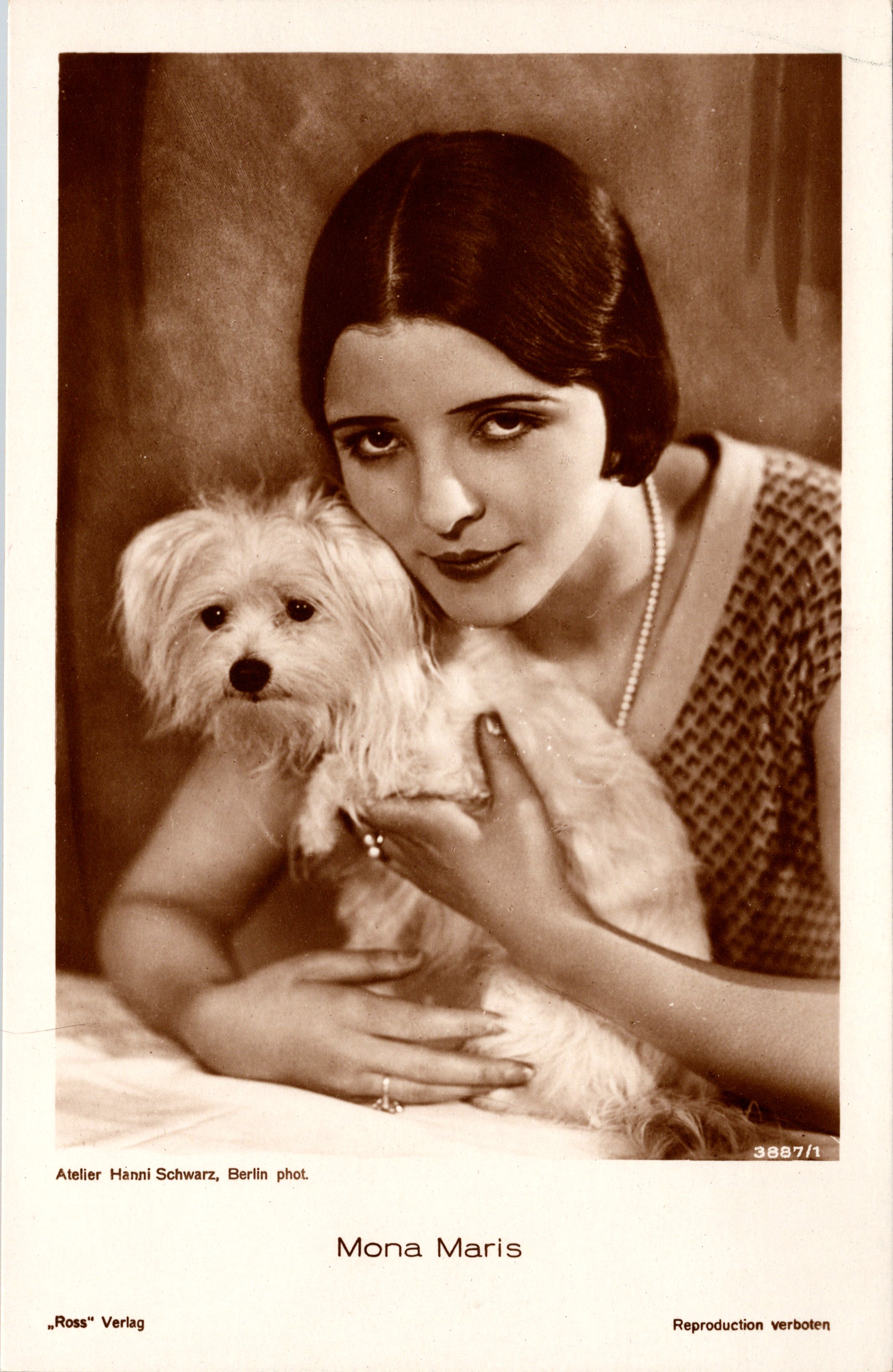
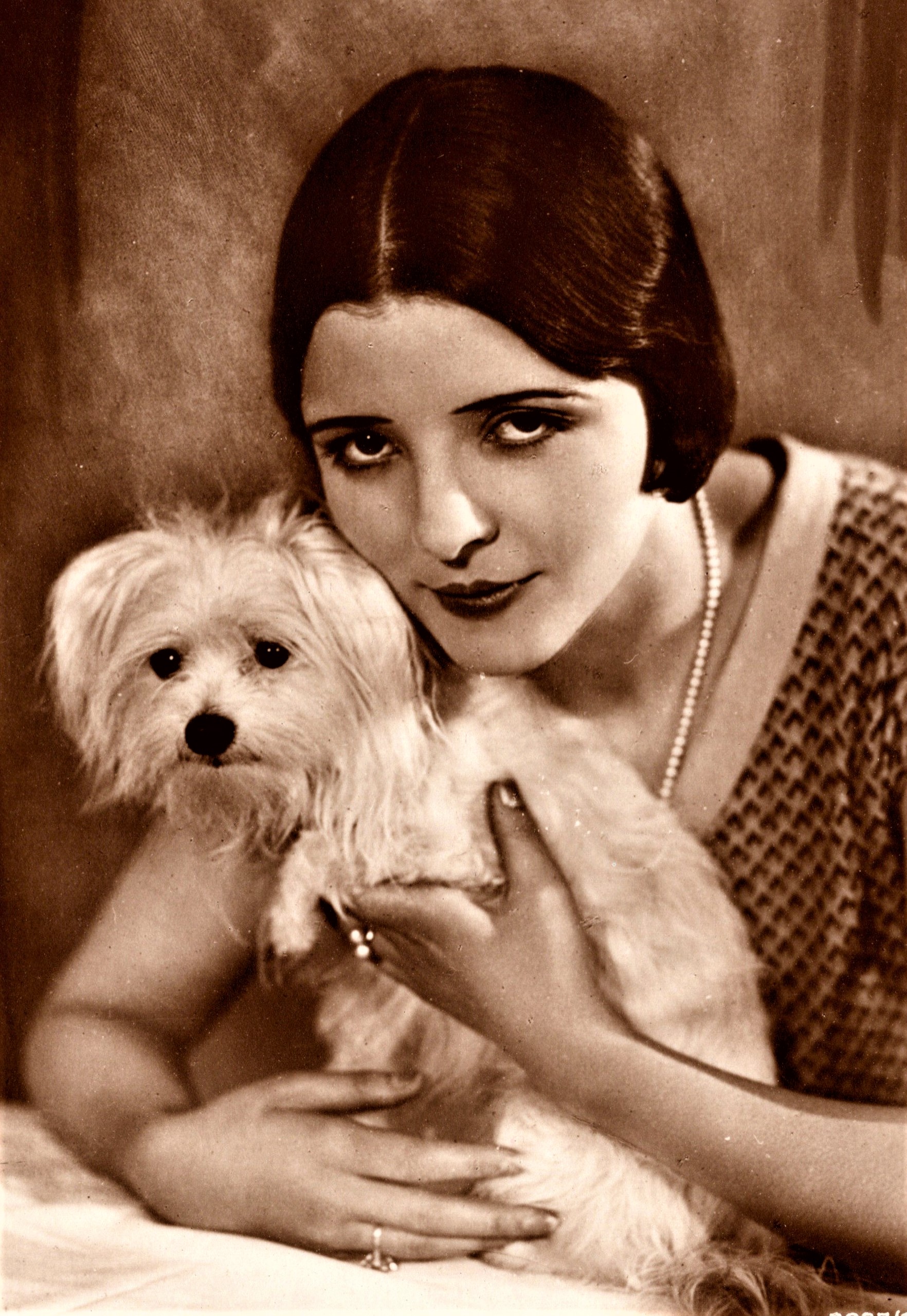
This uncommon vintage real photo postcard features actress Mona Maris (1903-1991). The postcard was published by Ross Verlag (No.3887/1). The photograph is from the Hanni Schwarz studio. Schwarz was a German female photographer and her work was praised in “American Photography” (1909). She was a well known professional photographer in Germany during the early 1900’s. She is thought to have worked until the 1930’s. The subject of this photo, Mona Maris was born in Argentina. Her mother was Spanish Basque and her father was French Catalan. At the early age of four, Mona was orphaned. She grew up with her grandmother in France where she was educated in a convent as well as in Germany and England. At age 19, she spoke four languages. It was during World War I that Mona decided to be an actress. While she was in school in France, she and her classmates wrote, directed and acted in plays to entertain nearby troops. Upon graduation, she went to England to live, where she stayed two and a half years. She was introduced to the President of the United Film Association by the Argentinian ambassador to Germany. She was signed to a five year contract by Germany’s Universum Film AG productions. She began her film career in either 1924 or 1925. After just four films in Germany, she began a Hollywood career in United Artists “The Apache” (1925). Despite knowing multiple languages, the onset of sound films created a problem. Her English was described as “almost unintelligible”. Between 1931 and 1941, she starred in 19 Spanish language versions of  successful American films. The movies were produced by Fox Films. She has been described as “sultry” and “sleepy eyed”. The IMDb credits her with 53 film roles between 1925 and 1984. Mona was married twice and had no children. She died and was buried in Buenos Aires, Argentina. This vintage postcard features Mona Maris posing with an adorable smoll dog. Maris is very pretty. Note her eyes. They have been compared to Bette Davis’s eyes. (SOLD)

Published in: on December 28, 2022 at 12:00 pm  Leave a Comment  
Tags: , , ,

MINNIE MADDEN FISKE: ACTRESS : PHOTO BY OTTO SARONY : NEW YORK CITY : CABINET CARD

otto_0001

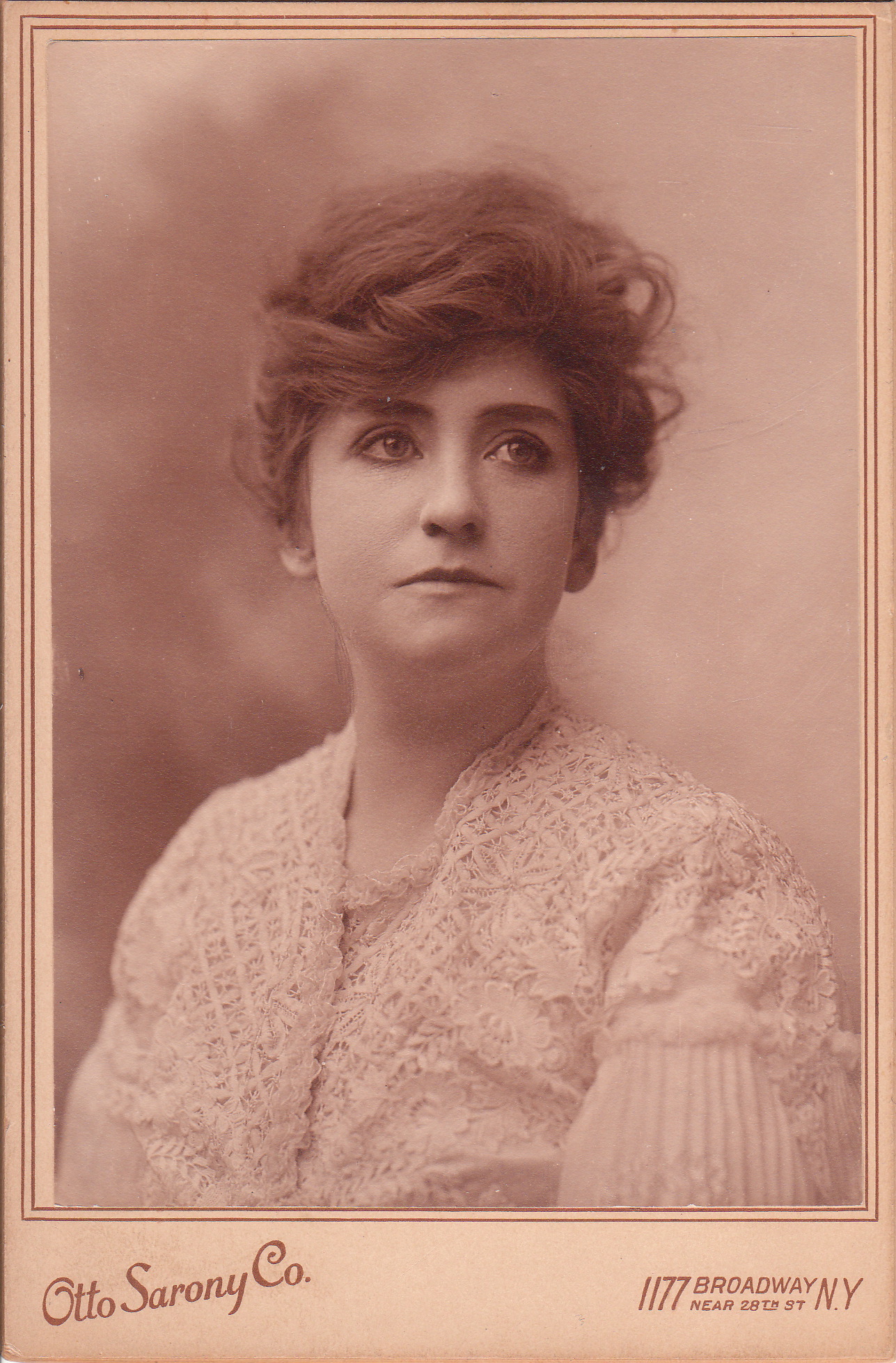
This close-up cabinet card portrait features a pretty woman wearing a lace dress. She is posing at the Otto Sarony Company studio and it a good guess that she was an actress considering Sarony’s history of photographing stage personalities. Perhaps the cabinet card gallery’s vast unpaid research department (it’s amazingly informed and helpful visitors) will be able to identify the subject of this photograph. To view other photographs by the Sarony studio, click on the category (Photographer: Sarony). Otto Sarony was the son of celebrated photographer Napoleon Sarony. (SOLD)

Published in: on December 27, 2022 at 12:00 pm  Comments (6)  
Tags: ,

PHRYNE : NINA BARKIS : GREEK COURTESAN : EMAILLOGRAPHIE : RPPC

This color tinted vintatge real photo postcard features actress, Nina Barkis playing the ancient Greek courtesan, Phryne. She has very long hair and she is shielding herself with a transparent lacey fabric. Miss Barkis was an opera singer and dancer. She was known for playing “Salome” and for modelling for photographer Jean Agelou. She also appeared on cards by postcard publisher, Gerlach. This image was created by a photographic process called “Emaillographie”. It is interesting that the first five letters of the technique is “Email”. This vintage postcard is of French origin. SOLD

PAULAY ERZSI : HUNGARIAN FILM AND THEATER ACTRESS : HARP : STAGE FRIGHT : RPPC

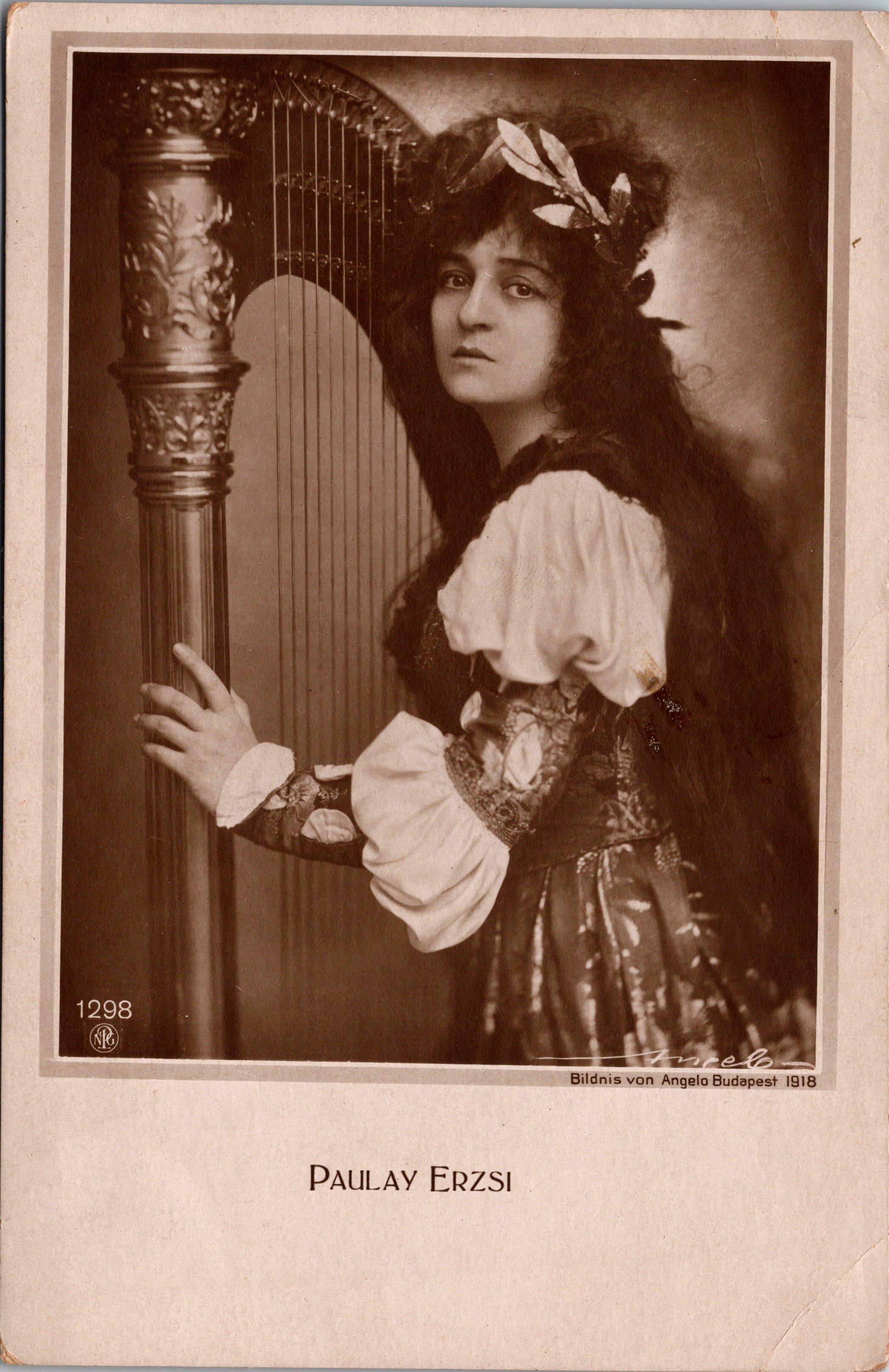
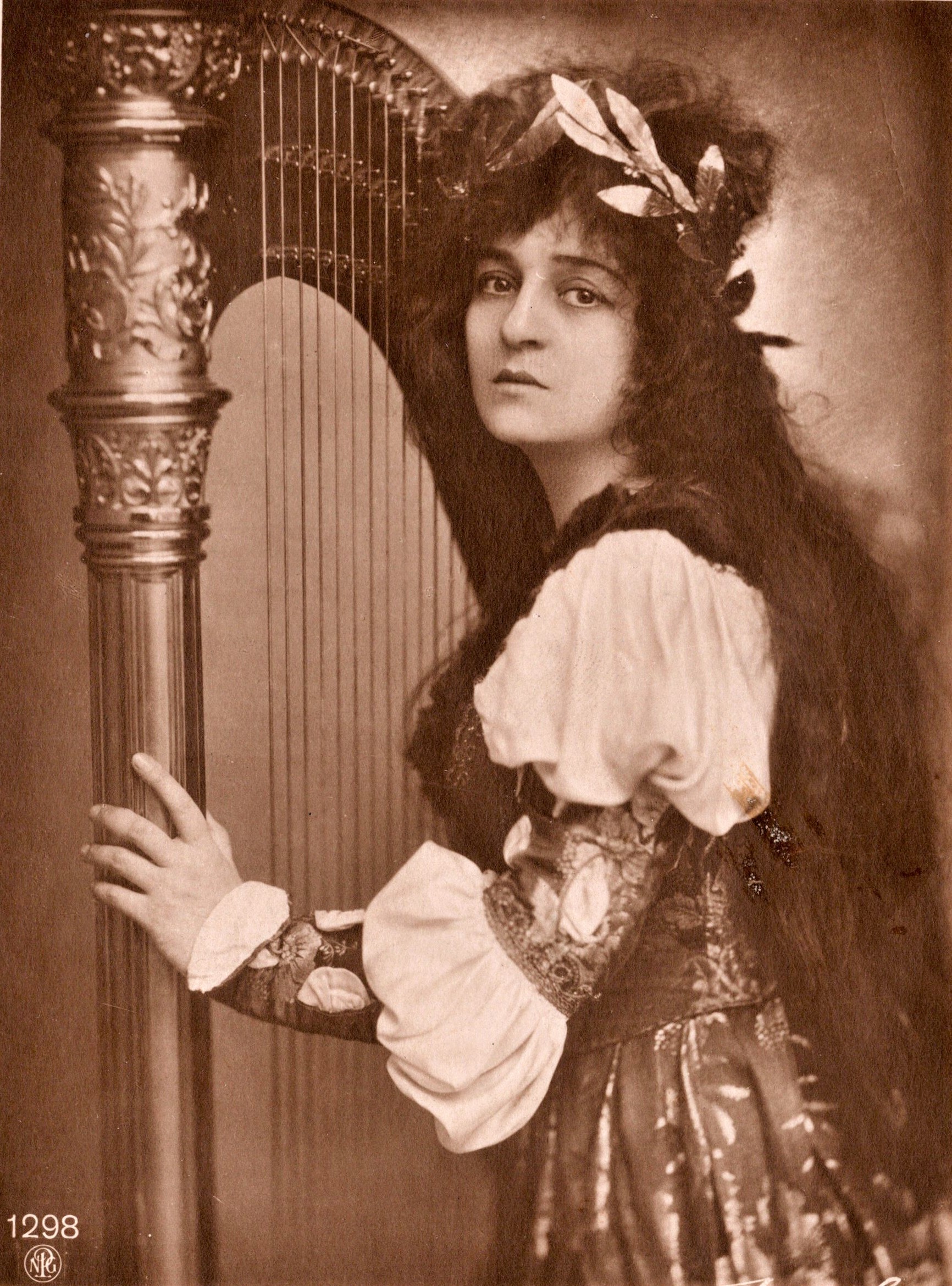
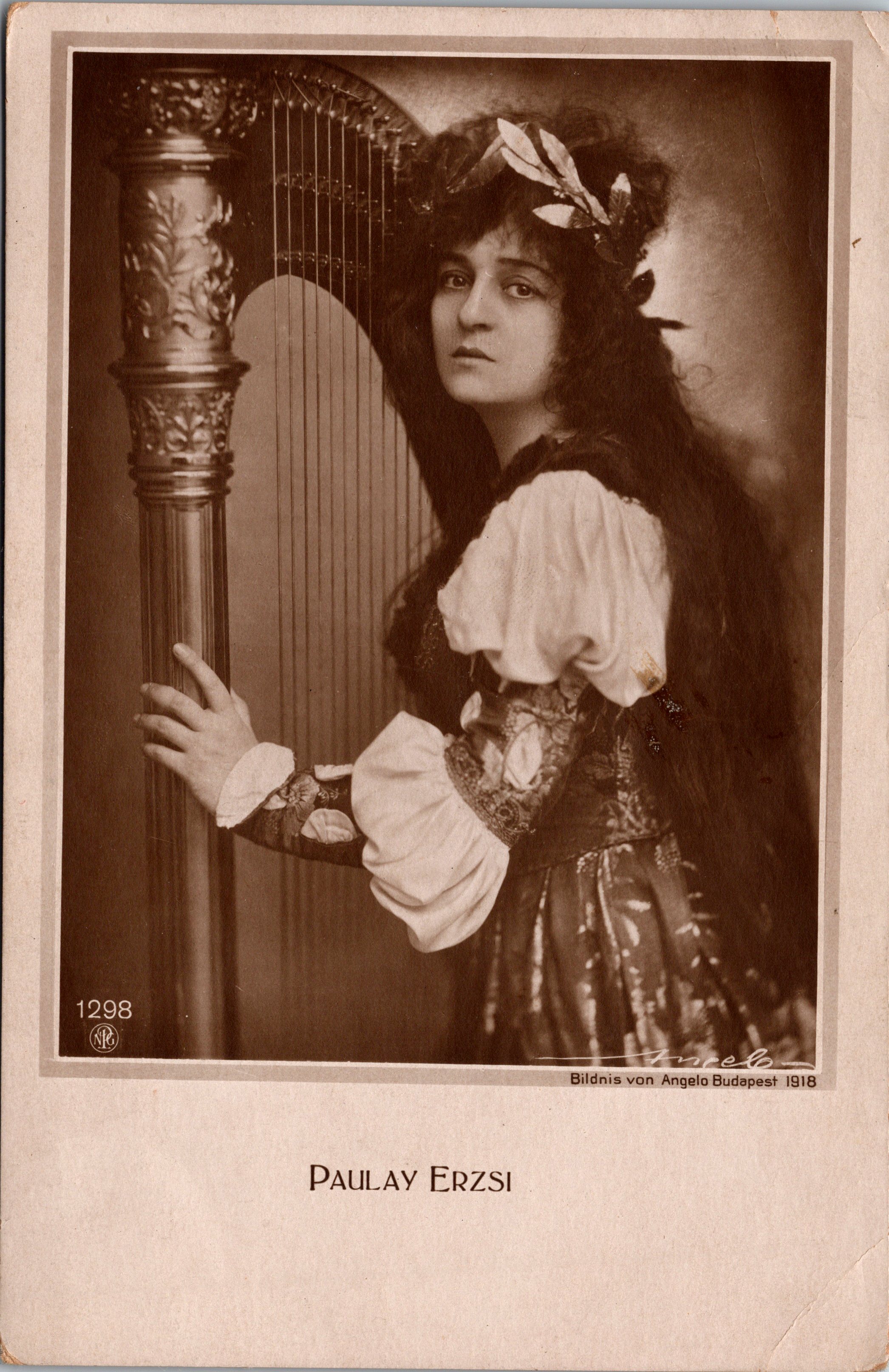
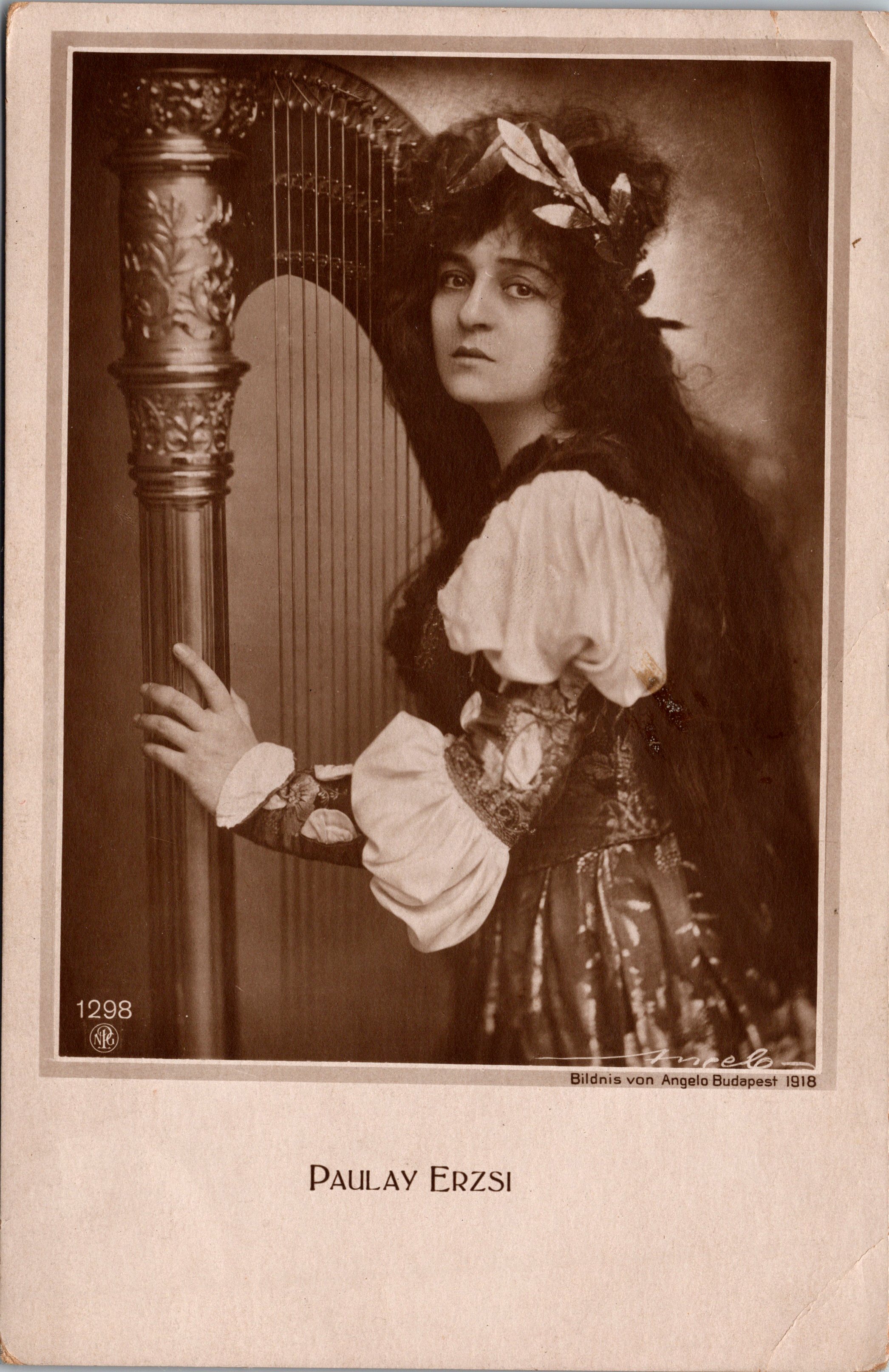
This vintage real photo postcard features Hungarian stage and film actress, Erzsi Paulay (1886-1959). Her parents were both actors. Her father died when she was eight years of age and her mother had to return to work. Erzsi was known to possess exceptional beauty and spoke very well. She graduated from the Academy of Drama (1904) and joined the National Theater. Erzsi had a problem. She was an excellent actress during rehearsals but when it came to performing in front of an audience, her performance was weak.Her apparent stage fright kept her from becoming an excellent actress. However, she was popular among her colleagues. After her first marriage failed she married Italian ambassador Count Vittorio Cerrutti in 1923. She then retired from acting. She and her husband travelled the world. The pair lived in Tokyo, Moscow and Rome. The IMDb credits her with five film roles between 1915 and 1928. This real photo postcard is in good condition. Note crease in bottom right hand corner. See scans.

Buy this original Vintage Real Photo Postcard (includes shipping within the US) #5275

To purchase this item, click on the Pay with PayPal button below

$18.95

Buy this Vintage Real Photo Postcard (includes International shipping outside the US) 5275

To purchase this item, click on the Pay with PayPal button below

$28.00

IRENE KING : PRETTY ACTRESS : FOLIES BERGERE : PHOTO BY WALERY : HAND TINTED

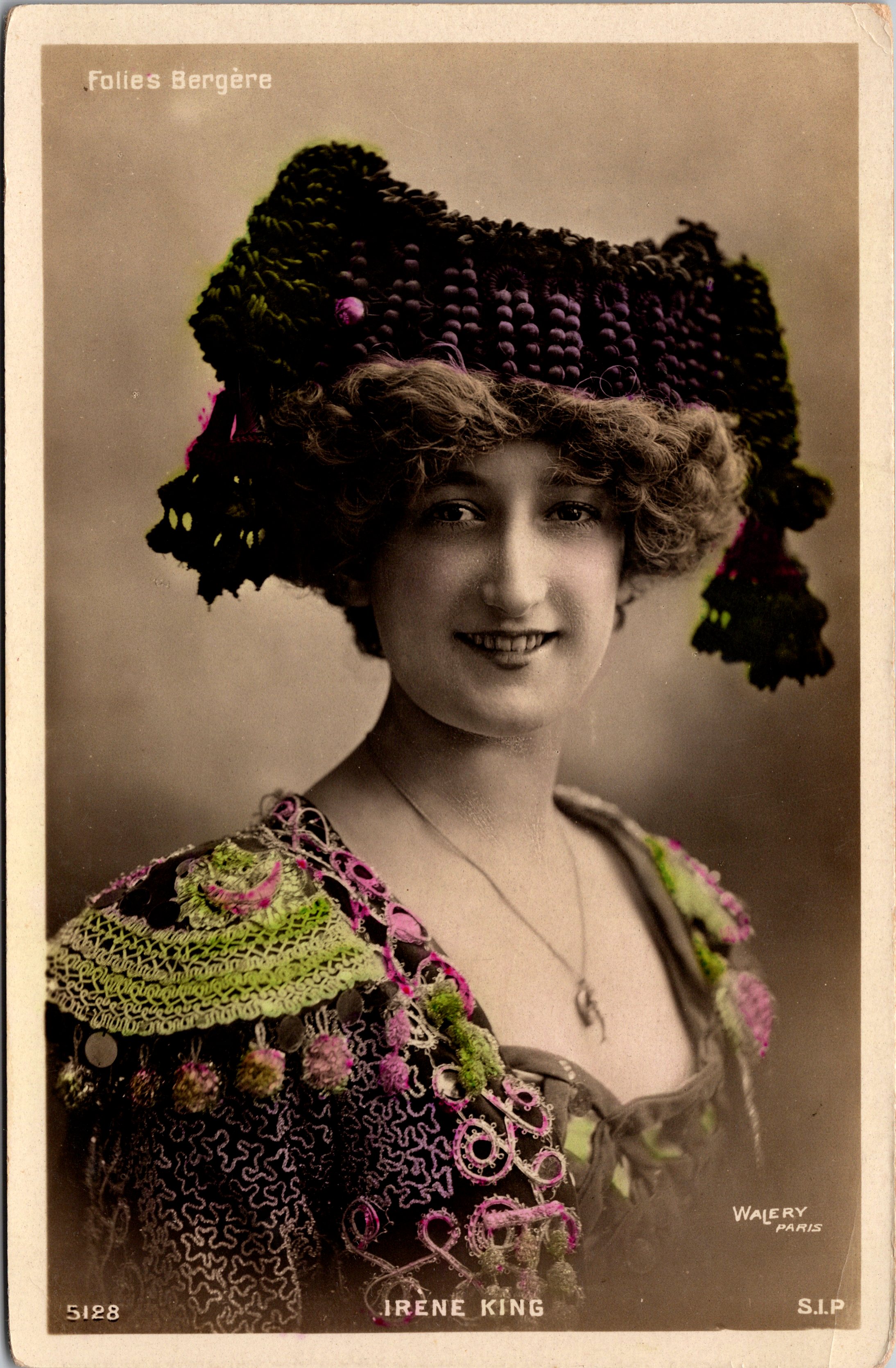
This vintage real photo postcard features performer, Irene King. The title on the card indicates that Miss King performed at the Folies Bergere, in Paris France. The portrait of Miss King was hand painted. She is wearing quite the interesting hat and elaborate and colorful dress. This photo portrait was taken by Walery at his Paris studio. He was a well known and talented celebrity photographer. The postcard was published by SIP as part of a series (no.5128). (SOLD)

Published in: on November 19, 2022 at 12:00 pm  Leave a Comment  
Tags: , ,

HELEN BANCROFT : PRETTY THEATER ACTRESS : CABINET CARD BY JOSE MORA

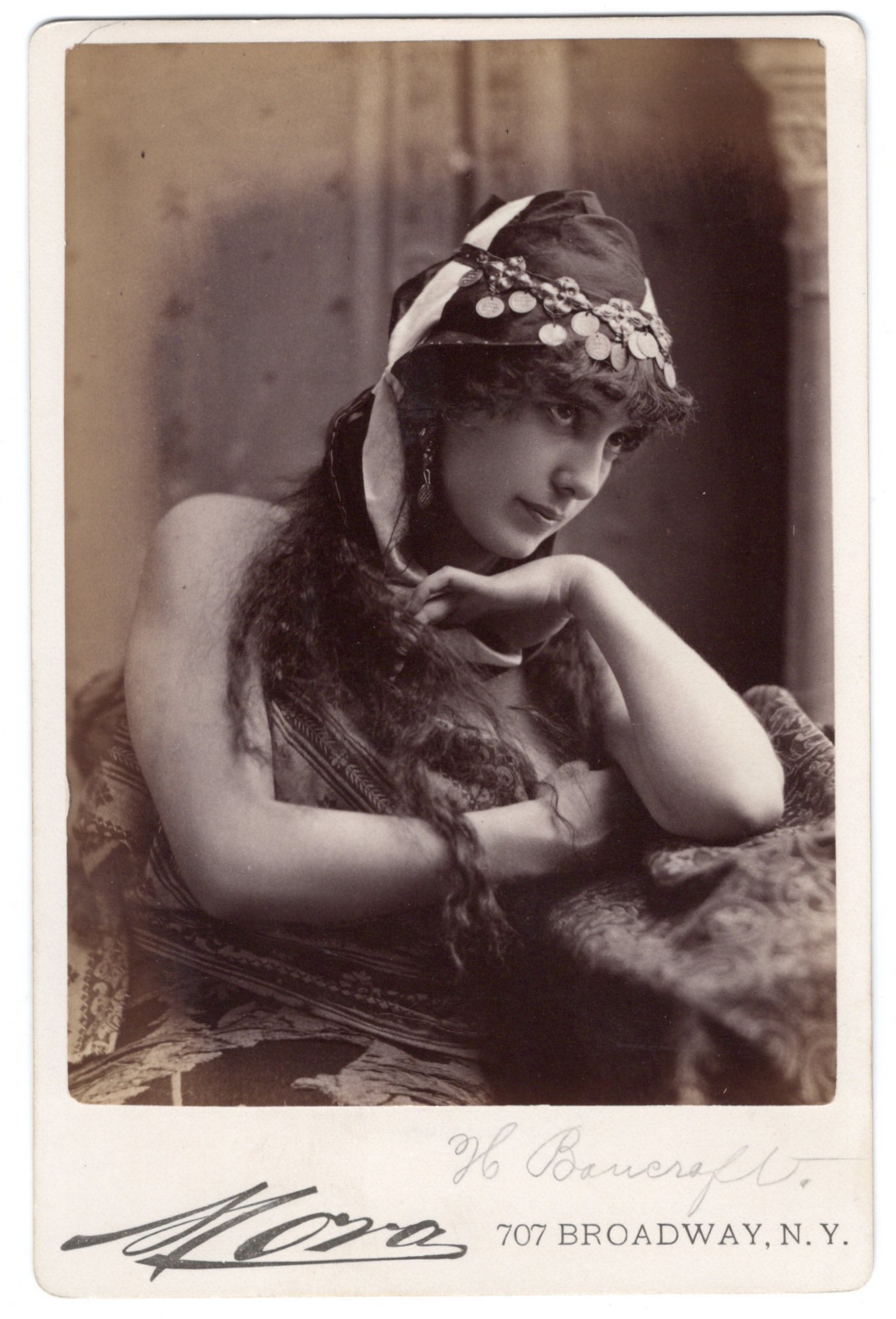
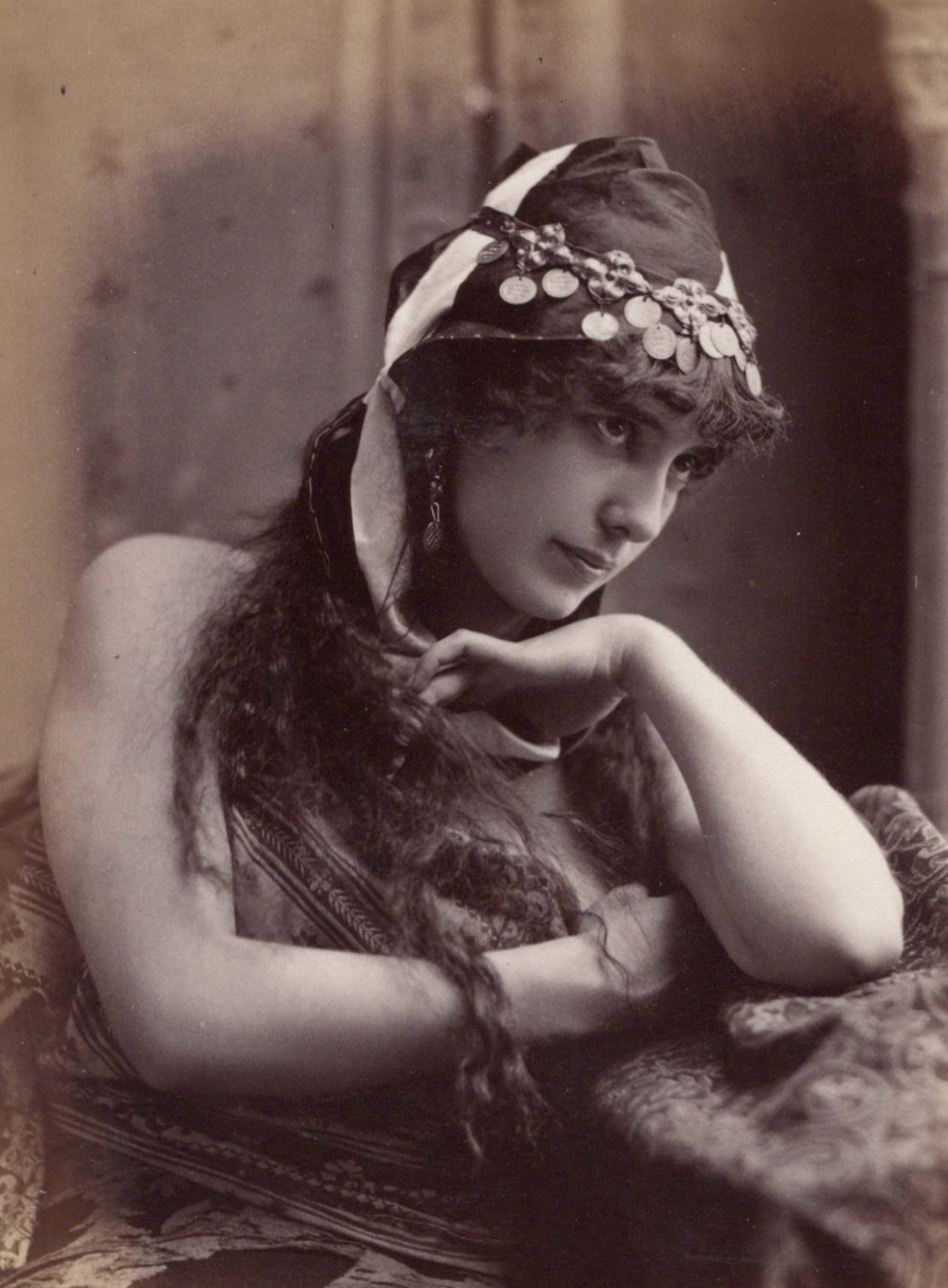
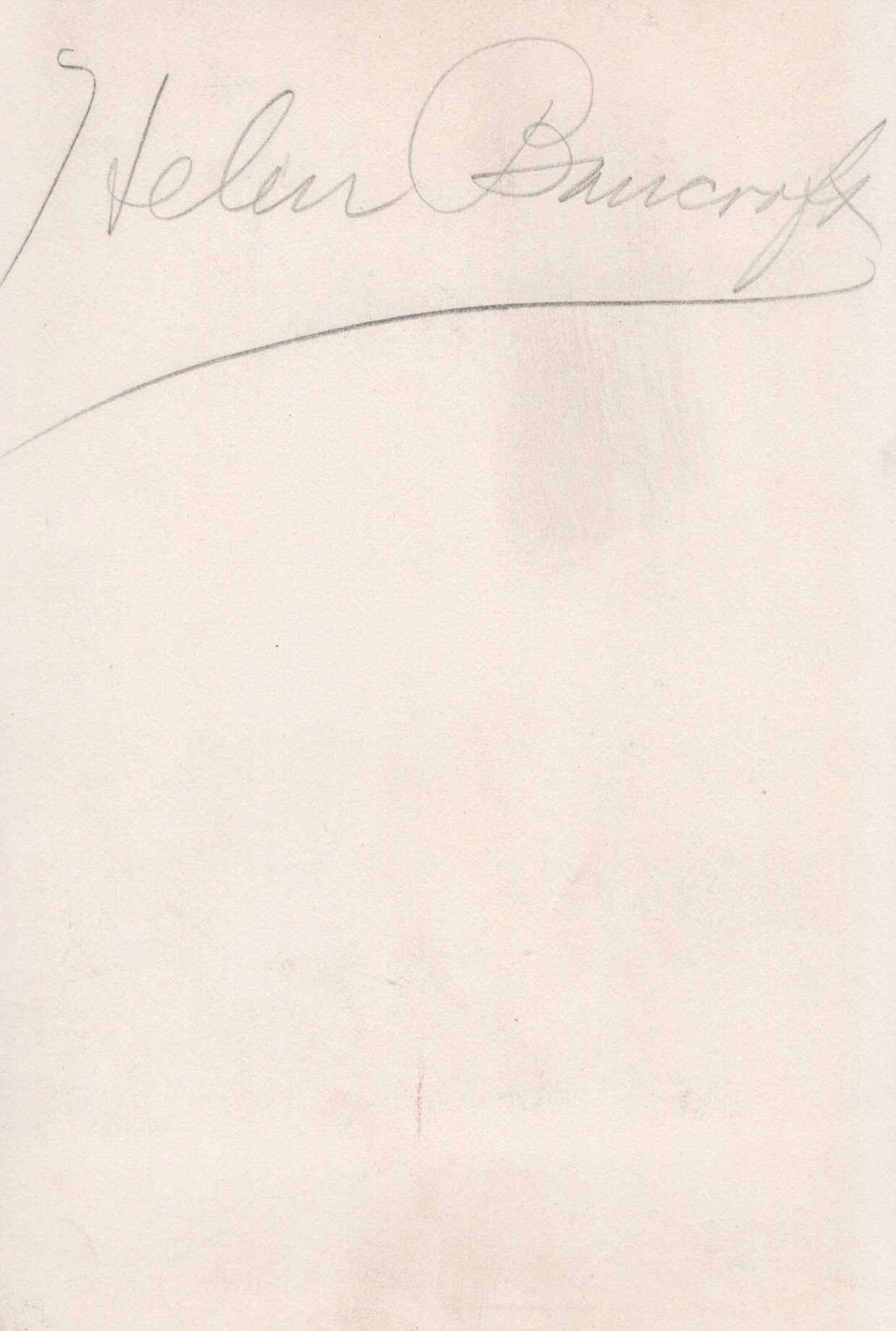
This cabinet card photograph features stage actress, Helen Bancroft. Her portrait was photographed by esteemed celebrity photographer, Jose Mora. She is quite pretty and appears to be dressed in costume from one of her theatrical performances. Bancroft made three Broadway appearances between 1904 and 1911. “Music and Drama” (1892) wrote about Bancroft’s debut in the “Hunchback”, It appears to have been her first major role. The reviewer quotes another reviewer who stated she had “an attractive presence, pretty face and mellow voice(that) did much to win her audience”. Theatre Magazine (1905) had a less complimentary comment about Miss Bancroft. Apparently, she had “resigned” from a play because one of her costumes was an “unbecoming color”.  (SOLD)

Published in: on November 17, 2022 at 2:19 pm  Leave a Comment  
Tags: , ,

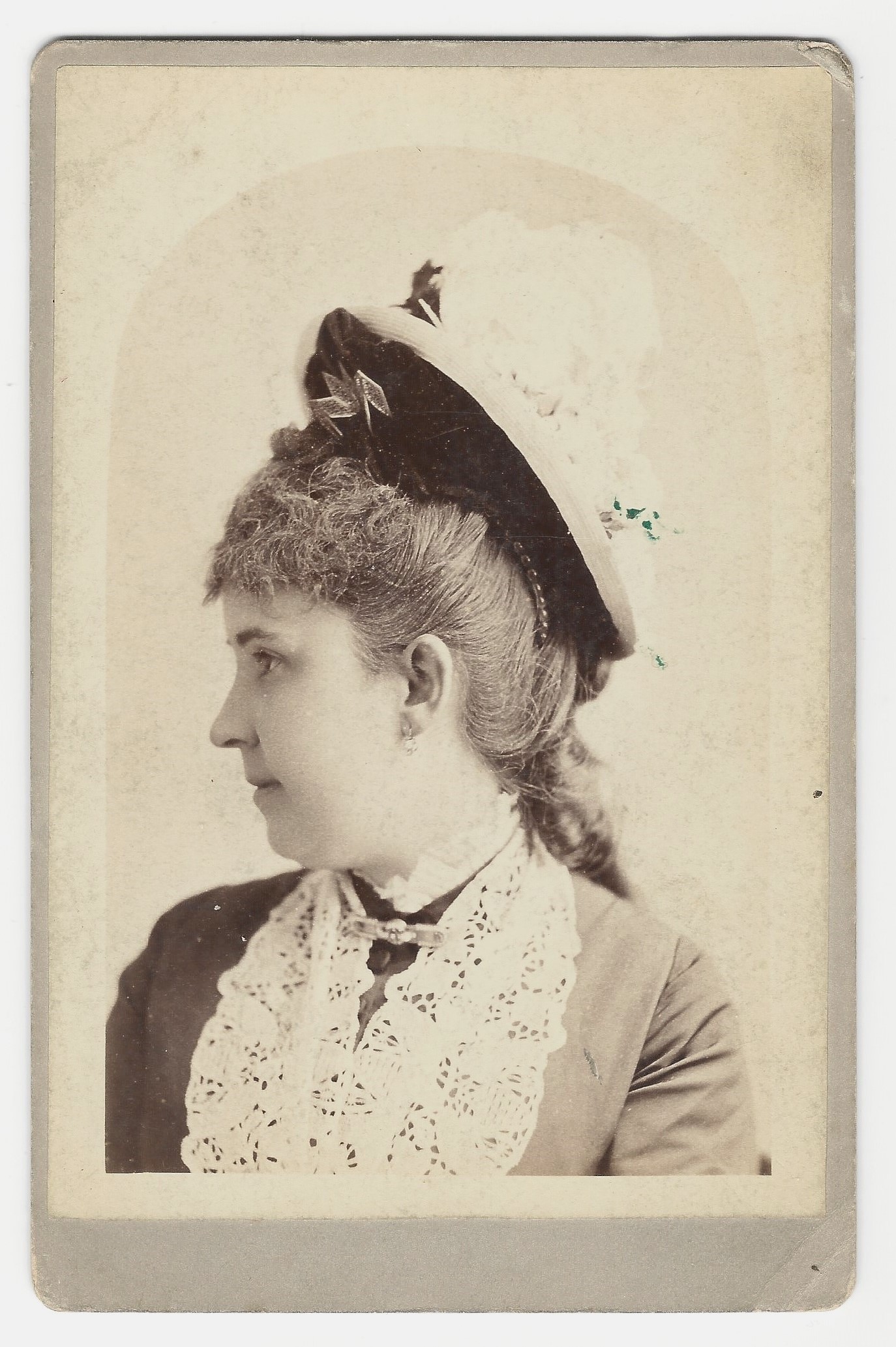
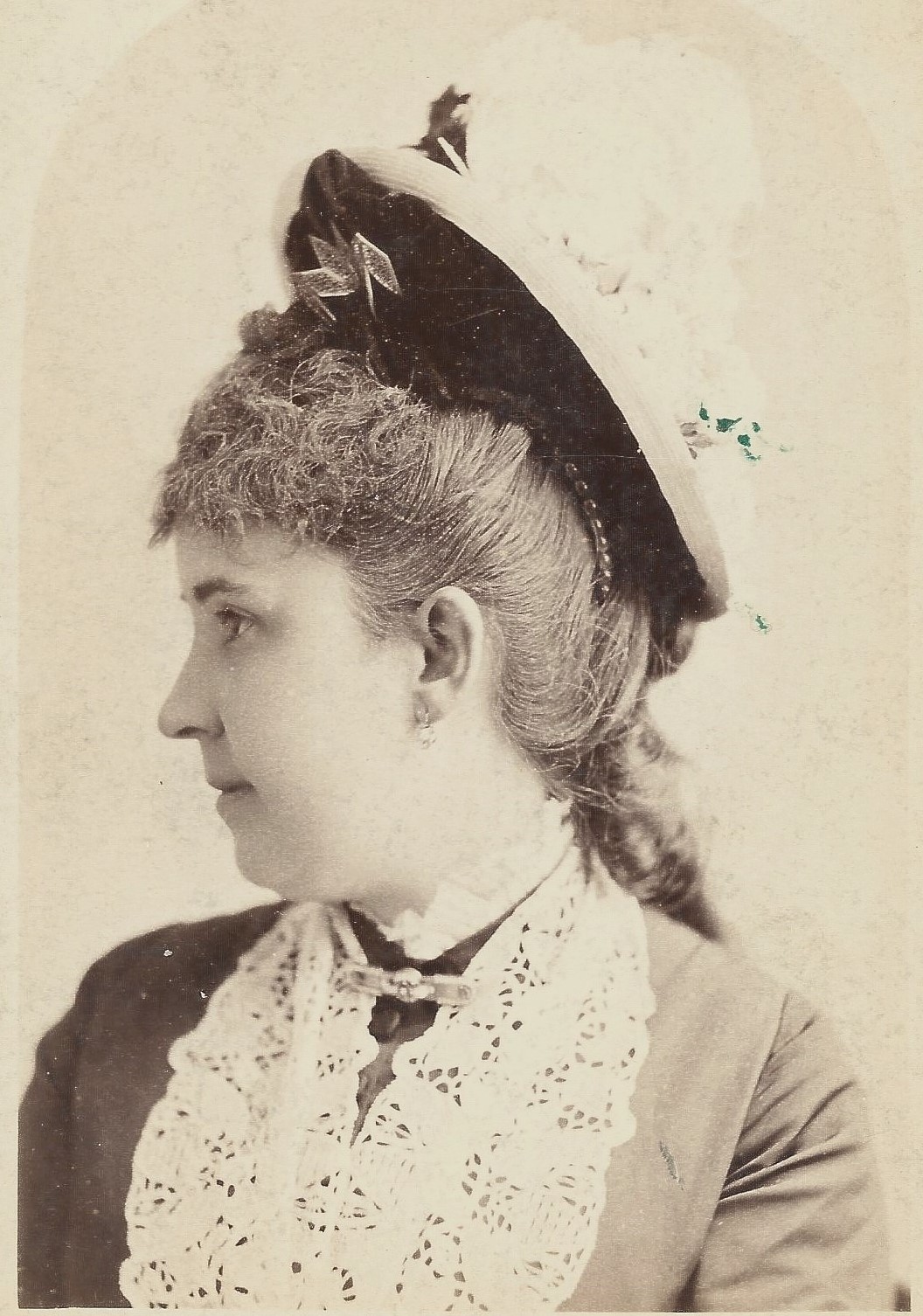
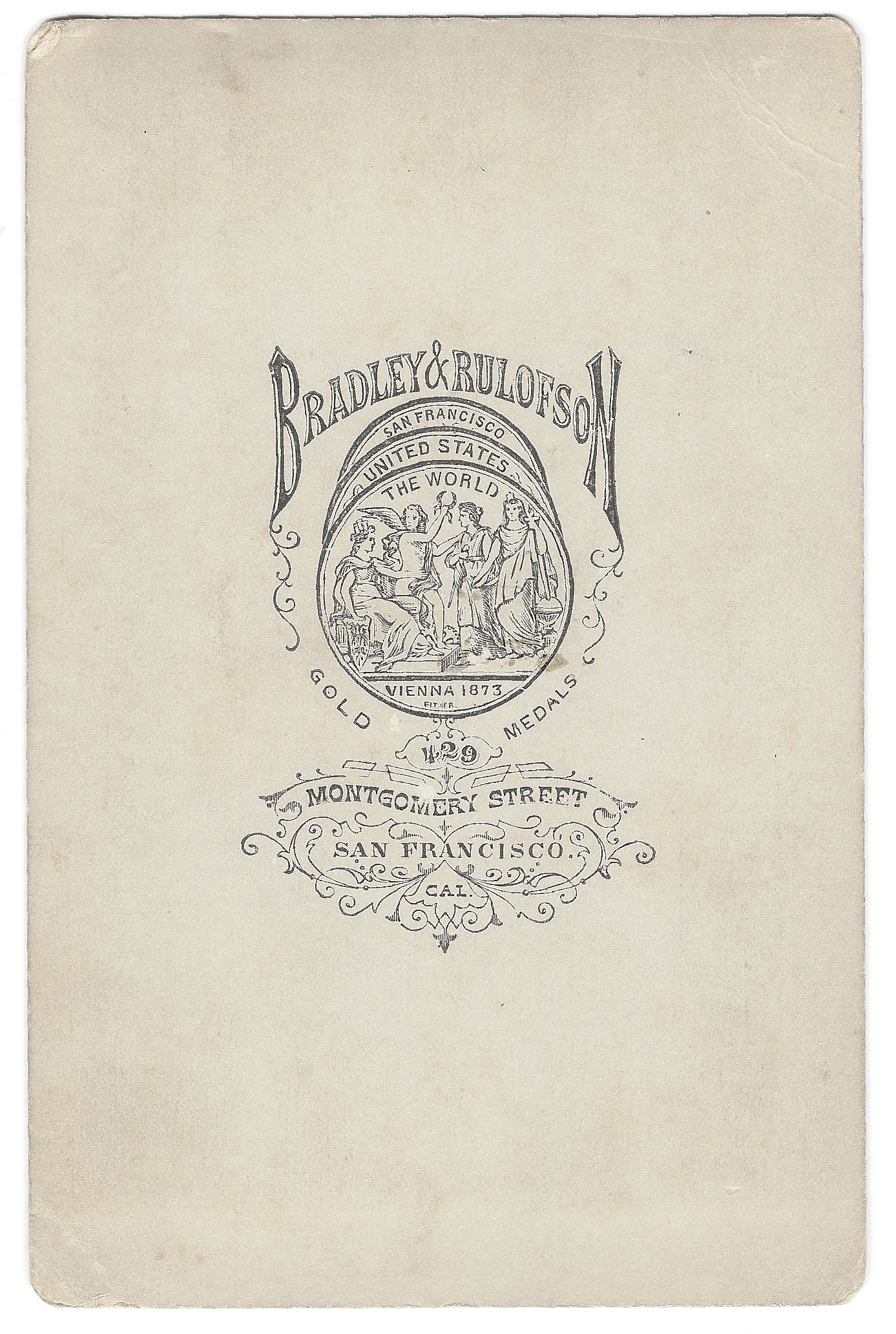
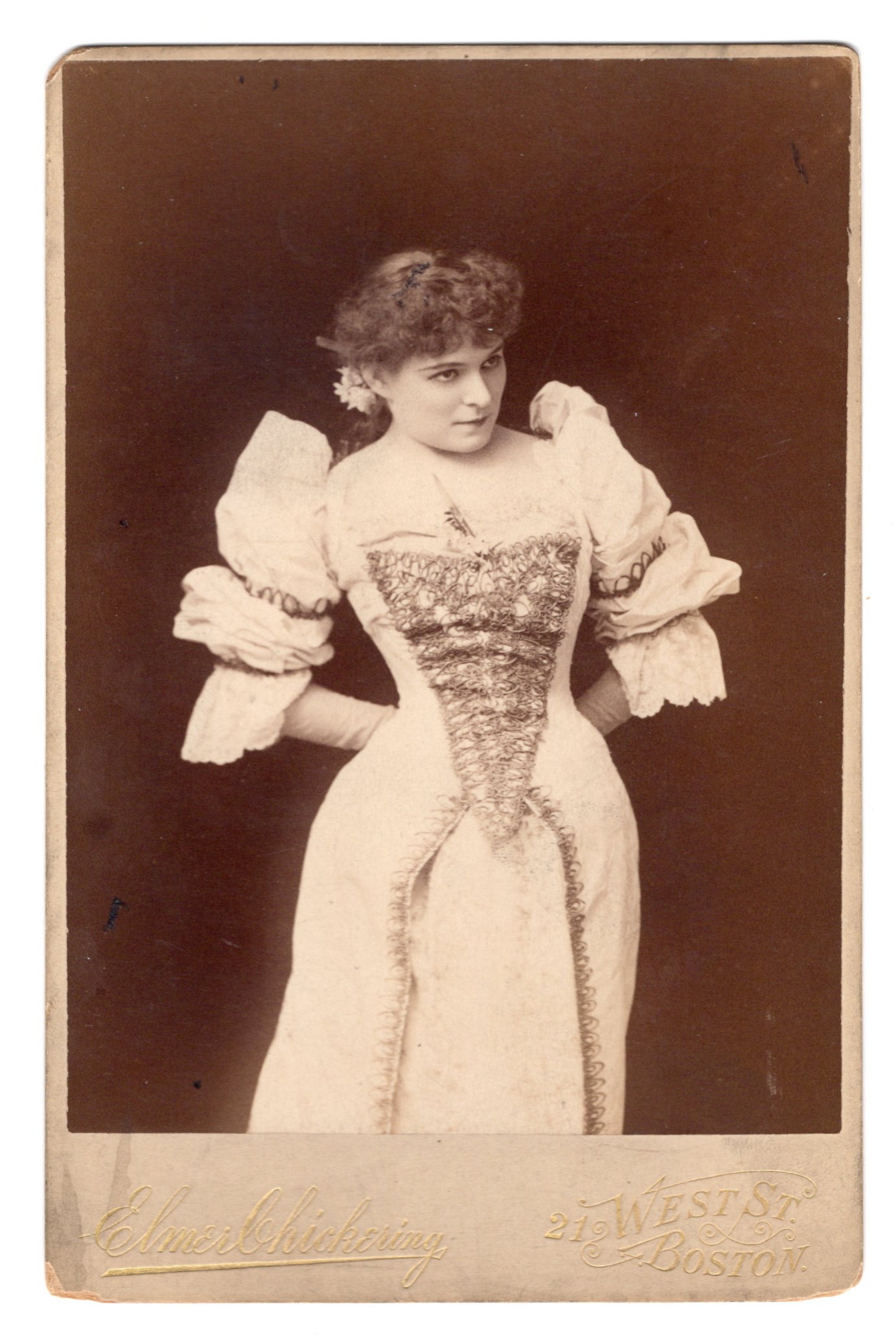
PROBABLE UNIDENTIFIED ACTRESS : STAGE BEAUTY : BRADLEY & RULOFSON : SAN FRANCISCO, CALIFORNIA

This cabinet card photograph features a pretty young actress. At least, this is likely a stage beauty rather than a “civilian”. This photo was taken by the San Francisco gallery belonging to well respected photographers “Bradley & Rulofson. Their studio took many photographs of stage actresses when they came to San Francisco. Henry William Bradley (1813-1891) and his partner William Rulofson (1826-1876) were partners in a photographic studio that photographed many notable Californians. Bradley was born in Wilmington, North Carolina, and grew up in New Orleans, Louisiana. He opened his San Francisco studio in 1850 and took in his partner in 1860. When he retired in 1878 his studio was considered the best on the west coast and won first prize at the Centennial Exposition at Philadelphia in 1876. Mr Rulofson had quite a controversial and interesting life and associated with many famous people including Ambrose Bierce.  Rulofson died in a fall from the roof of his studio and was heard to say during the descent, “I am killed”.  (SOLD)

Published in: on November 12, 2022 at 12:00 pm  Leave a Comment  
Tags: , ,

PORTRAIT OF AMERICAN STAGE ACTRESS MAUDE WHITE OR POSSIBLY A PORTRAIT OF AMERICAN STAGE ACTRESS MAUD WHITE

maude white 1

This is an unusual cabinet card portrait for two reasons. First, the pretty young woman who is the subject of this photograph is a New York city actress and certainly does not look the part. She is well dressed, but she is wearing conservative and “boring” attire. Overall, she looks more like the “woman next door” than a Broadway actress. She exudes a sweet and innocent disposition and she has a twinkle in her eyes. She doesn’t  give the appearance of a professional actress of that time. Where’s the histrionic flamboyance? Where’s the drama? Secondly, what’s wrong with the photographer, Napoleon Sarony. The fantastic celebrity photographer was not showing his usual bombastic flair when he posed and shot this photograph. Unlike many of his theatrical portraits, there is no fancy clothing or abundance of props in this portrait. The young lady in this image is named Maude White. Her name is written on the reverse of the photograph. However, there is a caveat worth mentioning. I encountered a problem while I was researching Maude White. I discovered that there was also an actress named Maud White who was performing during the same era. This became an issue because, despite the inscription on the back of the cabinet card, I could not be sure if the woman photographed was Maude White or Maud White. I attempted to find other photographs of both actresses but met no success. Due to the fogginess of the identification issue, I decided to research both Maude and Maud. The Internet Broadway Data Base reveals that Maude White appeared in one Broadway production, “The Ruling Power” (1904). However, Maud White made three appearances on Broadway (“Lost-24 Hours”(1895), “A Stranger in a Strange Land” (1899), and “There and Back” (1903). First, I will present some information gleaned from researching Maude. The New York Times (NYT) (1888) published an article about a soon to open play entitled “A Parisian Romance”. The star of the show was Mr Richard Mansfield and the supporting cast included Miss Maude White. The NYT (1888) later reviewed the play and made special mention of Maude. The review described her as “the danceuse (female ballet dancer) of the Opera” and reported that she played her role in a charming, pert, and clever manner. The NYT (1898) announced the soon to open comedy, “A Stranger in a Strange Land”, and that it would include both Mansfield and Maude. An article in the NYT (1900) stated that Maude would appear in Stuart Robson’s company that year. The NYT (1903) heralded the opening of a farcical comedy called “There and Back” and added that Maude would be a principal in the cast. An interesting story about Maude appeared in the NYT in 1905. The issue at hand was plagiarism. Maude had written a playlet called “Locked Out At Three AM” and she complained to the United States circuit court that the author of another play used some of her material. Maude had asked for an injunction and sued for damages. The NYT (1906) stated that Maude would be starring in the play “Nobody’s Fault”.  Now lets focus on Maud, rather than Maude.  In 1890, Maud was involved in some controversy and it was reported in the NYT. The title of the article was “Fritz Emmet Sobering Up”. Emmet was an established comedian who had a relationship with “John Barleycorn” that had produced many newspaper articles focussing on his drunken behavior. The article stated that there was  “a stormy sea” on the stage of the Hammerstein’s Harlem Opera House. Emmet had been drinking heavily for two weeks and creating much drama. His professional and personal life had become badly damaged. In his previous engagement in Philadelphia, Emmet had reached the point that he could no longer perform. The theater had to close the show, and fortunately for the theater, Emmet compensated them for their losses. Next stop was Harlem, but Emmet kept drinking excessively until the dramatic incident occurred on stage. At a Saturday night performance he “murdered his play”. While onstage he made many “Bacchanalian references” and exhibited other inappropriate words and actions.. Emmet’s adult son decided to put an end to his father’s out-of-control behavior. Just as the curtain went down on the last act of the play, Fritz’s son went on the stage where his father and Maud were standing. The son informed Maud that she would have to leave the theater company. Maud objected in a “vigorous manner” spurring the young Mr. Emmet to have her forcibly removed from the theater. Worse yet, he had her confined to a little storm house over the stage door. Basically, she was temporarily kidnapped. Maud cried and screamed “various better words” and even though Fritz tried to intervene, she was imprisoned until the police arrived. The police were called by the younger Mr Emmet and they promptly took Fritz to Manhattan Hospital where he was confined overnight. Maud was released and put in a carriage to go wherever she wanted to go. The story got worse for Fritz. Directly after this incident, his wife of 27 years, sued him for divorce on grounds of infidelity. They ultimately divorced and the settlement was costly for Fritz. Maud continued to perform and the NYT (1891) announced that Maud would be appearing in a play directed by Charles Frohman called “Mr. Wilkinson’s Widows”. That same year, she appeared in a Frohman production entitled “The Solicitor”. The NYT (1892) has an article reporting that Maud appeared in another Frohman production (“The Lost Paradise”). An 1895 NYT article states that maud was appearing with the Robert Hilliard Company in “Lost- 24 Hours” at the Hoyt Theater. The NYT (1897) has an article reporting her appearance in “The Wrong Mr Wright”. Maud received a complimentary review from the  NYT (1903) concerning her performance in the role of the “seductive Marie Antoinette” in the play “There and Back”.   (SOLD)