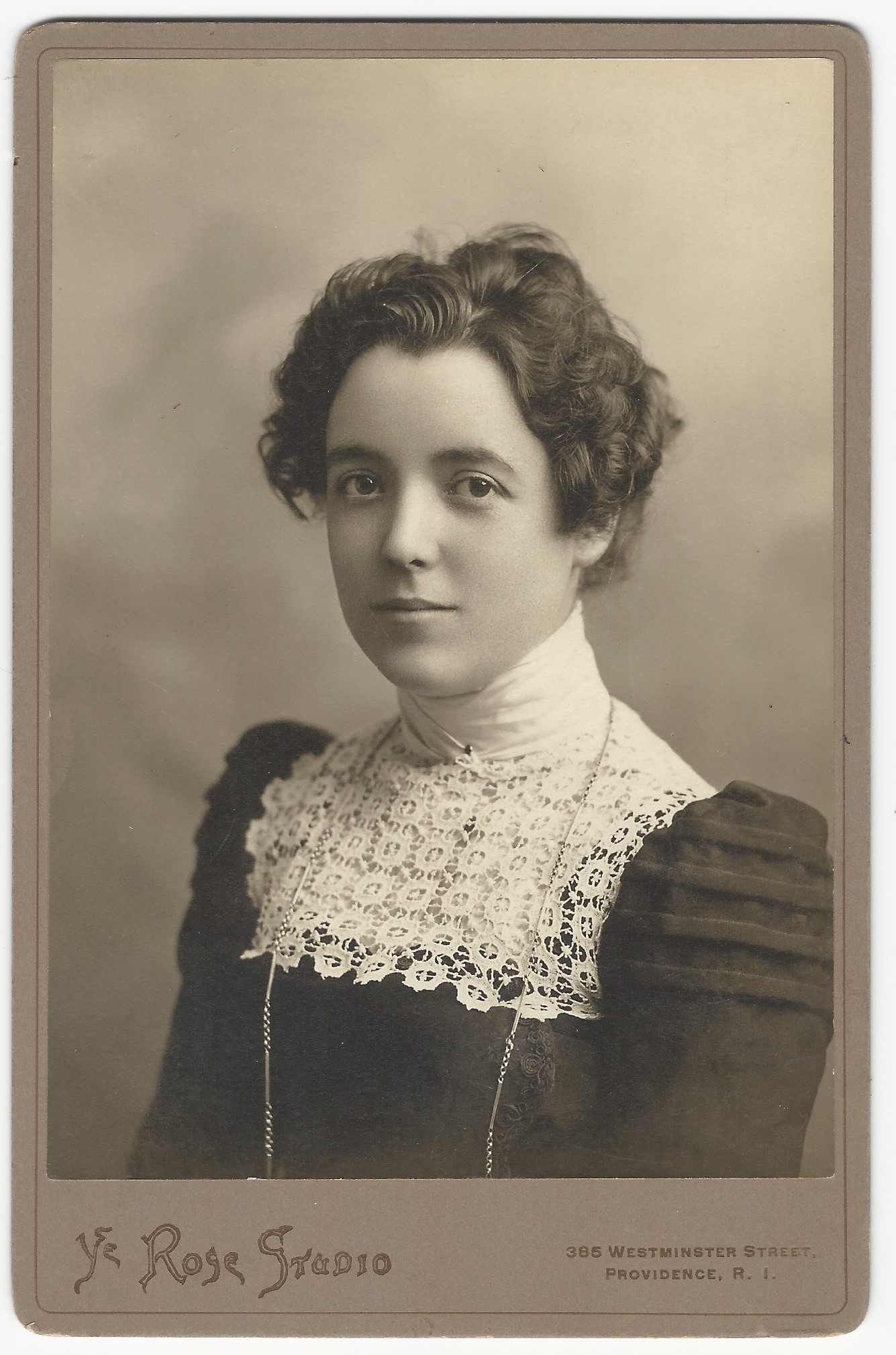
This cabinet card portrait features stage actress, Blanche Kelleher. The IBDB reports that Miss Kelleher appeared in two Broadway productions. The first production, “Trelawney of the ‘Wells” was a comedy that appeared at the Lyceum Theatre (1898-?). Other performers in the play included Mary Mannering and Hilda Spong. The play was produced by Daniel Frohman. In 1928, this play was the basis of a film, “The Actress” . The second Broadway show that featured Miss Kelleher, was “The Ambassador” (February 5, 1900 – March 19, 1900). The show was a comedy produced by Daniel Frohman. It was presented at Daly’s theatre, and was on Broadway for 51 performances. This cabinet card portrait was taken at Ye Rose Studio, in Providence, Rhode Island. The studio opened in 1886 and was located in the Conrad building in downtown Providence. The building still exists. On the reverse of this photo is a stamp which indicates that the image once belonged to Frank A. Munsey (1854-1925). You may not have ever heard of Mr. Munsey but he was a well known man during his time. He was an American newspaper and magazine publisher. He was also an author of several novels. Munsey also founded a major financial institution. His accomplishments go on and on. Munsey provided major funding for Theodore Roosevelts ill fated campaign for the 1912 Republican Party nomination for President. In reaction to Roosevelt not receiving the nomination, he had his hand in the formation of the “Bull Moose Party”. Although he was born in Maine, he spent most of his life in New York City. The city of Munsey, New Jersey is named after him. Munsey receives credit for developing the idea of using high speed printing presses to print on cheap, untrimmed, pulp paper in order to produce affordable magazines. Many of these peiriodicals were sold for just ten cents. The stories appearing on this paper were often action and adventure fiction. The magazines were aimed at working class readers and were called “pulp magazines”. Think “Pulp Fiction”. Munsey eventually expanded into publishing newspapers. In 1925, Munsey died from a burst appendix. When he died, he left a fortune of 20 to 40 million dollars, which by today’s standards, would equal 250 to 500 million dollars. Among those that received sizable funds from Munsey’s estate was Bowdoin College and New York City’s Metropolitan Museum of Art. This cabinet card has excellent clarity and is in very good condition (see scans). Note the tiny chip near the top of the left edge of the card’s border. SOLD
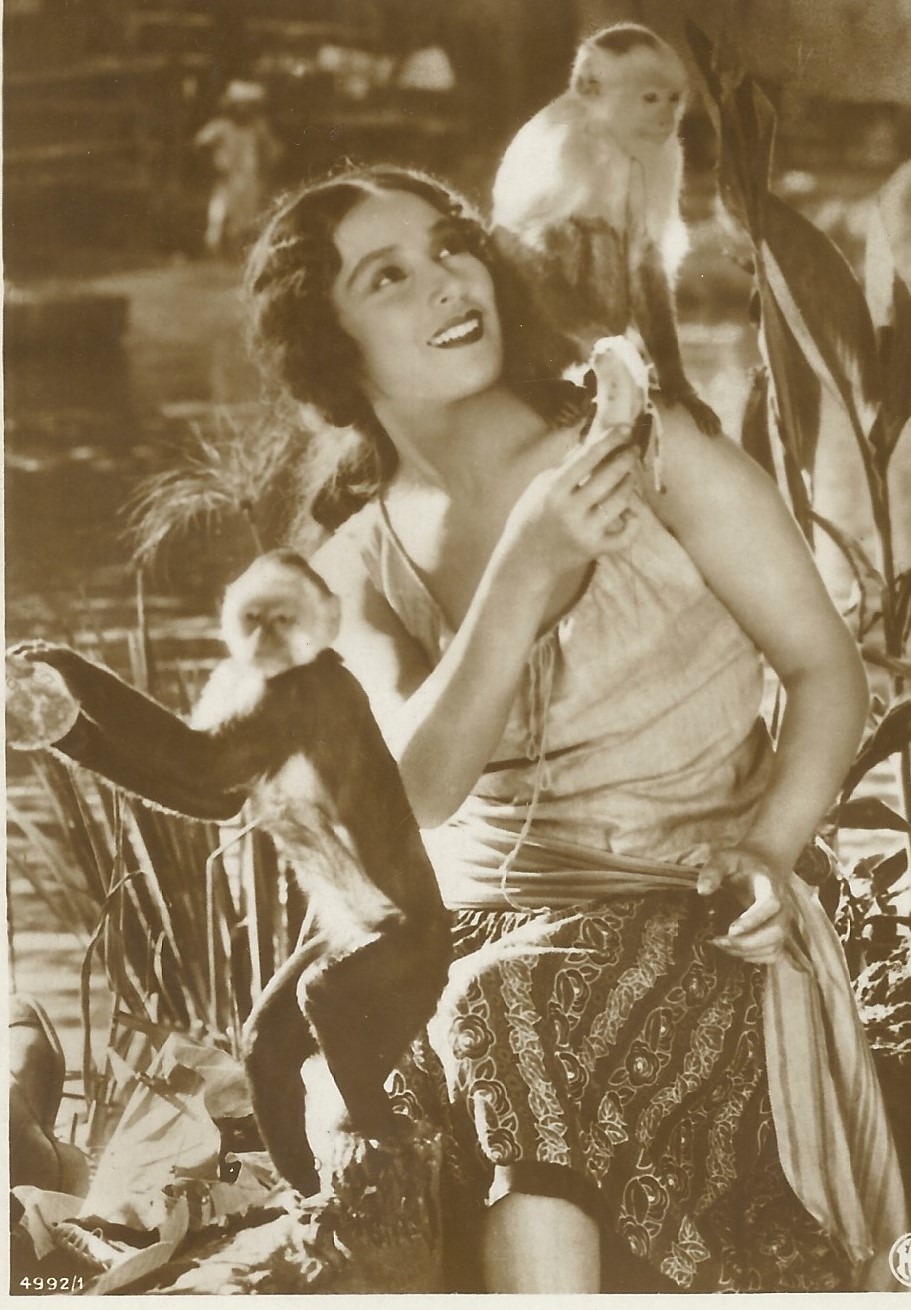
This vintage real photo postcard features Mexican actress, dancer, and singer; Dolores del Rio (1904-1983) and two unidentified capuchin monkeys. Del Rio’s performing career spanned more than half of a century. She was the first major Latin American actress to become an American film star (1920’s & 1930’s). Del Rio was also a major star in Mexican films. Dolores was known for her beauty as well as for her talent. She was discovered in Mexico and her Hollywood film career started in 1925. She began her career with a number of successful films, including “Ramona” (1928) and “Evangeline (1929). During the silent film era, she was considered the female version of “latin lover”, Rudolph Valentino. Del Rio was one of the fortunate actresses whose career was not destroyed by the advent of sound films. She acted in a wide range of film genres. “Bird of Paradise” (1932) and “Madame Du Barry” (1934) were among her successful films of the 1930’s. In the early 1940’s, her Hollywood career began to flounder sparking Del Rio to return to Mexico to become a major star of Mexican cinema. She continued acting in Mexican films through the 1950’s. Beginning 1960 she acted in both Mexican and Hollywood films. During the late 1950’s through the early 1970’s, Del Rio acted in theater and television. Dolores was born in Durango City, Mexico. Her parents were part of Mexican aristocracy whose lineage could be traced to Spain. Dolores was the cousin of actor Ramon Novarro (another silent film”latin lover”), and of Mexican cinema actress, Andrea Palma. During the Mexican Revolution (1910-1920), Dolores’s family lost its fortune. Her family felt threatened by Pancho Villa’s insurgence. It was time to “get out of town”. Her father fled to the United States while she and her mother escaped to Mexico City. Acting was an integral part of Dolores’s getaway. She and her mother felt compelled to dress as peasants to insure safe passage on the train to Mexico City. Her parents reunited there in 1912. Dolores attended a college in Mexico City operated by French nuns. After seeing Russian ballerina, Anna Pavlova perform; Dolores decided to become a dancer and took lessons from a well respected teacher. At age 17, Dolores married Jaime Martinez del Rio. He was from a wealthy family and was educated in England. The couple honeymooned in Europe for two years and Dolores formed close relationships with a number of members of European aristocracy. When the couple returned to Mexico, they settled in Mexico City. In 1925, Dolores met American filmmaker Edwin Carewe, and he was spellbound. He convinced Dolores and her husband to move to Hollywood where he promised to make Dolores a star. Her husband hoped to write screenplays there. When they arrived in Tinseltown, Carewe launched a public relations campaign to raise excitement about his beautiful find. He built up her aristocratic background by saying such gems as Dolores was “the first lady of high Mexican Society” and that she had come to Hollywood with a collection of shawls and combs valued at fifty thousand dollars. Dolores made her film debut in “Joanna” (1925), where she played a vamp of Spanish-Brazilian origin. Her first starring role was in the comedy “Pals First” (1926), directed by Carewe. That same year, Dolores appeared in the war film “What Price Glory?”. The movie was a huge financial success and helped Dolores become one of the “WAMPAS Baby Stars” of 1926. Other members of her “class” were Mary Astor, Joan Crawford, Janet Gaynor, and Fay Wray. By then, her film career was rocketing. Her role in Resurrection” (1927), a popular film based on a Tolstoy novel, further propelled her career. While her career was succeeding, her personal life was a “hot mess”. Her marriage to Del Rio ended in 1928. He had much difficulty being in the shadow of his famous and successful wife. Six months after Dolores filed for divorce, Del Rio died in Germany. While dealing with her grief, she had to deal with constant harassment from her discoverer, Edwin Carewe. He wanted to be more than her agent and her director since he had first launched her career. In 1929, Dolores announced to the press, that despite Carewe’s claims, the pair were just friends and business companions. She added that they had no plans for marriage. Soon thereafter, she cancelled her contract with him. The end result was a legal dispute that was settled out of court. Carewe’s anger did not end there. He disparaged her the press and refilmed “Resurrection” starring Lupe Velez, another popular Mexican film star. In 1930, Del Rio married MGM art director, Cedric Gibbons. They became one of Hollywood’s most followed couples of the early 1930’s. In 1932, the film, “Birds of Paradise”, was released to rave reviews. The film starred Del Rio and actor, Joel McCrea. The movie was a South Seas love story. A scandal arose from the film because of a scene featuring the pair swimming naked. Controversy continued in Del Rio’s appearance in “Flying Down to Rio” (1933). In this film, Del Rio was the first actress to wear a two piece bathing suit on screen. Fred Astaire and Ginger Rogers danced together for the first time on film, in this movie. Del Rio and Astaire also did an “intricate” dance number in the film. Del Rio found herself in political hot water when she and Ramona Novarro and Lupe Velez attended a special screening of a Mexican film which was accused of promoting Communism in California. Del Rio was accused of being a Communist for her attendance at the screening. In 1940, Del Rio began an affair with actor/filmmaker, Orson Welles. The dalliance resulted in Del Rio and Gibbons divorce. In 1954, Dolores was scheduled to co-star in a Spencer Tracy film, but the US government would not give her permission to work in the United States. The government believed she was sympathetic toward communism for attending the aforementioned film screening and for signing a petition supporting a world peace conference. After some time, she was able to remedy the problem by writing a persuasive letter to the US authorities. Later in life Del Rio did express some “political” beliefs. She stated that she wished she could play Mexican roles to show what life in Mexico was really like. She felt such an opportunity could help diminish the ugly stereotypes that existed about Mexicans in American society. She stated that it was her great wish to make fans realize the beauty, wonder, and greatness of Mexicans as a people. She asserted that the great majority of Americans view Mexicans as a “race of bandits, or laborers, dirty, unkempt, and uneducated”. Why do these false negative stereotypes sound so familiar? Del Rio wanted to show “the best that’s in my nation”. It has been pointed out by more than a few writers that Dolores del Rio was no “Latin bombshell”. Instead, she was noted for her elegance. The IMDb reports that Del Rio has 63 film credits ranging from 1925 through 1978. This vintage postcard was published by Ross Verlag as part of a series (no. 4992/1). The logo for Fox films can be seen in the lower right hand corner of the image. (SOLD)
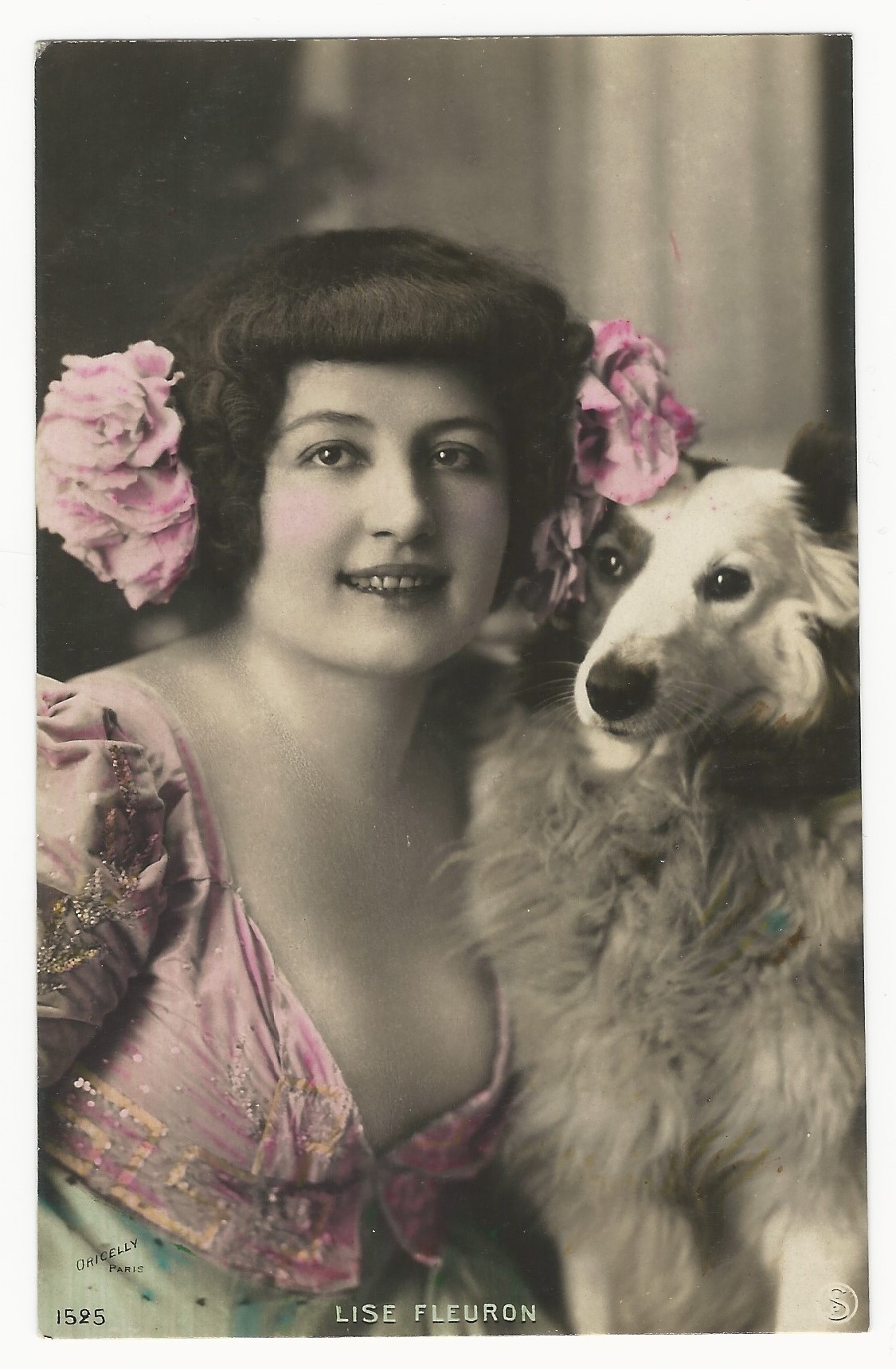
The subject of this vintage real photo postcard is French music hall artist, Lise Fleuron(1874-1960). She performed during the Belle Epoque. Miss Fleuron was known for her flowery dresses and their plunging necklines. This postcard image illustrates her willingness to pose for risque photographs. Lise is seen in this postcard image posing with a Borzoi (perhaps a Russian Wolfhound). This portrait is hand-tinted. Fleuron’s father was Alsatian and employed as a tailor. Her sister, Miati, toured with the French singer, Paulus in 1893. In that very same year, Lise had a son from an unknown father. The child died four months later. Lise was working as a milliner and lived with relatives. In 1895, she made her stage debut in Montmarte. She next appeared in a Paris music hall. This was followed by her performing in Operettas and her singing career took off. In 1898, she appeared in an illustrated book, “The Queens of Paris at Home”. She was in good company. Other models included Albany Debriege, Cleo de Merode, and Liane de Pougy. At this time she also worked as a model for erotic postcards. During 1898 she also appeared as a model, along with Mlle Dieterle in the photo novel “The Loves of Don Juan”. Lise was clearly quite busy. She continued to perform over the decade in such clubs as “Cafe des Ambassadeurs”, “Summer Alcazar”, and “La Scala”. In 1908, she married author and singer, Dufleuve. As a result, she became the sister-in-law of the singer Polaire. Photos of Polaire can be found elsewhere in the Cabinet Card Gallery. Use the search box. Miss Fleuron’s photo for this postcard was taken by the Oricelly studio in Paris. The card is part of a series (no.1525)and dates back to sometime between 1904 and 1910. SOLD
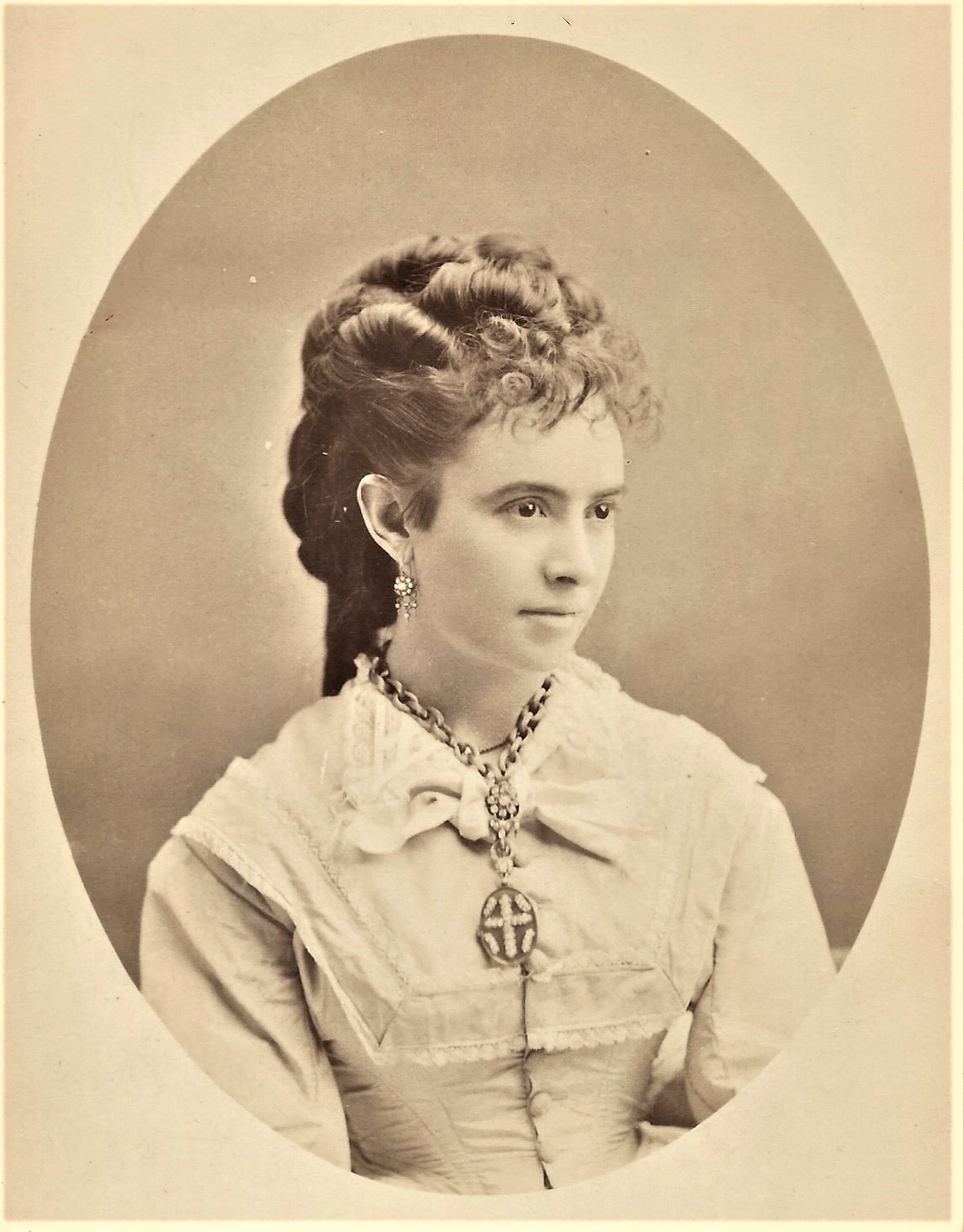
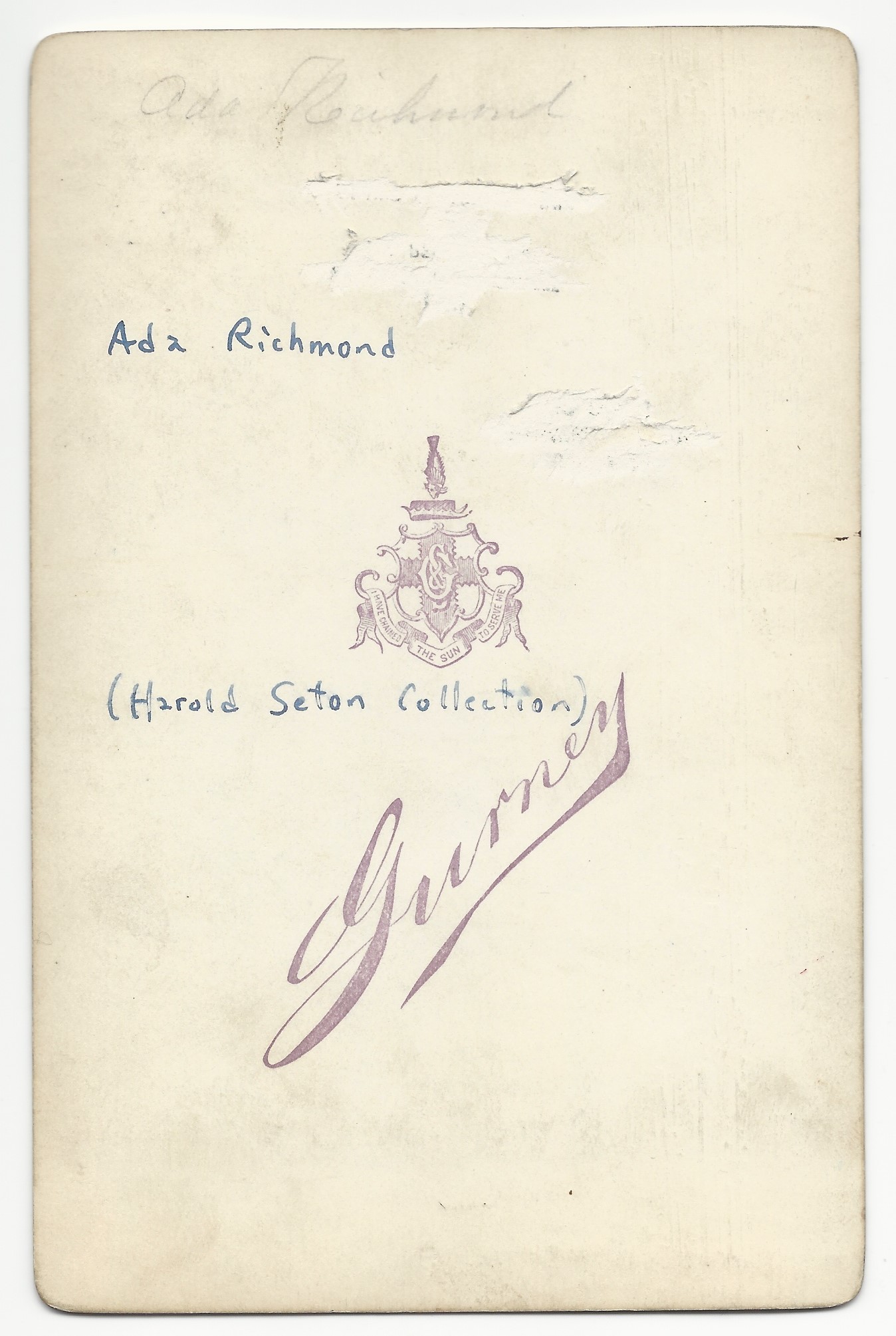
This cabinet card features a portrait of burlesque actress and impresario, Ada Richmond. Richmond was from Chicago and when her businessman father died she was sent to Boston to study music. She was encouraged by a theater manager to try the burlesque stage and she became very successful in that genre of theater. The Milwaukee Daily Journal (1885) has an article in it’s theater section about the opening of Ada Richmond’s American Burlesque Company’s version of “The Sleeping Beauty”. She headed the company and performed in it. She was known as the “handsomest woman” on the burlesque stage. The article also points out that Ada Richmond was the widow of Billy Bost, a well known New York politician and “sporting character” who was shot and killed three years earlier in a political dispute. This cabinet card was photographed by celebrity photographer, Benjamin Gurney. Ada Richmond looks quite angelic in this portrait and is wearing exquisite matching jewelry. The photographer’s logo on the reverse of the photograph has a symbol with the following words “I have chained the sun to serve me”. This likely is an advertisement for the studio’s electric lights which would improve the quality of customer’s photographs. A stamp on the reverse of the cabinet card notes that it was part of the “Harold Seton” collection. Harold Seton was a journalist, author and collector of theatrical photographs. He wrote a column for Theatre Magazine. (SOLD)
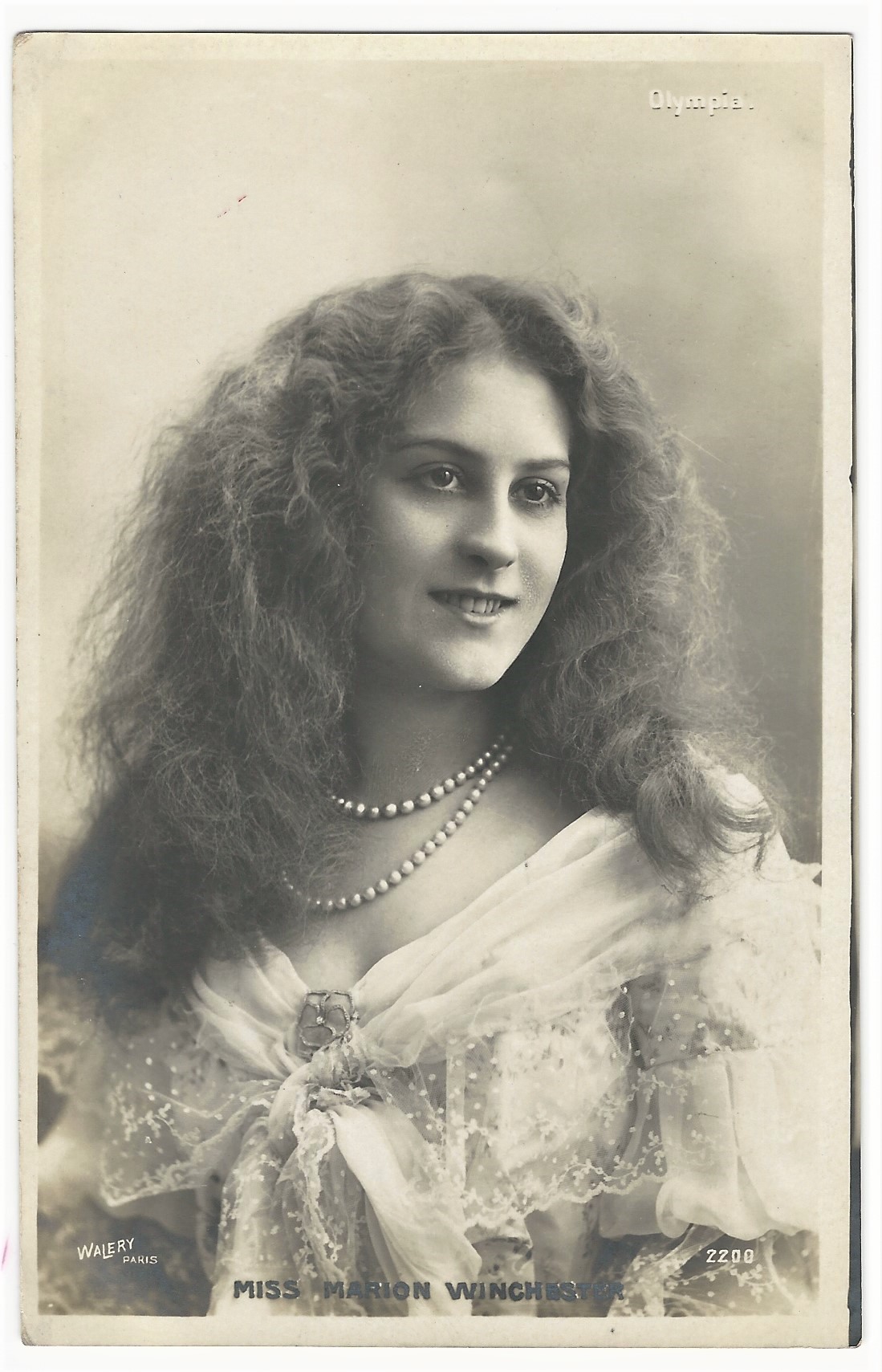
Marion Winchester (1882- ?) is the subject of this real photo postcard portrait. She was born in California. She began her professional career in 1899. She was trained at the Alviene Stage Dancing and Vaudeville School of Acting, at the Grand Opera House in New York. Winchester’s London premiere occurred in 1903 when she performed at the Oxford Music Hall where she was billed as the “World’s Champion Cake Walker”. She left London to appear in Paris where she received accolades for her dancing ability. In 1921, she applied for an emergency passport at the American Embassy in Paris. Her paperwork indicated that she resided in Paris where she studied music. She later married Italian pianist and composer, Count Aldo Solito de Solis (1905-1973). The pair divorced in 1940 and De Solis then married actress Gale Page. A photograph of Miss Winchester can be found in England’s National Portrait Gallery. Marion Winchester has appeared on Broadway four times between 1900 and 1902 and once again in 1934. She was mainly active within her career between 1899 and 1908. She was known for being a specialty dancer. An article in “London Week by Week” (1904) tells an interesting anecdote about Winchester. The article refers to the actress as the “Sugar Queen” and explains the origin of this nickname. It is reported that one day she was in the corridor of a fancy hotel and she was sucking on a piece of candy. She happened on the path of the “Emperor of the Sahara”, Jacques Lebaudy. The eccentric sugar magnate said to her, “Give up sugar-stick, and buy sugar stock”. It is said that she took the tip, and made a great deal of money, keeping her well stocked with furs, beautiful dresses, and diamonds. This portrait postcard was photographed by Lucien Walery. He was a celebrated Paris photographer known for his portraits of artists and cabaret dancers from the city’s music halls. He is very well known for his portraits of Mata Hari and Josephine Baker. Walery did a lot of work in the genre of nude/erotic photography. He photographed the beautiful women of Paris between the early 1900’s and the 1920’s. Walery does an excellent job of capturing Miss Winchester’s loveliness. Note her beautiful long hair. This postcard is part of a series (no. 2200). (SOLD)
This vintage real photo postcard features American silent film actress, Fern Andra (1893-1974). Andra was one of Germany’s most popular actresses in German silent film. She also worked as a film director, script writer, and producer. The pretty smiling Miss Andra poses with a Borzoi dog. She was born in Watseka, Illinois. Her father died when she was five years-old and her mother remarried. Fern’s step-dad was a vaudeville actor, circus performer and tight-rope walker. By age four, Fern was part of a tight-rope act. She later trained in dance and singing. In 1899, at age six, she made her first film, a version of “Uncle Tom’s Cabin”. She continued to perform with the circus and toured the United States, Canado, and Europe. She was a member of a famous troupe of wire artists. In Berlin, she took acting lessons from Max Reinhardt, prominent film and theater director. She appeared in several of his plays and films. In 1913, she acted in her first German film. In 1915, she was in her first Austrian film. Some believe Andra was an Allied spy in World War I. To deal with these rumors, she married a Prussian Baron. At some point, she stated that she actually was spying for the allies. This was her first marriage. He was killed in the war. Her second marriage was to a professional boxer. Her appearance in the film “Genuine” (1920) caused a great stir. In this horror film, she wore a costume that was simply, her painted body. She continued to make films in Europe but by the mid 1920’s, her popularity waned in Germany. In 1922, she was widely reported as being killed in a plane crash. In fact, she, and her companion, director Geog Bluen, survived the crash but according to one article, died the next day. However, the pilot, a former World War I fighter pilot and brother of the “Red Baron”, was killed. By 1928, Andra was working in the United Kingdom and the United States. She also expanded her acting to radio and television. Andra was married four times. She was widowed two times and divorced two times. Her fourth marriage, to a General, lasted about 35 years. She had no children. The IMDb gives Andra 51 acting credits between 1913 and 1930. She is also credited as a writer, producer, and director. An interesting side note is that when she was working as a producer, she interacted with a young German playwright named Josef Goebbels. Interestingly, she did propaganda broadcasts into Germany for the allies during World War II. Fern Andra died at age 80, in South Carolina. The stamp box of this postcard has an interesting story. “NBC” (Neue Bromsilber Convention) was a price cartel established in 1909 that continued until the 1930’s. The purpose of the cartel was to ensure that the minimum price charged for postcards was kept at a sufficiently profitable level. A number of postcard publishing companies joined the cartel in an effort to stave off the effect of competition on the pricing of postcards. This postcard is part of a series (no.131/1). The logo for the motion picture company, “Film Sterne” ,can be seen in the lower left hand corner of the image. SOLD
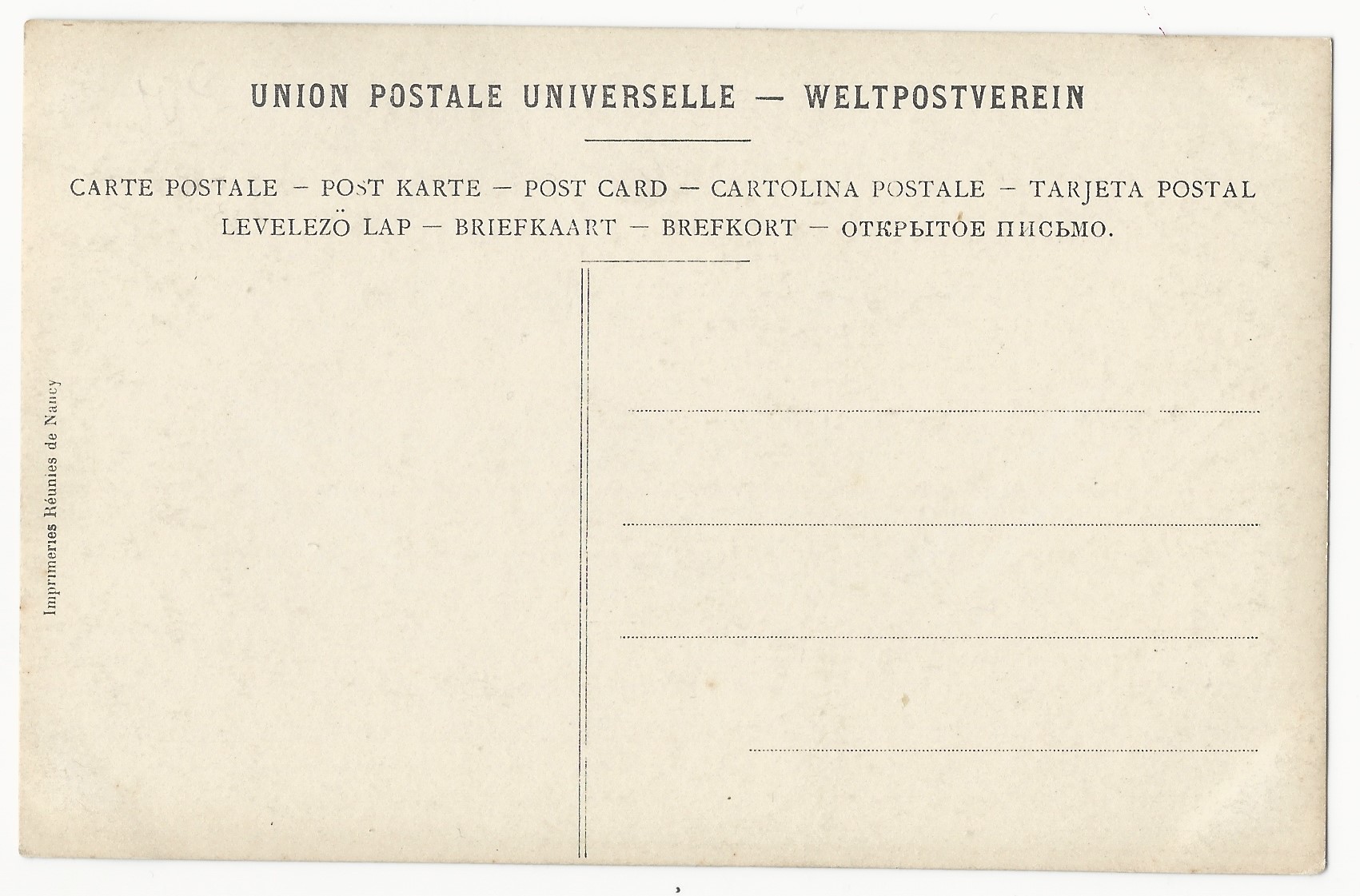
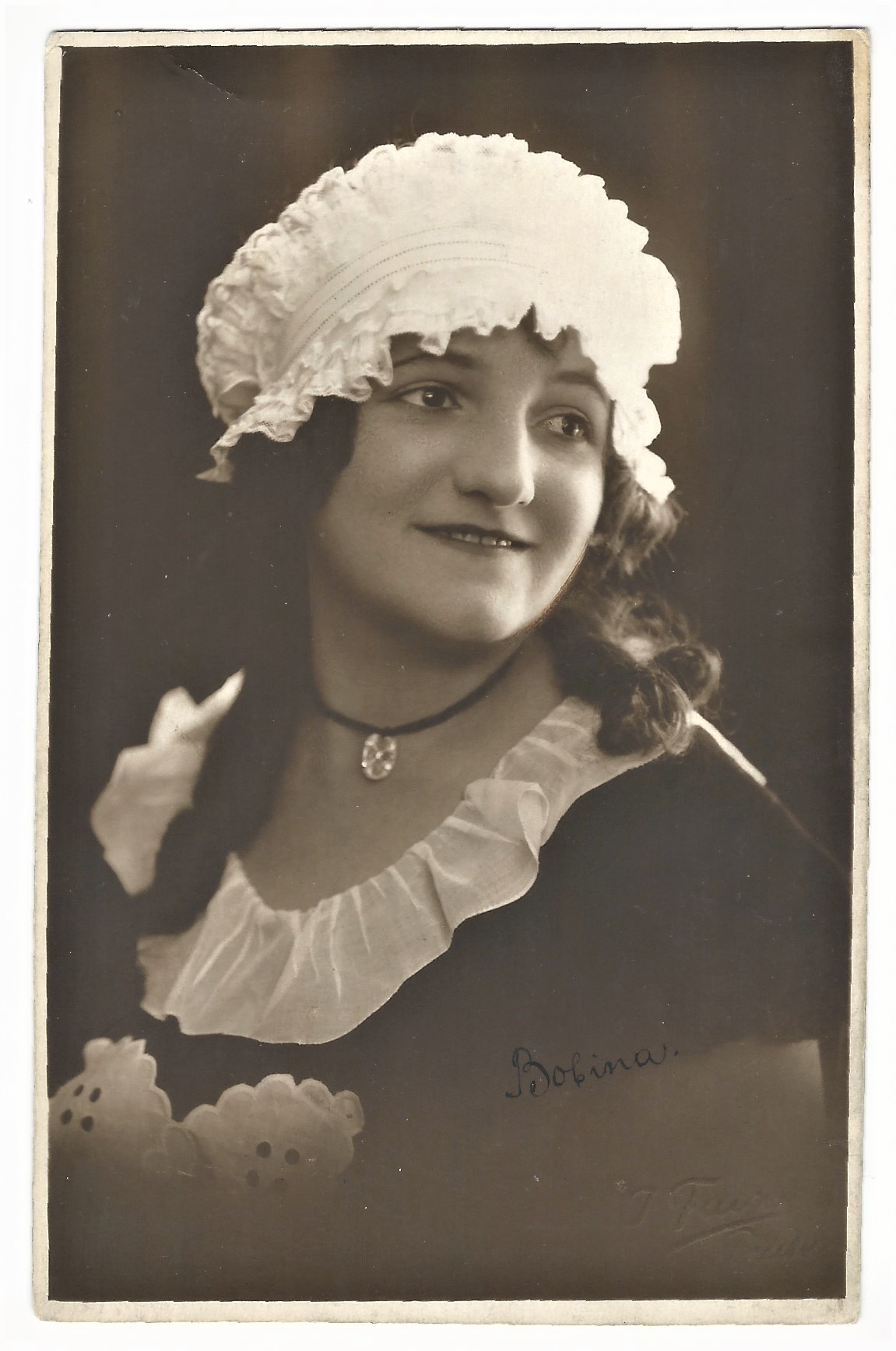
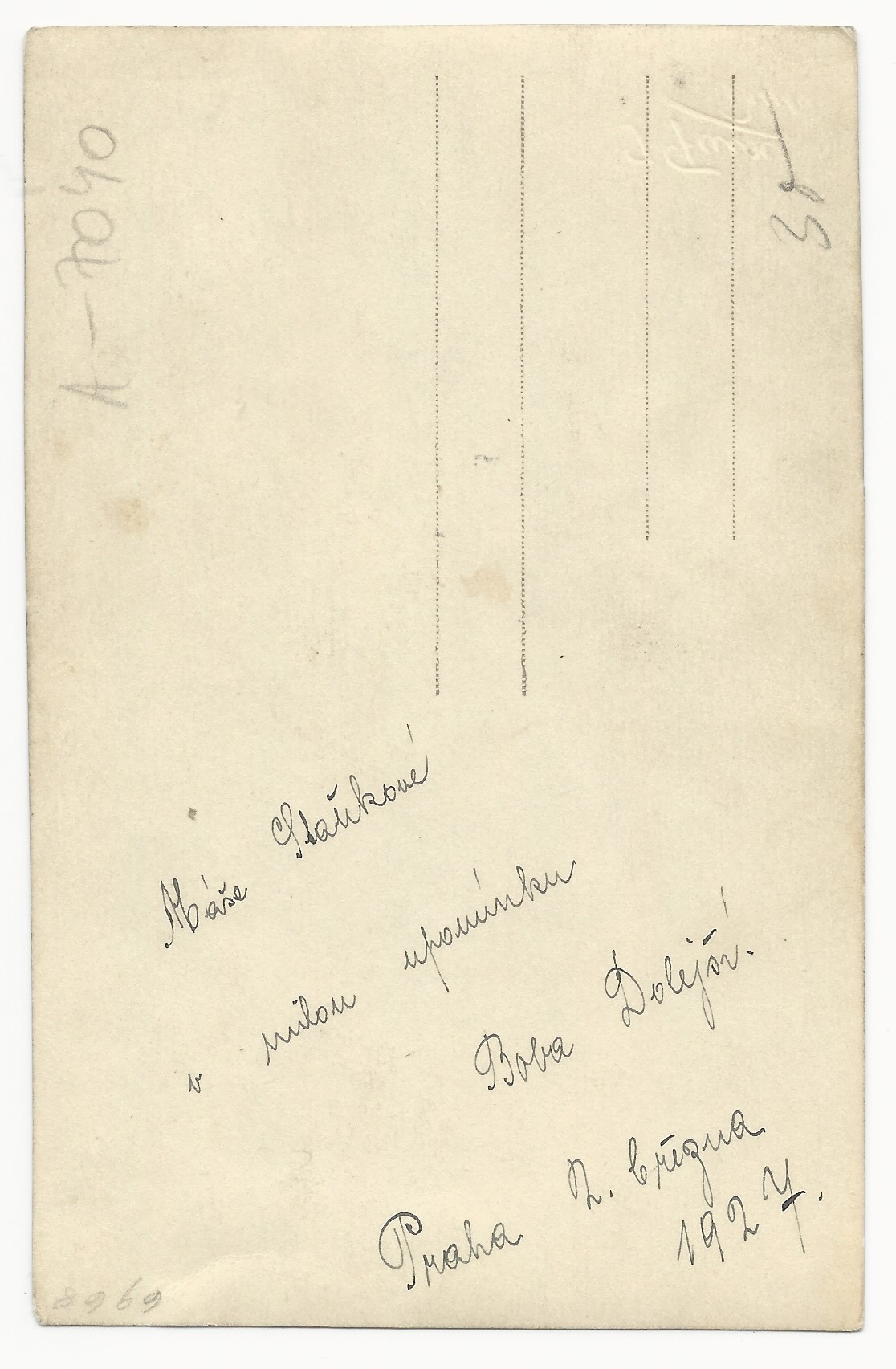
All of my attempts to identify this pretty young woman, have failed miserably. The previous owner of this vintage real photo postcard, identified this lovely lady as actress, Boba Doljesi. I can not find any information concerning anyone with this name. The postcard has an inscription on the reverse that was written in 1927. There is neat script writing on the near bottom right of the image that states “Bobina”. I need all the help that I can get to identify this woman with the sweet and pretty smile. The name of the photographer and the studio’s possible location is embossed on the bottom right hand corner of the image. Unfortunately, I don’t find the stamp legible. My guess, and it is only a guess, is that this card is from Czechoslovakia. This postcard is in very good condition (see scans).
Buy this original Vintage Real Photo Postcard (includes shipping within the US) #3252
To purchase this item, click on the Pay with PayPal button below
23.50 $
Buy this Cabinet Card Photograph (includes International shipping outside the US) 3252
To purchase this item, click on the Pay with PayPal button below
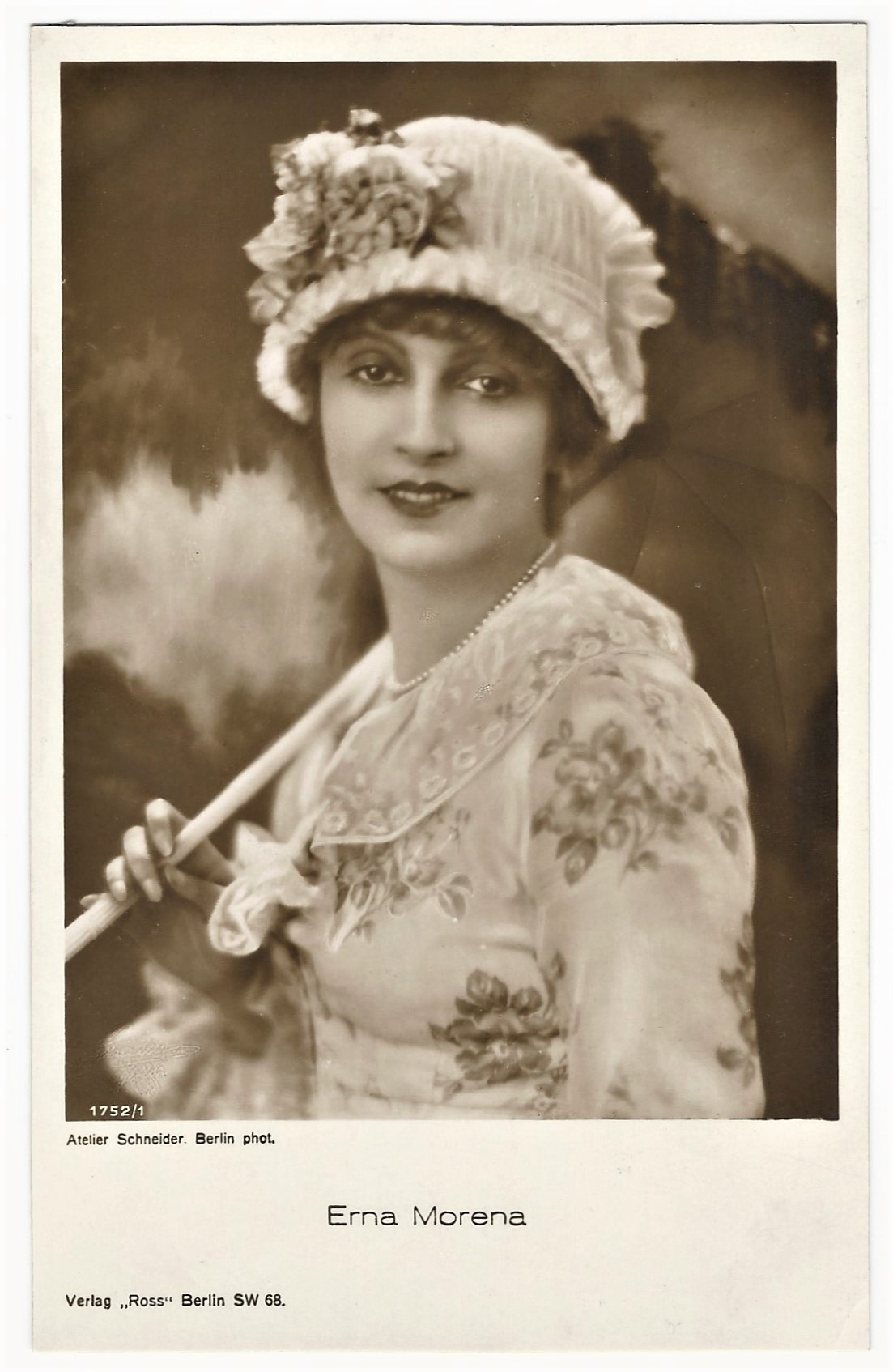
This vintage real photo postcard (Postcard 1) features pretty German film actress, Erna Morena (1885-1962). In addition to being a performer, she was also a film producer and screen writer during the silent era. The IMDb reports that Morena appeared in 122 films between 1913 and 1951. Morena grew up in a middle-class family in Bavaria. At age 17, she attended applied art school in Munich. In 1909, after a short stint in Paris, she moved to Berlin where she worked as a nurse. She became a student at the German Theater’s drama school and in 1910 was hired as an actress by Max Reinhardt, Austrian-born theater and film director. She played a number of small theater roles and in 1913, Morena made her film debut in “The Sphinx”, produced by Leteraria Film. She was a “big time” actress. She worked under many well known directors and with some of the most well known actors in German film. Morena made a bid to become a film producer and formed her own film company which produced films in 1918 and in 1920. By the mid 1920’s, she was considered one of the biggest stars in German films. With the advent of talkies, her career declined. However, she did appear in supporting roles during the 1930’s. Between 1915 and 1921, Morena was married to the German writer, Wilhelm Herzog. He was a historian of literature and culture, a dramatist, the author of an encyclopedia, and a well known pacifist. Their marriage ended in divorce. Morena appeared in the 1940 film “Jud SuB”. The movie was a Nazi Germany historical drama propaganda film. The film was produced on the order of Joseph Goebbels, the Nazi politician and trusted aide to Adolph Hitler. The movie is considered one of the most anti-semitic films of all time. Postcard 1 was published by Ross Verlag and is part of a series (no.1752/1). The company was located in Berlin, Germany. Morena was photographed by the German photographer, Ernst Schneider. Research about Mr Schneider yielded a great deal of information. He was considered to be one of the most celebrated studio photographers in Berlin during three decades (1900’s, 1910’s, 1920’s. He photographed many celebrities from the world of theater, opera, circuses, and film. He was also one of the most prominent fashion photographers in Berlin. In addition, he was well known for his nude photography and he published books showcasing his work in this domain. Sometime around 1908 Schneider began working with postcard publishers “Rotophot” and “Neue Photographische Gesellschaft” (NPG). In 1919 he began working with Ross Verlag. This postcard, a former resident of a postcard album, is in very good condition (see scans below).
Buy this Vintage Real Photo Postcard (includes shipping within the US) #3173
To purchase this item, click on the Pay with PayPal button below
$25.50
Buy this Vintage Real Photo Postcard (includes International shipping outside the US) #3173
To purchase this item, click on the Pay with PayPal button below
$34.00
Postcard 2POSTCARD 2 (CLOSE-UP)
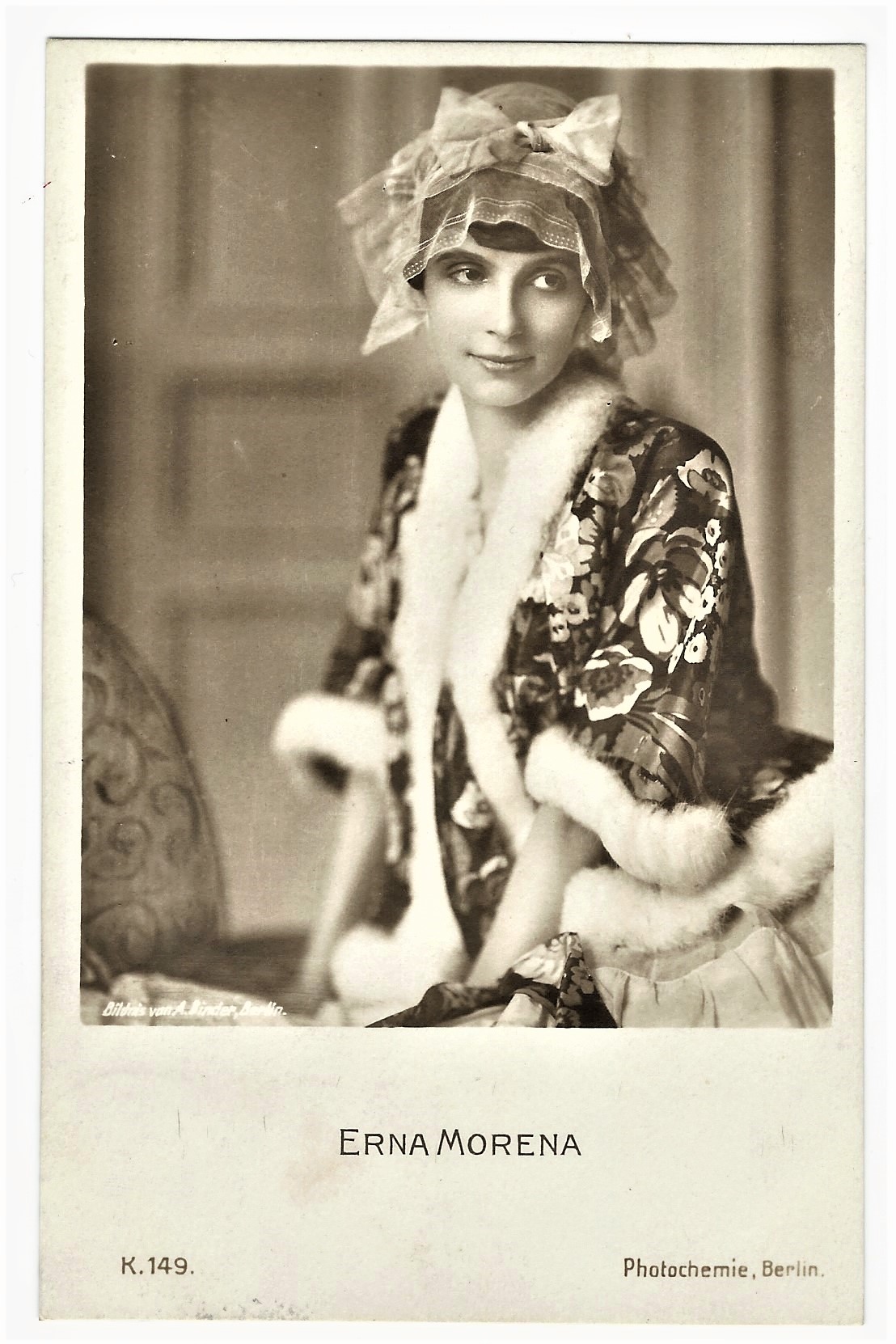
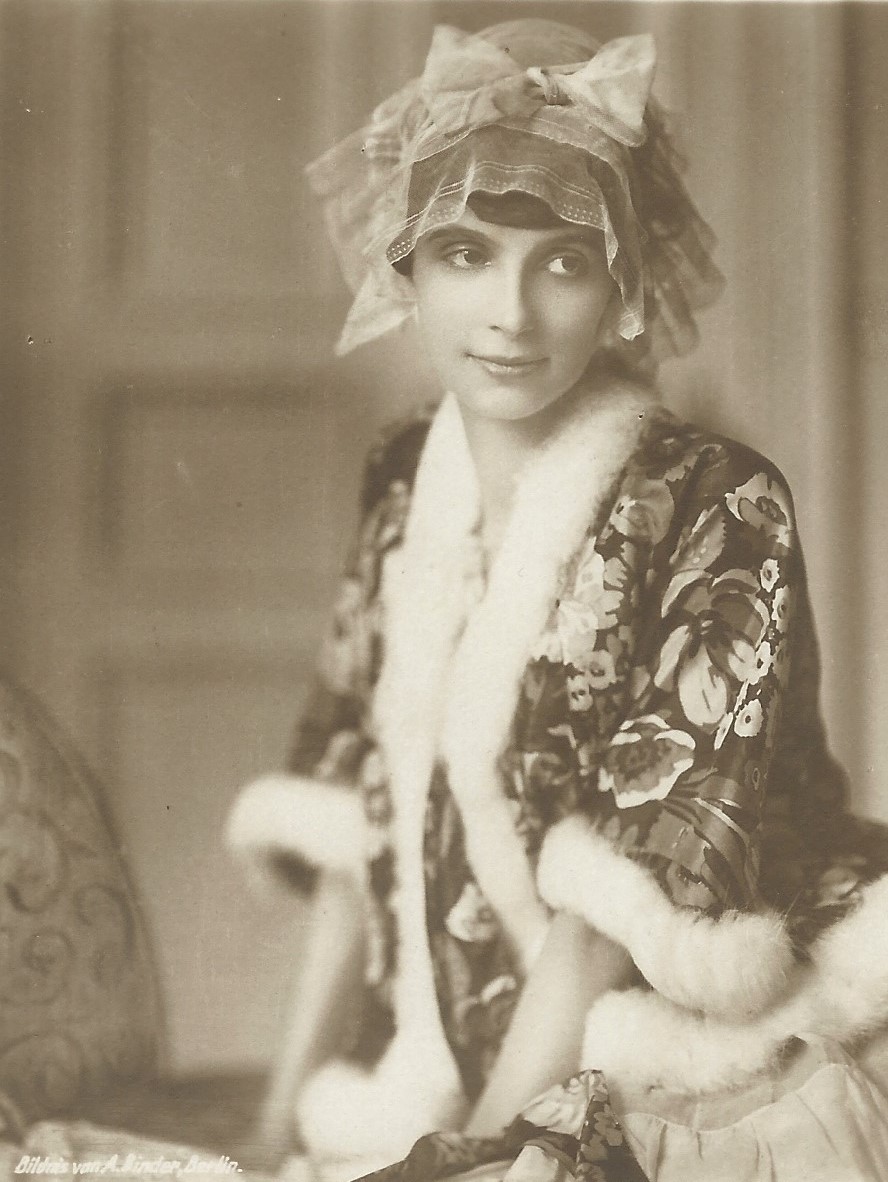
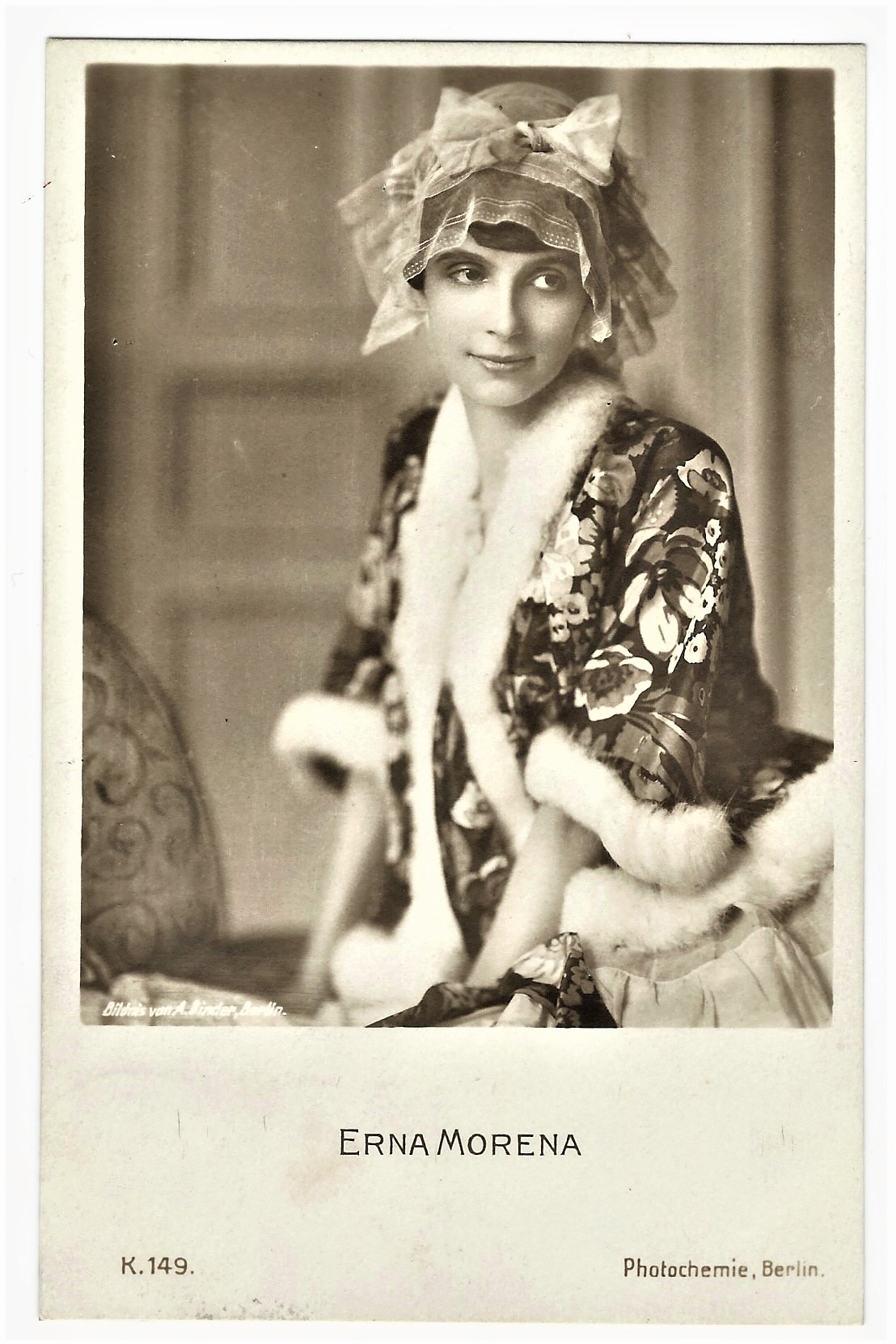
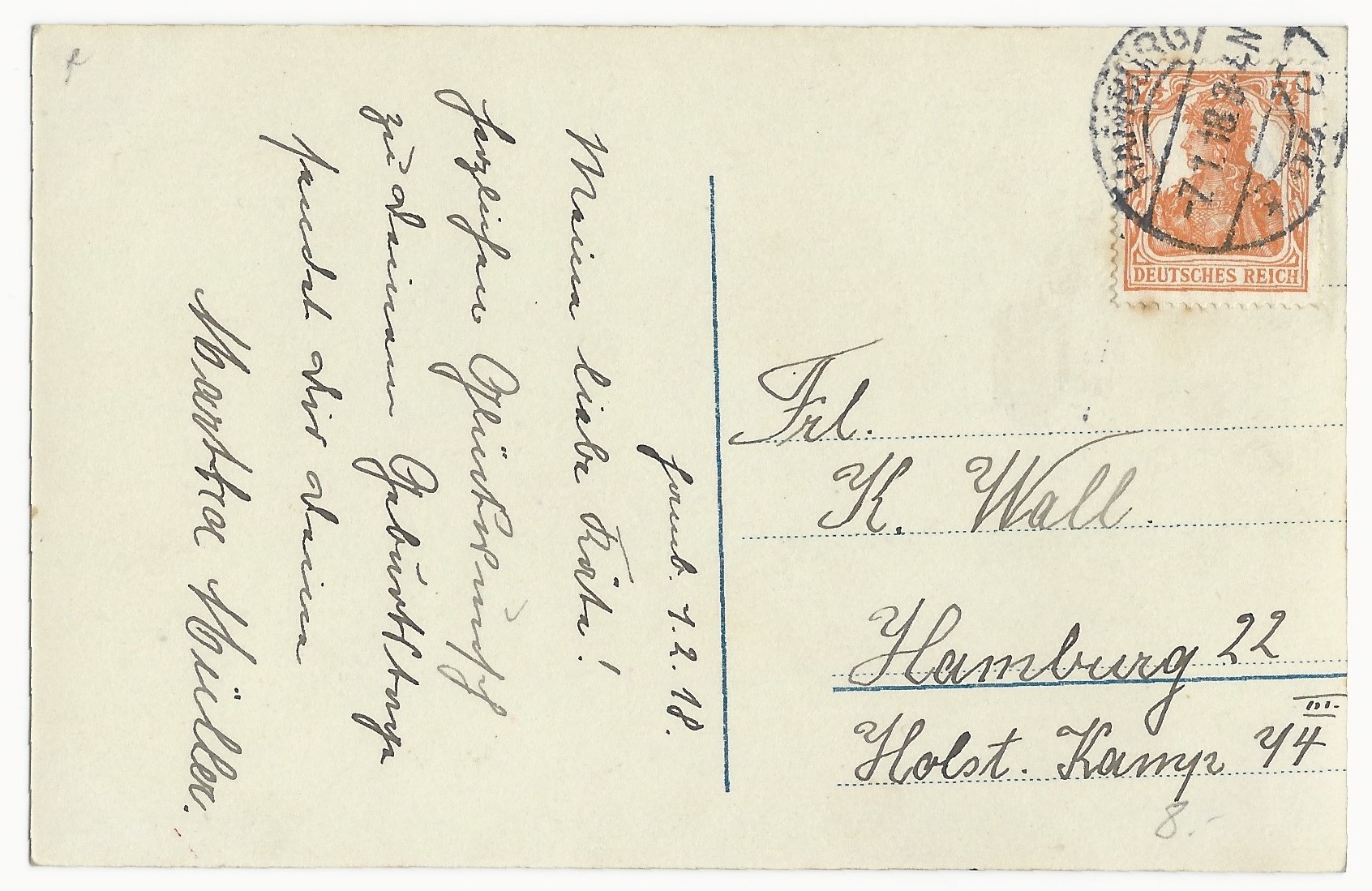
Postcard 2 also features the lovely Miss Morena. This postcard was published by Photochemie, located in Berlin, Germany. The card is part of a series (no.k149). Photochemie published postcards of only German film stars or European performers performing in German films. The postcards were published between 1914 and 1919. The firm also produced postcards of other subjects. The photographer of this terrific image was Alexander Binder (1888-1929). He had the largest photo studio in Europe during the late 1920’s and the 1930’s. Many of his entertainment star portraits appear on Ross Verlag postards. It is thought that Binder was of Swiss origin. He was of the Jewish faith. He studied engineering but did not complete his studies. From 1908 to 1910 he studied photography at a school in Munich, Germany. After the completion of his photography studies, he went to Berlin and in 1913 opened his first photography studio. Before long, he became one of the premier photographers in Berlin. He primarily focussed on fashion and celebrity photography. Since Berlin was the capital of the European film industry, Binder photographed all the stars of the European film industry including, Lilian Harvey, Conrad Veidt, and Lya De Putti. Many of his images were used in popular film portrait postcards. His photographs could be seen in postcards published by Ross Verlag and Photochemie. Binder died in 1929 but new photo cards bearing his signature continued to be published until 1937. It is thought that the real photographer of these new postcards was Hubs Floeter (1910-1974) who was employed at the studio as an operator. The studio continued to be owned by Binder’s widow, Mrs. Binder Alleman and their two daughters. The studio was managed by the Jewish Elisabeth Baroness Vonhedlis Stengel who was later deported to the Theresienstadt concentration camp. In 1938 the Nazi’s closed Binder’s studio and it was later taken over by an Aryan photographer, Karl Ludwig Haenchen . Haenchen continued to produce celebrity portraits for postcards. His publishers included Film-Foto-Verlag. After World War II the studio was taken over by the Hasse und Wiese company. This postcard has a Hamburg, Germany postmark and is dated 1918. The postcard is in very good condition (see scans)
Buy this Vintage Real Photo Postcard (includes shipping within the US) #3253
To purchase this item, click on the Pay with PayPal button below
$19.50
Buy this Vintage Real Photo Postcard (includes International shipping outside the US) #3253
To purchase this item, click on the Pay with PayPal button below
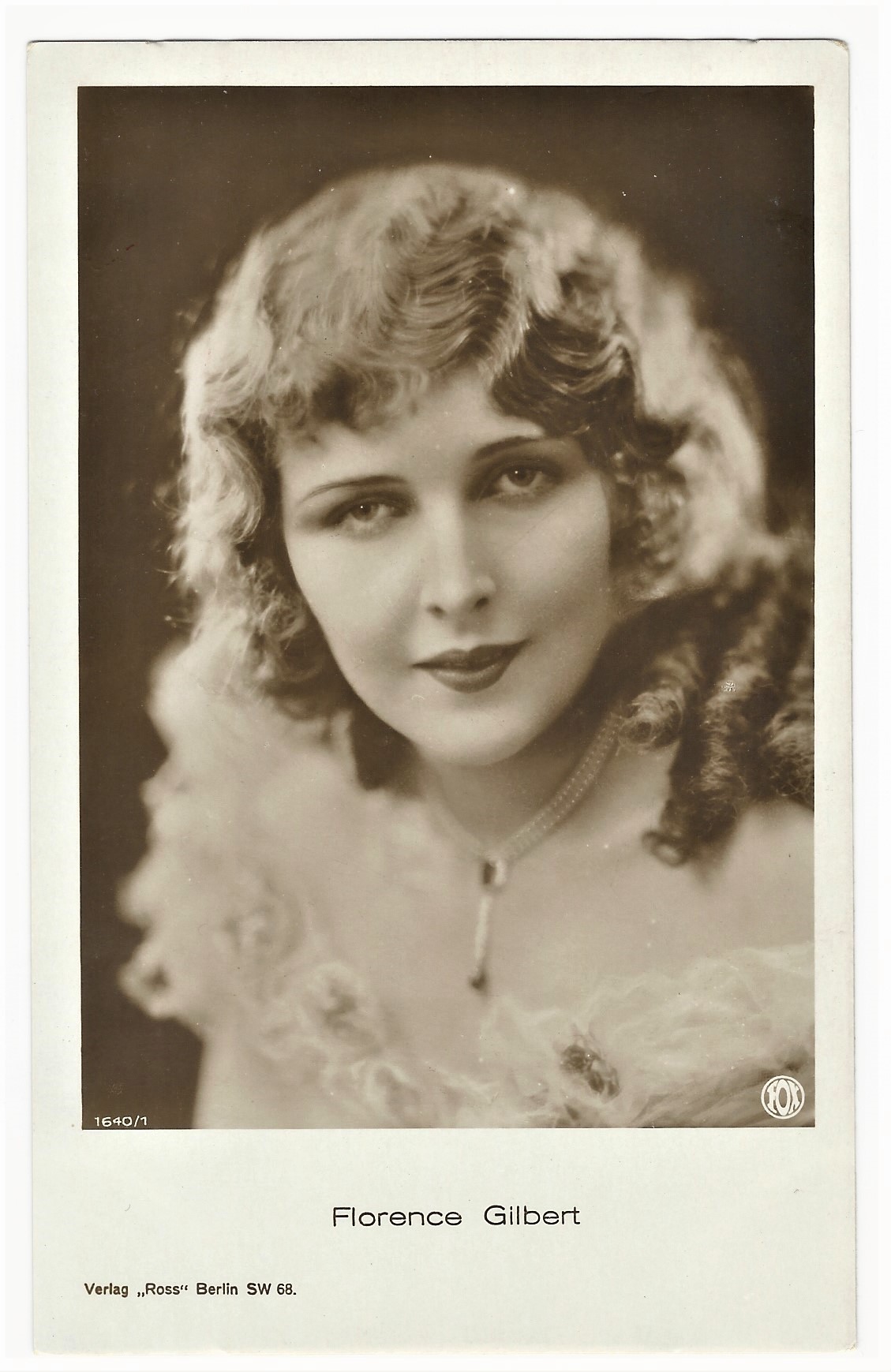
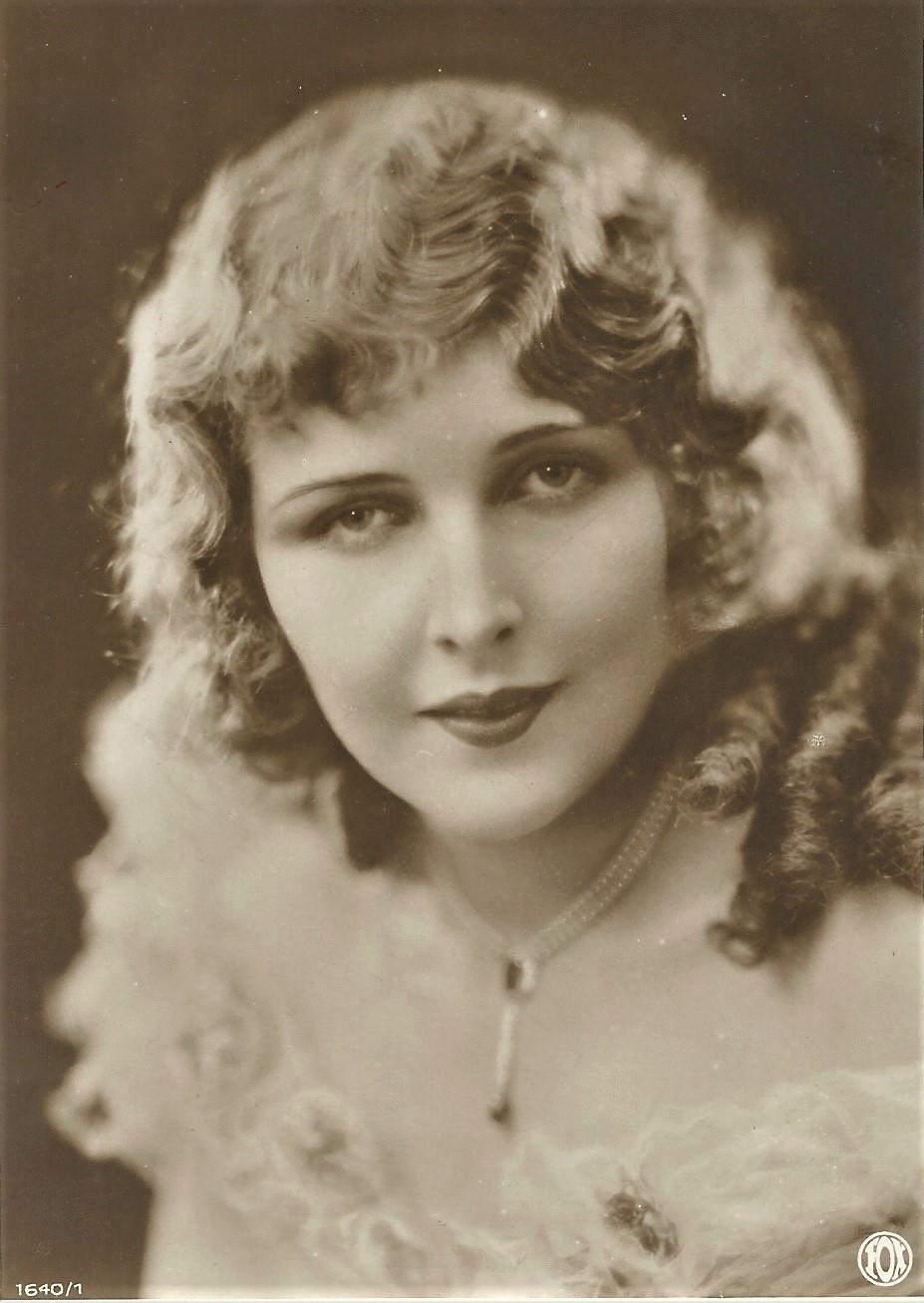
Florence Gilbert (1904-1991) is the subject of this vintage real photo postcard. She was a film actress active between 1920 and 1927. Gilbert’s hometown was Chicago. Florence’s mother wanted her to become the next Mary Pickford. In fact, she resembled Pickford in some ways. Florence’s mother had mailed photos of Florence to Pickford who encouraged her to take Florence to Hollywood. At age 14, she moved with her mother and brother to Los Angeles. She started off as Mary Pickford’s double. She was discovered by Monty Banks, an Italian comedian, film actor, director and producer. Apparently, she looked older than her fourteen years. She played a number of roles in films for Mack Sennett studios. She also worked in Hollywood for Fox Studios. Although she was still a teenager, she became the breadwinner of her family. According to IMDb she made 68 film appearances beginning in 1920. She appeared in the first Laurel and Hardy film, ‘The Lucky Dog” (1921). She was married three times. Her first husband was Ashton Dearholt (1894-1942), an American silent film actor. She permanently left acting after marrying Dearholt. She divorced him when he returned home from filming in Guatemala, accompanied by co-star Ula Holt. He was determined to have Holt live in the house he shared with Gilbert. She divorced Dearholt after he made his outrageous demand. Dearholt later married Holt. Husband number two was Edgar Rice Burroughs (1875-1950), an American fiction writer. He was the creator of Tarzan. The marriage ended in divorce due to his drinking. Her third husband was Dr Albert Stillman Chase. She had two children with Dearholt; both were adopted by Chase. Another source “credited her” with two additional marriages. This vintage postcard was published by Ross Verlag, located in Berlin, Germany. The card was part of a series (no.1640/1). Note the Fox studio’s logo in the bottom right hand corner of the image. This postcard is in excellent condition (see scans). SOLD
This vintage real photo postcard features the Swedish actress Jngeborg Ronnblad (1873-1915). If you can pronounce her first name, please accept my congratulations. If you are Swedish, you are not eligible for this challenge. Miss Ronnblad is quite pretty and fashionable. Her dress and hair (or wig) are covered with roses. Note that she is wearing two large rings. I wonder if she is dressed in a costume from one of her films. Just below her name in the top right corner, are the words “i Lifvets dal”. The translation of these Swedish words is “In the Valley of Life”. Could this be a film title? Ronnblad was born in Sweden. Her parents ran a theater society. Her husband was Swedish actor, Hugo Ronnblad. She worked a an actress, at least between 1888 and 1895. The publisher of this postcard was Paul Heckscher. The card is part of a series (no2011).This publishing house specialized in art reproductions, artist signed cards, black and white views, and hand colored real photos. The company was headquartered in Stockholm, Sweden. The Paul Heckscher publishing company operated between 1900 and 1917. Their postcards were printed in England. This vintage postcard portrait is in very good condition (see scans),
Buy this original Vintage Real Photo Postcard (includes shipping within the US) #3222
To purchase this item, click on the Pay with PayPal button below
25.50 $
Buy this Cabinet Card Photograph (includes International shipping outside the US) 3222
To purchase this item, click on the Pay with PayPal button below





 POSTCARD 1
 POSTCARD 1 (CLOSE-UP)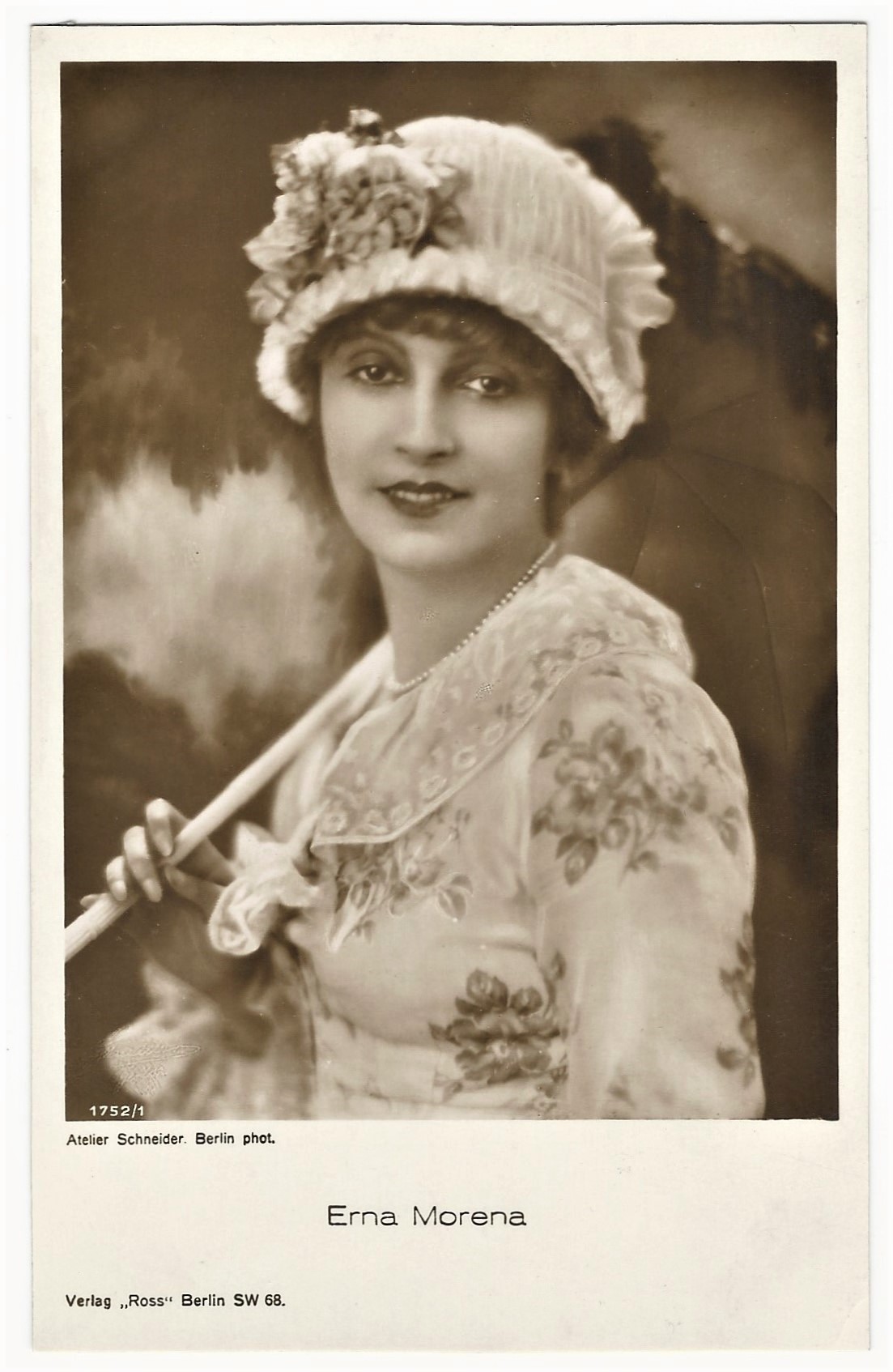



 THE CABINET CARD GALLERY