 The reverse of this cabinet card identifies the subject as Ada Sidney. Judging by her costume, she appears to have been an opera or stage actress. This photographic portrait was taken by the Marc & Schlum studio in New York City. Research revealed no information about Miss Sidney or the studio photographers.
ADA SIDNEY: PROBABLE STAGE ACTRESS OR OPERA SINGER

THEATER ACTRESS MARIE BOCKEL IN COSTUME FOR “LA VIE” IN NEW YORK CITY (1884)
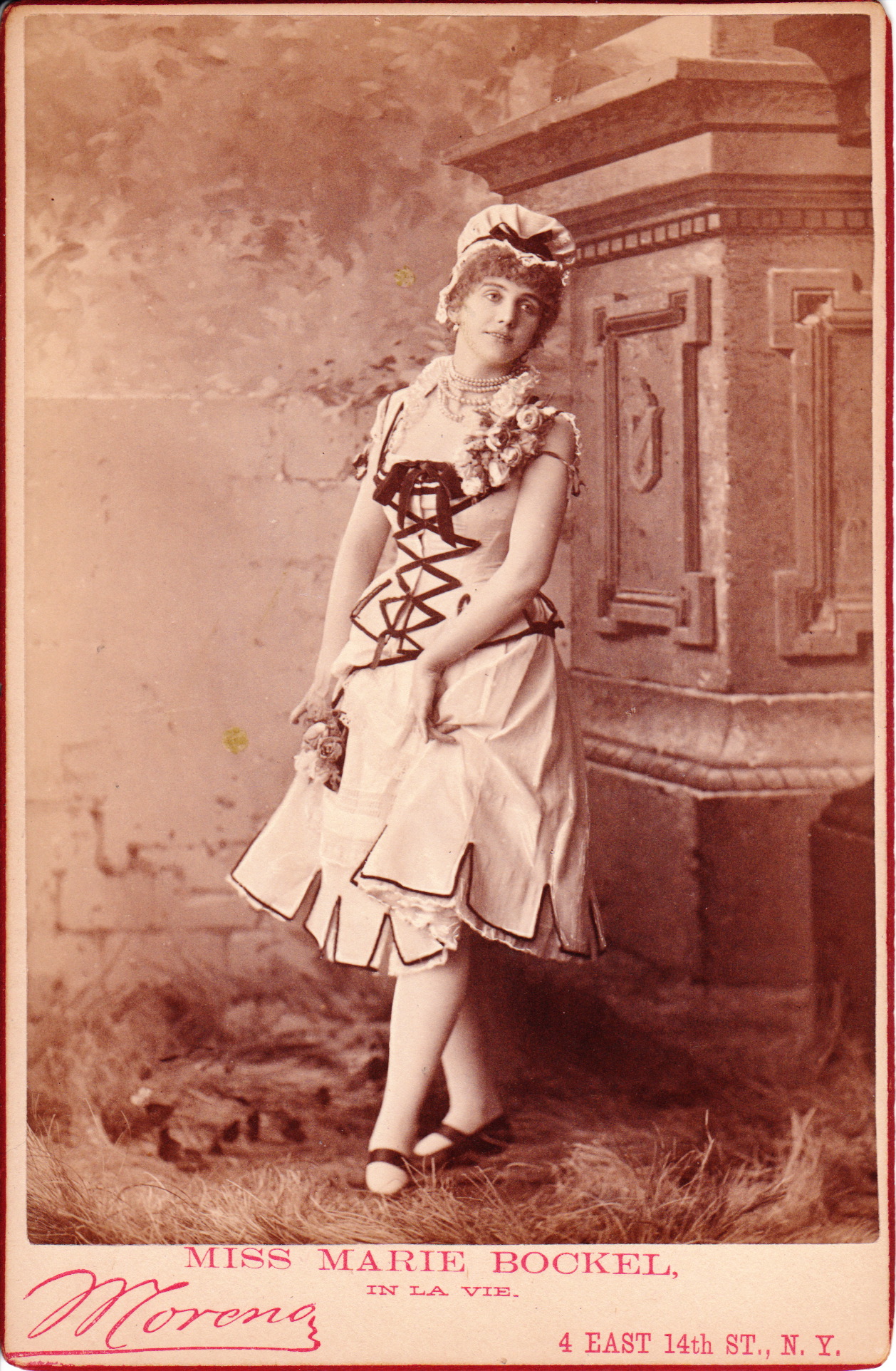 This cabinet card features Miss Marie Bockel dressed in costume for her performance in “La Vie”. She was photographed by celebrity photographer Moreno. Moreno’s gallery was located in New York City. To view other photographs by Moreno, click on the category “Photographer: Moreno”. A stamp on the reverse of the image states “Russell Brothers, 126 Tremont Street, Boston”. Miss Bockel’s appearance in La Vie was announced in the New York Times (1884). “La Vie” was H. B. Farnie’s adaptation of Offenbach’s “La Vie Parisenne”. Marie Bockel also appeared in the New York Times (1884) when she appeared with the W. A. Mestayer Company in the performance of “We, Us, and Company of Mud Springs”. The show was described as a “wild musical farce” concerning the establishment of a sanitarium. The newspaper’s review of the show was favorable and it mentions that Miss Bockel sang the soprano parts in some of the quartets “very well”.
WOMAN ON A PEDESTAL: LOTTIE GILSON (THE LITTLE MAGNET)
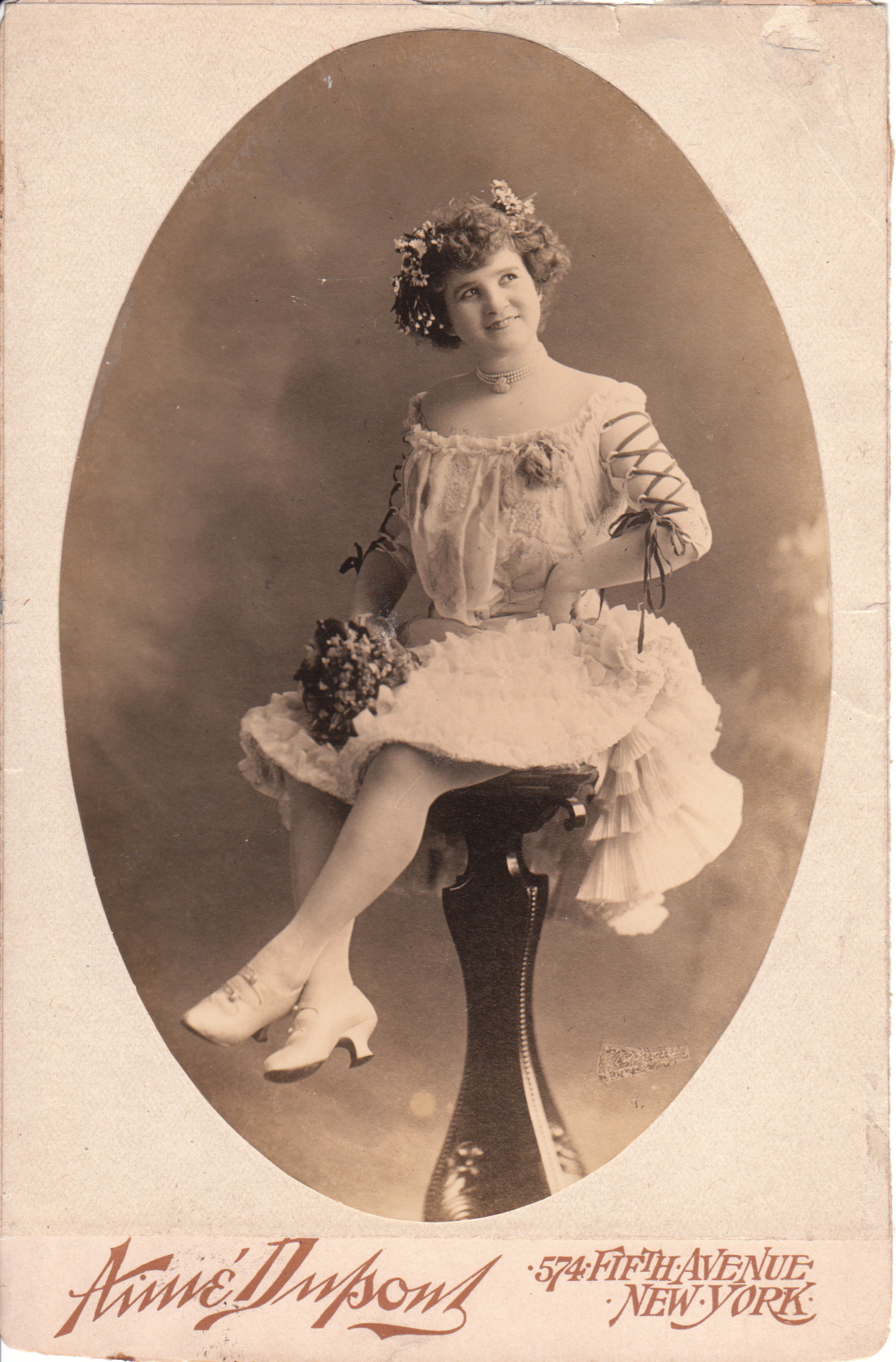
This cabinet card portrait of actress Lottie Gilson was produced by celebrated New York City photographer, Aime Dupont. Gilson is perched on a pedestal and this image is a bit risque for its era. Note Miss Gilson’s coy smile, her exposed neck, relativesly low cut dress, the straps on her arms, and the leggy view. Gilson’s nickname, “the little magnet” is written on the reverse of the photograph. Also on the back of the cabinet card is a stamp from “Culver Pictures” which was a company that supplied photographs to the media for a price. Lottie Gilson (1871-1912) was a popular comedienne and vaudeville singer born in Basil, Switzerland. She was called “the little magnet” because of her popularity with audiences and her ability to propel the sales of sheet music. Her musical hits included “The Sunshine of Paradise Alley” and “The Little Lost Child”. The date of her theatrical debut is unknown but it is certain that she performed at the Bowery’s Old National Theatre in 1884. She later performed in many of New York’s theaters and was the top soubrette of her day. She is noted as the originator of the stunt of having a boy come out of the balcony singing along with one of her songs. This became a common vaudeville routine. The San Francisco Call (1900) reported Gilson’s third wedding (she was only twenty nine at the time). The article also mentioned that her first husband was sent to the penitentiary for setting her hat on fire. The New York Times (1912) printed an obituary for Gilson. They reported that she had been out of the public eye for five years prior to her sudden death. Another source states that she died after years of self destructive behavior, illness, and depression. To view other photographs by Dupont, click on the category “Photographer: Dupont”.
ANNIE SOMERVILLE: STAGE ACTRESS PHOTOGRAPHED BY BENJAMIN FALK
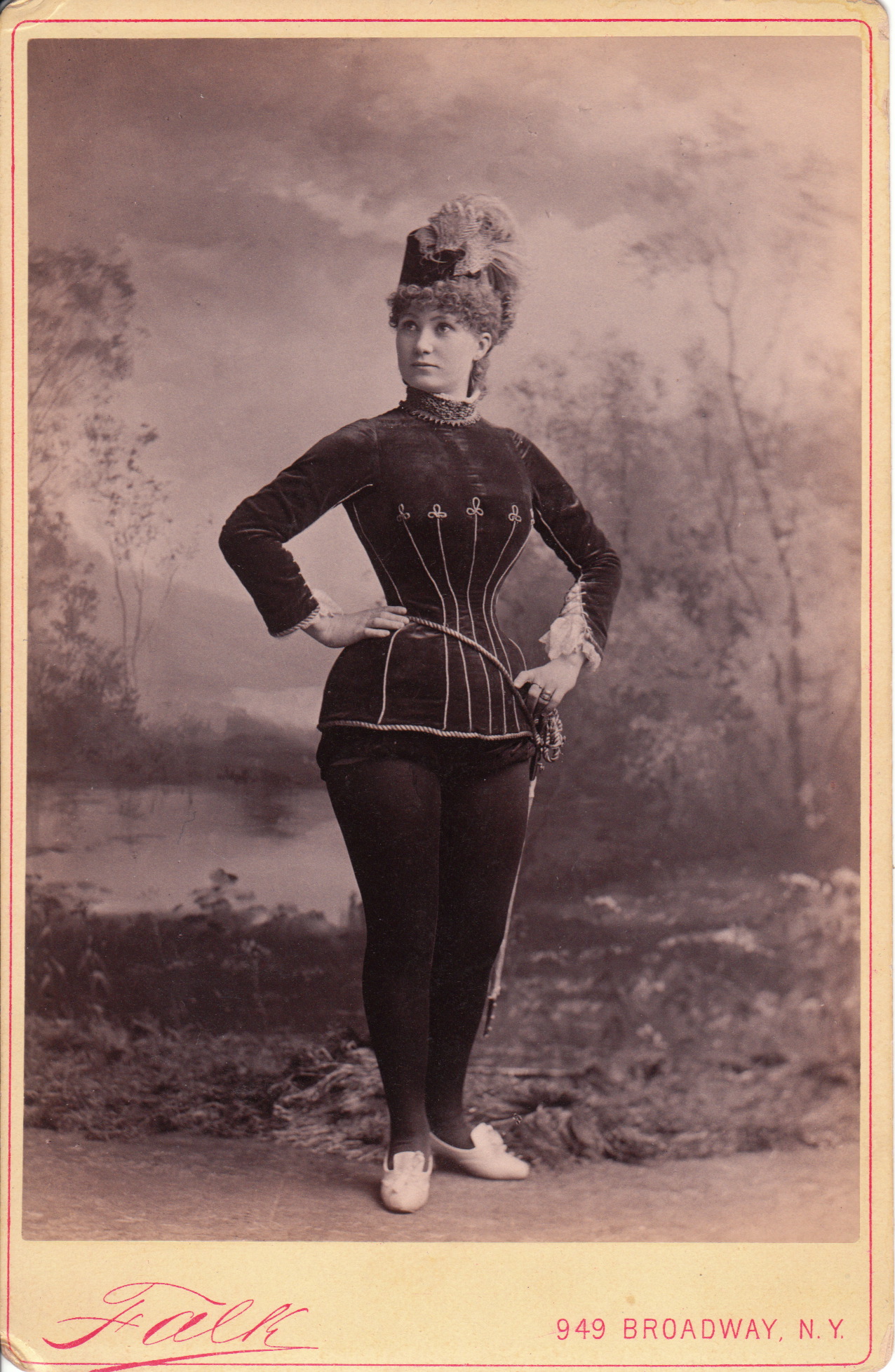 Stage star, Annie Somerville is featured in this cabinet card portrait by celebrity photographer Benjamin Falk in New York City. The curly haired actress is pretty and thin waisted. She is wearing a velvet type costume and has a sword at her side. Research yielded little information about Miss Somerville. She appeared in a number of actress series issued by tobacco companies. Her named is listed as part of the cast of Evangeline when the play appeared at the Fourteenth Street Theater in New York City. The reverse of the photograph has the stamp of photographer J. M. Russell, 126 Tremont Street, in Boston, Massachusetts. Russell was a well known music publisher in Boston and it is possible that he also was involved in the sale of celebrity cabinet cards. To view other photographs by Falk, click on the category “Photographer: Falk”.
PORTRAIT OF STAGE ACTRESS MARY HAMPTON (BY CELEBRITY PHOTOGRAPHER MORRISON IN CHICAGO, ILLINOIS)
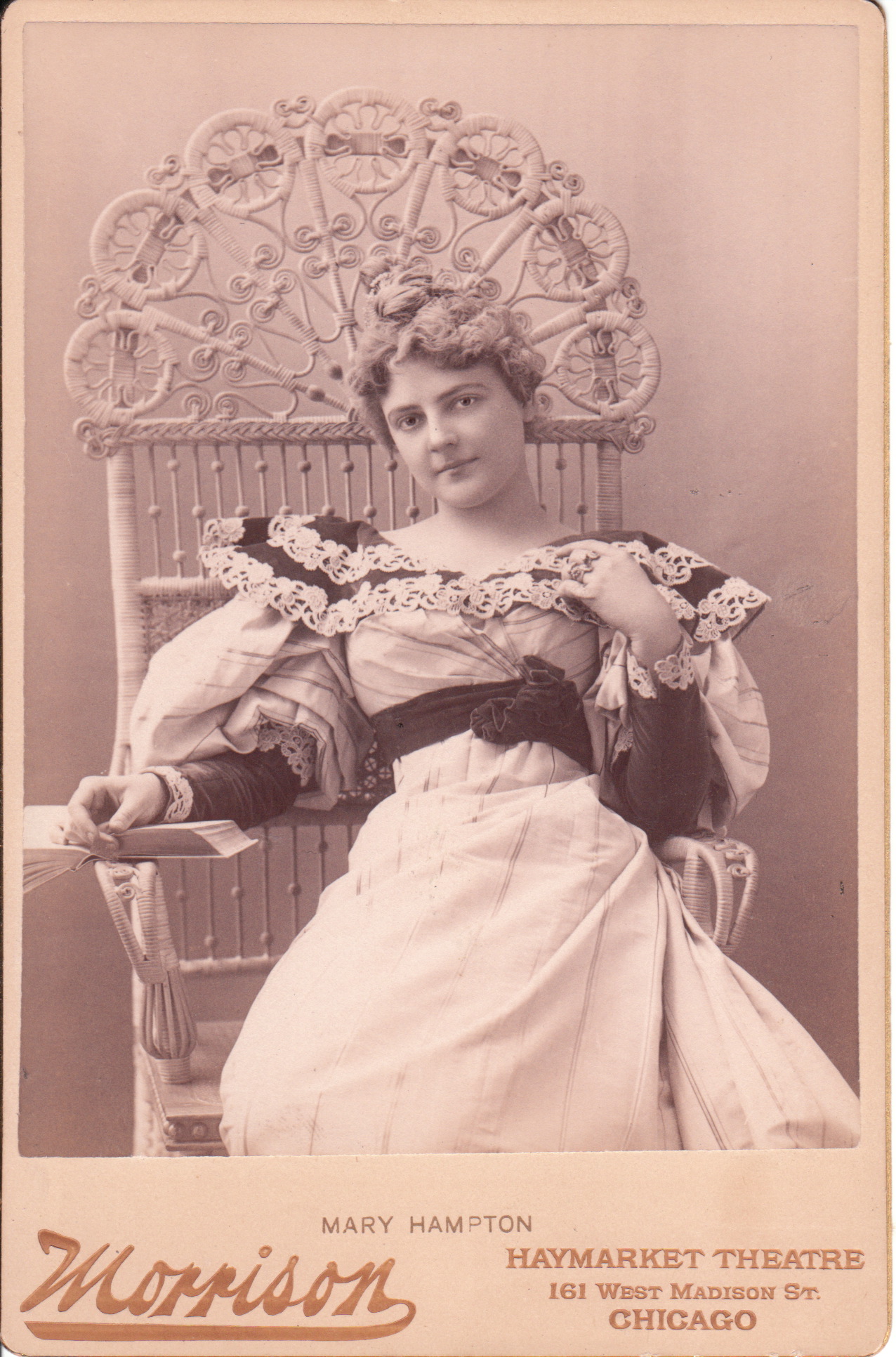 This cabinet card portrait features slumping actress Mary Hampton photographed by Chicago celebrity photographer William McKenzie Morrison. Miss Hampton was a pretty woman and apparently a very successful actress of her day as there are many references to her, as well as accolades about her, in theatrical magazines and newspapers. A photograph of her appears in Broadway Magazine (1898). The New York Times (1899) printed a large illustrated portrait of Miss Hampton in her role as Gertrude Ellingson in the play “Shenandoah”. The book “American Women Theatre Critics: Biographies and Selected Writings of Twelve ….” by Alma J. Bennett (2010) praises Hampton in her role as Rosamund. It is asserted that she played the part “true to the high standard of womanly power and gentleness”. The reviewer also compared her favorably to the great actress Helena Modjeska. The New York Times (1931) printed an obituary when she died at age 63. To view other photographs by Morrison, click on the category “Photographer: Morrison”.
THEATER ACTRESS LILLIAN CONWAY (PHOTOGRAPH BY JOSE MORA)
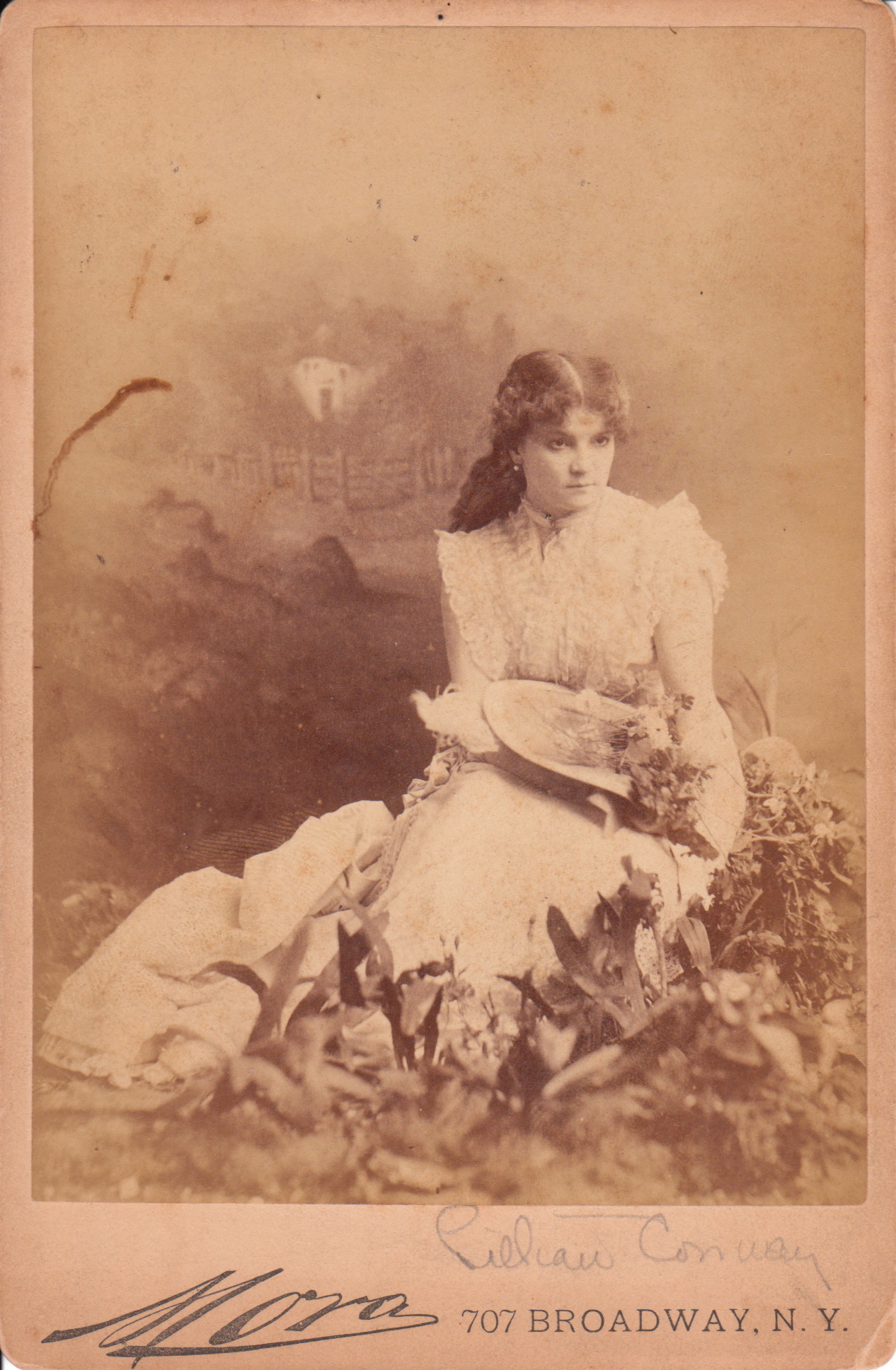 This cabinet card features a portrait of theater actress Lillian Conway. The image was produced by Jose Mora, the famous New York celebrity photographer. To view other images by Mora, click on the category “Photographer: Mora”. Lillian Conway was Brooklyn born and grew up in a theatrical family. Both her parents were appeared on the stage and her mother was also a theater manager. Lillian’s sister, Minnie, also was an actress. Lillian made her theater debut at the Brooklyn Theater playing a minor role in the burlesque “Evangeline”. She next appeared as the lead in “Virginius”. After her parents died, Lillian moved to Boston where she appeared in Globe Theater productions and next moved to Philadelphia to continue her theatrical career. While in Philadelphia, she met and married a local banker, left the stage, and had two children. The marriage had multiple problems including allegations that her husband was an alcoholic. She divorced her husband, who later died in 1887. Miss Conway returned to the stage and organized the Lillian Conway Opera Company. She took the “show on the road” but her theatrical group failed, partially due to scandal. It seems Lillian Conway was guilty of sharing a hotel room with the troupe’s unmarried business manager. Conway later fell ill, and with the help of the Actor’s Guild was able to finance a trip to London for treatment. Unfortunately, she died there in 1891 from rheumatic fever.
MAUDE BRANSCOMBE: CELEBRATED BEAUTY AND ACTRESS


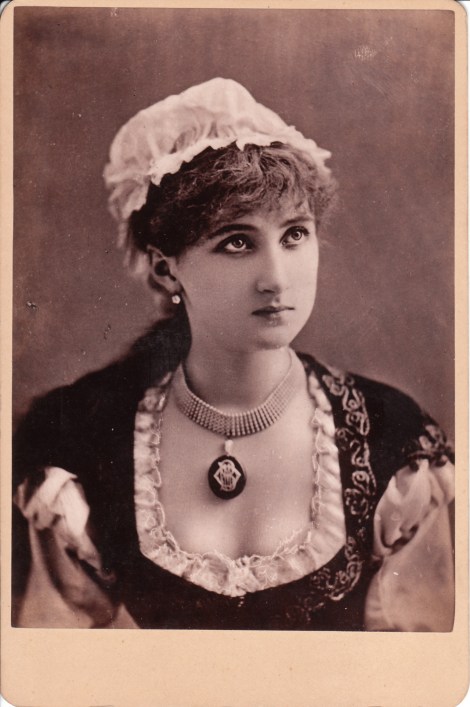

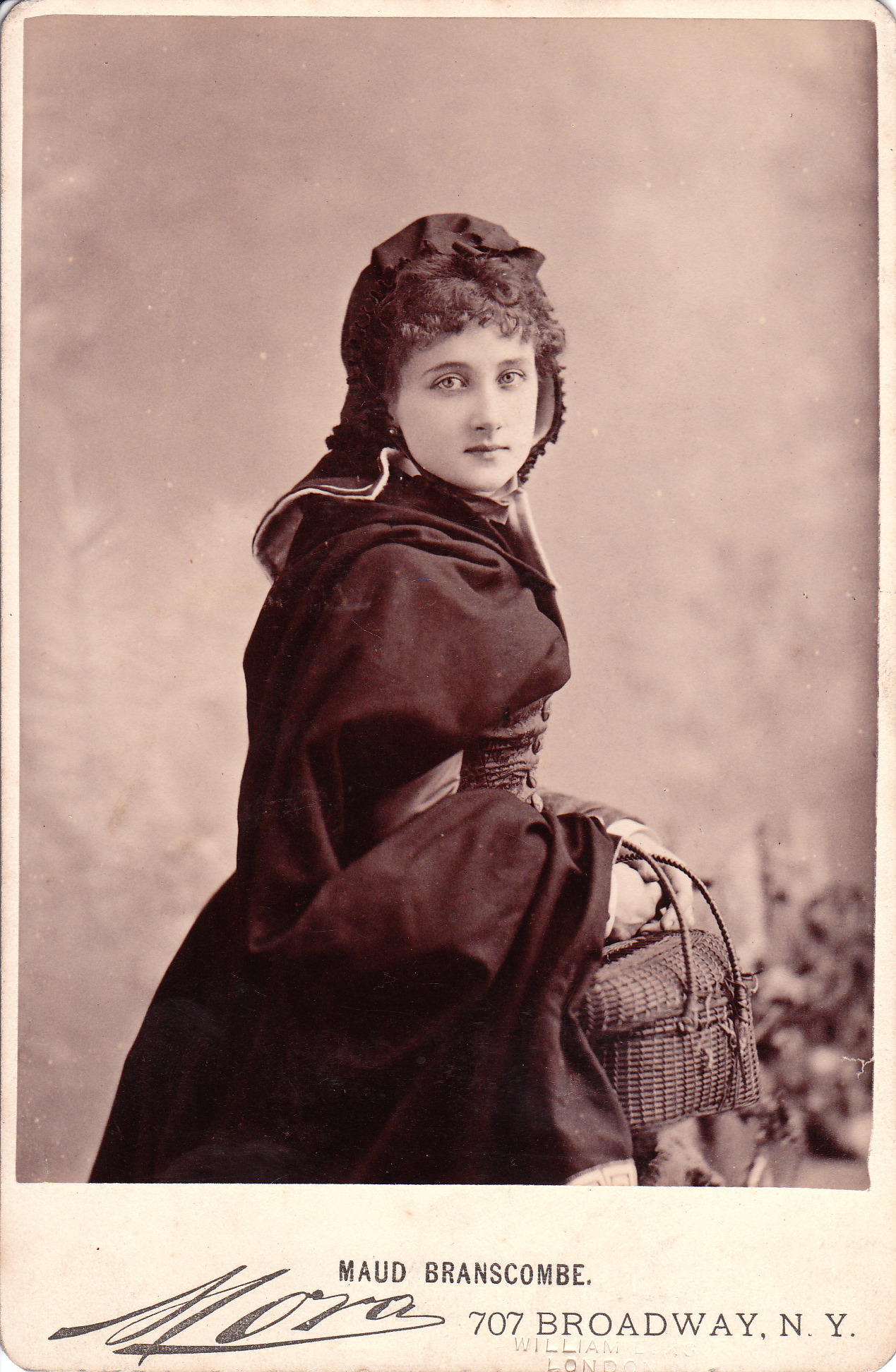
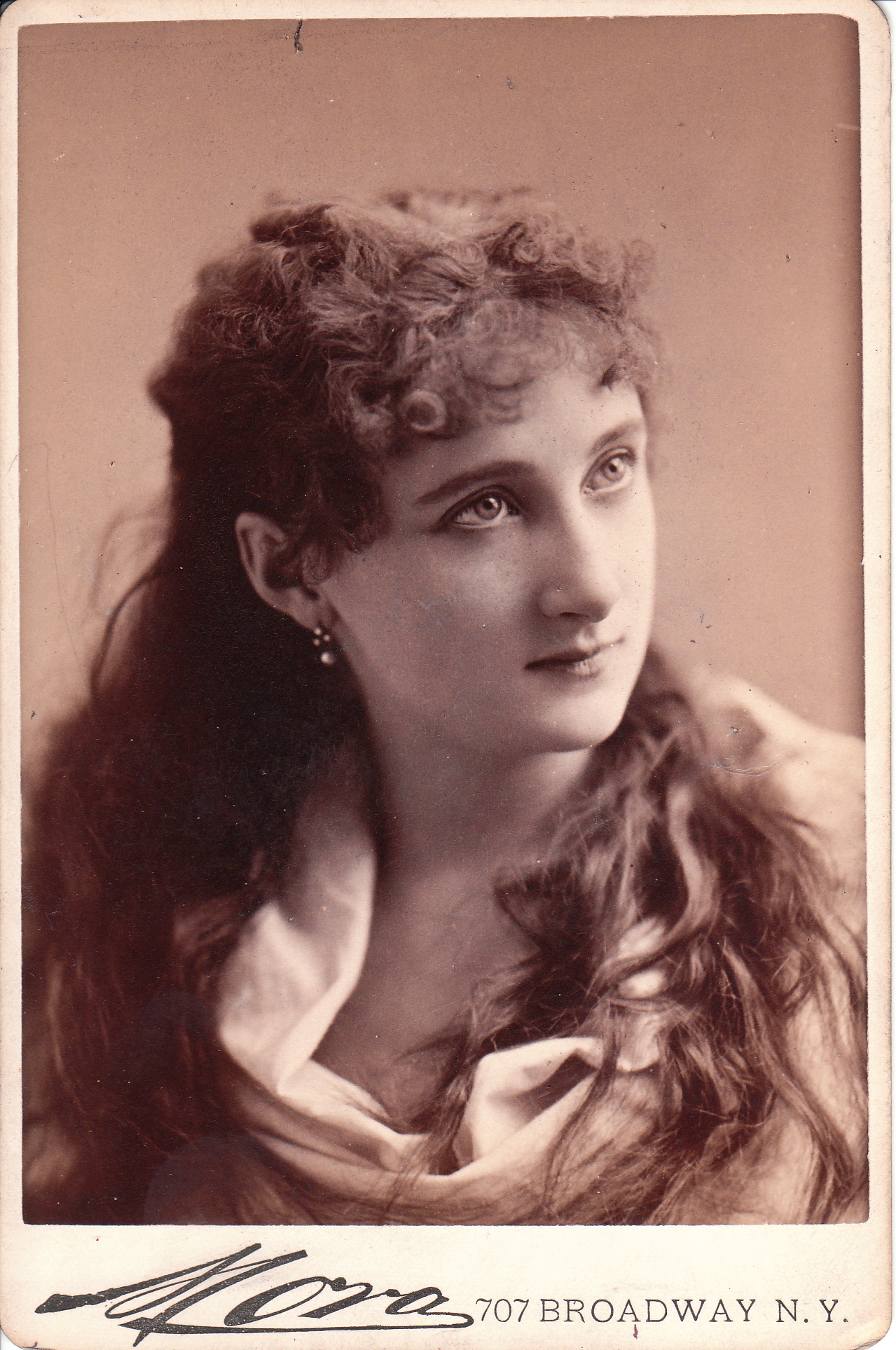

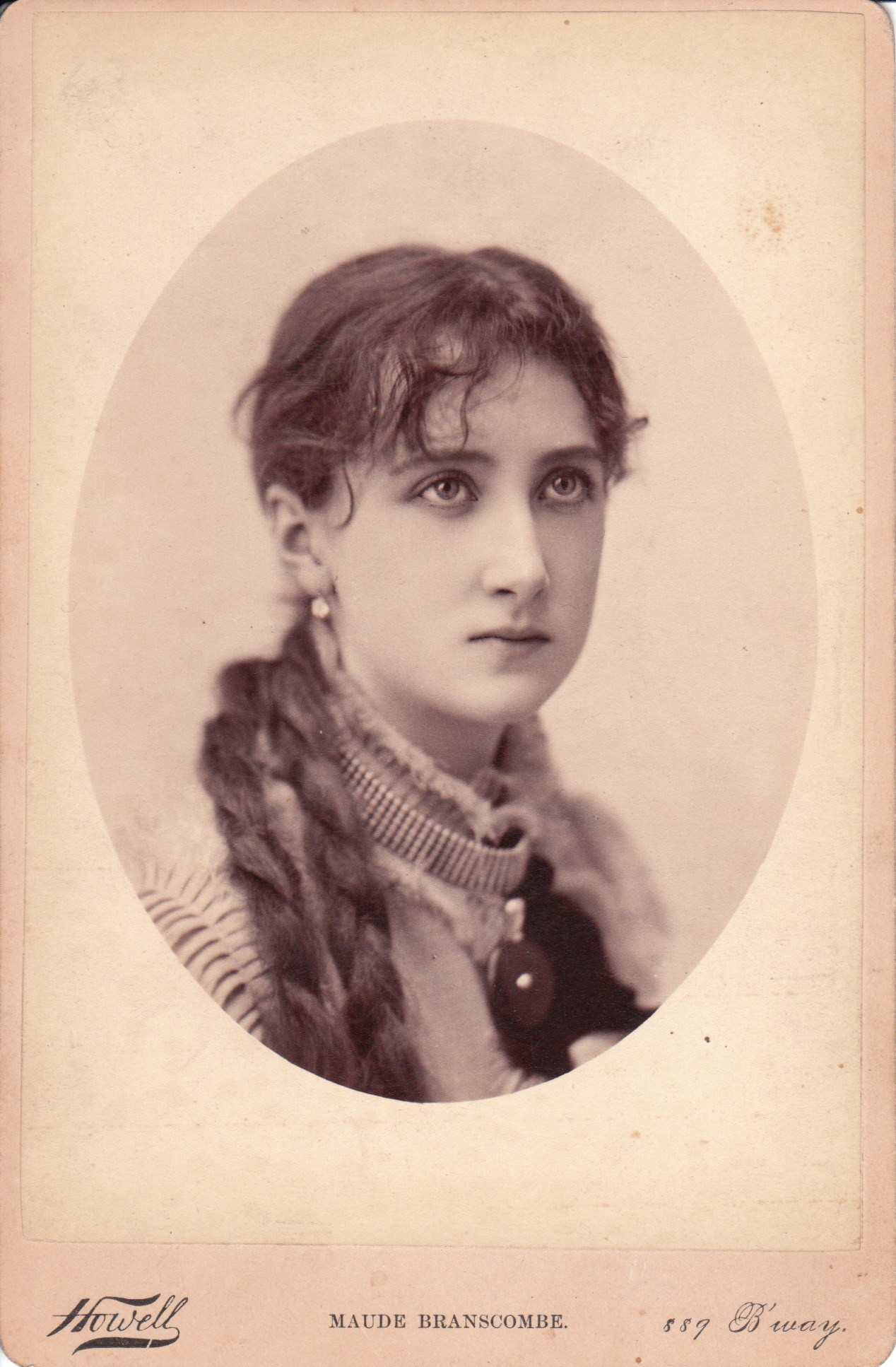


Maude Branscombe was a very popular stage beauty and light opera singer. She was reported to be the most photographed woman of her day. Biographical information about her is sparse and more will be added at a later date. Her first appearance on the New York stage was in 1876 as Cupid in a revival of Ixion at the Eagle Theatre. The portrait at the top was photographed by renowned W & D Downey of London, England.
The second portrait was cropped so the photographer is unknown.
The third portrait (Branscombe is wearing a necklace) is by L. Levin & Son of San Francisco, California.
The fourth cabinet card image was photographed by Sarony. Sarony was a well known celebrity photographer and more of his portraits can be viewed by clicking on the category of “Photographer: Sarony”. Sarony does an excellent job of capturing Branscombe’s beauty and her alluring eyes.
The fifth and sixth, and seventh cabinet card were photographed by another celebrity photographer, Jose Mora, of New York City. Interestingly, the fifth and seventh cabinet card captures Branscombe in the same costume as the second cabinet card. It is likely that the photographer of cabinet card number two, is also Jose Mora. To view other photographs by Mora, click on the category of “Photographer: Mora”.
The eighth cabinet card portrait of Branscombe was photographed by Howell, another New York City photographer with a studio on Broadway. Howell’s close-up photograph captures the actress’s beauty and her wonderful eyes. She is wide eyed and her hair is a bit mussed. These qualities add to the allure of Miss Branscombe.William Roe Howell was born in 1846 in Goshen, New York. He had a passion for drawing and painting and he directed his creative interest into the field of photography as a young adult. He opened a photographic studio in Goshen. In 1863 he moved to New York City where he joined Robert and Henry Johnston at Johnston Brothers Studio at 867 Broadway. In 1866 the firm became Johnston & Howell. In 1867, he became the sole proprietor of the gallery. By 1870, he was gaining much recognition in the field of photography. His great location in New York City gave him access to many fashionable upper class men and women as well as many celebrities. Among his photographic subjects were P. T. Barnum, Buffalo Bill, and Robert E. Lee. He opened a branch studio in Brooklyn. In 1873 he came one of five Americans to be awarded a special grand prized at the Vienna World Fair. He frequently received mention in the photographic journals. He published a book of cabinet cards that received much praise. He became a photographer for West Point, Princeton, and other notable institutions. He won many medals at photography exhibitions. In 1878 he moved his business from 867 to 889 Broadway and opened another studio with a partner (Meyer) at 26 West 14th Street. In 1880 he retired from photography due to health reasons. In 1886 he moved with his family to Washington D.C. intent on opening a photography business there. He then disappeared. He vanished just two weeks before the grand opening of his new studio. He left his wife of 16 years (Fannie Scott) and his five children penniless. His wife stated that Howell was an eccentric man and that he must have got tired of business and family problems “and cut loose from us”. He apparently returned home after a short duration of absence and his business appeared in the 1888 Washington D. C. business directory but not in the 1889 directory. He died of tuberculosis in New York City in 1890. He had been residing at the home of a colleague who ran a photography studio in Harlem. It is believed by some biographers that he had divorced his wife and returned to New York without his family.
The ninth cabinet card is another portrait photographed by Jose Mora. The actress’s costuming detracts from the overall appeal of the photograph. She seems lost in the swirl of her head covering. However, the photographer does an excellent job of highlighting Miss Branscombe’s seductive eyes. The phrase “Maude Branscombe eyes” certainly rivals the phrase “Bette Davis eyes”.
Cabinet card number ten also comes from the studio of Jose Mora. She is well dressed in this portrait. It is not clear if she is dressed for a stage role or if she is attired for a jaunt around town.
STAGE ACTRESS MATTIE VICKERS COYLY POSES IN NEW YORK CITY
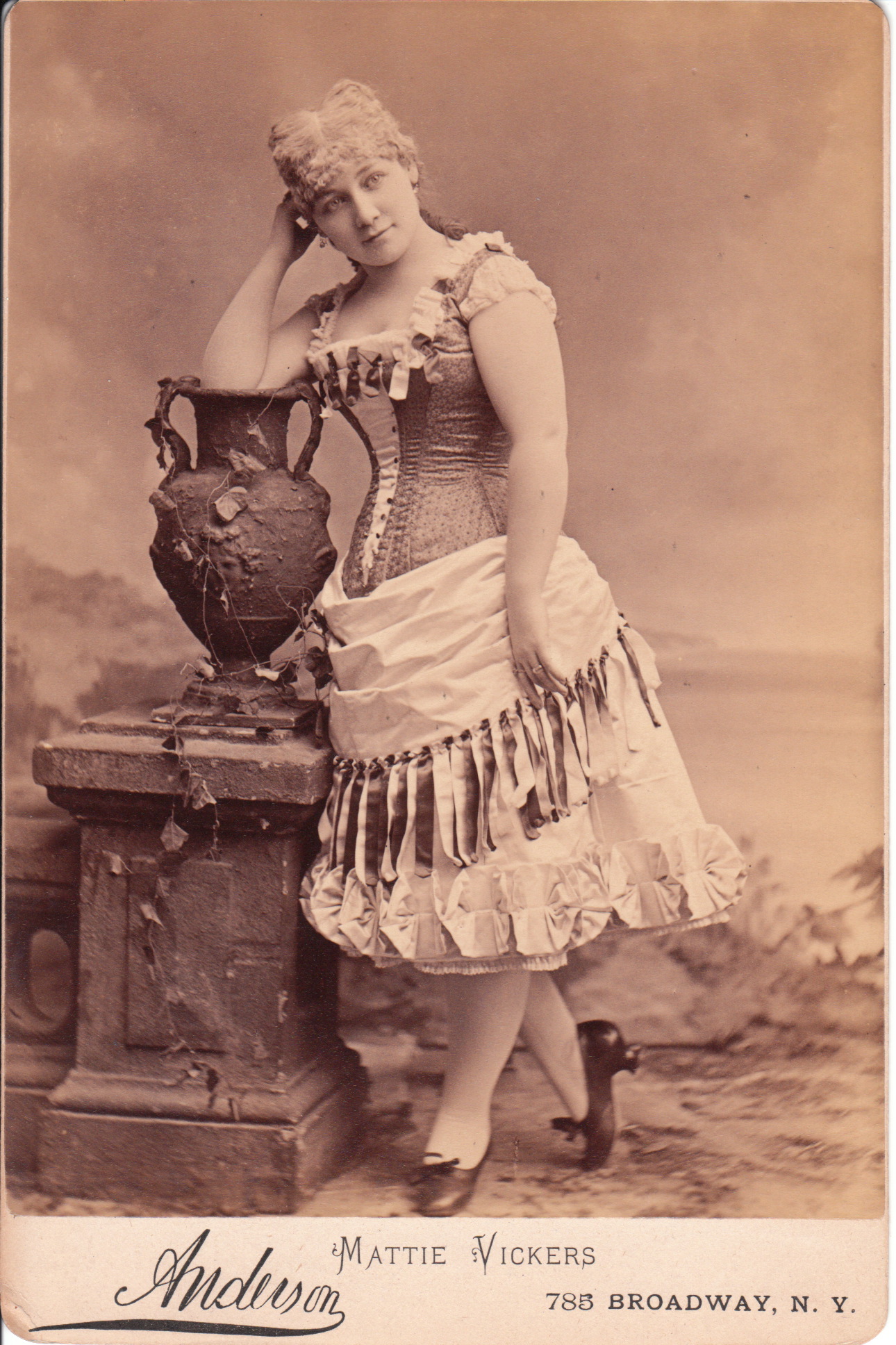 Stage actress Mattie Vickers poses for this cabinet card image at the Anderson studio in New York City. Anderson photographed many celebrities and more of his photographs can be seen by clicking on category “Photographer: Anderson (New York)”. During the early 1900’s, Vickers was one of the the sweethearts of American musical comedy. Her father was a retired actor who ran a boarding house. She made her theatrical debut in vaudeville in the mid 1870’s. In 1877 she married her manager, Charlie Rogers. He died in 1888 after which she toured the country playing starring roles in plays such as “Circus Queen” and “Edelweiss”. A portrait of Mattie Vickers ran in The National Police Gazette (1886). The accompanying text described her as the “sprightly and vivacious young American soubrette” and “the cleverest rough-and-tumble soubrette on the American stage”. No need to visit a dictionary to discover the definition of the word “soubrette”. A soubrette is simply someone who plays a minor female role in a comedy. The reverse of the cabinet card has been stamped by George D. Russell of Tremont Street in Boston, Massachusetts. Research reveals that Mr. Russell was a well known music publisher in Boston. Perhaps he also was involved in the sale of theatrical cabinet cards.
DELLA FOX: AMERICAN STAGE ACTRESS (IMAGES FROM 1893 and 1894)
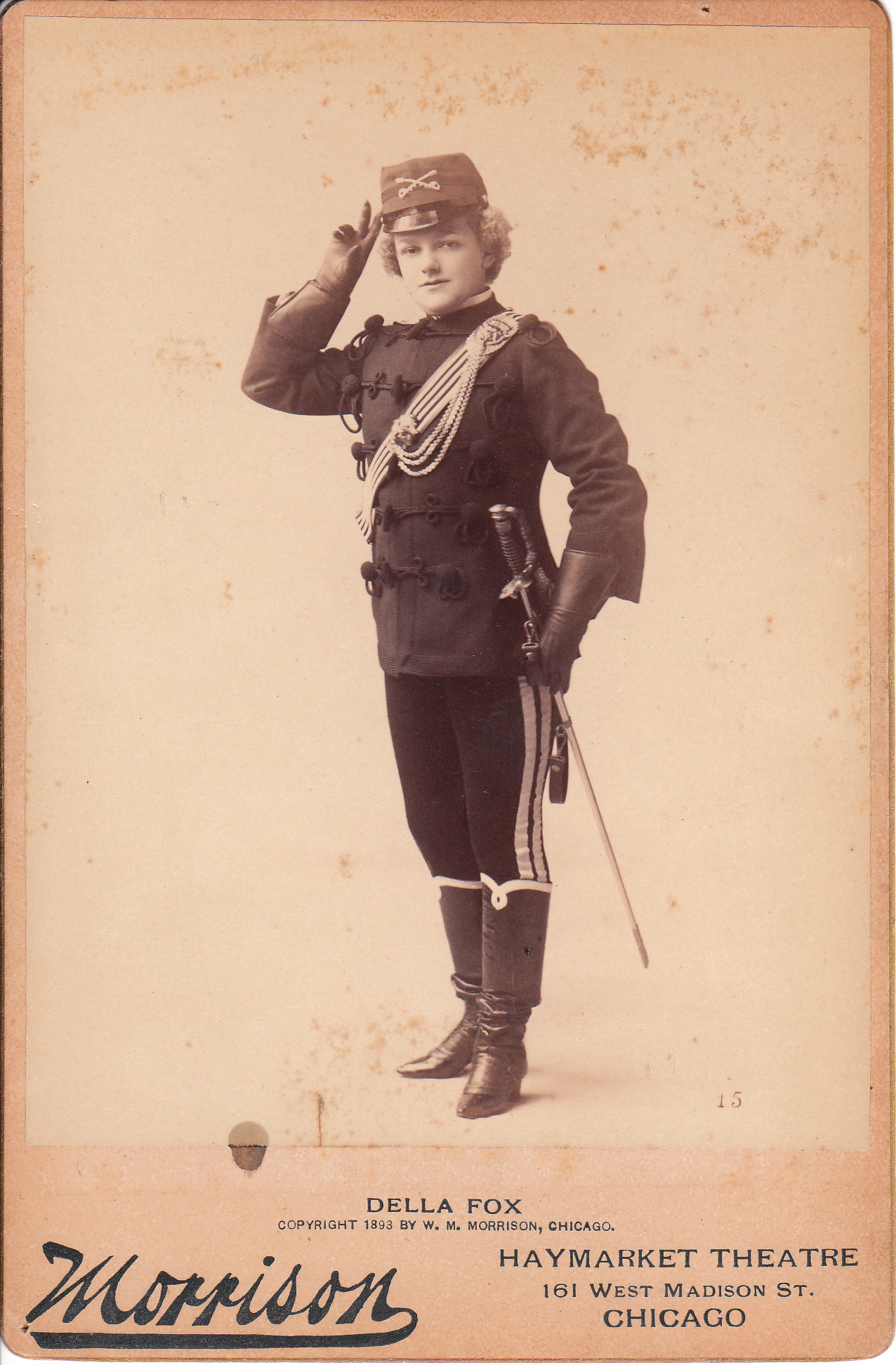
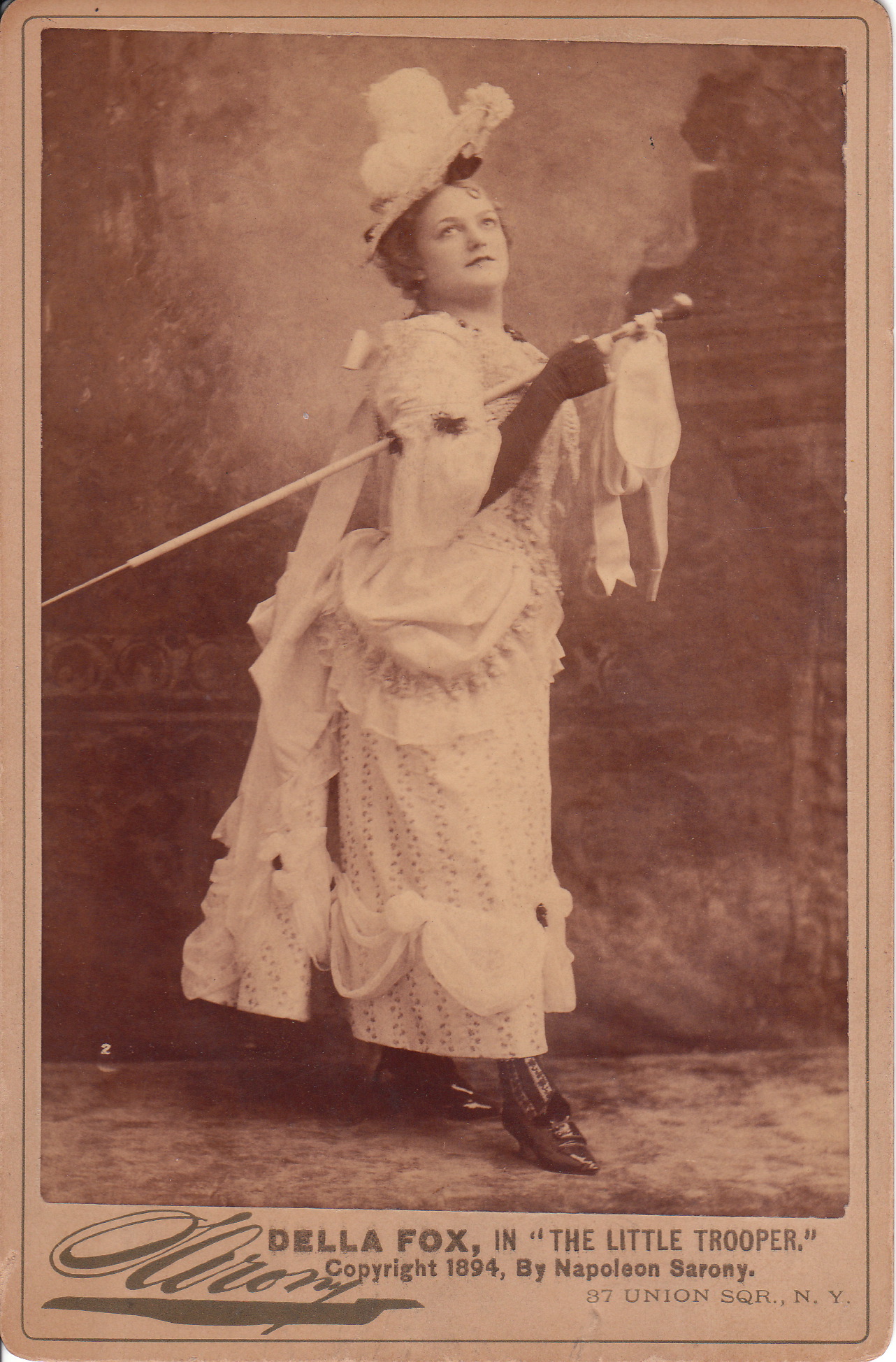
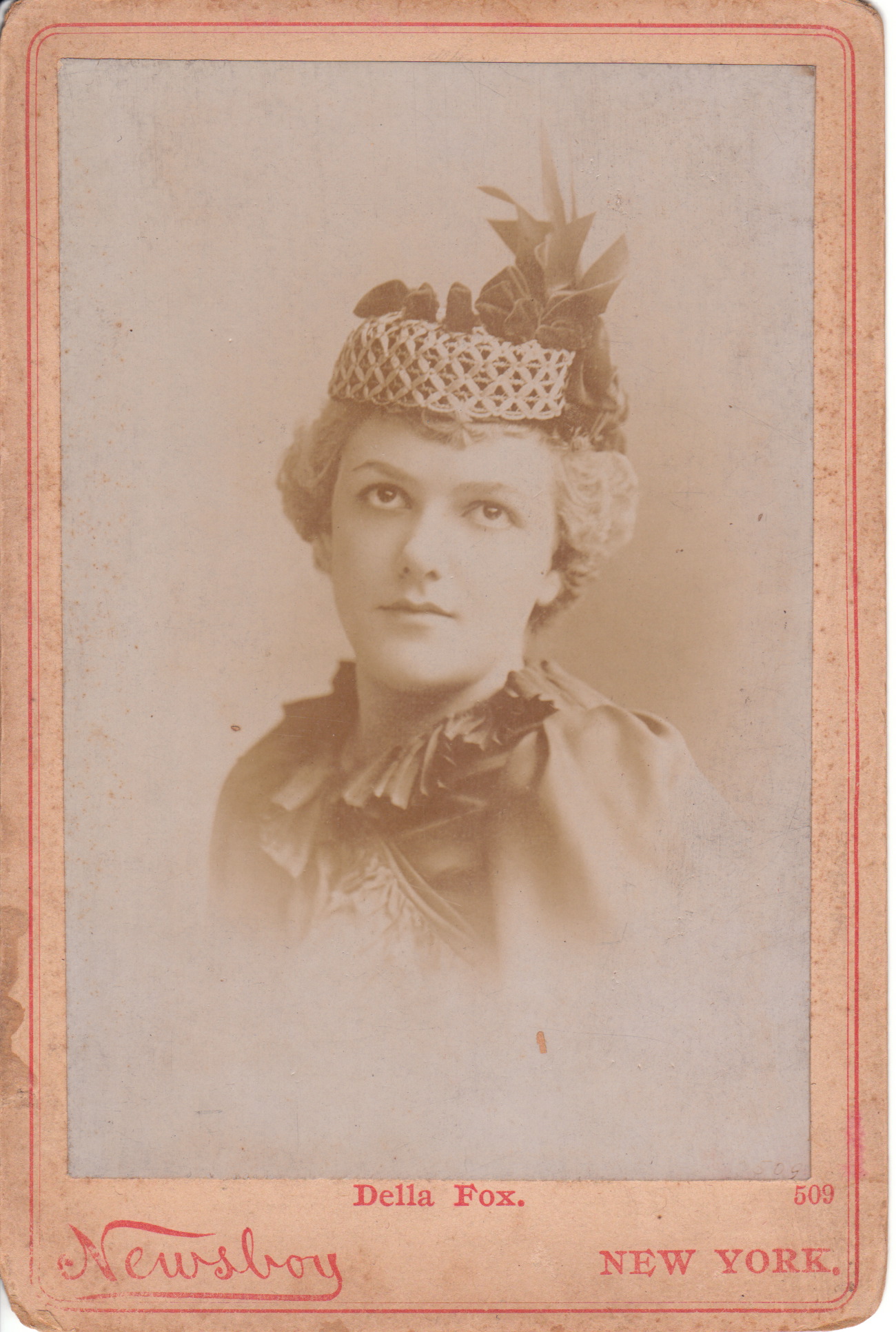
These cabinet cards feature American stage actress, Della Fox (1870-1913). In the top photograph, she is wearing a military costume for a play that she was appearing in. The photograph is copyrighted in 1893. She began her acting career as a child and became a well known musical comedy actress. Her popularity peaked in the 1890’s when she appeared in several musical with De Wolf Hopper. She also toured with her own theatre company. Her life was plagued with personal problems including alcohol and drug abuse, and mental breakdowns requiring institutionalization. This cabinet card portrait was photographed by Morrison who is known for his portraits of theatre stars and other celebrities. Morrison operated out of the Haymarket Theatre builiding in Chicago, Illinois. Please click on the category “Photographer: Morrison” for more information about Morrison and to view other photographs by his studio. The second photograph captures Della Fox in costume for the play “The Little Trooper”. The play was by William Furst (1852-1917) and appeared at the Empire Theatre in New York City. The photograph is the work of Napoleon Sarony, famed celebrity photographer of New York City. The reverse of the cabinet card indicates that the photograph was taken on December 25th, 1894. To view other photographs by Sarony, click on Cabinet Card Gallery’s category of “Photographer: Sarony”. The third photograph of Miss Fox was produced by Newsboy as a premium to be given away with their tobacco products. It is number 509 of a series. To view other Newsboy photographs, click on the category “Photographer: Newsboy”.
ESTELLE CLAYTON: STAGE ACTRESS


Estelle Clayton (1867-1917) is seen in the first and second Cabinet cards. She was a prominent actress as well as a librettist in the late 1800’s. In one of her roles, she starred in “Fayette” with E H Sothern. Clayton was the sister of actress Isabelle Evesson. In 1908, the two sister actresses filed suit against New York City for allegedly diverting land away from earlier generations of their family. In 1917 she died in New York City of heart failure. The photographer of both of these Cabinet cards is Sarony of New York City. The third cabinet card portrait of Clayton was produced by Newsboy as a premium for tobacco products. It is number 47 of a series. The barefoot Miss Clayton is in quite the risque pose in this image.


 THE CABINET CARD GALLERY