This cabinet card portrait features “Little Ollie” and her mandolin. At least I think her instrument is a mandolin. Confirmation from a cabinet card gallery visitor would be appreciated. This little girl performer is adorable. She is wearing a cute hat and her jewelry includes a necklace and bracelet. The reverse of the photograph has an inscription stating “From Little Ollie Herself”. Benjamin J. Falk (1853-1925), a noted celebrity photographer, produced this photograph. His studio was located on Broadway in New York City. The image is numbered on the bottom right hand corner.To view more photographs by this photographer, click on the category “Photographer: Falk”. Research revealed not further information about “Little Ollie”. However, a different photograph of her, also by Falk, is in the collection of the Library of Congress.
PORTRAIT OF “LITTLE OLLIE”: A GIRL AND HER MANDOLIN
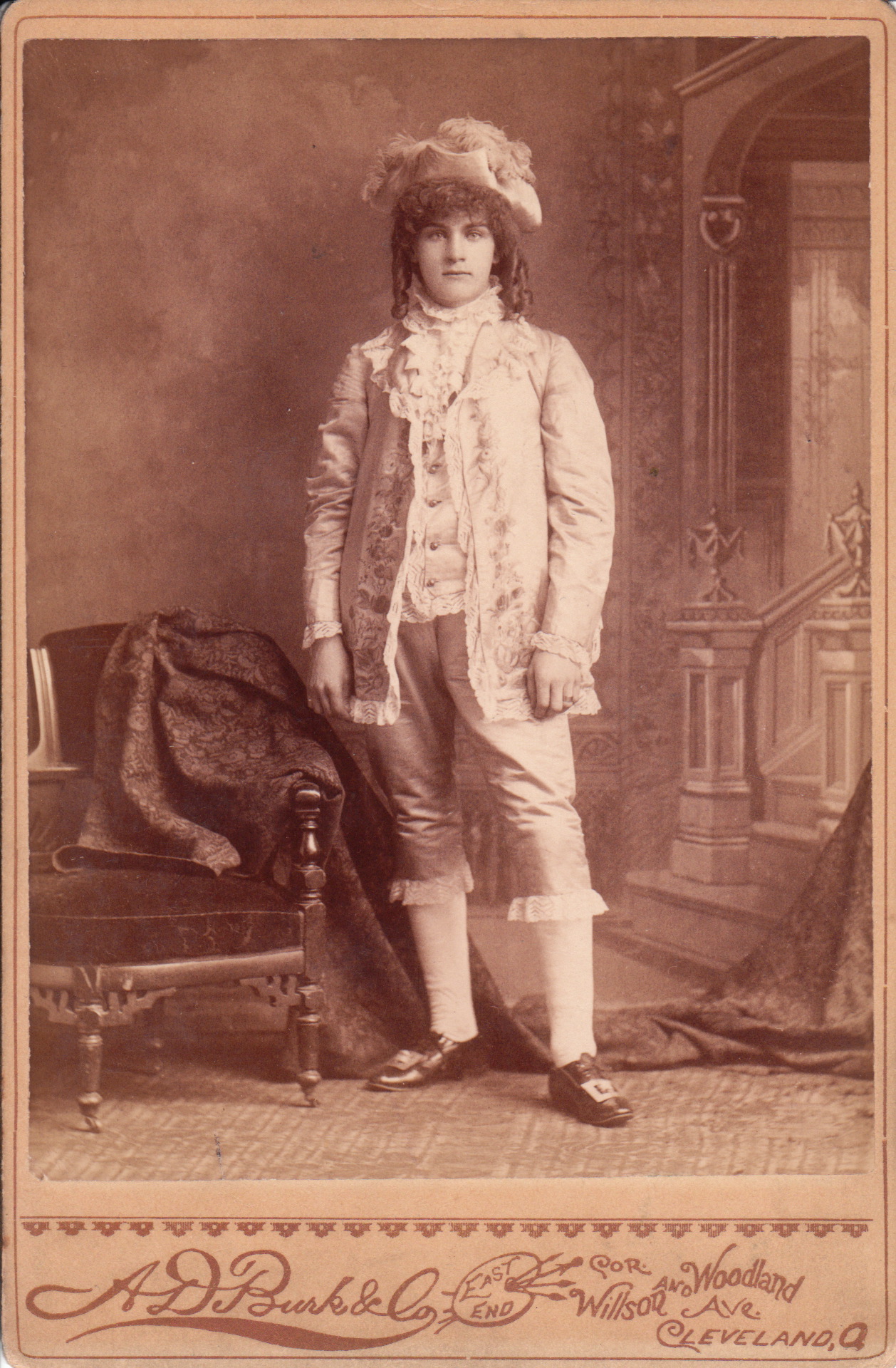
STAGE PERFORMER IN EFFEMINATE COSTUME (IS THIS A YOUNG MAN OR A YOUNG WOMAN?)
This cabinet card portrait, photographed by A. D. Burk and Co. presents a gender mystery. A stage performer wearing an effeminate stage costume by today’s standards, is the subject of this portrait. Note the subjects frilly shirt and jacket, and the feathered hat. Also take note of the subjects long curly hair and hanging curls. Are we looking at a handsome actor or a pretty actress? My guess is actress. The photographer, Alcynus D. Burk worked in Cleveland from 1889, when he partnered with David Bailey until 1900 or later.
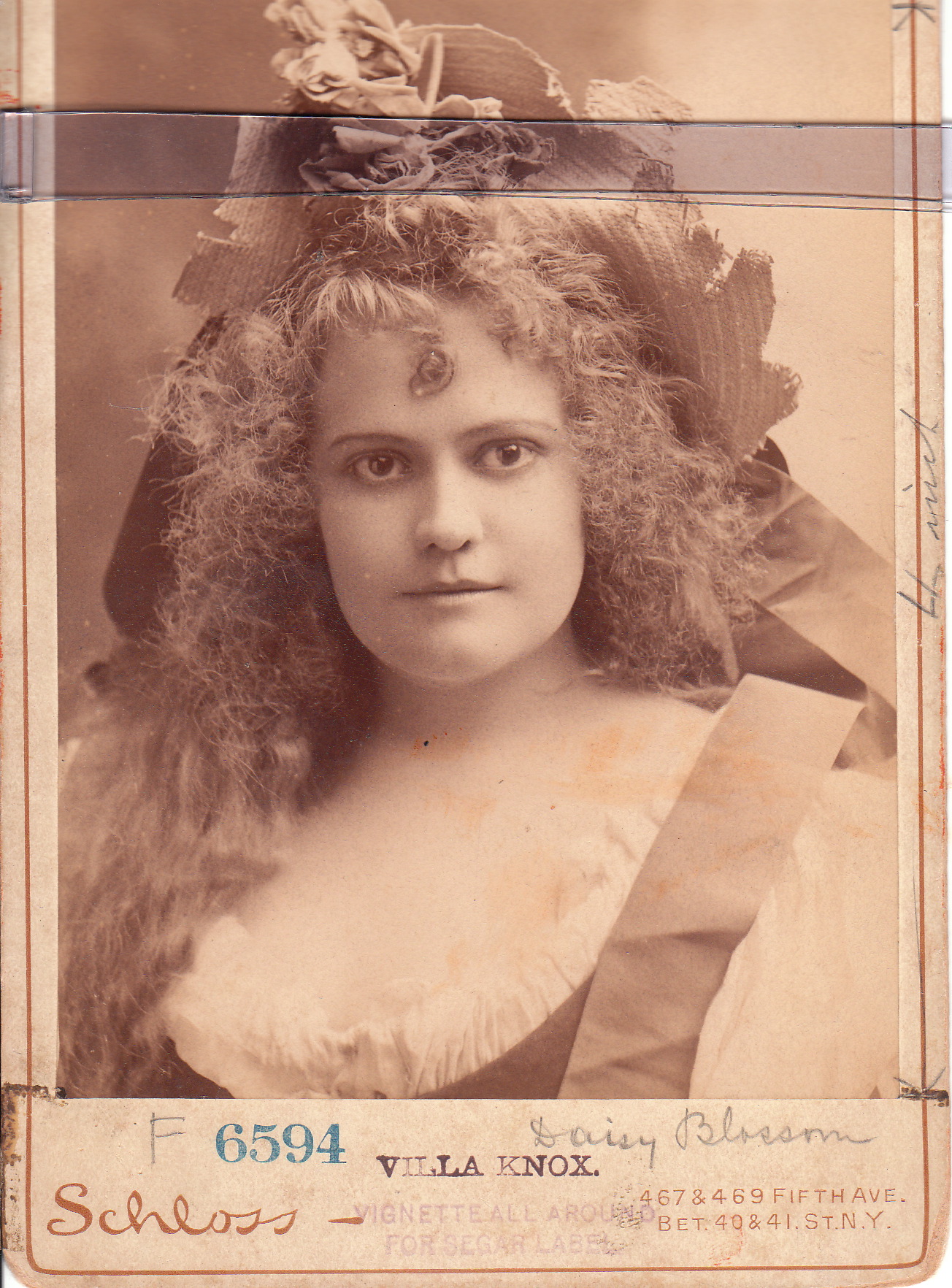
PORTRAIT OF STAGE ACTRESS VILLA KNOX IN ROLE OF DAISY BLOSSOM (PHOTOGRAPH BY JACOB SCHLOSS)
This cabinet card has a lot to say. First, the photograph features an actress named Villa Knox. She appeared in productions in the United States, England, and probably a number of other places. She acted in at least two Broadway shows. She appeared in the musical comedy “Boccaccio” (1898) and in “Apollo, or, The Oracle of Delphi” (1891). Second, the photographer of this image is the well known celebrity photographer, Jacob Schloss. At the time that this photograph was taken, the Schloss studio was located at 467 and 469 Fifth Avenue, between 40th and 41st Streets in New York City.. To view more of his photographs click on the category “Photographer: Schloss”. A third aspect of this photograph is that it has the pencilled name “Daisy Blossom” on the front of the card. Thanks to a little luck in my research, I learned that “Daisy Blossom” is a character in a play called “London Day by Day” (1893) which was reviewed by The Sydney Mail. This portrait likely captures Miss Knox in costume for that role. The fourth interesting fact about this image is the stamp appearing on the front of the card that states “Vignettes All Around For Segar Label”. It appears that this photograph was used as a vignette photograph for a cigar box label. The last feature I will mention concerning this image is that it has all the signs of once residing in someones photograph album. The cabinet card truly tells a number of stories and is in good condition. SOLD
PORTRAIT OF THEATER ACTRESS LILLIE THORNE
The attractive woman in this photographic portrait is named Lillie Harris Thorne. Her name is printed on the reverse of the image. There was a theater actress named “Lillie Thorne” who performed during the cabinet card era and the subject of this portrait is likely the same Lillie Thorne. The Golder & Robinson studio was located on Broadway in New York City and was known for it’s celebrity photographs. Unfortunately, preliminary research yielded little information about Lillian Thorne.
PORTRAIT OF ENGLISH STAGE ACTRESS ADA CAVENDISH (PHOTOGRAPHED BY SARONY)
This cabinet card features English actress Ada Cavendish (1839-1895). She was noted for her performances in Shakespeare plays and for popularizing the plays of Wilkie Collins in America. Cavendish made her stage debut in 1863. She began her career doing musical burlesques. As she progressed professionally she played a number of heroine roles in the works of Shakespeare. There are many references to Cavendish in the theatrical literature of her era. Gentlemen’s Magazine and Historical Review (1872) provides the following description of Miss Cavendish. She looks like a lady and walks and dresses like one.Some of the clever actresses now on stage dress, walk,and talk like shop girls”. Celebrated photographer Napoleon Sarony produced this image. Cavendish may be dressed for a role in this portrait. Note her fancy clothing and “big” jewelry. To view other photographs by Sarony, click on the category “Photographer: Sarony”.
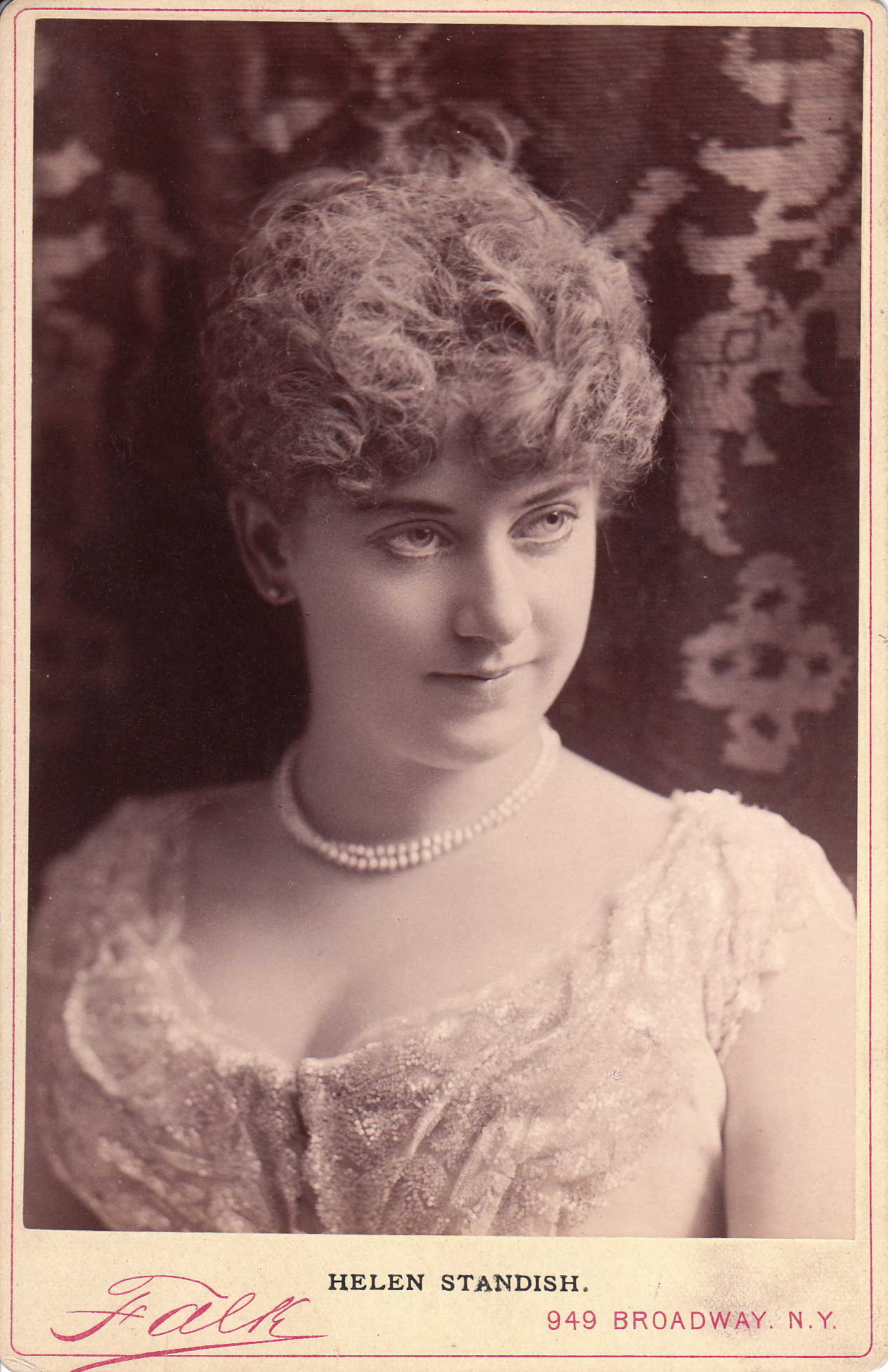
PORTRAIT OF BEAUTIFUL ACTRESS HELEN STANDISH (PHOTOGRAPHED BY B J FALK)
This cabinet card portrait features pretty actress Helen Standish. Famed celebrity photographer B J Falk produced this image and Miss Standish’s choice to wear a dress showing some cleavage, makes this photograph somewhat risque for it’s era. In addition, her expression can be interpreted as being enticing. Research revealed very little about Helen Standish or her career. She appears in number of cigarette card series including one produced by Dukes Cigarettes (“Leading Actors and Actresses”) which can be seen below. Her name appears in the New York Times (1887) review of the play “The Pyramid” which appeared at the Star Theater. The reviewer states that Miss Standish and another actress in the play “were not equal to the demands of their roles”. Ouch! The reverse of the cabinet card has a stamp from “Culver Service” which was a New York City company that charged the media for the use of photographs coming from their vast image archives. The reverse of the photograph also has the stamp of photographer J. M. Russell, 126 Tremont Street, in Boston, Massachusetts. Russell was a well known music publisher in Boston and it is possible that he also was involved in the sale of celebrity cabinet cards. SOLD
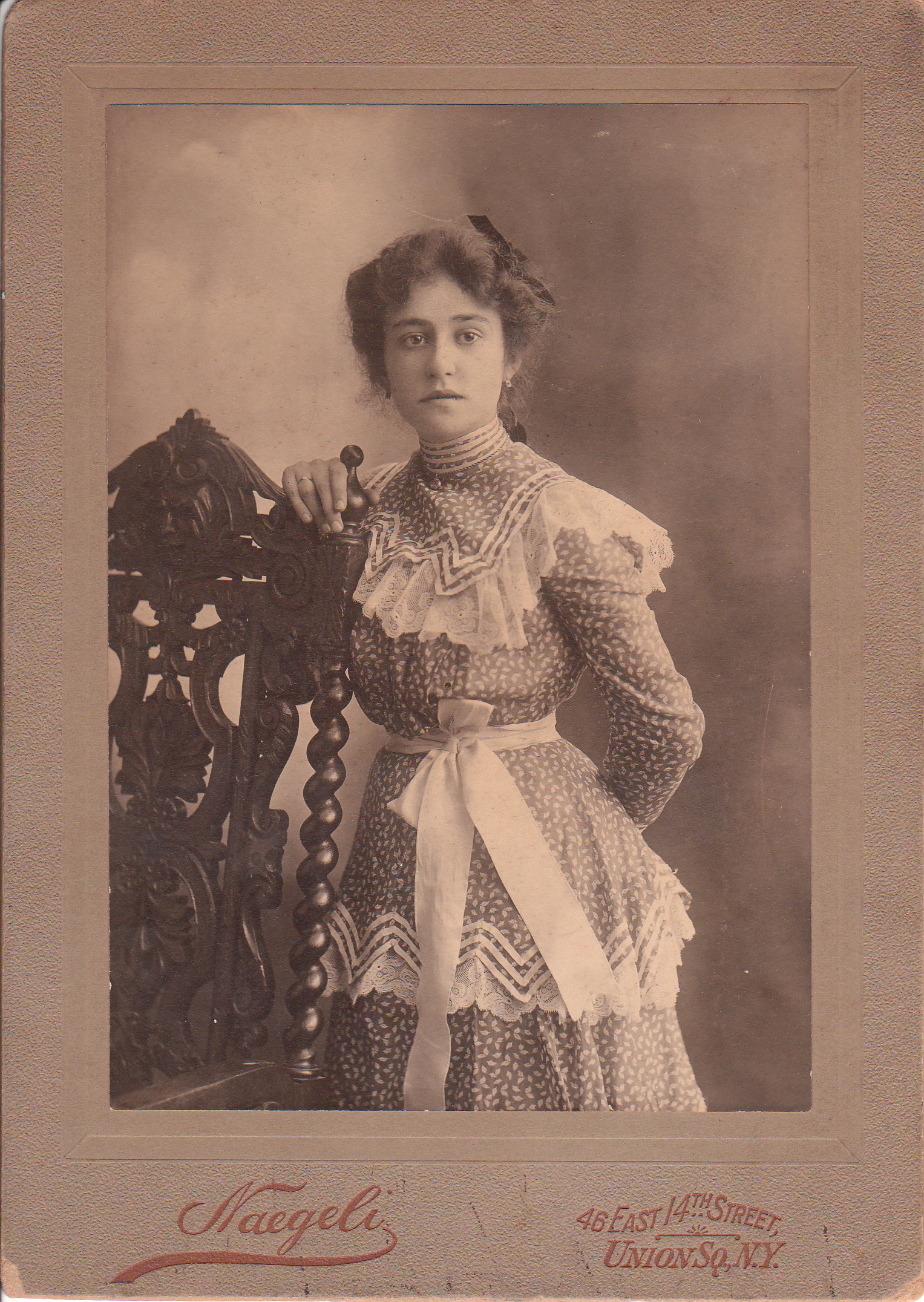
PRETTY FASHIONISTA IN NEW YORK CITY (1899)
This photograph features a pretty young woman in a beautiful dress. She has a nice figure enhanced by a corset. She is wearing a ring and earrings. This image could be placed under the categories of “fashion” as well as “beautiful women”. The photographer is Albert Naegeli (1844-1901) who operated a photographic studio in New York City’s Union Square. Naegeli was a native of Germany who came to the United States at the age of sixteen in 1860. He settled in New York City. He began his photography business in New York City in 1864 during the CDV era. He moved the business to the 46 East Fourteenth Street location in 1876. He partnered there with Edward M. Estabrooke who was a tintype expert. Their partnership ended in 1880 and Estabrooke relocated to Elizabeth, New Jersey. Naegeli trained his sons Albert (photographer) and Henry (Technician) in the photography business. Naegeli specialized in portraits of theater stars. The subject of this photograph could very well be an actress of this era. Naegeli was a smart businessman and invested wisely in Real Estate and became a very wealthy man. The cause of his death remains a mystery. He died from a gun shot wound to his head. His son, Albert, claimed that the death was accidental but others thought that he committed suicide because he was depressed about the recent death of his daughter from a spinal disease. Whatever the reason for his death, New York City lost a talented photographer at the time of his demise. The photograph above is an example of his acumen. The format of the photograph and advertising beneath the image is identical to photographs that Naegeli took in 1899, indicating that this photograph dates back to around that year. The photograph measures 5″ X 7″.The image is sharp.
THE “MURRAY SISTERS” BEING ADORABLE IN YORK, PENNSYLVANIA
The “Murray Sisters” assume an adorable pose at the Shadle & Busser studio in York, Pennsylvania. The girls appear to be entertainers, likely singers, dancers, or a combination of both. The sisters were probably teenagers at the time of this portrait. Research yielded no identifying information about these photogenic girls. A casual review of theater periodicals (1908-1913) uncovered an act called the “Murray Sisters” but it is not certain that they are one and the same as the girls in this image. This act toured the country and the sisters were described as operatic singers. The oldest sister was named Marion and the youngest was named Vic or Victoria. To learn about the Shadle & Busser studio and to view other photographs from their studio, click on the category “Photographer: Shadle & Busser”.
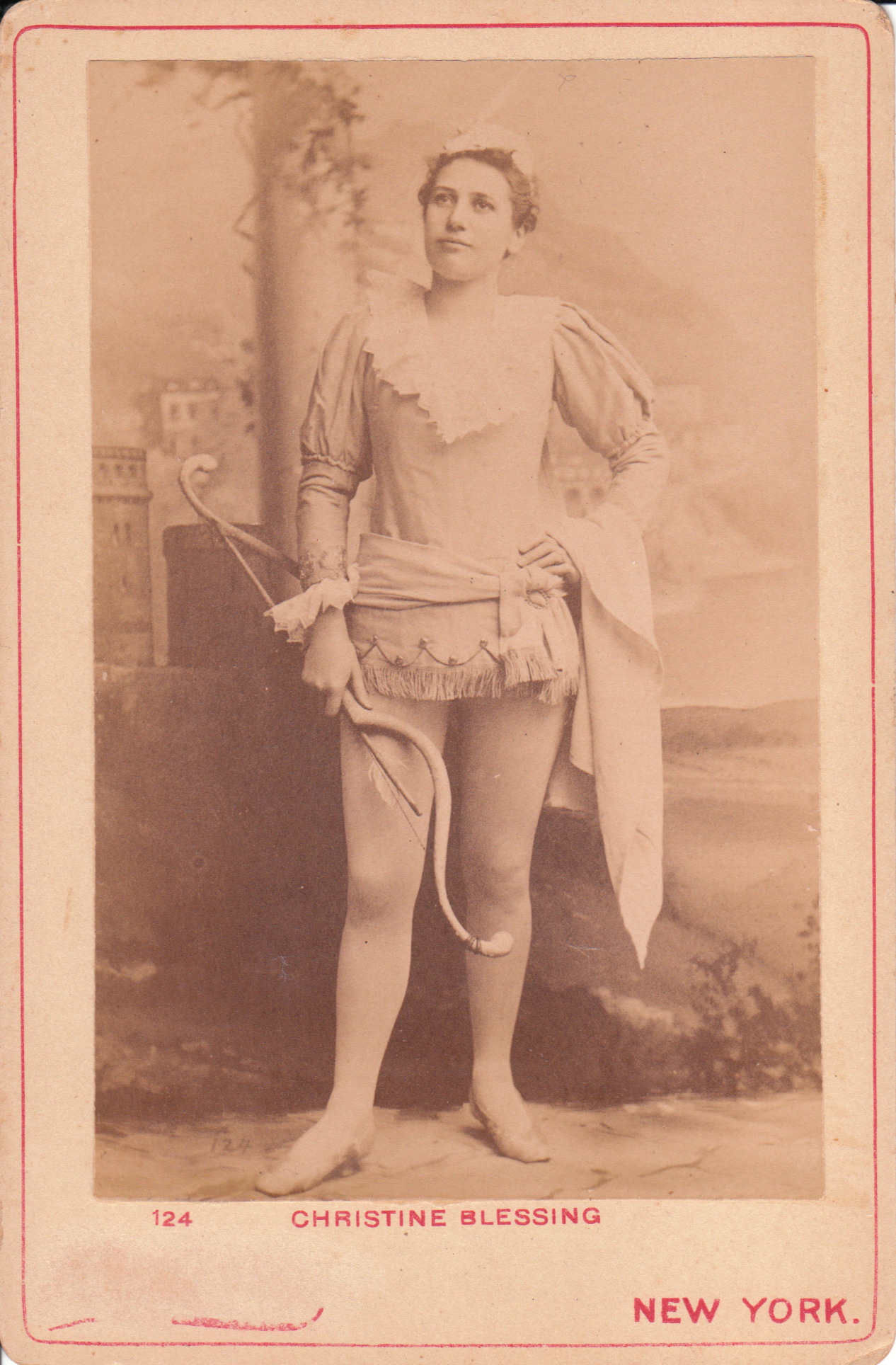
STAGE ACTRESS CHRISTINE BLESSING IN COSTUME PLAYING A RISQUE CUPID
This cabinet card features a portrait of actress Christine Blessing. The cabinet card was produced by Newsboy (#124 of a series) as a tobacco product premium. For some unknown reason, a previous owner of the photograph apparently attempted to erase the Newsboy logo from the photograph. Miss Blessing is captured in this image playing the role of cupid. She is holding a bow and arrow. This cabinet card is risque for its era. The actress is wearing a dress so short that it looks like the dressmaker ran out of material just after beginning her work. Miss Blessing is known for her theater work but also for her role in an early film titled “Dope” (1914). Her theatrical performances are the subject of a number of New York Times articles. These productions include “The Merry World” (1895), “The Maid in the Moon” (1899), “The County Chairman” (1904), and “The Bachelor” (1909), The New York Times (1893) was critical of her performance at Koster & Bials Music Hall. The newspaper stated that she had performed ballads and that Christine Blessing was “undoubtedly a blessing in disguise”. She was clearly part of a vaudeville performance that night as one of the other acts was a boxing kangaroo. The reviewer bemoaned that vaudeville performances had adverse effects on legitimate theater.
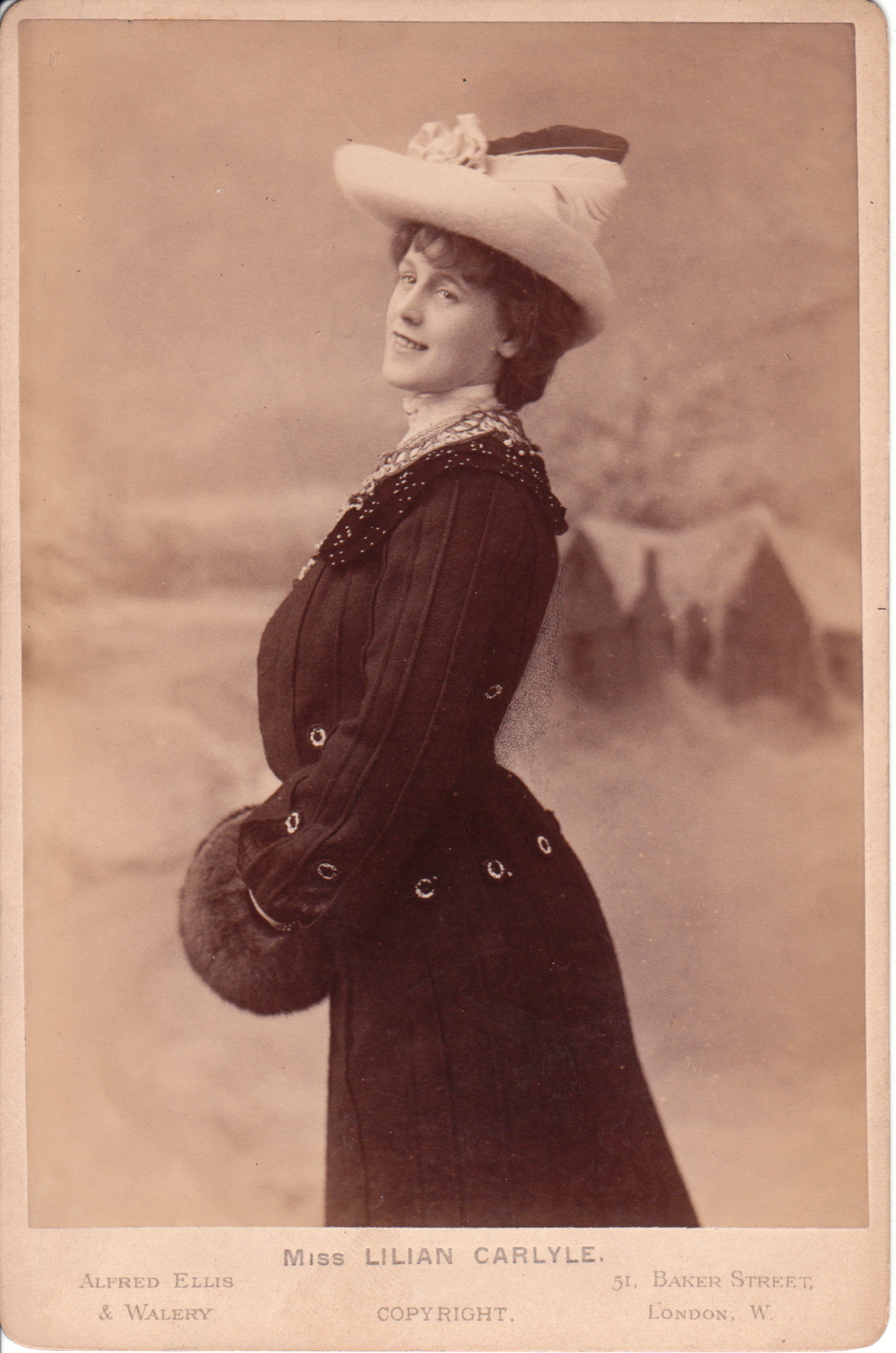
PRETTY ACTRESS WITH POOR POSTURE IN LONDON, ENGLAND (LILIAN CARLYLE)
A pretty actress exhibits poor posture as she poses in London, England, at the studio of Ellis & Wallery. The performers name is Miss Lilian Carlyle, and she appears to be pushing her chest out, possibly to amplify her ample bust. Is there a chiropractor in the house? Printing on the reverse of the photograph states that the studio was established in 1884. The backdrop employed in this portrait is not particularly realistic but at least it doesn’t detract from the portrait and allows Miss Carlyle to be the major focus. Alfred Ellis (1854-1930) was an active photographer between 1884 and 1899. He operated a studio on Upper Baker Street in London. He was an original member and served in a number of offices for the Professional Photographers Association. He specialized in theatrical photography and sometimes photographed whole scenes inside his studio. He later went to theaters to photograph performers and play scenes. Ellis was very involved in working for copyright protection in the high courts. Between 1890 and 1900 Stanislaw Julian Ignacy, Count Ostrorog (1863-1935) joined Ellis in a studio partnership. Ostrorog had followed in the footsteps of his father Stanislaw Ostrorog (1830-1890). He also kept his father’s “photographer name”. The senior Ostorog had changed his name to “Stanislaw Walery” for professional purposes. The last name of “Walery” was derived from his wife’s name, “Waleria”. The elder Walery had set up his London studio in 1883. To view other photographs by Walery, click on the category “Photographer: Walery”.