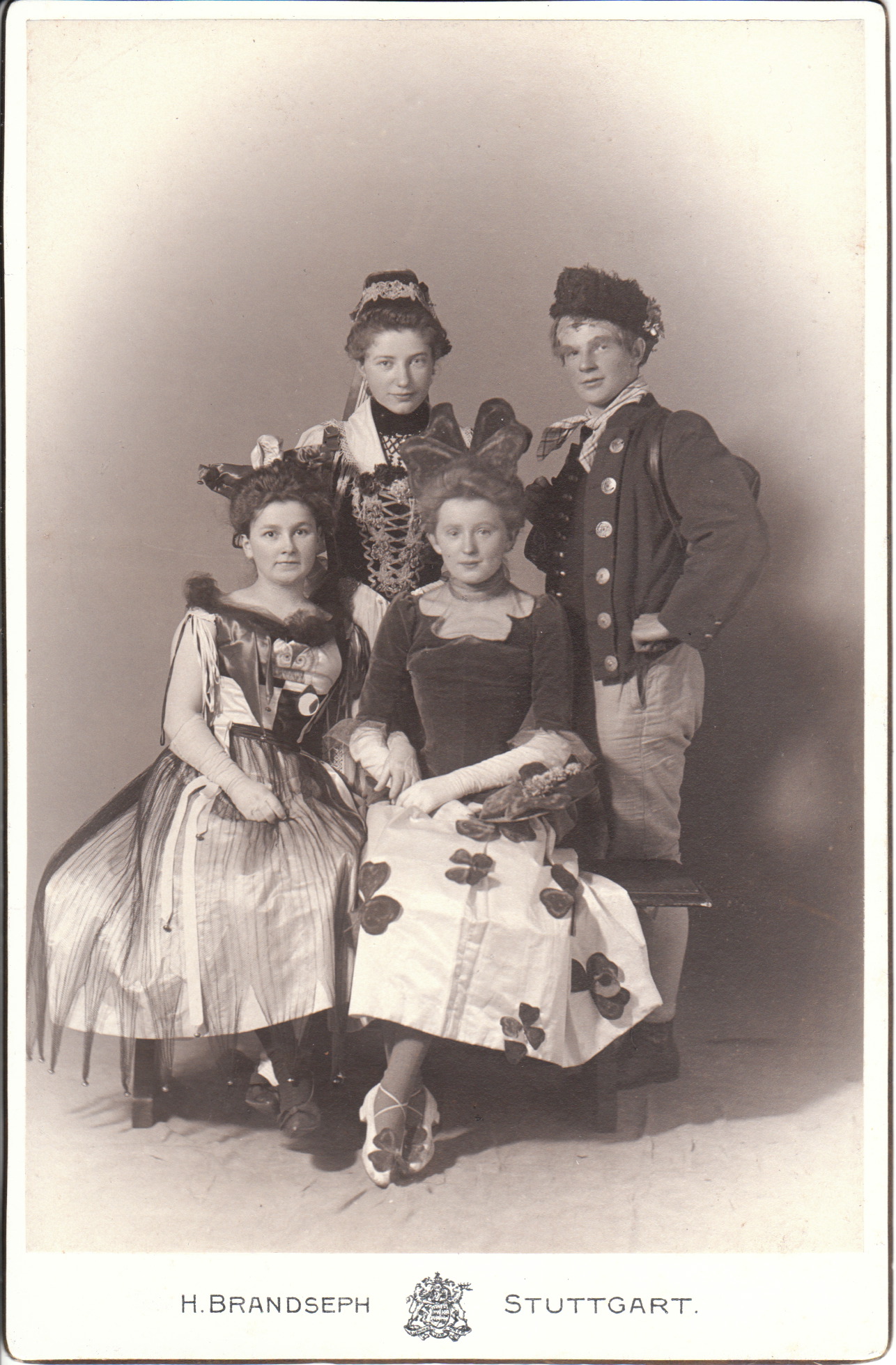
A young man and three young woman dressed in ethnic clothing, or theatrical costumes, pose at the H. Brandseph studio in Stuttgart, Germany. The foursome are attractive, and they appear to be teenagers. Perhaps they are stage performers. Printing on the reverse of the cabinet card reveals that Hermann Brandseph’s Stuttgart studio was located at “Marienstrasse 36”. A telephone number is listed for the studio which demonstrates that this photograph was produced toward the end of the cabinet card era. Hermann was the son of well known German photographer Georg Friedrich Brandseph (1826-1915). Georg was a lithographer, silhouetter, and painter who learned about the daguerreotype process from the celebrated photographer Karl Reutlinger who lived in Stuttgart (to view a number of Reutlinger’s photographs, click on cabinet card gallery category “Photographer: Reutlinger”). Georg opened his own studio there in 1853. In the 1870’s the Brandseph studio was extremely successful. In fact, by 1870, the studio had 40 employees. Georg turned the studio over to his son Hermann (1857-1907) in 1884.
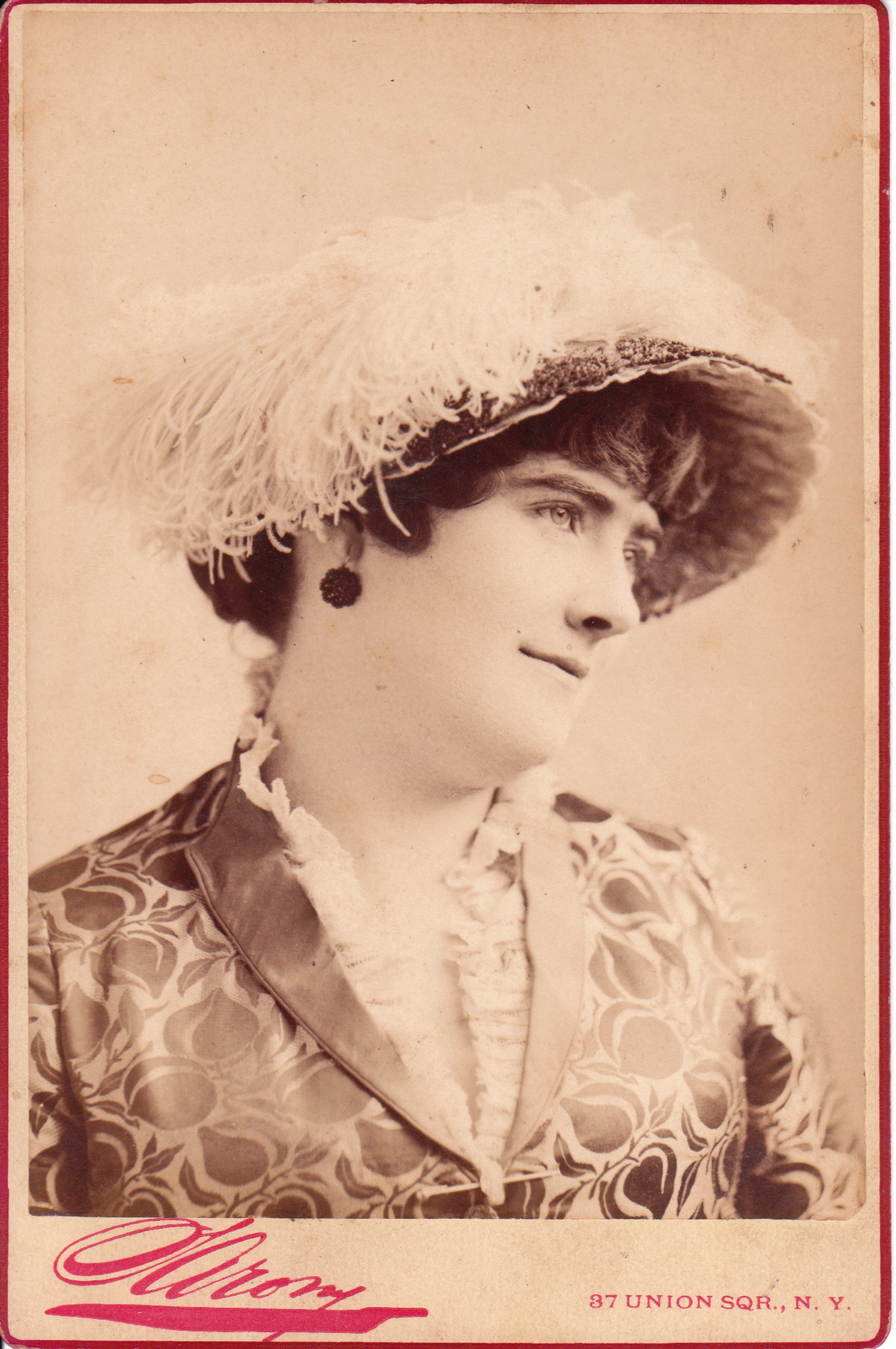
MAGGIE ARLINGTON: STAGE ACTRESS KILLED BY DUMB-WAITER
This cabinet card, features an actress with a tragic story. The New York Times (1887) reported a story about Maggie Arlington’s funeral. Arlington was a stage actress. Her funeral was held at her home at 106 East 54th Street in New York City. The article states that her home was full of flower arrangements including a large arrangement from her fiance, Eddie Godschalk. Miss Arlington died from pneumonia which was reported to be secondary from a fall. The fall occurred when she was leaning over a dumb-waiter shaft in her home and slipped and fell sixty five feet. She broke both of her legs as well as one of her arms. She also sustained major bruises. She developed pneumonia shortly thereafter. Arlington was born in 1853 in Lawrence, Massachusetts and was originally named Margaret Ryerson. She began professional acting in St. Louis in 1872. She married the nephew of a United States Navy admiral. Her husband objected to her continuing her acting career so she divorced him. She had one son who was ten years old at the time of her death. Maggie Arlington does not seem to have been a major theatrical star as research yielded little about her stage career. However, her profession and the unusual tragic cause of her death, earned her an obituary story in the New York Times. This cabinet card was photographed by celebrity photographer Napoleon Sarony. To view other photographs by Sarony, click on the category “Photographer: Sarony”.
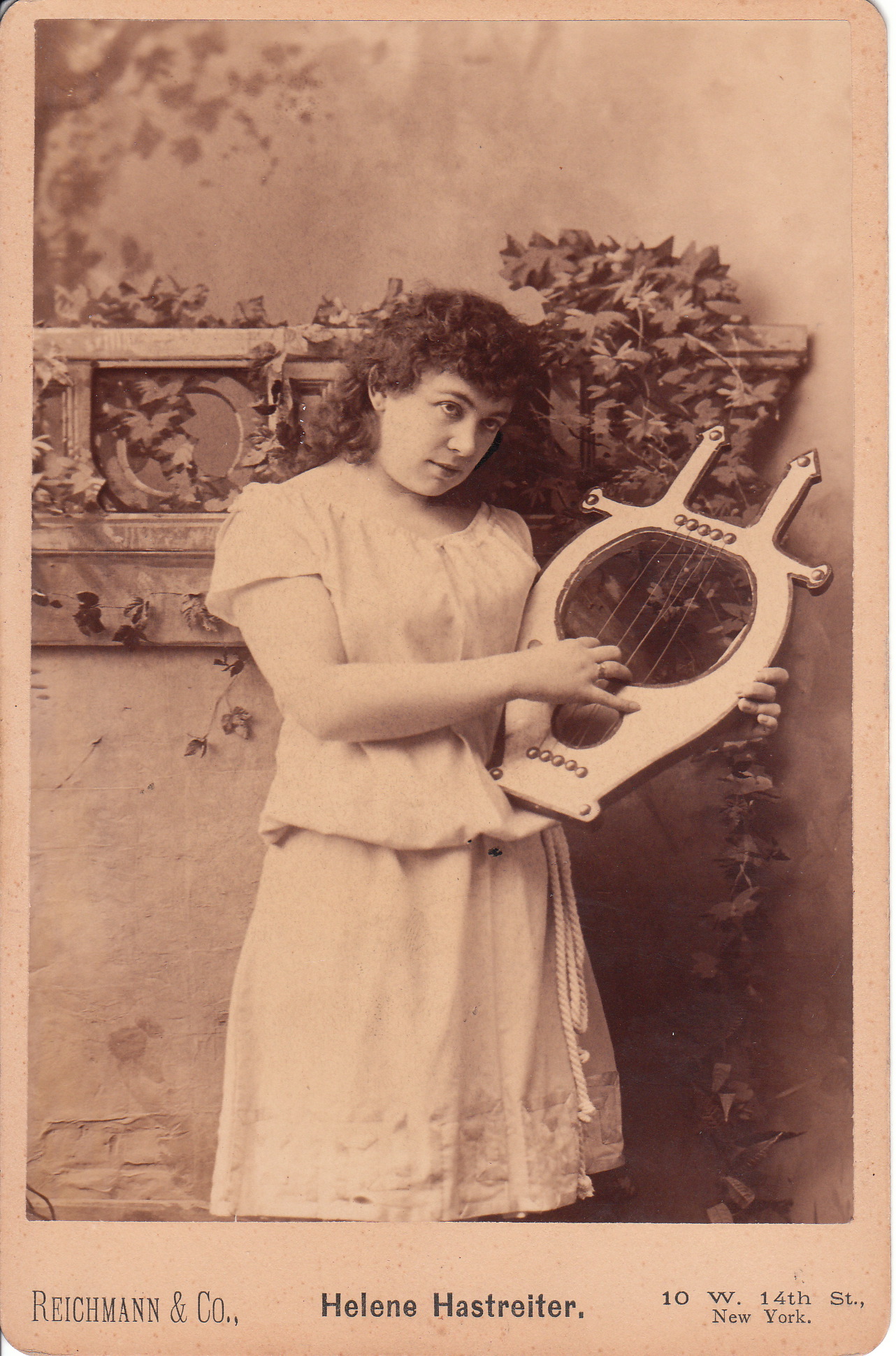
HELENE HASTREITER: FAMED OPERA SINGER
This cabinet card portrait features famed opera singer Helene Hastreiter (1858-1922). She is holding a stringed instrument that I can not identify with certainty but I believe it is a lyre. Hastreiter was born in Louisville, Kentucky. She made her opera debut in Milan, Italy. She was a mezzo soprano. The photographer of this image is Reichmann & Company. To view other photographs by this studio, click on the category “Photographer: Reichmann”.
CARLOTTA BRIANZA: CELEBRATED ITALIAN BALLERINA (PORTRAIT BY FALK)
This cabinet card portrait features pretty celebrated Italian ballerina, Carlotta Brianza (1867-c.1933). Note that the jewelry that is hanging from her necklace is shaped like a horse. It is also worth mention that this photograph is somewhat risque for the era. Brianza was born in Milan, Italy and was the prima ballerina at La Scala before going to Russia. She created a sensation in Luigi Manzotti’s ballet “Excelsior” as the Spirit of Light. She went to Russia in 1887 after completing a US tour. She was acclaimed for her work in “Sleeping Beauty” and “Esmerelda”. She returned to the west in 1891 when she became the prima ballerina for the Vienna Opera. She died in Paris under suspicious circumstances that suggest she committed suicide. This portrait was produced by celebrity photographer Benjamin J. Falk of New York City. To view other photographs by Falk, click on the category “Photographer: Falk”.
NELLIE HOWE: PRETTY ACTRESS IN RISQUE COSTUME
This cabinet card features pretty actress Nellie Howe in a risque stage costume. The photographer and the location of the studio that produced this image is unknown. Research revealed no information about Miss Howe. This photograph is likely an early cabinet card, dating back to the 1870’s or 1880’s.
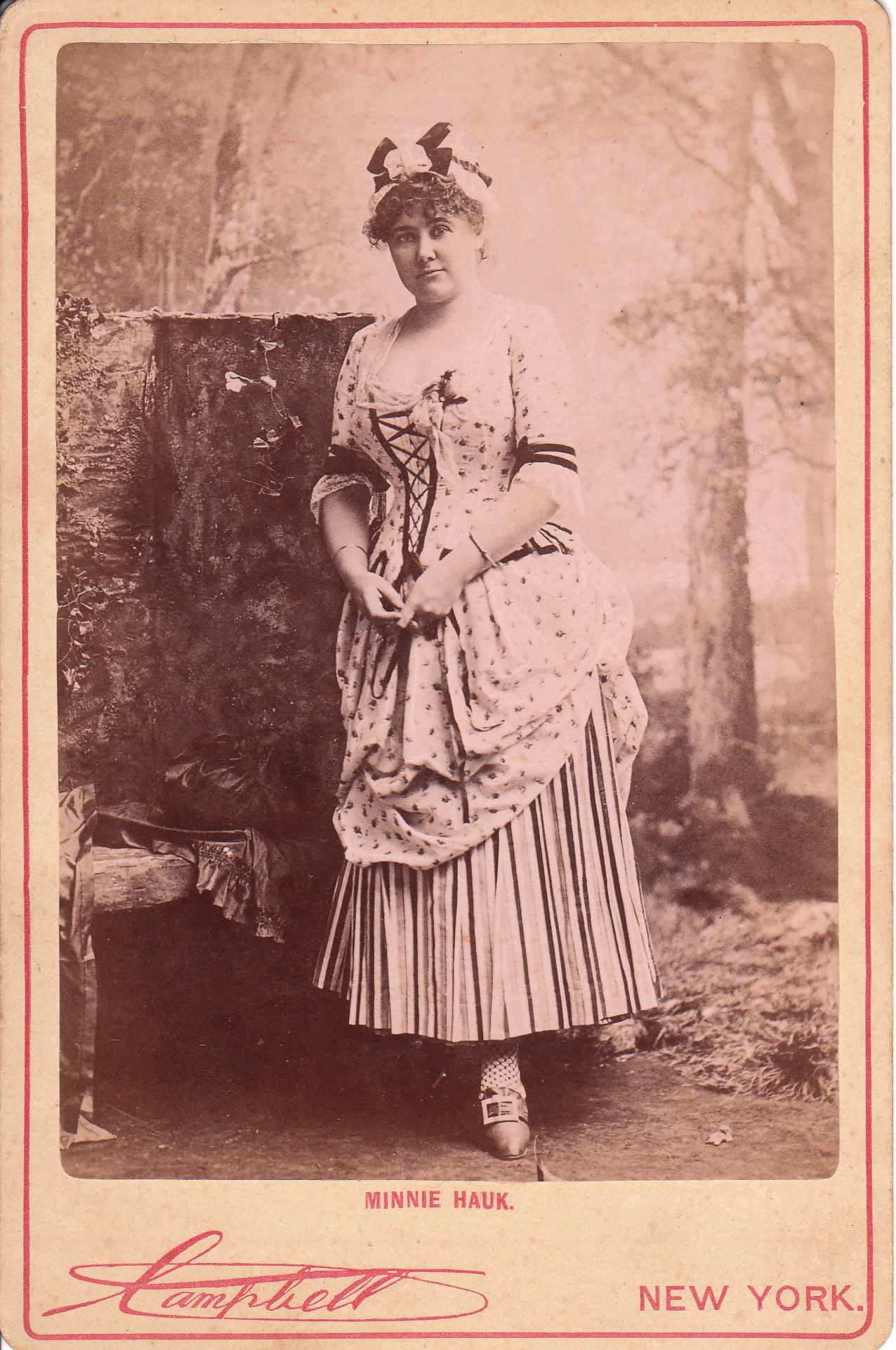
MINNIE HAUK: AMERICAN OPERA STAR
This cabinet card features Amalia Mignon Hauck (1851-1929). She was best known as Minnie Hauk and she was a celebrated American opera soprano. Minnie Hauk was born in New York City and as a child also lived in Rhode Island and Kansas. She studied voice with Achille Errani and had her debut in Brooklyn at age 14. Her New York City debut occurred when she was fifteen years of age. She sang Juliette in the American premiere of “Romeo et Juliette” in 1867. She performed in London in 1868 and in Paris the following year. She was the first American “Carmen” (1878). Unfortunately her fame and success did not last throughout her life. By 1918 she was in poverty and nearly blind. To see other photographs by Alfred S. Campbell and to learn more about him, click on the category “Photographer: Campbell”.
ENGLISH STAGE ACTRESS: ELLEN TERRY (THERE AIN’T NOTHIN LIKE A DAME!)
Dame Ellen Terry (1847-1928) was an English stage actress. The top cabinet card is from the studio of Campbell, in Elizabeth, New Jersey. Ellen Terry was the leading Shakespearian actress in Great Britain. She was born into a family that was immersed in the theatre; and future generations continued theatrical pursuits; including grand nephew, John Gielgud (actor, director, producer). Ellen Terry began playing Shakespeare roles as a child and continued to do so. In 1878 she joined Henry Irving’s company. She toured Britain and the United States with great success. In 1903 she took over management of London’s Imperial Theatre and her focus included the plays of George Bernard Shaw and Henrik Ibsen. In 1916 she began acting in films and in 1925 she was made a “Dame Grand Cross of the Order of the British Empire”. Terry’s romantic life, including marriages and love affairs, make interesting reading. Research about the photographer of this cabinet card discovered his obituary in the New York Times (1912). The Times reports that Alfred S. Campbell (1839-1912) was a pioneer in the development of art photography. Among his accomplishments was the publication of an edition of the bible that was illustrated with photographs he took in the Holy Land. He emigrated to the United States on the invitation of famed photographer, Napoleon Sarony in 1866. Among his “intimate friends” were Henry Longfellow, Thomas Nast, and William Cullen Bryant . Visitors to the Cabinet Card Gallery can see photographs by Sarony under the category of “Photographer: Sarony” and can see a portrait of William Cullen Bryant under the category of “Journalist”. To view other photographs by Campbell, click on the category “Photographer: Campbell”.
The second cabinet card features Ellen Terry in the role of “Beatrice” in William Shakespeare’s play, “Much Ado About Nothing”. The Window & Grove studio of London,England, published this photograph. The studio operated in London from the 1870’s to at least 1908.
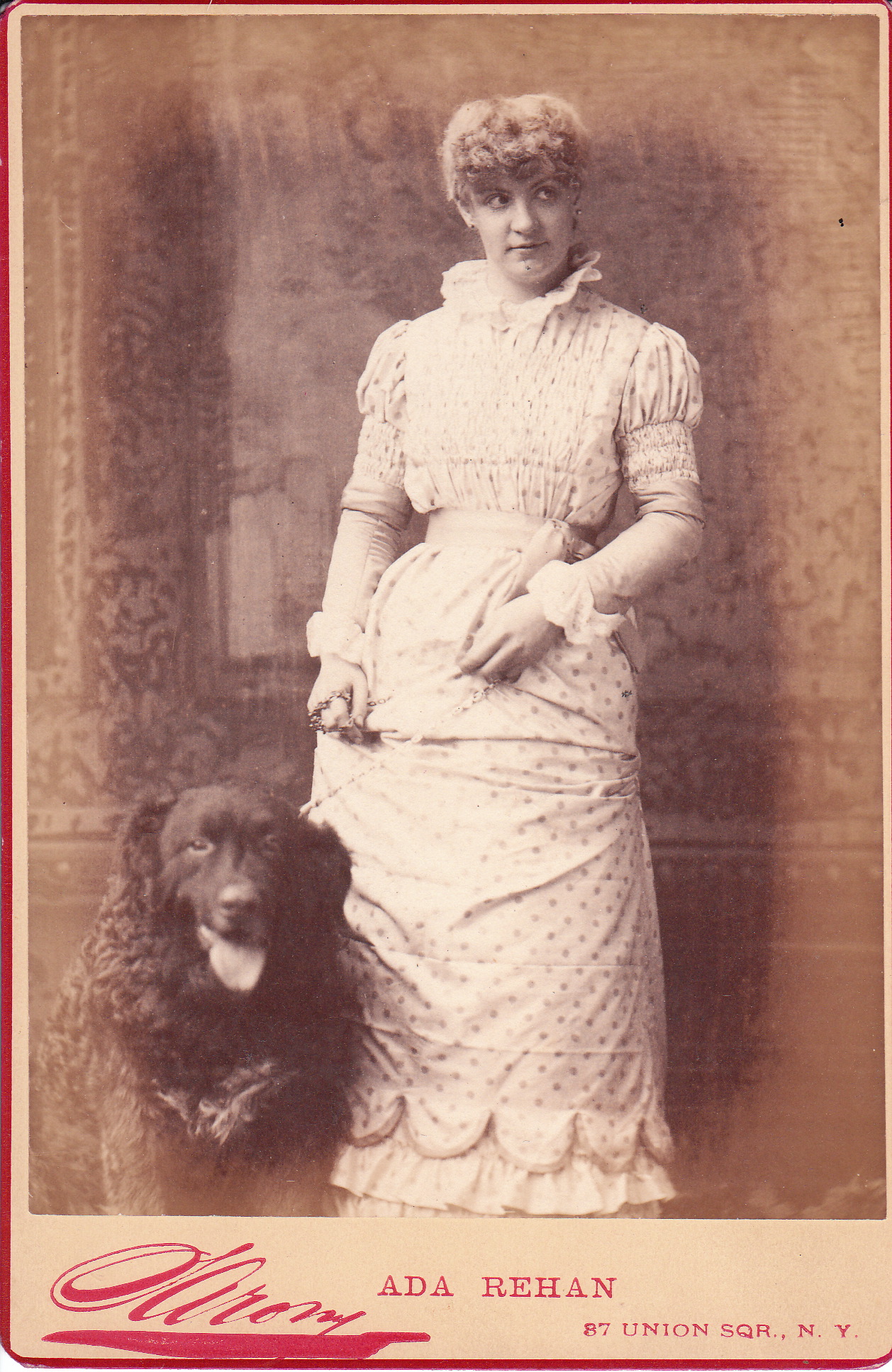
CELEBRATED ACTRESS ADA REHAN AND HER LABORADOR RETRIEVER (PAGE INCLUDES ADDITIONAL PORTRAITS OF MISS REHAN)
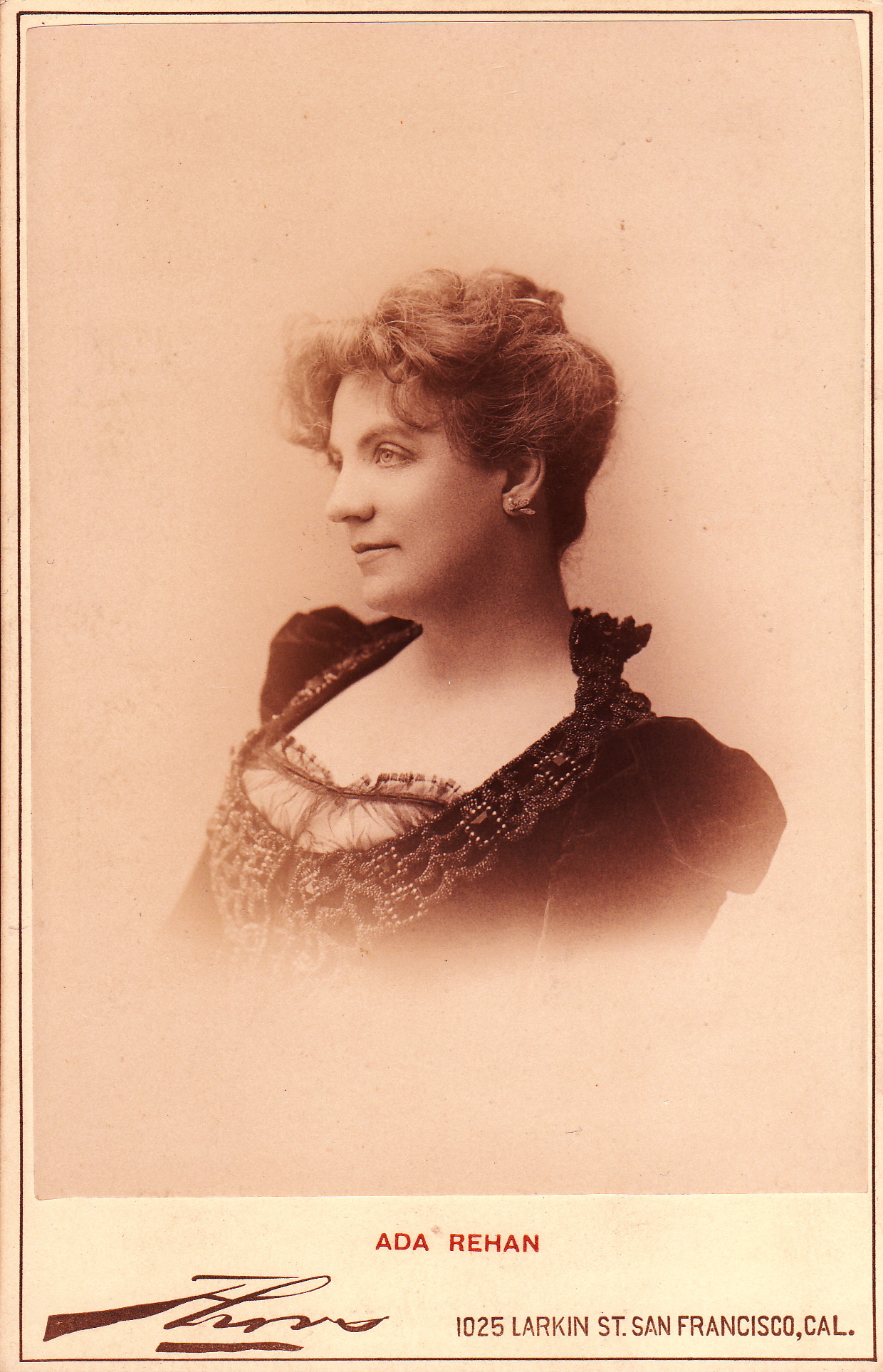
Ada Rehan was a well known and respected American actress. The top cabinet card portrait of Ms Rehan and her dog was published by Napoleon Sarony, a famous celebrity photographer in New York City, New York. Ada Rehan was born in Ireland and came to the United States at six years of age. She grew up in Brooklyn, New York. She began acting as a child. From 1873 until 1875 she became more active in acting at Mrs. Drew’s Theatre in Philadelphia, Pennsylvania. She then joined John Albaugh’s company and appeared in Baltimore, Albany and numerous other cities. In 1879 she joined Augustin Daly’s company upon his opening of his New York theater. She worked with his company for twenty years and appeared throughout Europe. The IBDB reveals that Ada Rehan appeared in 12 Broadway productions. Some of the Broadway and non Broadway plays she appeared in include a number of Shakespeare productions such as “As You Like It” and “Twelfth Night”. Rehan also acted in “The School for Scandal”, “Foresters”, “Cinderella at School”, and “Our English Friend”. She retired from the stage in 1906 and lived in New York City until her death. It is interesting to note that Ms Rehan’s dog is on a leash. The leash is made of metal links. She is holding the leash with both hands. This is the first leash that I have observed in the many cabinet card photographs of dogs that I have seen. The dog at the end of the leash in this image appears to be a laborador retriever. (SOLD)
The second portrait of Miss Rehan was published by Newsboy of New York. The image was number 68 in a series of photographs. Newsboy distributed these images as premiums for their tobacco product sales.
The third image of Miss Rehan is a bust portrait by Louis Thors of San Francisco, California. Thors was born in Holland in 1845. He was of French descent and educated in France. He was fitted for service in the Merchant Marine and he served in that capacity for a number of years before coming to California in 1876. By 1880 he had established his photography business. One source states that his studio had more than twelve “apartments”. He won a Bronze Medal at the Paris Exposition in 1889. His wife, Gertrude M. Thors was also a photographer. Camera Craft: Photographic Association of California (1910) printed Thors’s obituary. He was described as one of the highest esteemed photographers in San Francisco. He died of stomach cancer at age seventy-two. He worked in the photography business in San Francisco for over forty years. He left the city after the San Francisco fire and worked in St. Louis for two years before returning to California. The obituary reports that after his immigration to the United States, his skill as a painter earned him employment with photographers Bradley and Rulofsen (click on category “Photographer: Bradley and Rulofsen” to view some of their photographs). In addition, the death notice asserted that besides his talents as a photographer, Thors had a charming personality and high moral character. To view other photographs by Thors, click on the category “Photographer: Thors”.
THEATER ACTRESS NETTY HUNTER IN RISQUE POSE (1895)
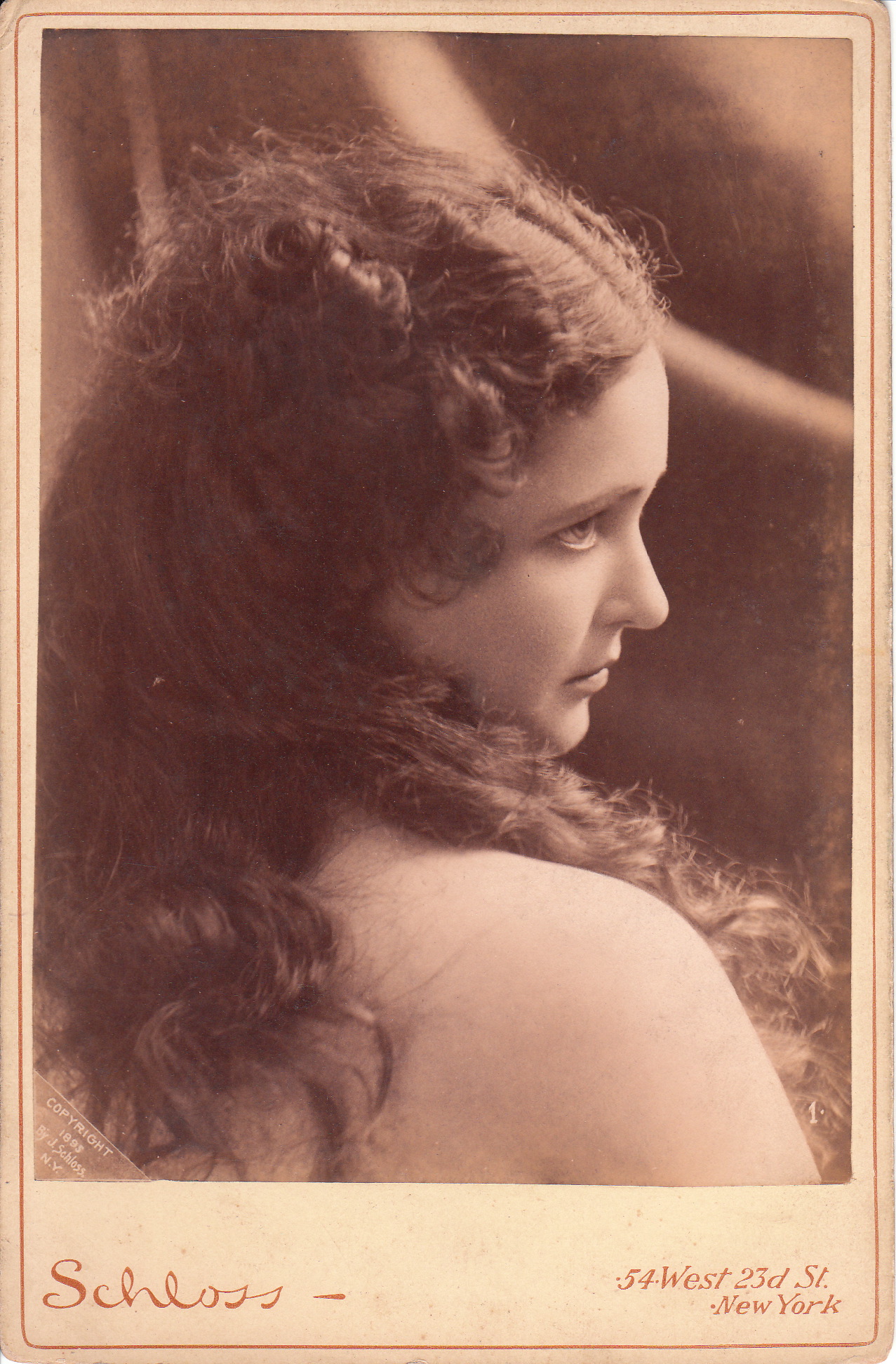
This cabinet card features a pretty young woman in a risque pose. She is identified on the reverse of the image as Netty Hunter. The previous owner of this portrait reported that Miss Hunter was a theater actress but a search found no evidence to support the notion that she had a stage career. In fact, no biographical information could be found about her. The photographer of this image was Jacob Schloss. Schloss photographed many theater celebrities from his studio in New York City. A notation on the lower left corner of the image shows that the copyright date of this photograph is 1895. A fading stamp on the back of this cabinet card indicates that it was formerly part of a collection belonging to Charles L. Ritzman (943 Broadway, New York City) who collected among other things, photographs of theater actors and actresses. In sum, although there is evidence that Netty Hunter was a theater actress; the evidence is not conclusive.
LILLIE PRUSH: BEAUTIFUL ACTRESS OR BEAUTIFUL SCHOOL TEACHER
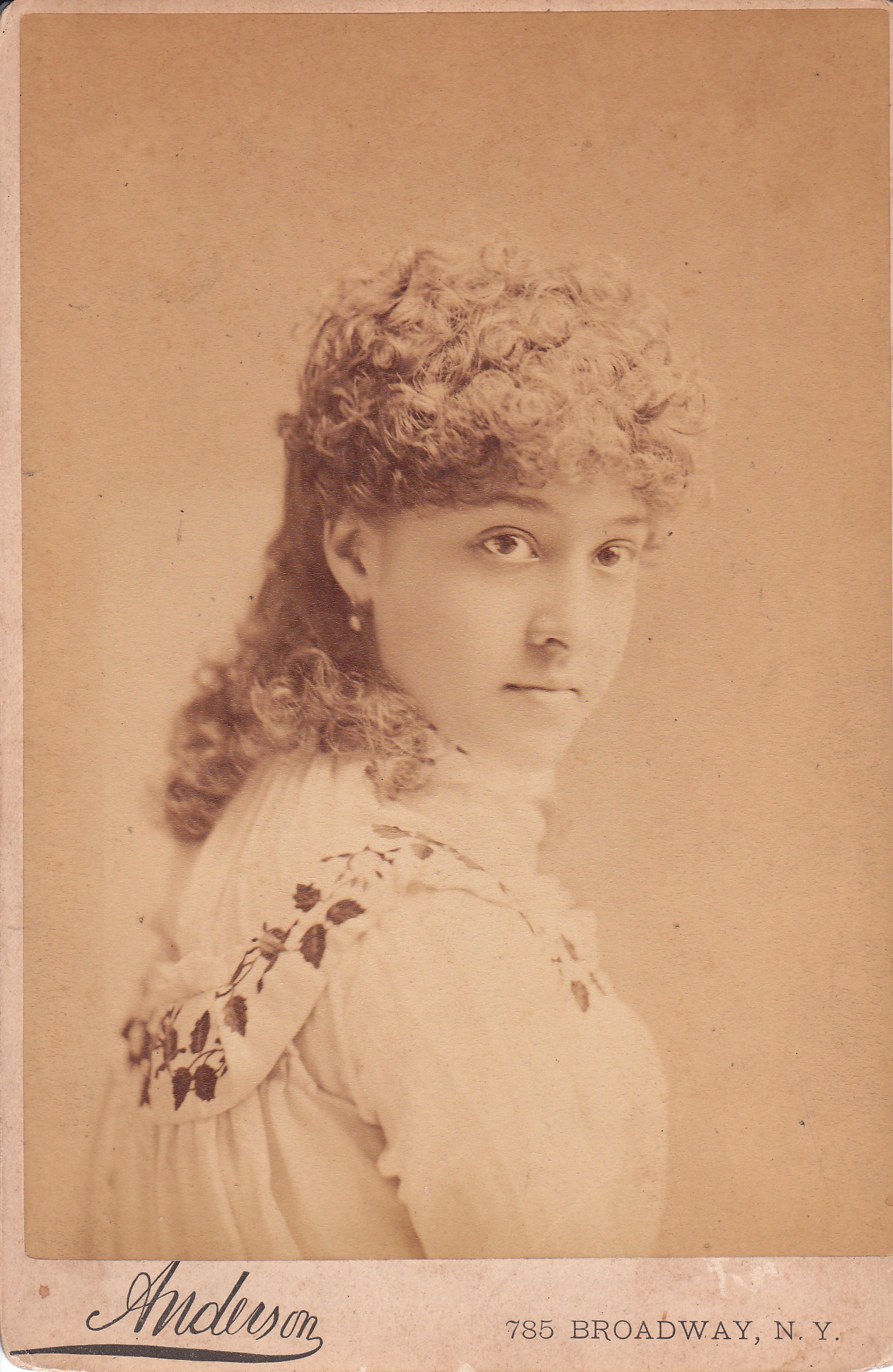
The beautiful woman in this cabinet card portrait is unidentified despite the existence of evidence that should facilitate identification. One possibility is that the subject of this photograph is an actress. Evidence pointing toward the acting profession include her beauty as well as the fact that she was photographed by D. H. Anderson, a renowned New York City theatre photographer. Obviously not all beautiful women are actresses and Anderson didn’t exclusively photograph theatre stars. Further evidence exists that points the search for the subjects identity in another direction. An inscription on the reverse of the photograph reveals the subjects name, “Lillie Prush”. However, life is rarely that easy; there is a complication. Due to legibility issues, the inscription might actually read “Lillie Roush” or “Lillie Raush”. I contend that the name is “Lillie Prush” and the 1880 US Census finds a Lillie Prush living in New York City. Miss Lillie was a school teacher. She was born in 1859 and lived with her parents and brother. Her father, J. E. Prush, owned a furnishing store and her brother was a civil engineer. If this photograph is an image of Miss Lillie, a New York City school teacher, than she must have certainly commanded the attention of the older boys in her classes. There must have been a lot of crushes in her classroom. Here is one final observation. Note the ivy pinned to the shoulder and back of Lillie’s dress. Do you think this small prop adds to or detracts from the photograph? To view other photographs by Anderson, click on category “Photographer: Anderson (New York)”.


PHOTOGRAPH 1 (SOLD)
PHOTOGRAPH 2
PHOTOGRAPH 3