 This cabinet card portrait features singer, dancer, actress Bella Moore. She is wearing lace and a nice cap and smile.During her stage career she was also known as Mrs Fred Vokes (to learn more about the Vokes family, use the search box to search for Fred’s sister, actress “Rosina Vokes”). An ad placed in Harry Miner’s American Directory for the Season 1884-1885 (1884), contains rave reviews of Miss Moore from Cincinnati and Louisville newspapers. The ad also advertised a play named “A Mountain Pink”. Miss Moore was starring in the play which was appearing in Cincinnati. This cabinet card was photographed by the studio of Baker & Potter in Columbus, Ohio. Baker may be one of the principals of the Baker Art Gallery. To view other photographs by Baker, click on the category “Photographer: Baker Art Gallery”. The reverse of this cabinet card advertises that copies of the photograph could be obtained for 25 cents by mail.
PHOTOGRAPHIC PORTRAIT OF STAGE ACTRESS BELLA MOORE IN COLUMBUS, OHIO

MINNIE PALMER: SUCCESSFUL THEATRE ACTRESS NEARLY MURDERED BY HER POSSESSIVE HUSBAND
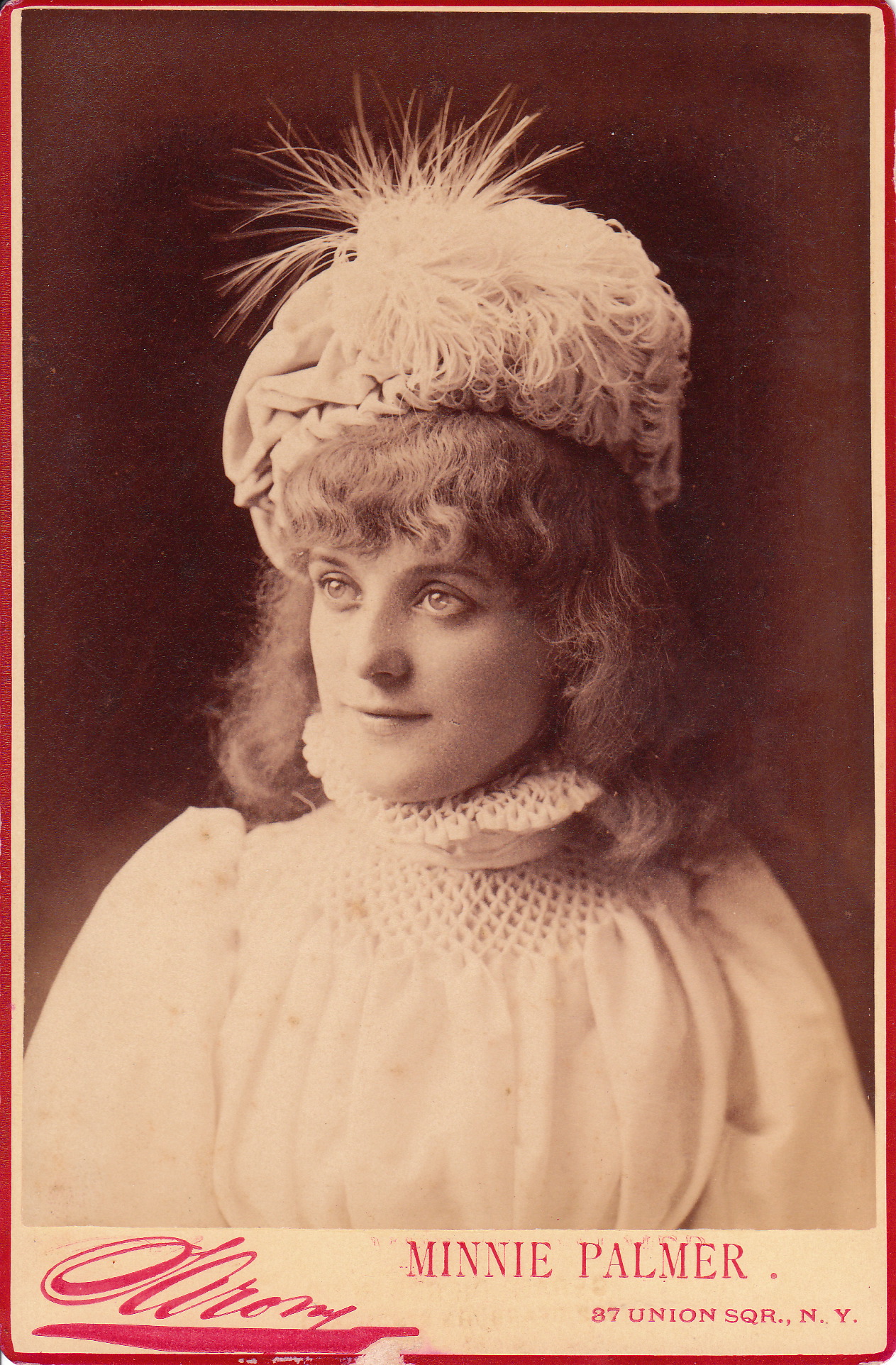
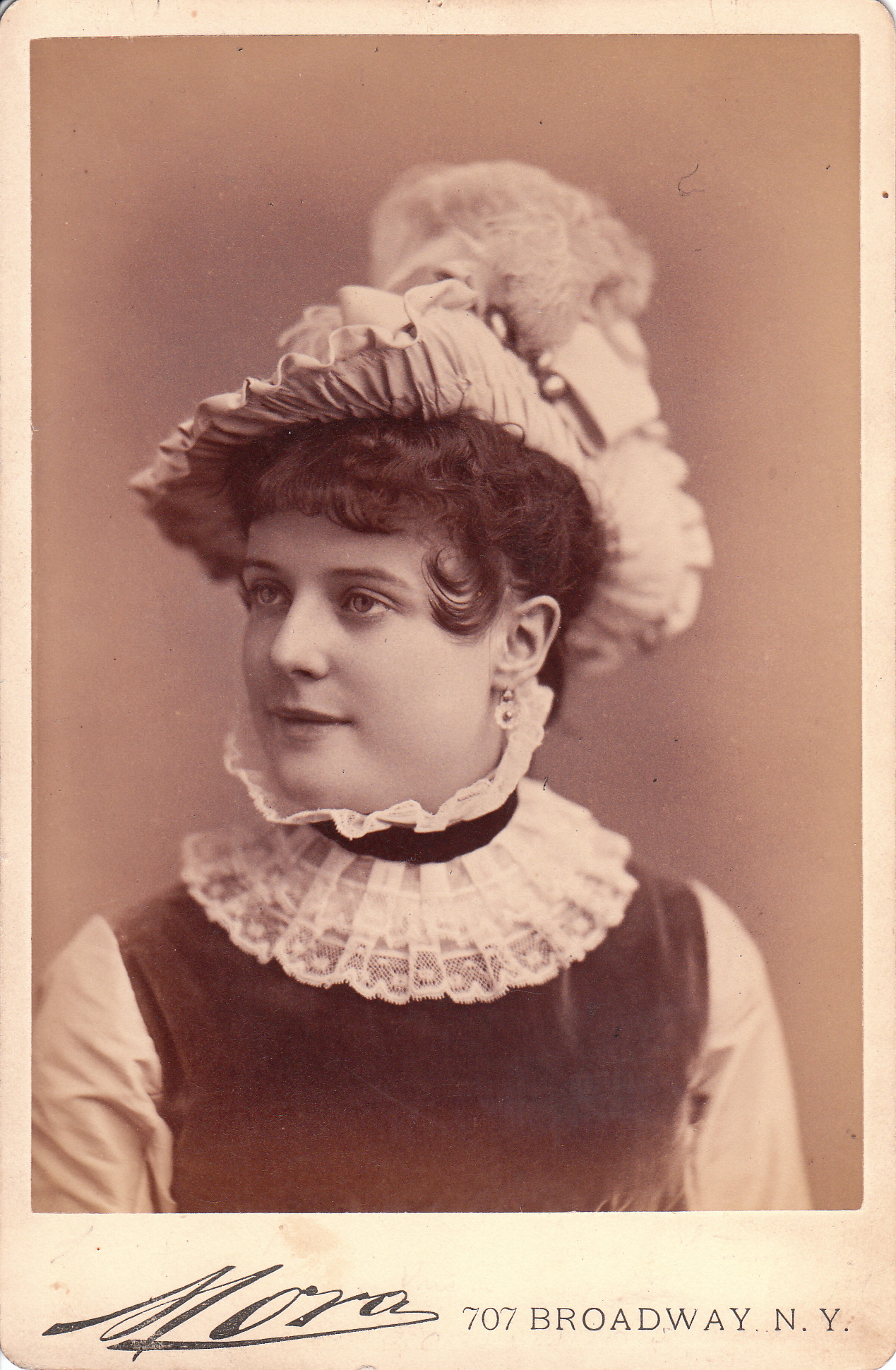
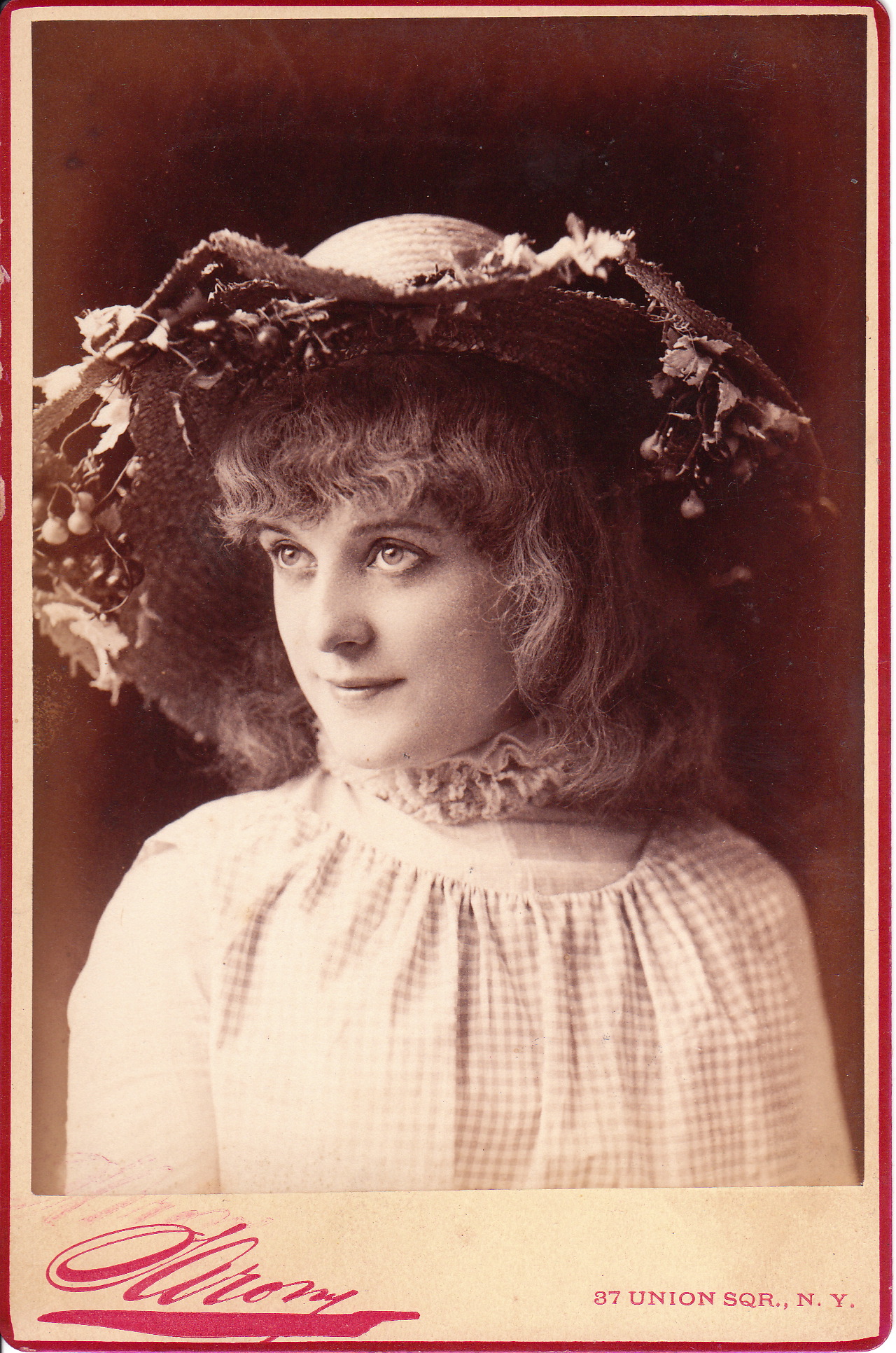
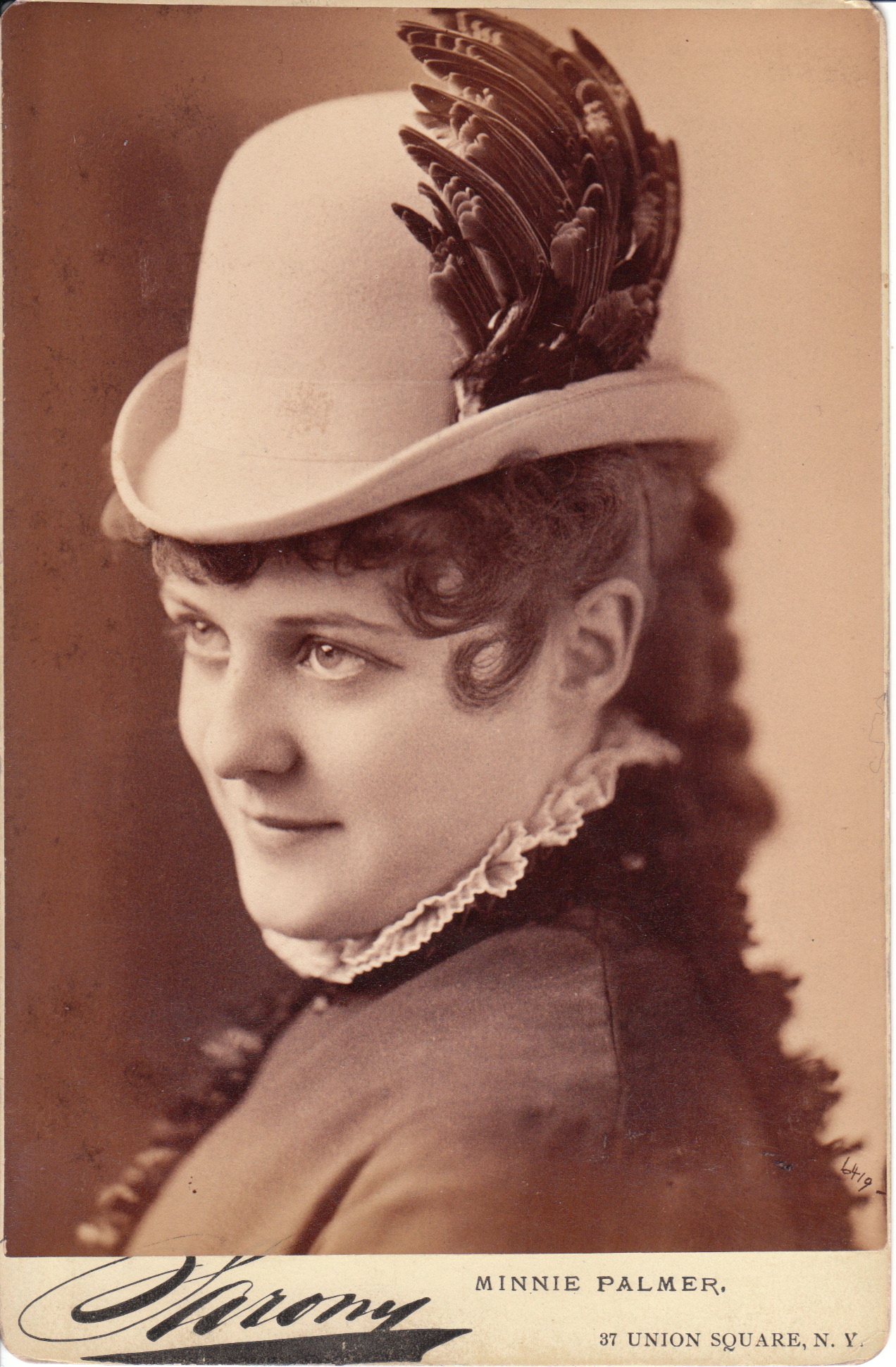
These cabinet cards feature a portrait of theatre actress, Minnie Palmer (1860-1936). Palmer was born in Philadelphia and spent her early childhood in a convent. At age eight, her family moved with her to Vienna where she was taught music and German. She then went to Paris where she learned dancing and French. At age eleven, in 1876, she went to Baltimore, Maryland, and made her first stage appearance. She then acted in Booth Theatre’s production of “Dan’l Druce”. This appearance was followed by roles in “Engaged“, “The Cricket on the Hearth” and other plays. She was very successful in “Two Orphans” and in the 1879-80 theatre season she had great notice in “The Boarding School” and “My Sweetheart“. Palmer also was successful at having aspects her personal life detailed in the newspaper. The New York Times (1890) reported her “narrow escape from death” when she was assaulted by her husband who brandished a huge carving knife. She received minor injuries to her face and her hand. Her husband, John Rogers, was also her manager. Rogers was angry because his wife had ignored his edict that she stay away from her mother. Apparently, upon her return from attending a horse show with her parents, Rogers attacked her. Rogers was a very possessive man; he had already written many insulting and abusive letters to Palmer’s friends in an effort to keep them away from her. Palmer was certainly not media shy. She gave the Times reporter a very detailed story about the violent incident and problems in her marriage which they were happy to print. The photographer of the top cabinet card is Sarony. The second cabinet card is a portrait by celebrity photographer, Mora. Both photographers were located in New York City. To see other photographs of these talented celebrity photographers, click on Cabinet Card Gallery’s category “Photographer: Sarony” and “Photographer: Mora”. The third cabinet card is by Sarony and it does a great job of capturing Minnie Palmer’s exceptional beauty. The fourth cabinet card, also by Sarony, is a close-up portrait of Miss Palmer wearing a feathered hat. Once again, Minnie Palmer is quite photogenic. She has sparkling beautiful eyes and a wonderful smile.
STAGE AND SILENT FILM ACTRESS MABEL TRUNELLE IN FORT WAYNE, INDIANA

This cabinet card features stage and film actress Mabel Trunnell (1879-1981). The reverse of the photograph is inscribed “Yours Truly, Mabel Trunnell 1898”. Therefore, this image captures Miss Trunnell at about age nineteen. Mabel Trunnell was born in Dwight, Illinois. She began her career as an actress of the stage but at age thirty-two she began to appear in films. In 1911 she appeared in “A Modern Cinderella, In the Days of Chivalry” and in “The Star Spangled Banner”. Her last film was in 1923 when she was in the movie “The Love Trap”. Her filmography on IMDb indicates that she acted in 199 different films. At the age of forty-four she returned to the stage. She was married to Herbert Prior, an early British film star. Trunnell was one of Hollywood’s first movie stars as was identified with Edison Studios. A magazine article in “The Moving Picture World” (1915) reviews one of her performance. The reviewer wrote “Mabel Trunnell becomes more attractive as the course of time silvers her hair”. An interesting sociological comment was also made by the reviewer which was in regard to the admirable strength portrayed by Trunnell’s character. The reviewer notes “most of us are tired of seeing women pictured as incurable weaklings”. The reviewer was certainly a man who was ahead of his time. This cabinet card was produced by the Barrows studio in Fort Wayne, Indiana. It appears that Miss Trunnell was photographed in a costume from one of her performances. She is dressed very much like a maid and seems a bit troubled in her pose. The photographer, Frank Rufus Barrows operated a studio in Fort Wayne between 1880 and 1900. He is considered one of the city’s most prolific photographers and had several locations while in business there. He was born in Sturgis, Michigan in 1854. He came to Fort Wayne in 1880 and partnered with Frank H. Clayton in operating a photographic studio. In about a years time he became the sole proprietor of the studio. He had many photos appear in Fort Wayne Illustrated (1897). He left Indiana for Medford, Massachusetts and operated a studio there until 1910 when he moved to Eugene, Oregon where he died in 1920.
MISS LILLIAN RAYMOND: PRETTY STAGE ACTRESS WHOSE LIFE WAS CUT SHORT BY TUBERCULOSIS
 On July 17th, 1911, the New York Times printed the following obituary, reporting from Louisville, Kentucky. “Lillian Dolfinger, known to the theatrical world as Lillian Raymond, who appeared in “The Girl of the Golden West’, and several other New York productions, died today at the home of her father here from tuberculosis. She was 25 years old. Miss Raymond was to appear in one of the New York productions this Fall, but became ill”. Investigation revealed that Miss Raymond appeared on Broadway on three occassions. She appeared in “Wonderland” (1905), “About Town” (1906), and “The Girl Behind the Counter” (1907). All three shows were musicals. No other information about Miss Raymond could be found during preliminary research. The photographer of this image is C. J. Horner who described himself through his advertising as a “European Photographer. His studio was located at 11 Winter Street in Boston, Massachusetts. It is tragic that Lillian Raymond’s stage career and life was cut short by illness. We will never know to what heights this pretty young actress may have climbed in the theatrical world. The photographer of this image rose to lofty heights in his profession. Swedish born Carl Joseph Horner (1864-1926) was probably the best sports photographer of his era. He was particularly known for his baseball photographs, many of which appeared on tobacco company issued baseball cards. Among the players he photographed were Cy Young and Tris Speaker. His panoramic portrait of the 1912 “Red Sox Champions” is well known among collectors.
THEATRE ACTRESS: LIZZIE WEBSTER AT THE BEACH
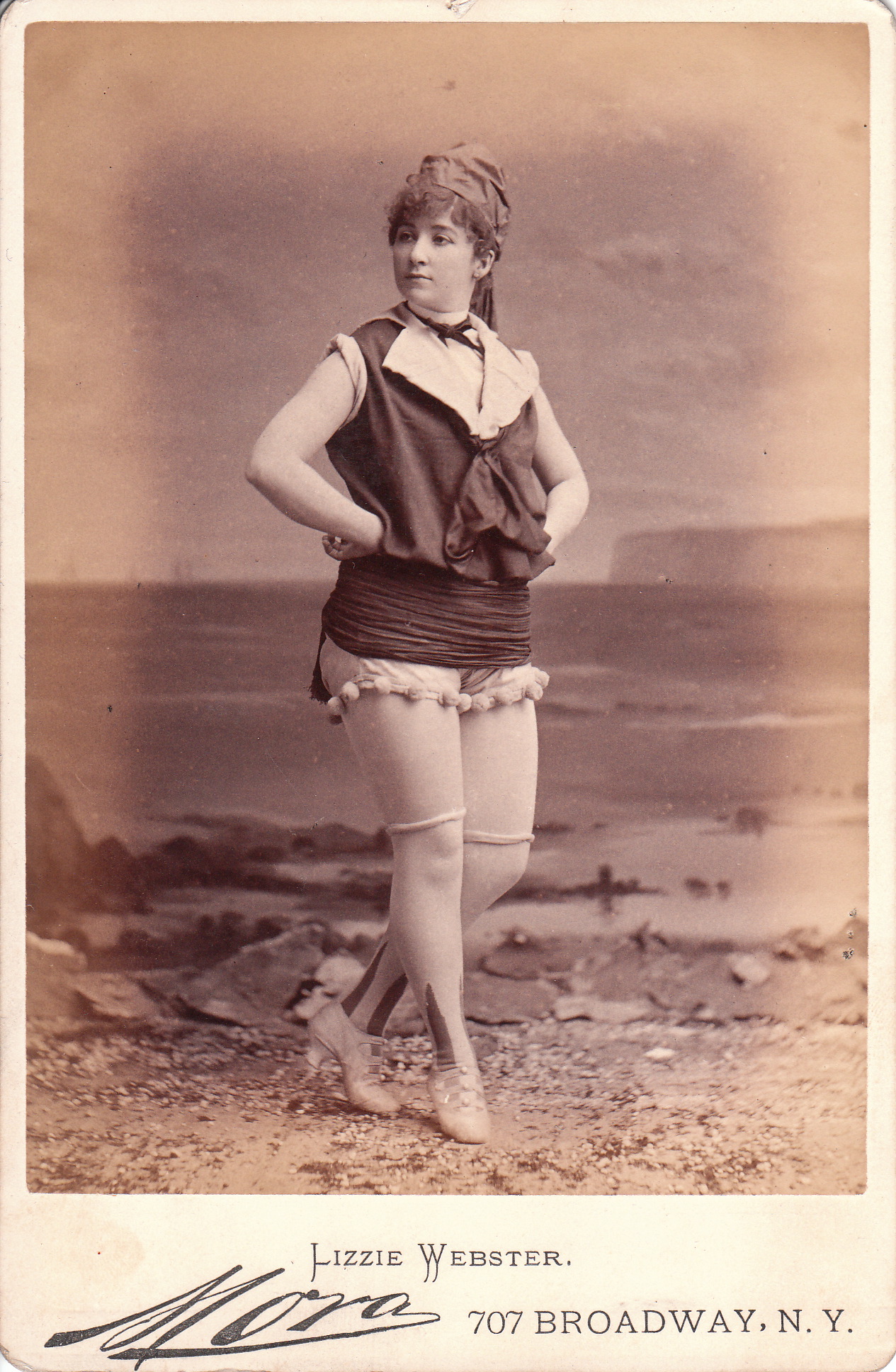
The top cabinet card features theatre actress Lizzie Webster posing at the beach. OK; its not the beach, but it is a fake beach, at the studio of celebrity photographer, Mora, in New York City, New York. Webster appeared on the American stage in the late 1870’s and early 1880’s. She appeared on tour in Edward Rice’s popular show, “Evangeline”. The Brooklyn Daily Eagle (1878) described Miss Webster as a “shapely brunette”, and a “beautiful being”. However, the article states that she did not possess a good voice. In 1893, Lizzie Webster died in Milwaukee, Wisconsin. To see other photographs by Mora, click on Cabinet Card Gallery’s category “Photographer: Mora”.
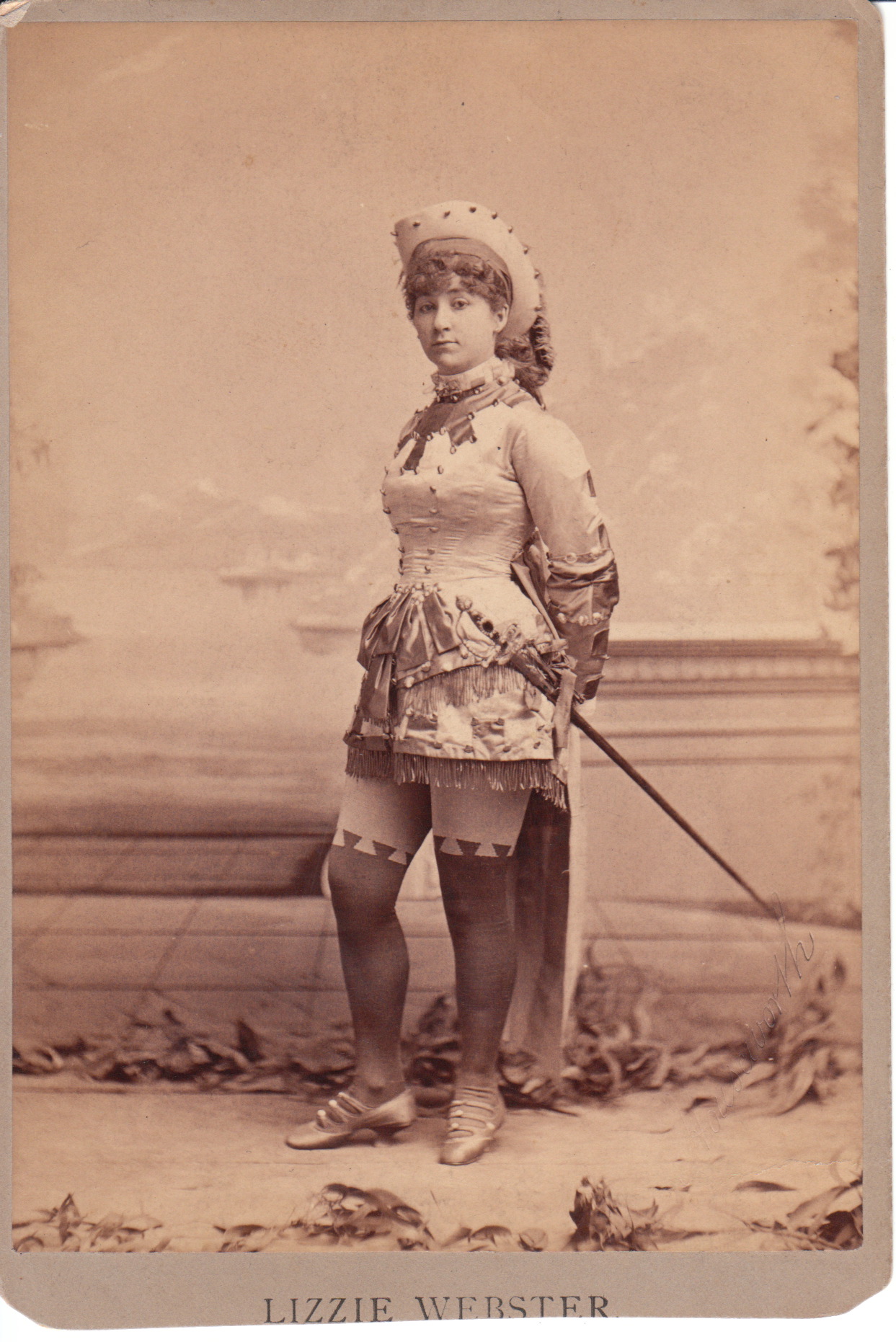
The second cabinet card features Miss Webster in costume, complete with a sword at her side. This image as well as the top image demonstrates that Lizzie Webster was not too modest to exhibit her legs. Both photographs are a bit risque because of this immodesty. The photographer of this image is unknown because the photograph has been trimmed and the reverse of the photo card has a large sticker covering much of the cards back. The sticker identifies the photograph as the property of Culver Pictures of New York City. The firm owned the rights to the image and would allow the media to use the image, if they paid for the privilege.
PORTRAIT OF A PRETTY UNIDENTIFIED ACTRESS IN NEW YORK CITY
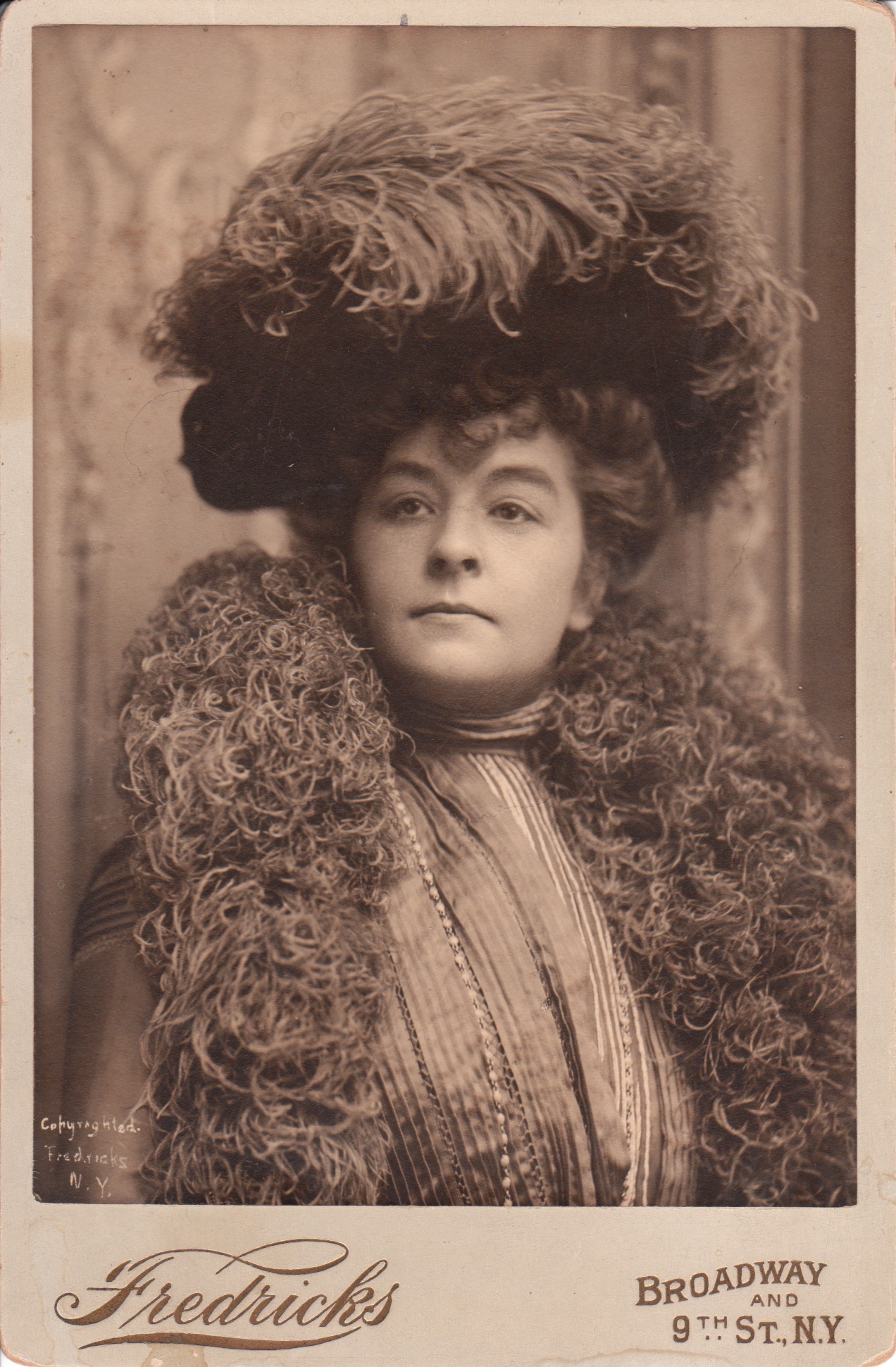
This portrait features an attractive unidentified actress. This woman seems to love texture. Note the fabrics she is wearing. She has a wonderful feathered hat and a shaggy stole. At least I think its a stole but I am uncertain and welcome intervention from a cabinet card gallery visitor knowledgeable about woman’s fashion. The woman looks quite handsome in her high collar dress and lovely accessories. The photograph was taken at Fredricks Knickerbocker Family Portrait Gallery in New York City (770 Broadway). To learn more about Mr. Fredricks and to view more of his images, click on the category “Photographer: Fredricks”.
MISS HOWELL: PRETTY AND CURVACEOUS STAGE ACTRESS
 Miss Howell is the subject of this Newsboy cabinet card. Presumably, the busty and thin waisted Miss Howell was a stage star. This photograph is number 64 of a series of theater cabinet cards. It is unknown why someone erased the Newsboy logo from the front of the photograph. Newsboy cabinet cards were distributed as premiums accompanying tobacco products. Miss Howell is quite attractive. She is wearing long gloves and a fancy hat. An attempt to find further information about Miss Howell was unsuccessful. There was an opera singer named “Miss Howell” but it could not be confirmed that she was the appropriate age to be the woman in this photograph. Newspaper accounts reveal that Miss Dicie Howell was an American soprano who performed in many American and International cities during the 1920’s. This cabinet card was published significantly before 1900. To view other Newsboy cabinet cards, click on the category “Photographer: Newsboy”.
PORTRAIT OF BEAUTIFUL THEATER ACTRESS KATE SANTLEY (PHOTOGRAPHED BY NAPOLEON SARONY)
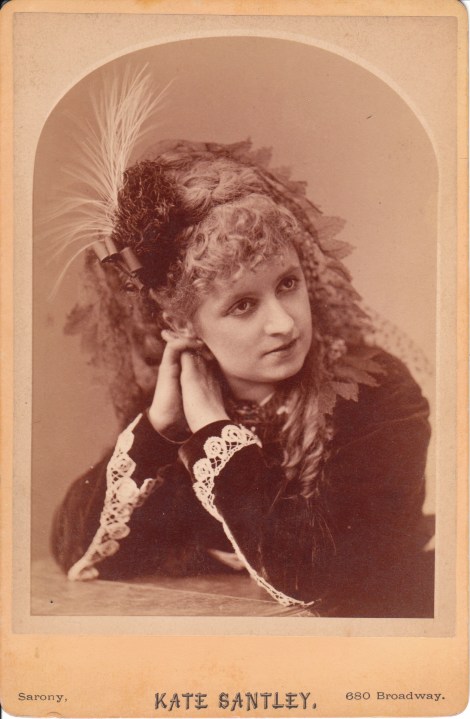 This fantastic cabinet card photograph features beautiful theater actress Kate Santley (1837-1923). The photograph was produced by New York City celebrity photographer, Napoleon Sarony. Santley was born in Germany but raised as a child in Charleston, South Carolina. After the outbreak of the civil war in America, Santley left for England. She began her theater career in England and became a well known actress, singer, comedienne, and theater manager. In 1876 she played Wilhelmina in “The Jolly Waterman” at the London Opera Comique. Also in 1876, she started her own theater company and produced and starred in W. S.Gilbert’s “Princess Toto” at the Theatre Royale in Nottingham. Kate Santley was a stage beauty. She was slim and pretty and was frequently photographed for carte de visites, cabinet cards, postcards, and advertising. To view other photographs by this celebrated photographer, click on the category “Photographer: Sarony”.
PORTRAIT OF BEAUTIFUL ACTRESS EVANGELINE IRVING (BY CELEBRITY PHOTOGRAPHER WILLIAM McKENZIE MORRISON OF CHICAGO, ILLINOIS)
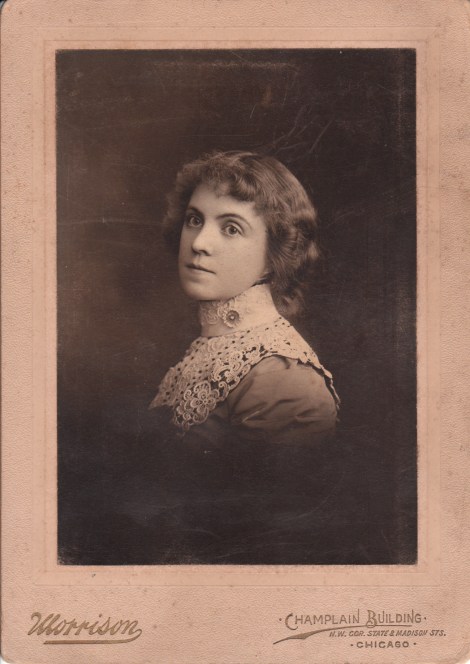
The previous owner of this photograph, reported the subject to be theatrical actress Evangeline Irving. Visual comparison to other portraits of Evangeline Irving support this identification. Evangeline Irving was an theater actress and the sister of a more successful theater actress named Isabel Irving. See Isabel’s portrait by searching for it in the Cabinet Card Gallery. This photograph was produced by William McKenzie Morrison, the Chicago, Illinois, based celebrity photographer. View other Morrison photographs by clicking on category “Photographer: Morrison”. The New York Times (1895) reported that Evangeline substituted for Isabel in a matinee performance of “The Case of Rebellious Susan”. Isabel was suffering from hoarseness. A number of New York Times (1895, 1896) articles describes a banking fiasco that Evangeline Irving was able to resolve. Her mother had gone to the Lincoln Safe Deposit Company to get twenty thousand dollars worth of bonds out of her box. When she could not find the bonds in the box, she ran out of the vault screaming that she had been robbed. She went home ill, and took to bed. She complained around town and soon her Senator contacted the bank demanding she be compensated with a check replacing her loss. The situation caused many people to run to their banks to see if their safety deposit box holdings had disappeared. Mrs. Irving caused a mini run on the city banks. It took awhile for Mrs. Irving’s daughters to get involved because both of the women were performing out west. Isabel was playing roles with the Lyceum Company and Evangeline was part of Stuart Robson’s Company. Soon, Evangeline came to the bank and after opening the safe deposit box found the bonds tied up in a bundle in the box. An apology was issued to the bank and made public.
RISQUE PORTRAIT OF BURLESQUE ACTRESS KATE EVERLEIGH BY WARREN’S PORTRAITS IN BOSTON, MASSACHUSETTS
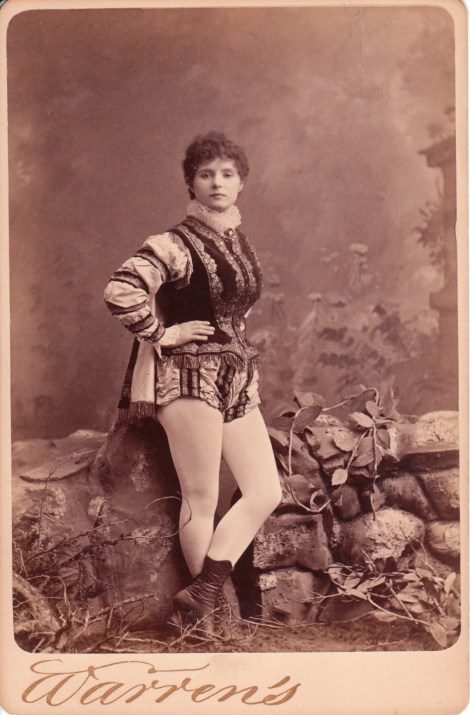
This cabinet card captures the beauty of actress Kate Everleigh. The image is risque for the cabinet card era. Preliminary research reveals no personal details of the life of Miss Everleigh. However, there are many articles citing her theatrical appearances. In fact, her portrait appears on the front page of “The Illustrated Sporting and Dramatic News” in both 1885 and 1886 editions. She is also referenced in the book “A History of the New York Stage” (1903) for appearing in Reese and Farnie’s burlesque production of “Oxygen” and Lydia Thompson’s Company’s production of “Bluebird”. Everleigh also appeared in the original London cast of “Erminie” (1885). The magazine “The Theatre” (1885) cites her appearances in “Nemesis” and “Family Ties”. Miss Everleigh also performed in the United States. She is mentioned as a performer in a burlesque show in San Francisco called “The Mother, The Maiden, and The Musicianer” (1880). This is a high quality photograph and not surprisingly, comes from a well respected studio in Boston, Massachusetts. The studio is Warren’s Portraits and it was located at 465 Washington Street. The photographer was George K. Warren. Warren’s Studios photographed many celebrities and notable people in Boston. To view other photographs by Warren, click on the category “Photographer: Warren”.


