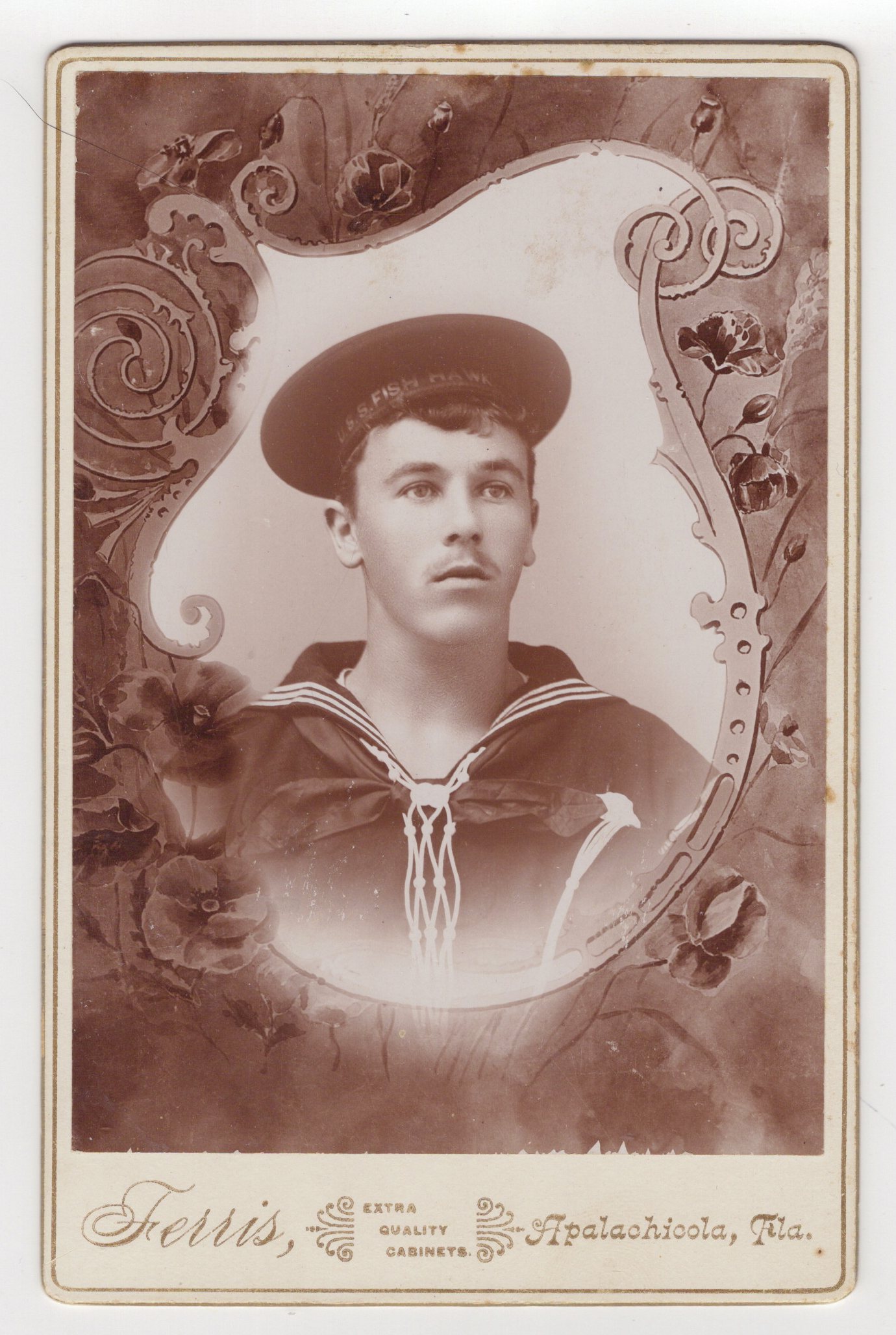
HANDSOME SAILOR : USS FISH HAWK : NAVY : APALACHICOLA, FLORIDA: CABINET CARD

This cabinet card portrait features a young and handsome naval sailor in uniform. His cap reveals that he was part of the crew of the USS Fish Hawk. The ship was launched in 1879. Originally, called the USFC Fish Hawk, the ship was a fisheries science research ship. It conducted research and ran a large fish hatchery on board. The ship was operated by the United States Commission of Fish and Fisheries. The Fish Hawk was the first large ship built by any country for the purpose of promoting fisheries. The ship operated during it’s 46 year career along the US eastern coast and in the Gulf of Mexico. However, the ship also served in the US Navy in 1898 during the Spanish-American War and from 1918 to 1919. The sailor seen in this cabinet card portrait was serving on the ship during the Spanish-American War. The sailor had his photograph taken a the Ferris studio in Apalachicola, Florida. The city of Apalachicola is located on the shore of Apalachicola Bay, an inlet of the Gulf of Mexico. The city was captured by the Union navy early in the Civil War. Before the late 19th century, Apalachicola was the third busiest port on the Gulf of Mexico. It was only behind New Orleans and Mobile. This cabinet card portrait is an interesting remnant of American naval history.  SOLD
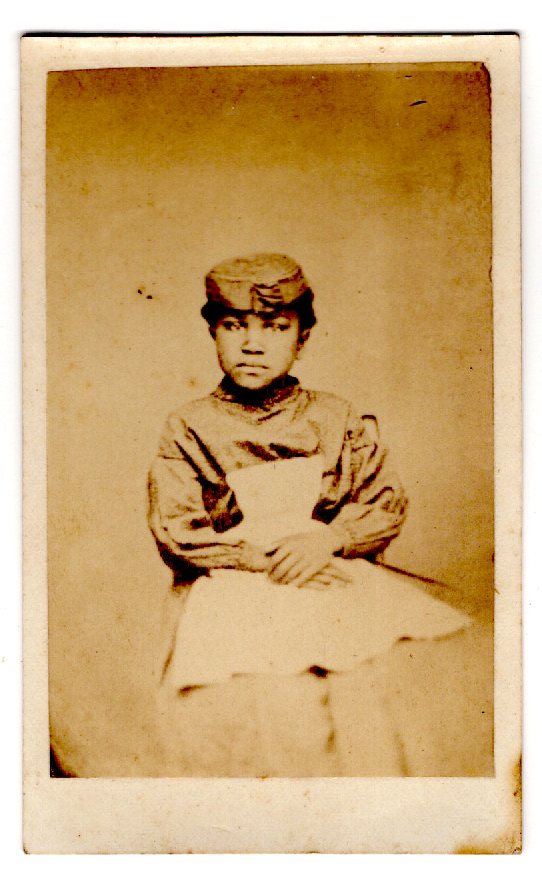
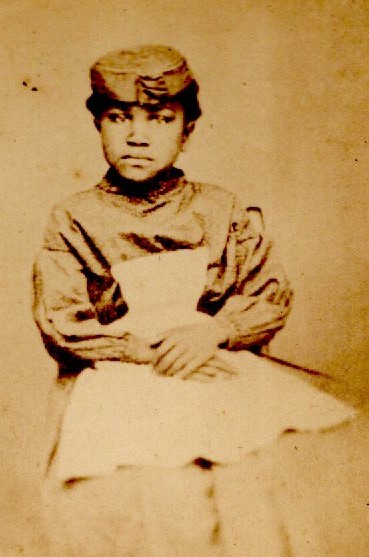
AFRICAN AMERICAN WOMAN : SLAVE OR FORMER SLAVE OR FREE WOMAN : CARTE DE VISITE

This carte de visite portrait features an African American woman. The woman is either a slave, former slave, or a free woman at the time of this photograph. The cdv image was taken sometime between the pre civil war period and shortly after the conclusion of the civil war. Her hat indicates that she is wearing her Sunday best but she is also wearing an apron. Was she “kitchen help”? This photograph is an excellent remnant of American and African American history. The image brings up thoughts about one of America’s most shameful periods in it’s history. (SOLD)

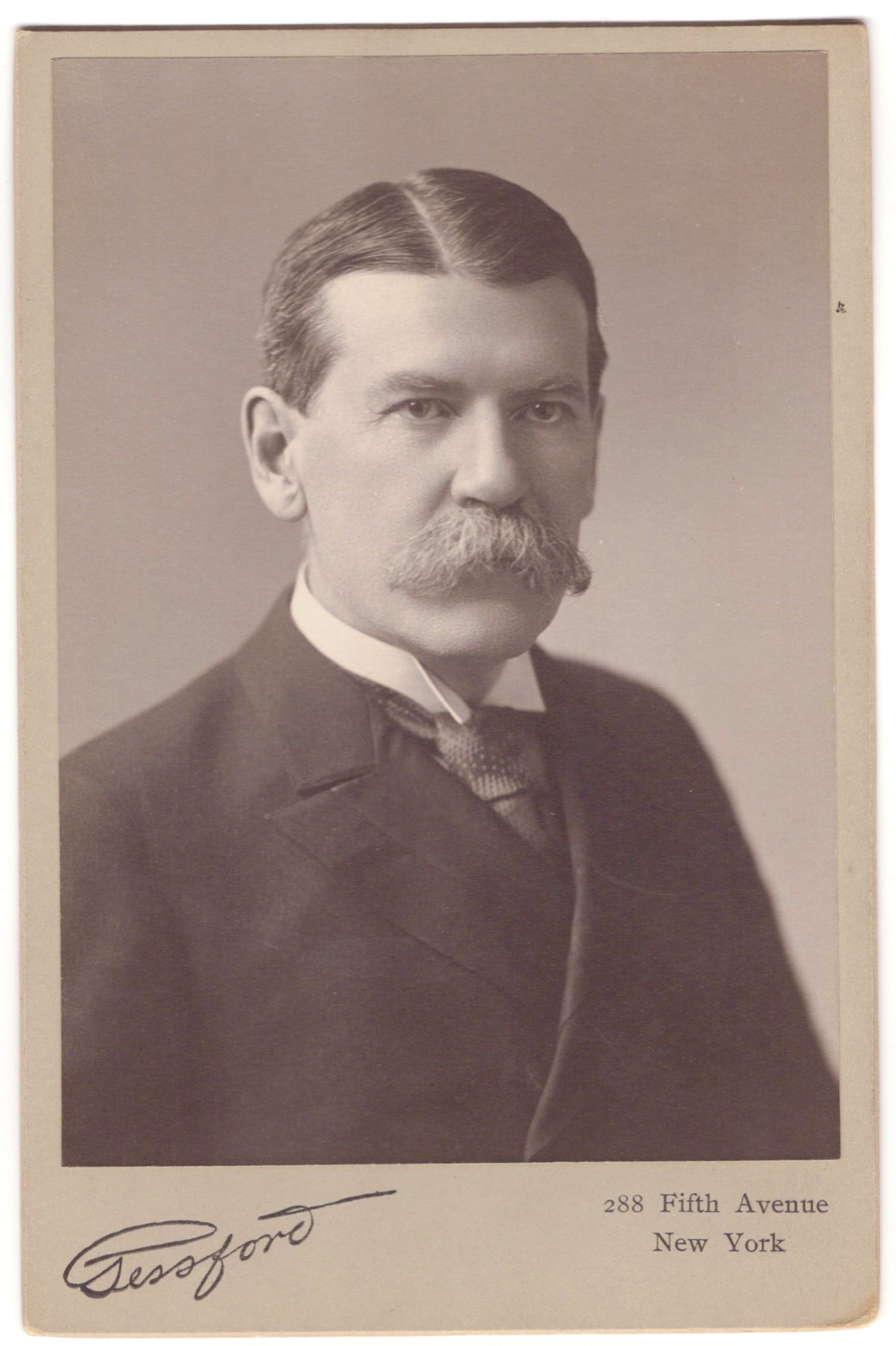
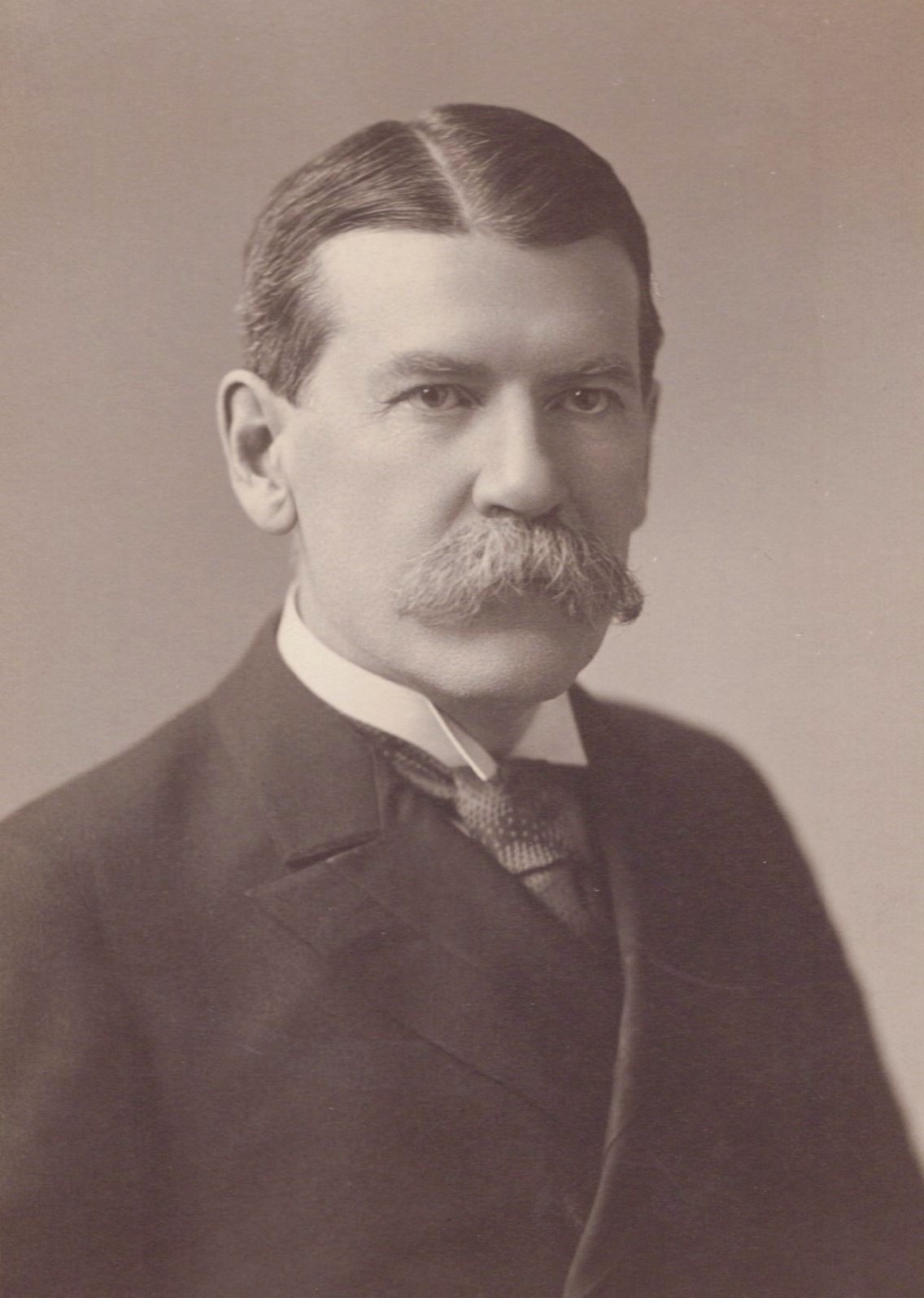
GENERAL HORACE PORTER, CIVIL WAR HERO, PRESIDENTIAL ADVISOR, AND DIPLOMAT

 The subject of the photograph is Horace Porter, who was quite an accomplished man who played an integral part in American history. Horace Porter (1837-1921) is most well known for his activities during the civil war. He served as a Lieutenant Colonel, Ordnance Officer, and Staff Officer in the Union Army. In 1866 he was appointed brevet Brigadier General in the U. S. Army. He was also personal secretary to General and President Ulysses S. Grant and to General William Sherman. Later, he was the Vice President of the Pullman Palace Car Company and the United States ambassador to France (1897-1905). Horace Porter was born in Huntingdon, Pennsylvania. He was the son of David R. Porter who who served as Pennsylvania’s Governor. His cousin, Andrew Porter was a Mexican-American War veteran and Union Army Brigadier General. Horace Porter was educated at Harvard University and graduated from West Point in 1860. He was distinguished in the Battle of Fort Pulaski (Georgia), Chickamauga, the Battle of the Wilderness, and New Market Heights. He received the Medal of Honor for his efforts at Chickamauga. He later wrote a memoir “Campaigning With Grant” (1897). The photographer of this cabinet card portrait is Joseph G. Gessford.  Gessford (1875-1925) operated a prominent New York City studio located at 288 Fifth Avenue. Gessford was best known as a photographer of celebrities and socialites during the first two decades of the twentieth century. He photographed Mark Twain in 1904, and when the author requested gratis copies of the portraits, Gessford famously replied, “I could no more afford to give you these pictures than you can afford to write books for free.” SOLD

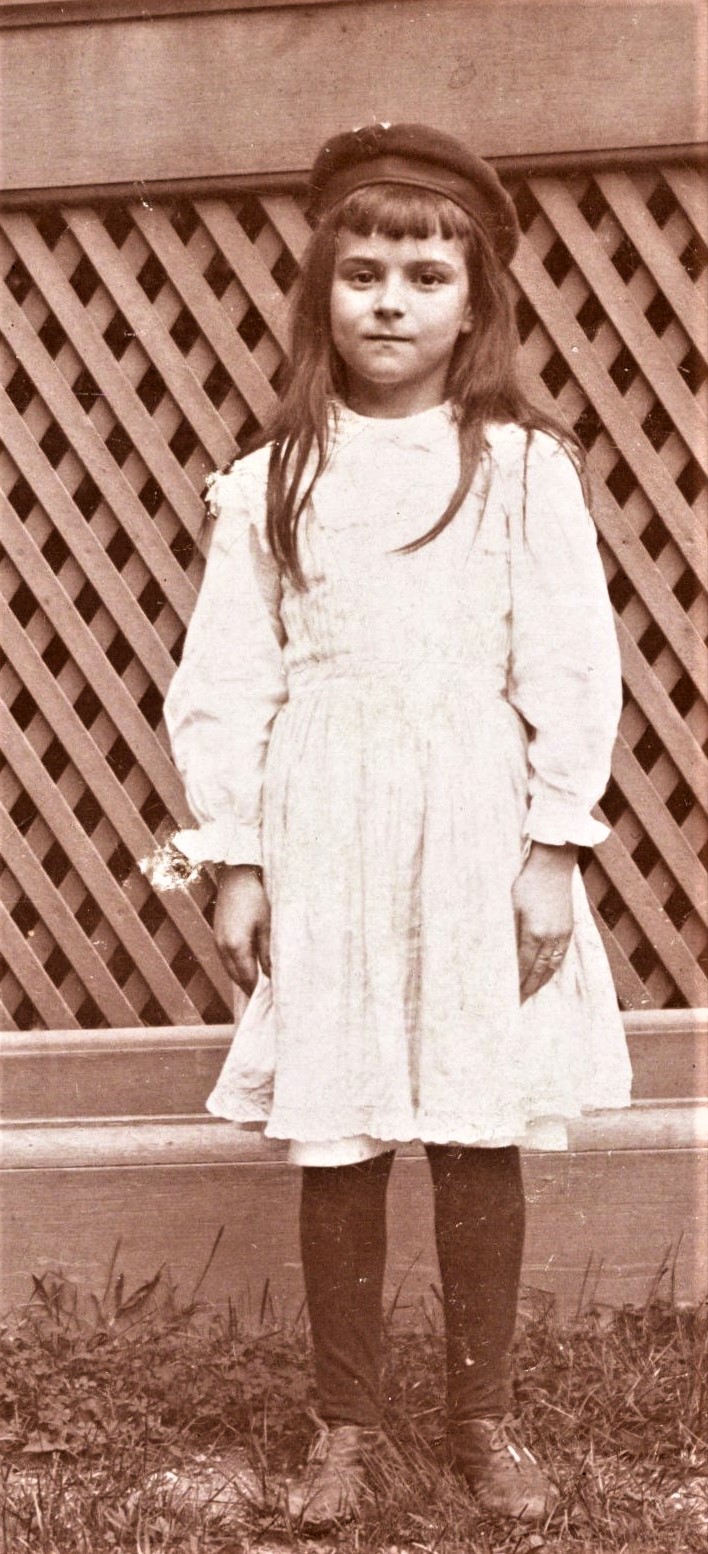
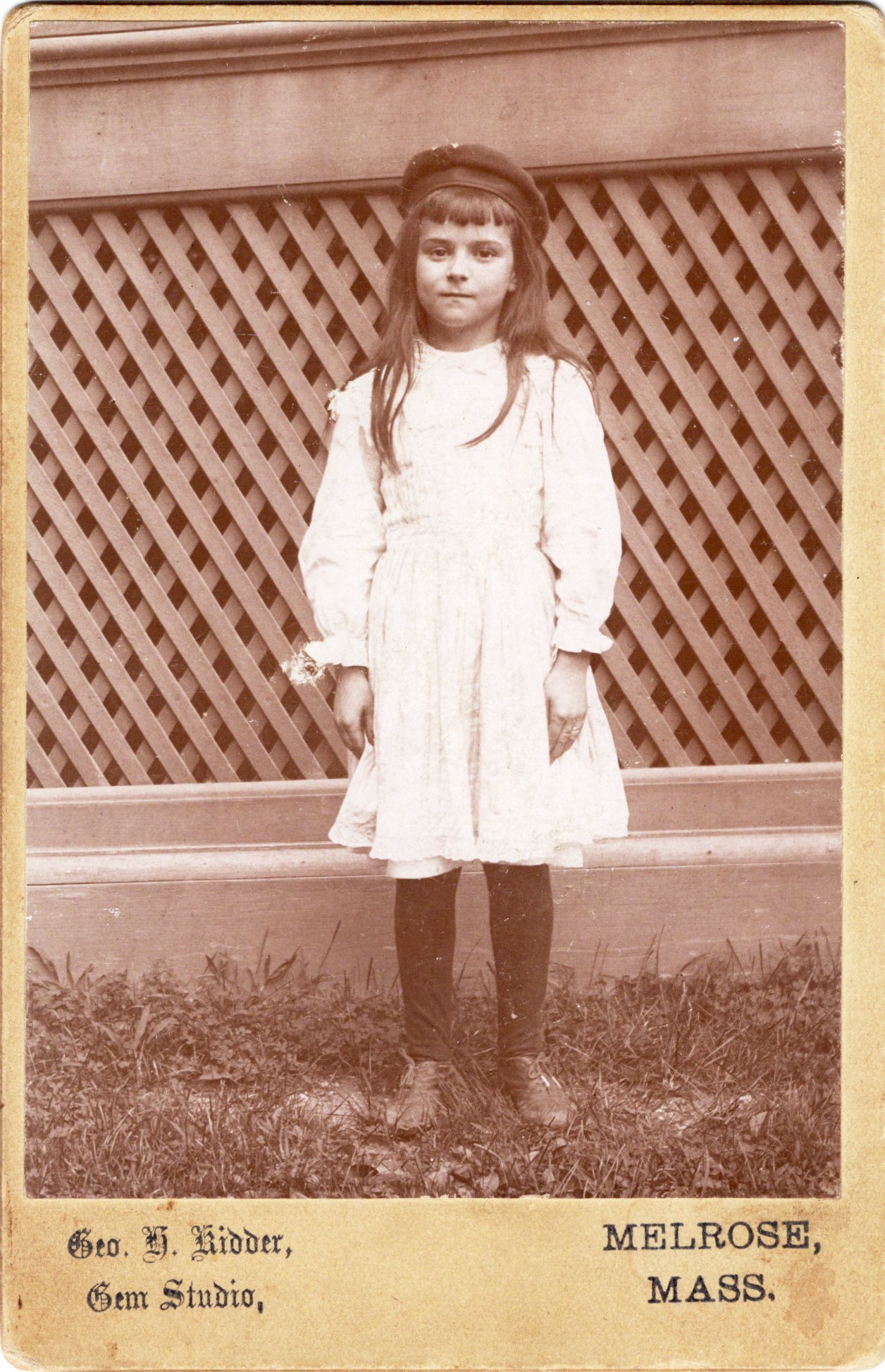
LITTLE GIRL / STREET URCHIN IN MELROSE, MASSACHUSETTS

Photographer, George Kidder, of the Gem Studio in Melrose, Massachusetts, produced this photograph of a young street urchin. Street urchin is truly a horrid word to describe what appears to be a homeless or poor child residing primarily in the streets of her town or city.  The little girl featured in this cabinet card may be neither homeless or poor but she certainly conveys that impression. She clearly is not dressed in fine or cute clothing like many children who posed for photographers in the cabinet card era. The photograph appears to be taken outside but may have been taken inside a studio. The previous owner of this image labelled the subject of this photograph as “Little Miss Attitude”.  The photographer of this cabinet card, George R. Kidder was found in both the 1870 and 1880 United States Census. He was listed in both censuses as being a photographer and as residing in Watertown, Massachusetts. He was married to Rebecca Kidder and had two daughters. It appears that Kidder was a veteran of the civil war. George R. Kidder was a member of Company I in the 1st Regiment Infantry of the Massachusetts Volunteers. He entered service as a private and left service with the same rank.

Buy this Vintage Cabinet Card photograph (includes shipping within the US) #5023

To purchase this item, click on the Pay with PayPal button below

$28.70

Buy this Vintage Cabinet Card (includes International shipping outside the US) 5023

To purchase this item, click on the Pay with PayPal button below

$37.95

Published in: on October 15, 2022 at 12:00 pm  Leave a Comment  
Tags: , , , , ,

PRETTY AND FASHIONABLE TEENAGE GIRL IN SPENCER, MASSACHUSETTS : CABINET CARD

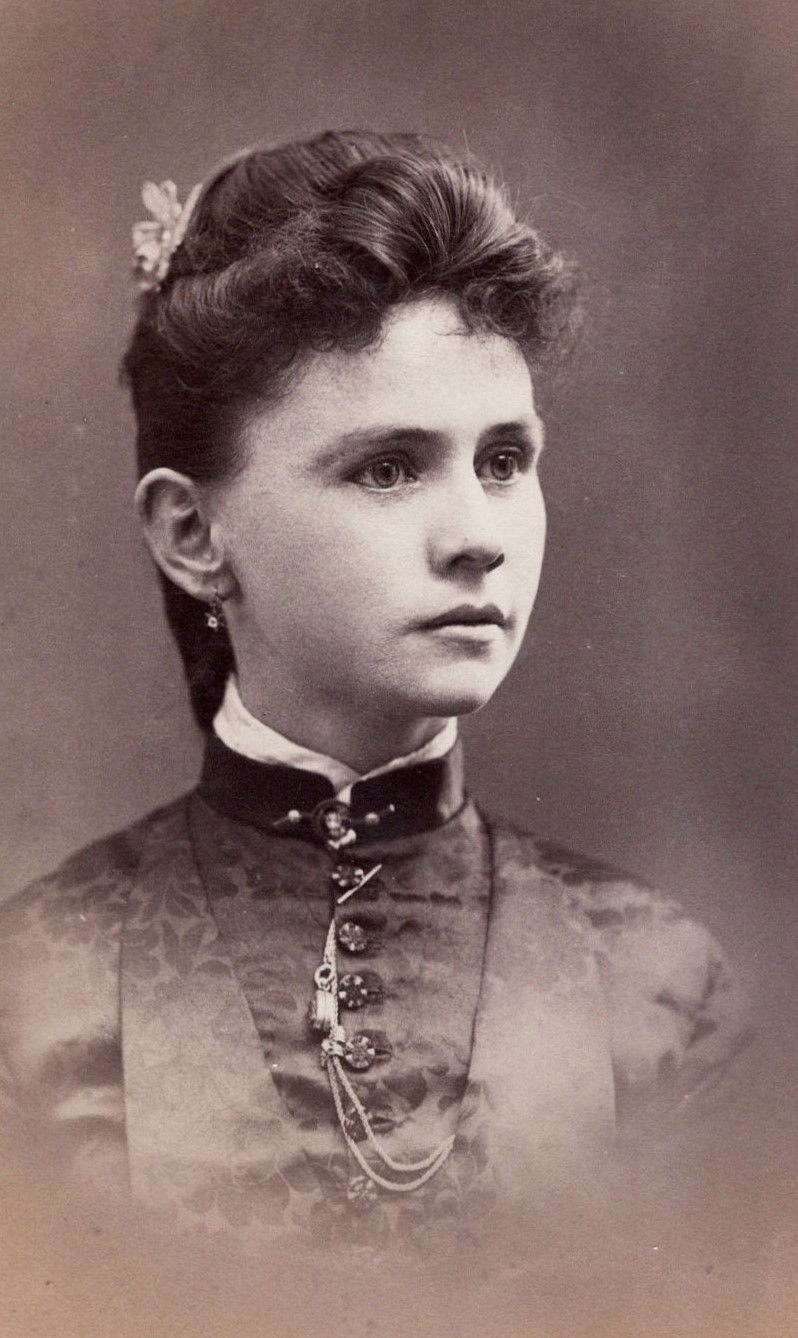
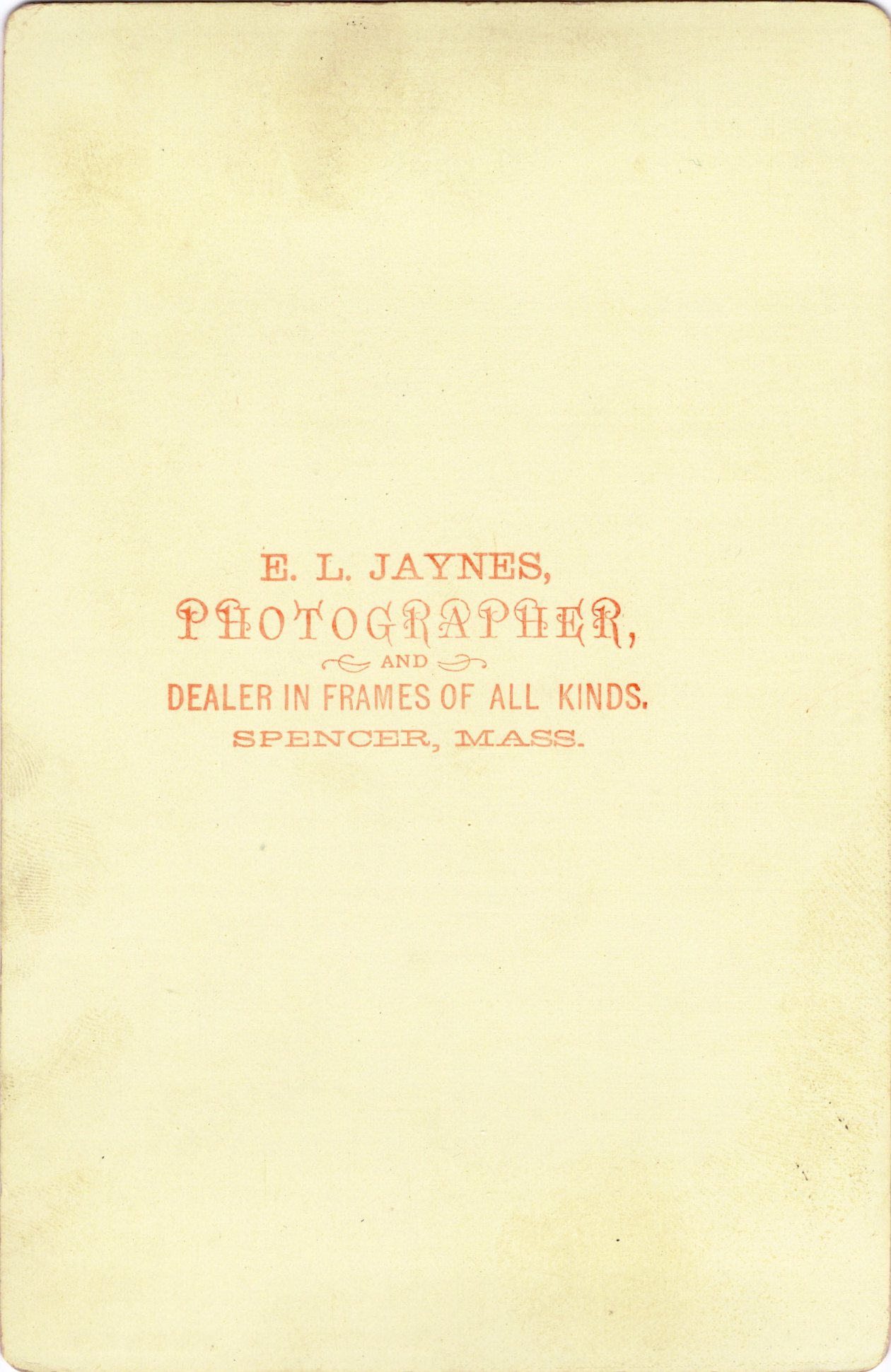
This cabinet card portrait features a pretty and fashionable young woman. She appears to be in her teenage years. Note that she is wearing a brooch at her collar. The young lady’s portrait was taken by Edward Lyman Jaynes at his studio in Spencer, Massachusetts. Jaynes operated his studio in Spencer between 1873 and 1920. Jaynes was born in Massachusetts 1842. He served in the Massachusetts 17th infantry regiment during the civil war. He began and finished his service as a private. One source reports that Jaynes died in 1937, at age 95. This cabinet card has gold bevelled edges. (SOLD)


MAJOR GENERAL JUDSON KILPATRICK : CARTE de VISITE : CIVIL WAR : WEST POINT 1861

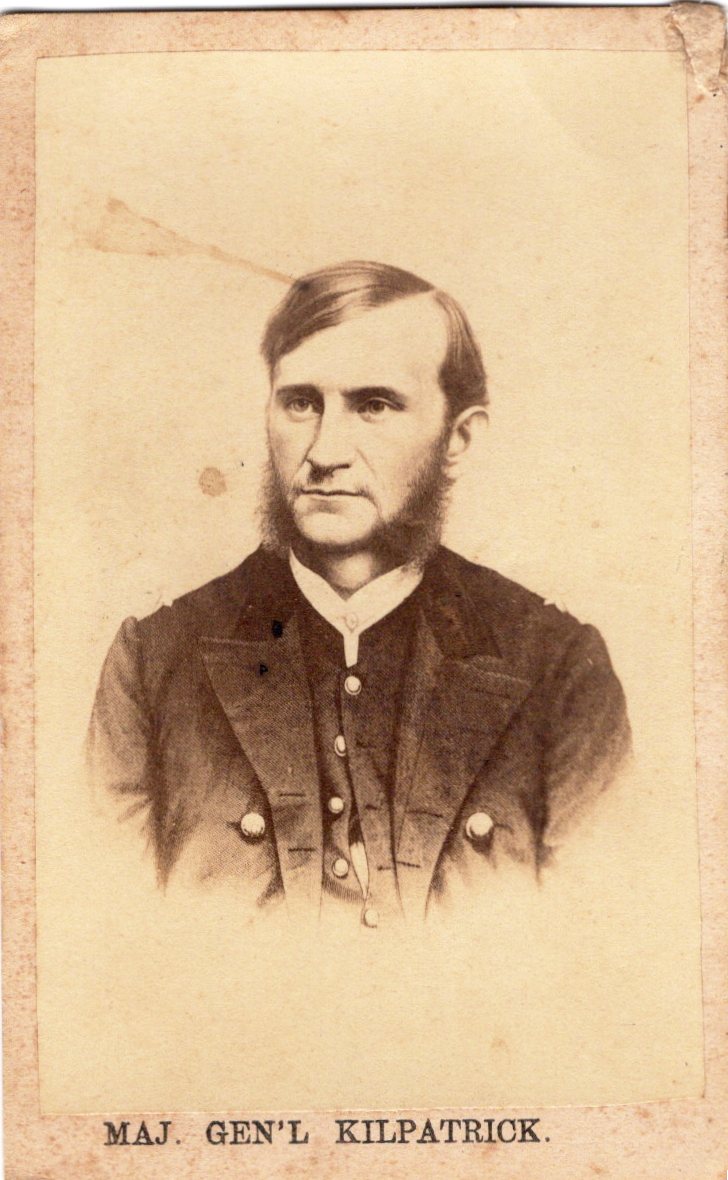
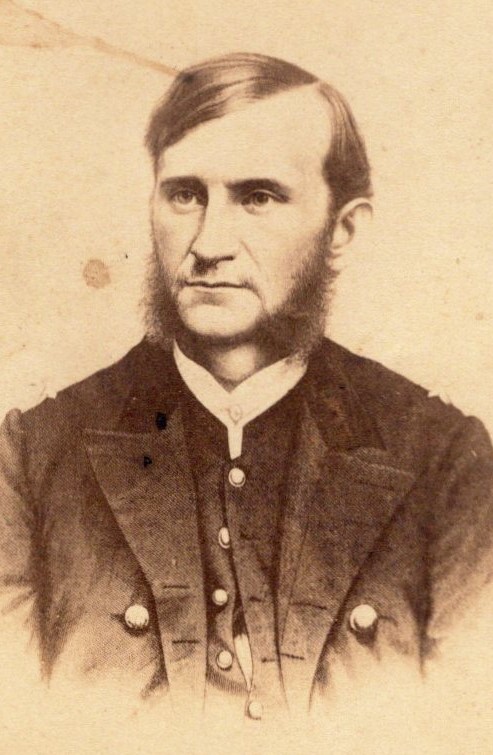
This carte de visite portrait features Civil War Union Cavalry Major General, Hugh Judson Kilpatrick (1836-1881). He was a 1861 graduate of West Point and quickly rose in the ranks as the war progressed. As a General, he was considered to be reckless with the lives of his soldiers. He developed a disparaging nickname of “Kilcavalry” or “Kill-Cavalry” for his disregard of the lives of his men. After the war, he became the United States Minister to Chile. This cdv is on thinner than usual card stock. The photo has a bumped top right hand corner and is in overall fair condition.  SOLD

A TROUBLED WOMAN : NICE BRACELETS : CLEVELAND, OHIO

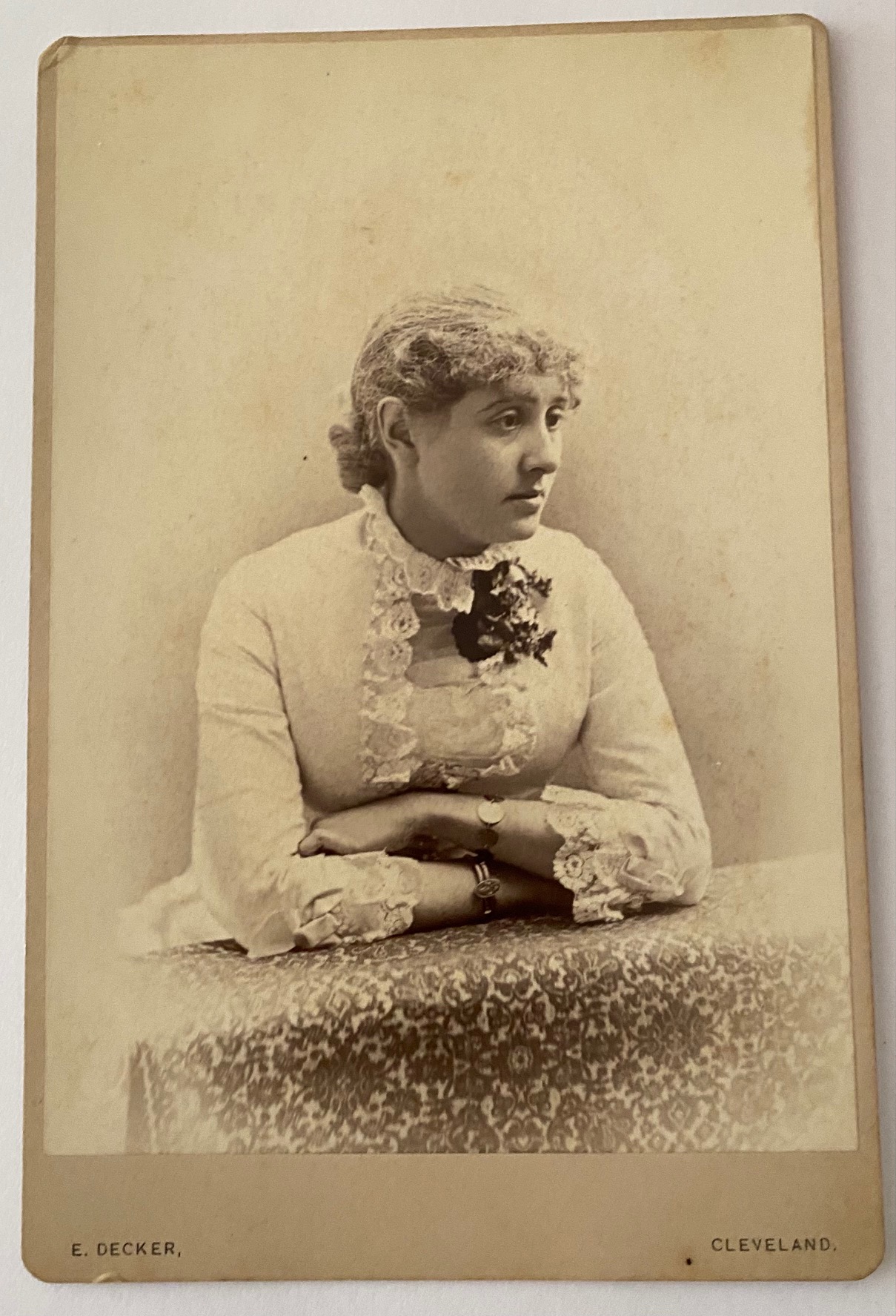
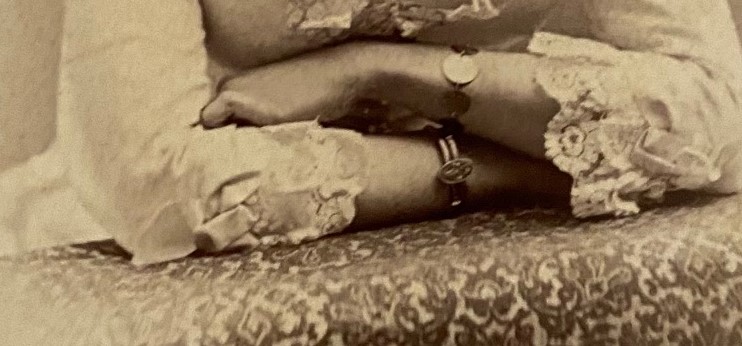
This original cabinet card photograph features a forlorn looking young woman. She is wearing two lovely bracelets. This image was photographed by Edgar Decker (1832-1905). He was one of Cleveland’s earliest and most renowned photographers. Decker was raised on a farm in New York. He grew up to be a shopkeeper. He developed an interest in photography. When he moved to Cleveland in 1857, he went to work in photography studios. After two years of experience, he opened his own studio, which operated for over 40 years. His subjects included many accomplished people including performers, businessmen, and politicians. In fact, Decker photographed four US Presidents, John James Audubon (ornithologist),  as well as General William Sherman. In 1862, he photographed encamped Union army soldiers before they left Cleveland to be engaged in the civil war. Decker won many awards in photography competitions. In 1887, he was elected President of the National Photographic Association. He served on Cleveland’s City Council from 1878 through 1882. Decker was succeeded by his protege, George Edmondson. Edmonson became a successful and well known photographer in his own right. (SOLD)

Published in: on December 7, 2021 at 12:00 pm  Leave a Comment  
Tags: , , ,

PORTRAIT OF REVEREND ALBERT TYLER (1823-1913): PUBLISHER AND HISTORIAN IN WEBSTER, MASSACHUSETTS


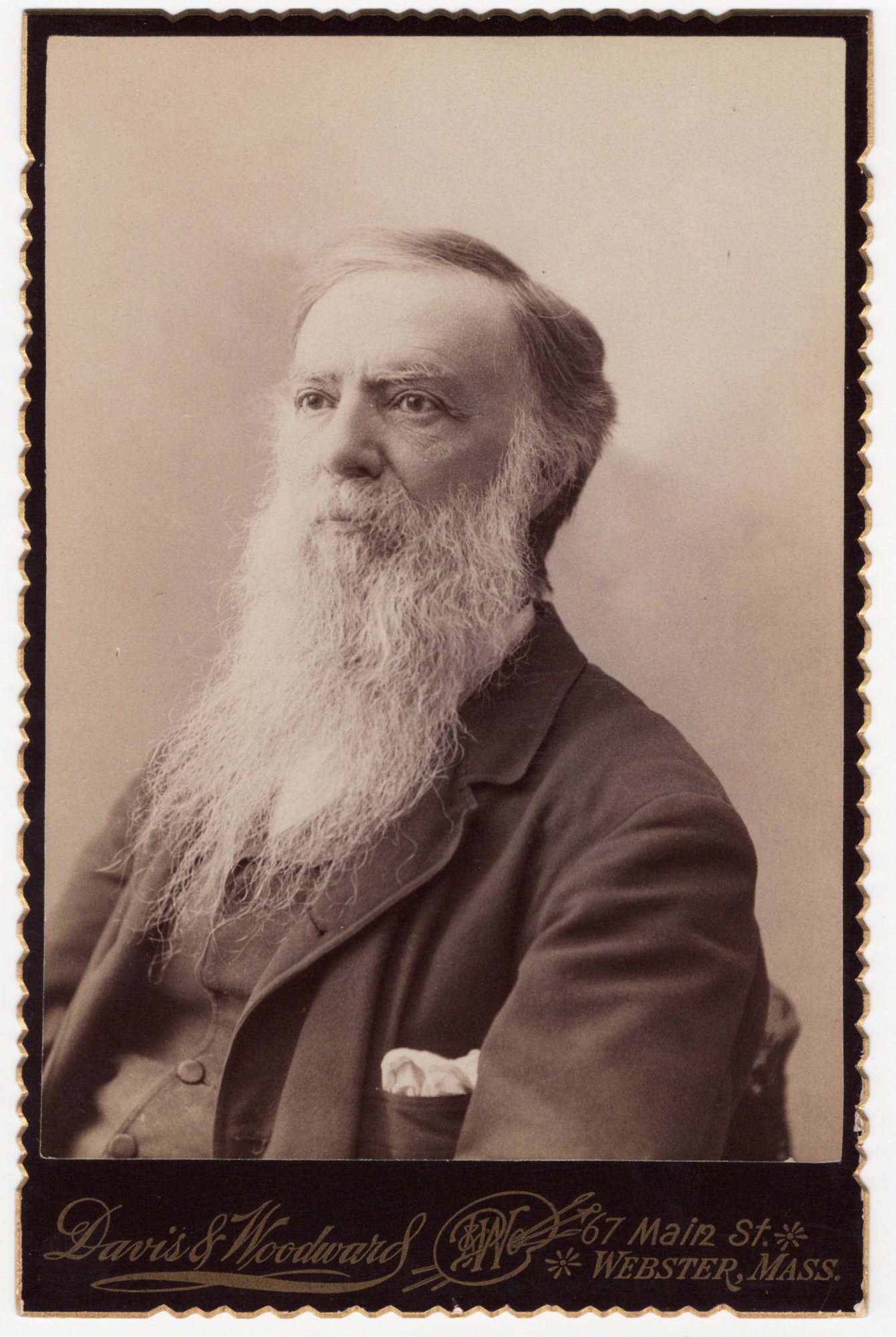
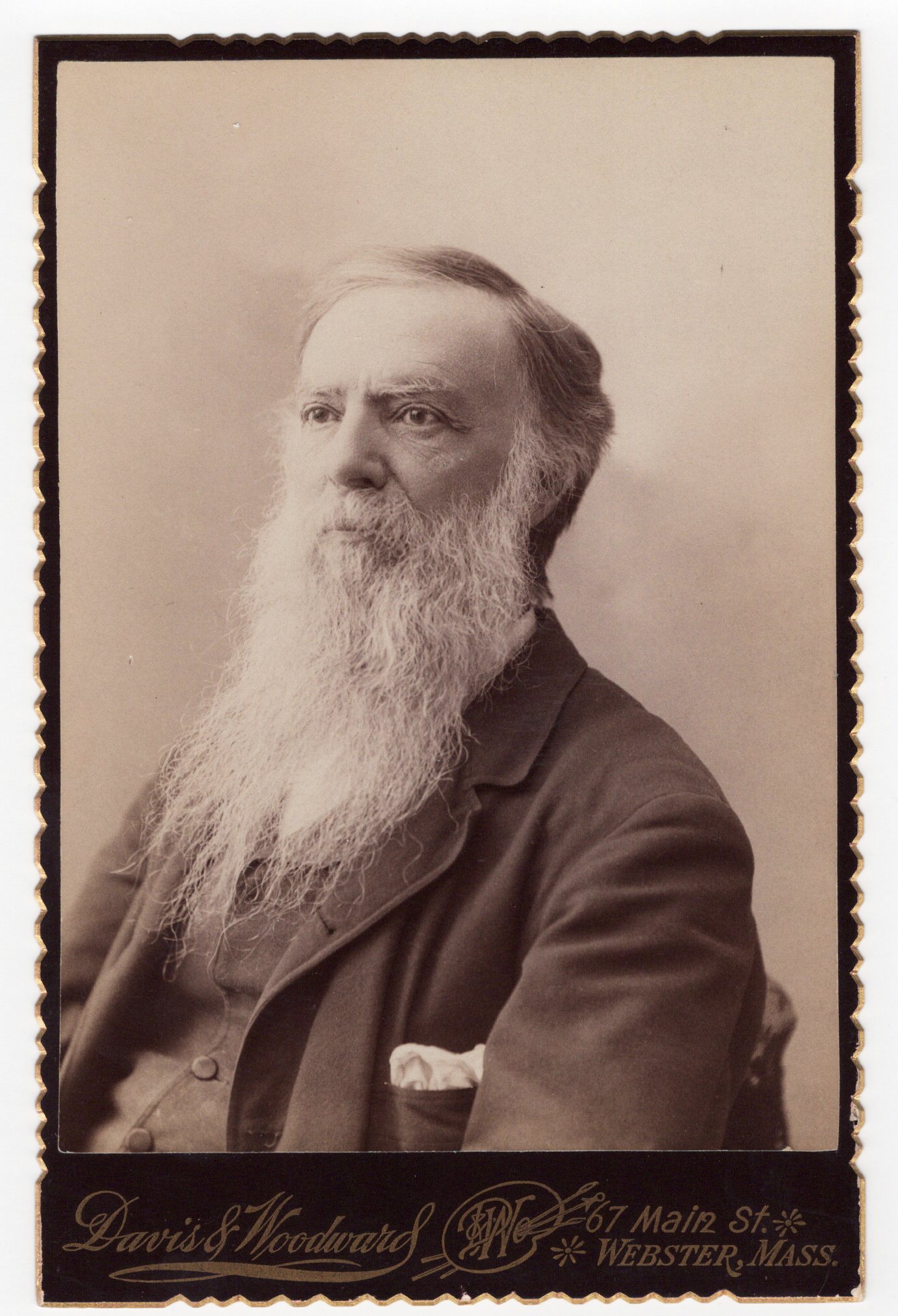
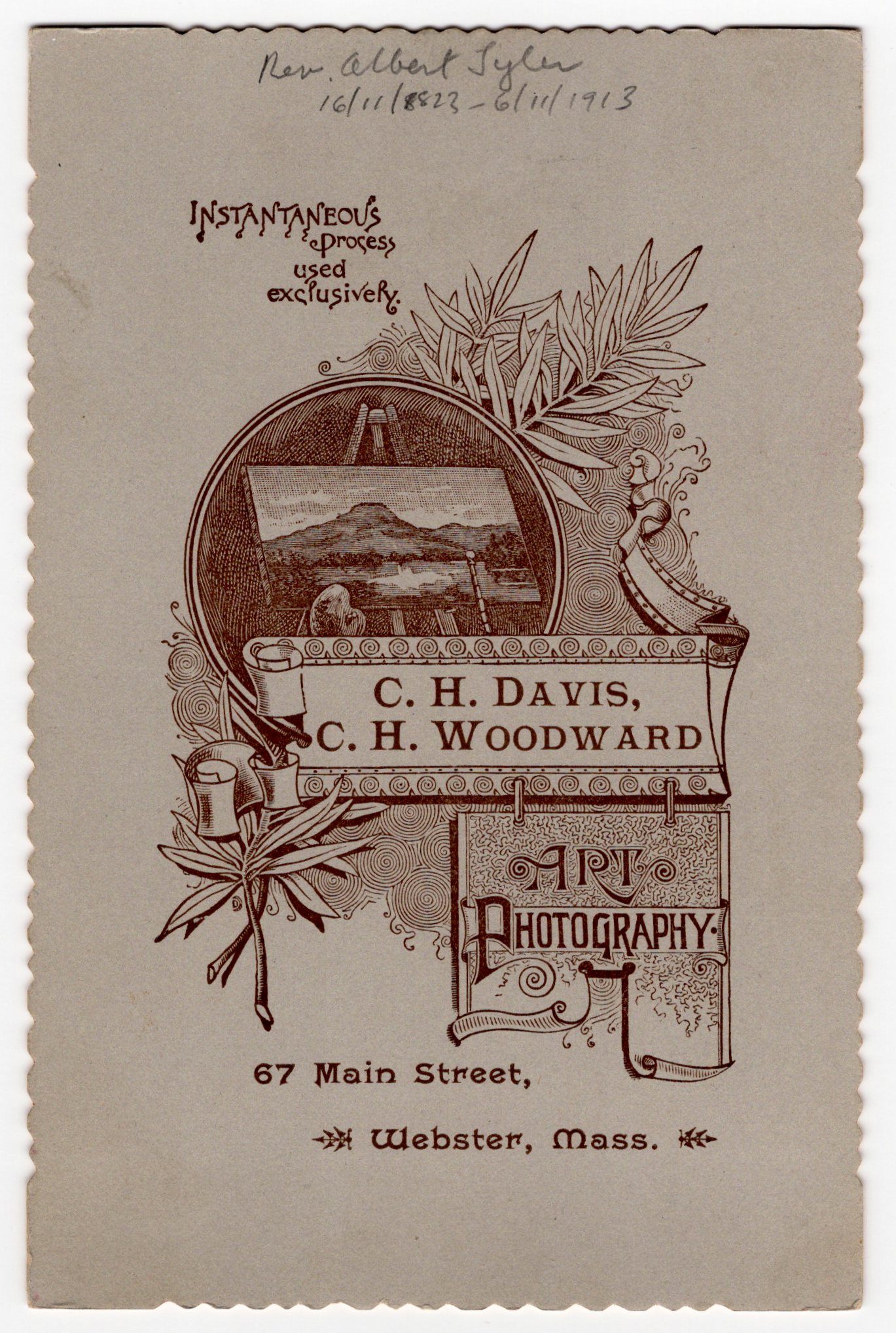
This cabinet card is a portrait of Reverend Albert Tyler (1823-1913) who was a publisher and historian in Worcester,  Massachusetts. Tyler was a Universalist minister. Tyler’s portrait was done by the studio of Davis & Woodward, located in Webster, Massachusetts. Tyler’s name, date of birth, and date of death are listed in an inscription on the reverse of the photograph. This image was taken in his later years and he has a long gray beard that becomes very wispy at its bottom. In the book, “History of  Worcester Massachusetts” , by Lincoln and Hersey (1862), Tyler is said to have been born in Smithfield, Rhode Island. The publication states that Tyler was ordained in 1851 from the Union Association of  Universalists in Warren, Massachusetts. He then became pastor of churches in Oxford, Ma. (2 years), Granby, Connecticut (6 years), and Quincy, Ma.. Next he moved to Worcester and entered the printing business. The Webster Times (1889) supplies an interesting story about Reverend Tyler. He was in attendance of the 28th reunion of the 15th Massachusetts Volunteer Infantry Regiment (Company E) when he displayed some unusual behavior. Tyler “created a sensation” among the 25 veterans in attendance “by rising and saying he received a “spiritual communication” from Lieutenant Nelson Bartholomew who had died during the war. The message that Tyler received stated that the Lieutenant’s spirit was attending the meeting and found it “most enjoyable to him” and that he loved his comrades, just as he had in 1861. This cabinet card photograph is in very good condition (see scans).


reverend-al_0003

Buy this Cabinet Card (includes shipping within the US) #3785

To purchase this item, click on the Pay with PayPal button below

$28.75

reverend-al_0003-1

Buy this Cabinet Card Photograph (includes International shipping outside the US) 3785

To purchase this item, click on the Pay with PayPal button below

$37.75

YOUNG WOMAN : CRIMPED HAIR : BEADED DRESS : CROWN POINT, NEW YORK : CABINET CARD

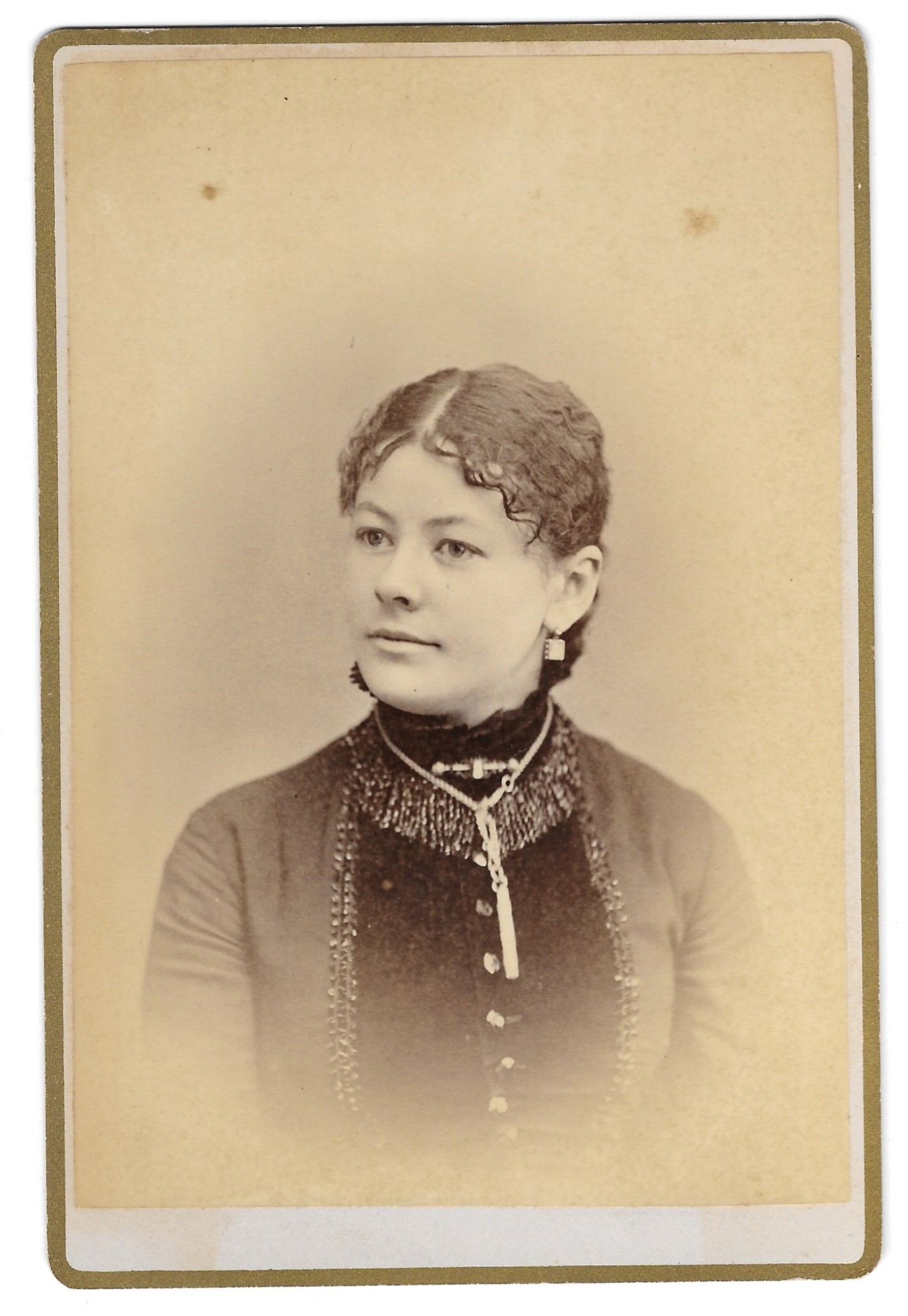
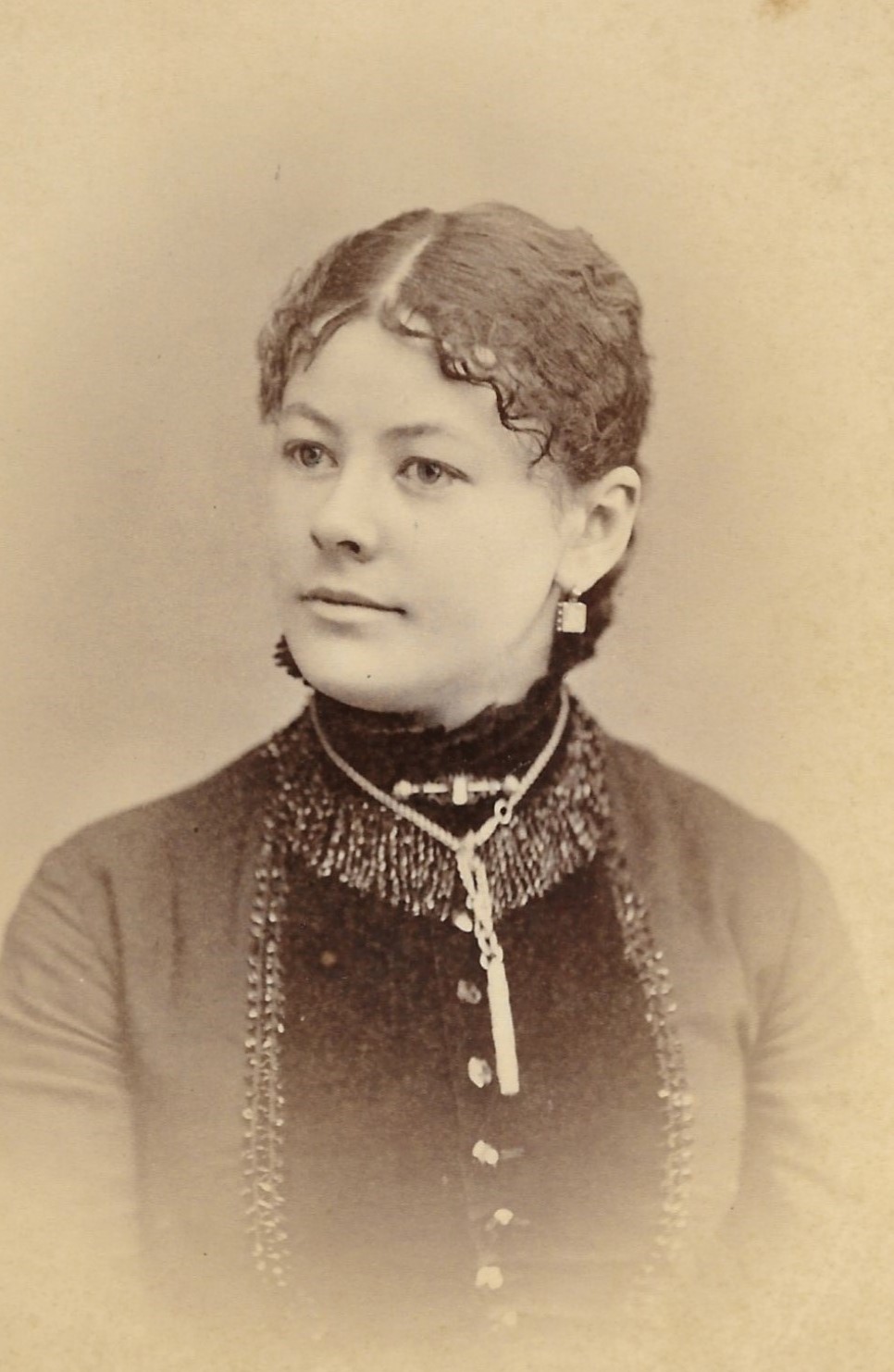
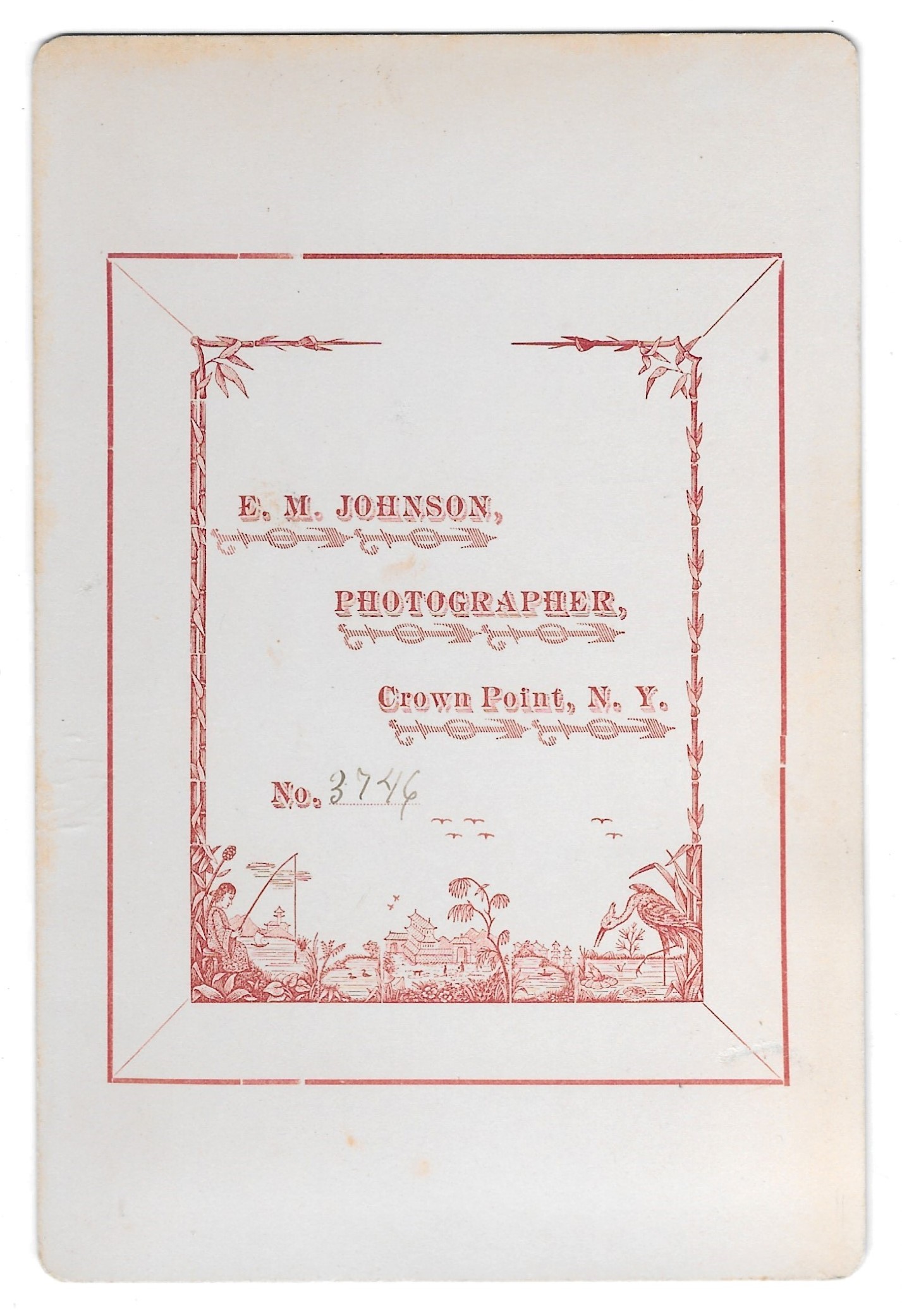
This cabinet card photograph features a young woman with crimped hair and wearing a beaded dress. She is also wearing a tassel and earrings. The womans photo portrait was taken by E. M. Johnson, who operated a studio in Crown Point, New York. The town of Crown Point is located on the west shore of Lake Champlain. The photographer’s full name was Elbert M. Johnson (1844-1910). He was born in Whiting, Vermont. Sometime before 1850 his family moved to Wadhams Mills (near Westport), New York. Growing up, he worked on his family’s farm. In 1864, during the American Civil War, he enlisted in Company E of the 2nd New York Cavalry Regiment. He was a private. At the war’s end, he returned to Westport and learned the art and business of running a photography studio. He opened his photography studio in Crown Point and was an active member of the Grand Army of the Republic (GAR). SOLD

PRETTY TEENAGE GIRL IN DETROIT, MICHIGAN

npa-cdv

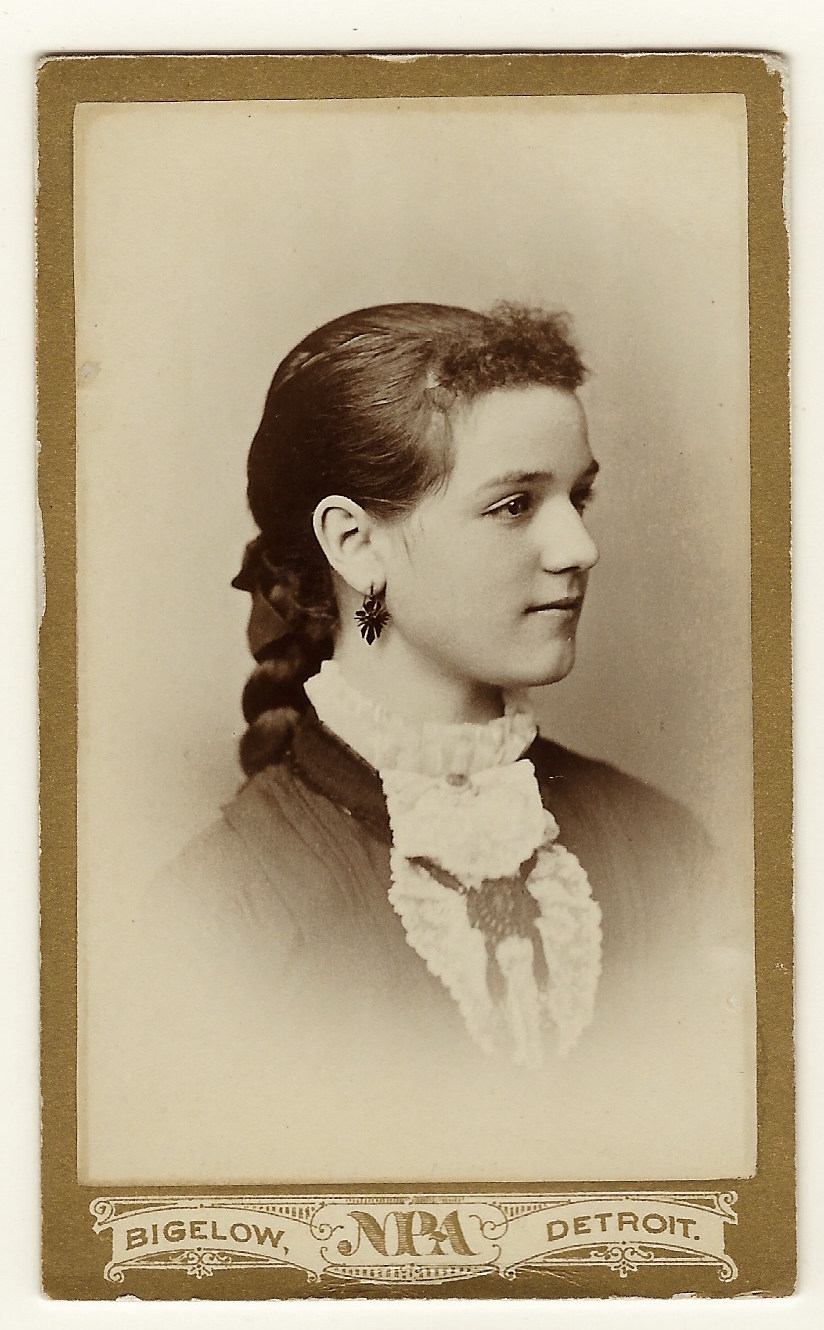
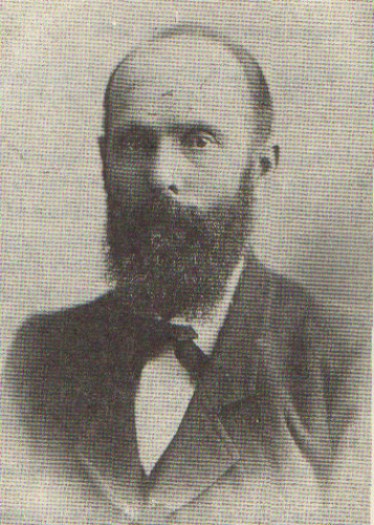
This carte de visite portrait features a pretty teenage girl who seems to be pursing her lips to hold back a smile. She has less success hiding her “smiling eyes”. The teenager is wearing jet earrings and a jet necklace. Her hairstyle includes a braided pony tail and curly bangs. The photographer of this image is the Bigelow studio in Detroit, Michigan. The reverse of this cdv advertises that Mr Edwin Burnham Bigelow (1838-1916) was a medal winner in a number of photography exhibitions. These medals were awarded in 1872 and 1876 which obviously lets us know that this cdv was produced in or shortly after 1876. A photo of Mr. Bigelow can be seen below. He is listed in the Detroit Business Directory (1879)  as being a photographer at the same Woodward Avenue address as listed on this cdv. At the time of the directory entry he had a partner (Elmer Taylor) in the ownership of his studio. Bigelow was a civil war veteran. He served with the 5th Michigan Cavalry (Company B). He enlisted as a Sergeant and served between 1862 and 1865. He was captured by the Confederates at the Battle of Buckland Mills (Virginia). He was a prisoner for about nine months. An interesting side note is the lettering “NPA” seen on the center bottom of the cdv. NPA is the abbreviation the “National Photographic Association” which was a photographers fraternal organization that convened for the first time in Boston in the year 1869. The organization was involved in arranging exhibitions, education, and lobbying for laws that would protect their profession. In the 1870’s the organization had more than 1,000 members. The organization dissolved in 1876 due to internal disputes. In 1880 a new version of the association was born in the form of the “Photogaphers Association of America” (PAA). This Carte de Visite is the first one that I’ve seen with the “NPA” initials and I have seen many Carte de Visites. This cdv is in very good condition (see scans).  SOLD

edwin7

npa-cdv-1