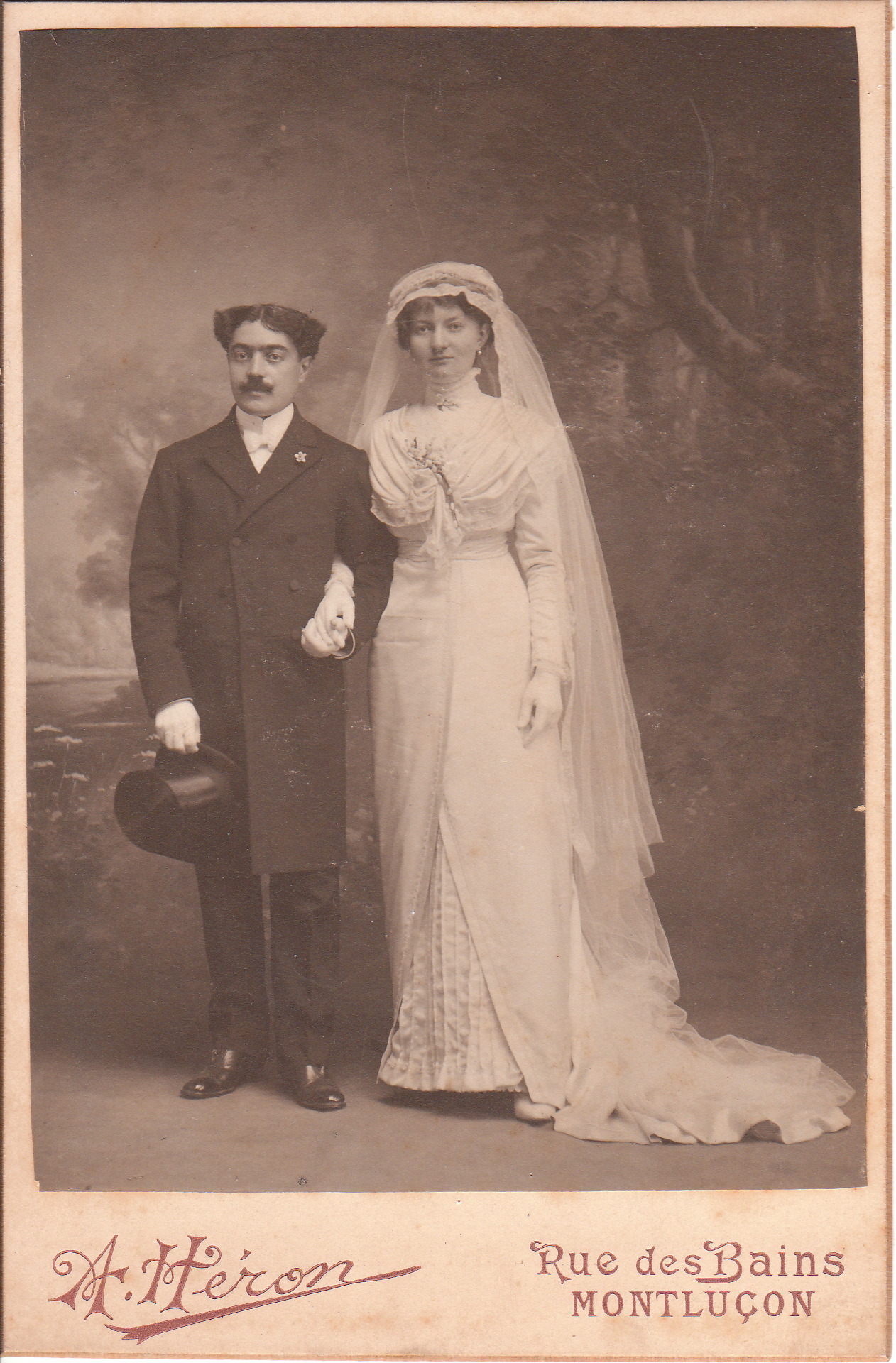
A couple poses for their wedding portrait at the studio of A. Heron in Montlucon, France. The bride and groom are formally dressed. Note the groom’s top hat (he’s holding it) and the bride’s long veil. The groom is shorter than the bride and unlike many other wedding photos of the era, the photographer didn’t attempt to hide the difference by placing the groom on an elevated surface. Another difference between this image and other wedding portraits of the era is that the couple in this image are holding hands. Apparently, they were not ashamed of public displays of affection. The lack of fear of photographing intimacy might reflect a difference of the French and American cultures at that time. Preliminary research yielded no information about Monsieur Heron. Montlucon is a town in central France on the Cher River.
PORTRAIT OF A PRETTY YOUNG PARISIAN WOMAN
Franqois Emile Graffe & Solon Vathis are the photographers of this portrait of a pretty young Parisian woman. Vathis was originally from greece but held French citizenship when he received a US patent in 1906 for inventing an “improved process for producing multicolor proofs”.
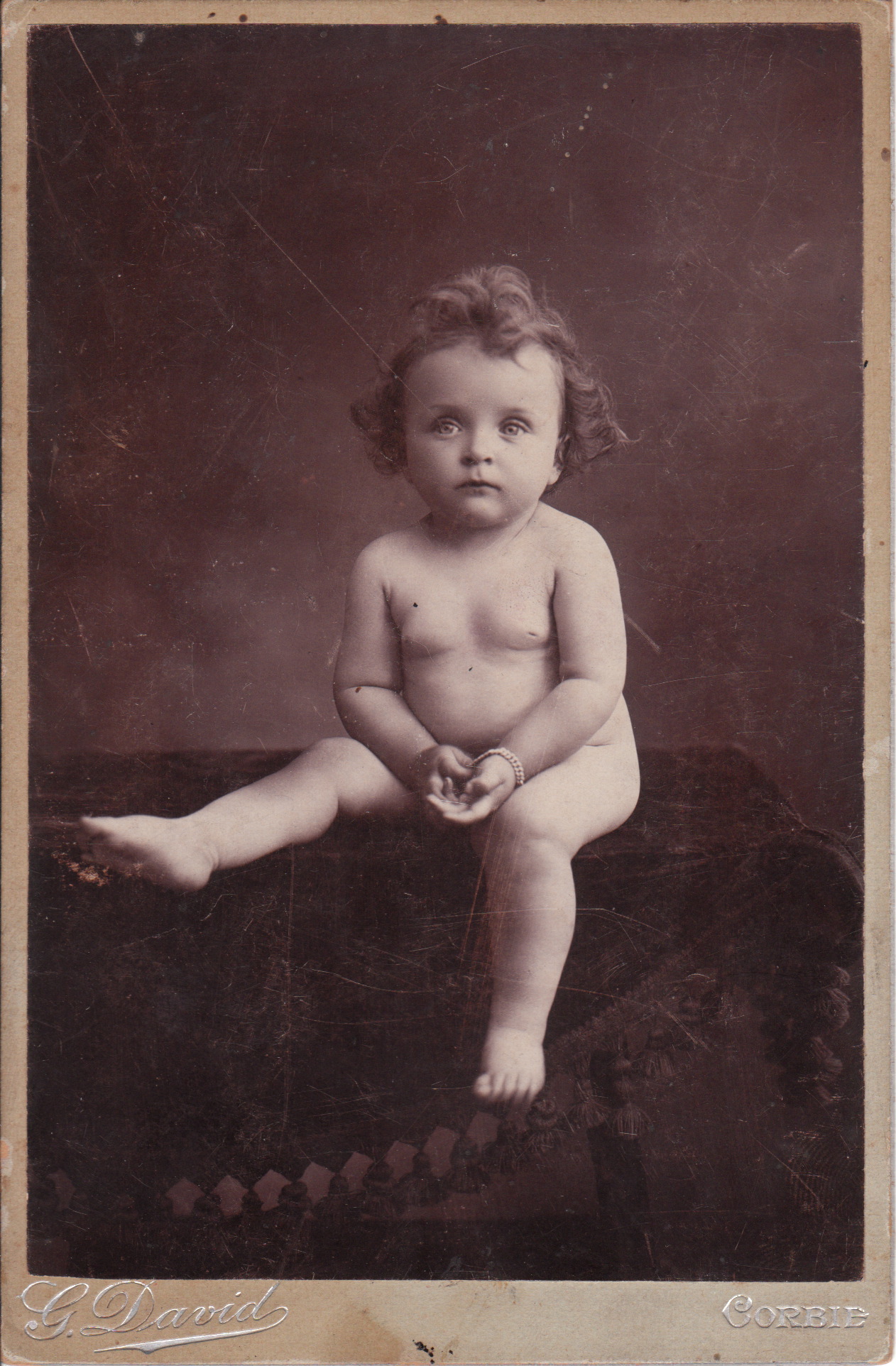
PERFECTLY POISED AND PERFECTLY POSED BABY IN CORBIE, FRANCE
Can a baby be poised? If so, than the baby in this photograph certainly seems poised. The child actually has a “stage presence”. He or she is a perfect candidate for doing television commercials. Unfortunately television is decades away from being invented, so this child must settle for still photography. The baby in this photograph is very well posed. The baby is adorable and the positioning and lighting is terrific. The skilled posing also helps this image get past the Corbie Cabinet Card Censoring Committee (otherwise known as the C.C.C.C.C).. The photographer of this image is the David studio in Corbie, France. Corbie is a town in the north of France. attentive baby
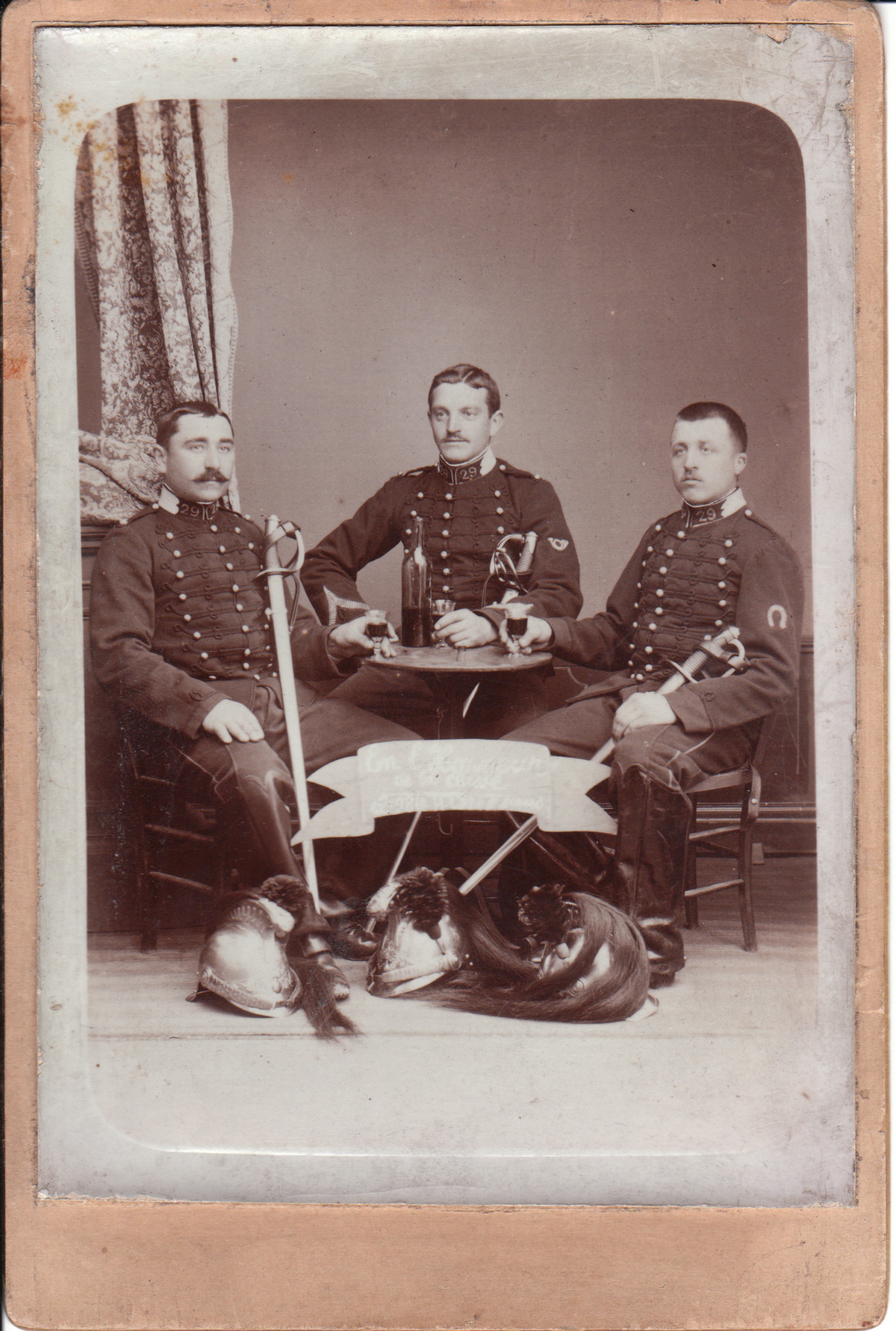
MYSTERY PHOTOGRAPH: POSSIBLY FRENCH CAVALRY SOLDIERS AND THEIR SWORDS AND HELMETS (HELP NEEDED FROM CABINET CARD GALLERY’S VAST AND UNPAID RESEARCH DEPARTMENT)
The previous owner of this photograph described the subjects in the image as World War I French Cavalry soldiers. The soldiers are wearing collar pins that identify their military unit as being the “29th”. They are drinking glasses of wine from a bottle on the table. The men have long swords and there are three helmets on the floor in front of the men. My uneducated guess is that these military men are part of a fencing team. There is a within the photograph which would provide more information but I can not decipher the script on the label. A stamp on the reverse of the photograph identifies the photographer as Moraux and the location of his studio as Provins, which is in north central France. Assistance is clearly needed from the cabinet card gallery’s vast and unpaid research department. The visitors to the cabinet card gallery have a history of contributing informed and thoughtful knowledge via their comments. Knowledge that helps us further our appreciation and understanding of the gallery’s images.
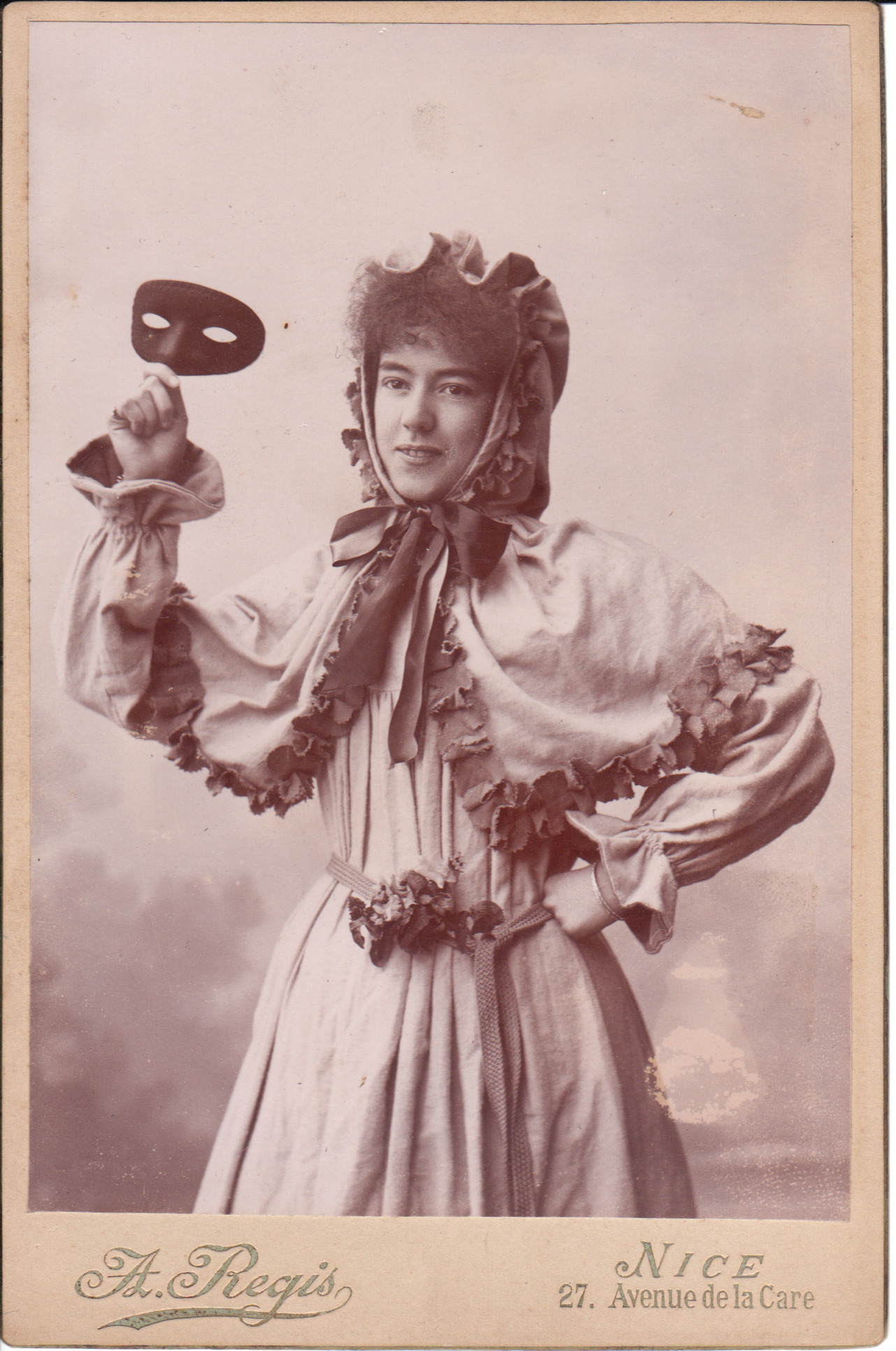
ACTRESS HOLDS THEATER MASK ALOFT IN NICE, FRANCE
This cabinet card photograph captures a young woman holding a theater (carnival) mask. It is very likely that this smiling woman is an actress and that she is wearing a theater costume. Her dress is very unique and interesting. Hoperfully, some of the fashion informed visitors to the cabinet card gallery will leave commentary about the subject’s attire. The cabinet card gallery is fortunate to have so many visitors willing to leave interesting and educational comments. This photograph was produced by A. Regis who operated a gallery in Nice, France.
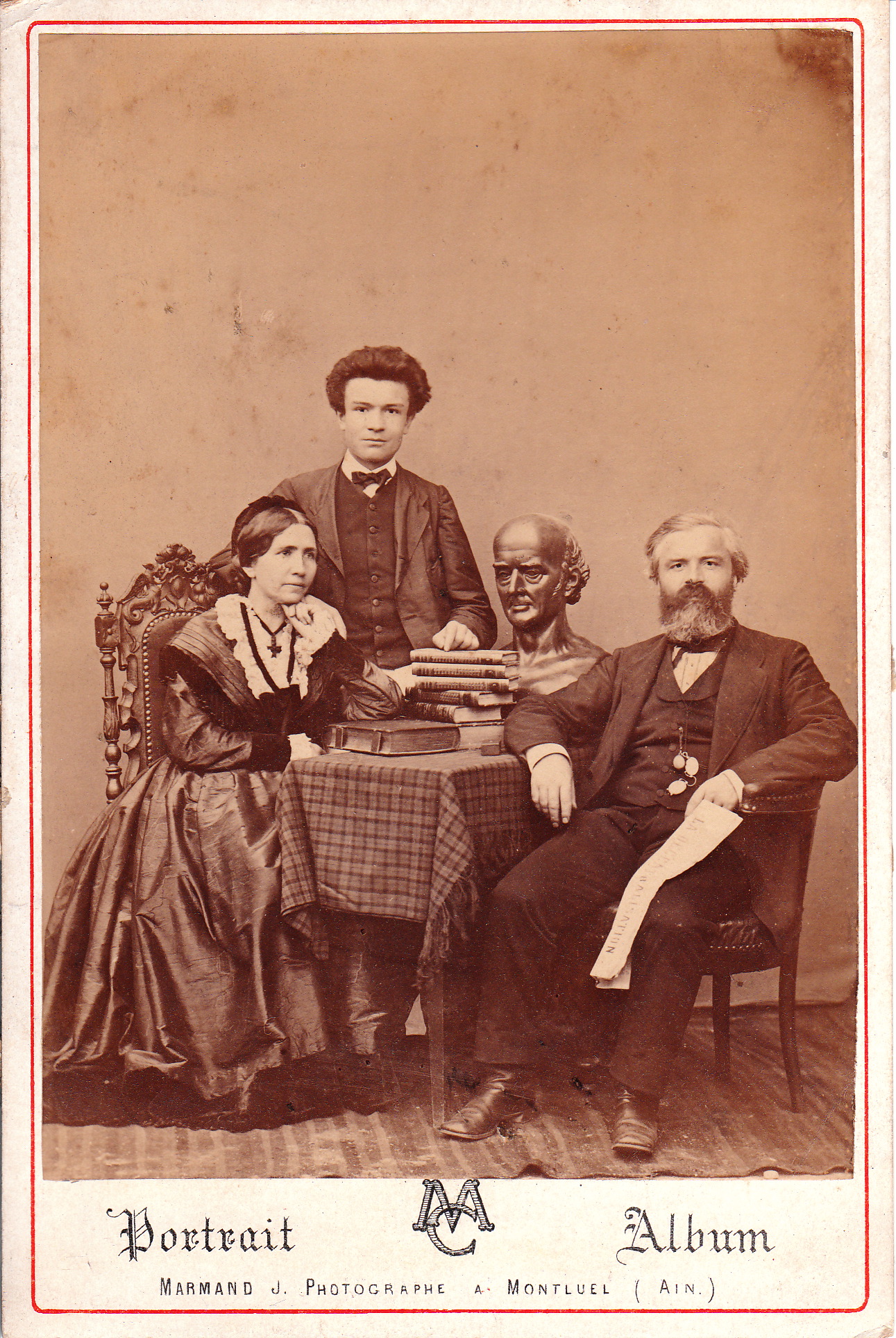
INTELLECTUAL FAMILY IN MONTLUEL, FRANCE DISCUSSES POLITICAL MATTERS
Photographer J. Marmand produced this cabinet card photograph of an intellectual family in Montluel, France. Montluel is in eastern France on the outskirts of Lyon. This appears to be an early cabinet card from the 1870’s. The father in this image is holding a newspaper or magazine with a headline that appears to say “La Decentralisation”. This refers to a system of government in which power is exercised by both the state and it’s communities or institutions. The mother in this portrait is displaying a “thinking pose”. The father has no need to pose; he naturally has the appearance of an intellectual. The couple’s son is well dressed and well groomed and looks very serious and mature. Note the pile of books and the bust on the table. These props add to the scholarly climate portrayed in this photograph.
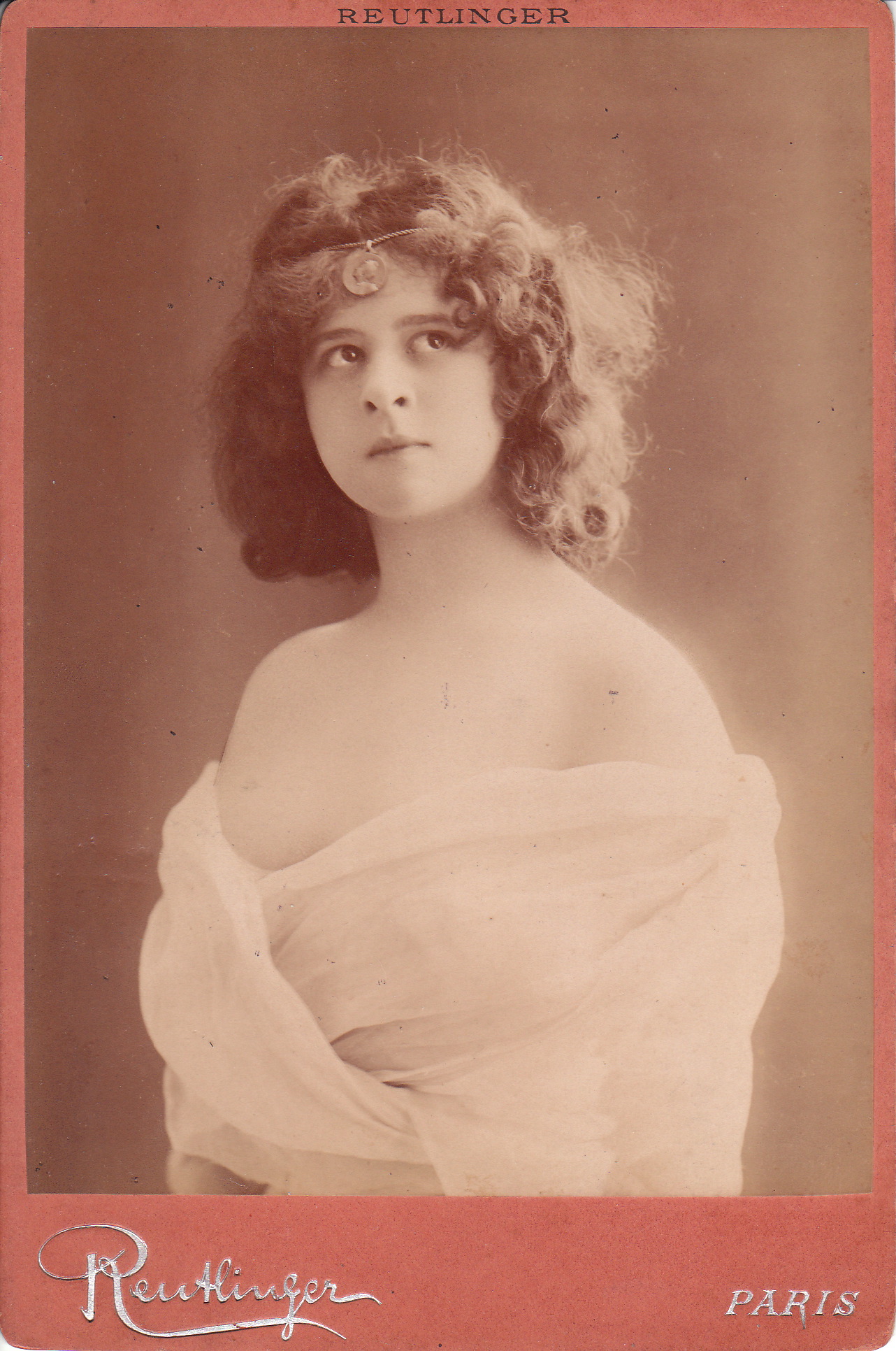
ELISE DE VERE: PORTRAIT OF A BEAUTIFUL SOUBRETTE BY REUTLINGER
Elise De Vere was indeed a very pretty woman and her pose in this image can be described as risque. She poses in this cabinet card photograph for famed celebrity photographer, Charles Reutlinger. Reutlinger’s studio was located at 21 Boulevard in Paris, France. The photograph was published in 1899. Small print located at the bottom of the reverse of the card states R. Dechavannes. He may be in fact the actual photographer of the portrait. Perhaps the photograph was published by Reutlinger but not actually photographed by him. The facts concerning the role of Reutlinger and Dechavannes are not clear. To view other photographs by Dechavannes, click on the category “Photographer: Dechavannes”. To view other photographs by Reutlinger, click on the category “Photographer: Reutlinger”. Elise De Vere was an English actress/singer who performed in music halls and operas around 1900. The previous year she had won second place in a beauty contest at the Paris Olympia Theatre. She was described at the contest as a “Chanteuse Excentrique” (Eccentric Singer). Around 1900 she was a stage diva in Europe and America. In 1903-1904 she performed in the Flo Ziegfeld Broadway opera “Red Feather” which played at the Lyrical Theatre and then the Grand Opera Theatre. In announcing De Vere’s arrival in America to play in “Red Feather”, The New York Times (1903) writes that although she was a Parisienne, she spoke excellent English (shouldn’t have been a surprise, she was English). The article added that De Vere had recently learned to sing in German. In a later article, the New York Times (1903) labelled De Vere as a “Soubrette” in the “Red Feather”. A soubrette is a stock character in opera or theatre. A soubrette is frequently a comedic character who is often portrayed as vain, girlish, mischievous, gossipy and light hearted. SOLD
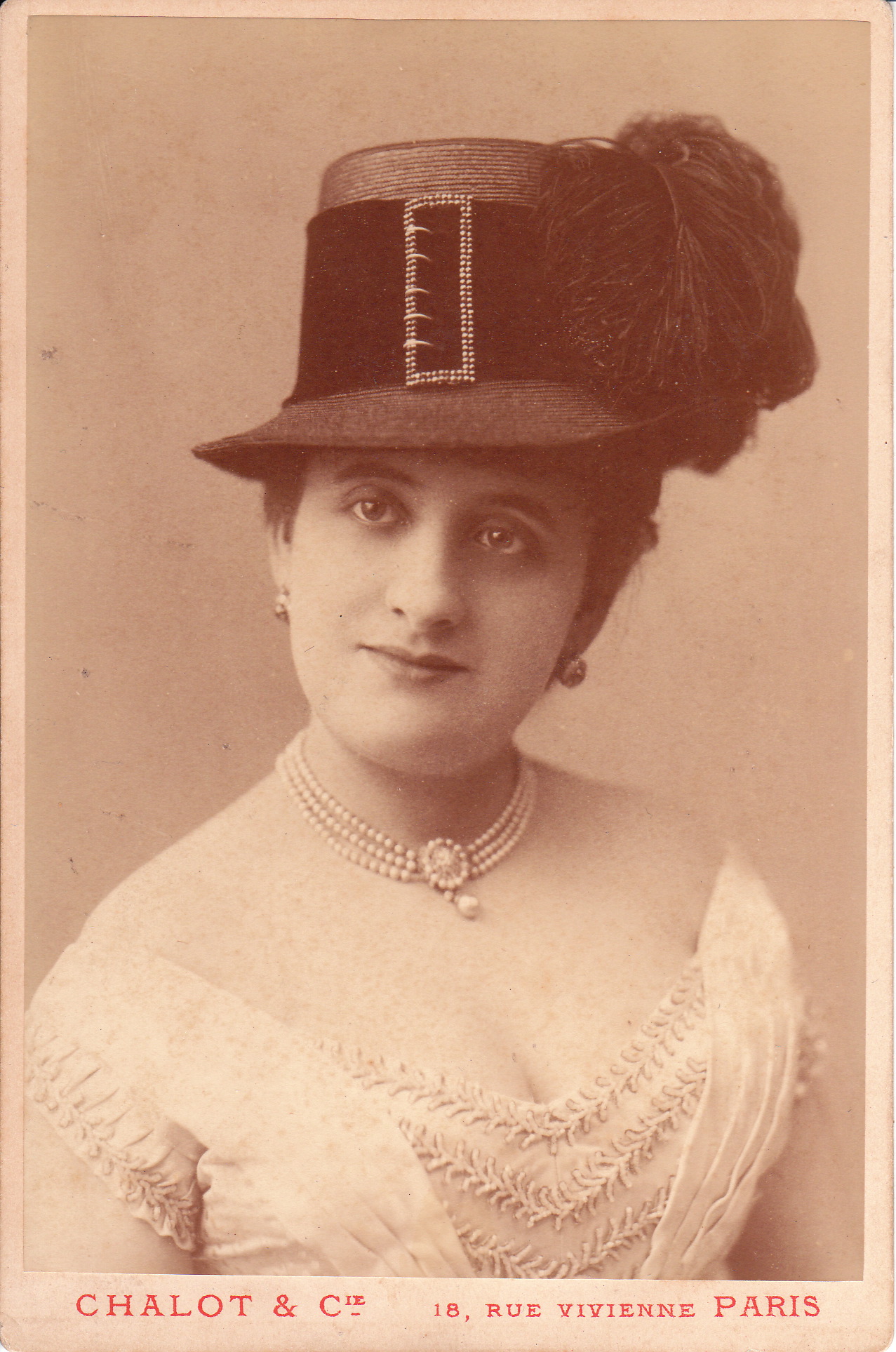
CONCHITA GELABERT: BEAUTIFUL OPERA STAR IN PARIS, FRANCE
This cabinet card features the lovely Conchita Gelabert, soprano and operetta actress. Marie “Conchita” Gelabert was born in Madrid in 1857 and died in Paris in 1922. She was educated in the Paris Conservatory of Music. An article in the New York Times (1922) announced her death. She was described as a “Spanish Comic Opera singer. who for many years was one of the most celebrated of Paris stars”. The article states that Gelabert “died today alone and forgotten”. Apparently, she had left the stage in 1890 and went into seclusion for the rest of her life. The cause of her abandoning her career and becoming an isolate, was an unhappy love affair. The article credits Gelabert with creating many roles, including “The Beautiful Person”and “The Grand Mogul”. This portrait was photographed by Chalot and Company of Paris, France. Ms. Gelabert is a stage beauty with eyes and an expression that can best be described as playful. She is wearing an interesting hat and well adorned with jewelry. Her dress is a bit risque but by Paris standards, this is a tame photograph. The photographer of this image, Isadore Alphonse Chalot was one of the subjects of an article appearing in the American Journal of Photography (1890). The article was entitled “Photographers in Paris- Their Studios and Workshops”. SOLD
HIGHLY RATED FRENCH PROSTITUTE, ALICE MAROT ON A WINDOW SILL IN PARIS, FRANCE
This cabinet card captures Alice Marot sitting on a window sill in Benque’s photographic studio in Paris, France. Alice Marot was a high class prostitute. She appeared in “The Pretty Women of Paris”, a privately printed guide to Paris’s best courtesans and prostitutes. The guide provided names, addresses, qualities, and faults for each women. According to the directory, Marot could be found a 4 Rue de Marigan. The guide describes Marot as a “sprightly fair, little whore” who had been quite lucky to rise above a checkered career on the provincial stages. When she came to Paris, she utilized the Palais Royal Theatre to enlarge the circle of her lovers. She was considered by other members of “the army of cupid” to be a threat because she had a propensity to “tumble on her back” at all hours of the day and night. Benque’s studio was located at 33, Rue Boissy D’Anglas. M. M. Benque was a well known celebrity photographer.
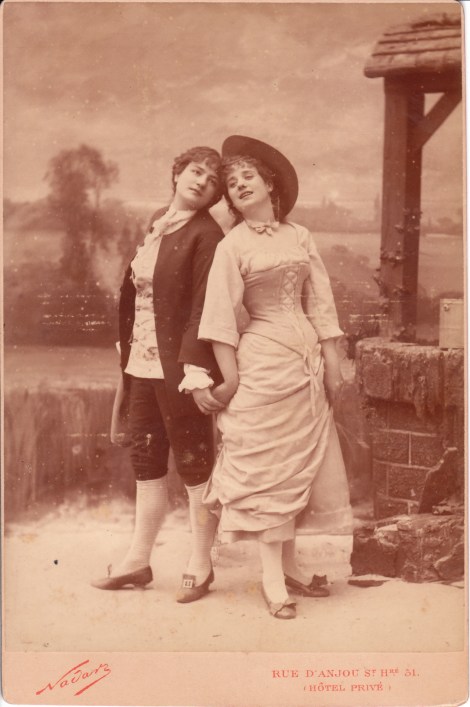
MLLE TUSINI AND LYDIA BOREL IN LA CHERCHEUSE D’ESPRIT (NADAR)
This terrific theatrical cabinet card was photographed by famed French photographer P. Nadar. Mlle Tusini is seen with Lydia Borel in the production of La Chercheuse D’esprit. The play is a comic opera by Favart. The play premiered in 1864. The actresses are spectacularly dressed in this great image.