ROSITA SERRANO : “THE CHILEAN NIGHTINGALE” LANDS IN NAZI GERMANY
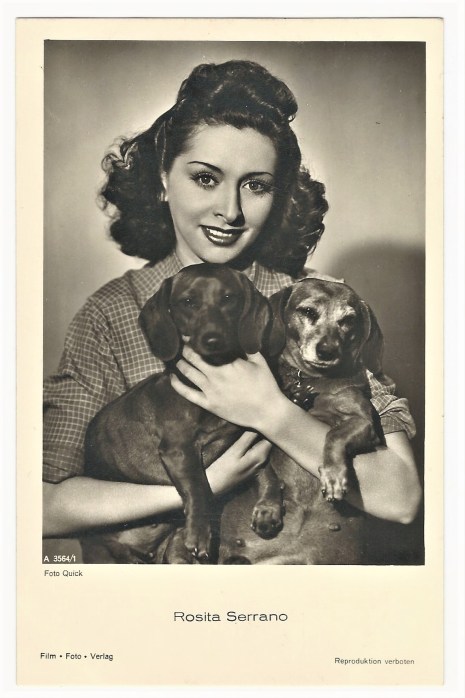

This vintage real photo postcard features pretty actress and singer, Rosita Serrano (1912-1997 . She is casually dressed and is holding two adorable dachshunds. This photo portrait displays Rosita’s lovely smile. Serrano was a Chilean singer who obtained her major success in Nazi Germany between the 1930’s and the early 1940’s. Her singing was known for her bell-like voice and her pitch-perfect whistling. She was known by her nickname as “The Chilean Nightingale”. Rosita was born in Chile. Her father was in the diplomatic corps and her mother was a popular opera singer. The family lived in Portugal and France . By 1936, the family moved to Berlin. Serrano’s initial success was in the Wintergarten and the Metropol Theater where she sang Chilean folk songs. This performance earned her a record contract. From that point, she performed in German. Many of her songs became very popular. In 1938, she began to appear in films. When she was between film roles, she toured with two popular dance orchestras. Minister Joseph Goebbels helped het her appearances on a Wehrmacht (military) radio show. In 1940, Serrano’s song “La Paloma”, became very popular throughout Germany. Serrano’s voice style is described as “coloratura soprano”. Her recordings were in German and Spanish. She sang songs in the folk and pop genre. Her songs included flamenco, rumba, tango and mambo. During a Swedish tour in 1943, she did a benefit concert for Jewish refugees. As a result of this performance, she was accused by Germany of being a spy. Rather than return to Germany and face possible arrest, she fled to Chile. Germany than banned her music. She went on tour to the United States but was not well received. It is conjectured that US citizens could not get enthusiastic about hearing Serrano’s German songs, so close to the end of World War II. She returned to West Germany to appear in films in 1951 and 1952. Besides those two movie roles, her German comeback was unsuccessful. She returned to Chile where she lived out her life. She was not welcomed upon her return to her native country. The public in Chile condemned her for performing in Nazi Germany. She died in poverty. It seems to me that Serrano had the unfortunate pattern of consistently being in the wrong place at the wrong time. Poor timing ruined this talented singer’s career. Serrano’s filmography includes 8 films between 1938 and 1952. This postcard was published by Film Foto Verlag, a subsidiary of UFA Universum Film AG. Note the company’s horse logo on the reverse of the card. The photo was taken by Foto Quick and the postcard is part of a series (no. A3564/1). Check out the video recording of Miss Serrano seen below. This real photo postcard is in very good condition.

MARIA CORDA : AUSTRIAN, HUNGARIAN, GERMAN, AND AMERICAN SILENT FILM STAR
 POSTCARD 1 (SOLD)
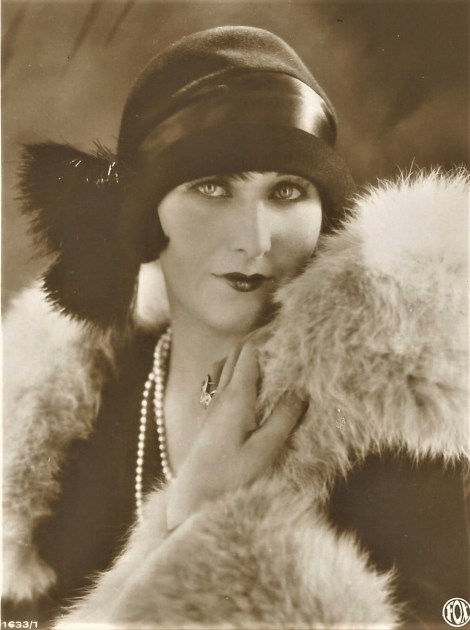 POSTCARD 1 (CLOSE-UP) (SOLD)
 POSTCARD 2 (SOLD)
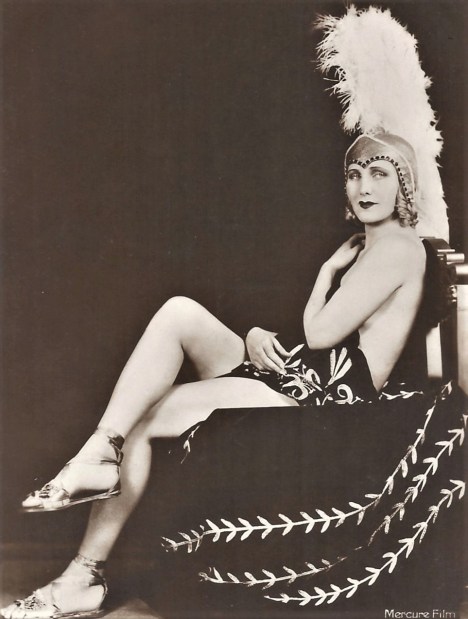 POSTCARD 2 (CLOSE-UP) (SOLD)
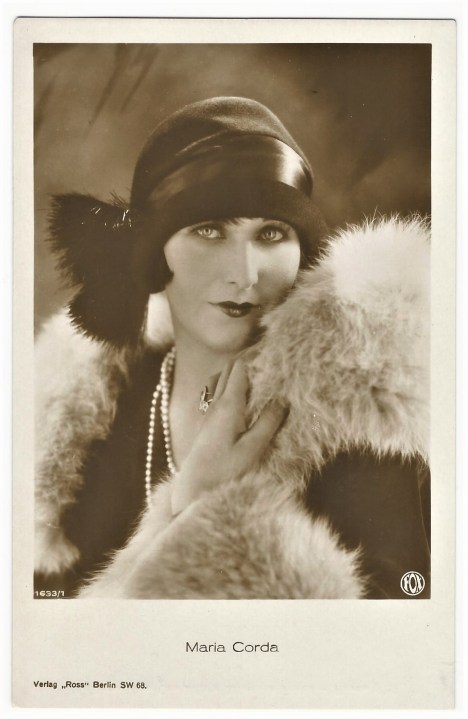
Maria Corda (1898-1976) was a Hungarian actress and a star during the silent film era in German and Austria. She began her career in acting in the theaters of Budapest during the beginning period of World War I. One of her gigs was working as a dancer with the Royal Opera in Budapest. When the Austria-Hungary Empire fell apart, she began working in the film industry. She appeared in her first film in 1919 ;under the direction of Hungarian, Korda Sandor, who later changed his name to Alexander Korda. Korda was the leading movie director in Hungary and he featured her in three of his films in 1919. Maria became the most famous actress in Hungary. Hungary’s leader had Alexander seized by the secret police. Maria and her brother-in-law exerted pressure on the British Military consulate and was able to get her husband freed. The couple fled Hungary and settled in Vienna, Austria. It was in Vienna that the pair changed their names. He became Alexander Korda and she, for some unknown reason, became Maria Corda. In 1920, Alexander began directing films in Austria and Maria became an Austrian silent screen star. Alexander directed Maria in a number of films including “Samson and Delila” (1923). In 1926, the couple moved to Germany the couple teamed up again and were able to continue their film career success. The caught the attention of First National, a Hollywood movie studio. Alexander and Maria were offered a package deal to come to American and make movies. They settled in Beverly Hills. Maria did not encounter the success that she had in Europe. Her Hollywood career aspirations were crushed in 1928 by the advent of sound pictures. She knew little English and had a thick accent. In addition to her movie career, her turbulent marriage also came to an end. They divorced in 1930. Her husband returned to Europe where he had a long successful career in British filmmaking. Maria moved to New York and wrote a number of novels. She spent her later years in Switzerland. In 1942, her husband was knighted and she insisted upon being called “Lady Korda”, even though Alexander was remarried. When Alexander died in 1956, he was onto his third marriage, but that did not stop Maria from trying to claim an inheritance. Maria had an interesting personality. Writers have asserted that she was temperamental and ambitious. She had a tendency to embellish her background. She often described herself as the “Hungarian Garbo”, an opinion reflecting aggrandizement. The IMDb reports that Maria had 28 film credits between 1919 and 1929. —–Postcard 1 was published by Ross Verlag (Berlin), The card was part of a series (no.1633/1). Note the “Fox” logo on the bottom right hand corner of the image. Maria starred in a Korda film for a Berlin based subsidiary of Fox in 1926. Therefore, this postcard is likely from 1926. The film was entitled “Madame Wants No Children”. The postcard was sold exclusively by Ballerini & Fratini of Florence, Italy. SOLD —–Postcard 2 was published by “Europe” which I believe was based in France. It is part of a series (no.315). This photograph of Corda is risque. She is barely covering herself with what appears to be a blanket. Only her strategically placed arm shields her from crossing the risque border. At the time that this photograph was taken, Maria Corda was under contract with Mercure Film. The logo of the company can be seen in the lower right corner of the card. This photo postcard features Corda in costume for her starring role in “The Private Life of Helen of Troy (1927). The film was directed by her husband, Alexander Korda. (SOLD)
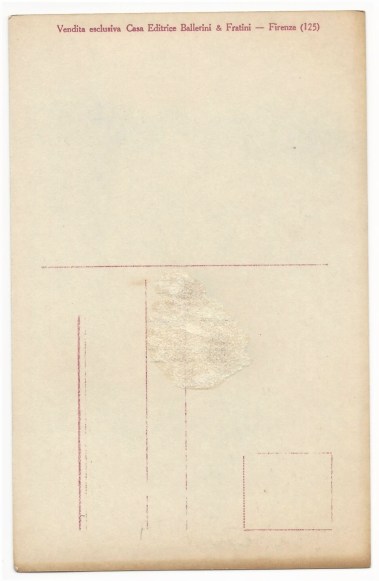 POSTCARD 1 (REVERSE)
 POSTCARD 2 (REVERSE)
EXTRAORDINARILY WELL DRESSED ADOLESCENT BOY IN GABLONZ, AUSTRIA

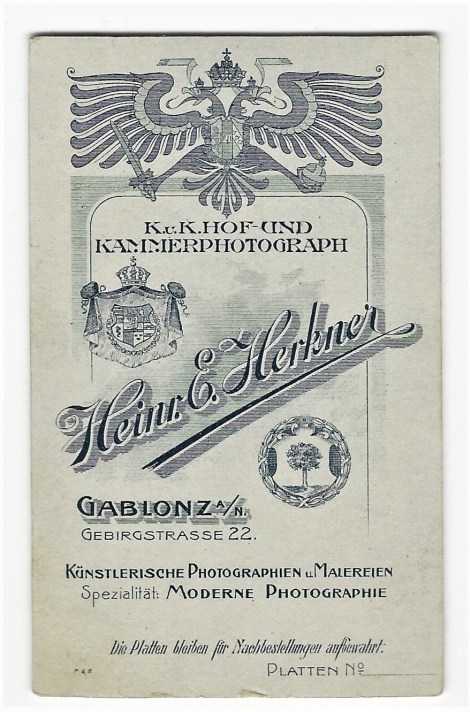
 This carte de visite photograph features an impeccably dressed adolescent boy. He is decked out in a three piece suit and has a pocket watch, walking stick, and long coat. This fashionista fellow looks like he walked off the pages of “Gentleman’s Quarterly”. The photographer of this exceptional CDV is Heinrich E. Herkner. He operated a studio in the city of Gablonz, which is the German name for a city located in present day Czechoslovakia. The city is now named Jablonec. SOLD
ADORABLE LITTLE BOY AND HIS TEDDDY BEAR ON WHEELS IN HAMBURG, GERMANY

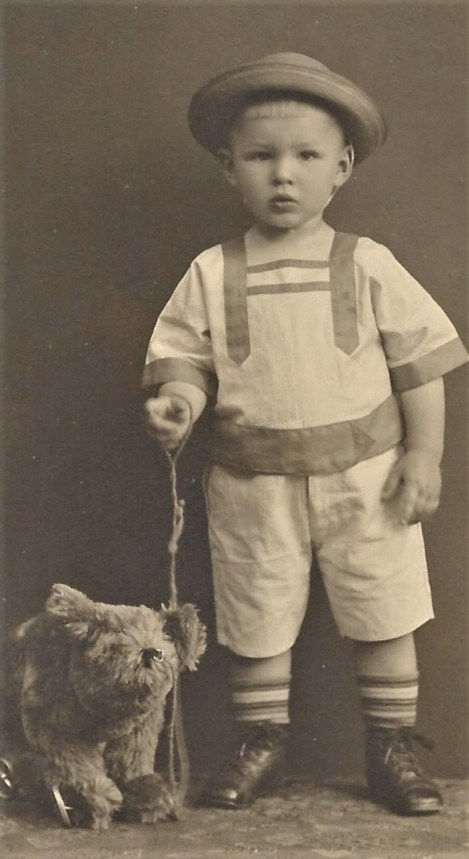 This fantastic carte de visite features an adorable little boy and his toy teddy bear. The toy bear is on a string leash and on four wheels for easy walking. The child’s outfit, including his matching socks, are very stylish. The photograph was taken at the studio of Adolf Bruns in Hamburg, Germany. This larger than usual cdv measures about 2 1/4″ x 4 1/2″ and is in excellent condition.
Buy this Carte de Visite Photograph (includes shipping within the US) #3119
To purchase this item, click on the Pay with PayPal button below
$63.39
Buy this Carte de Visite Photograph (includes International shipping outside the US) #3119
To purchase this item, click on the Pay with PayPal button below
$71.89

CUTE LITTLE GIRL PROTECTIVELY POSES WITH HER BABY BROTHER/SISTER (CDV)


This Carte de Visite (CDV) features a little girl posing next to her infant brother/sister. The little girl is wearing a fancy dress and a bow in her hair. She has a protective hold on her baby sibling. The CDV was photographed by the Kohler & Lacmann studio which had branches in Halberstadt and Bad Harzburg, Germany. (SOLD)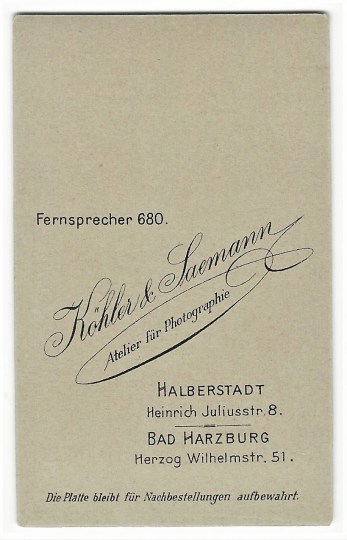
PORTRAIT OF A HANDSOME PRISONER OF WAR (POW) : WORLD WAR II : STALAG 1A 59
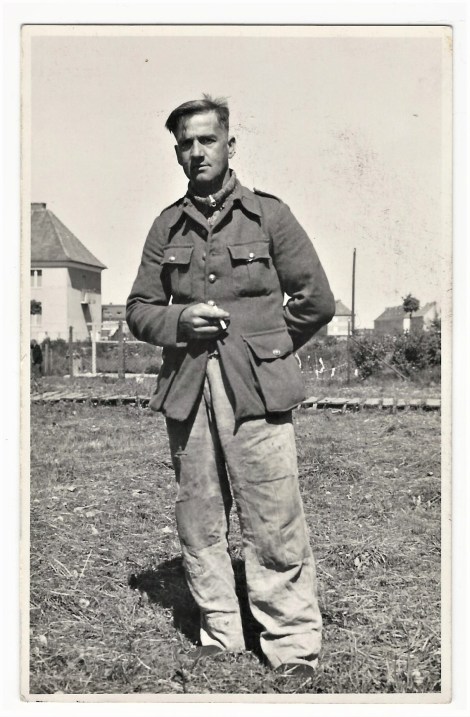

This vintage real photo postcard features a portrait of an allied prisoner of war imprisoned at a German POW camp. The soldier in this photograph was being held at Stalag 1-A. The camp was located near the village of Stablack in East Prussia. Stalag 1-A was the furthest east German POW camp. The camp was built in 1939 by Polish prisoners of war. In 1940, Belgian and French prisoners were added to the camp and in 1941, the camp began to incarcerate Russian POWs. There were also British and Italian prisoners in the camp. It is important to note that tens of thousands of Stalag prisoners were sent to “kommandos” (subcamps) spread throughout East Prussia. In January of 1945, with Russian troops approaching, the camp was abandoned and all of the prisoners were evacuated to the west. Note the photograph below which shows the entrance to Stalag 1-A. The prisoner seen in this photograph is wearing a military jacket, stripped of all insignias. I am unable to determine his rank, branch of service, or the identity of the nation he fought for. Note the prisoner’s pants. They are too long and too baggy Despite the ill-fitting uniform, he appears relatively healthy. He is holding a cigarette, which may represent “good treatment” by their German captors. One wonders why this photograph was permitted to be taken. Photographs, such as this one, were allowed because they served as a tool for positive public relations. A relatively content and healthy looking prisoner “advertised” that the Germans treated allied POWs well. Note the ink stamp on the reverse of the card. It identifies the camp as Stalag 1-A and that the card was “Gepruft” (checked or censored). This photo postcard is from sometime between 1940 and 1945. SOLD

TWO PORTRAITS OF EARLY FILM ACTRESS ITA RINA
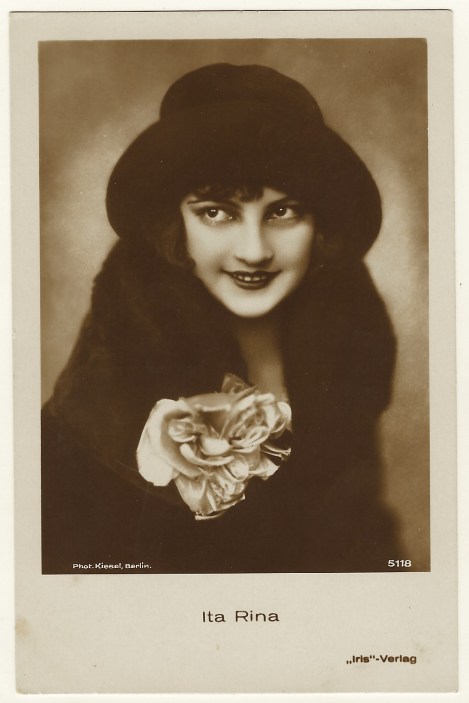 POSTCARD 1 (SOLD)
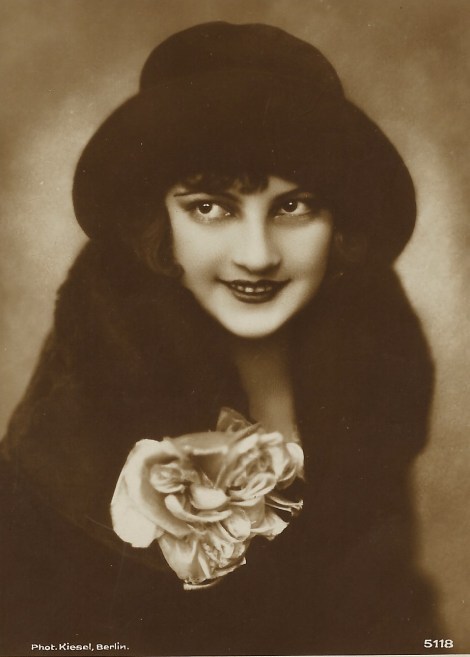 POSTCARD 1 (CLOSE-UP) (SOLD)
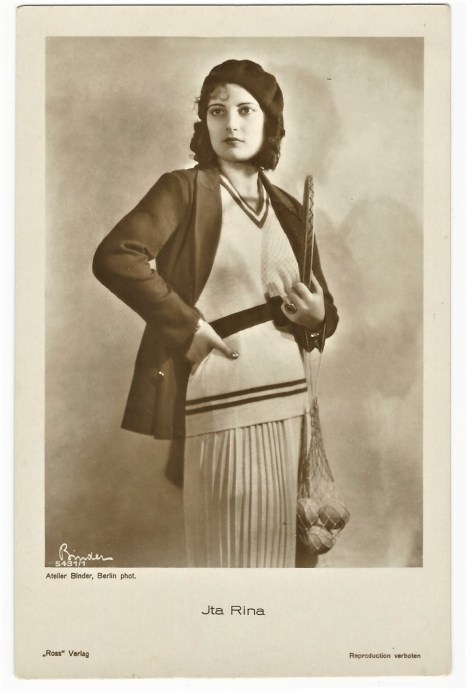 POSTCARD 2 (SOLD)
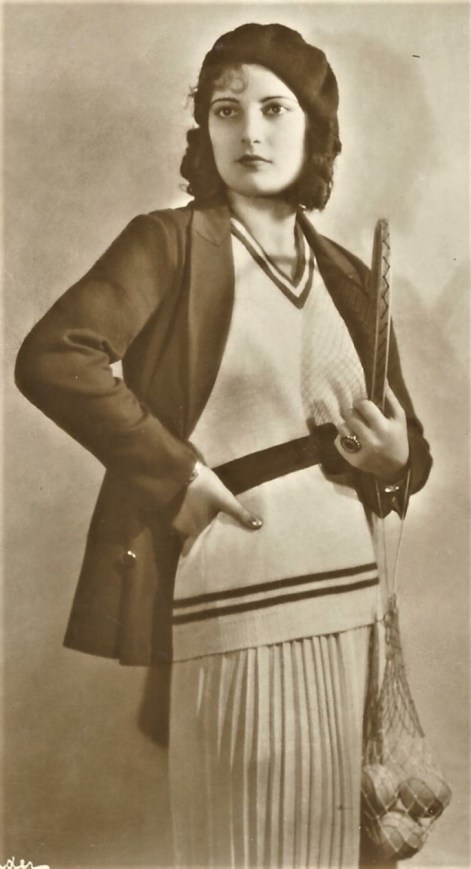 POSTCARD 2 (CLOSE-UP) (SOLD)
The pretty film actress seen in this vintage real photo postcard (postcard 1) is Ita Rina (1907-1979). Her unusual name is actually a pseudonym. Italina Lida Kravanja was her given name and it’s understandable that she used a shorter and more catchy moniker. Miss Rina was a Slovenian film actress and beauty queen. In the late 1920’s and early 1930’s she was one of the major film stars in Germany and Czechoslovakia. After getting married in 1931 she changed her name to Tamara Dordevic. Rina was a poor student as a child and knew early on that she wanted to be an actress. In 1926 she entered a beauty contest sponsored by a Slovenian magazine and Rina won. She was then slotted to compete in the next level beauty contest but she arrived late and could not participate. No worry though, she was noted by a cinema owner who sent her photograph to German film producer Peter Ostermayer who invited her to Berlin for an audition. In 1927, Rina went to Berlin without her mother’s permission. She took classes in acting and dancing. She made her debut in the film “What Do Children Hide from Their Parents” (1927). After a number of small film roles, she received some attention for her role in the film “Last Supper” (1928). Her breakthrough occurred in the film “Erotikon (Seduction)” (1929) in which she had a starring role. The film was a great success but upset some moral and Christian organizations for it’s eroticism. Some consider her best role to have been in the Czech sound film “Tonka Sibenice” (1930). Rina received an offer from Hollywood but her husband vetoed it and she decided to stay with her husband. However, she continued her film career until the beginning of World War II. Rina’s IMDB filmography asserts that she appeared in 19 films.
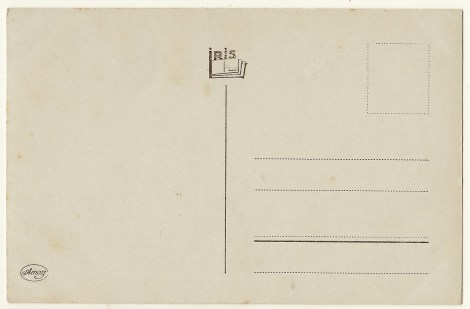
Postcard 1 was produced by Iris Verlag. Iris Verlag was the most important Austrian publisher of film star postcards. It operated from Vienna during the 1920’s and 1930’s. The publishing house Amag (Albrecht & Meister) is listed on the reverse of the card. The postcard is part of a series (no. 5118). The photographer was Kiesel of Berlin. (SOLD)
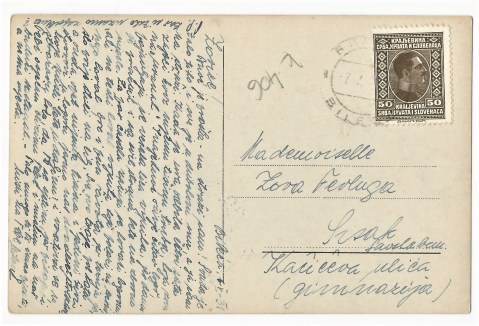
Postcard 2 features Miss Rina ready for a game of tennis. She is carrying a racquet as well as a net bag holding three tennis balls. She is truly a fashionista tennis player. Can you imagine Serena Williams or Maria Sharapova playing tennis in this attire? Postcard 2 was published by Ross Verlag and photographed by theatrical photographer Alexander Binder. Binder’s studio was located in Berlin, Germany. The postcard is part of a series (no.5431/1). The card was postmarked in 1931 and has a stamp from Yugoslavia. (SOLD)
TRIBUTE TO ITA RINA
 POSTCARD 1
 POSTCARD 2
WEDDING PORTRAIT : GROOM IN HIS LUFTWAFFE UNIFORM : WORLD WAR II ERA
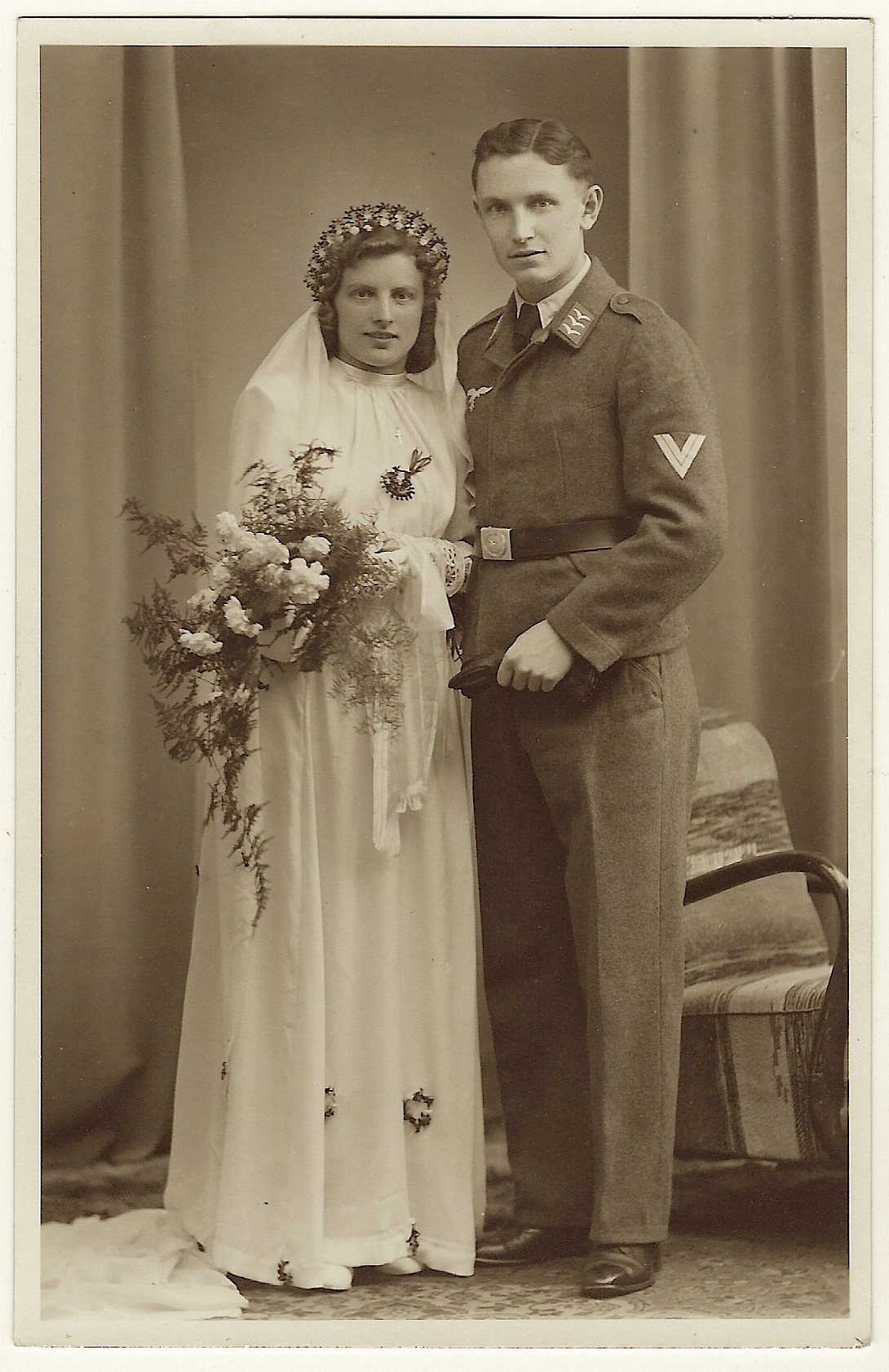
 This vintage real photo postcard features an attractive couple posing for their wedding photo. Both bride and groom appear happy on their special day. Note their half smiles. The groom is wearing his German Luftwaffe dress uniform. The Luftwaffe was the German Air Force. This photograph was taken either pre World War II or during the conflict. This vintage portrait postcard is in very good condition (see scans).
Buy this Vintage Real Photo Postcard (includes shipping within the US) #2981
To purchase this item, click on the Pay with PayPal button below
$28.49
Buy this Vintage Real Photo Postcard (includes International shipping outside the US) #2979
To purchase this item, click on the Pay with PayPal button below
$36.99

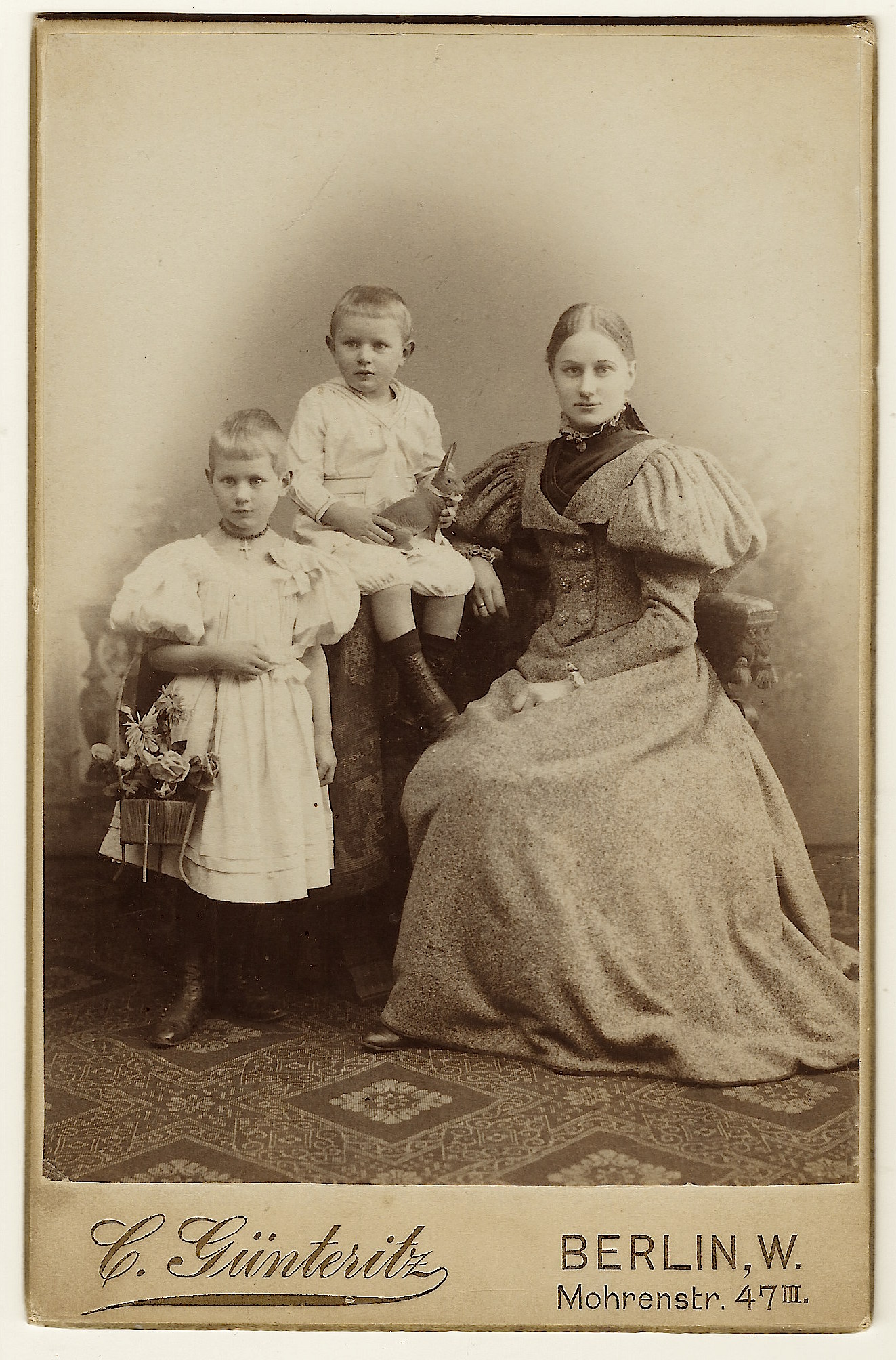
STYLISH MOTHER AND HER TWO CHILDREN IN BERLIN, GERMANY
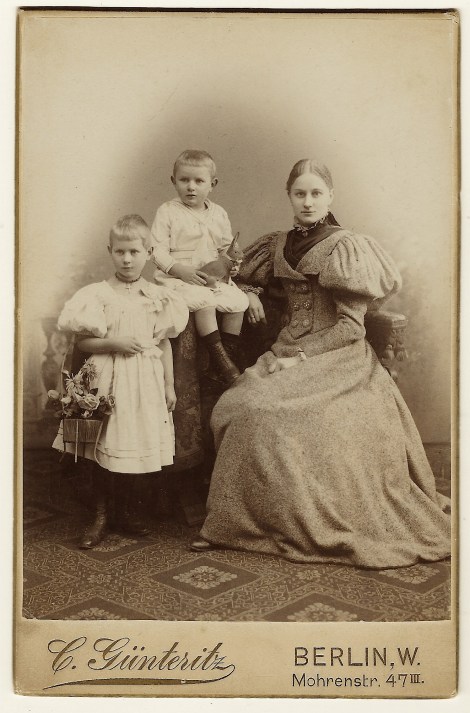
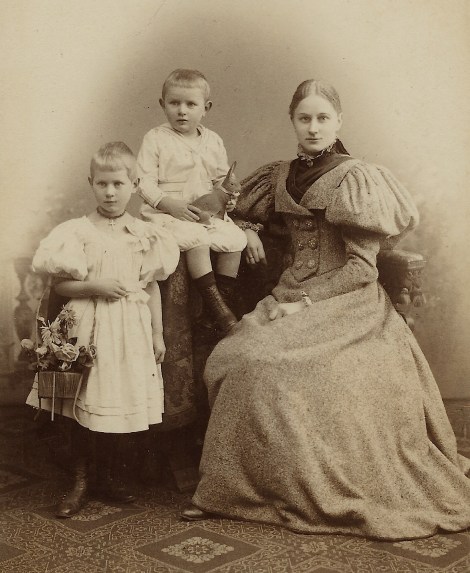 A beautifully dressed young woman and two children pose for a family portrait at the studio of C. Gunteritz, in Berlin, Germany. The young woman is likely the mother of the two children, although it is possible that she could be their older sister. The little girl is holding a basket of flowers and her younger brother has a toy rabbit on his lap. The young woman’s dress is made of material that is not commonly seen in cabinet card photographs. Hopefully, a visitor to the Cabinet Card Gallery will be able to identify the dress’s material. This cabinet card portrait is in very good condition (see scans).
Buy this original Cabinet Card Photograph (includes shipping within the US) #2975
To purchase this item, click on the Pay with PayPal button below
$39.50
Buy this original Cabinet Card Photograph (includes International shipping outside the US) 2975
To purchase this item, click on the Pay with PayPal button below
$48.00