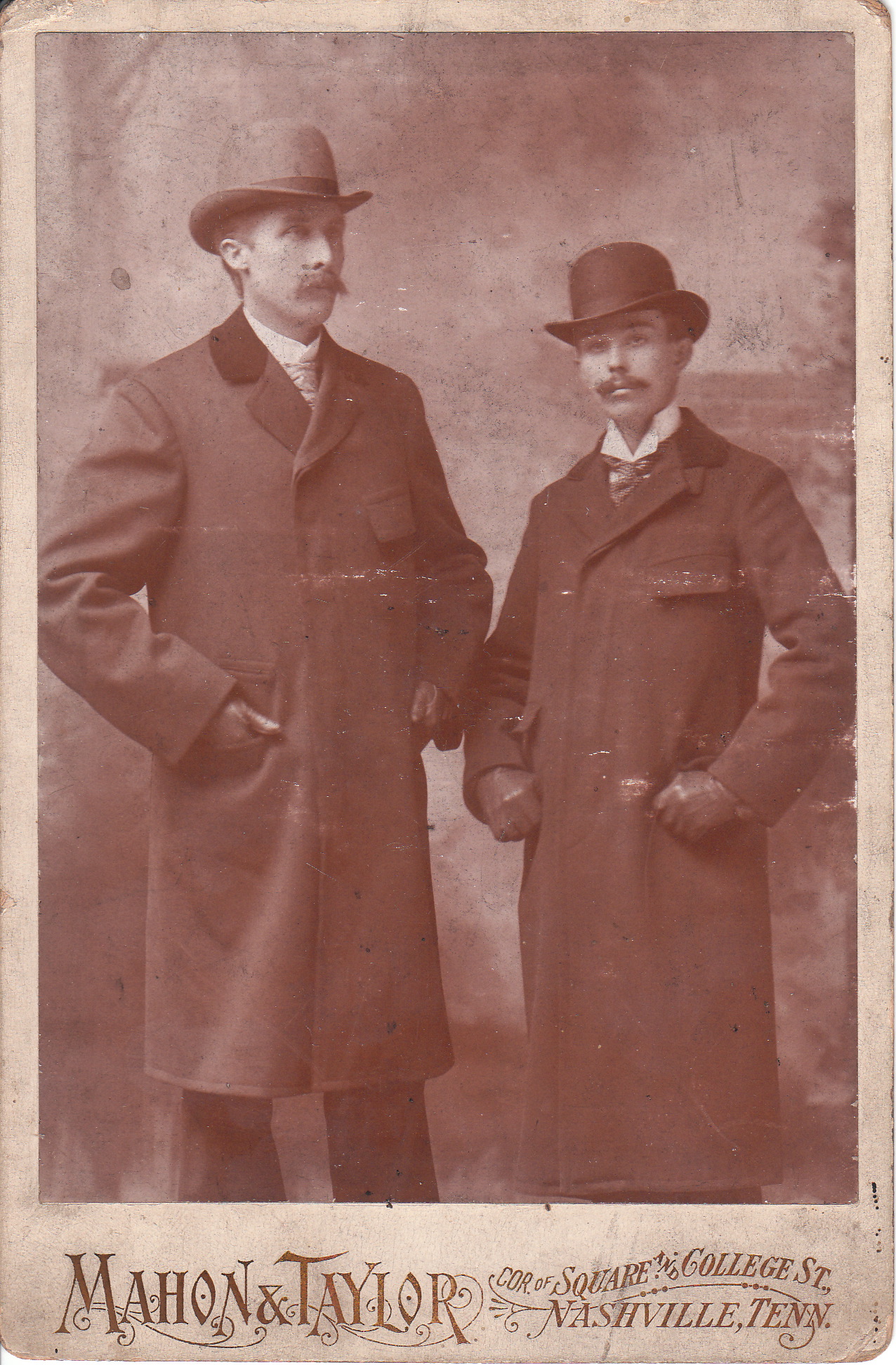
 This cabinet card is an image of two gentlemen dressed warmly in overcoats, hats, and gloves. They exude an air of importance. The photographer is Mahon & Taylor of Nashville, Tennessee. (SOLD)
TWO GENTLEMEN LOOKING IMPORTANT IN NASHVILLE, TENNESSEE

TOP HAT: FASHION STATEMENT IN DETROIT, MICHIGAN
 This cabinet card photograph features a young man formally dressed with a top hat on his head. “Toppers” became very popular at the end of the 18th century and remained in fashion to various degrees during the next two centuries. Viewing the fashionable man in this photograph brings up the question, “in what settings does he wear the top hat?”. The photographer is E. P. Baker of Detroit, Michigan. A Detroit business directory, published in 1873, lists Baker as owning a photographic studio at a different address than the address listed on this cabinet card.
PORTRAIT OF A RURAL MAN IN LITTLETON, NEW HAMPSHIRE
 This photographic portrait is an image of a man who appears to have a rural background. Is this man a farmer; dressed in his best hat and bow tie? Note his bushy mustache. The photographer is Marshall D. Cobleigh who bought his studio in 1891. The studio was located in Littleton, New Hampshire. While working as a photographer, he studied law. After passing the bar, he sold the studio and practiced law in New Hampshire.
“I PUT A SPELL ON YOU”…. AN ABSOLUTELY FRIGHTENING GUY AND A HYPNOTIZED WOMAN IN CEDAR FALLS, IOWA
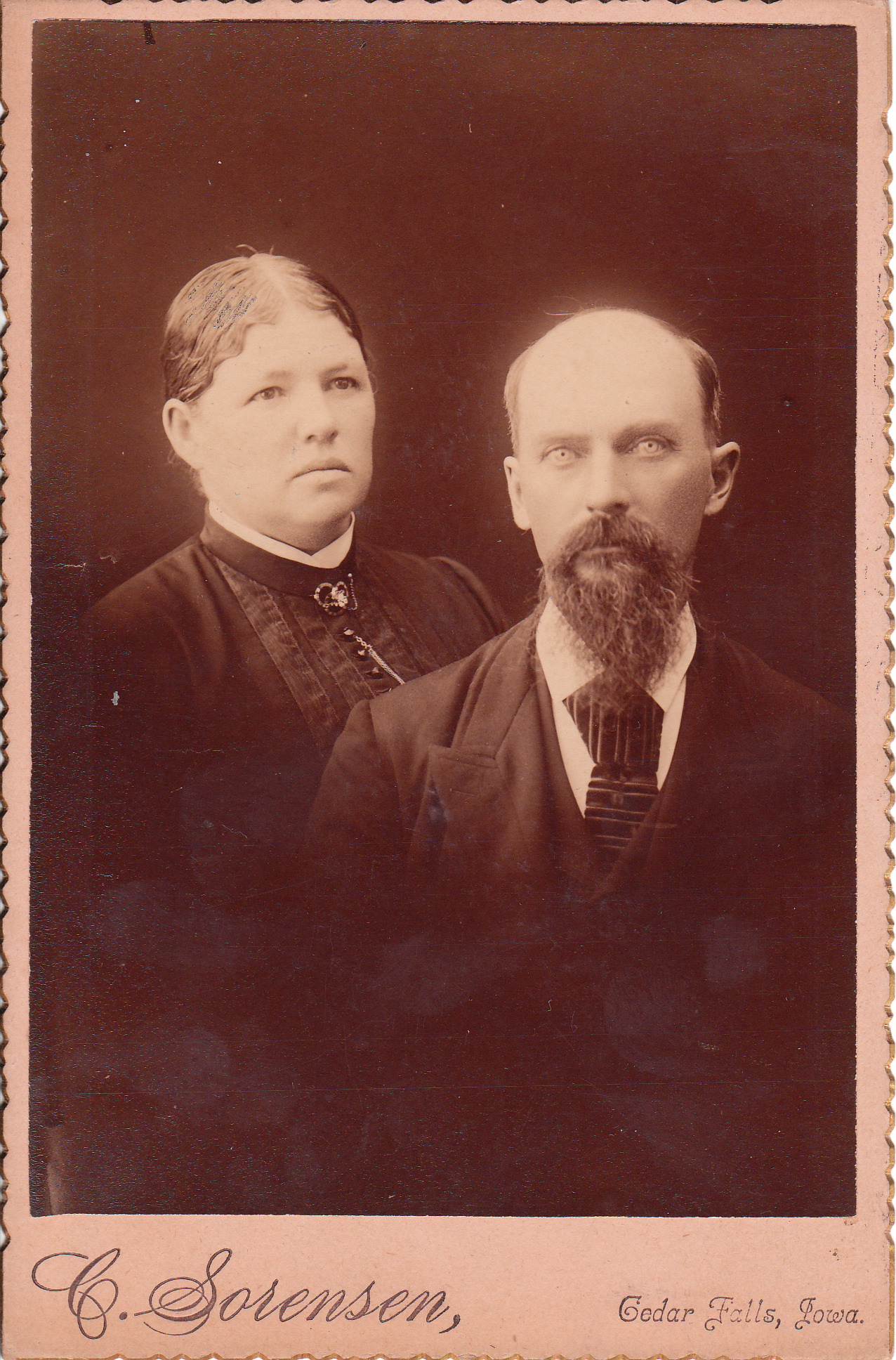 This cabinet card is a portrait of a man, reminiscent of Svengali, and a woman who appears as if she is under an evil hypnotic trance. This photograph is surreal. The lighting makes the man look as if his head is aglow and the woman being positioned close behind the man is quite unusual. The photographer is Sorensen who operated a studio in Cedar Falls, Iowa in 1880 and then again in 1895 through 1896. To view other photographs by Sorensen, click on the category “Photographer: Sorensen”.
MAN WITH UNFRIENDLY MUTTON CHOPS IN PHILADELPHIA, PENNSYLVANIA
 A gentleman with unfriendly mutton chops poses for his portrait at the studio of P. E. Chillman in Philadelphia, Pennsylvania. Why use the adjective “unfriendly”? The answer is that the term “friendly” mutton chops refers to mutton chops that are joined by a mustache. This gentleman’s mutton chops lack a connecting mustache, thus, the mutton chops are not friendly. To learn more about Chillman and to view other photographs by him, click on the category “Photographer: Chillman”.
PORTRAIT OF AN OLD MAN
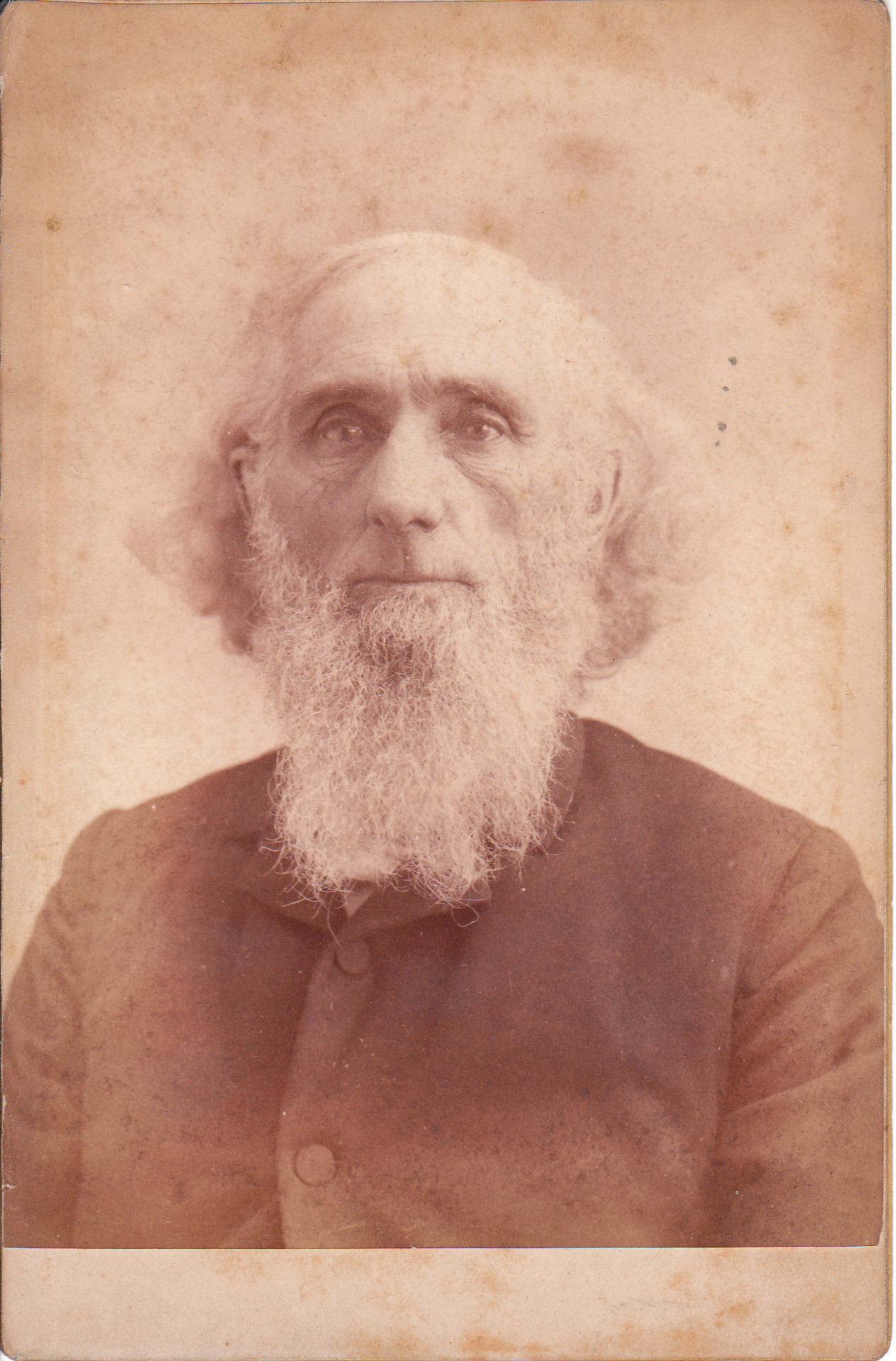 This Cabinet Card is a portrait of an unidentified elderly man by an unidentified photographer in an unidentified location. The gentleman who is the subject of this portrait has a face with a lot of character. If he was 80 years old and the photograph was taken in 1890, than he was born when James Madison was the fourth President of the United States. This man had seen a great deal of early American history by the time this photograph was taken. Note his long hair and interesting beard.
MUTTON CHOPS IN NEWBURGH, NEW YORK
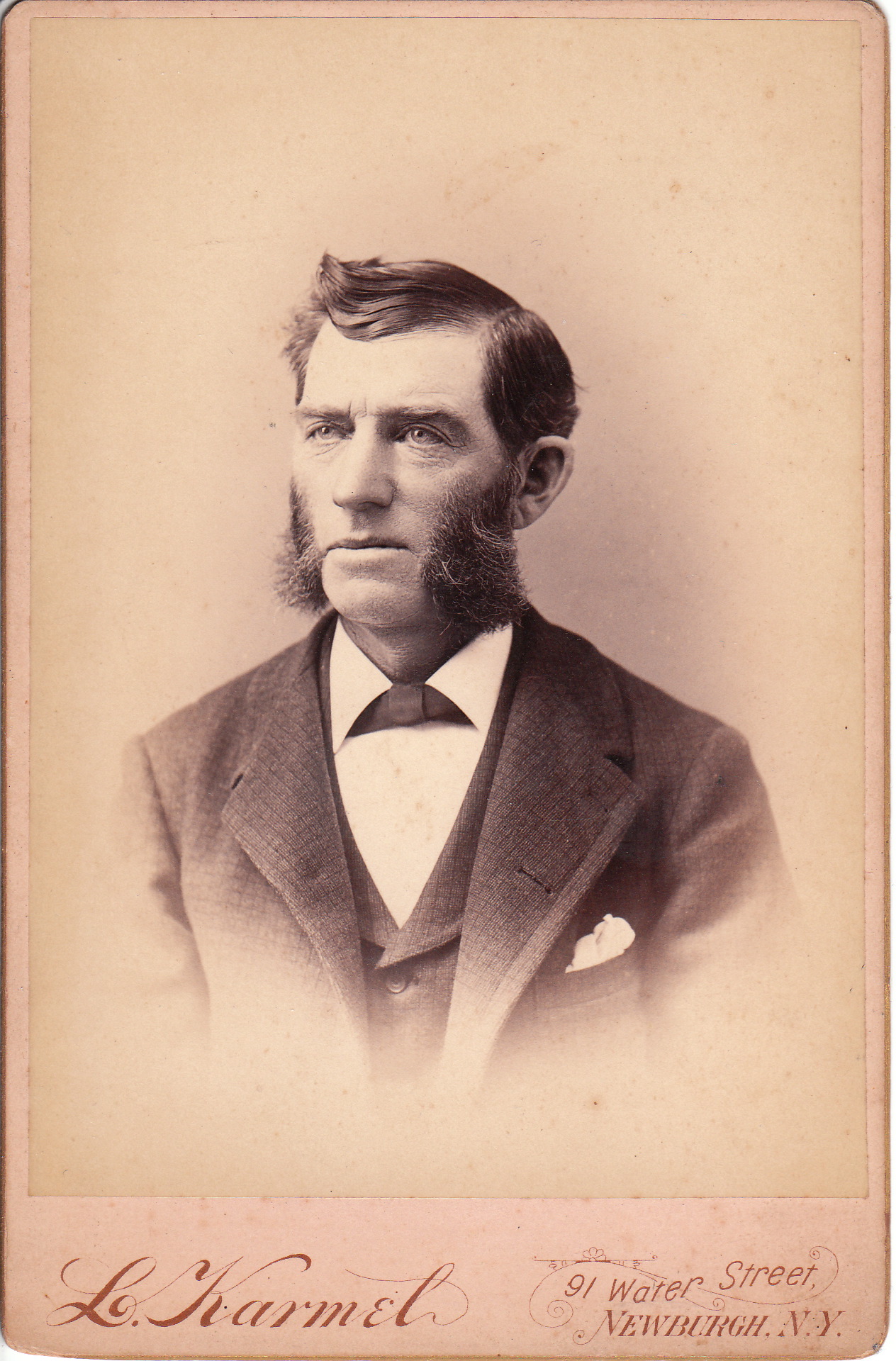 A gentleman with mutton chop sideburns, poses for his photograph at the studio of L. Karmel in Newburgh, New York.
“DA VINCI CODE” CABINET CARD: KNIGHTS OF THE TEMPLAR MAN IN BOSTON, MASSACHUSETTS
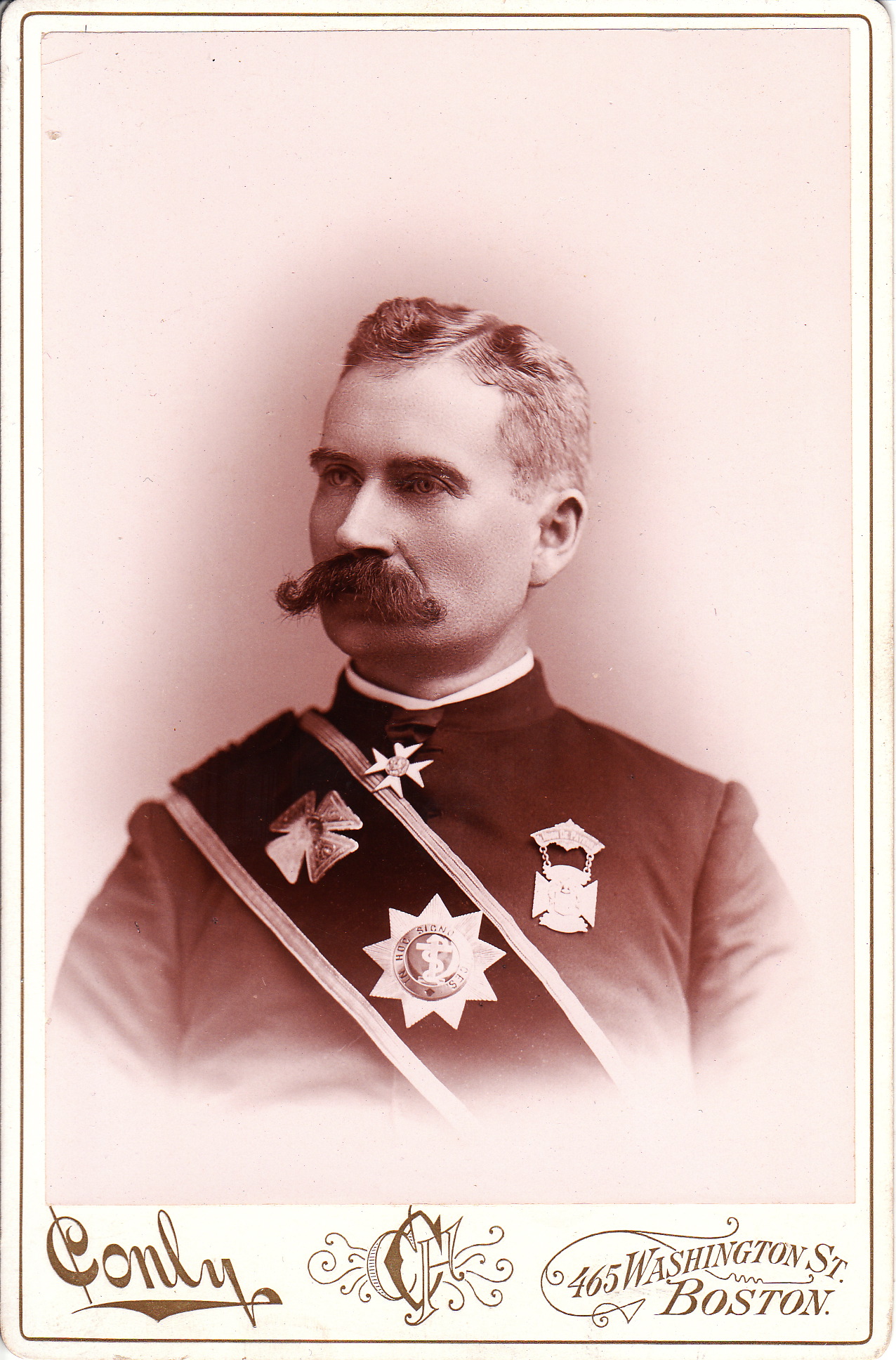 This cabinet card is an image of a gentleman dressed in his fraternal organization uniform. He has badges on his sash as well as on his jacket. Two of the badges have words on them that can be deciphered. The lower badge on his sash states “In Hoc Signo Vinces” which is the latin rendering of the Greek phrase, “with this as your standard you shall have victory”. This motto has been used on many coat of arms and banners including those belonging to families, cities, regiments, sport teams, and even pall mall cigarettes. More relevant to this photograph, the motto appears on the “Knight Templar Cross” in the York Rite branch of free masonry. The second readable badge is the one located below the gentleman’s left shoulder. The badge states the name “Hugues De Payens”. Hugues De Payens (1070-1136) was a frankish knight who was the cofounder and first Grandmaster of the Knights Templar. This cabinet card conjures up thoughts of the “Da Vinci Code”. The photographer of this cabinet card is Conly of Boston, Massachusetts. Charles F. Conly went looking for a job at age 20 and found a help wanted sign in the window of famed Boston photographer, Warren (see category Photographers: Warren). Ten years later he succeeded Warren as the proprietor of the studio. He had a meteoric rise from office boy to entrepreneur. At the beginning of his career he spent some time in the theatrical profession and he thus became the favorite photographer of Boston’s theatrical performers. Conly’s obituary appears in the 1893 edition of Anthony’s Photographic Bulletin. Interestingly, the article states that Conly was a prominent secret society man and that delegations from the Elks, Odd Fellows and the Royal Arcanum and Columbian Lodge of Masons were represented at his funeral. To view other photographs by Conly, click on the category “Photographer: Conly”.
A HUNTER AND HIS GUN AND HIS DOG IN INDIA
 This cabinet card features a hunter and his gun and his dog. The young man is dressed for he hunt with his high boots and his wide brim hat. His dog is lying down and looks to be awaiting his master’s command. The photographer is John Blees, who is the author of the book, “Photography in Hindustan: or Reminiscences of a Traveling Photographer (Bombay, 1877).
THREE BUTCHERS IN LOGANSPORT, INDIANA
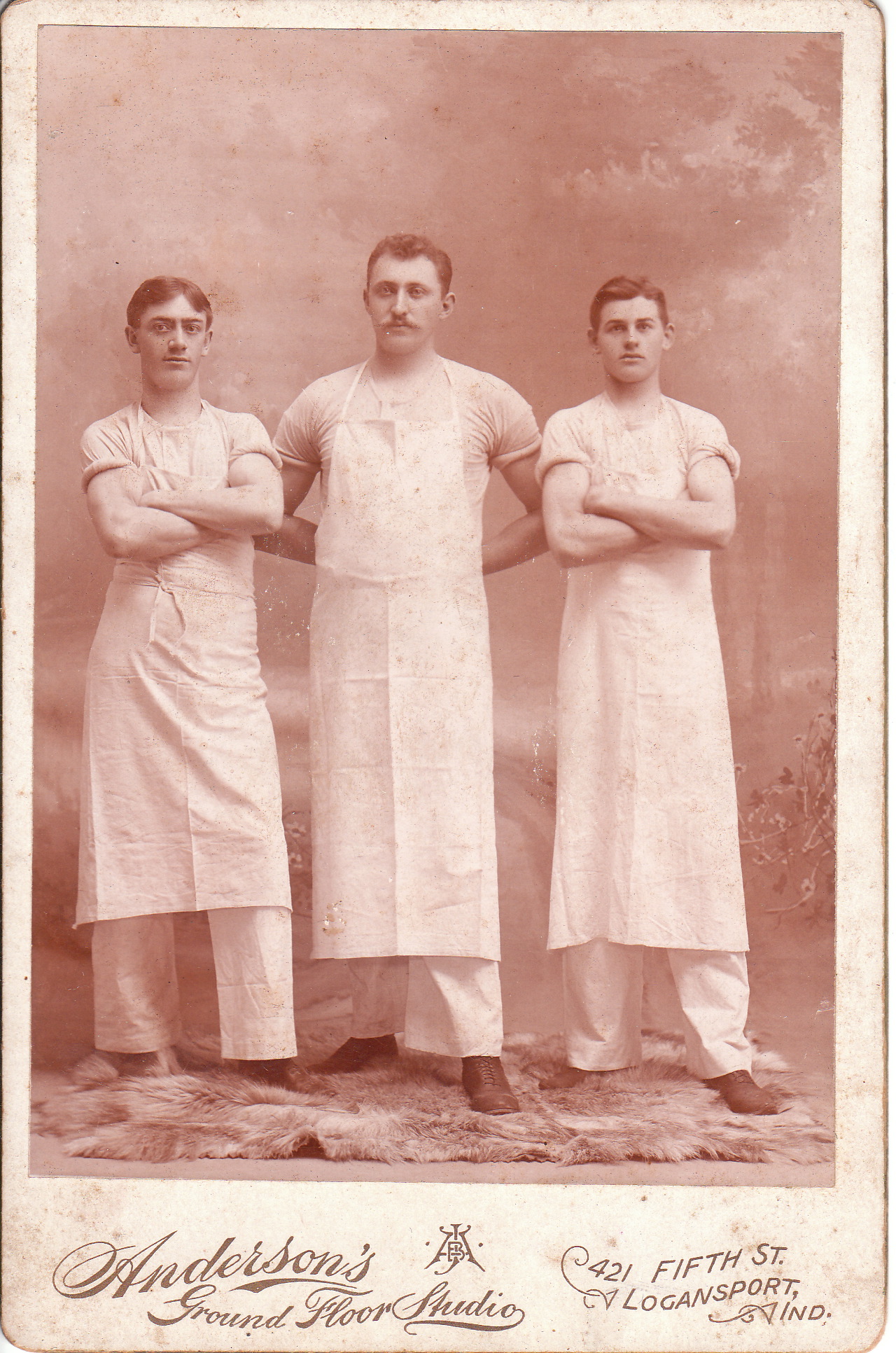 This cabinet card is clearly a photograph of three men in their occupational garb. They appear to be butchers but there is no confirmation available. The men are very muscular and that may be evidence supporting the hypothesis that they are butchers. The gentleman in the middle has an air of authority and looks to be the oldest of the three. Why are their sleeves rolled up? Perhaps keeping their sleeves rolled up is what they typically do when performing their work. The photographic studio that produced this cabinet card is Anderson’s of Logansport, Indiana.


 THE CABINET CARD GALLERY