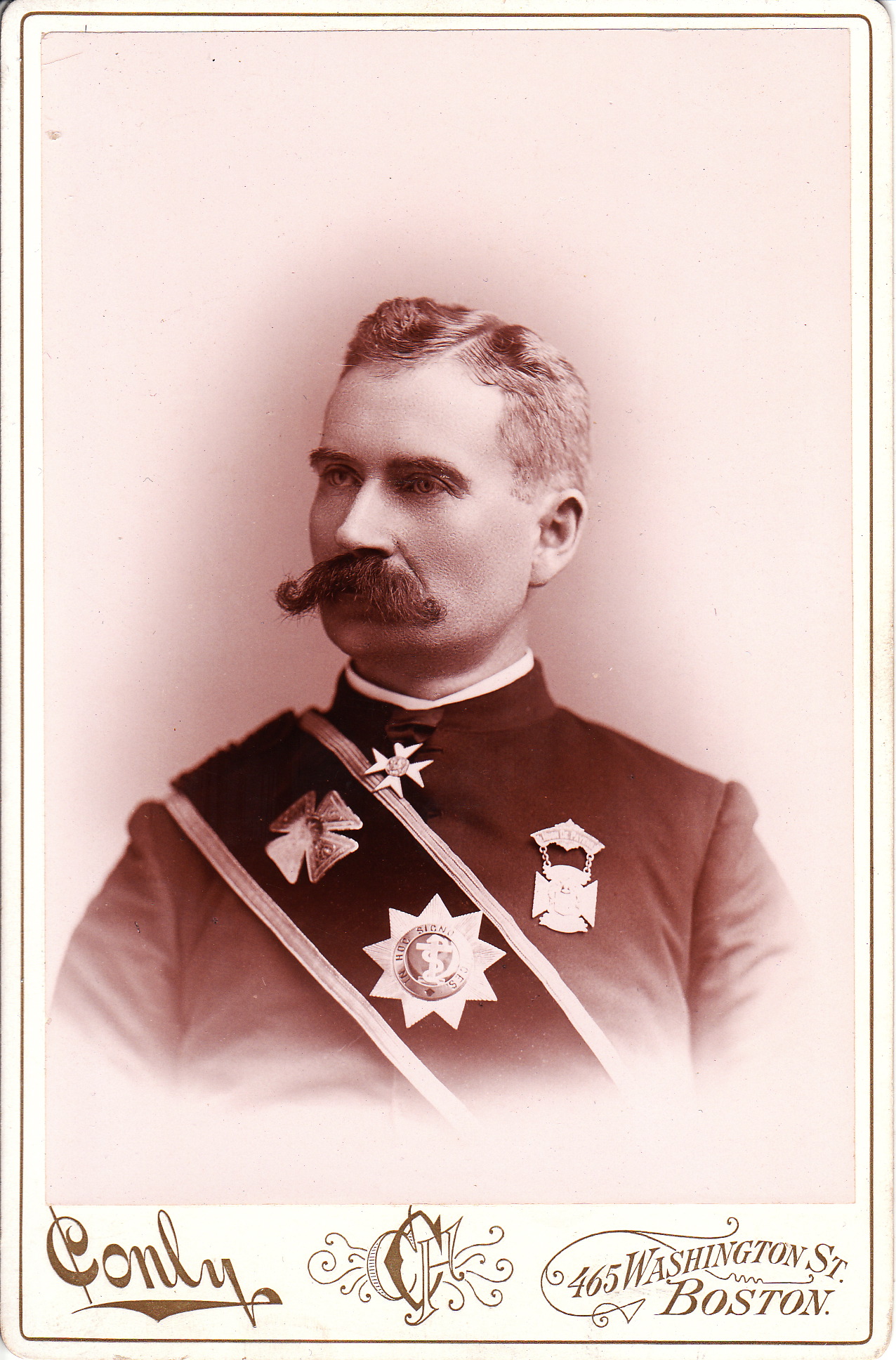
 This cabinet card is an image of a gentleman dressed in his fraternal organization uniform. He has badges on his sash as well as on his jacket. Two of the badges have words on them that can be deciphered. The lower badge on his sash states “In Hoc Signo Vinces” which is the latin rendering of the Greek phrase, “with this as your standard you shall have victory”. This motto has been used on many coat of arms and banners including those belonging to families, cities, regiments, sport teams, and even pall mall cigarettes. More relevant to this photograph, the motto appears on the “Knight Templar Cross” in the York Rite branch of free masonry. The second readable badge is the one located below the gentleman’s left shoulder. The badge states the name “Hugues De Payens”. Hugues De Payens (1070-1136) was a frankish knight who was the cofounder and first Grandmaster of the Knights Templar. This cabinet card conjures up thoughts of the “Da Vinci Code”. The photographer of this cabinet card is Conly of Boston, Massachusetts. Charles F. Conly went looking for a job at age 20 and found a help wanted sign in the window of famed Boston photographer, Warren (see category Photographers: Warren). Ten years later he succeeded Warren as the proprietor of the studio. He had a meteoric rise from office boy to entrepreneur. At the beginning of his career he spent some time in the theatrical profession and he thus became the favorite photographer of Boston’s theatrical performers. Conly’s obituary appears in the 1893 edition of Anthony’s Photographic Bulletin. Interestingly, the article states that Conly was a prominent secret society man and that delegations from the Elks, Odd Fellows and the Royal Arcanum and Columbian Lodge of Masons were represented at his funeral. To view other photographs by Conly, click on the category “Photographer: Conly”.
“DA VINCI CODE” CABINET CARD: KNIGHTS OF THE TEMPLAR MAN IN BOSTON, MASSACHUSETTS

A HUNTER AND HIS GUN AND HIS DOG IN INDIA
 This cabinet card features a hunter and his gun and his dog. The young man is dressed for he hunt with his high boots and his wide brim hat. His dog is lying down and looks to be awaiting his master’s command. The photographer is John Blees, who is the author of the book, “Photography in Hindustan: or Reminiscences of a Traveling Photographer (Bombay, 1877).
THREE BUTCHERS IN LOGANSPORT, INDIANA
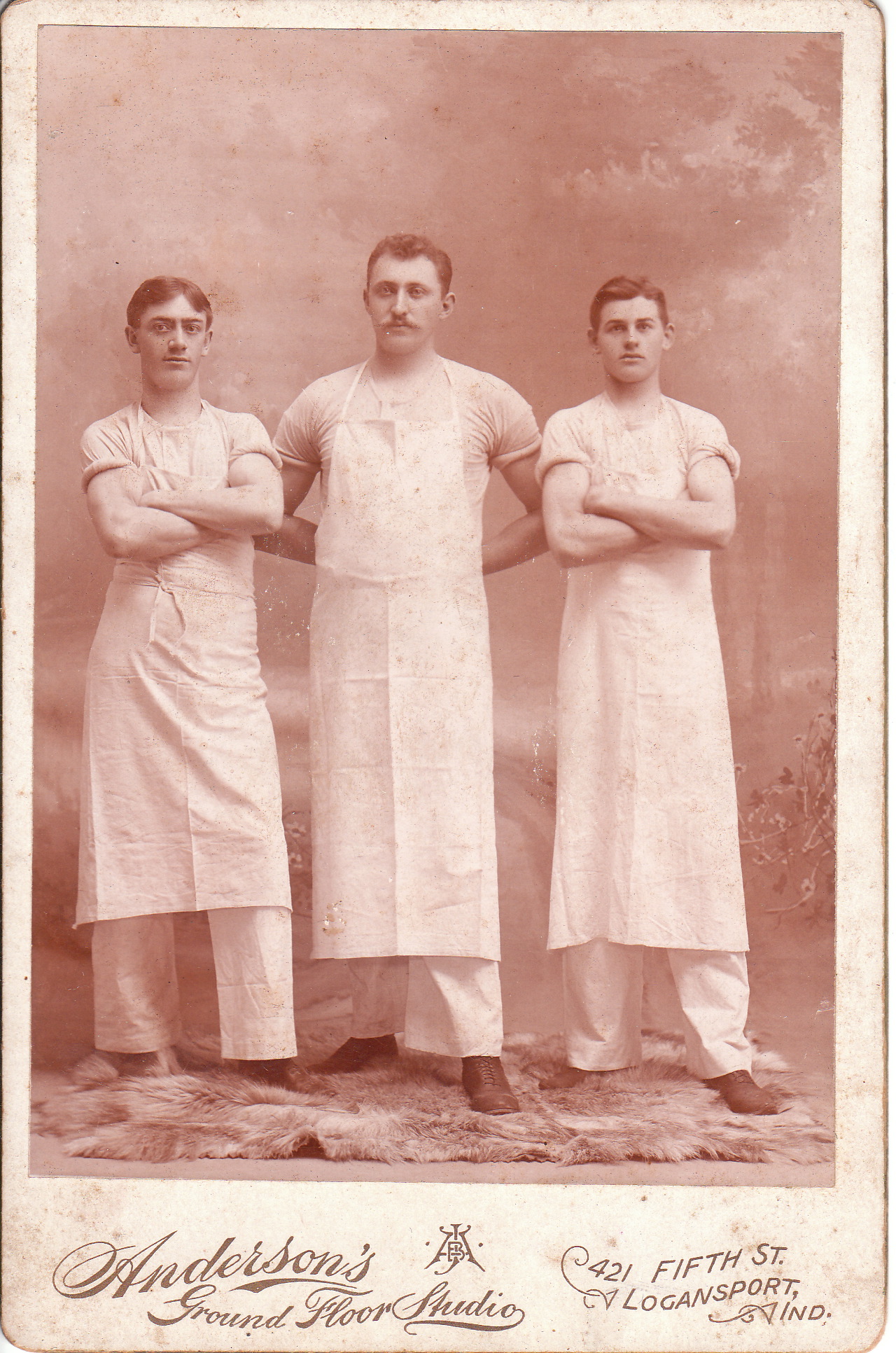 This cabinet card is clearly a photograph of three men in their occupational garb. They appear to be butchers but there is no confirmation available. The men are very muscular and that may be evidence supporting the hypothesis that they are butchers. The gentleman in the middle has an air of authority and looks to be the oldest of the three. Why are their sleeves rolled up? Perhaps keeping their sleeves rolled up is what they typically do when performing their work. The photographic studio that produced this cabinet card is Anderson’s of Logansport, Indiana.
HANDSOME MAN WITH COMPLICATED HAIR STYLE IN ANDERSON, INDIANA
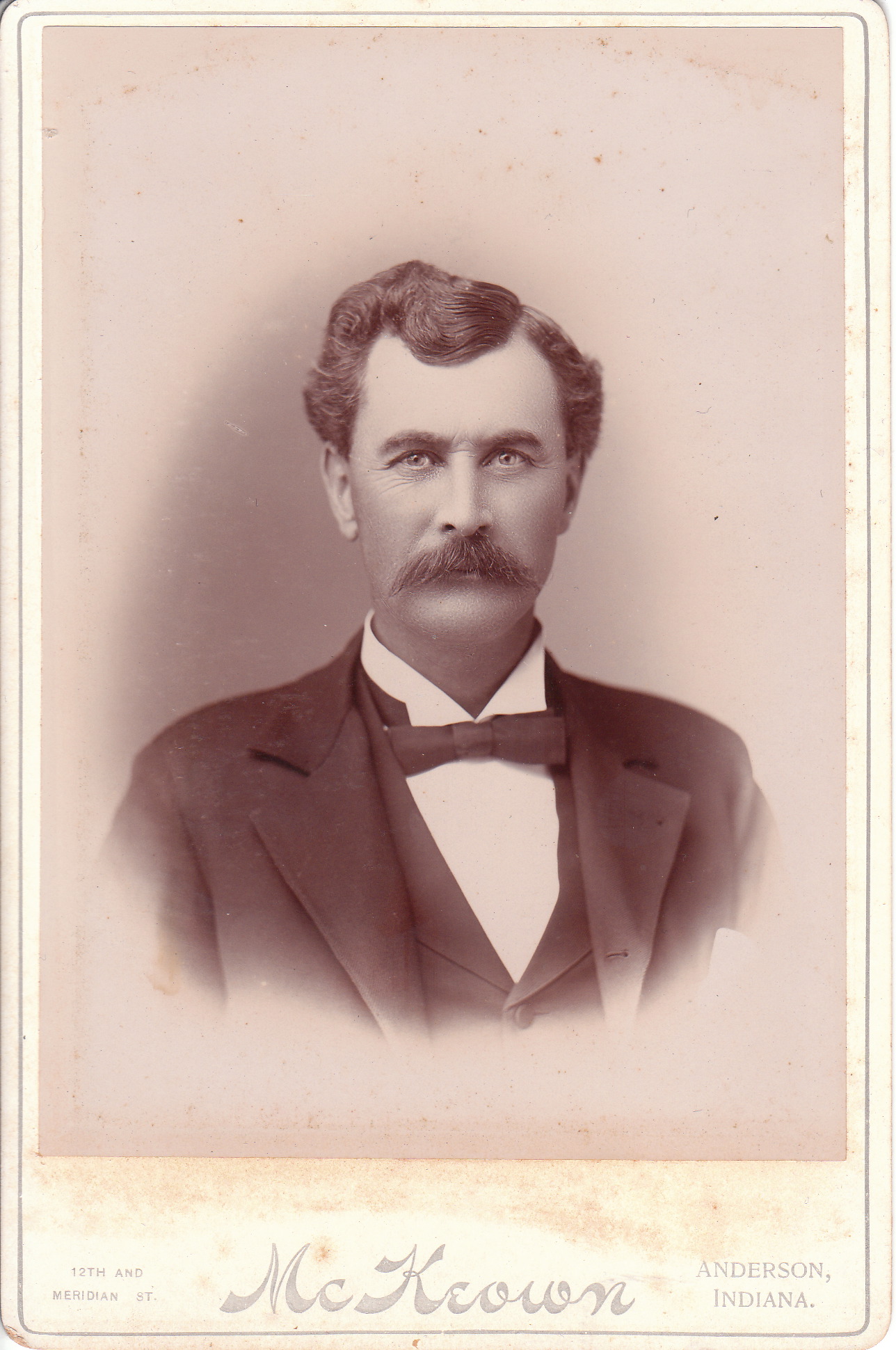 A handsome and well dressed gentleman sits for his photographic portrait at the studio of McKeown in Anderson, Indiana. His hairstyle can be described as complicated and requiring a high degree of maintenance.
BIZARRE FACIAL HAIR IN PROVIDENCE, RHODE ISLAND
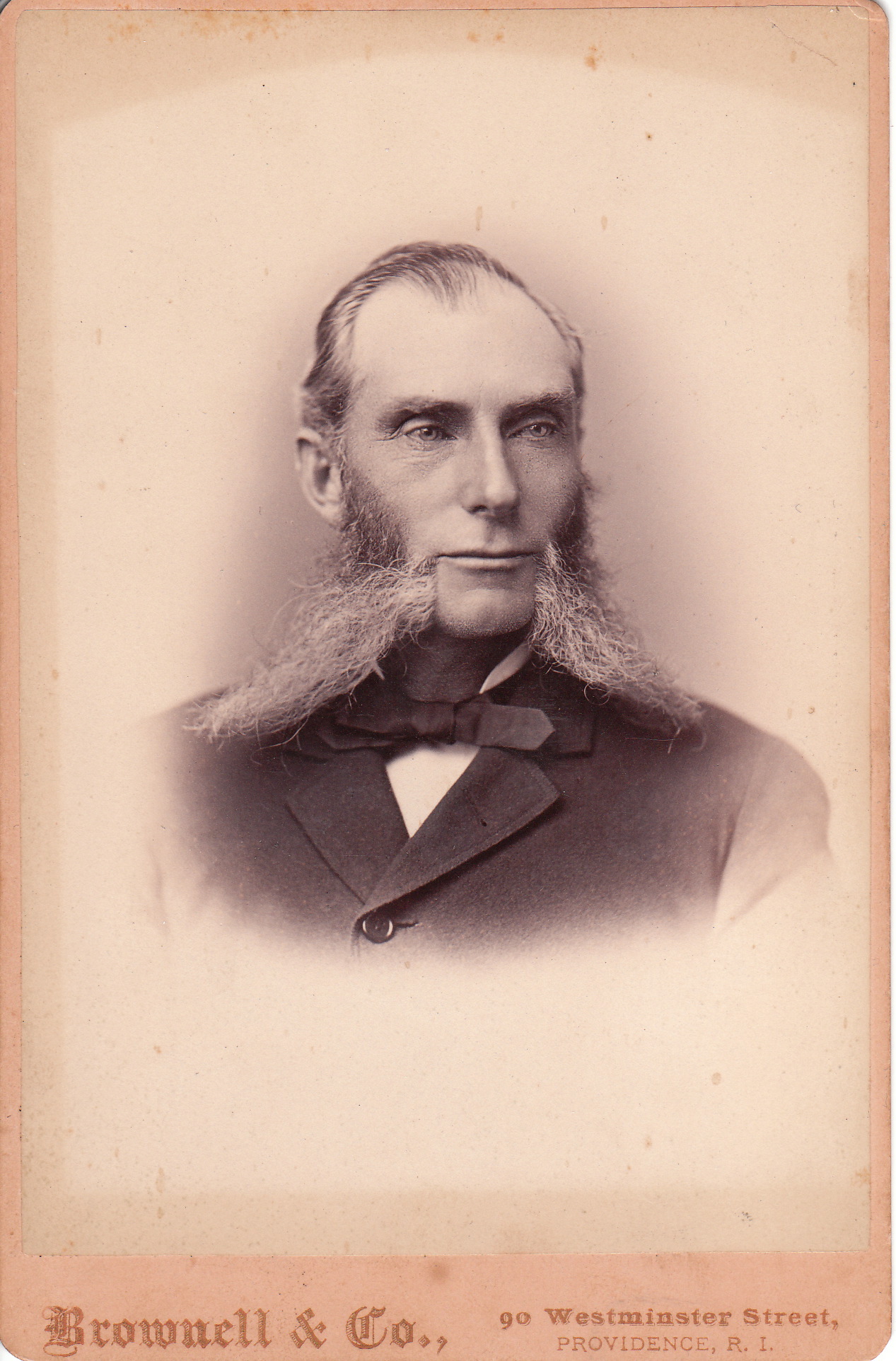 The gentleman photographed for this cabinet card wears his beard in a most unusual style. His place in the Cabinet Card Gallery’s category of “Beards (Only the Best)” is well deserved. The photographer of this portrait is Alexander C. Brownell of Providence, Rhode Island. Brownell’s death notice appeared in a 1916 photographic magazine. The article stated that Brownell died in New York City of “hardening of the arteries” but that his health had been less than robust for the previous 30 years due to his accidentally poisoning himself thirty years earlier while experimenting with chemicals to be used for zinc etchings.
MELVILLE ELIJAH STONE: NOTED CHICAGO JOURNALIST
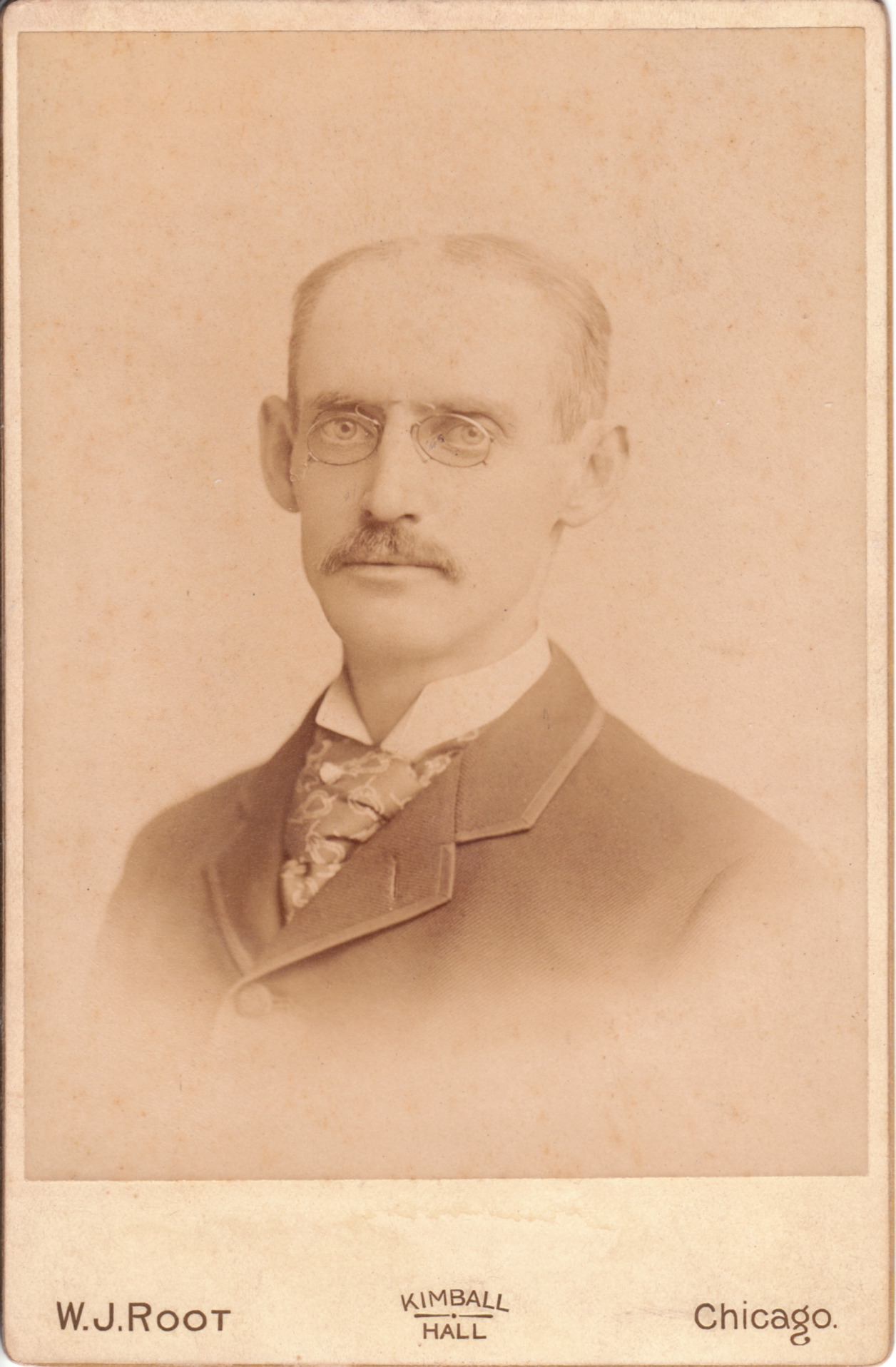 This cabinet card is a portrait of Melville Elijah Stone (1848-1929). Stone was a reporter when in 1876 he founded Chicago’s first penny paper, “The Chicago Daily News”. In 1881 he established the “Chicago Morning News” which became the “Chicago Record”. In 1893, while employed with a bank, he was named General Manager of the “Associated Press” which under his stewardship became a major news agency. Stone retired in 1921. The photographer who produced this portrait was W. J. Root, a celebrated Chicago photographer.
LITERARY MAN STANDING NEXT TO ABRAHAM LINCOLN IN HAYWARD, WISCONSIN
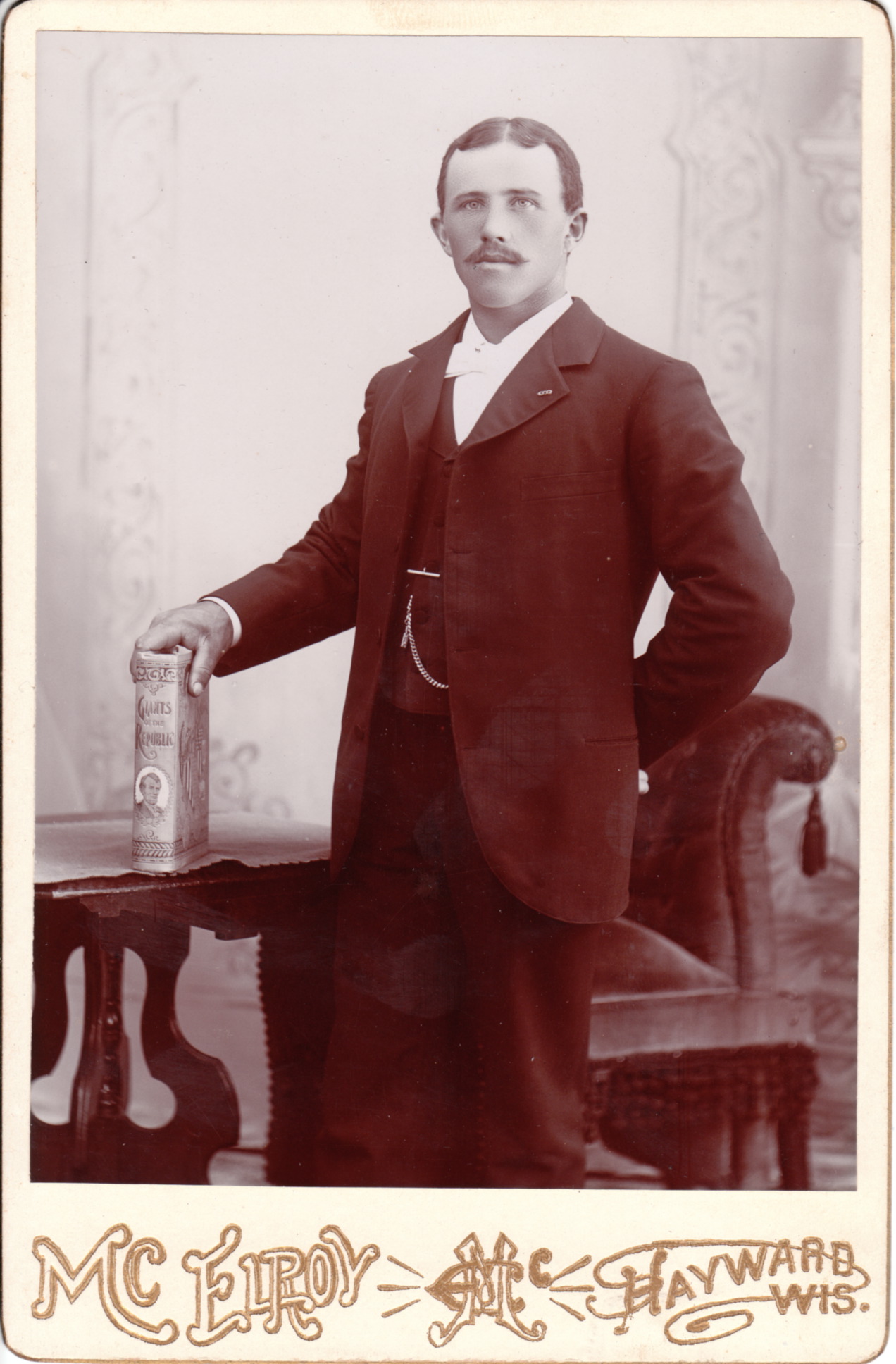 Ok. So, he’s not exactly standing next to Abraham Lincoln but he is standing next to Abe’s picture on the binding of a very well known book of the time. The title of the volume is “Giants of The Republic”. The book was written by a “Corps of Competent Biographers” and covers the “lives, deeds and personal traits of eminent men and women” in American history. Some of the subjects profiled are Benjamin Franklin, John Jay, Charles Sumner, William Sherman, Robert Fulton, John Jacob Astor, and Edgar Alan Poe. The well dressed gentleman in this cabinet card photograph must have thought that the book had historic potential or at the least, was worth remembering. It is unusual to see someone posing with a specific book title (unless its the bible). The book in this photograph is clearly meant to play a prominent role in the photograph. The photographer of this cabinet card is G. H. McElroy of Hayward, Wisconsin.
HEFTY MAN DRESSED FOR WINTER ON BROADWAY IN NEW YORK CITY
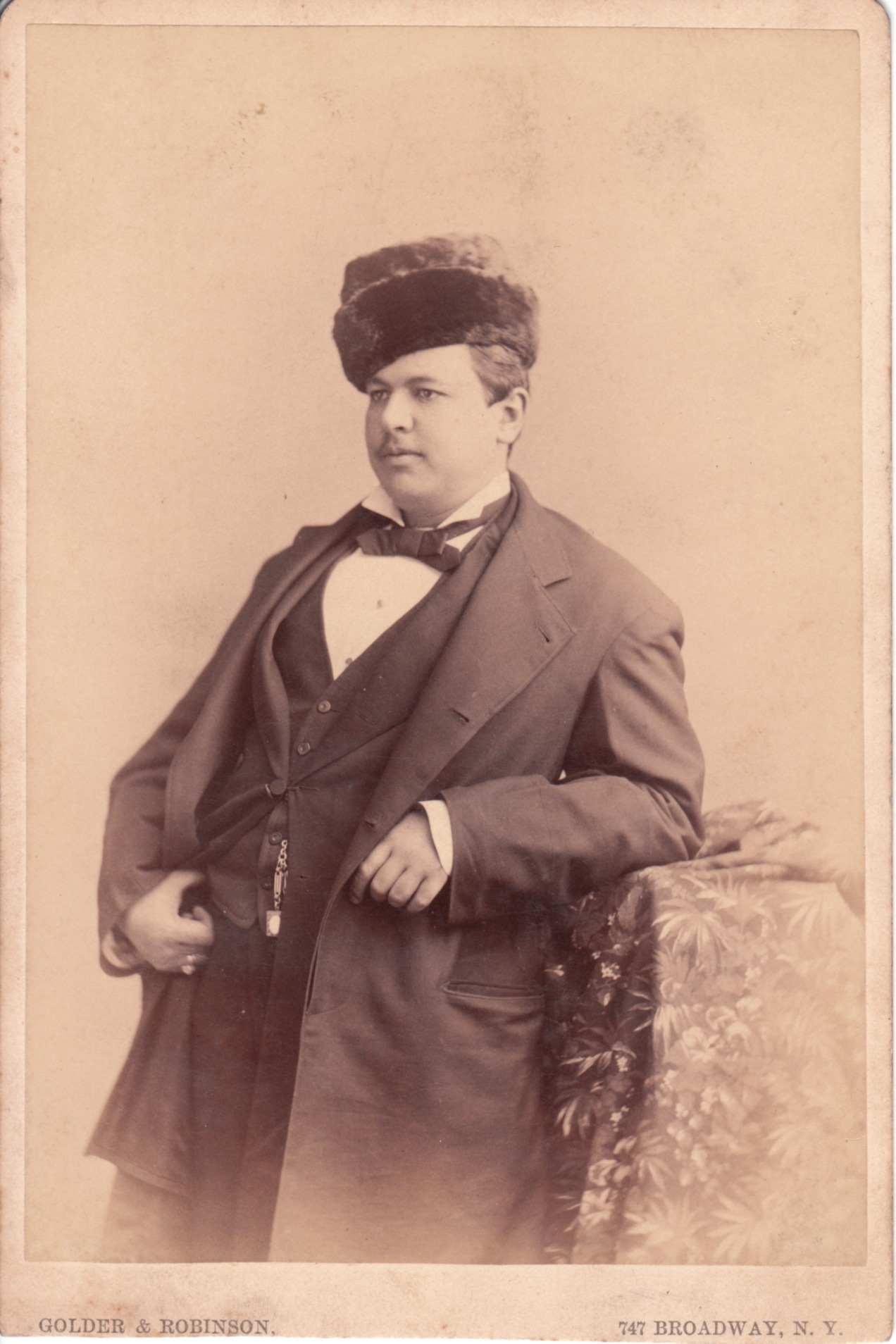 This nicely dressed portly gentleman is posing for his portrait at the studio of Golder & Robinson in New York City. He appears as if he just walked in off the street and didn’t take the time to remove his overcoat and fur hat. His pocket watch and a couple of rings are visible.To view other photos by this studio click on the category “Golder & Robinson”.
MOUTHLESS MAN IN SPICELAND, INDIANA (MAN WITH FORMIDABLE BEARD)
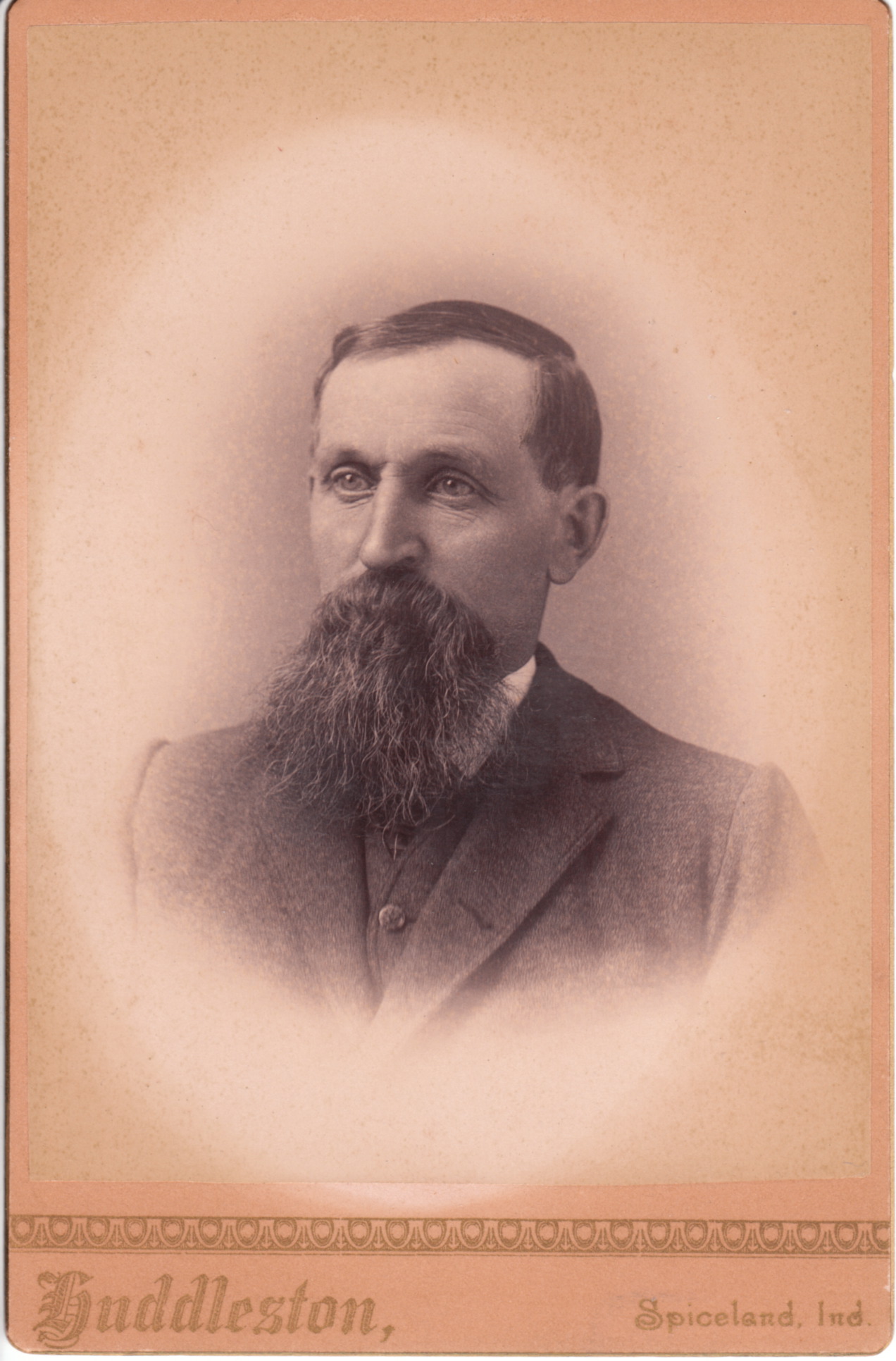 This Cabinet Card is an image of a gentleman with a very interesting beard. I wonder what the psychological implications are of a man who keeps his mouth completely hidden by facial hair. The mans eyes however, are very communicative. The photographer is Huddleston whose studio was in Spiceland, Indiana. Cephus M. Huddleston (1832- ?) was born in Indiana but little biographacial data was uncovered in recent reseach. The town of Spiceland was settled in the 1820’s by Quaker pioneers from Virginia and the Carolinas. The town was named after the spice bush which was prevalent there. In the 1890’s there were a number of factories including those that manufactured furniture, glass and glue. The town was the location of Friends Academy (1870-1921) and the Spiceland Sanitarium and Mineral Springs (1893-1913).
BUSHY MUSTACHE IN EAU CLAIRE, WISCONSIN

This cabinet card is an addition to the “Mustache (Only the Best) category in the Cabinet Card Gallery. The gentleman in this photograph is wearing a long and bushy mustache and dress clothing for his portrait at the studio of Bonell, in Eau Claire, Wisconsin. Bonell was a photographer in Eau Claire and Chippewa Falls, Wisconsin from 1875 until 1890. To view more photographs by Bonell, click on the category “Photographer: Bonell”.


