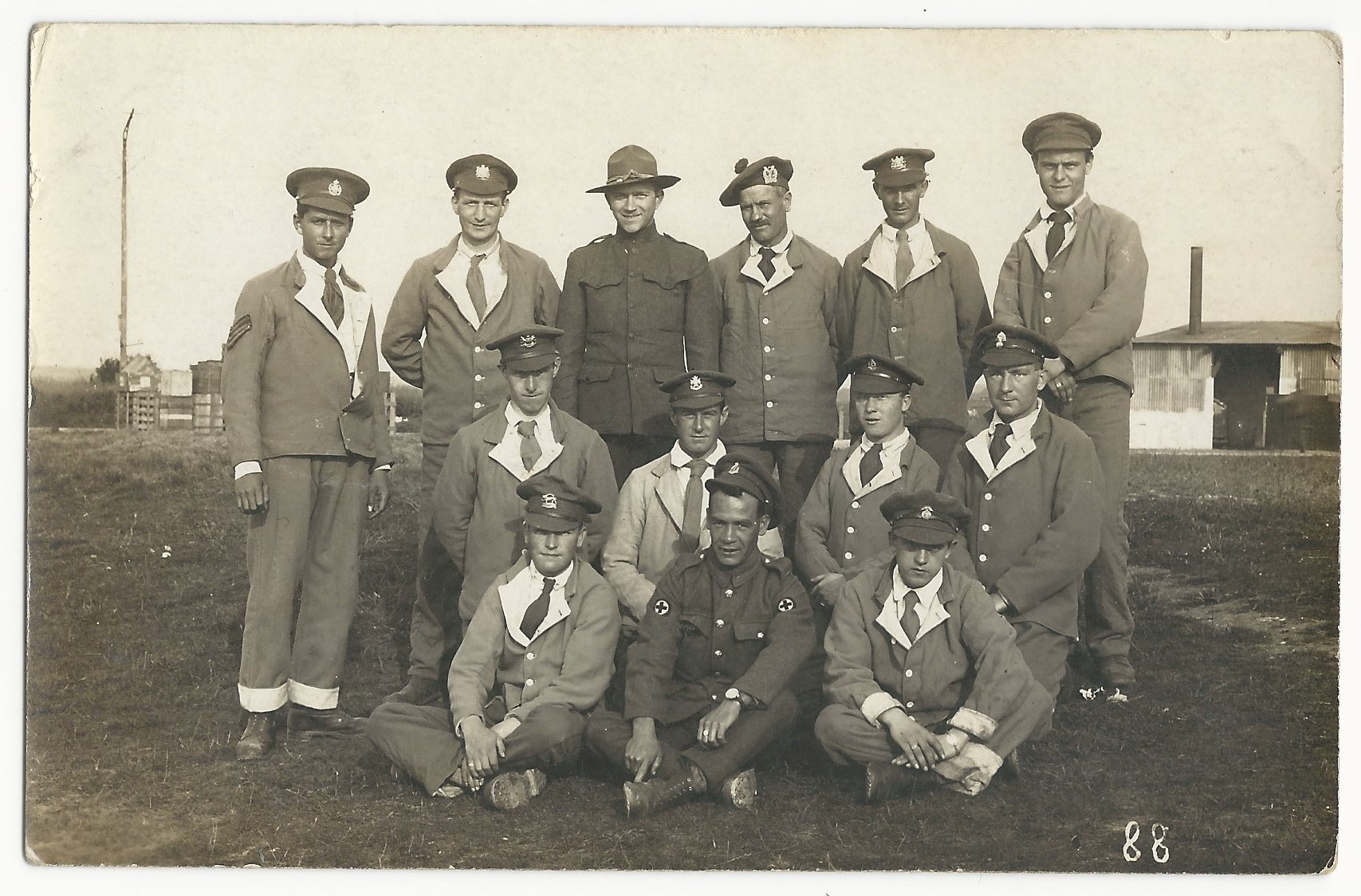

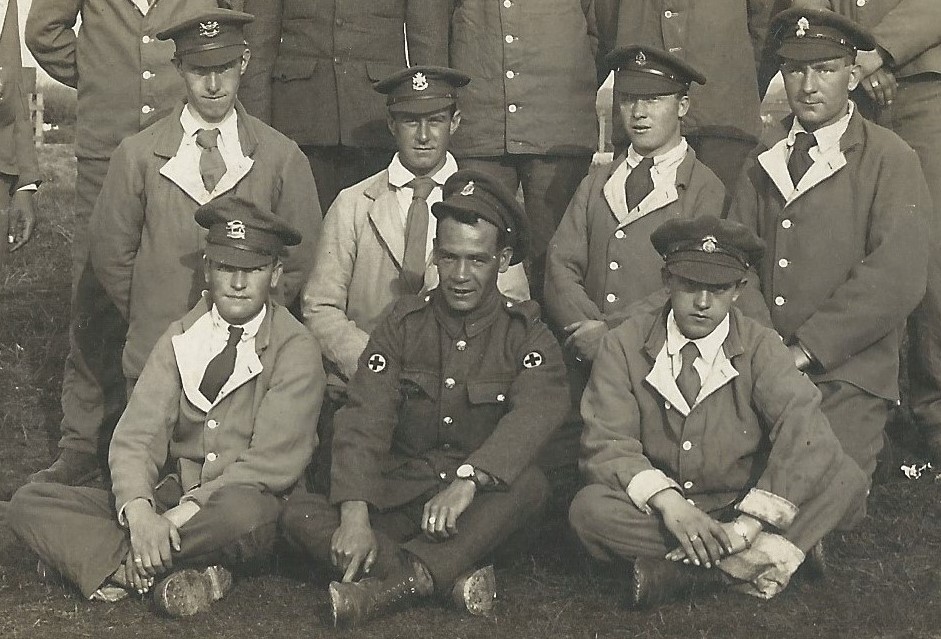


I could really use some help here. Who are these men? Which branch of the military are they from? What nation’s armed services do they serve in? The previous owner of this vintage real photo postcard stated that the men seen in this image are a group of World War 1 medics. I can not confirm his statement, but it is true, that the soldier sitting in the middle of the bottom row, has red cross patches on both of his upper sleeves. At least this man, seems to be in a medical unit. Another clue might be the observation that the gentleman, third from the left in the top row, appears to be wearing a World War 1 era uniform. Speaking of uniforms, why is it that all eight of the men wearing badges on their hats, have different badges. These men’s uniforms are certainly not uniform. I am eager to hear cabinet card gallery visitors opinions about the identity of this military group. This postcard is postally unused, has excellent clarity, and is in very good condition (see scans). ADDENDUM: A knowledgeable visitor to the Cabinet Card Gallery has shared some information concerning this postcard. The visitor confirmed that these are WWI soldiers (1914-1918). The men were serving in different battalions of the British Army. Most of the men are wearing uniforms reserved for wounded soldiers. The uniforms are called hospital dress. There is also confirmation that the soldier I identified as a medic is indeed a medic.
Buy this Vintage Real Photo Postcard (includes shipping within the US) #3422
To purchase this item, click on the Pay with PayPal button below
$25.50

Buy this Vintage Real Photo Postcard (includes International shipping outside the US) 3422
To purchase this item, click on the Pay with PayPal button below
$34.50




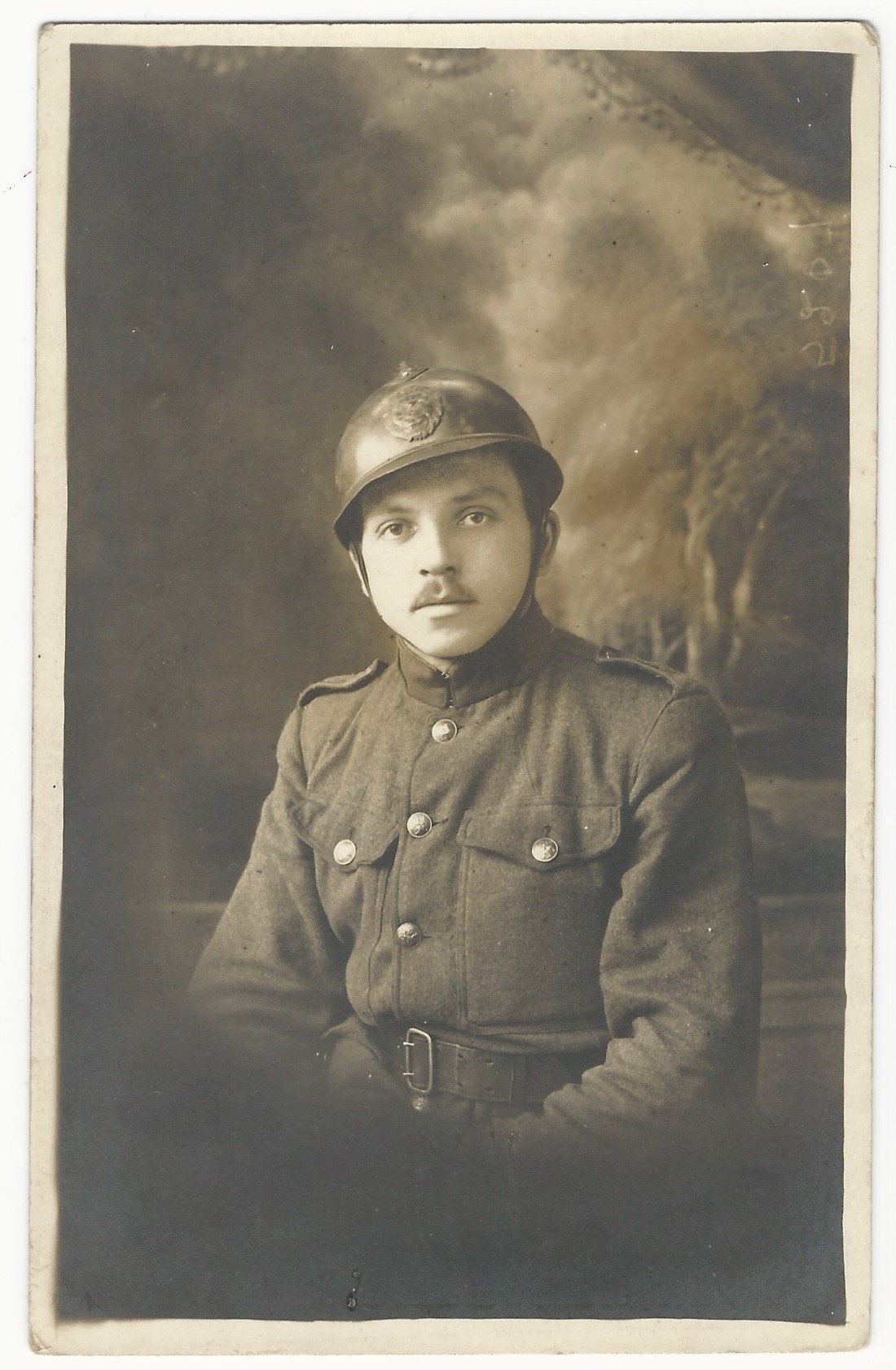
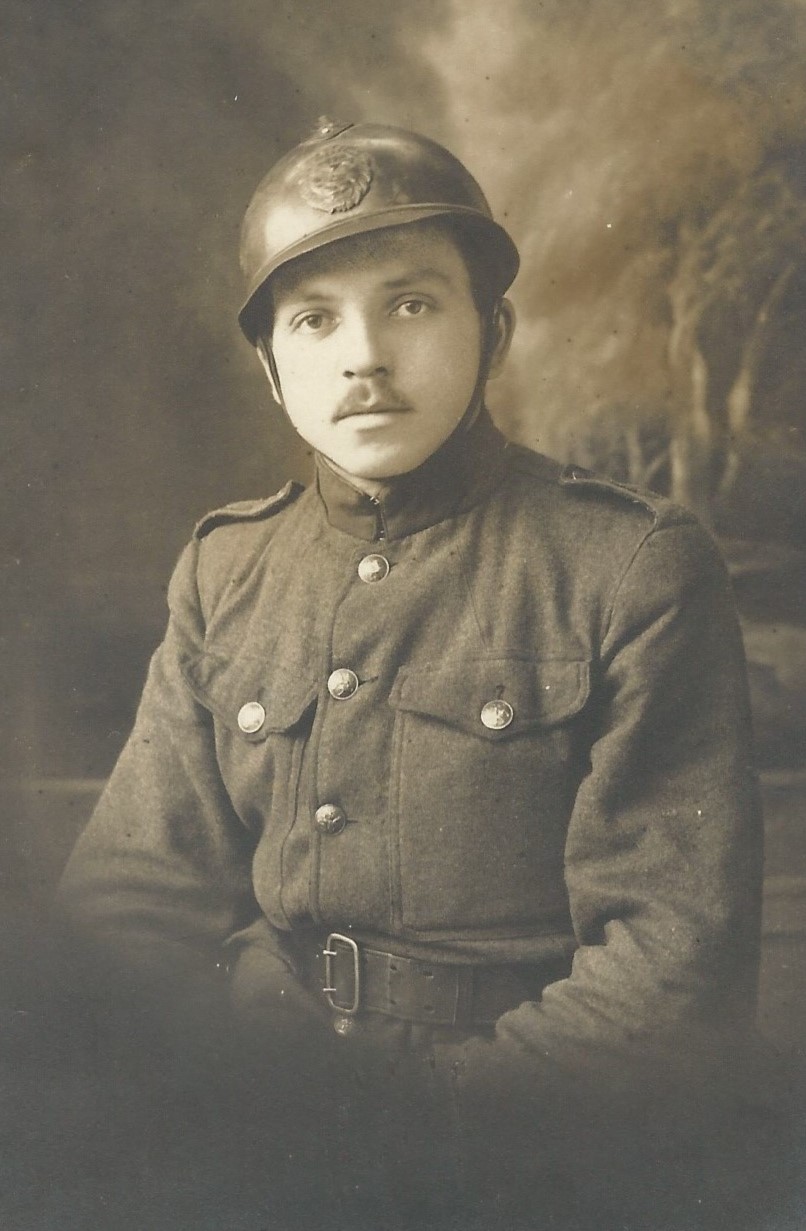
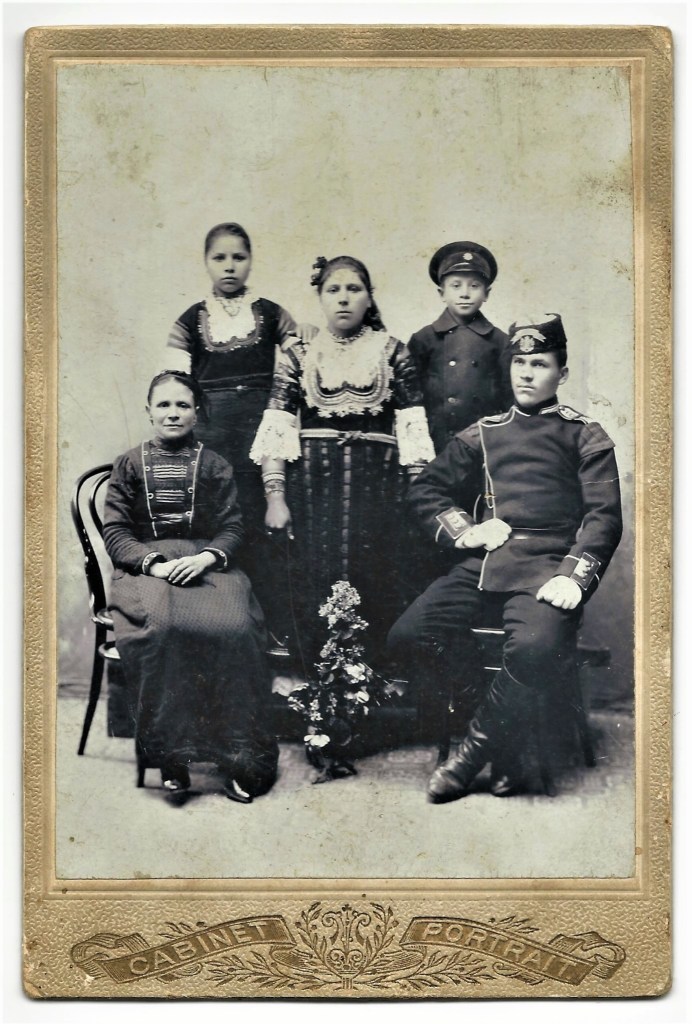
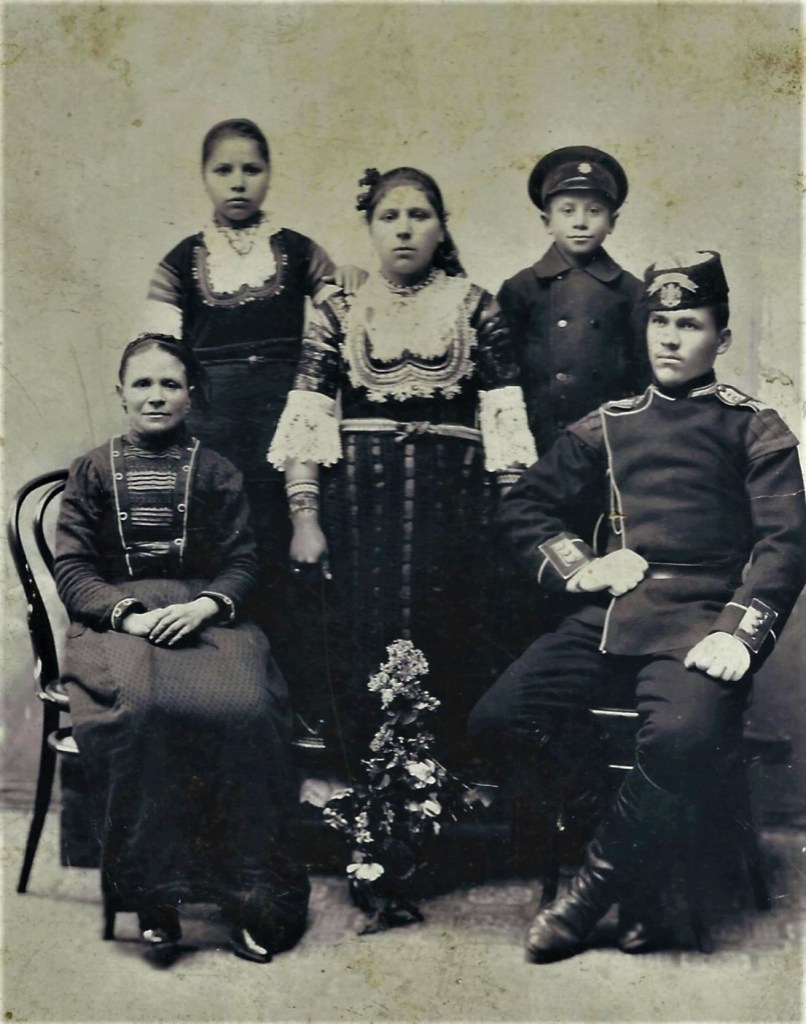


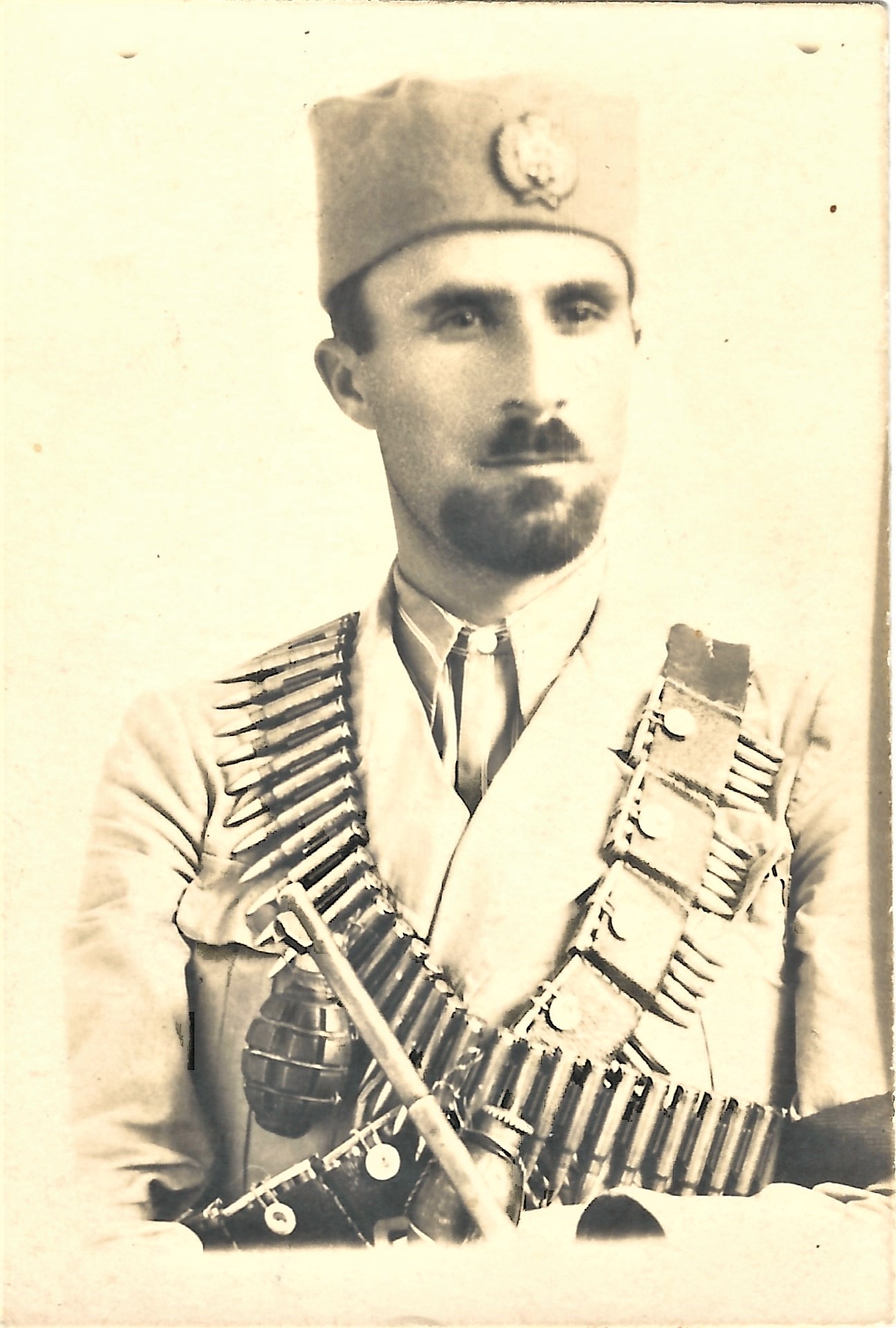 This vintage postcard features a well armed soldier ready for battle. He is wearing an ammunition belt and at least a couple of hand grenades. He also has a rifle although only the barrel of the gun is visible. What nation is this warrior fighting for? Who is he fighting against? I wish I had answers. An inscription on the reverse of the photo indicates that the soldier is the Commandant (Commander) of his unit. The year that this photo was taken, according to the inscription is 1942. I believe, though not very confidently, that the language on the reverse of the photo is Greek. Perhaps this is a Greek or Turkish officer. This photograph was trimmed from a postcard. It measures about 2″ x 3″ and is in very good condition.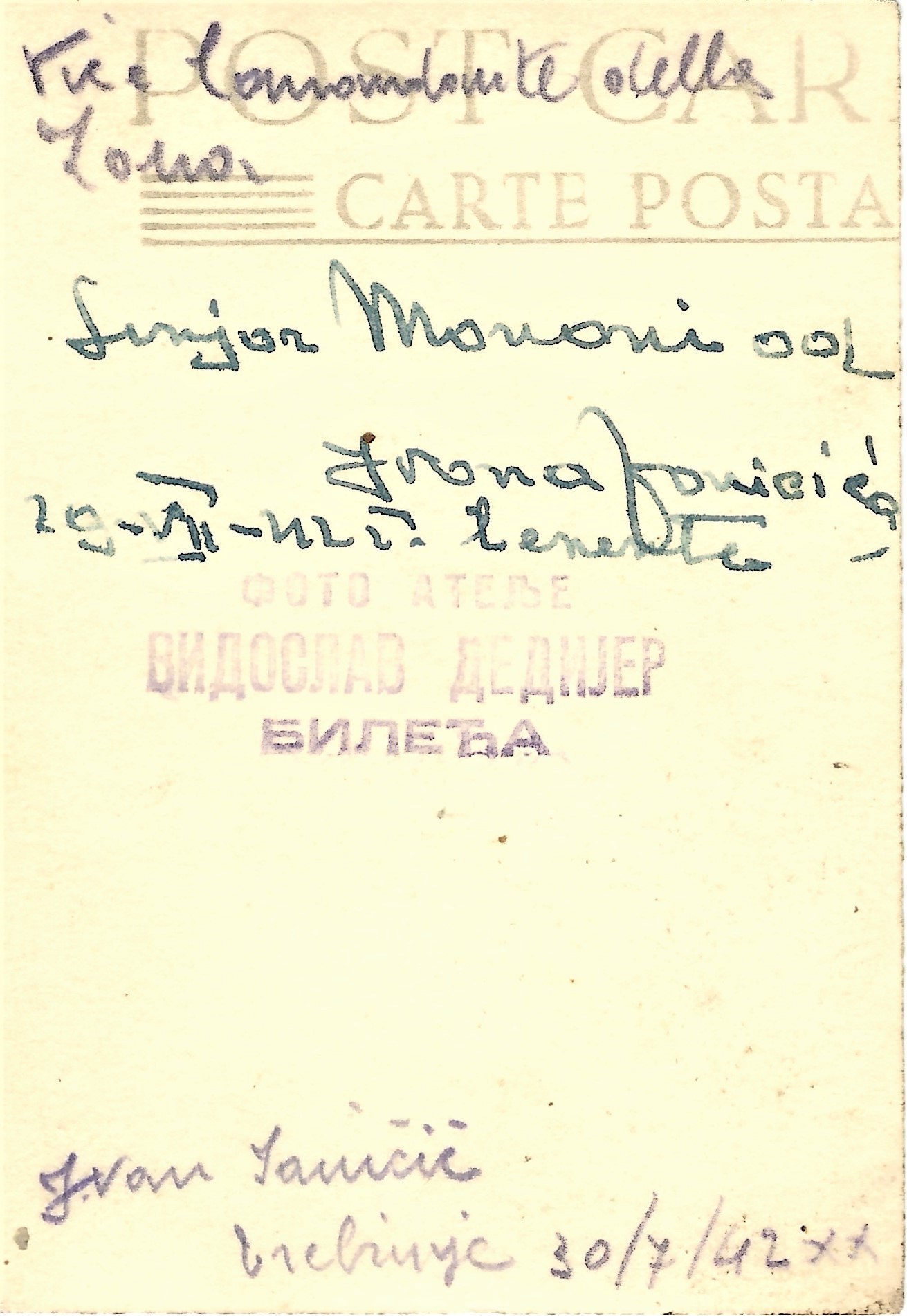
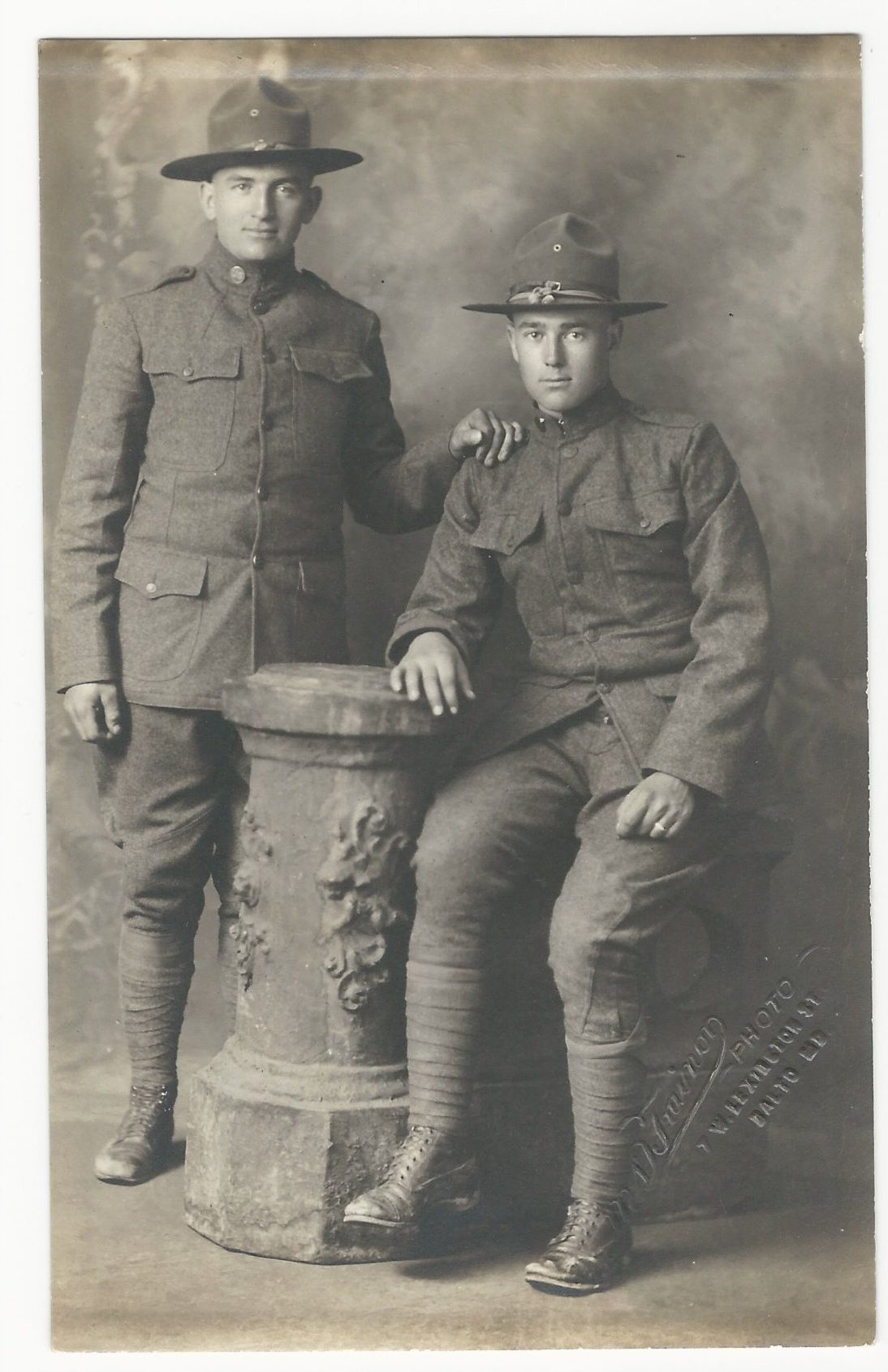 This vintage real photo postcard features two handsome uniformed World War I era soldiers posing for their portrait at a studio in Baltimore, Maryland. The photograph was taken by Martin D Trainor. His name is embossed near the bottom right hand corner of the image. The Maryland Historical Society has one or more of his photographs in their collection. The AZO stamp box indicates that the postcard was published between 1918-1930. (SOLD)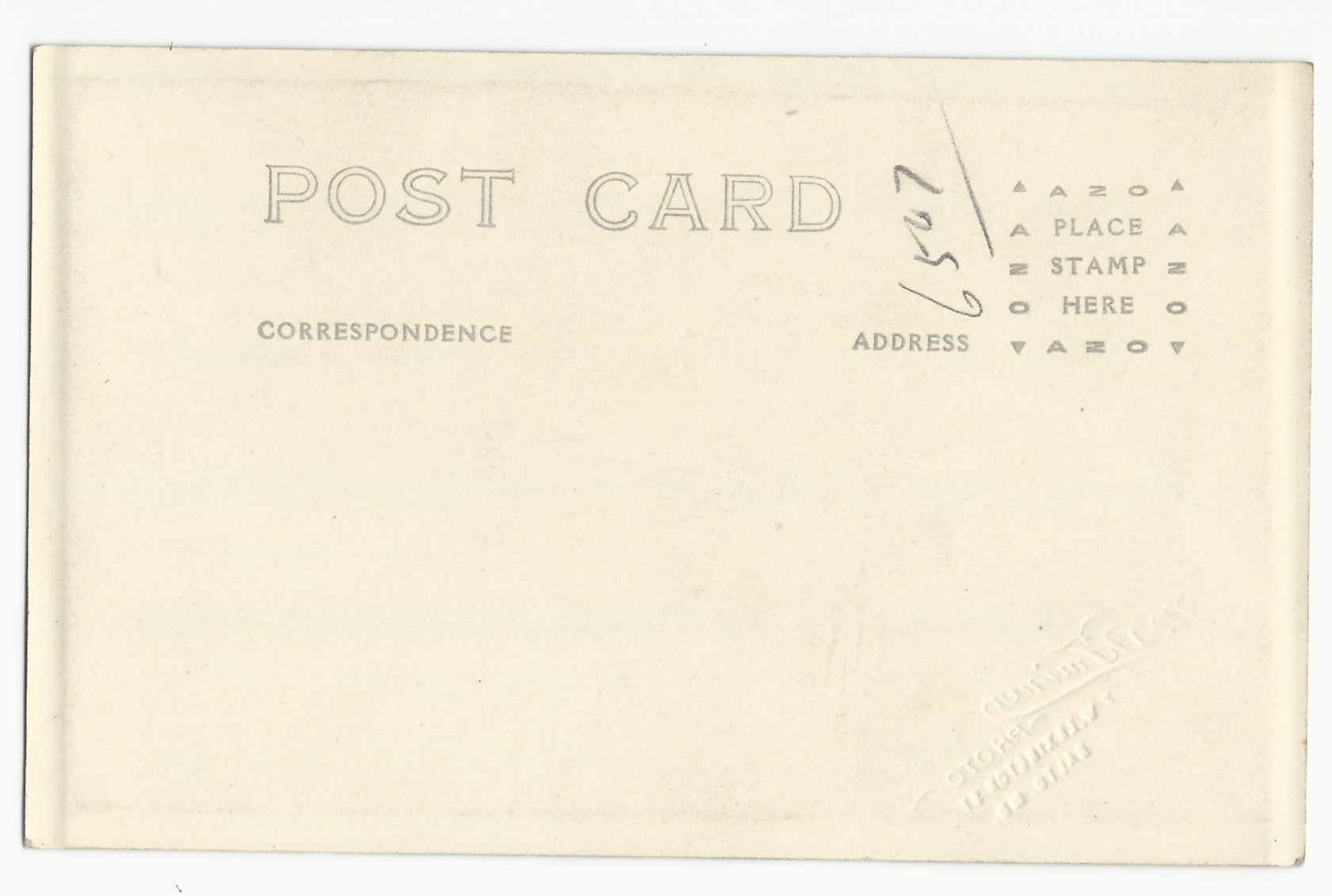


 THE CABINET CARD GALLERY