PAULINE HALL (1860-1919): BEAUTIFUL MUSICAL THEATRE STAR

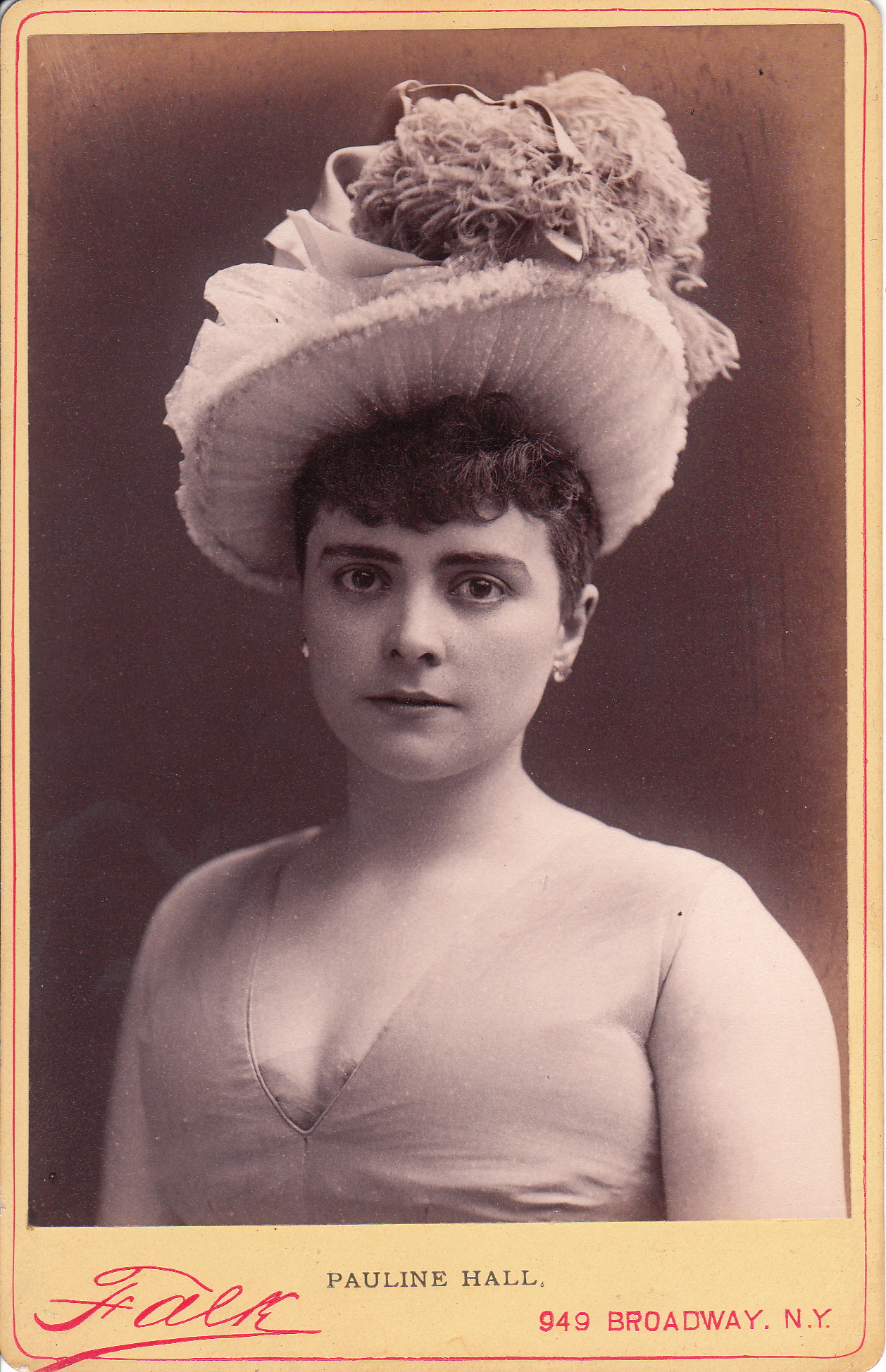
CABINET CARD 1

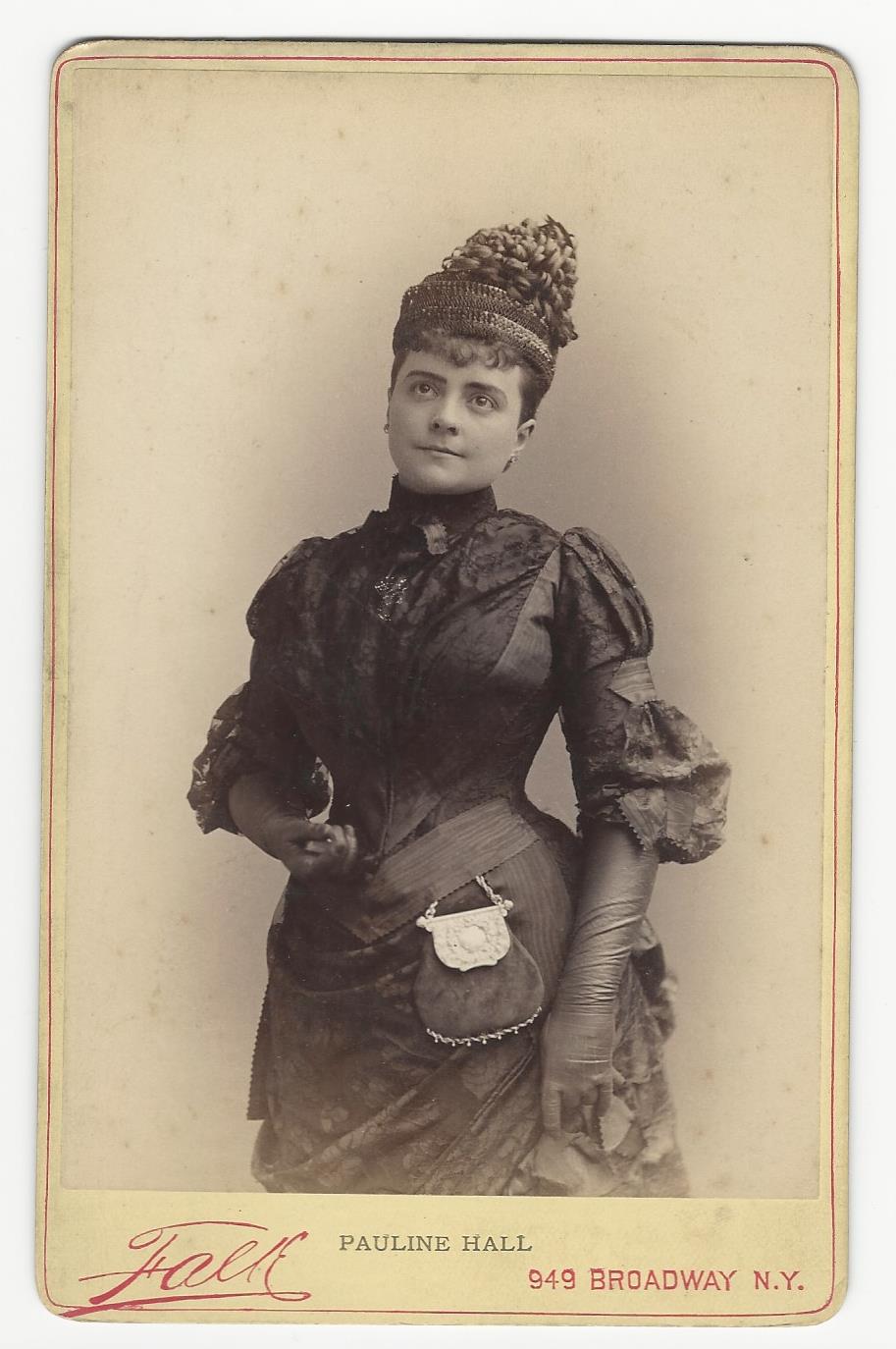
CABINET CARD 2

CABINET CARD 3   (SOLD)

pauline hallCABINET CARD 4   (SOLD)

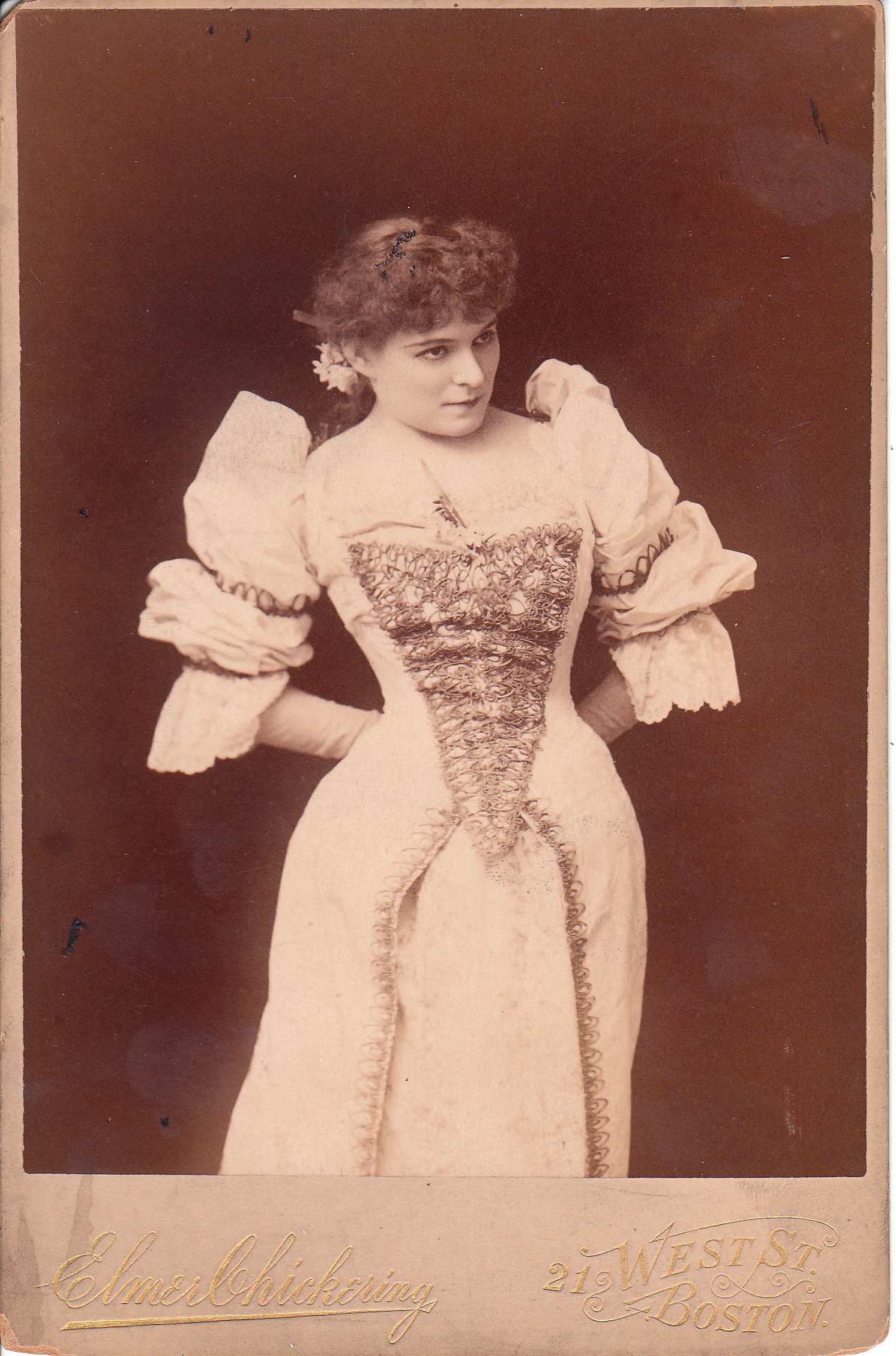
The top cabinet card features Pauline Hall (1860-1919), one of the most popular turn of the century prima donnas. She began her career as a dancer in Cincinnati, Ohio at age 15. She joined the Alice Oats Opera Company but left to tour in plays with famed actress Mary Anderson. By 1880, she worked for well known producer Edward Everett Rice in musical productions. Early in their association, he gave her a role in “Evangeline”. Her shapely figure allowed her to take male roles as she did in “Ixion” (1885). Her greatest success came in the title role of the first American production of  “Erminie” (1886). She played in more than two dozen Broadway operettas. Her final role was in the “Gold Diggers” (1919). This photograph was taken by famed celebrity photographer, Elmer Chickering of Boston, Massachusetts. Other photographs by Chickering can be seen by clicking on Cabinet Card Gallery’s category of “Photographer: Chickering, E.”.

The second cabinet card, photographed by B. J. Falk, of New York City, captures Pauline Hall in stage costume. The photograph is #305 in a series from Newsboy. The tobacco company (Newsboy) gave away cabinet cards as a premium with the purchase of their products. This cabinet card shows a copyright date in the 1890’s. The exact date has become illegible over time. To view other Newsboy or Falk cabinet cards, click on the categories “Photographer: Falk” or “Photographer: Newsboy”.

The third cabinet card portrait was also photographed by Falk. Ms. Hall looks quite beautiful in this image. She is wearing earrings and an interesting hat. The photograph is a bit risque. Much of her neck and shoulders are exposed. In addition, her dress accentuates and reveals significant cleavage. Is the material at the base of her scoop neckline part of her dress; or was it added in order to make the photograph less provocative? Perhaps a visitor to the cabinet card gallery will be able to provide an explanation.

The fourth cabinet card image, once again photographed by B J Falk, features Miss Hall wearing a dark dress, long gloves, a lovely hat, and a purse. Pauline Hall certainly was a stage beauty as attested by this photograph.

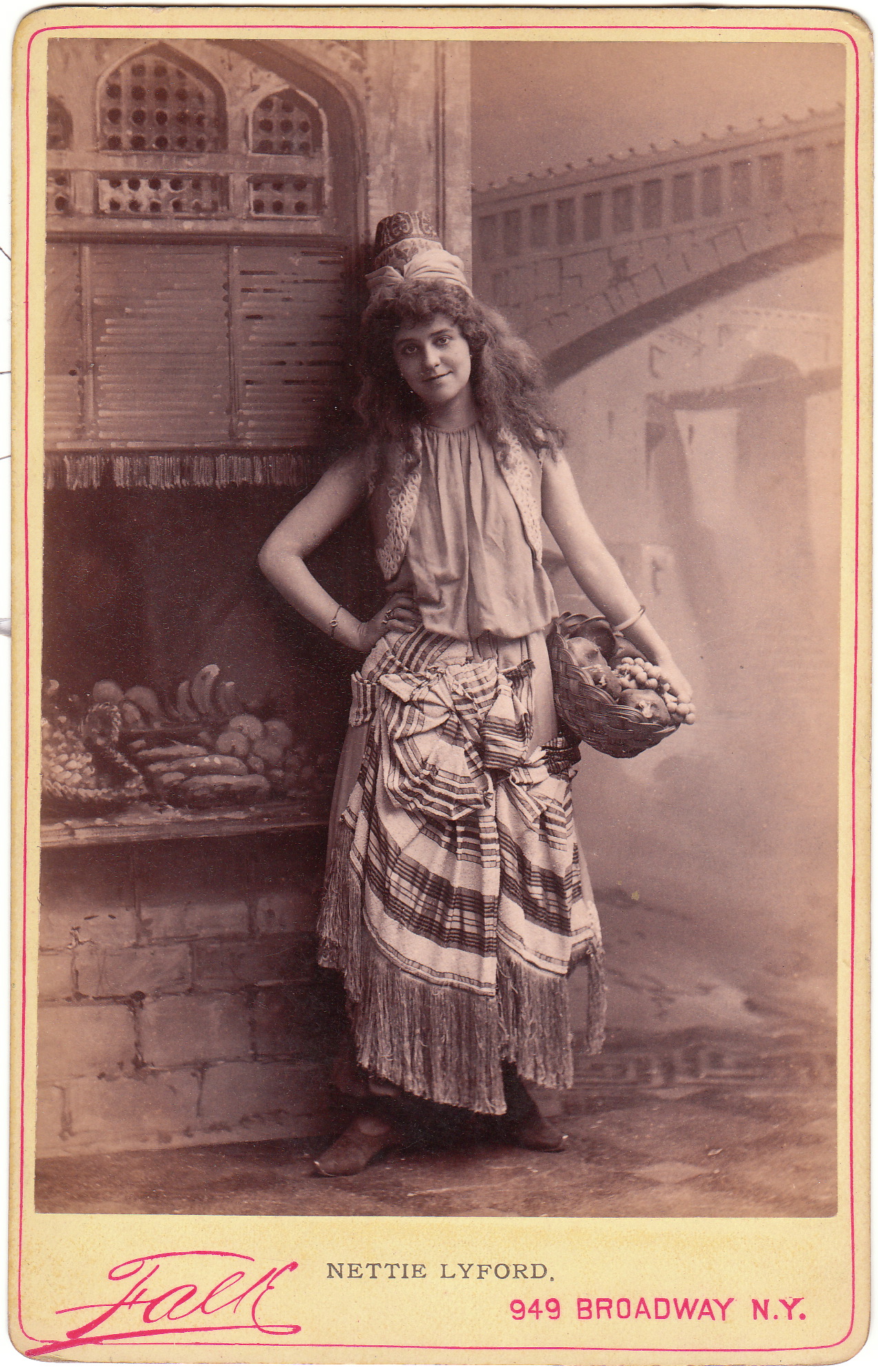
PRETTY ACTRESS NETTIE LYFORD GOES PRODUCE SHOPPING IN NEW YORK CITY (PORTRAIT BY BENJAMIN FALK)

lyford_0019

This cabinet card portrait features pretty theater actress Nettie Lyford doing her produce shopping at the Whole Foods grocery store in New York City. She was such a fan of the store that she appeared in their advertising for free. Actually, this photograph is a celebrity portrait that was probably taken by famed celebrity photographer Benjamin Falk. The image was likely produced at Falk’s studio in New York City. Miss Lyford is wearing a costume that she probably wore in a stage production. In fact, this very same image appears in Epoch (1892) as part of an article by Morris Bacheller entitled “Favorite Figures of the Stage”. The article reports that the young Miss Lyford “has established herself as one of the comic opera favorites of the Metropolis”. She had made her debut in Charles Hoyt’s farce comedy company in “Rag Baby”. While she was appearing in another Hoyt production, “Lunch Counter Girl” she was seen by Francis Wilson (1854-1935)  who hired her to appear in “Oolah” which was a comic opera appearing in New York City in 1887. This cabinet card image was taken during her tenure with Wilson’s opera company. To learn more about Francis Wilson and the play “Oolah”, search for the image of Marie Jansen which appears in the Cabinet Card Gallery. To view more celebrity photographs by Falk, click on the category “Photographer: Falk”.


Isabel Irving: American Stage Actress

isabel-irving

  irving3_0001


isabel irving two

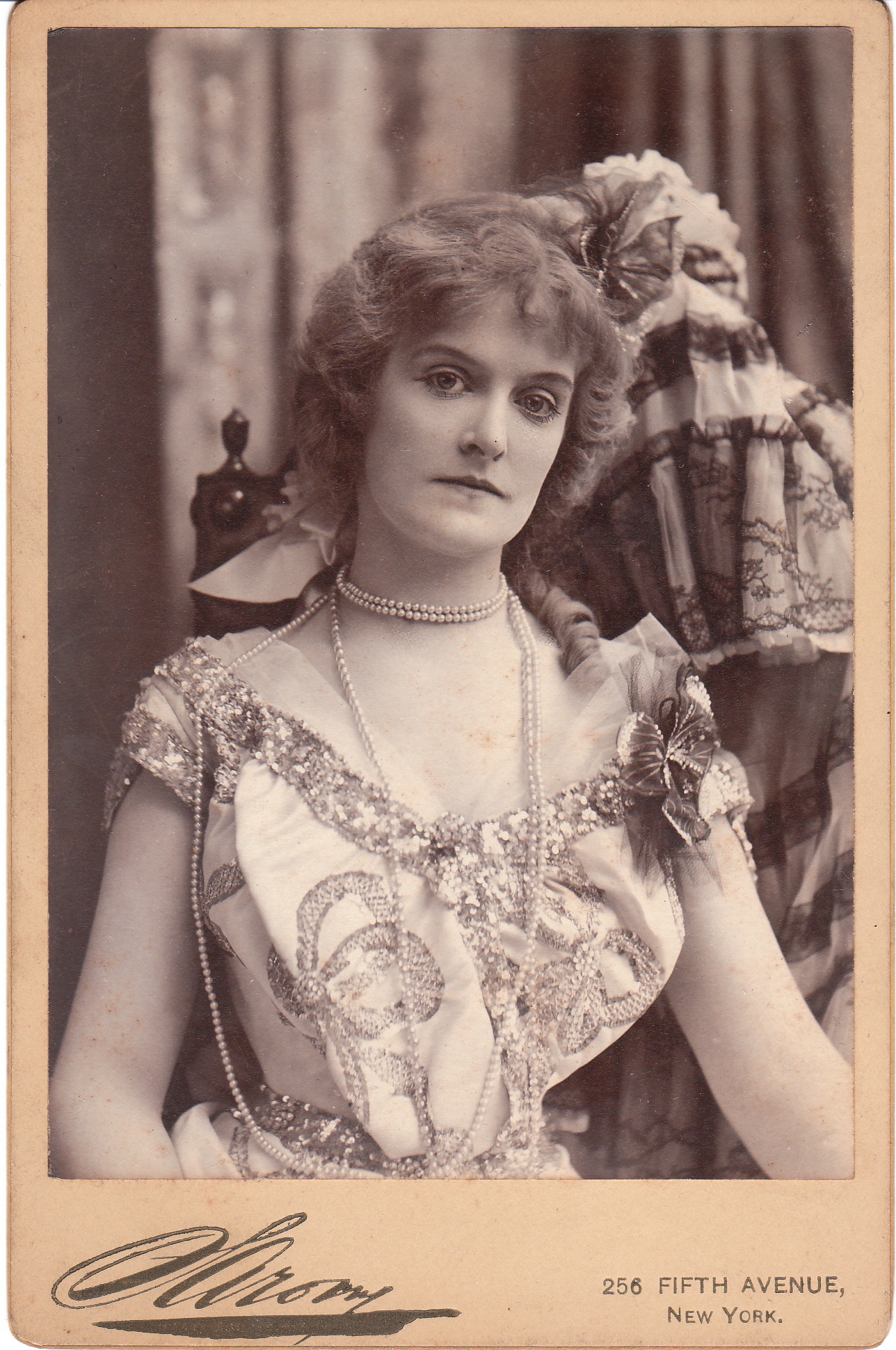
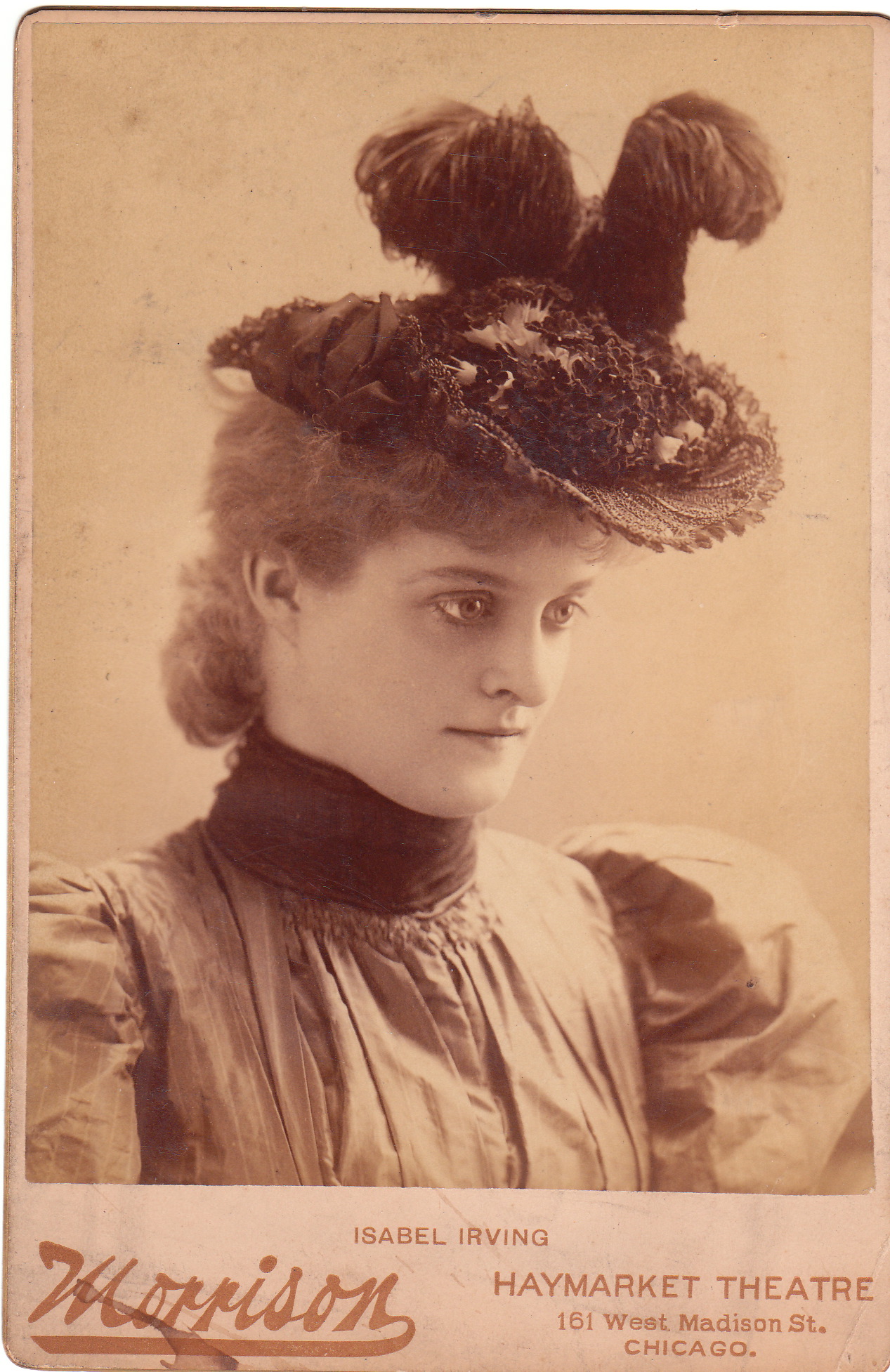
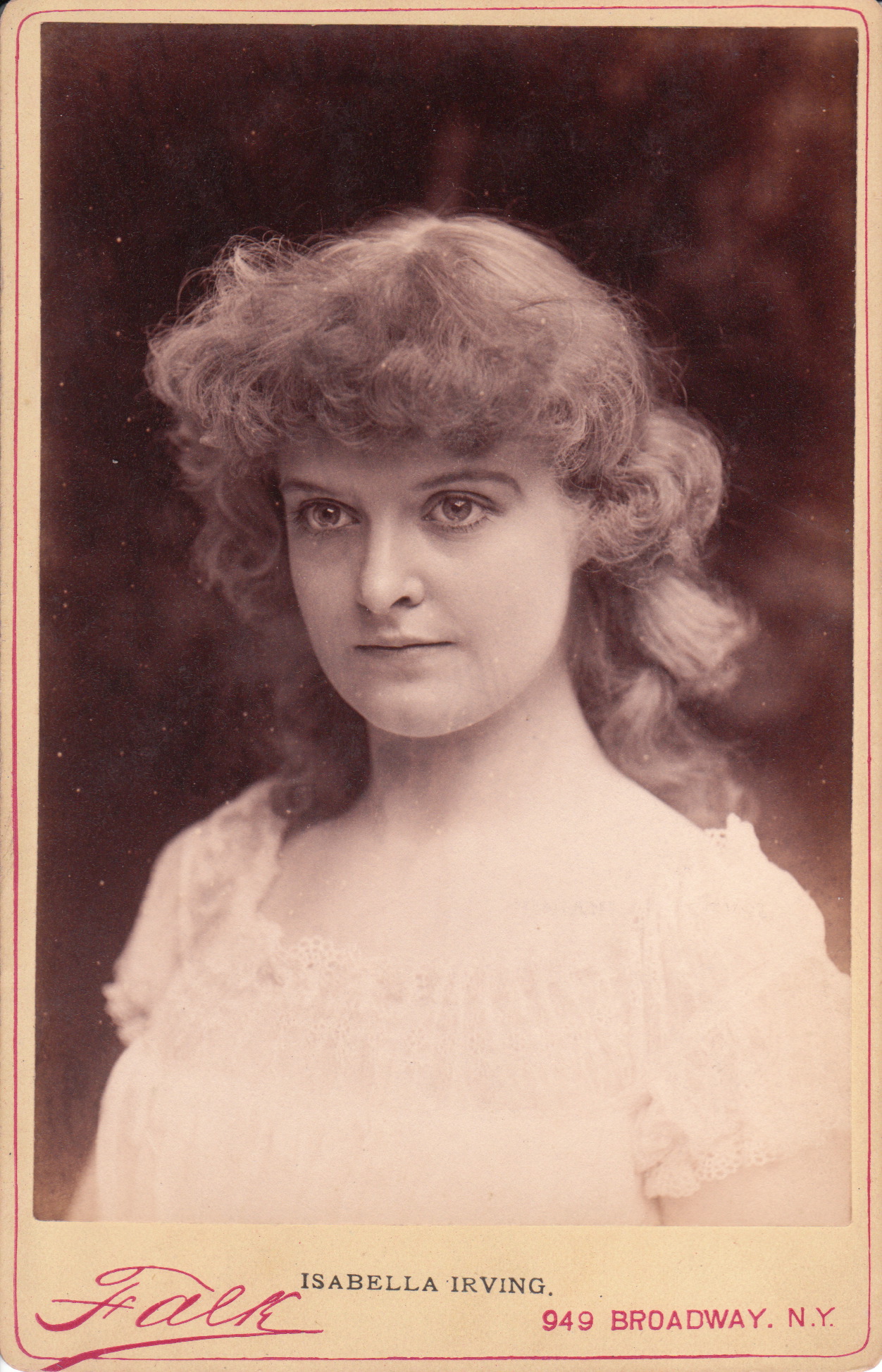
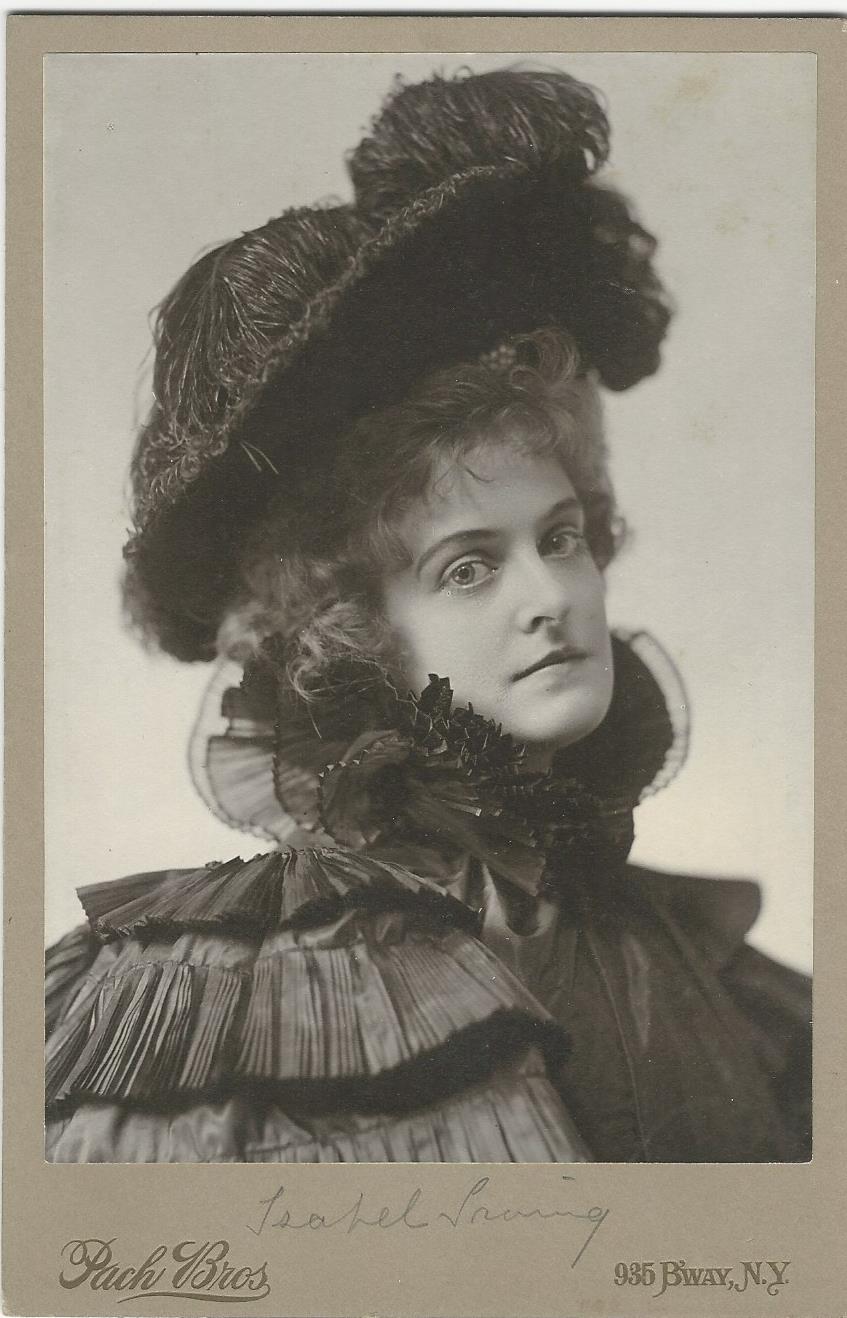
Isabel Irving (1871-1944) was an American actress born in Bridgeport, Connecticut. Her stage career began in 1886. She performed in many performances of Shakespeare. She was also in more than 30 Broadway plays between 1894 and 1936.  These plays included “Merry Wives of Windsor” (1917) and “Uncle Vanya” (1930). The first cabinet photo was done at the studio of Napoleon Sarony in New York.  Sarony was a very famous photographer of his time and known for his photos of theatrical performers and other celebrities. The second photograph comes from the studio of William McKenzie Morrison who was located in the Haymarket Theatre building in Chicago, Illinois. The third cabinet card portrait features Miss Irving photographed by celebrated New York photographer Benjamin Falk. The fourth cabinet card was produced by Pach Brothers studio in New York City. To view a photograph of Isabel Irving’s sister, write “Evangeline Irving” in the search box and press search. To view other photographs by any of the four cited photographers, click on the category “Photographer: Falk, Photographer: Sarony, Photographer: Morrison, or Photographer: Pach Brothers.

PRETTY YOUNG STAGE ACTRESS GLADYS WALLIS (PHOTOGRAPH BY B J FALK)

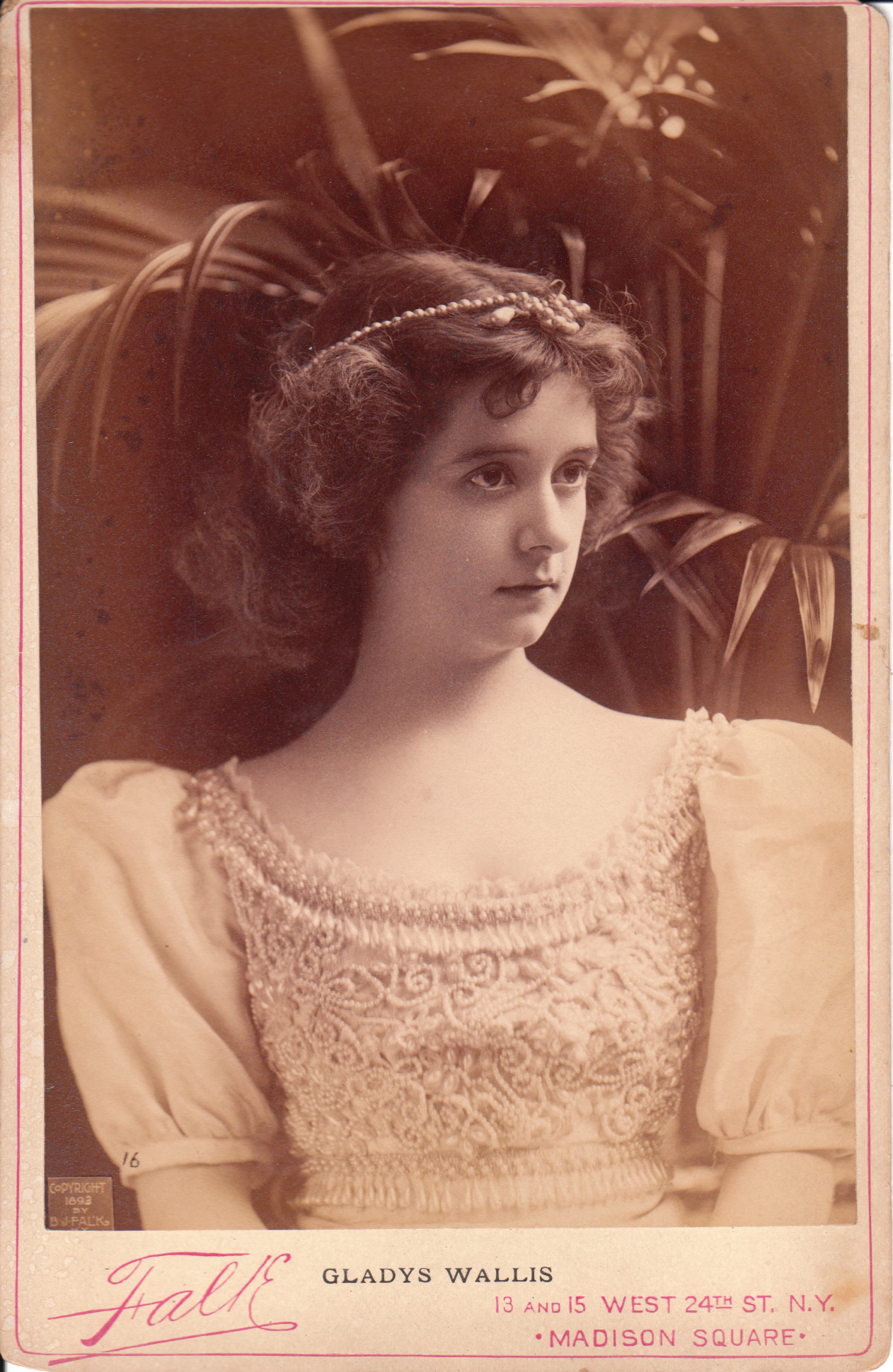
gladys wallis_0003Gladys Wallis, theater star, is the subject of this portrait by celebrity photographer B. J. Falk. Miss Wallis appears to be very young when she posed for this cabinet card photograph. The image is numbered 16 in a series and has a copyright date of 1893. In fact, she was just eighteen years old when she sat for this portrait. Glady Wallis (1875-1953) lived an interesting life. The Florence Times (1932) tells some of her story in an article that is predominately about her husband Samuel Insull (1858-1938). The article was quite disparaging of  Insull and in the lead of the story the reporter writes “The keen brain of Samuel Insull built a 4,000,000,000 public utilities empire but he failed when he attempted to bring about his wife’s come-back as an actress after her 26 year absence from the stage”. The attempt cost him 200,00 dollars. Gladys Wallis’s was originally named Mary Bird. She was of Irish descent and upon becoming an actress was determined to be viewed as a respectable woman. She was anti alcohol and reportedly, anti sex. Insull had originally seen her as a “starry eyed and raven-haired young ingenue in an 1898 theater production in Chicago. She was just a teenager and he was 36 years-old starstruck admirer. They later met at a dinner party and two years later, they married. Gladys quickly retired from the stage and became a society lady. She had a number of estates and servants, was active in fund raising for charities, went to high society affairs and functions, and wore expensive clothing and jewelry. It is reported that she wasn’t an easy person to get along with and was not very well liked among the ladies of society. She and Insull reportedly had a tempestuous relationship and among their issues was her disinterest in sex. Insull supported her temperance beliefs. The couple had a son who eventually attended Yale University. In 1925,Wallis revealed her desire to return to the stage because of her desire for “self expression”. Her husband funded the theatrical endeavor and its proceeds were to be directed toward charity. Society turned out in mass for the opening night of what was to be a two week engagement where Mrs. Insull played the “coquettish role”of Lady Teazle. Attendees included Marshall Fields, the Armours, the Drakes, and the Pullmans. The success of this limited engagement spurred Wallis to return to Broadway. Wallis may have felt ready for Broadway but apparently Brodway wasn’t ready for Wallis and she returned to Chicago in 1927. She was not yet done with acting so she took a five year lease on a Chicago theater and established a performing company. This project failed and before long he company was operating at a loss of more than a thousand dollars a day. Things also did not go well for Mr. Insull. The depression severely impacted his business and eventually there were even charges filed against him. He fled to Europe with his wife where they entered “voluntary exile”. He was eventually deported from Europe but was well defended in a Chicago trial and found innocent of all charges. However, the Insulls had lost their fortune and at the time of his death, his estate was quite meager. There are a number of books available about Mr. Insull and they probably make quite interesting reading. This photograph was taken by B. J. Falk, New York City celebrity photographer. To learn more about this photographer and to see more of his images, click on the category “Photographer: Falk”.

PORTRAIT OF “LITTLE OLLIE”: A GIRL AND HER MANDOLIN

LITTLE OLLIE_0002This cabinet card portrait features “Little Ollie” and her mandolin. At least I think her instrument is a mandolin. Confirmation from a cabinet card gallery visitor would be appreciated. This little girl performer is adorable. She is wearing a cute hat and her jewelry includes a necklace and bracelet. The reverse of the photograph has an inscription stating “From Little Ollie Herself”. Benjamin J. Falk (1853-1925), a noted celebrity photographer, produced this photograph. His studio was located on Broadway in New York City. The image is numbered on the bottom right hand corner.To view more photographs by this photographer, click on the category “Photographer: Falk”. Research revealed not further information about “Little Ollie”. However, a different photograph of her, also by Falk, is in the collection of the Library of Congress.

store

Published in: on April 17, 2014 at 10:22 am  Comments (3)  
Tags: ,

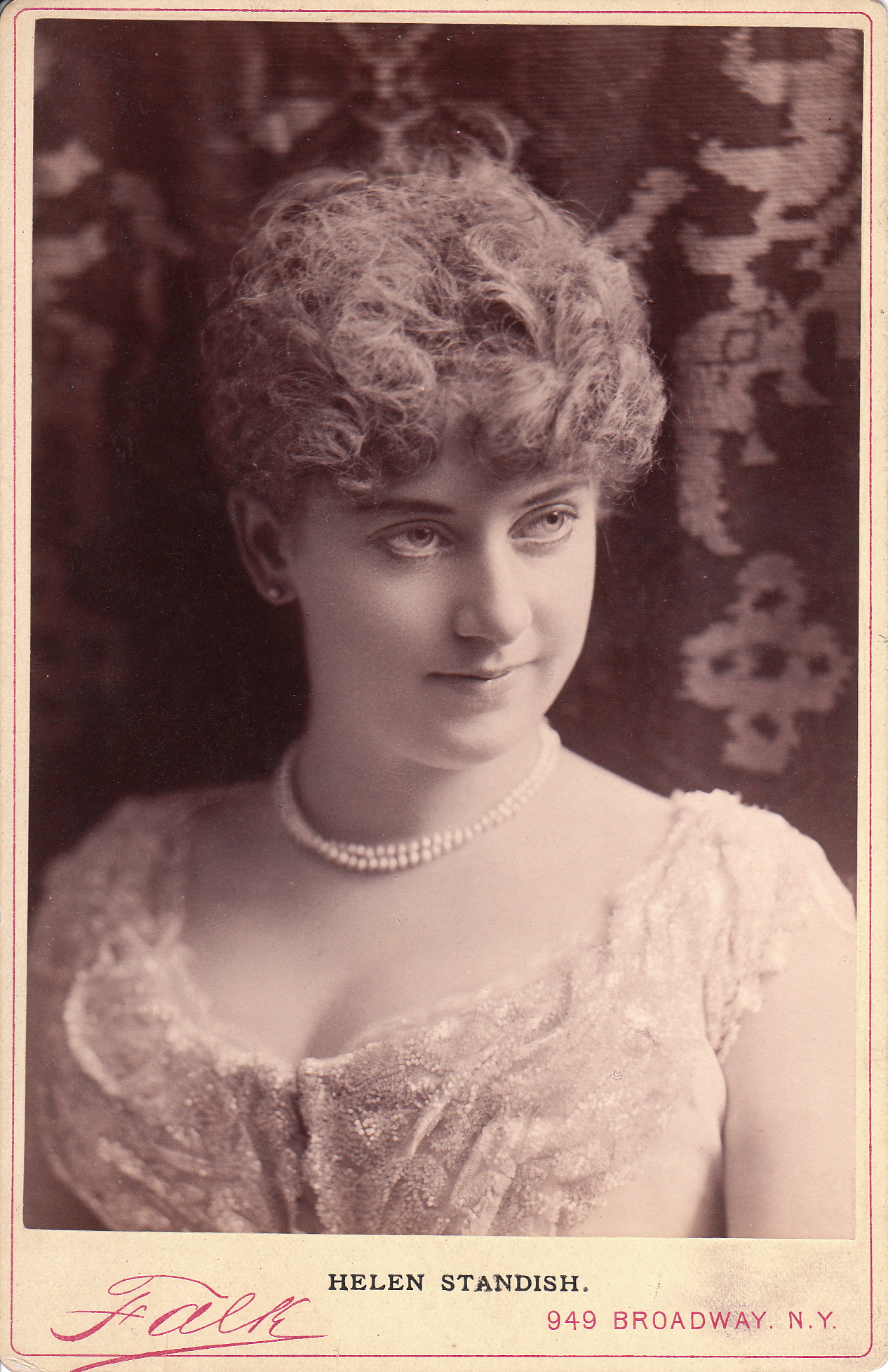
PORTRAIT OF BEAUTIFUL ACTRESS HELEN STANDISH (PHOTOGRAPHED BY B J FALK)

STANDISH F_0016

This cabinet card portrait features pretty actress Helen Standish. Famed celebrity photographer B J Falk produced this image and Miss Standish’s choice to wear a dress showing some cleavage, makes this photograph somewhat risque for it’s era. In addition, her expression can be interpreted as being enticing. Research revealed very little about Helen Standish or her career. She appears in number of cigarette card series including one produced by Dukes Cigarettes (“Leading Actors and Actresses”) which can be seen below. Her name appears in the New York Times (1887) review of the play “The Pyramid” which appeared at the Star Theater. The reviewer states that Miss Standish and another actress in the play “were not equal to the demands of their roles”. Ouch! The reverse of the cabinet card has a stamp from “Culver Service” which was a New York City company that charged the media for the use of photographs coming from their vast image archives. The reverse of the photograph also has the stamp of photographer J. M. Russell, 126 Tremont Street, in Boston, Massachusetts. Russell was a well known music publisher in Boston and it is possible that he also was involved in the sale of celebrity cabinet  cards.   SOLD4 (1)

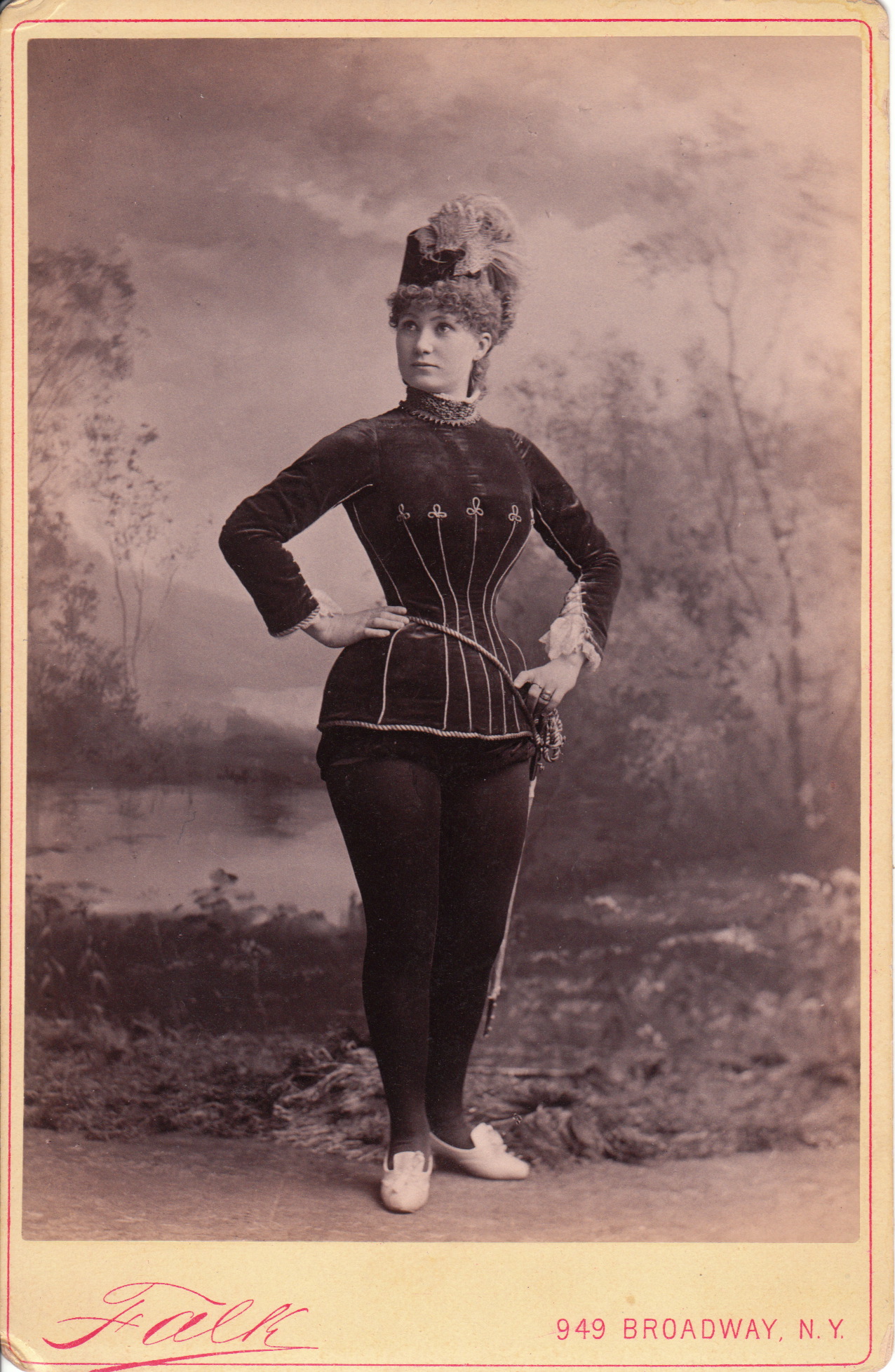
ANNIE SOMERVILLE: STAGE ACTRESS PHOTOGRAPHED BY BENJAMIN FALK

SOMMERVILLE_0001Stage star, Annie Somerville is featured in this cabinet card portrait by celebrity photographer Benjamin Falk in New York City. The curly haired actress is pretty and thin waisted. She is wearing a velvet type costume and has a sword at her side. Research yielded little information about Miss Somerville. She appeared in a number of actress series issued by tobacco companies. Her named is listed as part of the cast of Evangeline when the play appeared at the Fourteenth Street Theater in New York City. The reverse of the photograph has the stamp of photographer J. M. Russell, 126 Tremont Street, in Boston, Massachusetts. Russell was a well known music publisher in Boston and it is possible that he also was involved in the sale of celebrity cabinet  cards.  To view other photographs by Falk, click on the category “Photographer: Falk”.

Published in: on September 1, 2013 at 12:01 am  Comments (2)  

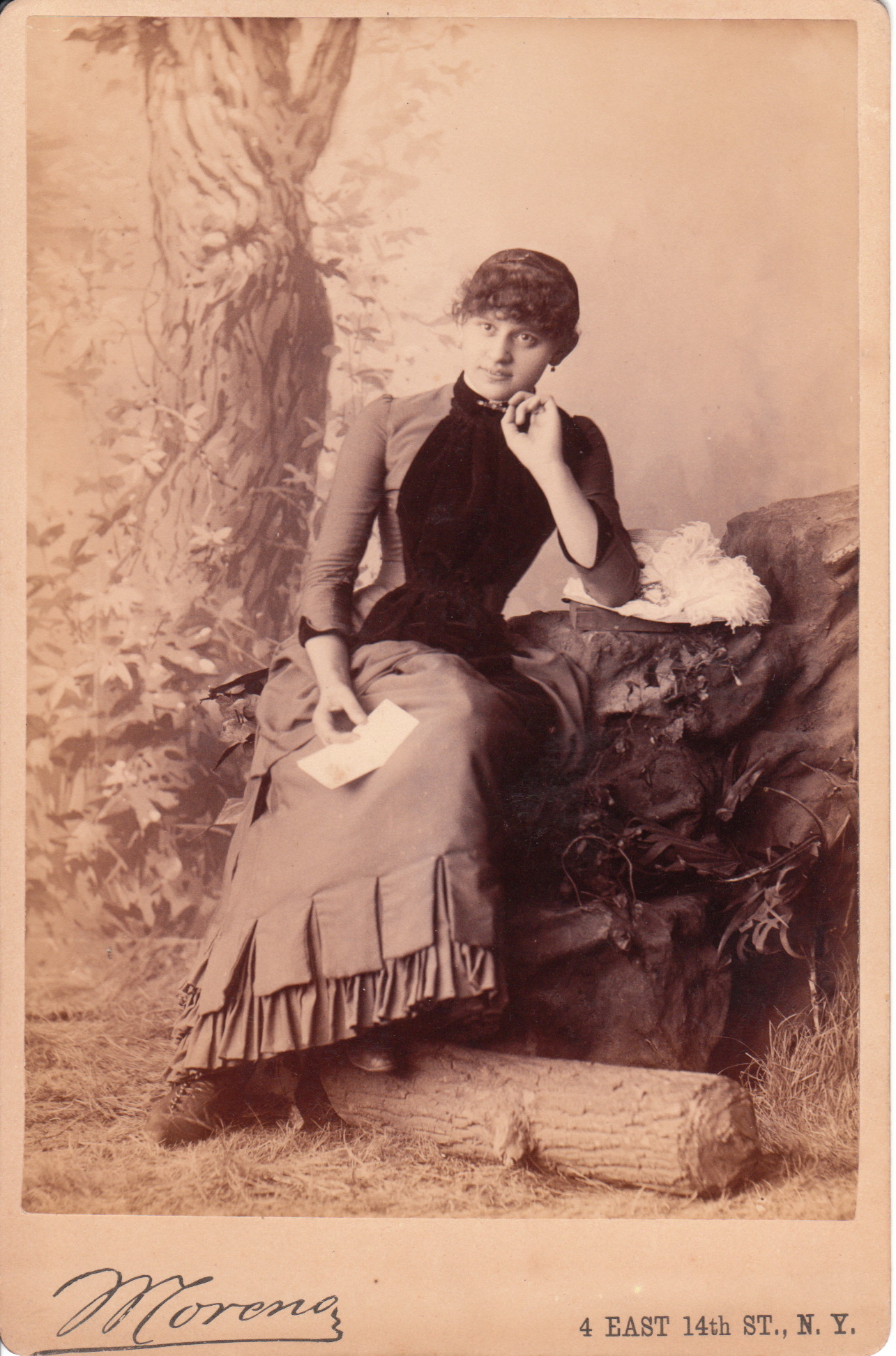
PRETTY YOUNG WOMAN WINS THE LOTTERY IN NEW YORK CITY

MORENOA pretty young woman sits on a faux rock as she poses at the Moreno studio in New York City. She is holding what appears to be an envelope in her hand but at first glance looks like bank check. This fashionable subject is very thin waisted and present herself in what the photographs previous owner called “a fetching pose”.  Antonio E. Moreno was a Cuban painter and graphic artist who became a photographer after seeing the success of his New York based countryman, Jose Maria Mora (see category “Photographer: Mora”). In 1881, Moreno took over a failing New York City photographic studio. The business end of the studio was run by his co-director, Jose Lopez. Moreno developed the business into a great success due to his great talent as a photographer, developer and innovator. He became noted in photographic circles and received much acclaim from his participation in photographic expositions. He surrounded himself with talented co-workers. Much of his staff came from Mexico. Spanish cameraman Antonio Urda was considered to be excellent at his craft but was a fiery man who eventually committed suicide by drinking development fluid after failing to murder printer Domingo Costello. After this incident, Moreno preferred to hire English speaking Europeans to work at his studio. One of his hires was printer Nahum Lubosh whom he snared from celebrated photographer B. J. Falk (see category “Photographer: Falk”).  Another employee, cameraman A. L. Simpson pioneered the use of slides utilized in theater sing-alongs. In 1890 Moreno partnered with the Taber Art Company in publishing photographs of beautiful female models in what has been described as “genre scenes and allegories”. The photographs were well posed, precisely lit and very tasteful. Moreno’s gallery was in business for a quarter of a century and was a center for performing arts portraiture. One wonders if the subject of this cabinet card portrait was in fact a theater actress. To view other photographs by Moreno, click on the category “Photographer: Moreno”.

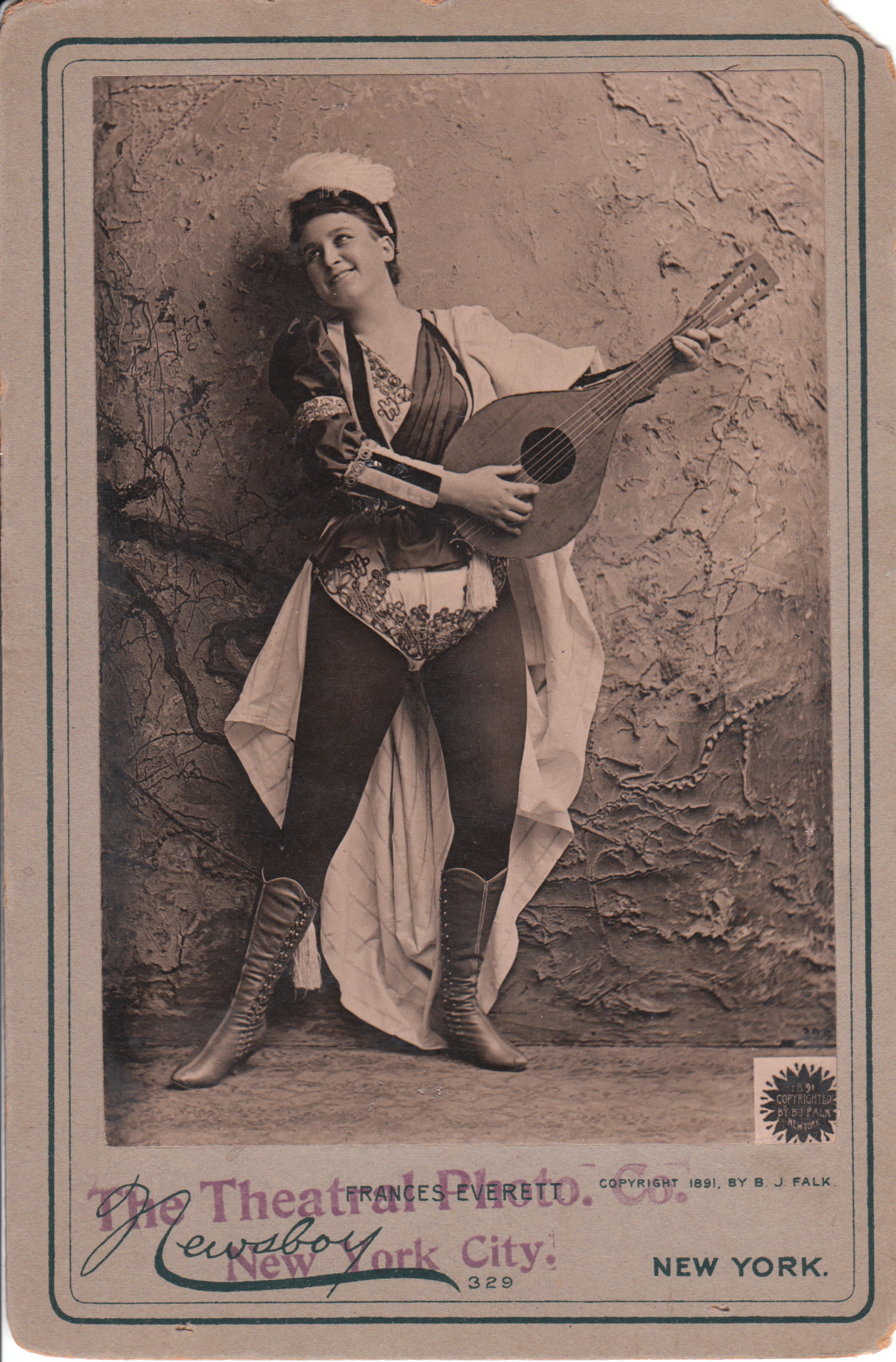
FRANCES EVERETT: THEATER ACTRESS PORTRAIT (NEWSBOY SERIES: 1891)

everett_0003This Newsboy cabinet card features a portrait of actress, Frances Everett. The photograph is number 329 of a series of images published by Newsboy to distribute as a premium with their tobacco products. The photograph was taken by B. J. Falk and has a copyright of 1891. The cabinet card has a stamp from the Theatral (Theatrical?) Photo. Company of New York City. Miss Everett holds a string instrument (mandolin?) and is dressed in a rather risque costume for her era. She is also wearing a great smile. Preliminary research found no biographical information about Miss Everett or the Theatral Photo Company.

NOTED STAGE ACTOR: J. FORBES ROBERTSON

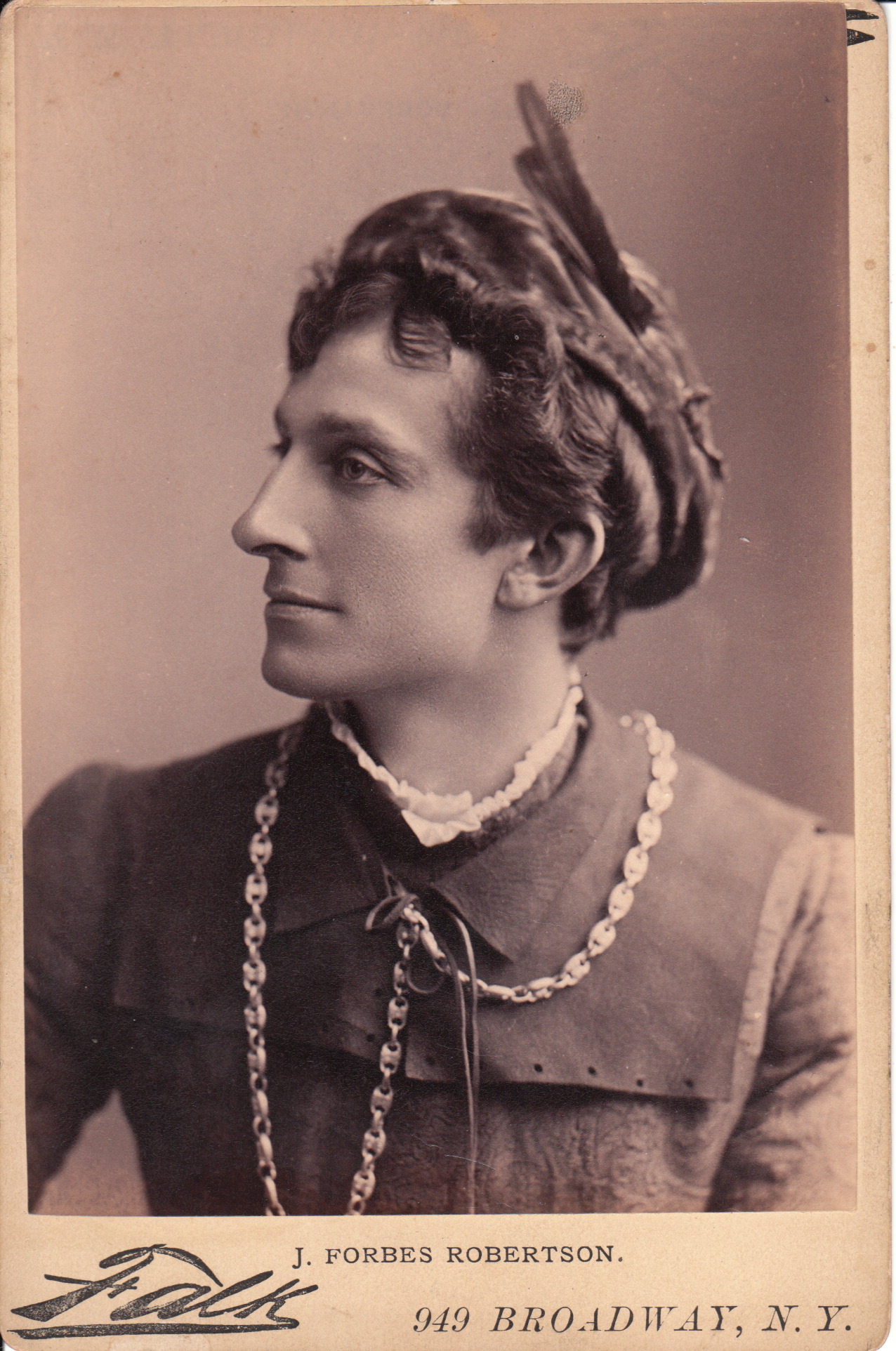
ROBERTSONJohnston Forbes-Robertson (1853-1937) was a celebrated English actor and theater manager. He was considered to be one of the finest actors of his time. He was particularly noted for his portrayal of Hamlet. He did not profess a passion for his acting profession. He was born in London. His father was a journalist and theater critic. He had ten siblings and four of them pursued acting. His original interest was to become an artist, but to support himself financially he entered acting. He worked with Sir Henry Irving for some time as a second lead actor. He then became a lead actor. His starring roles included Dan’l Druce, Blacksmith and The Parvenu (1882). George Bernard Shaw wrote the part of Caesar for him in Caesar and Cleopatra. Forbes Robertson acted in a number of Shakespeare plays and also appeared a number of times with actress Mary Anderson in the 1880’s. In 1900 he married the American actress, Gertrude Elliott (1874-1950). In 1930, Forbes Robertson was knighted. This cabinet card portrait was produced by photographer Benjamin Falk who’s studio was located in New York City. Forbes Robertson is captured in costume in this image. The reverse of the photo is stamped “J. M. Russell 126 Tremont Street, Boston”.