PAULINE CHASE : AMERICAN ACTRESS : PETER PAN :POCKET VENUS : J. M. BARRIE

POSTCARD 1 (SOLD)

POSTCARD 2 (SOLD)
POSTCARD 3(SOLD)

POSTCARD 4 (SOLD)

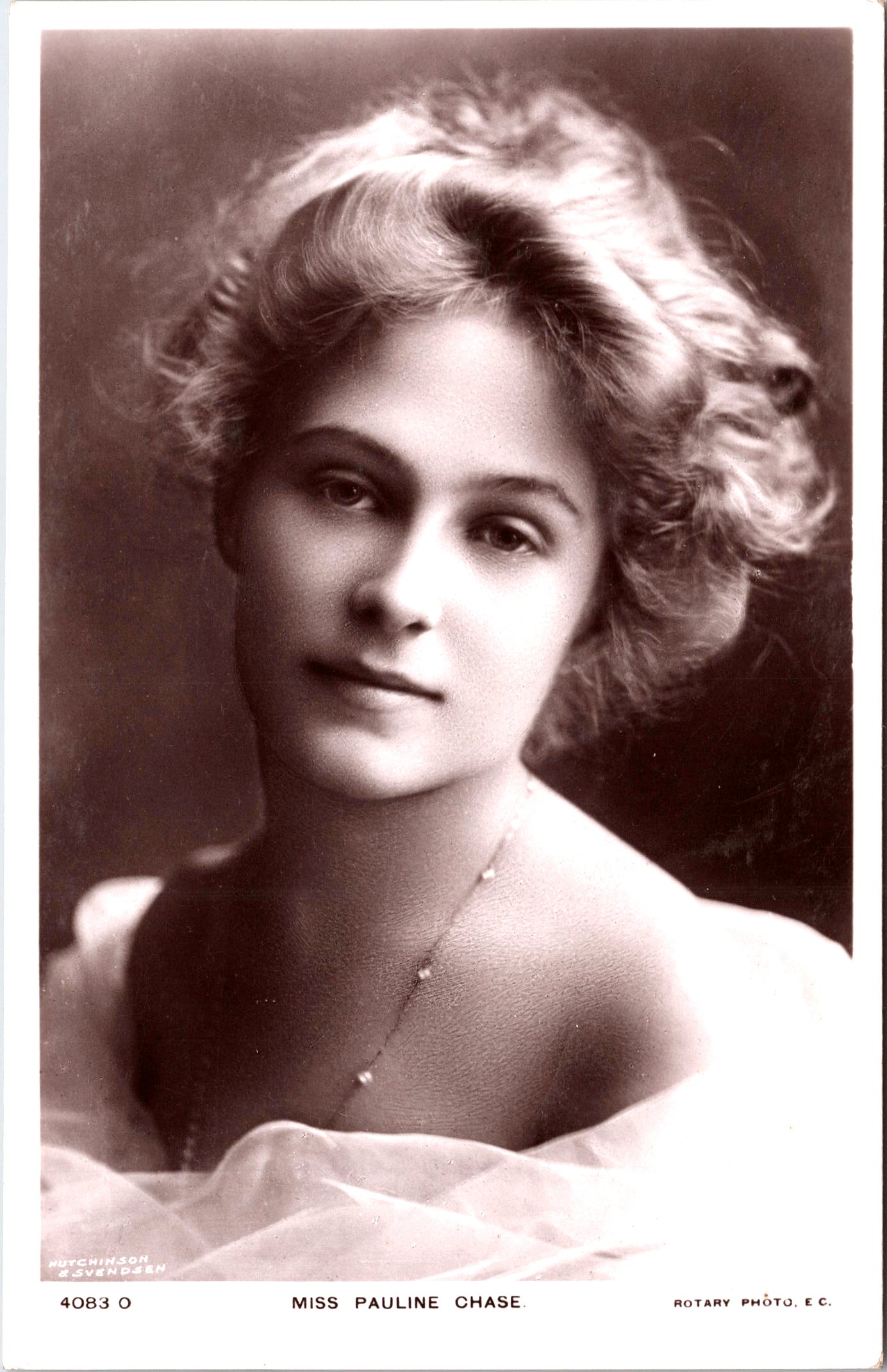
This vintage real photo Postcard 1 features pretty American actress and dancer, Pauline Chase (1885-1962). She was a regular performer both in the United States and the United Kingdom. She is especially known for her extended starring role in the British production of “Peter Pan, The Boy Who Wouldn’t Grow Up”. Her nickname was the “Pocket Venus of New York”. She was born in Washington D.C. and attended school in New York. She began acting when she was just fifteen years old. In 1901, producer, Charles Frohman recruited her to play in the London production of “The Girl From Up There”. She was just 15 years old. Upon her return to the US, she created a sensation as the “Pink Pajama Girl” in “The Liberty Belles”. She played one of the “lost boys” in the debut of Peter Pan (1904) in London. In 1906 she was chosen by producer, Charles Frohman, and playwright, J. M. Barrie, to play the title role in the production (1906-1913). This role brought her much fame and financial security. While in England, over the years, Chase developed quite a following. Charles Frohman had become her friend and mentor. Chase was a social beauty with many influential friends and admirers. She was a member of the socially elite and lived an extravagant life style. In 1913, Chase retired from the stage to marry a banker. The pair had three children. In 1916, Chase came out of retirement to play in her one and only movie appearance. There are 52 portraits of Chase in the National Portrait Gallery. The film “The Real Thing At Last” was a satirical film, based on MacBeth, written by Barrie. This postcard has a 1907 postmark. The card was published by Rotary Photo as part of a series (No.4083O). Miss Chase’s photograph was taken by the Hutchinson & Svendsen studio.  (SOLD)

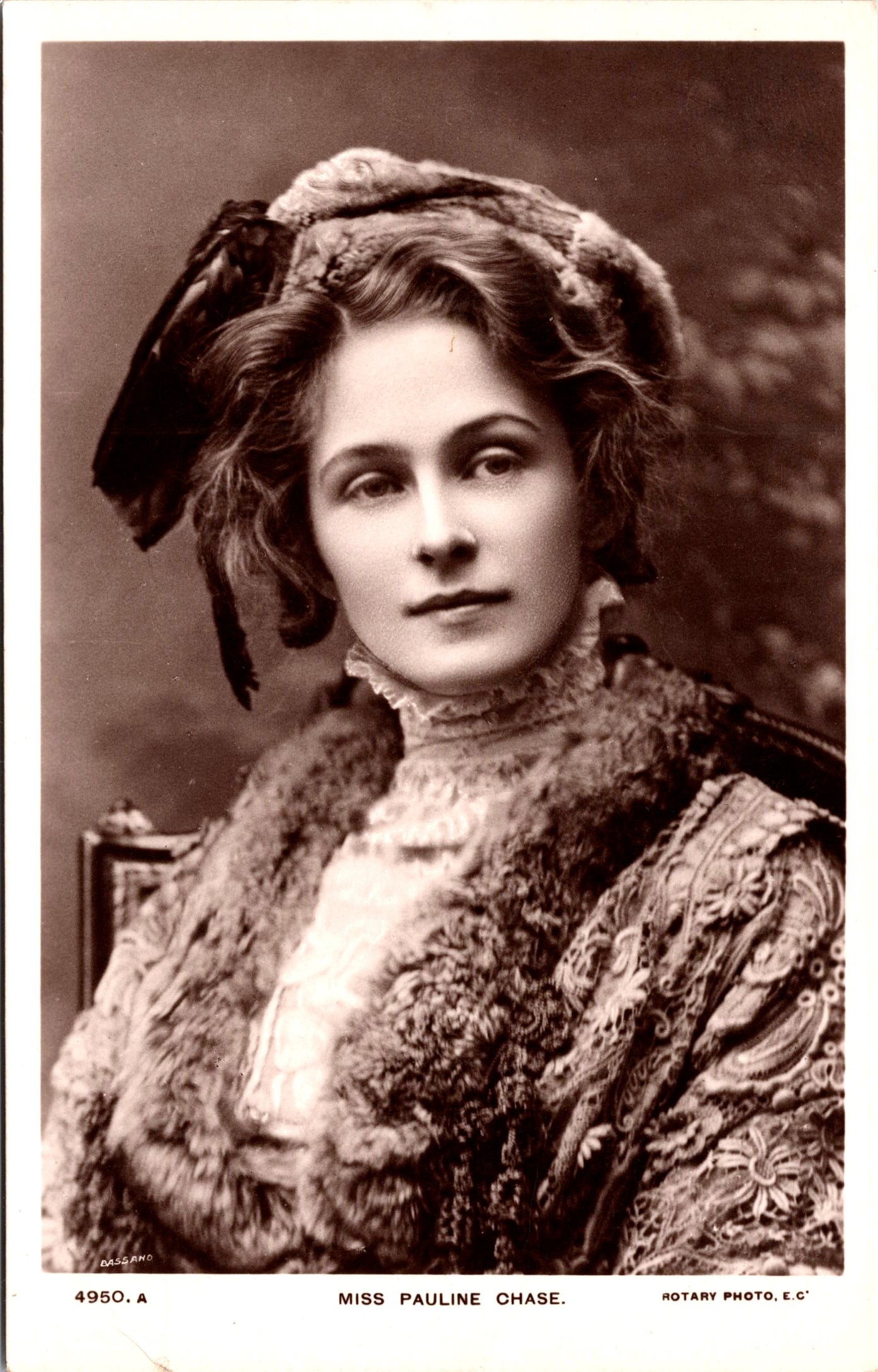
Postcard 2 was published by Rotary Photo as part of a series (No.4950A). Miss Chase’s photograph was taken by Alexander Bassano. (SOLD)

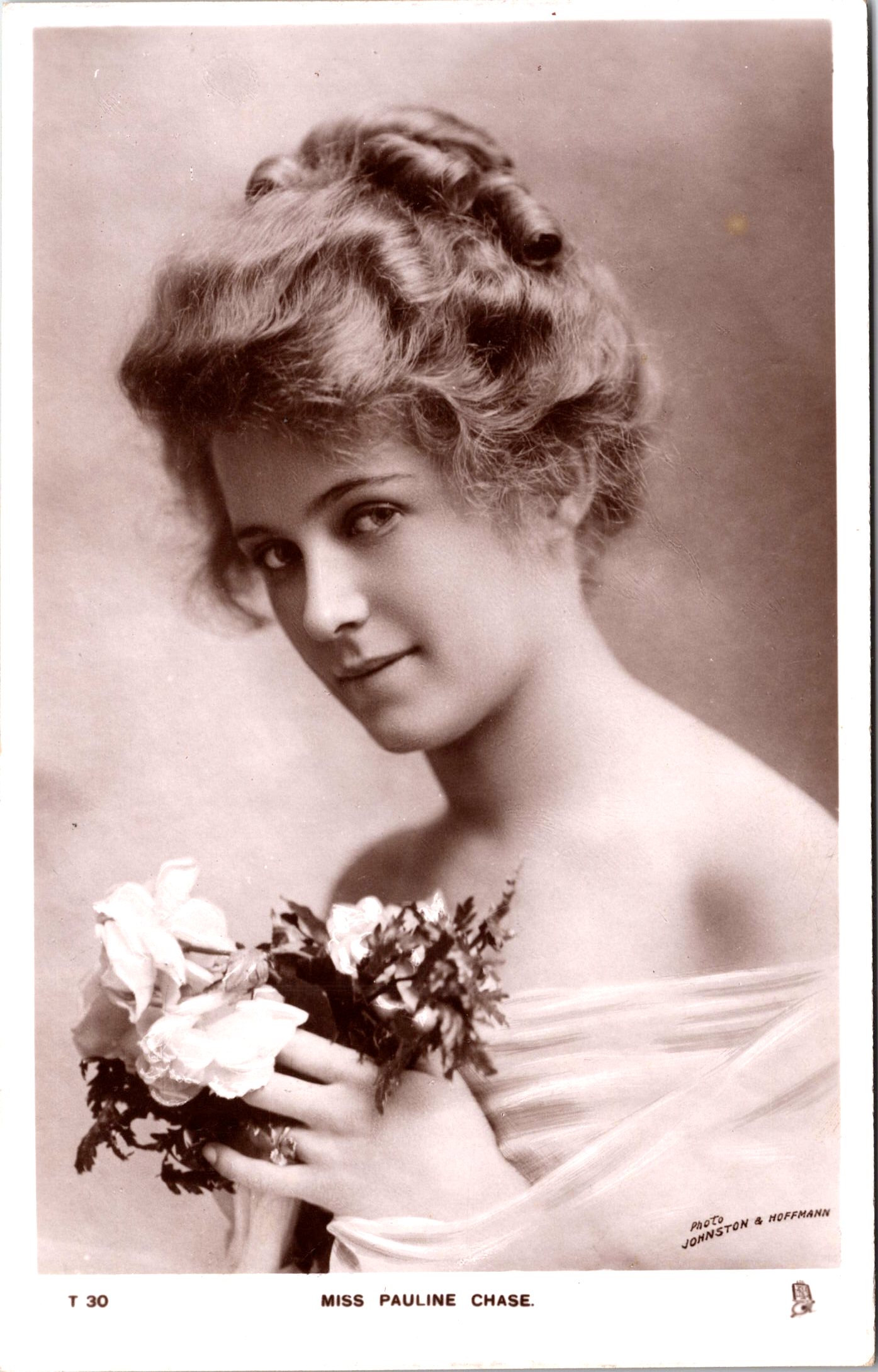
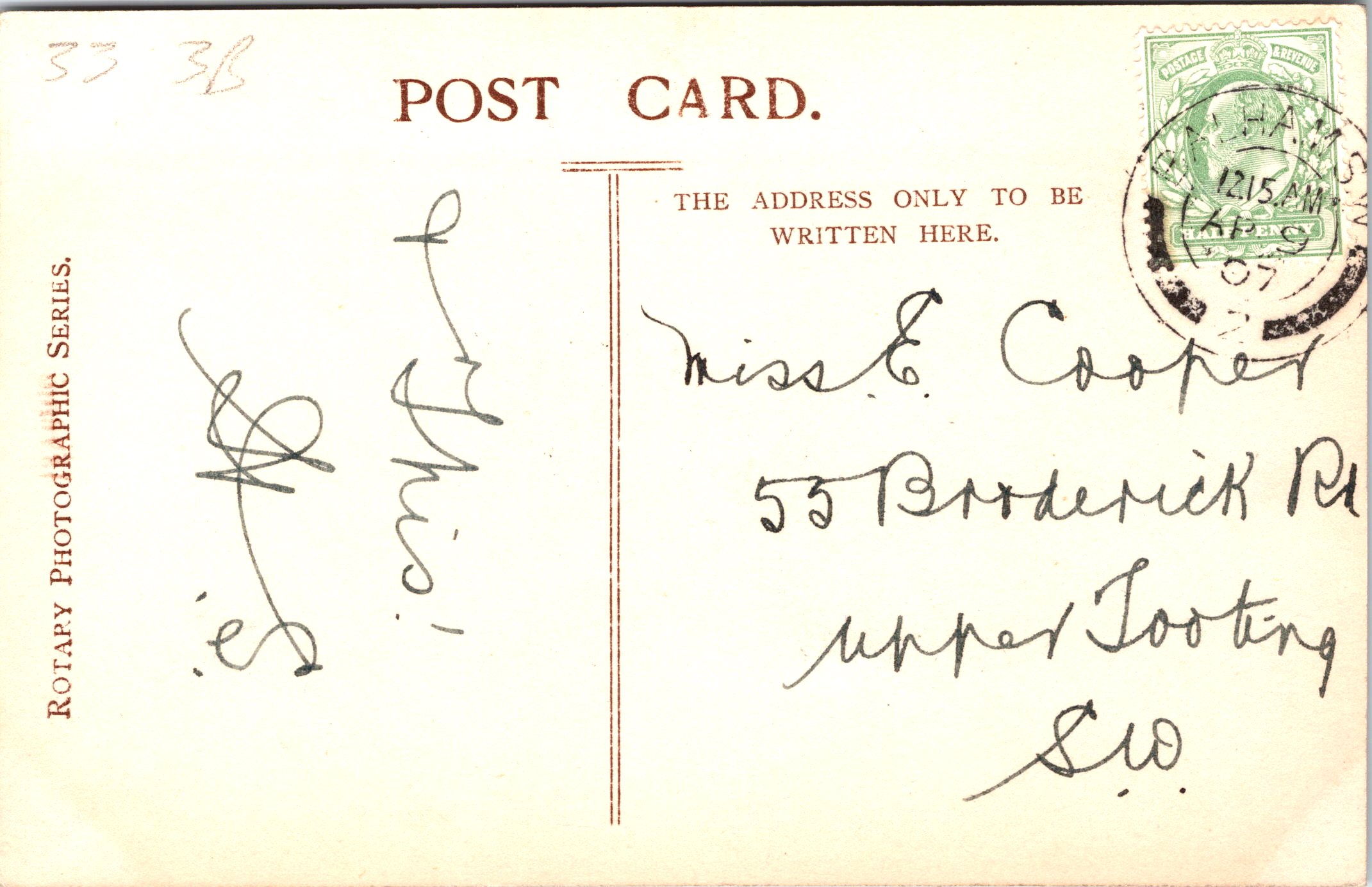
Postcard 3 has a 1907 postmark. The card was published by Raphael Tuck & Sons as part of a series (No.T30). Miss Chase’s photograph was taken by the Johnston & Hoffmann studio.  (SOLD)

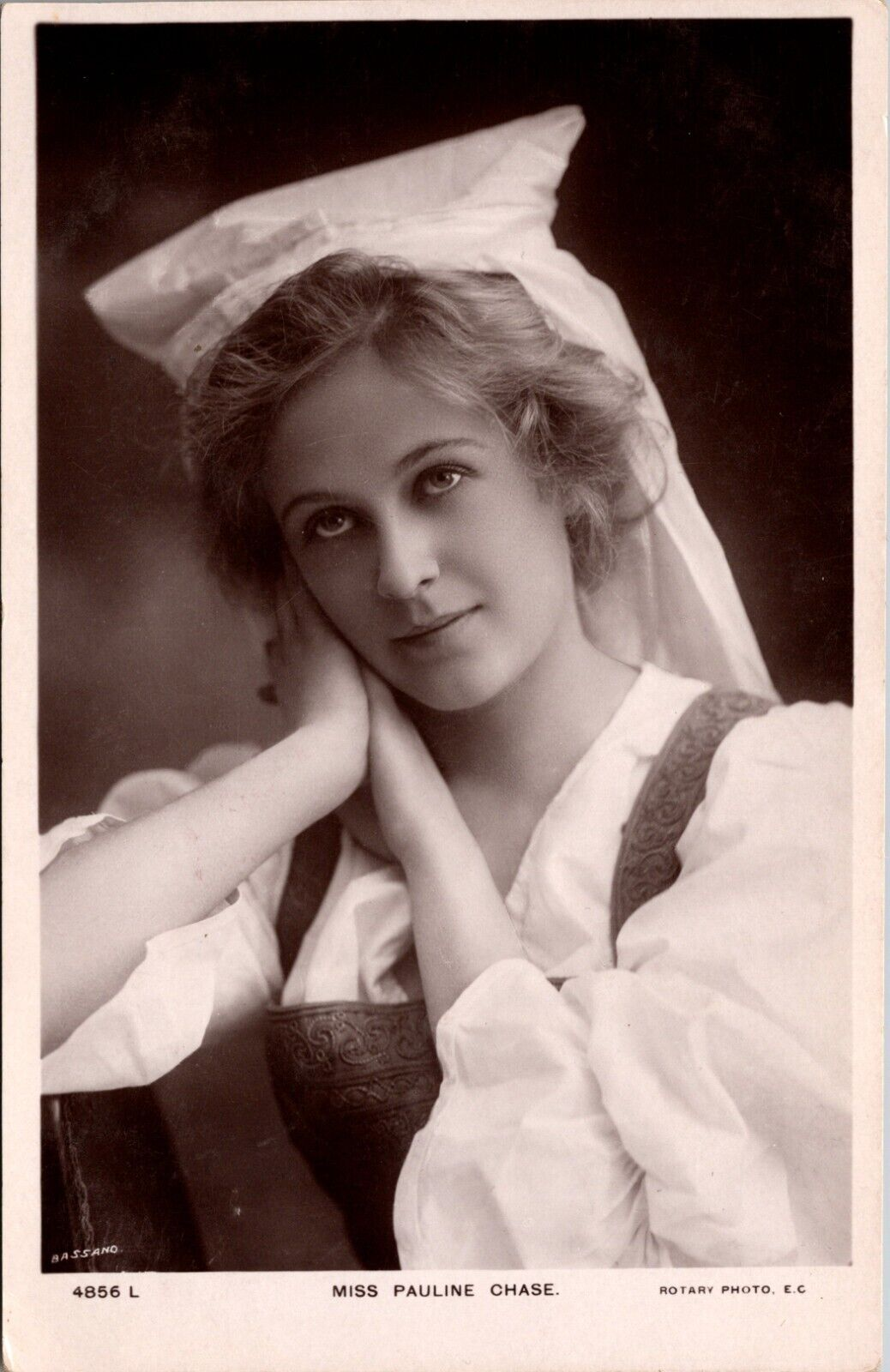
Postcard 4 features Chase wearing an interesting lace hat and she has a sweet, pure, and innocent appearance. This postcard was published circa 1909, the date of the cards postmark. The card was published by Rotary Photo as part of a series (No.4856L). Miss Chase’s photograph was taken by the Bassano studio.  (SOLD)
POSTCARD 1
POSTCARD 2
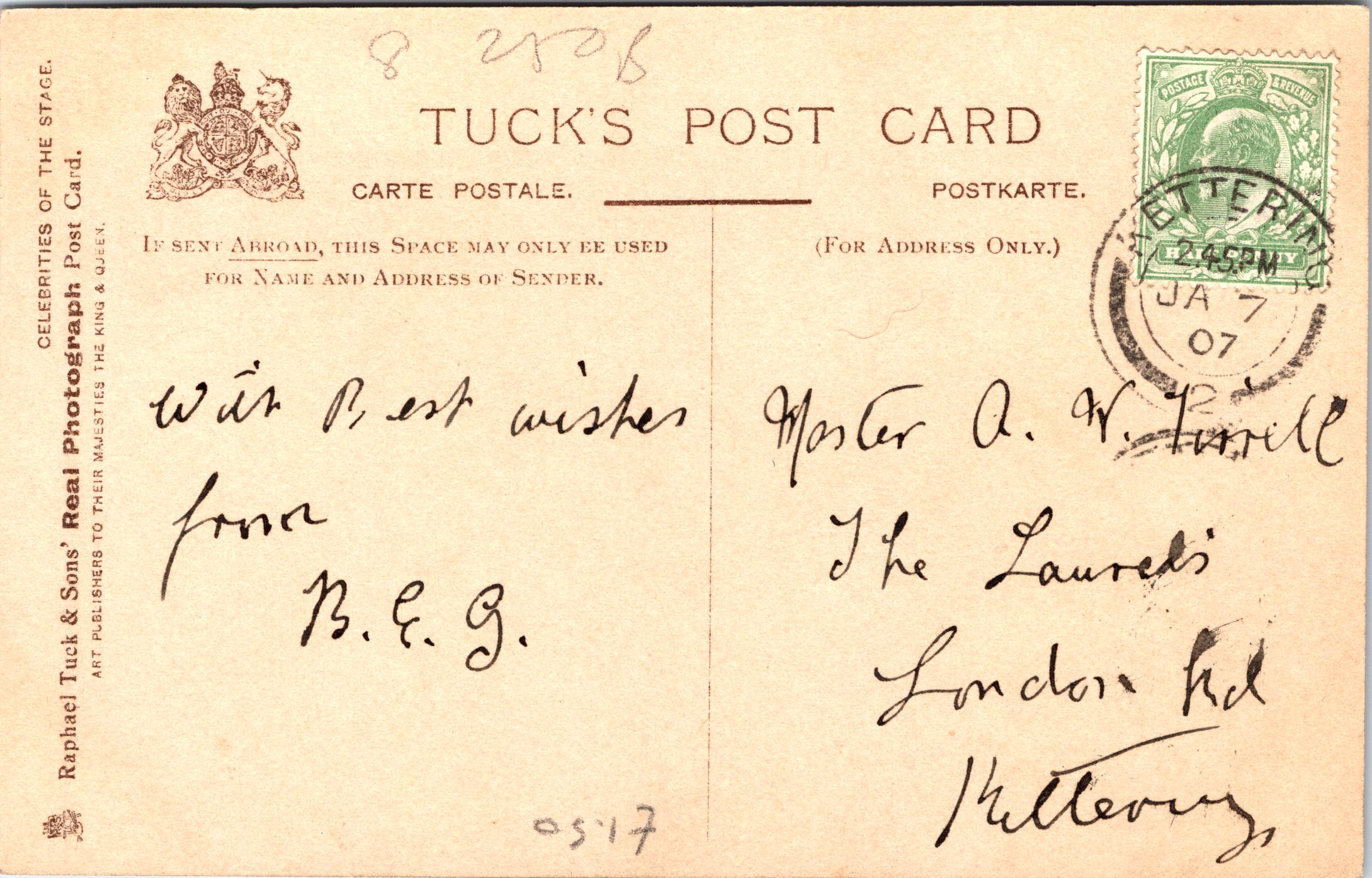
POSTCARD 3
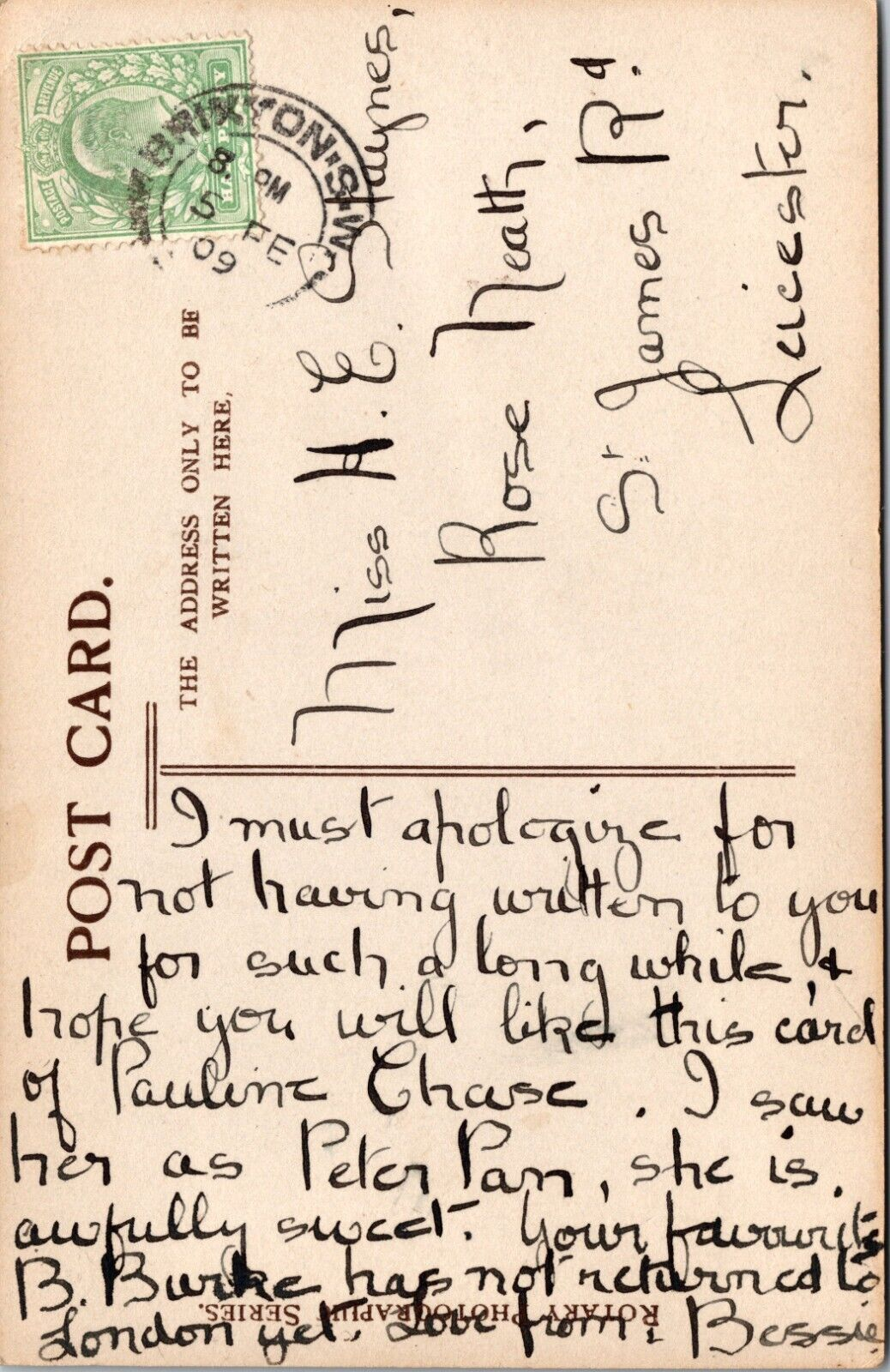
POSTCARD 4

DELIA MASON & CUTE DOG :STAGE ACTRESS & SINGER : BROADWAY : ROTOPHOT : RPPC 1905

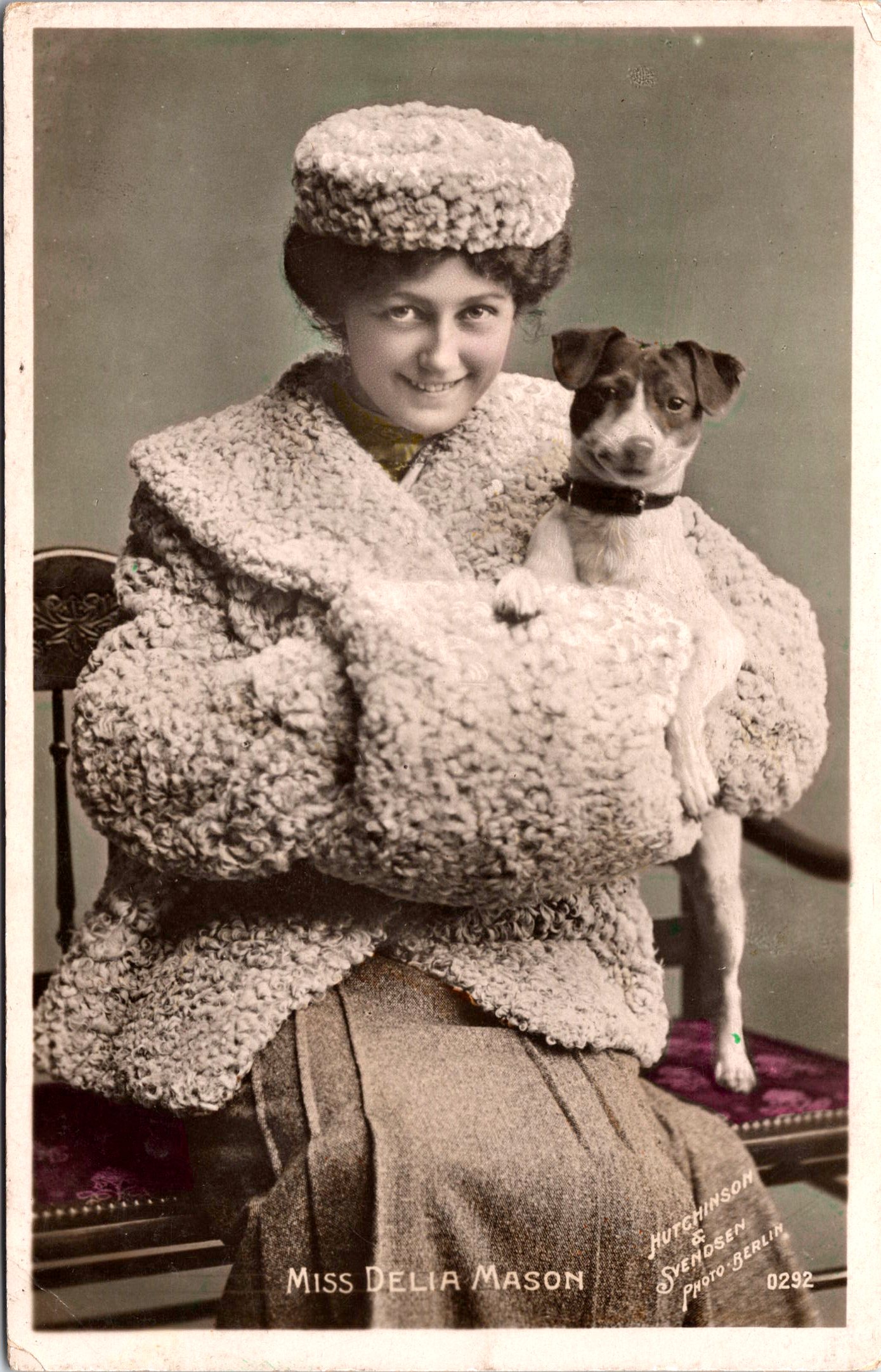
This vintage real photo postcard features pretty stage actress and singer, Delia Mason (1880-1980). She is posed with a dog that appears to be a Jack Russell Terrier. There is little biographical information about her readily available online. She was a native of Coventry, England. There are seven portraits of Mason that can be found in Britain’s National Portrait Gallery. Her first professional appearance was in “Three Little Maids” (1902) at the Apollo Theatre in London. 
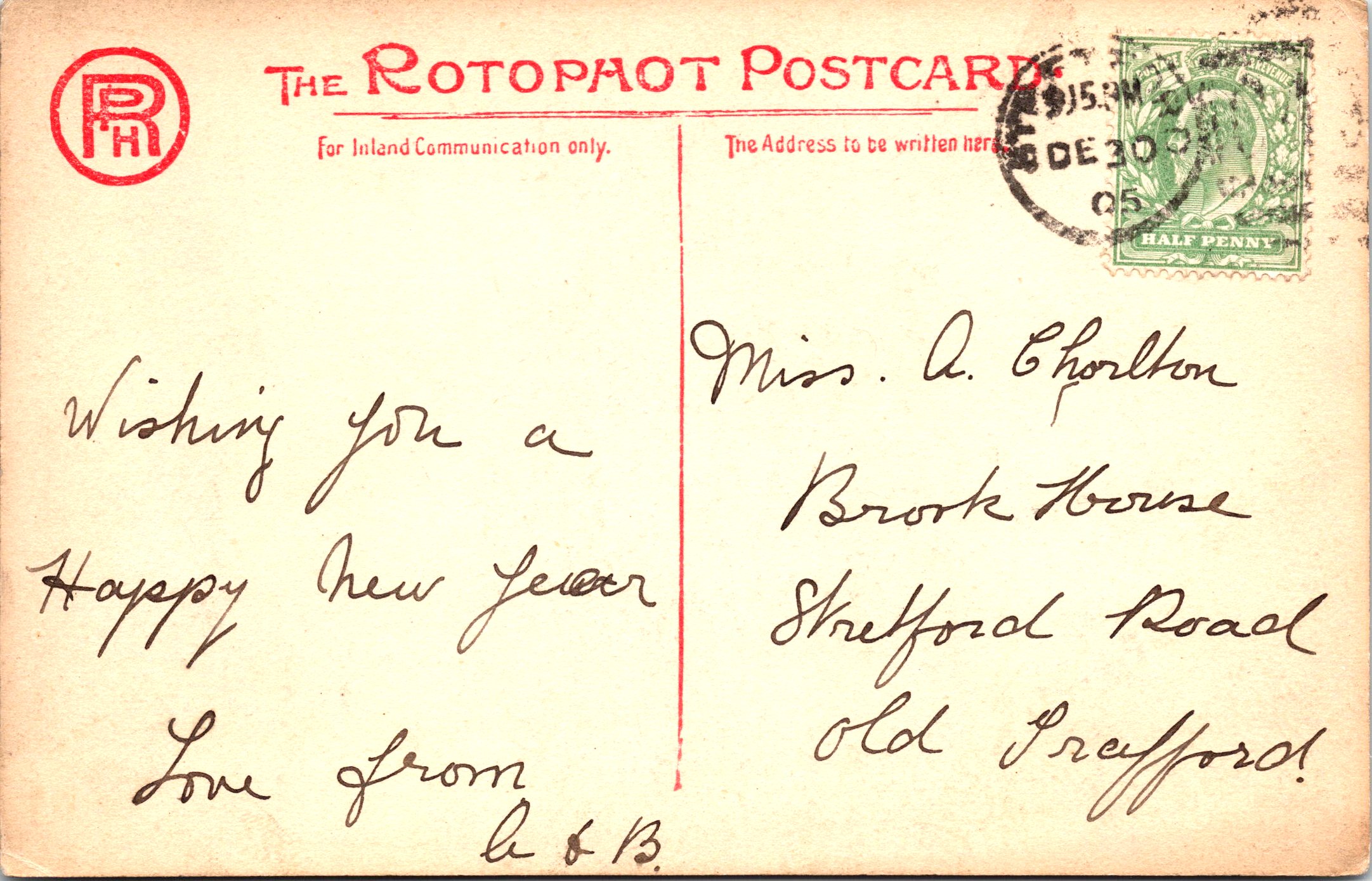
She was “discovered” by English theatre manager and producer, George Edwardes. A reviewer at her first performance, described her as “a tall and extremely good-looking with laughing blue eyes”. The reviewer also stated that she was an expert swimmer and oarsman, as well as an “ardent motorist”. Mason appeared in two Broadway productions; “Three Little Maids” (1903) and “My Lady’s Maid” (1906). She was married to Walter Wysard, a merchant and director of a number of companies. The couples son, Tony Wysard became a well known cartoonist and illustrator. This postcard was published by Rotophot as part of a series (No.0292). The company was based in Berlin, Germany. This postcard was postmarked in 1905. Mason was likely around 25 years of age when her photograph was taken for this card. Her photo was taken by the Hutchinson & Svendsen studio in Berlin, Germany.  SOLD

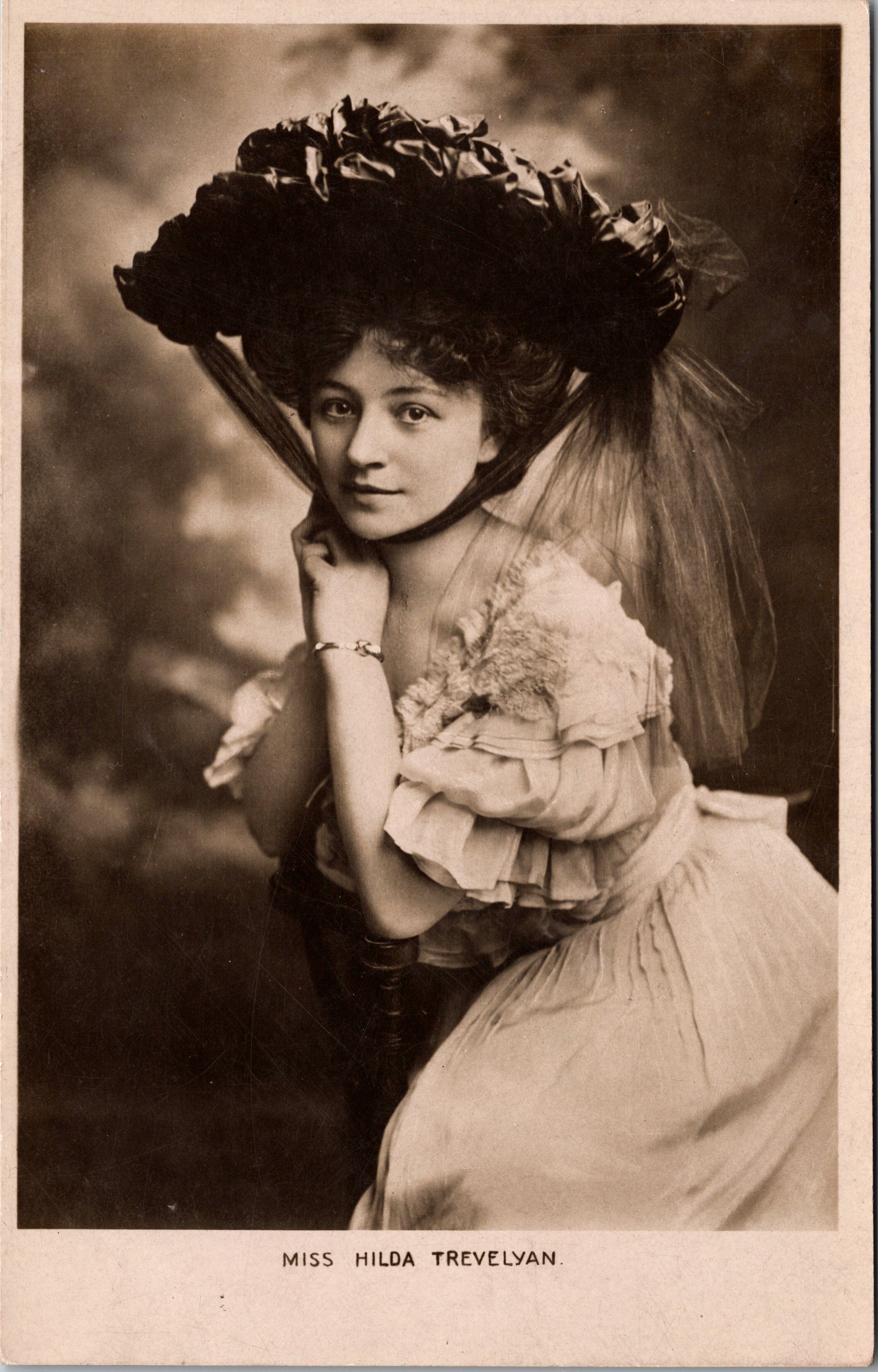
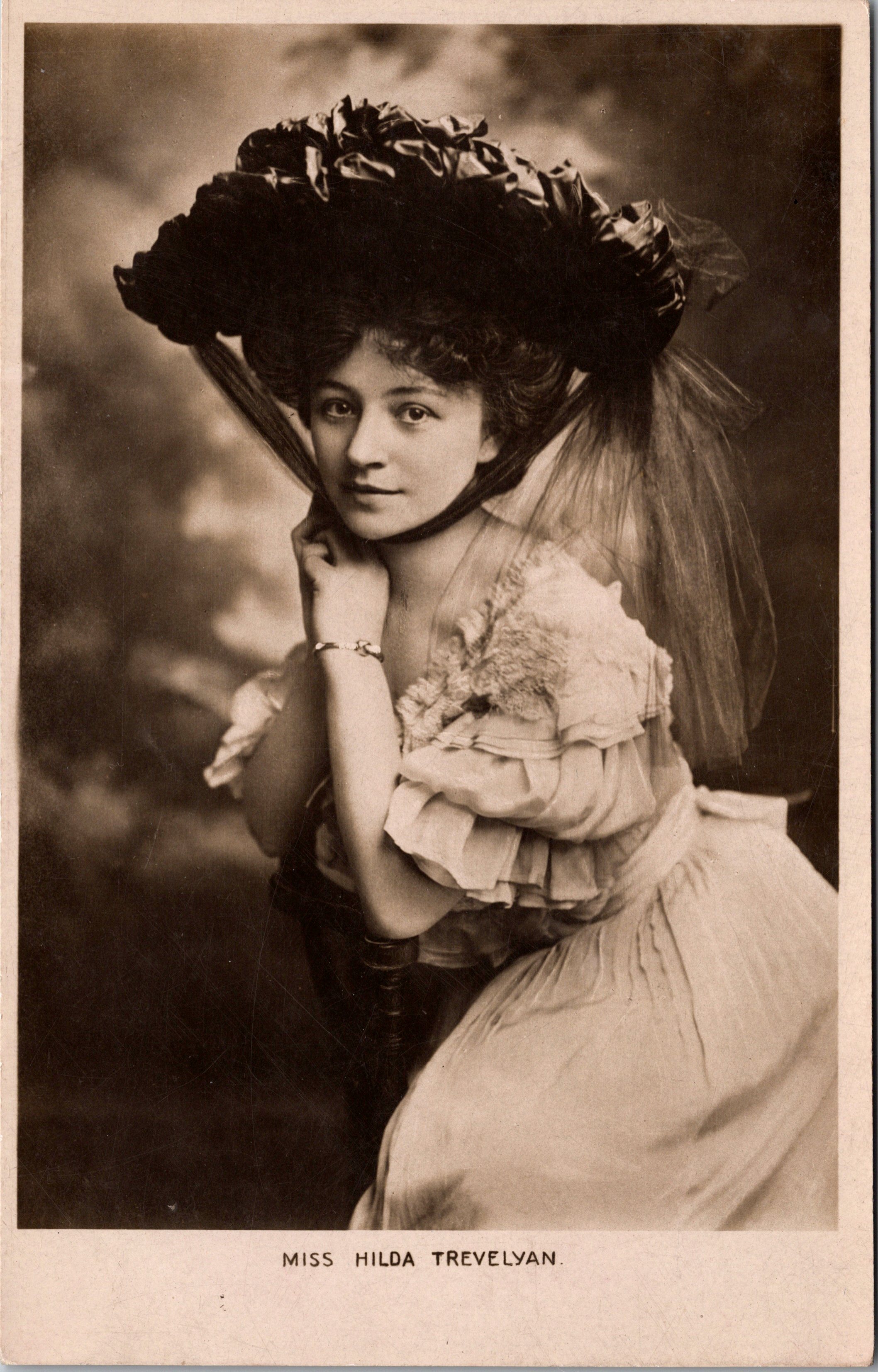
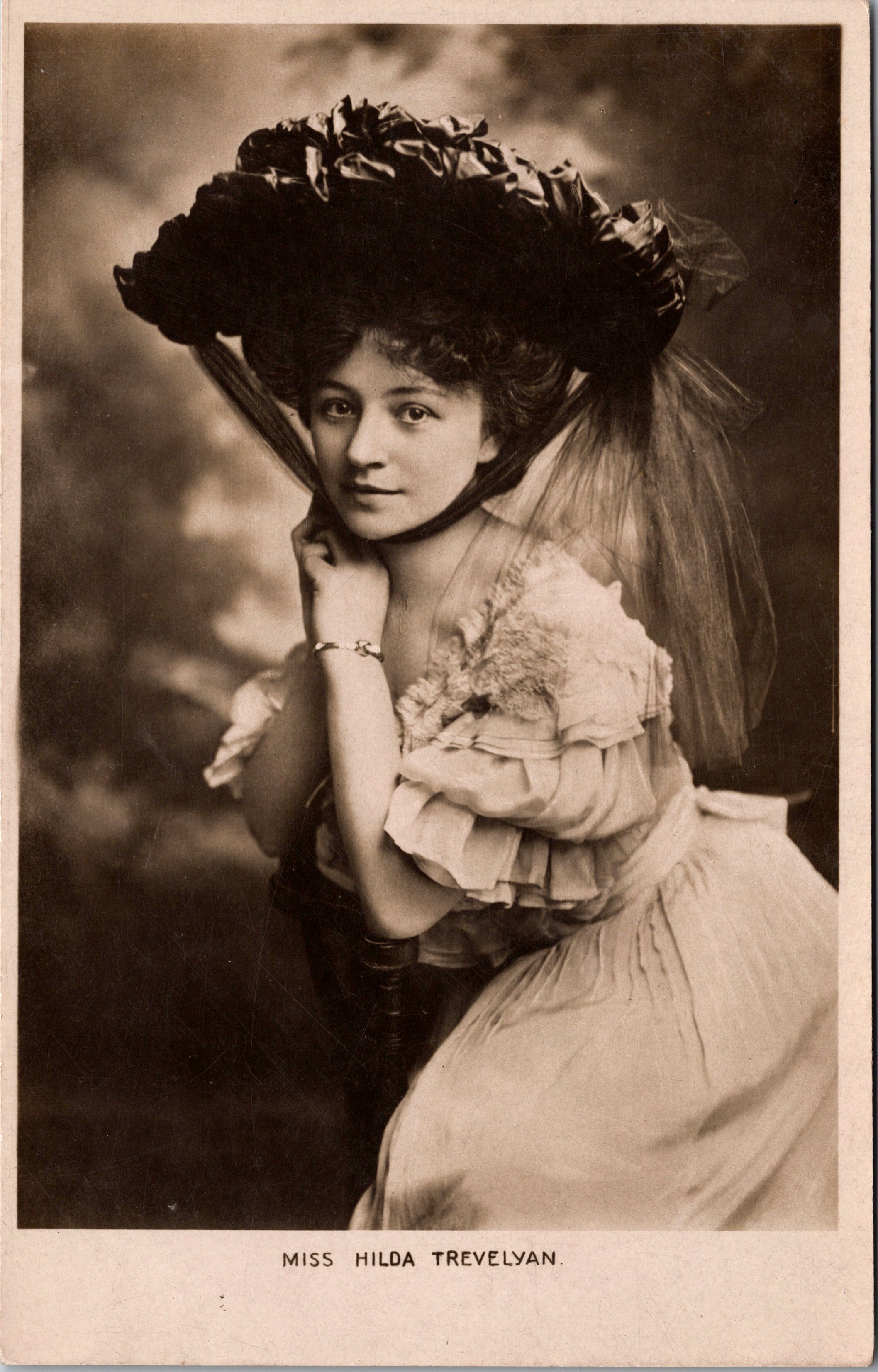
HILDA TREVELVAN : ENGLISH ACTRESS : J M BARRIE : PLAYED WENDY IN PETER PAN : RPPC

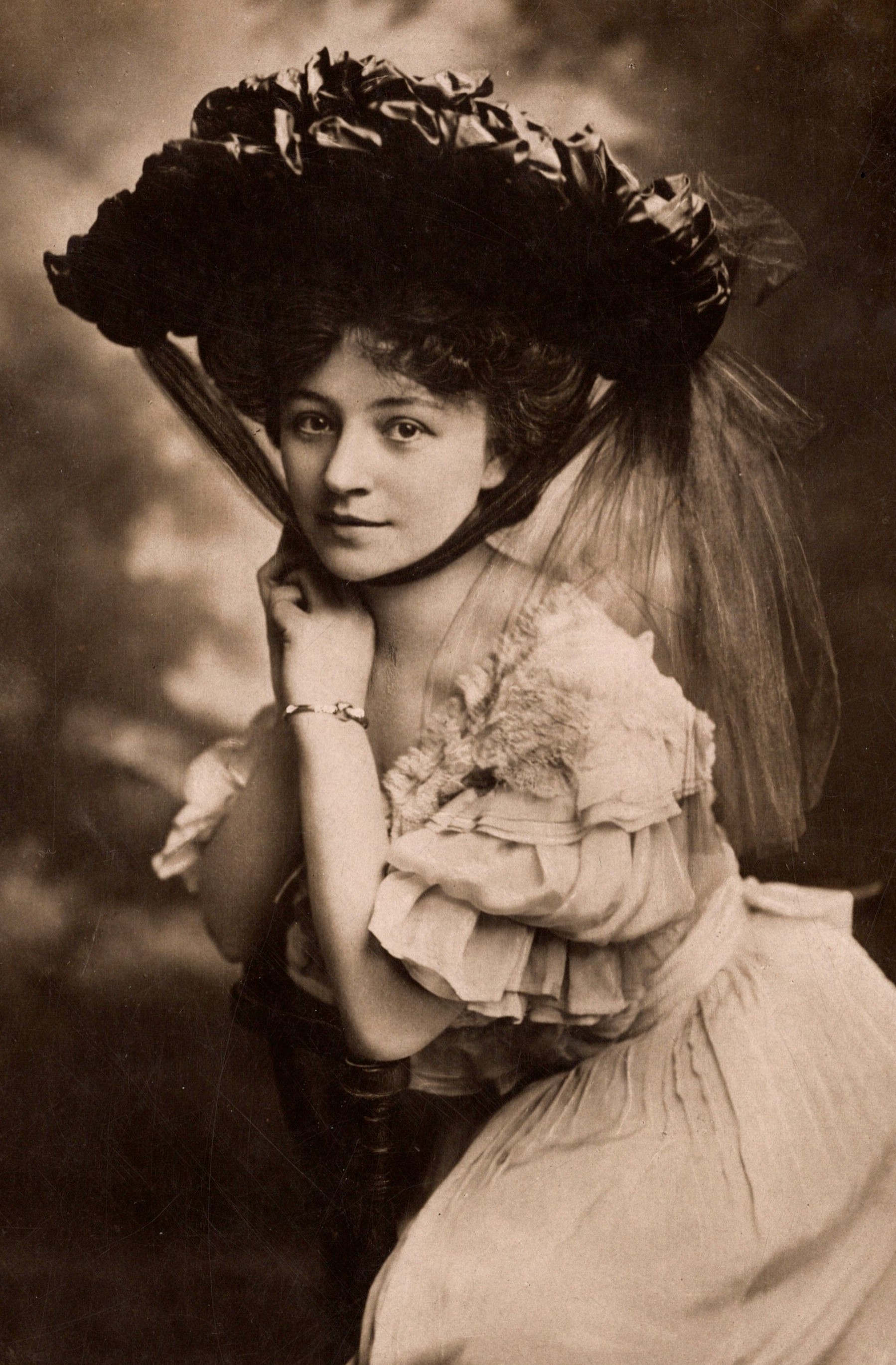
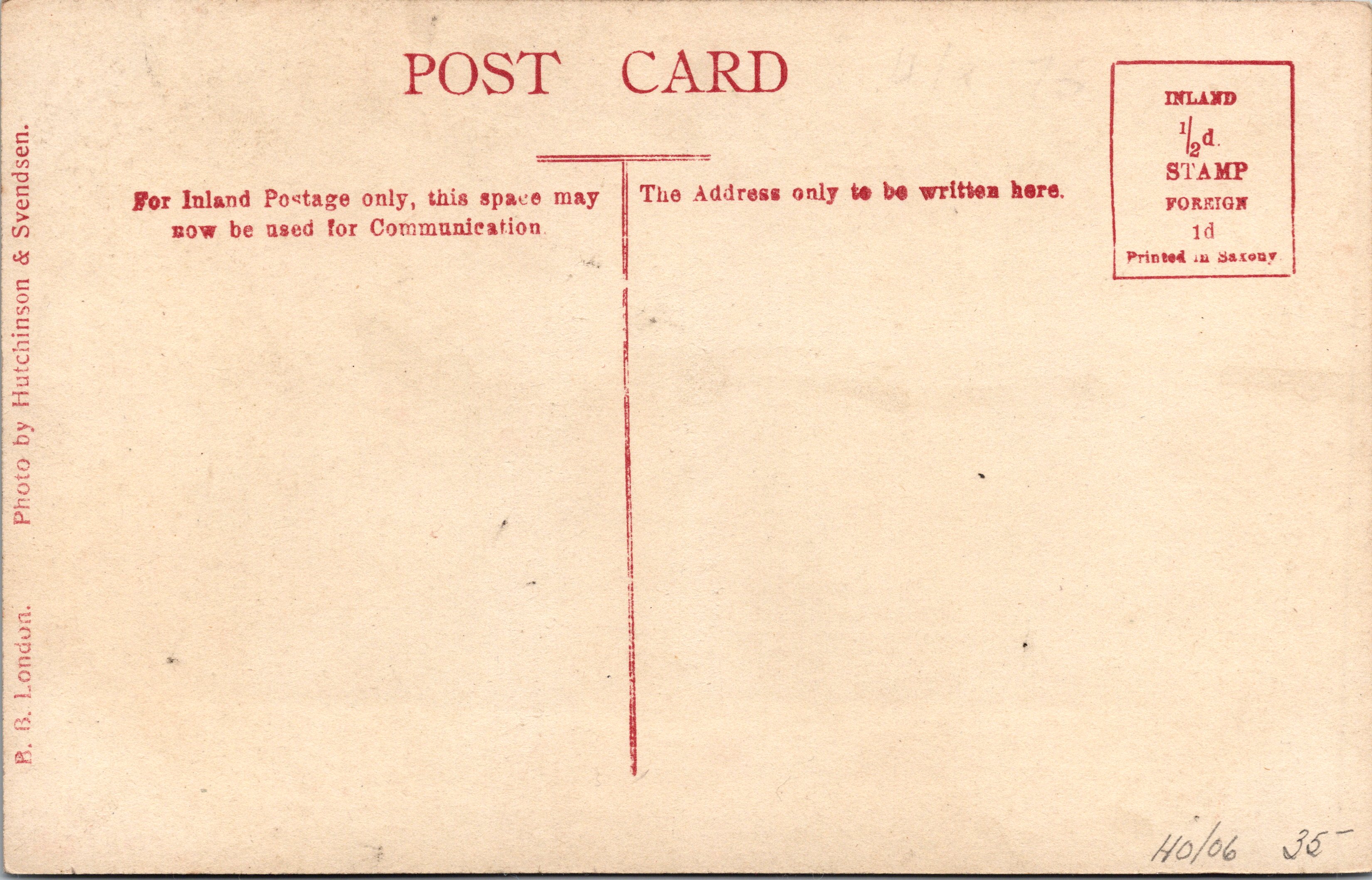
This vintage real photo postcard features English actress, Hilda Trevelyan (1877-1959). She was born in London. Her father was a farmer and her mother was French. She received her education at a convent and she made her debut on stage at the age of twelve. By the time she was sixteen years of age, she was touring in the musical comedy “A Gaiety Girl”. Early in her career she became associated with playwright J. M. Barrie. She appeared in many of his plays. She is most well known for creating the role of Wendy in Peter Pan. During her career, she played the part almost a thousand times. She also was successful as Oliver Twist in the play of the same name. The play was based on a Charles Dickens novel. In 1910, she married actor and writer, Sydney Blow. Trevelayan retired from the theater in 1939. Trevelayan also appeared in movies. IMDb gives her six movie credits between 1916 and 1939. This postcard was published by Birn Brothers. The firm was located in London, England. Miss Trevelyan’s portrait photo was taken by Hutchinson & Svendsen. This vintage postcard is in very good condition (see scans). 

Buy this Vintage Real Photo Postcard (includes shipping within the US) #5282

To purchase this item, click on the Pay with PayPal button below

$15.50

Buy this Vintage Real Photo Postcard (includes International shipping outside the US) #5282

To purchase this item, click on the Pay with PayPal button below

$25.50

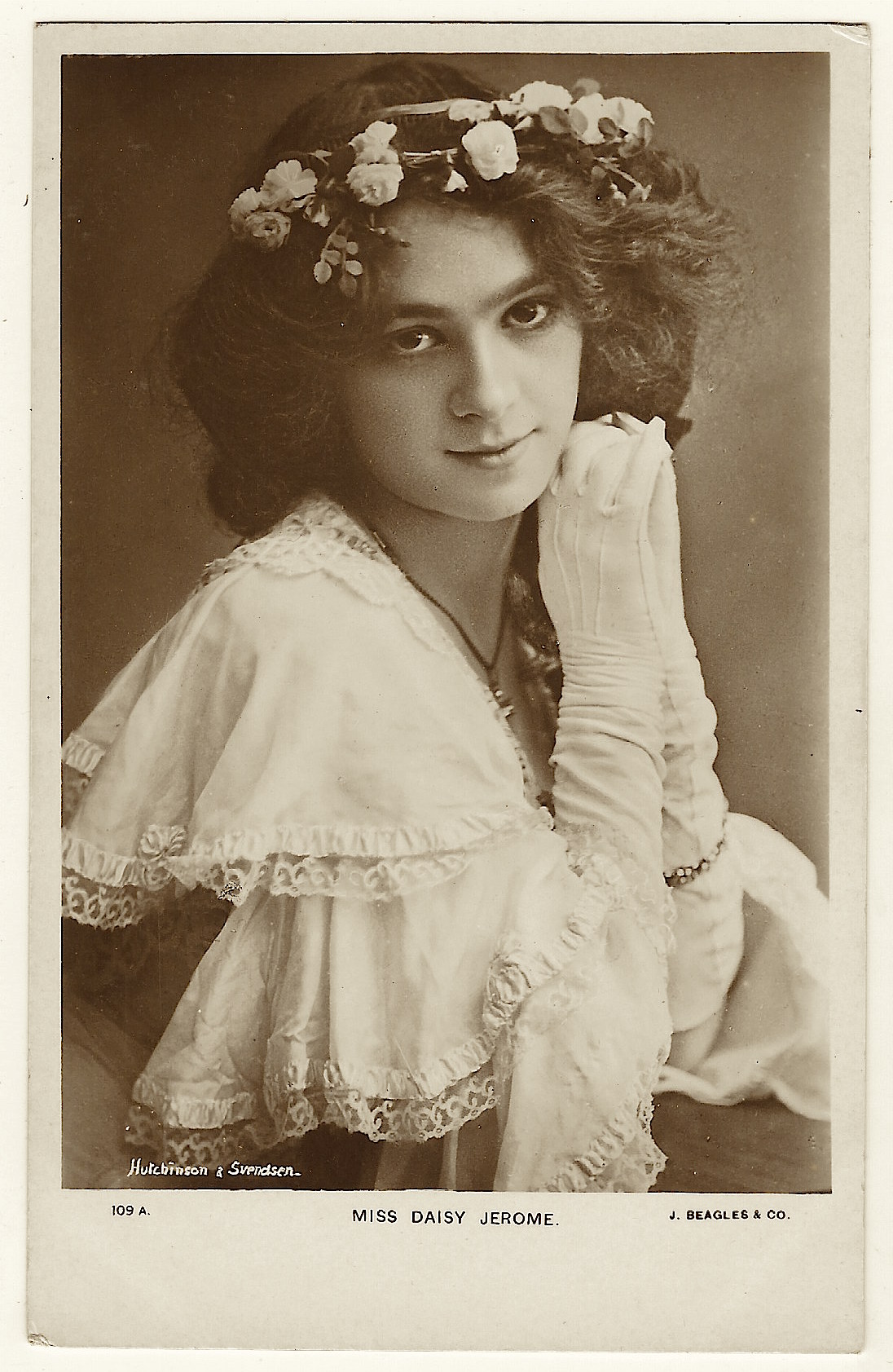
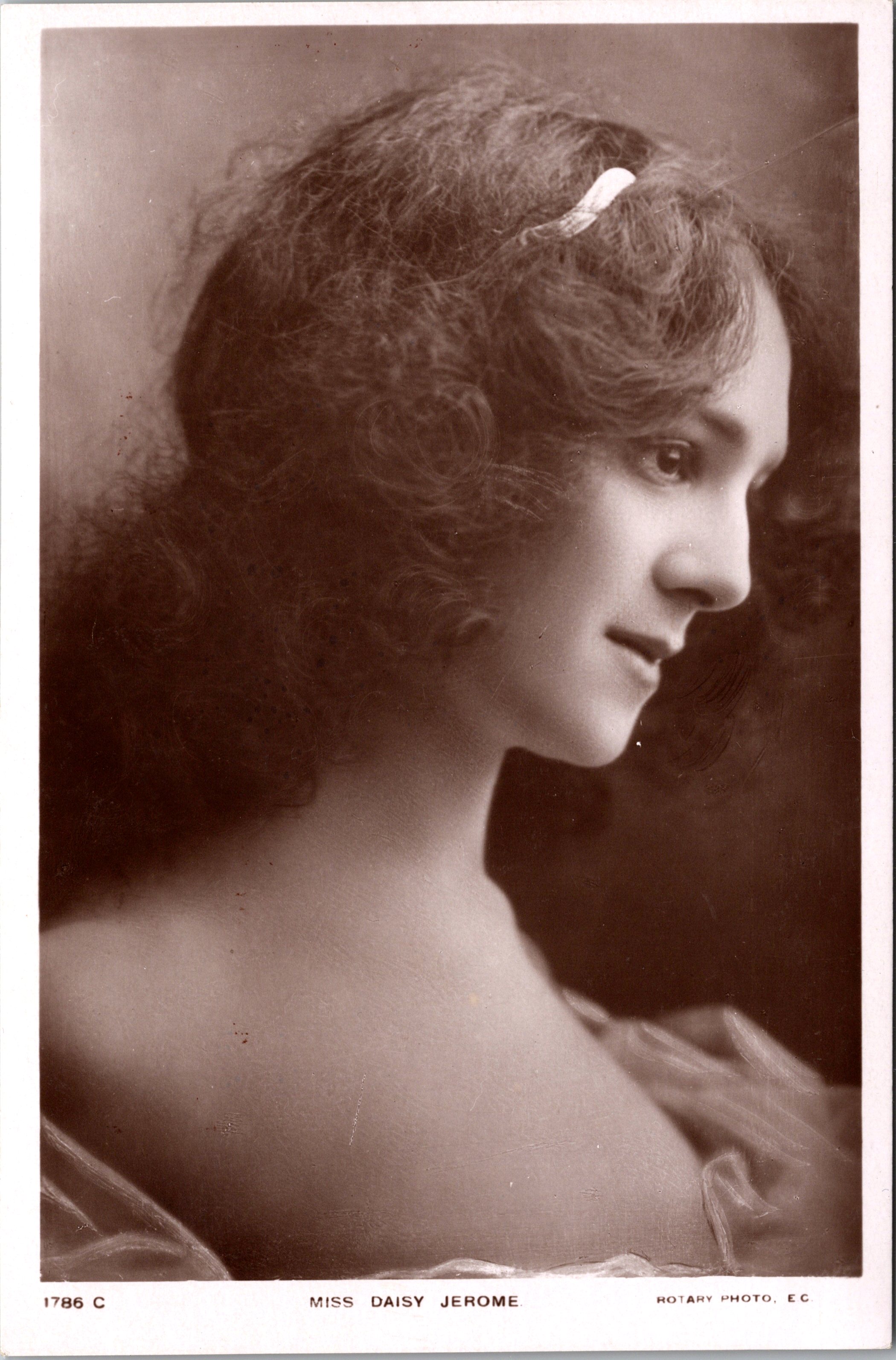
DAISY JEROME : SCANDALOUS STAGE ACTRESS WHO WAS VIEWED AS RAUCOUS, VULGAR, AND “AN ACQUIRED TASTE”

POSTCARD 1 (SOLD)

POSTCARD 2

This rare vintage real photo postcard features the red headed actress that electrified the Australian stage. She was noted for her famous wicked wink. The life and times of Daisy Jerome can best be described as scandalous. She arrived in Australia in 1913 for a three year stage tour.  Feminism was rising in the western world. Suffragettes were marching for the right to vote. Women were smoking, driving, wearing less conservative fashion, and even dancing the tango with it’s sexual overtones. She arrived in Adelaide adorned with an excess of jewelry. She was born in America but raised in England. Her place of birth was New York and she was born Daisy Witkowski in 1886. Daisy reported that she was raised in a multilingual household that had been visited by Presidents Lincoln, McKinley, and Roosevelt. After experiencing financial problems, her father moved the family to England. Money was needed and Daisy followed her sister onto the stage. She played the Palace and toured with companies that gave her a chance to do comedic singing and pantomime. Her performances were considered to be amusing and irreverent. She was a comedienne. Her humor has been described as “vibrant” and “wicked”. Daisy was described as “feisty”, “cunning”, and “independent”. She was small and dainty and had compelling eyes and an expressive face. Her performances had a risque tone and she had a hoarse, sensual voice. She could toe dance and wooden shoe dance, but was most known as a mimic and comnic singer. After a year of marriage, she deserted her first husband to live with another man. In 1910, she took a journalist to court for libel. The reporter had accused her of performing encores when audiences had not requested them. She claimed that her professional reputation had been damaged. The court case was a circus. The defense ridiculed one of her songs which caused her to break into tears in the witness chair. She won the case but was barely compensated. When she began her tour of Australia, she was recognized as raucous, vulgar and “an acquired taste”. She quickly charmed those that were hesitant to appreciate her and she soon received a warm welcome and a complimentary nickname, “The Electric Spark”. Her carrot red hair became the subject of much debate. She claimed it was her natural color but most people were not believers of her claim. One day, an Australian comedian told her that a gentleman had taken offence to her hair. The comedian said that the offended man would visit her that night. The comedian then informed the local fire chief that there was great risk of fire during Daisy’s time on stage. The worried fireman came to the theatre and when he saw Daisy’s red hair, he realized he had been a victim of a joke. He kept the joke going when he said that he agreed there was risk of fire and he ordered the scenery to be fireproofed immediately. During Daisy Jerome’s era, there was a bias against redheads. They were considered to be hot tempered and sexually wild and uninhibited. Her theater/music hall background only magnified some people’s negative view of Daisy. After completing her touring contract in Australia, she signed another one. This time she performed on a vaudeville stage which allowed her to showcase her bawdy songs. In 1914 she sang a feminist style song called “The Press, the Pulpit, and the Petticoat”. This song argued that women were more powerful and influential than the media and the church. Daisy was a woman who had unconventional ideas. She would not restrained by political correctness. She stated in a 1914 interview that “I refuse to regulate my acts to accepted rules of conduct”. Despite her views, she remained popular with Australian audiences. She left Australia in 1916 and returned in 1922 for another successful tour. Later, she was involved in another court case which this time involved her suing her maid over missing jewels. With the arrival and subsequent popularity of films, Daisy Jerome faded out of the public’s focus. Two photo portraits of Daisy Jerome can be found in England’s National Portrait Gallery.
 
Postcard 1 was published by J. Beagles & Co. of London, England as part of a series (No. 109 A). The company was started by John Beagles (1844-1909). The company produced a variety of postcards including an extensive catalog of celebrity (stage and screen) portrait postcards. After Beagle’s death, the business continued under it’s original name until it closed in 1939.Miss Jerome’s portrait was taken by the Hutchinson & Svendsen studio. The National Portrait Gallery asserts that this pair of photographers were active in London between 1905 and 1906. This vintage photo postcard is in excellent condition (see scans). This postcard portrait of Daisy Jerome is absolutely beautiful and very uncommon.  (SOLD)                                     
Postcard 2 was published by Rotary Photo (England) as part of a series (No. 1786 C). This vintage photo postcard is in good condition (see scans). 
5172_0001-1

Buy this Vintage Real Photo Postcard (includes International shipping outside the US) #5172

To purchase this item, click on the Pay with PayPal button below

$22.00

5172_0001-2

Buy this Vintage Real Photo Postcard (includes International shipping outside the US) #5172

To purchase this item, click on the Pay with PayPal button below

$32.00

POSTCARD 1

POSTCARD 2