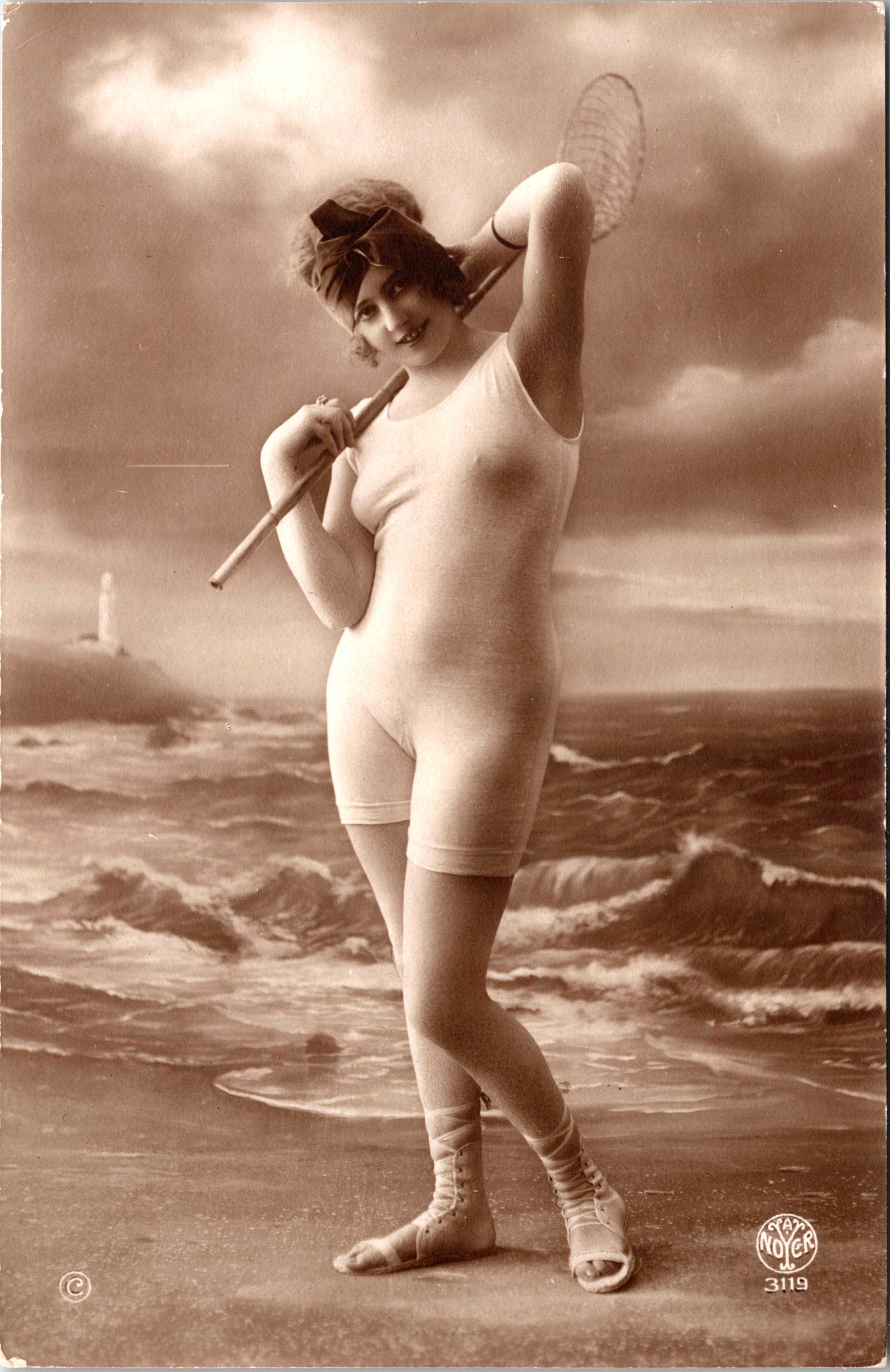
This vintage French real photo postcard features a charming seaside scene of a “bathing beauty,” a popular motif of early 20th-century glamour photography. The young woman poses confidently on a simulated beach with a painted backdrop of choppy waves and a distant lighthouse. She wears a form-fitting, one-piece knitted bathing outfit that clings to her figure—a risqué choice for the era—along with ballet-style laced sandals and sheer stockings. A bold, dark ribbon or turban is wrapped around her head, adding a dramatic flourish to her beach attire. She holds a racket over her shoulders, likely meant to suggest leisure and playfulness, possibly referencing beach paddle games or tennis, though this is clearly a studio creation rather than a candid beach photograph. Her smile is coy and knowing, with a relaxed, flirtatious pose and bright expression that captures the coquettish spirit of Belle Époque and Edwardian postcard art. This card was published by Noyer of Paris, a noted French postcard publisher known for glamorous and mildly provocative photographic portraits. The card bears the serial number 3119 and the “Fabrication Française” mark on the reverse. This is a classic example of a risqué seaside glamour postcard. SOLD
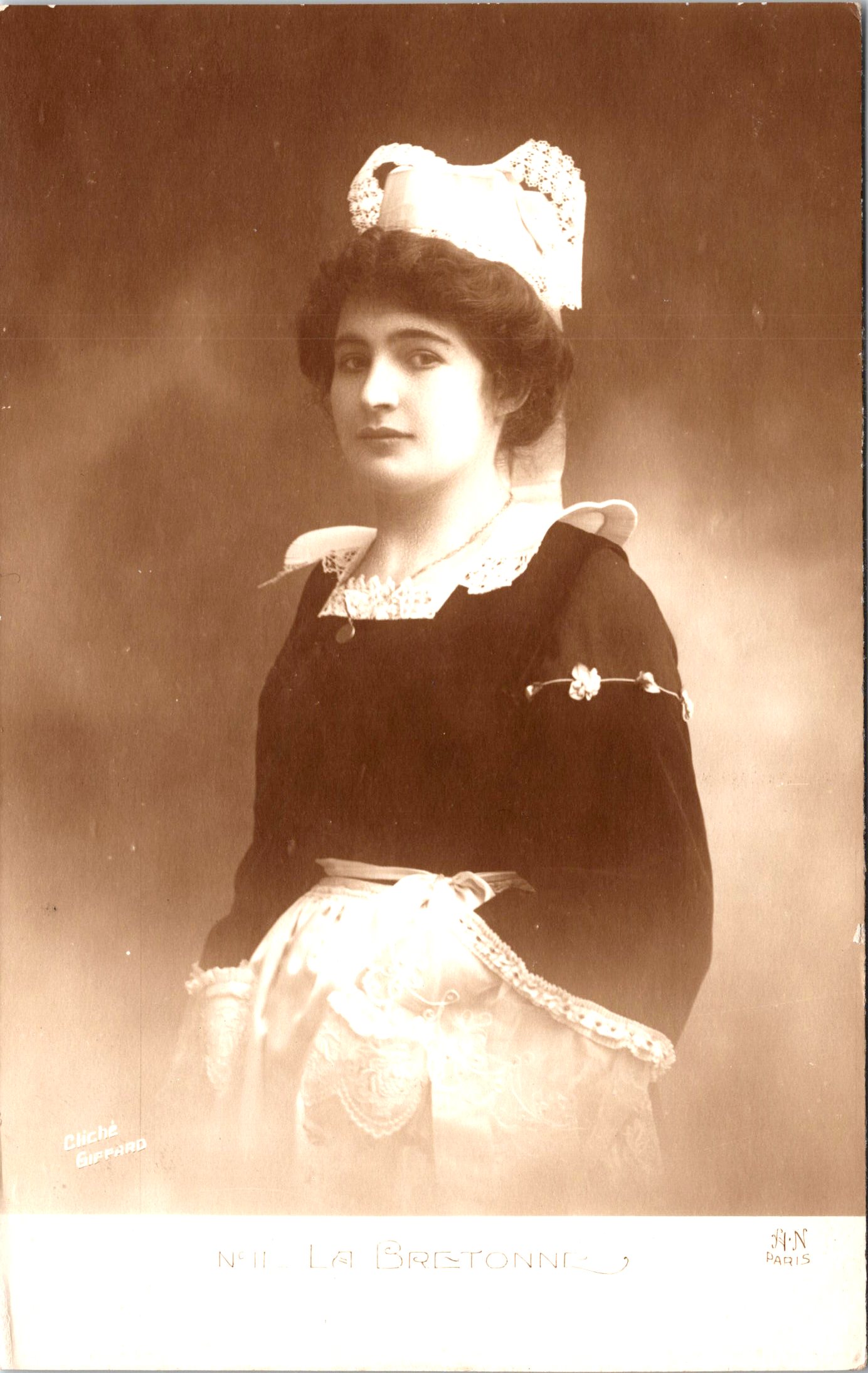
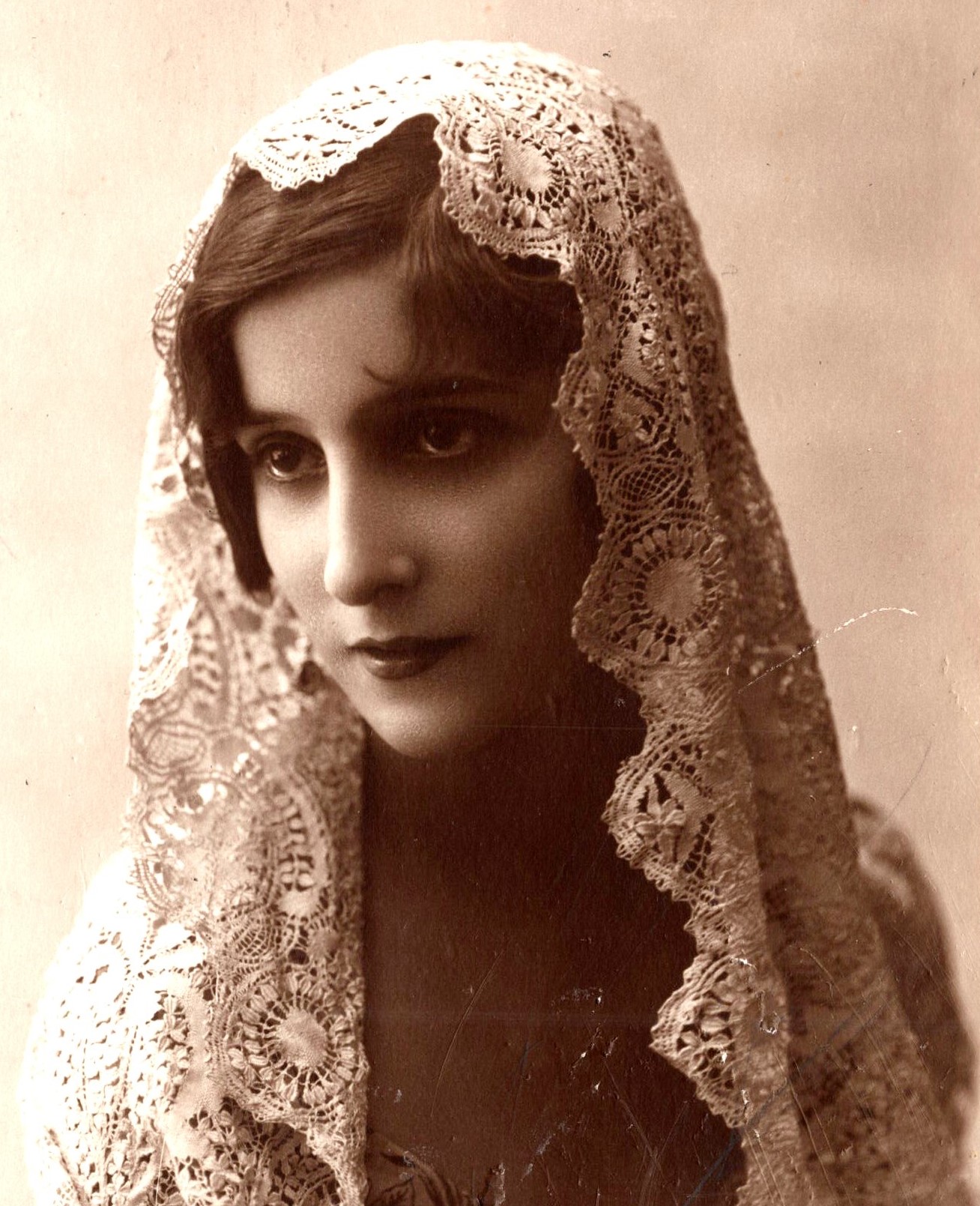
This vintage real photo postcard is part of a series named “Les Plus Belles Femmes de France” (The Most Beautiful Women of France). This series is about the Provinces of France, and the model for this image represents La Brettone. Note that the woman in this photograph is wearing a half smile. This postcard is no.11 in the series. There were a number of different series published. The Province series was one of the more popular series. The models in this series represent different French Provinces and wear traditional clothing from that particular area of the country. This postcard was published by well known photographer Alfred Noyer. The photographer of this image was the Giffard studio. SOLD
This vintage real photo postcard features pretty British music-hall performer, dancer, singer, and stage and screen actress, Peggy Vere. She performed in French music halls. Her debut was in Paris at both the Concert Mayol and at the Theatre des Varietes. In 1920 she performed at the Ambassadeurs and at the Casino de Paris. Between the years 1920 and 1940 she performed predominately at the Concert Mayol. Vere helped popularize “The Lambeth Walk”, a song from the musical “Me and My Girl” (1937). In 1919 he made her screen debut in a propaganda drama. The IMDb reports that Vere appeared in five films between 1919 and 1933. This postcard was published by Alfred Noyer (Paris, France) as part of a series (No.14). (SOLD)
This vintage real photo postcard is part of a series devoted to the provinces and possessions of France.. This card represents “La Malouine” (The Falkland Islands). Note that the woman in this photograph is wearing an interesting hat and a pretty smile. This postcard is no.8 in the series. There were a number of different series published by this publisher. The Noyer Studio operated from 1910 until the 1940’s in Paris, France. Many of the postcards he produced of women were nudes or risque images. The photographer of this postcard portrait is Jean Agelou (1878-1921). Agelou was a French photographer of the 1910’s and 1920’s who is best known for his erotic and nude photographs. He was born in Egypt and not much is known about his private life. Agelou generally used models between the age of 20 and 24 years-old. He had a favorite model. Her name was “Fernande” and in addition to modeling, she was Agelou’s lover. Although the 1900’s was the “golden age” of erotic photograph, photographers who took such risque photos had to use discretion. As a result, Agelou signed his work “JA”. In 1908, nudity in photographs was banned in France and photographers had to cover nude women images with strategically placed undergarments or other materials. Nude images had to circulate on the down low. They were sent in the mail inside of envelopes. Jean Agelou died in 1921; the result of a car accident. His brother George, who managed Jean’s business, also was killed in the crash. SOLD
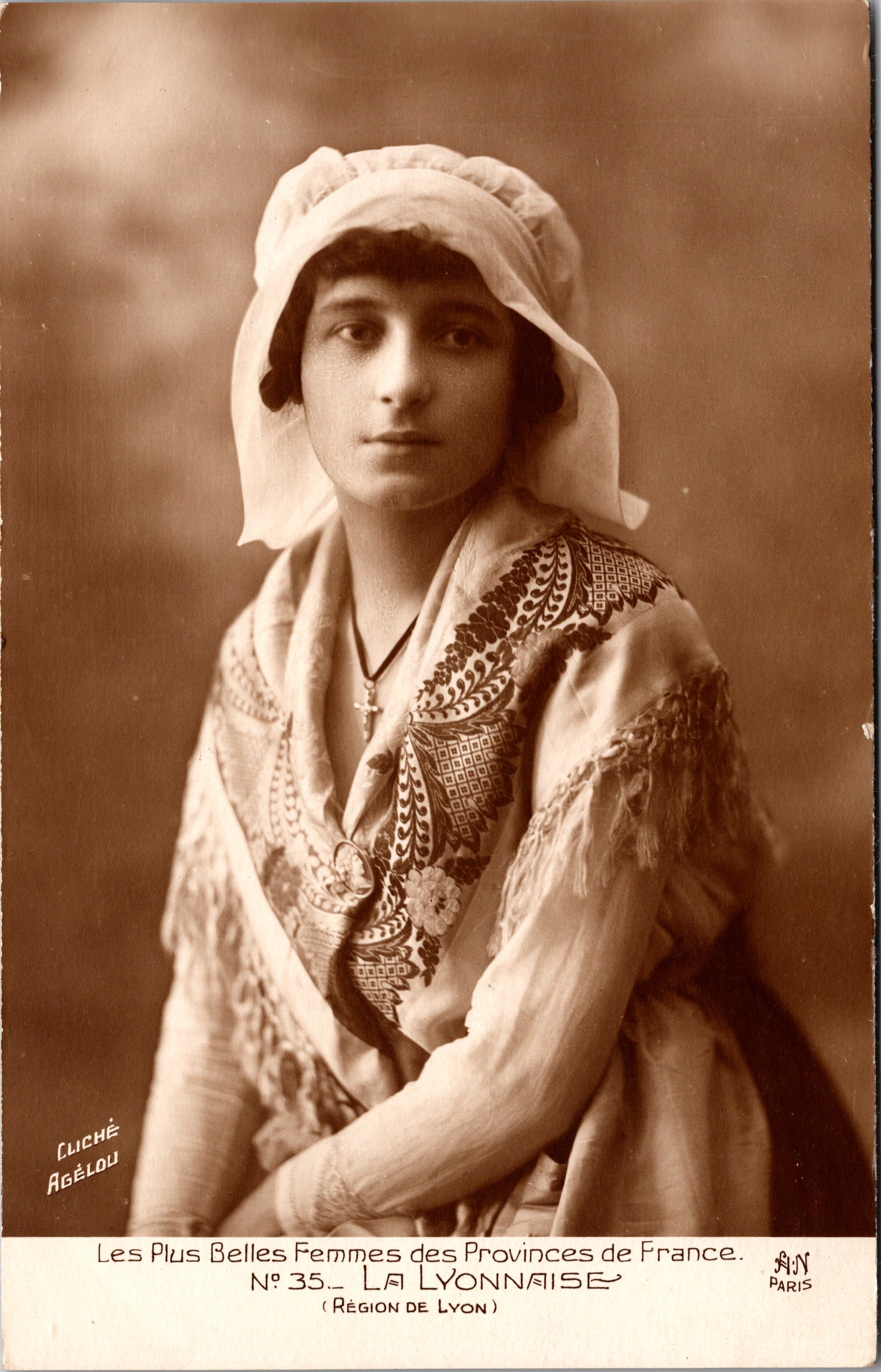
This vintage real photo postcard is part of a series named “Les Plus Belles Femmes de France” (The Most Beautiful Women of France). This series is about the Provinces of France, and the model for this image represents Lyonnaise. Note that the woman in this photograph is wearing a pretty smile. This postcard is no.35 in the series. There were a number of different series published. The Province series was one of the more popular series. The models in this series represent different French Provinces and wear traditional clothing from that particular area of the country. This postcard was published by well known photographer Alfred Noyer. The celebrated photographer supervised a large photo studio in Paris. The Noyer Studio operated from 1910 until the 1940’s. Many of the postcards he produced of women were nudes or risque images.The photographer of this postcard portrait is Jean Agelou (1878-1921). Agelou was a French photographer of the 1910’s and 1920’s who is best known for his erotic and nude photographs. He was born in Egypt and not much is known about his private life. Agelou generally used models between the age of 20 and 24 years-old. He had a favorite model. Her name was “Fernande” and in addition to modeling, she was Agelou’s lover. Although the 1900’s was the “golden age” of erotic photograph, photographers who took such risque photos had to use discretion. As a result, Agelou signed his work “JA”. In 1908, nudity in photographs was banned in France and photographers had to cover nude women images with strategically placed undergarments or other materials. Nude images had to circulate on the down low. They were sent in the mail inside of envelopes. Fernande remained popular and her erotic photographs were enjoyed by soldiers on both sides during World War I. Jean Agelou died in 1921; the result of a car accident. His brother George, who managed Jean’s business, also was killed in the crash. SOLD
This vintage real photo postcard features French stage and film actress, Huguette Duflos (1887-1982). She was married to actor Raphael Duflose from 1910 through 1928. Her early career was with the Comedie Francaise and she later pursued a film career. In 1931 she was the victim of an assault by a Frenchwoman. Her injuries were treated by noted psychoanalyst Jacques Lacan. The IMDb credits Duflos with 43 film appearances between 1914 and 1962. A 1926 article in the New York Times describes how Duflos, “the sweetest girl on the French stage”, unexpectedly resigned from the Comedie Francaise and pursued other venues. This action violated her contract and she faced the threat of financial punishment for the rest of her career. The article asserts that Duflos was the most popular beauty on France’s stages and in addition, she was also admired by American audiences. This photo of Miss Duflos was taken by the noted photographic Reutlinger studio. This postcard was published by Alfred Noyer and is part of the “Les Vedettes de Cinema” (The Stars of Film) series (No.16). SOLD
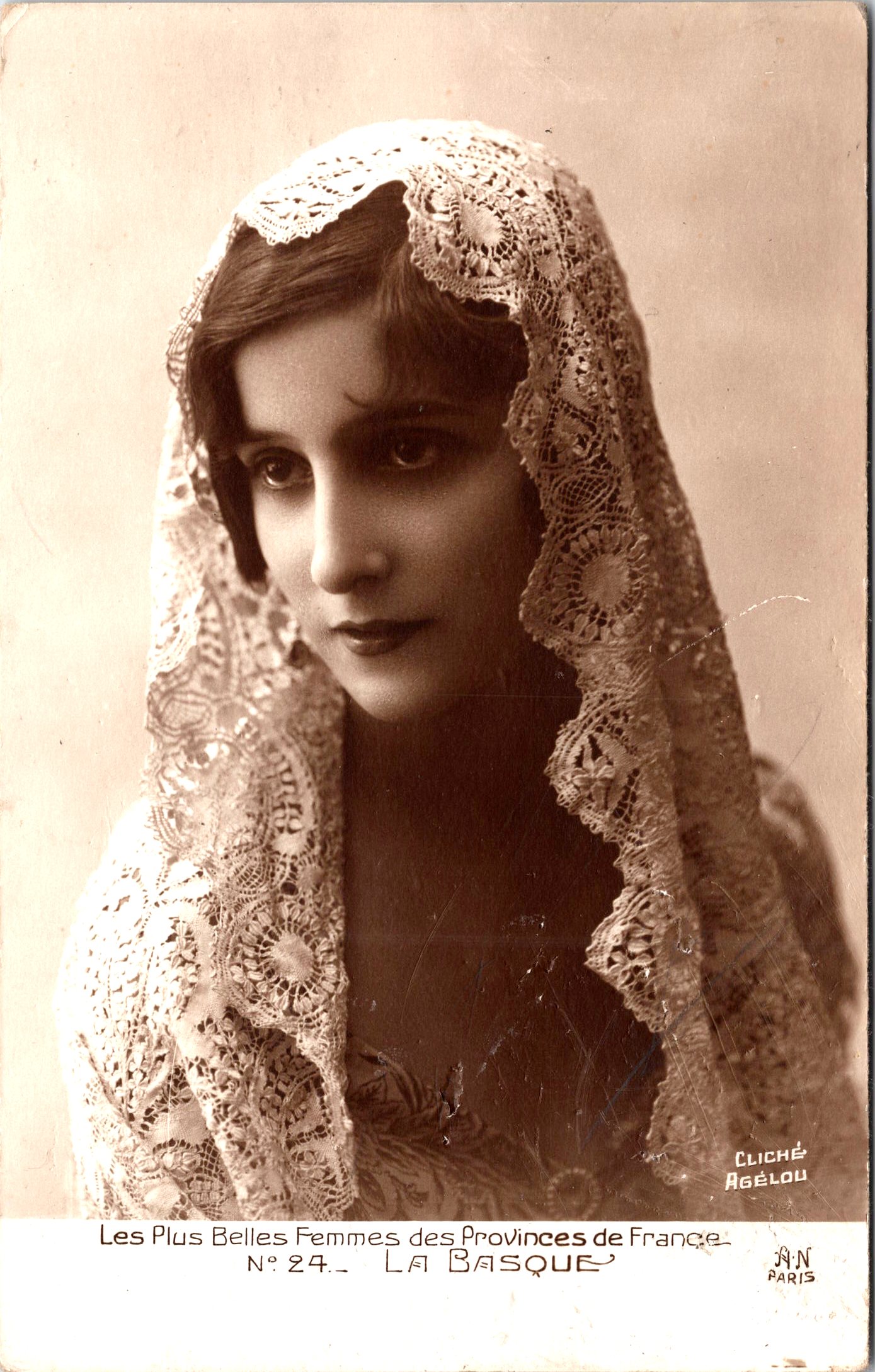
This vintage real photo postcard is part of a series named “Les Plus Belles Femmes de France” (The Most Beautiful Women of France). This series is about the Provinces of France, and the model for this image represents La Basque. Note that the woman in this photograph is wearing a subtle smile. This postcard is no.24 in the series. There were a number of different series published. The Province series was one of the more popular series. The models in this series represent different French Provinces and wear traditional clothing from that particular area of the country. This postcard was published by well known photographer Alfred Noyer. The celebrated photographer supervised a large photo studio in Paris. The Noyer Studio operated from 1910 until the 1940’s. Many of the postcards he produced of women were nudes or risque images. The photographer of this postcard portrait is Jean Agelou (1878-1921). Agelou was a French photographer of the 1910’s and 1920’s who is best known for his erotic and nude photographs. He was born in Egypt and not much is known about his private life. Agelou generally used models between the age of 20 and 24 years-old. He had a favorite model. Her name was “Fernande” and in addition to modeling, she was Agelou’s lover. Although the 1900’s was the “golden age” of erotic photograph, photographers who took such risque photos had to use discretion. As a result, Agelou signed his work “JA”. In 1908, nudity in photographs was banned in France and photographers had to cover nude women images with strategically placed undergarments or other materials. Nude images had to circulate on the down low. They were sent in the mail inside of envelopes. Fernande remained popular and her erotic photographs were enjoyed by soldiers on both sides during World War I. Jean Agelou died in 1921; the result of a car accident. His brother George, who managed Jean’s business, also was killed in the crash. SOLD
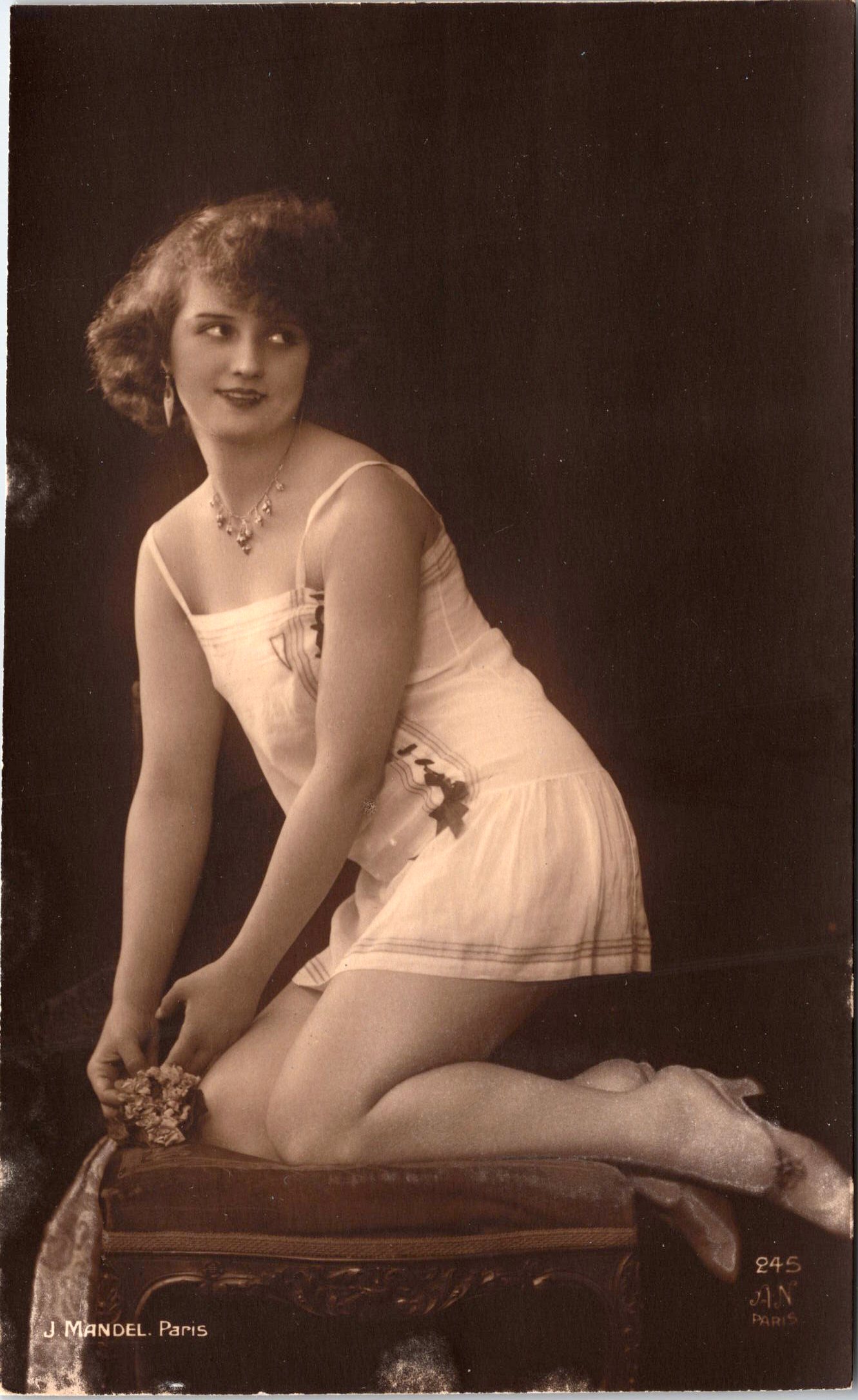
This vintage real photo features a pretty young woman wearing a negligee and holding a small bouquet of flowers. The woman is perched on an ornately carved wooden stool with upholstered fabric. She is in a graceful, slightly coy pose, looking off to her left, avoiding direct eye contact with the camera. She has short, wavy hair, characteristic of the 1920s or early 1930s style, giving her a modern and sophisticated look for the era. Her expression is flirtatious yet demure, exuding a mix of elegance and allure. She is wearing a light, sleeveless garment resembling a chemise or slip, commonly associated with boudoir or risqué photography of the time. The outfit is detailed with delicate embroidery and small ribbon accents, enhancing its feminine charm. Her night clothes are accessorized with a simple yet sparkling necklace and earrings. This postcard was published by Alfred Noyer (Paris). The model’s photograph was taken by J. Mandel. Mandel was a noted Parisian studio or publisher that specialized in photographic postcards during the early 20th century. Many of his works were part of the “boudoir” genre, featuring women posed in intimate or suggestive settings. SOLD
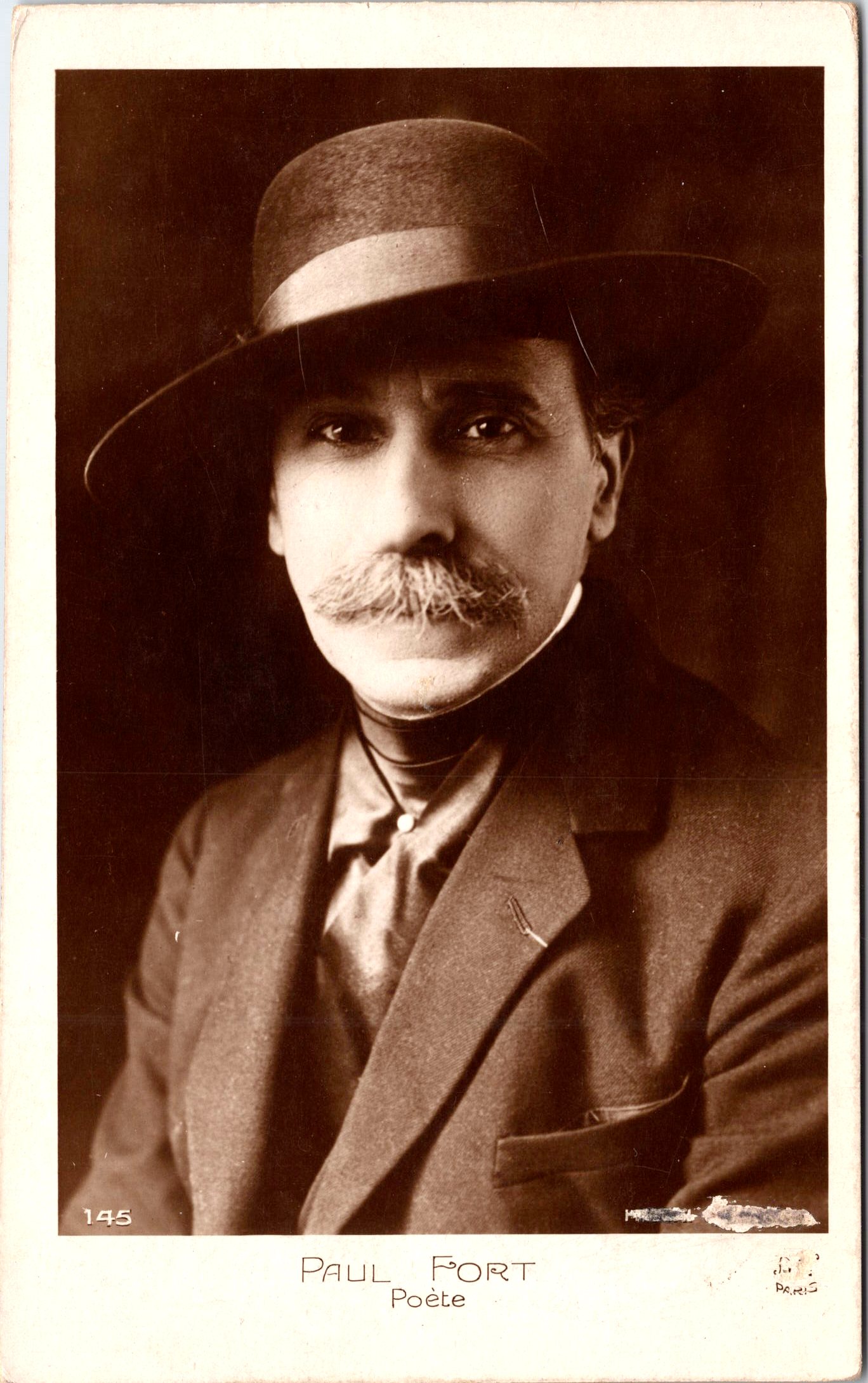
This vintage real photo postcard features French poet and innovator of literary experiments, Paul Fort (1872-1962).He is usually associated with the Symbolist Movement. He was just 18 years of age when he founded the Theatre d’Art. He also founded and edited the review Vers et Prose (1905-1914) which published the work of Paul Valery and other important Symbolist writers. Between 1897 and 1924, Fort wrote 30 volumes of ballads. This vintage postcard was published by Alfred Noyer as part of a series (No.145). Fort’s photo portrait was taken by celebrated photographer, Henri Manuel. SOLD
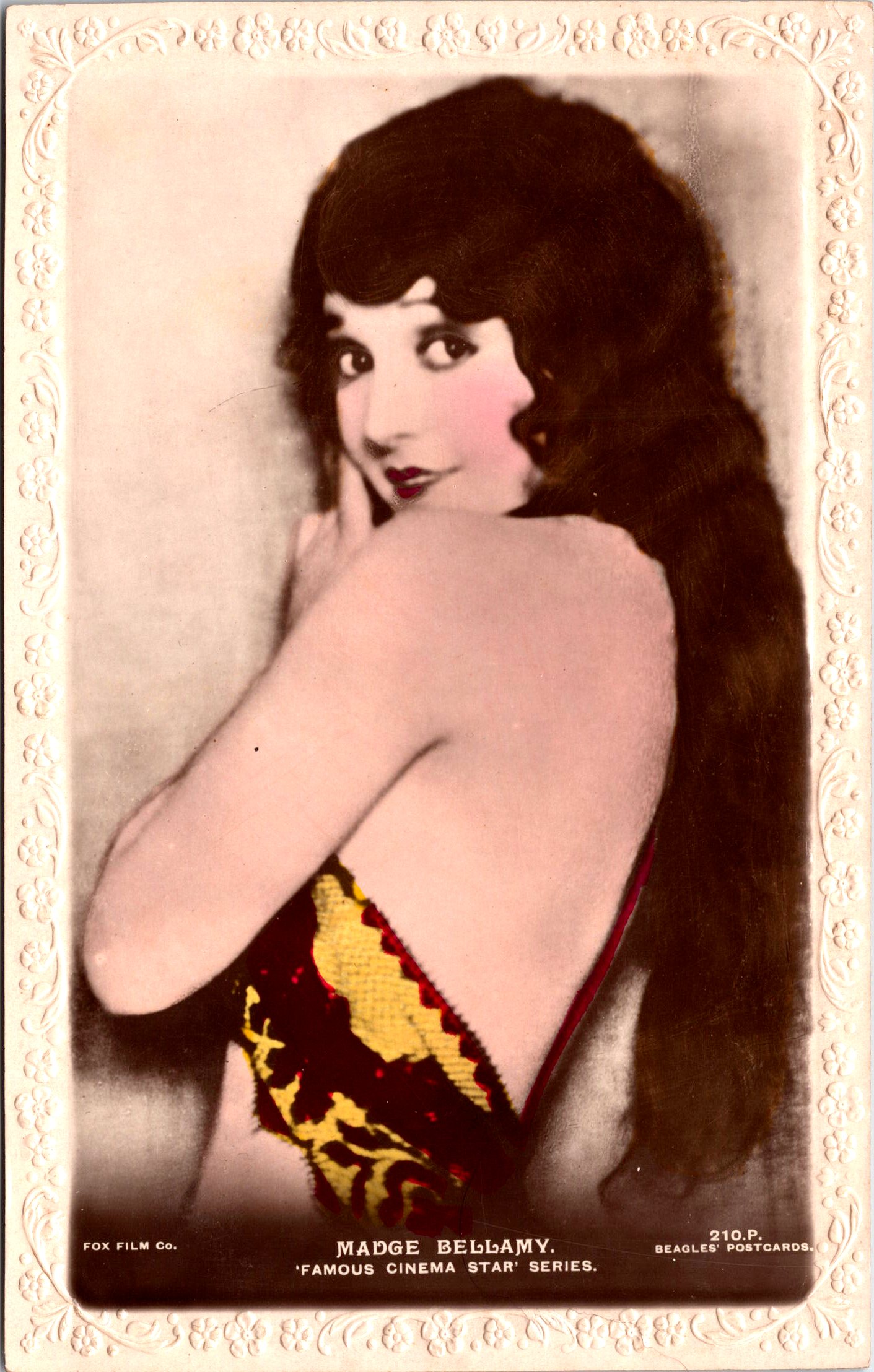
Postcard 1 is a hand tinted vintage real photo postcard that features Madge Bellamy (1899-1990), an American stage and film actress. She was a popular leading lady in films of the 1920’s and 1930’s. The sound era put the brakes on her career and a romantic scandal in the 1940’s brought it to a total stop. Madge was a Texan. She was born in Hillsboro and was raised in San Antonio and Brownwood. Her father was an English professor at Texas A&M University. As a young child she took dancing lessons but soon, she was interested in becoming an actress. At age 9, she made her stage debut in “Aida”. She and her family moved to Denver, Colorado. She met Carlos Bellamy there and the two married. When Madge decided to leave the state to pursue acting, her marriage ended. Madge went to New York City and worked on Broadway as a dancer. In 1919, she replaced Helen Hayes in Broadway’s “Dear Brutus”, opposite actor, William Gillette. Her career took off thereafter. In 1920, Madge appeared in her first film as a supporting actress to Geraldine Farrar. She then signed a contract with the Triangle Film Corporation. Her “breakout role” was as the title character in Lorna Doone (1922). In 1924 she signed a film contract with Fox Film Corporation. She stayed there five years and during that time she appeared in two films for film director, John Ford. In 1925, she began to have difficulties with fox executives. In 1928, she appeared in Fox’s first talking film, “Mother Knows Best”. In 1928, she married for a second time. The marriage lasted 3 days before she and her husband separated. By 1929, Bellamy’s career entered a tail-spin. She had made poor choices out of her unbridled anger. Fan magazines gave her the nickname of “Miss Firecracker” due to her temperament. In 1929, she also quit her contract with Fox, right after they bought the rights to make a film out of Broadway play. The vehicle was bought with a plan to have Madge be it’s star. Bellamy later admitted she quit over money and added “I got too big for my britches”. She didn’t work again until 1932. She accepted roles in “Poverty Row” (B-movies) films. One of these films was “White Zombie” (1932) in which she appeared opposite Bela Lugosi. Her performance received many poor reviews from film critics. By 1940, Madge basically had no film career. However, she wasn’t done with drama. She was arrested after firing three shots from a .32 caliber revolver at her former lover of five years. The incident was premeditated. She was angry at her intended victim because he married a model shortly after ending their affair. Fortunately, her aim was poor and she missed. The only casualty was her ex boyfriend’s car which took a couple of shots into it’s body. Bellamy pleaded guilty to a lesser charge (violating gun laws), and received a suspended six month sentence and probation. Madge Bellamy’s IMDb filmography reports 61 credits between 1920 and 1945. This vintage postcard is provocative. This postcard is risque for it’s era. She is showing a lot of bare skin. The postcard was published while Madge was under contract with Fox. Therefore, the postcard is from before 1929. The card was published by J. Beagles and is part of the “Famous Cinema Star Series” (No.210P). (SOLD)
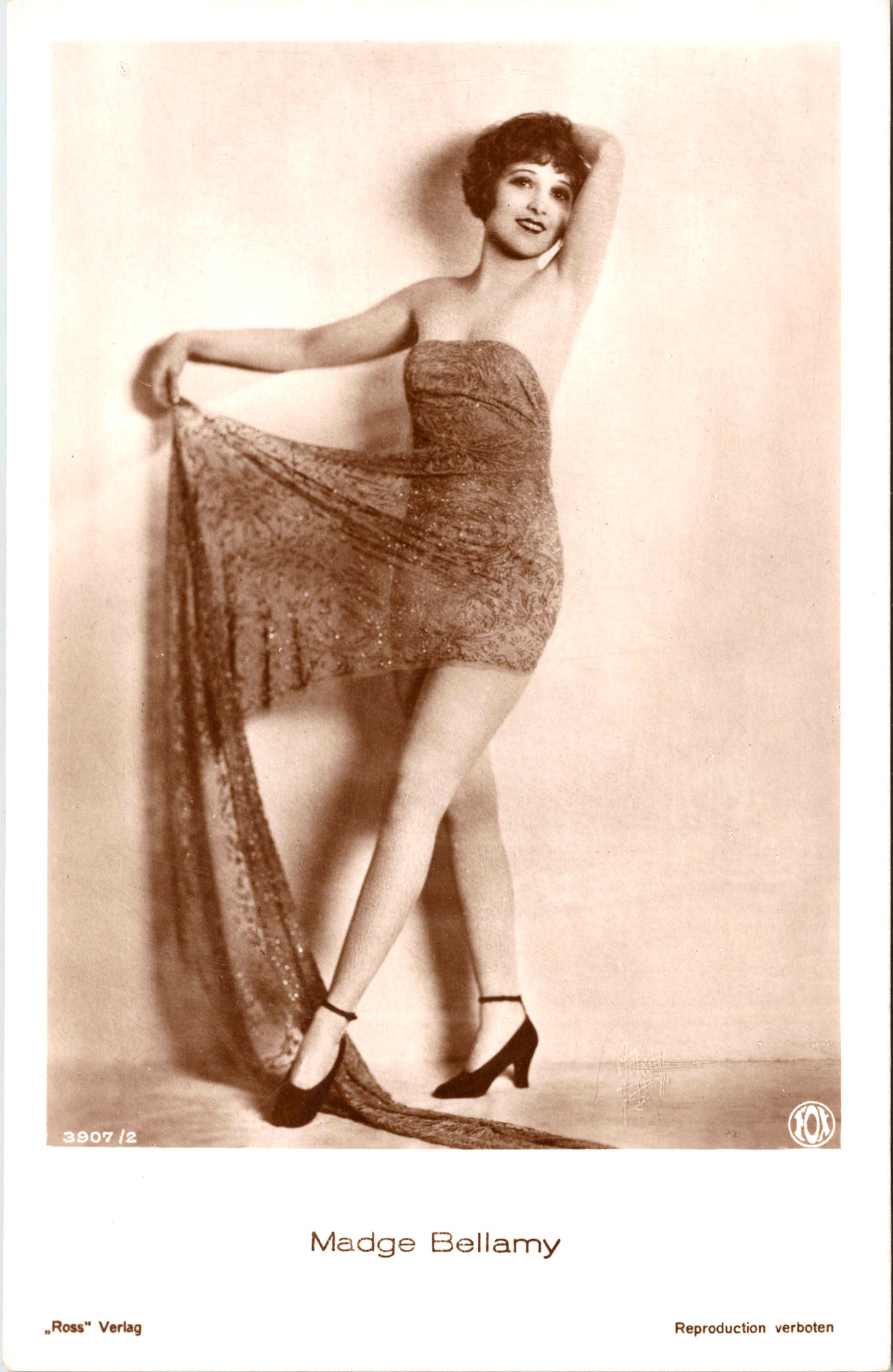
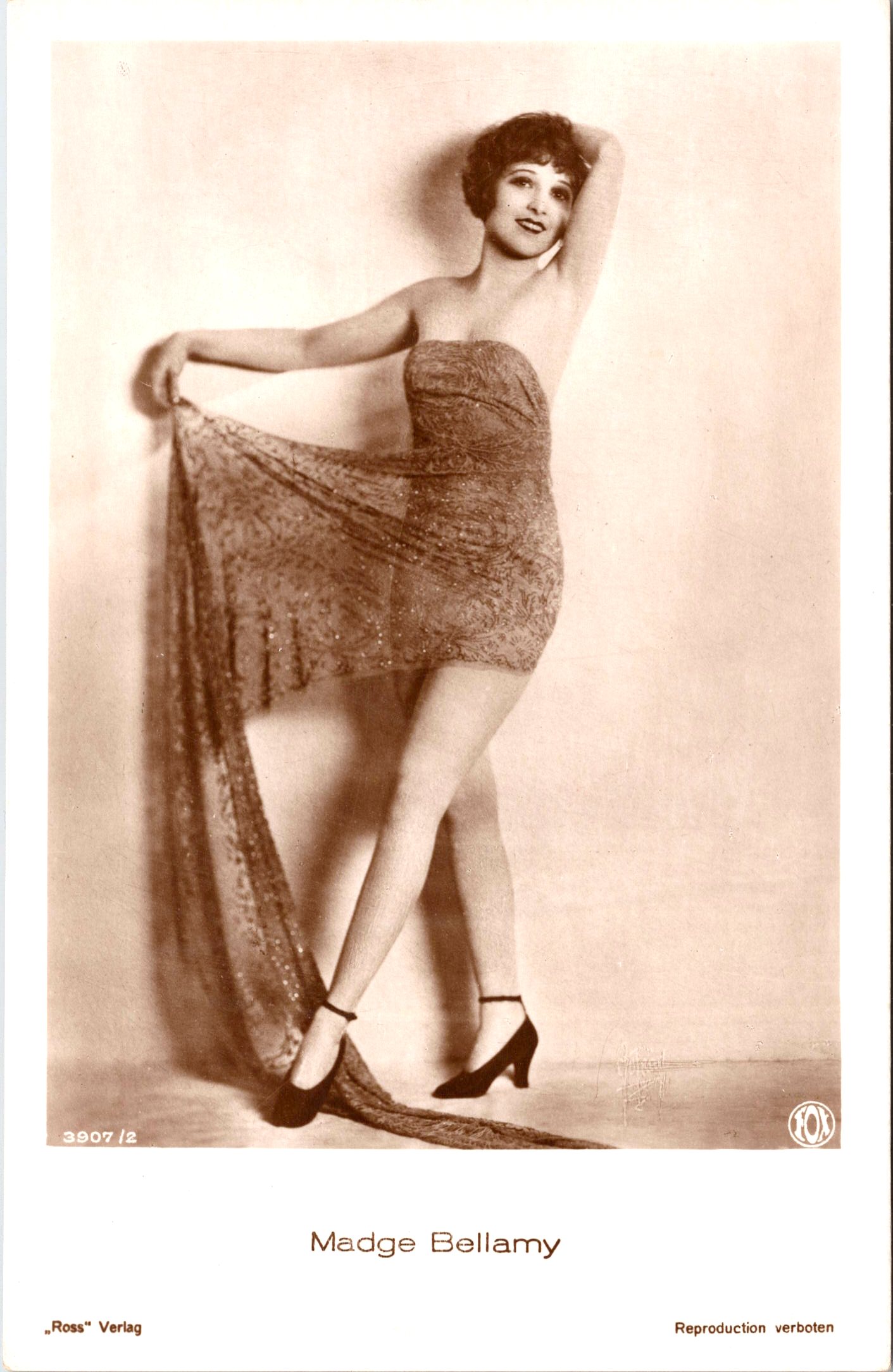
Postcard 2 offers another risque view of Madge Bellamy. Her alluring pose and short skirt qualifies this postcard to be considered provocative. This card was produced while Madge was under contract with Fox Films, sometime before 1929. This postcard was published by Ross Verlag as part of a series (No.3907/2). The postcard is in very good condition (see scans).
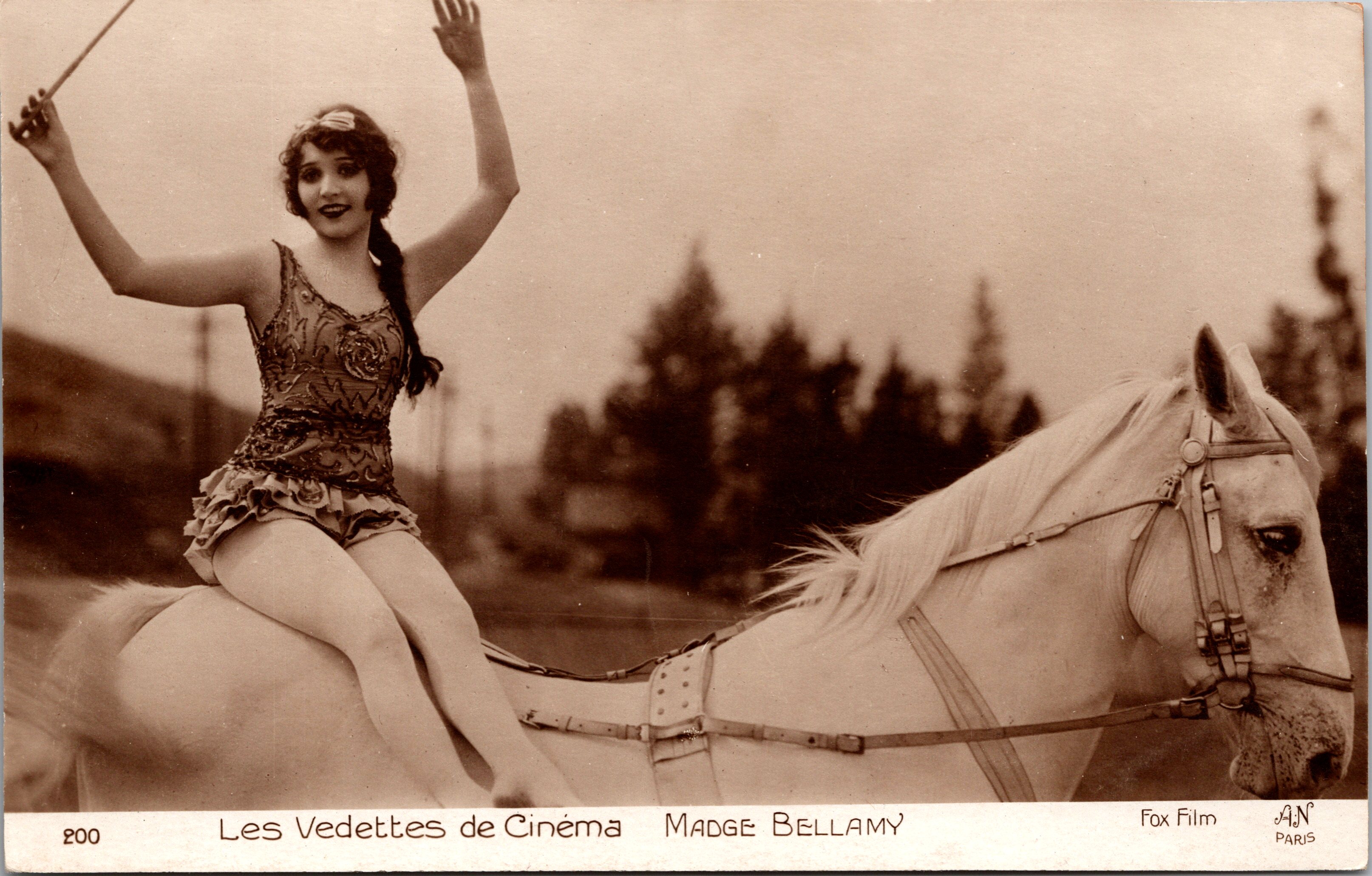
Postcard 3 is quite provocative. There are shades of Lady Godiva in this photograph. Miss Bellamy is pretty and scantily dressed. This postcard is risque for it’s era. The postcard was published while Madge was under contract with Fox. Therefore, the postcard is from before 1929. The card was published by Alfred Noyer and is part of the “Les Vedettes de Cinema” (The Stars of Film) series (No.200). This postcard is uncommon. (SOLD)
Buy this original Vintage Real Photo Postcard (includes shipping within the US) #7386
To purchase this item, click on the Pay with PayPal button below
$24.00
Buy this original Vintage Real Photo Postcard (includes International shipping outside the US) #7386
To purchase this item, click on the Pay with PayPal button below










 THE CABINET CARD GALLERY