

This risque vintage real photo postcard features Russian-German actress, Olga Tschechowa (1897-1980). Her father was a railway engineer who became Russia’s Minister of Railways. She was the niece of Anton Chekov’s wife. She went to school and studied art and literature at an art school in St. Petersburg. . After watching famed actress Eleonora Duse, Olga joined the Moscow Art Theare’s studio. In 1914, while at the school, she met Russian-Jewish actor Mikhail Chekov. He was the nephew of Anton Chekov. She married him the same year and they had a daughter in 1916. In 1917, during the October Revolution, she divorced her husband. It is reported that he had an affair while Olga was pregnant. Olga would marry three more times. She joined a cabaret group and was offered a part in a silent movie. She travelled to Vienna and moved to Berlin in 1920, She continued to perform in films. She was one of the fortunate actresses who successfully made the transition from silent to sound movies. In the 1930’s she became one of the leading actresses of the Third Reich and was admired by Adolf Hitler. Olga was courted by Hermann Goring and Joseph Goebbels. Goebbels introduced her to Hitler in 1933 and she and Hitler became friends. In 1936, she was named “State Actress” of the Third Reich and she was made a German citizen. Olga’s brother was sent from Russia to Germany on a secret mission to assassinate Hitler. Stalin got cold feet and called off the “hit”. The brother ended up in a Nazi concentration camp, but survived the war. At one point, Olga was accused of being a Russian agent in Nazi Germany. Himmler ordered an investigation of Olga by the SS. She was often kept under surveillance by both Nazi and Soviet agents. In 1945, Himmler planned to arrest her but Hitler intervened. Olga survived the war through lying, acting, and disguise. She protected her daughter from the concentration camps by hiding the fact that she had a Jewish father. At the war’s end, Olga was arrested by the Red Army and brought to Moscow for a debriefing. She was interrogated for two months and then taken to Berlin to assist the Soviet Army. She established herself in East Berlin. She played in dramas but preferred comedies. Olga was very successful in the film business,. Her filmography reveals that she has 138 credits as an actor, director, and producer between the years of 1917 and 1974. After the World War II, she lived in Soviet occupied Berlin and in 1949 she moved to Munich, Bavaria. In Munich she started a cosmetics company. Simultaneously she continued to act in more than 20 films. She published a book of memoirs and retired from acting in the 1970’s. In 1966, her daughter died in a plane crash. Olga suffered from depression and alcohol abuse. She died in Munich and just before she died, she had her granddaughter bring her a glass of champagne, Her last words were purported to be “Life is beautiful”. This postcard was published by Ross Verlag and is part of a series (no. 3040/1). The front of the card has the logo for UFA, a German film company. This vintage portrait postcard is uncommon. (SOLD)

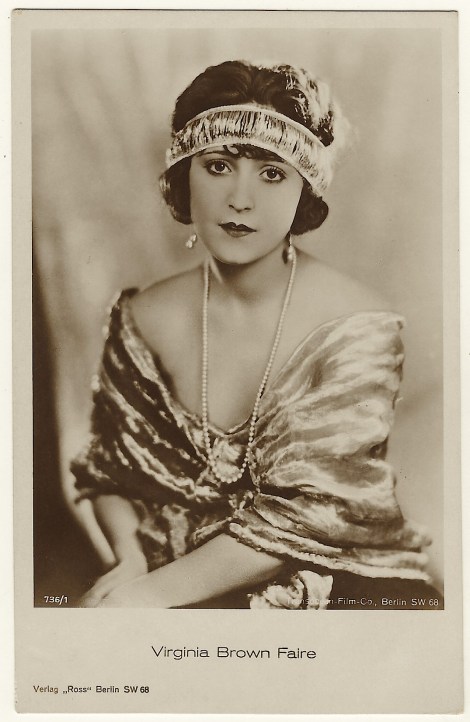
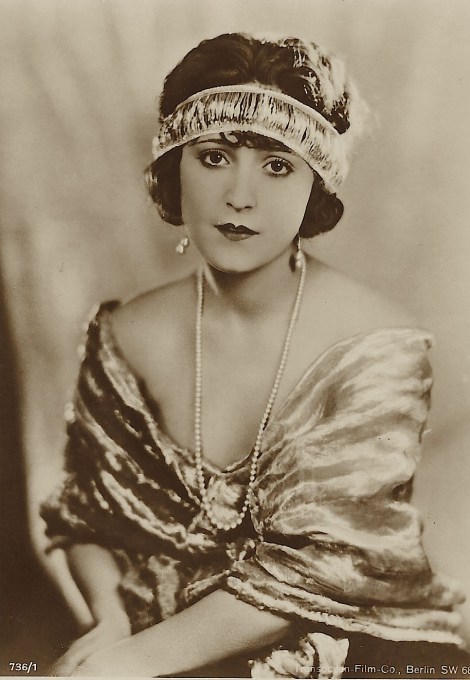 This vintage real photo postcard features American silent and sound film star, Virginia Brown Faire (1904-1980). She was born in Brooklyn, New York. In 1919, after being a winner of the Motion Picture Classic magazine’s “Fame and Fortune” contest, she went to Hollywood. At age 15, she was hired by Metro studio. She then appeared in movies for Fox, followed by Universal. Her first film “Runnin’ Straight” (1920) was a Hoot Gibson short western. She was the leading lady for John Gilbert in Monte Cristo (1922). She was chosen as one of the WAMPAS Baby Stars in 1923. Included in this group of beautiful actresses was Laura La Plante and Evelyn Brent. La Plante and Brent both had successful acting careers. She is most remembered for her role as Tinker Bell in Peter Pan (1924). Faire made a successful transition into sound films. Her first successful talkie was her role in Frank Capra’s “The Donovan Affair” (1929). She appeared in several westerns. Among the western stars that she played opposite to; was John Wayne,Hoot Gibson, and Buck Jones. In the late 1930’s she left Hollywood and moved to Chicago and worked in radio and industrial films. She retired in about 1935. According to the IMDb, she appeared in 74 films between 1920 and 1935. Faire had three marriages. The first, was to actor Jack Dougherty and the marriage lasted just over a year. She then married director Duke Worne, a film director. He died after three years and she then married William Bayer, a furniture manufacturer. She died of cancer in 1980. This vintage postcard was published by Ross Verlag of Berlin, Germany. It is part of a series (no, 736/1). SOLD
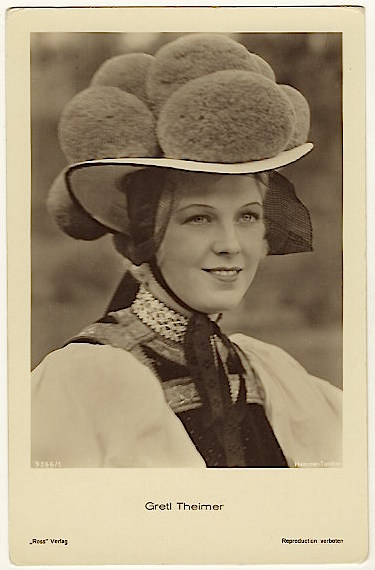 POSTCARD 1
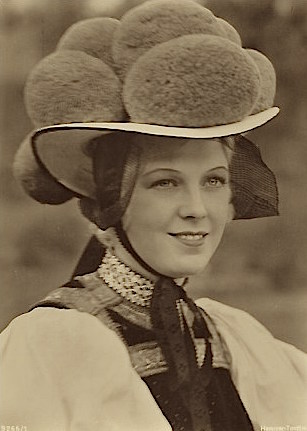 POSTCARD 1 (CLOSE-UP)
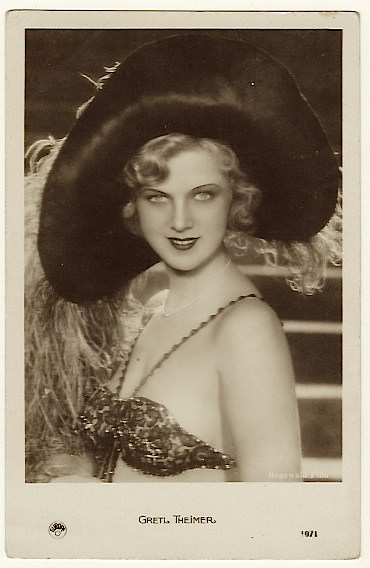 POSTCARD 2
 Postcard 2 (Close=up)
 POSTCARD 1
 POSTCARD 2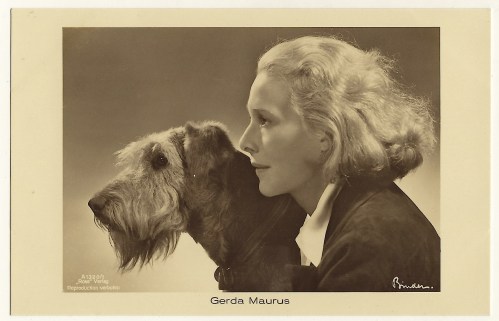
 The lovely actress seen in this vintage real photo postcard is named Gerda Maurus (1903-1968). She is posed next to a beautiful Airedale terrier. This unusual profile photograph was taken by celebrity photographer Alex Binder. His studio was located in Berlin, Germany. Maurus was active in film and television between 1928 and 1968. She was an Austrian actress of Croatian descent. Maurus was the daughter of an engineer/inventor. She grew up in Vienna and received training as a singer and dancer. She hit the stage at age fifteen. The IMDb biography of Maurus describes her as ” a strikingly beautiful blonde with high cheekbones an expressive blue eyes”. She began her career on the stages of Vienna. She was “discovered” by director Fritz Lang and he cast her in the female lead in the silent film “Spione” (1928). Lang was smitten by maurus and his marriage was destroyed. She then appeared in a number of German films during the Weimar and Nazi eras. Maurus married director Robert A. Stemmie in 1937. He directed her in “Daphne and the Diplomat” (1937). Like many actresses of her time, her acting career was hurt by the introduction of “talkies”. Further complicating matters was her nebulous association with Nazi propaganda minister Joseph Goebbels. This relationship had negative impact on her career after World War II. Due to lack of film offers, Maurus retreated to the German stage. The IMDb filmography of Gerda Maurus lists 33 credits. Here is a side note about Airedales. The first World War increased the popularity of Airedales because they became famous for their bravery on the battlefield. In the US, Presidents Theodore Roosevelt, Calvin Coolidge, and Warren Harding all owned Airedales. In the 1920’s, Airedales became the most popular dog in the US. This postcard was published by Ross Verlag and is part of a series (no. A1320/1). (SOLD)
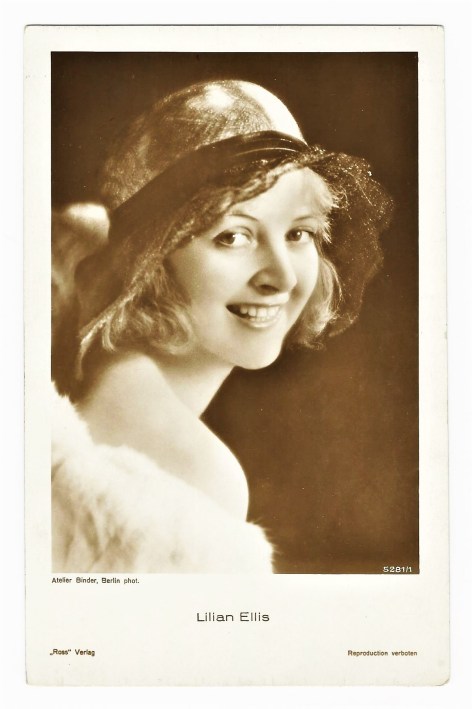
 This vintage real photo postcard features Danish actress, Lillian Ellis (1907-1951). She made fer film debut in 1928. Many of her roles were in German films. Her stardom in Germany peaked at the end of the 1920’s. The IMDb credits Ellis with 18 acting roles between 1928 and 1959. This vintage postcard was published by Ross Verlag and was part of a series (no. 5281/1). The photographer who took this photograph was Alex Binder, a celebrity photographer located in Berlin, Germany. This portrait postcard is in very good condition.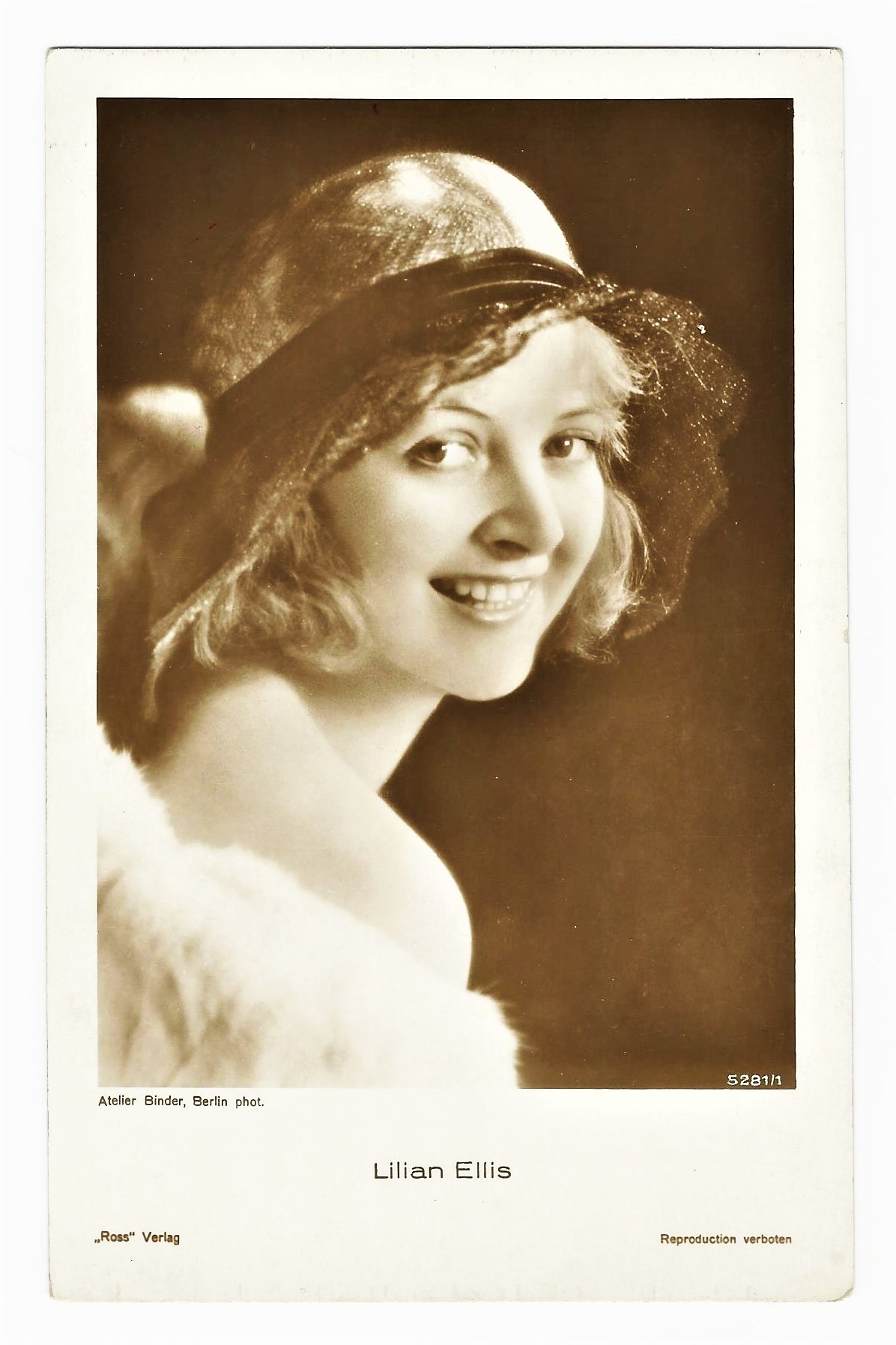
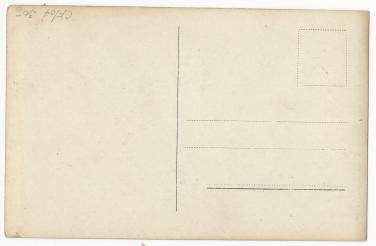
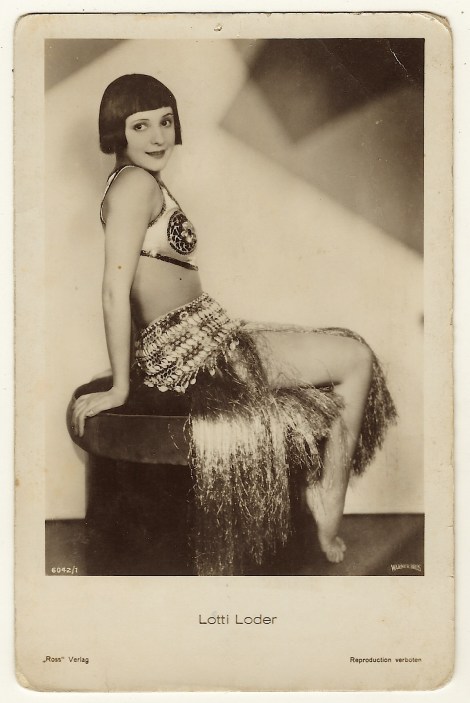
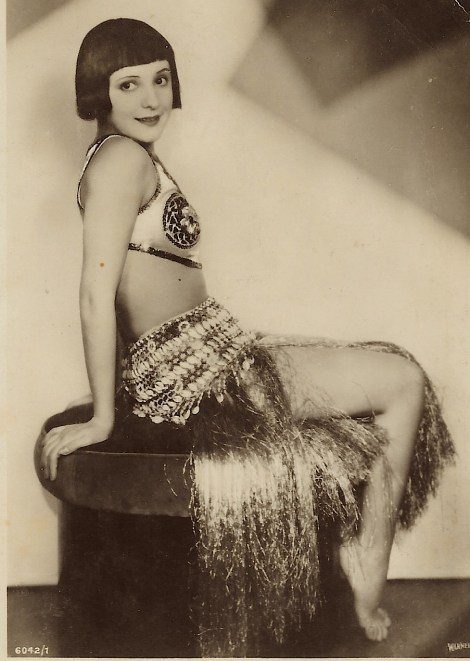 This vintage real photo postcard features German/Hungarian actress Lottie Loder (1910-1999). She was born in Nuremberg, Germany. Loder started her career as a dancer in Vienna. She was a “talkie” film actress (Warner Brothers). She was known for “A Soldier’s Plaything (1930), “Oh, Sailor Behave! (1930), and “Men of the Sky (1931). Her career was brief. The brunette leading lady, according to IMDb, acted in just five films between 1930 and 1931. Warner Brothers brought her to Hollywood to compete with MGM’s Greta Garbo, and Paramount’s Marlene Dietrich. Note Loder’s “dutch cut” hairstyle. She clearly copied Colleen Moore’s 1920’s trademark hair style. Loder was in good company. Celebrated actress, Louise Brooks, also copied Miss Moore’s “dutch cut”. Loder died in Miami, Florida at about 89 years of age. This postcard portrait was published by Ross Verlag and was part of a series (no. 6042/1). The postcard promotes Warner Brothers films. This photo portrait postcard is in good condition. The postcard has a pinhole in the center of it’s top border above the image (see scans).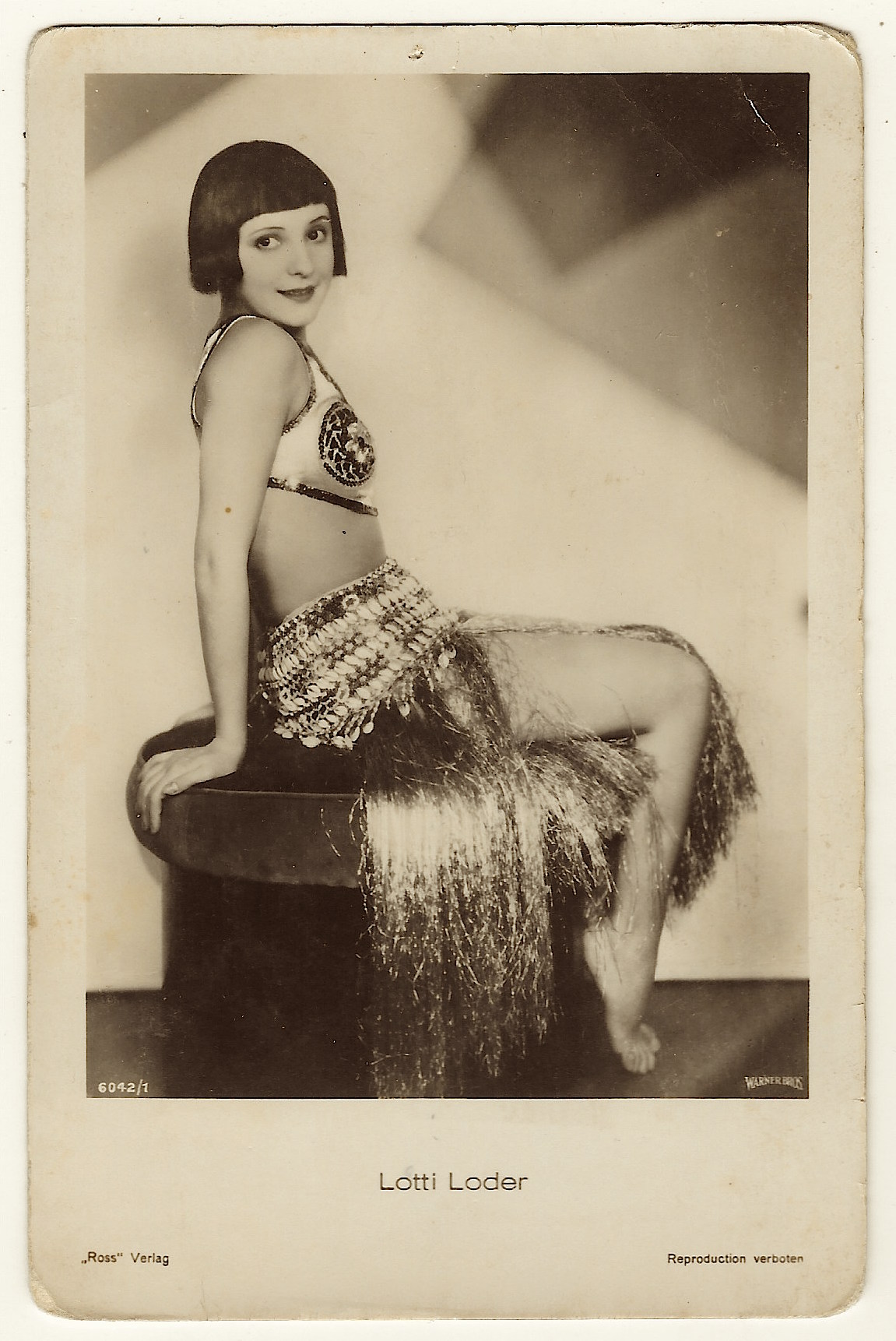



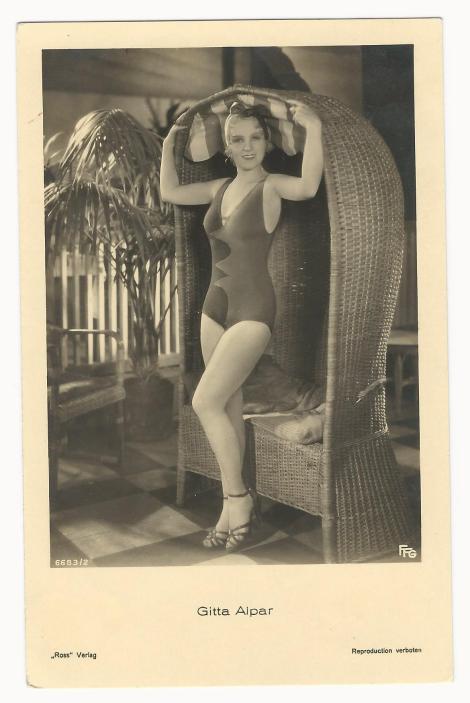
 This vintage real photo postcard features Hungarian actress Gitta Alpar (1903-1991). She starred in operas and operettas. This photograph is risque relative to the time it was taken. Miss Alpar is wearing a tight bathing suit. Note that the swim suit has a nice design on it’s front. She is posing in front of a large rattan chair. Gitta was born in Budapest, Hungary. She was the daughter of a Jewish cantor. From an early age, she studied singing and piano at the Academy of Music. In 1923, she made her debut at the Budapest State Opera House. She had a long career and she performed at the great opera houses of Vienna, Berlin, an many other international venues. Alpar’s first films were made in Germany. In 1931 she married an actor, Gustav Frohlich. Their marriage ended in 1935 because Alpar was Jewish and the marriage was against the law in Nazi Germany. A related fact is that both of her brothers, a pianist, and a violinist, were concentration camp survivors. Alpar appeared on Hitler’s anti semitic “hit list”. She left Germany in 1933, and then did some globe hopping. She first went to Austria, followed by Hungry, England, and the United States. She continued her singing and film career in the US. The IMDb credits Alpar with nine acting credits from 1932 through 1941. Alpar’s accent ruined her chance to be a successful Hollywood actress. After the war, she primarily worked as a singing teacher. For a sample of Miss Alpar’s singing voice and acting, click on the YouTube segment below. This postcard was published by Ross Verlag and is part of a series (no.6683/2). Alpar’s photo was taken by FFG (Froehlich-Flm GmbH). (SOLD)
 POSTCARD 1
 POSTCARD 1 (CLOSE-UP)
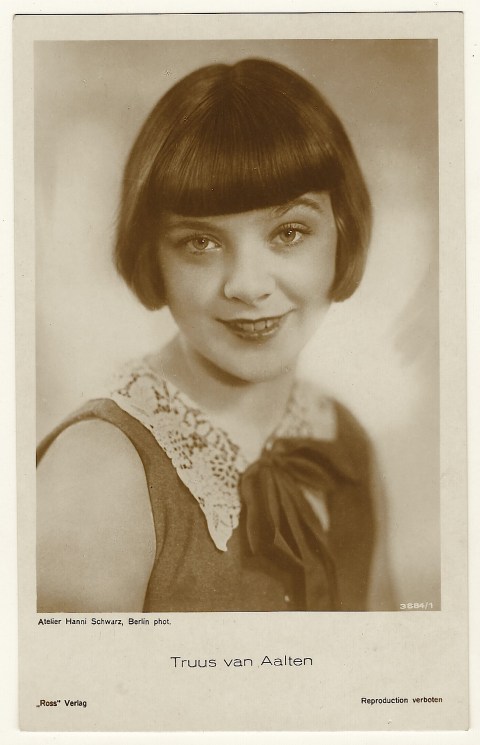 POSTCARD 2
 POSTCARD 2 (CLOSE-UP)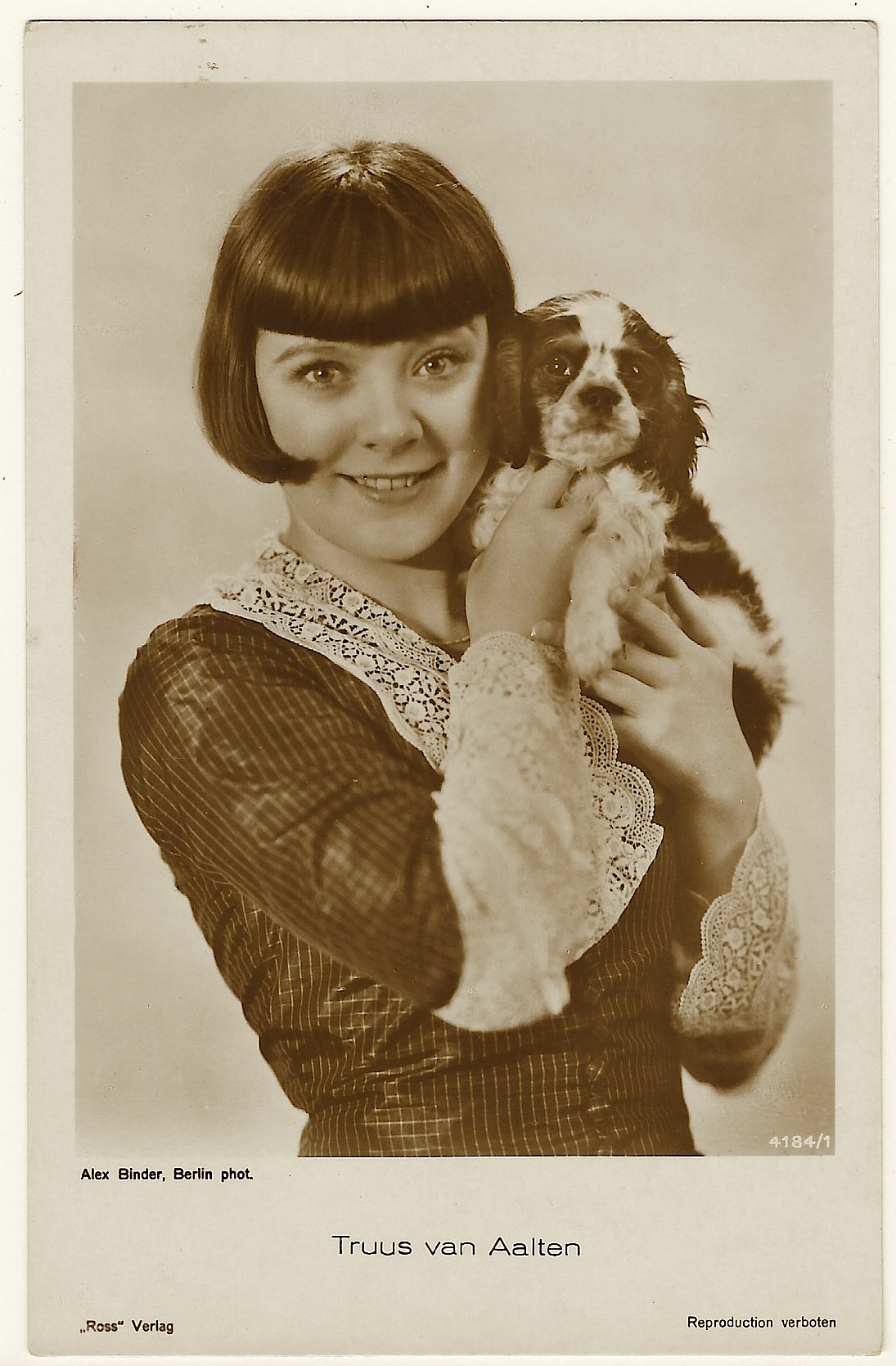
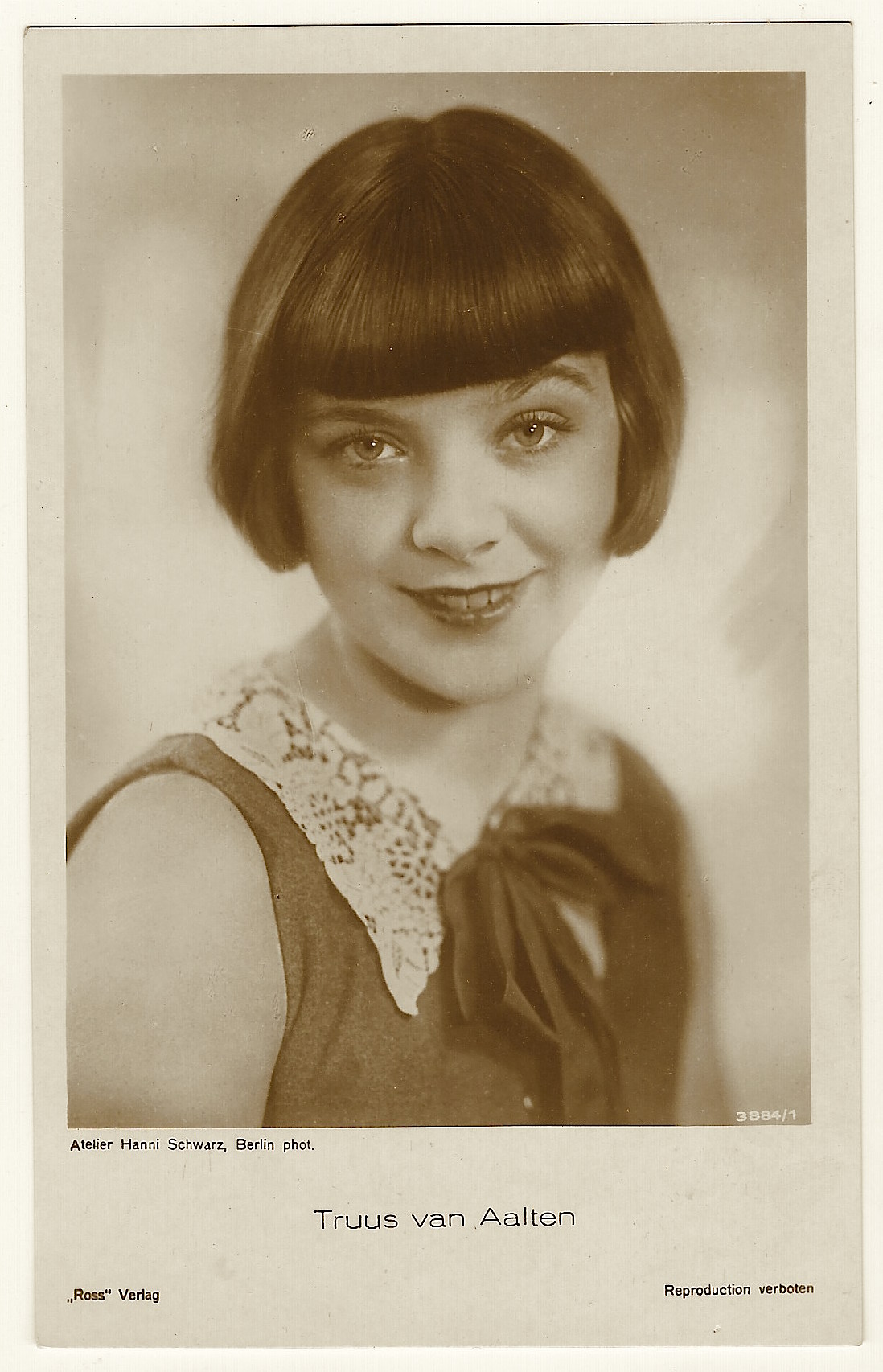
 Postcard 1
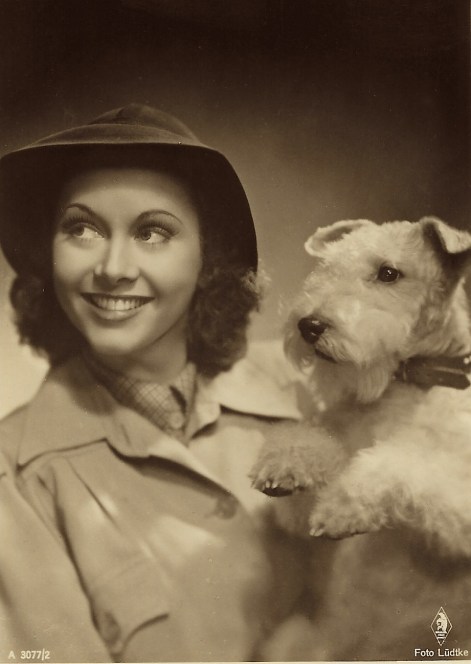
  POSTCARD 2


 THE CABINET CARD GALLERY