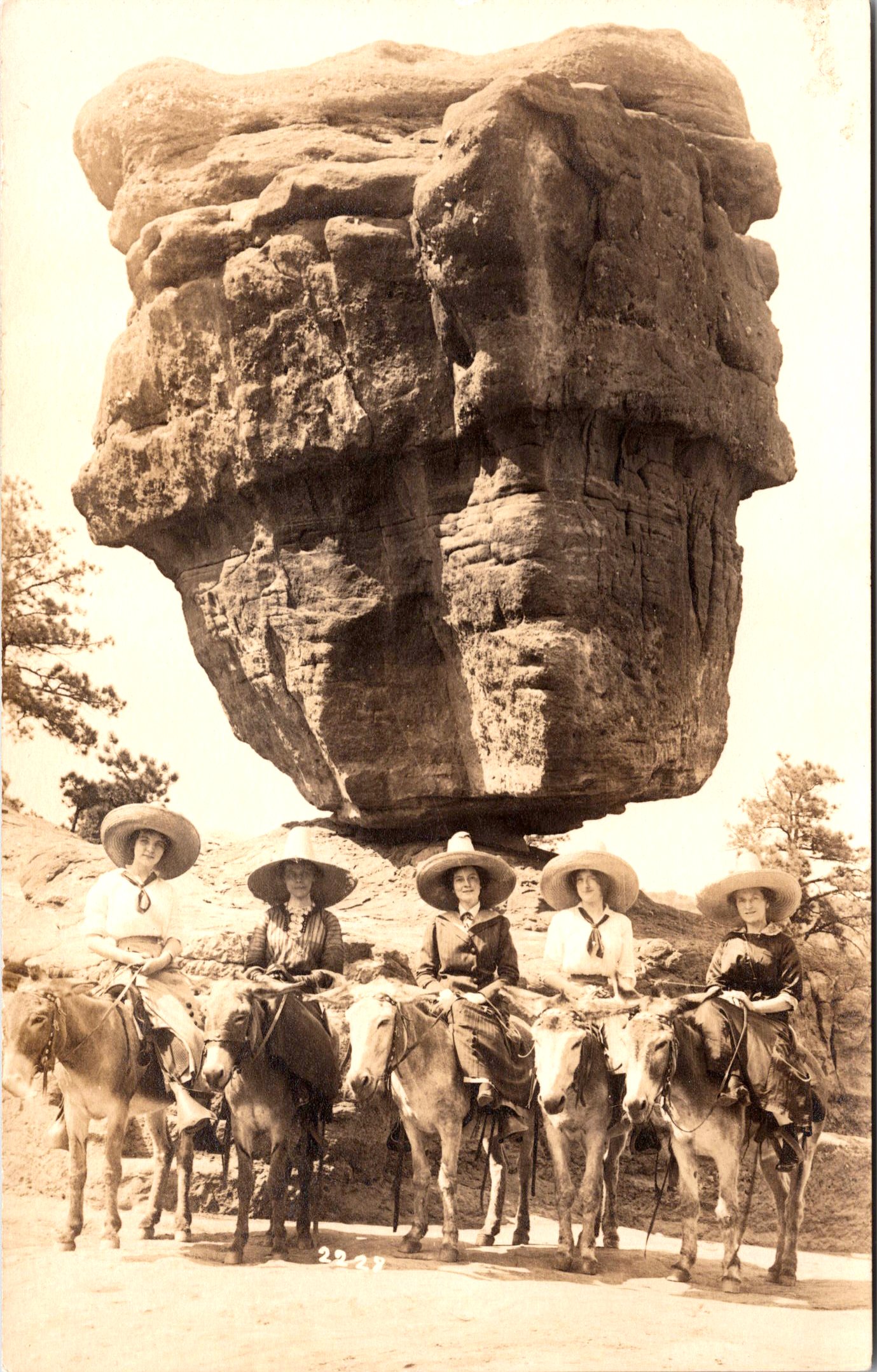
BALANCED ROCK : GARDEN OF THE GODS : COLORADO : WOMEN ON BURROS : RPPC 1920’s

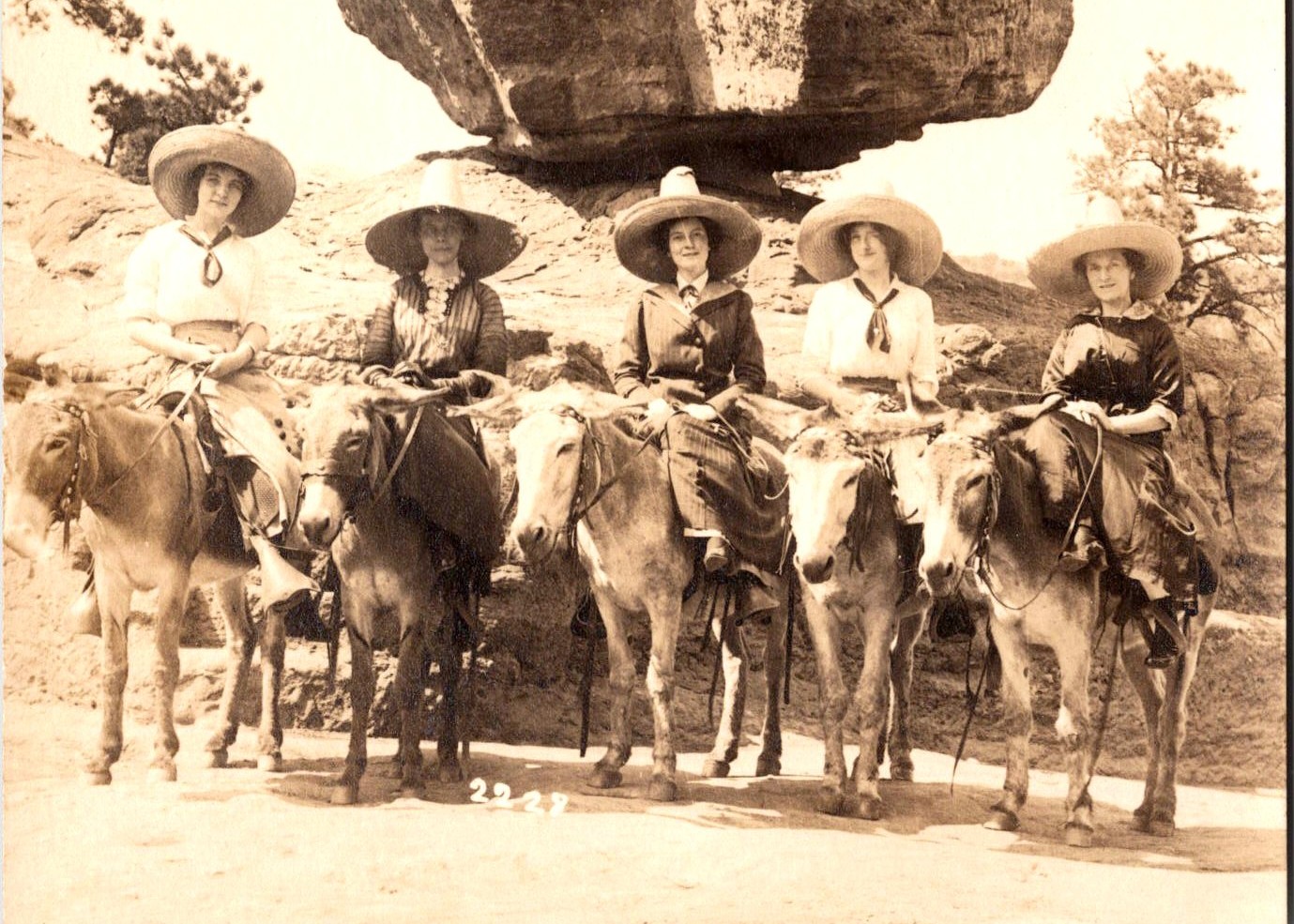
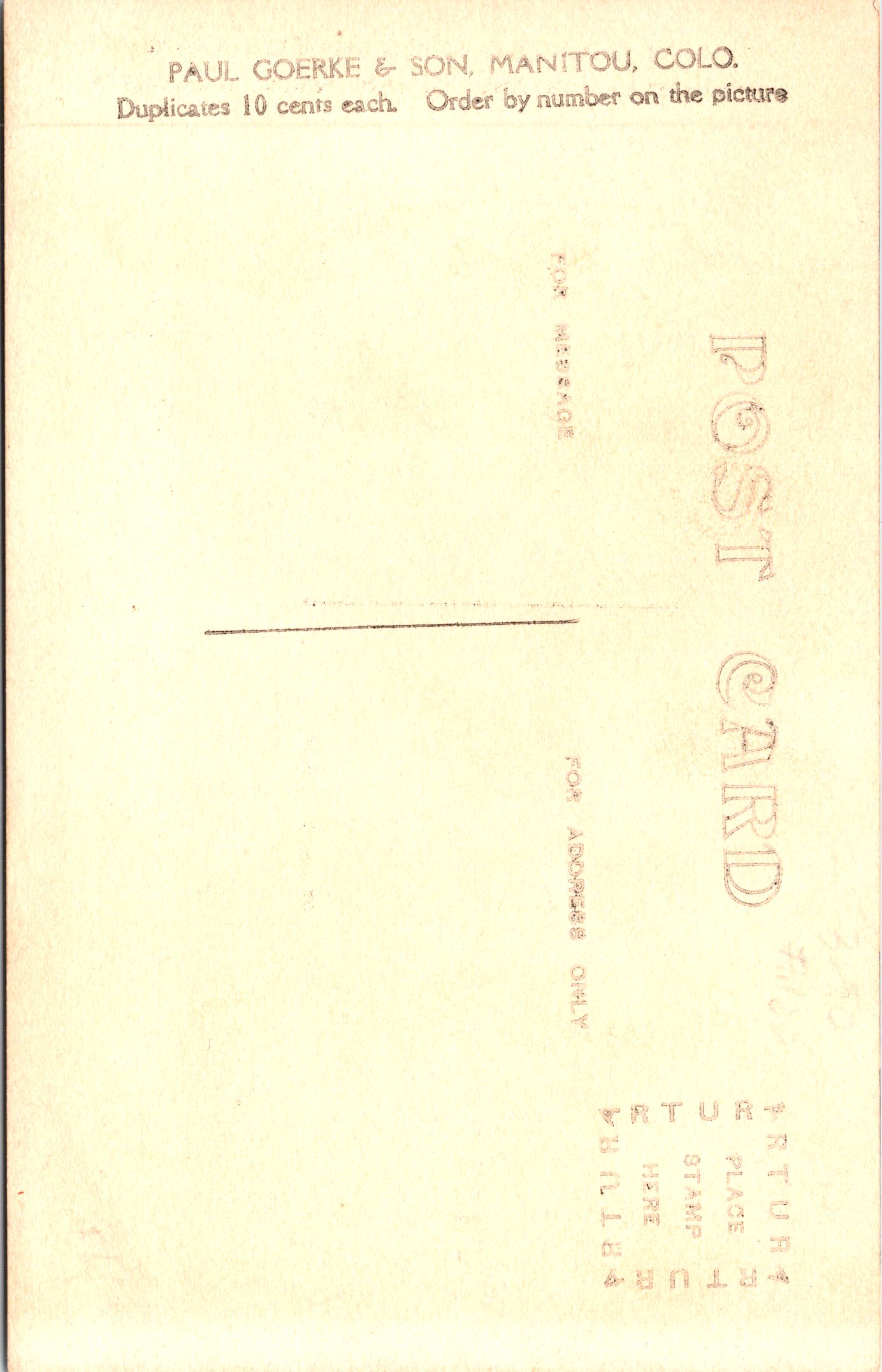
You’re looking at a charming early 20th-century real photo postcard taken at one of Colorado’s most iconic natural landmarks—Balanced Rock, located in the stunning Garden of the Gods park just outside Colorado Springs. This novelty photograph captures a group of five women posing proudly on donkeys in front of the massive, gravity-defying sandstone formation. The photograph radiates the playful spirit of early Western tourism. Five women sit astride small donkeys, all lined up neatly in front of the looming shadow of Balanced Rock. Their expressions vary from reserved amusement to open cheerfulness, suggesting they are enjoying a once-in-a-lifetime travel experience in the American West. Each woman wears a wide-brimmed sombrero-style hat, likely provided by the concession for a touch of “Wild West” flair. Their clothing is modest but stylish for the era—ankle-length skirts, blouses with sailor collars or lace trim, and fitted jackets give them a slightly adventurous, yet feminine look appropriate for tourists of the 1910s or early 1920s. Despite riding donkeys—often considered humble beasts of burden—the women’s confident postures and bemused smiles give the impression that they’re enjoying their frontier fantasy. Their donkeys stand calmly, reins held loosely in the women’s hands, adding to the relaxed, posed nature of the scene. The back of the card identifies the photographer as Paul Goerke & Son, who operated a thriving photography business in Manitou, Colorado. This firm set up a concession at Balanced Rock, one of the most photographed natural features in the West. Tourists could ride donkeys or burros up to the site, don hats, and pose for a souvenir photograph, which Goerke’s team would develop and print on postcard stock. (SOLD)
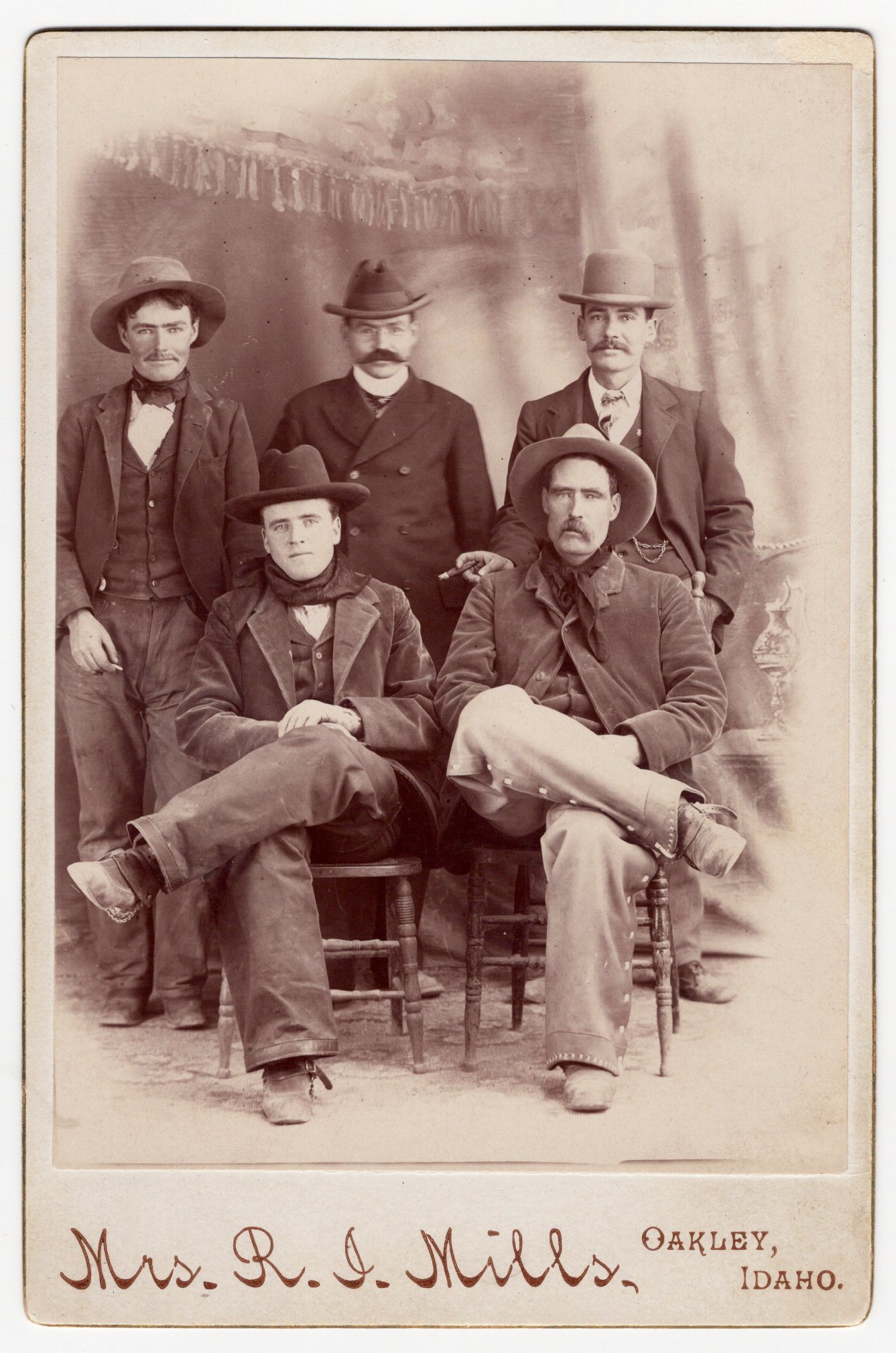
ID’D FRONTIER COWBOYS: FEMALE PHOTOGRAPHER : OAKLEY, IDAHO : CABINET CARD c 1890

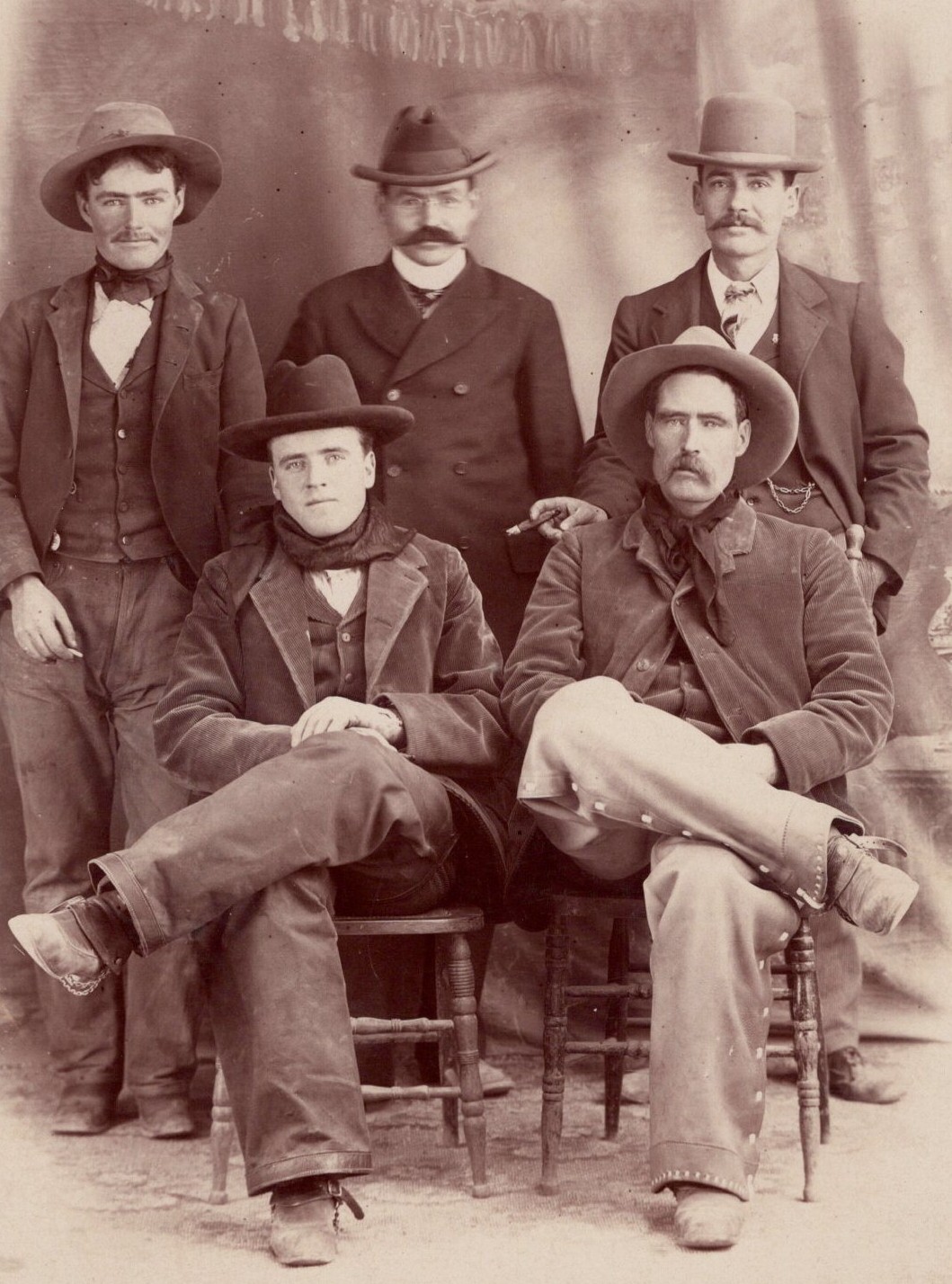
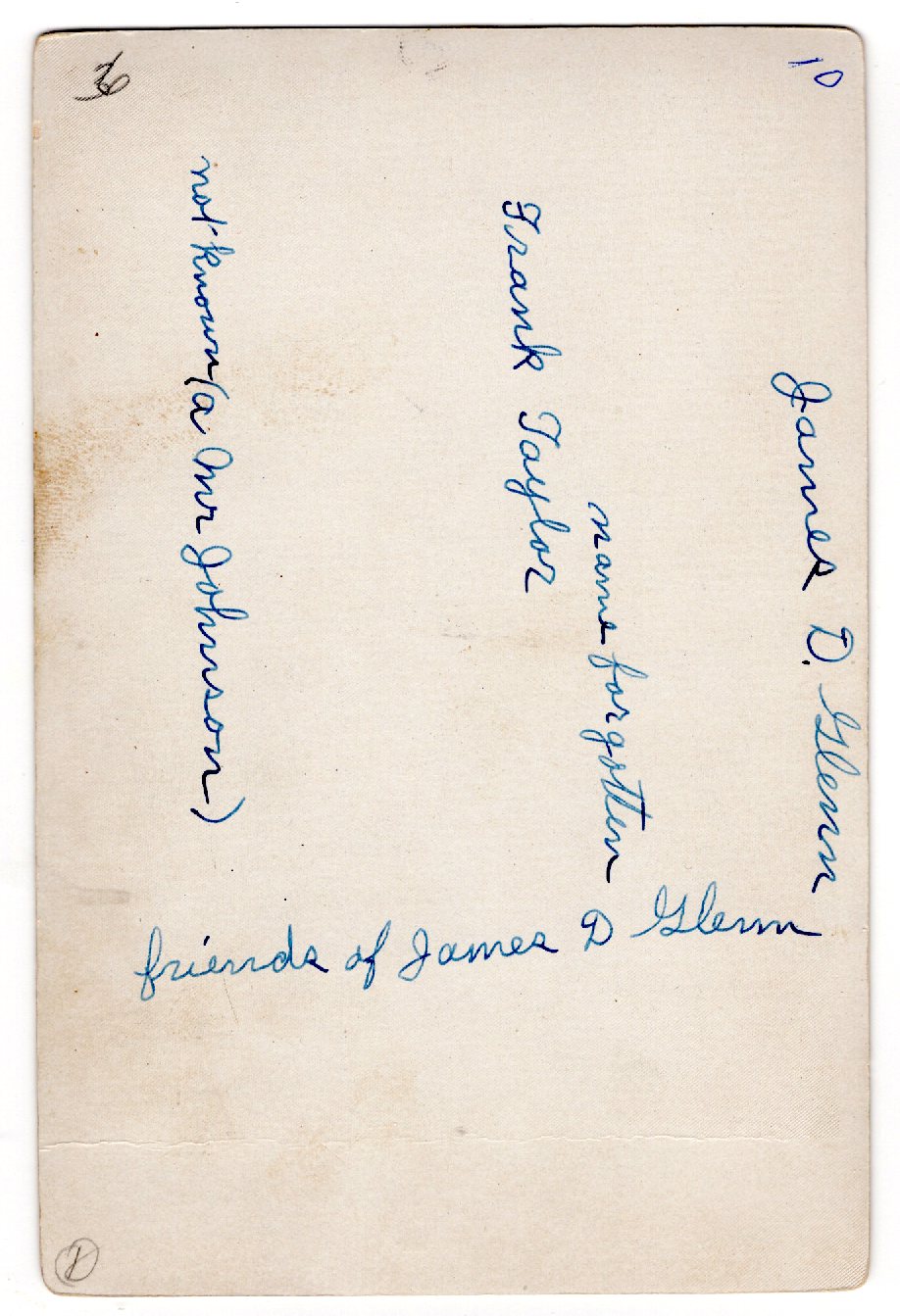
This arresting cabinet card, taken in Oakley, Idaho by the photographer Mrs. R. I. Mills, captures a vivid and timeless portrait of five rugged Western men from the late 19th or very early 20th century. The image radiates strength, camaraderie, and a quiet intensity that invites speculation about the identities and lives of its subjects. The five men are posed against a painted studio backdrop that includes drapery and a classical vase stand, subtly contrasting with the grit and rough-hewn realism of the men themselves. Two sit in the foreground, legs crossed with a relaxed authority, while three stand behind them. All are dressed in frontier attire: wide-brimmed hats, wool coats, high boots, and neckerchiefs. Their layered clothing suggests the chill of the high desert West. The expressions vary slightly—some show stoic resolve, others a more neutral bearing—but none of the men are smiling. Their faces are rugged, with prominent cheekbones, strong jaws, and thick mustaches. The man at center back smokes a cigar, and one gets the sense that these are men of action—likely cowboys, ranchers, or possibly even lawmen or miners. The man seated at the right front—wearing a wide-brimmed hat, dark scarf, and white canvas trousers with riveted side seams—commands particular attention. His intense gaze and imposing posture suggest he may have been a leader among them. The others wear expressions of cool composure, unified by the weathered look of men who knew hard labor or possibly the frontier justice of the American West. Written in blue ink on the reverse of the card is an identification key, apparently penned by someone familiar with at least some of the sitters: James D. Glenn, Frank Taylor, Mr. Johnson. An inscription reveals that the men are all friends of James Glenn. It is likely that this photograph belonged to Mr. Glenn. This photograph was taken by a female photographer. Mrs. R. I. Mills was an early female photographer working in the American West—an unusual and significant occupation for a woman at the time. Her studio was located in Oakley, Idaho, a small Mormon-founded settlement in Cassia County. Historical records show that Mrs. Rachel I. Mills operated a photography studio in Oakley in the late 19th century. She was part of a small but growing number of frontier women who ran their own commercial photography studios. Though little has been published about her biography, her studio was active around the 1880s–1890s, a time when Oakley was transitioning from a pioneer settlement into a more established town with irrigation agriculture and Mormon communal development. Founded in the early 1880s by Mormon settlers, Oakley was a rural, religiously conservative community that grew around farming and ranching. It sat on the edge of the high desert and became a local hub for commerce in southern Idaho. During the time this photograph was likely taken—circa 1890—Oakley would have been a small but lively town, with residents involved in cattle ranching, grain farming, and trade.  (SOLD)

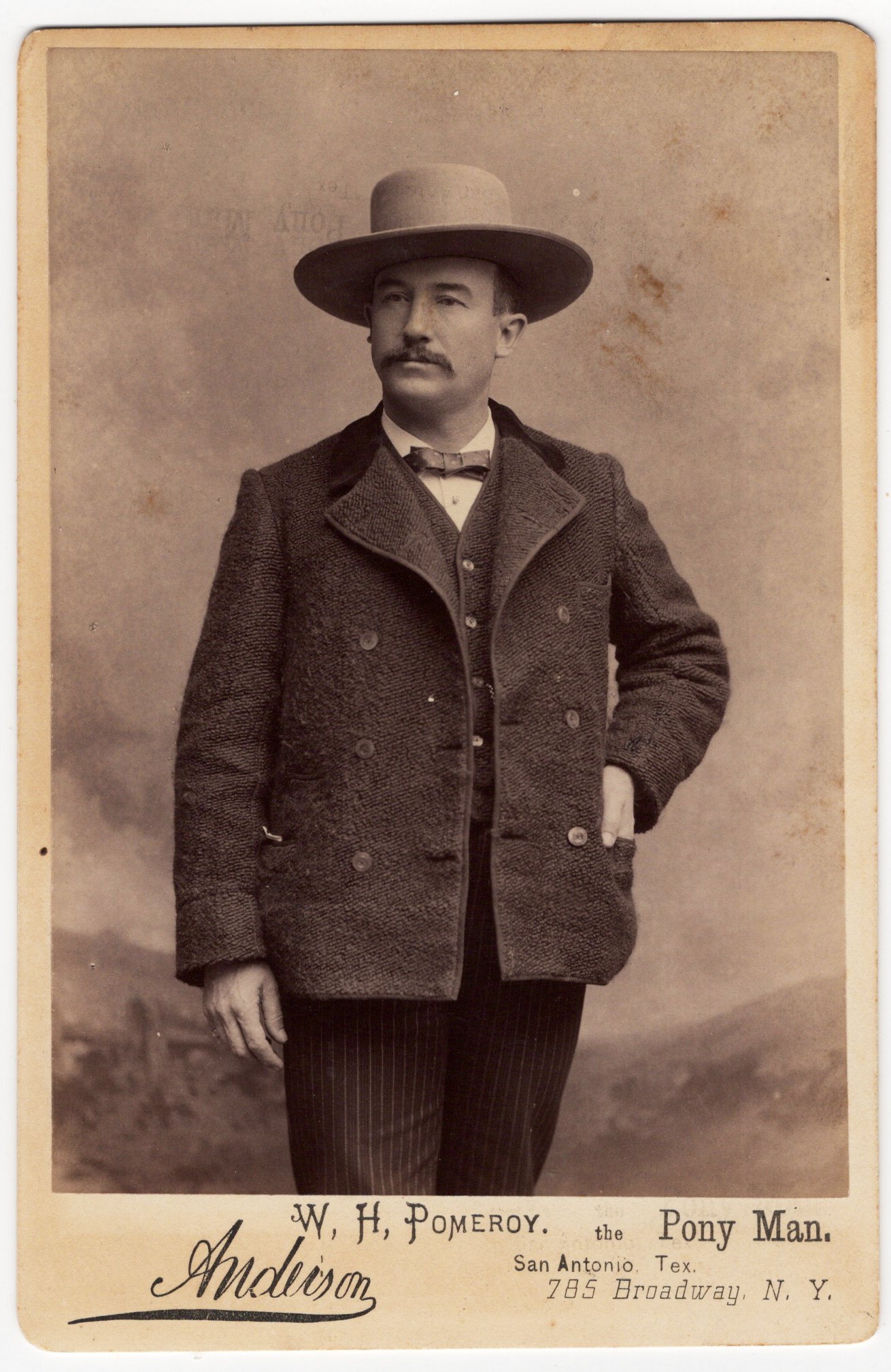
PORTRAIT OF A HANDSOME MAN : CROOKSTON, MINNESOTA : CABINET CARD

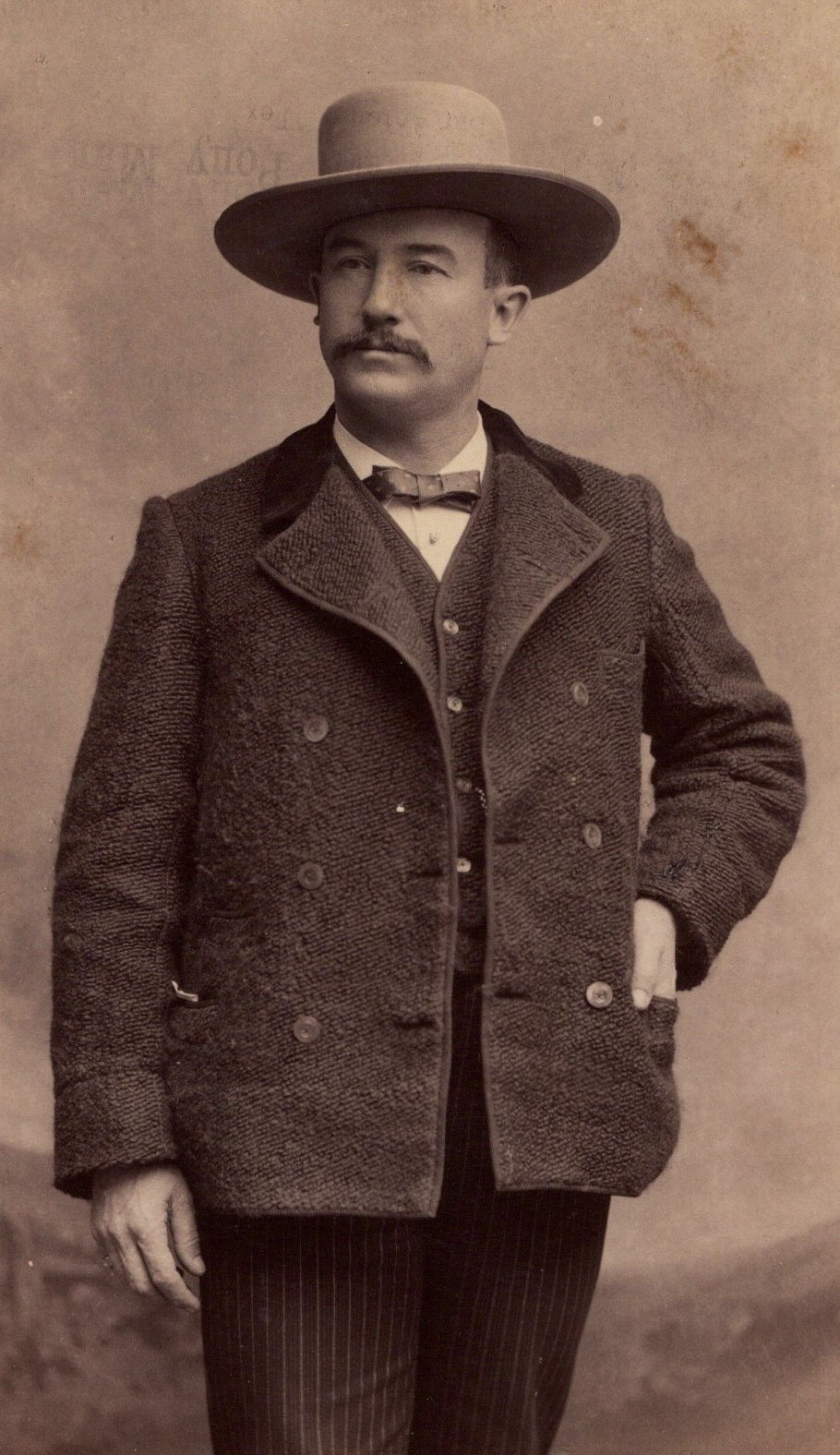
This cabinet card photograph features a handsome man posing for his portrait at the Anderson studio in New York City. A caption under the image identifies him as “W. H. Pomeroy, the Pony Man”. The caption also indicates that Pomeroy was from San Antonio, Texas. During the late 1880’s, Pomeroy owned “Pomeroy’s Western World Troupe” and “Pomeroy’s Western World Show”. Both were Wild West shows. The show was composed of more than 100 people and 125 horses, ponies, donkeys, and mules. The show also included a ten piece band. In 1891, Pomeroy partnered with Max Samuels, from San Antonio, to found a circus. The circus was called “Pomeroy & Samuel’s Great International Railroad Shows”. Pomeroy is well dressed and sports a nicely trimmed mustache.  in this photograph. He is wearing a coarse wool coat and a matching waist coat. He is dressed in a crisp white shirt accentuated by a small silk bow tie. Atop his head is a flat crowned felt planter hat. There is something peeking out of his left jacket pocket. Mr. Pomeroy is posing in front of a backdrop. The photographer of this image was D. H. Anderson who operated a studio on Broadway in New York City. Anderson used the same photo studio formerly occupied by the famed photographer, Matthew Brady. Anderson had worked in various other American cities before moving to New York in 1881. He became known as a talented celebrity photographer. This photograph has an interesting aberration. If you look very closely in the sky next to the left side of his hat (slightly above the brim), you can see the words “Pony Man”. The words are very light and upside down. This developing error occurred more than one hundred years ago. SOLD

THREE MEN MODEL WESTERN FASHION IN LA JUNTA, COLORADO

Three men, dressed in western fashion, pose for photographer D. W. Carpenter, in La Junta, Colorado. The men may be ranchers or businessmen, judging by their clothing. They seem less likely to be cowpokes. The men are dressed in their finest clothing and wearing three different types of neckwear. A standard necktie, a bandana type tie, and a bow tie, are all represented. To of the men are wearing  pins. The gentleman standing on the left in the image has a pin with a portrait of a woman. The seated man’s pin has words on it but they are not decipherable with available magnification. The two standing men are displaying some affection, not commonly seen among males on cabinet cards of this era. La Junta, Colorado, is located on the Arkansas River, in southeast Colorado. The town was formed in 1881 and was a railroad town (Santa Fe Railroad) that became a center of trade. It is interesting to note that this photograph was taken not long after the formation of La Junta. SOLD

Published in: on November 26, 2024 at 12:00 pm  Comments (1)  
Tags: , ,

TWO AFFECTIONATE MEN : WESTERN DRESSED : TACOMA, WASHINGTON : CABINET CARD

This cabinet card portrait features two affectionate men posing for their photo at the studio of Andrew Hanson, in Tacoma, Washington. The men are well dressed and wearing Western fashion. Both men are wearing ties and have pocket watches. Hanson was an active photographer in Tacoma circa 1891-1899. He operated as A. Hanson and also Andrew Hansen & Son. SOLD

Published in: on October 19, 2024 at 12:00 pm  Leave a Comment  
Tags: , , ,

HANDSOME OLD WEST GENTLEMAN : GRAND RAPIDS, MICHIGAN : IDENTIFIED : CABINET CARD

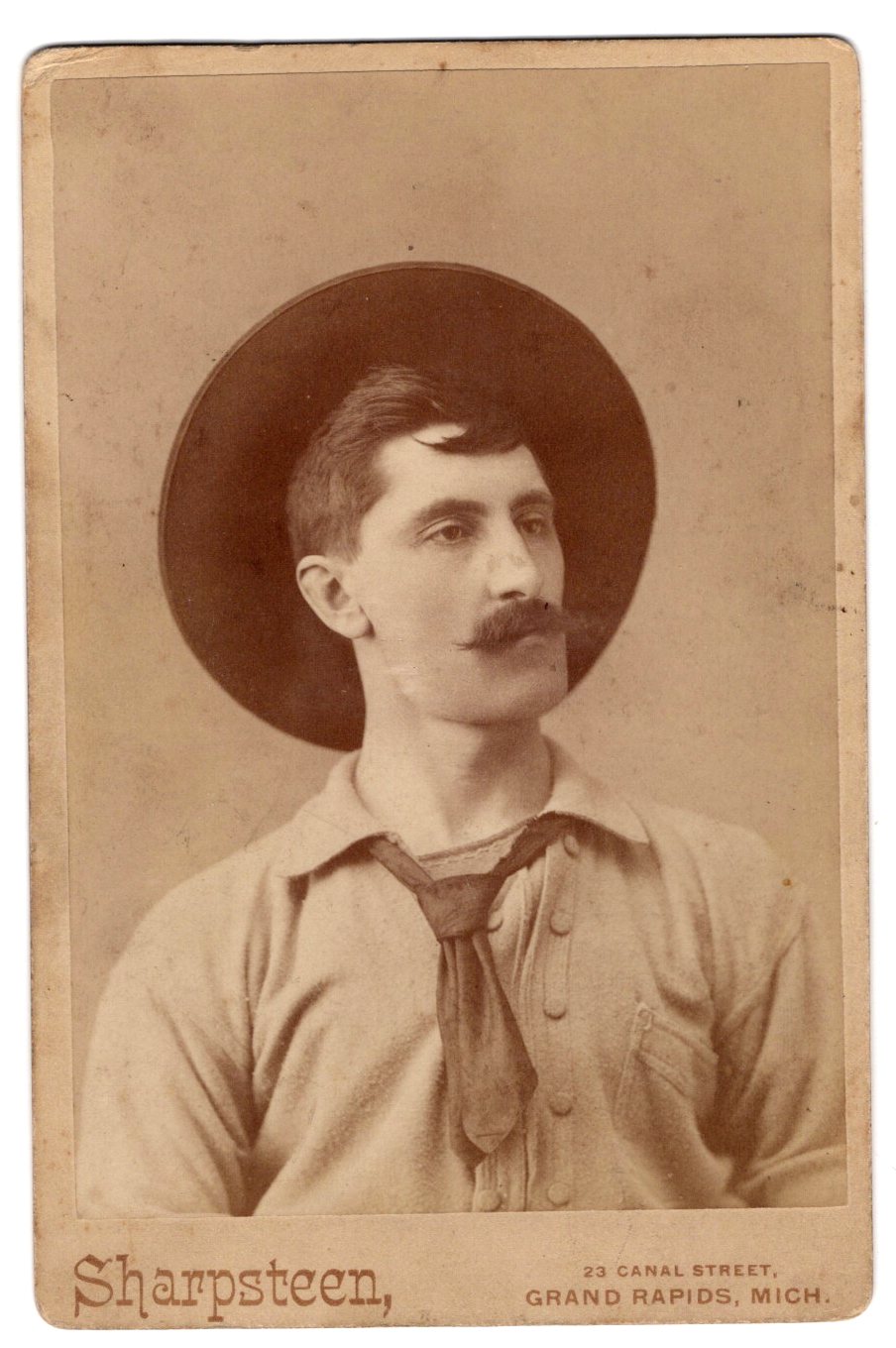
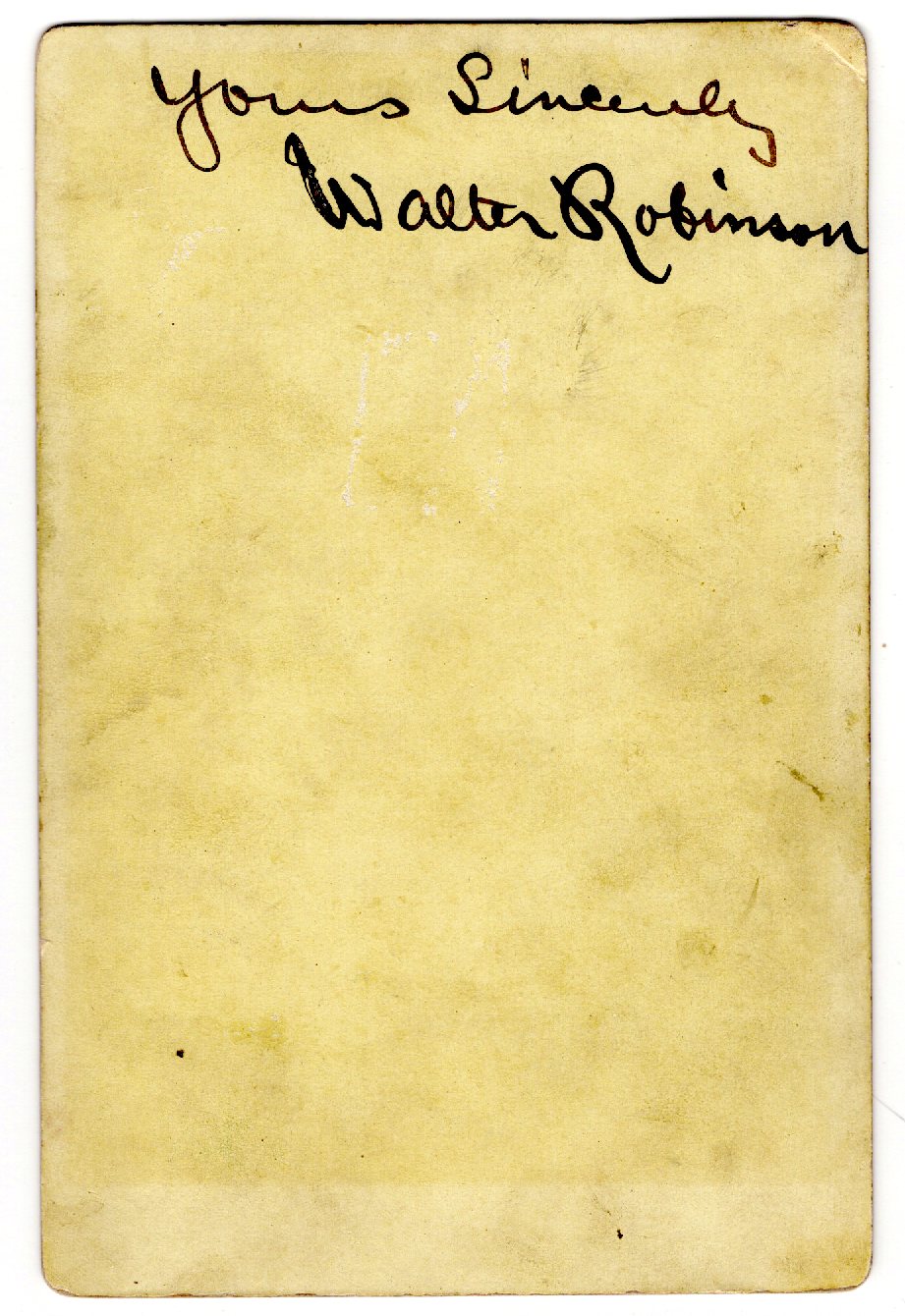
A handsome young man in western clothing, poses for his portrait at the studio of Samuel Sharpsteen, located in Grand Rapids, Michigan. The gentleman in this photograph is identified on the reverse of the image as Walter Robinson. He is dressed in what appears to be old west attire. Note the unusual way that he is wearing his tie. Is he a cowboy? Is he a farmer? Samuel Sharpsteen was born in 1850 near Battle Creek, Michigan. His parents were native New Yorkers who were among the early settlers of Michigan. He was educated in Battle Creek’s public schools and at age 20 left home to apprentice in photography. He then went off to Owosso, Michigan, where he and his older brother opened a gallery. After six months, his brother left the partnership; and Sharpsteen stayed in Owosso until 1882. He also married his wife there. His wife’s name was Nattie Tuttle, and she was from Cleveland, Ohio. His next location was Ionia, Michigan, where he stayed 8 years. An 18 month stint in Detroit was followed by his move to Grand Rapids. His gallery was in Grand Rapids from 1888 until , at least, 1903. His studio moved around a lot. Research located nine different Grand Rapids locations over the years that he was there. In addition, he had a partner in 1890 and their studio was known as Sharpsteen & Andrews. The Bulletin of Photography (1916) announced Sharpsteen’s death. He died in Grand Rapids at age 71. SOLD

BUFFALO BILL STYLE FLOWING HAIR : WILD WEST SHOW : NEW YORK : CABINET CARD

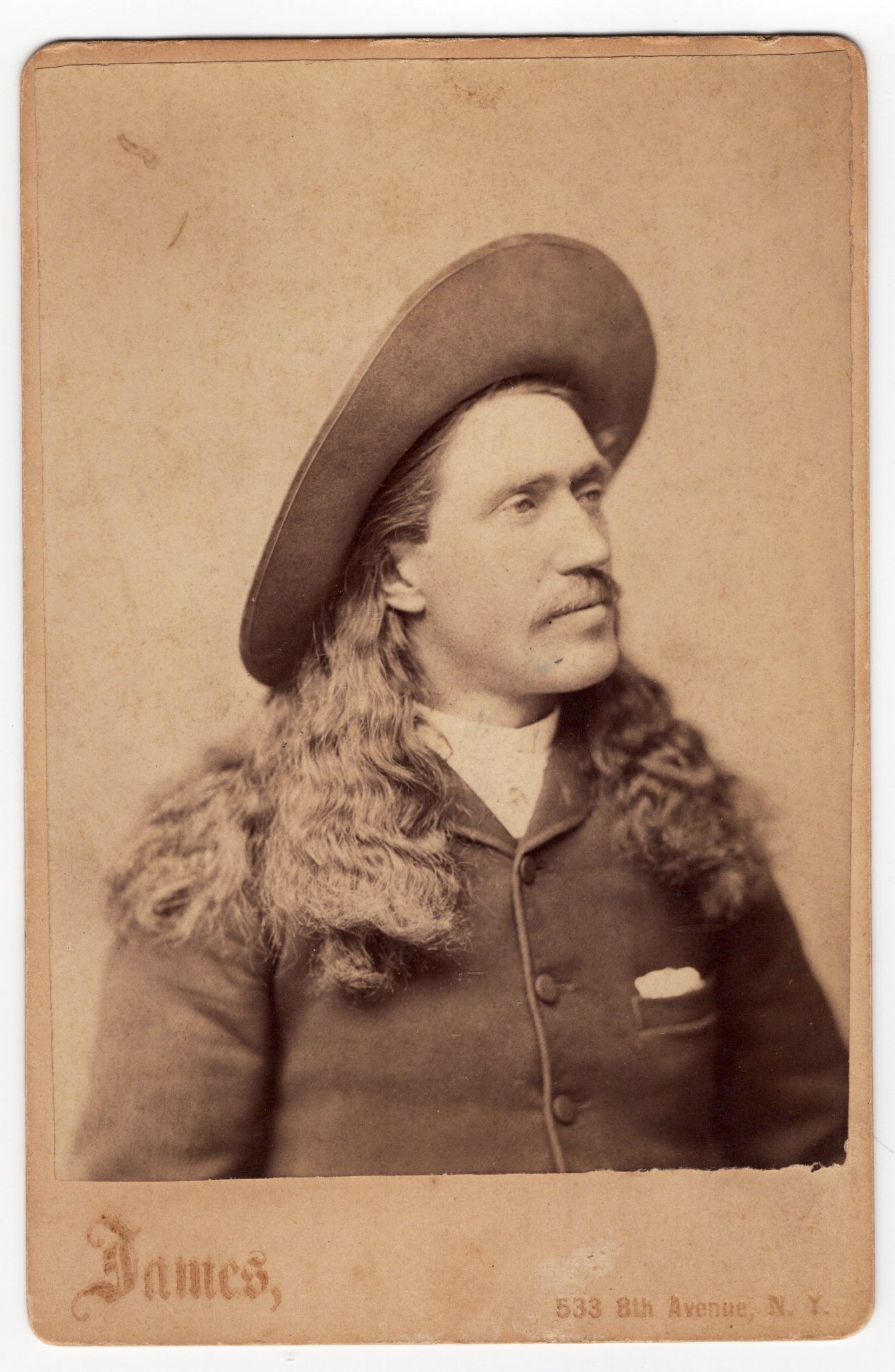
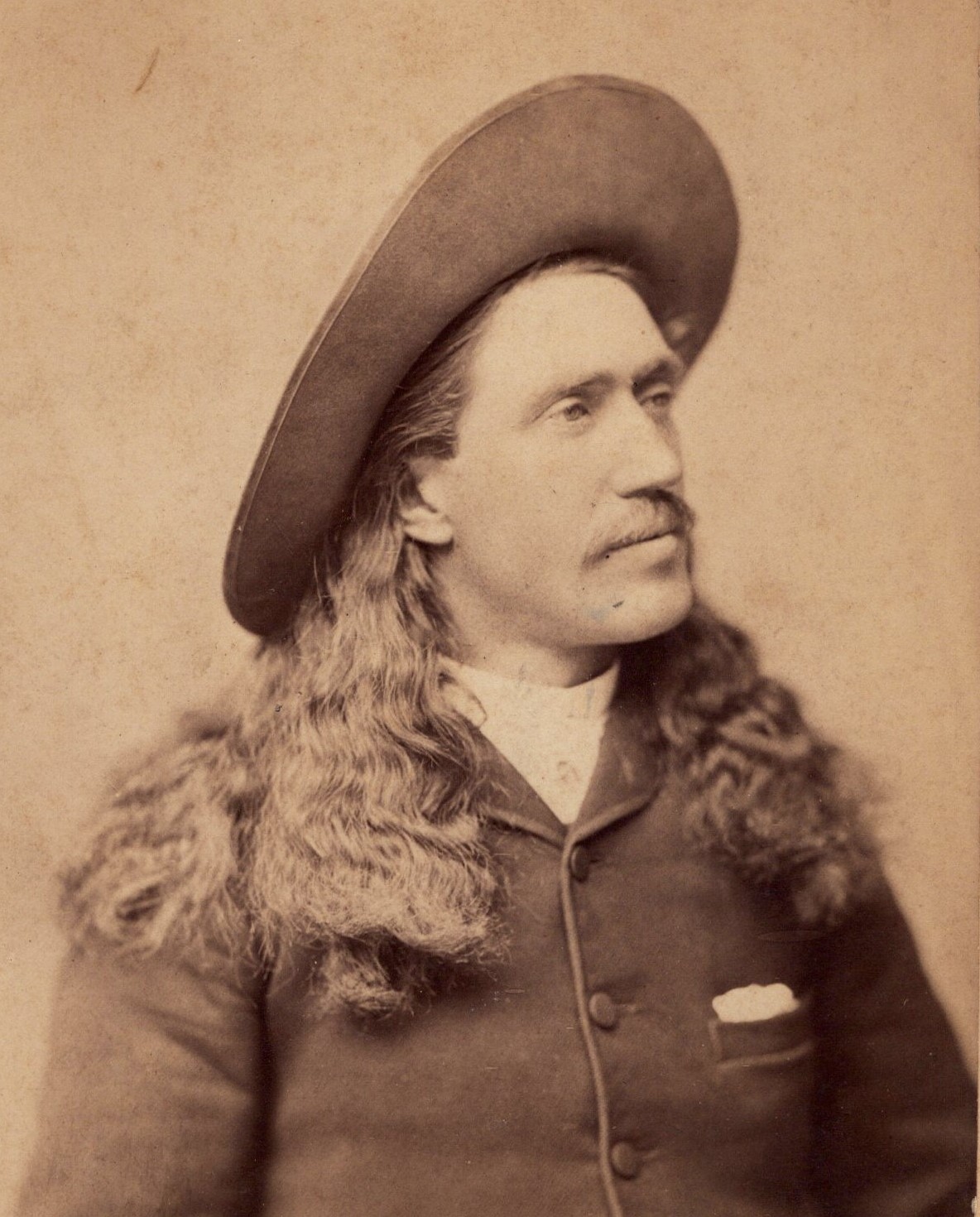
This cabinet card features a man with long flowing hair. He is wearing a western hat. His portrait looks similar to the portraits of Buffalo Bill, Wild Bill Hickok, and Pawnee Bill. Perhaps he is one of these celebrated old characters but it is my hypothesis that he is a member of a troupe of “actors” in a “Wild West” show visiting New York. The New York connection is that this photograph was taken at the James Studio, located in New York City. SOLD

Published in: on December 27, 2023 at 12:00 pm  Leave a Comment  
Tags: , , ,

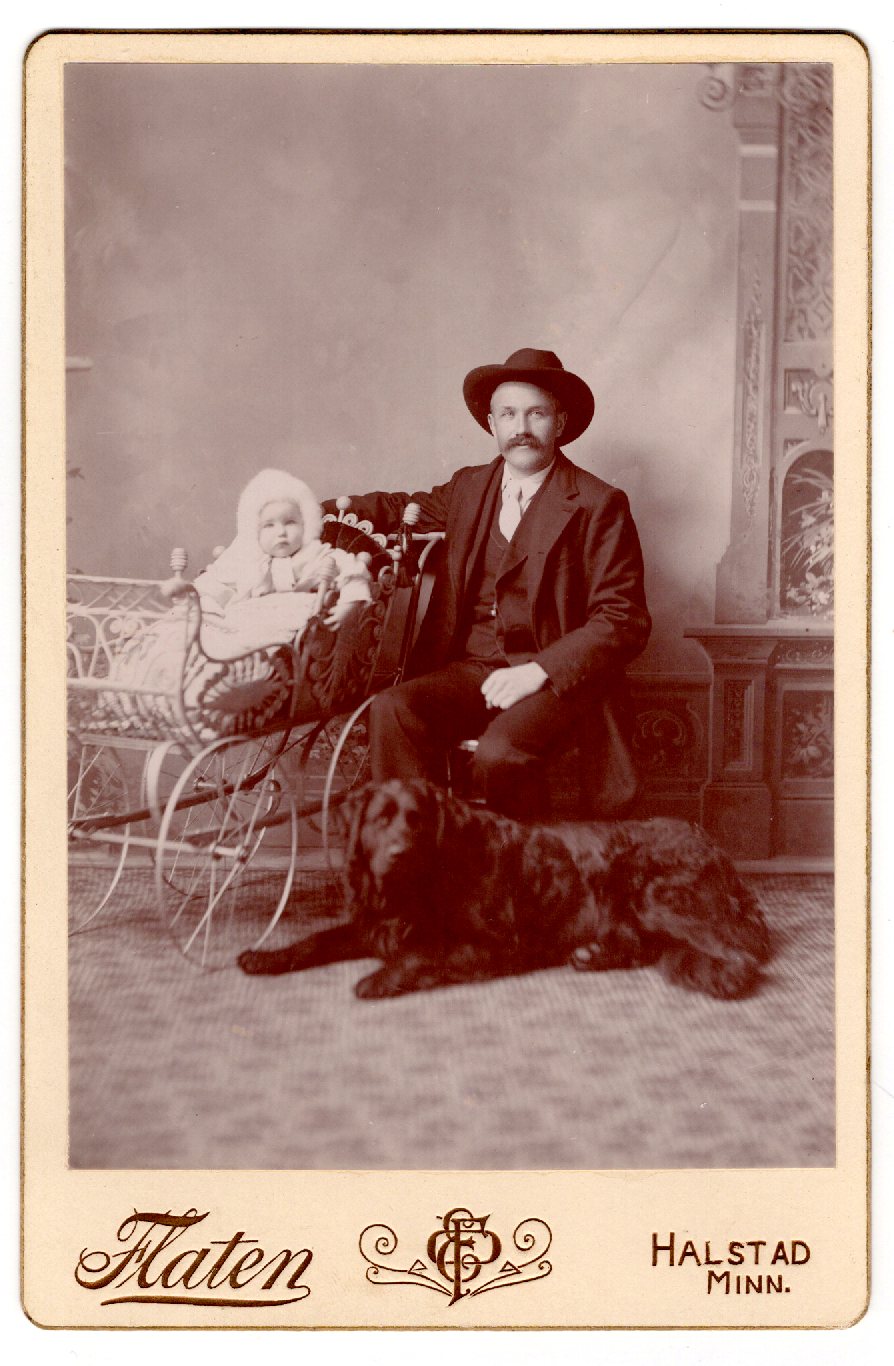
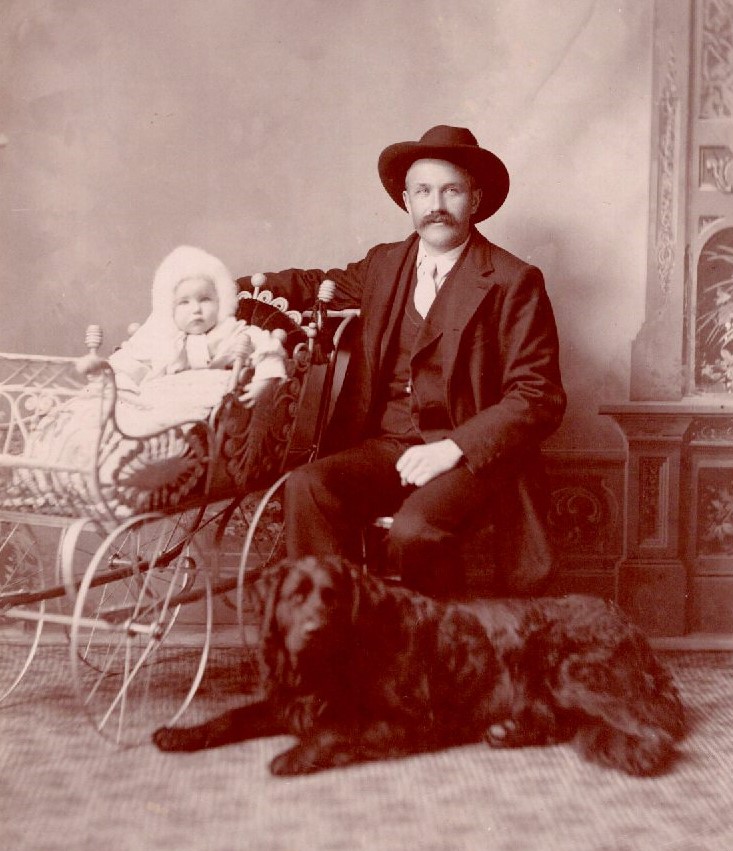
A MAN AND HIS BABY AND HIS DOG IN HALSTAD, MINNESOTA

A man in western clothing, poses for his portrait along with his baby and dog. His arm is wrapped possessively around the back of the baby’s carriage. Lying in front of the man, is his loyal dog. The dog looks like a Labrador Retriever, but the previous owner of this cabinet card suggested that it resembles a New Foundland. This image is charming and warm. Where is this gentleman’s wife? Did she die in childbirth or by disease? Is she camera shy?. The answer, of course, is unknown. The photographer of this image is O. E. Flaten.  Flaten’s studio was in Halstad, Minnesota. He produced a number of interesting photographic portraits of people living in the western United States.   (SOLD)

Published in: on December 12, 2023 at 12:00 pm  Comments (1)  
Tags: , , , ,

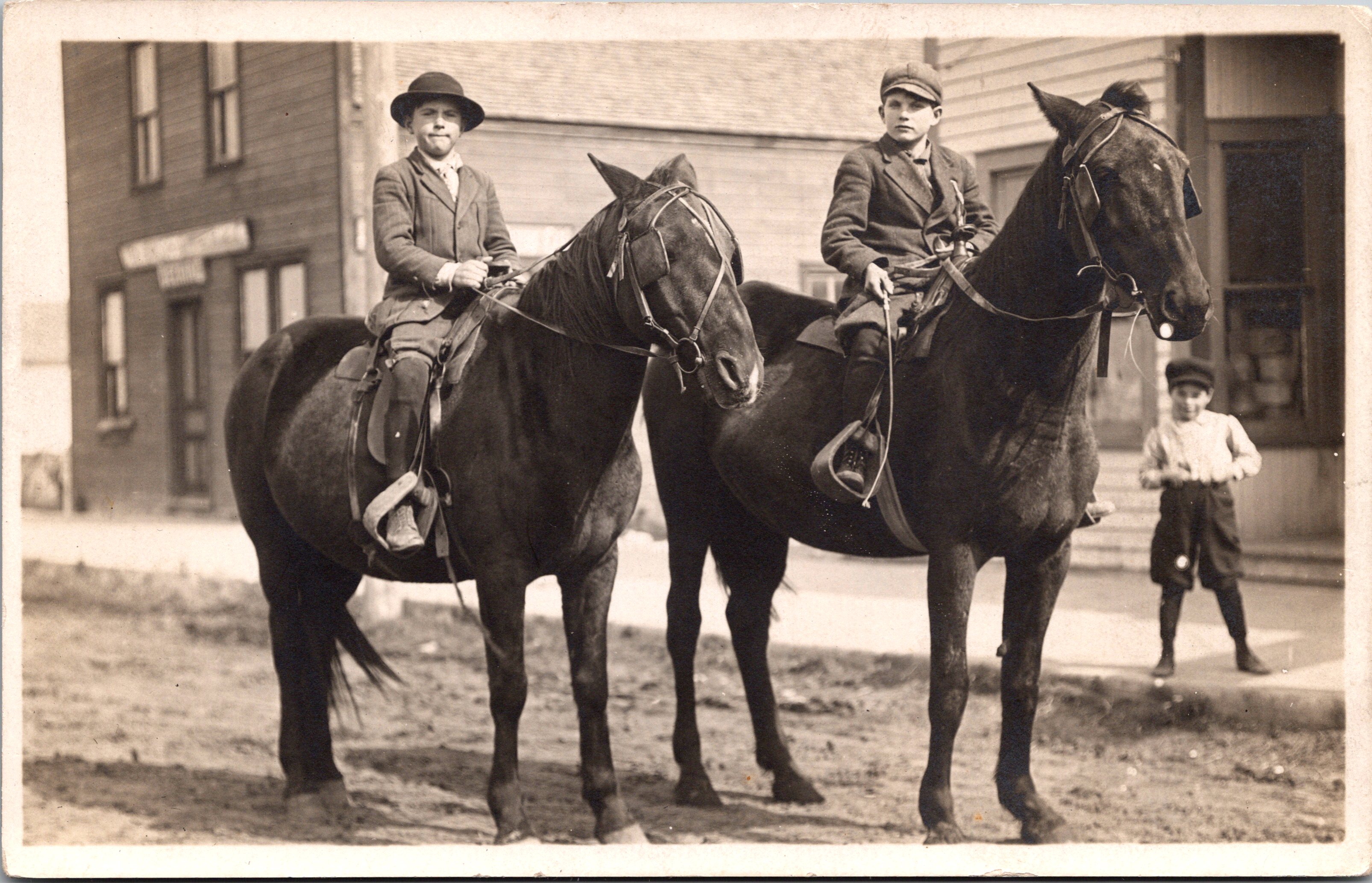
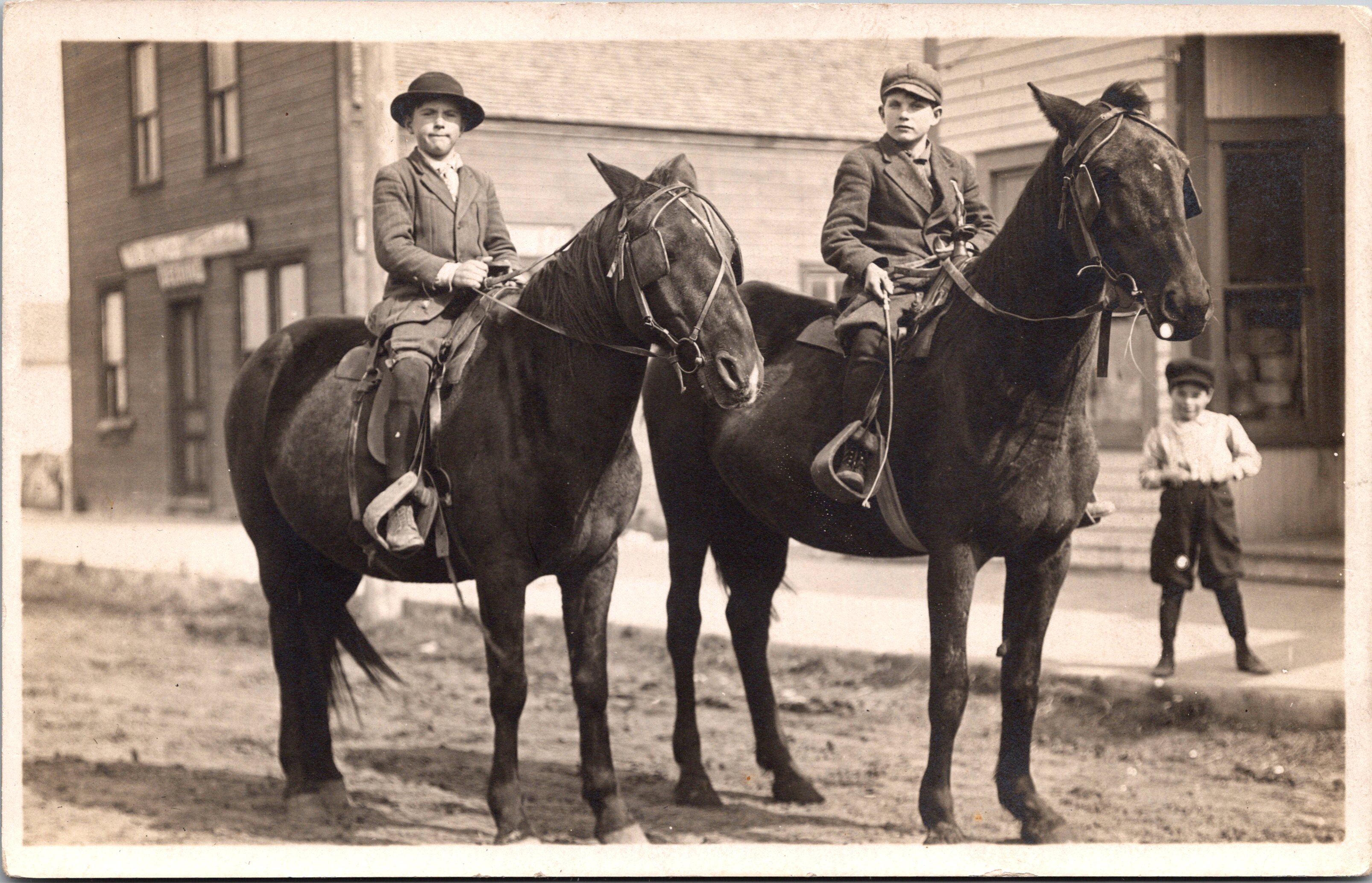
THE ROBERTS BROTHERS RIDE INTO TOWN BRINGING THEIR SPECIAL BRAND OF LAWLESSNESS

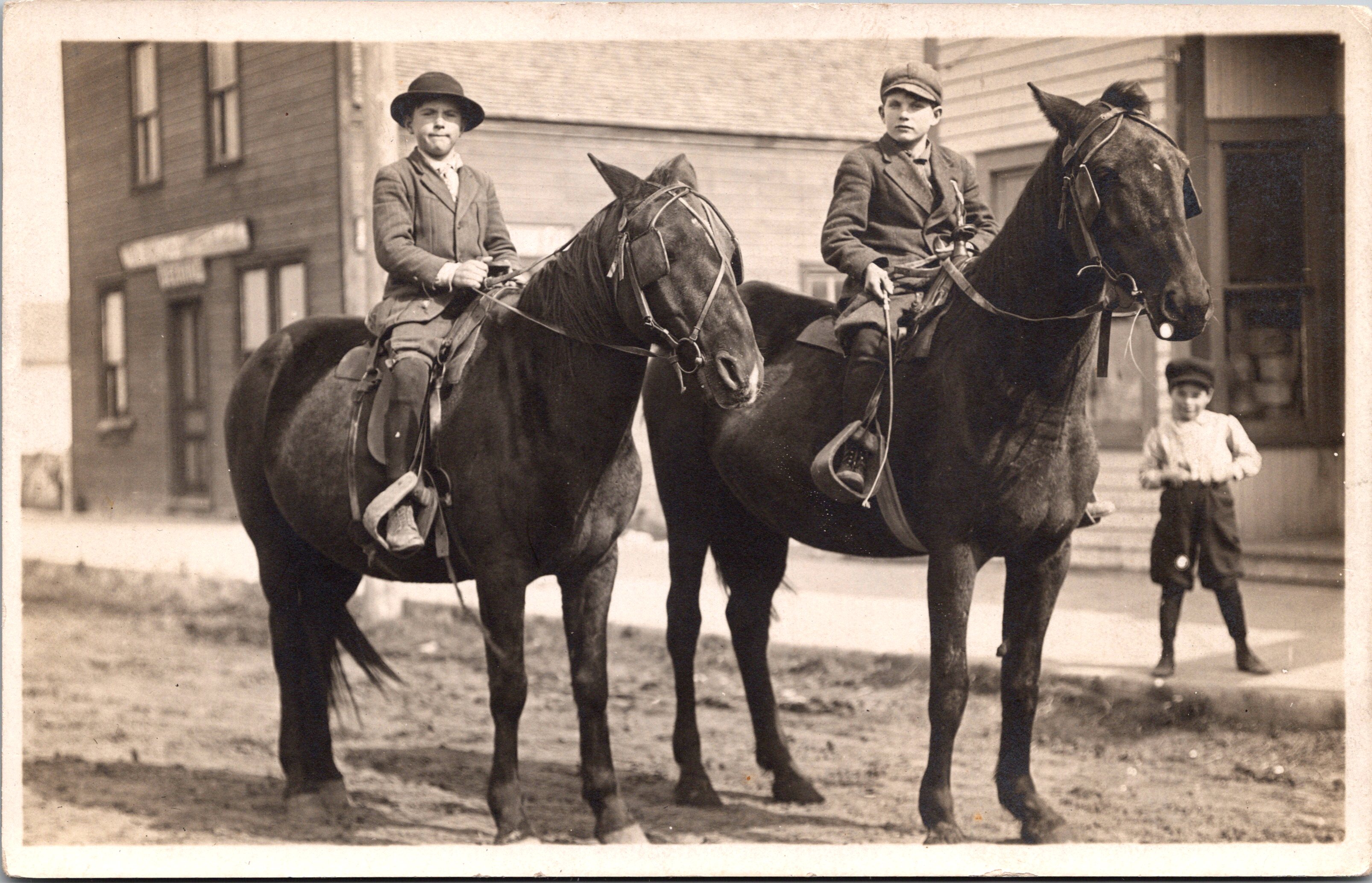
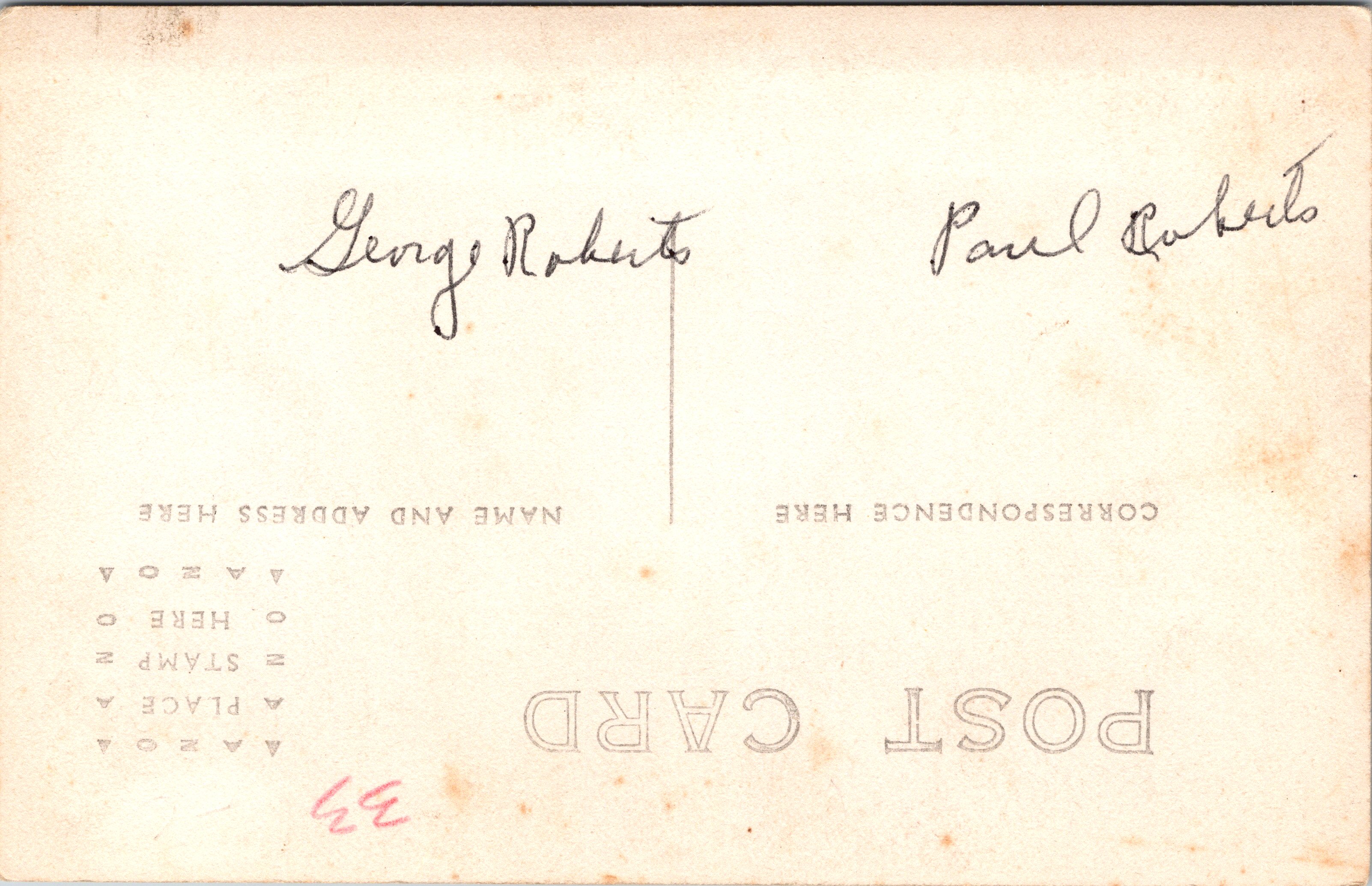
Look who’s riding into town! Its the Roberts brothers. Someone better go get the sheriff. George and Paul Roberts are spoken about in the same conversations that occur about such criminal brothers as Jesse and Frank James, and Jim, Cole, John, and Bob Younger. This vintage real photo postcard featuring the Roberts brothers, shows them with their “game face” on. They may be small in stature but they were scary dudes. Enough with the horse s**t. This real photo postcard is actually quite interesting. These boys look comfortable on their horses. The kids are on large horses, not small ponies reserved for inexperienced child riders.They appear to know what they are doing. One of the boys has a whip. No cowboy hats for these guys. One is wearing a wide brim bowler while the other is sporting a cap. Note the dirt streets. The town may actually be a frontier town in the “old west”. Also take notice of the boy standing on the sidewalk. He seems truly interested in the horseback riders, or perhaps, the photographer. The young bystander is wearing knickers. The AZO stamp box on this postcard reveals that it was likely published sometime between 1904 and 1918. The cameraman was a studio photographer who was willing to take difficult photographs in the outdoors. This vintage real photo postcard is in very good condition (see scans).


Buy this Vintage Real Photo Postcard (includes shipping within the US) #3714

To purchase this item, click on the Pay with PayPal button below

$28.39

Buy this Vintage Real Photo Postcard (includes International shipping outside the US) 3714

To purchase this item, click on the Pay with PayPal button below

$37.39

Published in: on September 13, 2021 at 12:00 pm  Leave a Comment  
Tags: , ,

THE COWBOY, THE BANDITO, AND THE INDIAN

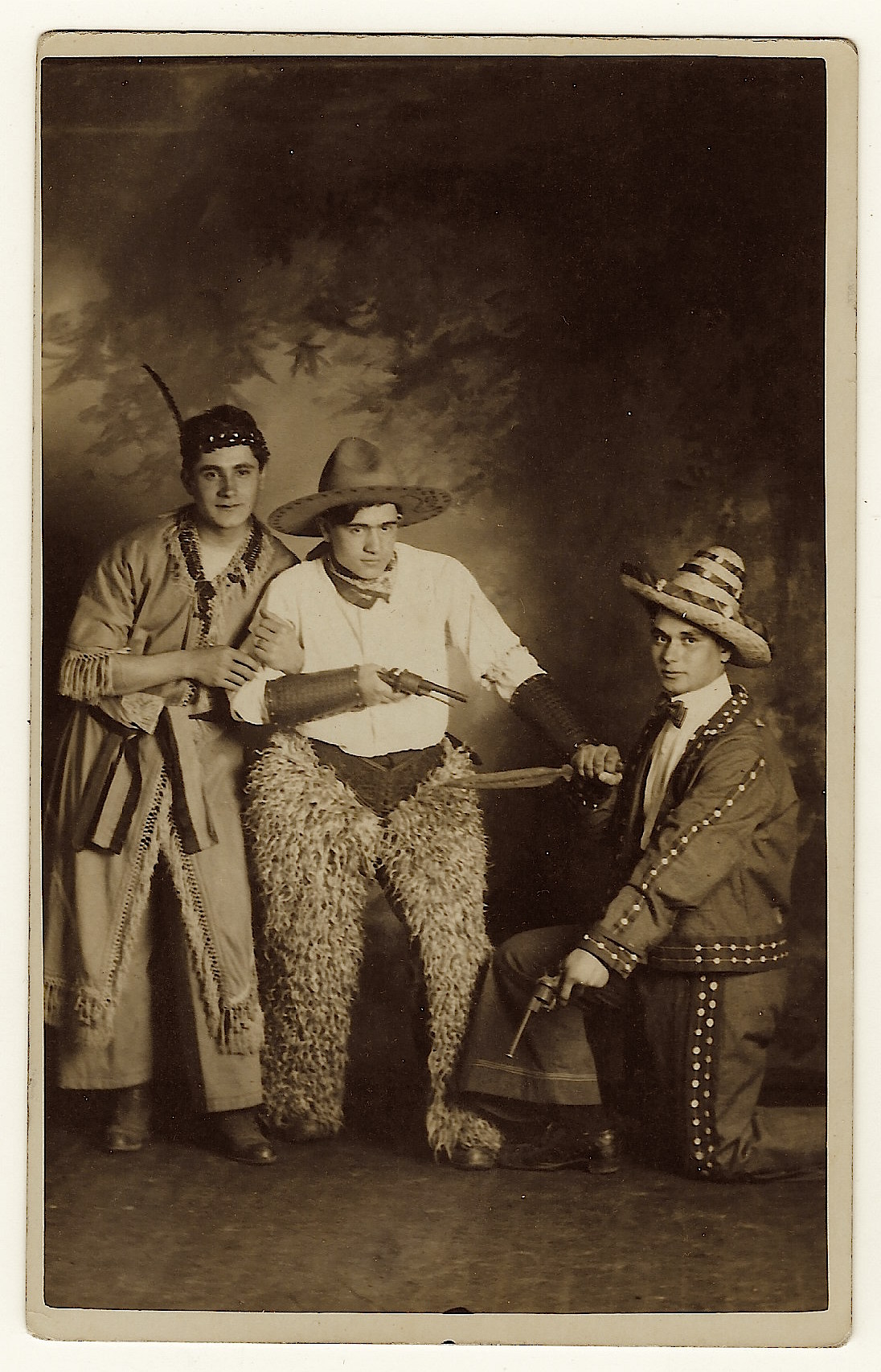
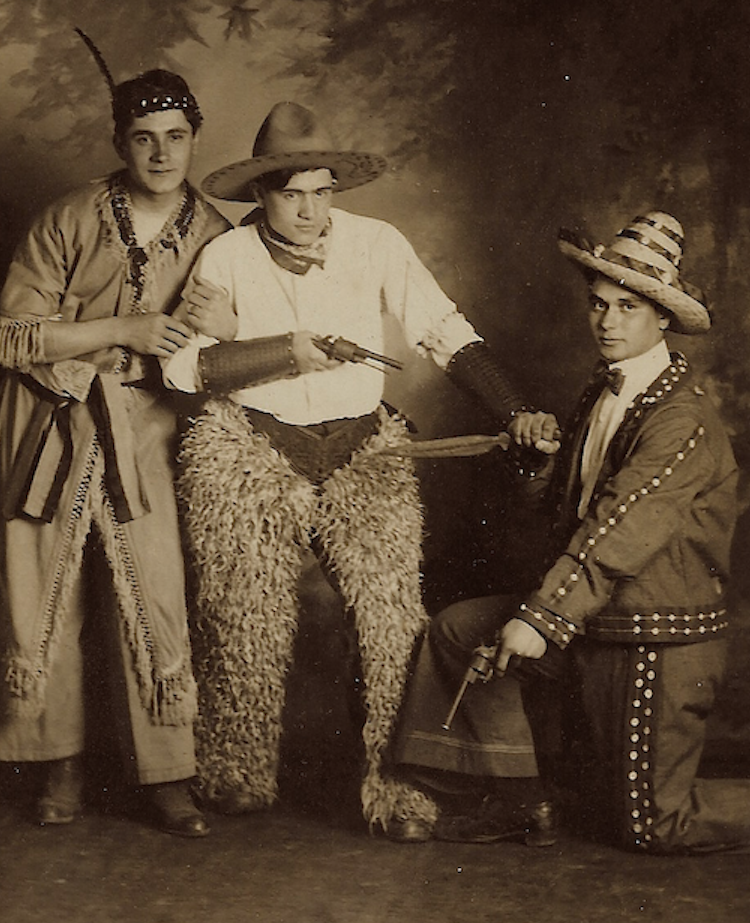
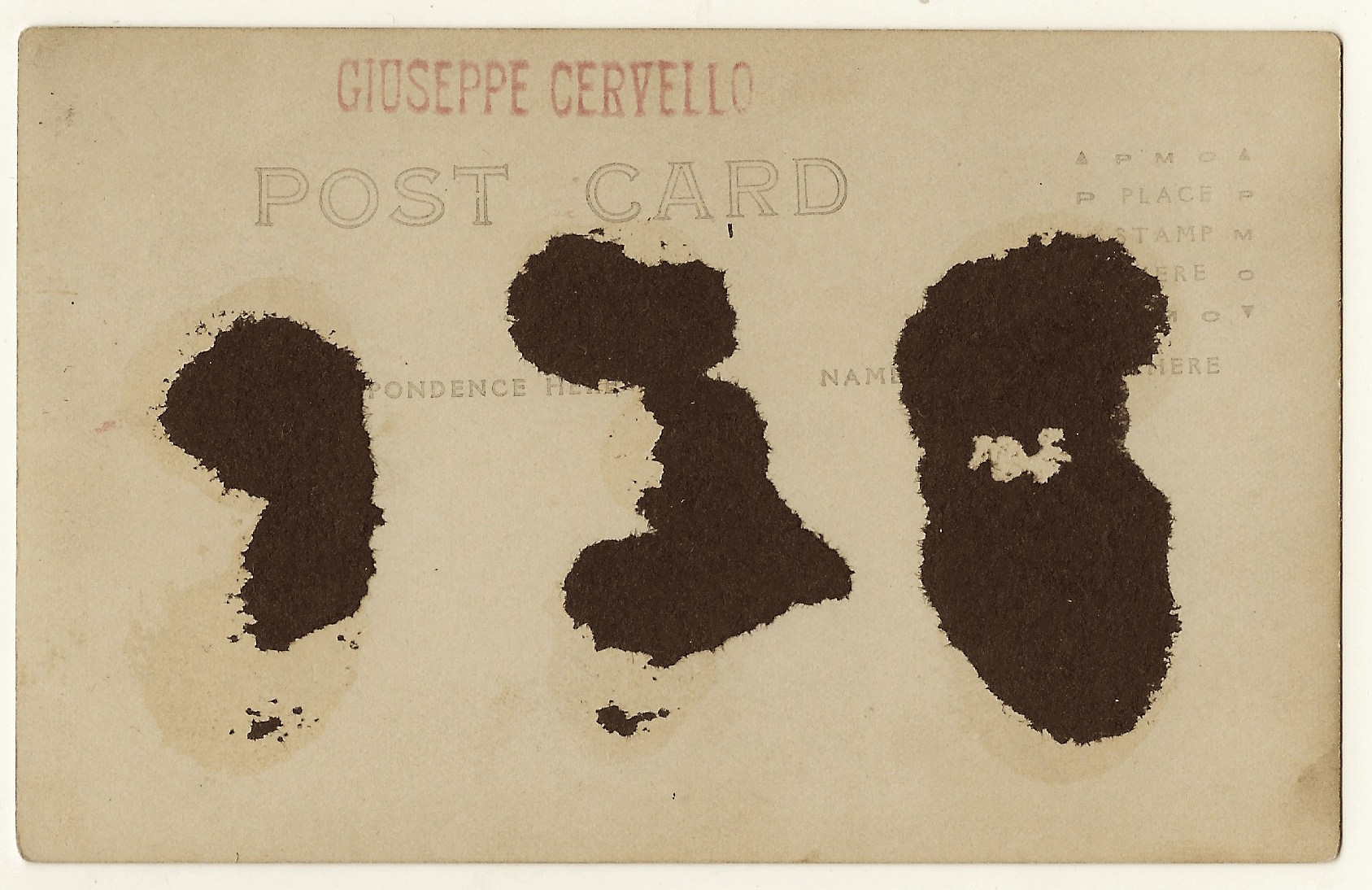
Three young men have a great time posing for their photo at a photo studio. They are in terrific costumes and two of the three subjects have drawn pistols. The Indian has a feather in his hair, the cowboy is wearing wooly chaps, and the Mexican bandito is wearing a sombrero.  The reverse of this vintage real photo postcard has a stamped name, “Giuseppe Cervello”.  Cervello is likely the photographer of this image. This postcard was once a resident of a scrap book or postcard album as can be seen by the black page remnants affixed to the reverse of the card. The stamp box indicates that this postcard was published between 1907-1915.  (SOLD)                                                                                                                                                                             

Published in: on October 12, 2019 at 2:00 pm  Comments (1)  
Tags: , , , , ,