DOLORES DEL RIO : BEAUTIFUL ACTRESS : STAR OF AMERICAN AND MEXICAN CINEMA : RPPC

POSTCARD 1 (SOLD)

POSTCARD 2 (SOLD)

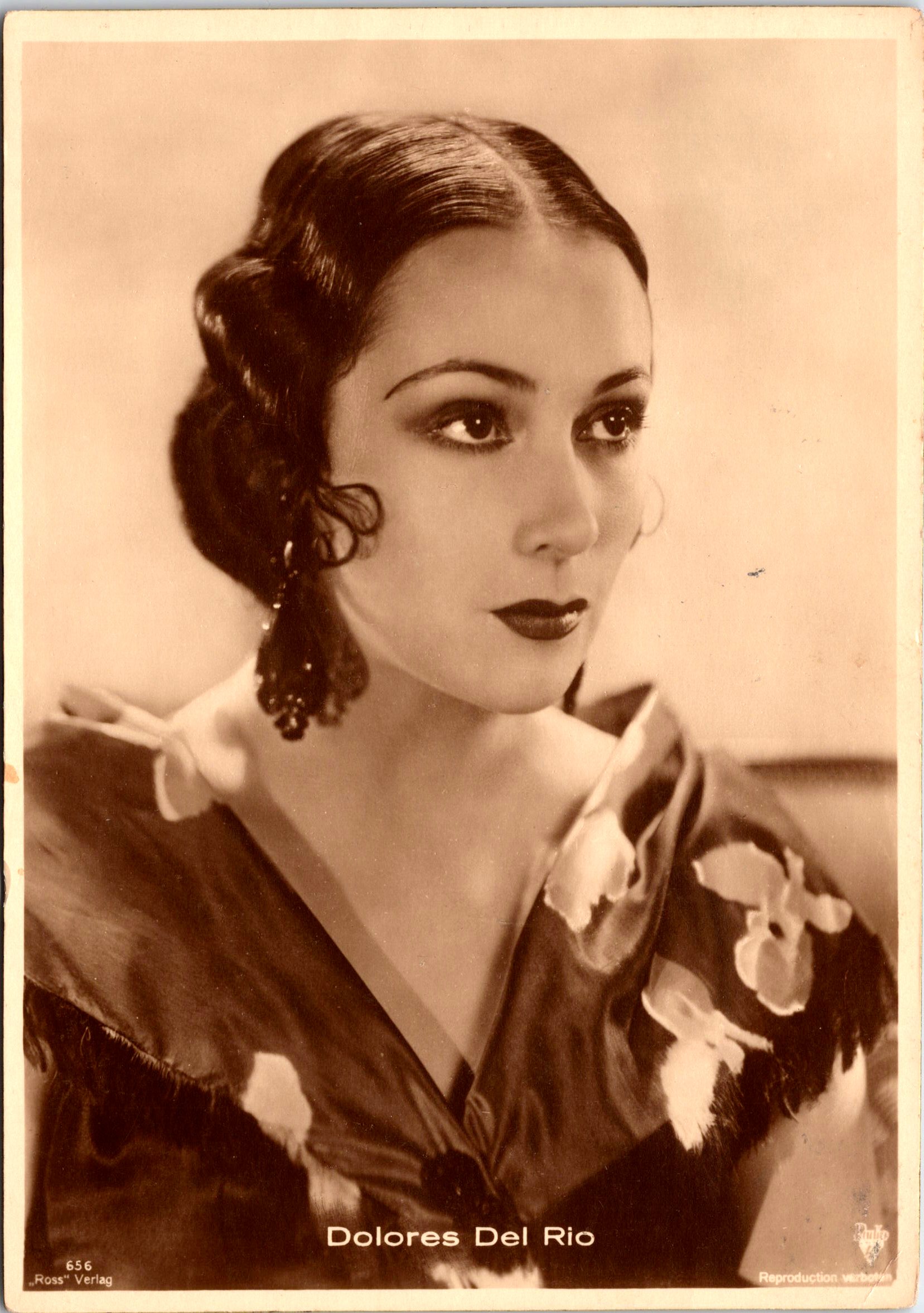
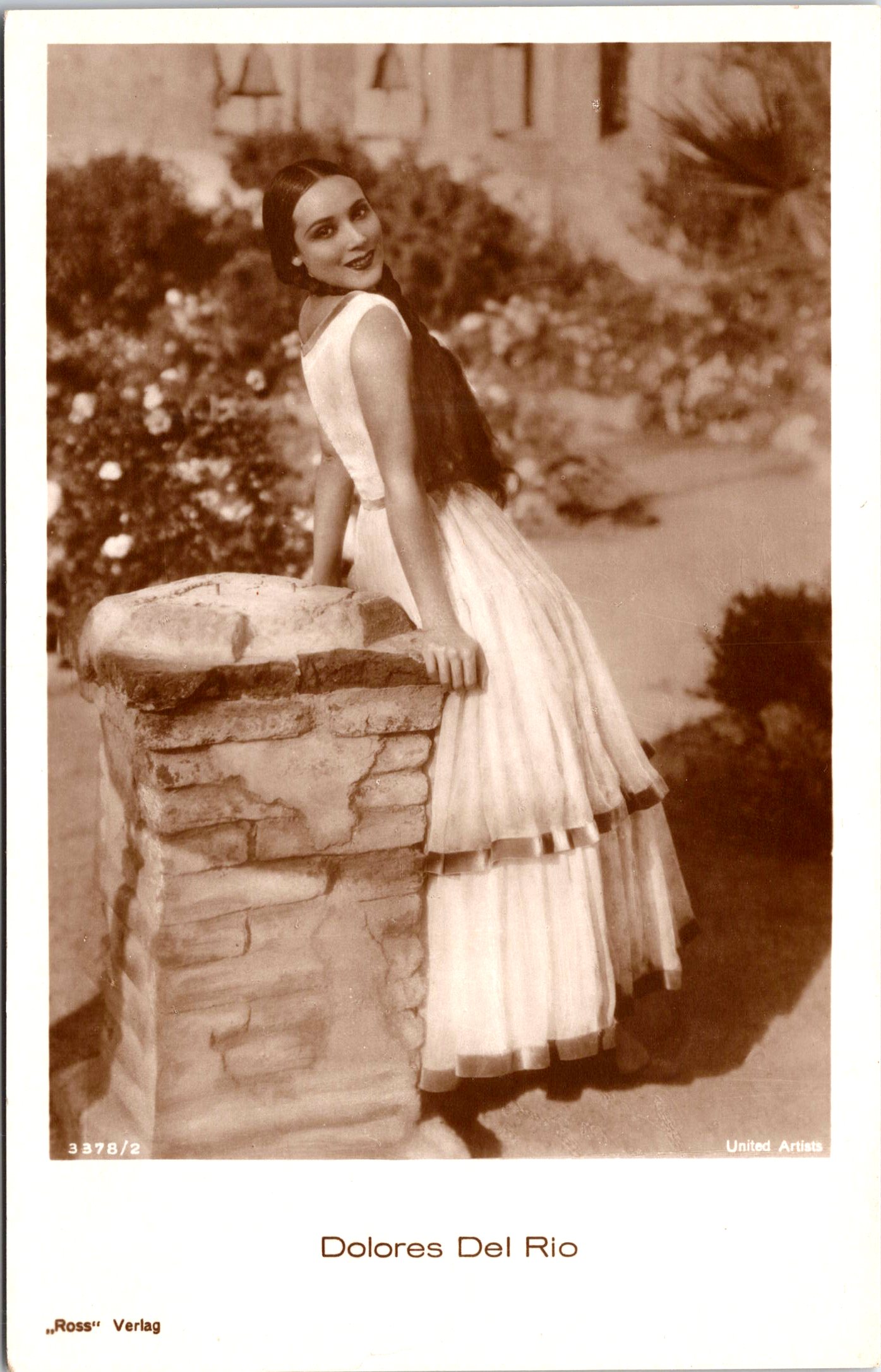
This vintage real photo postcard features pretty Mexican actress, dancer, and singer; Dolores del Rio (1904-1983). Del Rio’s performing career spanned more than half of a century. She was the first major Latin American actress to become an American film star (1920’s & 1930’s). Del Rio was also a major star in Mexican films. Dolores was known for her beauty as well as for her talent. She was discovered in Mexico and her Hollywood film career started in 1925. She began her career with a number of successful films, including “Ramona” (1928) and “Evangeline (1929). During the silent film era, she was considered the female version of “latin lover”, Rudolph Valentino. Del Rio was one of the fortunate actresses whose career was not destroyed by the advent of sound films. She acted in a wide range of film genres. “Bird of Paradise” (1932) and “Madame Du Barry” (1934) were among her successful films of the 1930’s. In the early 1940’s, her Hollywood career began to flounder sparking Del Rio to return to Mexico to become a major star of Mexican cinema. She continued acting in Mexican films through the 1950’s. Beginning 1960 she acted in both Mexican and Hollywood films. During the late 1950’s through the early 1970’s, Del Rio acted in theater and television. Dolores was born in Durango City, Mexico. Her parents were part of Mexican aristocracy whose lineage could be traced to Spain. Dolores was the cousin of actor Ramon Novarro (another silent film”latin lover”), and of Mexican cinema actress, Andrea Palma. During the Mexican Revolution (1910-1920), Dolores’s family lost its fortune. Her family felt threatened by Pancho Villa’s insurgence. It was time to “get out of town”. Her father fled to the United States while she and her mother escaped to Mexico City. Acting was an integral part of Dolores’s getaway. She and her mother felt compelled to dress as peasants to insure safe passage on the train to Mexico City. Her parents reunited there in 1912. Dolores attended a college in Mexico City operated by French nuns. After seeing Russian ballerina, Anna Pavlova perform; Dolores decided to become a dancer and took lessons from a well respected teacher. At age 17, Dolores married Jaime Martinez del Rio. He was from a wealthy family and was educated in England. The couple honeymooned in Europe for two years and Dolores formed close relationships with a number of members of European aristocracy. When the couple returned to Mexico, they settled in Mexico City. In 1925, Dolores met American filmmaker Edwin Carewe, and he was spellbound. He convinced Dolores and her husband to move to Hollywood where he promised to make Dolores a star. Her husband hoped to write screenplays there. When they arrived in Tinseltown, Carewe launched a public relations campaign to raise excitement about his beautiful find. He built up her aristocratic background by saying such gems as Dolores was “the first lady of high Mexican Society” and that she had come to Hollywood with a collection of shawls and combs valued at fifty thousand dollars. Dolores made her film debut in “Joanna” (1925), where she played a vamp of Spanish-Brazilian origin. Her first starring role was in the comedy “Pals First” (1926), directed by Carewe. That same year, Dolores appeared in the war film “What Price Glory?”. The movie was a huge financial success and helped Dolores become one of the “WAMPAS Baby Stars” of 1926. Other members of her “class” were Mary Astor, Joan Crawford, Janet Gaynor, and Fay Wray. By then, her film career was rocketing. Her role in Resurrection” (1927), a popular film based on a Tolstoy novel, further propelled her career. While her career was succeeding, her personal life was a “hot mess”. Her marriage to Del Rio ended in 1928. He had much difficulty being in the shadow of his famous and successful wife. Six months after Dolores filed for divorce, Del Rio died in Germany. While dealing with her grief, she had to deal with constant harassment from her discoverer, Edwin Carewe. He wanted to be more than her agent and her director since he had first launched her career. In 1929, Dolores announced to the press, that despite Carewe’s claims, the pair were just friends and business companions. She added that they had no plans for marriage. Soon thereafter, she cancelled her contract with him. The end result was a legal dispute that was settled out of court. Carewe’s anger did not end there. He disparaged her the press and refilmed “Resurrection” starring Lupe Velez, another popular Mexican film star. In 1930, Del Rio married MGM art director, Cedric Gibbons. They became one of Hollywood’s most followed couples of the early 1930’s. In 1932, the film, “Birds of Paradise”, was released to rave reviews. The film starred Del Rio and actor, Joel McCrea. The movie was a South Seas love story. A scandal arose from the film because of a scene featuring the pair swimming naked. Controversy continued in Del Rio’s appearance in “Flying Down to Rio” (1933). In this film, Del Rio was the first actress to wear a two piece bathing suit on screen. Fred Astaire and Ginger Rogers danced together for the first time on film, in this movie. Del Rio and Astaire also did an “intricate” dance number in the film. Del Rio found herself in political hot water when she and Ramona Novarro and Lupe Velez attended a special screening of a Mexican film which was accused of promoting Communism in California. Del Rio was accused of being a Communist for her attendance at the screening. In 1940, Del Rio began an affair with actor/filmmaker, Orson Welles. The dalliance resulted in Del Rio and Gibbons divorce. In 1954, Dolores was scheduled to co-star in a Spencer Tracy film, but the US government would not give her permission to work in the United States. The government believed she was sympathetic toward communism for attending the aforementioned film screening and for signing a petition supporting a world peace conference. After some time, she was able to remedy the problem by writing a persuasive letter to the US authorities. Later in life Del Rio did express some “political” beliefs. She stated that she wished she could play Mexican roles to show what life in Mexico was really like. She felt such an opportunity could help diminish the ugly stereotypes that existed about Mexicans in American society. She stated that it was her great wish to make fans realize the beauty, wonder, and greatness of Mexicans as a people. She asserted that the great majority of Americans view Mexicans as a “race of bandits, or laborers, dirty, unkempt, and uneducated”. Why do these false negative stereotypes sound so familiar? Del Rio wanted to show “the best that’s in my nation”. It has been pointed out by more than a few writers that Dolores del Rio was no “Latin bombshell”. Instead, she was noted for her elegance. The IMDb reports that Del Rio has 63 film credits ranging from 1925 through 1978.

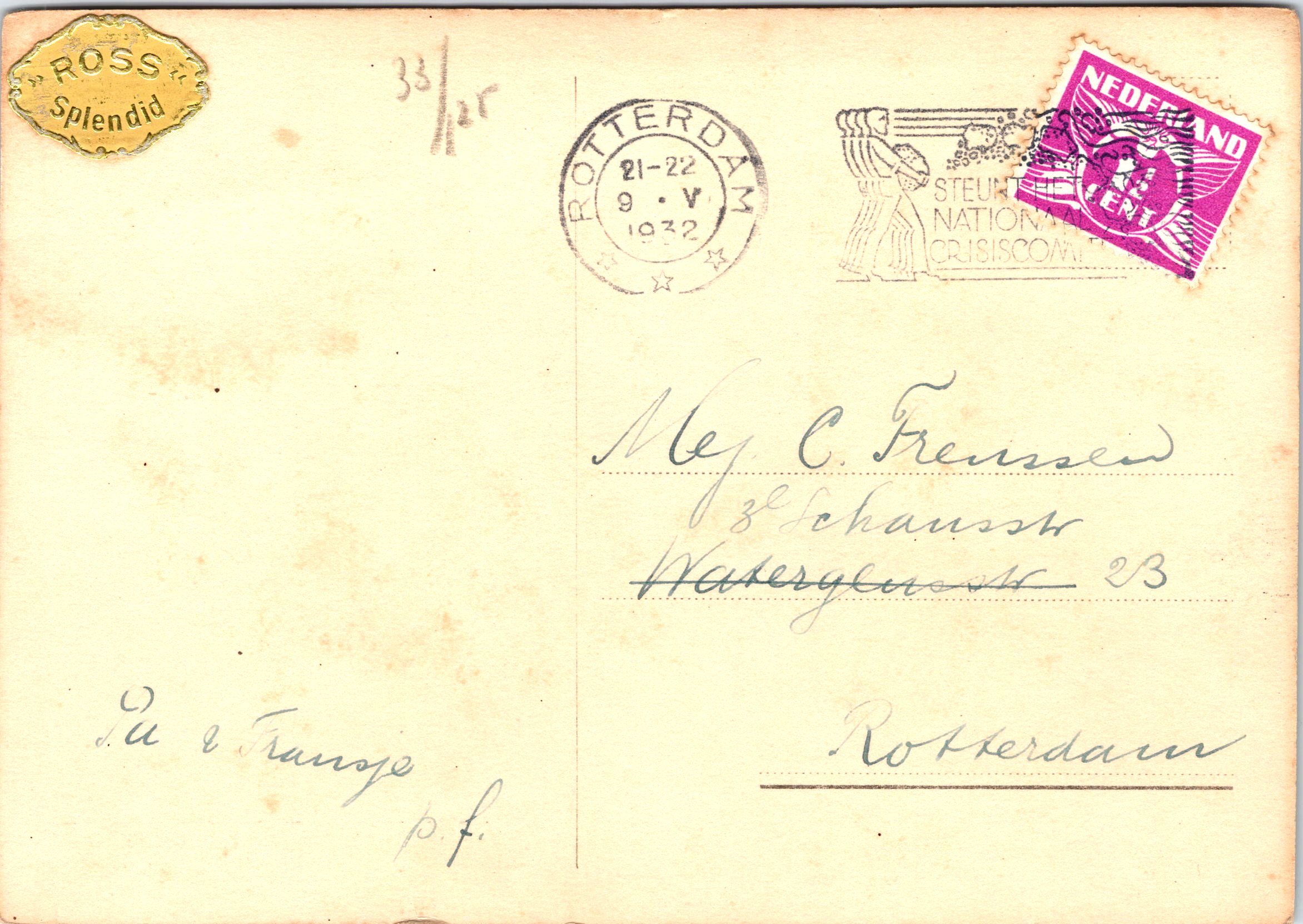
Postcard 1 was published by Ross Verlag as part of a series (no.656). The reverse of the card has a gold seal stating “Ross Splendid”. This postcard has a Netherlands stamp and was postmarked in Rotterdam in 1932. SOLD

Postcard 2 was published by Ross Verlag as part of a series (no.3378/2). SOLD
POSTCARD 1
POSTCARD 2

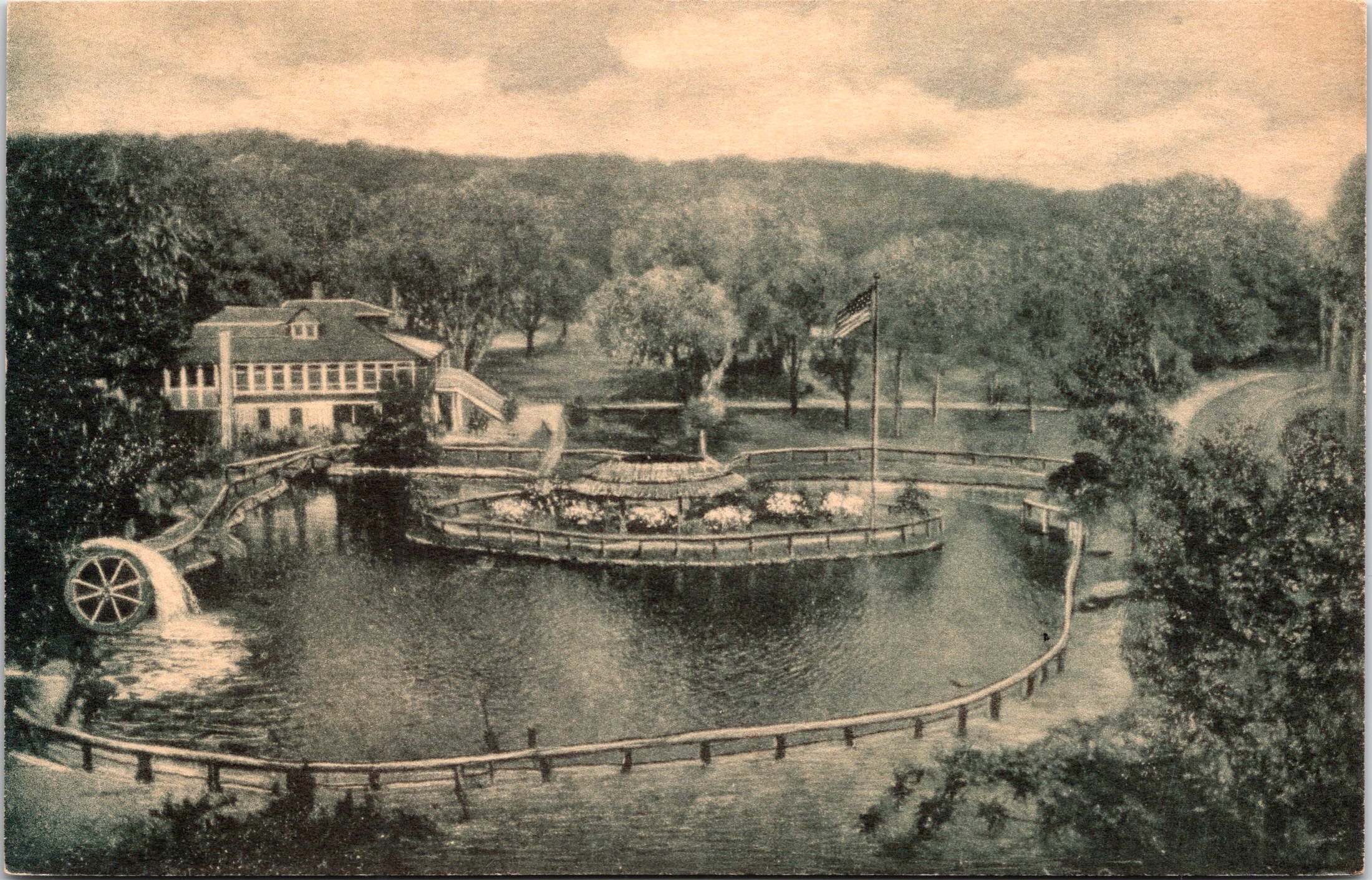
CENTERPORT, LONG ISLAND, NEW YORK : MUELLER’S WATERMILL INN :RT. 25A : ALBERTYPE

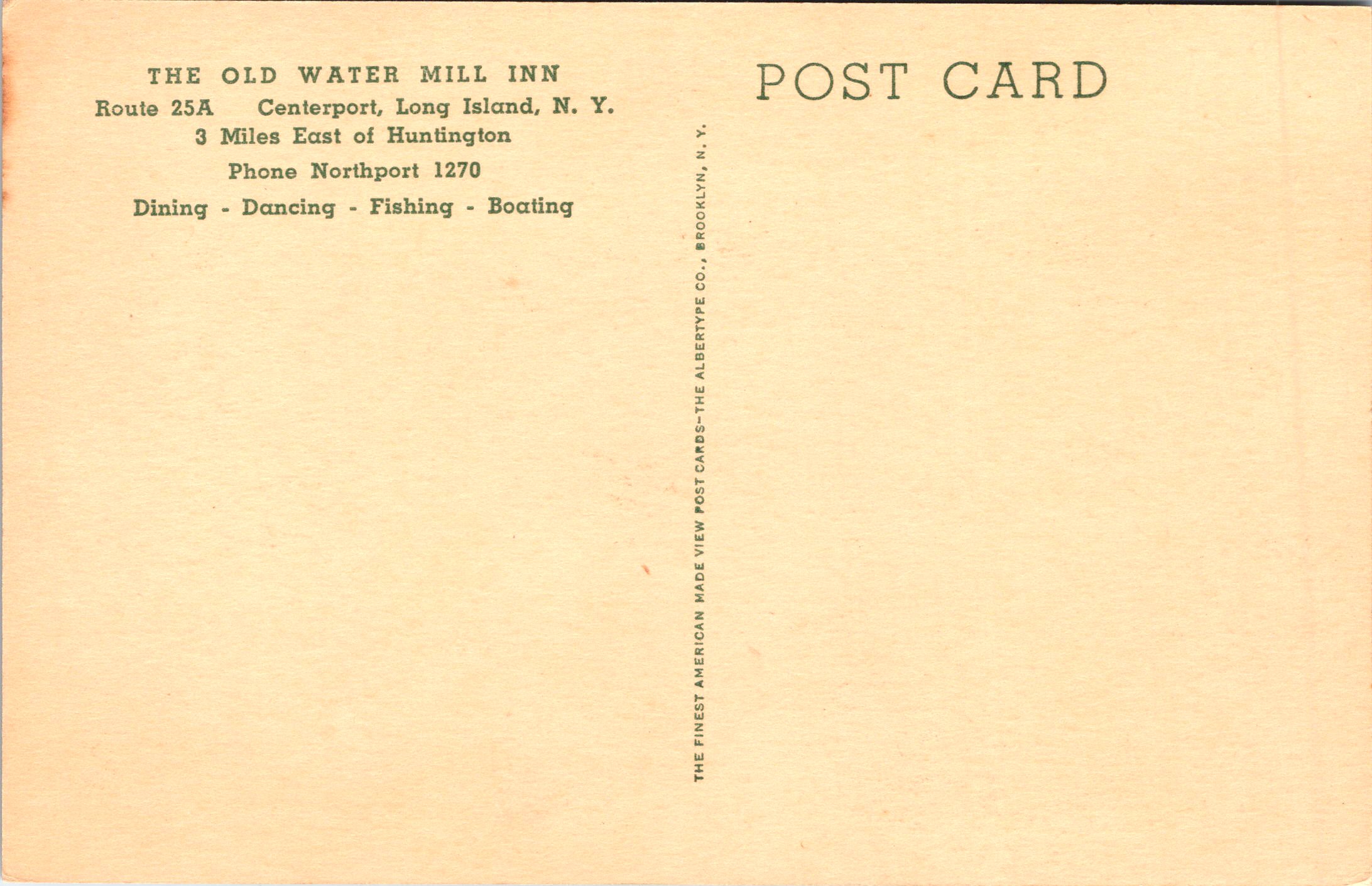
This vintage real photo postcard features an aerial view of Mueller’s Old Watermill Inn. The restaurant offered activities including “Dining, Dancing, Fishing, Boating”. The inn was located in Centerport, Long Island, New York. If you are familiar with Centerport, you may be wondering about the exact location of the scene on this postcard. The restaurant was located at the current site of the Chalet Motel on Route 25A. The card was published by the Albertype Company (Brooklyn, New York). SOLD

Published in: on August 8, 2026 at 11:30 am  Leave a Comment  

MEYRIANNE HEGLON : OPERA STAR : REUTLINGER : RPPC 1901

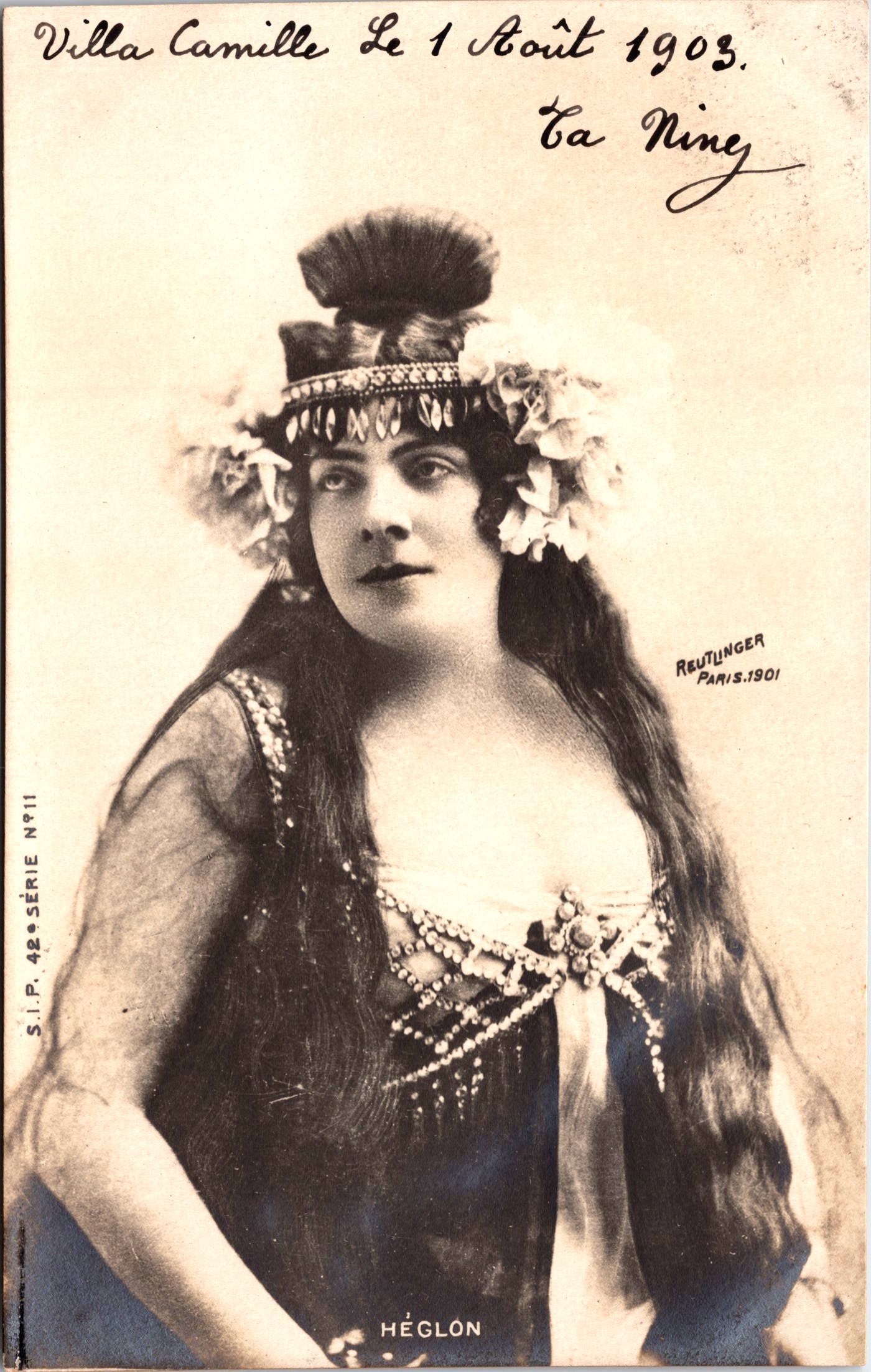
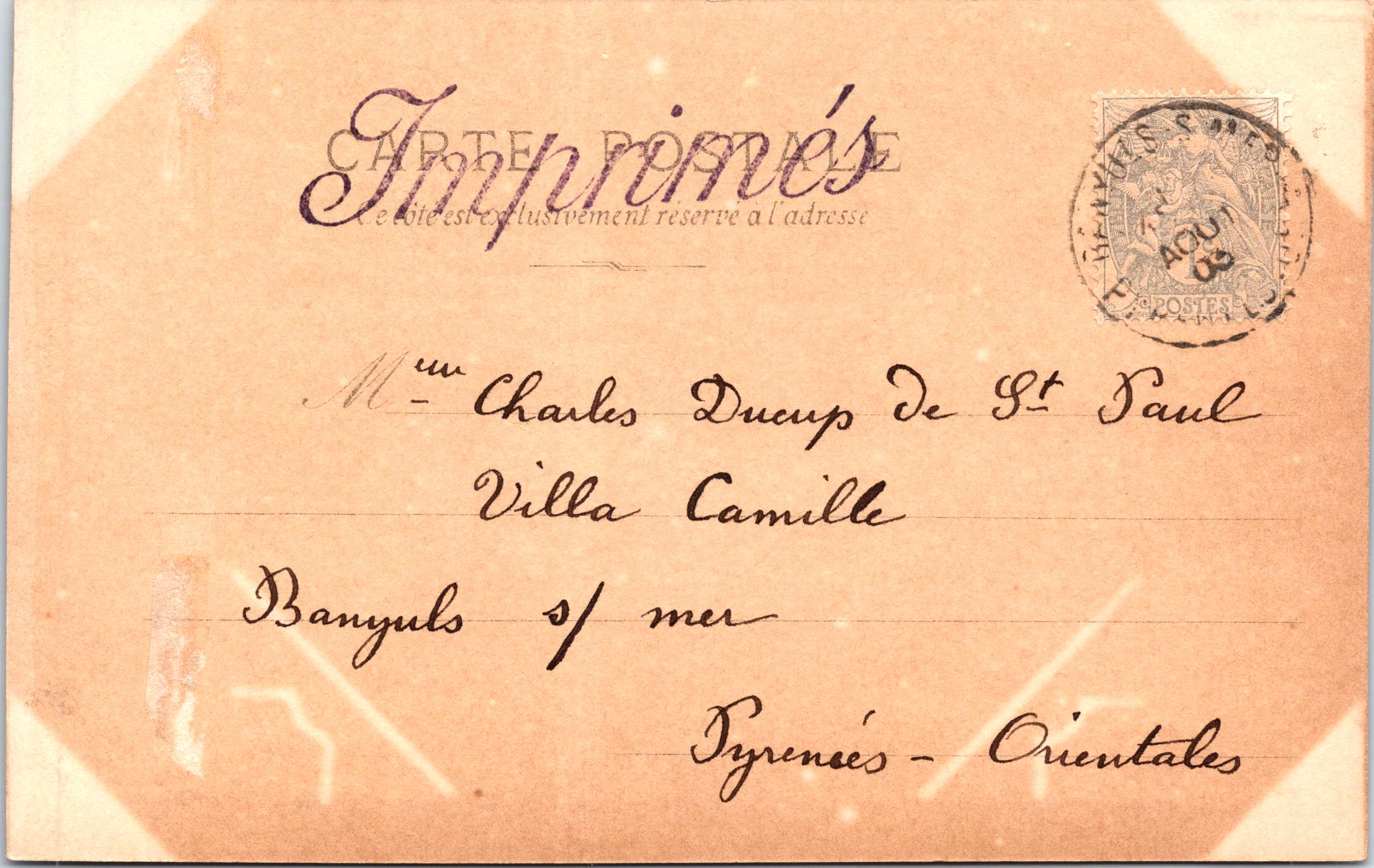
This beautiful and finely printed French postcard features the celebrated opera contralto Meyrianne Heglon, captured in 1901 by the renowned Parisian photographer Leopold Reutlinger, whose studio produced many of the most iconic theatrical and operatic portraits of the Belle Époque. Heglon appears in an elaborate exotic costume, with long flowing hair, floral headdress, jeweled adornments, and a stage gown decorated with strings of pearls—a dramatic style typical of the highly stylized mythological and Symbolist roles she performed during the early 1900s. The undivided back card bears the printed credit “Reutlinger Paris 1901” at right and is published by S.I.P. – Série 42, No. 11 along the left border. This is an early and desirable example of a Heglon portrait, produced during the height of her operatic fame and printed from one of Reutlinger’s most elegant theatrical sittings. The postcard remains a striking example of Belle Époque theatrical glamour.  Meyrianne Heglon was a celebrated French opera singer of the late 19th and early 20th centuries, known for her commanding stage presence, dramatic depth, and rich, expressive contralto voice. She was born in the small commune of Parisot (Tarn), France. Heglon showed promise from a young age and pursued formal vocal training in Paris. Her voice—deep, resonant, and unusual even among contraltos—was suited to dramatic repertoire, including the roles of sorceresses, queens, and tragic heroines. She soon gained attention for her intensity and musical intelligence, qualities that separated her from lighter, more conventional salon contraltos of the period. Heglon’s professional debut occurred in the 1890s, and by the turn of the century she was appearing on major stages. She became closely associated with the repertoire of French grand opera, excelling particularly in the works of Gounod, Massenet, and Bizet. Her portrayal of Carmen—a role often dominated by mezzos—was noted for its darker vocal color and a psychological complexity that critics praised for its originality. She also sang at the Opéra-Comique and performed abroad, including engagements in Belgium and Switzerland. Her range of roles expanded as she achieved maturity as an artist, and she won accolades not only for her voice but also for her striking theatrical instincts. Publicity photographs from this period—often taken by major Parisian studios such as Reutlinger or Boyer—show a woman of arresting features, expressive eyes, and a sense of controlled but powerful emotion. In 1903, Heglon married the well-known baritone Dinh Gilly, an Algerian-born singer who achieved distinction at the Paris Opéra before joining the Metropolitan Opera in New York. Their partnership was both artistic and personal; the couple occasionally performed together and later became important teachers. After her stage career slowed, Heglon devoted increasing attention to vocal pedagogy, training singers in Paris and London. Her retirement from the stage did not diminish her influence. She continued to be respected for teaching opera to a new generation. Heglon died in 1958. (SOLD)

Published in: on August 7, 2026 at 12:30 pm  Leave a Comment  

YOUNG AFRICAN AMERICAN WOMAN IN PERIOD DRESS : REAL PHOTO POSTCARD : c 1910s

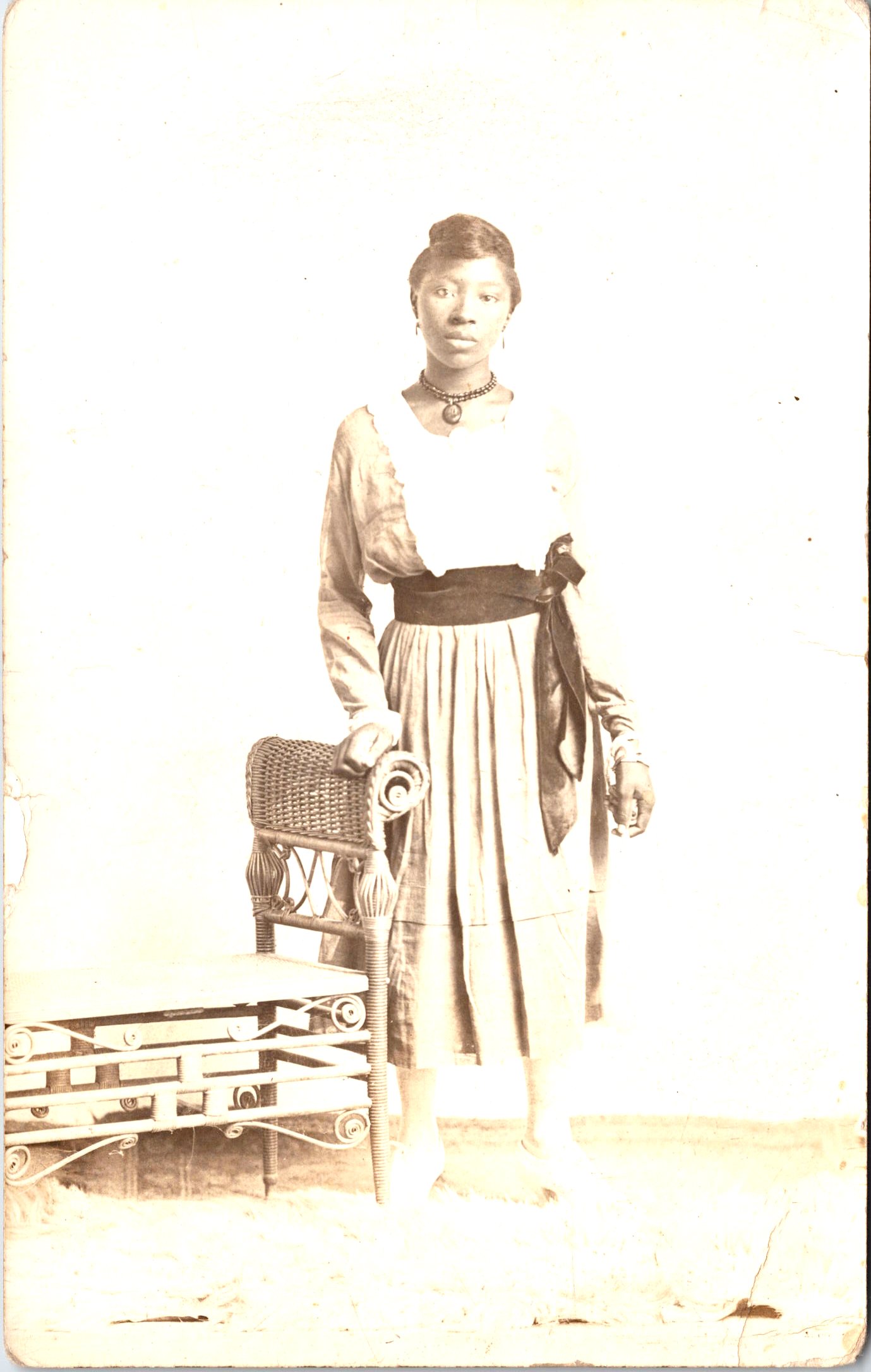
This evocative real photo postcard (RPPC) features a young African American woman standing beside an ornate wicker chair, her gaze calm yet direct. She is stylishly dressed in a light blouse with a wide white collar and dark sash tied in a bow at her waist, paired with a mid-length skirt. Around her neck she wears two pieces of jewelry—a short beaded choker and a pendant necklace—both adding a touch of grace and individuality. Her hair is neatly styled and parted, framing a face that conveys quiet confidence and dignity. The studio backdrop is minimal, drawing attention entirely to the sitter. The light is strong and frontal, giving the image a slightly high-contrast appearance that emphasizes her figure and facial features. The wicker chair at her side—an ever-popular prop of early 20th-century studios—adds a decorative element and helps balance the composition. The overall effect is both elegant and timeless, capturing the poised self-presentation of an African American woman during a period when such studio portraits were acts of personal pride and identity. The postcard’s reverse carries an AZO stamp box with two triangles pointing upward and two pointing downward, which dates the card’s production to approximately 1910–1918. This dating corresponds well with the woman’s fashion—her blouse and skirt ensemble, along with the jewelry and hairstyle, are consistent with styles of the mid-to-late 1910s. Unsigned and uncaptioned, this real photo postcard is a poignant example of African American portraiture from the early twentieth century, offering both historic and aesthetic appeal. The sitter’s steady gaze and graceful stance embody the quiet strength and dignity of a generation often overlooked in mainstream studio photography of the time. (SOLD)

Published in: on August 7, 2026 at 11:30 am  Leave a Comment  

RISQUÉ PARIS CABARET PHOTO : BLONDE SHOWGIRL AT MIRROR : RISS STUDIO PARIS

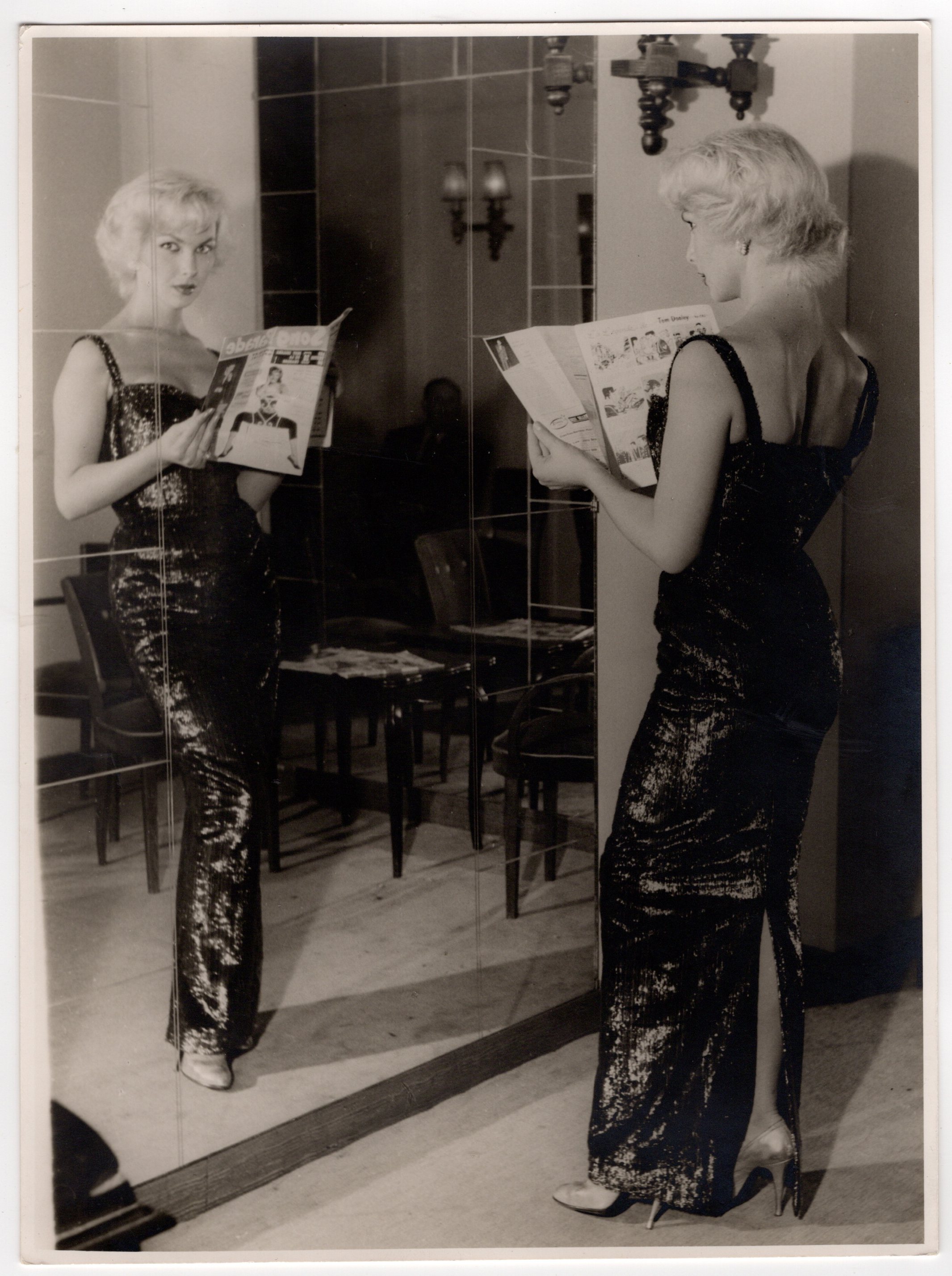
This is an exceptionally striking and undeniably sophisticated vintage photograph capturing a glamorous blonde woman in a moment that feels both staged and intimate, almost cinematic in its execution. The subject stands before a full-length mirror, allowing us to see her simultaneously from the front and the back—an elegant compositional device that heightens both the allure and the artistry of the image. She is dressed in a shimmering, form-fitting evening gown, likely sequined, which clings to her figure and falls to the floor in a sleek silhouette, finished with high heels that accentuate her posture and poise. In her hands she holds what appears to be a magazine or program—possibly entertainment-related—suggesting a connection to nightlife, performance, or the world of cabaret. Her expression, as caught in the mirror, is confident, slightly provocative, and knowingly aware of the viewer, while her turned back reveals the graceful lines of her shoulders and the daring cut of the gown. The setting, with its tiled walls, sconces, and understated furnishings, evokes a refined European interior—likely a dressing area or lounge space connected to performance or leisure culture. The overall effect is stylish, suggestive, and very much in keeping with mid-20th century Parisian glamour photography. It is entirely appropriate to describe this image as risqué, though tastefully so.. The reverse provides important and quite desirable provenance. It is stamped: RISS-PHOTO (Paris and Deauville). This indicates a professional photographic studio operating out of Paris’s 16th arrondissement—an affluent district associated with high society. Deauville is a famed seaside resort long associated with luxury, fashion, and entertainment culture. Studios in these locations often produced publicity and glamour photographs for entertainers, which aligns very well with the character of this image. The photograph measures approximately 9 1/8 by 6 7/8 inches and is printed on heavy-weight photographic paper, thicker than a typical press photo. This is consistent with a presentation or studio print rather than a standard news-service photograph.  SOLD

Published in: on August 6, 2026 at 11:30 am  Leave a Comment  

TWO YOUNG WOMEN DANCERS : HOLDING FEATHERS : CHICAGO : VINTAGE PHOTO : 1910’s

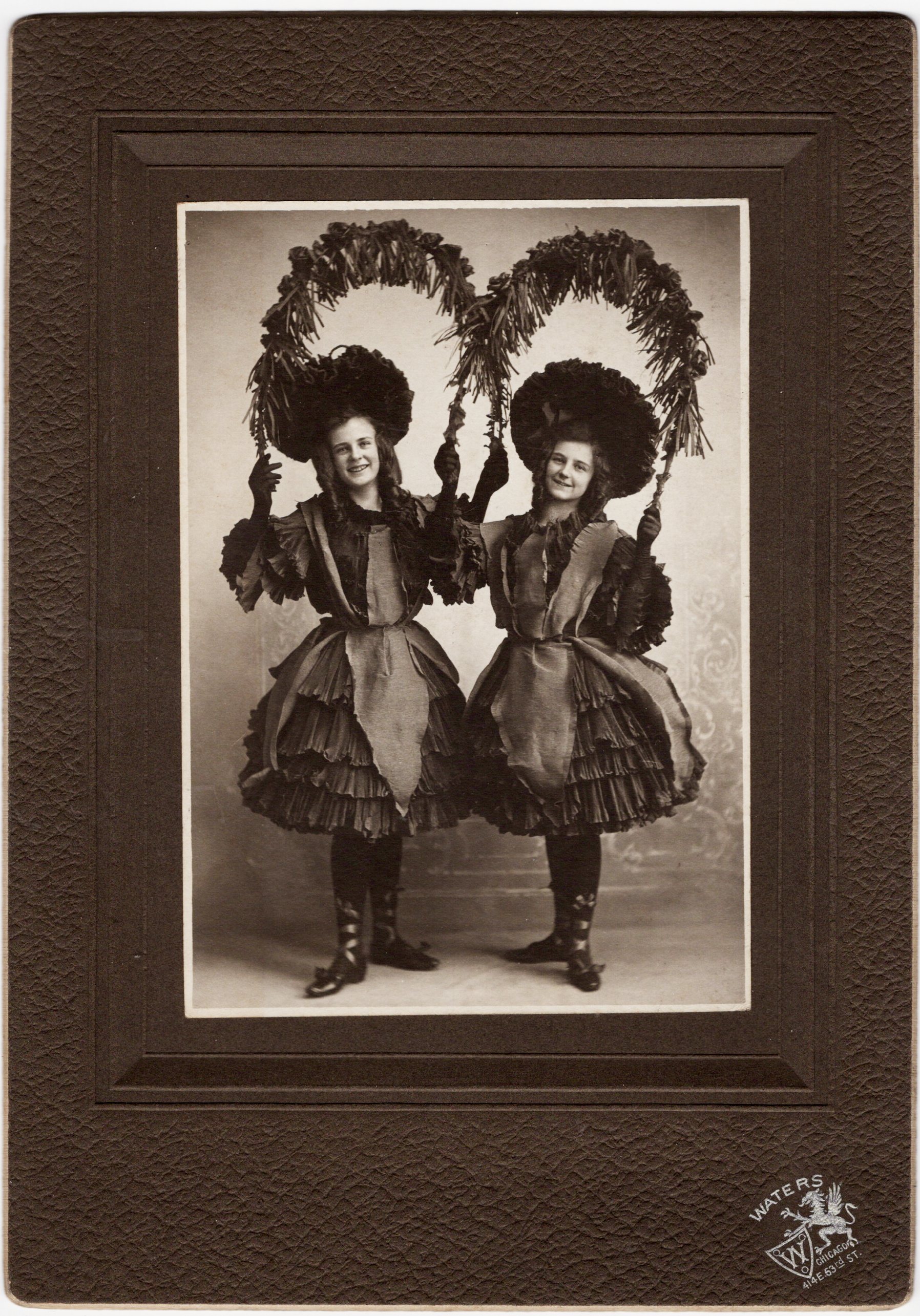
This charming vintage photograph, taken at the esteemed Waters Studio in Chicago, captures two young women in an elegant pose.  They are performers from the early 1900s. The pair stand side by side, holding large feathered props in the shape of arches above their heads, suggesting they are mid-performance or posing to highlight their costumes and artistry. The women are dressed in elaborate, ruffled costumes with matching skirts and blouses accented by puffed sleeves. Their outfits, along with their detailed lace-up boots, are typical of the turn-of-the-century vaudeville or theatrical performers. The expressions on their faces—one with a playful smile and the other with a more subdued but confident demeanor—reveal a sense of joy and professionalism, hinting at their comfort in front of the camera. These young women could very well be professional dancers, actresses, or variety show performers showcasing their talent and stage presence. This photograph, including its mount, measures approximately 6 x 8.5 inches, while the image itself is about 3 5/8 x 5.25 inches. The condition is excellent for its age, with minimal wear to the edges of the mount and crisp details in the image. There is an embossed “Waters Studio, Chicago” mark in the mounts corner. The Waters Studio was known for its striking photographic work during the early 20th century, capturing the essence of its subjects with skill and precision. I have had the pleasure of owning three other photographs by this studio, all of which sold quickly—a testament to the photographer’s exceptional talent and the enduring appeal of their work. Photographer, J. Edgar Waters wrote an article for a business magazine. “The Magazine of Business” (1915) contains an article entitled “The One-Man Business”. In the article, Waters provides practical advice about business record keeping. SOLD

Published in: on August 6, 2026 at 12:30 am  Leave a Comment  

MISS MAGGY : PRETTY ACTRESS PHOTOGRAPHED BY SAZERAC : RPPC : 1905

This vintage color tinted  real photo postcard features Miss Maggy, a Paris cabaret performer. She is pretty and has a wonderful smile. Preliminary research found no biographical information concerning this actress. The photographer of this postcard portrait is the Sazerac studio which was located at the “Hotel Prive” in Paris, France. Little information could be located about Mr. Sazerac; but one can easily find real photo postcard portraits of French show girls that were produced by his studio. In fact, Britain’s National Portrait Gallery has one of Sazarac’s photographs (circa 1906) in it’s collection. This card was postmarked in 1905 and has a French stamp. This postcard is part of a series (N. 827 Th. 91). SOLD

Published in: on August 5, 2026 at 11:30 am  Leave a Comment  

MARION MICHAEL : GERMAN FILM & TV ICON : 2ND GERMAN ACTRESS TO BE NUDE ON SCREEN

POSTCARD 1 (SOLD)

POSTCARD 2 (SOLD)

POSTCARD 3 (SOLD)

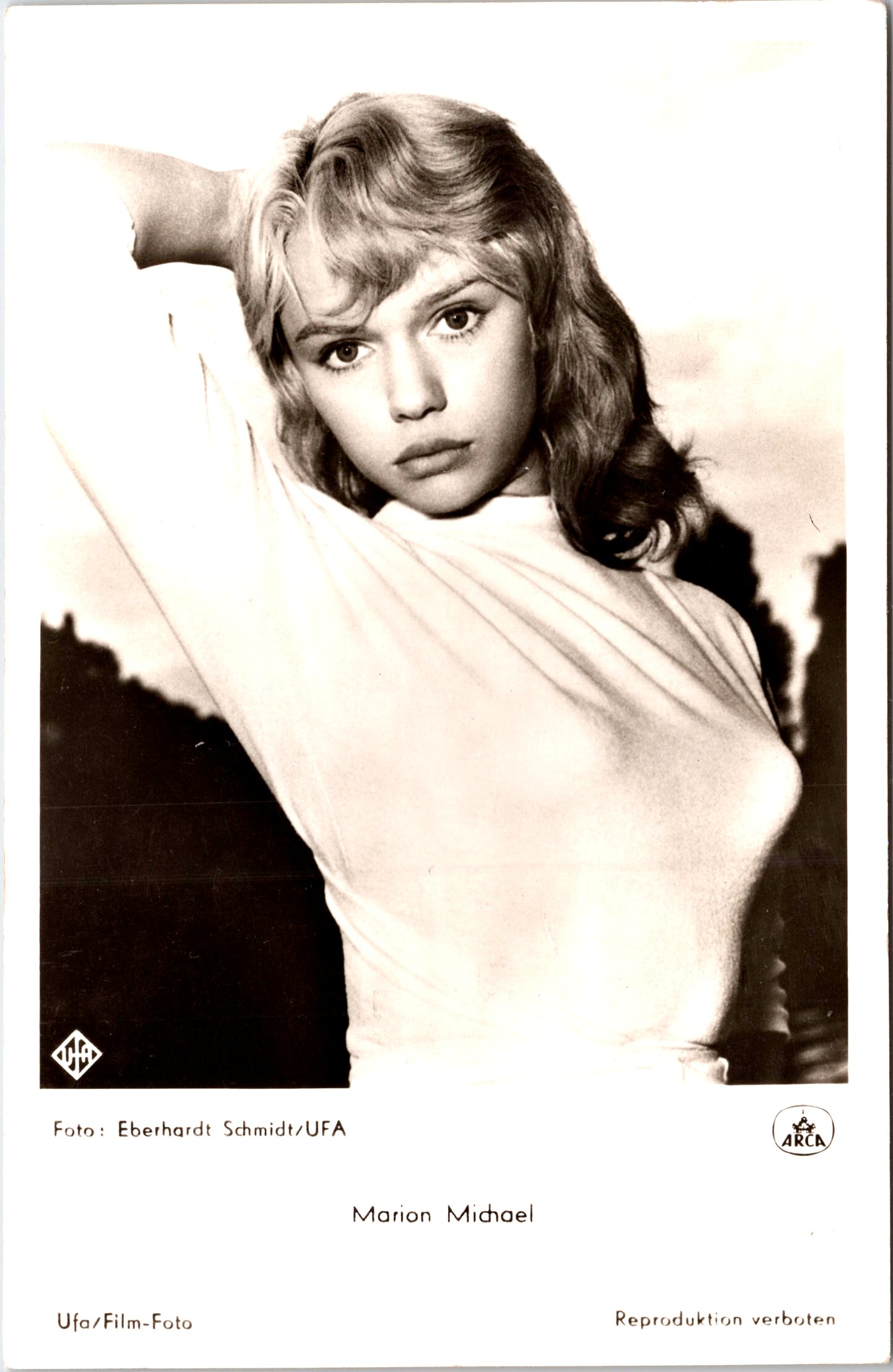
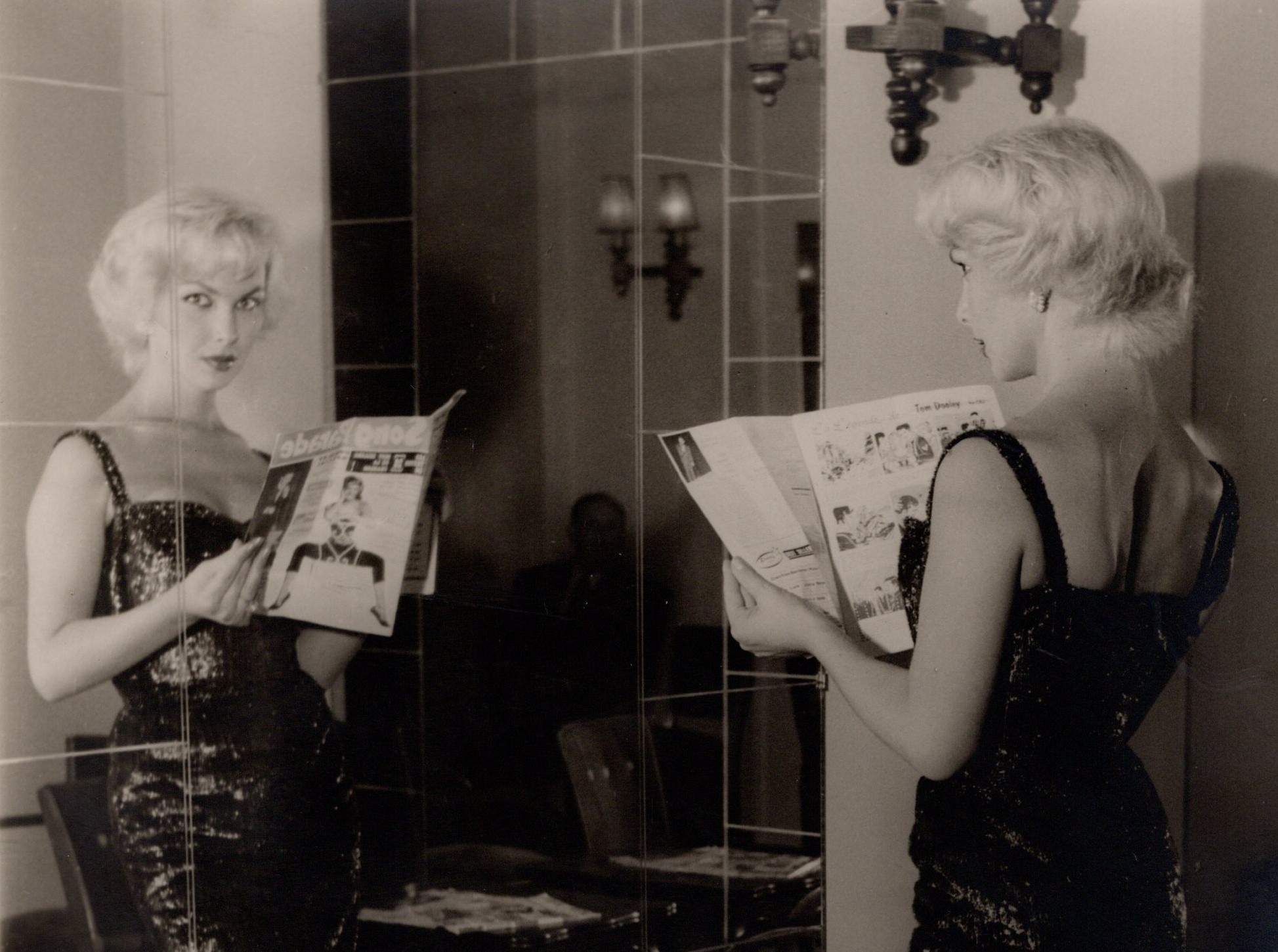
These vintage real photo postcards feature German film actress and singer, Marion Michael (11940-2007). She is best known for her role in the film “Liane, Jungle Goddess” (1956). In that film, Marion became the second German actress to appear nude in a movie. It is reported that there were 12,000 actresses that competed for that role. Sadly, she was just 15 when the movie was filmed. She appeared topless in the film. Her nudity was not meant to be erotic. She was touted as Germany’s Brigitte Bardot. The movie, shot in Africa, was very popular at the box office. During the next 6 years, none of her 10 films were successful. Michael was injured in a car accident during her acting career. She returned to acting but stopped in 1965. From there on, she infrequently acted in television and film. The last film (television) she appeared in was a musical about her life. It was entitled “Liane” (1996). After retiring from acting, she worked as a sales woman. Her filmography reported by IMDb, credits her with 19 film and television appearances. Although she was not extremely successful as an actress, she was still considered a film icon in Germany.

Postcard 1 was published circa 1956-1959. Michael’s photograph is attributed to Stempka/Arca Film. The card was published by UFA, a German film and television production company. SOLD

Postcard 2 captures Miss Michael while she is in her role in the film, “The Mad Bomberg”. This vintage postcard was published in 1957 by UFA (Berlin). Michael’s photograph is attributed to Hoenchen / Arca. SOLD

Postcard 3 was published in the mid to late 1950’s. Michael’s photograph is attributed to Stempka/Arca Film. The card was published by UFA, a German film and television production company. SOLD

POSTCARD 1

POSTCARD 2
Postcard 3

Published in: on August 4, 2026 at 12:30 pm  Leave a Comment  

COUNTRY LAKE NURSING HOME : CENTERPORT, LONG ISLAND, NEW YORK : MILL POND : RPPC

This lithographic postcard features the Country Lake Nursing Home. The home is located in Centerport, Long Island, New York. Advertising on the reverse of the card states that the home overlooks the “picturesque Mill Pond”. The home is on the Northshore of Long Island and a stones throw away from Centerport Harbor (Long Island Sound).The nursing home housed 20 patients. The postcards color photo of the nursing home was taken by Milt Price (Northport, New York) and the card was published by the Tomlin Art Company (Northport, New York).  SOLD

Published in: on August 4, 2026 at 11:30 am  Leave a Comment  

HOTEL WELLSWOOD : HAMPTON FALLS, NEW HAMPSHIRE : HISTORY : VINTAGE POSTCARD 1926

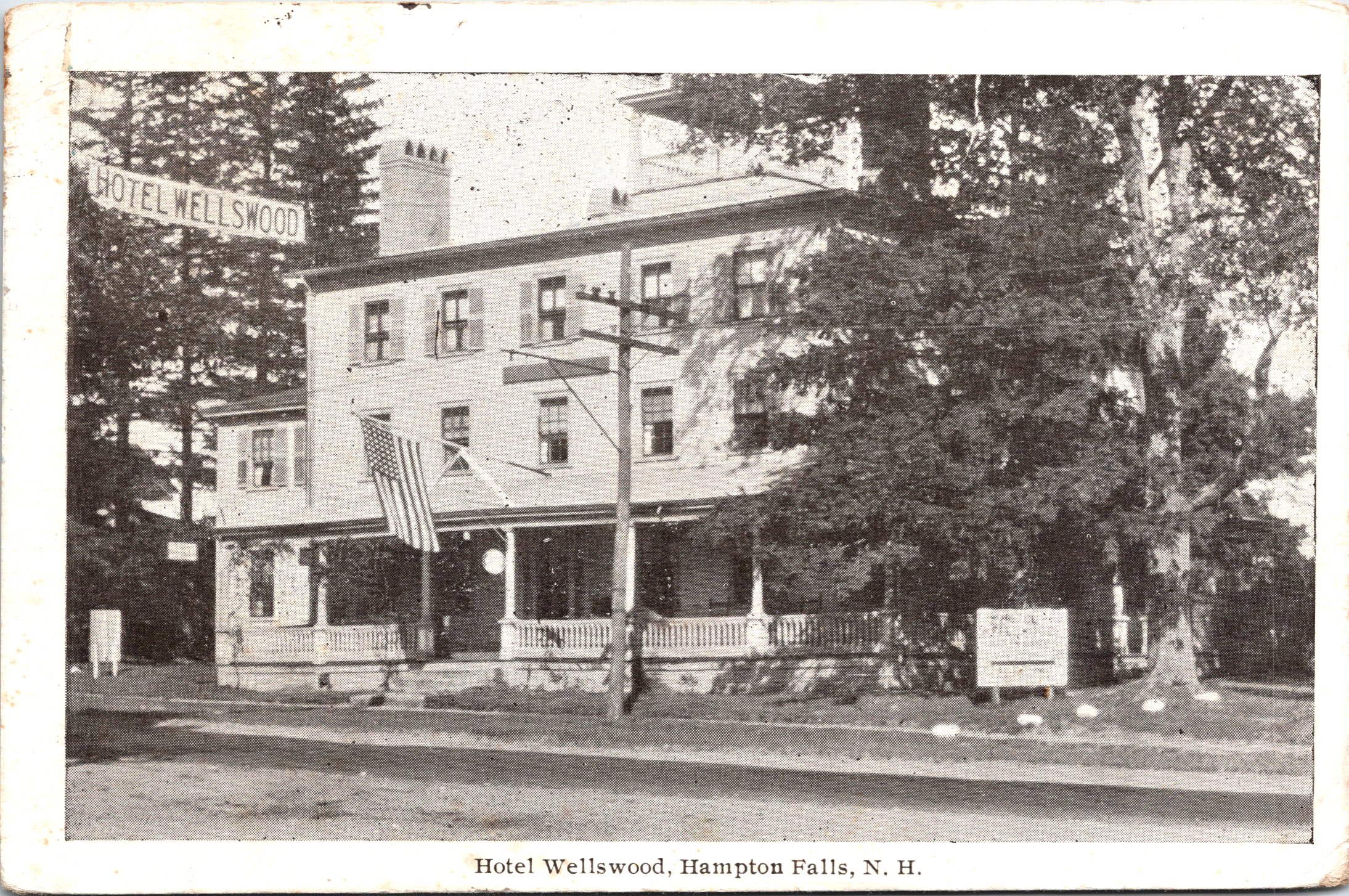
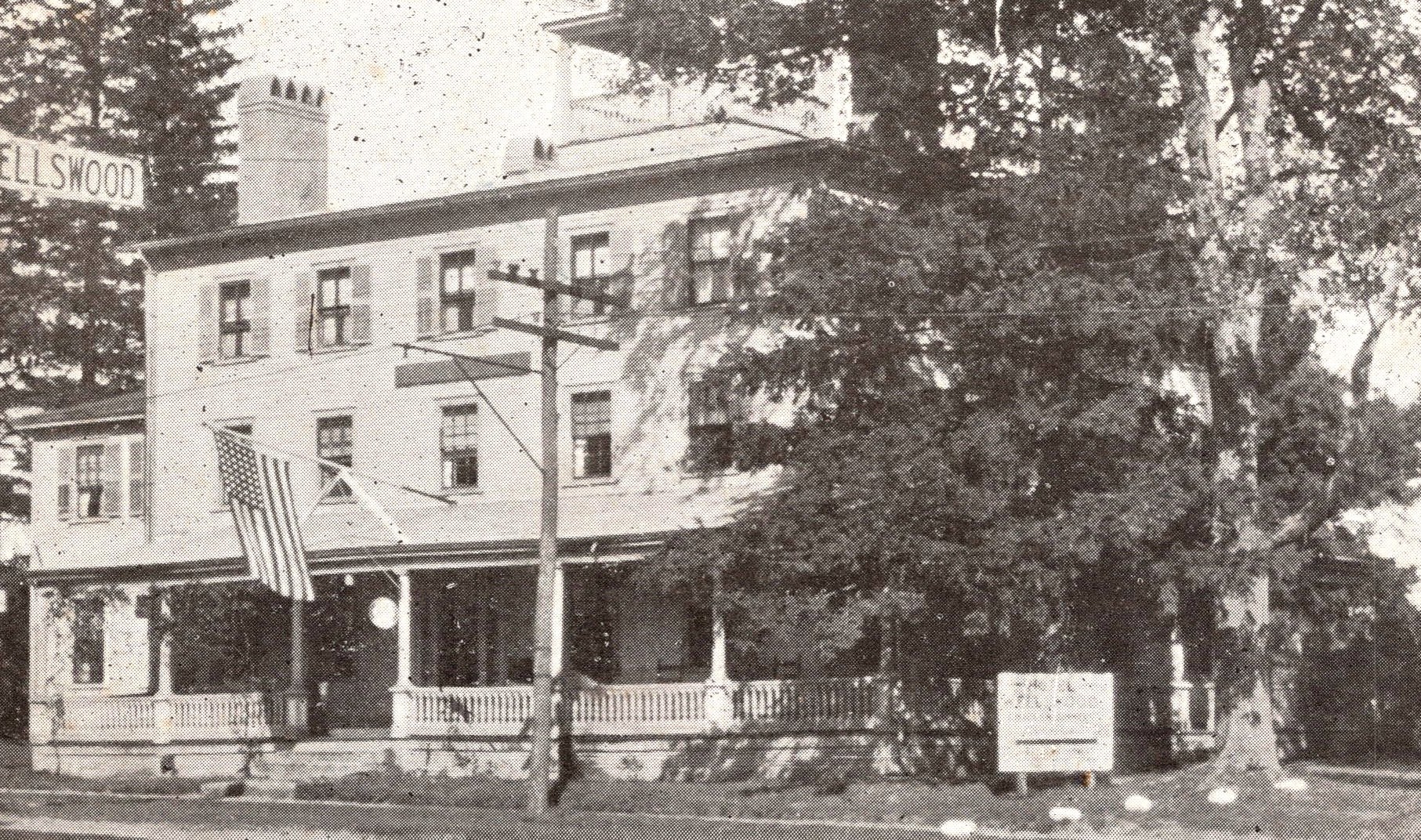
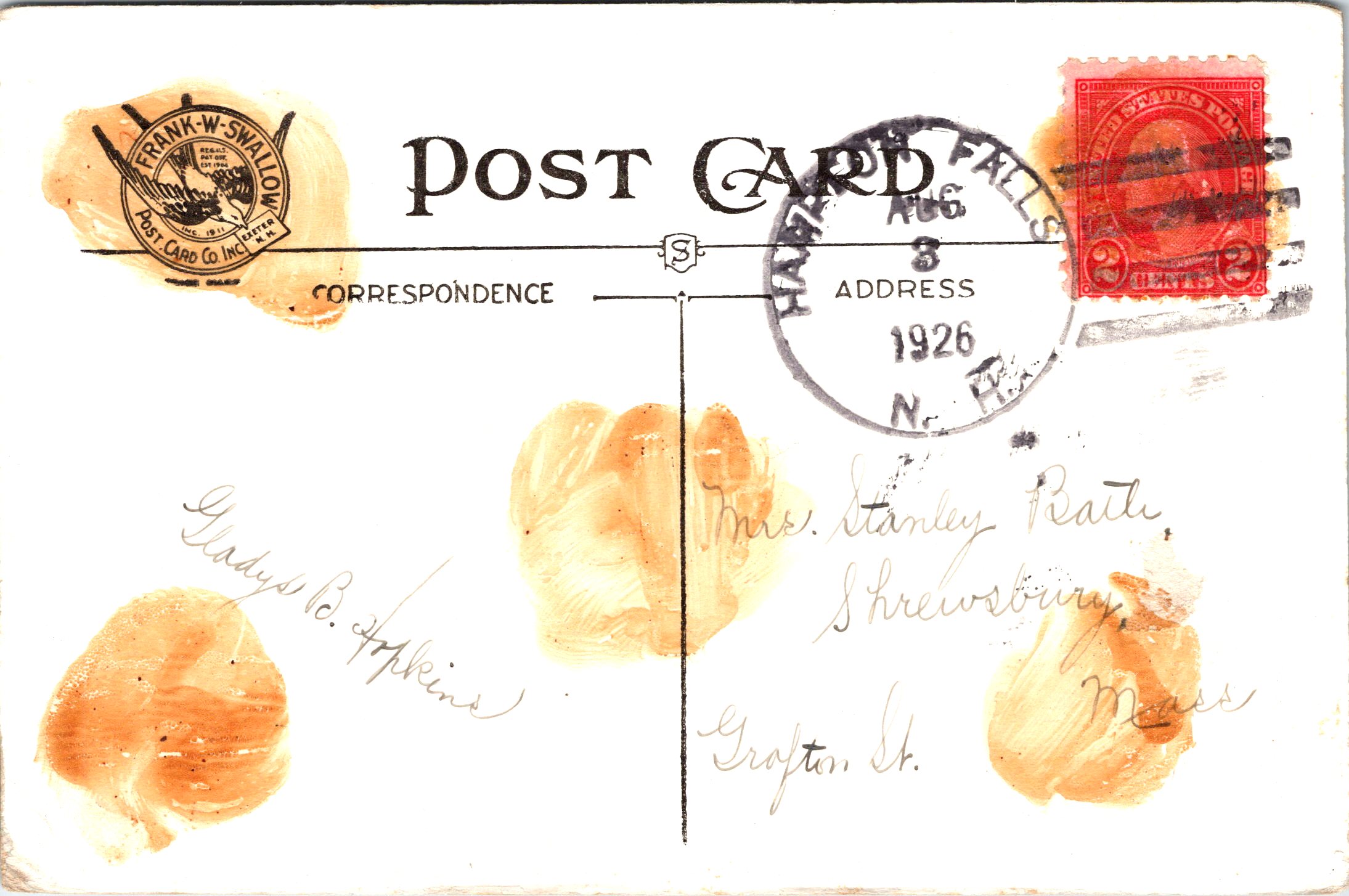
This vintage lithographic postcard depicts the historic Hotel Wellswood in Hampton Falls, New Hampshire. The hotel is a large, three-story building with a wraparound porch adorned with decorative railings. An American flag hangs prominently from the front of the building, adding a patriotic touch to the scene. The structure is surrounded by tall trees, giving it a serene and picturesque setting.A sign reading “Hotel Wellswood” is suspended between two posts at the entrance, welcoming guests. The front yard of the property appears to be well-kept, with visible landscaping and a grassy area. To the right of the hotel, a smaller sign is visible, likely advertising the hotel’s services or additional information for visitors. Power lines and a utility pole in the foreground indicate the era’s infrastructure. The Hotel Wellswood was a notable establishment in Hampton Falls, New Hampshire, during the early 20th century. An advertising card from the 1920s lists Mrs. Bertha S. Graves as the proprietor, indicating that the hotel was operational during that period. The hotel no longer exists. Hampton Falls is a small, picturesque town located in Rockingham County in southeastern New Hampshire. This postcard was published by the Frank W. Swallow Post Card Company. The firm was located in Exeter, New Hampshire. The postcard has a Hampton Falls postmark dated 1926.  SOLD

Published in: on August 3, 2026 at 12:30 pm  Leave a Comment