ELEGANT AFRICAN AMERICAN MEN : PHOTO BY JIMMY BAYNES : CLEVELAND, OHIO 1950’s

This striking black-and-white photograph, taken by Cleveland photographer Jimmy Baynes (1922–2010), captures a moment of unity, elegance, and pride. The image showcases a distinguished group of African American men, impeccably dressed in matching metallic-toned tuxedo jackets, crisp white dress shirts, and black bow ties. Their tailored jackets gleam under the light, emphasizing their polished, formal appearance. Completing their attire, neatly pressed black trousers and polished dress shoes reflect a commitment to both style and sophistication. Standing in a carefully arranged formation, the men present a sense of camaraderie and professionalism. Their expressions range from confident smiles to serious, poised looks—perhaps reflecting the anticipation of a performance or an important social event. Each man exudes dignity, their upright postures and synchronized attire reinforcing a sense of unity. The background is simple and unembellished, allowing the focus to remain on the subjects themselves, their expressions, and the sharp contrast of their gleaming jackets against the darkened floor. The photographer of this photograph, Jimmy Baynes was  known for his ability to capture the essence of African American life, culture, and entertainment from the 1950s through the 1980s. Originally a postal worker, Baynes pursued photography as a passion, ultimately founding Baynes Foto Service. His work chronicled the vibrancy of mid-century African American social life, from intimate gatherings and beauty contests to the pulsating energy of live music performances and political events. Baynes photographed some of the most iconic figures in entertainment history, including Aretha Franklin, Louis Armstrong, Count Basie, Mahalia Jackson, Louis Jordan, Jerry Lee Lewis, the Platters, and the Drifters. His ability to capture both candid and staged moments gave his work a lasting impact, preserving the rich history of Cleveland’s African American community. His legacy is recognized today by institutions such as the Rock and Roll Hall of Fame and Museum Library and Archives in Cleveland, which houses a collection of his photographs, primarily focusing on music and entertainment. In 2010, shortly before his passing, his work was featured in the “Polaroid: Instant Joy” exhibition in Brooklyn, New York, reaffirming his role as a visual storyteller of African American life in the mid-20th century. This photograph was taken in the 1950’s. (SOLD)

VICTORIAN GIRL WITH BOOK : LONG HAIR : WASHINGTON, IOWA : CABINET CARD

This captivating cabinet card portrait features a young Victorian girl posed in a rustic studio setting, seated gracefully beside a faux wooden fence. Dressed in a pristine white dress adorned with a broad, ornate lace collar and a tiered, ruffled skirt, she embodies the fashion of late 19th-century childhood portraiture. Her tightly curled bangs frame her youthful face, while her long, loose hair cascades over one shoulder—an uncommon and charming detail. She wears a long beaded necklace, from which a small rectangular locket or charm is suspended. A bracelet graces her left wrist, adding a delicate finishing touch to her ensemble. In her lap she holds an open album or book, featuring a cabinet card or mounted photograph of another child—possibly a sibling or friend—suggesting a theme of familial affection or memory. The girl gazes directly at the camera with a calm, slightly serious expression, her composure and gentle poise typical of studio portraits from this era. The setting evokes naturalism, yet remains artfully staged, blending domesticity with refinement. The back of the card is elaborately decorated in brown ink with Victorian embellishments including an ornate border, floral flourishes, and a small Sphinx illustration. The photographer is identified as Sam. Armstrong of Washington, Iowa. Samuel McDowell Armstrong learned photography in 1868 from Washington photographer, Austin Kracaw. In 1873 he partnered with Kracaw and within a year, Armstrong moved to Springfield Missouri. A name is handwritten in ink across the reverse: “Olive Campbell”. This is likely the name of the the girl seen in this photograph. Olive Gordan Campbell was born in 1878 and died in 1941.  (SOLD)

CARDINAL GIBBONS (1834-1921): THE FACE OF CATHOLICISM IN TURN OF THE CENTURY AMERICA

This cabinet card features Cardinal James Gibbons in his coronation portrait, taken around 1886. The sepia-toned photograph depicts him standing in a formal pose. He is dressed in traditional Roman Catholic clerical attire, holding a rosary in his left hand and wearing distinctive ecclesiastical garments. A crucifix is prominently displayed on the table beside him. Cardinal Gibbons is dressed in his clerical clothing. Note the following garments.  1) Cassock: A long black robe buttoned down the front, signifying his clerical rank 2) Zucchetto: A skullcap typically worn by clergy, indicating his episcopal office, 3) Roman Collar: A white collar worn by Catholic priests, 4) Sash/Cincture: A silk sash tied around the waist, symbolizing purity and obedience, 5) Surplice with Lace: A white garment adorned with lace, often worn during liturgical functions, and 6) Pectoral Cross: A cross worn on a chain or cord around the neck, signifying his role as a bishop or cardinal. Cardinal James Gibbons (1834–1921) was a prominent American prelate of the Roman Catholic Church. He served as the Archbishop of Baltimore from 1877 to 1921 and was elevated to Cardinal in 1886 by Pope Leo XIII. Gibbons was a key figure in the American Catholic Church and played a significant role in bridging the divide between Catholicism and American culture. His key achievements were as follows. 1) He was a Labor Rights Advocate. He supported the labor movement and the rights of workers, particularly during the rise of industrialization. 2) Ecumenism: Gibbons was a strong advocate for unity among Christian denominations. 3) Americanist Views: He championed the compatibility of Catholicism with American democratic values. 4) Publications: He authored The Faith of Our Fathers, a popular book explaining Catholic beliefs, which became widely read.

Published in: on June 30, 2025 at 12:00 pm  Leave a Comment  
Tags: , , , , , , , ,

FOUR CHILDREN WITH KITTENS : BY MARTINOT FRERES : GRENOBLE, FRANCE : CABINET CARD

This enchanting cabinet card portrait captures a tender domestic scene from the late 19th century. The image features four children—three girls and a boy—posed formally in a studio setting. Their expressions are a blend of poise and innocence, with a touch of curiosity and seriousness common in portraits of the period. Each child is neatly dressed, their attire reflecting the middle-to-upper-class fashion of the Victorian era. The two older girls, seated on a stone bench, gently cradle small kittens in their laps, adding a heartwarming, spontaneous touch to the otherwise composed image. Their delicate white dresses are adorned with ruffles and lace, and they wear matching striped stockings and black shoes. Their hair is neatly styled, with ribbons typing it back, creating a soft angelic appearance. Beside them stands their older brother, dressed in an immaculate dark nautical outfit, complete with a wide sailor collar, decorative buttons, and a silk tie. His right hand holds a large straw hat, and his confident posture suggests a protective older sibling role. The youngest child, a toddler, stands in front on a miniature chair, wearing a ruffled white dress with puffed sleeves and a curious expression. Her chubby cheeks and tousled bob haircut lend her a particularly charming presence. The photographer of this beautiful image is Martinot Frères, whose studio was located in Grenoble, France..The elaborate typography and decoration on the back of the card advertise the studio’s prestige, including a mention of awards received at the Exposition de Bordeaux in 1882. The inclusion of this medal suggests a respected reputation and hints at the high quality of the photography.  (SOLD)

Published in: on June 29, 2025 at 12:44 pm  Leave a Comment  
Tags: , , , , ,

KYRLE BELLEW : STAGE ACTOR : BY NAPOLEON SARONY : NEW YORK CITY : CABINET CARD

This elegant cabinet card features the distinguished English actor Kyrle Bellew, captured in a poised seated portrait by renowned photographer Napoleon Sarony. Bellew is depicted in a formal dark suit with a high-buttoned waistcoat and a crisply starched white collar. His hair is neatly parted, and his mustache is meticulously groomed, reflecting the refined style of late 19th-century theatrical gentlemen. His expression is composed and introspective, with a subtle intensity in his gaze that hints at the dramatic roles he was known for. Bellew is seated in a carved wooden chair with a high back, its ornate design complementing the dignified atmosphere of the portrait. The studio backdrop is understated, ensuring that the focus remains on the subject’s commanding presence. The cabinet card is printed on slightly thinner stock than typically seen. Napoleon Sarony was located in New York City during the late 1800s. He was known for his finely composed theatrical portraits, capturing many prominent actors of the era with a distinctive clarity and elegance. His photography of celebrities went well beyond the theatrical world. He was a flamboyant man and many of his portraits reflected that trait.  Kyrle Bellew (1850-1911) was born in  England and was a celebrated stage actor renowned for his romantic leads and Shakespearean roles. He gained fame touring with actress Cora Brown-Potter in the 1880s and 1890s, performing in classic plays across the United States and Australia. Bellew’s career also included ventures into early silent films, notably starring in Adventures of Sherlock Holmes; or, Held for Ransom in 1905. He died in 1911, in Salt Lake City, Utah, while on tour with the play The Mollusc (SOLD)

PORTRAIT OF AN ADORABLE LITTLE GIRL DOING SCHOOLWORK

Screen Shot 2019-09-21 at 11.28.23 AM

The little girl seen in this photograph is absolutely adorable. The bow in her hair adds to her cuteness. She is wearing earrings and a ring. The youngster is bright eyed and appears quite studious. I believe the photograph is best described as a snapshot but I am not entirely certain. Perhaps labeling it a “vintage photograph” would suffice. It measures about 5 5/8″ x 3 7/8″. I had hoped that magnifying the calendar in this photo would provide the approximate date it was taken. Unfortunately, my efforts went unrewarded. Despite the uncertainties, this image is special.   SOLD

Published in: on June 27, 2025 at 12:00 pm  Comments (2)  

JEWISH TEMPLE : SAN ANTONIO, TEXAS : HORSE & CARRIAGES : JUDAICA POSTCARD

This vintage lithographic postcard features a Jewish Temple, located in San Antonio, Texas. Note the two horse and carriages at the curb in front of the temple. The temple appearing on this postcard is “Temple Beth El”. The congregation was founded in 1874 and its first temple was opened in 1875. Many of the temple’s members were German immigrants who came to Texas in the 1850’s and 1860’s. In 1903, the congregation opened another temple to replace the first which was outgrown. The second temple, built on the site of the first, is pictured on this postcard. The second temple was replaced in 1927. This postcard is from the 1900’s or 1910’s. It was published by Paul Ebers, located in San Antonio. SOLD

THE RIBBON LADY OF NAPOLEON, OHIO

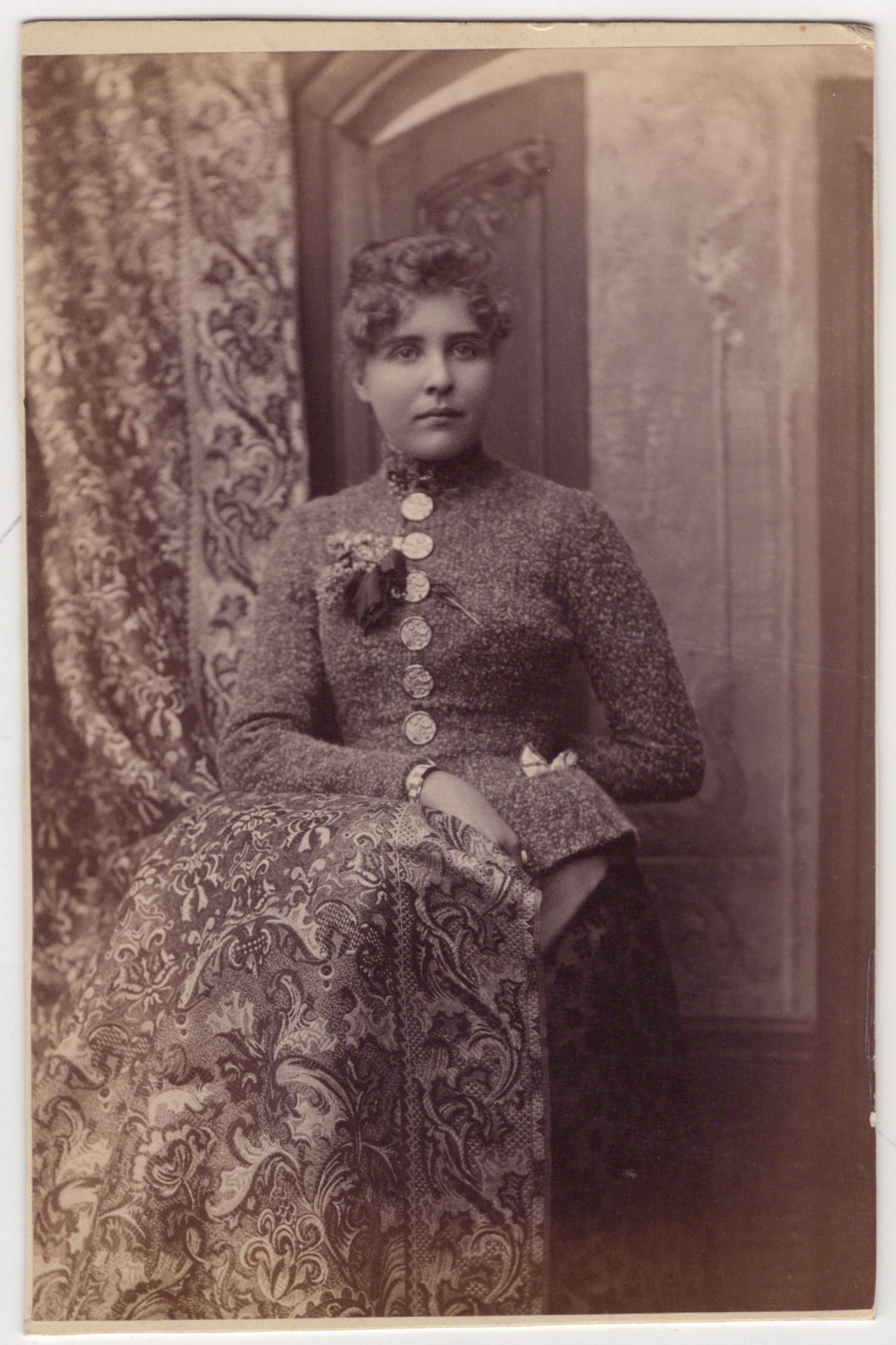
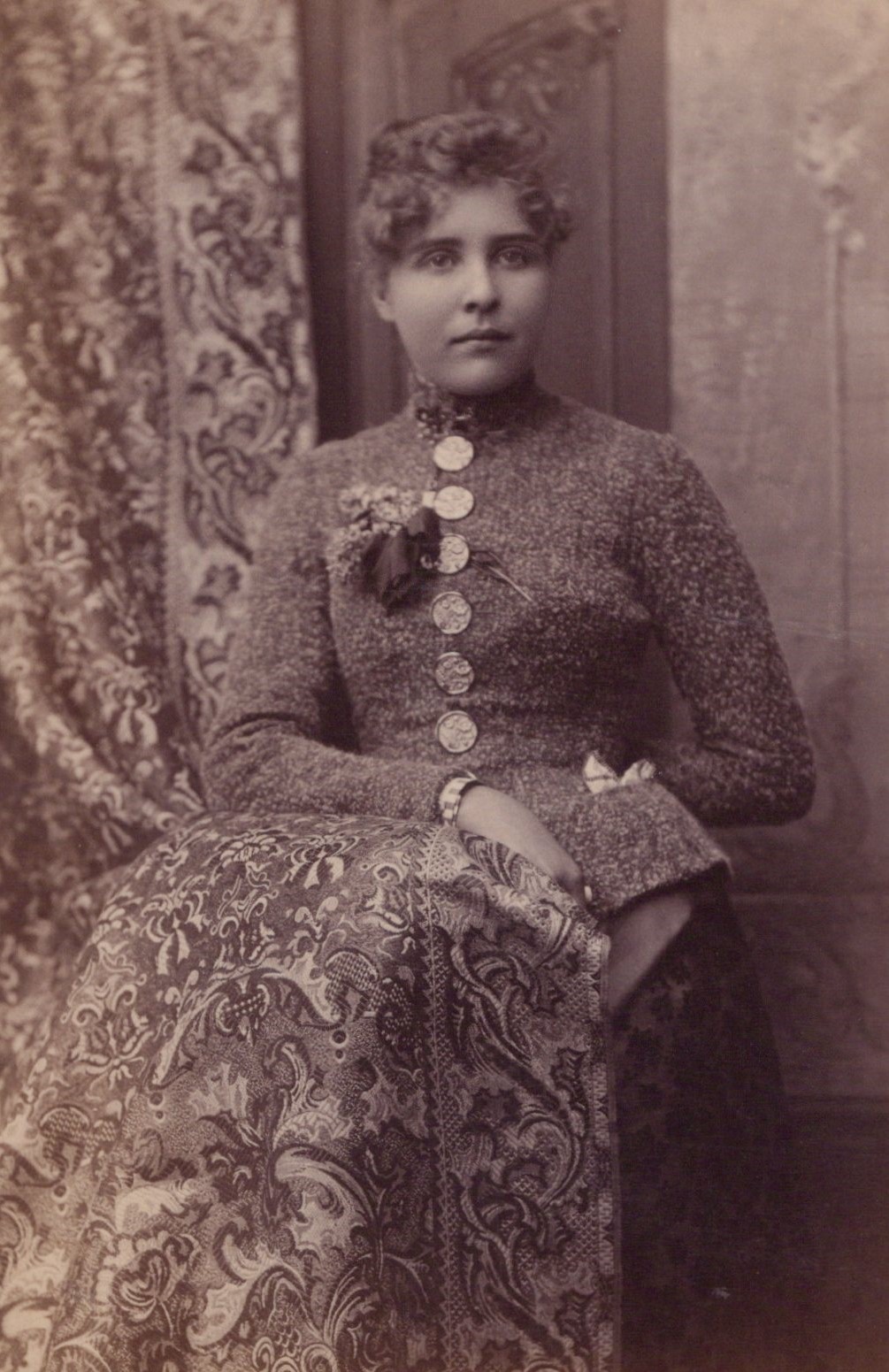
This cabinet photograph, by the Gardner studio in Napoleon, Ohio, offers a helpful hint worthy of appearing in Real Simple magazine. What should one do with those extra ribbons that are just laying around the house? A creative and economic answer is to stick them onto a plain dress to liven it up. Unfortunately, the end result of following this advice is that one is left with a very unattractive dress. To learn more about the photographer and to view other photographs by the Gardner studio, click on the category “Photographer: Gardner”. This cabinet card is in very good condition (see scans).

Buy this original Cabinet Card Photograph (includes shipping within the US) #3204

To purchase this item, click on the Pay with PayPal button below

$28.00

Buy this Cabinet Card Photograph (includes International shipping outside the US) 3204

To purchase this item, click on the Pay with PayPal button below

$39.00

Published in: on June 24, 2025 at 12:00 pm  Comments (4)  
Tags: , ,

PRETTY WOMAN PLAYING THE VIOLIN IN KJOBENHAVN, DENMARK

A pretty woman poses for her photograph at the studio of  Hansen & Weller in Copenhagen, Denmark. The studio’s address was 28 Bredgade. The woman is playing her violin with her bow. Her hair is up and she appears to be wearing a corset , giving her a lovely figure. One of the photographers is George Emil Hansen (1833-1891). He was a pioneer Danish photographer. His father and brother were also photographers. He won photography awards in London (1862) and Berlin (1865). Hansen was the photographer of the Danish Royal Family. His photographic work spanned from 1856 through 1891. There is a gold lettered word embedded in the lower right corner of the image. The word is “emeret”; and research may illuminate the word’s meaning. “Emeret” most likely signifies that the person in the photograph had retired from a notable profession, such as acting or teaching, or was being honored post-career. It is likely a Scandinavian variant or typographical version of the Latin word “emerita” (female form of emeritus).   SOLD


Published in: on June 23, 2025 at 12:00 pm  Leave a Comment  
Tags: , , , ,

WOMAN AND A MANDOLIN IN MINNEAPOLIS, MINNESOTA

This cabinet card portrait presents a formally posed woman seated with a mandolin cradled in her lap. The photograph is the work of Larson, a professional photographer operating out of 301–303 Washington Avenue South, Minneapolis, Minnesota, as embossed on the card mount. The woman gazes directly at the camera with a composed, self-assured expression—serious, yet approachable. Her hair is carefully curled and parted, a fashionable look for the late 19th century. She wears a high-necked dress in the style typical of the 1890s, featuring leg-of-mutton sleeves (voluminous at the shoulder and tapering to the wrist), which were highly popular during that time. The bodice of her gown is accented with a checkered or textured insert, and she wears a decorative bow or tie at the collar—adding to the refined, modest elegance of her ensemble. Her appearance suggests that she may have been of middle-class status, and possibly musically trained or involved in performance or amateur music circles. The instrument she holds is a mandolin, distinguished by its tear-drop shape and small, bowl-back body. Mandolins were popular instruments in the late Victorian era, especially among women, as they were considered both genteel and suitable for parlor entertainment. Her grip on the instrument appears practiced—though whether she was photographed in the midst of playing or simply posing with it, we cannot be sure. Still, her inclusion of the mandolin signals her musical ability or at least her cultural refinement. The photo was taken by the Larson Studio, located at 301–303 Washington Ave. S., MinneapolisHerman Larson was a Swedish immigrant who came to America through Sweden in the early 1900’s. In Sweden, he held a degree of Master Photographer and was knighted by the King of Sweden for his excellent work there in the late 1800’s. In 1904 he established his photography studio in downtown Minneapolis. Much of Larson’s work came from the theological, church and public schools in the area. The studio remains in business today and its web site discloses that it still possesses Larson’s panoramic circuit camera. (SOLD)