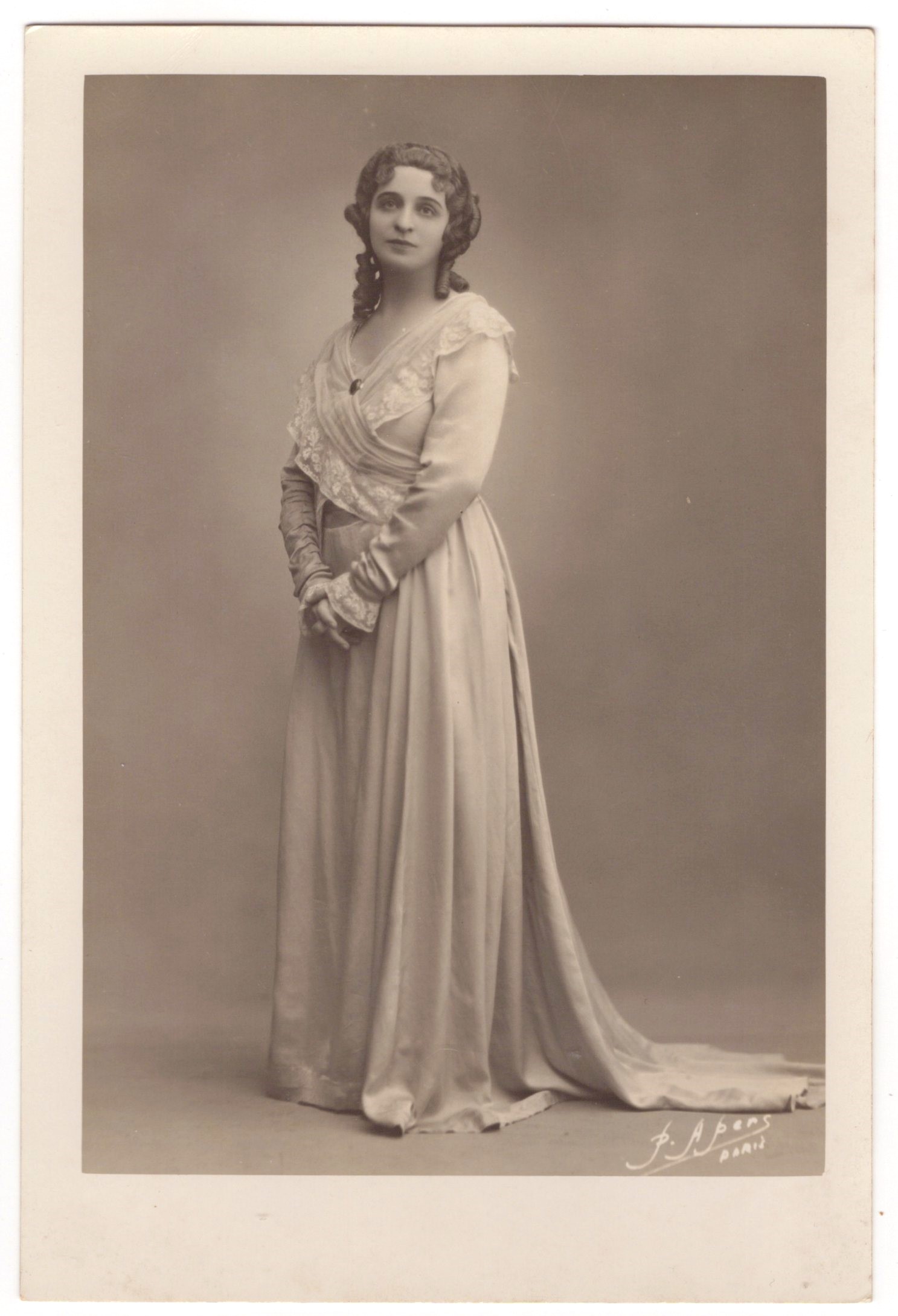
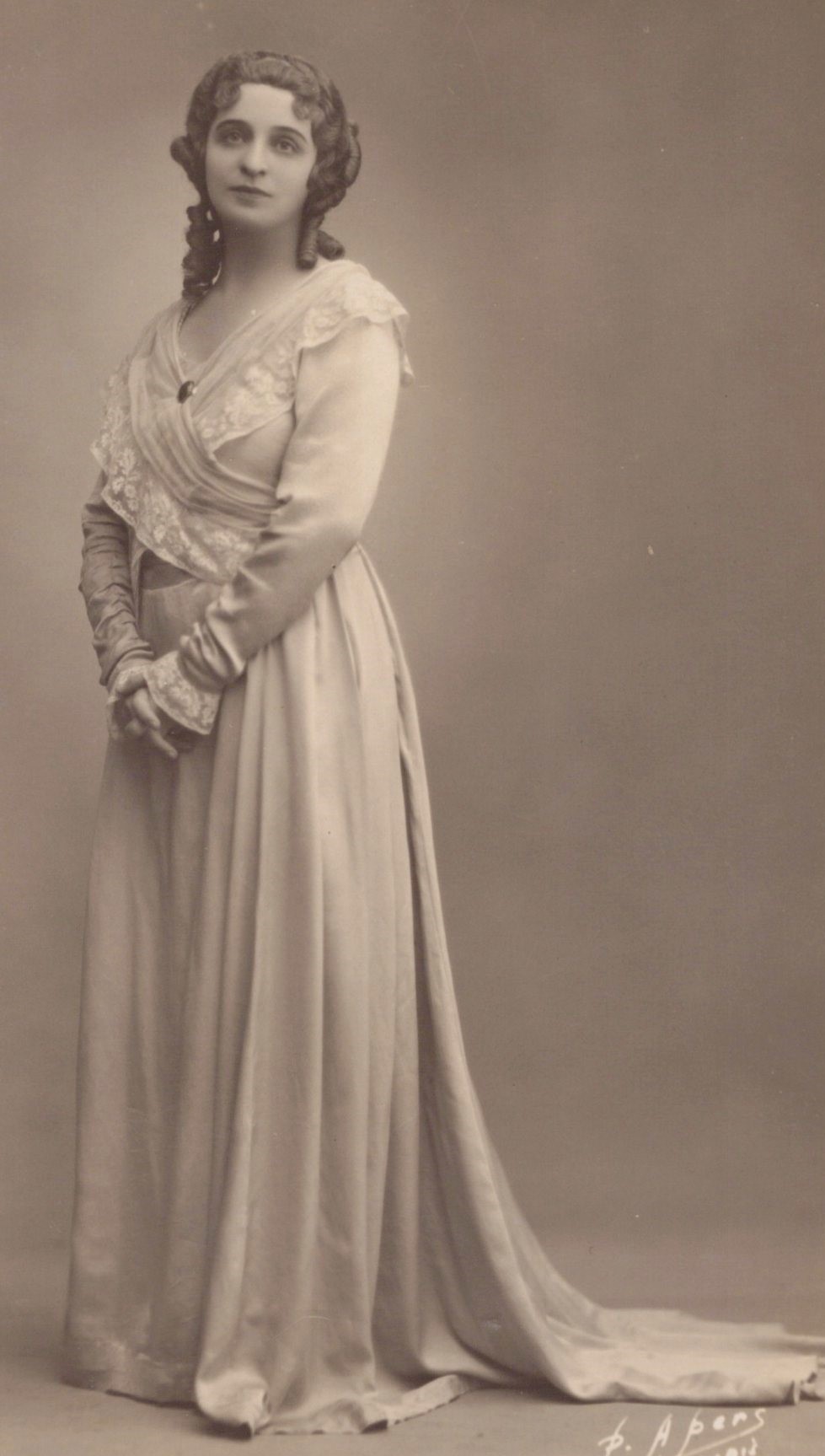
This vintage photograph features a pretty young woman fashionably dressed. She is likely a performer of some kind because the photographer who took this photo specialized in photographing French theatre and film stars. This beautiful photograph comes from the Paris studio of Pierre Apers. He was a talented French photographer active in the 1920’s and 1930’s. His studio was in Paris and he specialized in portraiture. Some of his work is in the collection of the Bibliotech Francais in Paris. The front of this photo has Aper’s facsimile signature at it’s bottom. The reverse of the photograph has an ink stamp providing the address of Aper’s studio. SOLD
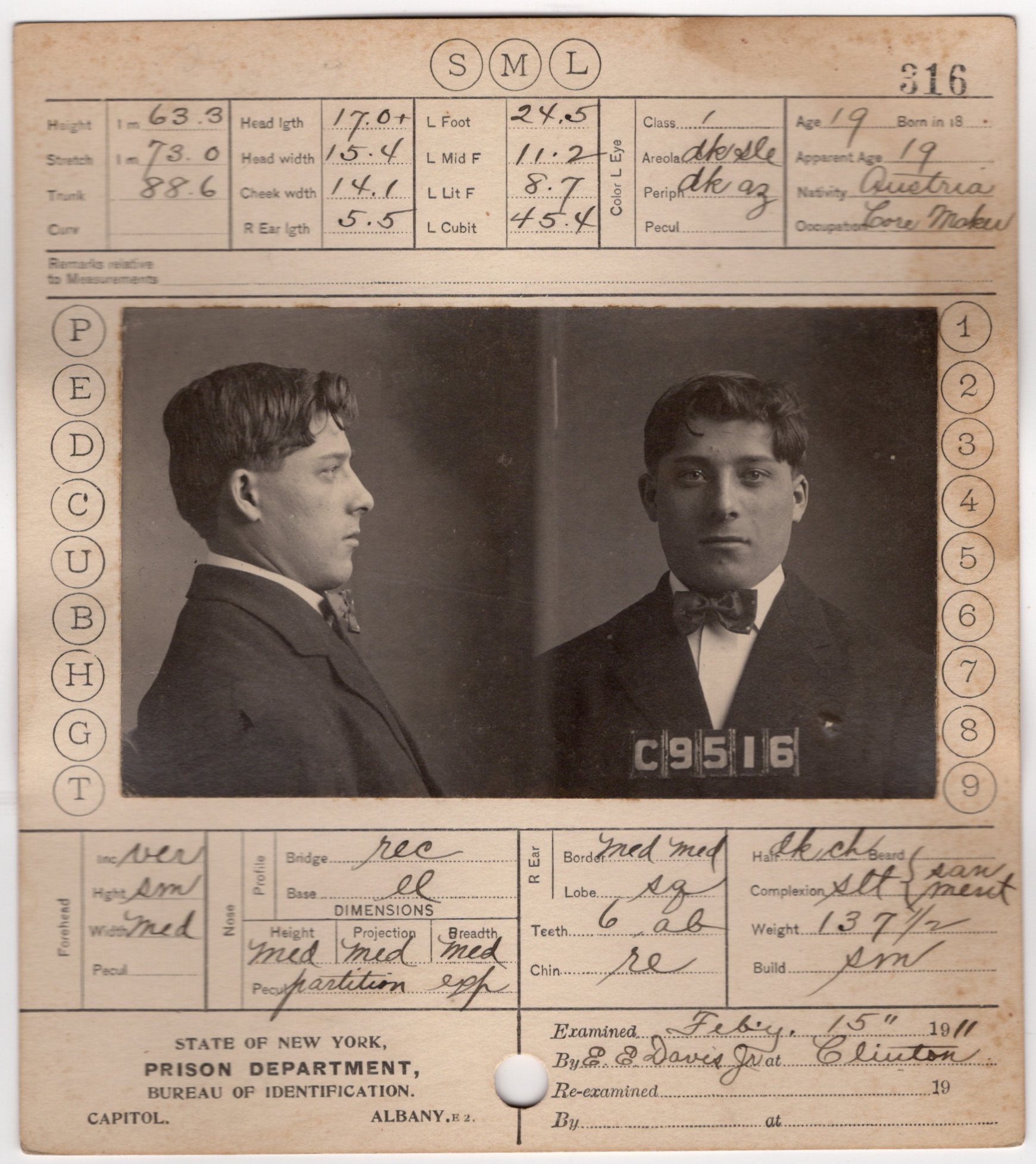
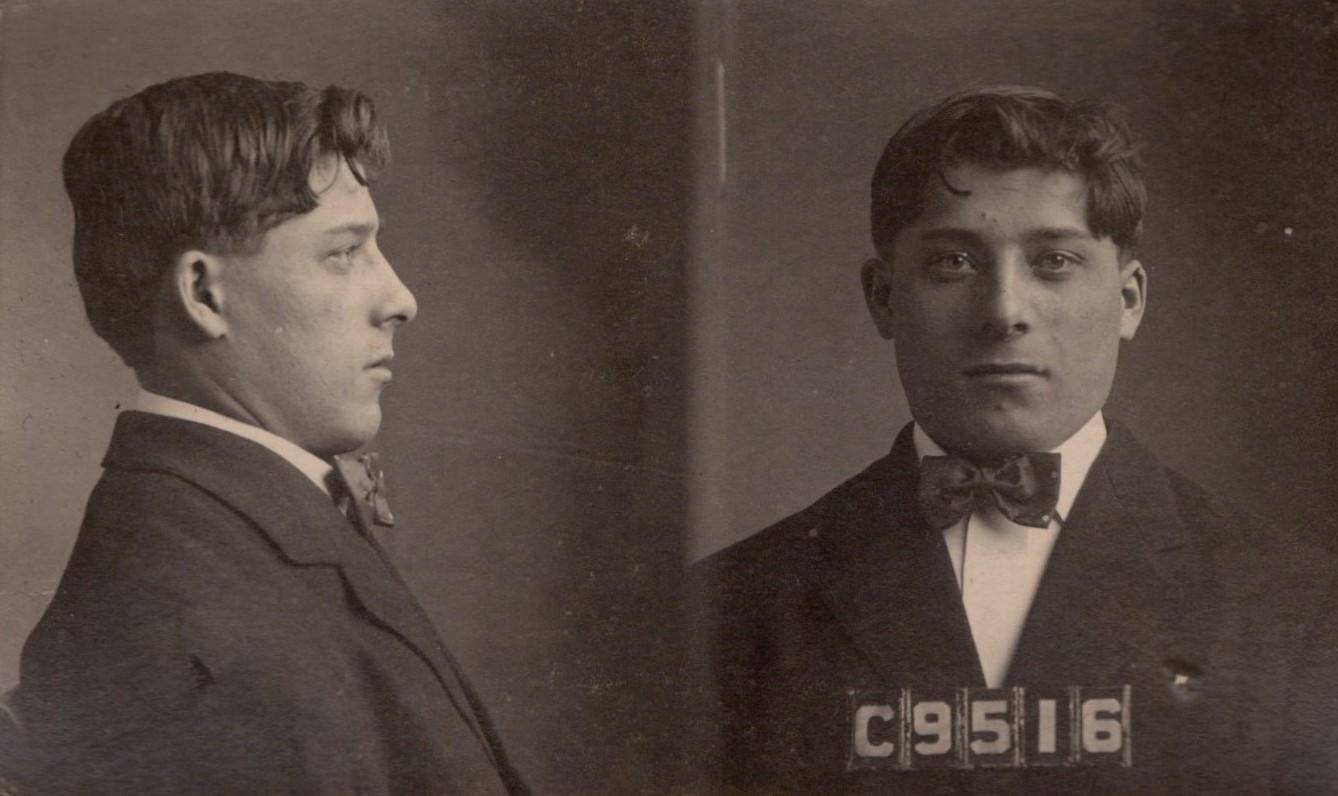
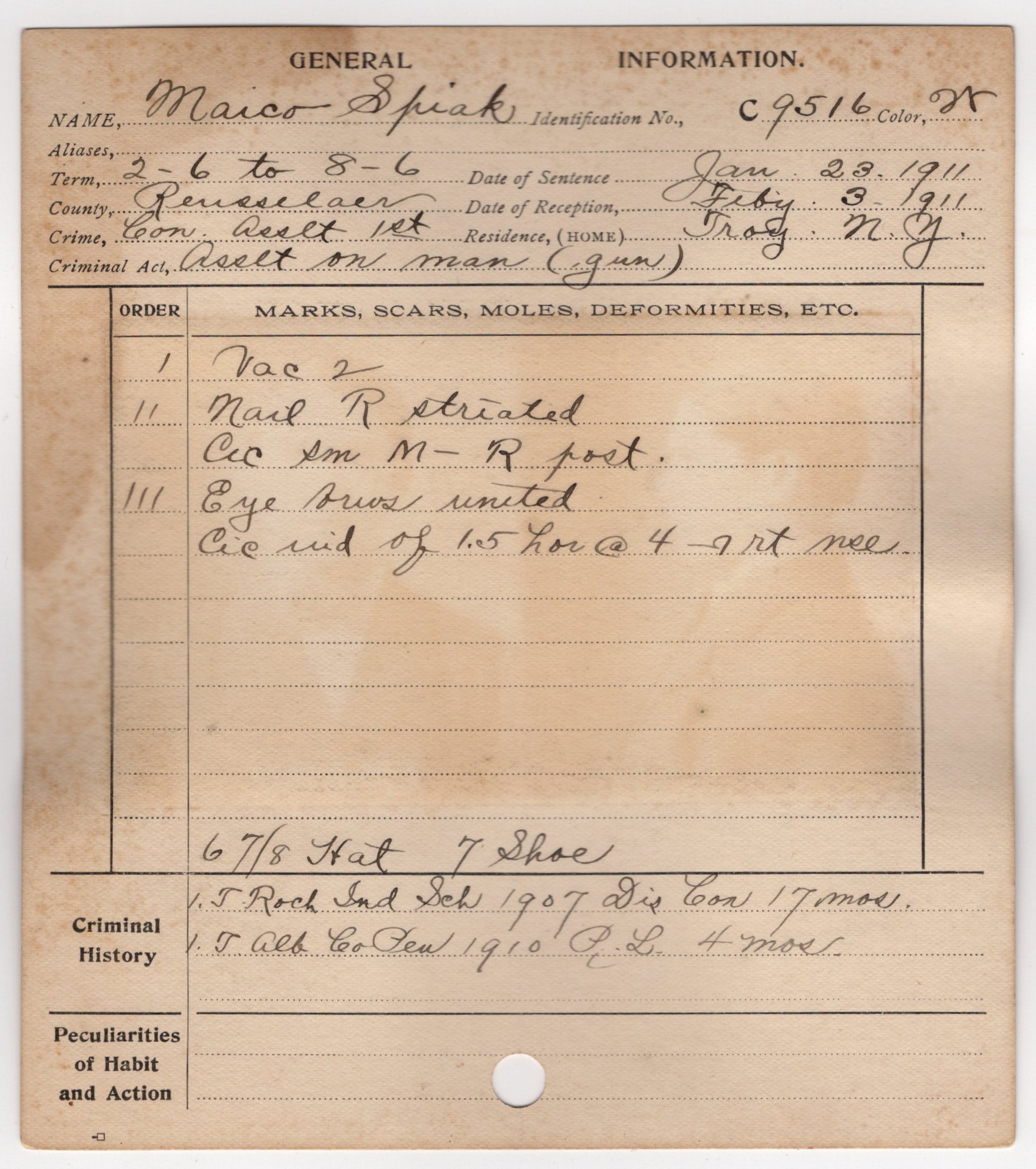
This original New York State Prison Department Bureau of Identification mugshot card documents inmate Marco Spiak, prisoner number C9516, photographed and examined in 1911. The card features the classic dual-view mugshot format—profile and frontal portraits—paired with extensive Bertillon-era anthropometric measurements, making it a particularly information-rich and visually compelling early criminal identification record. Spiak is shown wearing a dark suit and bow tie, lending the images a striking contrast between formal appearance and institutional context. His identification number C9516 is clearly visible on the frontal image, anchoring the photograph firmly within the New York State prison system. Recorded measurements and identifiers include: his height (5’4.5″), his weight (137.5 lbs), and race (white). Recorded measurements were relied upon because finger-printing was not in wide use at the time that this mug show created. Spiak was from Troy, New York (Rensselaer County). He was sentenced in 1911 for felony assault in the first degree (assault on a man with a gun). He was sentenced to a minimum of 2 years, 6months to a maximum of 8 years and six months. Spiak was no stranger to the criminal justice system. In 1907 he was sentenced in Rochester, New York for 17 months and in 1910 he was sentenced in Albany, New York for 4 months. Spiak was a recidivist (repeat offender). SOLD
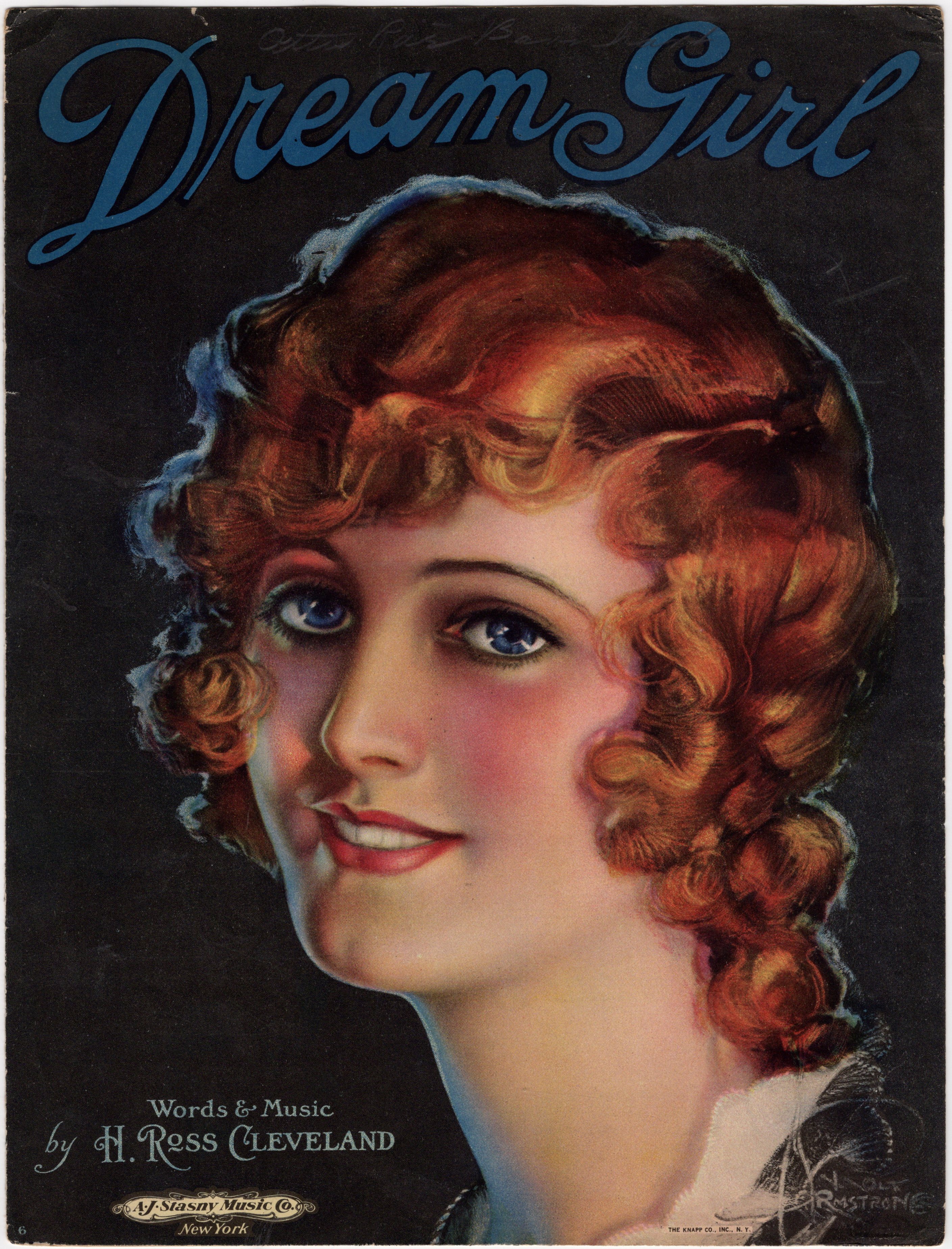
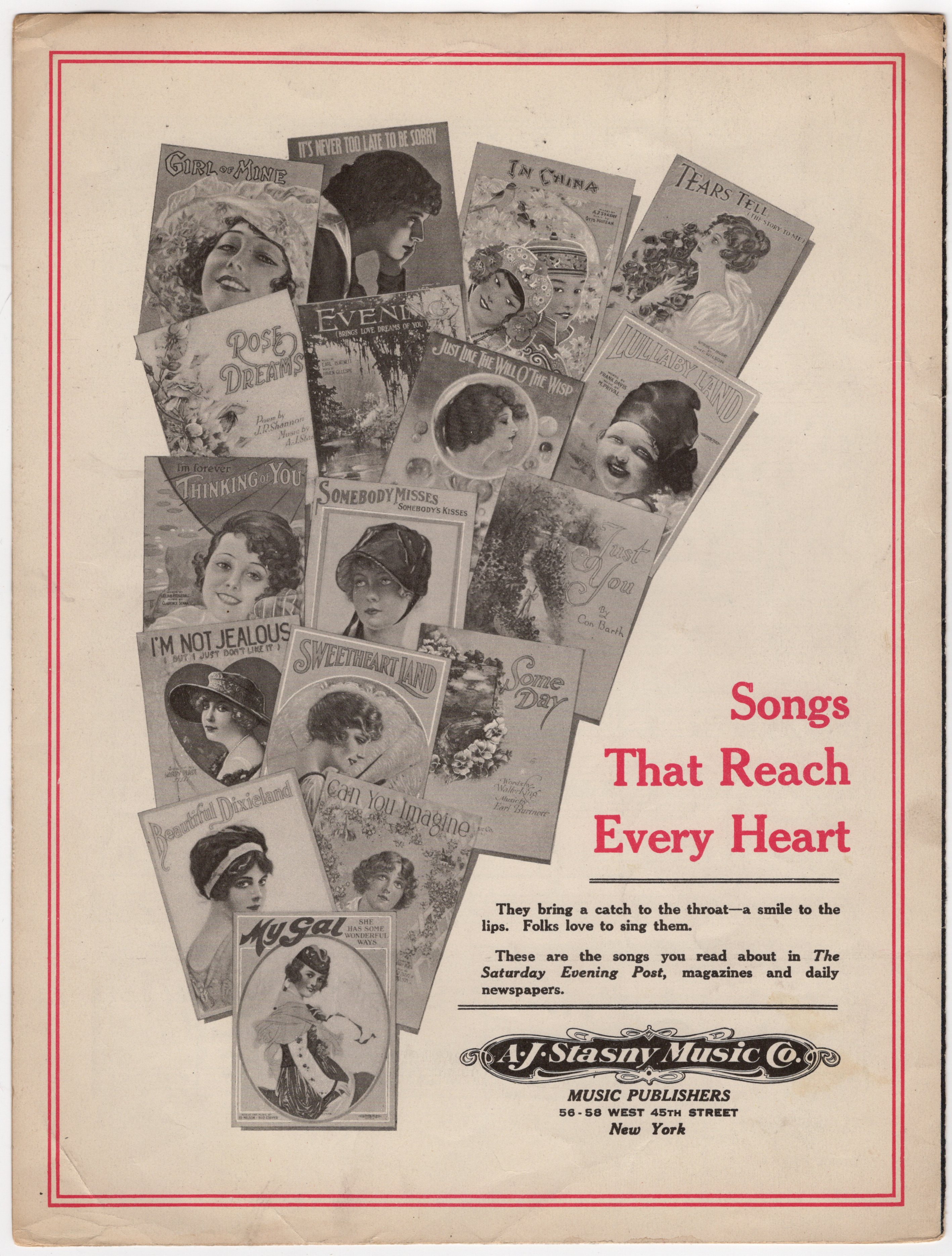
This striking vintage sheet music for “Dream Girl” features words and music by H. Ross Cleveland and was published by the A.J. Stasny Music Company of New York, a prominent Tin Pan Alley firm known for producing visually appealing and widely distributed popular music during the early 20th century. The cover is the real standout—an exquisitely rendered portrait of a young woman with glowing skin, softly curled hair, and vivid, expressive eyes. The cover was created by Rolf Armstrong, one of the most celebrated American illustrators of the period. Armstrong was renowned for his idealized, glamorous female portraits—often referred to as “American Beauties”—and his work helped define the look of magazine covers and advertising art in the 1910s and 1920s. H. Ross Cleveland wrote the words and music for “Dream Girl”. He was one of the many composers working during the Tin Pan Alley era, contributing songs meant for home performance and popular entertainment. “Dream Girl” fits squarely into the sentimental popular song / ballad genre, centered on themes of romance and idealized love. This sheet music captures the spirit of its time beautifully. Between the evocative title, the romantic theme, and the Armstrong artwork, it is highly displayable. In regard to condition, this sheet music is in very good condition. I scanned every page so you can judge for yourself (see scans).
This Sheet Music is available for purchase at my store, The History Peddler, for $18.00 or best offer.
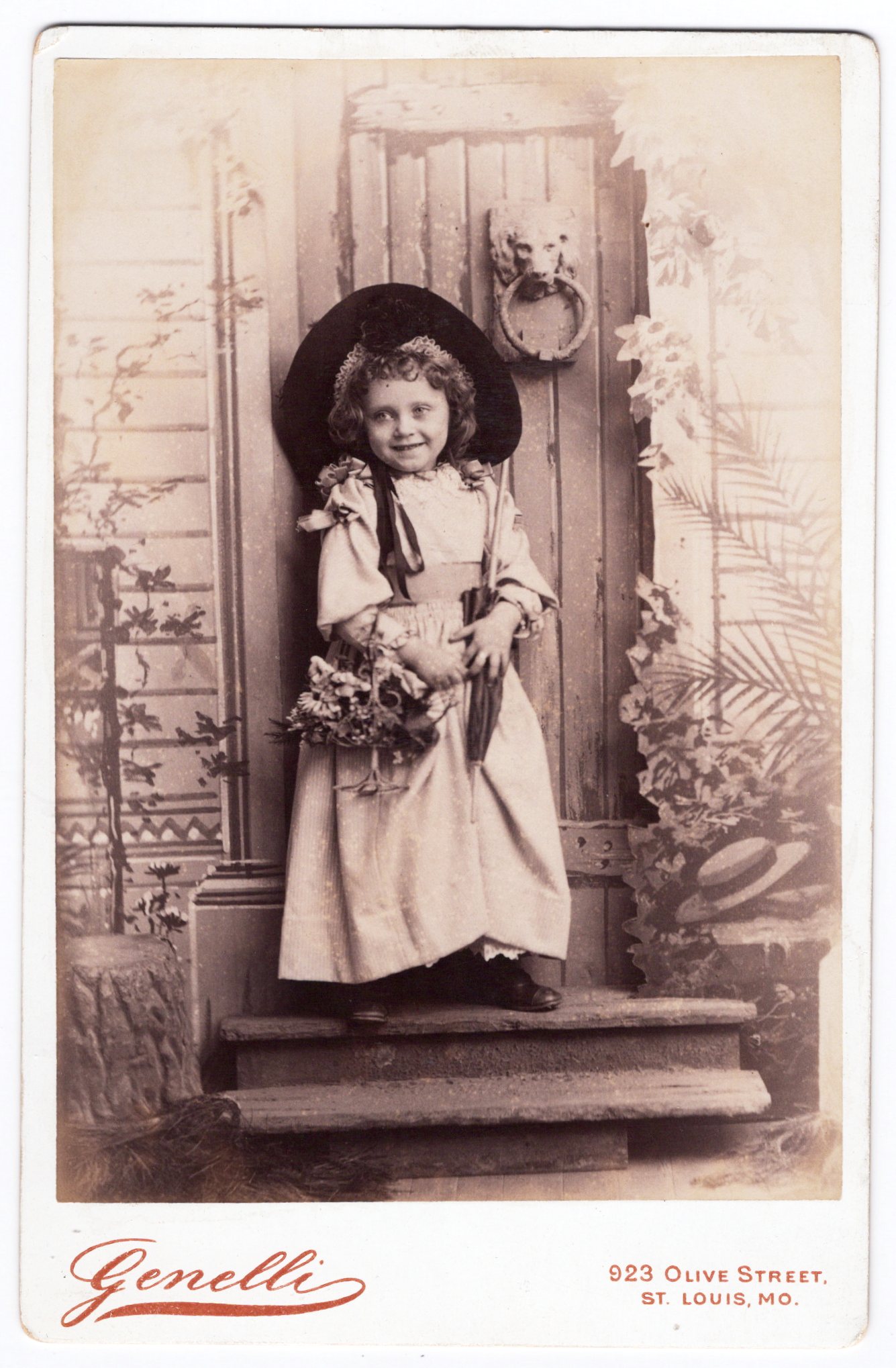
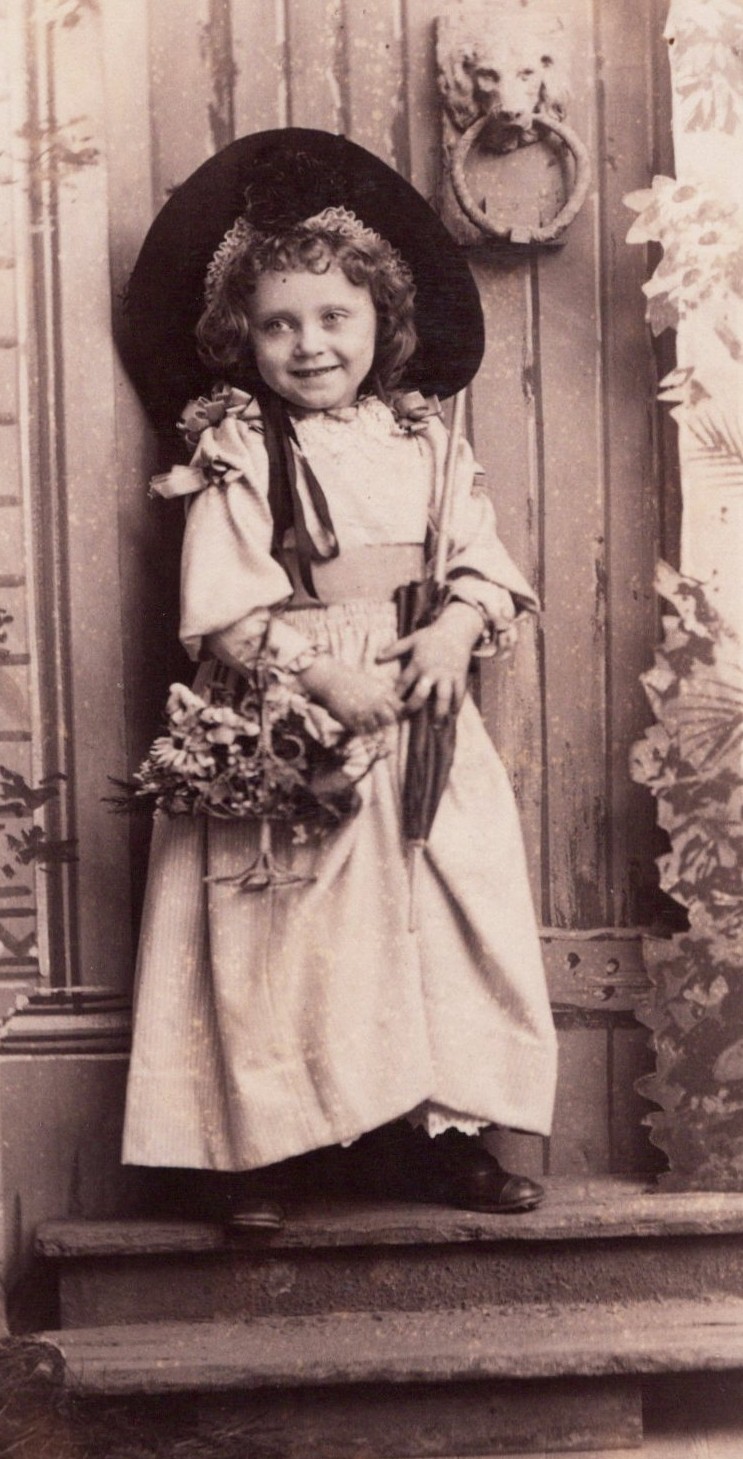
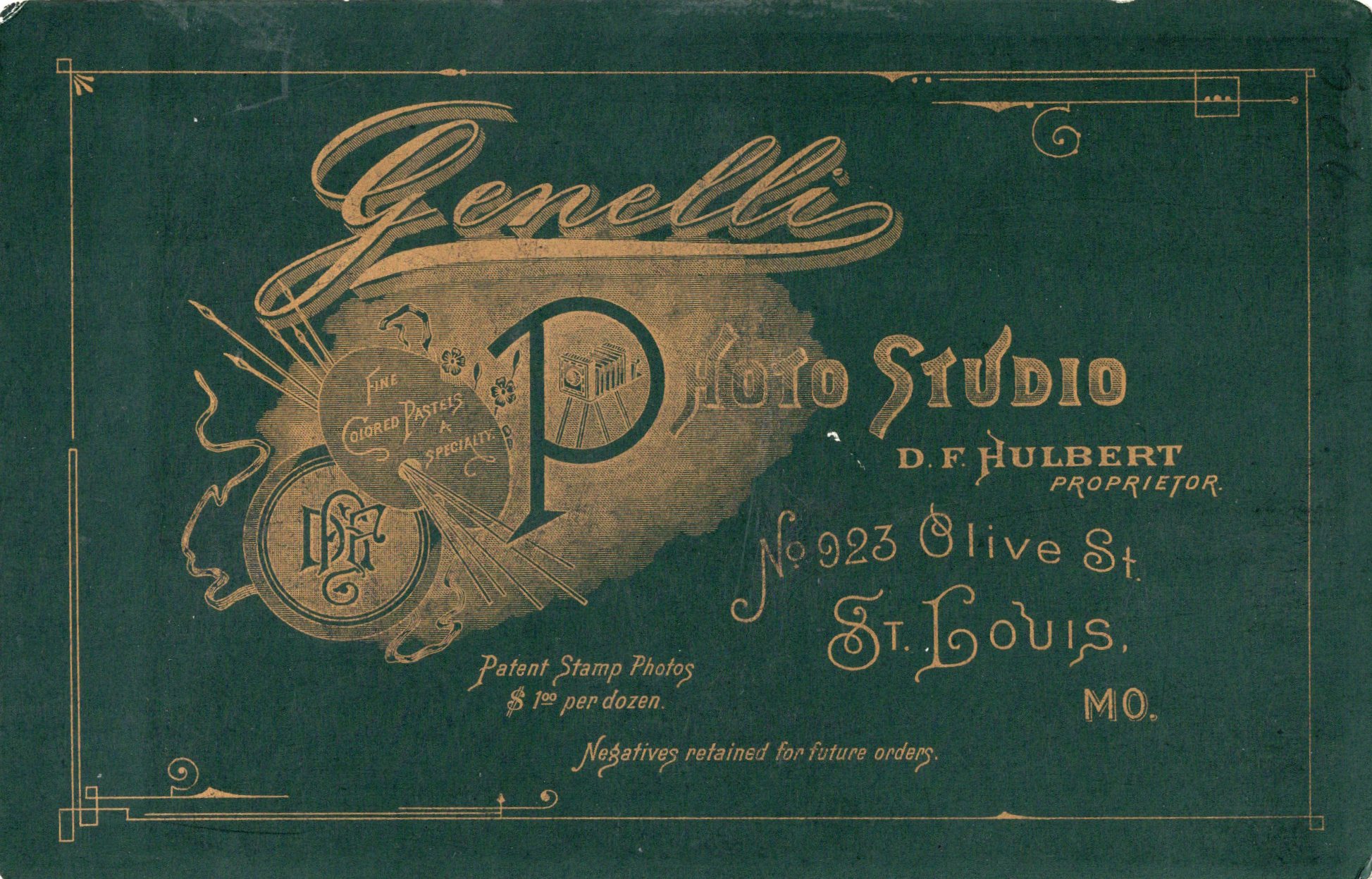
This enchanting Cabinet Card portrait features a young girl standing on the stoop of a painted, theatrical backdrop that resembles a rustic doorway framed with foliage. Her cheerful pose and sweet, innocent smile evoke a sense of charm and childhood delight. The child appears to be around six or seven years old and is dressed in a carefully arranged costume reminiscent of a flower girl or a young performer. She wears a pinafore-style dress over a puff-sleeved blouse, complete with ruffled lace at the cuffs and collar. A wide ribbon is tied around her waist and shoulders, adding a touch of formality to her ensemble. The crowning feature of her outfit is a large, dramatic bonnet, trimmed in lace and adorned with a dark pom or feather on top. Her curly hair peeks out from beneath the hat, adding to her endearing appearance. In her arms, she clutches a parasol and a small basket overflowing with artificial flowers, suggesting a staged studio scenario—perhaps intended to capture a seasonal or pastoral theme. Her expression is one of warmth and genuine amusement, and her body language, slightly leaning, adds a sense of playfulness to the composition. The photograph was taken at the Genelli Photo Studio, located in St. Louis, Missouri. The studio’s name is elegantly printed in red script on the front of the card. On the reverse, the Cabinet Card boasts a visually striking design in metallic gold ink against a rich green background. Though not true gold leaf, the ink emulates a gilded look with reflective, metallic tones that were popular in high-end photographic advertising of the period. The back features decorative scrollwork, artist’s brushes, and a camera motif, promoting the studio’s specialty: “Fine Colored Pastels a Specialty.” It also lists D. F. Hulbert as the proprietor. Hulbert was an active photographer in St. Louis during the late 19th century. (SOLD)
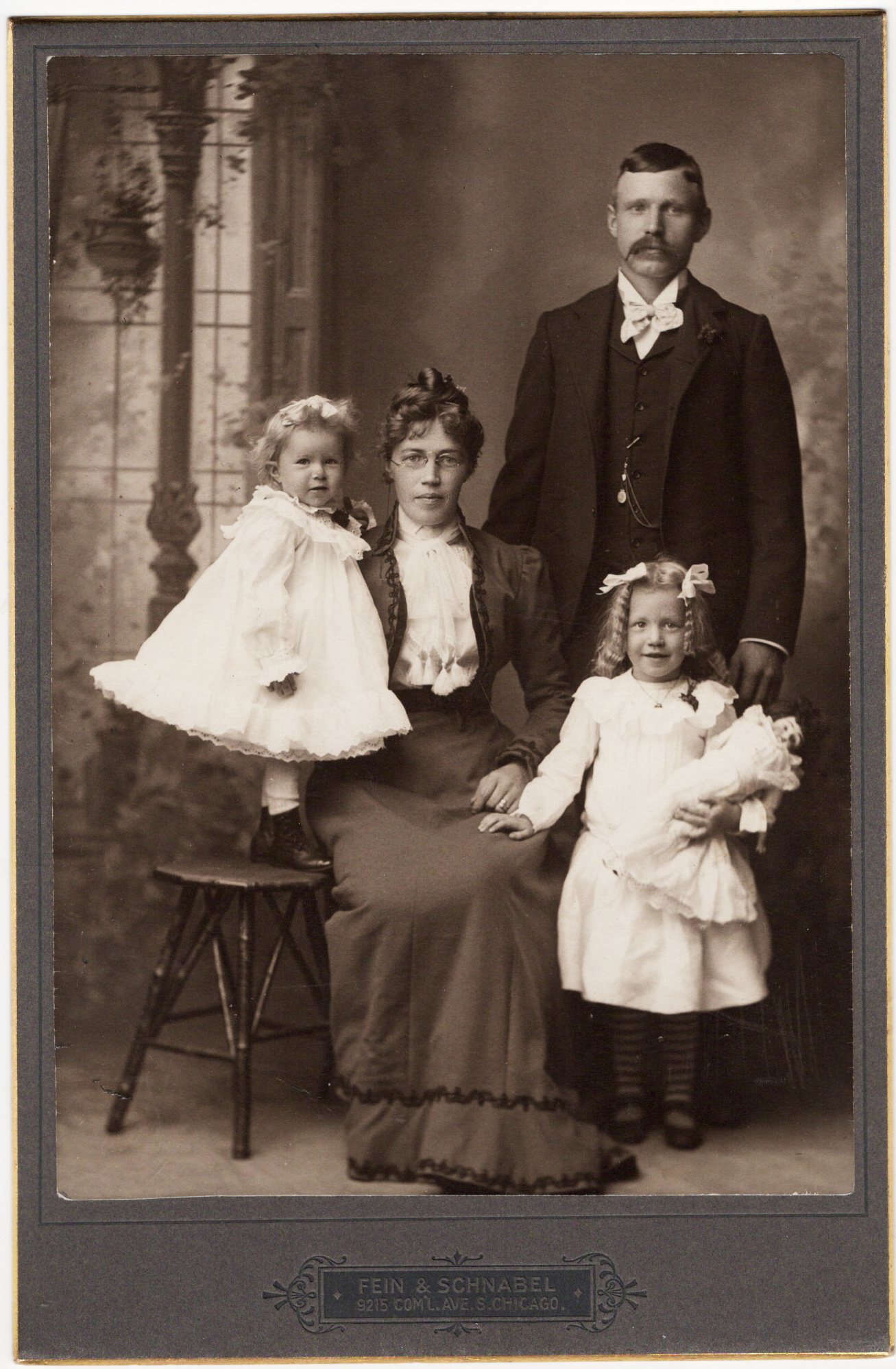
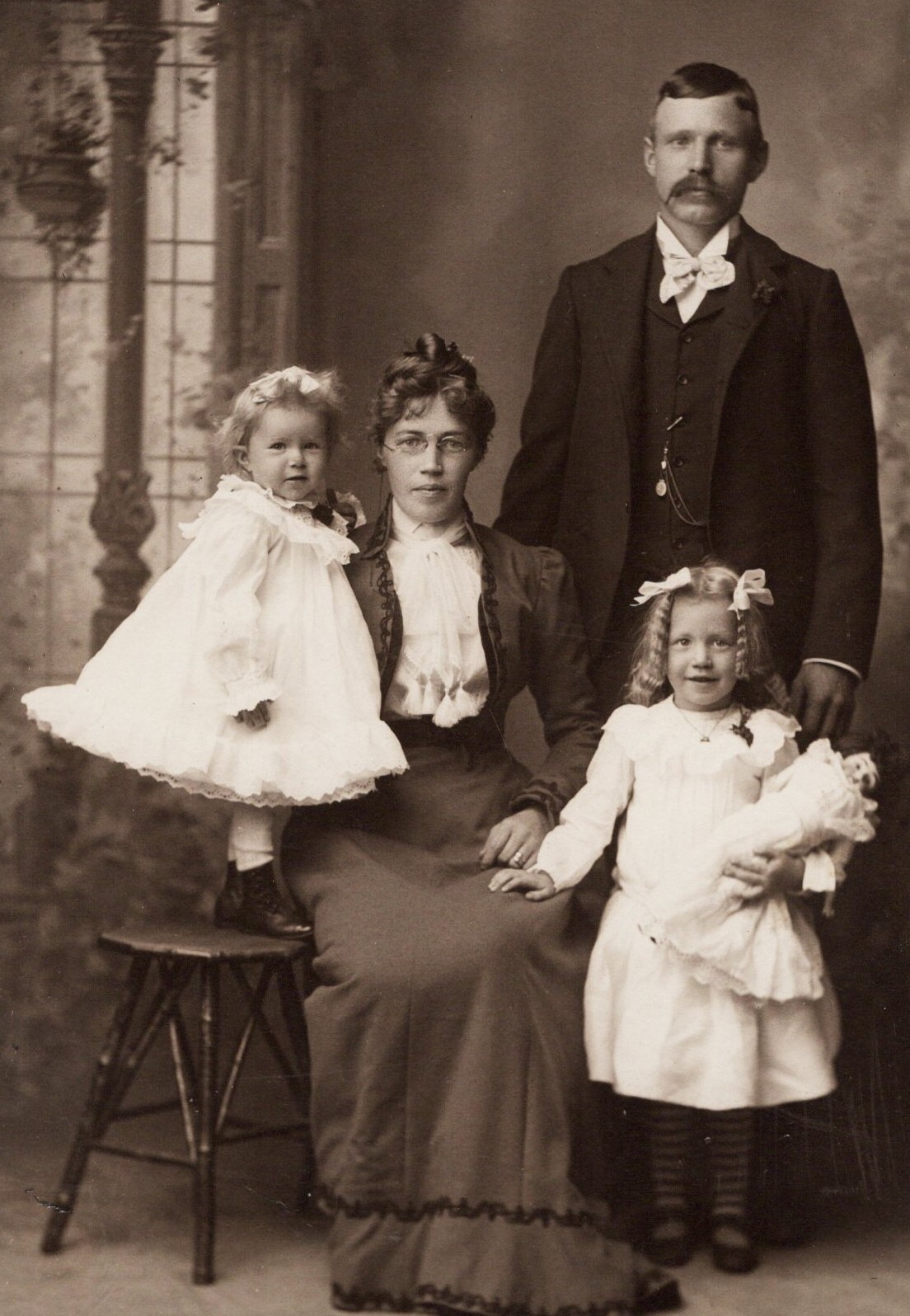
This is a beautiful original cabinet card photograph of a family taken at the Fein & Schnabel Studio, locaated in Chicago, Illinois. The studio imprint is elegantly embossed on the card’s lower margin, framed by decorative flourishes. Fein & Schnabel opened their studio at this address in 1897, and they were known for producing finely composed, high-quality portraits of Chicago’s working and middle-class families during the late 19th and early 20th century. The image captures a formal family portrait featuring a mother, father, and their two young daughters. The father stands proudly at the rear, wearing a dark three-piece suit with vest, bow tie, and watch chain. His mustache and upright stance convey a strong, confident presence. Seated at the center, the mother wears a tailored dark skirt and lighter blouse with ruffled trim, her hair neatly pinned up and spectacles perched at the bridge of her nose. On her lap is the younger daughter, posed on a stool, dressed in a flowing white dress with lace trim and high-button boots. Standing at her side is the older daughter, also in a white dress with ribbons in her hair. She holds an exquisite bisque-head doll in a white dress, complete with detailed shoes and curls. The backdrop is a classic studio setting, with architectural elements and hanging plants painted to create the impression of a genteel interior space. The overall composition conveys formality but also a sense of family closeness, particularly through the subtle hand placements and the doll prop, which would have been a prized possession of the era. The cabinet card is in excellent condition. A standout feature is its beveled gold edges, which remain remarkably well-preserved and add a refined presentation to the mount. The photograph itself is crisp and clear, with excellent contrast and detail—especially in the children’s dresses and facial expressions. The reverse of the card is blank aside from very light penciled notes.(SOLD)
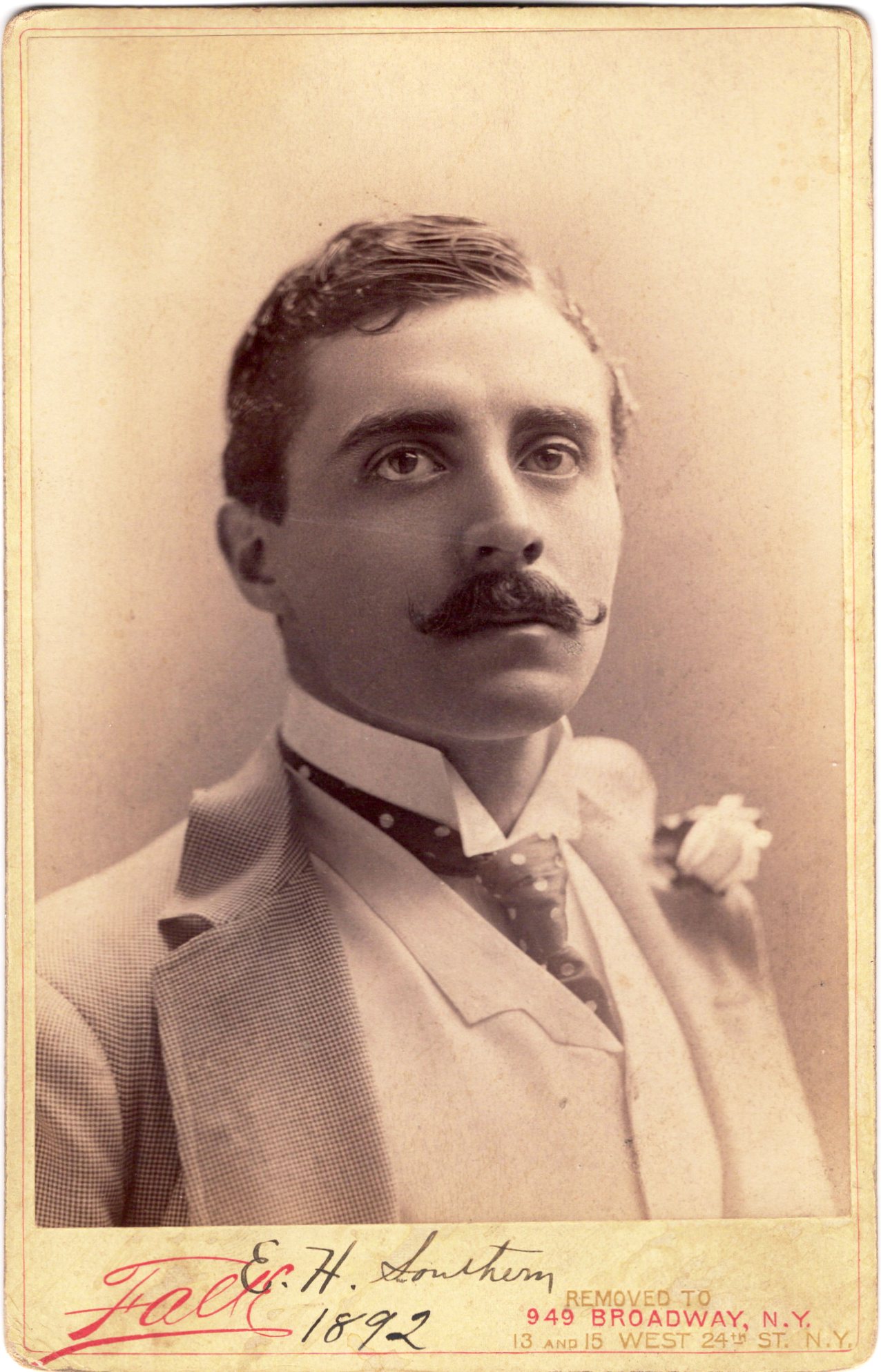
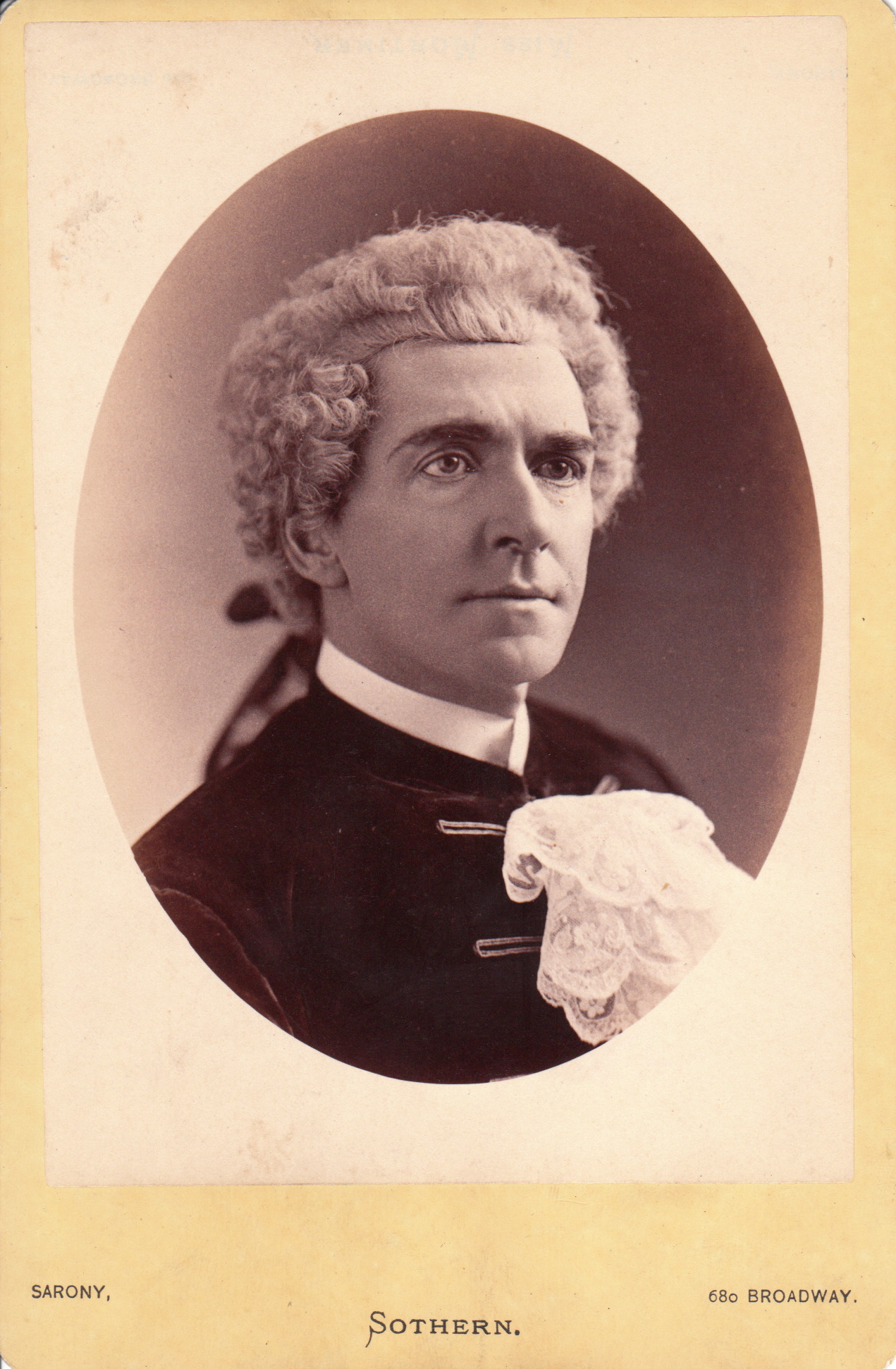
Sothern was known for his comic roles in Great Britain and America. He is often associated with his role in “Our American Cousin (1858 ). Sothern complained to his friend, actor Joseph Jefferson, about the smallness of his part in that play. Joseph Jefferson responded with the classic line “There are no small roles, only small actors”. Incidentally, “Our American Cousin” was the play that President Abraham Lincoln was watching when he was assassinated. He began acting as an amateur in 1848. He made his debut in America in 1852. In 1854 he joined the company at Wallack’s Theater and in 1856 he became a member of Laura Keene’s company. He gained fame starring in “Camille (1856) at Wallack’s theater. In 1864 he created the title role in Tom Robertson’s “David Garrick” (1864) at the Haymarket Theater. This comic play was about eighteenth century actor and theater manager, David Garrick. Cabinet card 1 photograph captures him in this role in which he had much success. This image was produced by Napoleon Sarony, famed celebrity photographer.
Cabinet Card 2 was taken by celebrity photographer, Benjamin Falk. He operated a studio in New York City. The photograph is dated 1892. SOLD
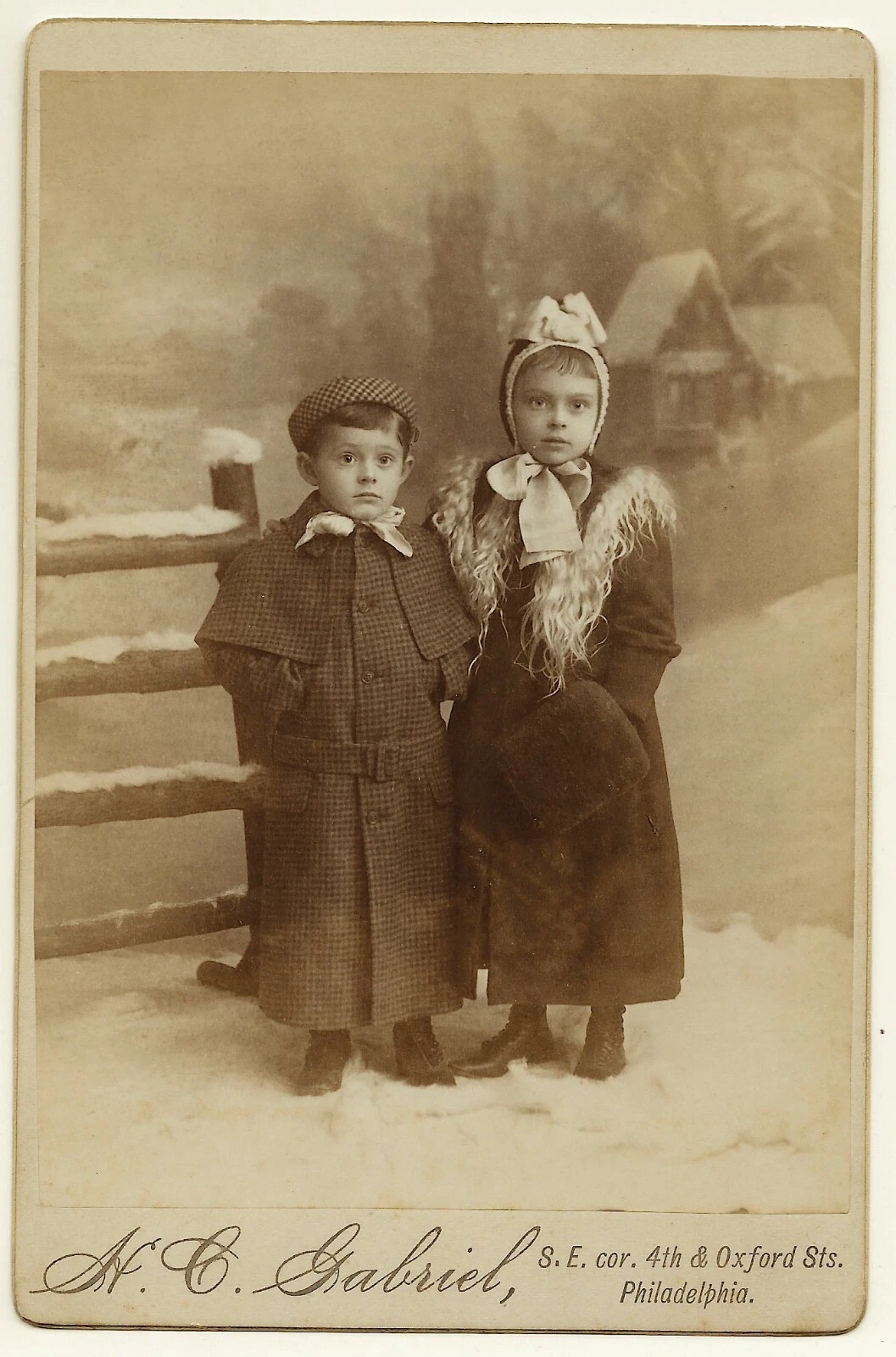
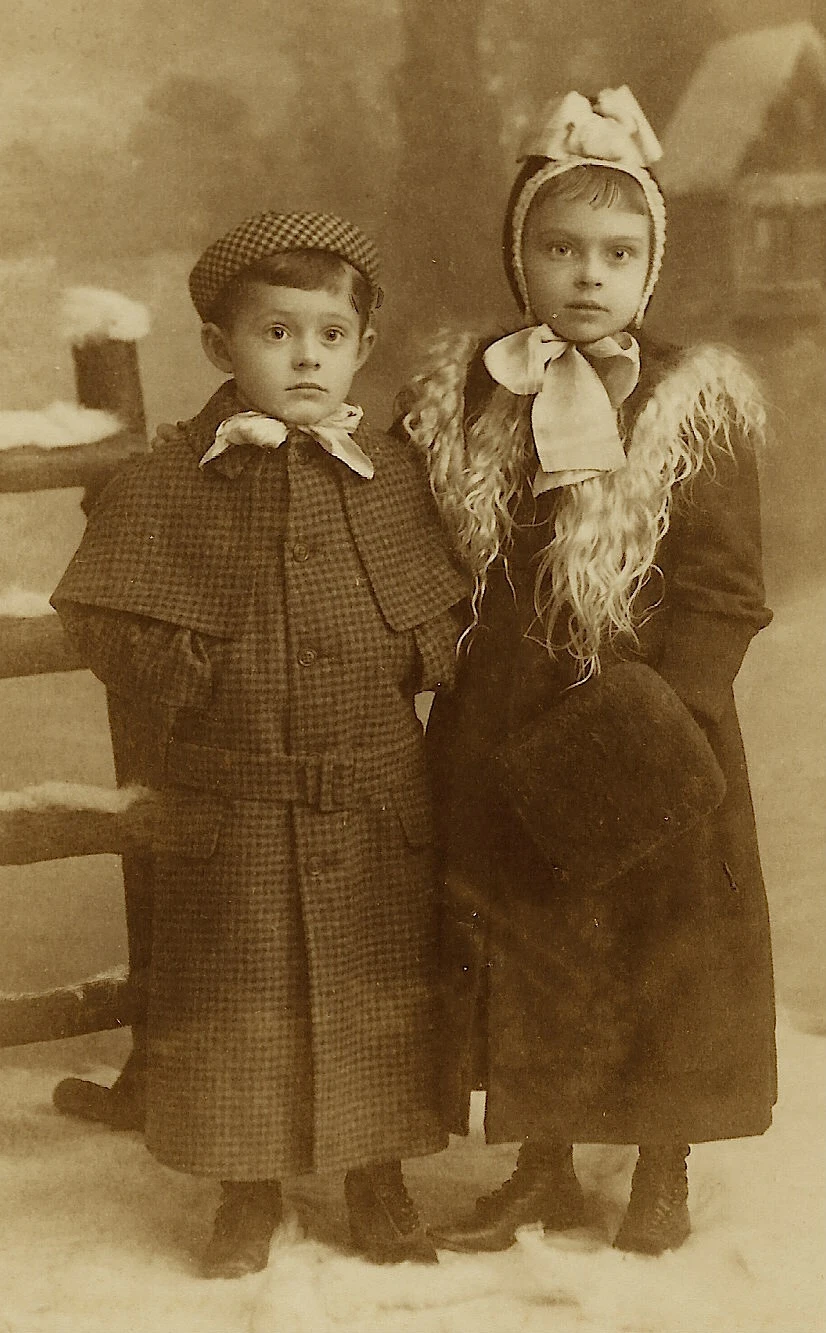
Two very well dressed children pose in their winter coats and hats at the studio of H. C. Gabriel in Philadelphia, Pennsylvania. The children are posed in a faux outdoor scene complete with snow on the ground and snow covered fences. Herman C. Gabriel is noted in the 1900 U. S. census. The census reveals that he was born in Austria in 1833. He was married in 1873 to Johanna Gabriel. He was living with his wife and 22 year-old, American born daughter, Emma. His occupation is listed as “Photographer”. Herman Gabriel is cited in the American Photographer (1916) for winning second place in a photography competition. This Cabinet Card portrait is in very good condition and has excellent clarity (see scans).
This Cabinet Card is available for purchase at my store, The History Peddler, for $66.00 or best offer
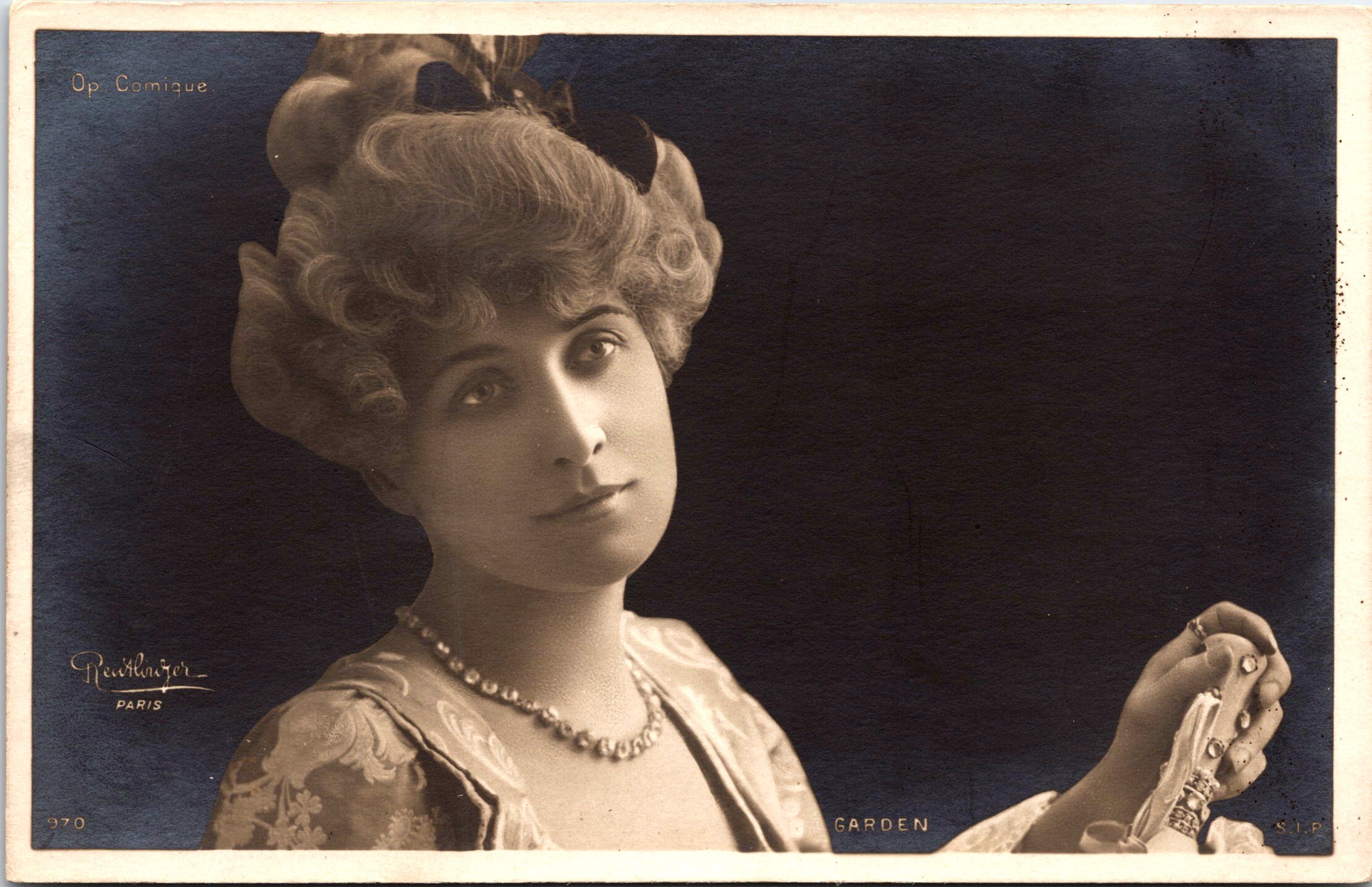
This vintage real photo postcard features the celebrated soprano Mary Garden (1874–1967), one of the most renowned opera singers of the early 20th century. The card was photographed by Reutlinger of Paris, one of the premier portrait studios of the Belle Époque, known for capturing glamorous and artistic images of actors, actresses, dancers, and opera stars. The postcard is numbered 970 and published by S.I.P. (Société Industrielle de Photographie), a company that issued countless high-quality portrait postcards of stage and musical personalities. The card is captioned “Op Comique”, referring to the Opéra-Comiquein Paris, one of the city’s most important opera houses. Founded in 1714, the Opéra-Comique specialized in works that combined spoken dialogue with music, and it played a central role in shaping French opera tradition. Mary Garden was strongly associated with this venue, as it was here that she established her reputation as a daring and charismatic performer. Mary Garden, born in Scotland in 1874 and raised in the United States, became a dominant figure in French opera. She was especially famous for her collaborations with composer Claude Debussy, creating the role of Mélisande in the opera Pelléas et Mélisande in 1902. Known for her expressive acting, striking beauty, and captivating stage presence, Garden became not only a star of the Opéra-Comique but also a celebrated figure on the international opera stage. Later in her career, she brought her fame to the United States, where she sang at the Chicago Opera and served as its director for a time. She was remembered as much for her dramatic interpretations and independence as for her voice. In this portrait, Garden gazes softly at the camera, her hair elegantly coiffed and adorned with a ribbon, while she wears a shimmering gown and pearl necklace. She holds a fan or handkerchief delicately in her hand, displaying rings that add to her aura of sophistication. The subdued background and rich tonal quality of the Reutlinger photograph highlight her poise and timeless beauty. SOLD
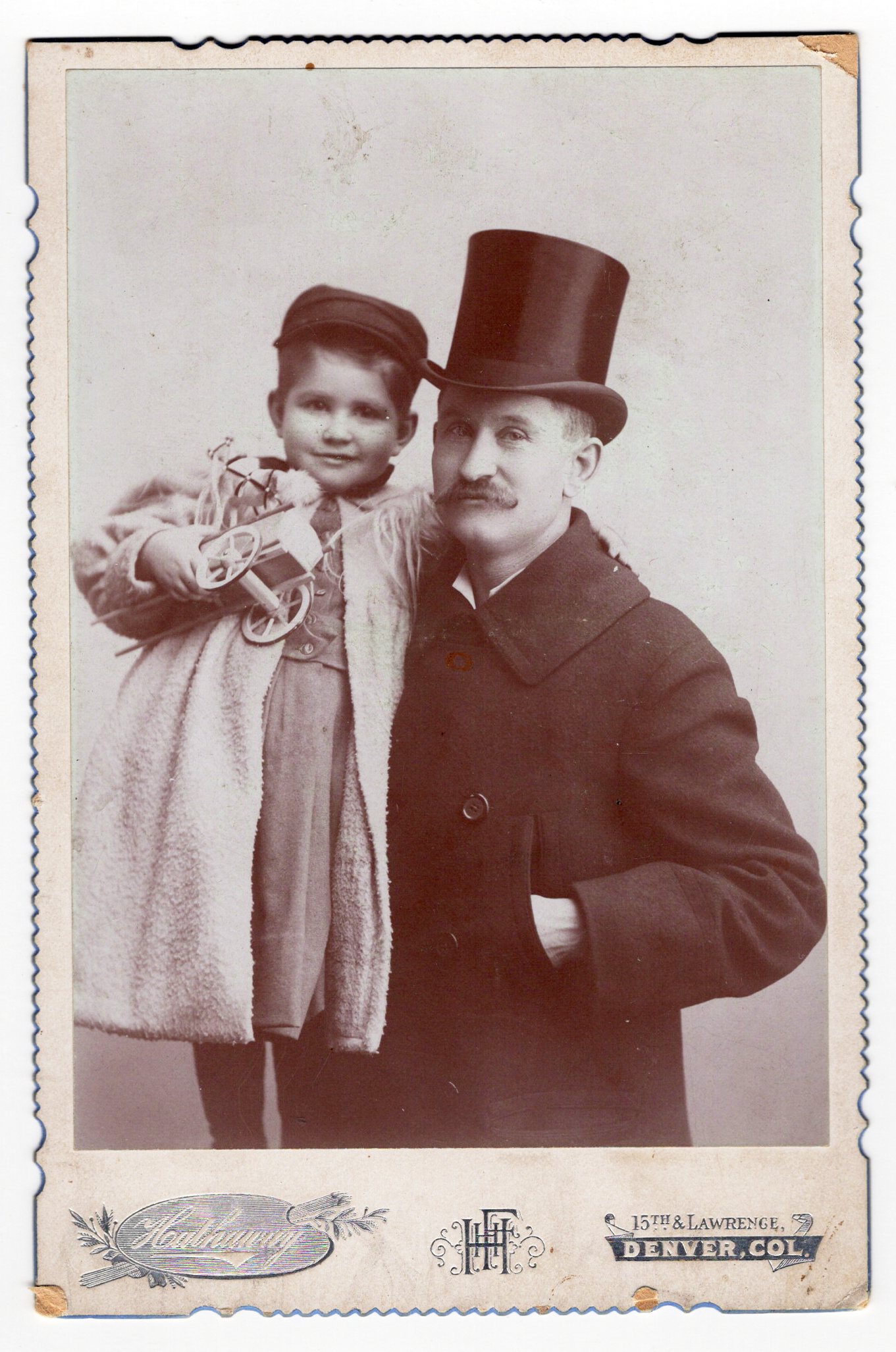
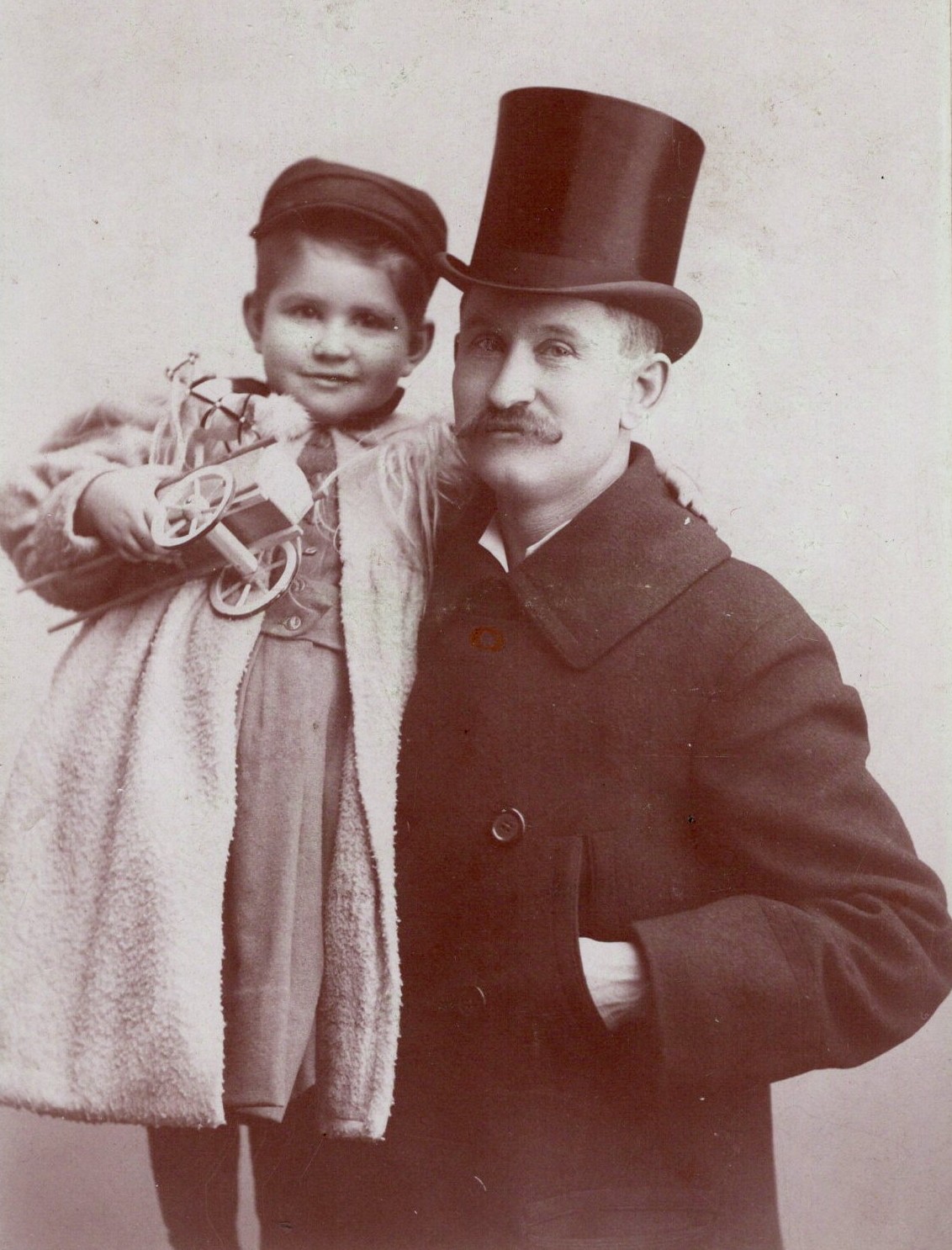
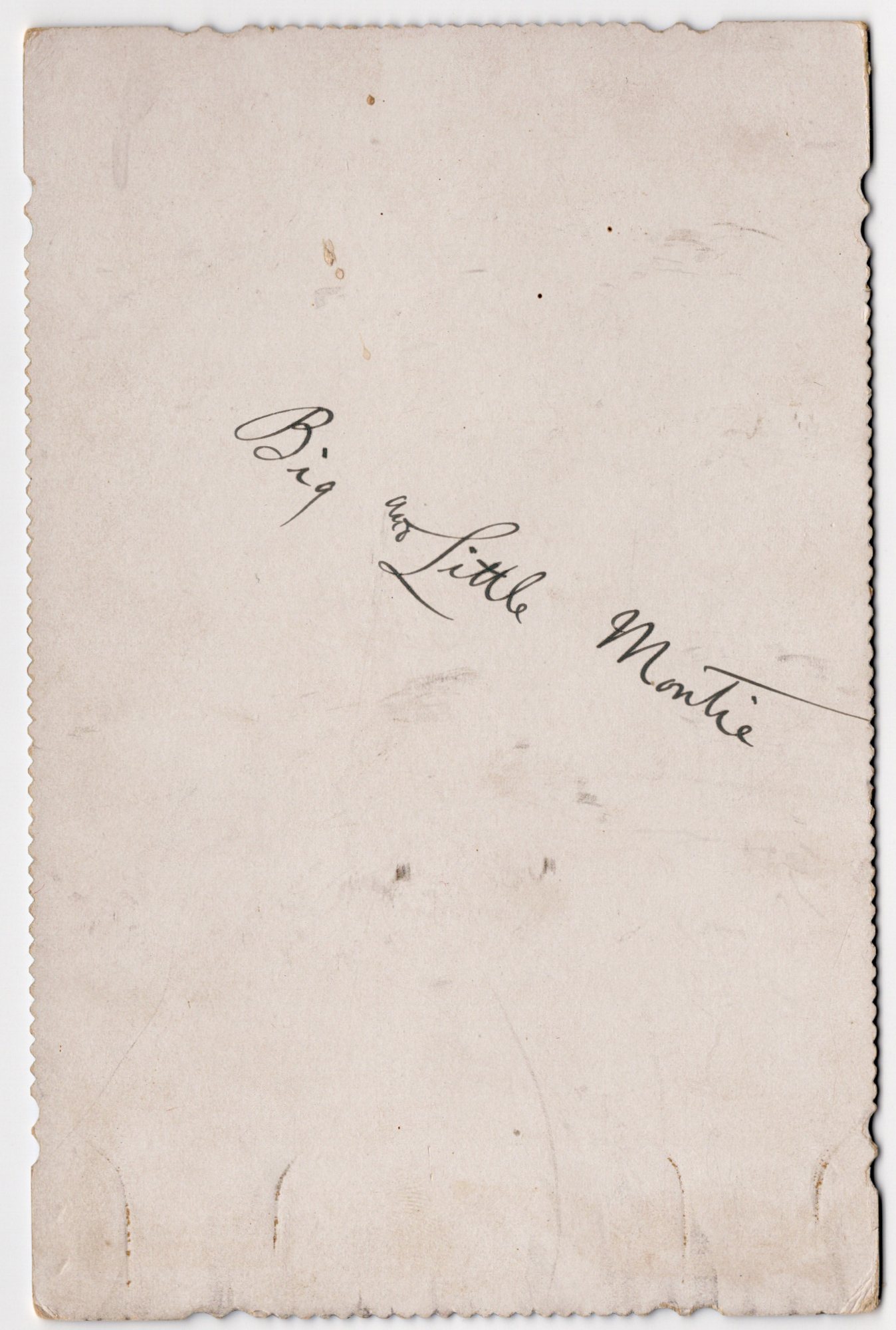
This cabinet card photograph, produced by the Hathaway studio located at 15th & Lawrence in Denver, Colorado, portrays a man and a young child, affectionately referred to as “Big Montie and Little Montie” (as inscribed on the reverse of the card). The man, likely “Big Montie,” exudes confidence and sophistication. He wears a dark overcoat with broad lapels and a top hat, giving him a distinguished and formal appearance. His neatly groomed mustache complements his poised expression, suggesting an air of dignity. The child, “Little Montie,” is bundled in a luxurious, fur-lined coat and a stylish cap, radiating charm and warmth. Their close pose and cheerful expressions convey a sense of familial love and pride. “Little Montie” is holding a charming toy—a small wooden or metal carriage with wheels, likely a doll-sized pram. This prop adds a playful and endearing element to the portrait, The scalloped edges of the card add a decorative and elegant touch. The photo features a neutral studio backdrop, keeping the focus entirely on the subjects. This photograph was taken at the Hathaway studio in Denver, Colorado. (SOLD)
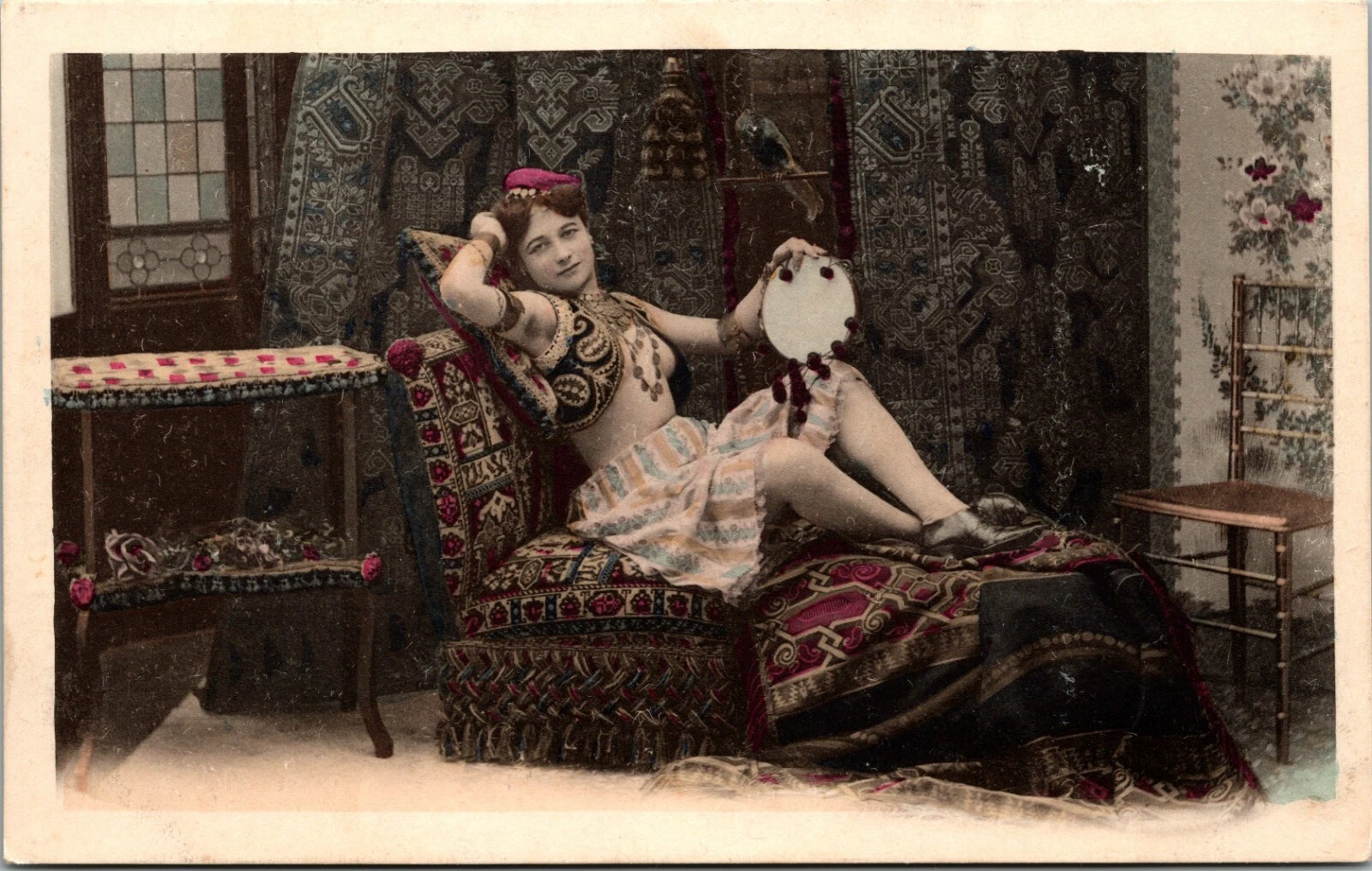
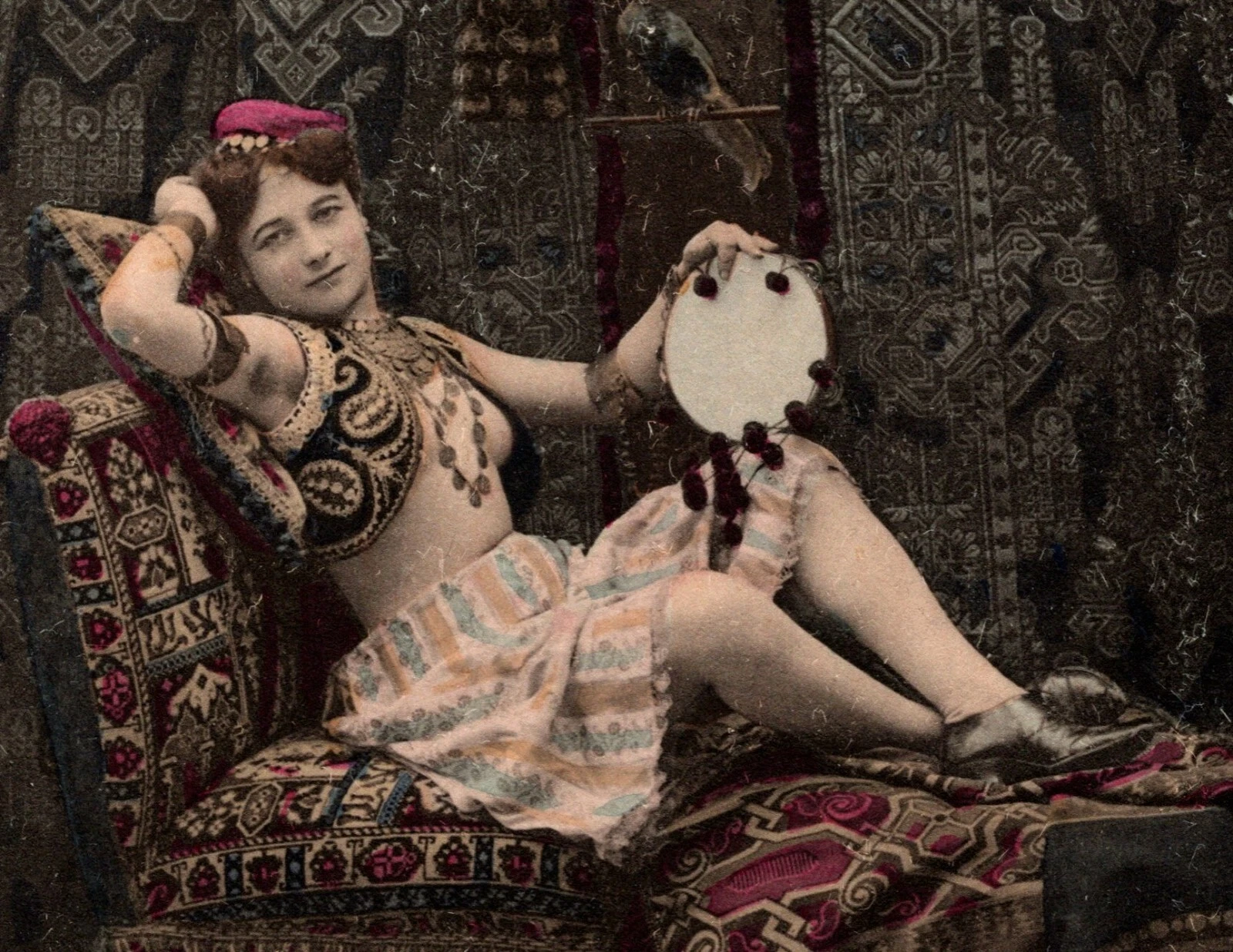
This vintage postcard features an alluring young woman sitting on a chair and resting her feet on a small table. The woman is an Oriental Dancer, sometimes referred to as a Belly Dancer. She is wearing a risque costume and holding a tambourine. She is in a room decorated with oriental rugs. Note the parrot on a perch behind the dancer. Oriental dance is one of the oldest dance styles in the world. It’s origins are not clear. Centuries ago women did ritual dances (oriental dancing) in Turkey and Saudi Arabia. Dancers in ancient Greece and Rome did their version of Oriental dancing which included hip and pelvic gyrations. It is thought that Oriental dancing may have been born in Egypt during ancient times. This Arabic expressive dancing varies in costume and dance style. depending on country and region. The Egyptian style is most well known around the world. This is an undivided postcard of French origin. The publisher is unknown. This vintage postcard is in very good condition (see scans).
This vintage Postcard is available for purchase at my store, The History Peddler, for $36.00 or best offer.


 CABINET CARD 1