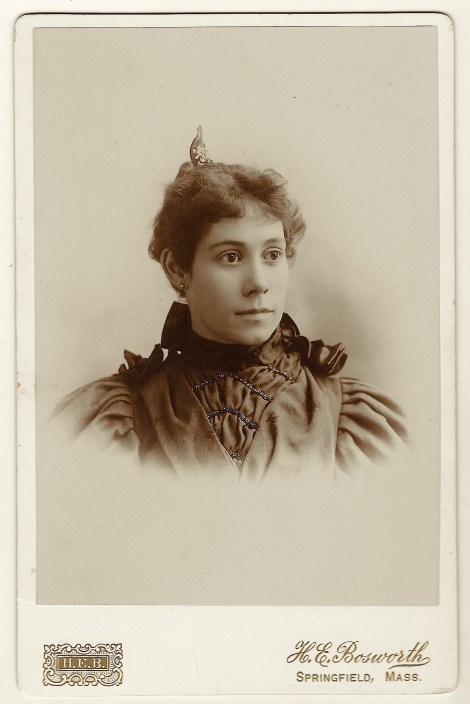
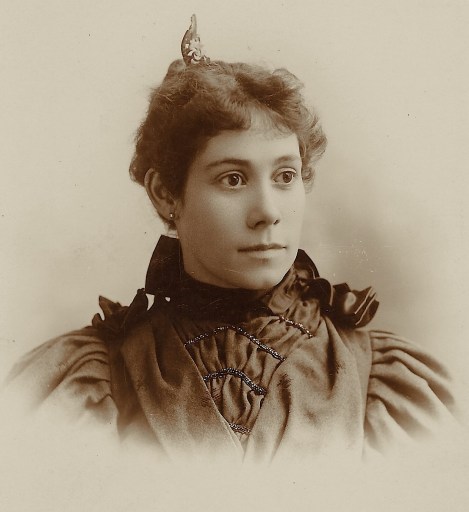
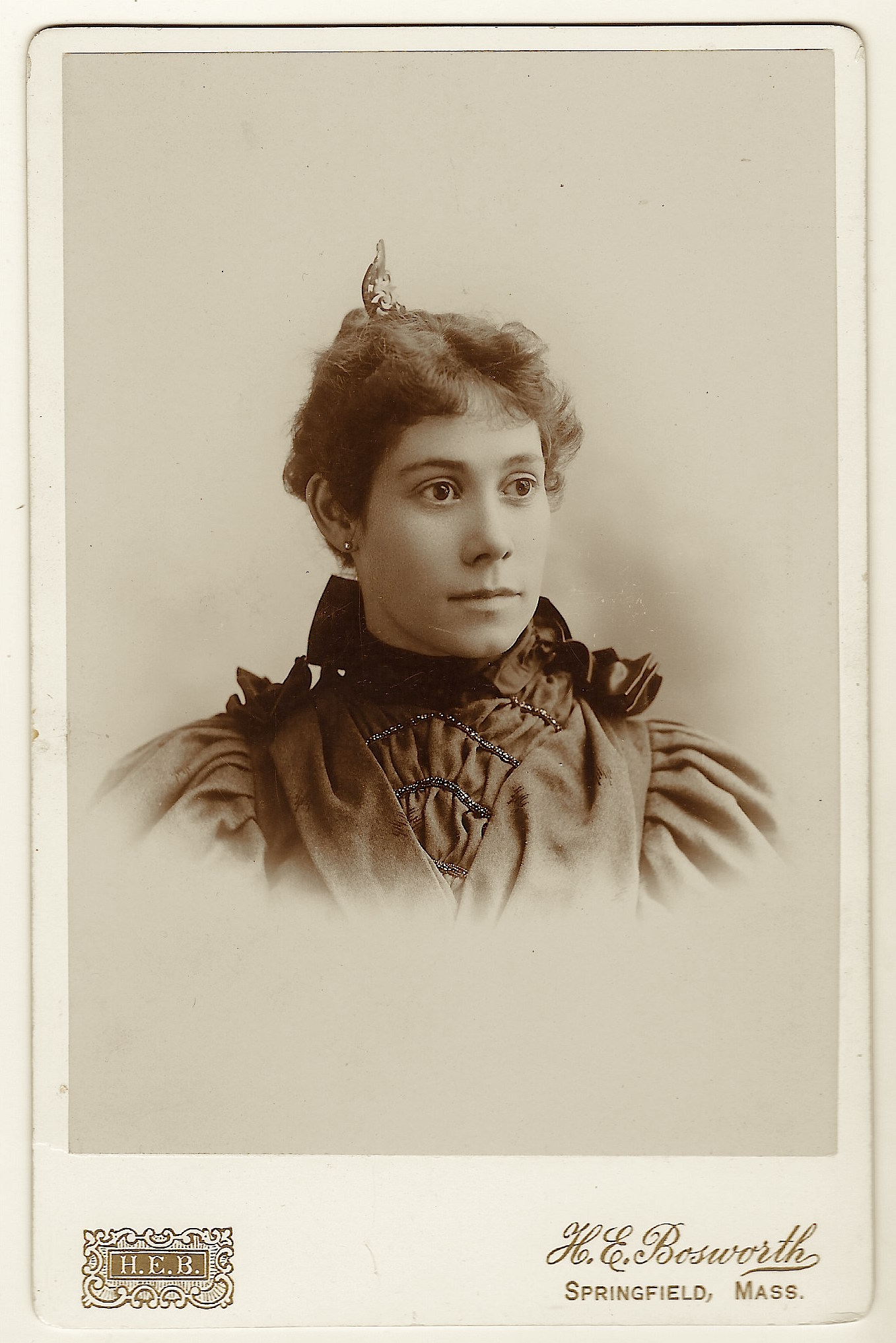
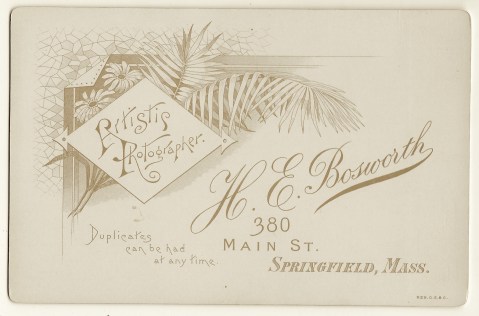
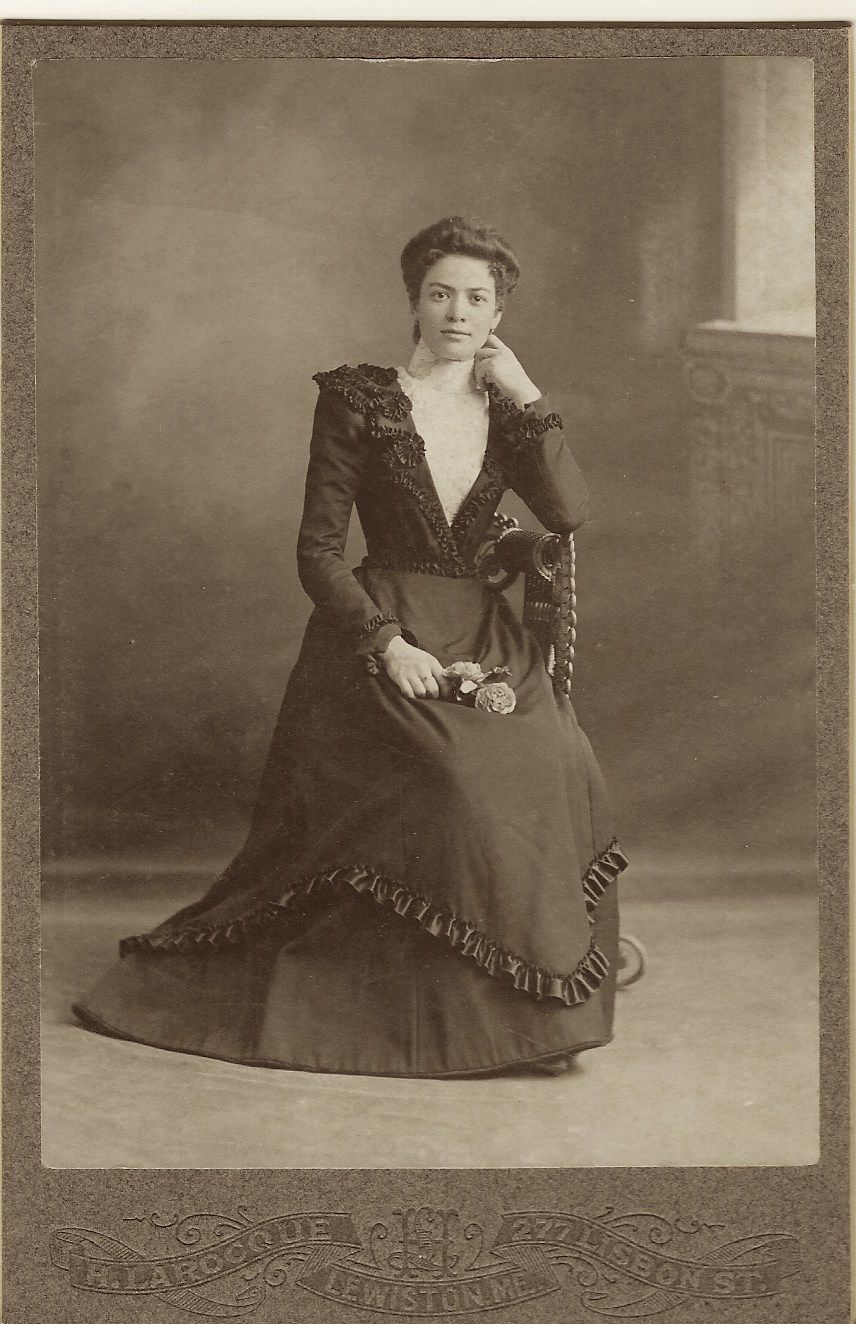
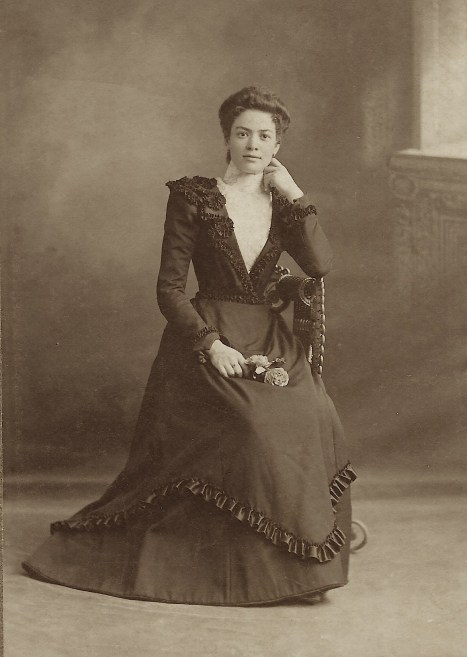
 A pretty young woman poses for her portrait at a photo studio in Springfield, Massachusetts. The photographer of this cabinet card photograph is H. E. Bosworth. The subject of this photograph appears to be in her teenage years or slightly older. She has beautiful eyes. Note her hair ornament. Langdon Road reports that in 1899, Bosworth’s studio was known as Bosworth & Murphy. Research reveals that Bosworth was very active in his state’s Photography Association. This cabinet card portrait is in excellent condition and has excellent clarity (see scans).
Buy this original Cabinet Card Photograph (includes shipping within the US) #2680
To purchase this item, click on the Pay with PayPal button below
$28.50
Buy this original Cabinet Card Photograph (includes international shipping outside the US) #2680
To purchase this item, click on the Pay with PayPal button below
$36.50

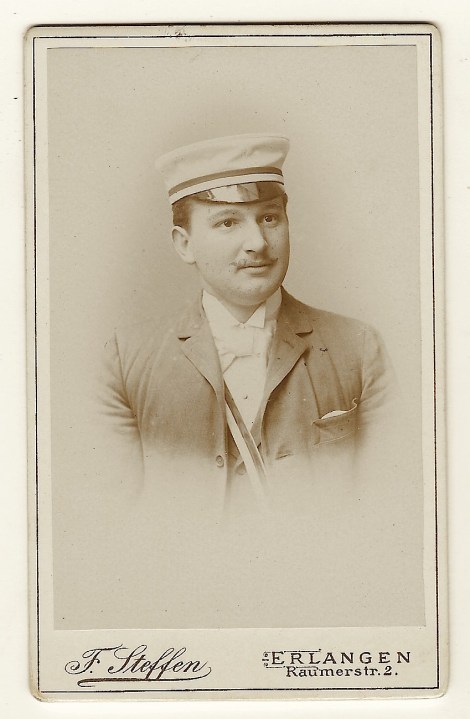
 This carte de visite features a gentleman in some sort of uniform which includes a cap and sash. He appears very “official”. Is he a military veteran? Is he a train conductor or a law enforcement officer? The photographer of this image is F. Steffen. He operated a studio in Erlangen, Germany. The city is located in the Bavarian region of Germany. The Cabinet Card Gallery has another photograph by Steffen in it’s collection. You may view the image by placing the word “Steffen” in this site’s search box. (SOLD)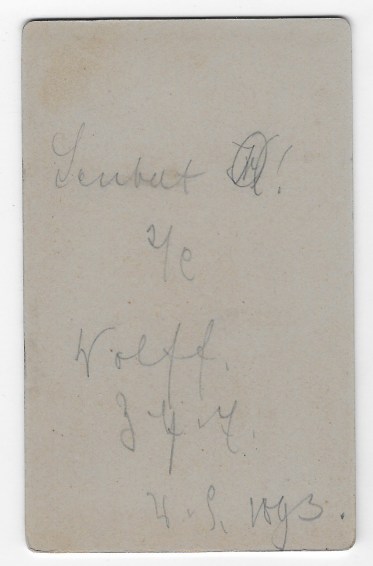
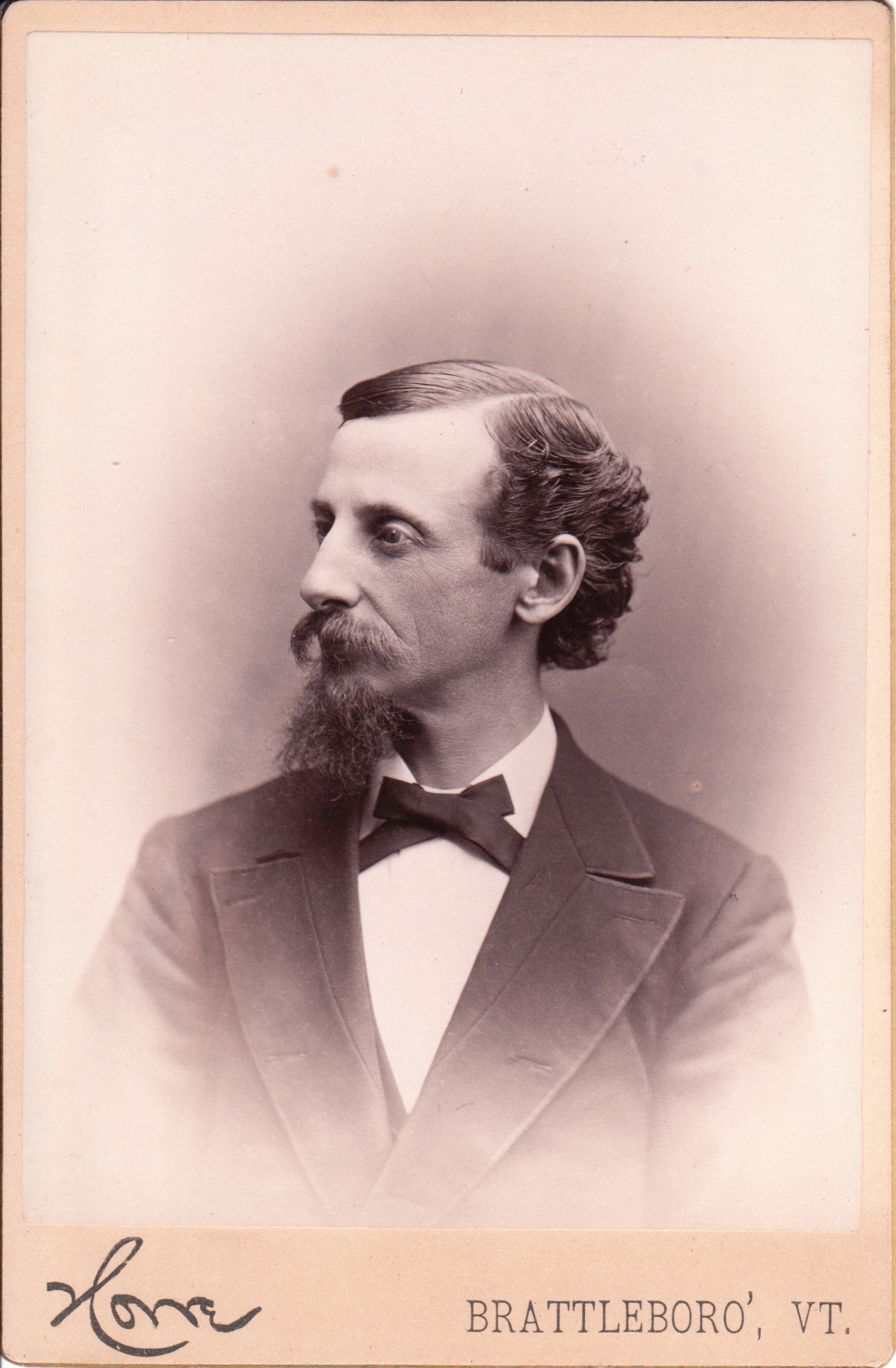
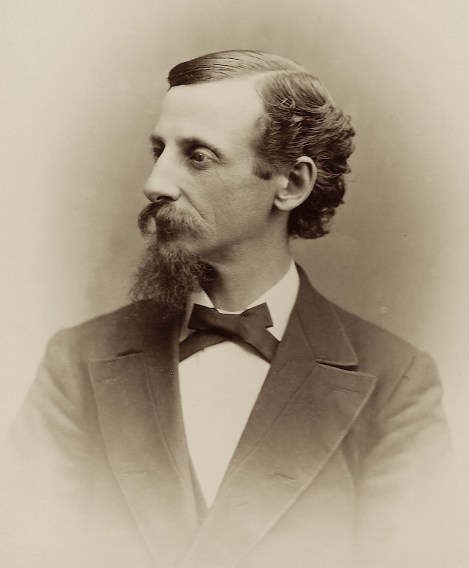 The identity of the gentleman pictured in this cabinet card portrait is Caleb Lysander. The previous owner of this image reported that it comes from an album that makes this positive identification. The subject has an interesting billy goat beard. To view other notable beards, click on the category “Beards (Only the Best)”. The cabinet card was produced by the Howe studio which was located in Brattleboro, Vermont. A Brattleboro history internet site includes a biography and obituary of Mr. Caleb Lysander Howe. The article states that upon his death, his daughter, Mrs Mary Howe-Lavin was informed via cable to Paris where she was performing as a singer. Howe was born in Dummerston, Vermont, in 1811. At age two, he moved with his parents to Dover, Vermont. His father worked as a farmer and had a second business providing transportation between Dover and Boston. Howe worked on the family farm until he was about sixteen when he went to learn a trade as a machinist. At age eighteen he moved to Brattleboro to work in a machine shop. While in the role of machinist, he worked as a watchmaker and producer of jewelry. He married Miss Cynthia Sherman who was from Dover. In 1838 he leased a farm in Dover. He became interested in photography in about 1846 and soon purchased a photography studio where he started out producing daguerreotypes. He then purchased a four wheel car for three hundred dollars and added traveling photographer to his job description. He did most of his work within his county. It is reported that he made a profit of between one hundred and two hundred dollars a month. He came to Brattleboro in 1856 and purchased a photography gallery. He became quite successful as a photographer. In 1880 his son, John C. Howe became associated with the business and the studio became known as C. L. Howe & Son. The senior Mr. Howe was highly regarded throughout the county as a teacher of vocal music and as a tenor singer. He died in 1895. There is a possibility that this is a self portrait. In other words, Caleb Lysander Howe may be the subject and the photographer. Research found an engraved portrait of Howe that looks similar to this cabinet card image. As a side note, research found a number of references to C. L. Howes prima donna daughter. The book “Picturesque Brattleboro: With Over Two Hundred Illustrations (1894) describes Mary Howe-Lavin as a “beautiful songstress” and states that “there is something indescribably fascinating in the singing and personal appearance of this charming woman”. References reveal that she performed in a number of major cities in Germany. Her second wedding was announced in the New York Times (1905). (SOLD)
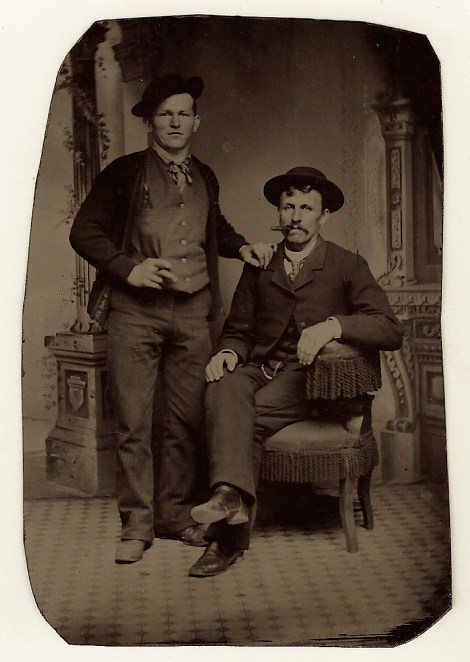
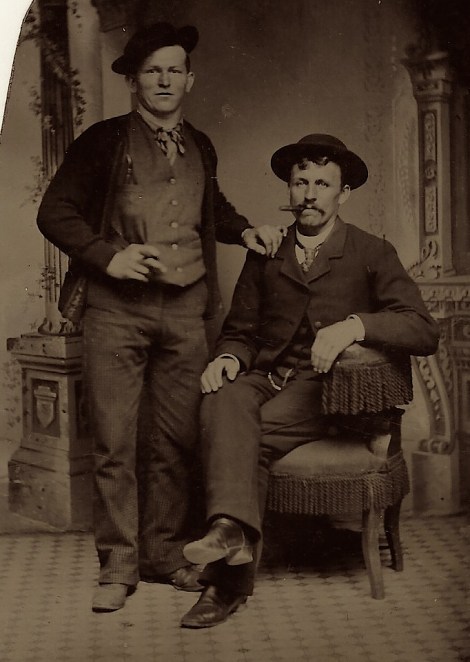 This tintype photograph features two cigar aficionados enjoying a smoke. Both men are well dressed. The seated many is “chomping down” on his cigar. Note his pocket watch chain. Tintypes were most popular in the 1860’s and 1870’s. This image measures about 2 1/2″ x 3 1/2″. (SOLD)

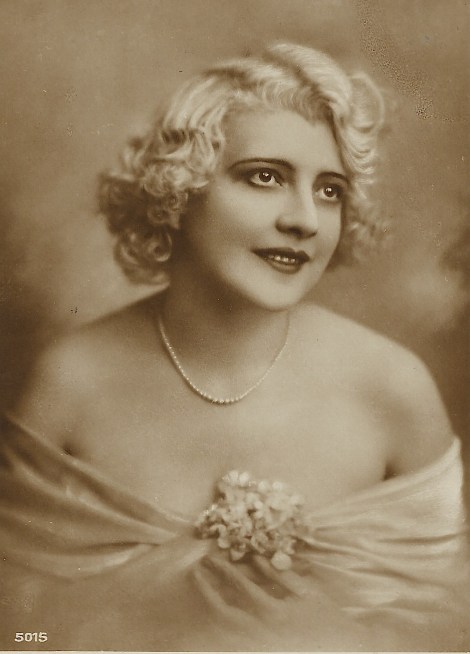 This vintage real photo postcard features Hungarian actress Camilla von Hollay (1899-1967). She was born in Budapest. Her father was a factory director and as she entered young adulthood her parents tried to steer her into going to medical school. Instead, Camilla pursued acting. She was active in film during the silent film era. IMDb credits her with sixty-eight film credits between 1916 and 1930. Early in her movie career she appeared in films with Bela Lugosi. Later, he became known in the US for his portrayal of Dracula. Camilla was blonde and attractive. Many of her films in the 1920’s were filmed in Germany. Her first acclaimed role was in “The Lightship” (1922). Camilla is quoted as stating that film “offers me the opportunity to live my life, to walk in many different forms, and to see myself in a hundred mirrors of just as many human figures”. It is believed that Camilla’s acting career disappeared with the advent of sound film. It is likely her Hungarian accent was seen by film companies as unsuitable for significant roles. She was married to a journalist. Nothing is known about her post acting life. This portrait postcard was published by Iris Verlag/Amag. Iris Verlag was a popular Austrian postcard producer. Amag (Albrecht & Meister) was a publisher located in Berlin. The company took over Aristophot in 1909. Amag ceased production in 1920. This photo portrait postcard is in excellent condition (see scans).


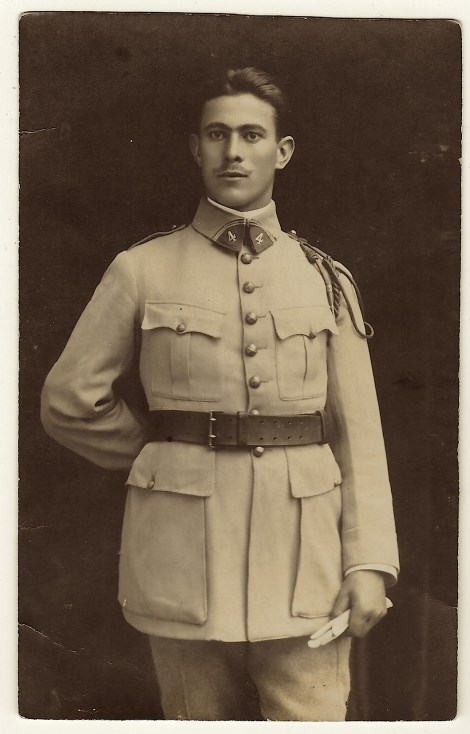 This vintage real photo postcard features a handsome elegant French military officer wearing his dress uniform. He is holding a pair of white gloves. His collar has pins which indicate that he is a member of the 4th unit (division?). The stamp box on the reverse of the postcard indicates that the publisher was K Ltd. and the the publishing date was sometime between 1918 and 1936. This postcard is in very good condition (see scans).


 This vintage private photo postcard features a happy couple posing with a Hanomag diesel farm tractor. The man and woman are both smiling and appear to be having a good time. The tractor has headlights; probably to allow it to travel on dark roads. I’m not so sure if a farmer would ever plow at night. The gentleman in this photo may be a farmer, but he certainly isn’t dressed like one. The tractor looks suspiciously like an automobile. However, back wheels of this vehicle leave little doubt that it is a tractor, and not an auto. Hanomag (Hannoversche Maschinenbau AG) was the German manufacturer of the tractor in this image. The company, based in Hanover, produced tractors, steam locomotives, trucks and military vehicles since before World War I. In fact, the company began in 1835. In 1925 they began manufacturing automobiles. In 1928, the company began producing diesel tractors, such as the one seen in this photo. The company was purchased by the Japanese firm, Komatsu, in 1989. On the drivers side of the vehicle, near the steering wheel, are the words “Peter Reiter, Dachau”. I believe, though can not confirm, that “Peter Reiter” was a agricultural machinery dealer in Dachau, Germany. Many people’s first impression upon encountering the name “Dachau”, immediately associate it with the concentration camp built there by the Nazis in 1933. The word “Dachau” brings up horrific images and thoughts. Dachau is a town in Germany. It is located in Upper Bavaria in the southern part of the country. It is twelve miles northwest of Munich. This photo postcard measures about 5 3/8″ x 3 1/2″ and is in good condition (see scans).


 THE CABINET CARD GALLERY