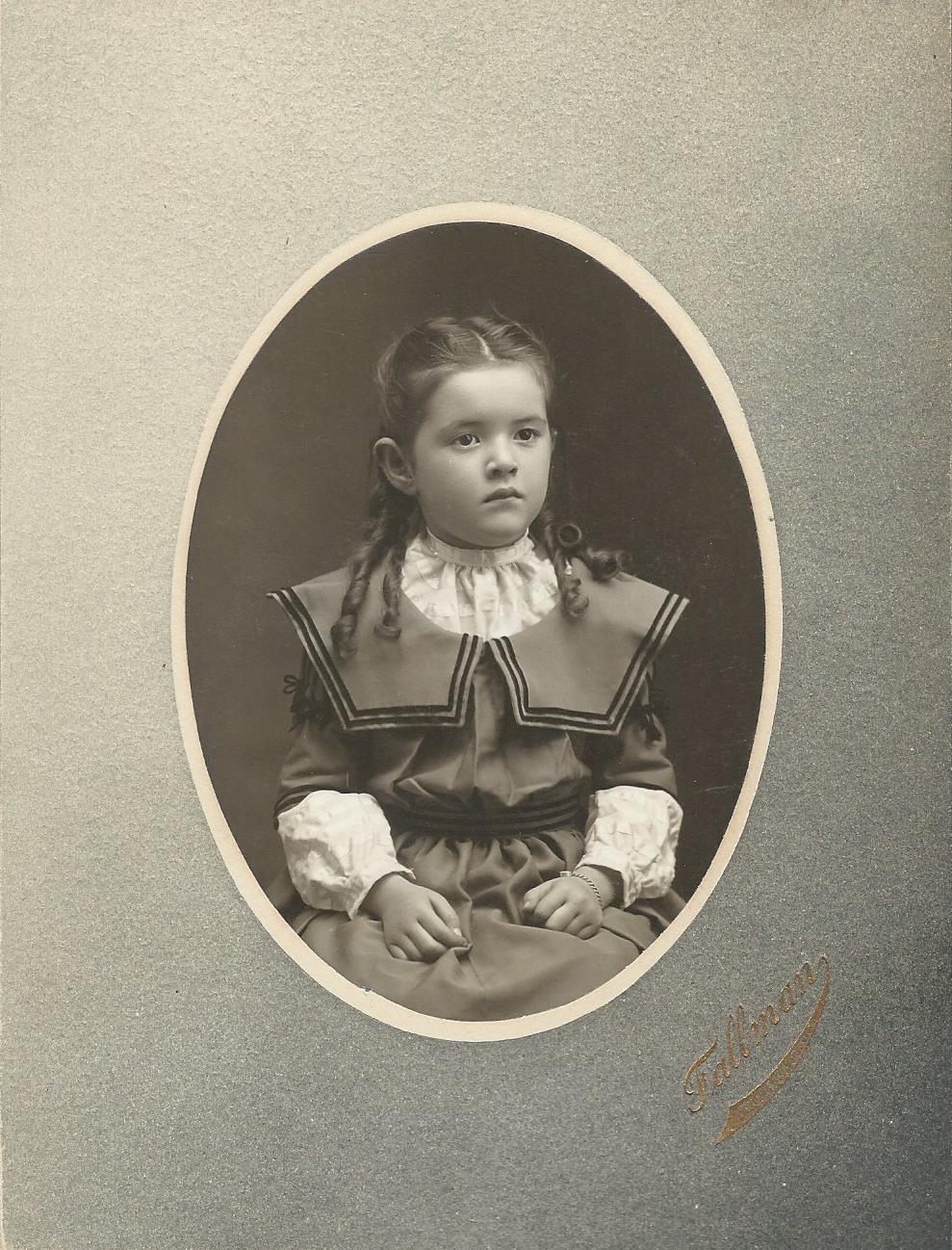
This vintage photograph features a well dressed cute little girl. She is displaying a serious expression as photographer Harry Fallman (1853-1917) tries to capture the moment. Fallman’s studio was located in Eureka, South Dakota. The 1900 US census indicates that Fallman was born in New York but living in Eureka with his wife Nina A. Fallman (born 1864) and son Gilbert (born 1897). At the time of the census, Fallman was working as a photographer. The 1910 US census finds the 58 year-old Fallman living in North Newberg, Oregon. Apparently he experienced a mid life crisis because he had acquired a new wife (Emily Fallman) and she was just 27 years old. Fallman is listed in Portland, Oregon city directories (1913-1916) as working as a photographer. However, in the 1917 directory it is apparent that he switched careers and had become a grocer. An interesting side note concerns Fallman’s son. Gilbert Fallman (1897-1984) became an actor. Among his best known roles were appearances in “One Too Many (1950)” and “The Man from Planet X (1951)”.
PORTRAIT OF AN AUSTRIAN ACTRESS: ROSA ALBACH RETTY
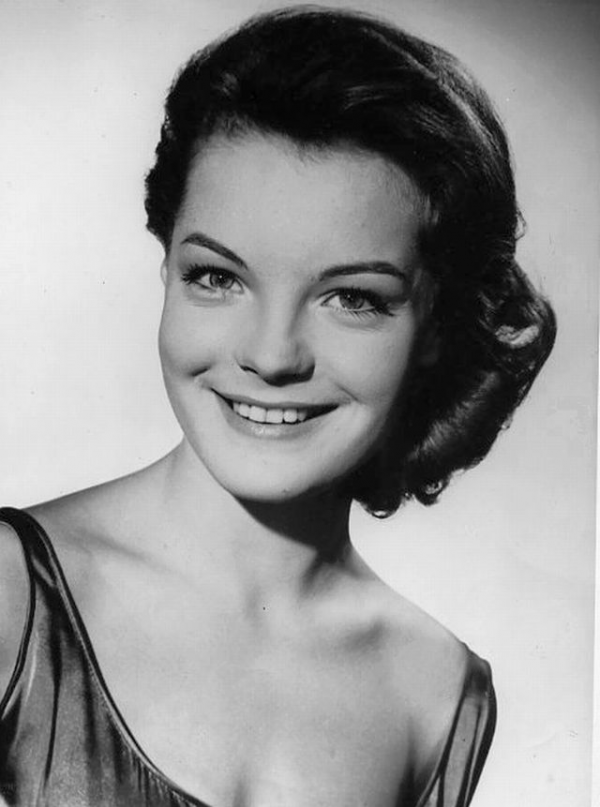
This cabinet card portrait features German born Austrian actress Rosa Albach Retty (1874-1980). Retty appeared on the stage and in movies. She was daughter of actor Rudolf Retty. She began her theatrical career in 1890 at the Deutsches Theater and the Lessing Theater. In 1895 she appeared at the Volkstheater in Vienna and in 1903 became a member of the Burgtheater ensemble. She made her film debut in 1930 in Georg Jacoby’s “Money on the Street”. Her last film credit was for a role in “Congress Dances” (1956). She was married to Karl Albach, an Austro-Hungarian Army officer. Albach-Retty’s son, Wolf Albach-Retty was an actor as was her granddaughter (Romy Schneider {1938-1982}). Albach-Retty clearly had the “theatrical gene” as well as the gene for longevity. She died at the age of 105. She is buried in Zentralfriedhof in Vienna. The photographer of this image is Hans Makart and his studio was located in Vienna, Austria. The photographer Hans Makart is not the same individual as Austrian Hans Makart (1840-1884), the celebrated artist. It is an interesting coincidence however, that Makart the artist utilized photography in his work. Another portrait of Albach- Petty as well as an image of her gravestone can be seen below. The third photograph is a portrait of Romy Schneider.


AMELIA GLOVER: FAMOUS SKIRT DANCER (CABINET CARD PORTRAIT BY SARONY)
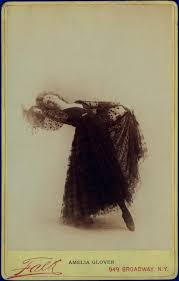
This cabinet card portrait features celebrated skirt dancer Amelia Glover. The photograph was taken by the well known New York theatrical photographer, Napoleon Sarony. The term “skirt dancer” is not a term we read or hear about today so an explanation is likely in order. Skirt dancing earned its name due to the voluminous skirts worn by the dancers. These skirts were often made of sheer and flimsy material. The skirts were utilized as part of the dancers act. Famous skirt dancers include Glover, Loie Fuller, Papinta, and Anna Held. Amelia Glover was not just any skirt dancer. The Illustrated American (1892) published an article called “The Skirt and the Dance”. In the article the author bemoans the trend that resulted in French and English dancer’s skirts getting shorter and shorter. Most dancers prior to the trend wore long skirts (below the knee). Kate Vaughn is credited with the reintroduction of long skirts and the”skirt dance”. Letty Lind and Sylvia Grey are asserted to be responsible for importing the dance from England to the United States. The pair are said to have created a “rage” with the skirt dance. The author complains that the dance “has mostly degenerated into a lot of high kicking and can can impropriety”. He continues with the contention that the original dance has become “vulgarized”at the hands of “ordinary women” of the variety stage.The author goes on to state that there is one American skirt dancer who has “remarkable natural gifts”. He identifies that dancer as Amelia Glover, also known as “Little Fawn”. The cabinet card image below gives a view of Glover dancing while wearing a long skirt. Besides being an incredible dance talent, Glover has another claim to fame. Theatre Magazine (1922) reports that Miss Glover started the fad of wearing bobbed hair. Her hairstyle was imitated by other women of the stage as well as by women of society. SOLD
PORTRAIT OF A SWEET LITTLE GIRL IN MT. PLEASANT, IOWA
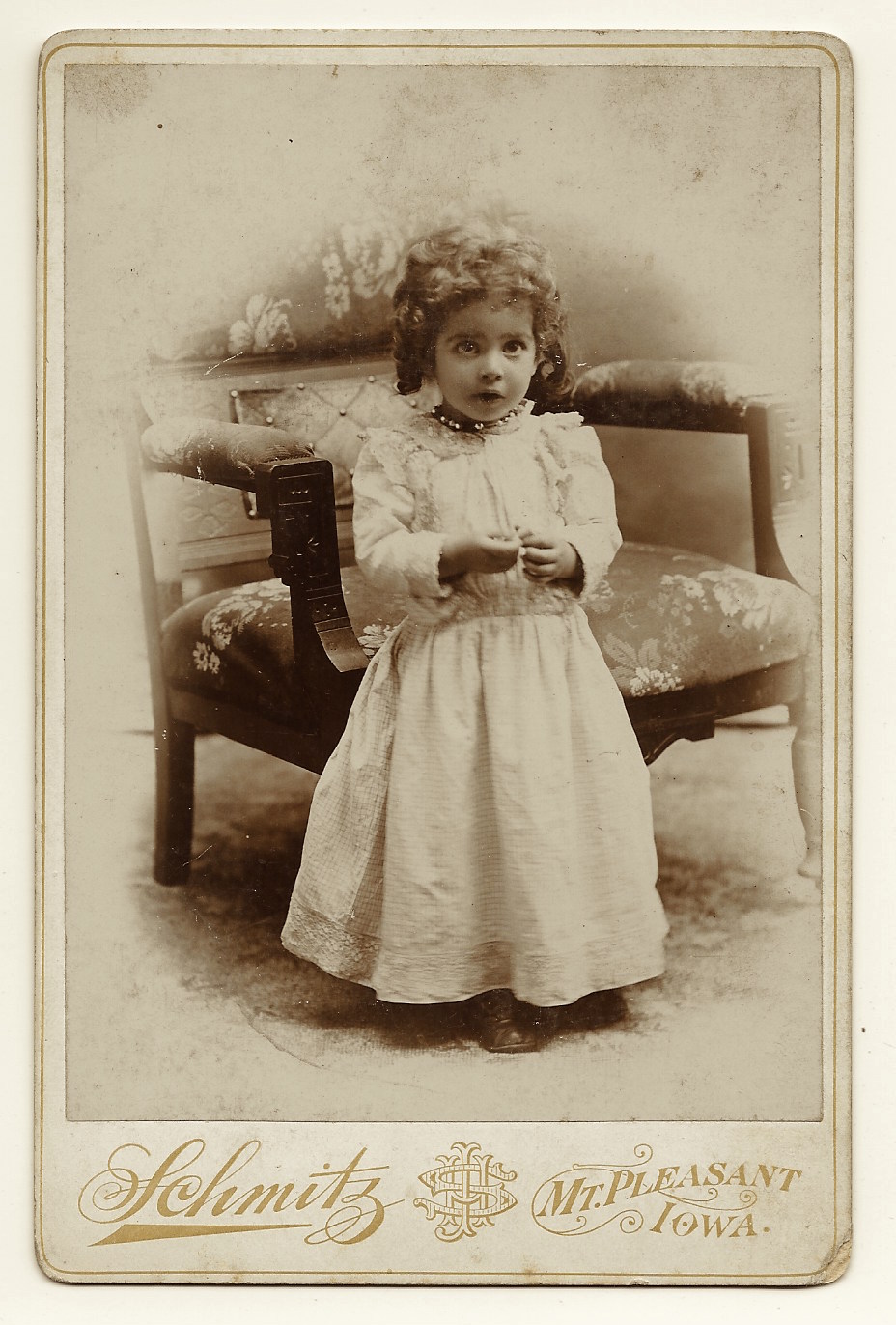
The little girl seen in this cabinet card portrait is simply adorable. Unfortunately, she seems somewhat intimidated by finding herself in front of a camera. She is wearing a simple checkered dress and a necklace. The beads on the necklace and the buttons on the chair clash and create the impression that she is chained to the chair. I wonder if the photographer did a retake? Nevertheless, the girl is a sweetheart and her expression talks for itself. This photograph was produced by the Schmitz Gallery which was located in Mt. Pleasant, Iowa. The 1893 Mt. Pleasant Directory lists the gallery’s location as 133 North Jefferson. The proprietors were listed as Charles, Jno, and Mathias Schmitz.
ADORABLE LITTLE GIRL IN BUFFALO, NEW YORK
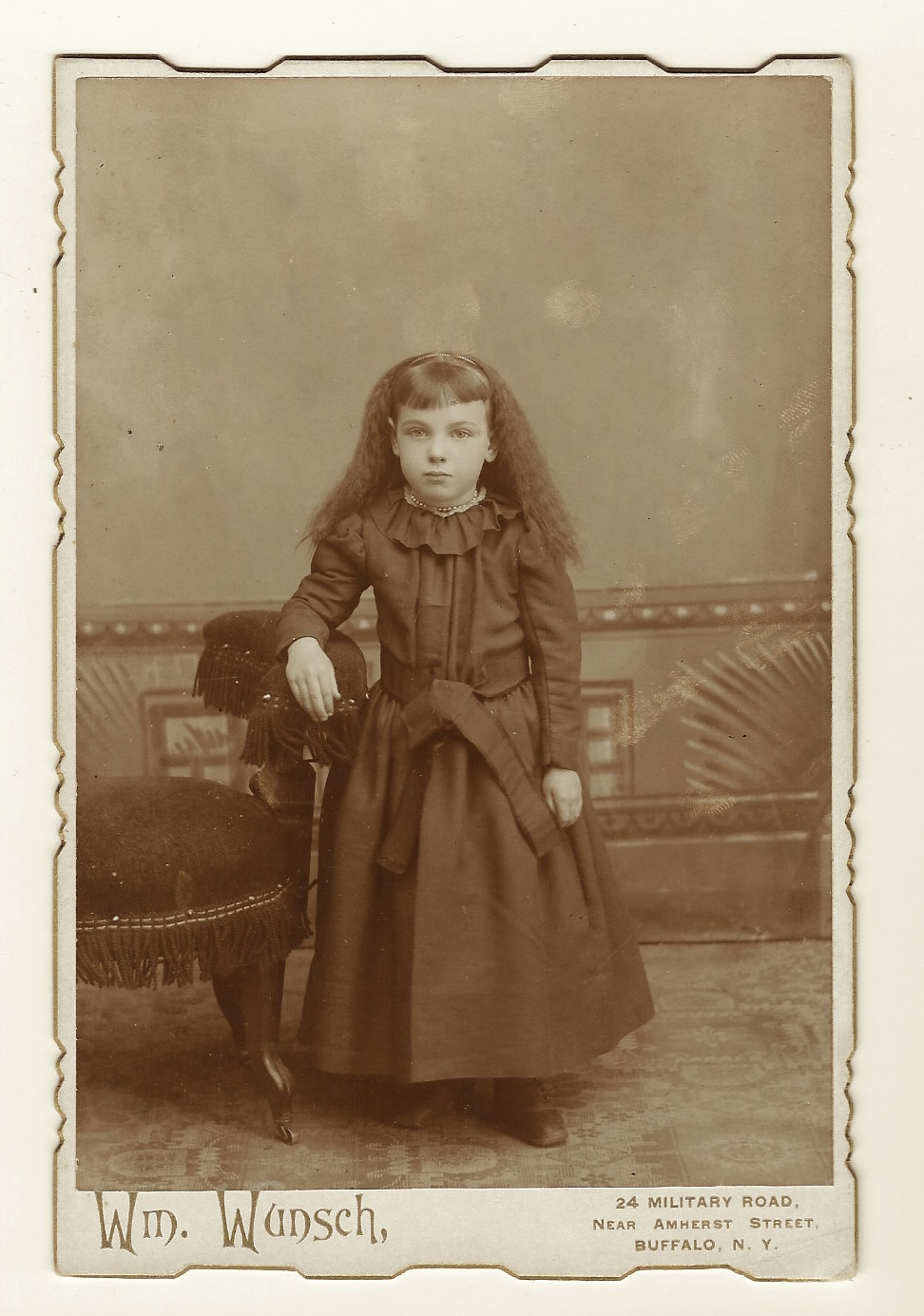
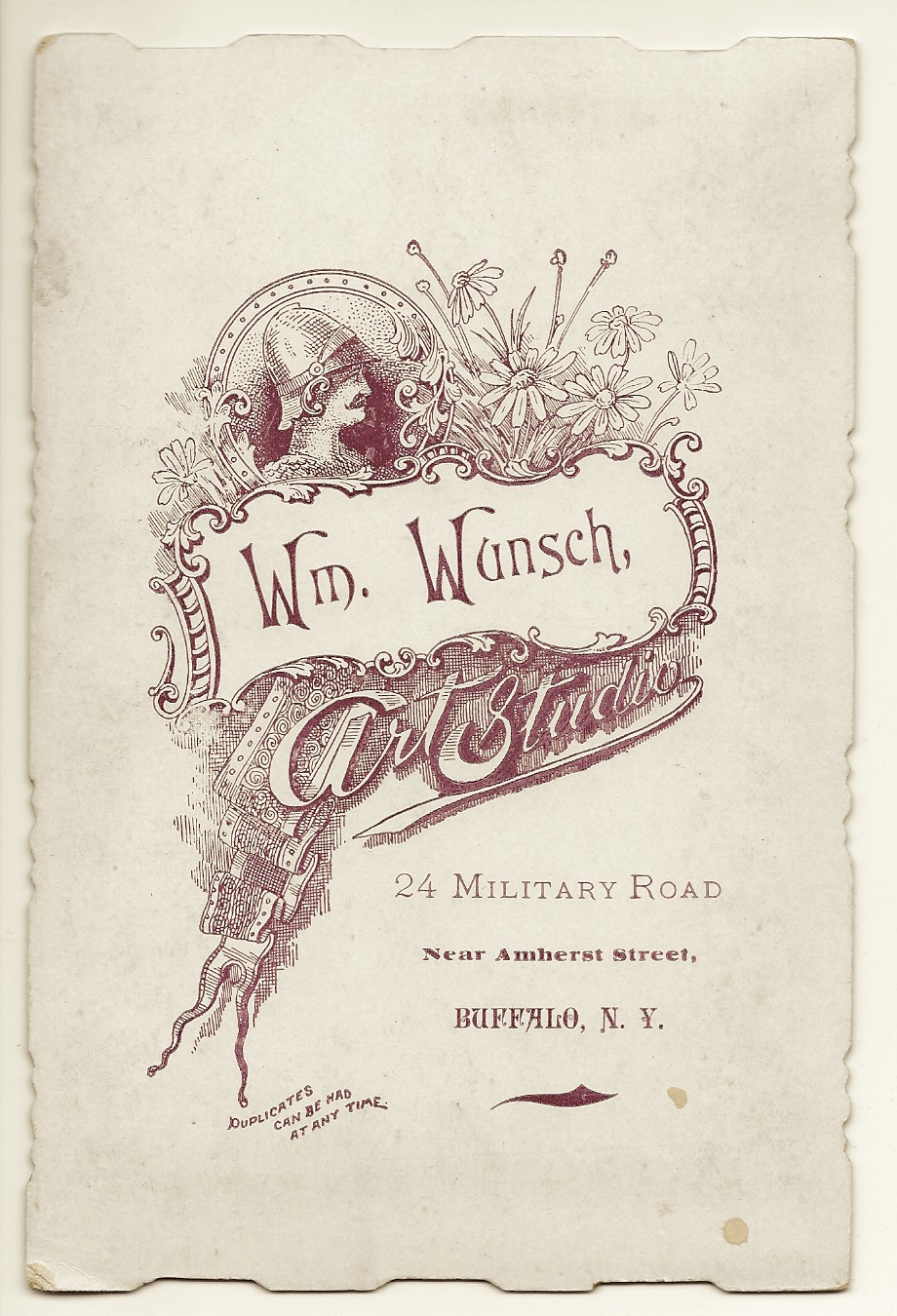
This cabinet card portrait features a charming little girl wearing a long dark dress and a serious expression. The photographer of this image is William Wunsch (1846-1929). His obituary, which appeared in the Buffalo News, indicates that he was a war hero. As Wunsch requested, he was buried with three war medals (including the Gold Cross). Wunsch was a lieutenant in the Franco Prussian Wars and he was decorated for bravery. He came to the United States in 1871 and was granted citizenship in 1876. He was married to Sophia E. Steinmetz Wunsch (1878-1949). He resumed his Prussian career as a photographer after immigrating to the United States. He was very active in the German community of Buffalo, particularly with singing societies. Wunsch was still a photographer at the time of his death even though he was 83 years old. He is buried in Buffalo’s Forest Lawn Cemetery. Judging by the scalloped edges of this photograph, the image was produced sometime after 1886. Wunsch’s studio was located on Military Road at least between 1878 and 1927. It is interesting to note that this war hero photographer located his studio on a street called “Military Road” and used a military figure in his business logo which can be seen on the reverse of the cabinet card (see image below). (SOLD)
SKELETON POSING WITH A LARGE GROUP OF MEDICAL STUDENTS
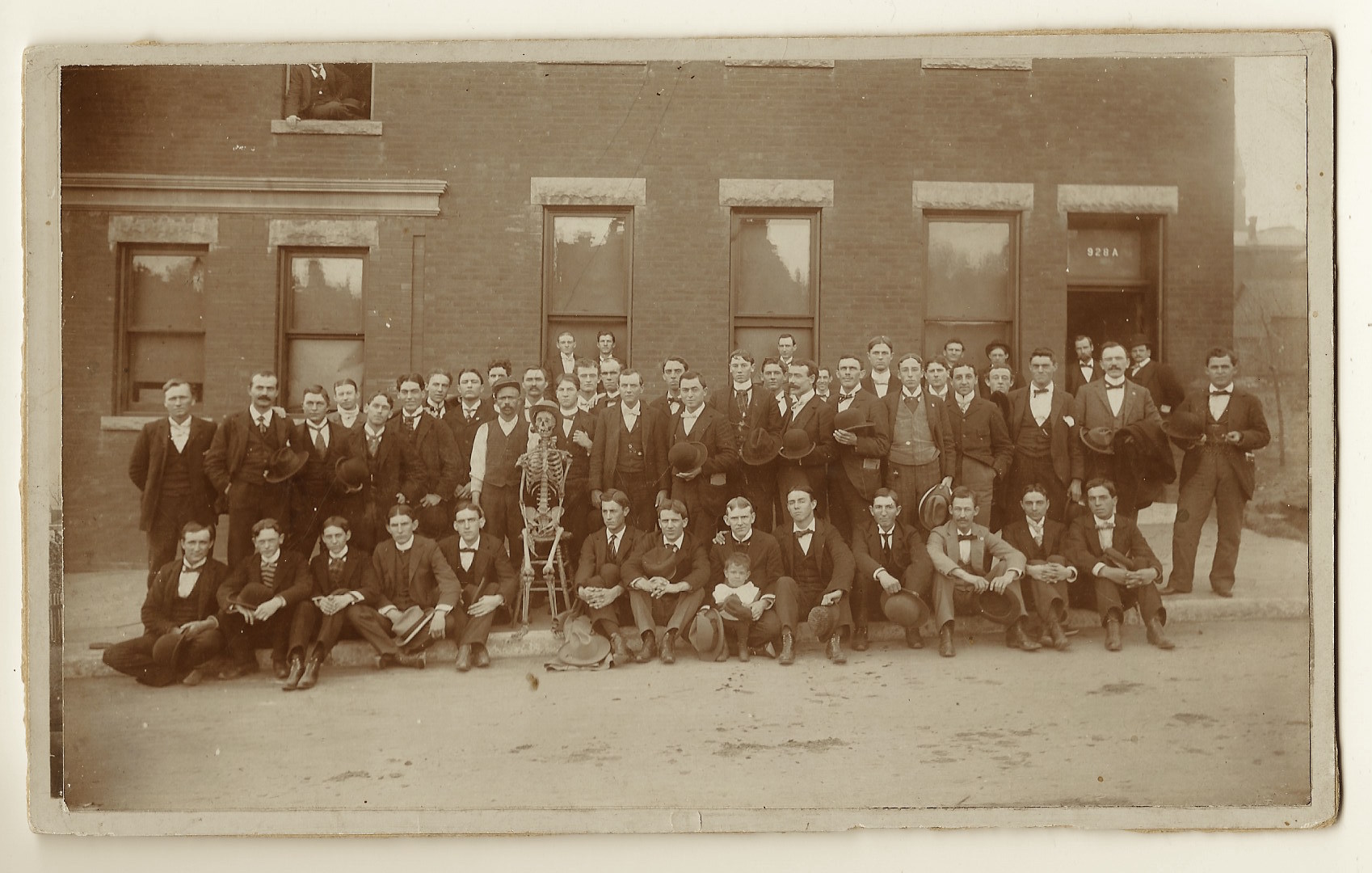
This vintage photograph features a large group of medical students posing with a skeleton. The skeleton is sitting on a stool and is wearing a hat. This image demonstrates that college humor has a long history. It is interesting to note that a young boy is sitting on the lap of a student in the first row. I wonder why the lad is in the photograph and what his relationship is to this medical school class. It is also notable that there is a young man sitting in a second floor window that the photographer only managed to partially fit in the image. This photograph is not a cabinet card. The photo measures 5″ x 8″. The subjects and the photographer are not identified. Neither is the skeleton.
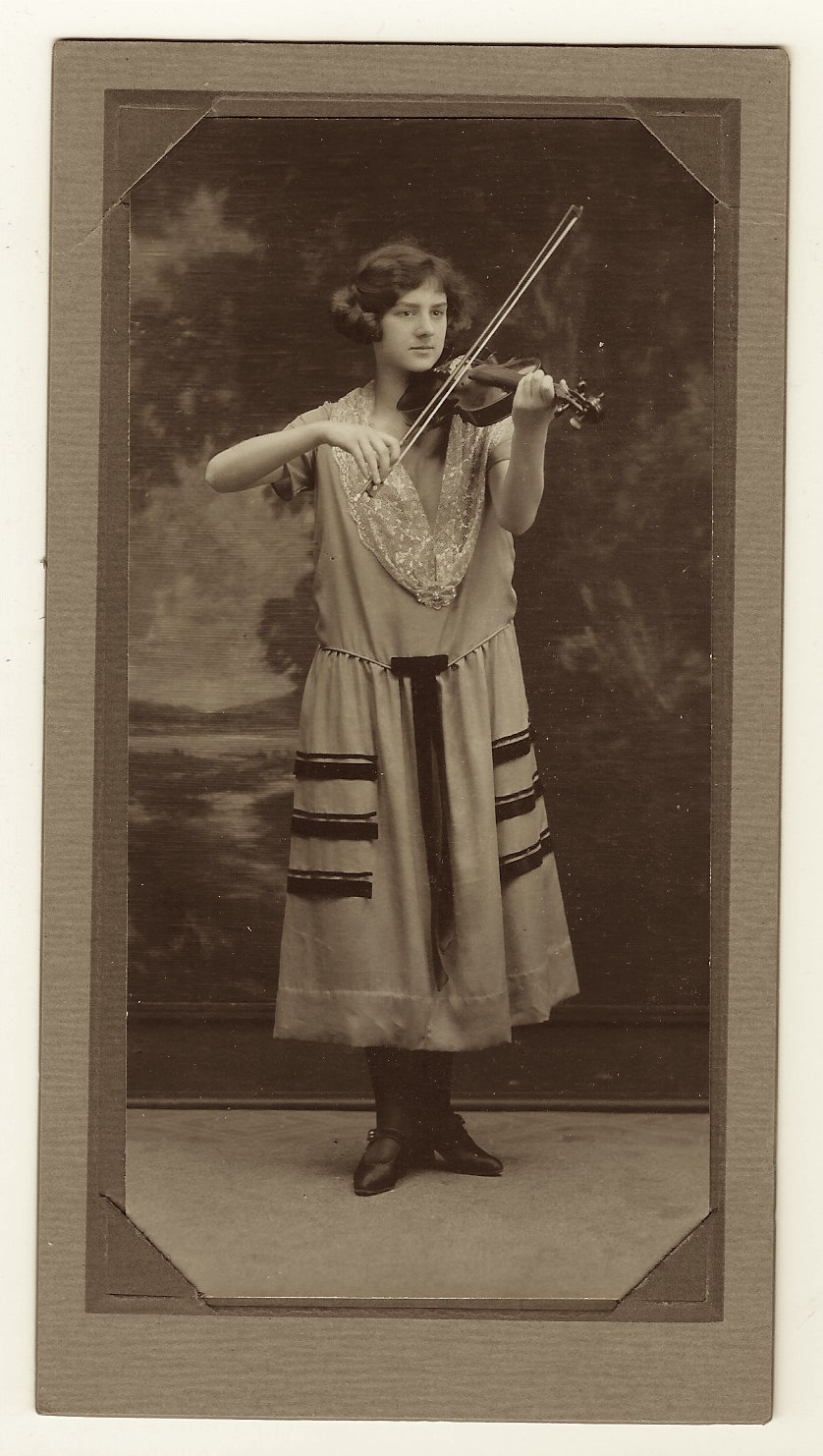
PORTRAIT OF A PRETTY YOUNG WOMAN AND HER VIOLIN
This vintage photograph features a pretty young woman posed as if she is playing her violin. She is beautifully dressed and wears a semi serious expression as she gazes at the photographer. The identity of the subject and the photographer are unknown. To view additional photographs of violinists and other musicians, click on the Cabinet Card Gallery category “Musicians”. This image measures 4″ x 7″ and was purchased in Northern Vermont.
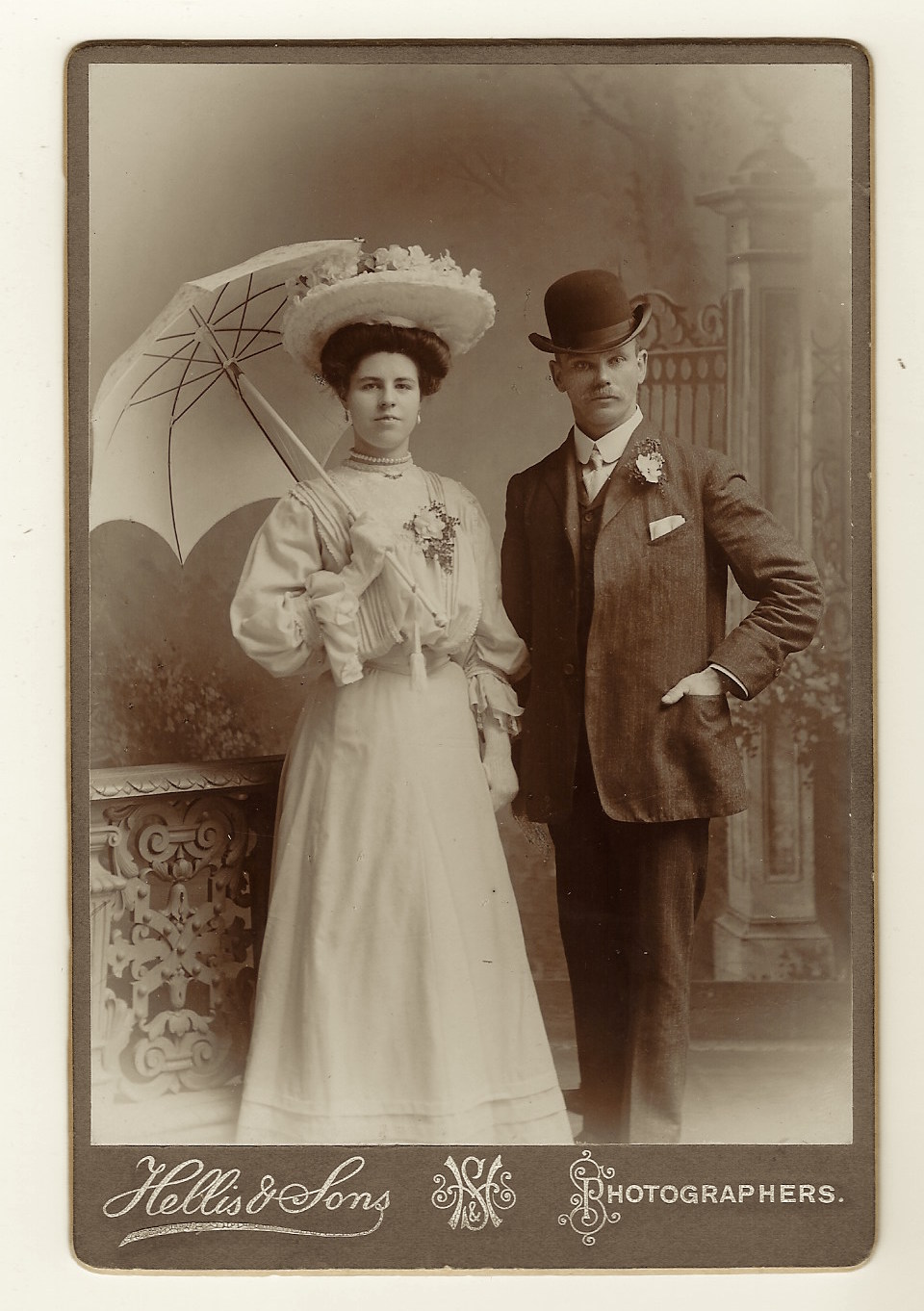
PORTRAIT OF A LOVELY COUPLE OUT FOR A STROLL IN LONDON, ENGLAND
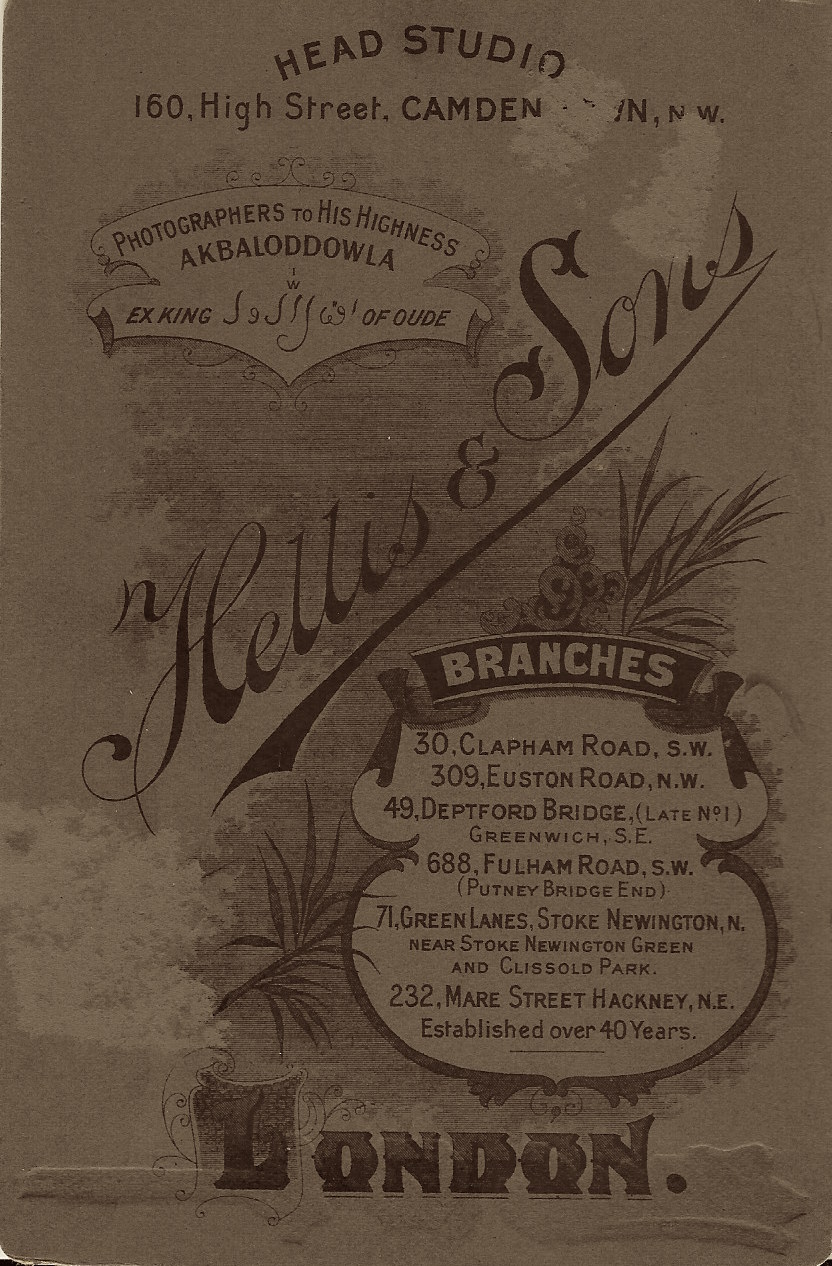
This photograph features a lovely couple out for a stroll on a faux patio at the Hellis & Sons studio in London, England. The couple are beautifully dressed. The man looks quite dapper in his three piece suit and derby hat. He is accessorized by a flower in his lapel and a handkerchief in his jacket’s breast pocket. The woman is wearing a fancy hat and corsage. She is carrying a parasol to protect herself from the sun. Advertising on the reverse of the photograph (see scan below) indicates that this cabinet card was produced in one of the studio’s seven branches and the studio had been in existence for over forty years. Robert Hellis (1835-1895) operated the most studio branches of all photographers in nineteenth century London. Hellis was also known for his skillful work hosting magic seances for evening parties in London. Advertising on the reverse of the cabinet card indicates that Hellis was the official photographer for the Akbaloddowla, ex King of Oude. One researcher on the internet wrote about the king and his kingdom. He notes that Oude was a small kingdom located about three miles from Calcutta. The King had two wives and another 159 women for recreation and procreation. It is reported that in 1874 the King had 56 children. My preliminary research confirms the existence of the state of Oude. Research also confirms that there was an individual named Akbaloddowla who credited himself as being an ex king but I can not confirm the veracity of that claim. SOLD
PORTRAIT OF A BIG SISTER AND HER LITTLE SISTER IN ATHENS, GREECE (CDV)
This CDV features a portrait of what is most likely two sisters. The older girl appears to be a teenage sister rather than the baby sister’s mother. The two sibling are both pretty in their white dresses.The teenager’s dark hair falls down to the middle of her back.The older sister is holding her siblings hand. The younger sister is wearing a cross on a necklace. The photograph was produced by the Boehringer studio in Athens, Greece. Karl Boehringer was the proprietor of the studio and some of his photographs of the ruins of ancient Athens can be found in the Getty Pictures collection.
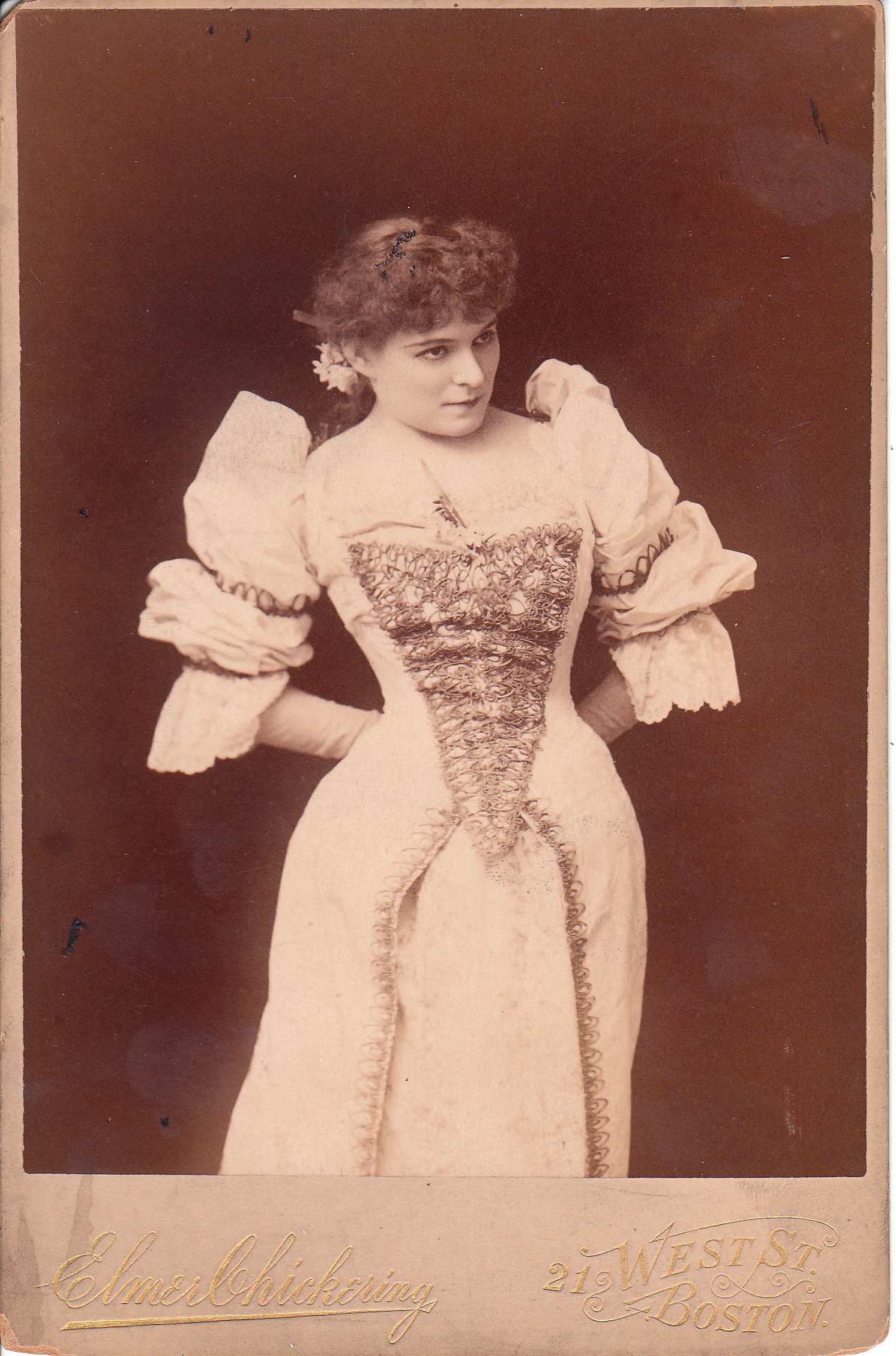
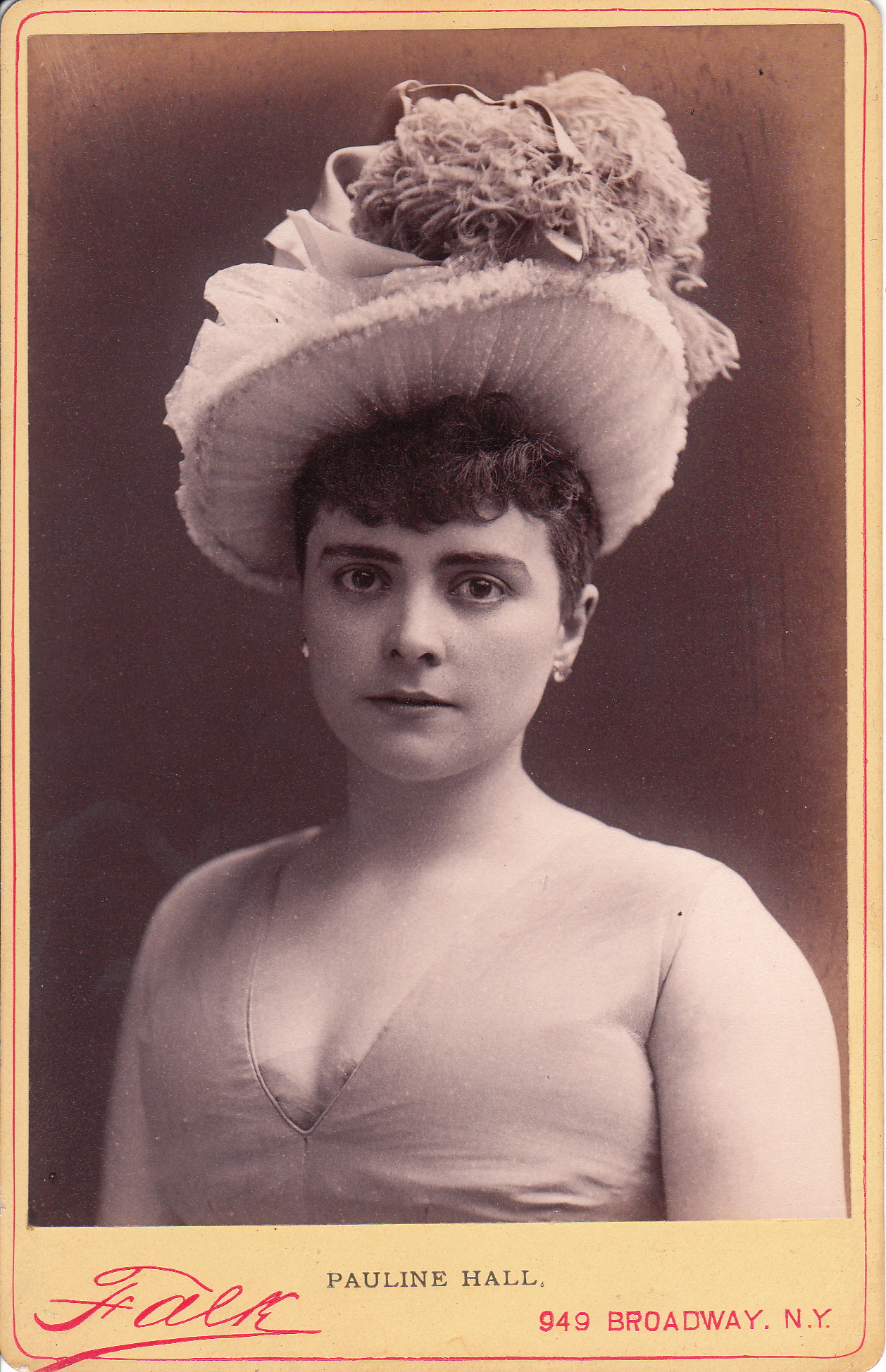
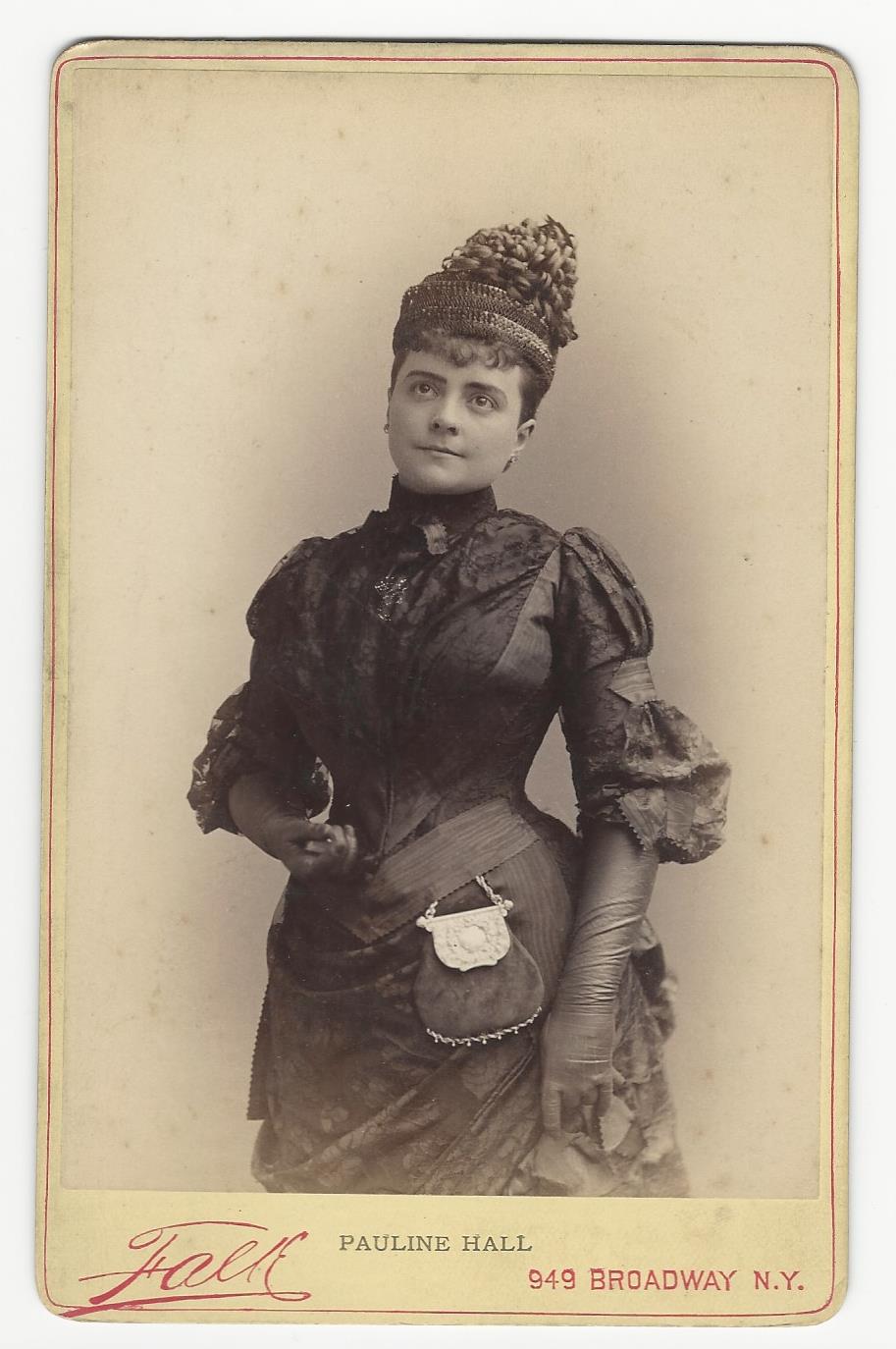
PAULINE HALL (1860-1919): BEAUTIFUL MUSICAL THEATRE STAR


CABINET CARD 2 (SOLD)

The top cabinet card features Pauline Hall (1860-1919), one of the most popular turn of the century prima donnas. She began her career as a dancer in Cincinnati, Ohio at age 15. She joined the Alice Oats Opera Company but left to tour in plays with famed actress Mary Anderson. By 1880, she worked for well known producer Edward Everett Rice in musical productions. Early in their association, he gave her a role in “Evangeline”. Her shapely figure allowed her to take male roles as she did in “Ixion” (1885). Her greatest success came in the title role of the first American production of “Erminie” (1886). She played in more than two dozen Broadway operettas. Her final role was in the “Gold Diggers” (1919). This photograph was taken by famed celebrity photographer, Elmer Chickering of Boston, Massachusetts. Other photographs by Chickering can be seen by clicking on Cabinet Card Gallery’s category of “Photographer: Chickering, E.”.
The second cabinet card, photographed by B. J. Falk, of New York City, captures Pauline Hall in stage costume. The photograph is #305 in a series from Newsboy. The tobacco company (Newsboy) gave away cabinet cards as a premium with the purchase of their products. This cabinet card shows a copyright date in the 1890’s. The exact date has become illegible over time. (SOLD)
The third cabinet card portrait was also photographed by Falk. Ms. Hall looks quite beautiful in this image. She is wearing earrings and an interesting hat. The photograph is a bit risque. Much of her neck and shoulders are exposed. In addition, her dress accentuates and reveals significant cleavage. Is the material at the base of her scoop neckline part of her dress; or was it added in order to make the photograph less provocative? Perhaps a visitor to the cabinet card gallery will be able to provide an explanation. SOLD
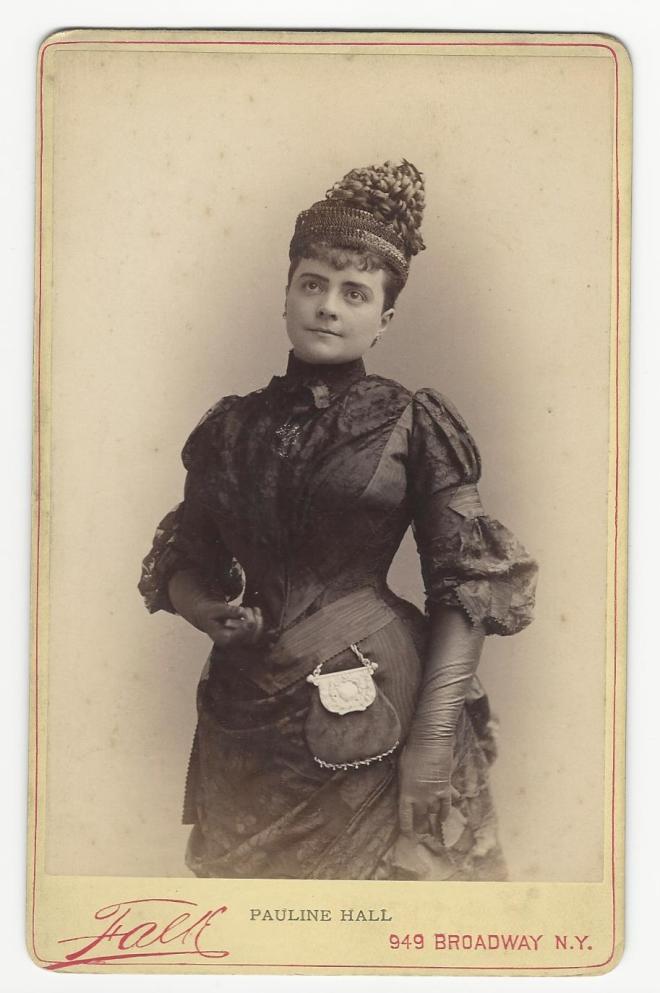
The fourth cabinet card image, once again photographed by B J Falk, features Miss Hall wearing a dark dress, long gloves, a lovely hat, and a purse. Pauline Hall certainly was a stage beauty as attested by this photograph. SOLD