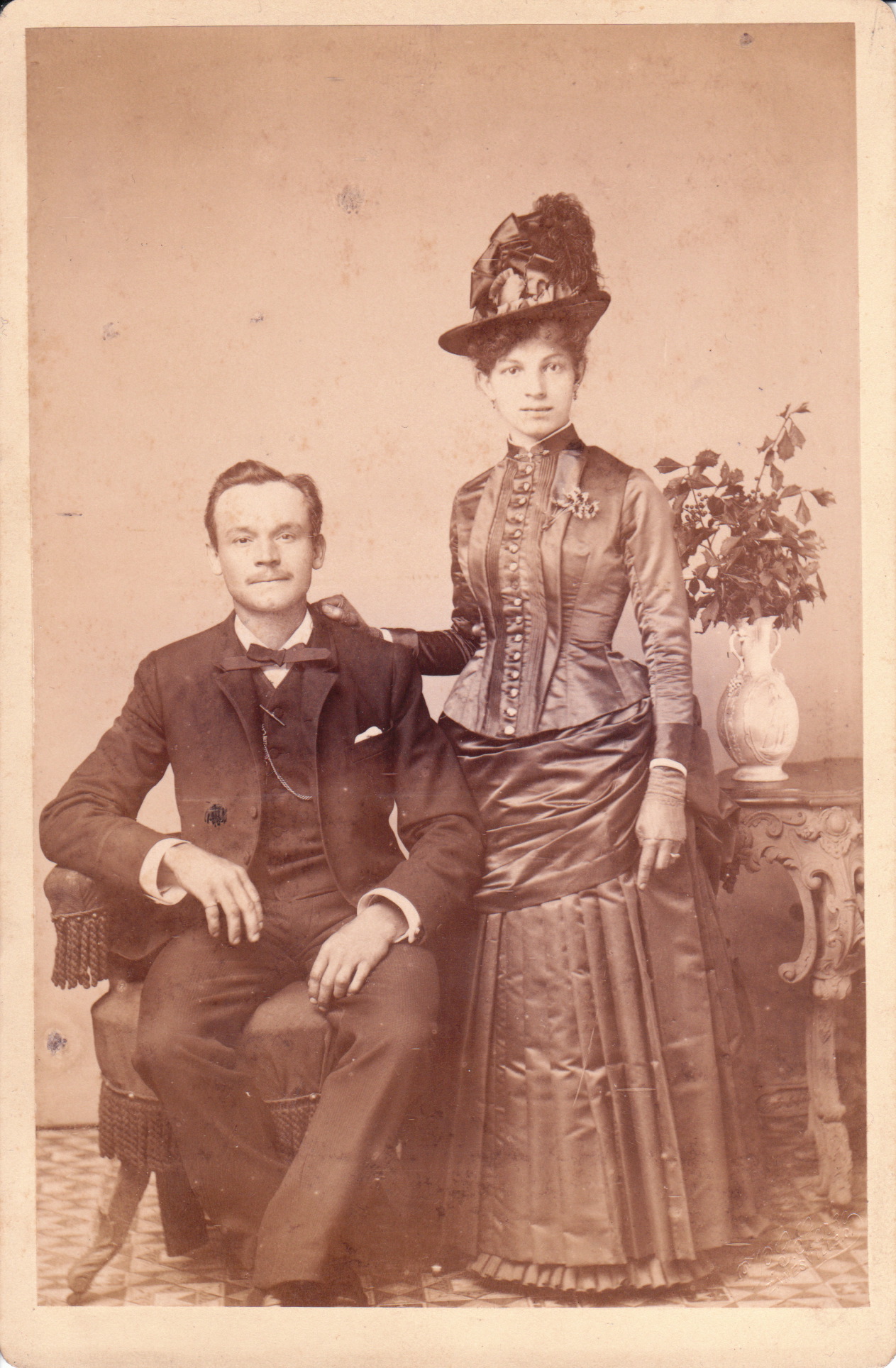
 This cabinet card captures a fashionable handsome couple She is wearing a gorgeous dress and an elaborate hat with a feather. The photographer is William G. Starke and his studio was located on the corner of Main and Fifth Streets in Zanesville, Ohio. Starke operated in Zanesville from at least 1881 through 1897 and at some point, he was joined in the studio by his son, William E. Starke (1856-?).
HANDSOME COUPLE IN ZANESVILLE, OHIO

TURN OF THE CENTURY TENNIS PLAYERS (1890)
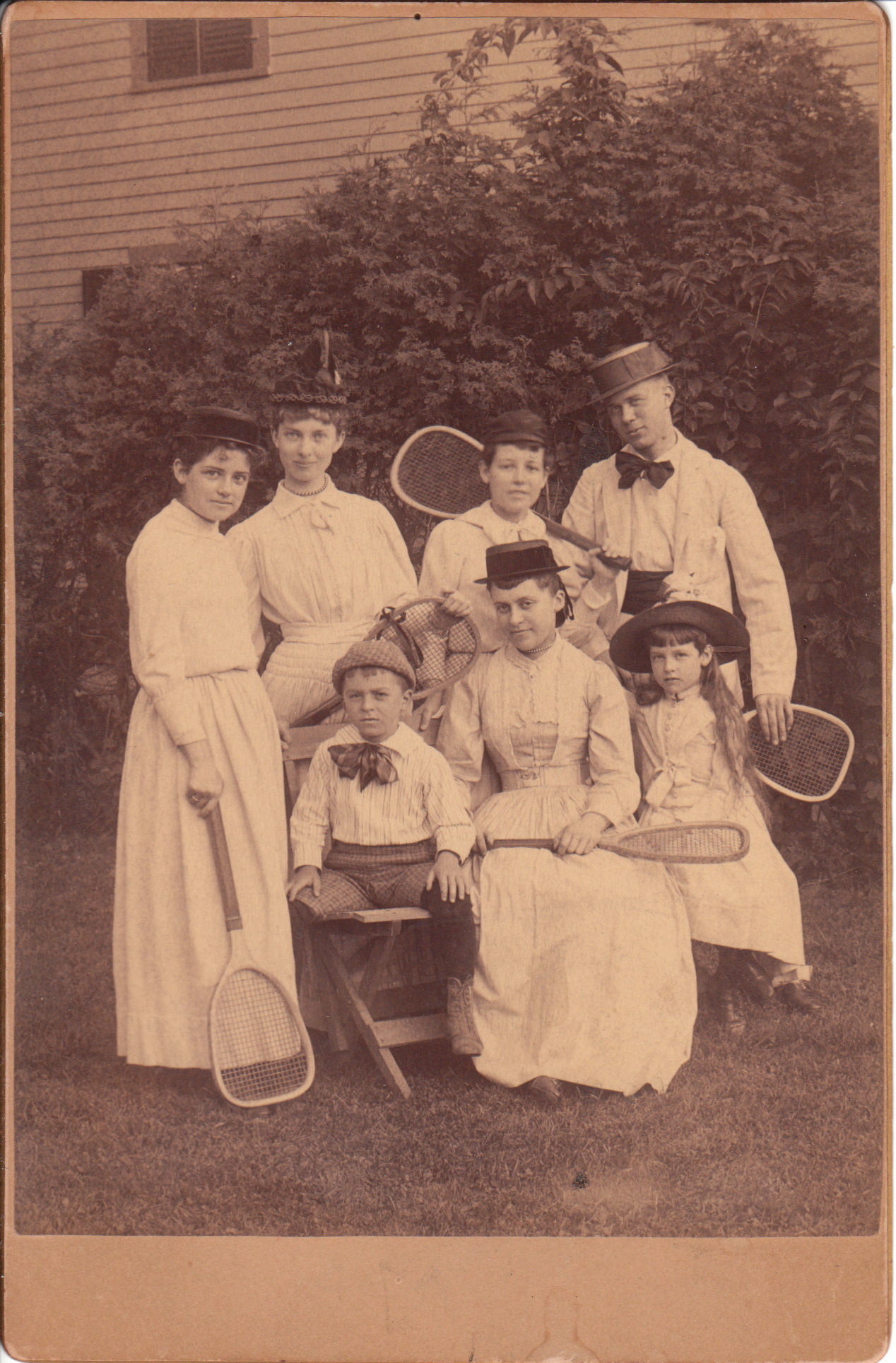 This cabinet card features a group portrait of four woman, one man, and two children dressed for tennis and all the individual’s except the children are holding tennis rackets. According to an inscription on the reverse of the photograph, the image was produced in 1890 The photographer and the studio’s location are unknown. All the individuals in the photograph are wearing terrific hats. The gentleman in the image is wearing a bow tie. Can you imagine Andre Agassi and Pete Sampras wearing bow ties as they battled for victory in an important tennis tournament? Cabinet Cards with a tennis theme are not extremely rare. The sport of tennis was well established during the cabinet card era. In fact, a version of the game of tennis has been around for centuries. The rules of the game have not changed much since the 1890’s. The Wimbledon tournament in London, England has been played since 1877. The US Open began in 1881 and it was first played in Newport, Rhode Island.
ISABELLE URQUHART: COMIC OPERA AND MUSICAL COMEDY STAR (PHOTOGRAPH BY NEWSBOY)

This cabinet card features actress Isabelle Urquhart (1865-1907). She was an American stage actress and contralto who appeared in mostly comic operas and musical comedies. Urquhart was born in New York City and claimed to have been educated in a convent. She made her first stage appearance in 1881. She performed as a chorus girl at the Standard Theatre in New York City. She than appeared in a number of small roles. From 1882 through 1883 she joined Augustin Daly’s company and acted in productions including “The Passing Regiment” and “The Squire”. In the latter production she was only seventeen years of age but played a ninety-seven year old woman. She returned to light opera because of it’s better compensation although she stated she preferred legitimate drama to comic opera. She had much success in major roles in light operas including in the hit operetta “Erminine” which ran from 1886 through 1888 at the Casino Theatre. She also had success in other productions by luminaries such as Gilbert and Sullivan. In her leading lady role in “Erminine”, she started a fashion trend by not wearing petticoats in order “to accentuate her gorgeous figure”. Urquhart later appeared in vaudeville. Blue Vaudeville (2004) states that in a sketch at the Union Square Theatre, she “did little more than display her form in a handsome gown to the utmost advantage”. Urquhart also performed in several Broadway plays including “The Diplomat” (1902), “Arms and the Man” (1906), and “How He Lied to Her Husband”. This cabinet card was published by Newsboy and was number one i a series of photographs that were distributed as a premium accompanying tobacco sales.
CUBAN CLASS PHOTOGRAPH (1936-1937)
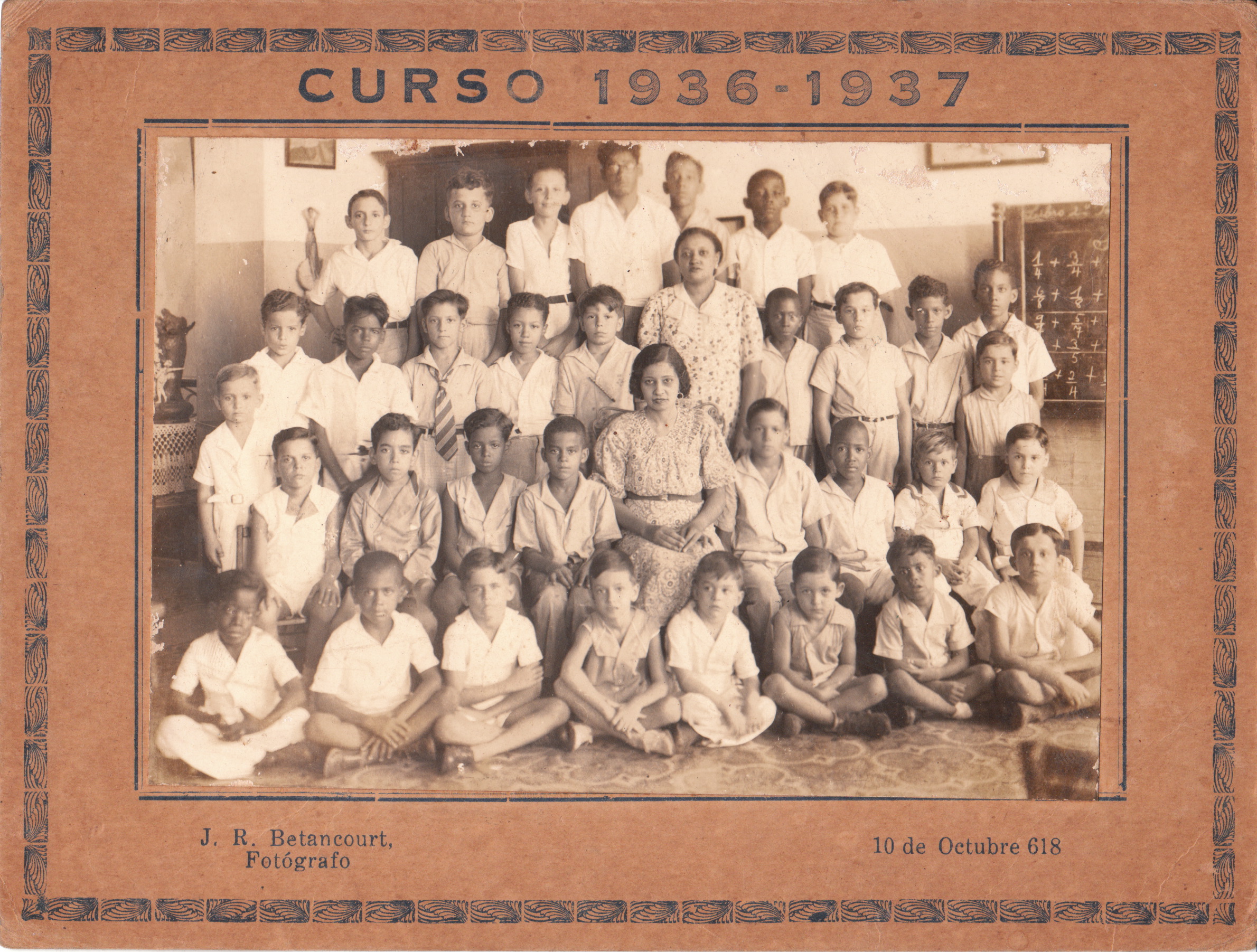 This non cabinet card photograph features a portrait of a class from a Cuban school. The photograph was taken during the 1936-1937 school year. The children are multi racial and all boys. There are three teachers evident in the photograph. Note the math problems written on the blackboard. The photographer is J. R. Betancourt. I do not know where in Cuba Betancourt operated his studio. “10 de Octubre 618” is likely the street address of the studio. “10 de Octurbre” is a national holiday in Cuba. The day is known as “Grito de Yara” and it commemorates the 10 Years War (1868-1878). The war was fought to gain freedom and independence from Spain.
UNITED STATES VOLUNTEER UNIFORMED SOLDIER AND HIS WIFE IN CHATTANOOGA, TENNESSEE
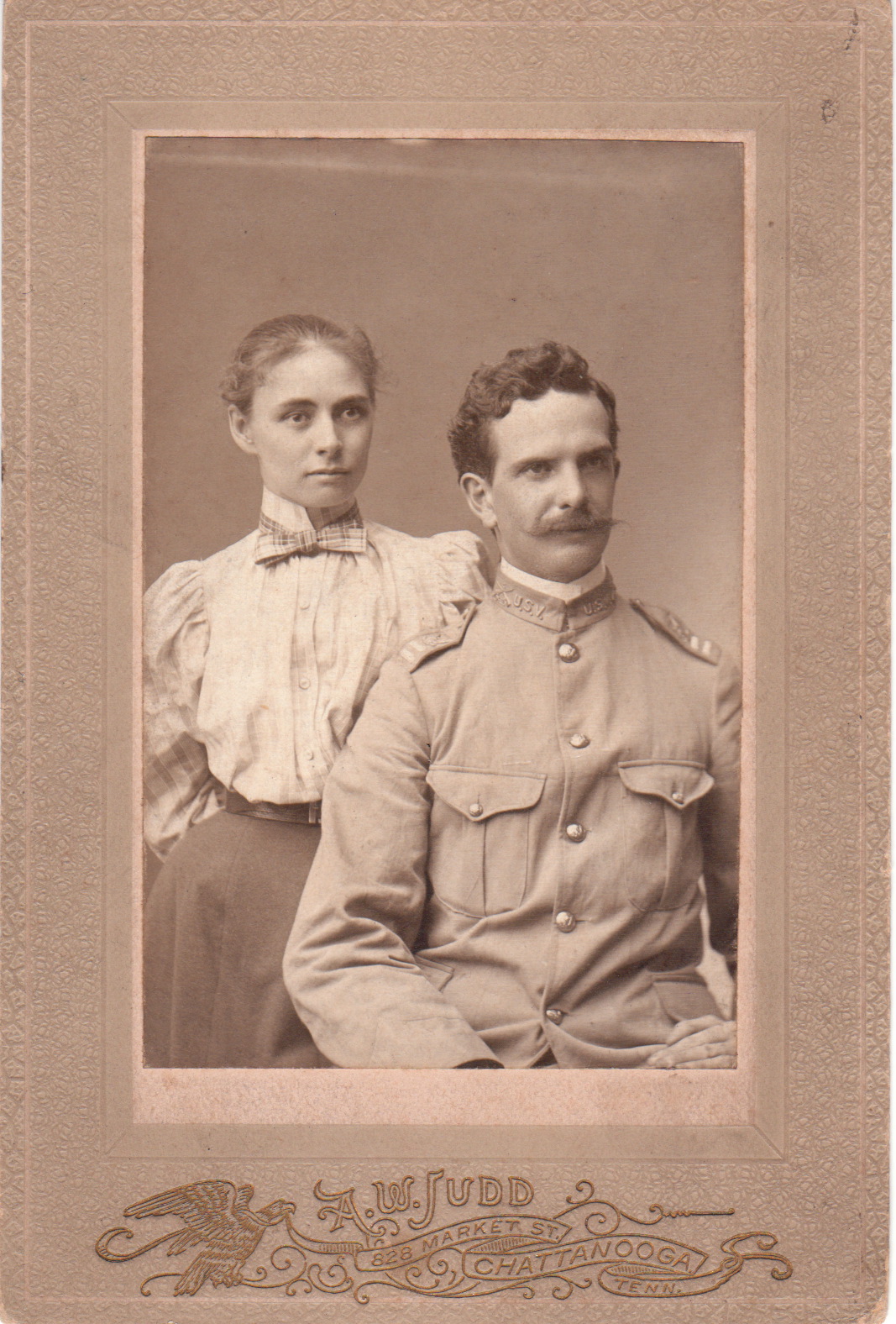
This photograph features a military man with a young woman who is likely his wife. The soldier is wearing collar pins that identify him as a member of the United States Volunteers. Members of the USV were enlisted in the army but were separate from units of the regular US Army. Although volunteer regiments existed during the civil war, the USV was not officially named until the Spanish American War in 1898. The volunteer army was a quick way to supplement the regular army during times of war and was unnecessary during times of peace. This portrait was likely taken during or just after the Spanish American War. The photograph is smaller than a cabinet card. It measures 3.5″ x 5.25″. Note that the woman is standing behind the man making him appear much more prominent. It almsost seems like that she was not even in the original pose and that she was superimposed onto his photographic portrait. The photographer is A. W. Judd of Chattanooga, Tennessee. Judd was born in 1846. The book “Chattanooga” (1996) reports that Amos Wilson Judd was a civil war veteran who began his photography business in 1877. His name and studio appears in Chattanooga’s business directories from 1890 through 1920. He died in 1929. He had two brothers who were photographers. His son succeeded him in running his studio. Judd had two portraits appear in Wilson’s Photographic Magazine (1900). The Photo Beacon (1906) states that Judd was the President of the Kentucky/Tennessee Photographers Association. Wilson’s Photographic Magazine (1908) indicates that he held a patent for a photography invention. A confederate soldier named Amos Judd was a member of the 2nd Battalion Georgia Infantry (State Guard), Company B. He mustered in as a private and left the service with the same rank.
LITTLE GIRL WEARING A LACE DRESS IN BOSTON, MASSACHUSETTS
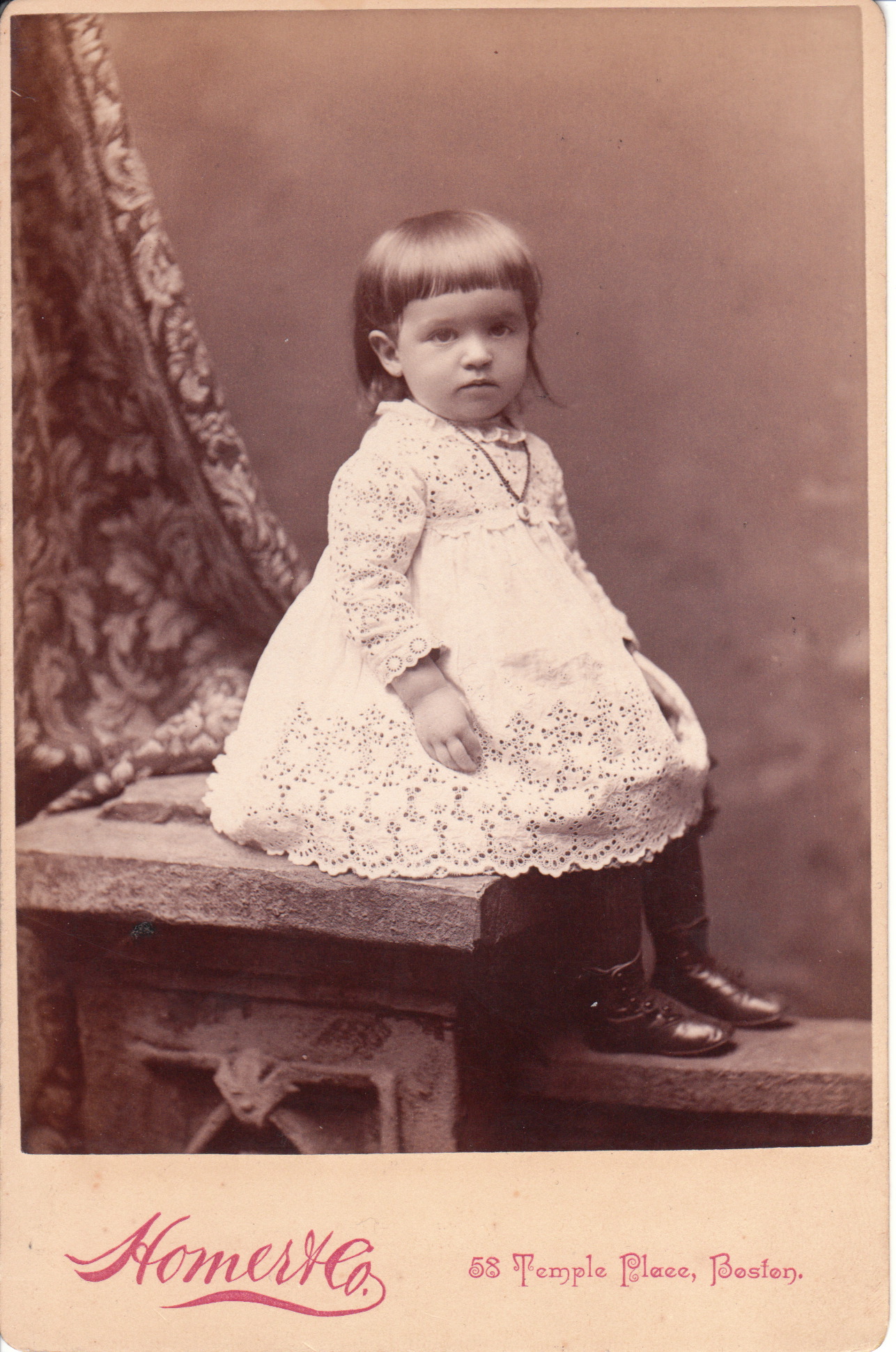 A little girl wearing a lace dress sits on a cement post and poses at the Homer & Company studio in Boston, Massachusetts. She is wearing a necklace and a bewildered expression. Research yielded very little information about the photographer who produced this cabinet card. It is known that the photographer was named George H. Homer and that he actively operated his studio between 1883 and 1885. He also may have worked as a photographer in other years.
FAMILY PORTRAIT IN DULUTH, MINNESOTA
 A well dressed family looks quite handsome as they pose for their portrait at the Christensen studio in Duluth, Minnesota. The father is wearing an unusual tie while the son is wearing a more traditional tie and a wing tipped collar shirt. The mother is wearing a pin on the neckline of her dress. The photographer of this cabinet card is John Christensen. The Bulletin of Photography (1916) reported that Christensen was one of several Duluth photographers who signed a petition urging the licensing of traveling photographers who passed through the city. The petition stated that these traveling photographers enlarged pictures at very low prices but then compelled people to purchase very expensive frames. They also charged customers in advance to enlarge family photos and then left town without doing the work or returning the treasured photographs.
ACTRESS IN VIENNA DRESSED IN EXOTIC JAPANESE COSTUME
 This cabinet card photograph features an actress in an exotic Japanese costume. The photographer is S. Weitzmann whose studio was located in Vienna, Austria. Writing on the reverse of the image dates the photograph as being produced in 1907 and advertising on the reverse states that the studio won medals in exhibitions in Paris, London, and Grand Prix in 1906. The woman in this image is wearing gloves and an interesting hat. She is also holding a fan. Weitzmann is mentioned in Hitler’s Silent Partners: Swiss Banks, Nazi Gold, And The Pursuit Of Justice (2011). The book states that Weitzmann was the foremost portrait photographer in Vienna and worked for the Austrian Royal Court before its demise in 1918. To view other photographs by Weitzmann,click on the category “Photographer: Weitzmann”.
HANDSOME YOUNG MAN IN BANGOR, MAINE (FEMALE PHOTOGRAPHER)

A handsome young man preens for the camera at the Ramsdell & Halloran studio in Bangor, Maine. Writing on the reverse of the photograph is not totally legible but appears to state “Board of Editors” and “Kallour” or Kallow”. Despite the written clues on the reverse of the photograph, research did not uncover any information pertaining to this gentleman’s identity. Investigating did reveal that one of the photographers of this image was female. Miss Emily I Ramsdell (1856-1917) appears in the 1880 census as living with her parents in Atkinson, Maine and working as a school teacher. Examining several Bangor city directories reveals that she was employed as a photographer as early as 1892 and as late as 1914. The 1887 through 1899 directories show that she was partnered with Thomas F. Halloran. The Bulletin of Photography (1917) reports her death at age sixty-one.
PORTRAIT OF ENGLISH THEATER ACTOR MR KENDAL PLAYING THE ROLE OF PRINCE GENERAL KARATOFF IN “THE SILVER SHELL”
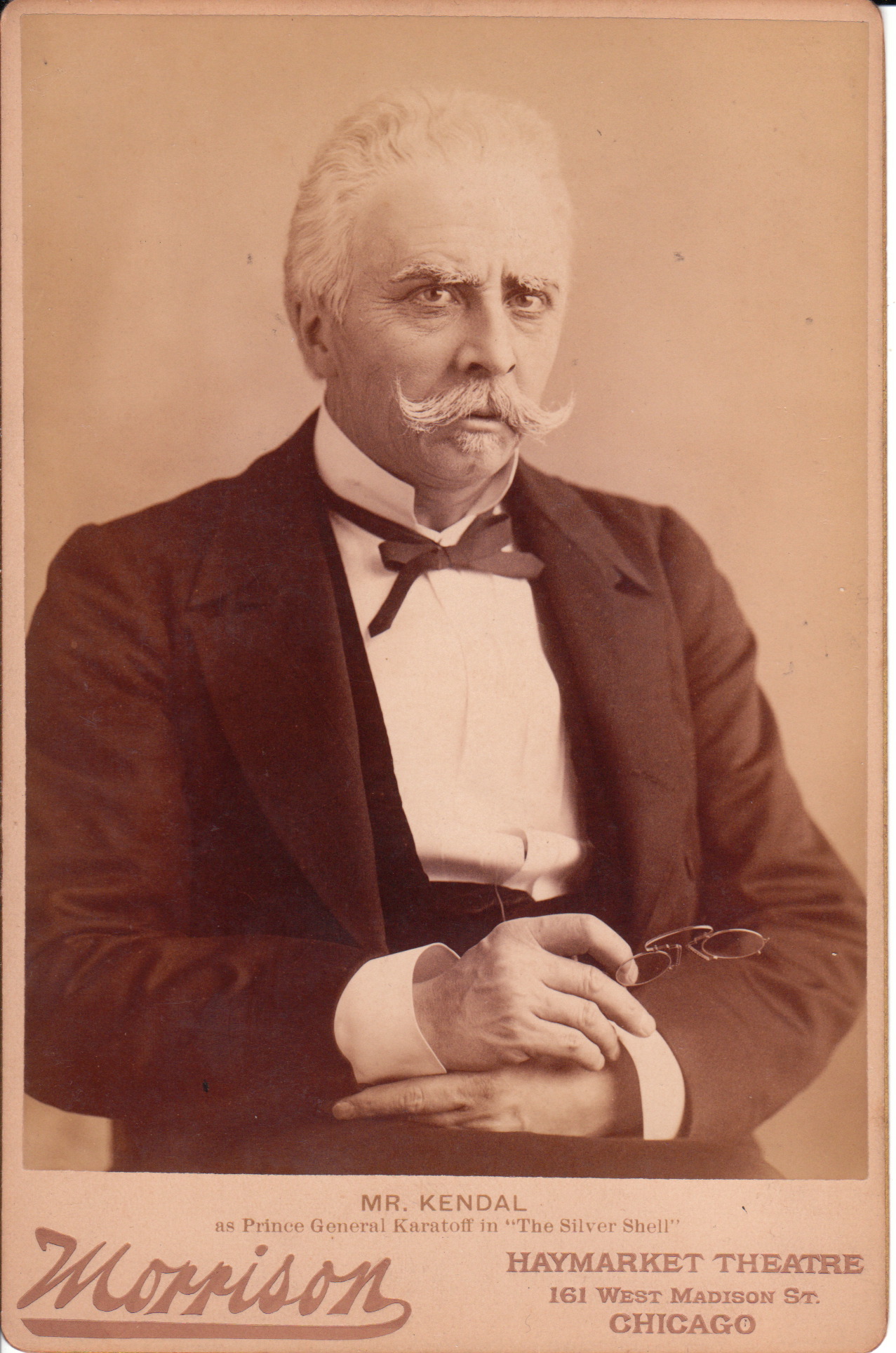
William McKenzie Morrison produced this cabinet card portrait of actor William Hunter Kendal (1843-1917). Morrison’s studio was housed in the Haymarket Theatre building in Chicago, Illinois. Morrison was known for being a photographer who specialized in taking photographs of celebrities. To view other portraits by Morrison, click on the category of “Photographer: Morrison”. Kendal’s given name was William Hunter Grimston and he was an English actor and manager. He was born in London and had his theatrical debut in Glasgow at age eighteen. Four years later he appeared in London at the Haymarket Theatre. In 1869 he married Madge Robertson (1848-1935) and they performed together for many years. Kendal was a co-partner in managing the St. James Theatre from 1879 through 1888. Between 1889 and 1895, Kendal and his wife toured successfully in the United States and Canada. Their American debut was in “A Scrap of Paper” (1889). The couple retired from acting in 1908.


 THE CABINET CARD GALLERY