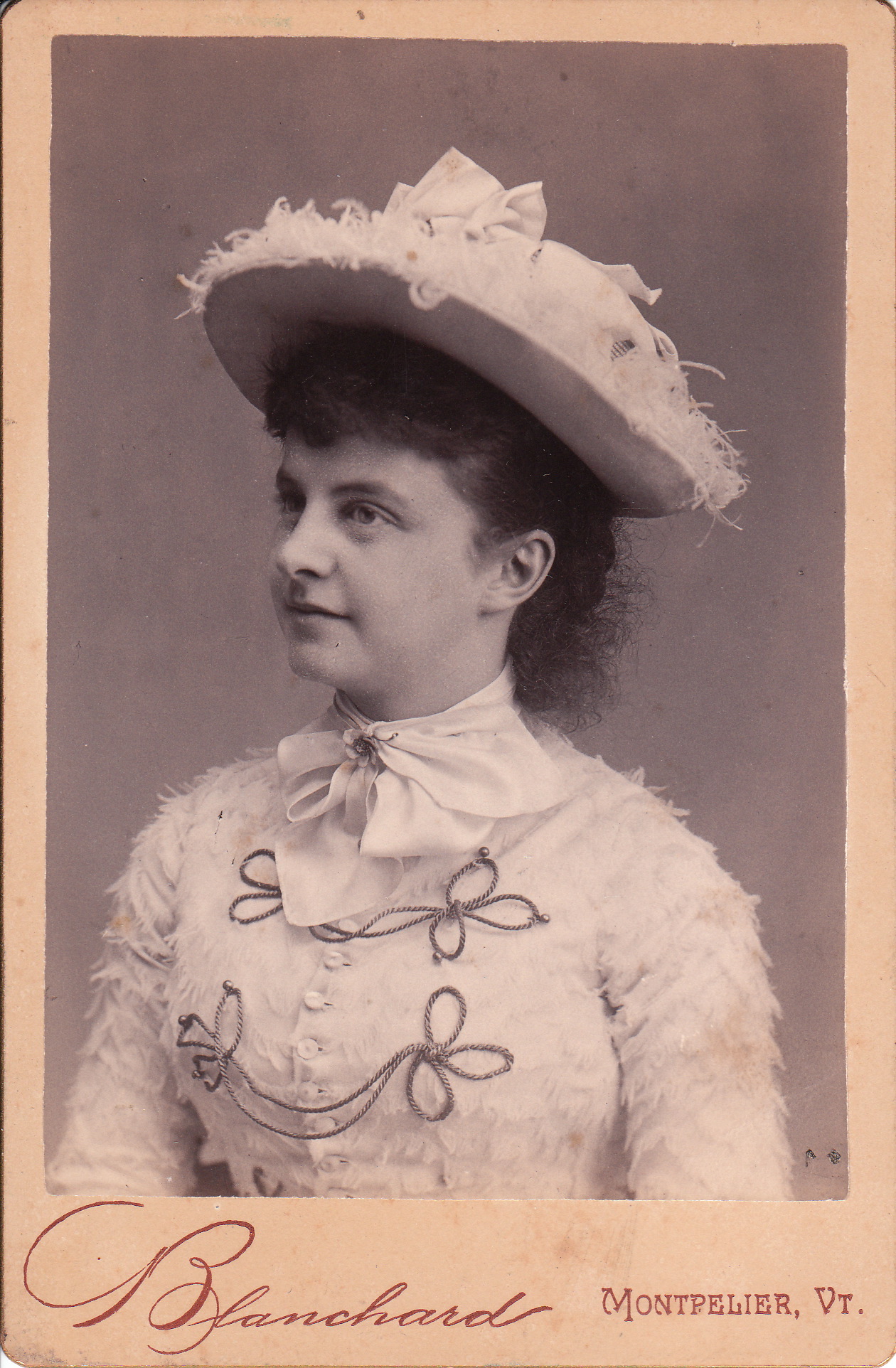
 This cabinet card is a portrait of a pretty feathered woman. It is probably misleading to call her a feathered woman, when in fact, it is her dress and hat that is covered with feathers. She is certainly wearing a creative, albeit, odd dress, especially since the photograph was made pre “Big Bird”. The photographer was A. N. Blanchard, and he was located on State Street, in Montpelier, Vermont. Azel Norman Blanchard (1843-1923) was a Civil War veteran who was a member of the 1st US Sharpshooters (Co. F). He established a photography business in Barre, Vermont, in 1865 and moved to Montpelier where he established a studio in 1880. Research reveals that his photography business was listed in the Montpelier directories of 1883 and 1887. He was buried in Green Mountain Cemetery, in Montpelier.
FEATHERED LADY OF MONTPELIER, VERMONT

FASHIONABLE WOMAN IN OXFORD, MICHIGAN
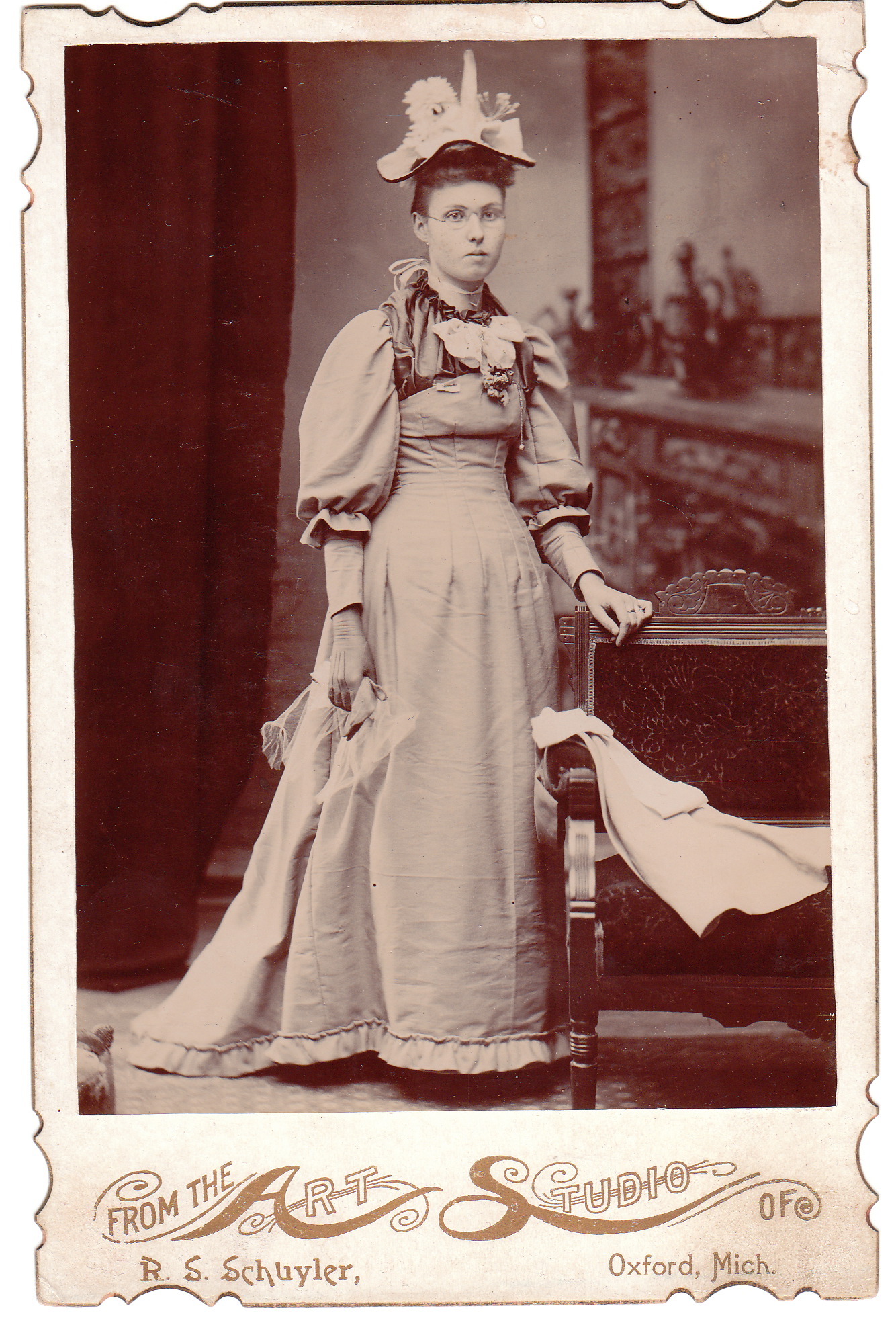 This Cabinet Card is an image of a fashionable woman. She clearly decided to wear one of her finest dresses and her favorite hat for her photograph session at the Art Studio of R. S. Schuyler, in Oxford, Michigan. The woman is wearing wire rim glasses and one glove. She is holding the second glove in her gloved hand. She is also holding something else in the gloved hand. Hopefully, a visitor to the Cabinet Card Gallery, will be able to identify the article she is holding along with the glove. Why is she wearing just one glove? Perhaps, she wants the photograph to show the ring that she is wearing on the middle finger of her ungloved hand.
FORLORN BRIDE AND DISTANT GROOM ON THEIR WEDDING DAY IN MILWAUKEE, WISCONSIN (CAN THIS MARRIAGE BE SAVED?)
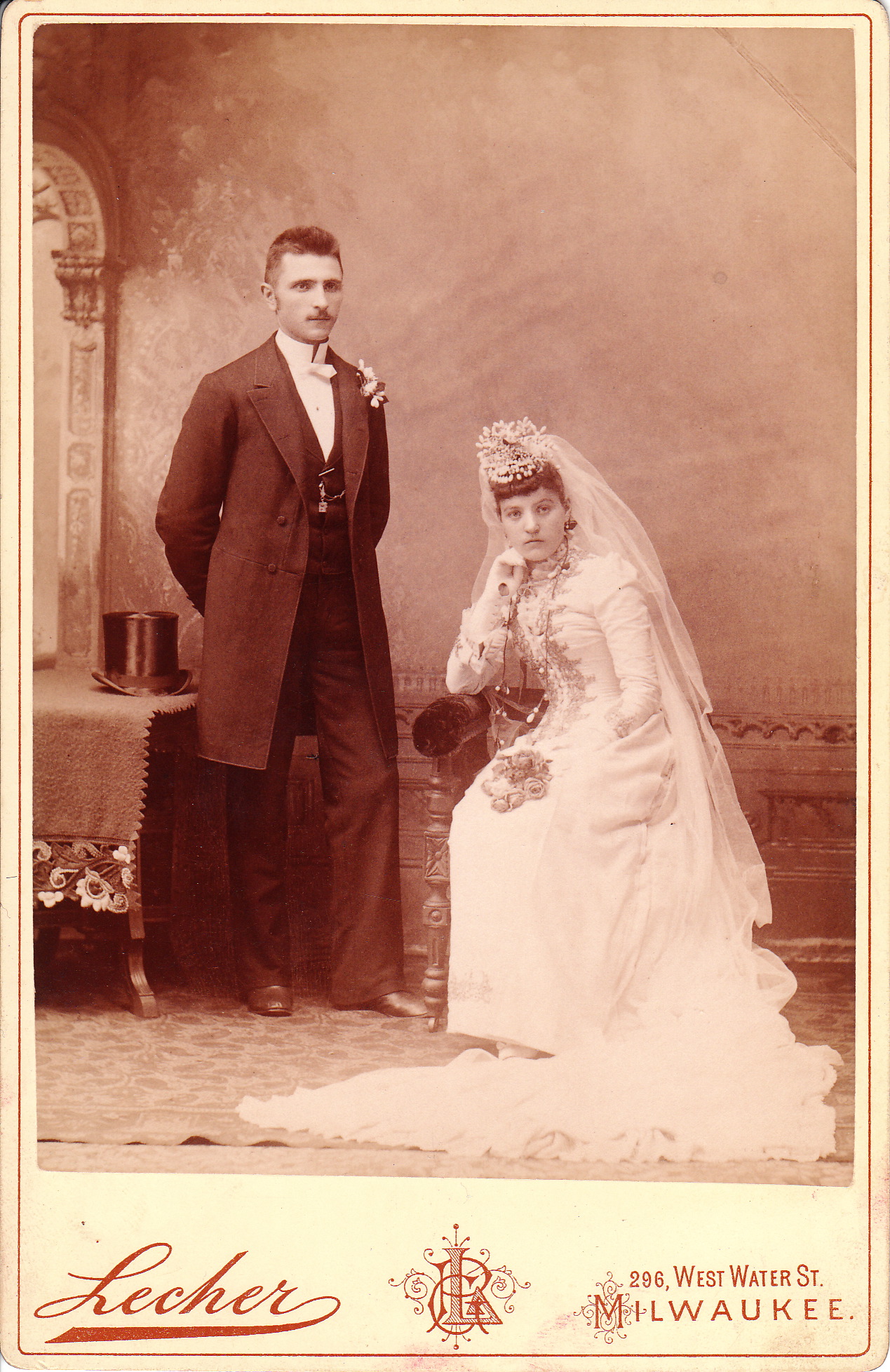 This cabinet card is a wedding portrait photographed by Lecher, in Milwaukee, Wisconsin. The bride in this picture appears quite attractive in her wedding gown. She has a lovely veil and has a bouquet of flowers on her lap. The bride seems troubled. Is she questioning her decision to marry her husband? Did her Maid of Honor look more beautiful than she did? The well dressed groom appears quite concerned as he stands quite far from his bride with his hands clasped behind his back, and his top hat rests on the table next to him. The posing of this wedding couple is quite unusual. The couple seem emotionally and physically very distant from each other. Can this marriage be saved? The photographer, Paul G. Lecher, was a native of Germany, who came to the United States at two years of age. Research reveals that he definitely operated his studio in 1889 and 1890, and perhaps, in other years too.
ATTRACTIVE ROMANIAN WEDDING COUPLE
 This photograph features an attractive couple posing for their portrait on their wedding day. The bride looks beautiful in her wedding gown and veil. She clutches a beautiful arrangement of flowers. The groom sits unusually close to his bride. This is a rather intimate image for the era that it was taken. The handsome groom is attired in formal wear and is holding a pair of gloves. The photographer is named Adler and his studio was in Brasov, Romania. The reverse of the photograph has advertising for the studio written in three languages, calling the city three different names. The Romanians used the word Brasov, the Hungarians called the city, Brasso, and the Germans referred to the city as Kronstadt. The city was significantly influenced by all three cultures. One of three Adler brothers is the photographer of this image. Leopold Adler (1848-1924) is the most likely candidate. Leopold Adler was the son of a Jewish factory owner. He came to Transylvania in 1872 and settled in the Kronstadt/Brasso area. He initially worked with his younger brother, Alfred, in the photo studio that his brother Moritz established in 1870. In 1873, he worked with Carl Bomches. After 1875, his brothers returned to Bohemia, and Leopold operated the studio and became a very successful photographer.He retired in 1900 and his assistant Josef Schuller took over the studio, but Leopold came out of retirement and returned to running his business between 1909 an 1915.
TWO YOUNG MEN POSE WITH THEIR BIKES AND UNUSUAL RIDING CLOTHES IN PECK, MICHIGAN
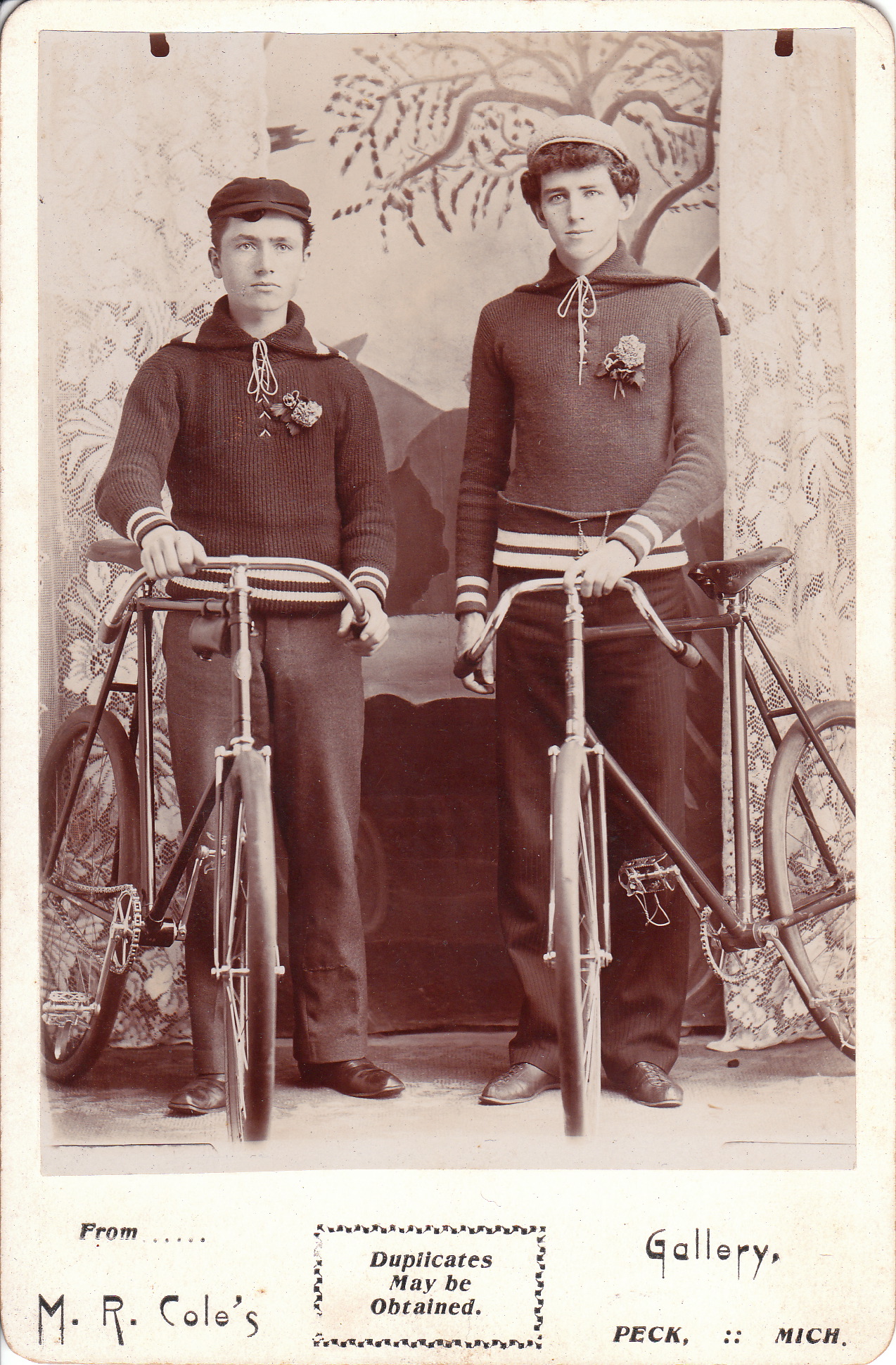 This cabinet card photograph captures two young men posing with their bicycles. They are wearing similar and unusual outfits. it looks like they are wearing the predecessor to “hoodies”. However, rather than hoods, it appears that they are wearing capes. Both guys are also wearing flowers pinned to their chest. Are these fellows about to ride in a parade? Are they wearing typical bike riding outfits? Hopefully, a visitor to the cabinet card gallery will leave an informative comment concerning the subjects outfits. The photographer of this image is M. R. Cole of Peck, Michigan. Cole is listed in a 1904 Michigan directory as a photographer and a jeweler.
MILITARY MARKSMAN IN MILWAUKEE, WISCONSIN
 This cabinet card features a young soldier in his uniform. He is a member of the Wisconsin 4th Infantry, Company D. He is wearing a kepi on his head and a fatigue coat. His uniform displays a number of marksman badges. The photographer is Herman A. Feiker of Milkwaukee, Wisconsin. Research is incomplete, but, reveals that he operated a photography studio during 1889 and 1890. In 1889 he was partners with George Raab in running a studio at 1102 Walnut, in Milwaukee. Records indicate that Feiker married Mina Horstman in 1887.
CROSS DRESSER IN MONTEZUMA, IOWA (AND SO IS LOLA)
 The previous owner of this cabinet card believed that the woman in the image may be a man. Perhaps the jacket and tie that she is wearing is the predominant evidence that she/he is a cross dresser. I am not very convinced that the subject of this photograph is a man, but it certainly is a possibility. Never forget the wise words of the well respected group of philosophers known as the Kinks; “Well I’m not the world’s most masculine man, but I know what I am, and I’m glad I’m a man, so is Lola”. An interesting side note is that the photographer of this image, Will C. Fryatt, is responsible for a number of other unusual photographs taken at his studio in Montezuma, Iowa. It is entirely possible that Fryatt never took the photograph, but instead, bought the rights to sell it at his studio. There is also a possibility that the individual in this image is an actor/actress from a touring theatre company. Another mystery that this cabinet card presents is as follows: Why does a town in Iowa get named after an Aztec Emperor of Mexico? Stay tuned, research is in progress. A visitor to the cabinet card gallery commented that the woman in this cabinet card looked very much like male impersonator, Ella Wesner (1851-1917) who was popular in the 1880’s. She was a part of the Gilded Age vaudeville circuit. You can view an image of Miss Wesner below. The assertion that the portraits of the two women in these photographs look similar, is very true. Do you think that they are one and the same person?

TWO HOTEL MAIDS IN CONCORD, NEW HAMPSHIRE
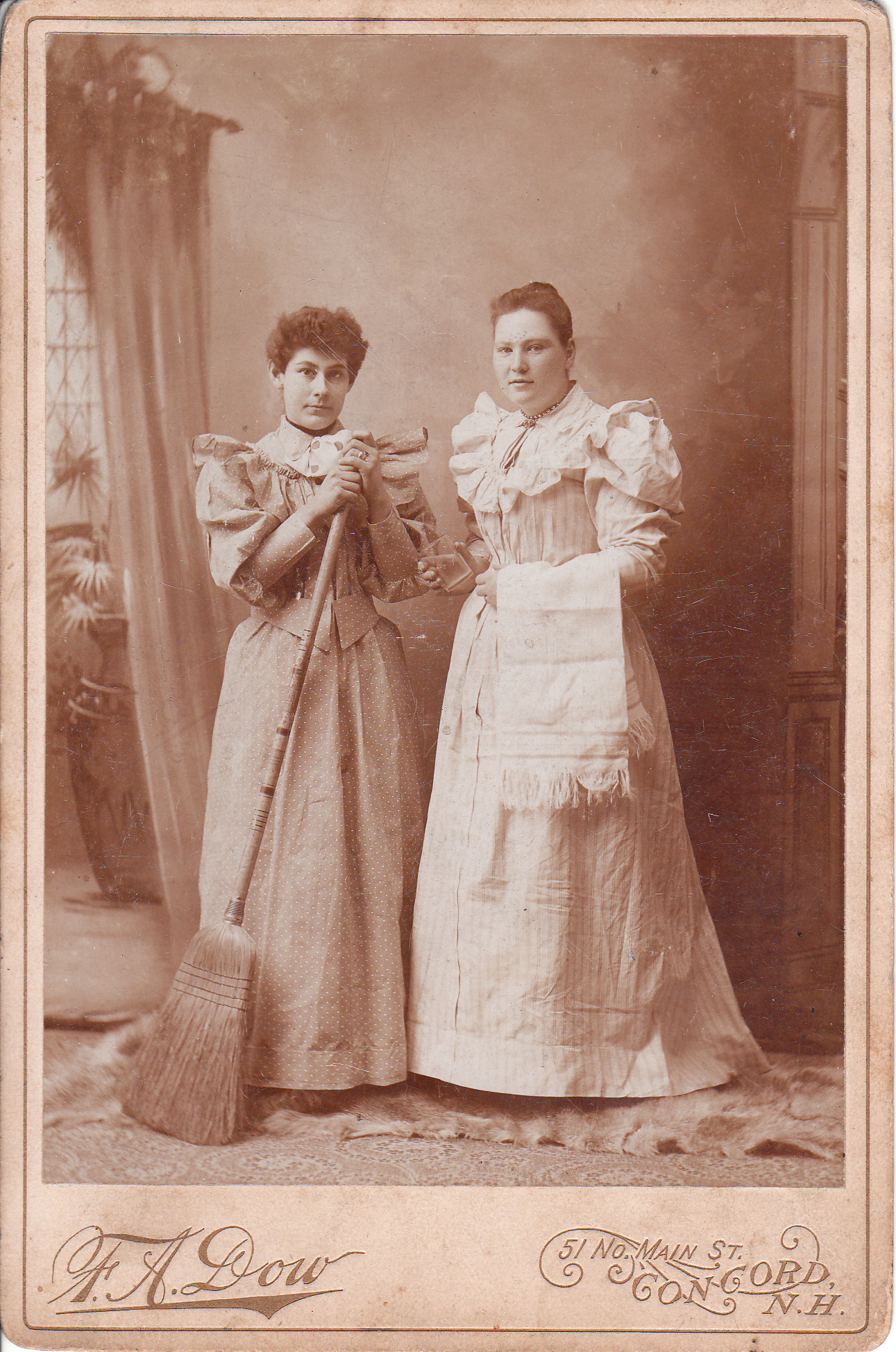 This occupational cabinet card features two women posing with supplies of their trade. The women are likely hotel maids, or house servants. One maid is holding a broom, while the other is holding a glass and what appears to be, a clean towel. The photographer of this image is F. A. Dow of Concord, New Hampshire.
PRETTY WOMAN HOLDING A PRETTY FAN, IN WERSCHETZ, SERBIA
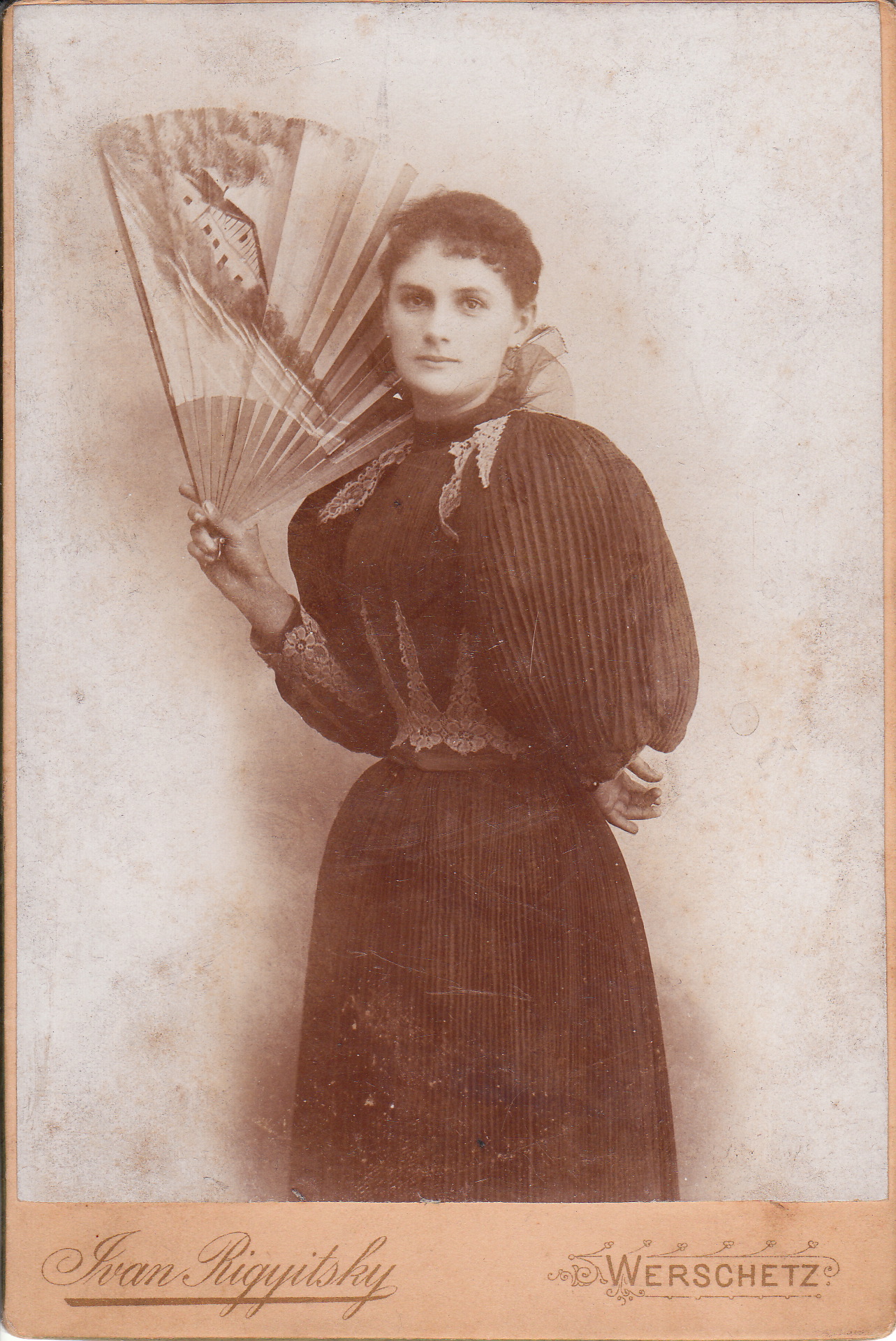 A pretty woman poses for photographer, Ivan Rigyitsky in Werschetz. Werschetz (German name) is a town in Serbia. It is known as Vrsac in Serbia. The town has been under the rule of several different governments over modern times. It was once part of Austria-Hungary. This image has some interesting features. The woman is dressed very fashionably and she is holding an open beautiful fan. Note the lovely scene pictured on the fan. The young lady has a nice figure, with the help of a corset, no doubt.
OUTSTANDING PHOTOGRAPH OF A NATIVE AMERICAN MAN WITH A TURKEY VULTURE PERCHED ON HIS HEAD… (IS THIS IMAGE COUNTERFEIT OR GENUINE?)
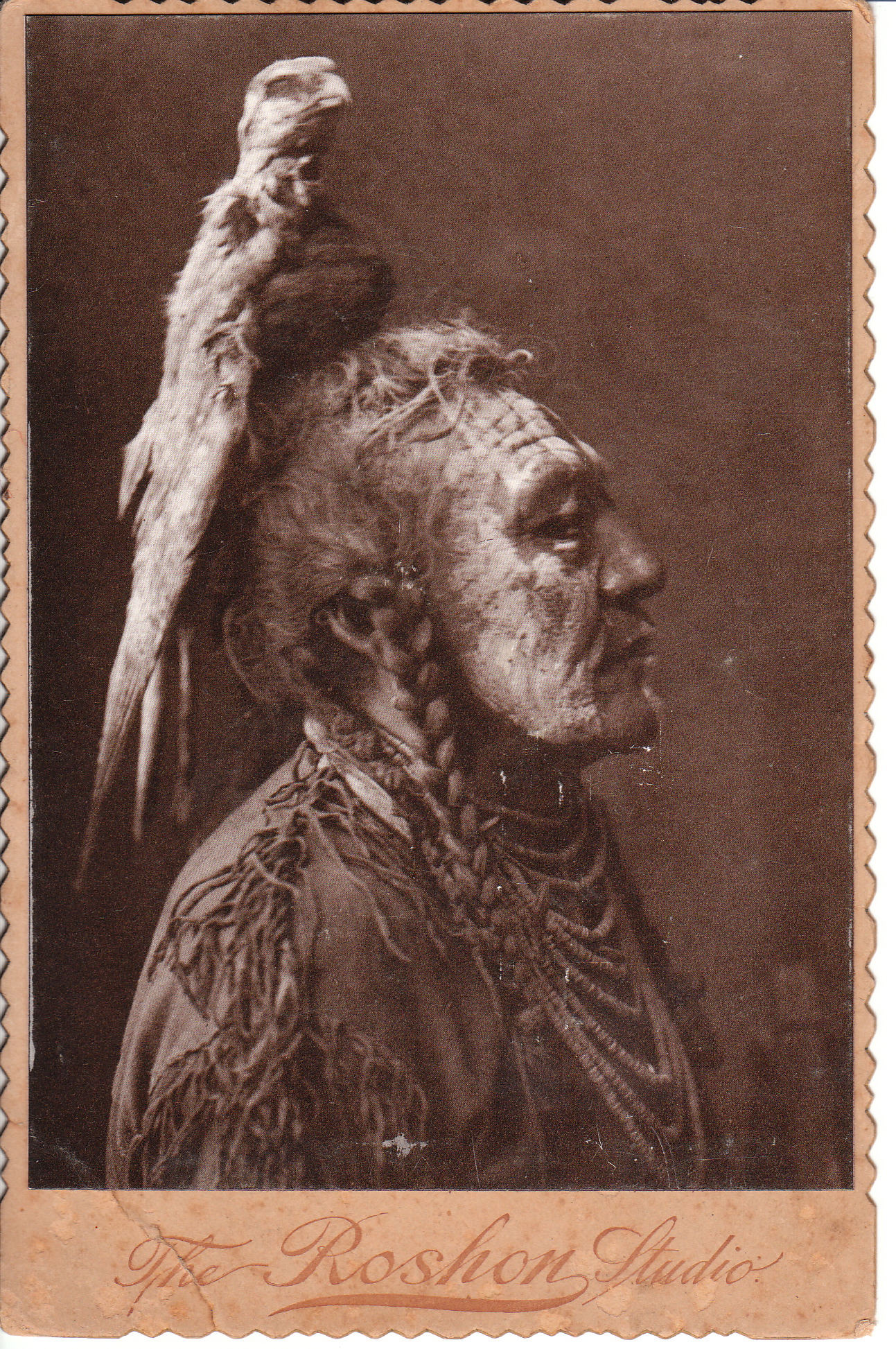 This cabinet card is a terrific image of a Native American dressed in his tribal clothing. He has a bird on his head that looks as weathered as he does. The bird may be a turkey vulture. Hopefully, a visitor to this site with some ornithology knowledge, can better identify or confirm the bird’s species. What an amazing photograph? However, is it a counterfeit cabinet card? I located the cabinet card in an antique store and purchased it with a great deal of reluctance. Native American cabinet cards have a history of being a popular type of cabinet card to counterfeit, due to their potential high value and strong demand. There are a number of methods to make fake images. This photograph does not seem to be a product of a high tech copy machine. However, the image could be a Native American postcard pasted over an “ordinary” cabinet card image. This cabinet card, if not the image, is from the studio of C. S. Roshon of Lebanon, Pennsylvania. The photograph was produced in 1892. Perhaps a traveling western show was in the area of Lebanon; or perhaps Roshon purchased this image to sell at his galleries. The Roshon Galleries were located at 142 North 8th Street, and 22 South 9th street, in Lebanon. Roshon also had a studio somewhere in New Jersey. Any comments from Cabinet Card Gallery visitors, regarding the authenticity of this cabinet card, would be greatly appreciated. To view other photographs from Roshon’s studio, click on the category “Photographer: Roshon”.


 THE CABINET CARD GALLERY