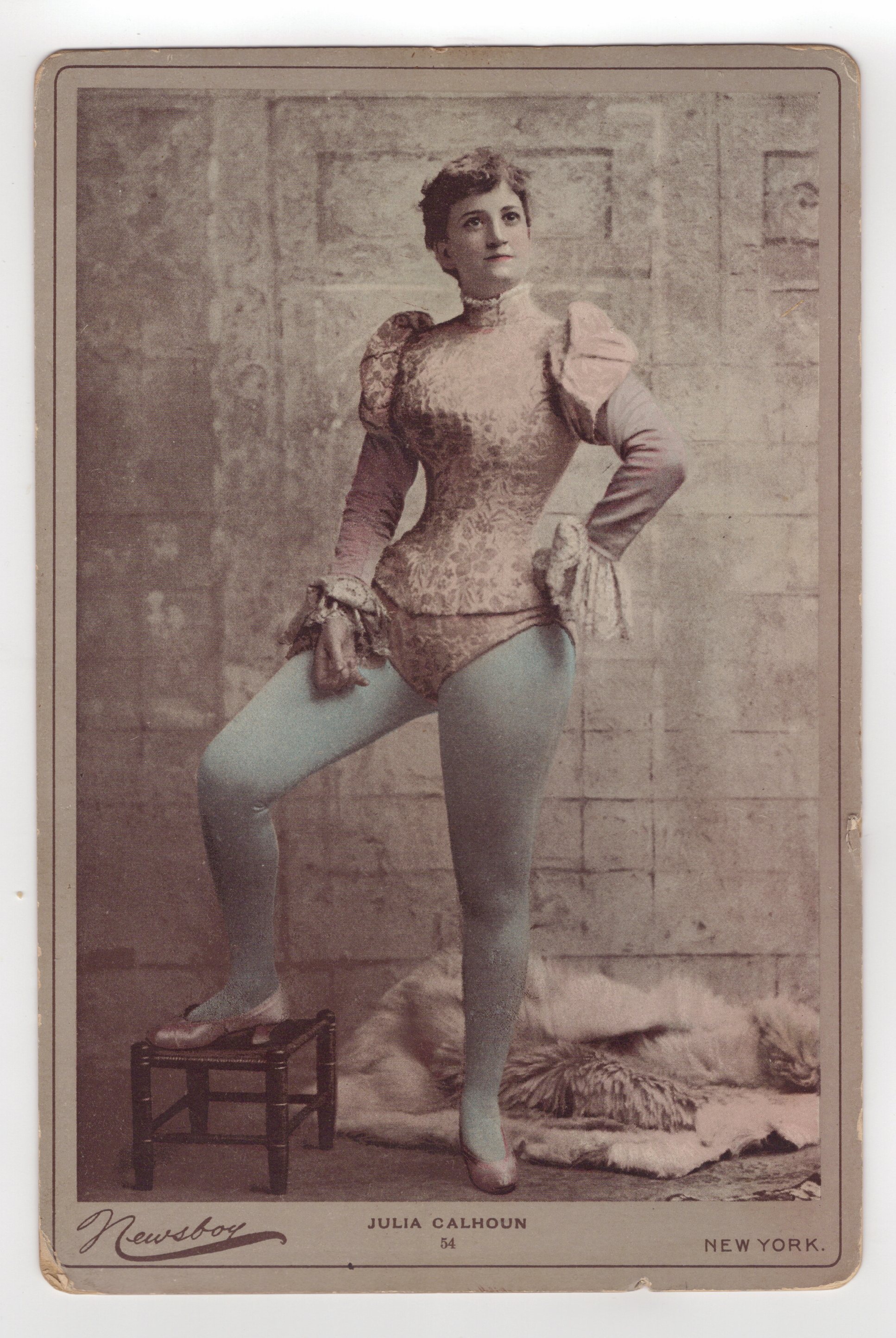
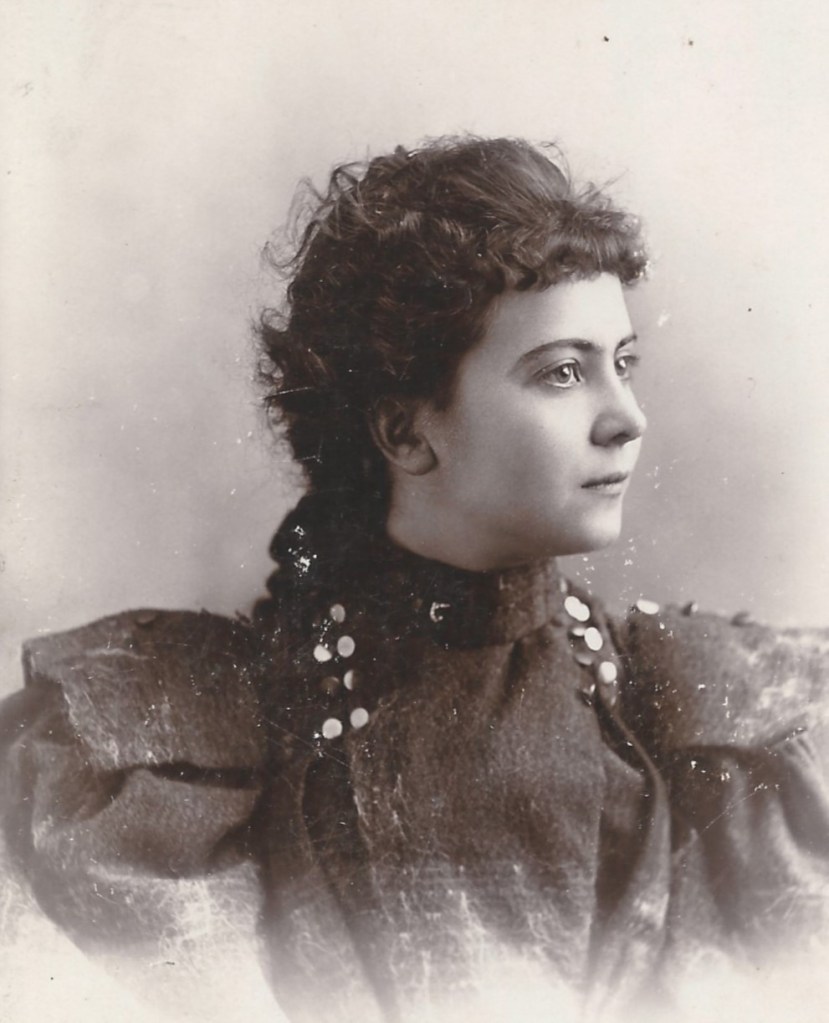
This vintage large format cabinet card features American stage and silent film actress, Julia Calhoun (1870-?). She was adept at playing roles in comedy films including a number of roles opposite Oliver Hardy from about 1914 into the 1920’s. Her photograph appears in the Billy Rose Theater Collection at the New York Public Library. She was married to Kirkland Calhoun, also an actor. Julia Calhoun, according to the IMDb, appeared in 32 films between 1912 and 1923. Some of her more well known films include “The Human Orchid (1916)”, “The Man that Stayed at Home (1919)”, “The Match-Breaker (1921)” and “Just Like a Woman (1923)”. This cabinet card was published as part of the Newsboy tobacco advertising collection (No.54). This photograph measures about 6 x 9 inches. SOLD
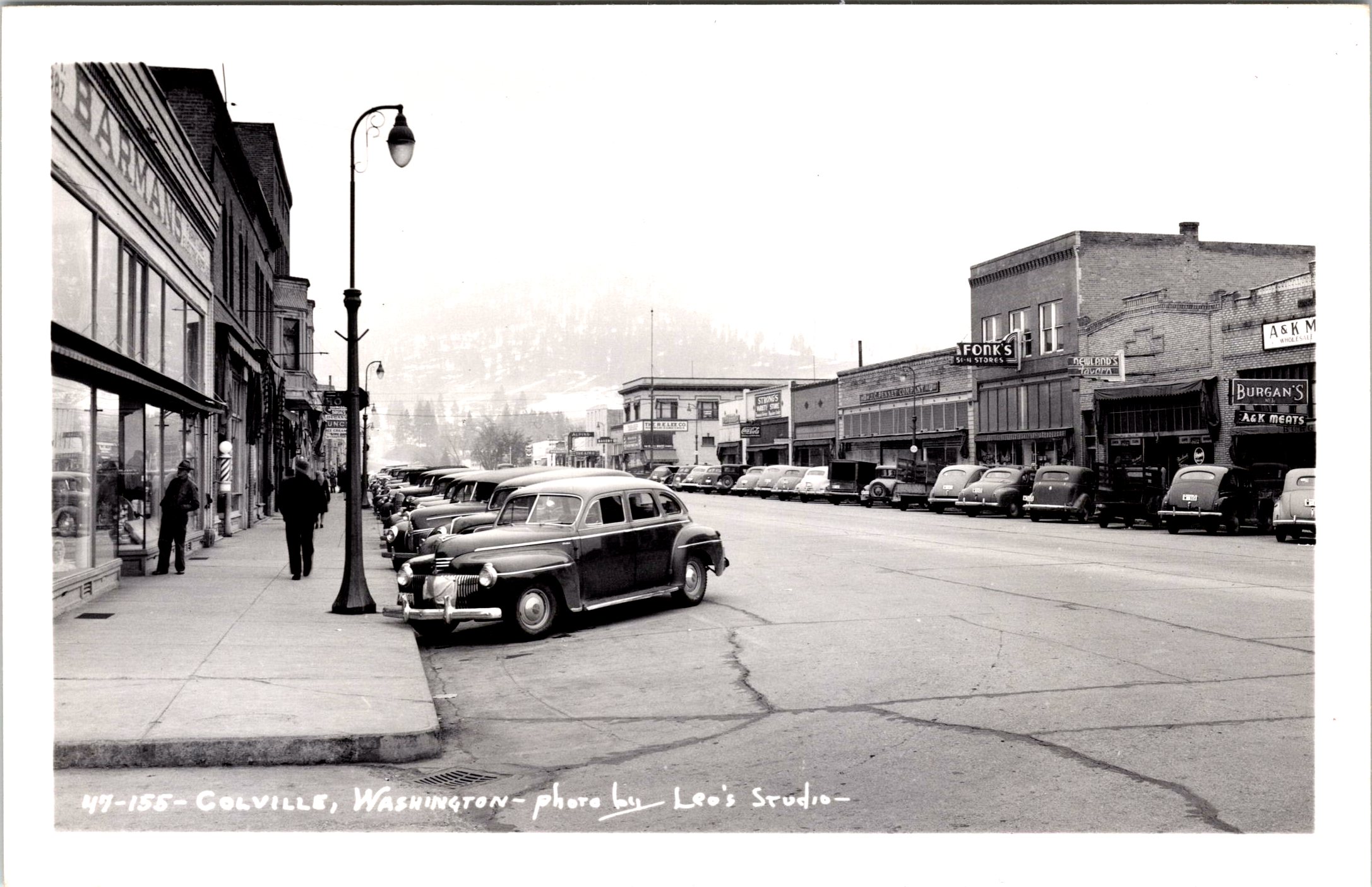
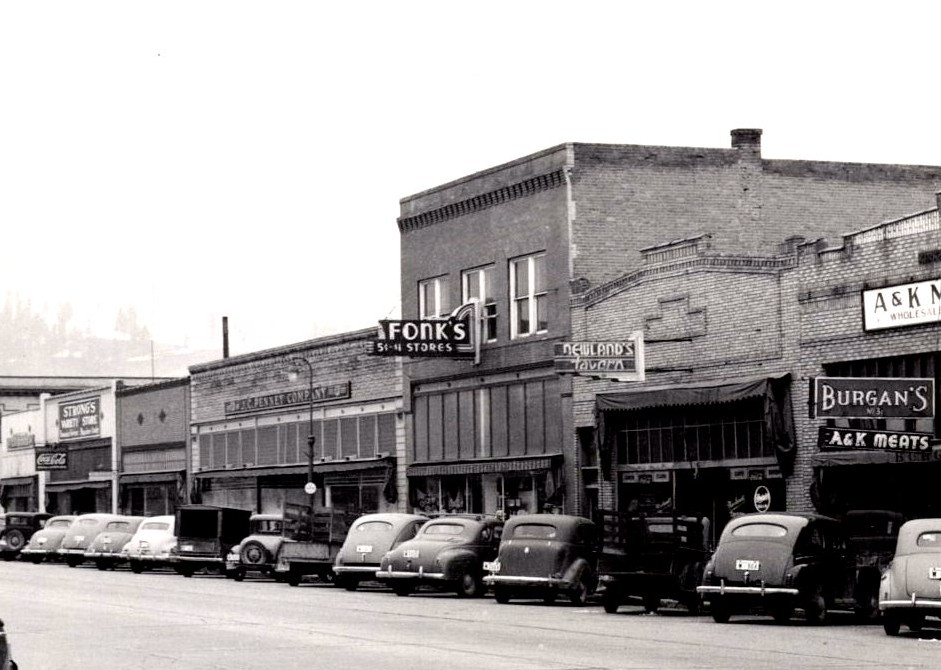
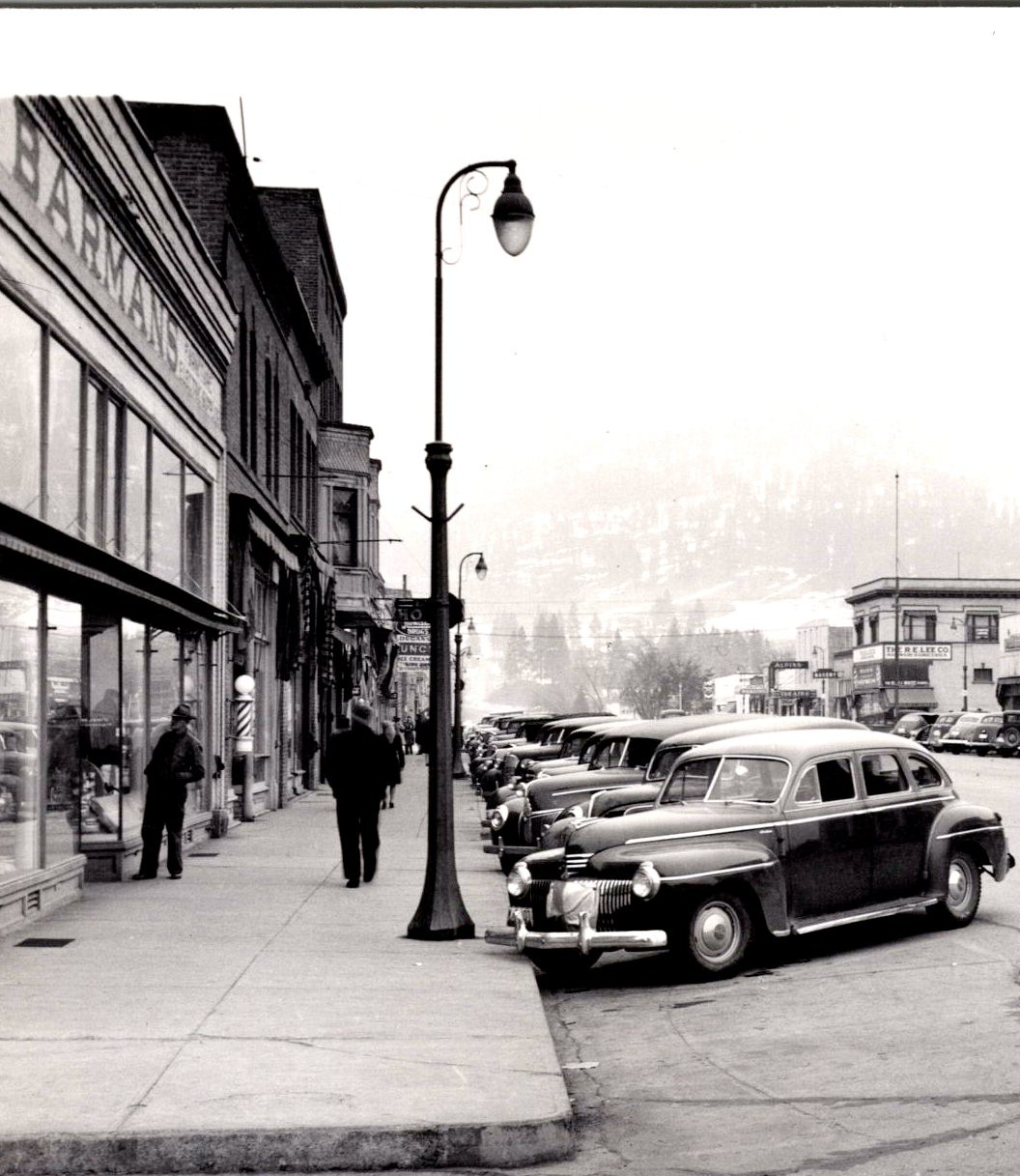
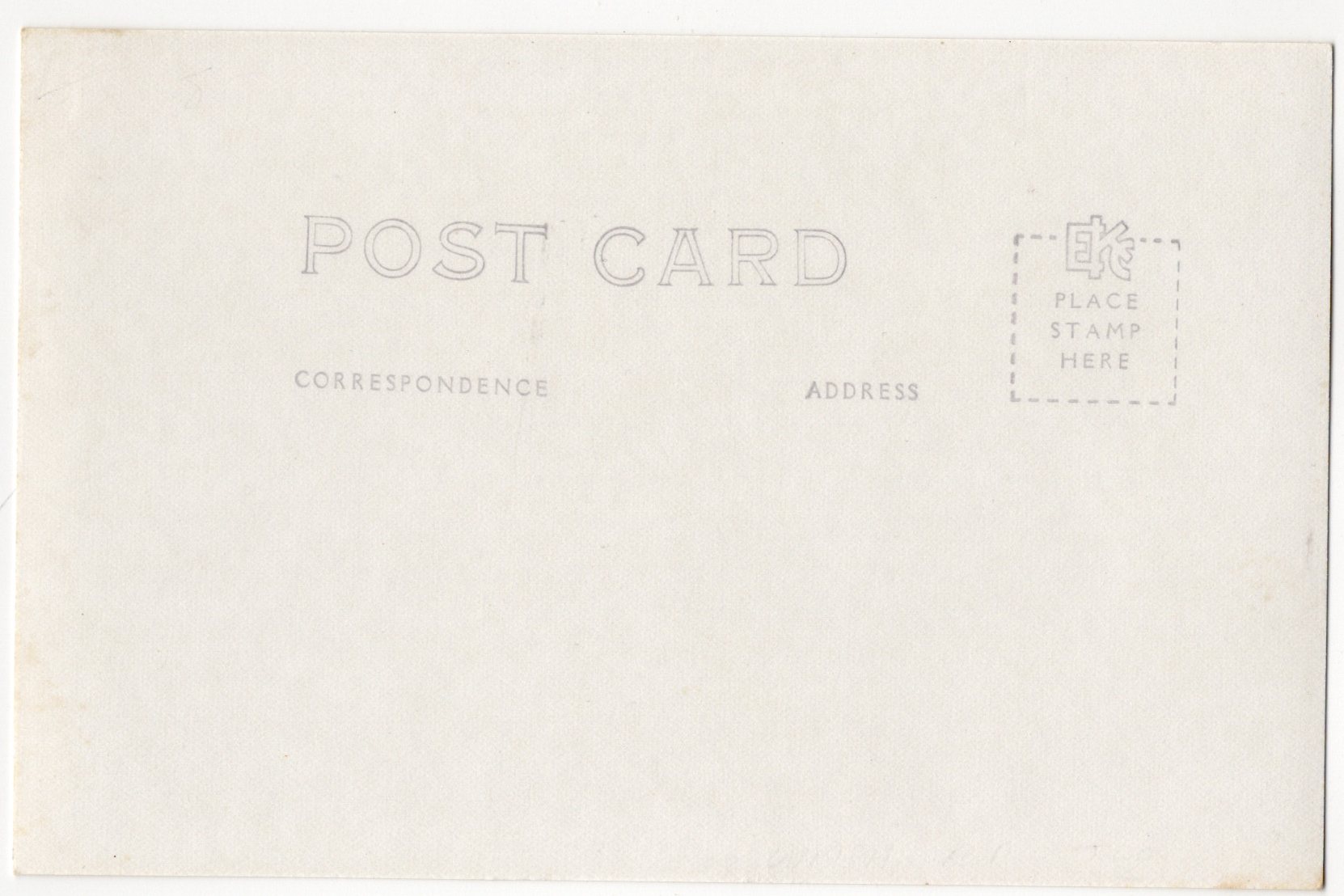
The image portrays a vibrant downtown block of Colville, Washington. The view looks down a main street lined with parked cars and pedestrians strolling the sidewalk. Most of the automobiles are mid- to late-1940s American models, easily identified by their rounded fenders, grille styles, and size — notably sedans from Ford, Chevrolet, and Plymouth. The cars suggest a post-WWII era, likely no later than 1951. Several business signs appear clearly in the photograph. These signs include advertising for Fonk’s Five & Dime, A & K Meats, Newland’s Tavern, Sterling’s Variety Store, Gamble Store, a traditional barber’s pole, and a Coca Cola sign. The caption on the bottom of the image notes that the photo was by Leo’s Studio and number 449-155 in a series. The stamp box on the reverse contains an EKC (E. C. Kropp Company) logo, which was widely used between 1939 and 1950. When combined with the types of cars shown in the image (none appearing post-1950), a strong estimated date for this postcard is circa 1948–1950.SOLD
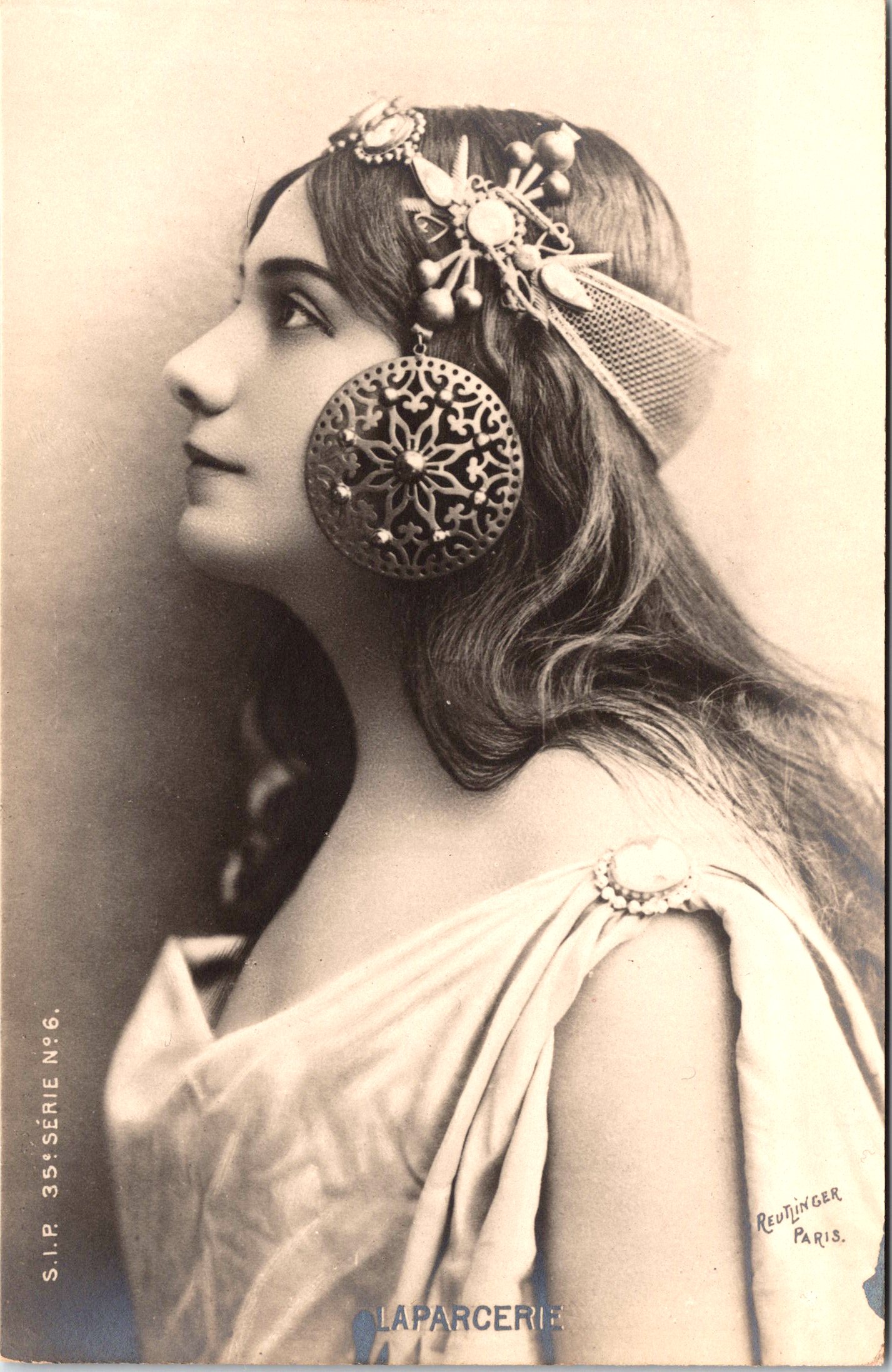
This vintage real photo postcard features a beautiful French actress, theater director, and poet, named Cora Laparcerie (1875-1951). Laparcerie looks quite beautiful, and goddess like, in this profile postcard portrait. Note her ornamental hair band. She played various theatrical productions, including classical plays and original French drams. Laparcerie began her career at the Odeon theater in Paris. Soon she was taking on major roles in French theaters. She was married to Jacques Richepin, the son of poet, Jean Richepin. The pair were a notable couple in French artistic circles. Laparcerie managed several prestigious Parisian theatres. In her later career she concentrated on writing poetry, theater columns and early radio dramas. This postcard was published by SIP and Laparcerie’s photograph was taken by Leopold Reutlinger. This is an undivided back postcard (at least pre 1907). SOLD
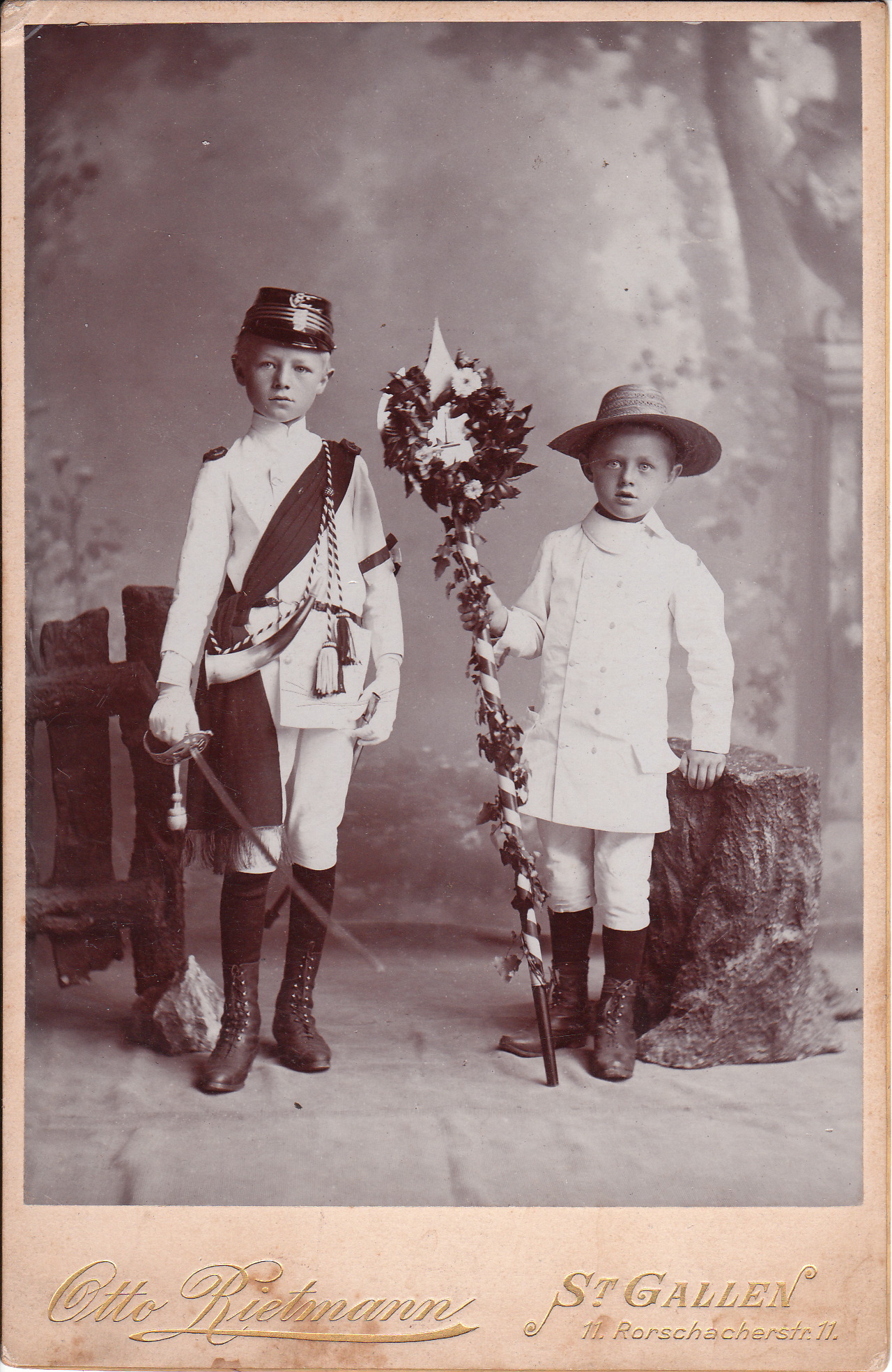
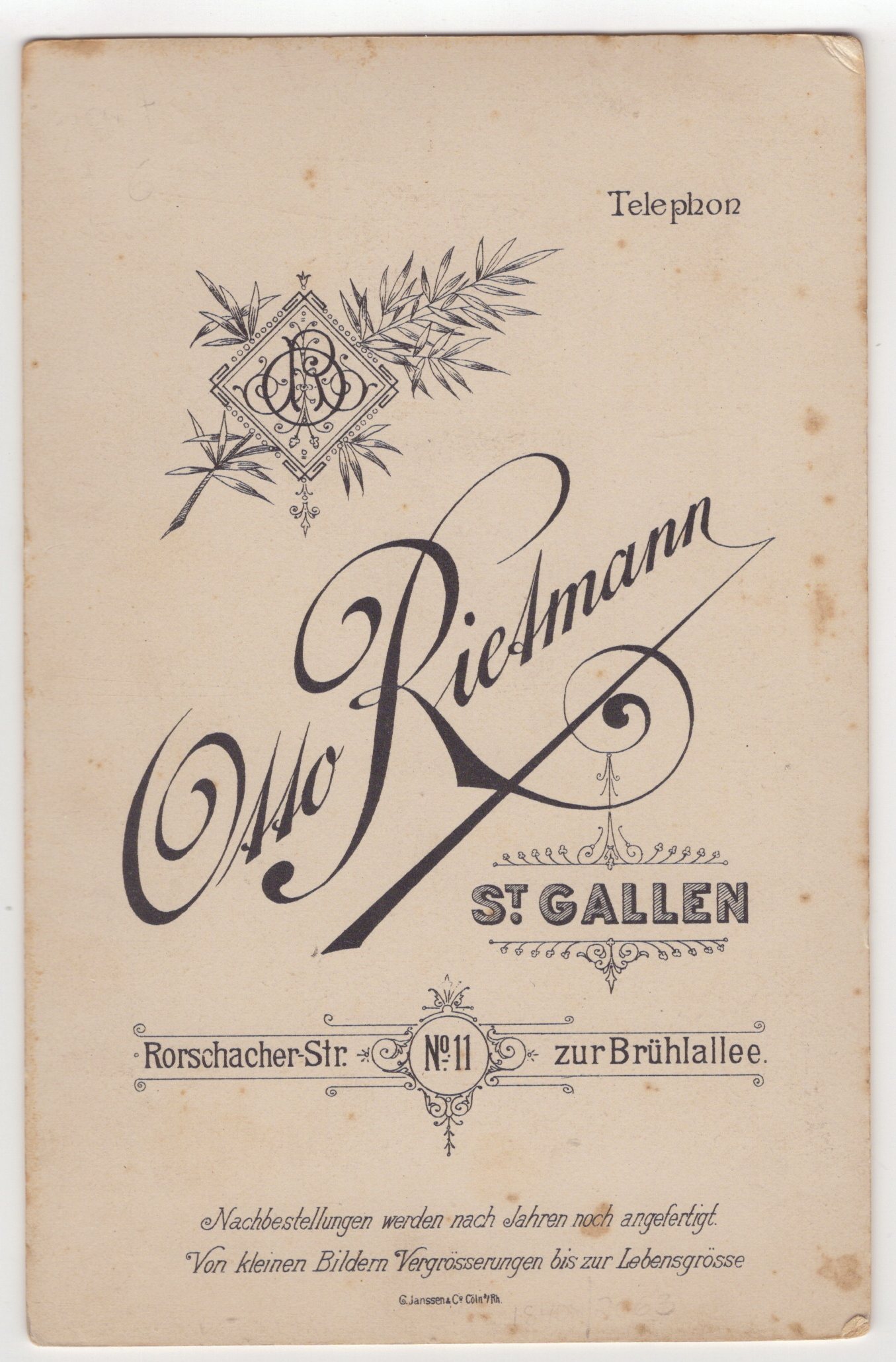
Two boys are dressed in what appears to be military style, as they pose for photographer Otto Rietmann in St. Gallen, Switzerland. The older boy is holding a sword and wearing a gun powder horn. The younger boy is holding something that looks like a decorated lance. Perhaps a visitor to the cabinet card gallery can add additional information about this image. SOLD
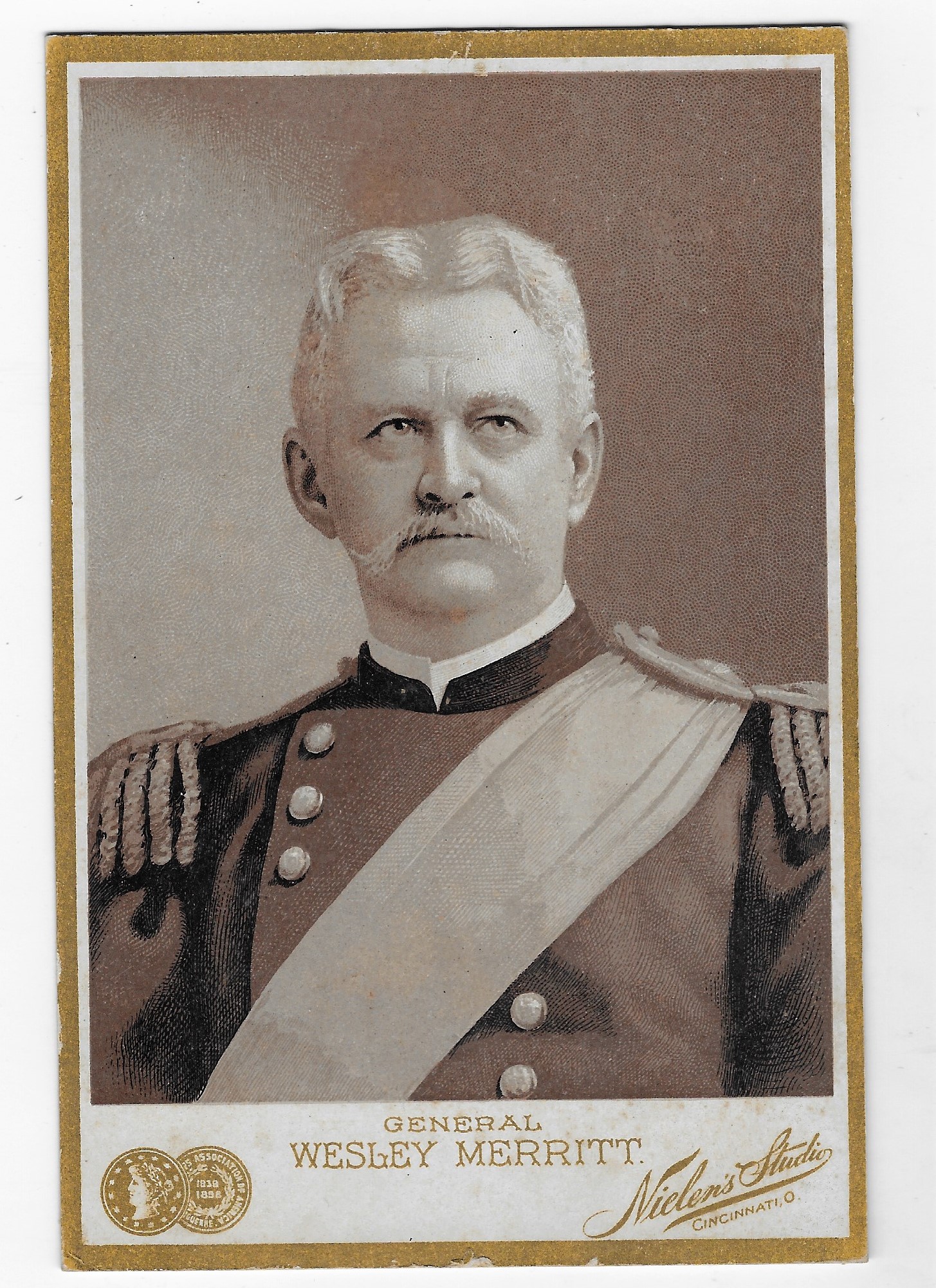
This cabinet card features a portrait of civil war General Wesley Merritt (1836-1910). During the war, he served on the side of the Union. Merritt graduated from West Point in 1860. Initially, as a second lieutenant, he served under John Buford in Utah. In 1862, he was named a Captain in the 2nd Cavalry and participated in the defense of Washington D.C.. In 1863, he was appointed adjutant for Major General George Stoneman. Merritt participated in Stoneman’s Raid in the Battle of Chancellorsville. He participated in the Gettysburg campaign as commander of the Reserve Brigade, 1st Division, Cavalry Corps of the Army of the Potomac. He saw no real action until the third day of the battle. He took part in the attack, led by Brig Gen Judson Kilpatrick on the Confederate right. He sustained a slight wound in the Battle of Brandy Station. His actions at Brandy Station contributed to his promotion to Brigadier General. Upon the death of John Buford, Merritt took over command of the 1st Division of the Cavalry Corps. He led the division during Grant’s Overland Campaign in 1864. Merritt later became the commander of the 1st Division Cavalry Corps of the Army of the Shenandoah, under Major Gen. Phillip Sheridan. He participated in Sheridan’s Valley Campaigns of 1864. His division routed the confederates in the Third Battle of Winchester. He was second to command under General Sheridan during the Appomattox Campaign and was present for the Confederate surrender at Appomattox. He had a long and accomplished career in the military, after the civil war. He commanded the Cavalry in the Southwest and participated in the Indian Wars. After serving on the frontier, he spent five years as superintendent of West Point. In 1895 he was promoted to major general in the regular army. In 1898, he commanded the Eighth Army Corp in the Spanish American War. After the victory, Merritt became the first American military governor of the Philippines. Merritt retired from the army in 1900. His military career had a 40 year duration. This cabinet card appropriately shows General Merritt in military uniform. Nielen’s Studio, in Cincinnati, Ohio is credited just below Merritt’s image. Andries Nielen (1850-1940) was born in Holland. He emigrated to the United States and in time, became the head of a tea and spice firm in Cincinnati. He retired in 1905 and he travelled around the world. He began a new career as a photographer and postcard publisher. He also was an amateur philosopher. He ran a publication espousing his philosophy as well as published the “wisdom” of others. SOLD
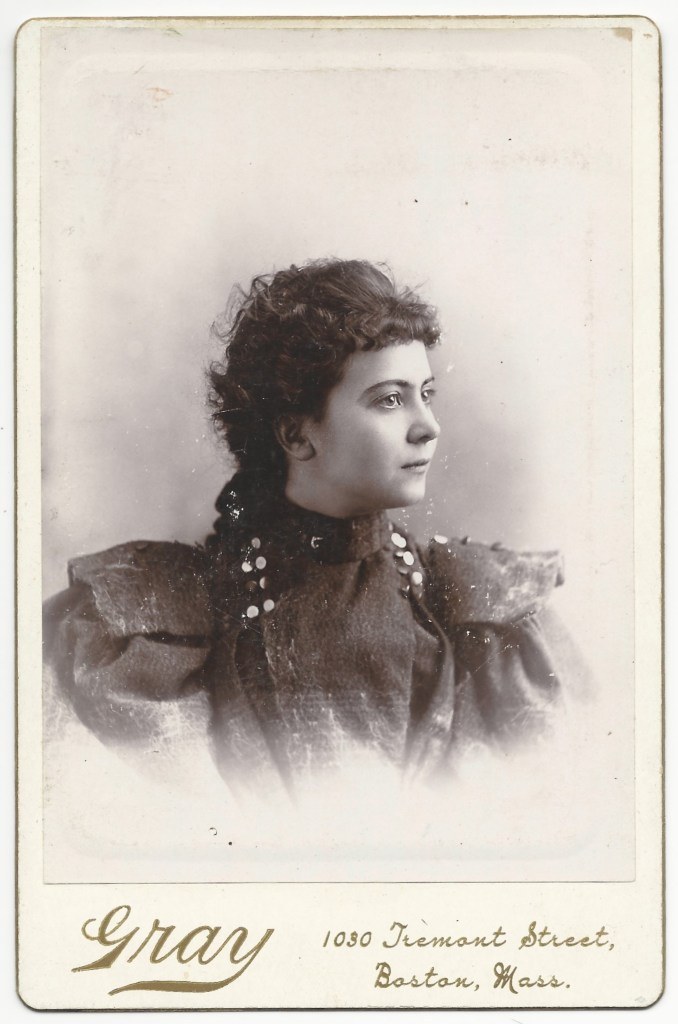
An attractive young woman poses for her portrait at the Gray Studio in Boston, Massachusetts. Take special note of the detail of the subject’s face. The photographer did an excellent job with lighting and posing the subject. The image portrays her skin and facial features with accuracy and clarity. Note her bright eyes and how the photograph details the young lady’s hair. George E. Gray’s (1856-?) studio was located on historic Tremont Row. The 1900 US census lists Gray as living with his wife Minnie and his children Stanley (age 10) and Doris (age 5). He is listed as being born in Maine, although other sources report New Hampshire. The family also had a Swedish live-in woman (age 24) who was their “servant”. The census stated that George and Minnie married in 1889 and George was working as a photographer. The 1920 US census finds 64 year-old George and 50 year-old Minnie living with their son and George was still working as a photographer. In fact, Boston business directories confirm that George worked as a photographer from at least 1882 through 1931. SOLD
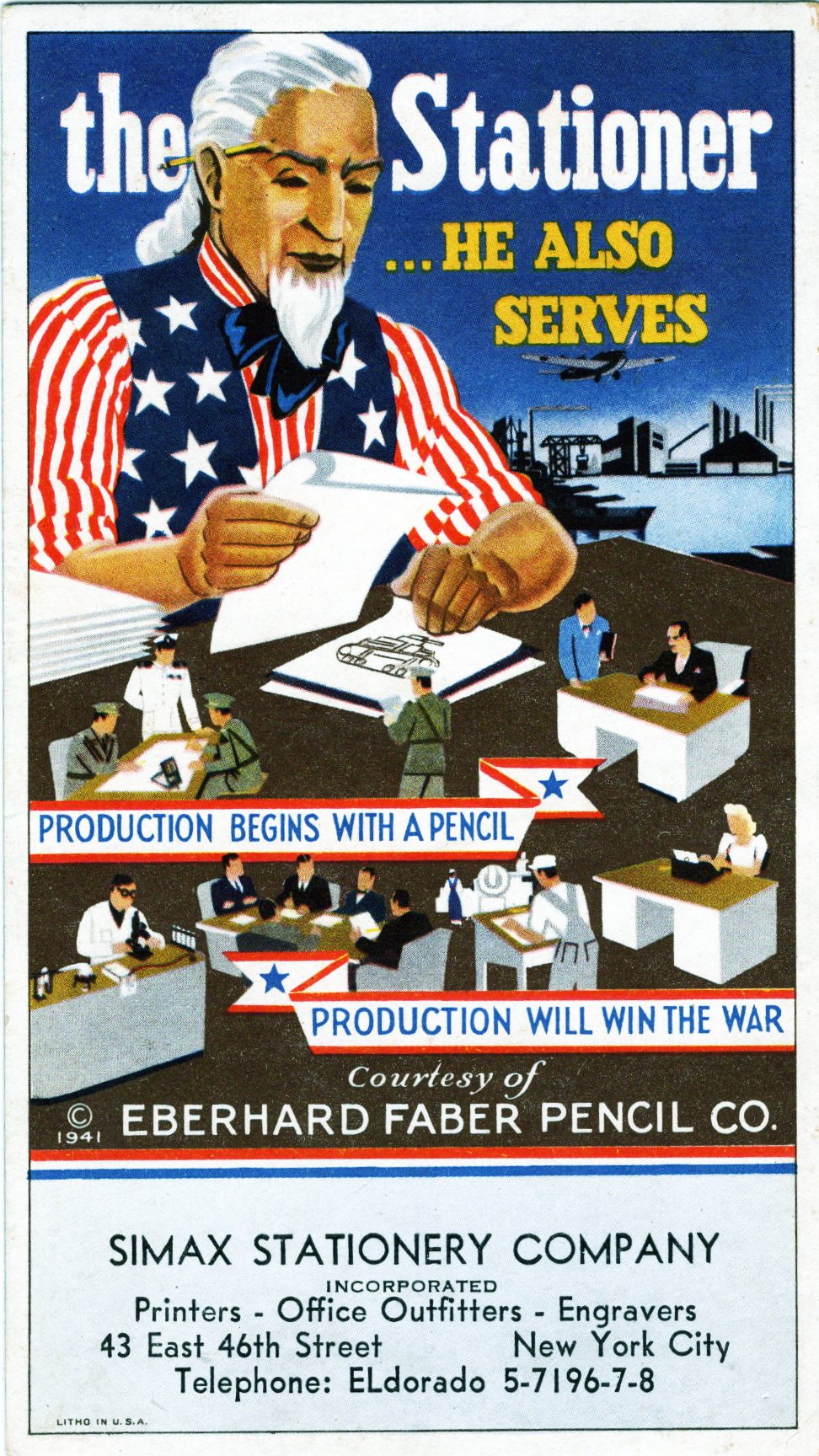
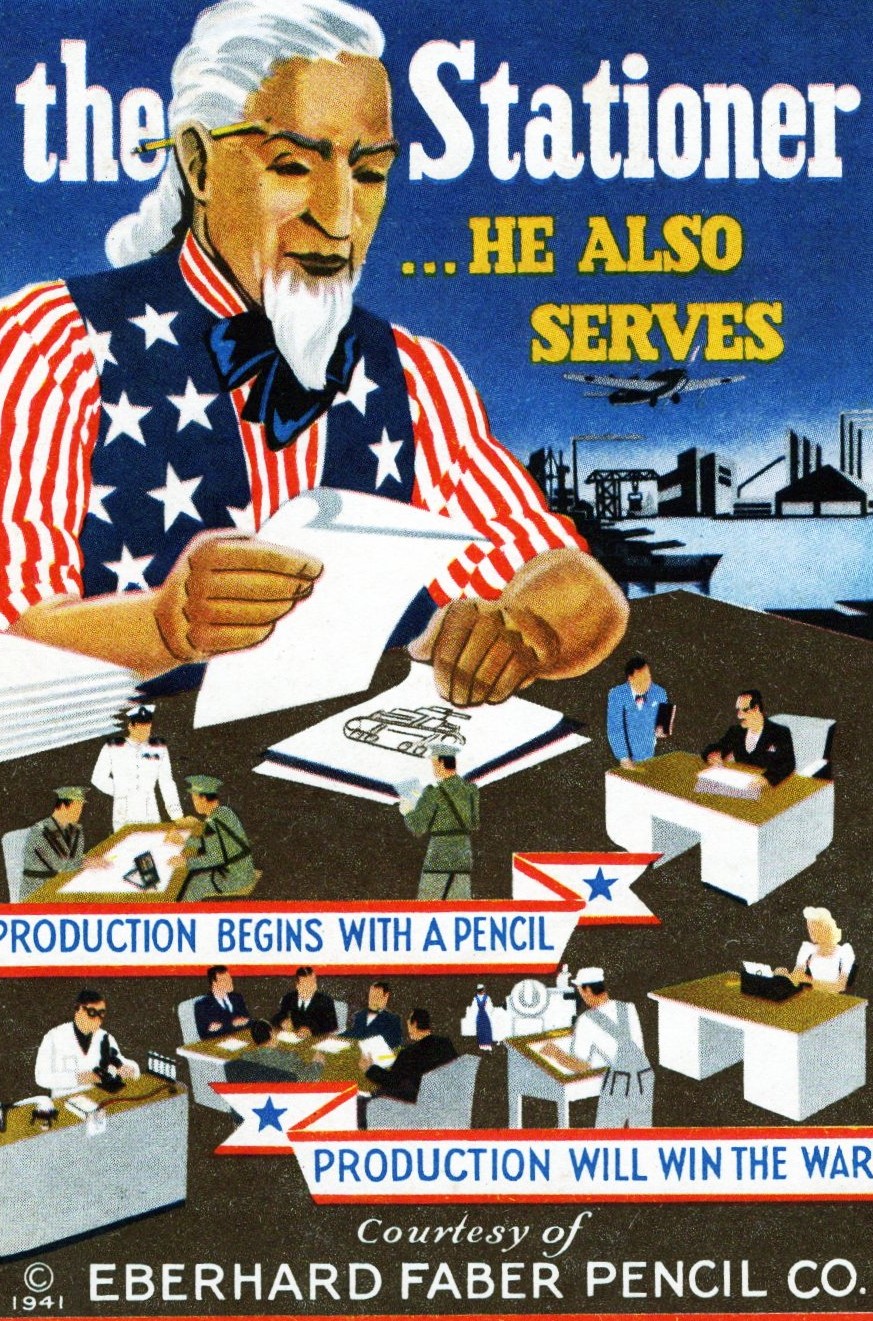
This original 1941 ink blotter, issued by the Eberhard Faber Pencil Co., is a striking piece of World War II-era advertising that highlights the vital role of stationery and writing instruments in wartime production. Measuring approximately 3 1/8 x 5 3/4 inches, this blotter is not only a functional office supply from the past but also a fascinating collectible reflecting the patriotic spirit of the time. The artwork features a Uncle Sam-like figure dressed in a patriotic red, white, and blue vest with stars and stripes. He is seen writing on a piece of paper, reinforcing the idea that even stationers serve the country by supplying essential tools for planning, designing, and producing materials necessary for the war effort. In the background is a busy industrial scene including factories and airplanes, emphasizing wartime manufacturing.The lower portion of the blotter contains two bold banners stating: “Production Begins with a Pencil” and “Production Will Win the War”. The blotter is marked Courtesy of Eberhard Faber Pencil Co. and was distributed by Simax Stationery Company of New York City, a firm specializing in printers, office outfitting, and engraving. Eberhard Faber was a major force in American pencil manufacturing, with roots tracing back to 1761 in Germany. The company’s U.S. operations began in the mid-1800s, and by the early 20th century, they were one of the most respected stationery brands. Known for their high-quality pencils, including the iconic Blackwing 602, Eberhard Faber supplied artists, writers, and engineers. During WWII, their products were essential for military and industrial planning, as reflected in this ink blotter’s theme.This blotter is in excellent condition. The colors remain vibrant, and the artwork is clear and legible, making it an excellent display piece for collectors of vintage advertising, WWII memorabilia, or office ephemera. (SOLD)
The handsome young man in this photograph is named Howard Briscoe. His name is inscribed on the reverse of this cabinet card photo. Briscoe lived in Baraboo, Wisconsin. He lived there all, or most of his life. Briscoe was born in 1878. His father was a miller by trade, Briscoe’s wife was named Julia Simon Briscoe. Howard Briscoe worked as a carpenter for a railroad company. The photographer of this image, Mr. Mould, is mentioned in a number of photographic journals. He placed an ad for his studio in a book about Sauk County, Wisconsin (1891). The Photographic Times (1898) reports on his appointment to a lobbying committee of the Photographers Association of Wisconsin. The Encyclopedia Dubuque (1911) reveals that Sim Mould operated a photographic studio at 107 Main Street in Dubuque, Iowa. The cabinet card gallery has other photographs by Mould, Place his name in the search box to view these other images. The town of Baraboo is situated on the Baraboo river. The town was settled by Abe Wood and originally called Adams. In 1852 it was renamed Baraboo. In the town’s early history it became the home of several sawmills. In the nineteenth century the town served as the headquarters of several circuses, including Ringling Brothers. Baraboo became known as “Circus City”. SOLD
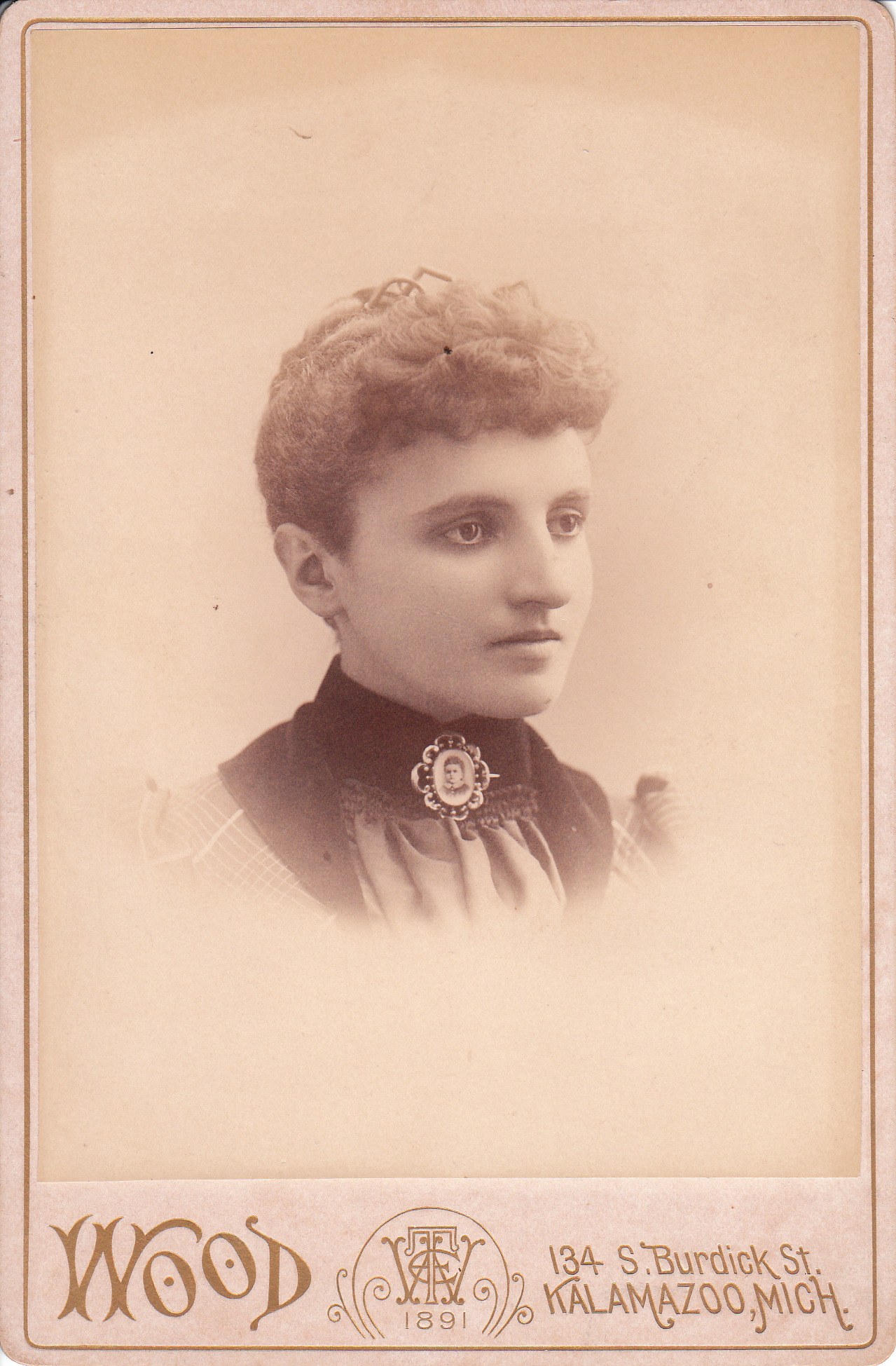
A young woman poses for this cabinet card photograph at the Wood photographic studio in Kalamazoo, Michigan. She is wearing a brooch which may hold a photograph of her daughter, or perhaps, a photo of herself at a younger age. This attractive young woman has curly hair and wonderful eyes. The photographer of this photograph is likely T. E. Wood who is mentioned in photography journals published in 1893 and 1895. This cabinet card has the year 1891 printed on the bottom of the card which is likely the year that this photograph was taken. Check out other photographs by Wood by clicking on the category “Photographer: Wood”. SOLD
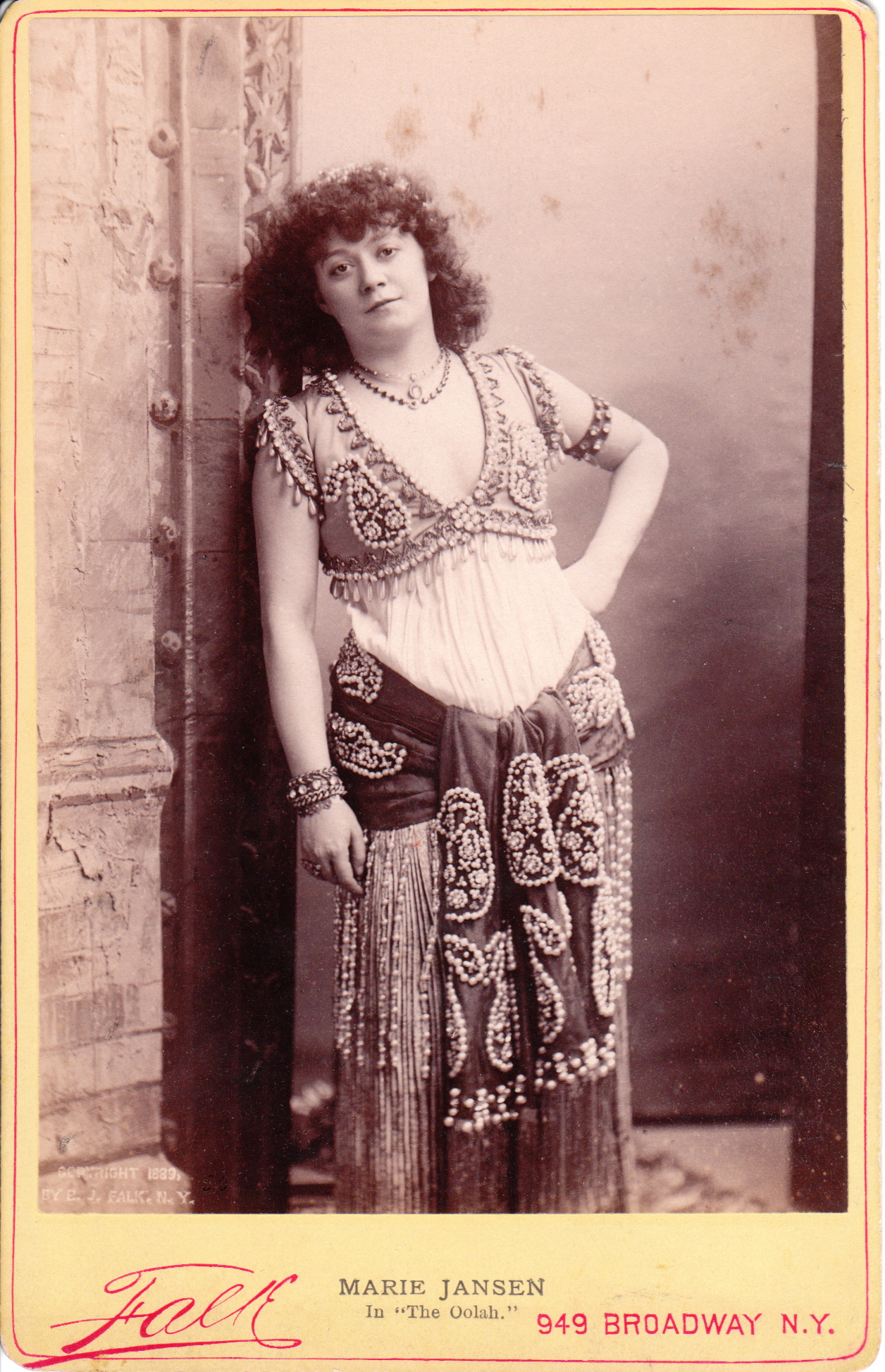
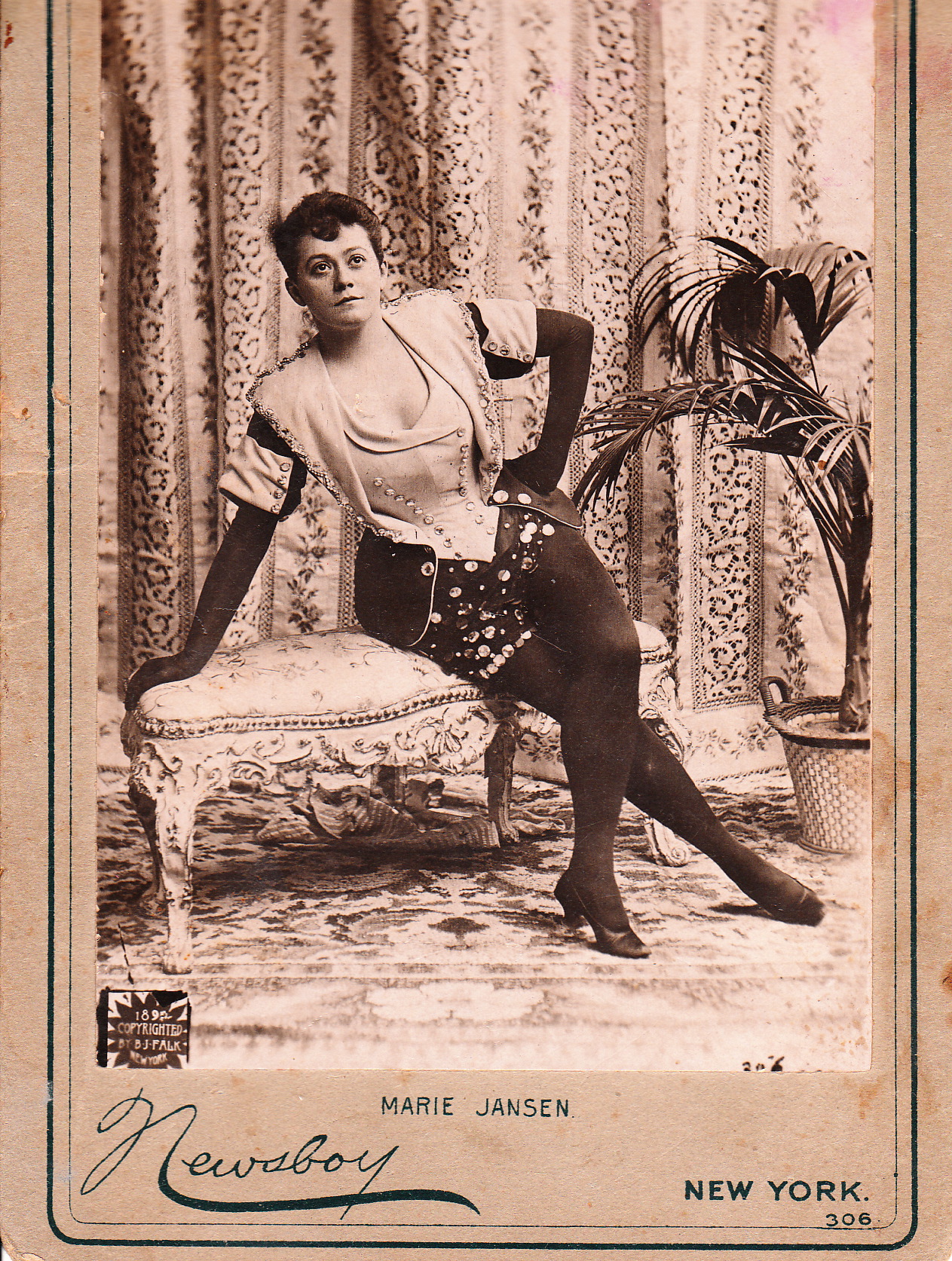
Marie Jansen (1857-1914) was an American actress and vocalist. She was a well known star of comic operas. She was born in Boston and her birth name was Hattie Johnson. Jansen made her theatrical debut in Boston at the Park Theatre in 1881. Her first major success occurred in 1883 with her appearance in “The Beggar Student”. In 1884 she was engaged by Charles Wyndham to create the title role in “Featherbrain” which ran in London, England. She then appeared in the United States for several years as the leading woman in Francis Wilson’s comic opera company. In 1901, Jansen formed her own company that she took on tour. The top image was photographed by famed celebrity photographer Falk of New York City. SOLD
Postcard 2 shows Jansen in costume for the play, “The Oolah”. “The Oolah” was a comic opera produced by the Francis Wilson Company in 1887. The music was written by Charles Le Cocq and the libretto was written by Sydney Rosenfeld.
Postcard 3 was also photographed by Falk. This cabinet card is dated 1888 and is a bit risque for that time in history. The third image of Jansen also captures her in a bit risque costume. It was photographed by Falk in 1892 and the cabinet card was used as a premium for Newsboy tobacco products.
Postcard 4 features Jansen in costume and sitting on a wicker chair. She is holding a cane and wearing gloves. This undated photograph is also by Falk. To view other photographs by Falk, click on the Cabinet Card Gallery category “Photographer: Falk”.


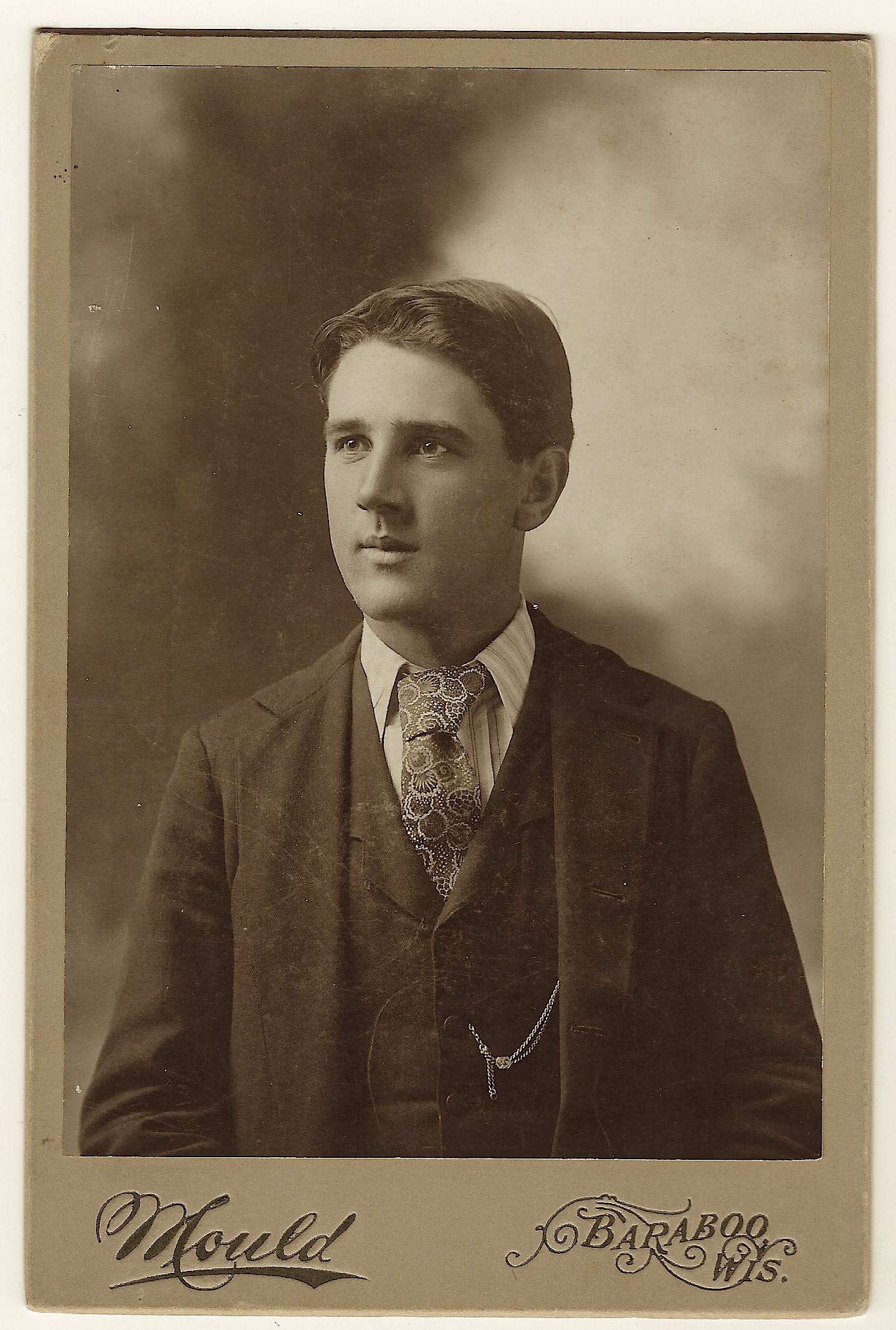
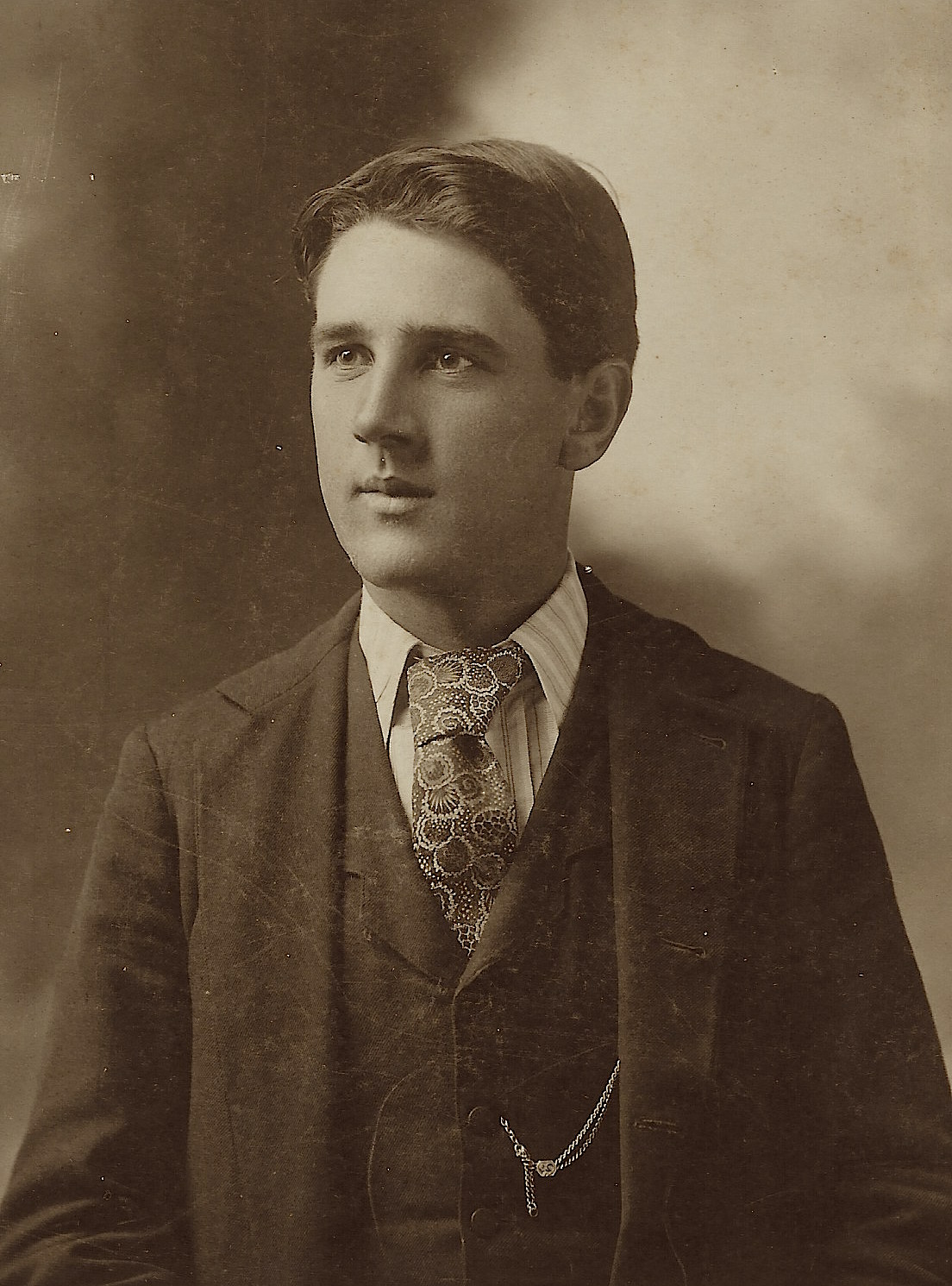 The handsome young man in this photograph is named Howard Briscoe. His name is inscribed on the reverse of this cabinet card photo. Briscoe lived in Baraboo, Wisconsin. He lived there all, or most of his life. Briscoe was born in 1878. His father was a miller by trade, Briscoe’s wife was named Julia Simon Briscoe. Howard Briscoe worked as a carpenter for a railroad company. The photographer of this image, Mr. Mould, is mentioned in a number of photographic journals. He placed an ad for his studio in a book about Sauk County, Wisconsin (1891). The Photographic Times (1898) reports on his appointment to a lobbying committee of the Photographers Association of Wisconsin. The Encyclopedia Dubuque (1911) reveals that Sim Mould operated a photographic studio at 107 Main Street in Dubuque, Iowa. The cabinet card gallery has other photographs by Mould, Place his name in the search box to view these other images. The town of Baraboo is situated on the Baraboo river. The town was settled by Abe Wood and originally called Adams. In 1852 it was renamed Baraboo. In the town’s early history it became the home of several sawmills. In the nineteenth century the town served as the headquarters of several circuses, including Ringling Brothers. Baraboo became known as “Circus City”. SOLD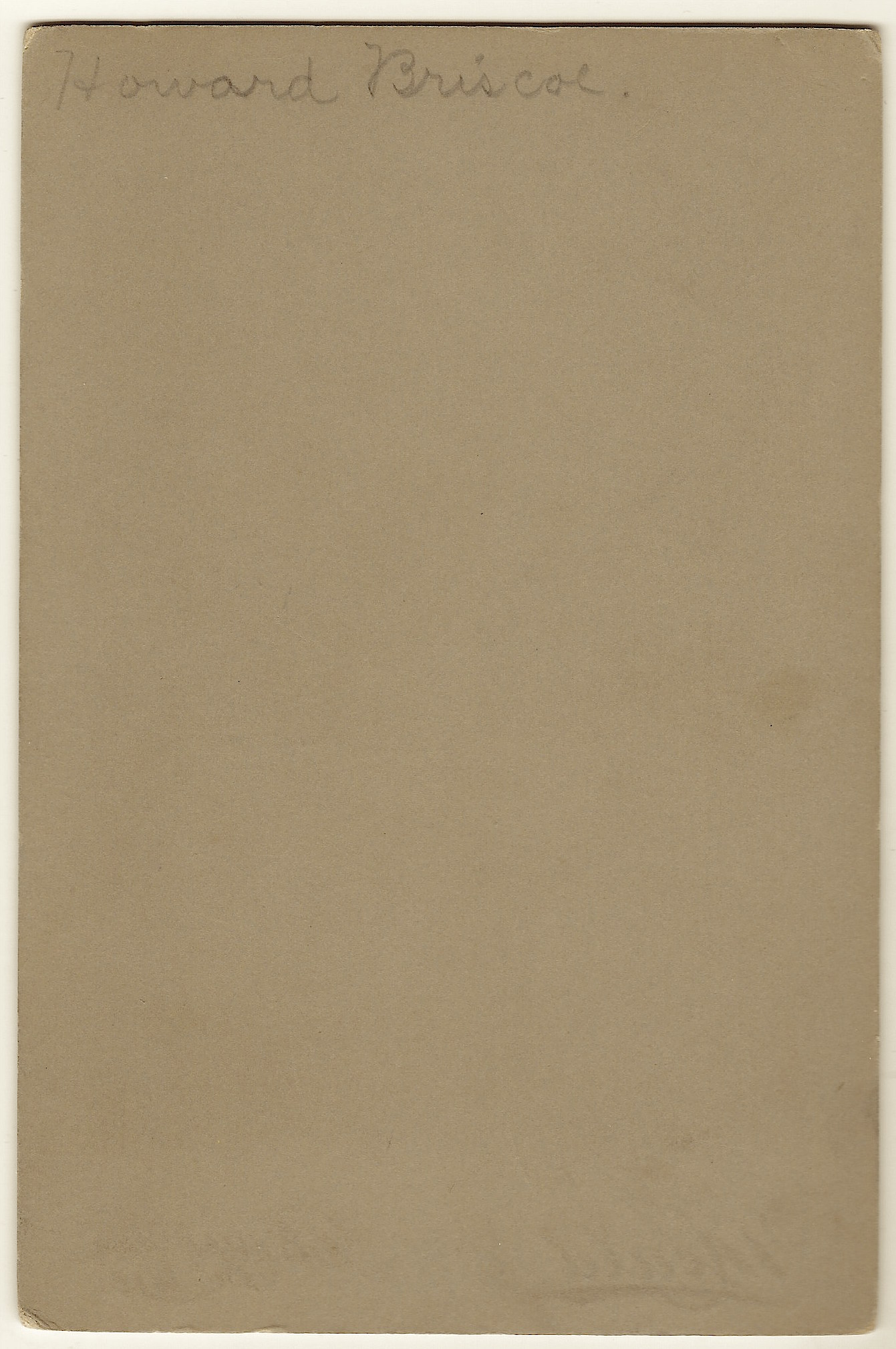
 CABINET CARD 1 SOLD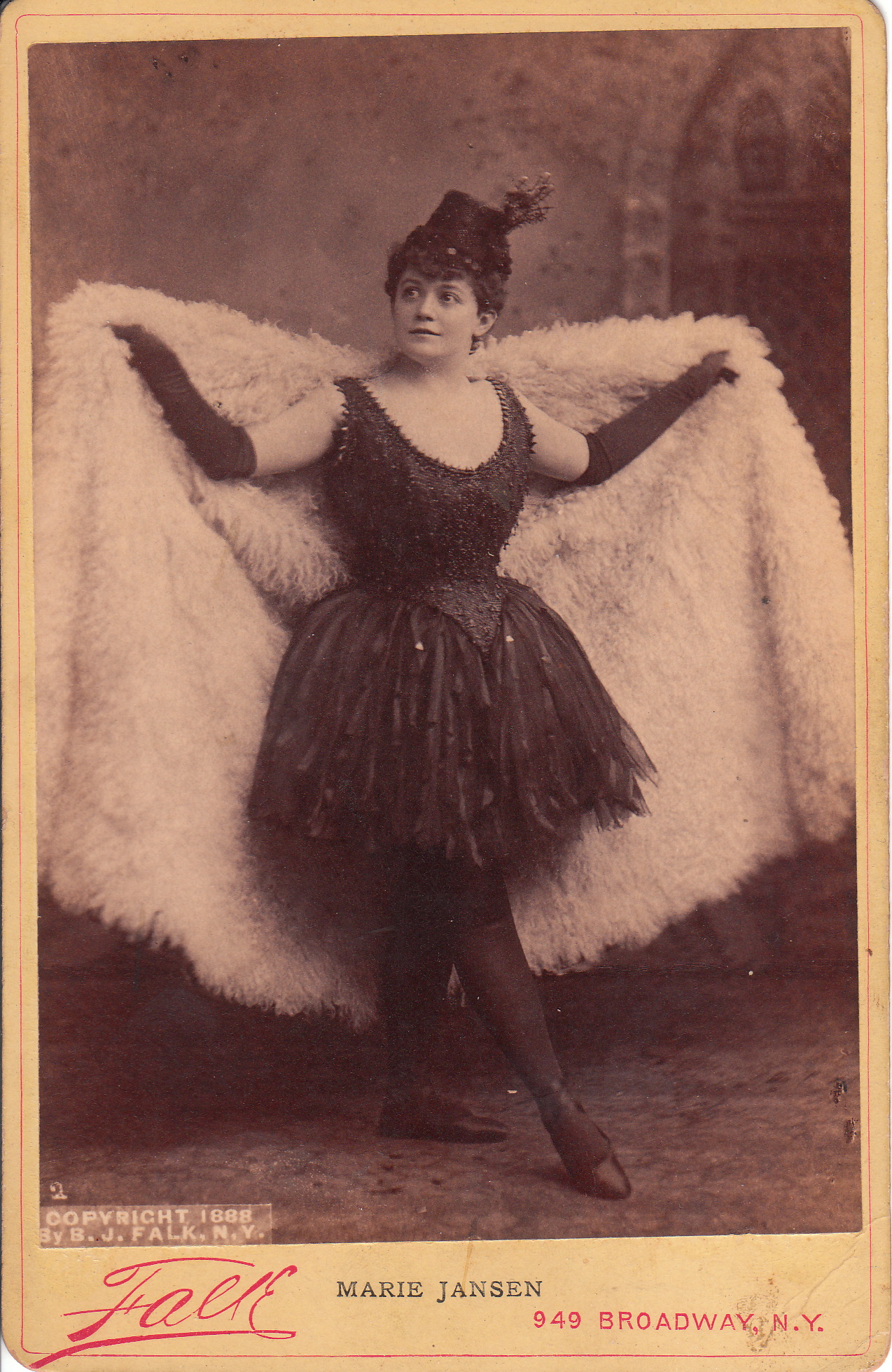
 CABINET CARD 3
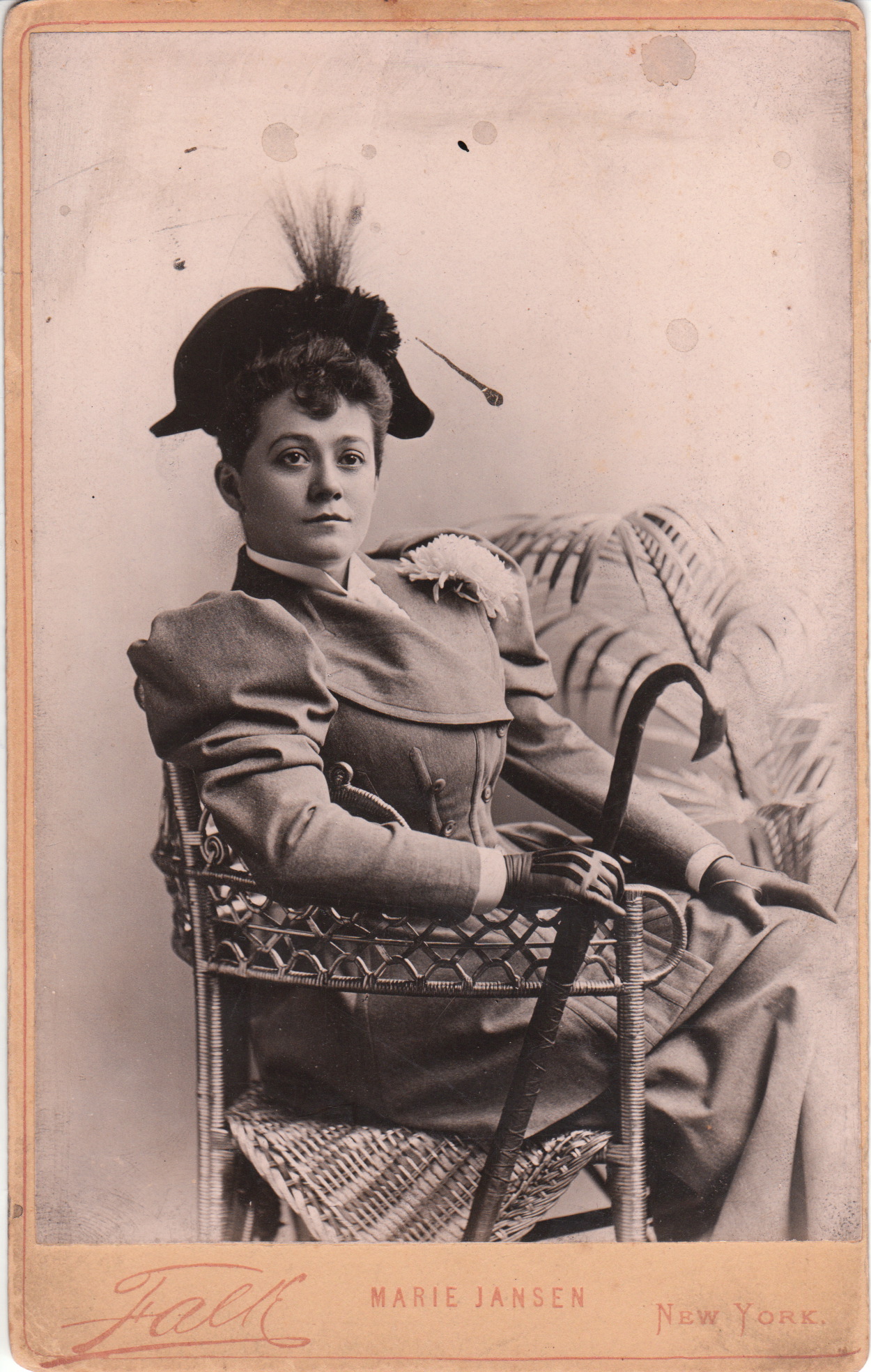 CABINET CARD 4


 THE CABINET CARD GALLERY