LOIS MORAN : AMERICAN FILM AND STAGE STAR : AFFAIR WITH F. SCOTT FITZGERALD

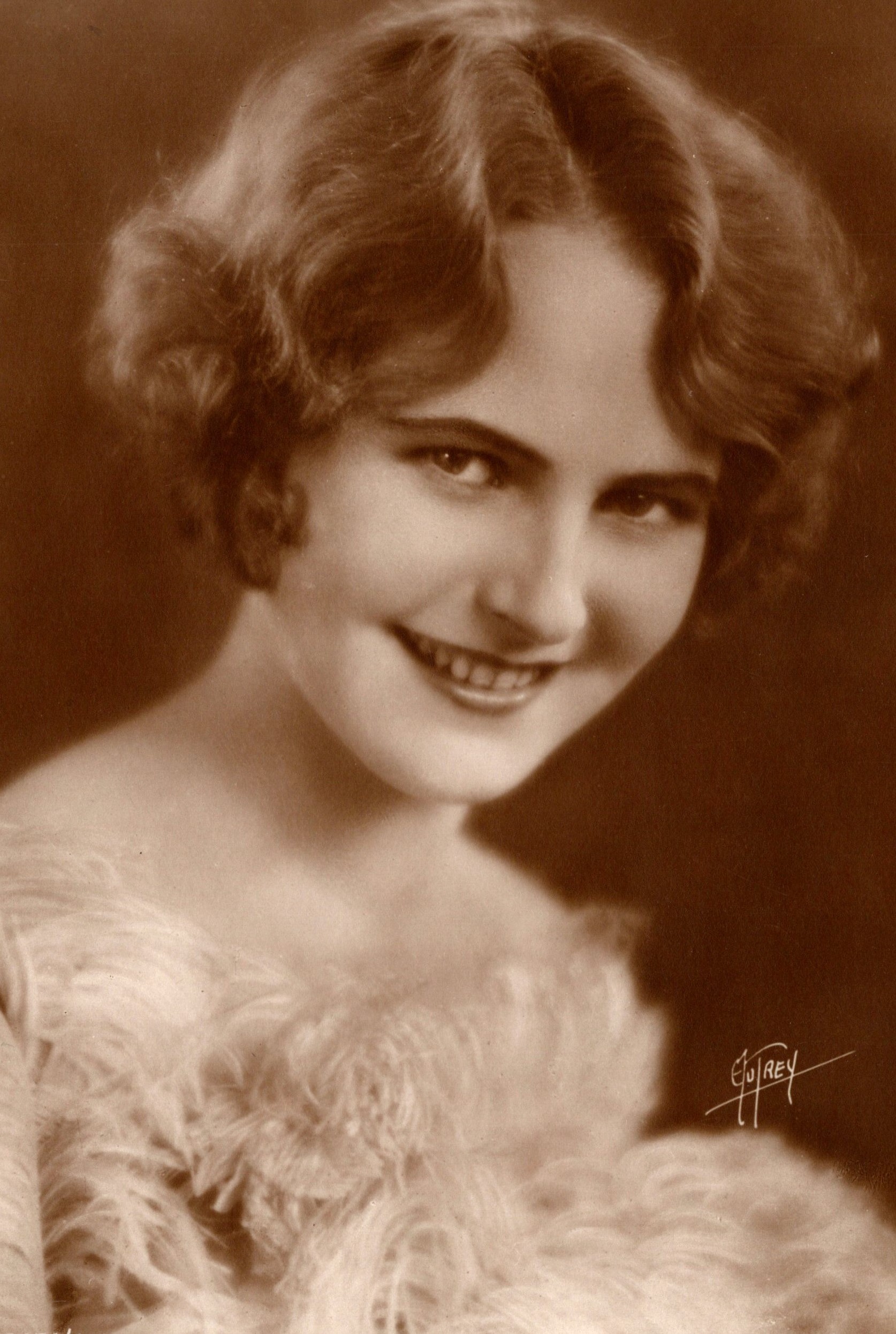
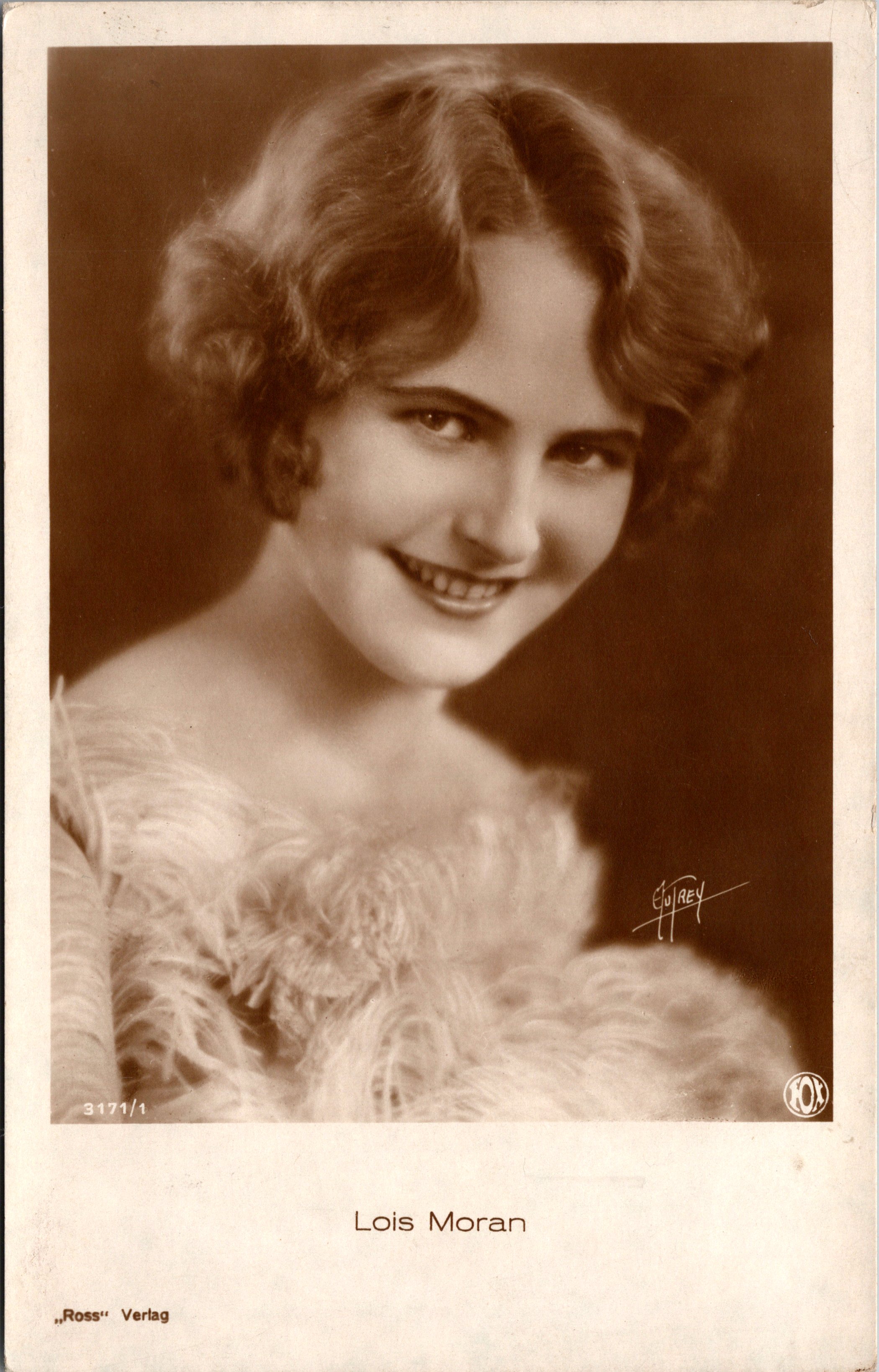
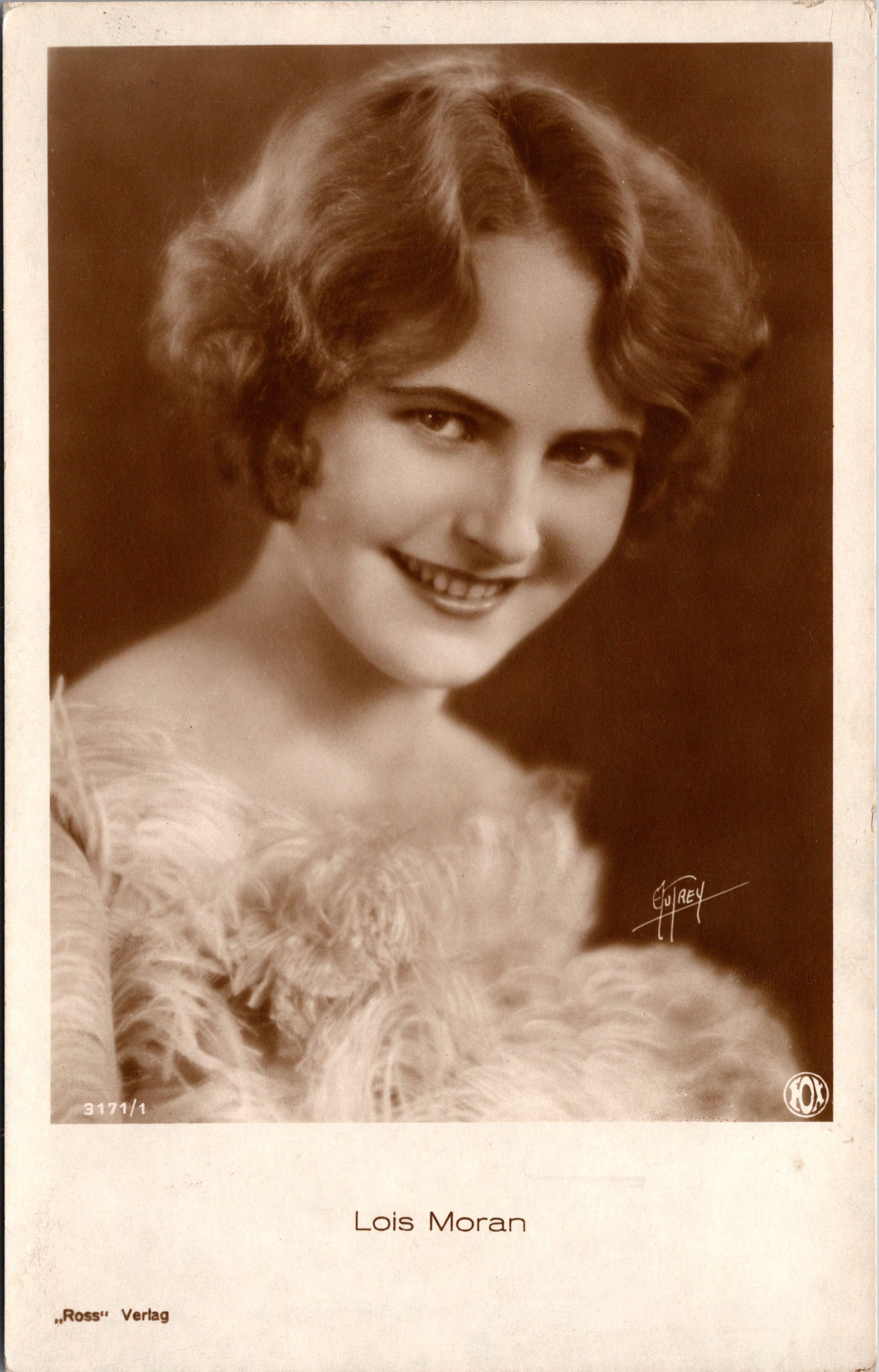
This vintage real photo postcard features actress Lois Moran (1909-1990). She was an American stage and film actress. She was born in Pittsburgh, Pennsylvania. She lost both her father, and then her step father, at an early age. In 1921, at the age of 12, Moran and her mother moved to Paris, France. She began singing and dancing at the Paris National Opera at the early age of 13 years old. By age 14, she was appearing in silent films. Her debut in a Hollywood film occurred in “Stella Dallas” (1925). Moran’s film experience included musicals. In fact, she appeared with Al Jolson in “Mammy” (1930). The IMDb reports that Moran acted in 39 films between 1924 and 1974. She parlayed her experience in movies to begin acting on the Broadway stage. The IBDb lists Moran as appearing in 3 Broadway plays between 1930 and 1933. Moran’s personal life included a short affair (1927) with “The Great Gatsby” writer F. Scott Fitzgerald. Interestingly, one of the characters (Rosemary Hoyt) in “Tender is the Night” is said to mirror Moran. In 1935, she married Clarence M. Young, the assistant Secretary of Commerce. This postcard was published by Ross Verlag as part of a series (No.3171/1). In the lower right hand corner is the logo of Fox Films. She was likely under contract with Fox when this photo was taken. The photo was taken by Fox photographer Max Munn Autrey (1891-1971). This vintage postcard is in good condition (see scans).
Buy this Vintage Real Photo Postcard (includes shipping within the US) #5218
To purchase this item, click on the Pay with PayPal button below
$14.00
Buy this Vintage Real Photo Postcard (includes International shipping outside the US) #5218
To purchase this item, click on the Pay with PayPal button below
$24.00

FASHIONABLE CHILD IN VIENNA, AUSTRO-HUNGARY EMPIRE (PHOTOGRAPHED BY PIETZNER)
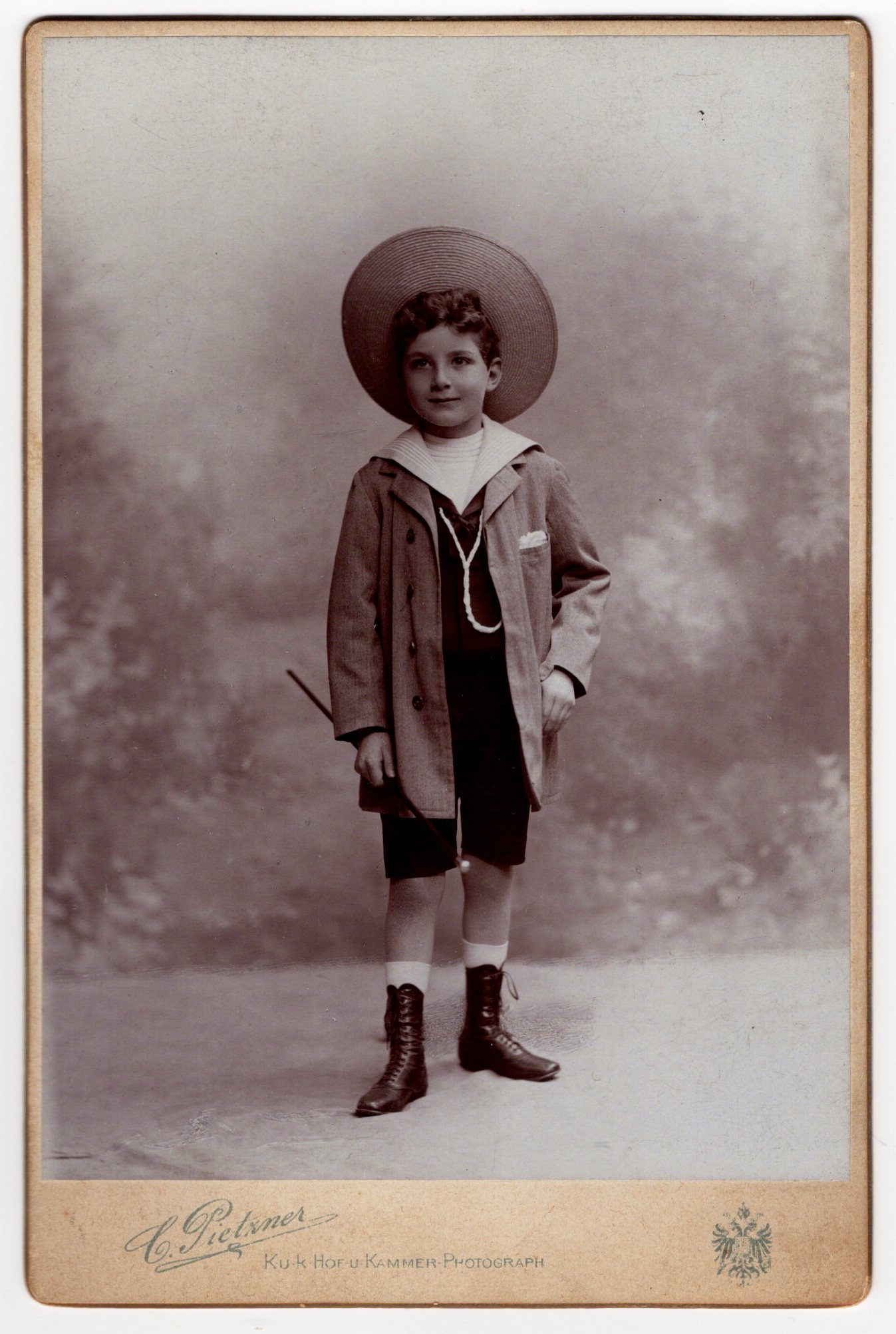
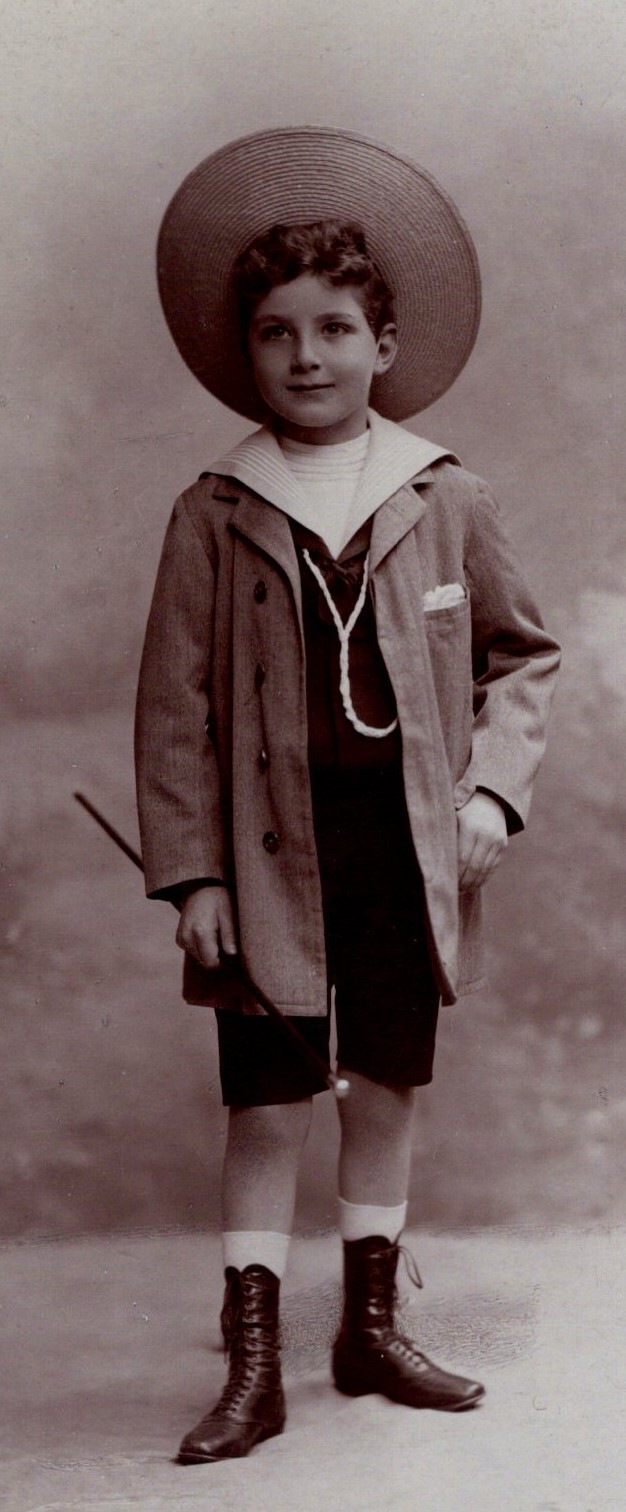
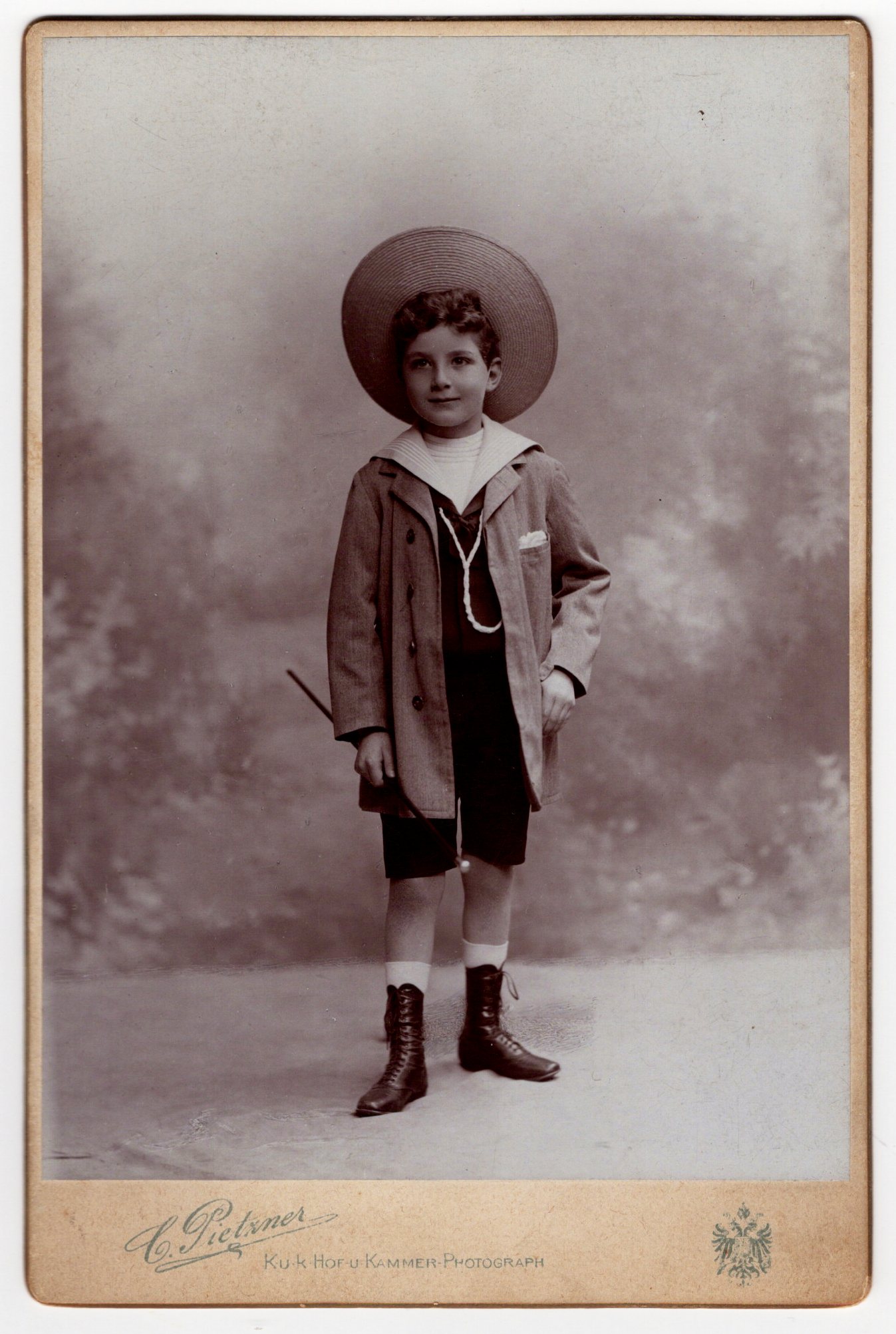
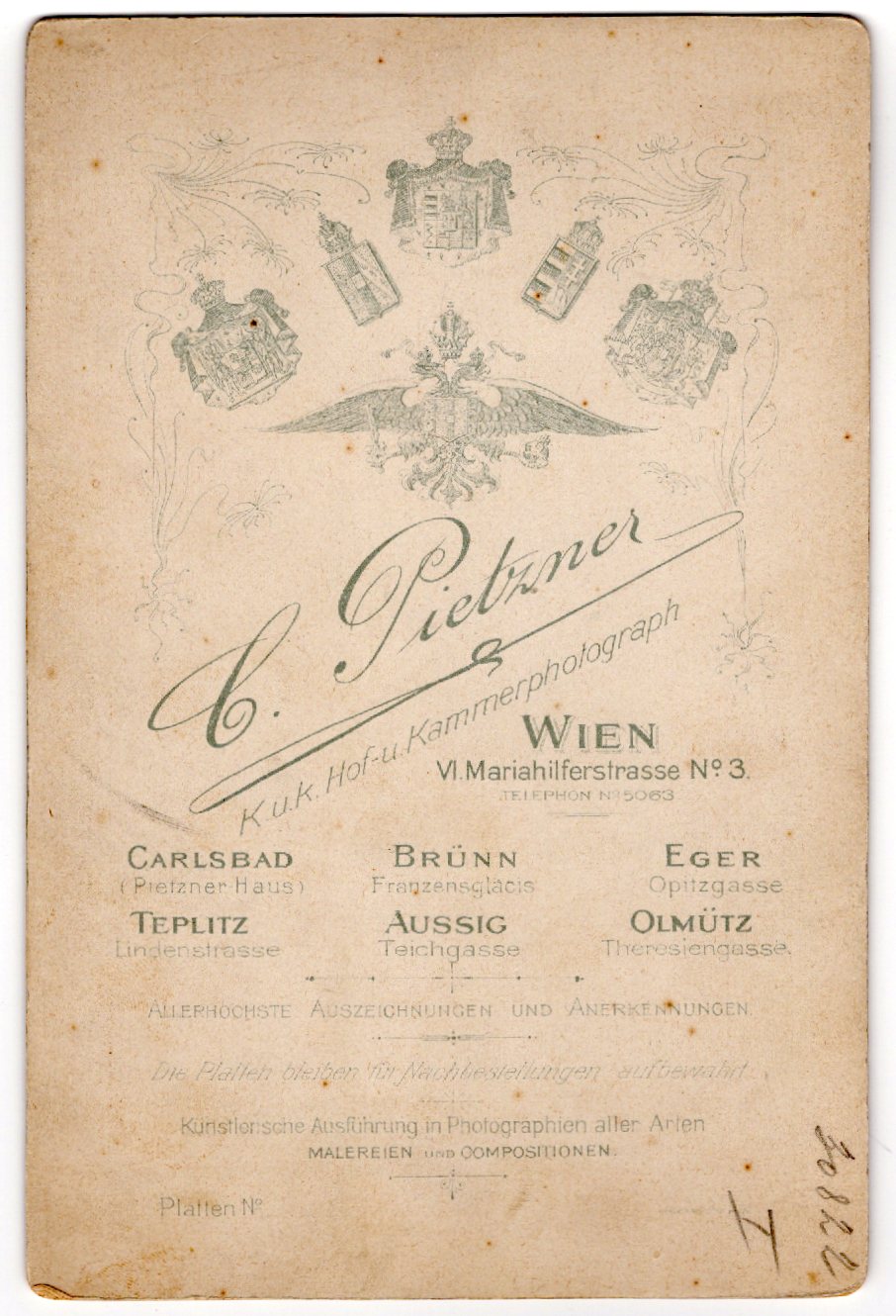
This cabinet card photograph features a very fashionable young boy, posing at the studio of Karl Pietzner in Wien (Vienna), capitol of the Austro Hungarian Empire. The young boy is wearing a sailor type blouse, boots, a straw hat, and holding a stick. Pietzner (1853-1927) was born in Prussia and is known to have worked as a photographer from 1877 until 1924 and he worked throughout Europe. At the time that this cabinet card was photographed, he had studios in Wien, Carlsbad, Brunn, Eger, Teplitz, Aussig, and Olmutz. The New York Times (1899) printed an article about his photographic research work in the production of reliefs. He invented a process he named “plastophotography”. He was a photographer for the Royal family in Austria. He did portraits of Franz Joseph. Pietzner was certainly a celebrated photographer and this cabinet card is a great example of his work. This cabinet card portrait is in very good condition (see scans).
Buy this Cabinet Card (includes shipping within the US) #6206
To purchase this item, click on the Pay with PayPal button below
$42.00
Buy this Cabinet Card Photograph (includes International shipping outside the US) 6206
To purchase this item, click on the Pay with PayPal button below
$52.00
YOKO TANI : SUCCESSFUL JAPANESE ACTRESS IN EUROPE AND DELIVERER OF CHEESECAKE
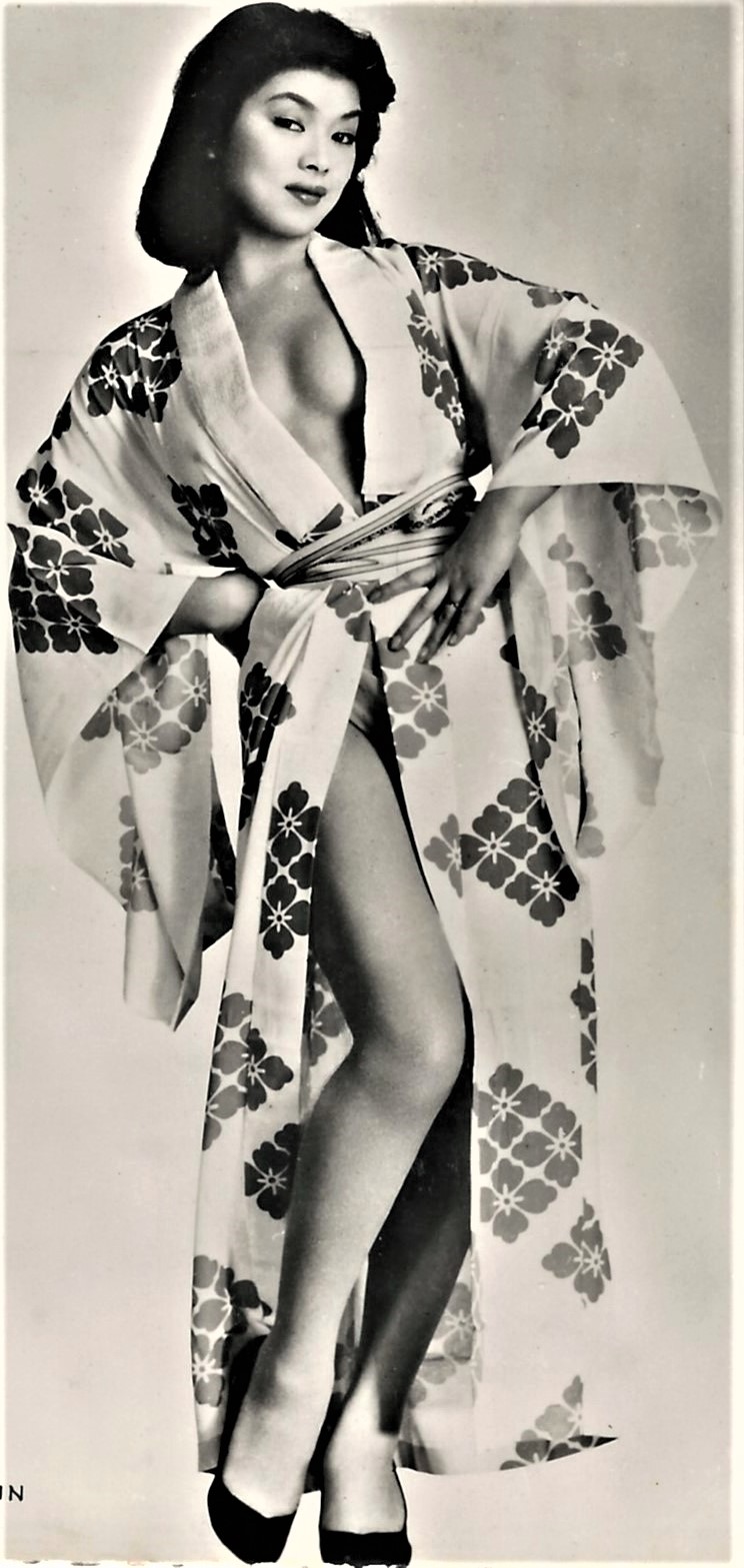
 POSTCARD 1
 POSTCARD 1 (CLOSE-UP)
 POSTCARD 2 (SOLD)
 POSTCARD 2 (CLOSE-UP) (SOLD)
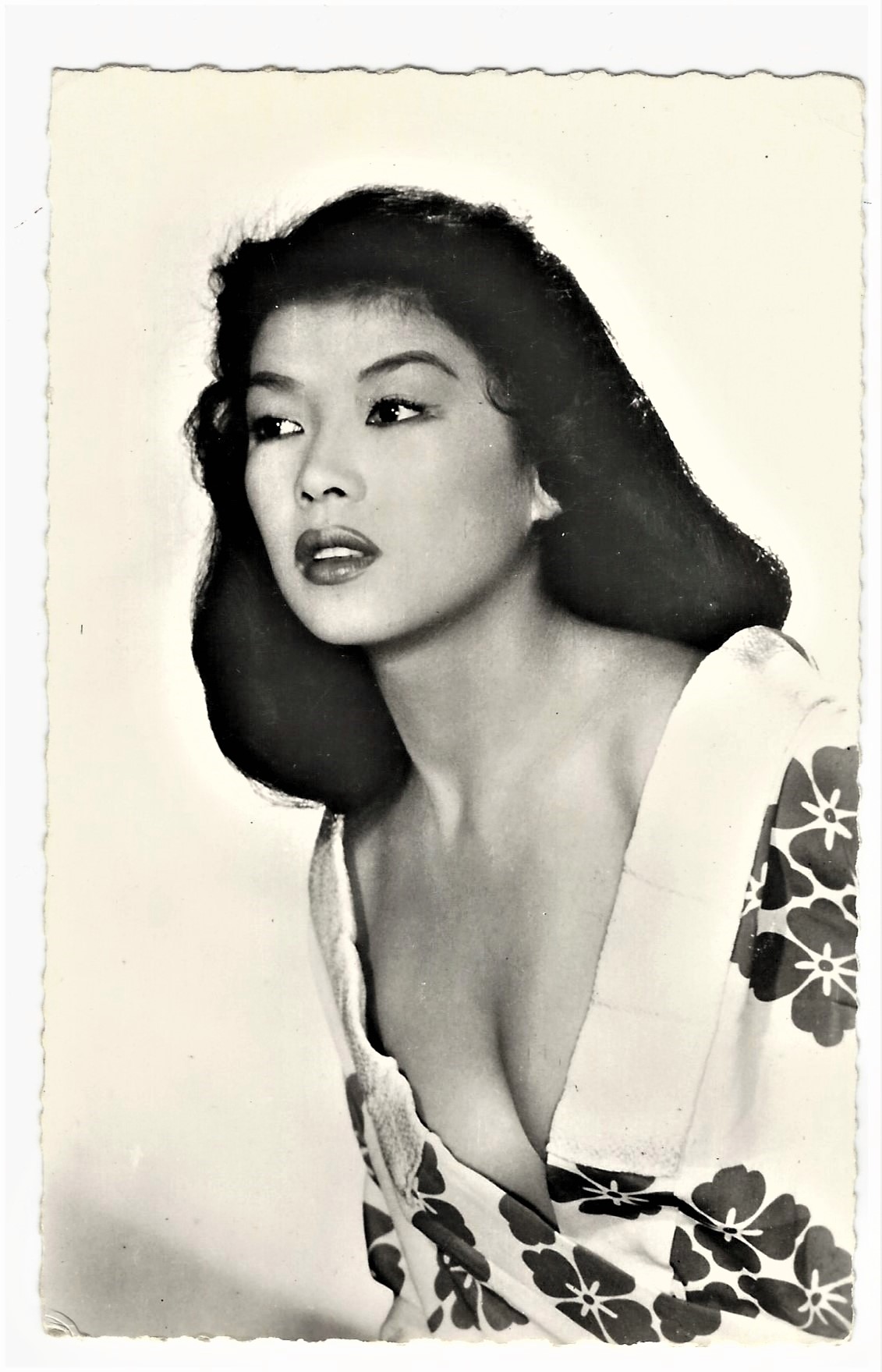
Yoko Tani (1928-1999) was a Japanese actress and nightclub entertainer. Some writers have described her as “Eurasian” or “half French”. These half white labels were thought necessary because there was a belief she would be accepted more as an exotic than as a Japanese woman by European post World War II audiences. The reality is that both her parents were Japanese but worked for the Japanese embassy in Paris. She was conceived on a boat to France and born in Paris. She was given the name “Yoko” which means “ocean child”. She and her family returned to Japan in 1930 and she returned to France in 1950 after finishing her schooling in Japan. She went back to France because she was awarded a scholarship to study aesthetics at the University of Paris. She stayed in school for a couple of years but it did not hold her interest. She developed a strong attraction to the world of cabarets, night clubs and music halls. She entered into “show business” and became known as an “exotic oriental beauty” with her provocative sexy “geisha” dances. These dances often ended with her slipping out of her kimono. She also appeared in “cheesecake photographs”. Discovered by Marcel Carne, a French film director, she entered into his social world of filmdom. She met and later married Roland Lesaffre, the French actor. It would be the first of two marriages. She soon began acting in films. Until the mid 1950’s her acting roles were confined to stereotyped Asians in French films. In 1956 she appeared in French films in more substantial roles. While in Japan, she appeared in a film with a “women in prison” theme. Between 1957 and 1962, Tani appeared in international films. Her first English language film was Graham Greene’s “The Quiet American”. She had a small role playing a French speaking Vietnamese nightclub hostess. In regard to English language films, Tani’s first great success was in “The Wind Cannot Read” (1958). She had a leading actress role and her success helped land her additional English language roles (Great Britain and the United States). Additional Hollywood parts included My Geisha (1962) and “Who’s Been Sleeping In My Bed” (1963). In about 1963, she became more of a European based actress. She worked on mainly low budget Italian films and in femme fatale roles in British television. Tani maintained her love for cabaret and nightclubs throughout her career. The producer of “The Wind Cannot Read” wrote that when looking to recruit Tani for the picture, she found her in a “girlie club”, basically, a strip tease joint in Paris. It was reported that in the 1960’s, she worked in the Le Crazy Horse de Paris nightclub. In 1997, at nearly 50 years of age, she was in Brazil to play a small role in a sexploitation film. Also in 1977 she starred in a transvestite show in downtown Sao Paulo. The IMDb credits Tani with 53 film acting credits between 1949 and 2018.
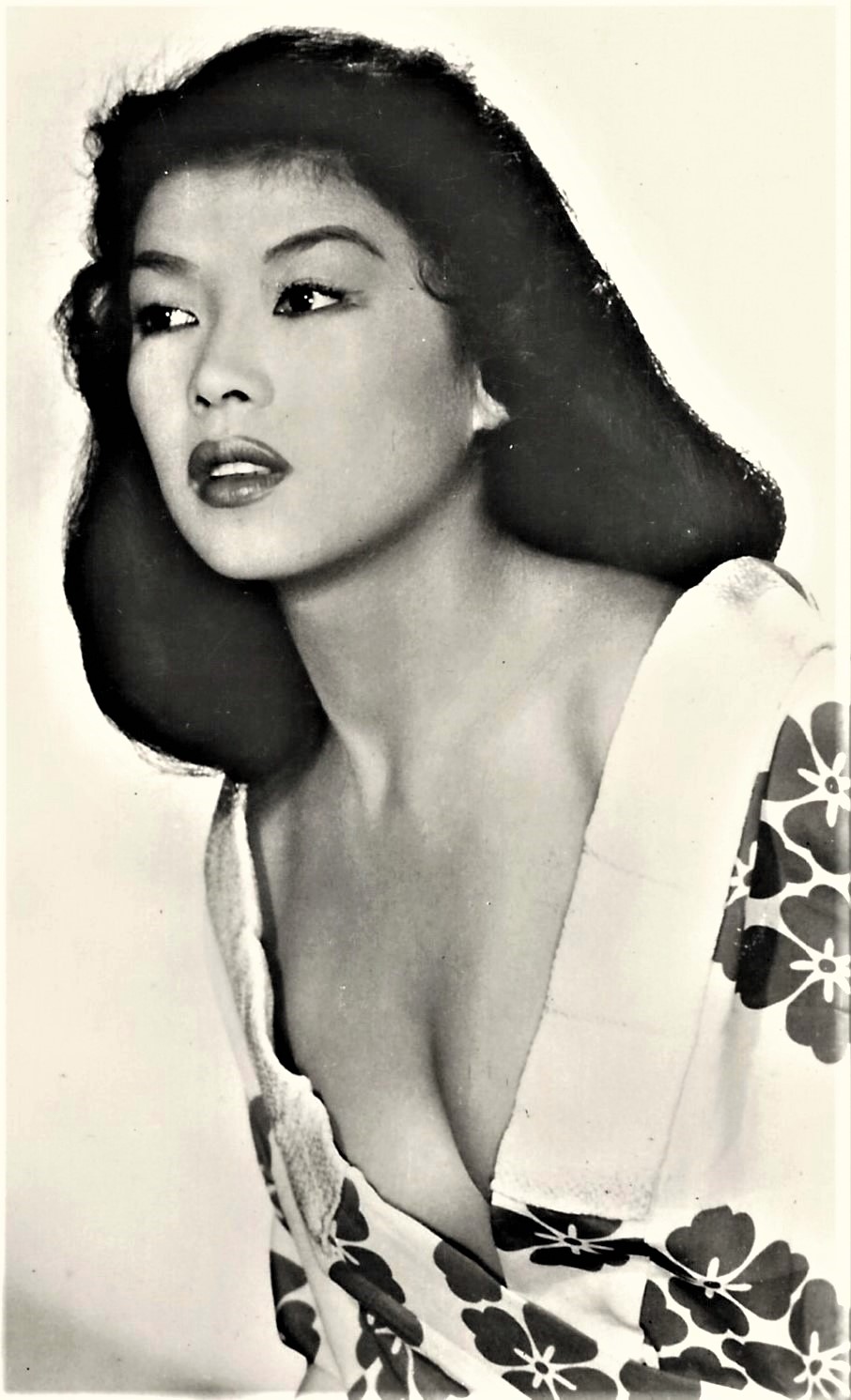
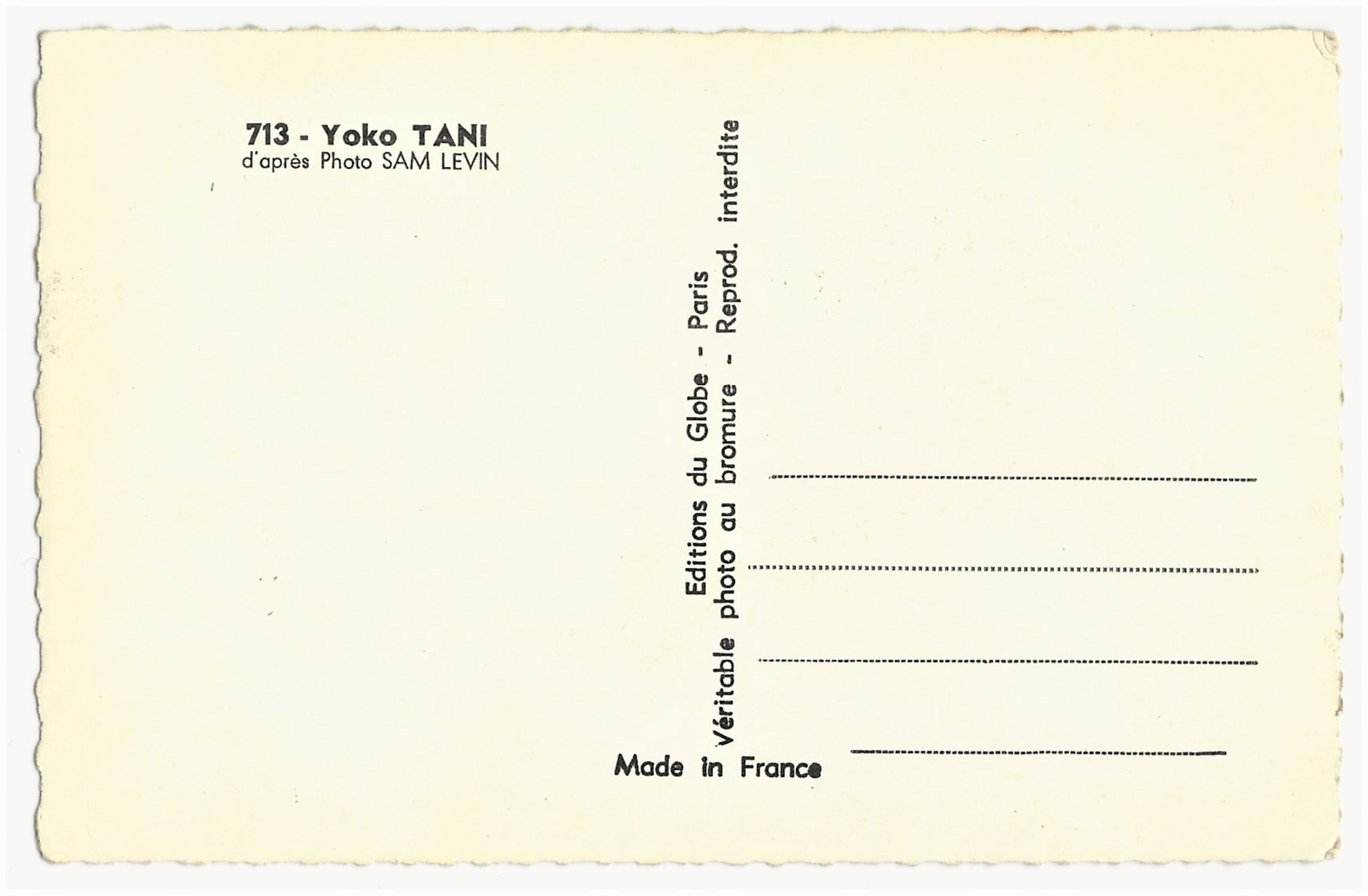
Postcard 1 showcases the beauty of Yoko Tani. This photograph is certainly a “cheesecake” image. Tani seems to be falling out of her robe (kimono). Let there be no doubt, sex sells. This was true in the 1950’s and 1960’s as well as today. Unfortunately, women were, and are, seen as objects. This vintage real photo postcard was made in France and published by the “Globe”. The card was part of a series (no.713). The photograph was taken by famed celebrity photographer Sam Levin. Levin was popular both in Europe as well as the United States. This photo postcard is in very good condition (see scans).
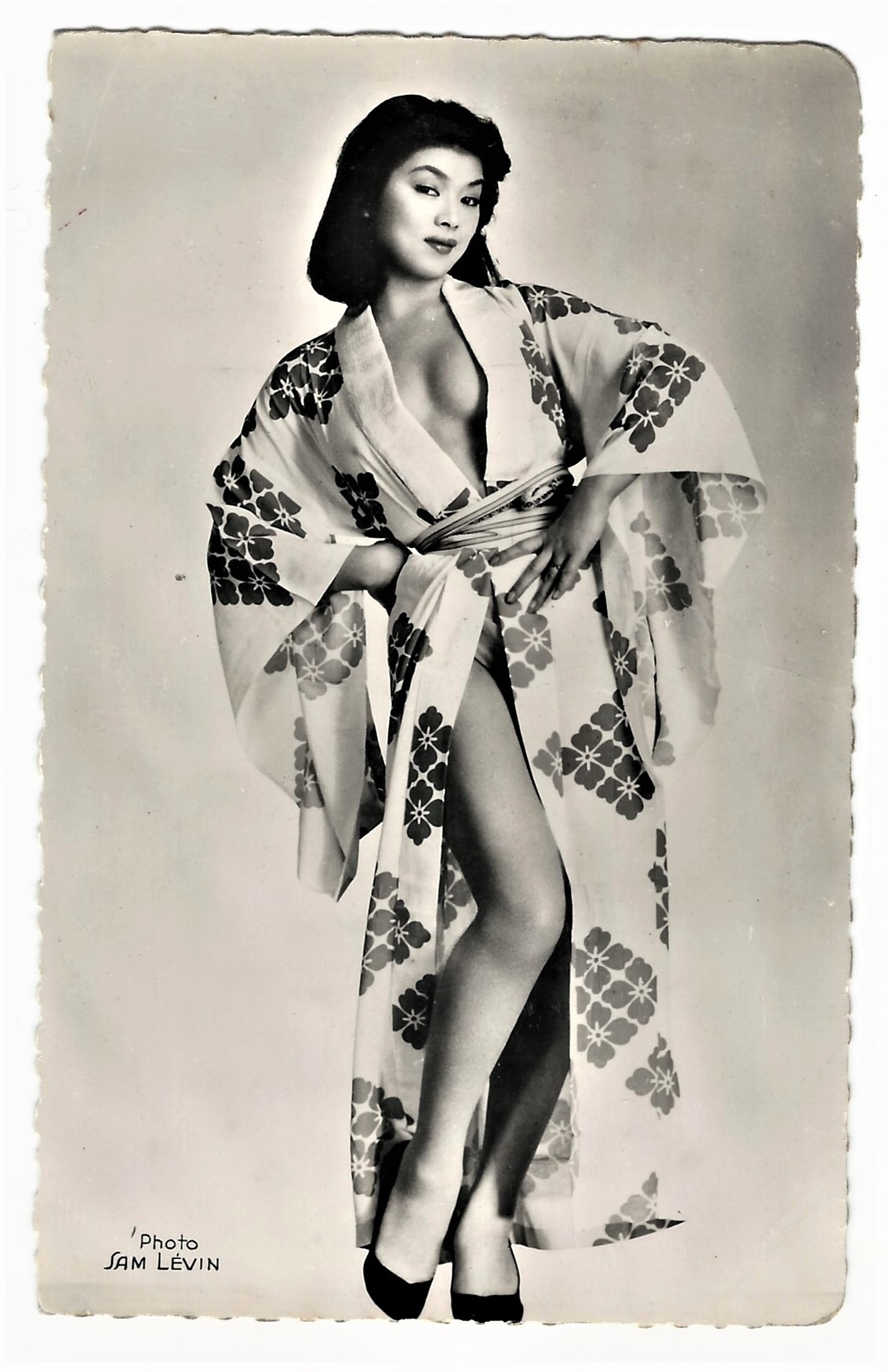
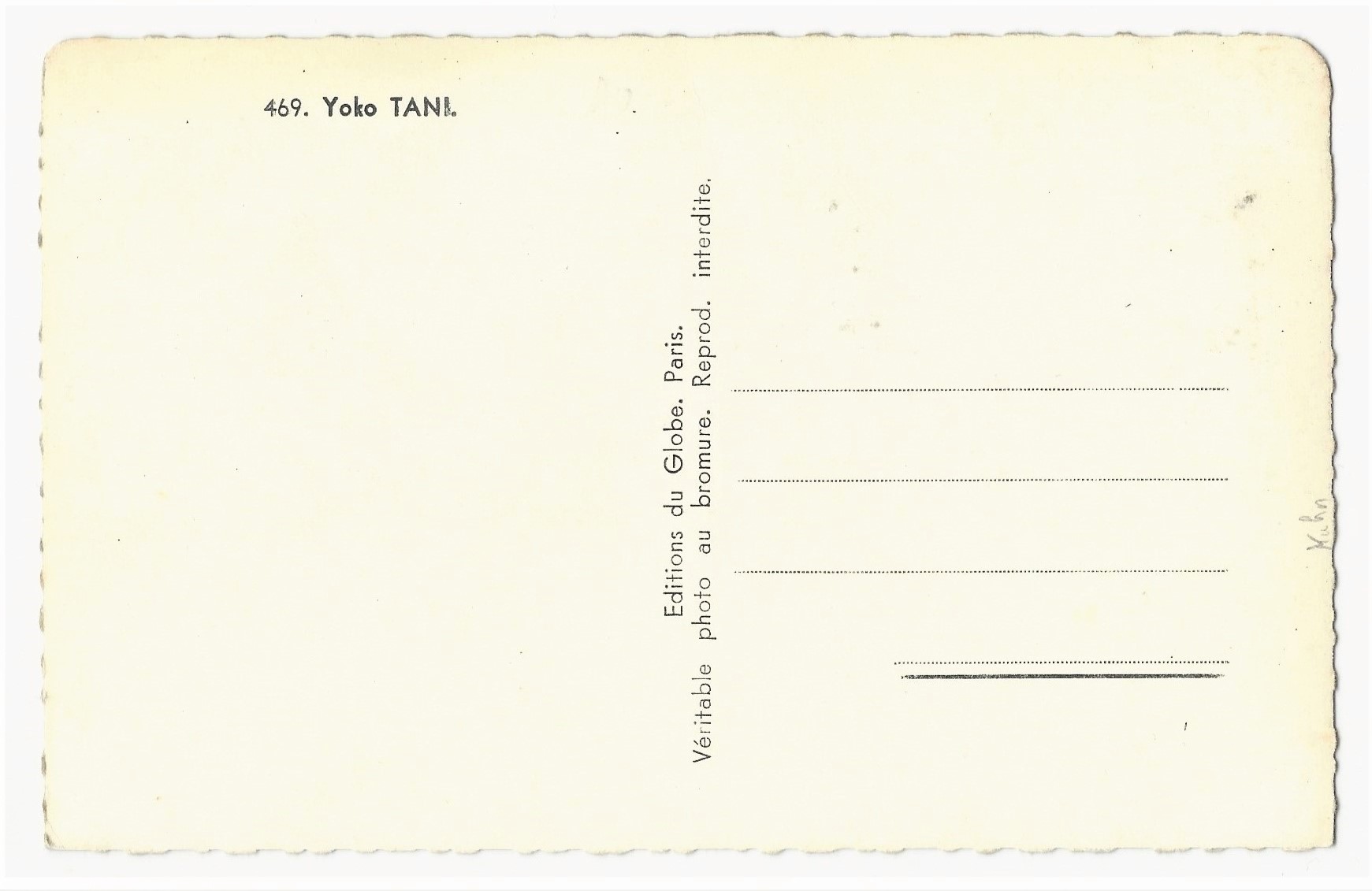
Postcard 2 is a risque photograph of Miss Tani. She is wearing the same robe as the one she wears in Postcard 1. It is strategically ill fitting. The postcard is made in Paris and published by the globe as part of a series no.469). The photographer is Sam Levin. SOLD
Buy this Vintage Real Photo Postcard (includes shipping within the US) #3116
To purchase this item, click on the Pay with PayPal button below
$14.72
Buy this Vintage Real Photo Postcard (includes International shipping outside the US) #3116
To purchase this item, click on the Pay with PayPal button below
$23.22
 POSTCARD 1
 POSTCARD 2
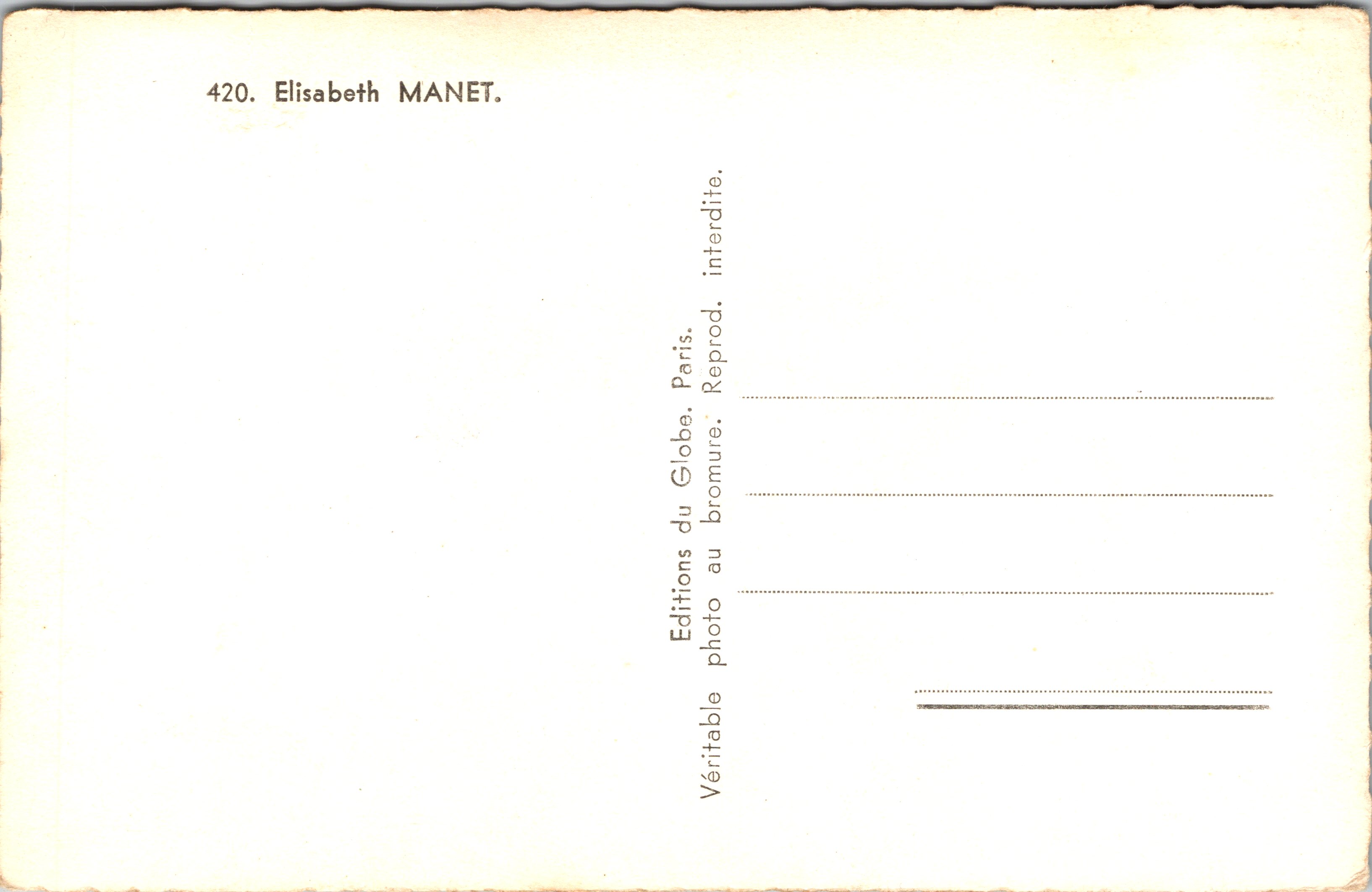
ELIZABETH MANET : FRENCH ACTRESS : PHOTO BY SAM LEVIN
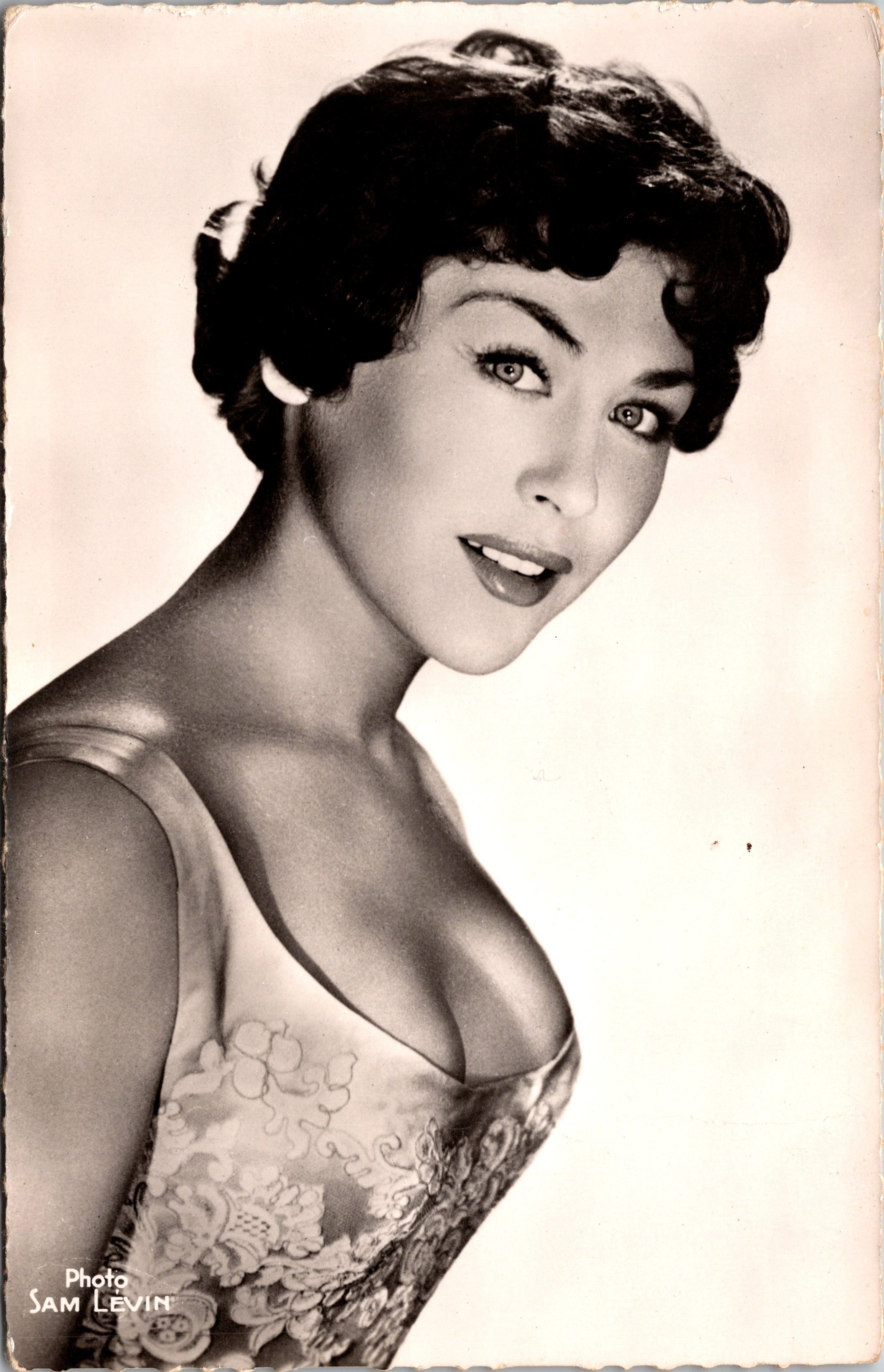
This vintage real photo postcard features actress Elisabeth Manet. Manet was born in Paris, France, in 1934. She is remembered for “Young Girls Beware” (1957) and “The Mirror has Two Faces” (1958). He IMDb filmography includes six credits between 1955 and 1959. SOLD
A GENTLEMAN WITH A TERRIFIC MUSTACHE IN ST. PAUL, MINNESOTA
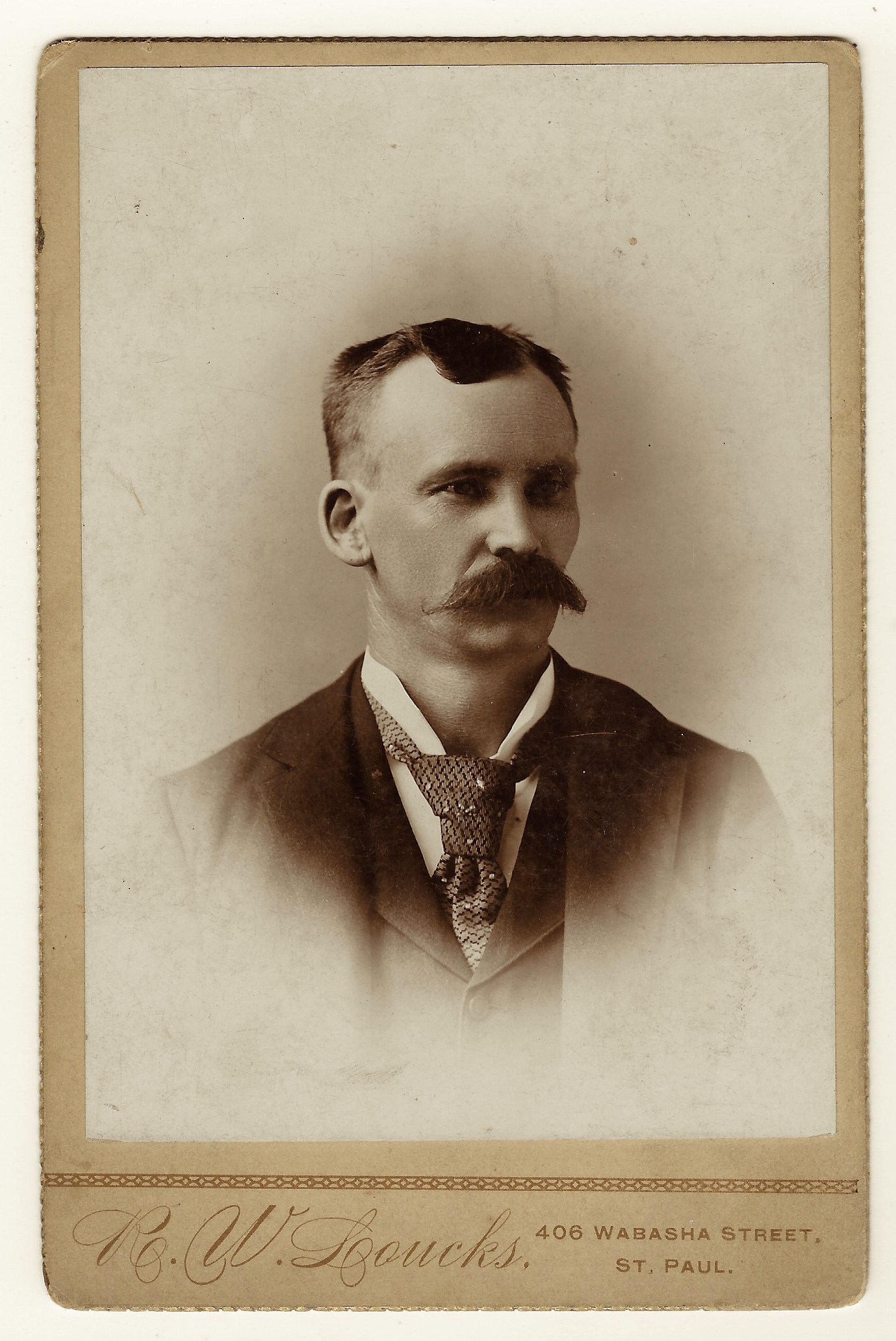
A well dressed man poses for his portrait at the studio of R. W. Loucks in St. Paul Minnesota. He is wearing a wide neck tie with an even wider knot. The gentleman has a wonderful well groomed mustache. He is displaying a serious demeanor as he poses for this cabinet card image. The Minnesota Historical Society’s directory of early Minnesota photographers reveals that R. W. Loucks worked as a photographer in Minnesota during the 1890’s and 1900’s. His St. Paul addresses included 405 Wabasha (1893-1894) and 225 East Seventh (1897). He also had studios in Minneapolis; 1221 Washington Avenue North (1898-1902) and 28 Central Avenue (1903). This information asserts that the above photograph was taken during 1893 or 1894. Mr. Loucks appears in the 1900 US census. From this document we learn that he was born in Canada in 1850 and immigrated to the US in 1887. He was married to Anna L Loucks in 1877 and at the time of the census, lived with their twelve year old daughter named Lillian. SOLD
MADAM NAOMI: SIDE SHOW FAT LADY (562 POUNDS) OFFERS ESPECIALLY LARGE DOWRY TO PROCURE A HUSBAND
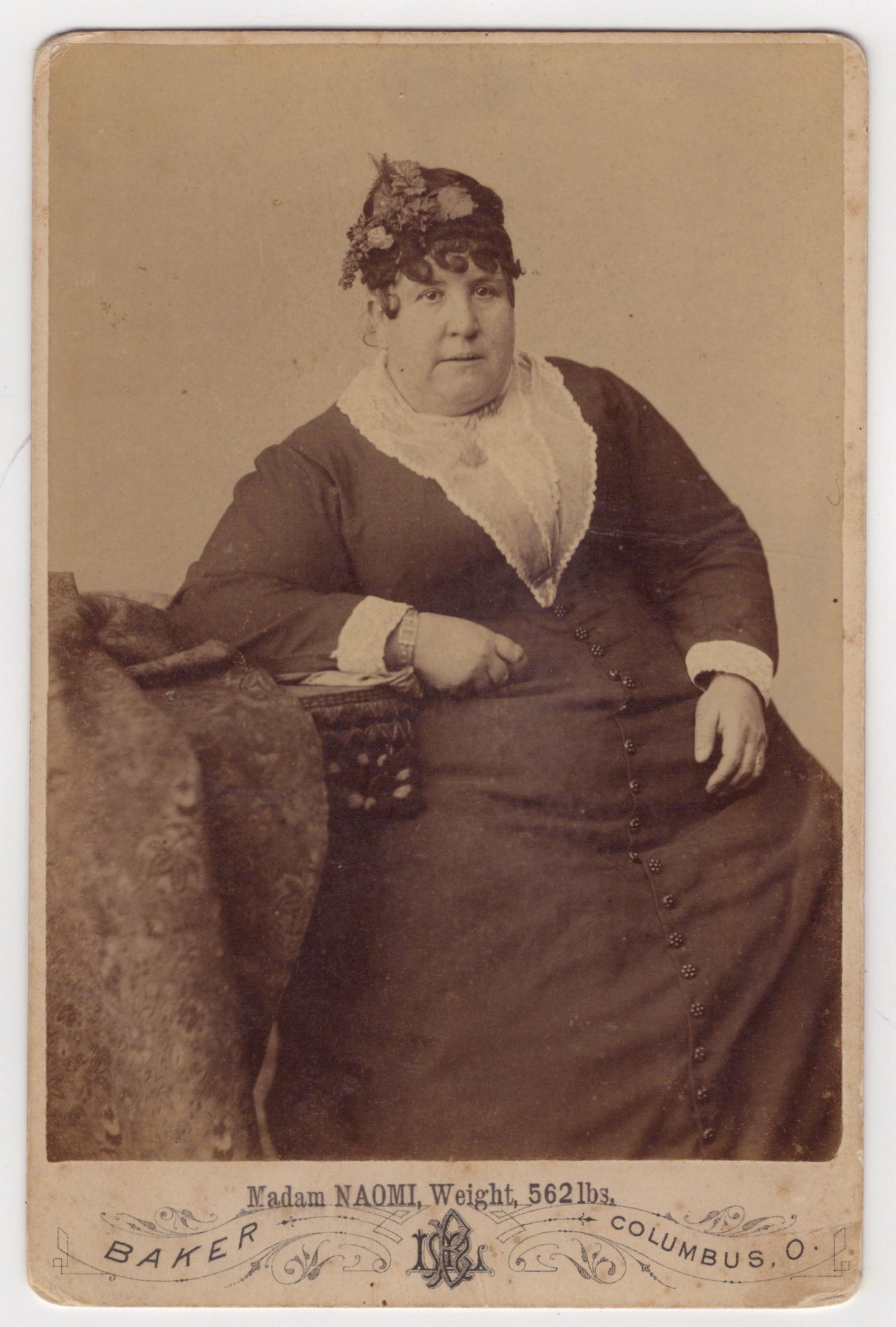
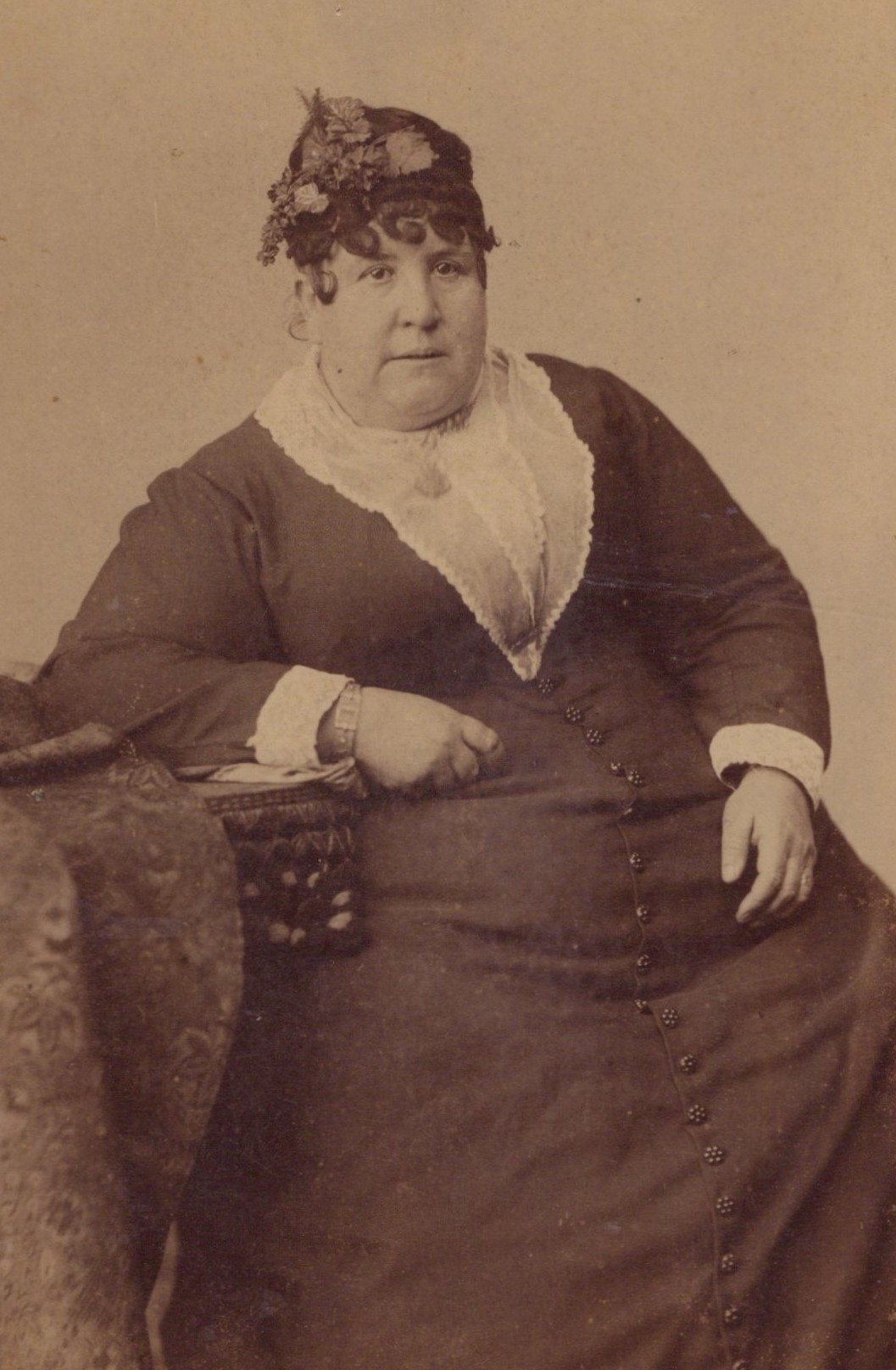
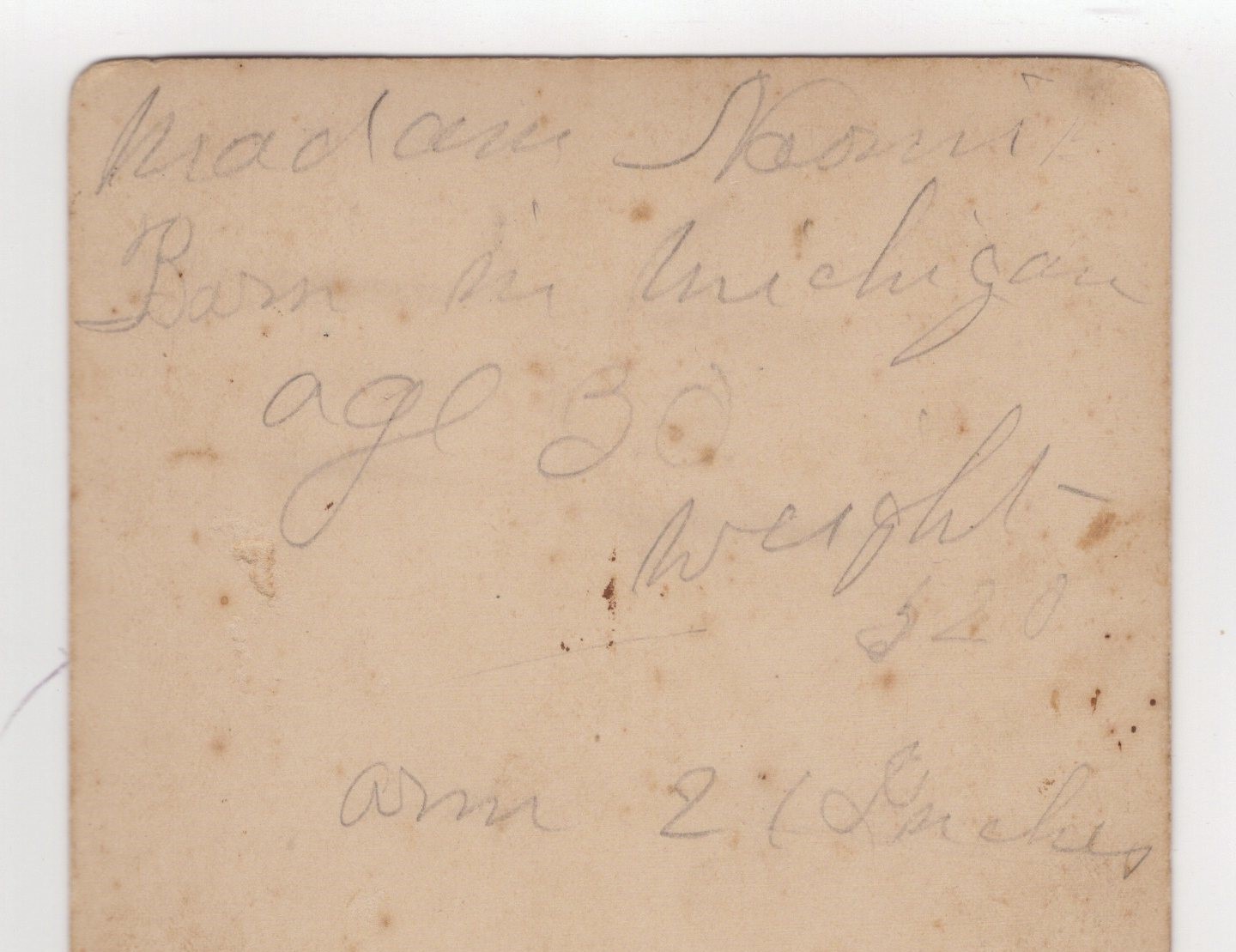
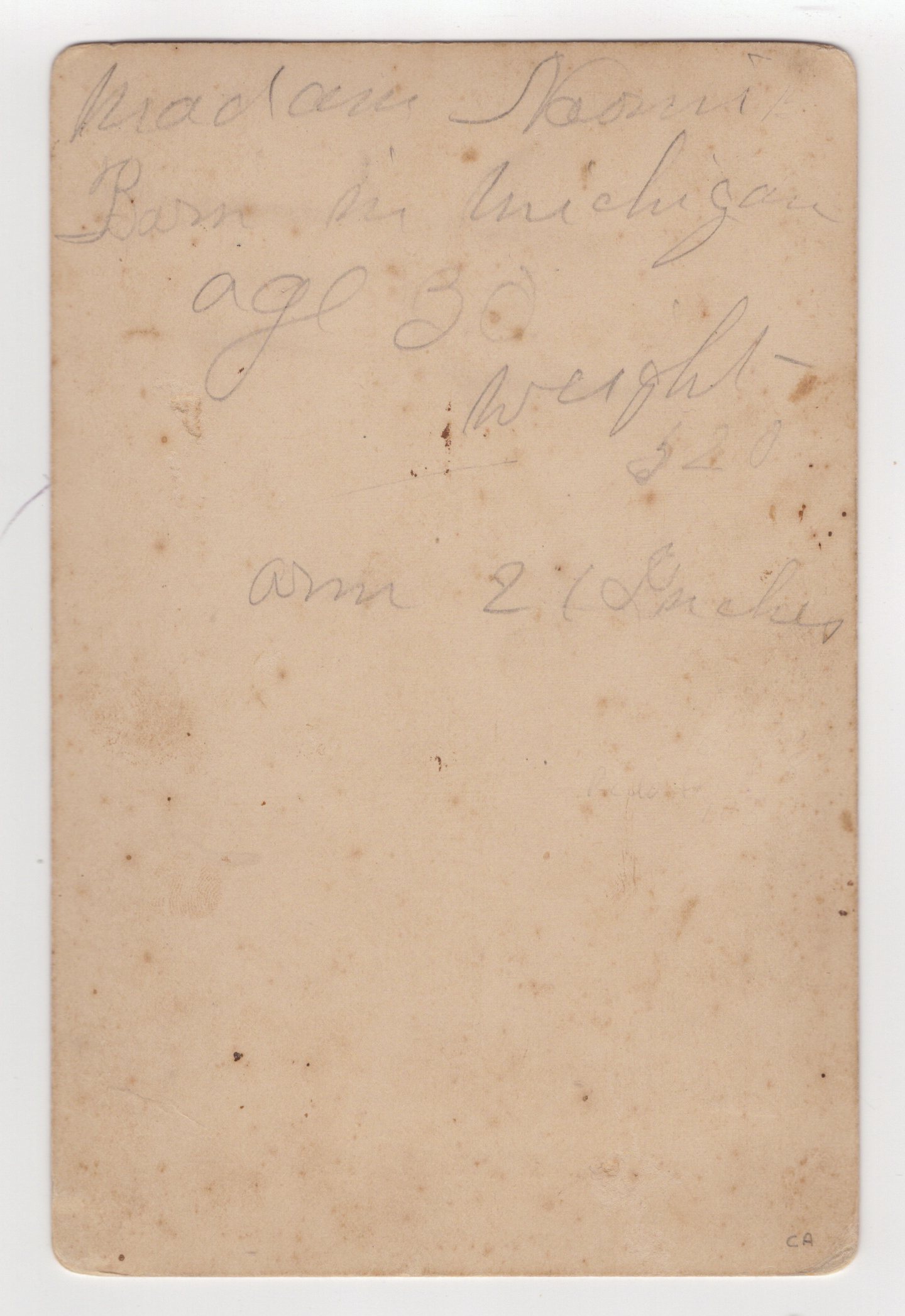
This cabinet card features Madam Naomi, who appears to have been a side show “fat lady”. The term “fat lady” is a despicable and derogatory way of describing someone overweight; yet the term found common use at circuses and fairs of the era of this photograph. Pencilled on the reverse of this image is the information that Madame Naomi was born in Michigan and at the time of the photograph, she was 30 years old. A further “fact” provided is that her arms had a circumference of 27 inches. Madam Naomi is not looking too comfortable in this portrait. She is wearing an interesting hat and one would guess that it would take her a long time to button all those buttons on the front of her dress. The newspaper The Weekly Statement (1890) has an article about a Madam Naomi appearance in Fort Wayne, Indiana. The article states that Naomi was advertised to appear in a museum and to “bestow her hand, heart, oleaginous sweetness, and a deed to a $5,000 farm to any young man who would marry her”. The offer was accepted by an insurance man from New York, Thomas J. Crowley; who came to Fort Bend and joined her on the museum stage to accept her hand in marriage. The photographer of this image is Baker, whose studio was located in Columbus, Ohio. There were many photographers named Baker operating out of Columbus when this photograph was taken. Many of the Bakers were relatives who operated the Baker Art Gallery. It is not clear which Baker or which studio is the source of this image. However, the initials below the photograph appear to be “LMB” which would indicate that the photographer was Lorenzo Marvin Baker (1834-1924).L. M. Baker was part of the Baker Art Gallery family. To view other photographs by the Baker Art Gallery, click on the category “Photographer: Baker Art Gallery”. (SOLD)
DOLLY ADAMS : THE WATER QUEEN : LIVED ON THE WILD SIDE
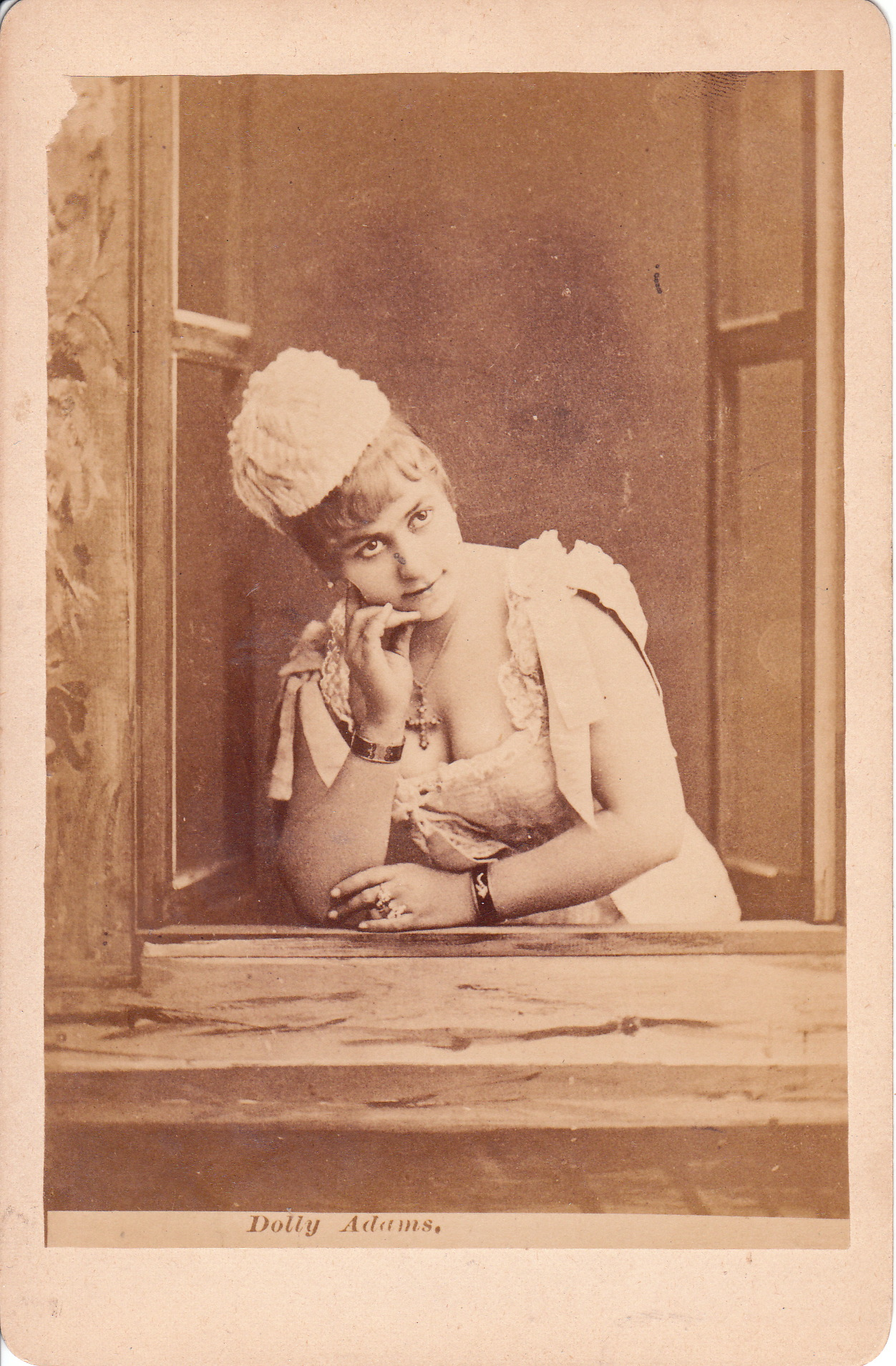
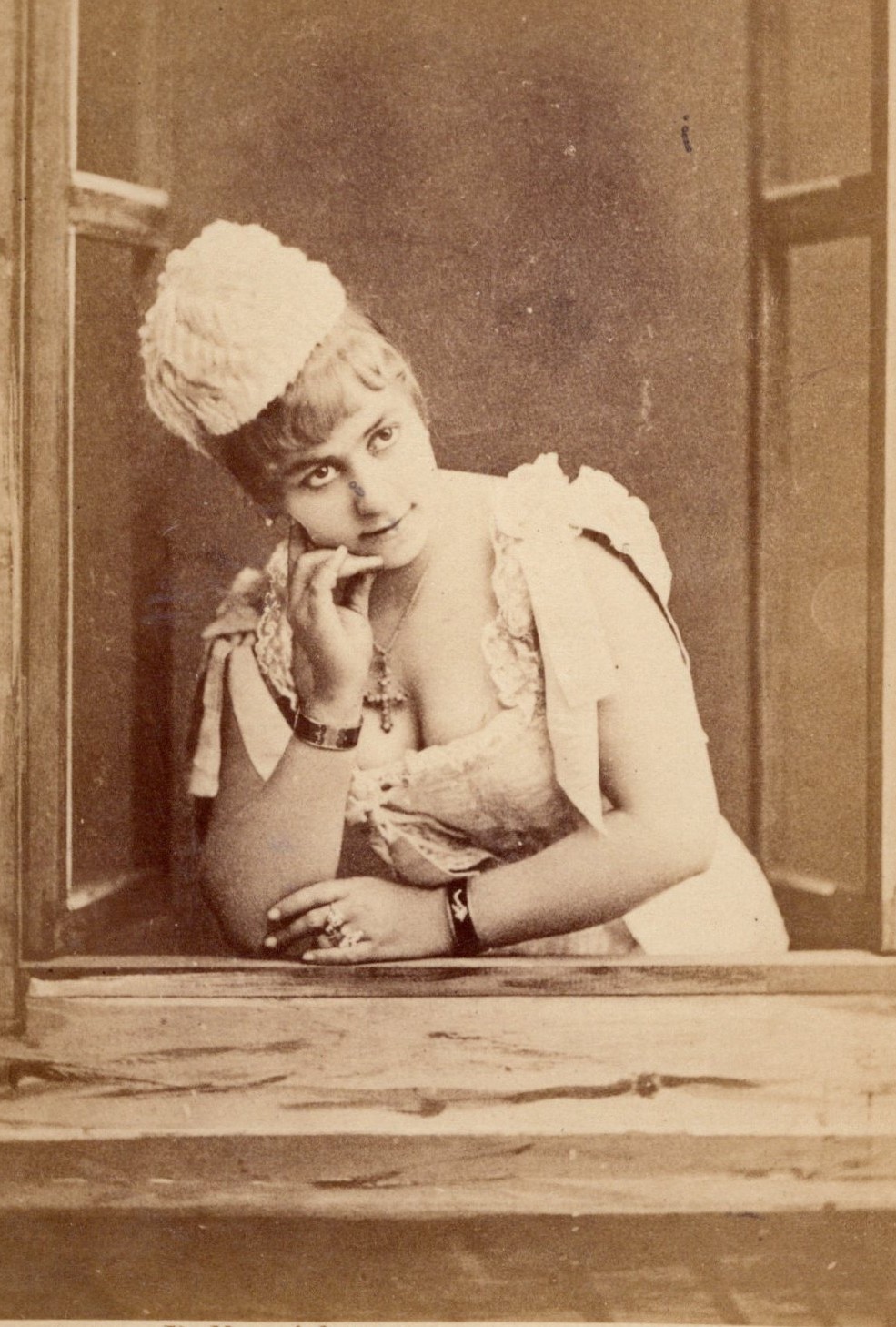
It turns out that there were two New York City actresses named Dolly Adams. I will tell you the story of both of them. Each actress made sensational headlines. The first Dolly Adams that I describe had an interesting and unique wedding experience. The second Dolly Adams described is Dolly Adams “The Water Queen”. It is her photograph that accompanies this blog entry.
The New York Times of September 21, 1897 reports that Emma Viola Street a variety actress, known as Dolly Adams; and Frederick Hillmeyer, the son of a well-to-do hotel proprietor, were married in a Harlem, New York, prison. They had to be married by a clergyman because a court room judge refused to perform the ceremony because he thought “the marriage could not turn out happily”. The reason why Hillmeyer was in court was because he was accused by Ms Adams of stealing jewelry and cash from her Park Avenue flat. Ms Adams requested that the judge withdraw the charges but he refused to do so, causing the actress to have an “epileptic” fit.
Dolly Adams, the “Water Queen” lived a very interesting life. She was born Ellen Loretta Callahan in 1860 in New York. Her parents were from Ireland. Her father, a longshoreman, died when Dolly was young. Dolly’s mom went to work and Dolly received little supervision and a age sixteen was working as a prostitute in a New York parlor house. During her youth she used to swim at the New York Aquarium with a group of other girls. She was a talented swimmer and received special training and learned to hold her breath under water for an extended period of time. She eventually became an underwater performer and was given the title “Water Queen”. Dolly moved to San Francisco, accompanying a couple of madams out west. She lived on the wild side in California. She became famous when she attended the Policeman’s Ball dressed as Cupid and ran up to President Grant and pinned a lily on the lapel of his coat. Observers stated that President Grant, a man who didn’t flinch in battle, appeared shocked upon this floral assault by Miss Adams. She also won first place for her costume. Dolly Adams returned to New York City where she continued to live a life full of drama and travail. She died in 1888 aboard a steam ship which was to take her on a tour of the orient. The cause of death was the impact of syphilis, opium addiction and pneumonia. (SOLD)
HANDSOME OLD WEST GENTLEMAN : GRAND RAPIDS, MICHIGAN : IDENTIFIED : CABINET CARD
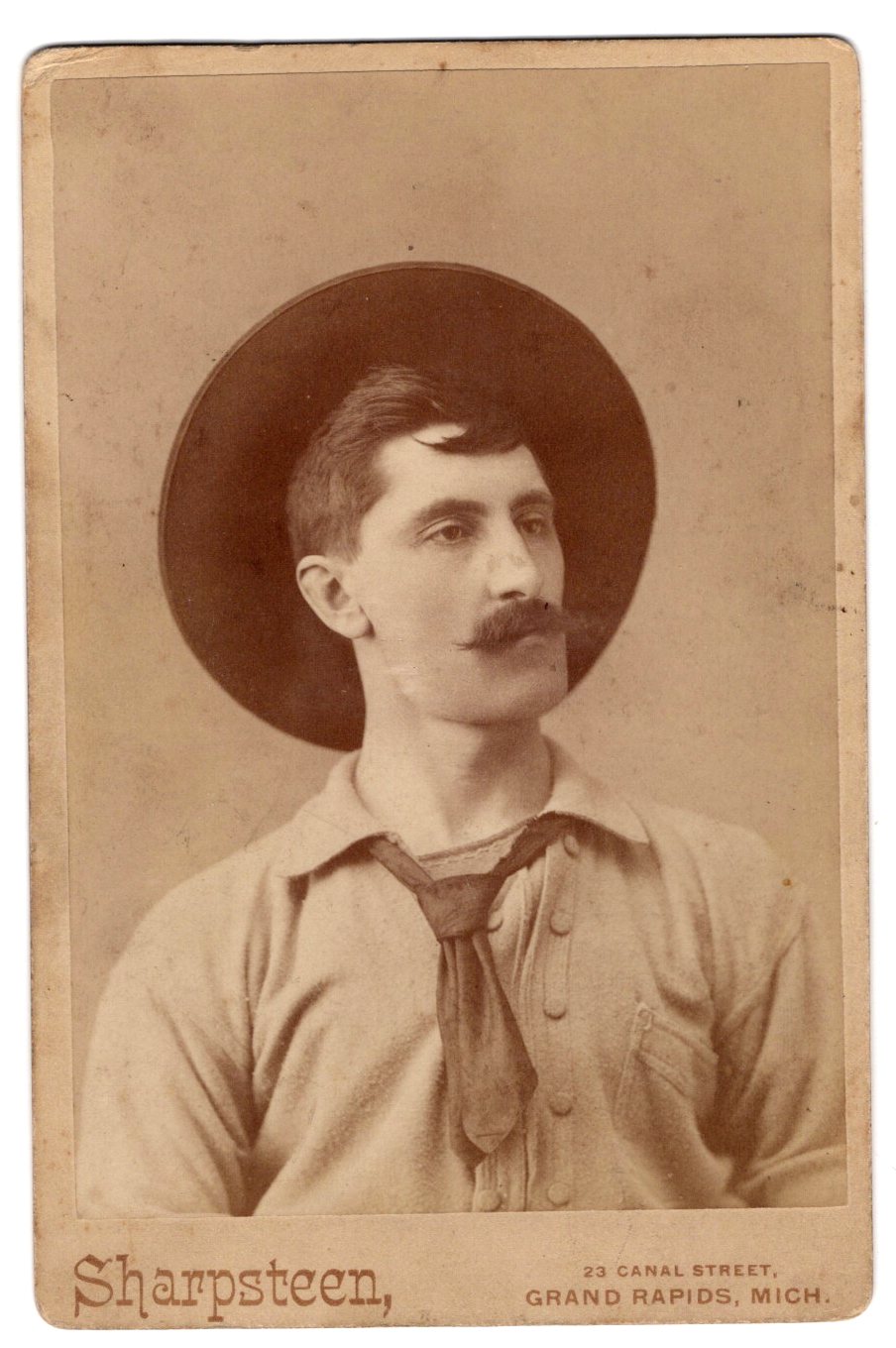

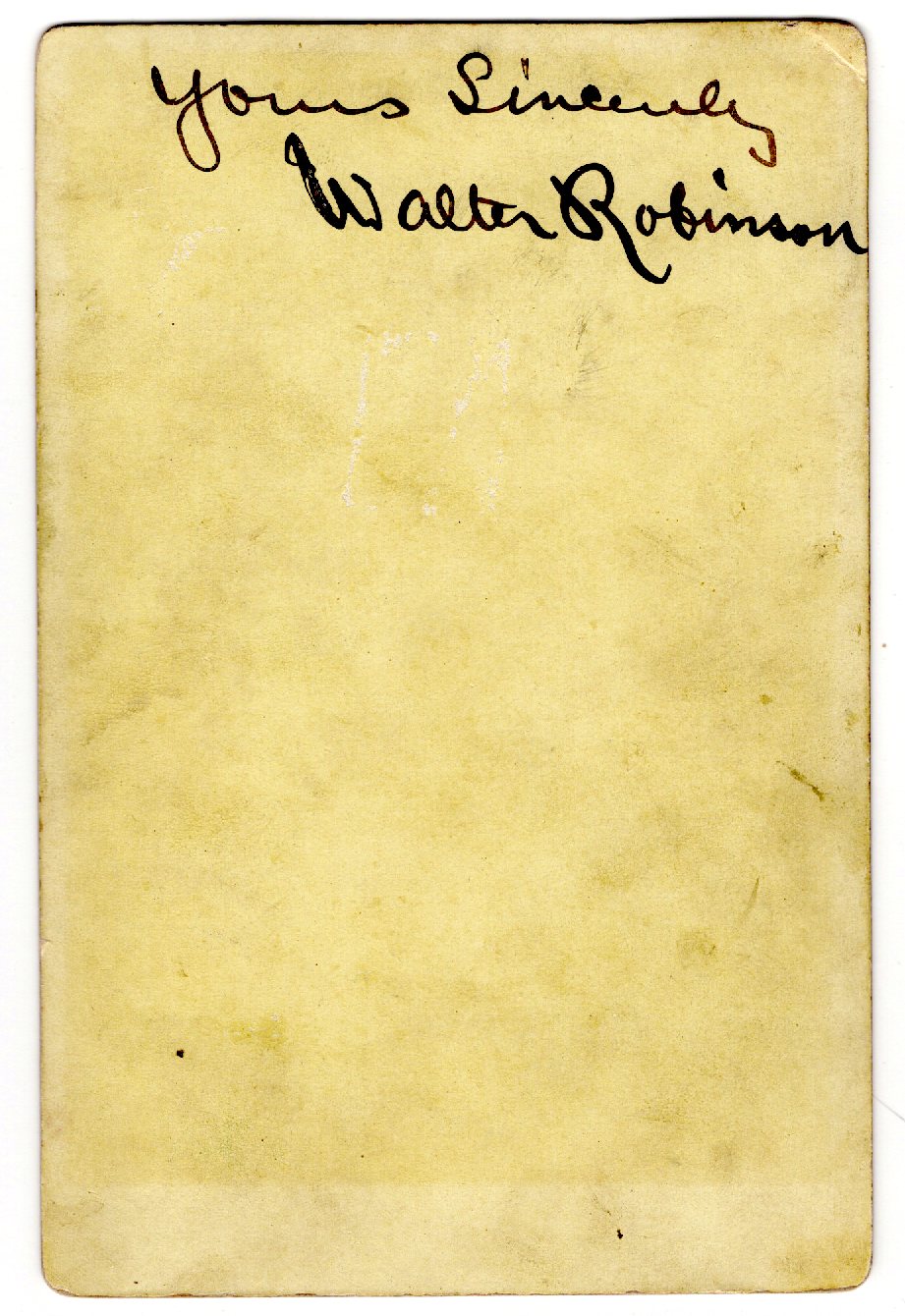
A handsome young man in western clothing, poses for his portrait at the studio of Samuel Sharpsteen, located in Grand Rapids, Michigan. The gentleman in this photograph is identified on the reverse of the image as Walter Robinson. He is dressed in what appears to be old west attire. Note the unusual way that he is wearing his tie. Is he a cowboy? Is he a farmer? Samuel Sharpsteen was born in 1850 near Battle Creek, Michigan. His parents were native New Yorkers who were among the early settlers of Michigan. He was educated in Battle Creek’s public schools and at age 20 left home to apprentice in photography. He then went off to Owosso, Michigan, where he and his older brother opened a gallery. After six months, his brother left the partnership; and Sharpsteen stayed in Owosso until 1882. He also married his wife there. His wife’s name was Nattie Tuttle, and she was from Cleveland, Ohio. His next location was Ionia, Michigan, where he stayed 8 years. An 18 month stint in Detroit was followed by his move to Grand Rapids. His gallery was in Grand Rapids from 1888 until , at least, 1903. His studio moved around a lot. Research located nine different Grand Rapids locations over the years that he was there. In addition, he had a partner in 1890 and their studio was known as Sharpsteen & Andrews. The Bulletin of Photography (1916) announced Sharpsteen’s death. He died in Grand Rapids at age 71. SOLD
BABY SITTING PRETTY IN LUXURY CARRIAGE IN GERMANTOWN, OHIO
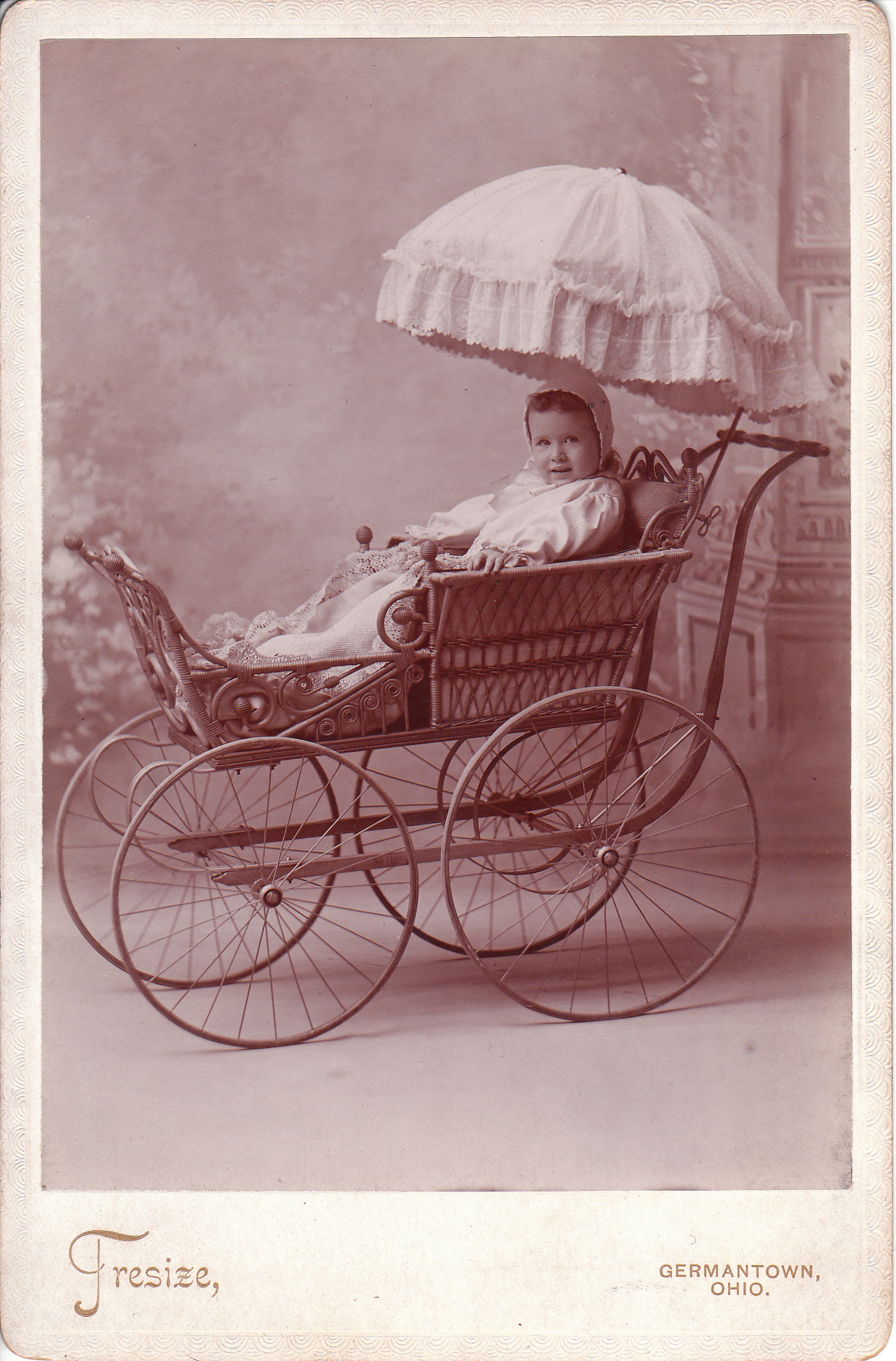 This cabinet card photograph captures baby sitting comfortably in a luxury baby carriage. There will be no discomfort from the sun for this cute baby; courtesy of the large umbrella built into this Rolls Royce of baby prams. The photographer is Tresize,of Germantown, Ohio. Research reveals that Ohio had a number of photographers named Tresize, and it is unknown which Tresize is responsible for this image? Dayton, Ohio was the home of The Tresize Brothers Studio as well as photographer S. P. Tresize. Samuel P. Tresize was a photographer located in Logan, Ohio. J.Q. A. Tresize was a photographer in Zanesville, Ohio and a partner in the Photography Studio named Jaquary and Tresize. William C.Tresize was a photographer in McConnelsville, Ohio. Suffice it to say, it is unknown which Tresize photographed this image. To see other photographs of baby carriages, click on this site’s category “Baby Carriages”. SOLD


 THE CABINET CARD GALLERY