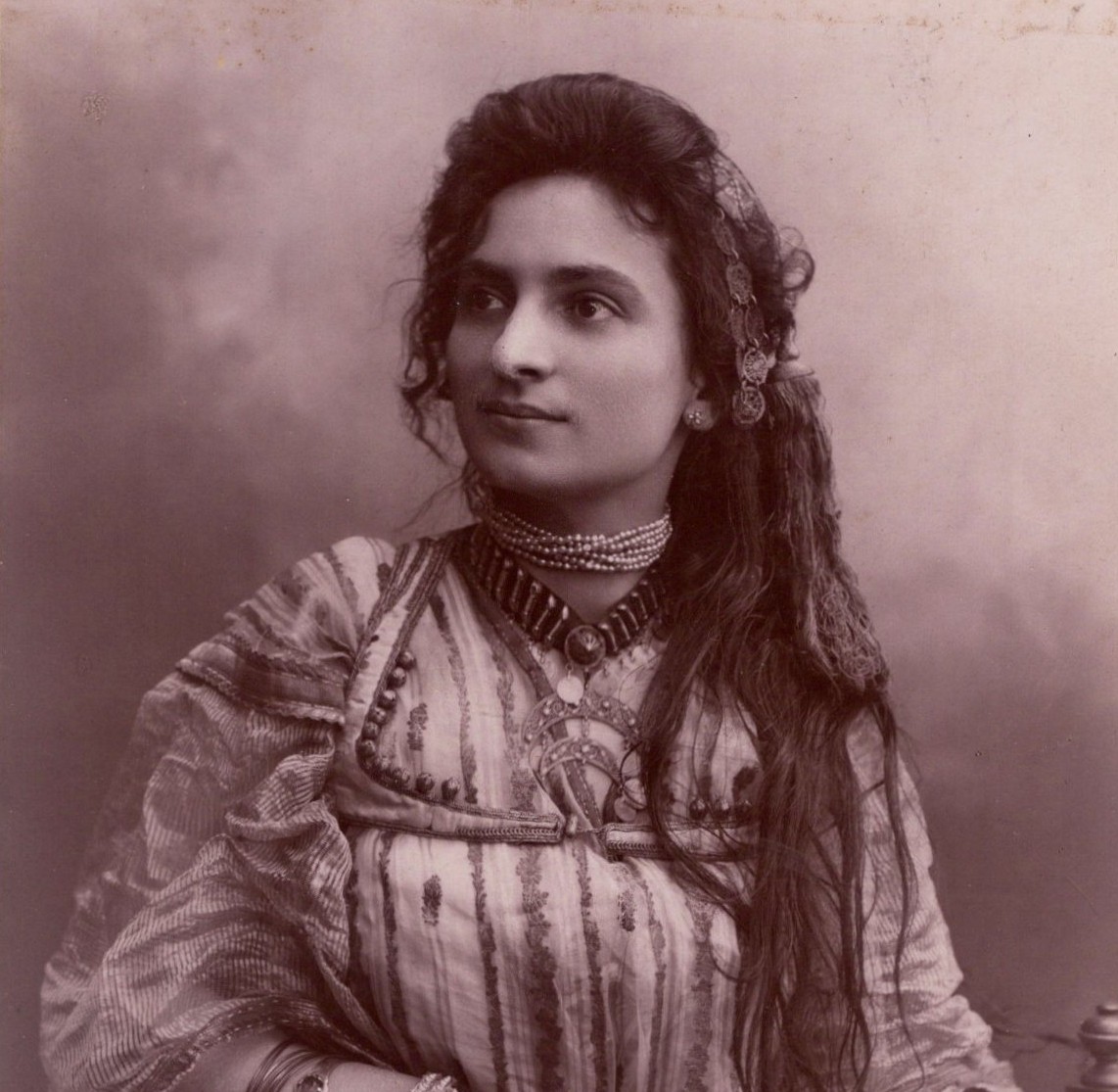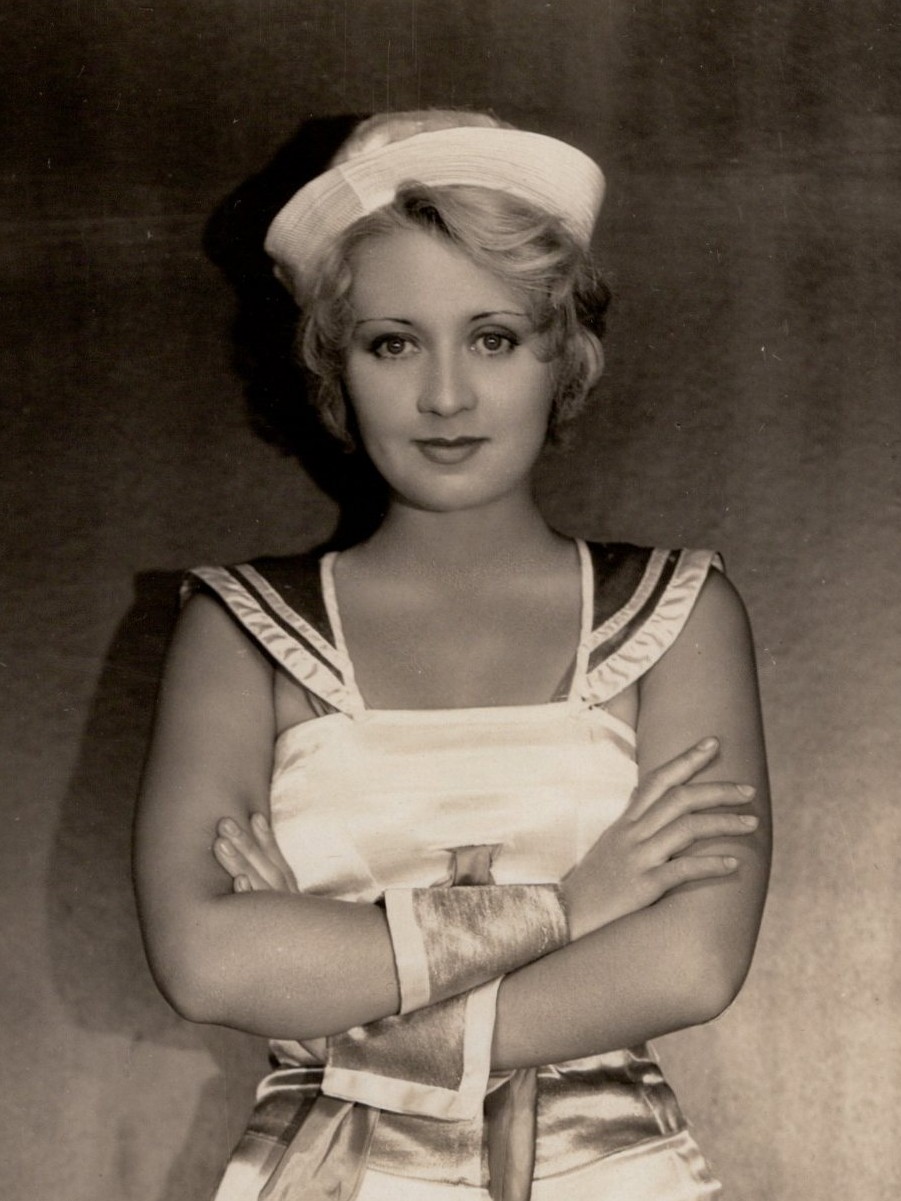
VIOLET VANBRUGH : PHOTO BY LIZZIE CASWALL SMITH : UNCOMMON ROTOPHOT RPPC 1908

This is a rare and beautifully preserved Rotophot (RP) postcard featuring a striking portrait of the renowned British stage actress Miss Violet Vanbrugh (1867–1942). The postcard, numbered 0450, was published by Rotophot, a German publisher known for high-quality photographic postcards. The portrait itself was captured by Lizzie Caswall Smith, a prominent female photographer of actors and society figures during the early 20th century. This particular image is notable for its excellent clarity and fine detail, showcasing Vanbrugh in an elegant, dark gown with a delicate lace underlayer, her short wavy hair styled fashionably, and wearing simple yet refined pearl earrings. Violet Vanbrugh was part of a theatrical family—her sister, Irene Vanbrugh, was also a celebrated actress. She initially pursued her education at Exeter and developed an interest in drama at a young age. She made her stage debut in 1886 at the Theatre Royal, Margate, before stepping into the London theatre scene. Her breakthrough came when she joined Sir Henry Irving’s company, where she refined her skills and gained recognition for her classical performances. Over the years, she became highly regarded for her portrayals of Shakespearean heroines, including Lady Macbeth, Portia in The Merchant of Venice, and Queen Katherine in Henry VIII. Apart from Shakespeare, she also starred in major productions like “Caste” and “Diplomacy”. Vanbrugh was admired for her commanding presence and emotive delivery, making her a favorite among theatre audiences of the late Victorian and Edwardian eras. Violet Vanbrugh married Arthur Bourchier, a fellow actor, in 1894, and the couple became a theatrical powerhouse, frequently starring together in productions. They also managed the Garrick Theatre in London for a time. However, their marriage eventually ended in divorce. Despite personal setbacks, Vanbrugh remained a distinguished figure in the theatrical world well into the 20th century. She passed away in 1942 at the age of 75. The back of this postcard features the Rotophot logo in red, with a printed divider. It is addressed to Miss M. Pattison of  Cardiff, Wales. The handwritten message, written in cursive along the left margin, reads: “another for your collection”. The sender hopes the postcard will be added to the recipients postcard collection. The postcard bears a half-penny green King Edward VII stamp, which was postmarked in Cardiff in 1908.  (SOLD)

PORTRAIT OF TWO HANDSOME AND FIT TENNIS PLAYERS

muscle guys

This vintage photograph features two athletic and handsome men posing with tennis gear. They are holding racquets and one of them is grasping a tennis ball. These guys look like they exercise regularly. Judging by their smiles, they seem to be very happy.  SOLD

muscle guys 2

Published in: on October 29, 2025 at 12:00 pm  Leave a Comment  
Tags: ,

MERRILL’S MARUDERS : BURMA : WW ll : JUNGLE FIGHTERS : PRESS PHOTO

This vintage press photo features members of Merrill’s Maruders, a specialized American fighting group that fought the Japanese in the jungles of North Burma. They fought much like the Japanese soldiers. This American unit used Guerilla war tactics. The American unit was officially known as the 5307th Composite Unit. They conducted long-range penetration missions behind enemy lines. They were established in 1943 and named after their commander, Brigadier General Frank Merrill. All members of the Maruders were volunteers from various Army division. Many were already skilled in jungle warfare. The US soldiers faced many challenges besides facing Japanese forces. The Americans had to deal with harsh weather, disease and supply shortages. The unit completed their mission in 1944 and were disbanded. Many consider the Maruder’s as the predecessor to US modern day special forces. In 1962, a popular movie was released that told the story of this famous 3000 man unit. The movies, unsurprisingly, was titled “Merrill’s Maruders”. This photo includes eleven members of Merrill’s outfit. They are cooking a meal over a flame. Note the large can of compressed corned beef. Despite the tough conditions, the men are smiling as the pose for this news photograph. The photo was taken by the International News Photo. SOLD

Published in: on October 28, 2025 at 12:00 pm  Leave a Comment  
Tags: , , , ,

ANNE VERNON & HER DACHSHUND : FRENCH ACTRESS : PHOTO BY LUCIENNE CHEVERT : RPPC

Anne Vernon (1924- ) was a French theatre, television and film actress. She is seen in this vintage real photo postcard, posing with a Dachshund dog. Vernon began her film career in the late 1940s, gaining attention for her elegance, charm, and natural screen presence. Her first notable role was in The Murdered Model (1948), marking her debut during the French occupation. In the post-war years, she became a prominent figure in French cinema, appearing in a variety of genres, including comedies, dramas, and musicals. One of her most significant roles came in Jacques Demy’s The Umbrellas of Cherbourg (1964), where she played Madame Emery, the mother of Catherine Deneuve’s character. Her nuanced performance brought depth to the bittersweet romance of the film, which remains a classic of French cinema. Throughout the 1950s and 1960s, Anne worked with esteemed directors such as René Clair and Julien Duvivier, further solidifying her reputation as a versatile actress. She also appeared in international productions, making her a recognized figure beyond France. Notably, she appeared in the Hollywood film Shakedown (1950), playing the role of Nita Palmer alongside Howard Duff and Peggy Dow. This was her only Hollywood film. Despite this venture into American cinema, she remained less known in the United States compared to her prominence in Europe. Over her career, Anne Vernon appeared in approximately 40 films between 1948 and 1970. Anne Vernon was married three times. Her husbands included  French lawyer and politician Robert Badinter and politician Jean-Pierre Prouteau. As of January 2025, Anne Vernon is still alive. She is 101 years-old. Miss Vernon’s photograph seen on this postcard was taken by Lucienne Chevert (1911-1982). She was a Paris based photographer who photographed dozens of French film stars post World War II. She was the partner of the well known celebrity photographer, Sam Levin. 
This postcard was published by the Globe Edition (Paris) and is part of a series (no.137). 
(SOLD)

TRINIDAD PHOTO c.1920s : BOY HOLDING BABY WITH GROUP OF CHILDREN : SERIES #3981

This is a striking original vintage photograph taken in Trinidad, measuring approximately 4 1/4 inches by 6 inches.The photograph shows a young Black boy holding a baby in his arms while several other children look on. The young boy, who is the central figure, wears worn clothing—his shirt is torn at the shoulders, and his pants show signs of heavy wear—suggesting a working-class or rural setting. He looks directly into the camera with a slight, dignified smile. The baby, seemingly asleep or resting, is bare-chested and clad in only a light cloth or diaper. The other children in the background, likely of Afro-Caribbean or Indo-Caribbean descent, wear simple white garments. Their expressions vary—some look somber, others curious, all facing the camera in the bright tropical daylight, with blurred palm trees and wild grass in the background.⚠️ Note on Historical Terminology: As a seller of vintage and historical photography, I am committed to presenting these images with honesty and care, while acknowledging and respecting their complex cultural contexts. The caption on this photograph includes a term that today is widely recognized as racially offensive. I include it here solely for the sake of historical accuracy and do not endorse its use or connotations. The term “Rastus” is historically a racially charged stereotype originating in the United States, where it was used derogatorily to caricature Black men, especially in minstrel shows and commercial branding (e.g., Cream of Wheat). Its use in this photograph’s caption, “Young Rastus, reflects a colonial-era mindset and exoticism that was common in early 20th-century ethnographic photography, particularly when Westerners documented life in colonized regions like Trinidad. In this case, the label was almost certainly applied by the photographer or publisher, not the subjects, and should be understood as a historical artifact rather than a descriptor used by the individuals pictured. SOLD

Published in: on October 26, 2025 at 12:00 pm  Leave a Comment  
Tags: , , ,

PORTRAIT OF A WELL DRESSED TEENAGE BOY IN CHENOA, ILLINOIS

This cabinet card features a teenage boy posing for his portrait at Smith’s Studio in Chenoa, Illinois. He is well dressed in his three piece suit. His derby hat is beside him, sitting on a faux wall. Note the backdrop. The artist who created it did not have an abundance of talent. SOLD

Published in: on October 25, 2025 at 12:00 pm  Leave a Comment  

HUNTER, SHOTGUN, AND DOG MEET RACCOON: RACCOON MEETS ITS MAKER

This cabinet card is a hunting image photographed by Morrison (1848-?) of Bowling Green, Ohio. The hunter is posed with his hunting dog and his shotgun. Also making an appearance in this image is the raccoon that met its early demise as the prey of the hunt.  The dog in the photograph appears to be a hound. The street address of the photographers studio was the Kabig Block. Robert Prescott Morrison worked as a photographer in Fostoria, Ohio around 1865 and began operating in Bowling Green in 1870 or 1878 depending on what source is believed. He was still active in his career in 1900.  His wife, Belinda (Linnie) Ball Morrison worked as a negative retoucher during their early married days. Morrison was a veteran of the civil war. He served in Company H of the 133rd Ohio Volunteer Infantry Regiment.  SOLD

HANDSOME YOUNG MAN: KALAMAZOO, MICHIGAN : REIDSMA STUDIO : CABINET CARD c1890s

This cabinet card features a handsome young man with a composed, serious expression. His piercing eyes are steady and direct, suggesting confidence and a sense of purpose. He sports a neatly groomed, full mustache that accentuates his strong facial features, and his dark, wavy hair is styled close to the head with a modest wave. He is dressed formally in a three-piece suit typical of the late 19th century, consisting of a dark jacket with a subtle pinstripe, a matching vest, and a white high-collared shirt adorned with a cravat or tie tucked neatly into the collar. A pocket watch chain is visible just below the vest’s center buttons, a common accessory for men of the era. The photograph was taken by Reidsma Studio, as indicated by the imprint on the bottom mount. The ornate script spells out “Reidsma” alongside the photographer’s monogram and location: Kalamazoo, Michigan. Research into Mr. Reidsma reveals that the photographer was likely John Reidsma, a Dutch-American who operated a photography studio in Kalamazoo in the late 19th century. His work is known for its clarity and careful composition, often capturing the middle class and professional residents of the area during a time of industrial growth in Michigan. The presence of the brown line framing the image—also called a “rule line”—was a stylistic element commonly used in cabinet cards from the 1885–1895 period. This, along with the fashion and card style, helps date the photograph to the early 1890s. On the reverse, written in pencil, is the name: Mrs. R. J. Welch, 837 W. Walnut. The address is likely a local address for Kalamazoo itself or a nearby city. It is quite likely that Mrs. R. J. Welch was the wife of the man pictured. During this era, it was common for women—especially wives—to manage household affairs, including the commissioning and ordering of photographic portraits from local studios. Her name inscribed on the back may indicate ownership or responsibility for this photograph, perhaps sent or shared with family members. 

Published in: on October 23, 2025 at 12:00 pm  Leave a Comment  
Tags: , , ,

FASHIONABLE WOMAN : HISTORIC MINING TOWN : LEADVILLE, COLORADO : CABINET CARD

This vintage Cabinet Card features a fashionable woman. She is wearing a fancy dress and is well accessorized. Whe is wearing a large necklace, a collar pin, and what appears to be, a flower with streaming ribbons. The photographer of this image was the Bennett Studio. Bennett operated a studio in Leadville, Colorado. Alfred E. Bennett’s (1862-1942) foray into photography may have been a brief one. He is listed in the 1900 US Census as a photographer but held other occupations in other decade census’s. When this photo was taken, Leadville was a booming mining town. Leadville is located at an altitude of 10,152 feet and in the late 1800’s was the second most populated city in Colorado. Denver was number one in population. Leadville was one of the worlds largest Silver camps and was the home of Doc Holliday shortly after the gunfight at the OK Corral.  SOLD

Published in: on October 22, 2025 at 12:00 pm  Leave a Comment  
Tags: , , , , , , ,

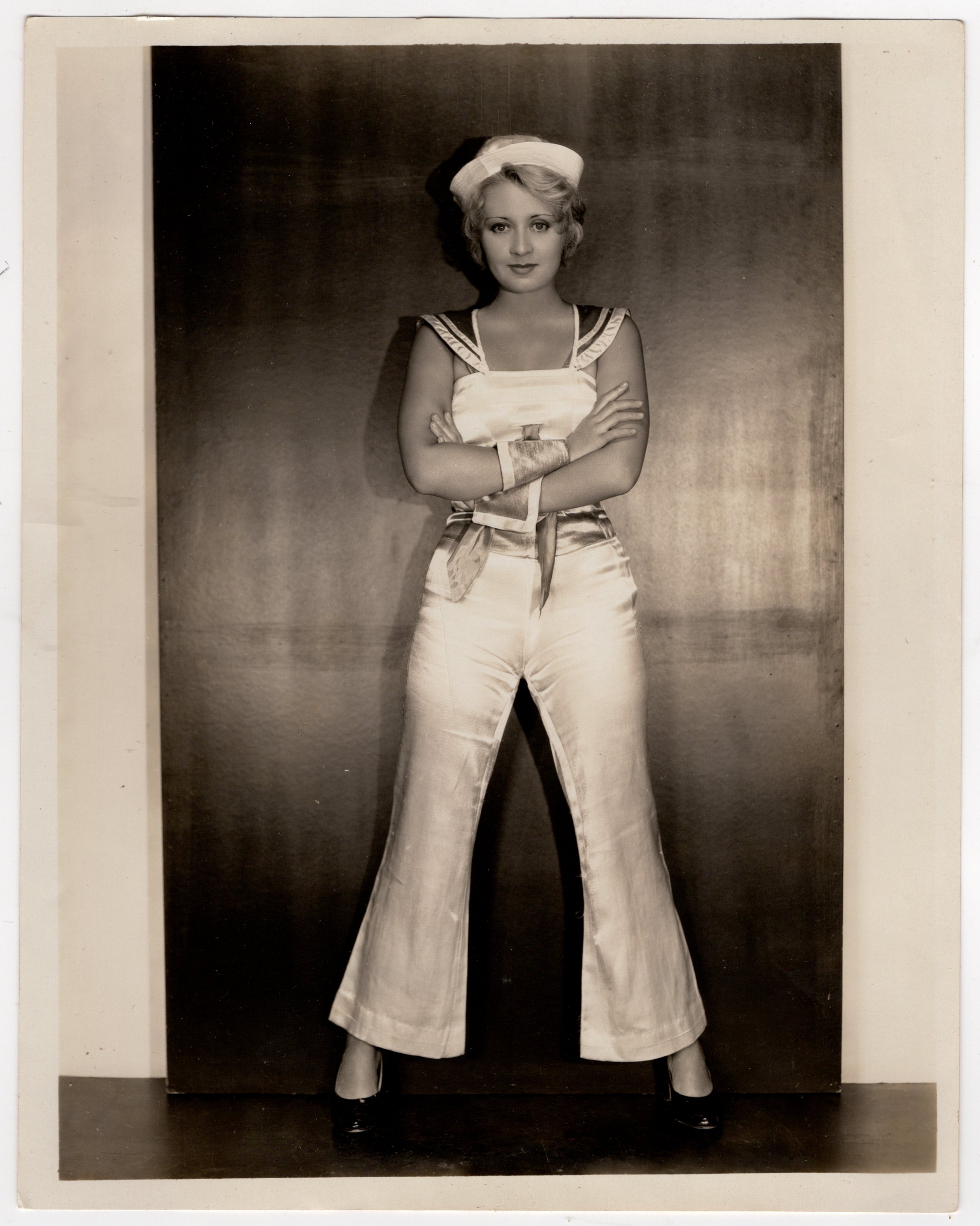
CLAIRE LUCE : VINTAGE GLAMOUR PORTRAIT : BY MANNELL STUDIO : PRETTY ACTRESS

This vintage portrait postcard captures the elegance and sophistication of Claire Luce, a celebrated American stage and screen actress known for her work in theater and Hollywood during the early to mid-20th century. Photographed by Mannell Studio, London, this stunning black-and-white image exudes the classic glamour of the era, likely from the 1920s or 1930s. In this portrait, Claire Luce is seen wearing a sleek satin gown with a low-cut back, reflecting the timeless fashion of the Art Deco period. Her delicate necklace adds a touch of refinement, while her softly curled platinum blonde hair is meticulously styled in the distinctive finger waves that were highly fashionable during that time. Her expression is both confident and alluring, with a slight smile and a captivating gaze that suggests both poise and mystery. She poses gracefully, her fingers resting near her chin in an elegant yet relaxed manner, enhancing the overall sophistication of the composition. Born in 1903, in Syracuse, New York, Claire Luce became a renowned actress known for her work on both stage and screen. She rose to prominence in the 1920s and 1930s, particularly for her performances in Broadway productions. One of her most notable roles was in Gay Divorce (1932), where she starred alongside Fred Astaire. This production later inspired the classic film The Gay Divorcee (1934), though her role in the film was played by Ginger Rogers. Luce also made a mark in Hollywood, appearing in films such as Up the River (1930), The Cohens and the Kellys in Africa (1931), and Over She Goes (1937). However, her true passion remained the stage, and she continued to shine in numerous theatrical productions, both in the United States and the United Kingdom. Aside from her acting career, Luce was admired for her beauty, grace, and sophisticated sense of style. She was often photographed in elegant gowns, embodying the glamour of the Golden Age of Hollywood and theater. Claire Luce was known for her dedication to her craft, and while she had several notable relationships, she was never widely publicized for her personal life. She married Clifford Warren Smith, an English businessman, though details about their marriage remain relatively private. . Claire Luce’s contributions to theater and film continue to be remembered by classic cinema enthusiasts and theater historians. Her connection to Fred Astaire and the Broadway stage solidifies her place in entertainment history.  George Mannell (London) is the photographer who took this postcard’s photo portrait. The postcard is relatively uncommon.