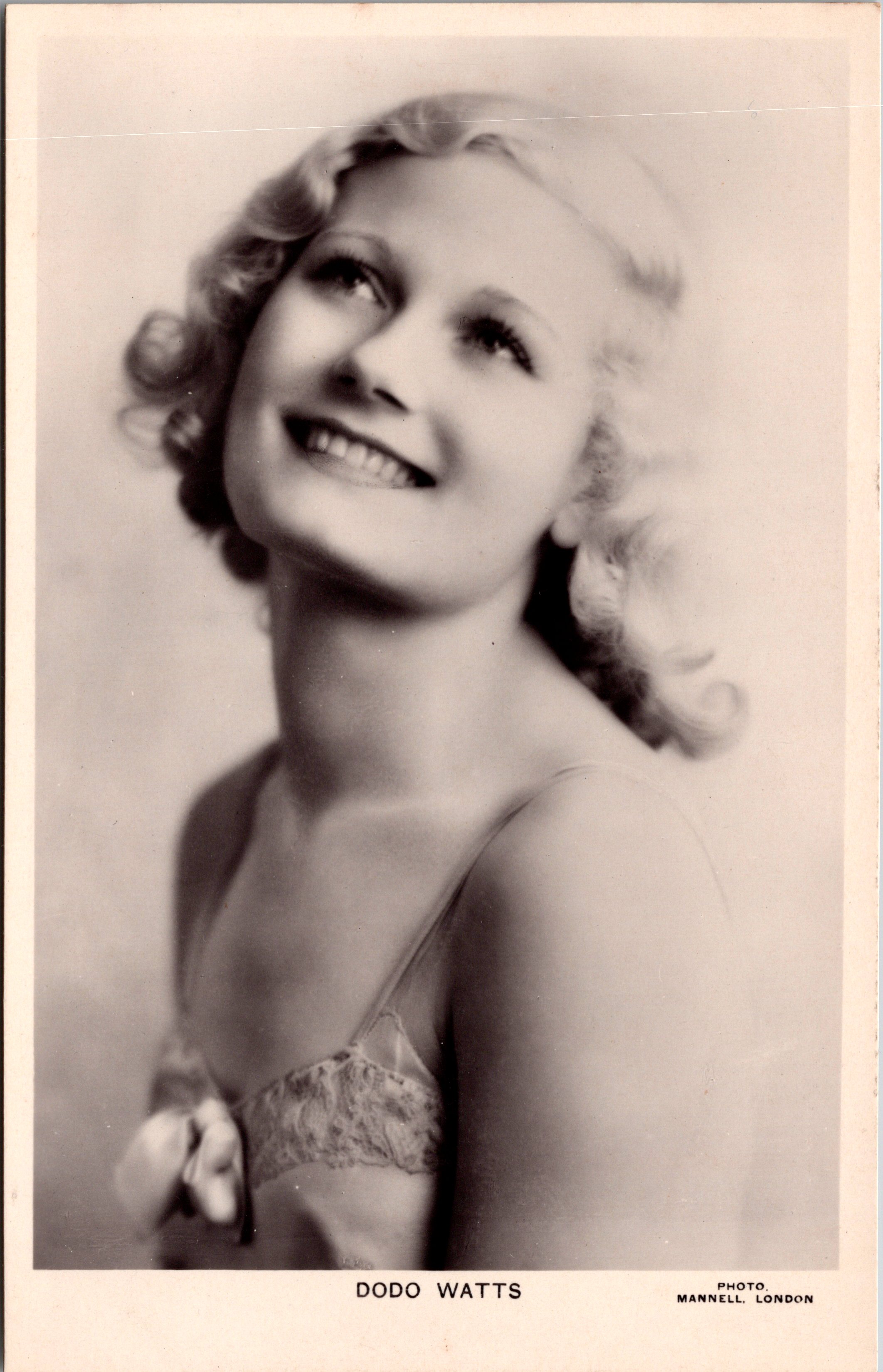
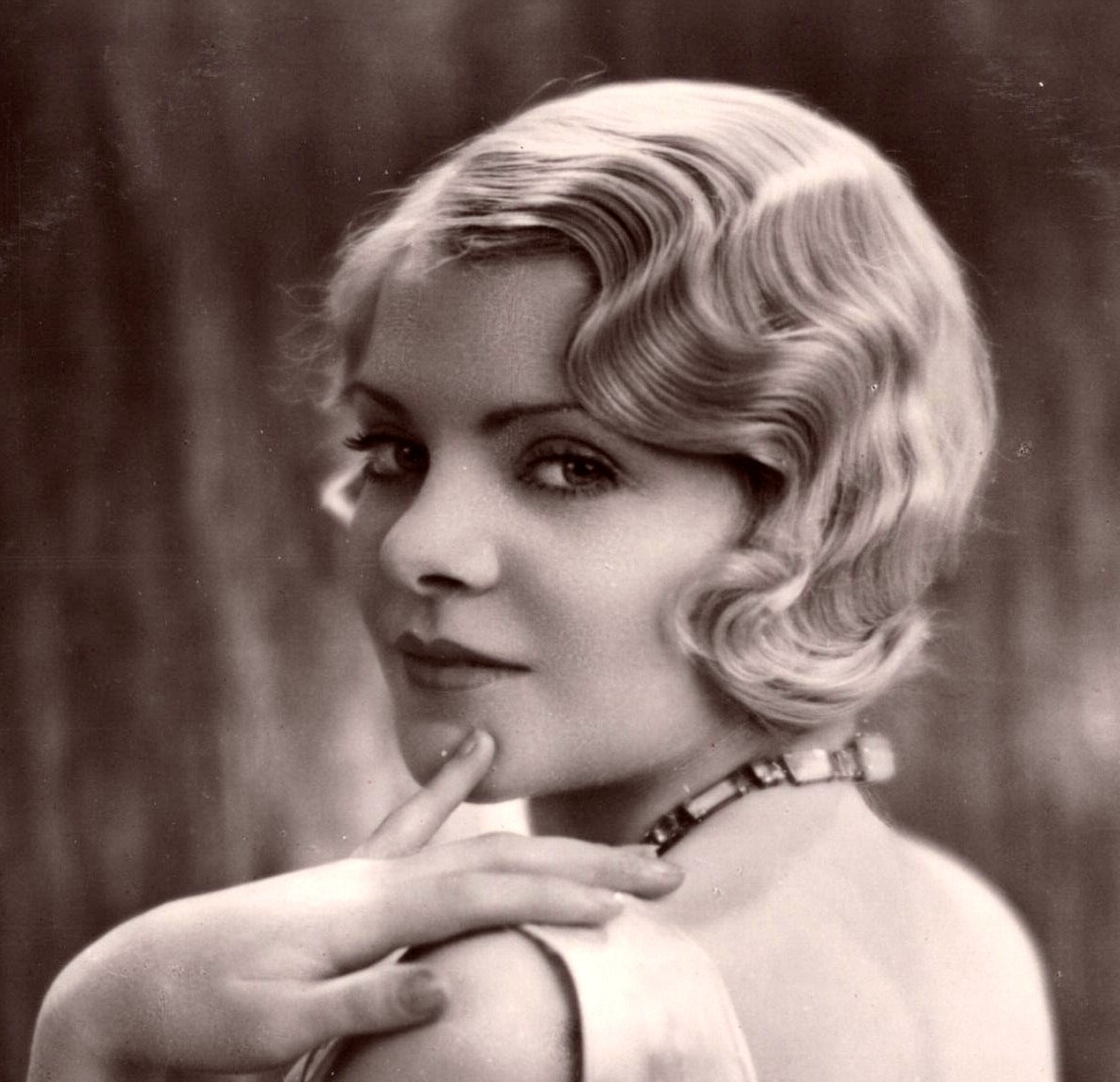
This vintage real photo postcard features British stage and film actress, Dodo Watts (1910-1990), She had one appearance on Broadway in “The Middle Watch” (1929).When she retired from acting, she became a career woman. She owned a successful millinery firm in London. She also worked as a casting director for three films. She cast Diana Rigg in her role in “The Avegers” television series. Watts also worked as a theatrical agent. The IMDb credits her with19 film credits between 1925 and 1953. This card was published by Picturegoer as part of a series (no.537). The photograph seen on this card was taken by George Mannell. His firm was located in London, England. SOLD
CLAIRE LUCE : VINTAGE GLAMOUR PORTRAIT : BY MANNELL STUDIO : PRETTY ACTRESS
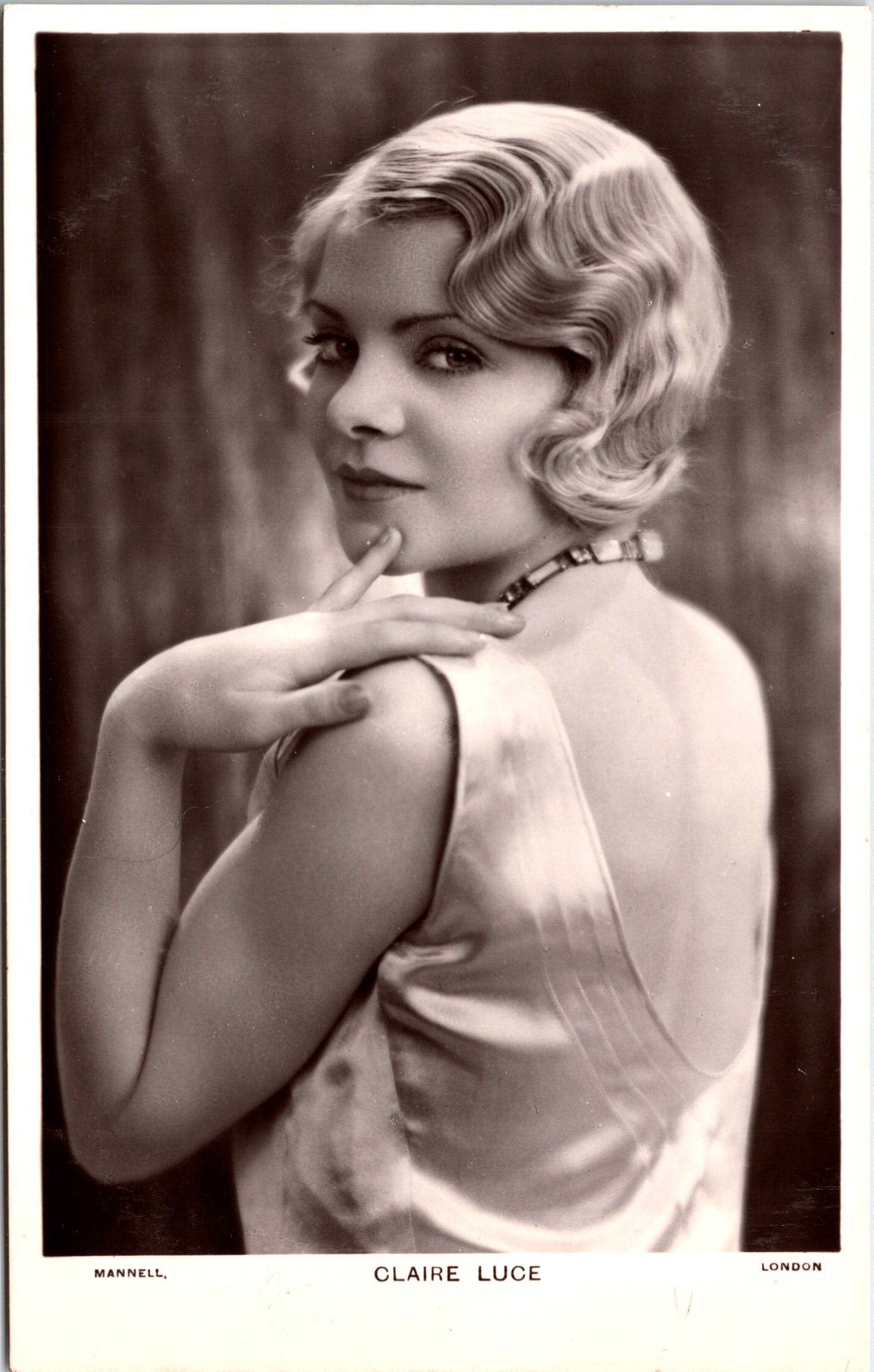
This vintage portrait postcard captures the elegance and sophistication of Claire Luce, a celebrated American stage and screen actress known for her work in theater and Hollywood during the early to mid-20th century. Photographed by Mannell Studio, London, this stunning black-and-white image exudes the classic glamour of the era, likely from the 1920s or 1930s. In this portrait, Claire Luce is seen wearing a sleek satin gown with a low-cut back, reflecting the timeless fashion of the Art Deco period. Her delicate necklace adds a touch of refinement, while her softly curled platinum blonde hair is meticulously styled in the distinctive finger waves that were highly fashionable during that time. Her expression is both confident and alluring, with a slight smile and a captivating gaze that suggests both poise and mystery. She poses gracefully, her fingers resting near her chin in an elegant yet relaxed manner, enhancing the overall sophistication of the composition. Born in 1903, in Syracuse, New York, Claire Luce became a renowned actress known for her work on both stage and screen. She rose to prominence in the 1920s and 1930s, particularly for her performances in Broadway productions. One of her most notable roles was in Gay Divorce (1932), where she starred alongside Fred Astaire. This production later inspired the classic film The Gay Divorcee (1934), though her role in the film was played by Ginger Rogers. Luce also made a mark in Hollywood, appearing in films such as Up the River (1930), The Cohens and the Kellys in Africa (1931), and Over She Goes (1937). However, her true passion remained the stage, and she continued to shine in numerous theatrical productions, both in the United States and the United Kingdom. Aside from her acting career, Luce was admired for her beauty, grace, and sophisticated sense of style. She was often photographed in elegant gowns, embodying the glamour of the Golden Age of Hollywood and theater. Claire Luce was known for her dedication to her craft, and while she had several notable relationships, she was never widely publicized for her personal life. She married Clifford Warren Smith, an English businessman, though details about their marriage remain relatively private. . Claire Luce’s contributions to theater and film continue to be remembered by classic cinema enthusiasts and theater historians. Her connection to Fred Astaire and the Broadway stage solidifies her place in entertainment history. George Mannell (London) is the photographer who took this postcard’s photo portrait. The postcard is relatively uncommon.

VALLI VALLI : PRETTY SILENT FILM & STAGE ACTRESS : RPPC 1908
POSTCARD 1 (SOLD)
POSTCARD 2 (SOLD)
POSTCARD 3 (SOLD)
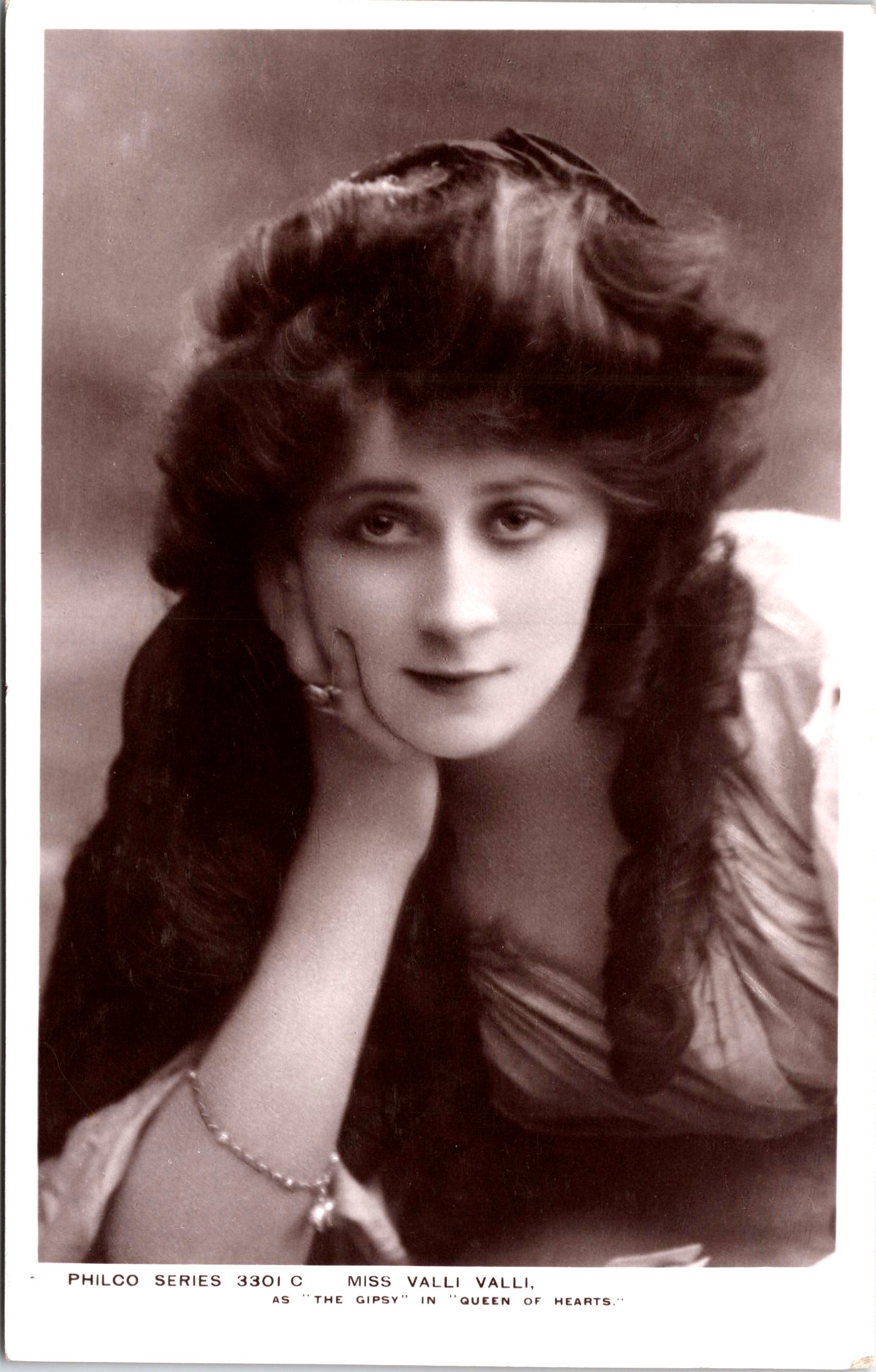
These vintage real photo postcards feature British beauty and actress, Valli Valli (1882-1927). She was a British musical comedy actress and a silent film performer. She was born in Berlin but spent most of her life in England. Her sisters, Lulu and Ida Valli were both actresses. Her father was a merchant. She was educated in London and Paris. She made her stage debut in London at the age of twelve. At thirteen years of age she had a successful run in the musical comedy “Morocco Bound” in Berlin. The next year she performed at London’s Drury Lane Theatre in a pantomime version of Cinderella. As an adult, Valli was a beautiful woman. She performed mostly on the English stage but did tour the United States a number of times. These plays include “The Dollar Princess” and her final New York City performance in “Miss Millions” (1919). In all, she appeared in seven Broadway plays between 1905 and 1920. Valli appeared in four films during 1915 and 1916. These films included “The Turmoil” which was an adaptation of a Booth Tarkington novel. In 1917, she married Louis Dreyfus, head of a music publishing house, and later, a theatrical producer. Valli died from tuberculosis at the young age of forty-five.
Postcard 1 captures Valli, in a pensive, or possibly, dejected mood. The card was published by Rotary Photo as part of a series (No.1760G). Miss Valli was photographed by the Bassano studio. (SOLD)
Postcard 2 features Valli, in a pensive or imploring mood, identical to the mood she exhibits in postcard 1. This card was published by Rotary Photo as part of a series (No.11415A). (SOLD)
Postcard 3 captures Valli in her role as “The Gipsy” in “Queen of Hearts” . The card was published by Rotary Photo as part of a series (No.11415A). (SOLD)

POSTCARD 1 (SOLD)

POSTCARD 2 (SOLD)

POSTCARD 3 (SOLD)
NAOMI CHILDERS: GLAMOROUS AMERICAN SILENT FILM ACTRESS

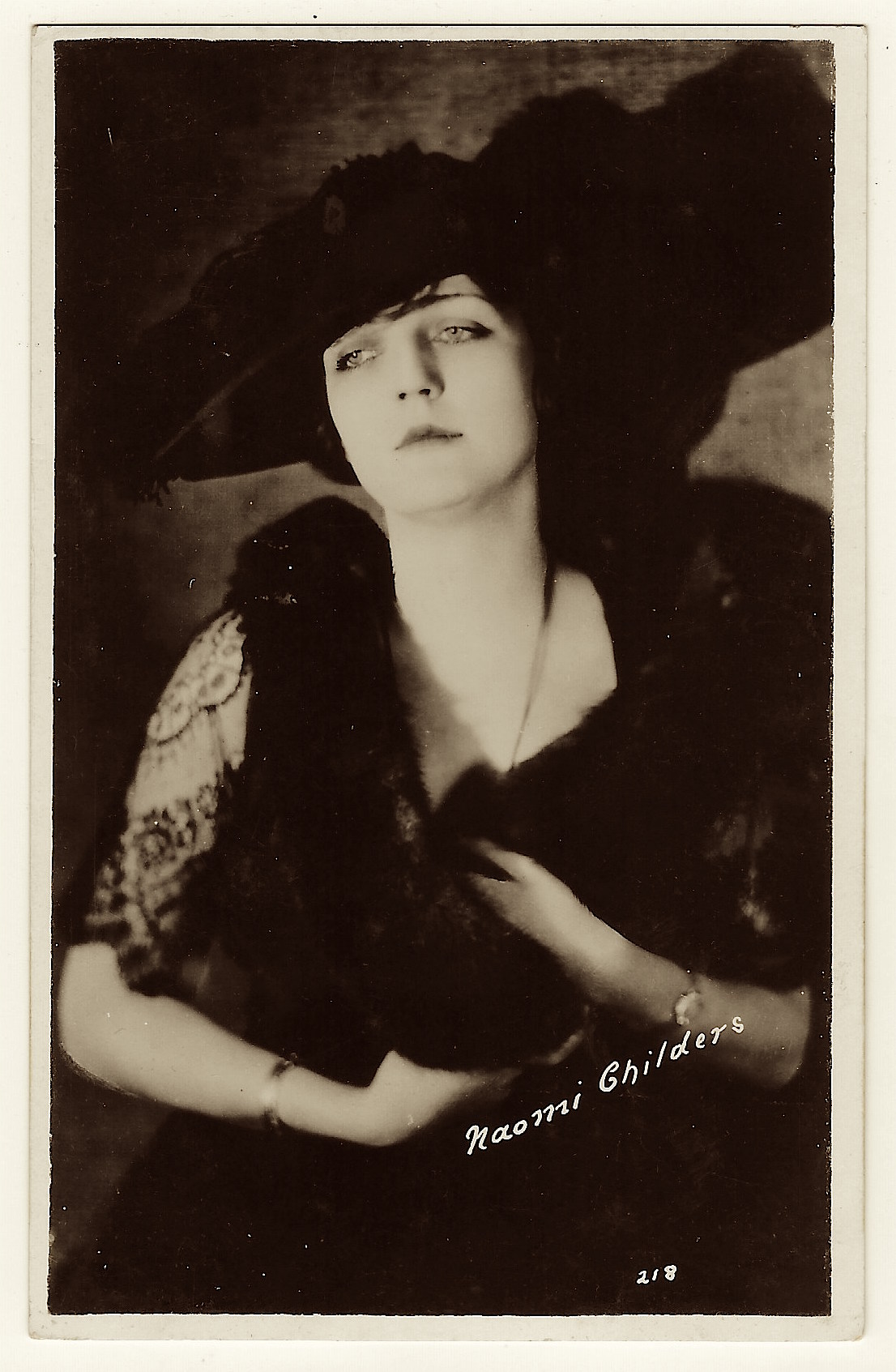
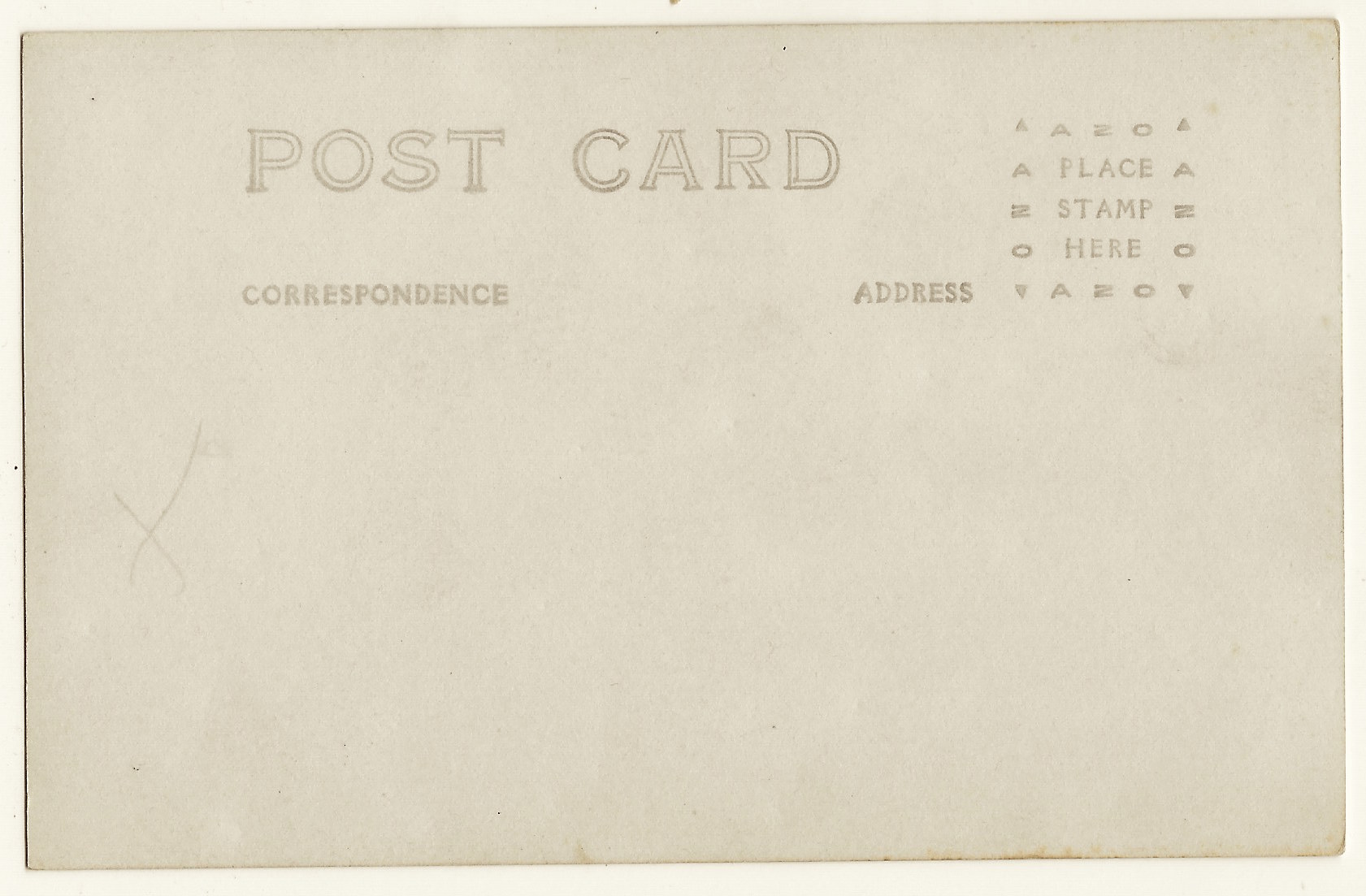
This vintage real photo postcard features silent film actress, Naomi Childers (1892-1964). Although she was born in Pottstown, Pennsylvania, her parents were English. She grew up in St. Louis, Missouri and was educated in the Maryville convent. She began acting at age three. At age ten, she played the title roles in both “Red Riding Hood” and “Alice in Wonderland” at St. Louis’s Odeon Theater. In 1912 she played roles in “The Great Name” and “Madame X”. Childers had one Broadway appearance which occurred in “The Great Name” ( 1911 ). Childers”s film career began in 1913. For the most part, she was a character actress. She played roles in “The Turn of the Road (1915) and “The Writing on the Wall” (1916). She spent four years working with the Vitagraph company. Her most popular role was in “Womanhood, the Glory of the Nation” in which she played a modern Joan of Arc. She joined the Commonwealth Company in 1917. Although Childers played many dramatic roles, she preferred comedy. The IMDb lists 104 film credits for Miss Childers. She was quite beautiful. She was blonde and had deep blue eyes. She was voted the most beautiful woman in Japan, and many of her fans and critics found her physical appearance very similar to Sarah Bernhardt. She did a great deal of modeling work and her nickname was “the girl with the Grecian face”. Childers was married twice. Her first husband was Harold Darling Shattuck, the head of a major candy company. She was later married to Luther A. Reed, a film writer and director. They were married nine years until their divorce in 1929. In her later years, Childers had significant financial problems. Upon learning of her struggles, Louis B. Mayer awarded her a lifetime contract with MGM. Miss Childers looks very glamorous in this postcard image. She is wearing a fur stole and a large hat. Her jewelry includes a necklace, bracelet and wrist watch. This postcard has an AZO stamp box indicating that it was published between 1904 and 1918. SOLD
JULIA MARLOWE: ESTEEMED AMERICAN STAGE ACTRESS


CABINETCARD 6CABINET CARD 7 (SOLD)


CABINET CARD 12


CABINET CARD 14 (SOLD)

CABINET CARD 15 (SOLD)
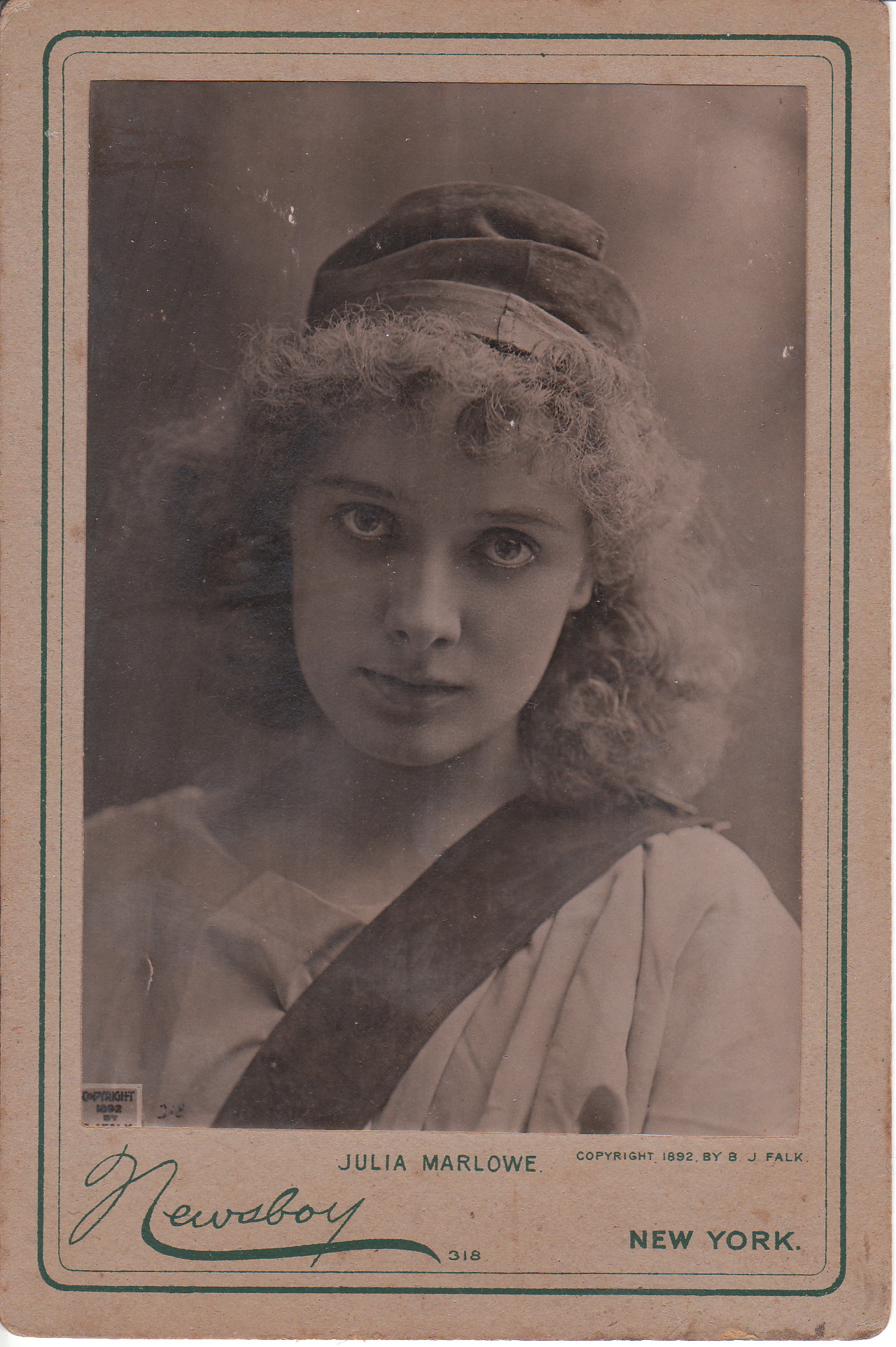
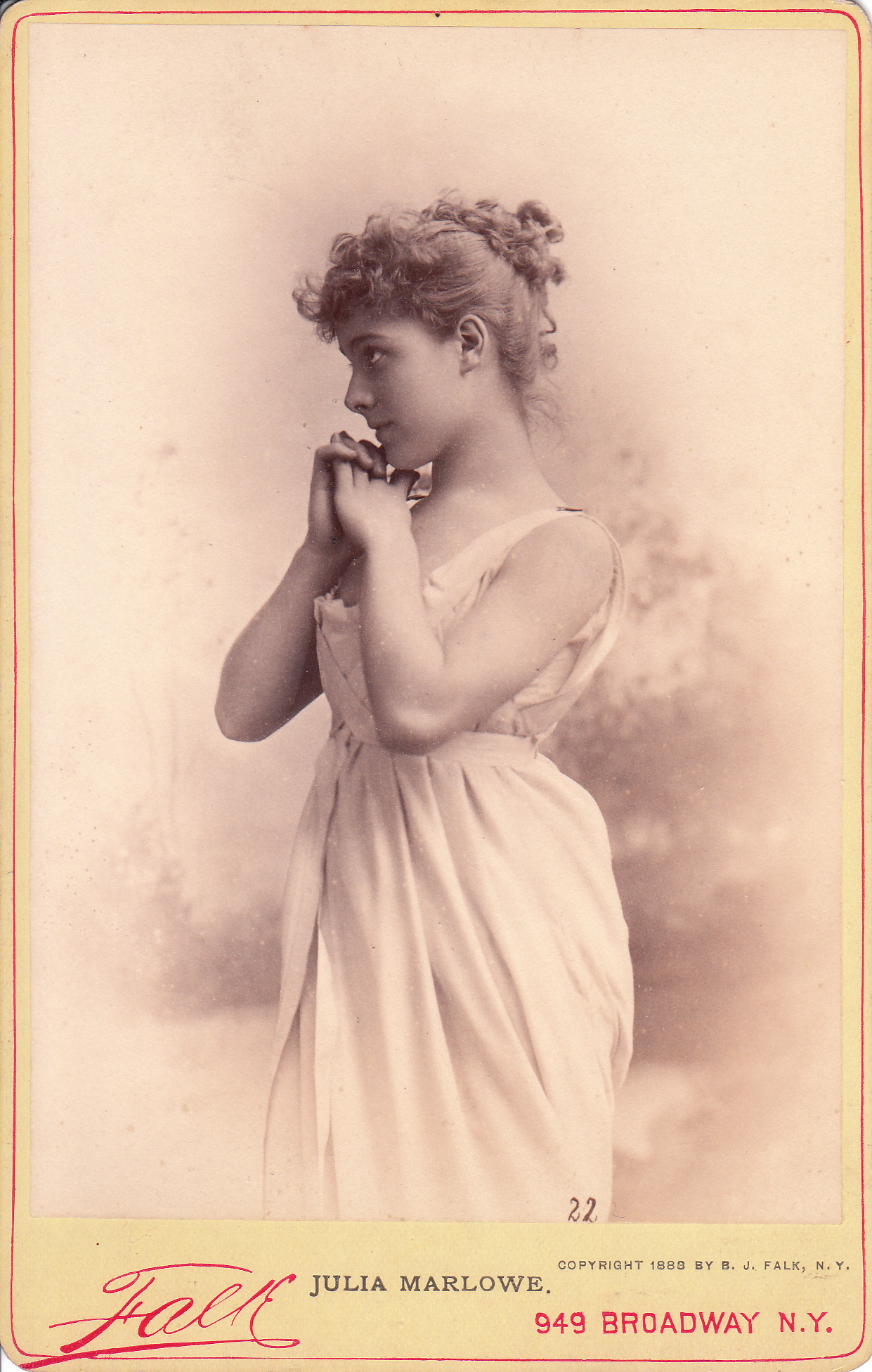
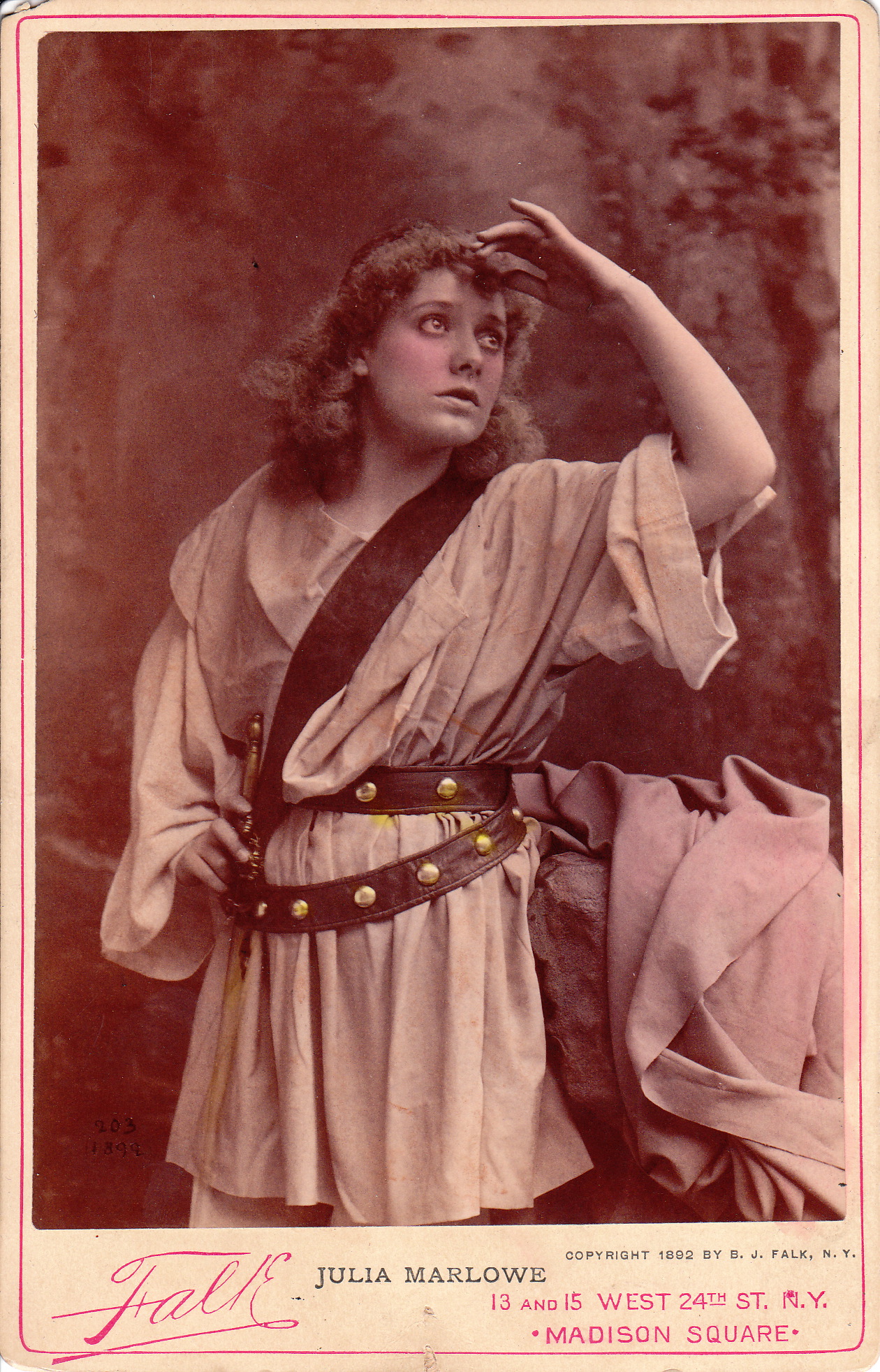
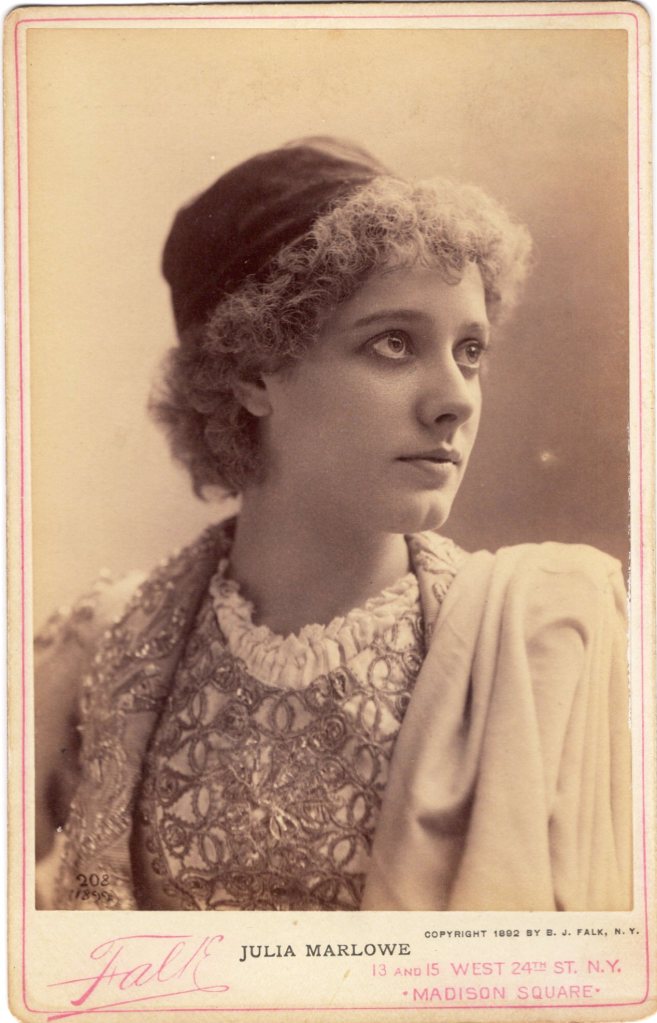
Julia Marlowe (1865-1950) was born in England and as a young child moved to the United States with her family. In her early teens she began her theatrical career with a juvenile opera company. She began playing Shakespeare in her home town of Cincinnati, Ohio. She made her Broadway debut in 1895 and by the end of her career, had appeared in more than 70 Broadway productions. Her first husband was actor, Robert Tabor. Their marriage lasted six years. In 1904 she appeared in “When Knighthood was in Flower”. Great success in this play brought her financial independence. Earlier, in 1903, she appeared in ‘The Cavalier” and “Ingomar”. The New York Sun wrote about her performance in “Ingomar”; “There is not a woman player in America or in England that is – attractively considered- fit to unlace her shoe”. In 1904 she began a partnership with actor E. H. Sothern. They toured the United States performing various plays of Shakespeare. They were managed by Charles Frohman and later, the Shubert brothers. They were considered to be among the major Shakespearian actors of the day. In 1906, Marlowe played in “Jeanne d’Arc” and also as Salome in “John the Baptist”. Later, Sothern and Marlowe played in London but were not terrific box office successes there. In 1911 Marlowe and Sothern married each other. In 1920 and 1921, they made eleven phonograph recordings for the Victor Company. The top Cabinet Card was produced by Newsboy as a premium for their tobacco products. The photographer was Falk and the image is from 1892.
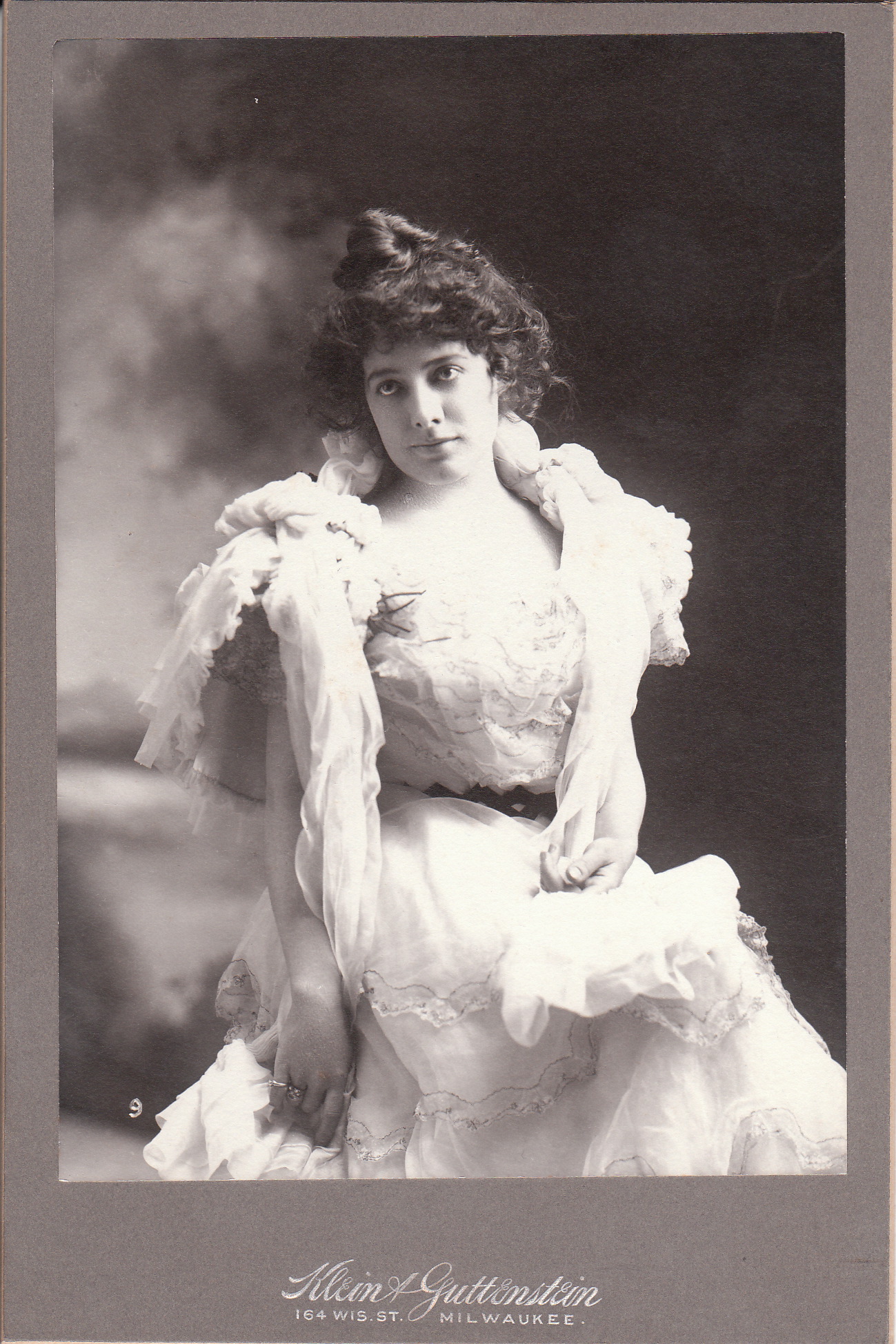
The second portrait of Julia Marlowe has a notation on the reverse of the card stating “Julia Marlowe Tabor”. Therefore, this photograph was likely taken during the time of her marriage to Tabor (1894-1900). The photographic studio that produced this portrait is Klein & Guttenstein of 164 Wisconsin Street, in Milwaukee, Wisconsin. Klein and Guttenstein were leading photographers of their time. Wilson’s Photographic Magazine (1902) reveals that the two men were very active in the Photographers Association of Wisconsin and other photography organizations. The photographers were considered part of a network of photographers skilled at producing publicity images of theatrical and vaudeville stars to be used in national magazines and other publications. The New York Public Library has a collection of portraits of actress Blanche Bates; produced by Klein & Guttenstein. The University of Pennsylvania Library has one of Klein & Guttenstein’s portraits of Julia Marlowe. (SOLD)
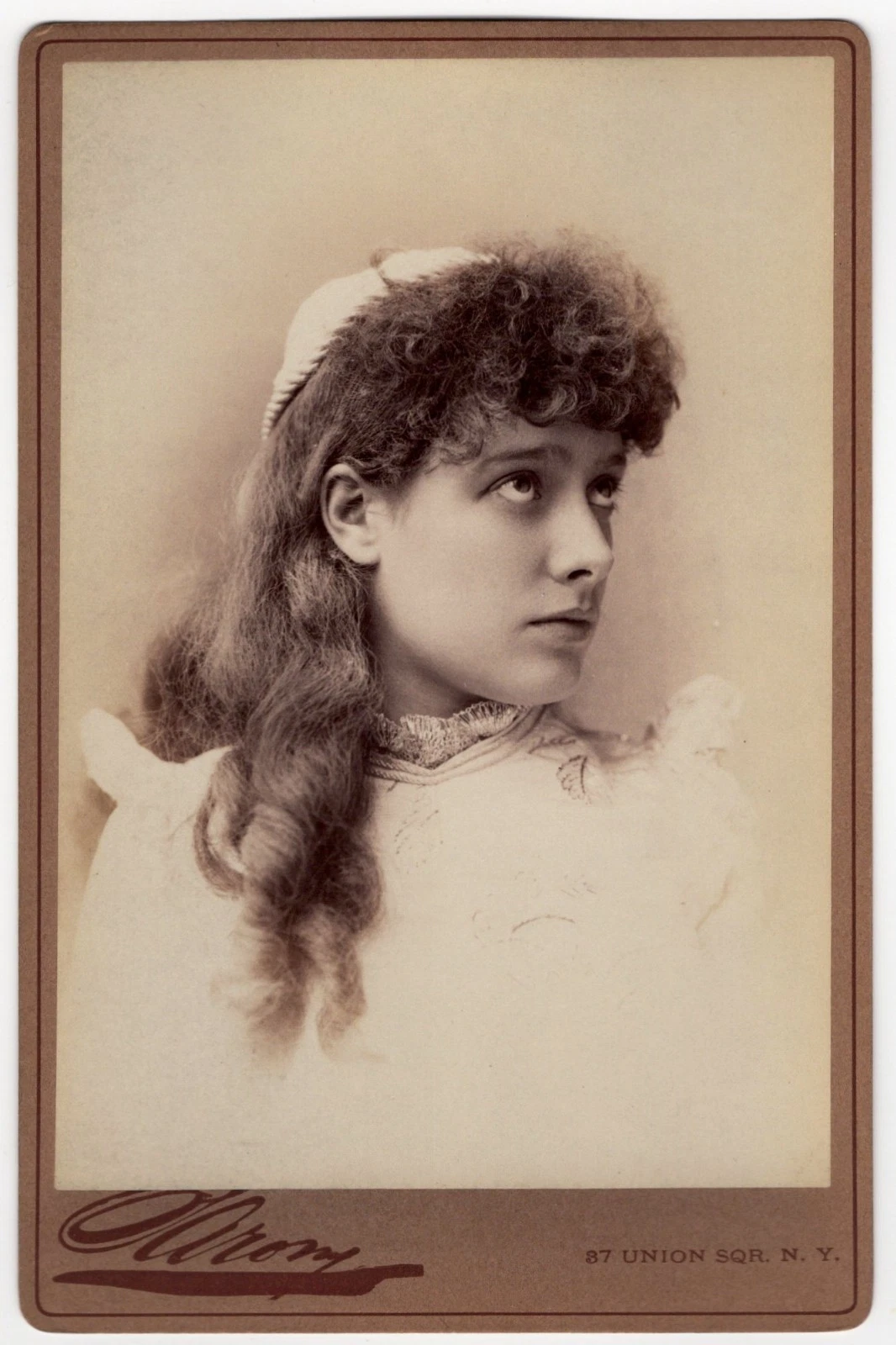
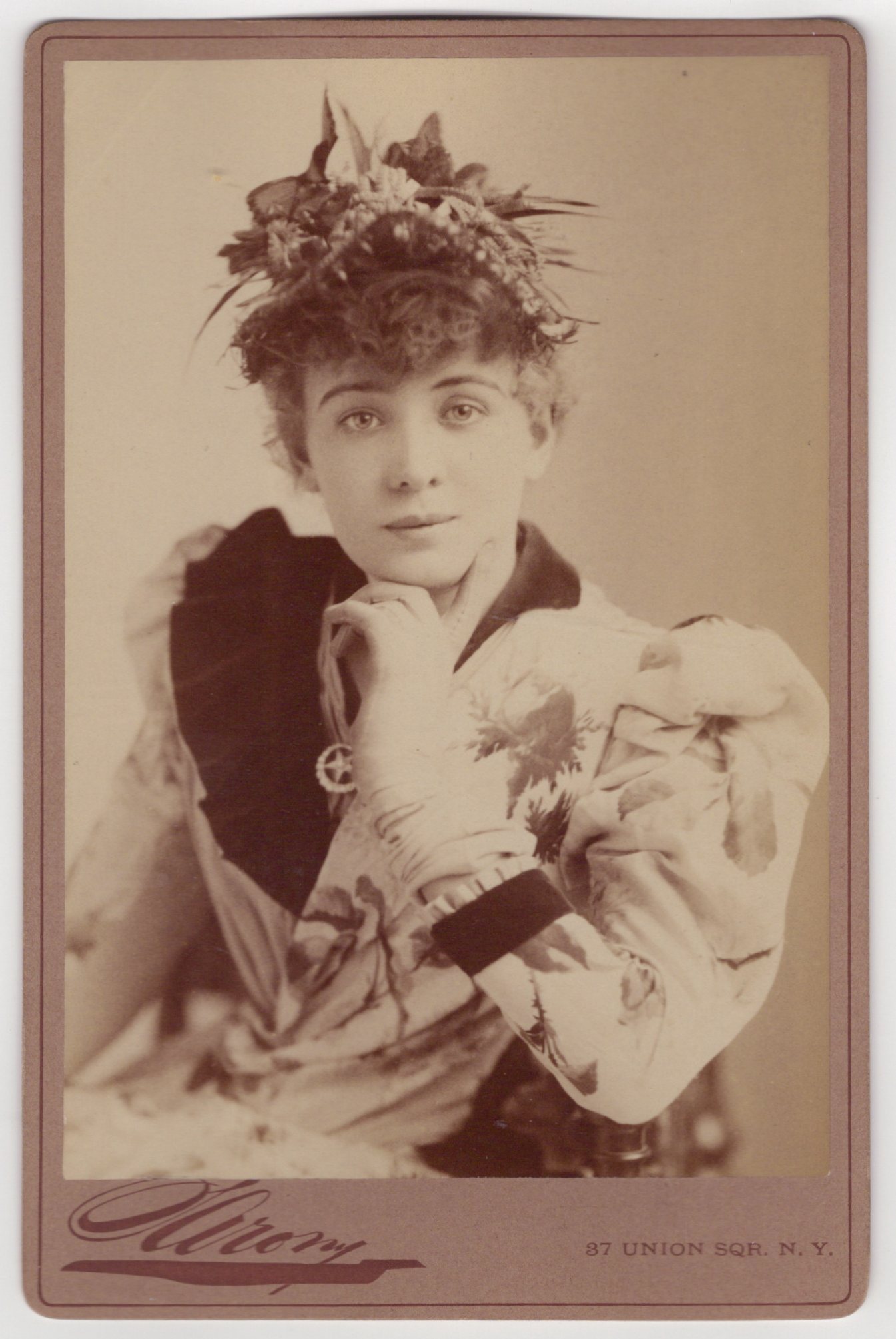
The third portrait of Julia Marlowe in the cabinet card gallery collection is photographed by Sarony, the famed celebrity photographer located in New York City. This cabinet card is signed by the actress and dated 1890. Additonal photographs by Sarony can be viewed by clicking on the category “Photographers: Sarony”. SOLD
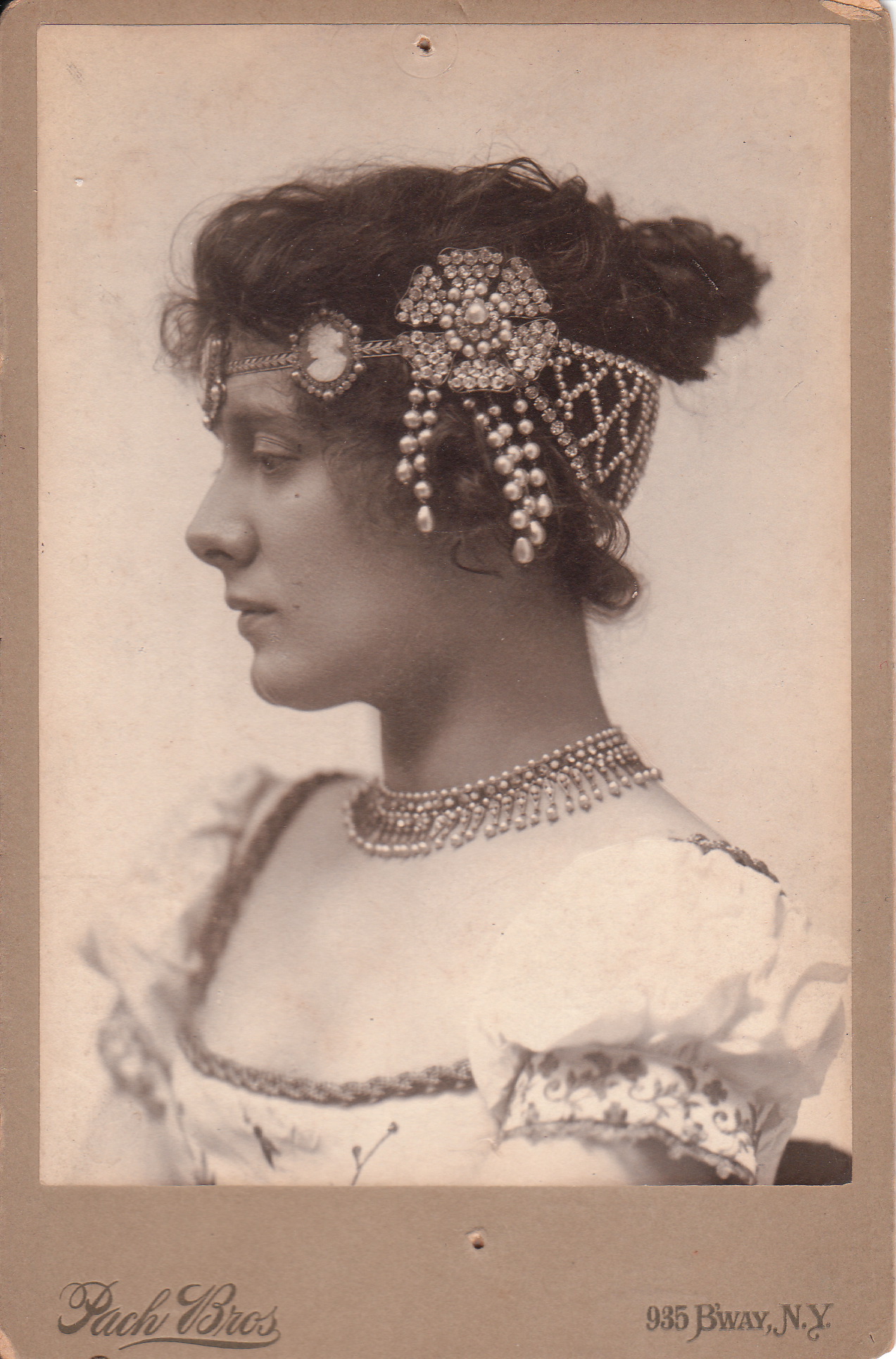
The fourth portrait of Miss Marlow features her in role in the production of “Countess Veleska”. The play was adapted for a German work, “The Tall Prussian”, by Rudolph Stratz. The play opened in New York in 1898 at the Knickerbocker Theatre. The review in the New York Times (1898) stated that the “drama was made wholly interesting by the personal charm and sincerity of Miss Marlowe”. In a sarcastic tone, the reviewer comments about Marlowe’s co star, Bassett Roe. The reviewer states that Roe has only two qualities of the man he was playing, “height and good looks”. The reviewer continues his scathing description of Roe; “The only time he actually warmed up was when he accidentally set his hair on fire. Even then he would have let it burn if Miss Marlowe had not gone to his rescue.” The photographic studio that produced the “Countess Veleska” cabinet card was Pach Brothers of New York City. Pach Brothers were photographers known for their photographs of celebrities of their era. To see additional photographs by the Pach Brothers, click on this site’s category of “Photographers: Pach Brothers”.
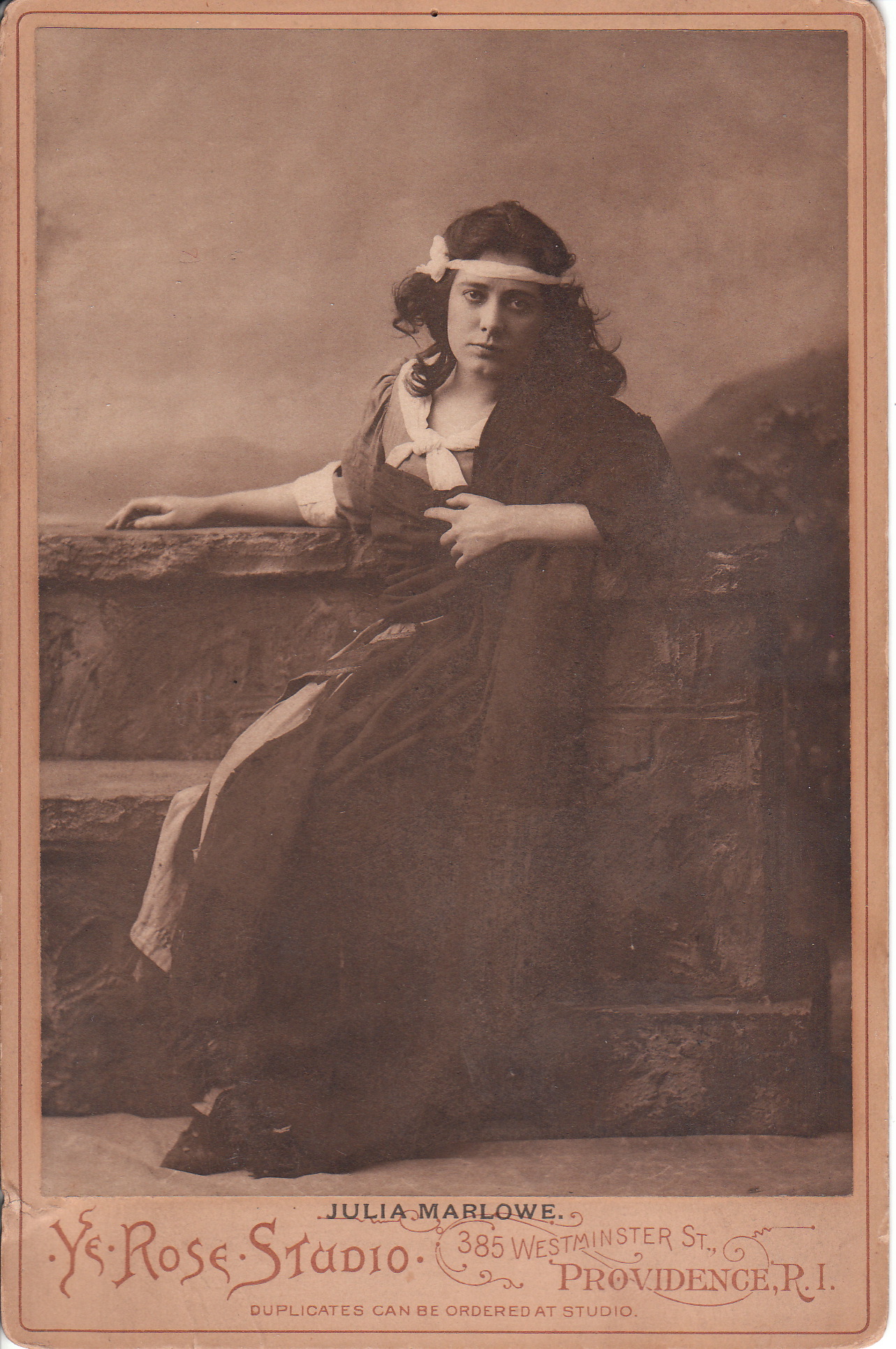
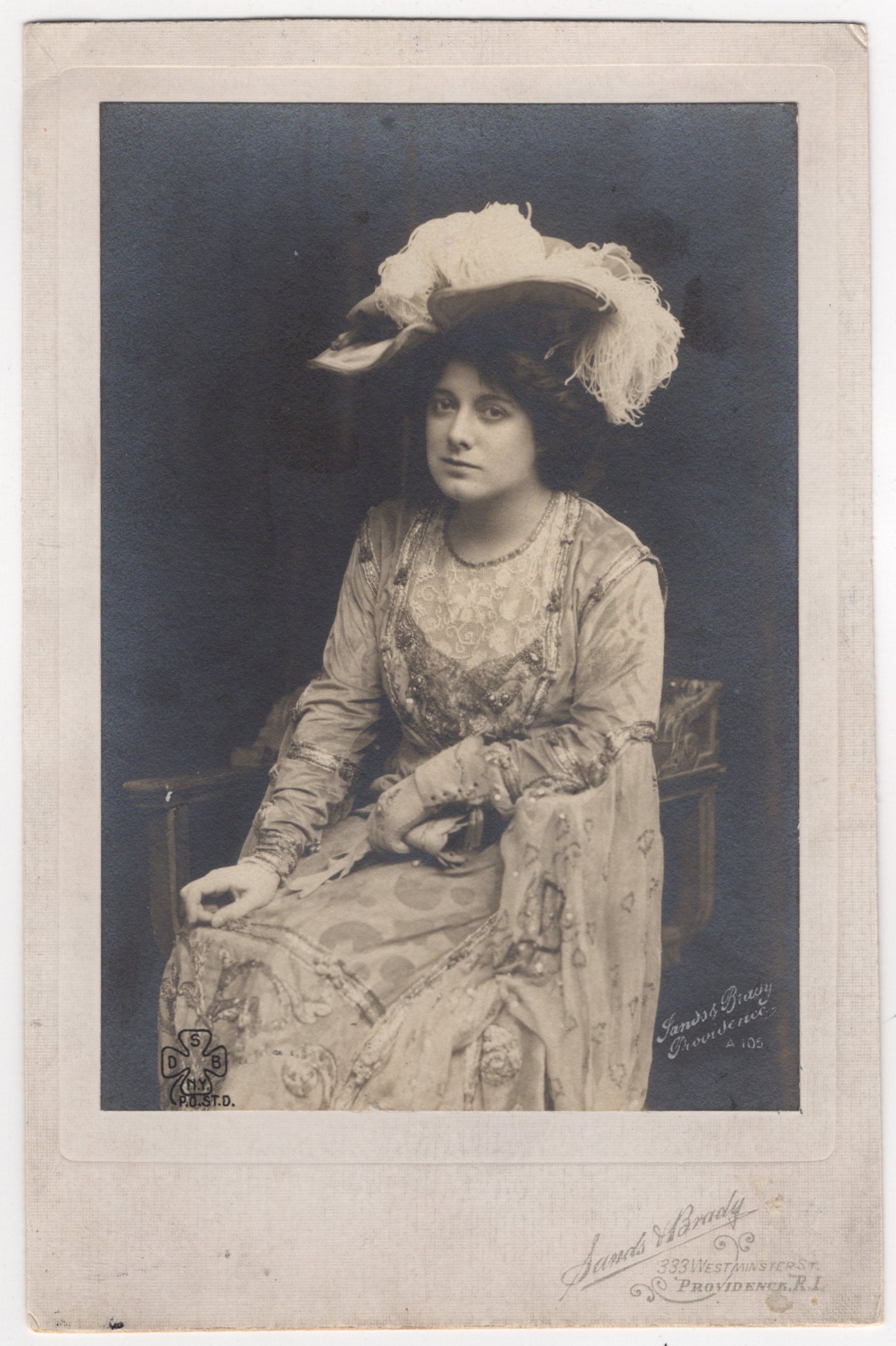
The fifth portrait of Julia Marlowe appears to be a photograph of the actress in costume for an unknown stage production. The image was photographed by Ye Rose Studio of Providence, Rhode Island. The reverse of the card indicated that the studio was opened in 1886. The studio was located in the Conrad building in downtown Providence. The building still exists. Other photographs by the Ye Rose Studio can be viewed by clicking on the category “Photographer: Ye Rose”.
Portrait number six is an excellent example of the beauty of Julia Marlowe. This image, from 1888, captures Ms. Marlowe at the young age of twenty-three. The photographer of this portrait was B. J. Falk, a celebrity photographer located in New York City, New York. To view other photographs by Falk, click on the category “Photographer: Falk”.
The seventh portrait is another example of a B. J. Falk image. The photograph features a costumed Julia Marlowe in the production of “Cymbeline“. Cymbeline is a play by William Shakespeare that was based on legends about the early Celtic British King, Cunobelinus. The play deals with themes that include innocence and jealousy. Ms. Marlowe plays Imogen, the King’s daughter. Her expression in the photograph shows fear and concern as she looks at someone or something in the distance. Her left hand shades her eyes while her right hand clutches her belted dagger. A stamp on the reverse of this cabinet card reveals that it was formerly owned by Culver Pictures of New York City, New York. Culver Pictures has been collecting photographs and illustrations from the 19th and first half of the 20th century, since 1926. These pictures are used in books, films, and other forms of media. At the time that this cabinet card was stamped by the company, Culver Pictures was located in New York City. (SOLD)
Portrait number eight is a close-up photograph of Miss Marlowe. The photographer of this cabinet card is the studio of Rose & Sands whose gallery was located in Providence, Rhode Island. Note that photograph number five also came from the Rose studio, but at that time, the gallery was called, the Ye Rose studio. The Wilson’s Photographic Magazine (1899) reports that Rose and Sands were the proprietors of Ye Rose. A humorous headline in a photography magazine stated “Providence Provides for All, And Rose Provides for Providence”. Print on the reverse of this cabinet card reveals that the Rose & Sands studio was opened in 1886 and that it specialized in “High Class Portraits from Cabinet to Life Size”. Also of interest, like photograph number seven, there is a stamp on the reverse of the photograph with the name “Culver Pictures Inc”.
Photograph number nine features the beautiful Miss Marlowe displaying a mischievous smile. Note her engaging large eyes. She is wearing a somewhat revealing dress (for the cabinet card era) and has a wonderful hat atop her head. This cabinet card photograph was published in 1888 by Benjamin Falk of New York City. The image is marked with the number sixty-nine.
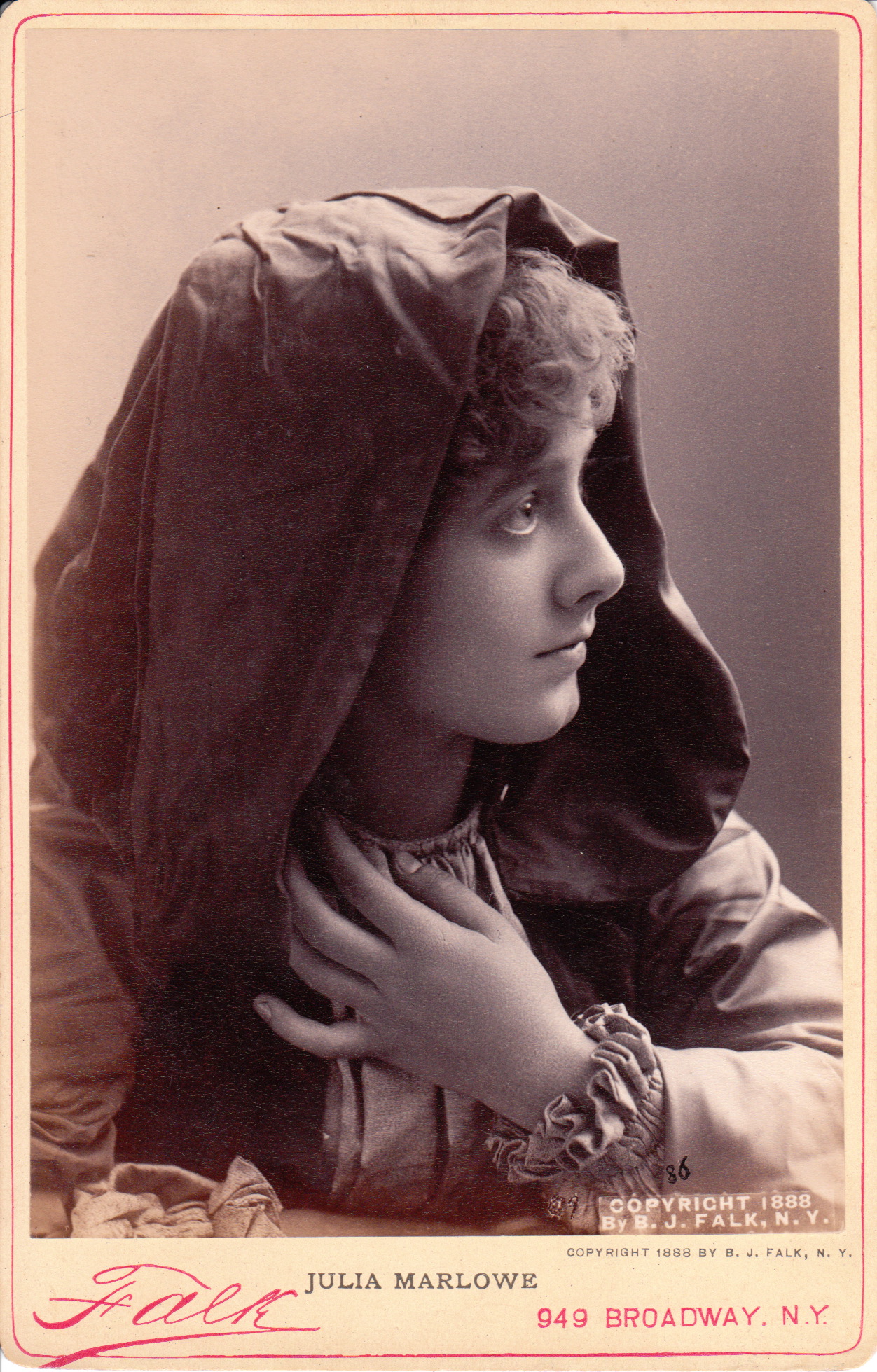
Portrait number ten is a closeup of Julia Marlowe with her head covered, but with her pretty face very visible. She is likely in costume for this photograph. The photograph is taken by B. J. Falk of New York City and has a copyright date of 1888. The cabinet card is marked number “86”.
The eleventh photograph captures Miss Marlowe staring hypnotically at a flower. Someone, has written below her name that the image features her in the role of Parthenia in the production of “Ingomar”. The New York Times (1904) reviews the play and Miss Marlowe’s performance on opening night at the Empire Theater in New York City. The newspaper reports that Frederick Halm’s play was “impossibly romantic and deliciously sentimental piece of old-fashioned theatrics. Tyrone Power played Ingomar and he was described as “vigourous and picturesque” but the article added that his voice was “not at its best”. The review pointed out that Marlowe’s appearance in this play was to be her last appearance as an independent star before joining E. H. Sothern’s Shakespearean repertory. In regard to Marlowe’s acting in this play, it was written that she played a “dear little prig – adorably dear” (prig can be defined as smug or arrogant) and she presented “a masterpiece of harmonious, modulated, and sustained acting”. The 1904 performance of Julia Marlowe in “Ingomar” marked a return performance for this accomplished actress. The New York Times (1888) wrote a very positive review of the opening night performance in Washington D.C.. The appreciative audience included three Supreme Court Justices and a number of members of the Chinese Embassy. This cabinet card was produced by the previously mentioned Ye Rose Studio of Providence, Rhode Island and it likely dates back to her 1888 performance in the role.
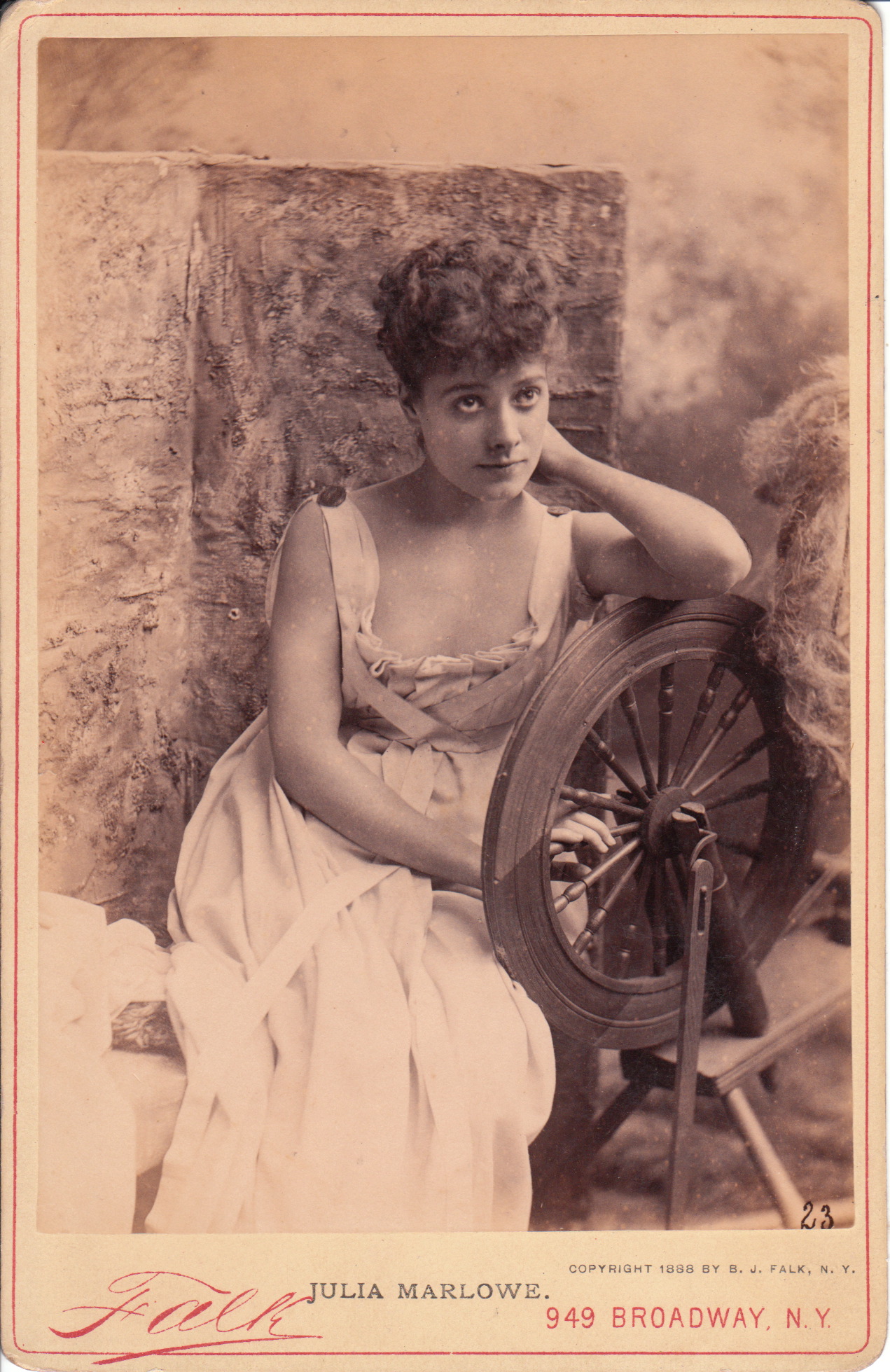
The twelfth cabinet card was produced by Benjamin Falk of New York City. He posed Miss Marlowe next to a spinning wheel. Her low cut dress makes this image a bit risque for the cabinet card era. If Falk or Miss Marlowe thought that looking up at the camera would create a “fetching appearance”, I would contend that their efforts failed. Rather than “fetching”, she appears dazed. The actress was a beautiful woman and provocativeness was not necessary to enhance her image. This photograph was produced in 1888 and was part of a series (#23).
Cabinet Card number thirteen is part of a series that includes Cabinet Card number ten. Both cards were photographed by Benjamin Falk and have a copyright date of 1888. Both portraits are close-ups but this one is captures Marlowe looking at the camera while number ten offers a profile view. Falk really captured the actresses eyes. Her eyes are beautiful and they are haunting at the same time. This photograph is marked number number 83 of the series.
Cabinet Card fourteen features another beautiful portrait of Julia Marlowe. This photograph was taken by Benjamin Falk and was copyrighted in 1892. This cabinet card is uncommon, possibly rare. (SOLD)
Cabinet Card 15 was photographed by Napoleon Sarony, the famed celebrity photographer located in New York City. (SOLD)
RENEE ADOREE : HOLLYWOOD SILENT & “TALKIE” FILM STAR : TRAGIC DEATH AT 35

POSTCARD 1
POSTCARD 2
POSTCARD 3 (SOLD)
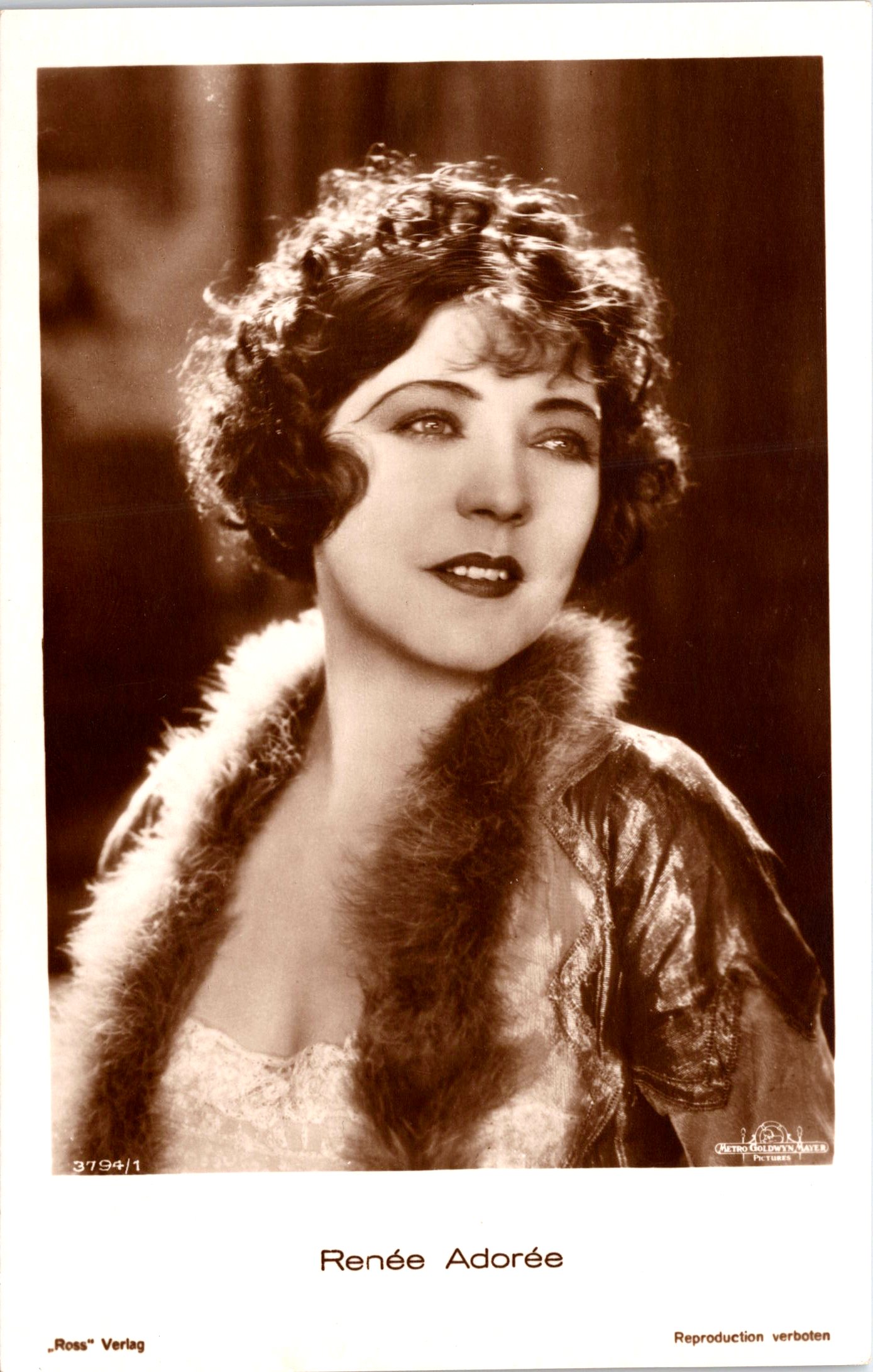
These vintage real photo postcards feature French stage and film actress, Renee Adoree (1898-1933). She also appeared in silent movies produced by Hollywood in the 1910’s. Her most well known film was the melodramatic romance and war epic, “The Big Parade”. She played the love interest of John Gilbert. Renee’s parents were circus artists. She would perform with them at times. She was a dancer, acrobat artist, and bareback rider. She perfomed throughout Europe. She made her movie debut in 1918. In 1919, she went to New York City and played in a vaudeville-style musical. Several other stage appearances followed. In 1920, she began to perform in movies again. In total, Renee performed with John Gilbert nine times. She appeared with actor Ramon Novarro four times. In a 1928 Howard Hughes film, “The Mating Call”, Renee had a brief scene in which she swam in the nude. This act created much controversy. Renee’s personal life included two marriages and two divorces between 1921 and 1929. Renee, unlike many other actresses of her time, was successful in making the transition to sound film. She appeared in four “talkies” before her early death. In all, by the end of 1920, Renee had appeared in forty-five films. The IBDb reports that she appeared in two Broadway productions, both occurred in 1919, It was in 1930 that Renee was diagnosed with tuberculosis. Despite her doctor’s advice, she continued her participation in the filming of a movie. After completing the movie, she was rushed to an Arizona sanitorium. She was flat on her back for two years during her recovery. Post discharge, Renee’s health began to deteriorate until she died in 1933. She was only about 35 years old at the time of her death.
Postcard 1 features Renee in a risque pose. She is dressed quite provocatively. This postcard was published by “Ross Verlag” as part of a series (No.4350/1). Note sticker on reverse of card. This vintage postcard is in overall good condition. (see scans).
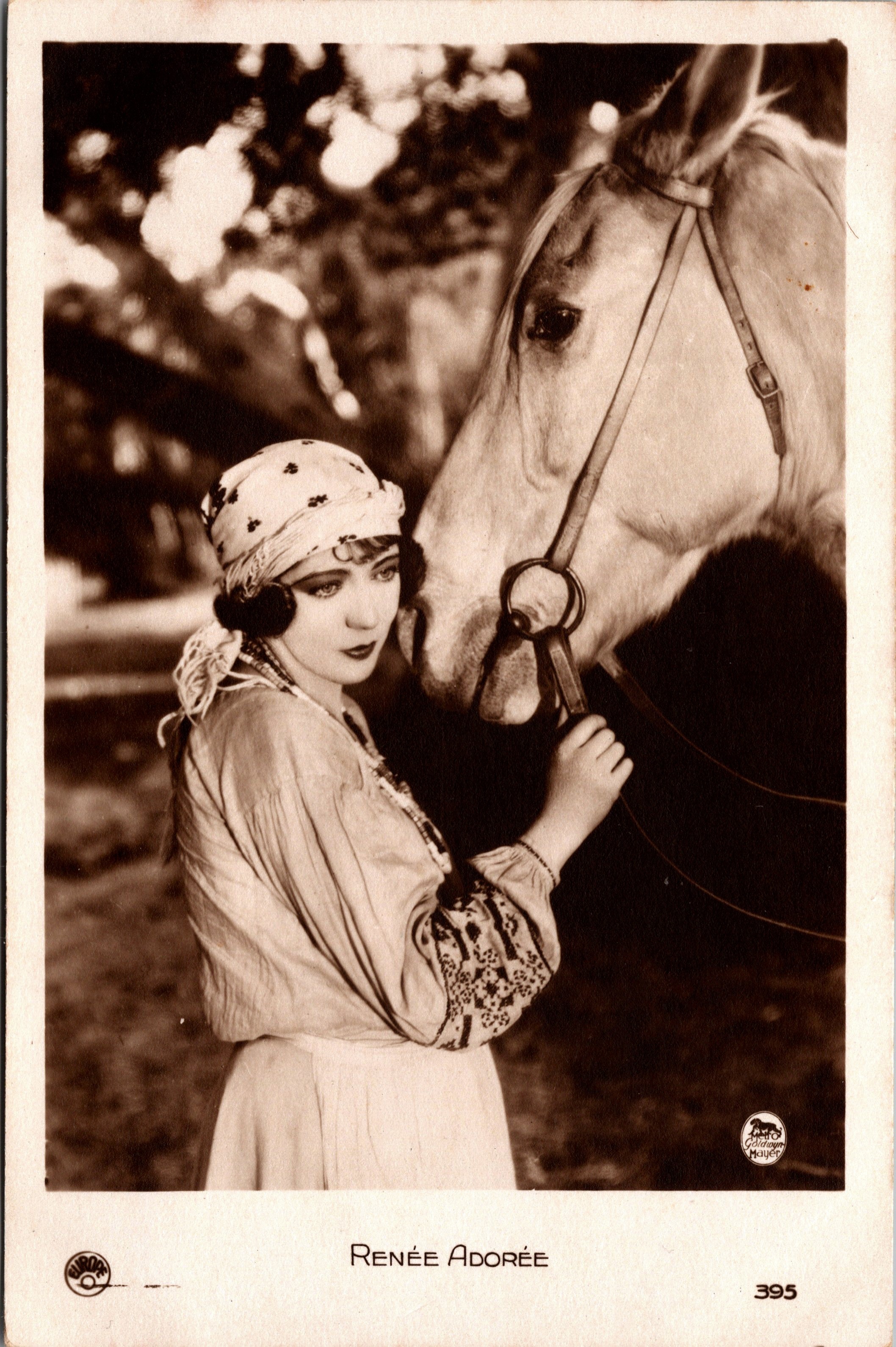
Postcard 2 features Renee standing in front of a horse. She is holding the horse’s harness. Apparently, she liked animals and possessed a sense of humor. She had a dog named “Useless”, and a cat named “Worthless”. The logo for MGM can be seen in the lower right hand corner of the image. She was under contract with MGM from 1930 until her death. This postcard was published by “Europe” as part of a series (No.395). This postcard is in very good condition (see scans).
Postcard 3 offers a view of Renee that illustrates her beauty. She is fashionable and her attire includes a jacket with a fur collar. The card features a logo for MGM in its lower right corner. The card was published by Ross Verlag and is part of a series (No.3794/1). SOLD

Buy this Vintage Real Photo Postcard (includes shipping within the US) #5137
To purchase this item, click on the Pay with PayPal button below
$22.00

Buy this Vintage Real Photo Postcard (includes International shipping outside the US) #5137
To purchase this item, click on the Pay with PayPal button below
$32.00

Buy this Vintage Real Photo Postcard (includes shipping within the US) #5299
To purchase this item, click on the Pay with PayPal button below
$19.00

Buy this Vintage Real Photo Postcard (includes International shipping outside the US) #5299
To purchase this item, click on the Pay with PayPal button below
$29.00

POSTCARD 1

POSTCARD 2
VIRGINIA HARNED :PORTRAIT OF A THEATRE ACTRESS : NAPOLEON SARONY : CABINET CARD
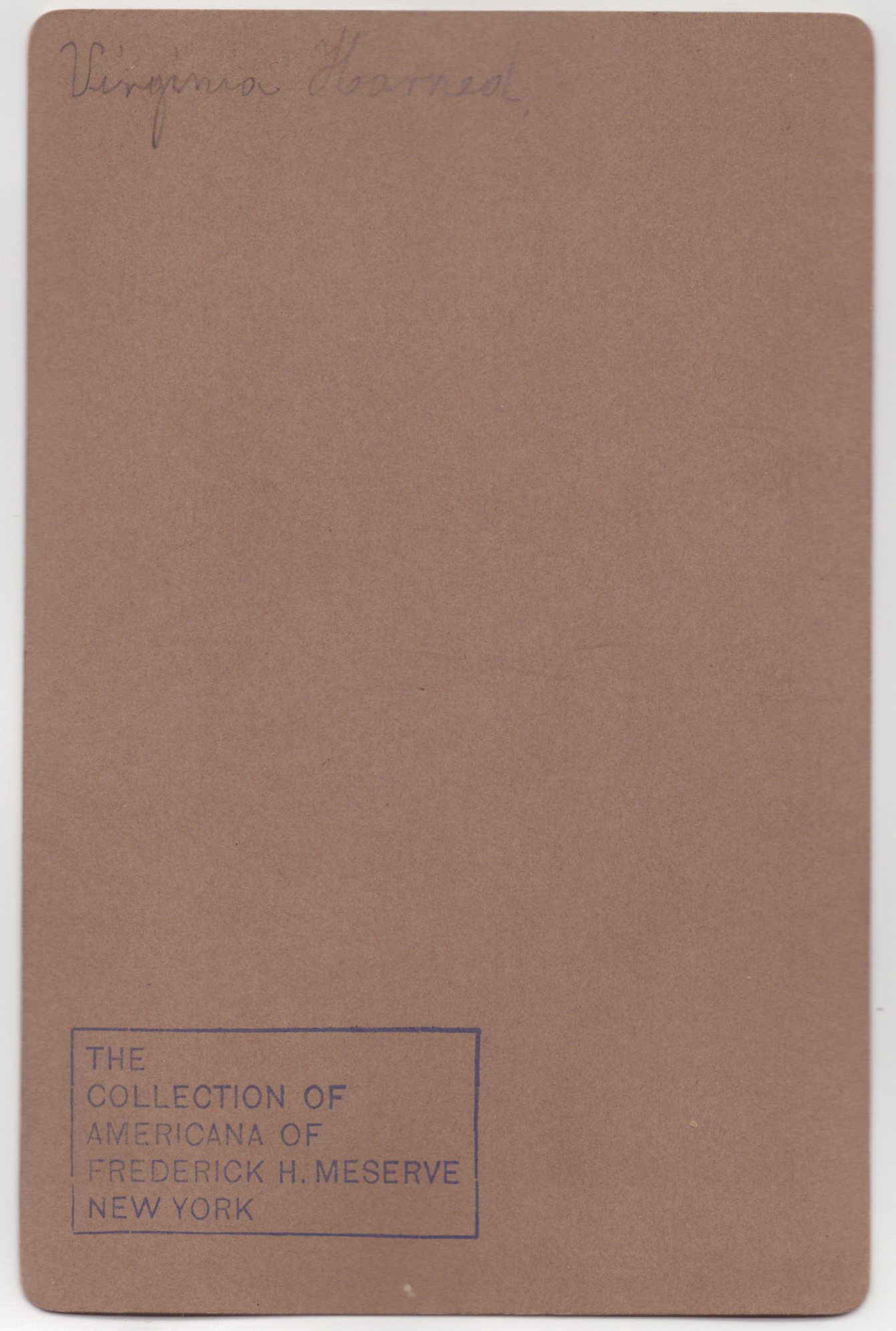
This cabinet card features noted American stage actress, Virginia Harned (1869-1946). She was known for her beauty (said to resemble Sarah Bernhardt), her fashion sense, and her intensity on stage. Harned was audacious. She was associated with creating the new social perception of the modern woman. She is most recognized for playing the title role in the Broadway premiere of “Trilby (1895)”. The IBDb reveals that Harned performed in 21 Broadway plays between 1894 and 1936. Harned was married to two (not at the same time) famous actors. Her second husband was E. H. Sothern who later married actress Julia Marlowe. Her third husband was William Courtenay. During her marriage to Sothern, Harned took a turn at writing and produced several plays. Harned’s portrait seen on this cabinet card was taken by celebrated New York City photographer, Napoleon Sarony. A hand stamp on the reverse of this photograph indicates that the photo was formerly in the collection of Frederick H. Meserve (1865-1962). Meserve was a businessman and a had a large collection of photographs. In 1944 he worked with Carl Sandburg, American poet and biographer, to publish 100 photographs of Abraham Lincoln. Meserve’s collection included 10,000 original Matthew Brady negatives and 75,000 photographs of famous theatrical figures. SOLD
EDITH STOREY : AMERICAN SILENT FILM ACTRESS
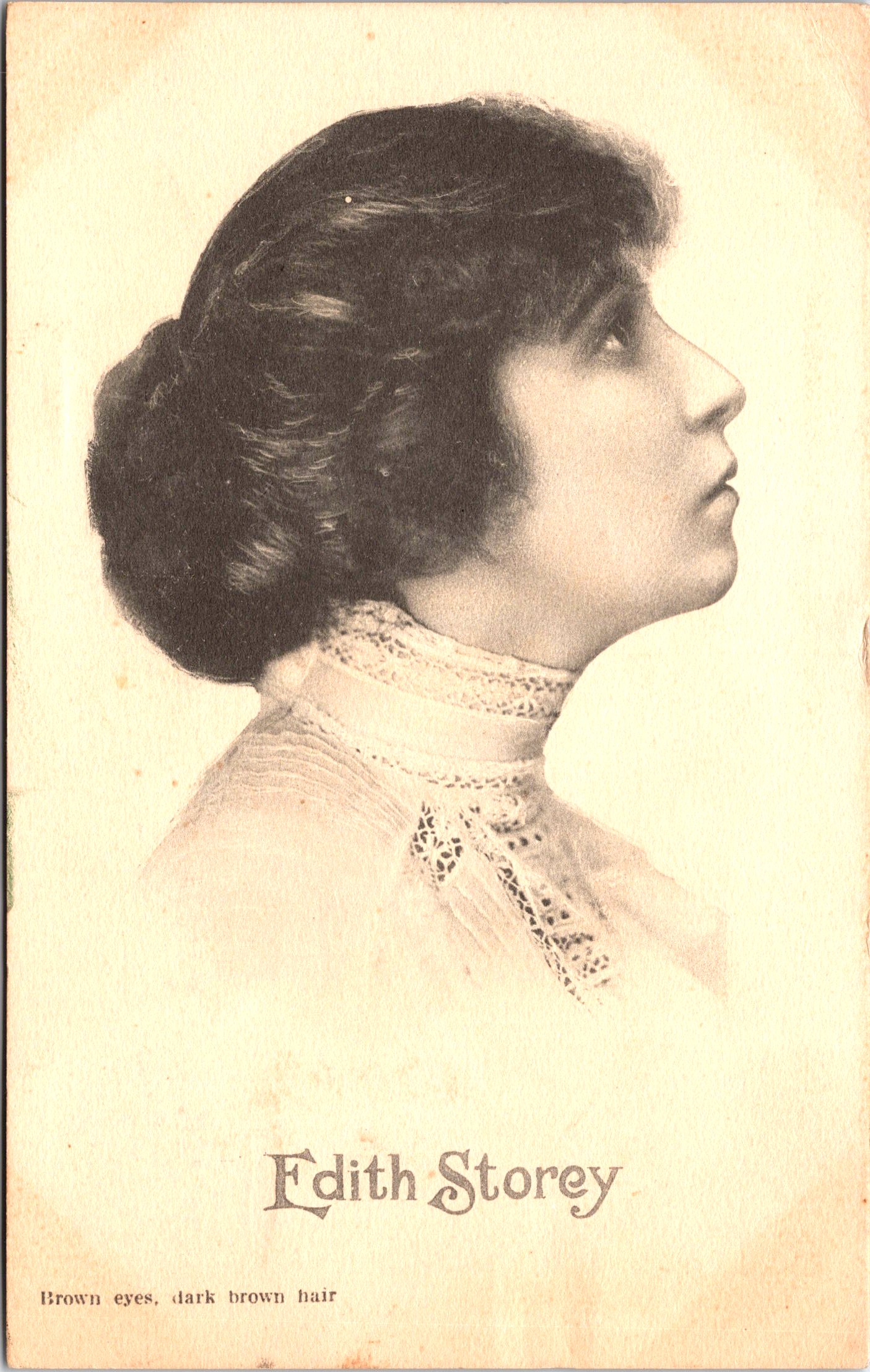
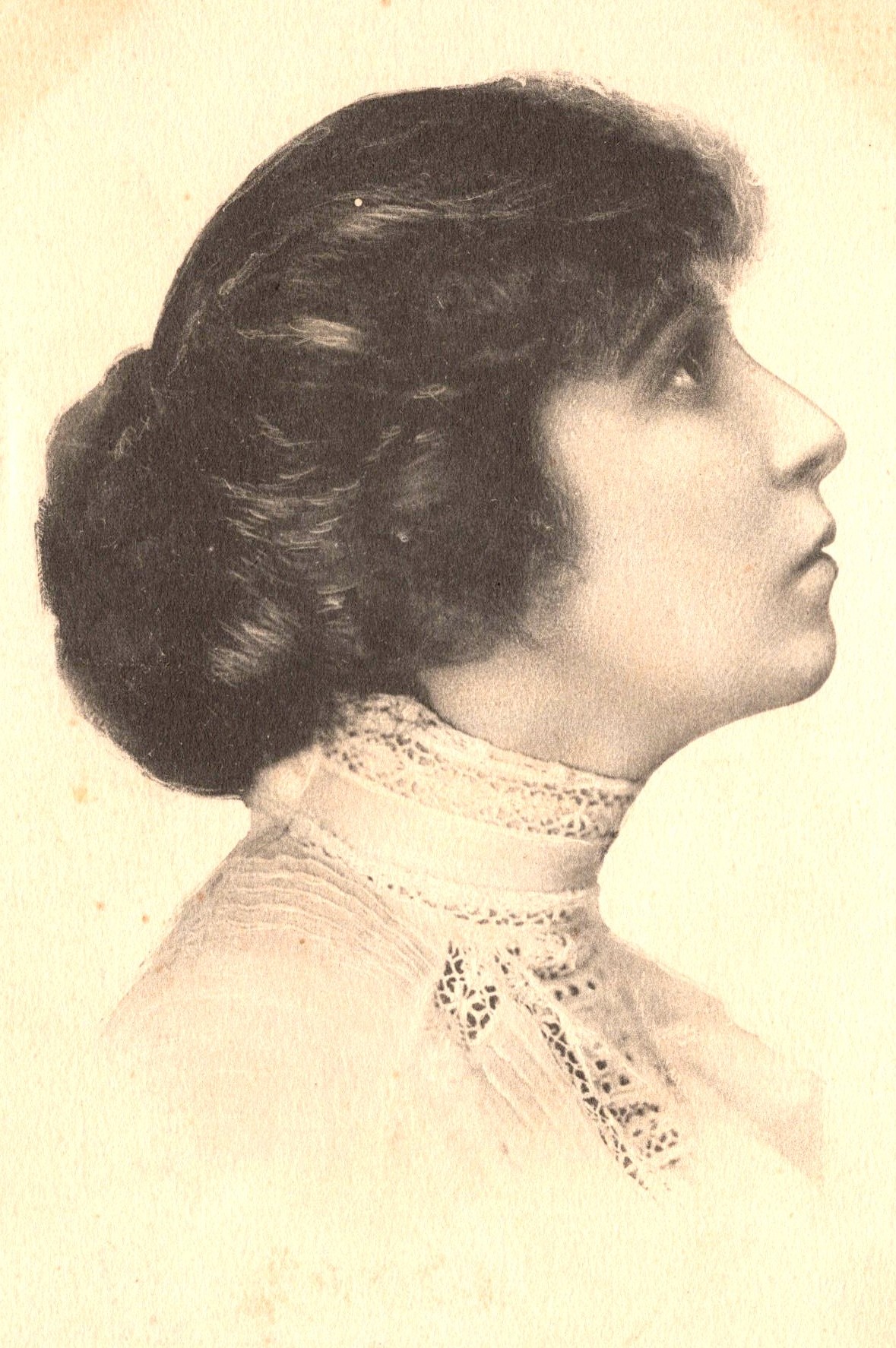
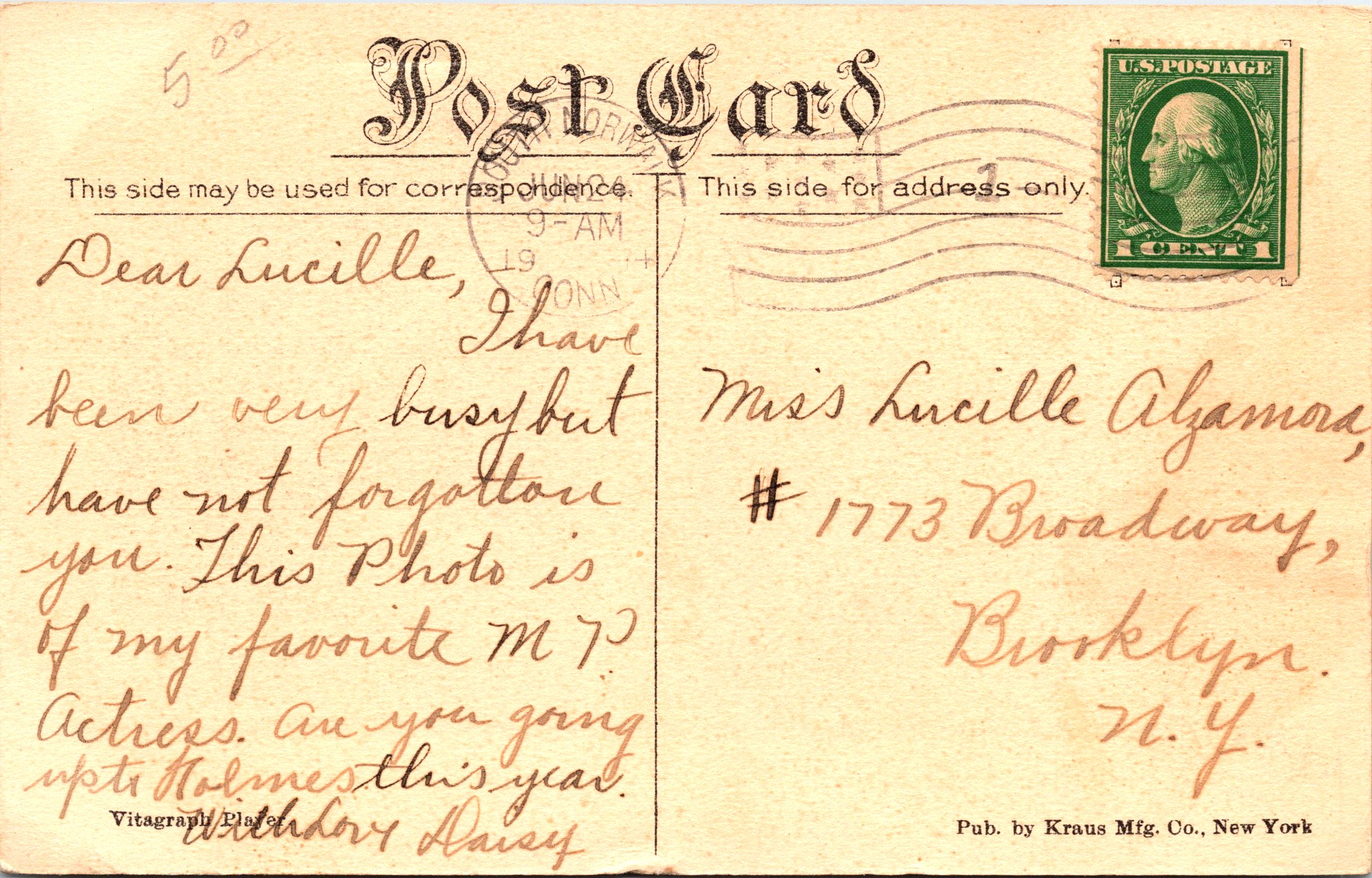
This vintage real photo postcard features American silent film actress, Edith Storey (1892-1967). She was born in New York City and began acting when she was still a child. Her first film was “The Two Brothers” (1908). By 1913, she had appeared in 75 films and between 1908 and 1921 she performed in nearly 150 films. She performed in many Westerns and was noted for her excellent horseback riding skills. She also did her own stunts. She worked for Vitagraph Studios (New York) for the majority of her career. Storey also acted on stage and was noted for acting in a number of male impersonation roles. She appeared in two Broadway plays. The first was in 1903 and the second was in 1904. She retired at the age of 29 in the year of 1921. During the Spanish Flu Epidemic, Storey drove an ambulance in New York City for the National League for Women’s Service. It is also reported that she worked as a hospital night nurse at the height of the epidemic. After retiring she served almost 30 years as village clerk for Asharoken, Long Island. She died at the age of 75 in Northport, Long Island, New York. Within the message on the this postcard, Daisy (the sender) tells Lucille (the recipient) that Edith Storey is her favorite movie actress. A caption on the front of this card states that Storey has brown eyes and dark brown hair. This postcard was published by Kraus Mfg. Co. of New York. (SOLD)

DOROTHY TENNANT : AMERICAN STAGE & SCREEN ACTRESS : “THE COLLEGE WIDOW” STAR RPPC
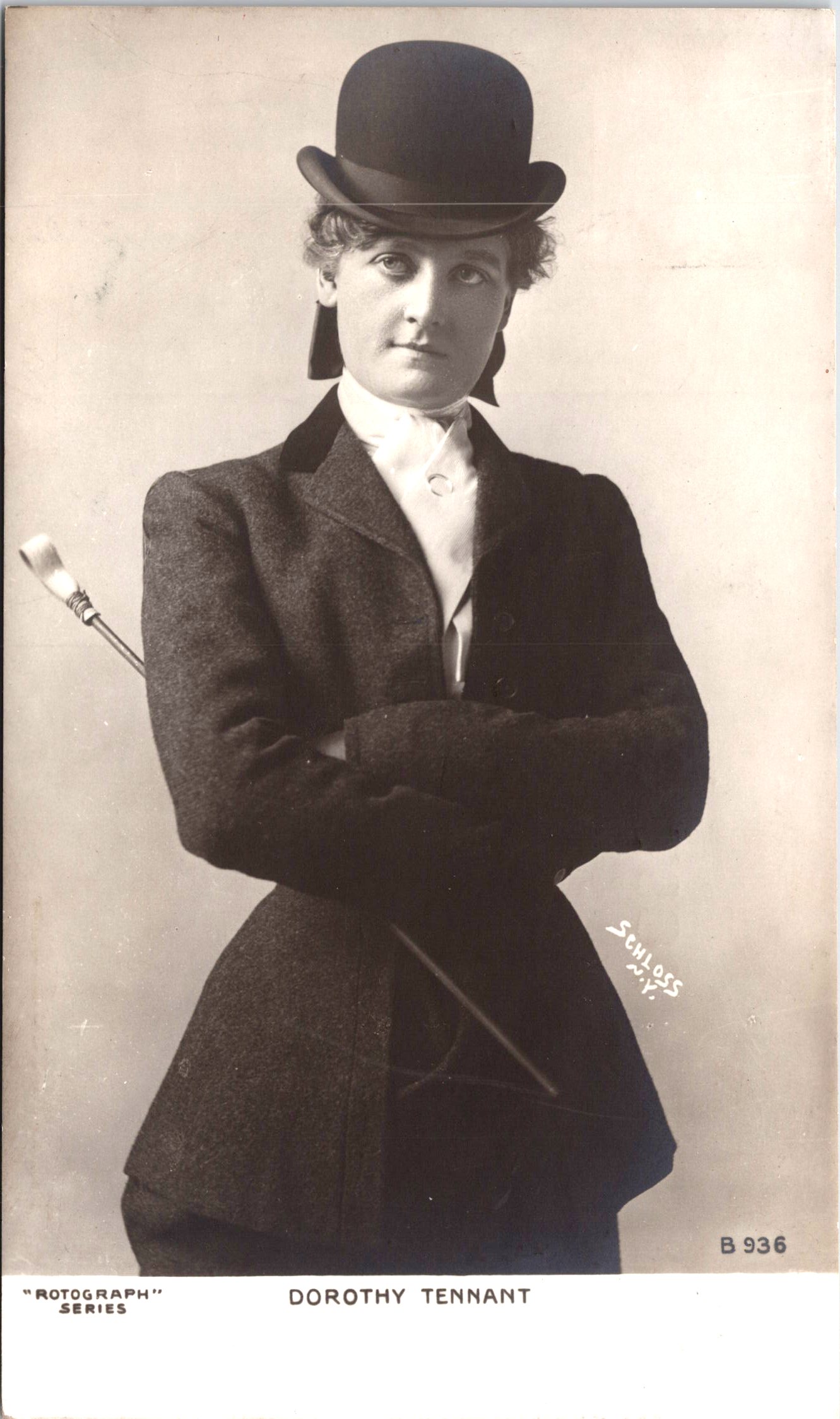
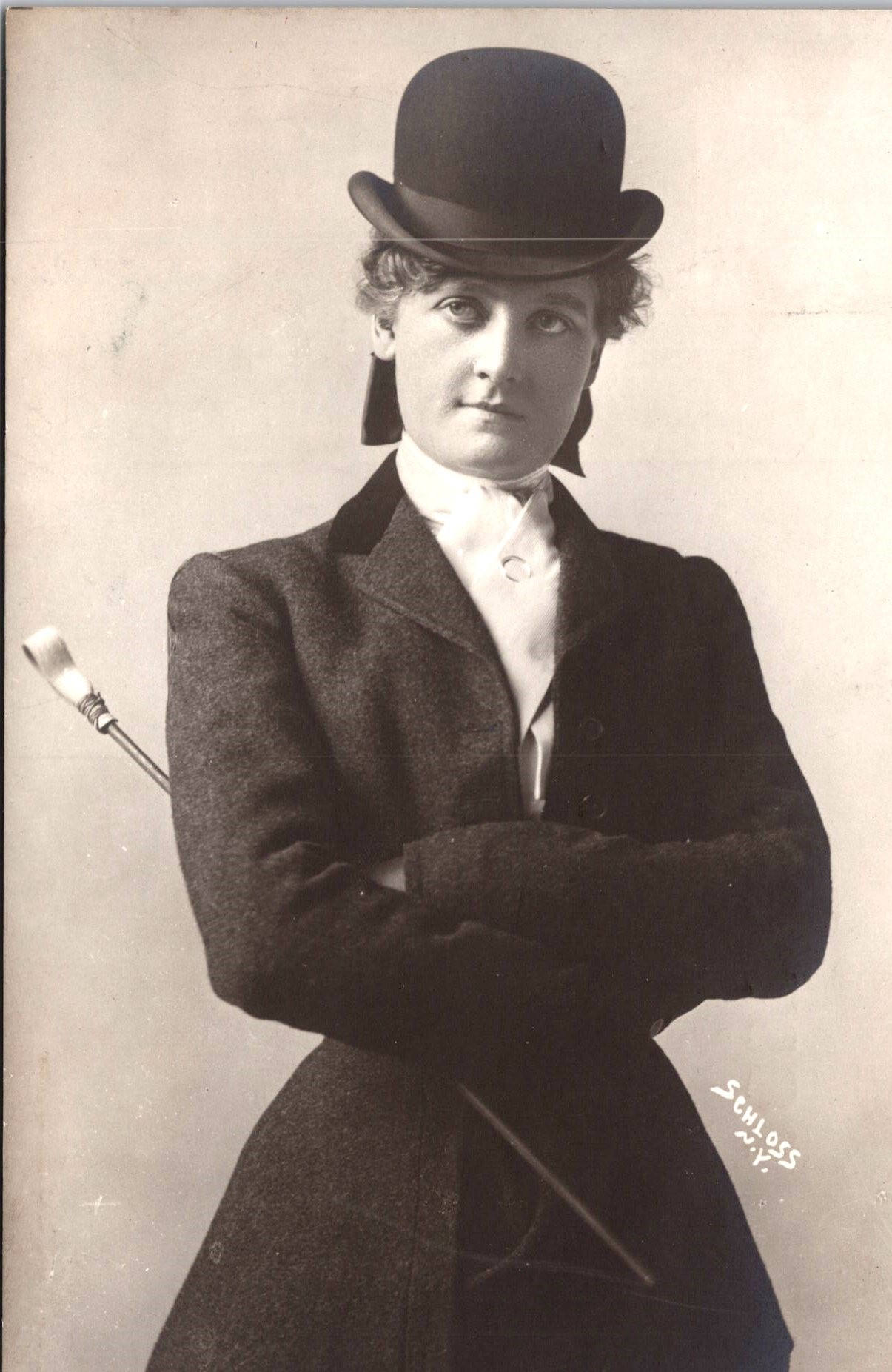
This undivided back vintage real photo postcard features American stage and screen actress, Dorothy Tennant (1865-1942). She is best known for her stage roles in the first ten years of the twentieth century. Her most prominent starring role was in the 1904 comedy, “The College Widow”. She performed in this play both on Broadway and on tour. She first appeared on stage in 1901 in the New York production of “White Roses”. The IBDb reports that she appeared in eight Broadway plays between 1902 and 1932. The IMDb states that Tennant acted in eight films between 1929 and 1938. This postcard was published by the Rotograph Company of New York City as part of a series (No.B936). The photo of Tennant seen on this card was taken by esteemed photographer Jacob Schloss. SOLD

FRANCES STARR : THEATRE STAR : PHOTO BY JACOB SCHLOSS : NEW YORK : CABINET CARD
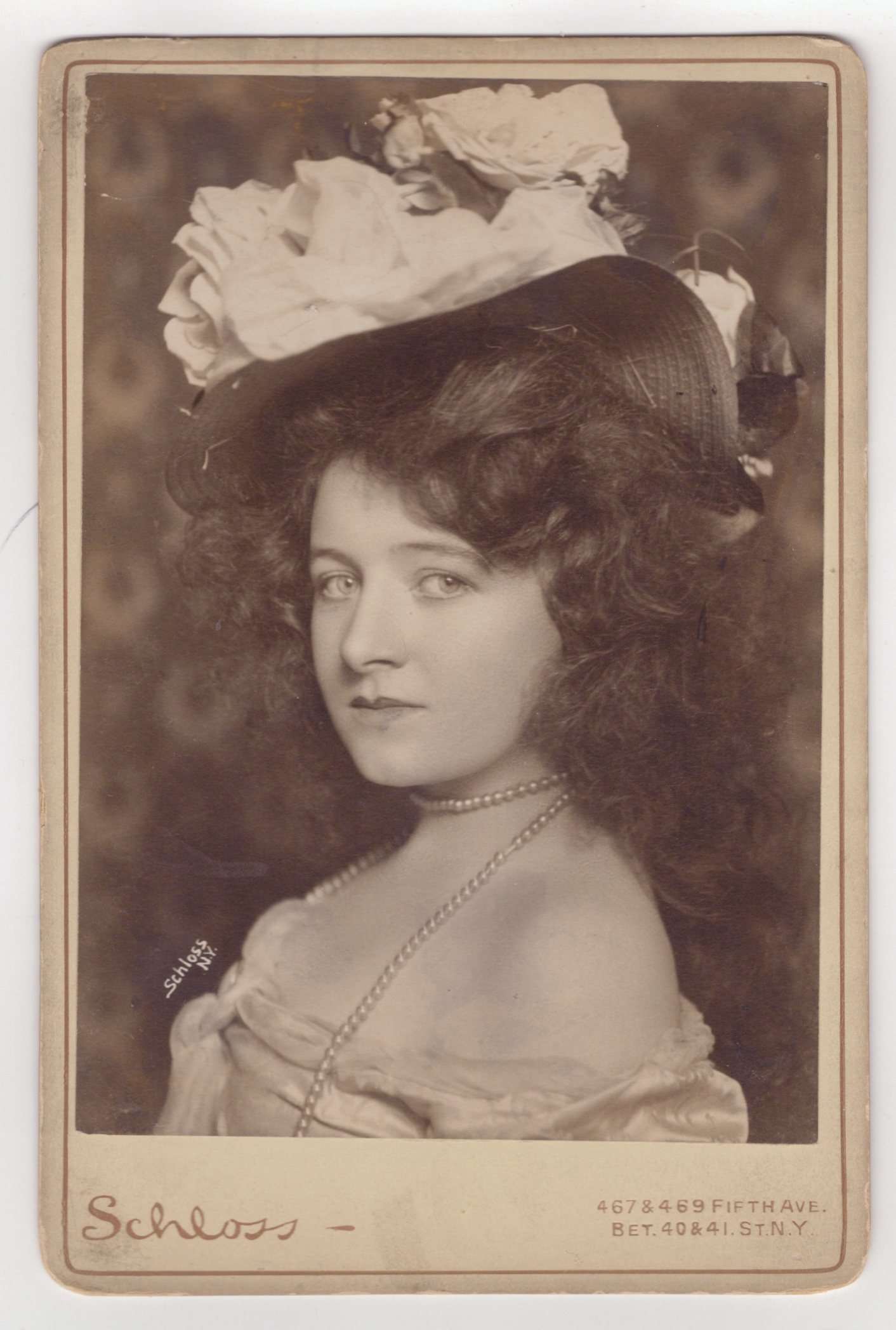
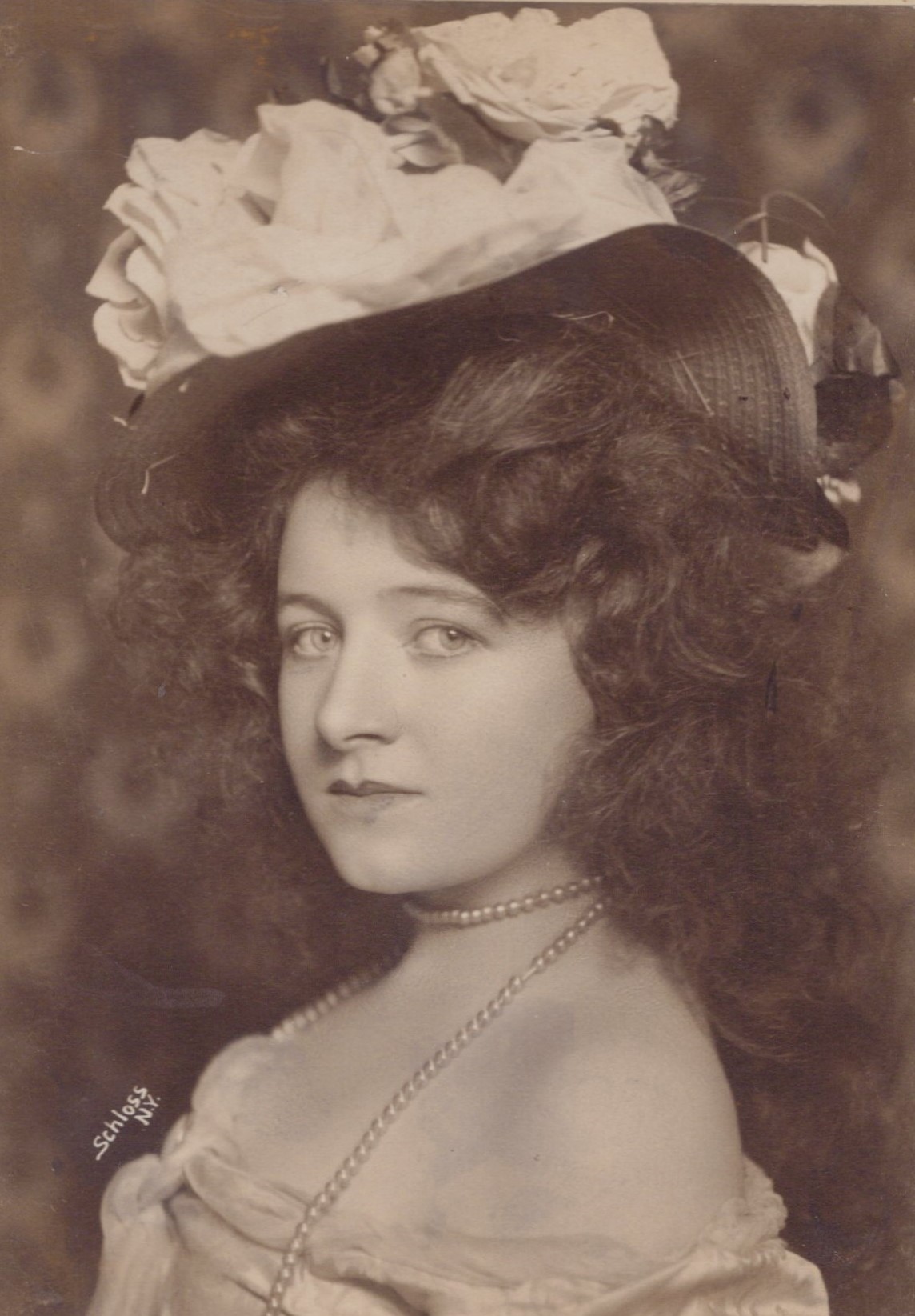
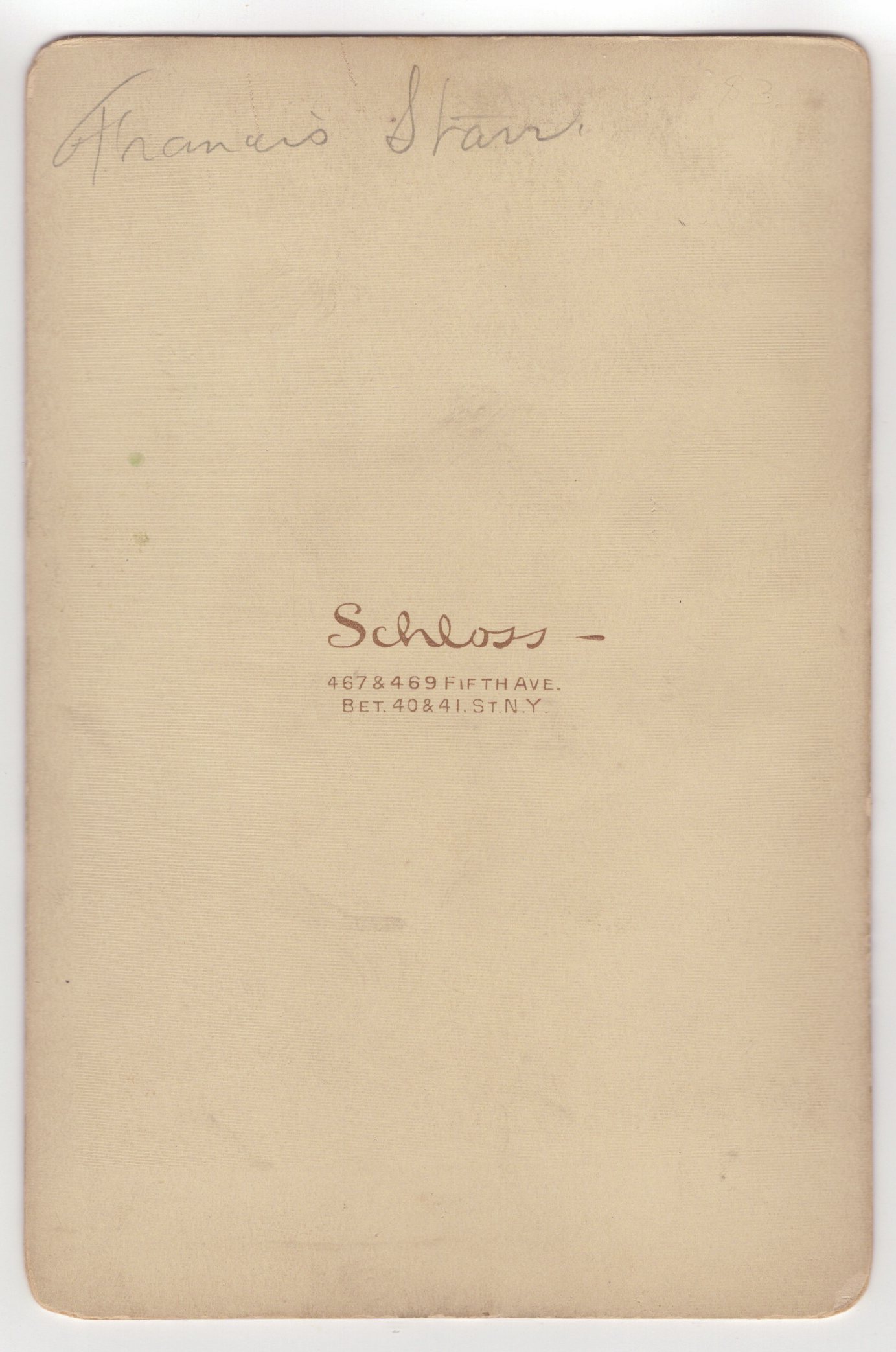
This cabinet card features stage, film and television actress, Frances Starr (1881-1973). The actress was photographed by Jacob Schloss of New York City, New York. Frances Grant Starr was an American stage, film and television actress. Her theatrical debut was in 1901 when she performed in an Albany (New York) stock company. In 1906, she appeared in New York City’s Garrick Theatre in “Gallops”. She then signed with David Belasco, a major theatrical producer, writer, impresario, and director. She worked for Belasco for the next 22 years. The role that propelled her to stardom was in “The Easiest Way” (1909). She had a long career in the theatre. The IMDb reports that she appeared in 26 Broadway plays from 1901 through 1953. Her longest run play was “Claudia” (1951). Starr appeared in one silent and three sound movies between 1923 and 1932. She also acted in 13 television series (!949-1958). Starr was married three times. One of her marriages was to the celebrated artist, William Haskell Coffin. He was an American painter and commercial artist. The photographer, Jacob Schloss was a well known New York City photographer who was famous for his portraits of theatrical stars. SOLD