OCTAVIA KENMORE :BRITISH THEATER ACTRESS: SHAKESPEARE : BROADWAY : CLAUDE HARRIS

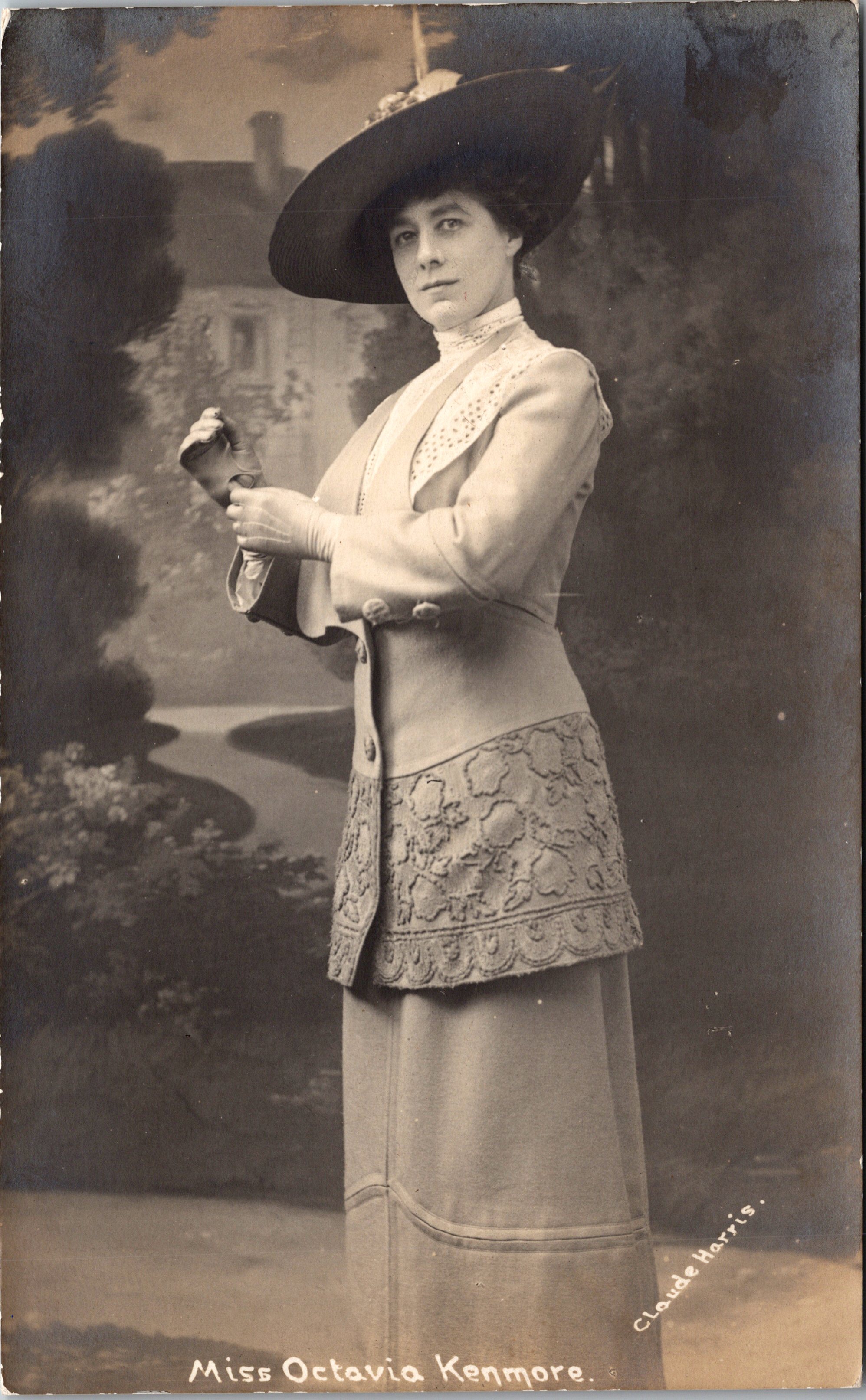
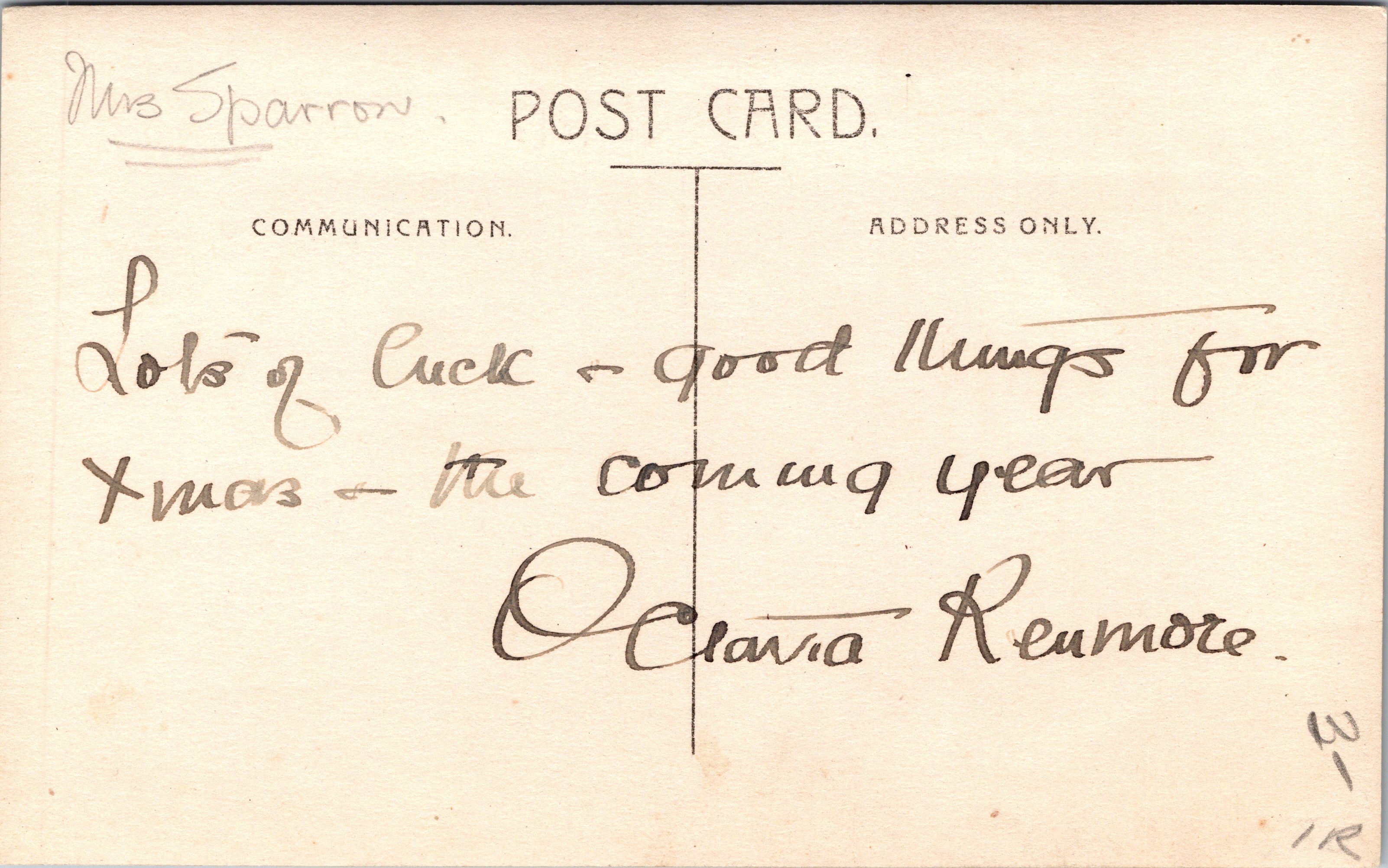
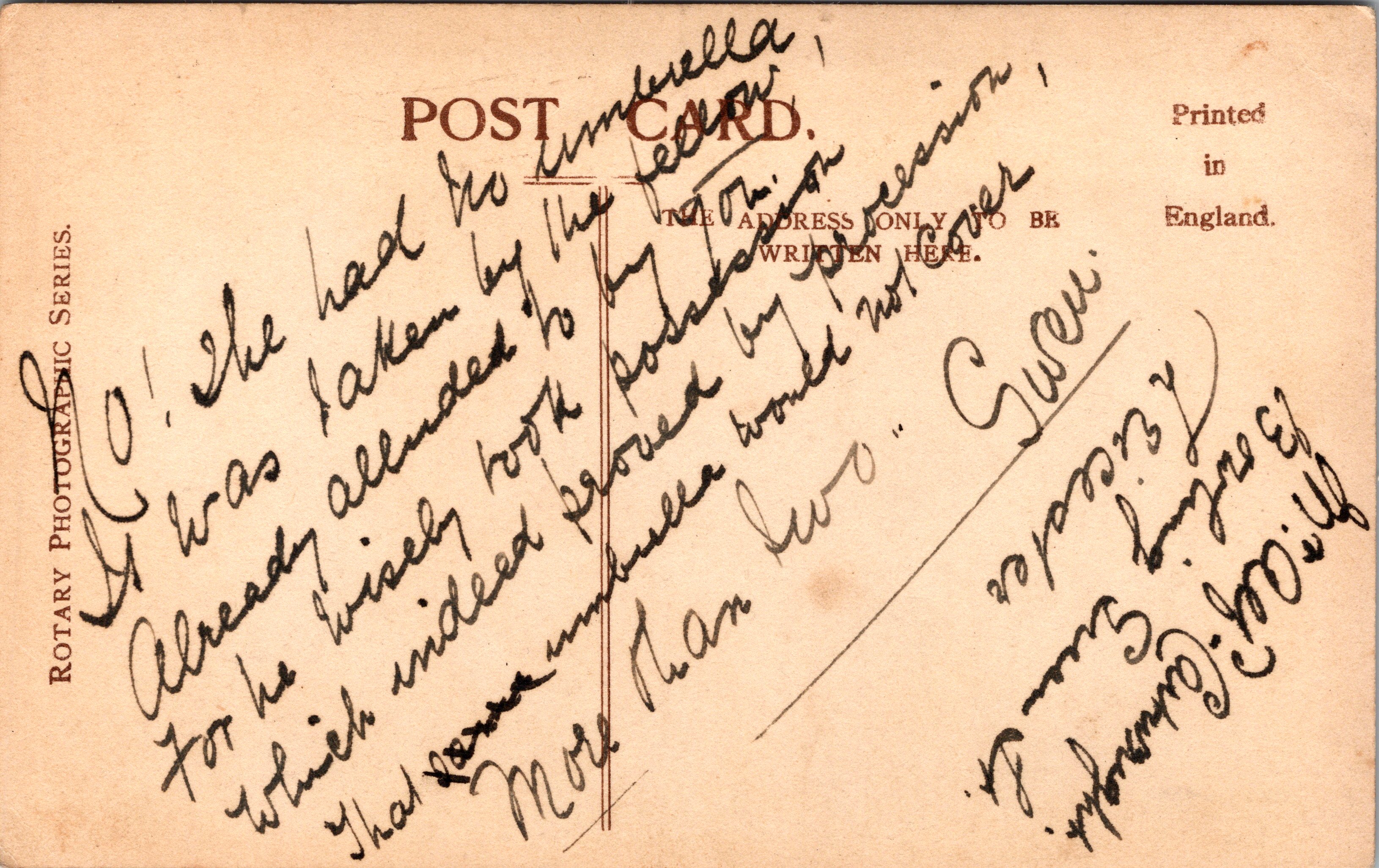
This vintage real photo postcard features British actress, Miss Octavia Kenmore. Kenmore was an actress who performed in many productions of Shakespeare’s and Ibsen’s plays. She also was a Broadway actress. She was in eight Broadway shows from 1921 through 1947. Her appearances included a role in Hedda Gabler. Kenmore received many fine reviews in her long theatrical career. In a review of her London debut performance, one critic was not totally impressed. He states that she had a pleasing voice, intelligent and pretty features, and a good presence. He continues with the comment that she should have had more experience before taking on the difficult role in W. S. Gilbert’s fairy comedy, “The Palace of Truth” (1888). The critic’s final assessment of Miss Kenmore was biting. He declared that “Her performance was emphatically one of promise, not of fulfillment.” This vintage portrait postcard is unique in that the reverse of the postcard has a message from Kenmore. She has also signed the postcard. Her signature has not been authenticated. The photograph of Miss Kenmore seen on this card, was taken by Claude Harris (1883-1961). He has 61 photographs in the collection of the National Portrait Gallery. His studio was located in London. He fought in the Boer War and World War I.  He produced and directed a film “The Sanctuary” (1916). He photographed many celebrated theater celebrities. Harris was considered a master of lighting.

LOIS WILSON : AMERICAN FILM, STAGE, AND TELEVISION ACTRESS : SOAP STAR : RPPC

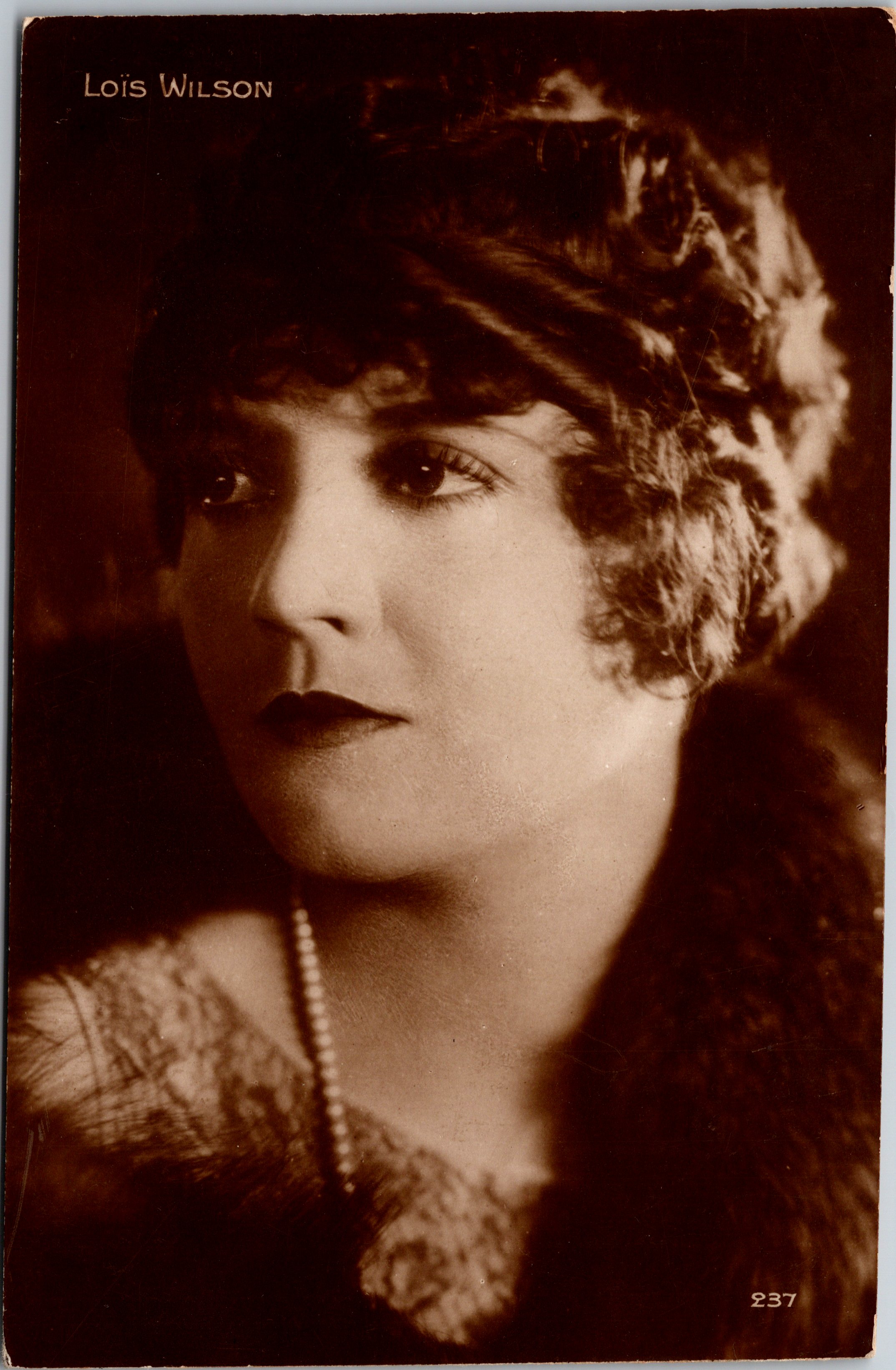
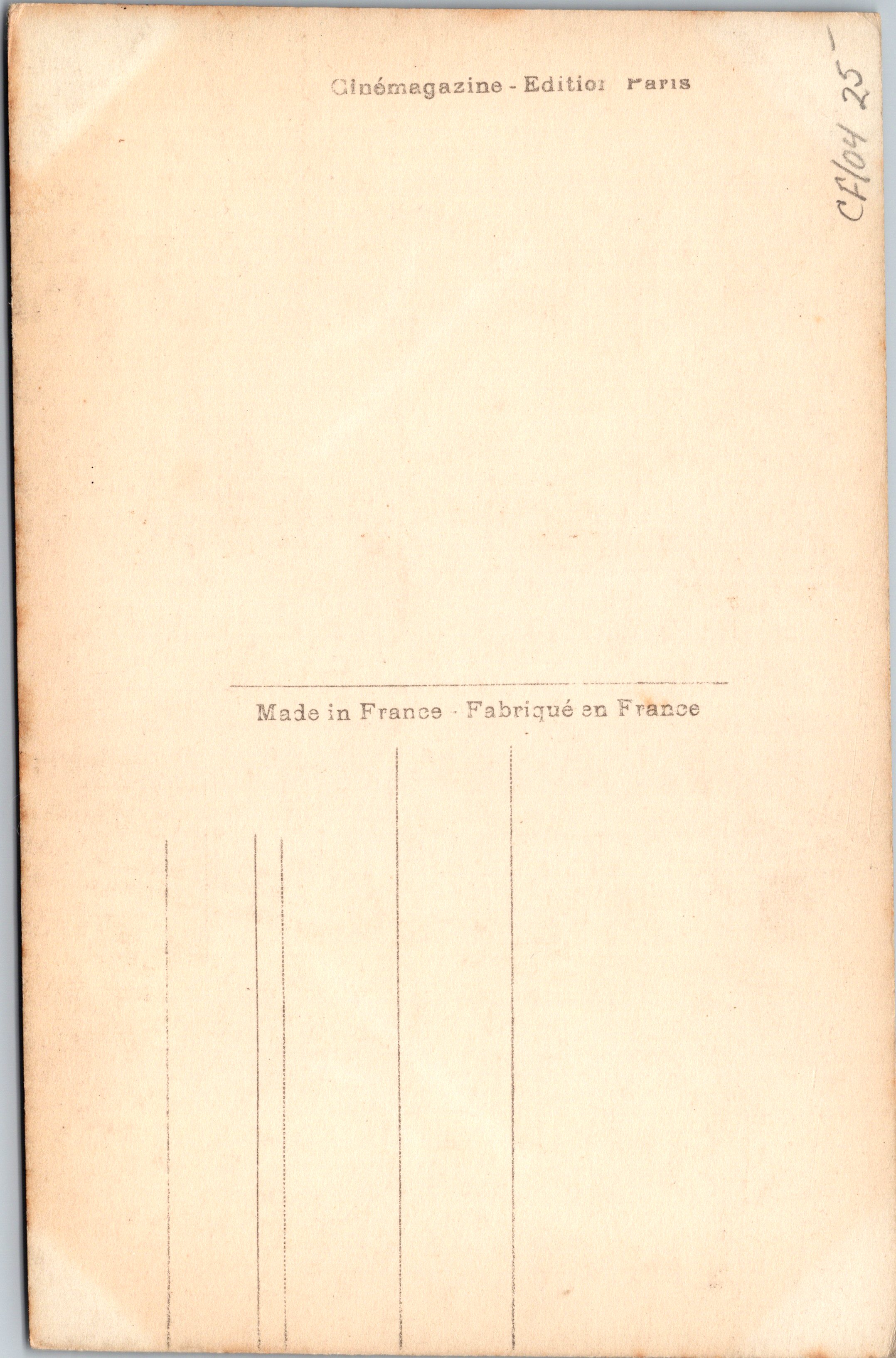
This vintage real photo postcard features American silent and sound film actress, Lois Wilson (1894-1988). She also directed two films and performed on the stage. She appeared on Broadway three times between 1937 and 1968. Her 1968 appearance was in “I Never Sang For My Father”. She was born in Pittsburgh, Pennsylvania but she and her family moved to Alabama when she was quite young. She graduated from Alabama Normal College and became a school teacher before venturing out to pursue a film career. In 1915, after winning the equivalant of the Miss Alabama beauty contest, she headed for Hollywood. She was quickly hired by Victor Film Company for a number of small roles. In 1916, she worked in a minor film role for female director Lois Weber. Weber took an interest in Wilson and began preparing her for future stardom. Wilson appeared in a number of films for various studios until she was signed by Paramount in 1919. She remained with the company until 1927. She was a WAMPAS Baby Star of 1922. WAMPAS Baby Stars were projected to become future major Hollywood stars. The IMDb credits Wilson with 159 screen appearances between 1915 and 1963. Her most noted roles were in “The Covered Wagon” (1923) and “The Great Gatsby (1926). She played opposite major leading men including Rudolph Valentino, John Gilbert and Ronald Reagon. She made a successful transition to sound movies. However, she became disappointed with many of the roles she played in the 1930’s, and retired in 1941. Wilson also performed on television and played roles in soap operas such as “The Guiding Light”, “The Secret Storm”, and the “Edge of Night”. Lois Wilson never married. This vintage postcard was published by Cinemagazine (Paris) as part of a series (No.237). SOLD

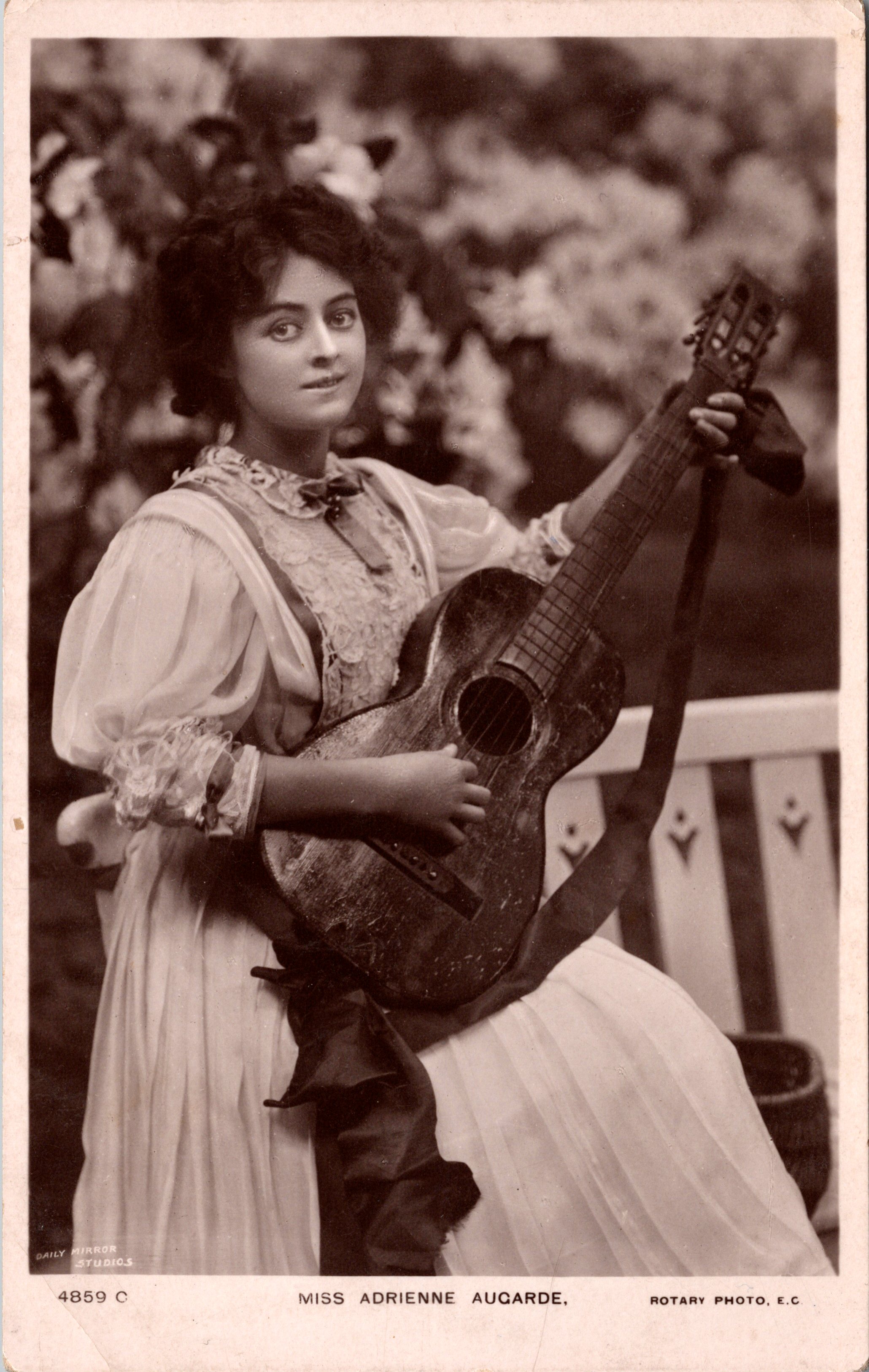
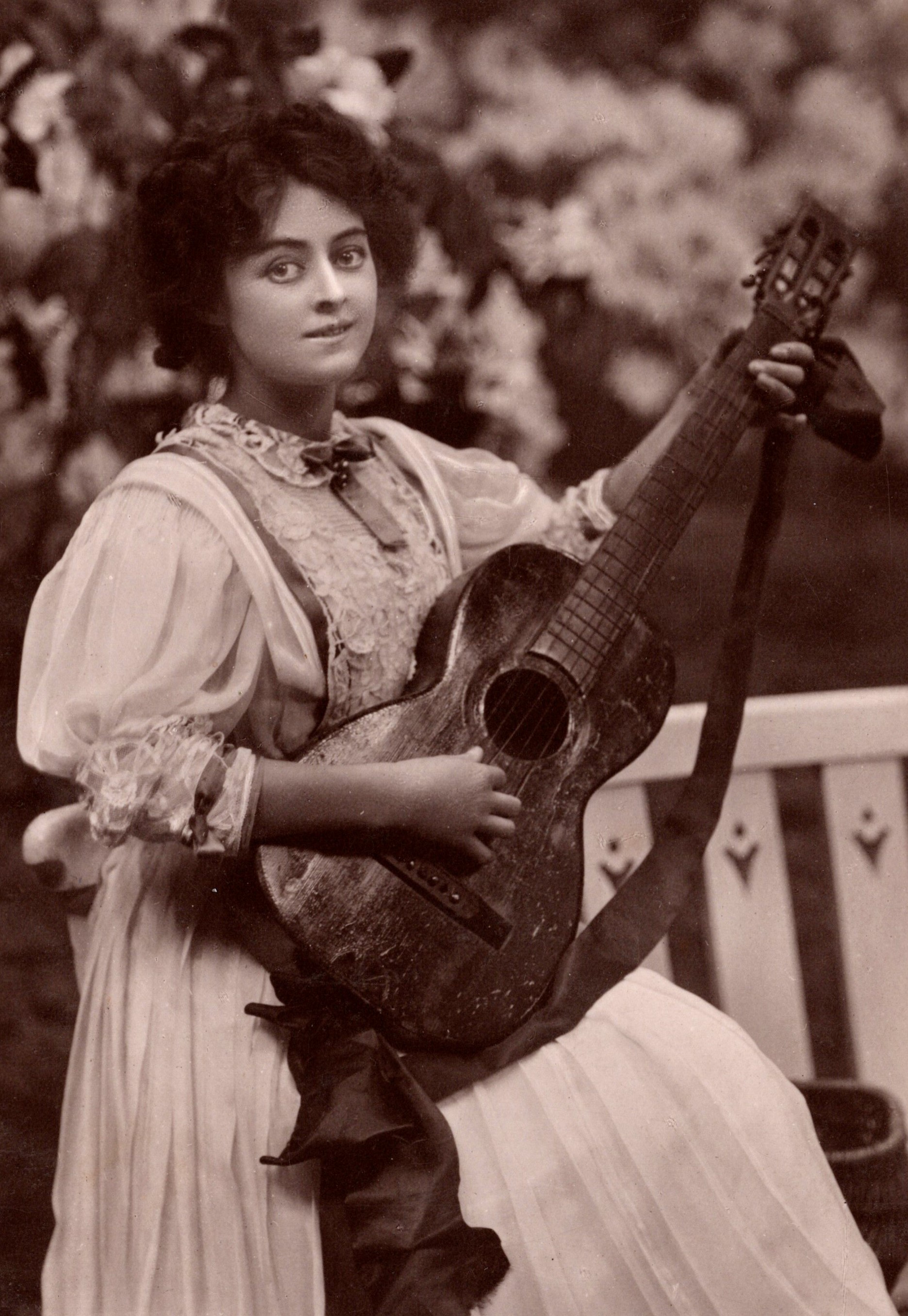
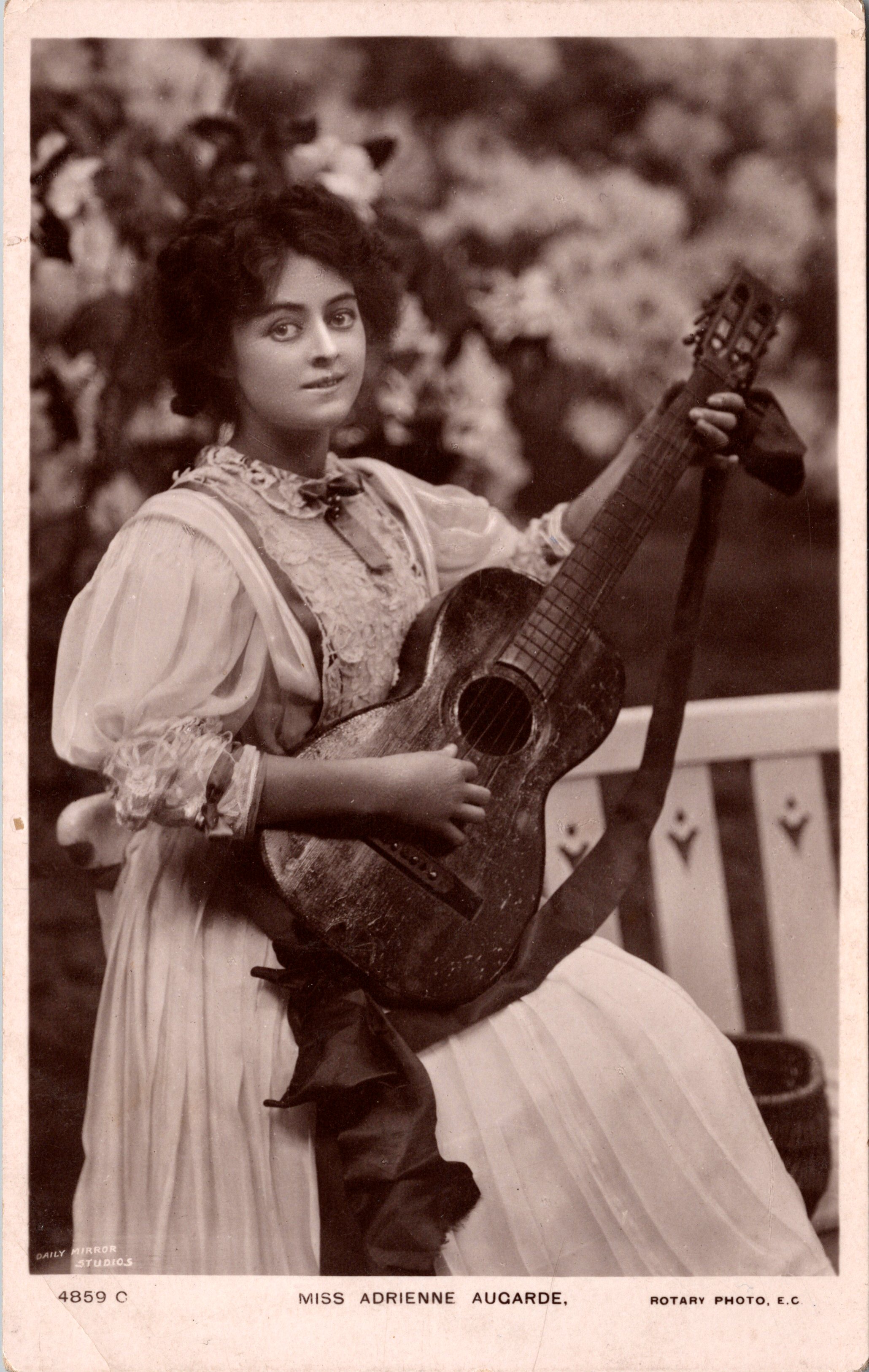
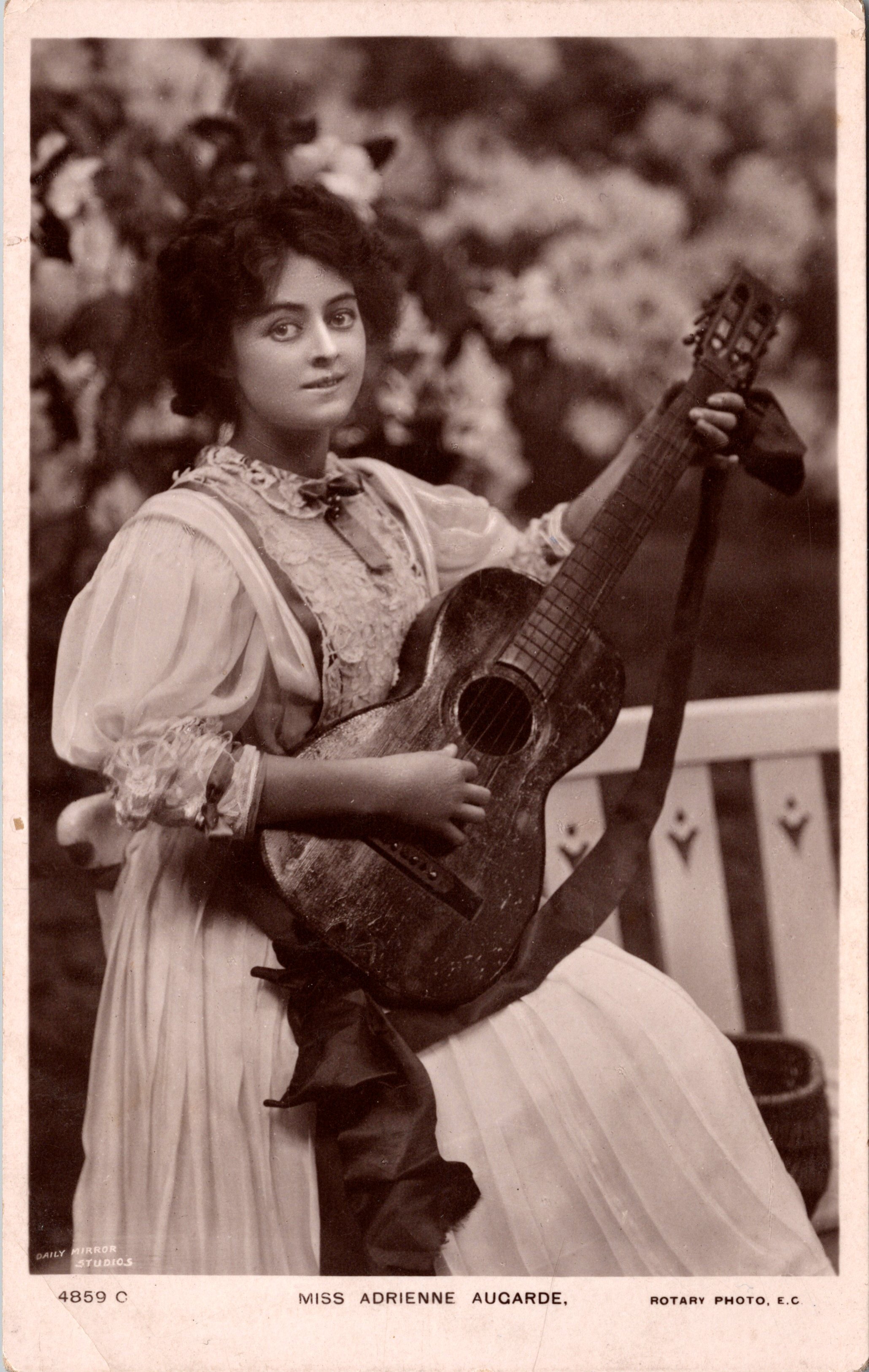
ADRIENNE AUGARDE : POPULAR ACTRESS IN BRITAIN : GUITAR : UNCOMMON

This uncommon vintage real photo postcard features English actress and singer, Adrienne Augarde (1882-1913). She was born in London. Her father was a violinist and her mother was a Belgian singer. Augarde had several other members of her extended family who were successful theatrical or music performers. Her popularity transcended beyond Great Britain to include the United States. In fact, she appeared in four Broadway plays between 1905 and 1912. These plays included “The Dollar Princess” (1909) which ran for 250 performances. She was most known for her roles in Edwardian musical comedy.  Augarde started her career at age sixteen. She did pantomime and appeared in small roles in musical comedy and opera. Her popularity began with her playing leading roles in the musicals of George Edwardes. She then starred in a number of long running productions in both London and New York (1903-1912). While on a Vaudeville tour in the US, she became ill and died after an unsuccessful appendectomy. She was thirty years of age at the time of her death. She died in Chicago. Her ashes were put in an urn designed to look like a make-up box. Her cremains were sent to her mother in England. Miss Augarde looks quite pretty in this postcard. She is captured as she plays a guitar. This card was published by Rotary Photo as part of a series (No.4859C). The photograph was taken by the Daily Mirror studios. This vintage postcard is in very good condition (see scans).   

5019-1

Buy this Vintage Real Photo Postcard (includes shipping within the US) #5019

To purchase this item, click on the Pay with PayPal button below

$21.48

5019-4

Buy this Vintage Real Photo Postcard (includes International shipping outside the US) #5019

To purchase this item, click on the Pay with PayPal button below

$30.00

HOPI WOMAN : TRADITIONAL HAIR STYLE : ACTED IN “HIS BLOSSOM BRIDE” : (1928)

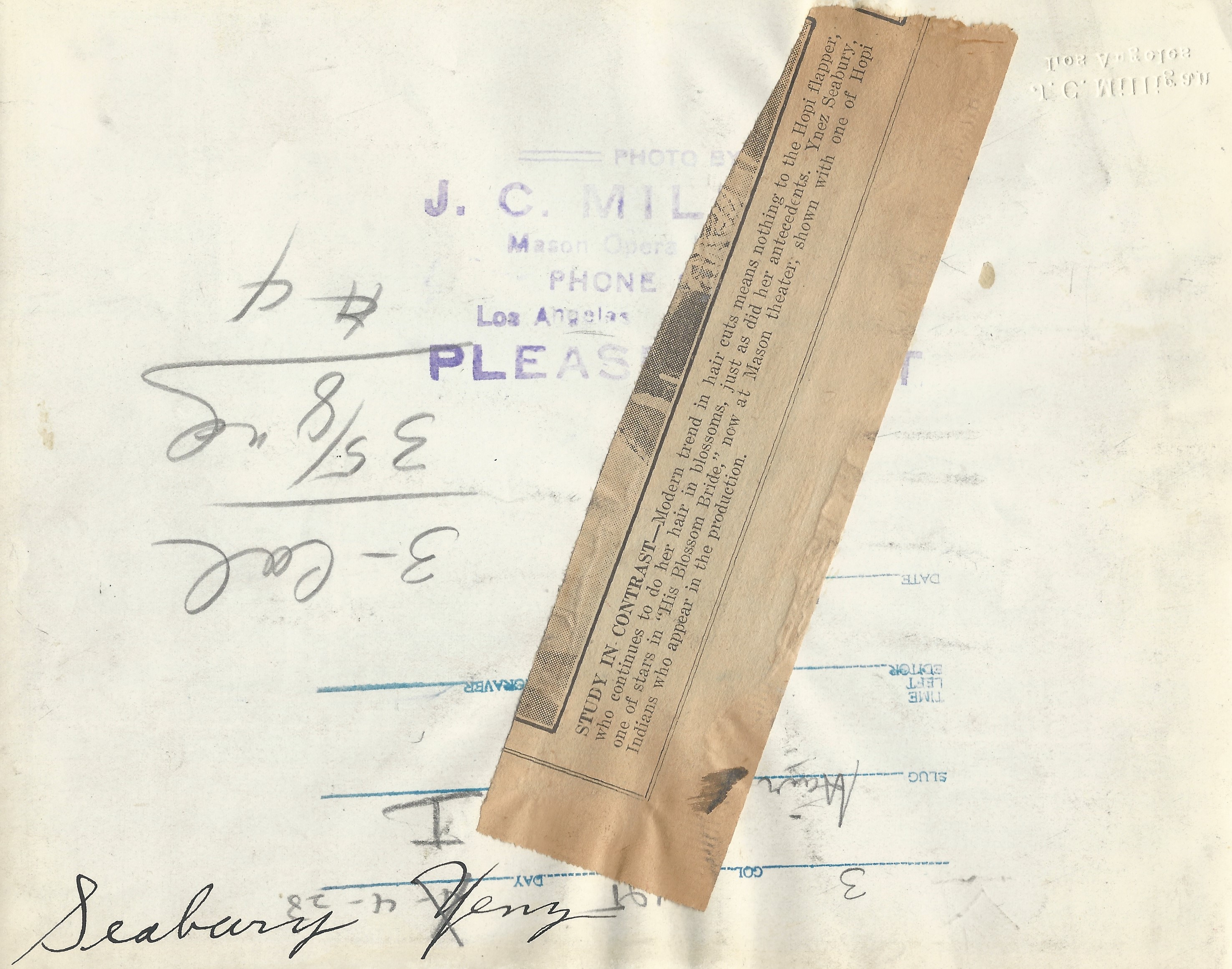
This vintage press photograph features a Native American woman and an actress named Ynez Seabury. The woman is wearing traditional clothing and a traditional hair style (in blossoms). The Native American woman is from the Hopi tribe. The pair were appearing in a play together. There were also other Hopi cast members. The play was called “His Blossom Bride”.  Ynez Seabury (1907-1973) was an American actress who performed on the stage and in silent and early sound films. She was born in Oregon to parents who were both actors. She started her show business career as a child actor. She made her screen debut in D. W. Griffith’s, “The Miser’s Heart” (1911). The following year she appeared on Broadway. Many films followed. The IMDb reports that Seabury had 34 film credits. Her last feature film appearance was in a 1940 Cecil B. DeMille film.Seabury had dark features and as a result was often cast to play ethnic characters. A number of times she played Native American women. In 1928, she played a role in “His Blossom Bride”. This romantic drama premiered at the Mason Opera House in Los Angeles. Seabury played the Native American heroine but a number of Hopi tribesmen participated in the play. A popular online encyclopedia states that she was “revered” by the Hopis because she understood “their lives and ambitions”. The Hopi tribe lived primarily on the Hopi reservation located in Northeastern Arizona. This photograph was taken by J. C. Milligan. His name is embossed in the bottom right hand corner of the image.This photograph and caption appeared in at least one unidentified newspaper. (SOLD)

MARGUERITE CLARK : POPULAR AND PRETTY AMERICAN BROADWAY AND FILM STAR

POSTCARD 1 (SOLD)

POSTCARD 2 (SOLD)

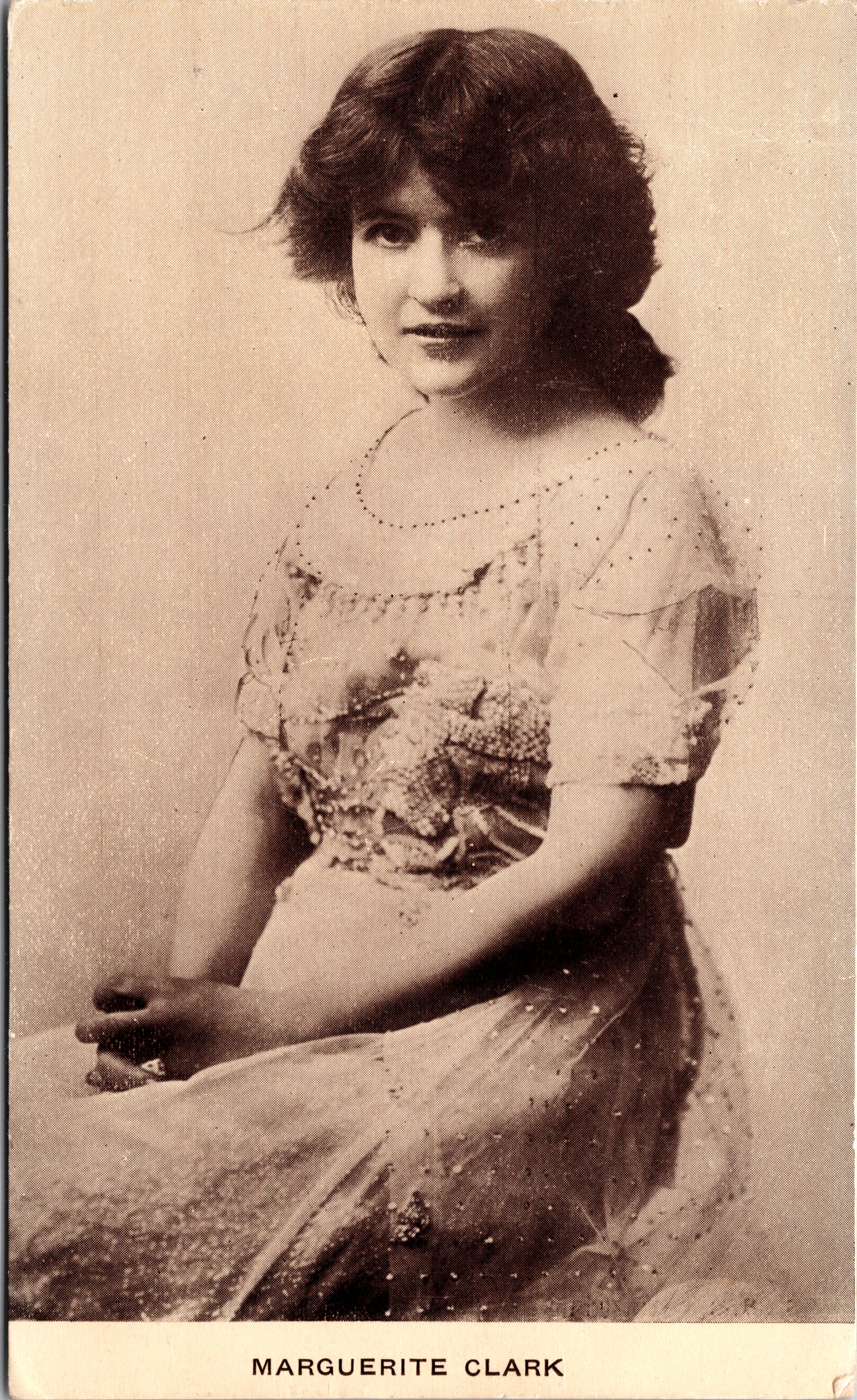
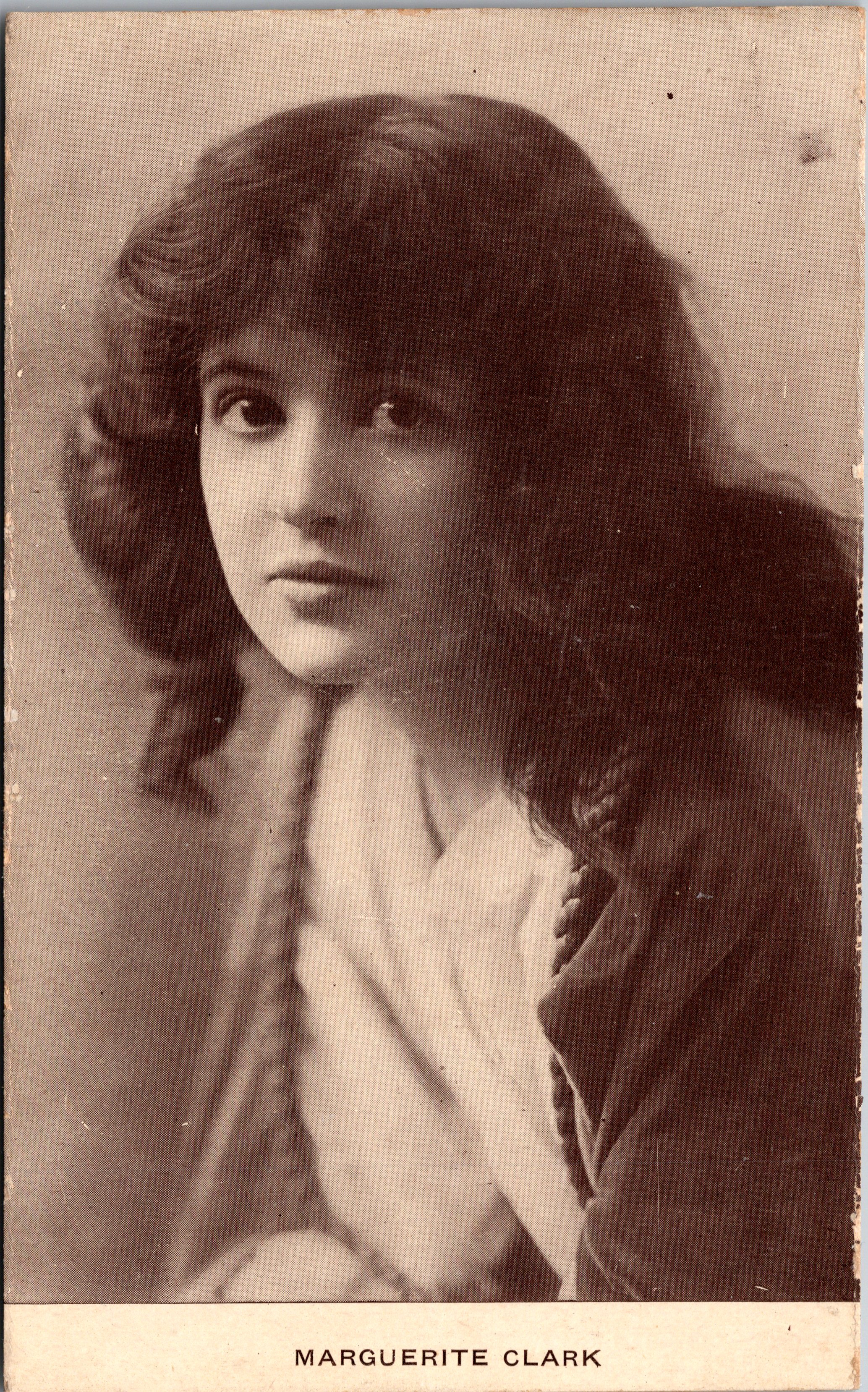
These vintage real photo postcards feature pretty American stage and silent film actress, Marguerite Clark (1883-1940). She was a very popular actress of her time; only second to Mary Pickford in popularity. The two shared a “little girl look”. Marguerite was tiny. She was 4’11” and weighed only 90 pounds. She was born in Cincinnati, Ohio. Her father was a haberdasherer. After finishing school, at the age of 17, Marguerite made her Broadway debut. During her stage career (1900-1913), she appeared in sixteen Broadway plays. Marguerite was also a prolific screen actress. Between 1914 and 1921, she appeared in 40 films. She is noted for her film role in “Snow White” (1916). In 1918, she married plantation owner and millionaire businessman, Harry Palmerston Williams. Marguerite retired at age 38 in order to live a more traditIonal life with her husband. He died in 1936 in an airplane crash. Both of these portrait postcards were published by Kraus Mfg.  These postcard photograph was likely taken between 1910 and 1920.  (BOTH SOLD)

Published in: on January 5, 2023 at 12:00 pm  Leave a Comment  
Tags: , , ,

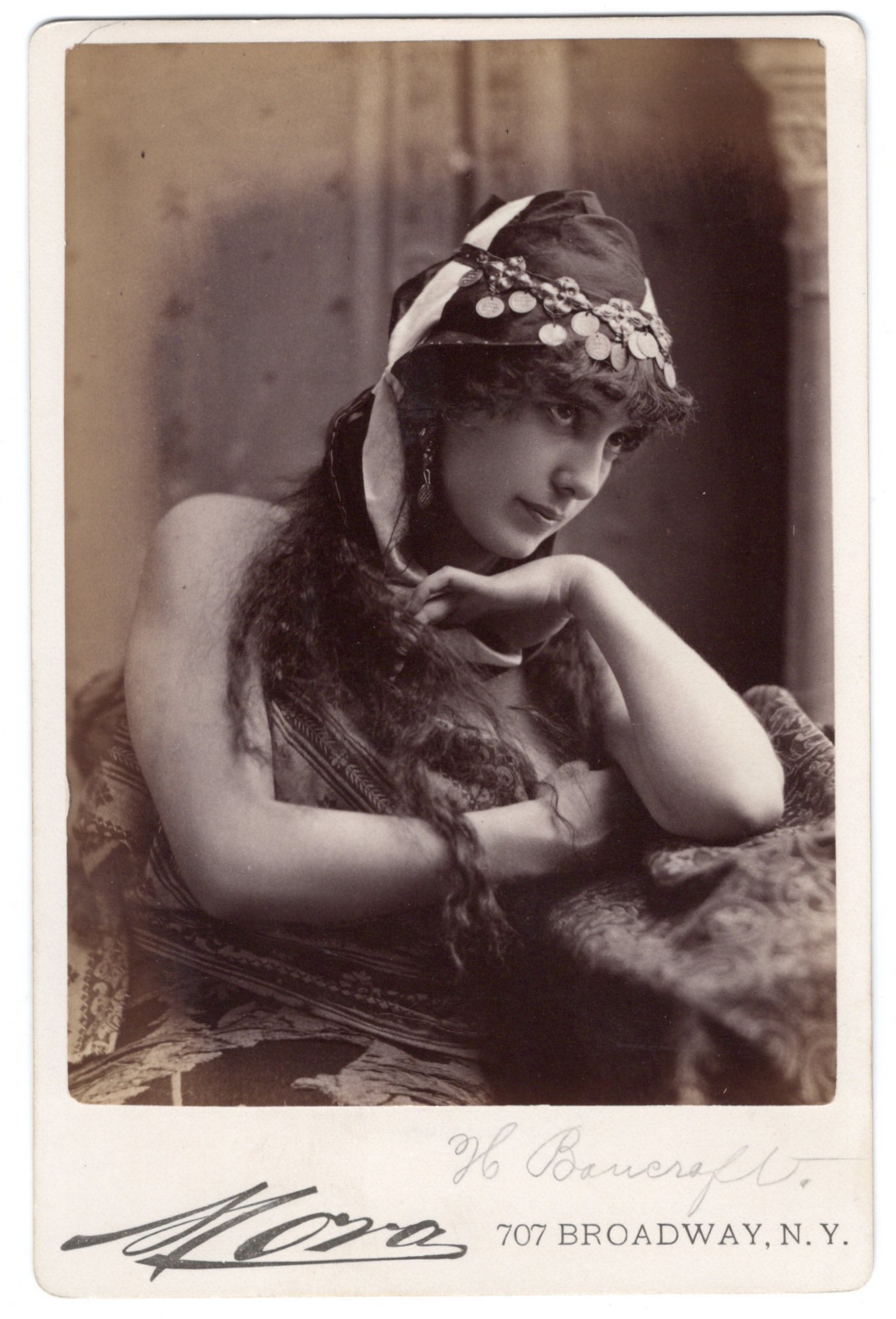
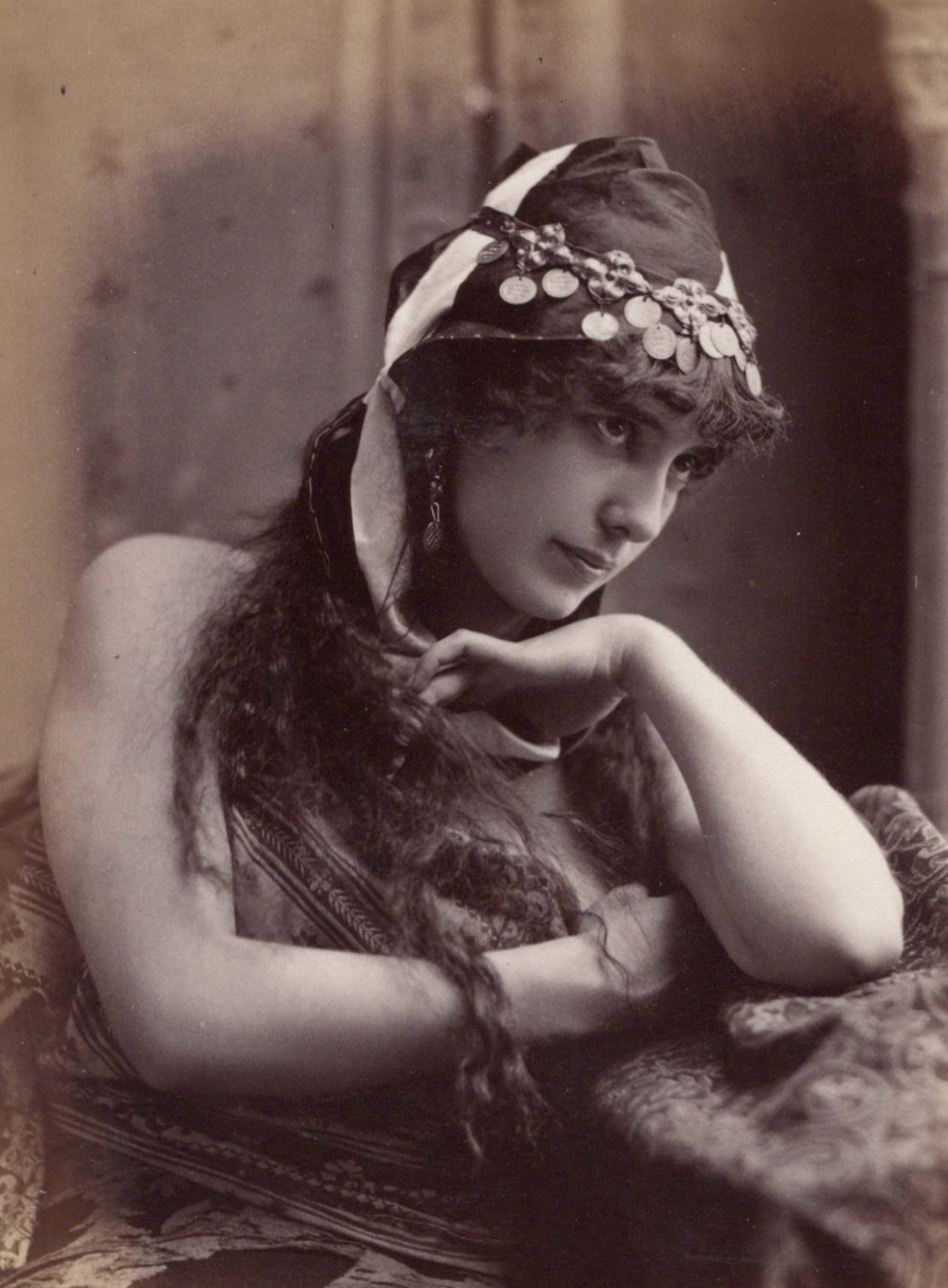
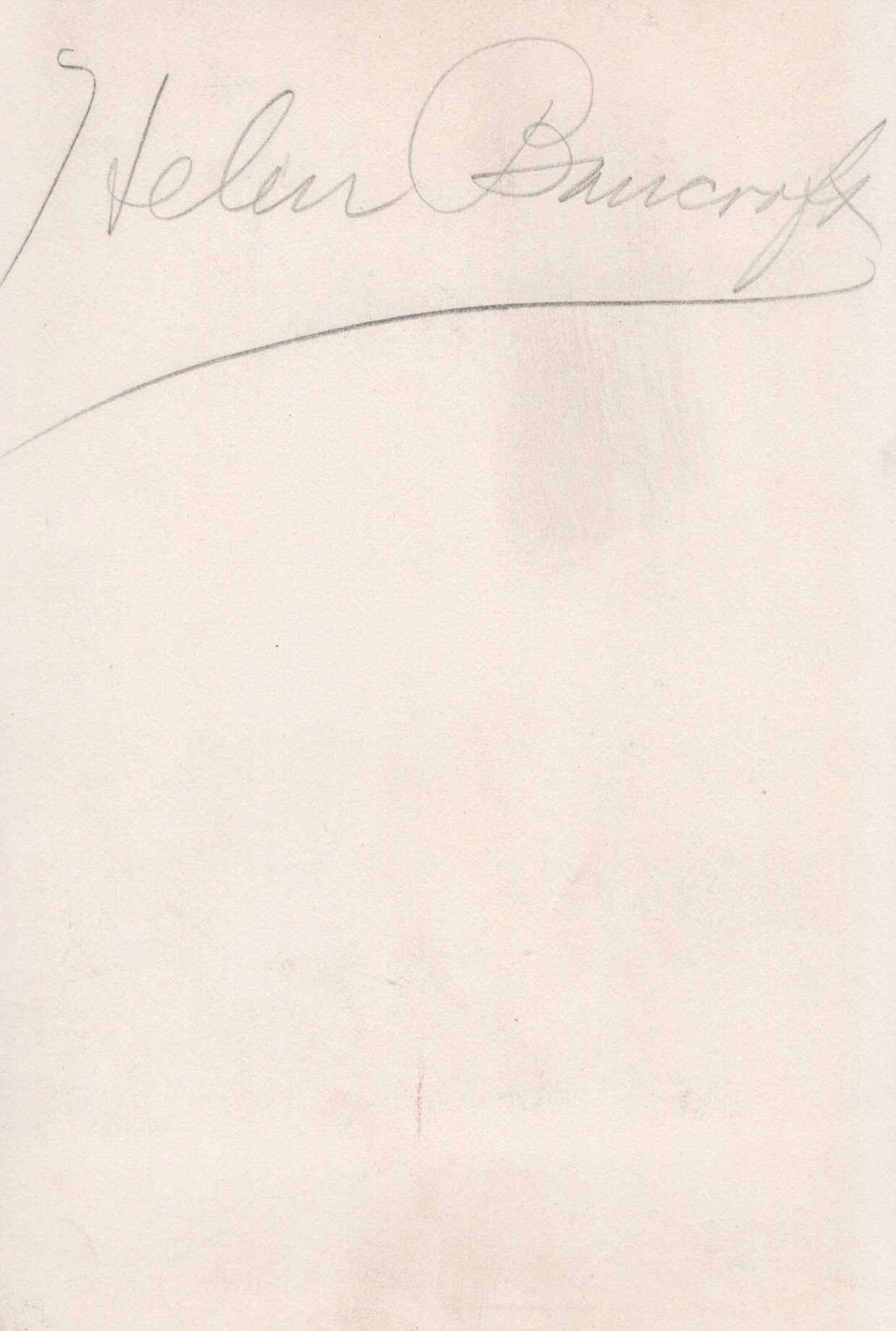
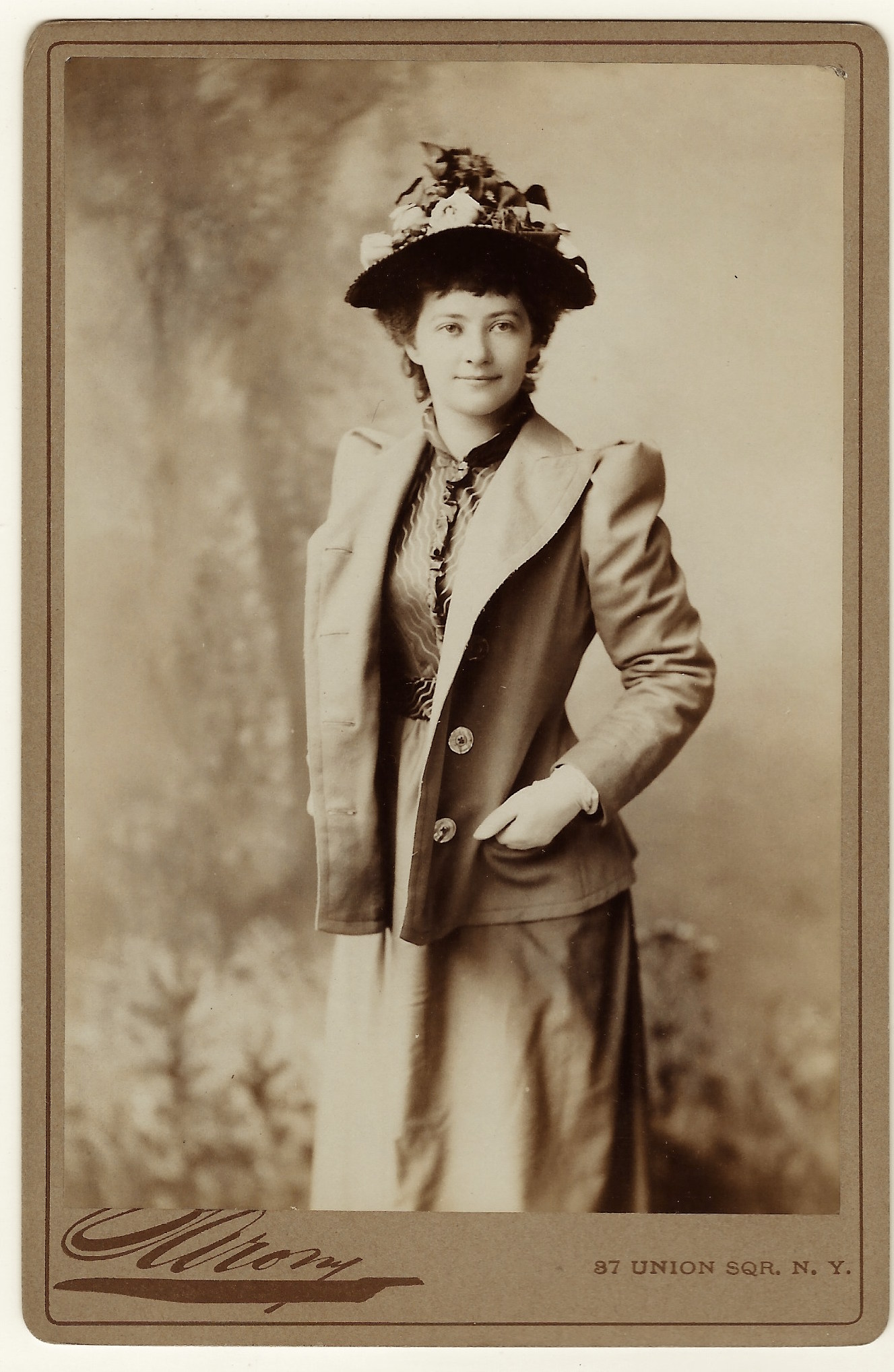
HELEN BANCROFT : PRETTY THEATER ACTRESS : CABINET CARD BY JOSE MORA

This cabinet card photograph features stage actress, Helen Bancroft. Her portrait was photographed by esteemed celebrity photographer, Jose Mora. She is quite pretty and appears to be dressed in costume from one of her theatrical performances. Bancroft made three Broadway appearances between 1904 and 1911. “Music and Drama” (1892) wrote about Bancroft’s debut in the “Hunchback”, It appears to have been her first major role. The reviewer quotes another reviewer who stated she had “an attractive presence, pretty face and mellow voice(that) did much to win her audience”. Theatre Magazine (1905) had a less complimentary comment about Miss Bancroft. Apparently, she had “resigned” from a play because one of her costumes was an “unbecoming color”.  (SOLD)

Published in: on November 17, 2022 at 2:19 pm  Leave a Comment  
Tags: , ,

PORTRAIT OF AMERICAN STAGE ACTRESS MAUDE WHITE OR POSSIBLY A PORTRAIT OF AMERICAN STAGE ACTRESS MAUD WHITE

maude white 1

This is an unusual cabinet card portrait for two reasons. First, the pretty young woman who is the subject of this photograph is a New York city actress and certainly does not look the part. She is well dressed, but she is wearing conservative and “boring” attire. Overall, she looks more like the “woman next door” than a Broadway actress. She exudes a sweet and innocent disposition and she has a twinkle in her eyes. She doesn’t  give the appearance of a professional actress of that time. Where’s the histrionic flamboyance? Where’s the drama? Secondly, what’s wrong with the photographer, Napoleon Sarony. The fantastic celebrity photographer was not showing his usual bombastic flair when he posed and shot this photograph. Unlike many of his theatrical portraits, there is no fancy clothing or abundance of props in this portrait. The young lady in this image is named Maude White. Her name is written on the reverse of the photograph. However, there is a caveat worth mentioning. I encountered a problem while I was researching Maude White. I discovered that there was also an actress named Maud White who was performing during the same era. This became an issue because, despite the inscription on the back of the cabinet card, I could not be sure if the woman photographed was Maude White or Maud White. I attempted to find other photographs of both actresses but met no success. Due to the fogginess of the identification issue, I decided to research both Maude and Maud. The Internet Broadway Data Base reveals that Maude White appeared in one Broadway production, “The Ruling Power” (1904). However, Maud White made three appearances on Broadway (“Lost-24 Hours”(1895), “A Stranger in a Strange Land” (1899), and “There and Back” (1903). First, I will present some information gleaned from researching Maude. The New York Times (NYT) (1888) published an article about a soon to open play entitled “A Parisian Romance”. The star of the show was Mr Richard Mansfield and the supporting cast included Miss Maude White. The NYT (1888) later reviewed the play and made special mention of Maude. The review described her as “the danceuse (female ballet dancer) of the Opera” and reported that she played her role in a charming, pert, and clever manner. The NYT (1898) announced the soon to open comedy, “A Stranger in a Strange Land”, and that it would include both Mansfield and Maude. An article in the NYT (1900) stated that Maude would appear in Stuart Robson’s company that year. The NYT (1903) heralded the opening of a farcical comedy called “There and Back” and added that Maude would be a principal in the cast. An interesting story about Maude appeared in the NYT in 1905. The issue at hand was plagiarism. Maude had written a playlet called “Locked Out At Three AM” and she complained to the United States circuit court that the author of another play used some of her material. Maude had asked for an injunction and sued for damages. The NYT (1906) stated that Maude would be starring in the play “Nobody’s Fault”.  Now lets focus on Maud, rather than Maude.  In 1890, Maud was involved in some controversy and it was reported in the NYT. The title of the article was “Fritz Emmet Sobering Up”. Emmet was an established comedian who had a relationship with “John Barleycorn” that had produced many newspaper articles focussing on his drunken behavior. The article stated that there was  “a stormy sea” on the stage of the Hammerstein’s Harlem Opera House. Emmet had been drinking heavily for two weeks and creating much drama. His professional and personal life had become badly damaged. In his previous engagement in Philadelphia, Emmet had reached the point that he could no longer perform. The theater had to close the show, and fortunately for the theater, Emmet compensated them for their losses. Next stop was Harlem, but Emmet kept drinking excessively until the dramatic incident occurred on stage. At a Saturday night performance he “murdered his play”. While onstage he made many “Bacchanalian references” and exhibited other inappropriate words and actions.. Emmet’s adult son decided to put an end to his father’s out-of-control behavior. Just as the curtain went down on the last act of the play, Fritz’s son went on the stage where his father and Maud were standing. The son informed Maud that she would have to leave the theater company. Maud objected in a “vigorous manner” spurring the young Mr. Emmet to have her forcibly removed from the theater. Worse yet, he had her confined to a little storm house over the stage door. Basically, she was temporarily kidnapped. Maud cried and screamed “various better words” and even though Fritz tried to intervene, she was imprisoned until the police arrived. The police were called by the younger Mr Emmet and they promptly took Fritz to Manhattan Hospital where he was confined overnight. Maud was released and put in a carriage to go wherever she wanted to go. The story got worse for Fritz. Directly after this incident, his wife of 27 years, sued him for divorce on grounds of infidelity. They ultimately divorced and the settlement was costly for Fritz. Maud continued to perform and the NYT (1891) announced that Maud would be appearing in a play directed by Charles Frohman called “Mr. Wilkinson’s Widows”. That same year, she appeared in a Frohman production entitled “The Solicitor”. The NYT (1892) has an article reporting that Maud appeared in another Frohman production (“The Lost Paradise”). An 1895 NYT article states that maud was appearing with the Robert Hilliard Company in “Lost- 24 Hours” at the Hoyt Theater. The NYT (1897) has an article reporting her appearance in “The Wrong Mr Wright”. Maud received a complimentary review from the  NYT (1903) concerning her performance in the role of the “seductive Marie Antoinette” in the play “There and Back”.   (SOLD)

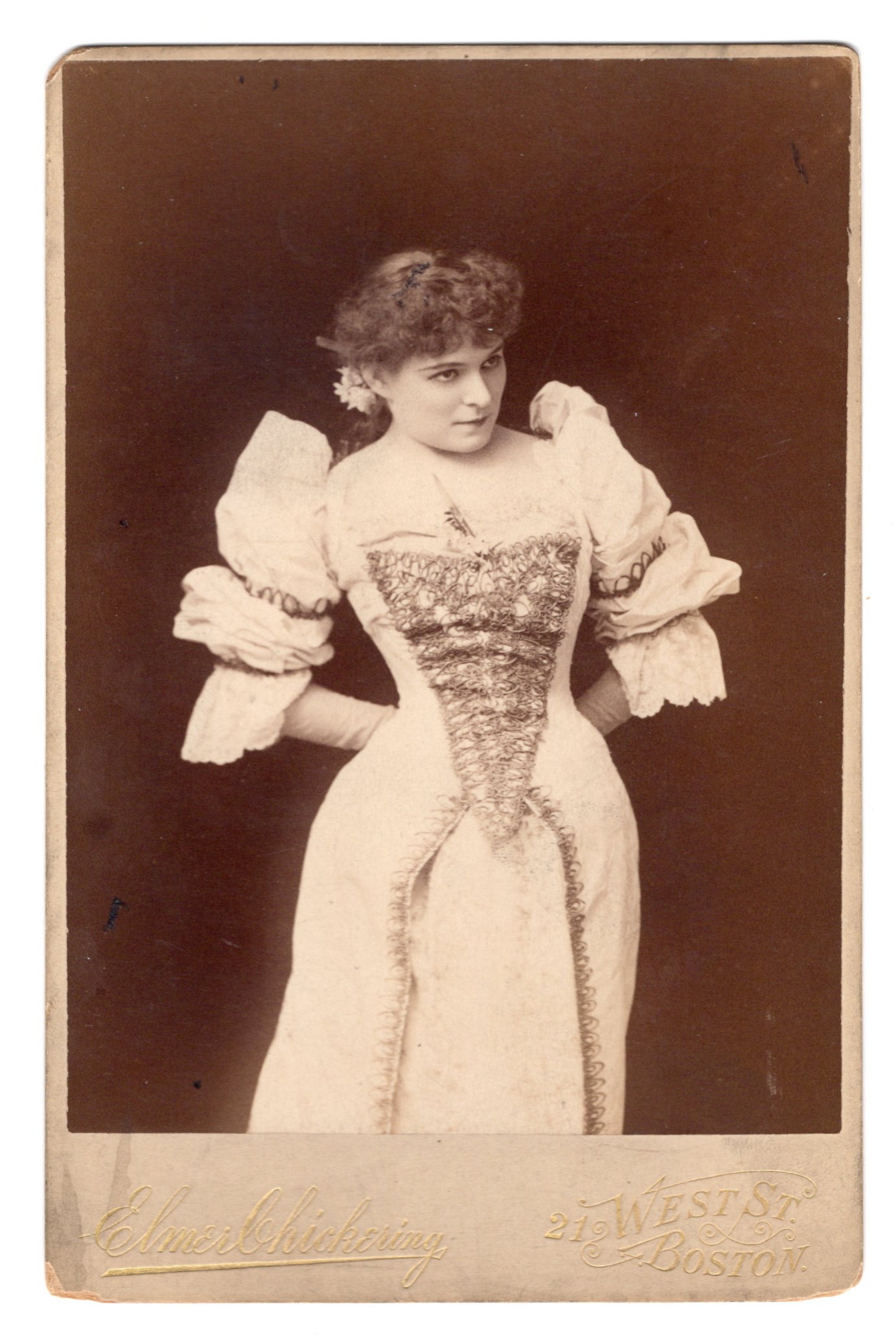
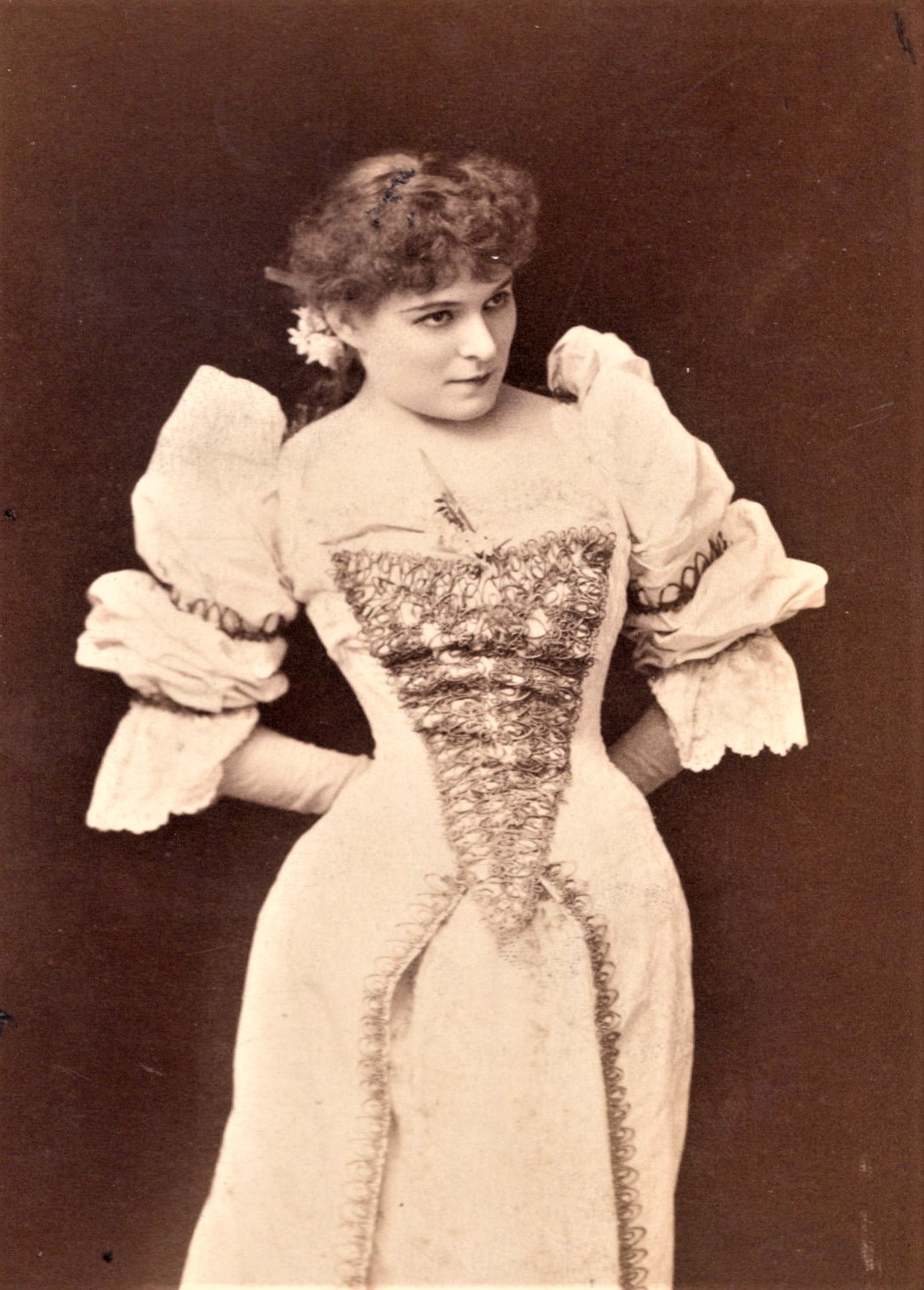
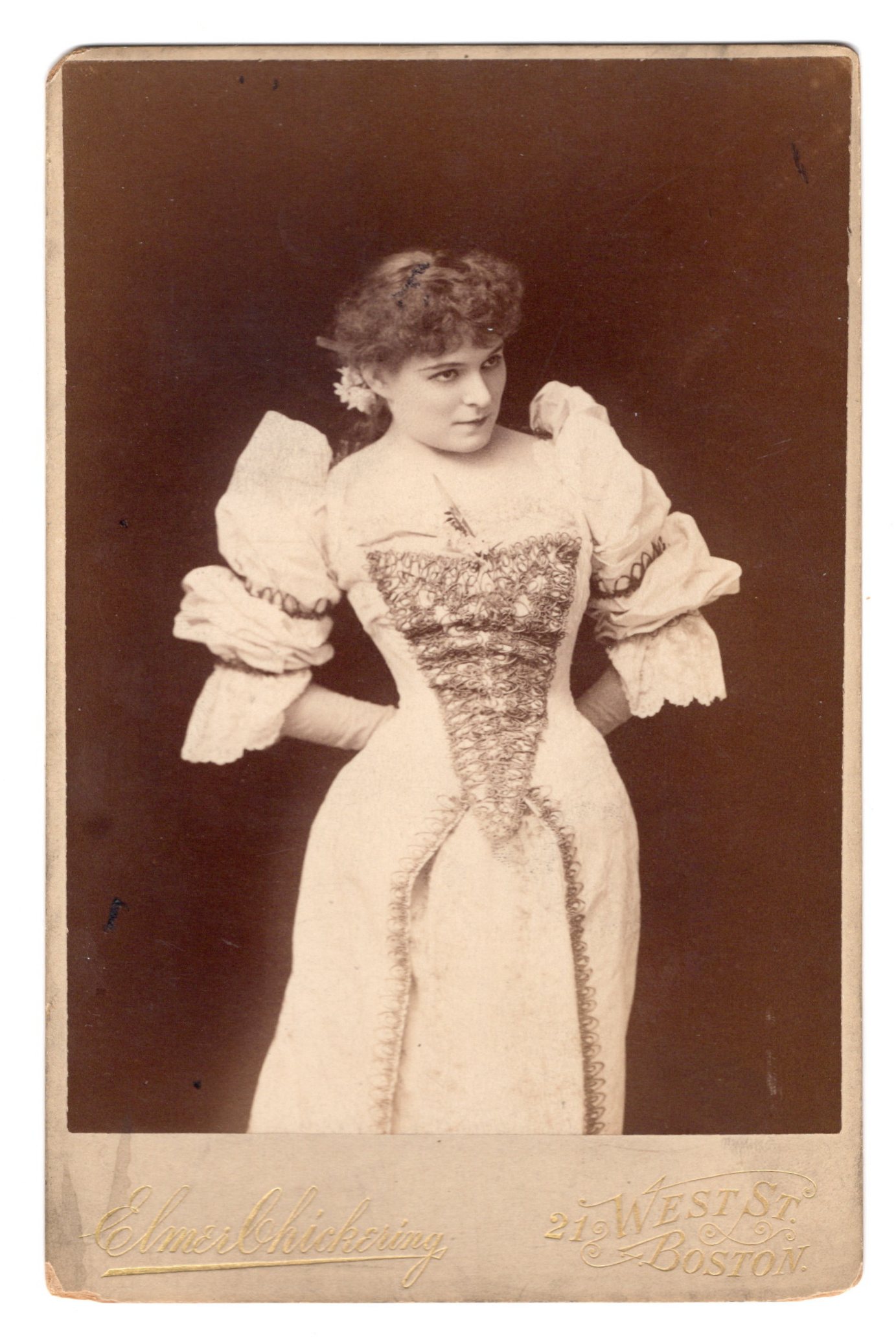
PAULINE HALL (1860-1919): BEAUTIFUL MUSICAL THEATRE STAR

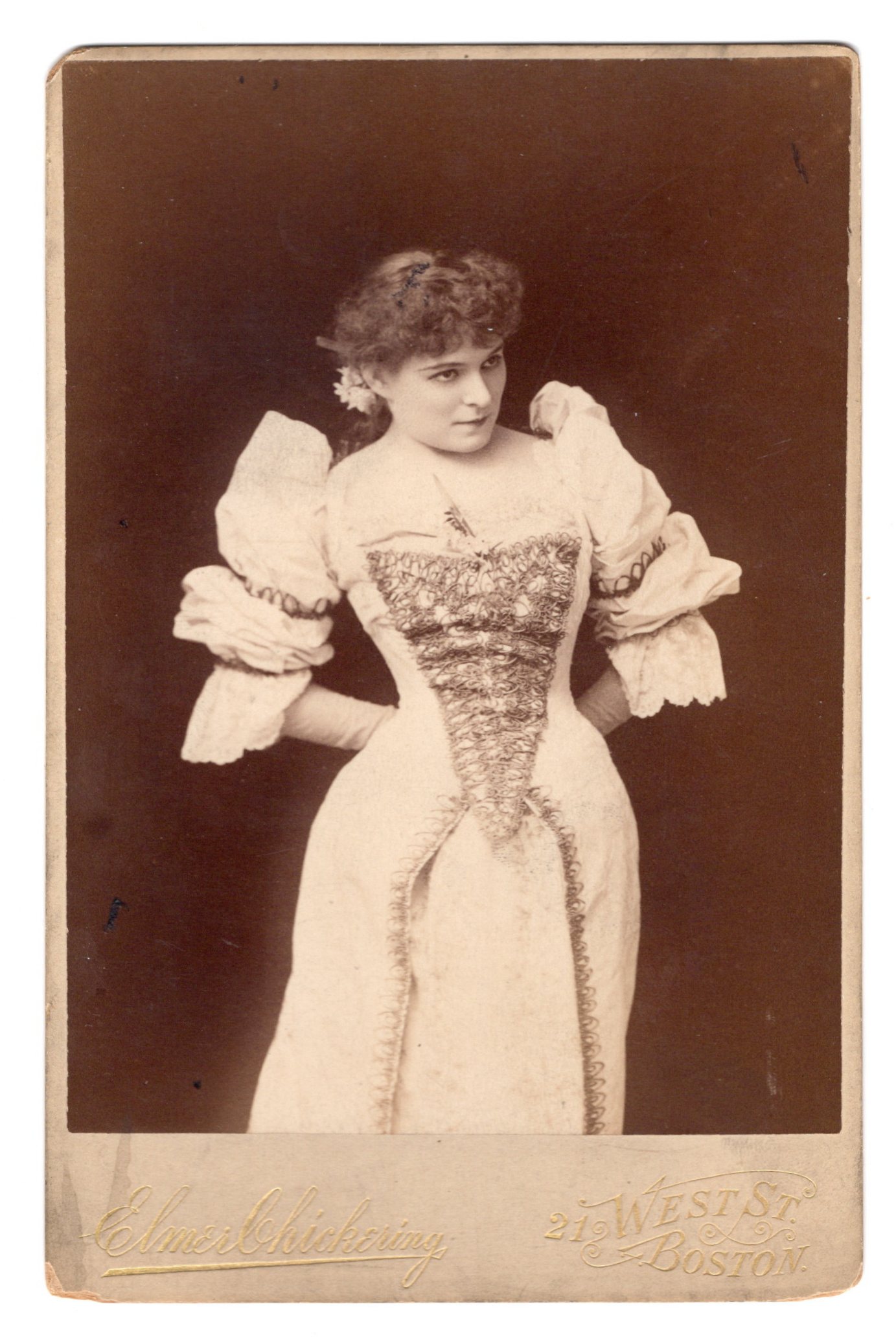
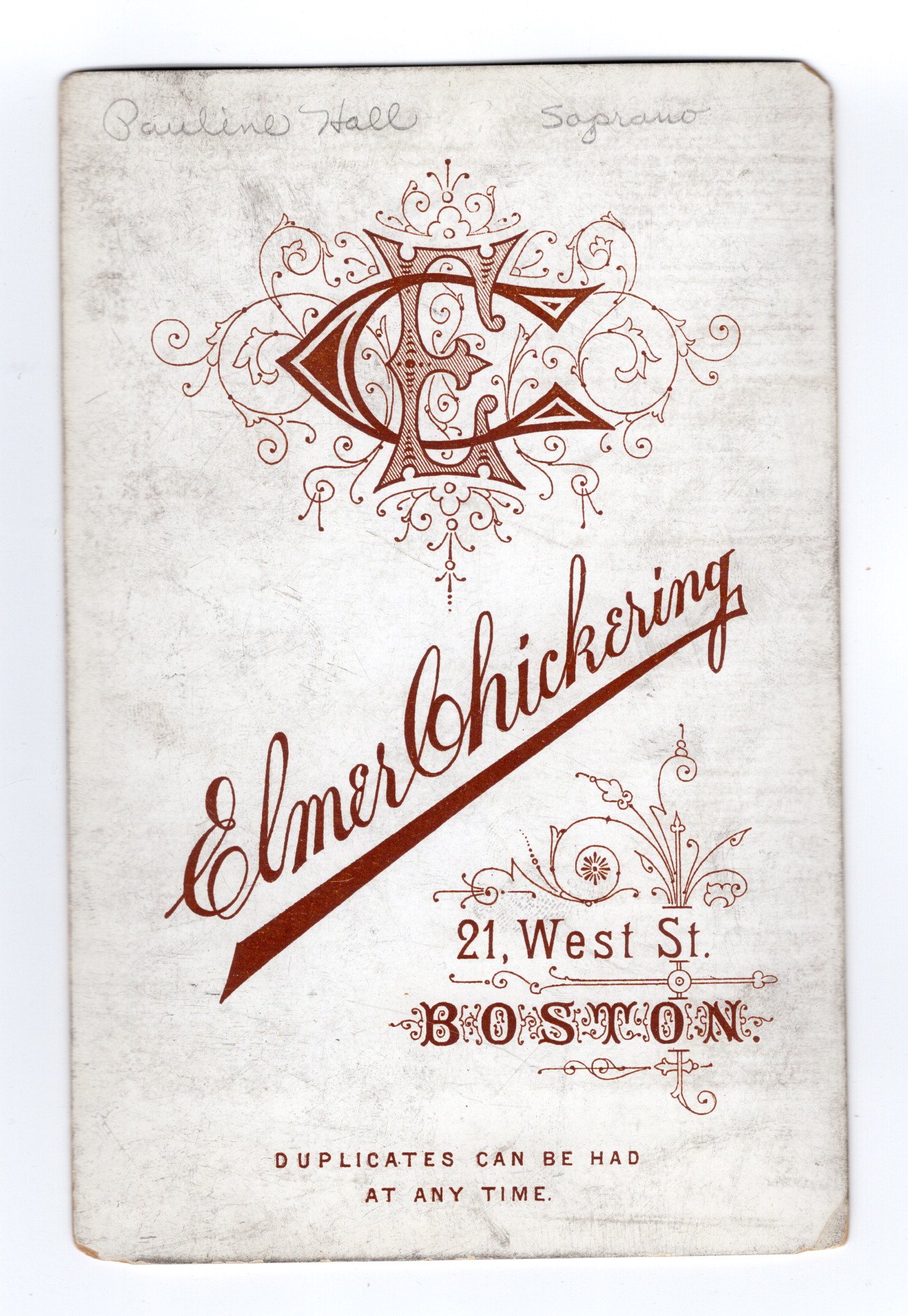
This cabinet card features Pauline Hall (1860-1919), one of the most popular turn of the century prima donnas. She began her career as a dancer in Cincinnati, Ohio at age 15. She joined the Alice Oats Opera Company but left to tour in plays with famed actress Mary Anderson. By 1880, she worked for well known producer Edward Everett Rice in musical productions. Early in their association, he gave her a role in “Evangeline”. Her shapely figure allowed her to take male roles as she did in “Ixion” (1885). Her greatest success came in the title role of the first American production of  “Erminie” (1886). She played in more than two dozen Broadway operettas. Her final role was in the “Gold Diggers” (1919). This photograph was taken by famed celebrity photographer, Elmer Chickering of Boston, Massachusetts. The cabinet card has wear in it’s lower right hand corner and has a very slight curl. It is in overall good condition *see scans. 

8002-pauline-hall-1

Buy this Vintage Cabinet Card photograph (includes shipping within the US) #5013

To purchase this item, click on the Pay with PayPal button below

$58.85

8002-pauline-hall-3

Buy this Vintage Cabinet Card (includes International shipping outside the US) 5013

To purchase this item, click on the Pay with PayPal button below

$68.00

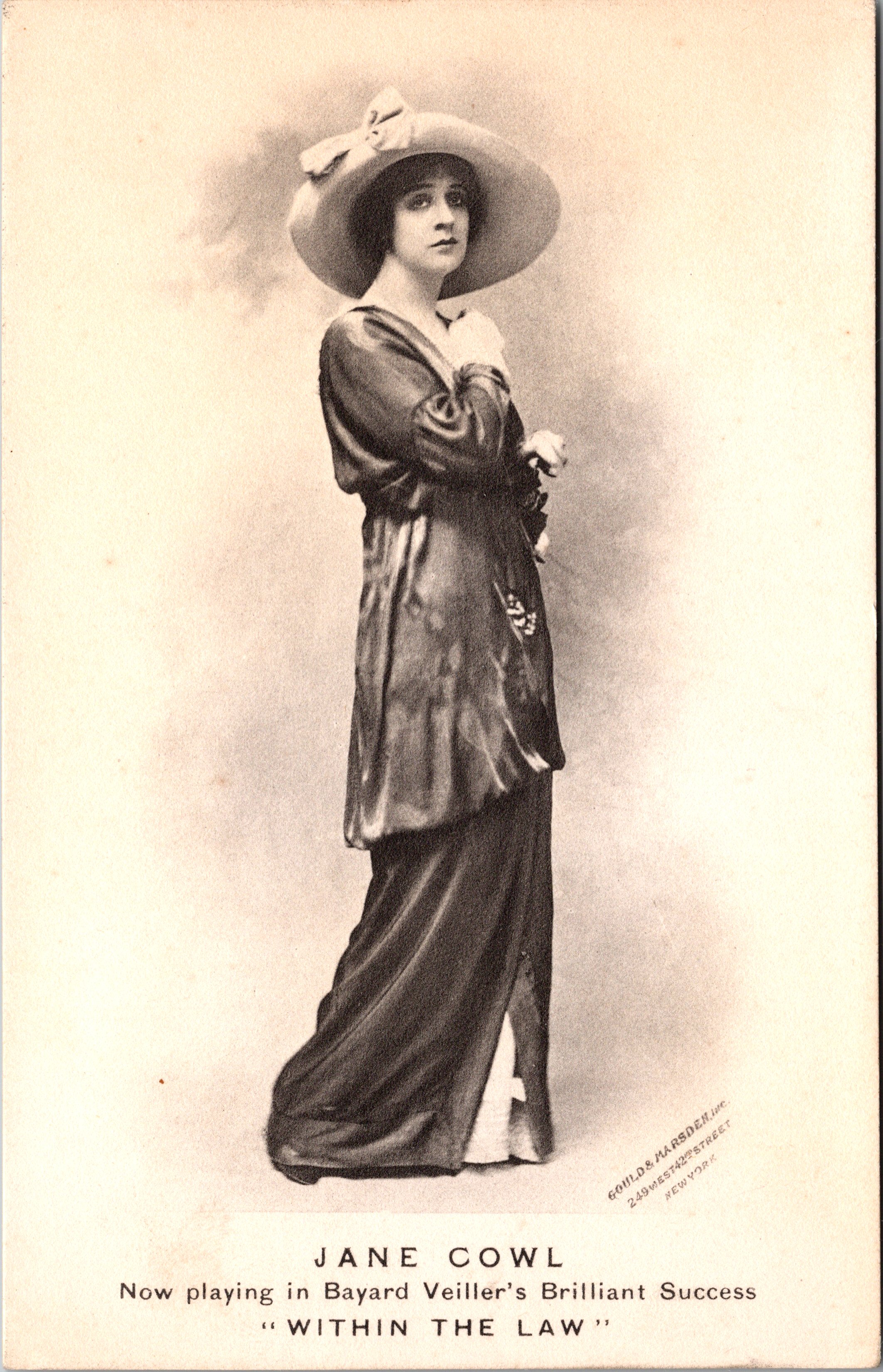
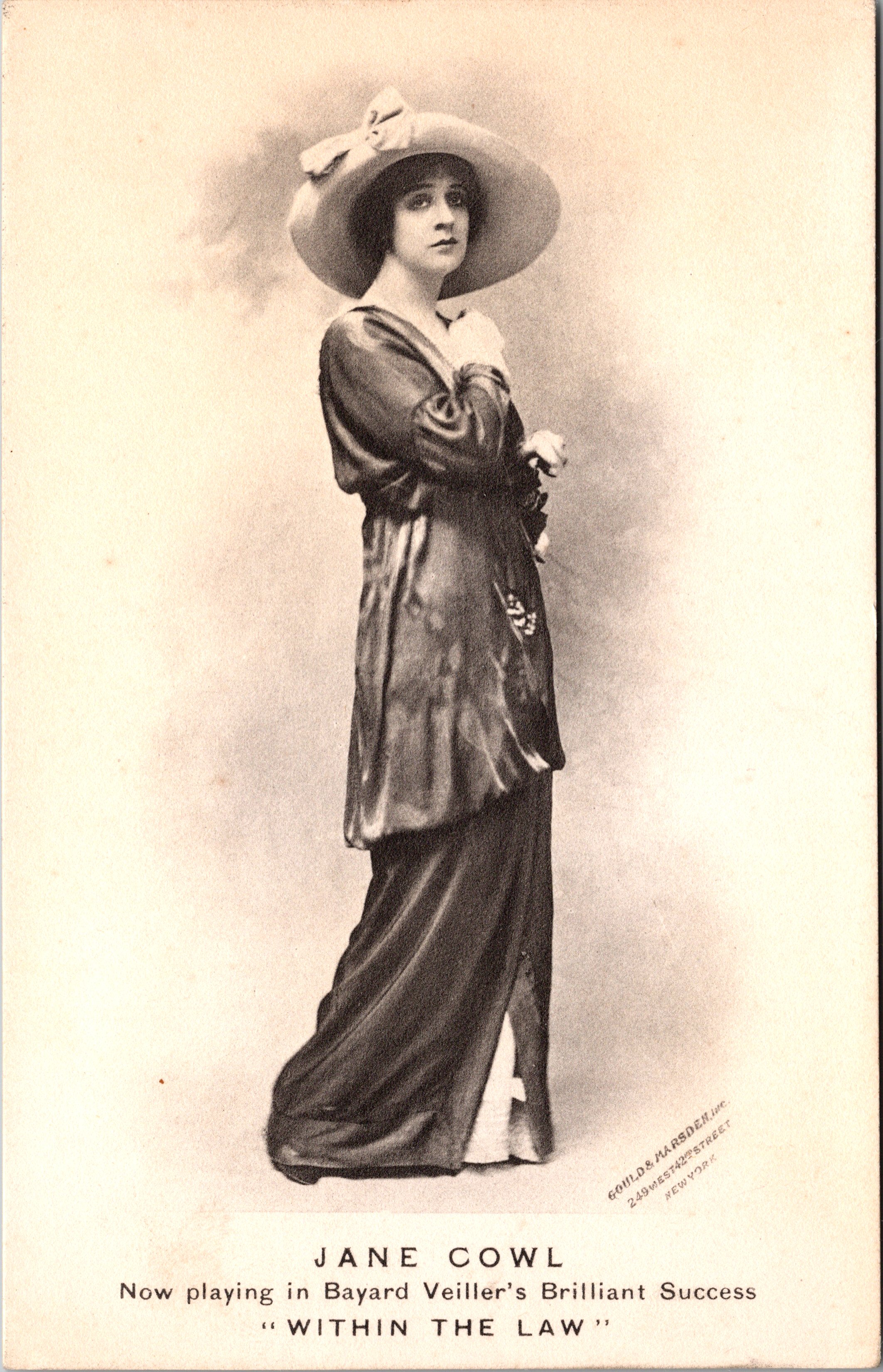
JANE COWL : IN COSTUME FOR “WITHIN THE LAW

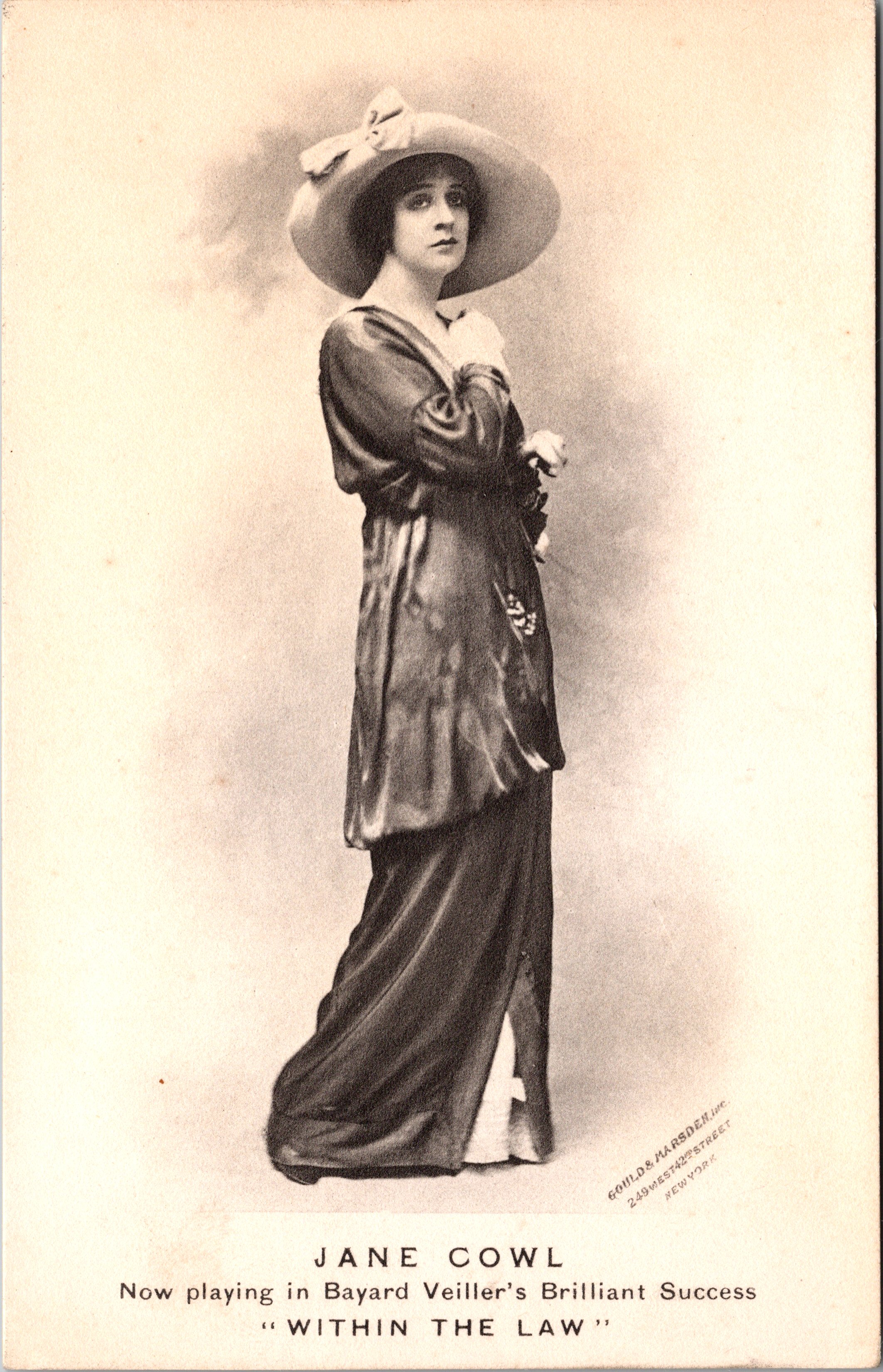
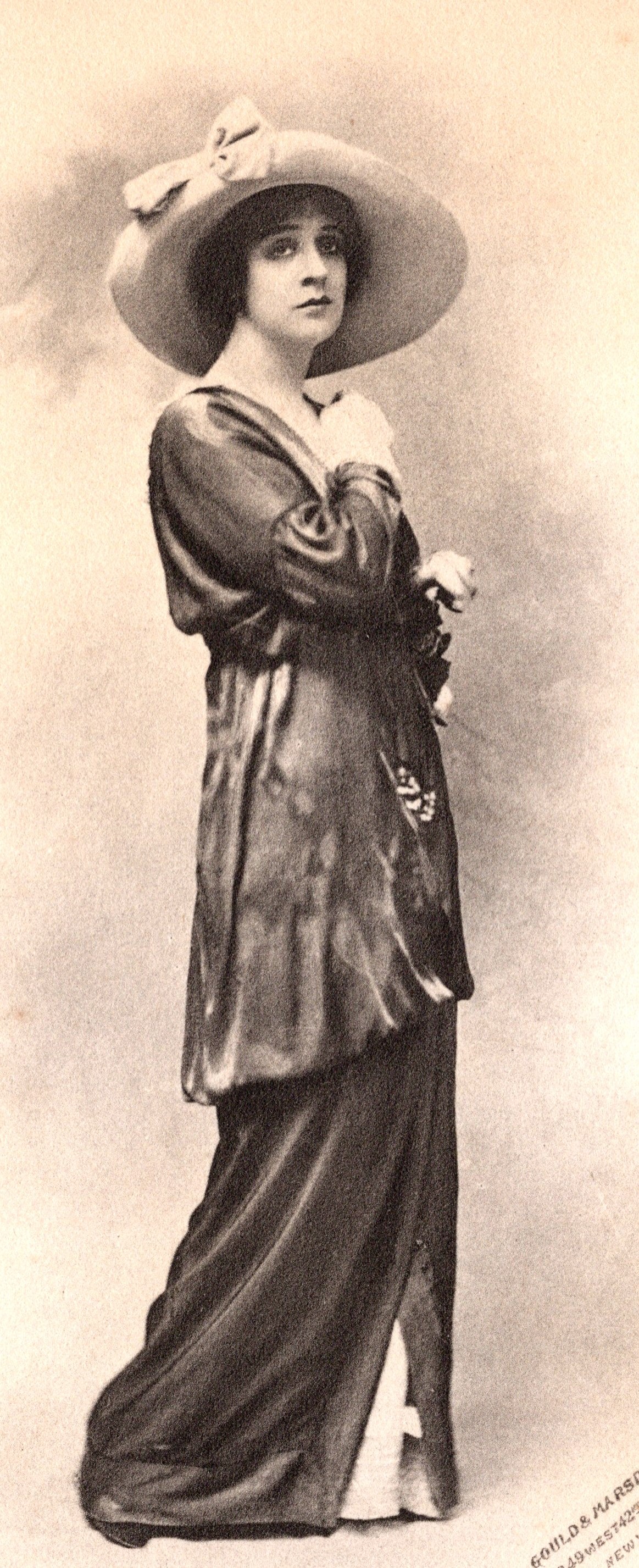
This vintage real photo postcard features American film and stage actress, Jane Cowl (1883-1950). Cowl was also a playwright. She was born in Boston, attended high school in Brooklyn, New York, and took courses at Columbia University. She made her Broadway debut in 1903. She landed her first leading role in a 1909 David Belasco production. Her first big success was in “The Gamblers” (1910). She had much success on the stage, including “Within the Law” (1912). This photo postcard captures Miss Cowl in costume for her role in “Within the Law”. She played in a number of Broadway productions of Shakespeare. She played Juliet in more than 1000 consecutive performances. In 1930, she performed with a young Katharine Hepburn in “Art and Mrs. Bottle”. In sum, the IBDB reports that Cowl appeared in 35 Broadway productions between 1903 and 1947. Cowl’s performing history includes working in film. She was the lead in two silent films. She had an over 30 year hiatus from the movies until taking on some supporting film roles during the 1940’s. IN 1906, Jane Cowl was married to Adolph Edward Klauber. He was the drama critic for the New York Times. He was a former actor and the son of a noted Louisville, Kentucky Jewish photographer. In 1918, Klauber left his newspaper job to become a theatrical producer and manager. He and Cowl separated in 1930. This vintage postcard portrait is in excellent condition (see scans).

jane-cowl_0001-2

Buy this Vintage Real Photo Postcard (includes shipping within the US) #3931

To purchase this item, click on the Pay with PayPal button below

$21.75

jane-cowl_0001-1

Buy this Vintage Real Photo Postcard (includes International shipping outside the US) #3931

To purchase this item, click on the Pay with PayPal button below

$31.00

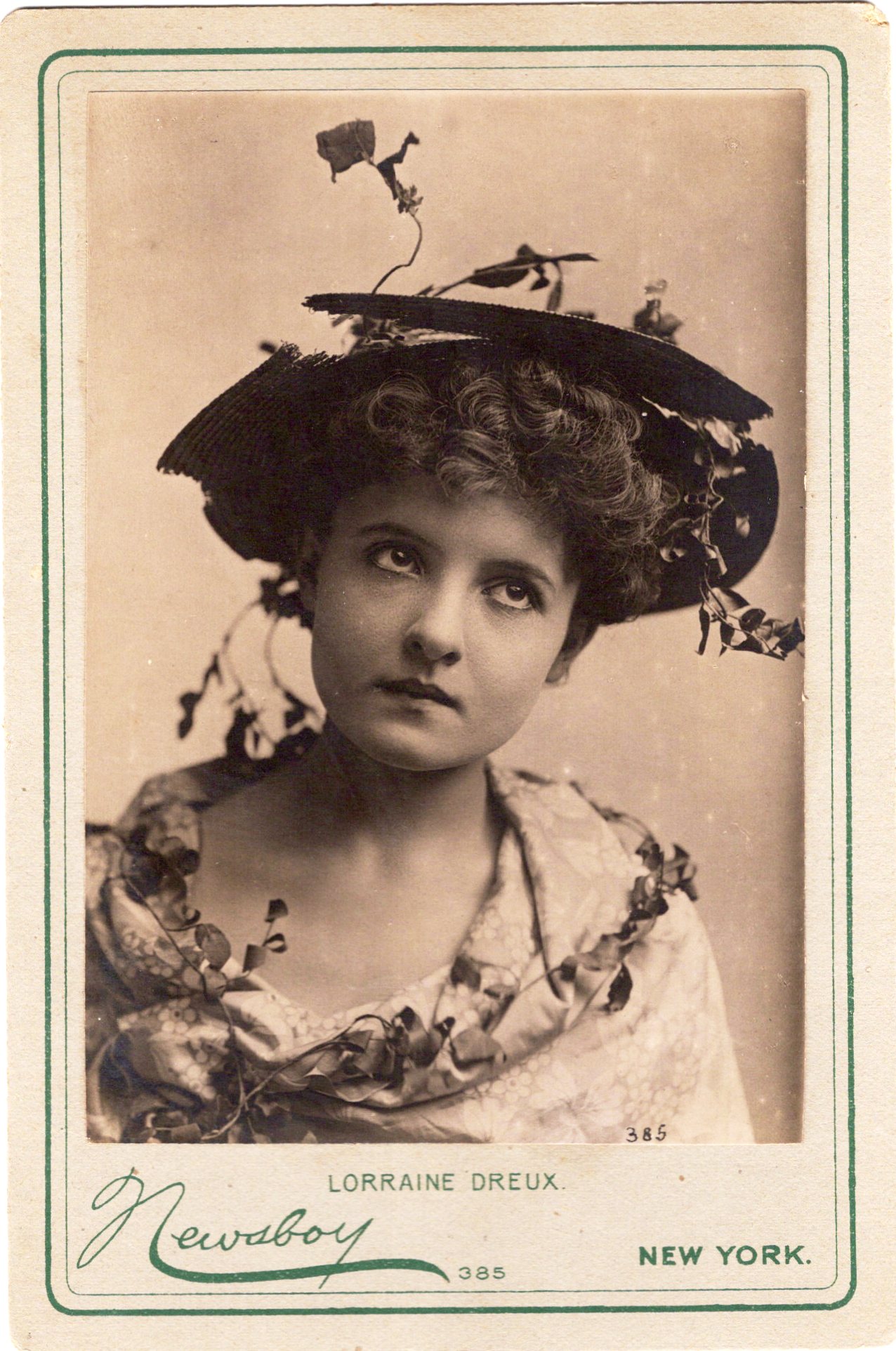
LORRAINE DREUX : PRETTY STAGE ACTRESS : DIES YOUNG AND TRAGICALLY : CABINET CARD

This cabinet card is a portrait of theatre actress, Lorraine Dreux. The  image is part of the Newsboy Series (#385) and was published in New York City. The Newsboy series was used for advertising purposes by the Newsboy Tobacco Company. Celebrity photographs were given away as premiums upon the sale of tobacco products. Ms. Dreux looks like she ran through the woods in order to arrive at the photography studio in a timely fashion. She has twigs and leaves on her head and even is wearing a necklace of branches around her shoulders. It seems she is modeling “the natural” look. Her eyes are looking upward, as if to say, “Am I really wearing sticks and leaves?”. Who was Lorraine Dreux? The Illustrated America (1893) describes her as “young and pretty, with soft dark eyes, a tremulous little mouth, and a dazzling complexion”. She was born in Marquette, Michigan, of well to do parents. Her father did a great deal of business in the East and she spent much time on the banks of the Hudson River in New York. She was educated at home by a governess supervised by Dreux’s beautiful mother. She decided that she wanted to be an actress while in her early teens. Her parents reluctantly gave her permission and her first experience acting occurred while she was in London, England, with her mother. She was engaged by Mr Charles Wyndham to play comedy parts in London stage shows. She next joined the London Globe Theatre Stock Company playing sentimental roles. She then joined an English traveling theatre company. She soon returned to America and appeared in a number of plays, including “Ninety Days” with William Gillette. The article closes with the prediction that Dreux would be a successful actress in America because she possessed both beauty and talent. The New York Times (1894) reported on Dreaux’s appearance in “Lem Kettle” at the Bijou theatre. She also appeared in “Rush City” (1894) which was staged in Brooklyn (New York), and also in “Nance Oldfield” (1896) in New York. Dreux appeared in one Broadway production, “The Spectator” (1896). The New York Dramatic Mirror (1908) reported the tragic death of Lorraine Dreux. She was described as a well known and capable leading women of many stock companies outside of New York City. She died in New York’s Bellvue Hospital at age 35. The article reports that she “had fallen on evil days” and was “too proud to let her friends know of her plight”. She let an illness go till it turned  into acute pneumonia which led to her death. Her last two engagements were in Worcester, Massachusetts and Rochester, New York. She received excellent reviews for her acting in both productions. However, her wardrobe was stolen and she was criticized for the way she dressed for her part in Rochester. She returned home “down hearted and discouraged” and sick, penniless and homeless. She met an old friend on the streets of New York who took her home to be fed and cared for but her condition worsened. A collection was made from other actors and actresses and the money was used to admit her to Bellvue Hospital where she died. Aid from the Actors Fund paid for her funeral and burial at Evergreen Cemetery. (SOLD)