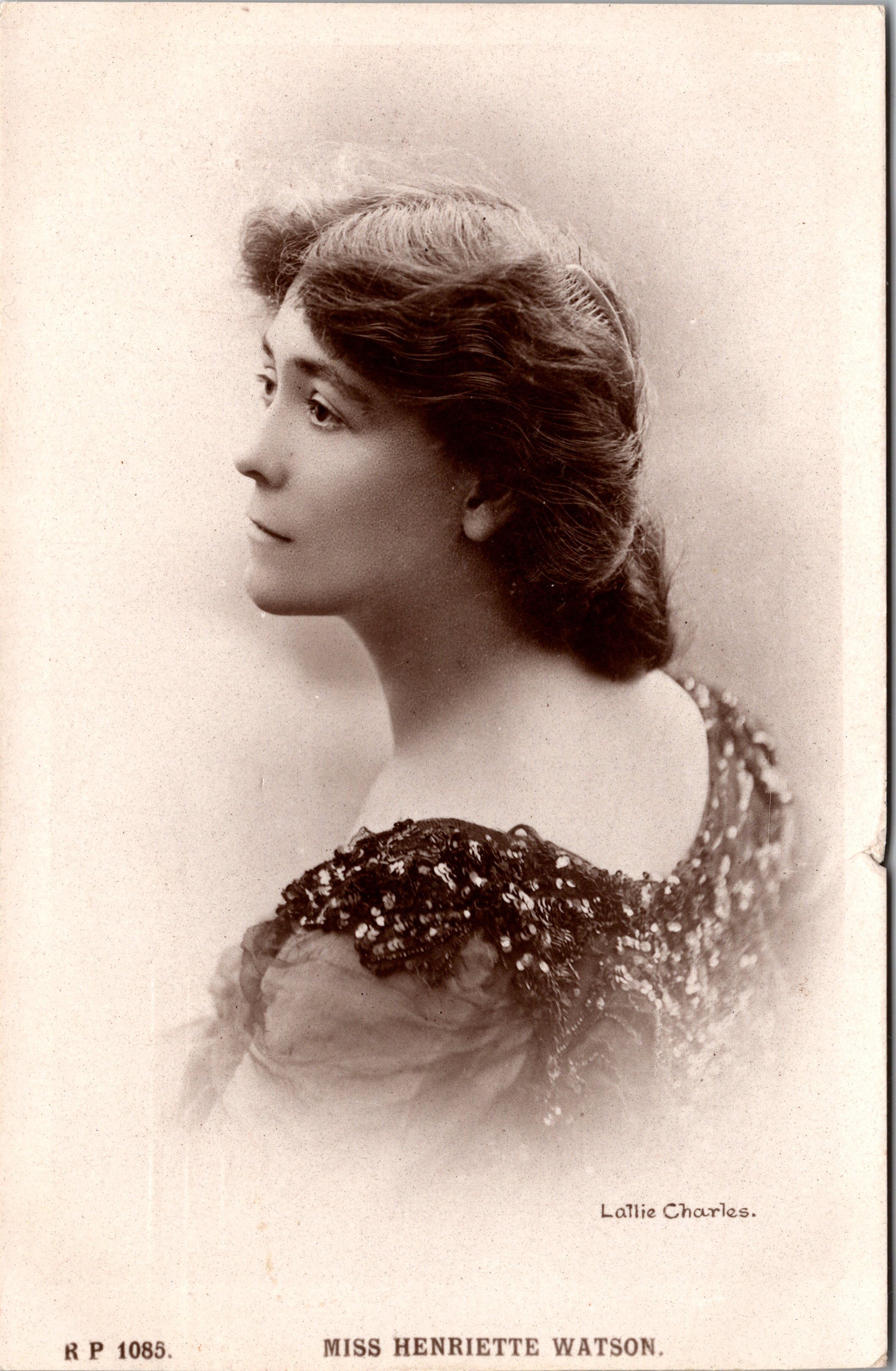
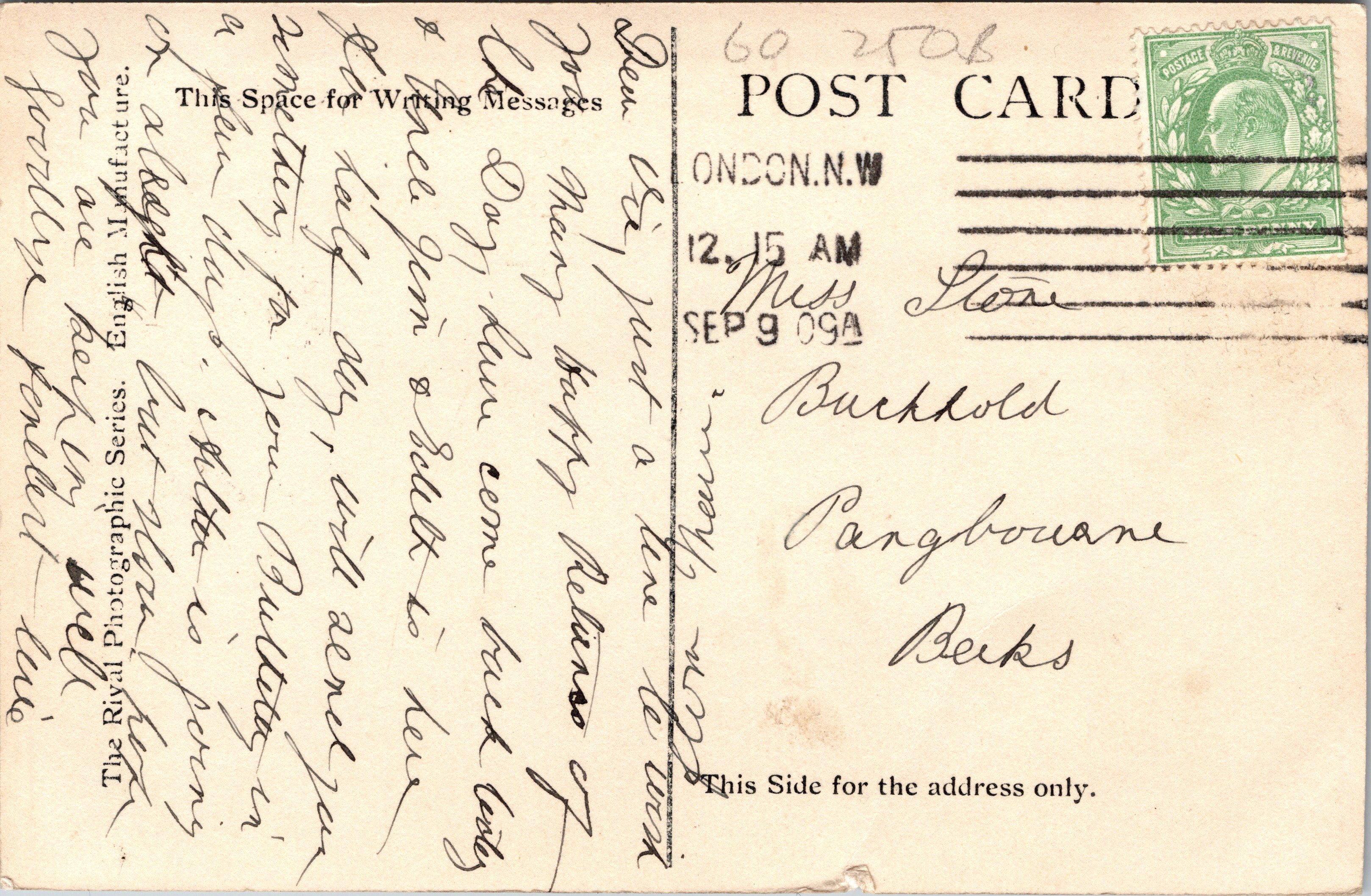
This vintage real photo postcard features British actress, Henriette Watson (1873-1964). Watson was born in Scotland. She made her stage debut at age seven. At sixteen, she was trained and practiced enough to take “second lead” in comedies and modern dramas. As she grew older, larger parts came her way. After appearing in a number of touring and London theater engagements, she joined a touring company on a six month tour of Australia. In 1892 she toured Australia again with the “Mrs Bernard Beere Company”. She appeared in “As in a Looking Glass” with the company.. She toured Australia again in 1899. She later acted in Thornton Wilder’s play, “The Merchant of Yonkers”. Watson’s photo portrait was taken by the celebrated celebrity photographer, Lallie Charles. She was known for her talent as well as the fact that she was a female photographer, an unusual phenomenon for her era. The card is part of the Rival Photographic Series and it was manufactured in England. The postcard was postmarked in 1909. Note the chip on the right border of the card. Accordingly, this postcard is in fair condition (see scans).
Buy this Vintage Real Photo Postcard (includes shipping within the US) #5293
To purchase this item, click on the Pay with PayPal button below
$9.95
Buy this Vintage Real Photo Postcard (includes International shipping outside the US) #5293
To purchase this item, click on the Pay with PayPal button below
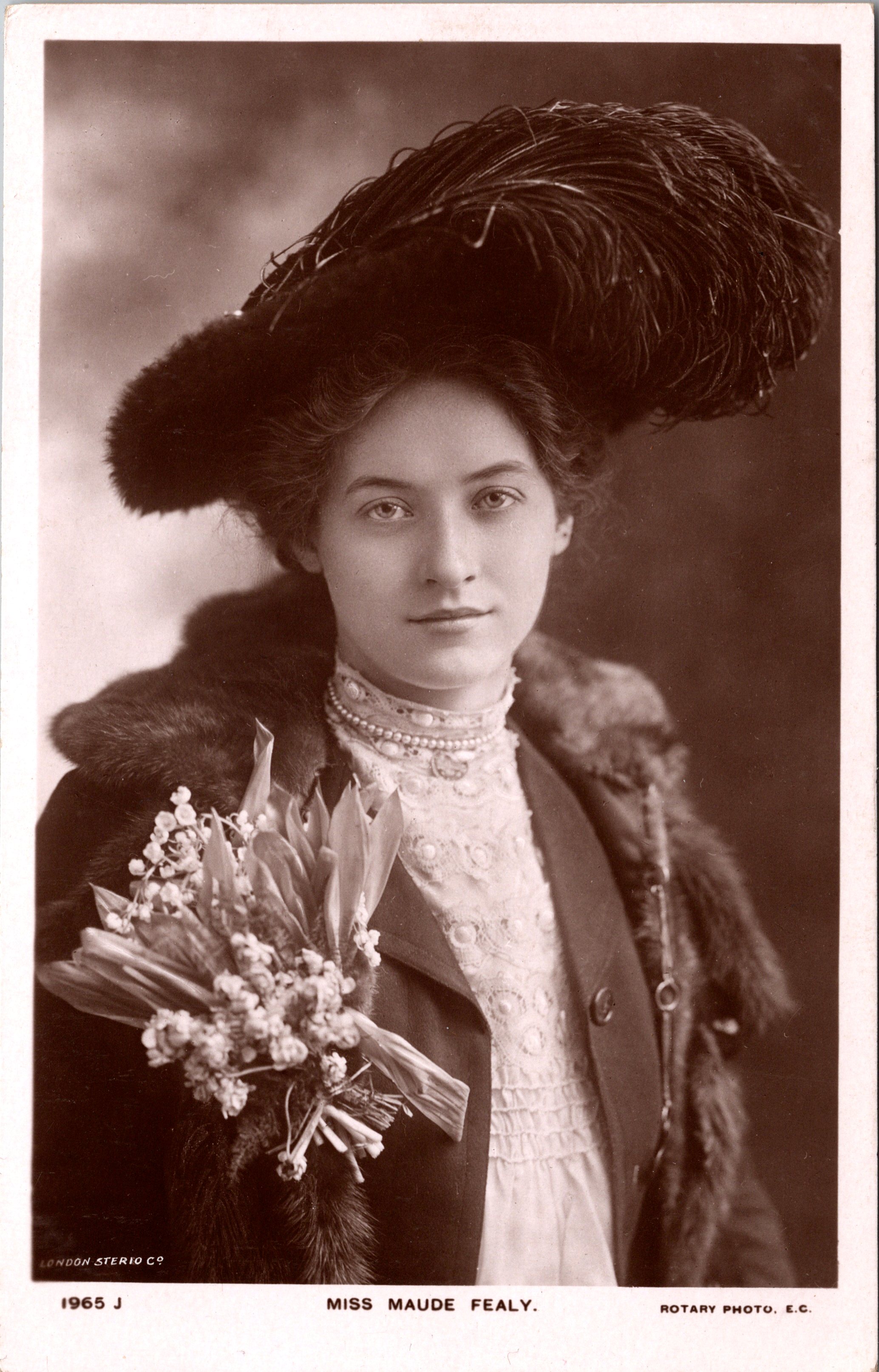
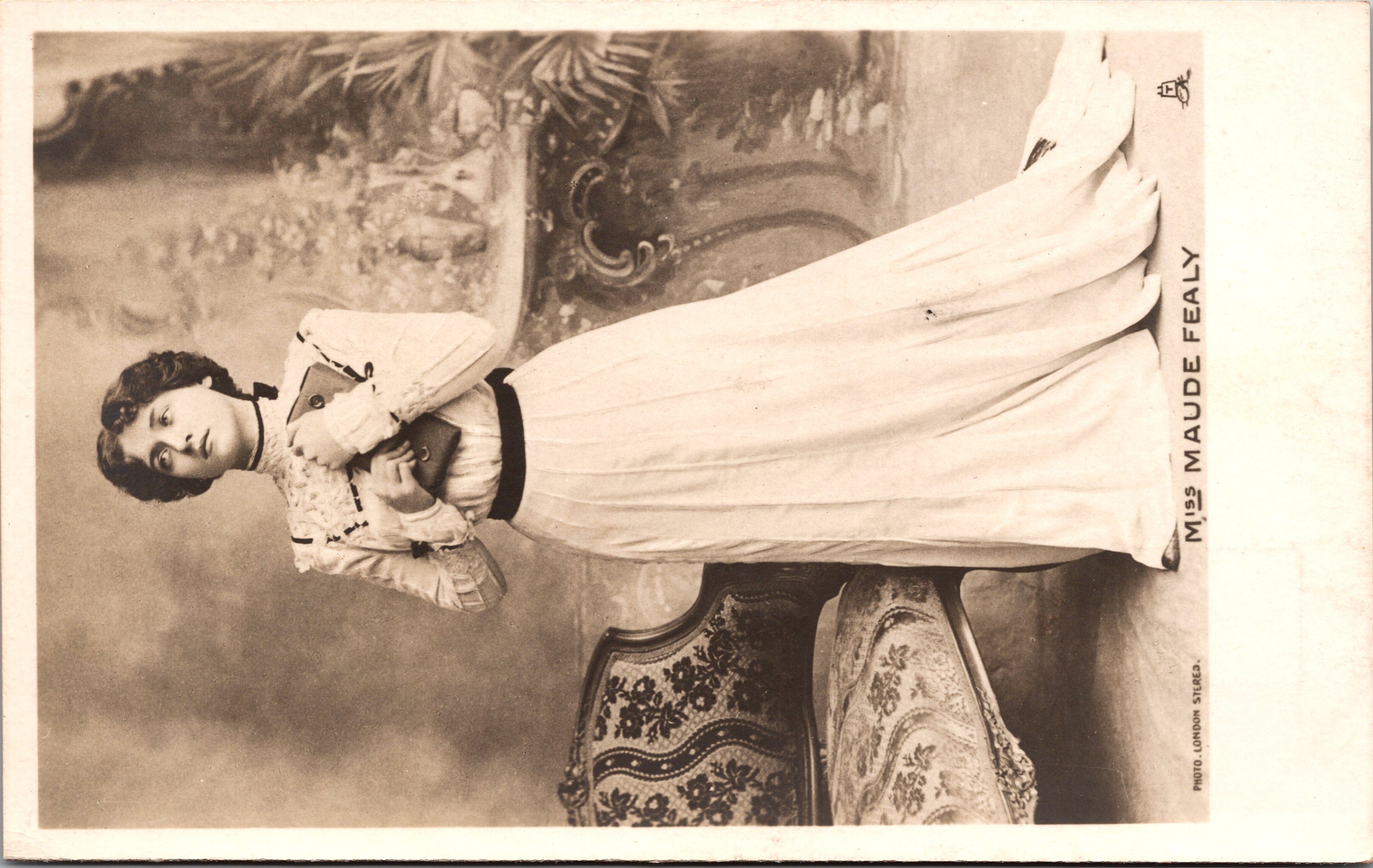
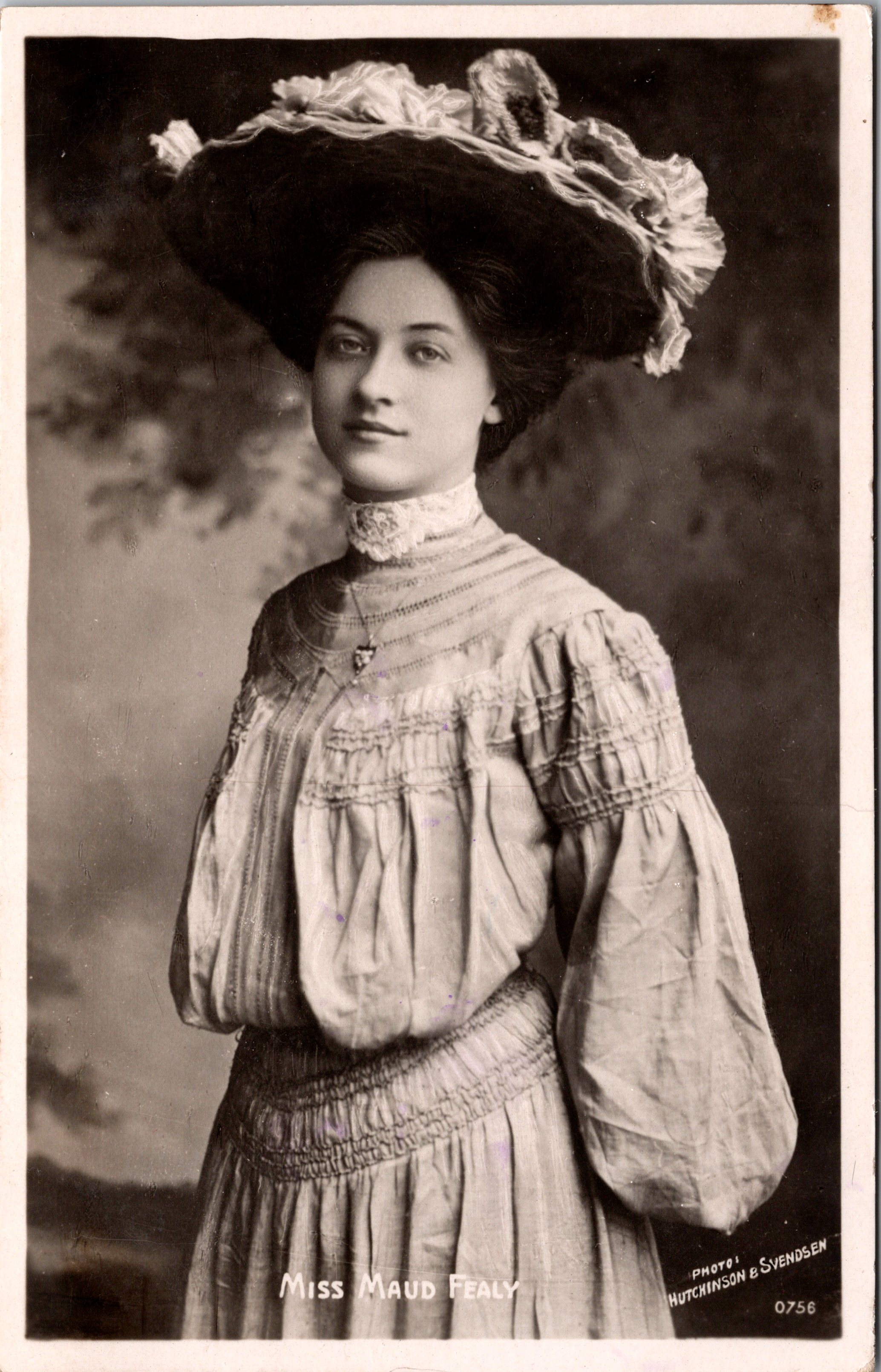
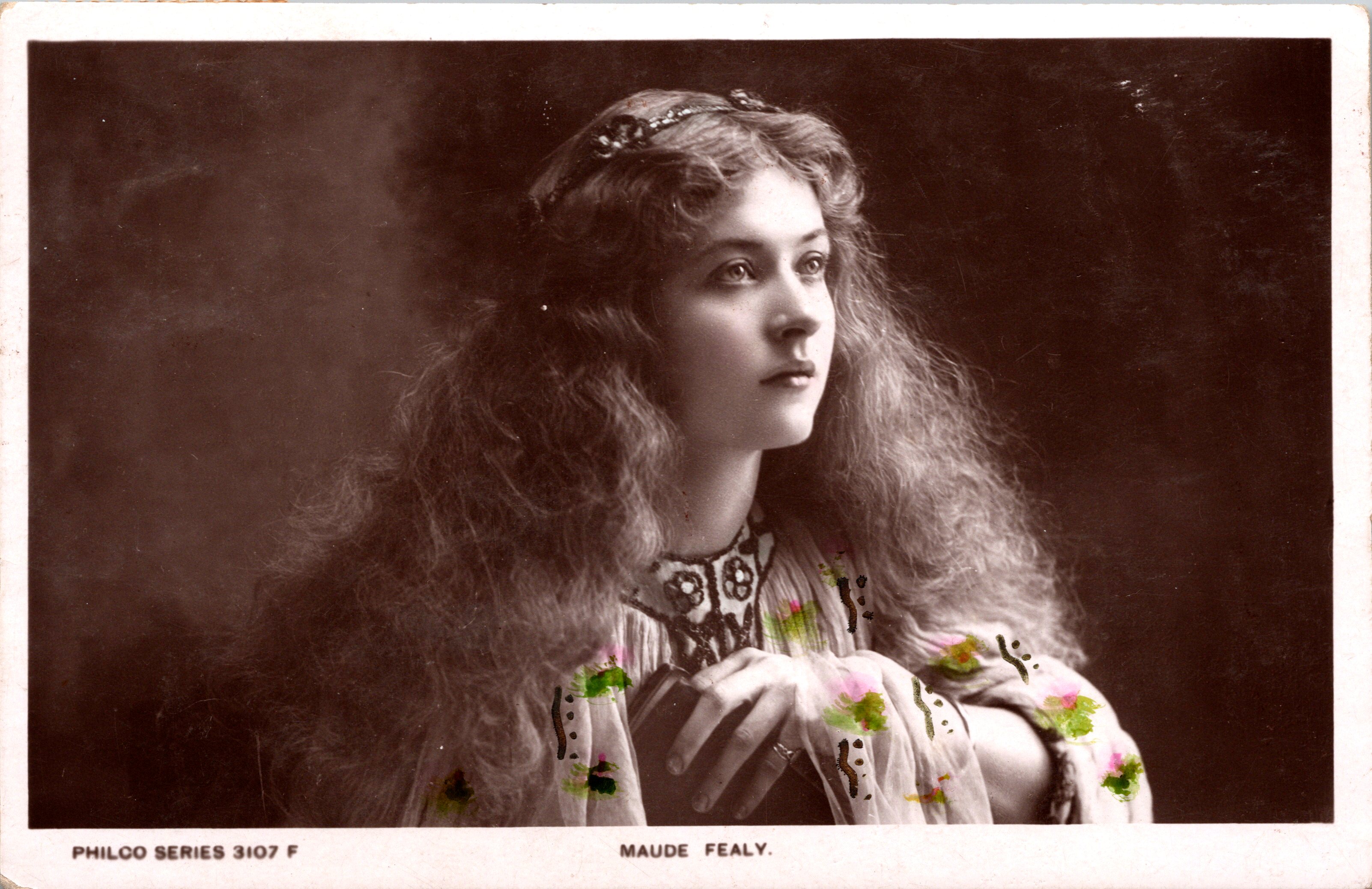
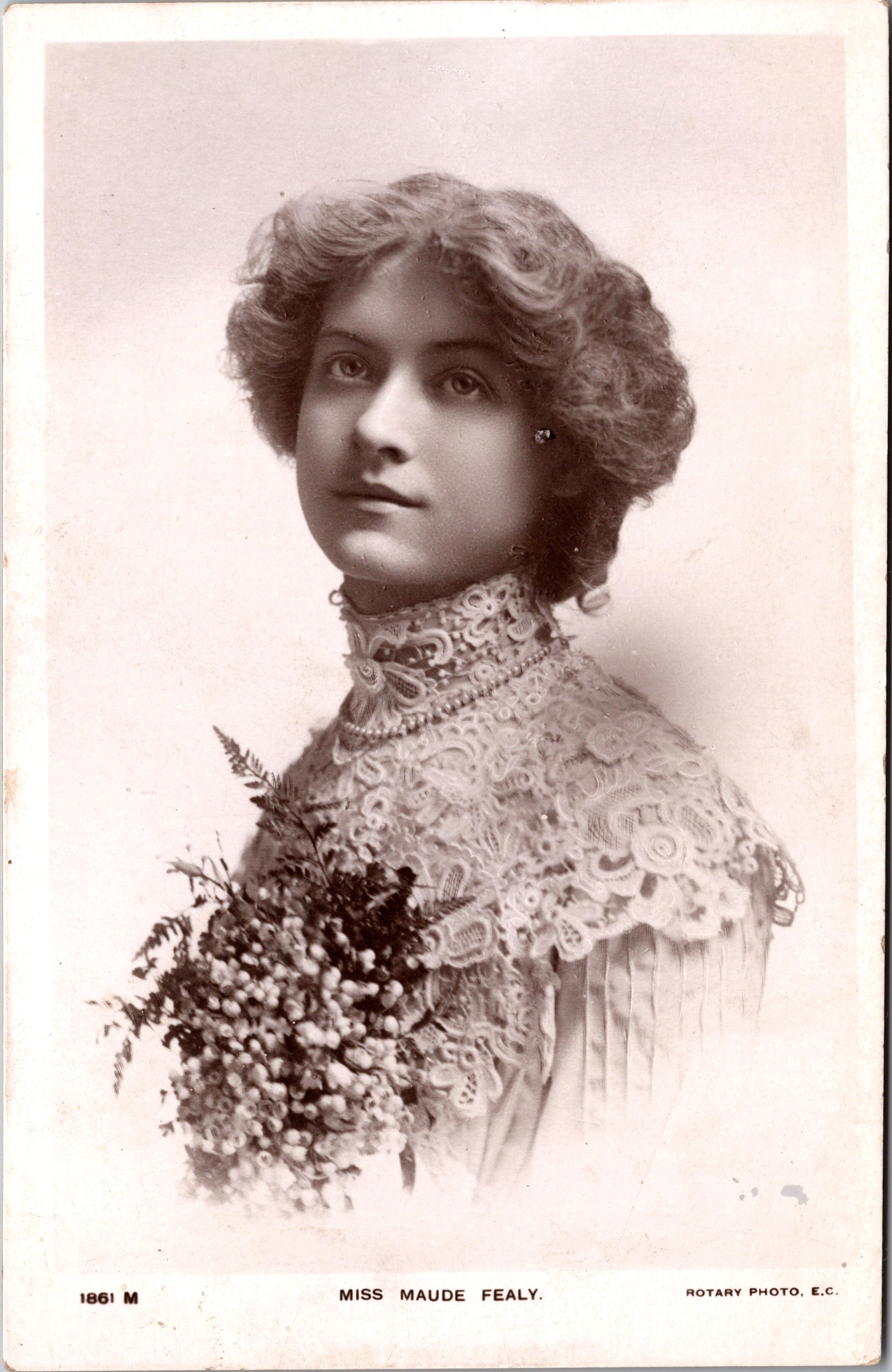
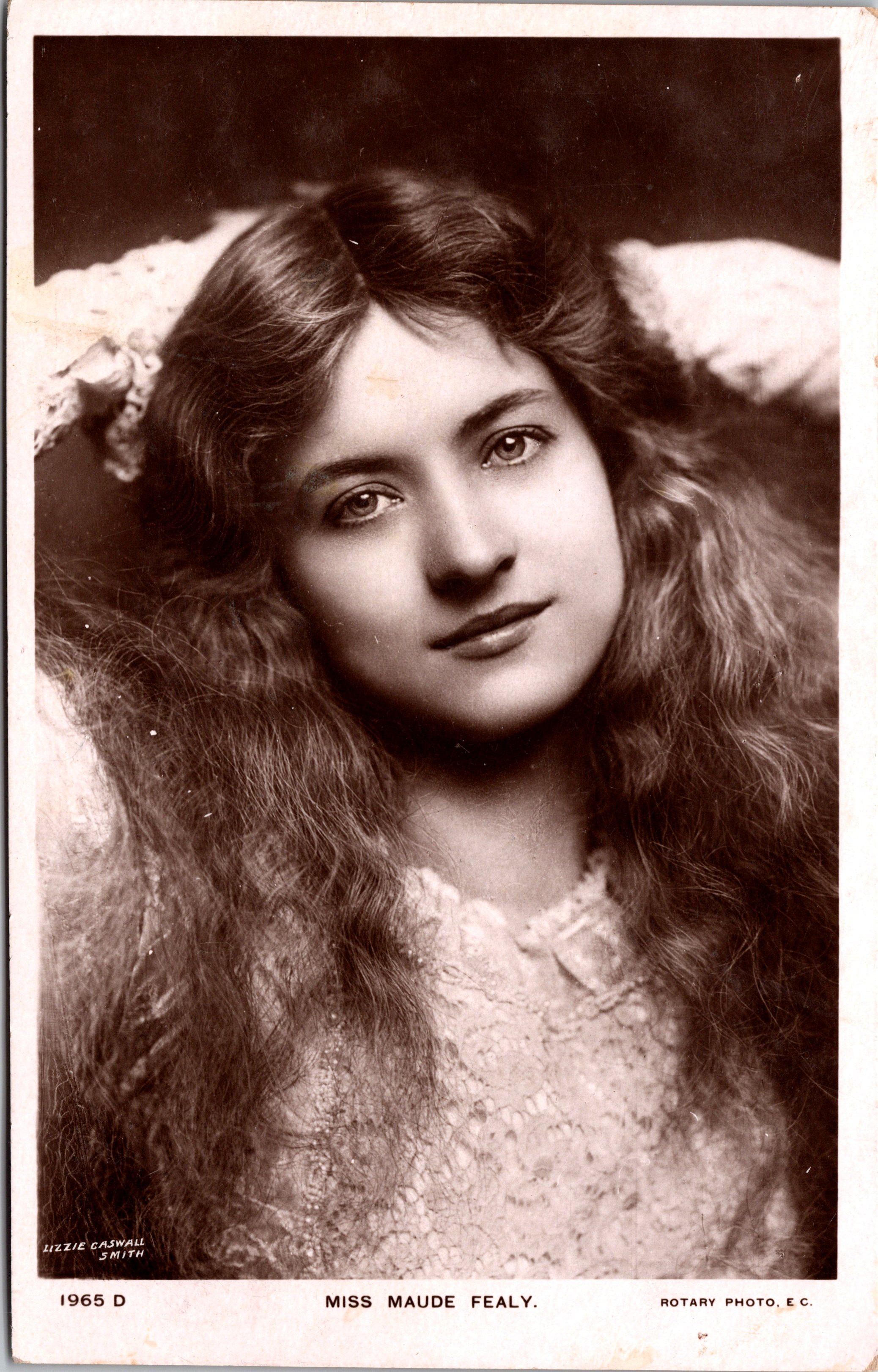
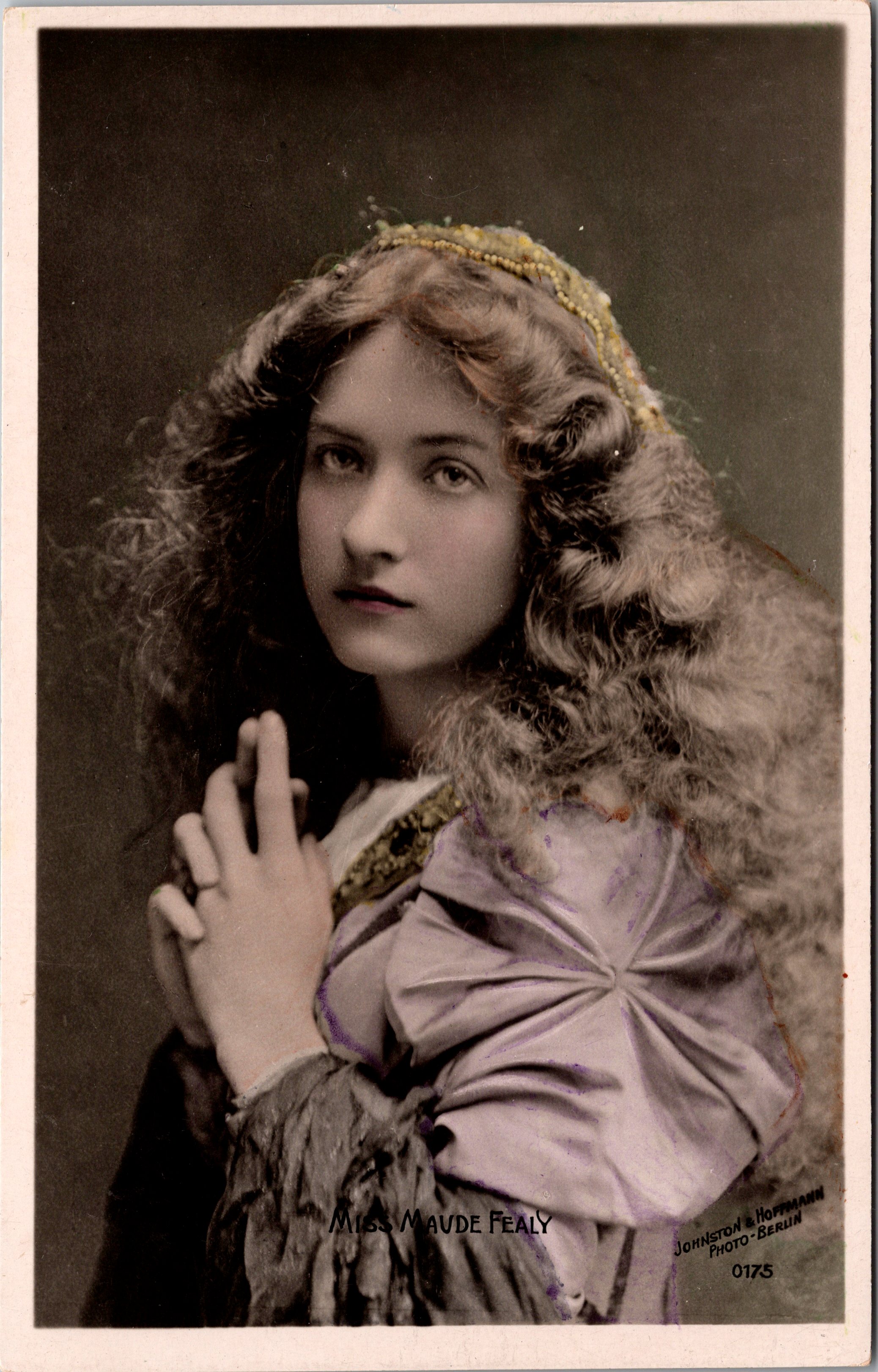
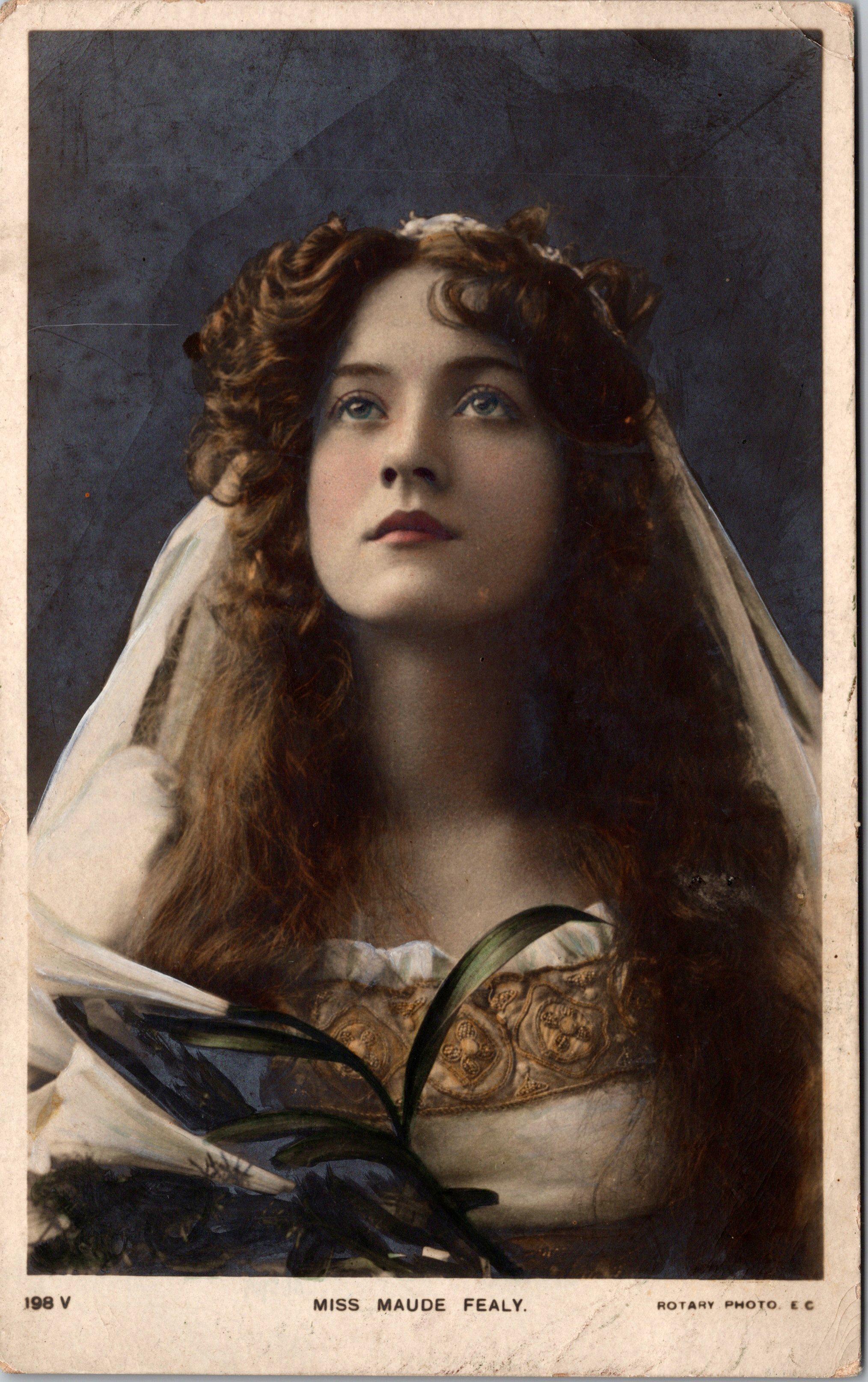
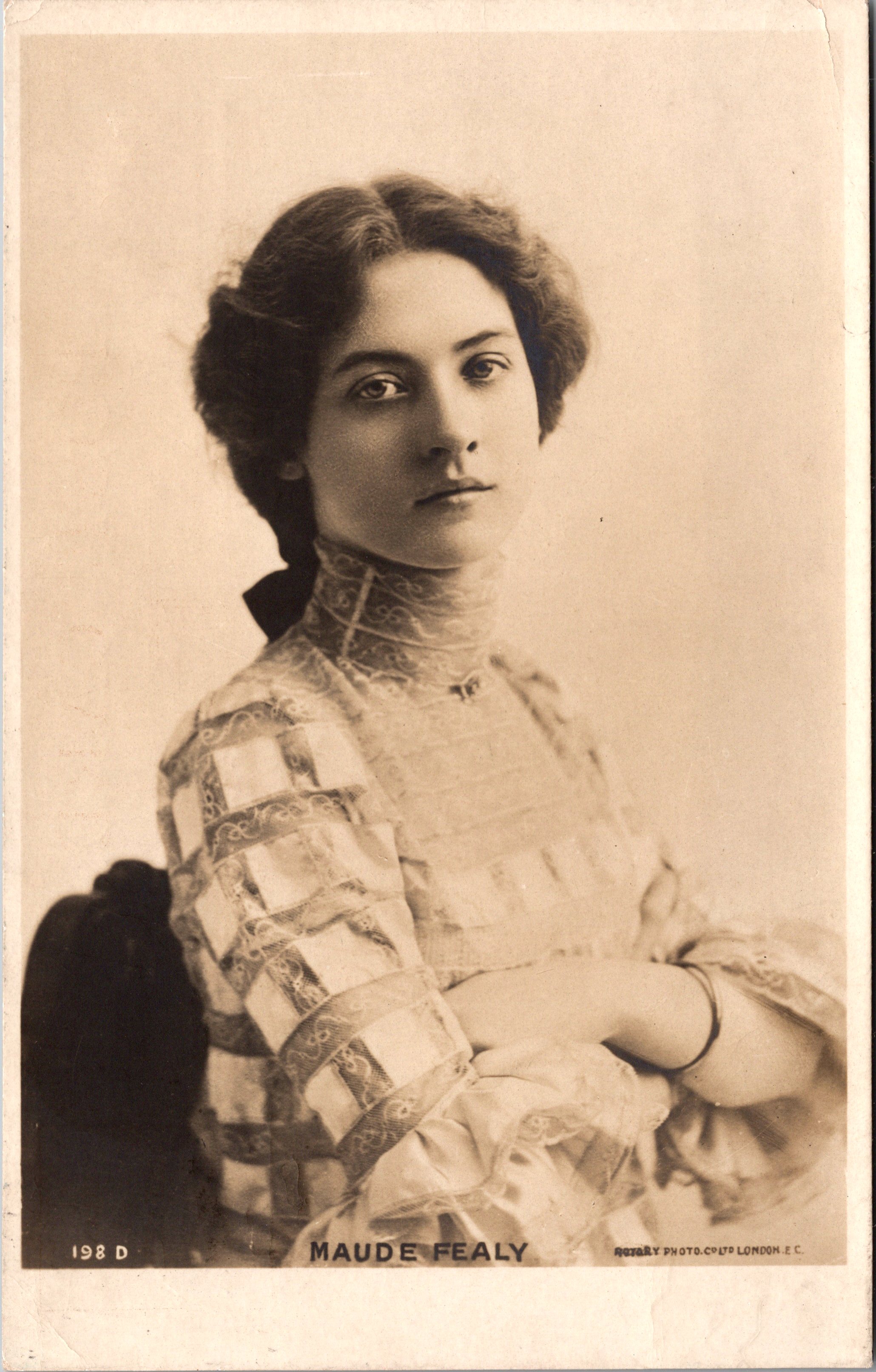
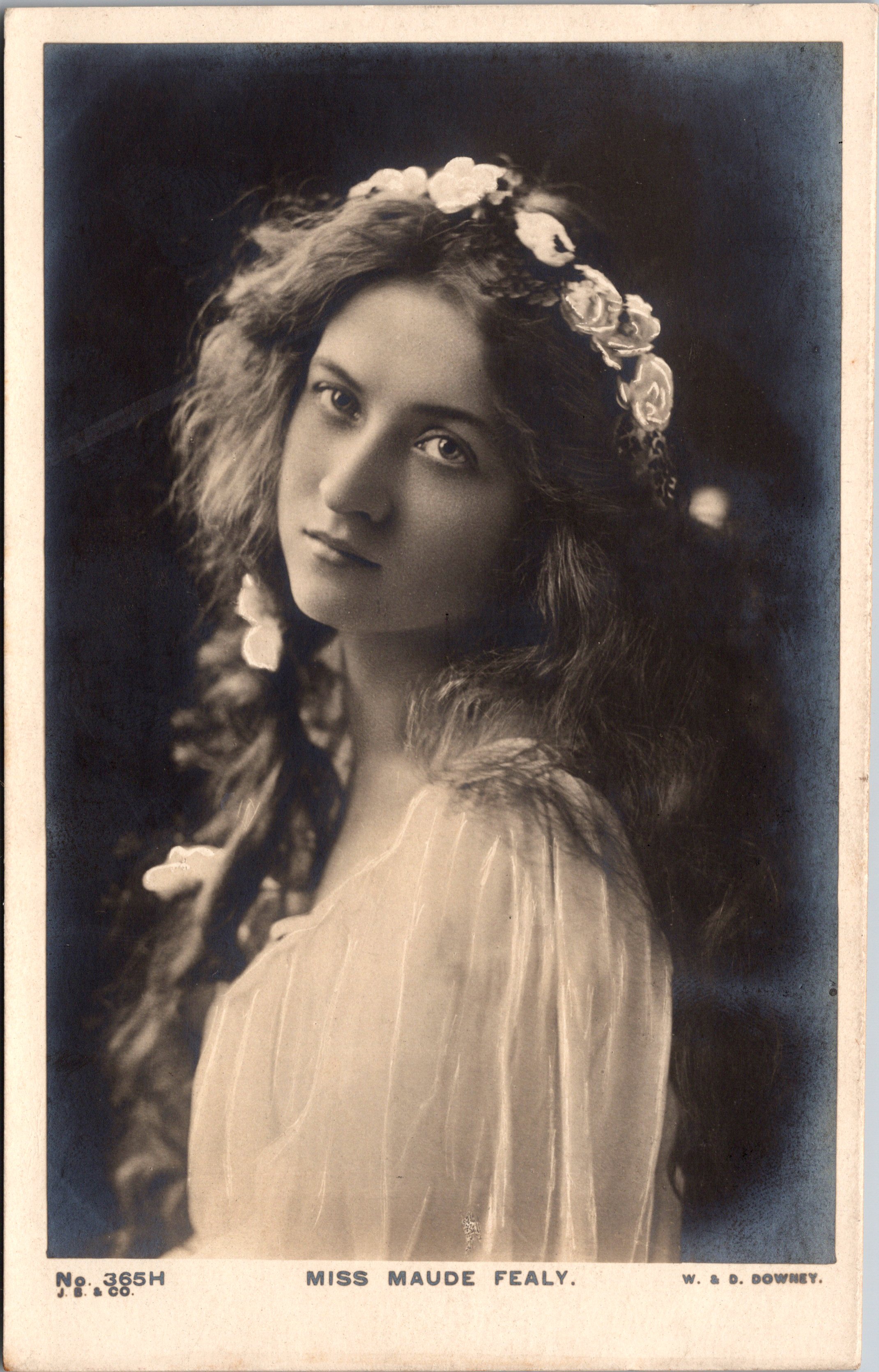
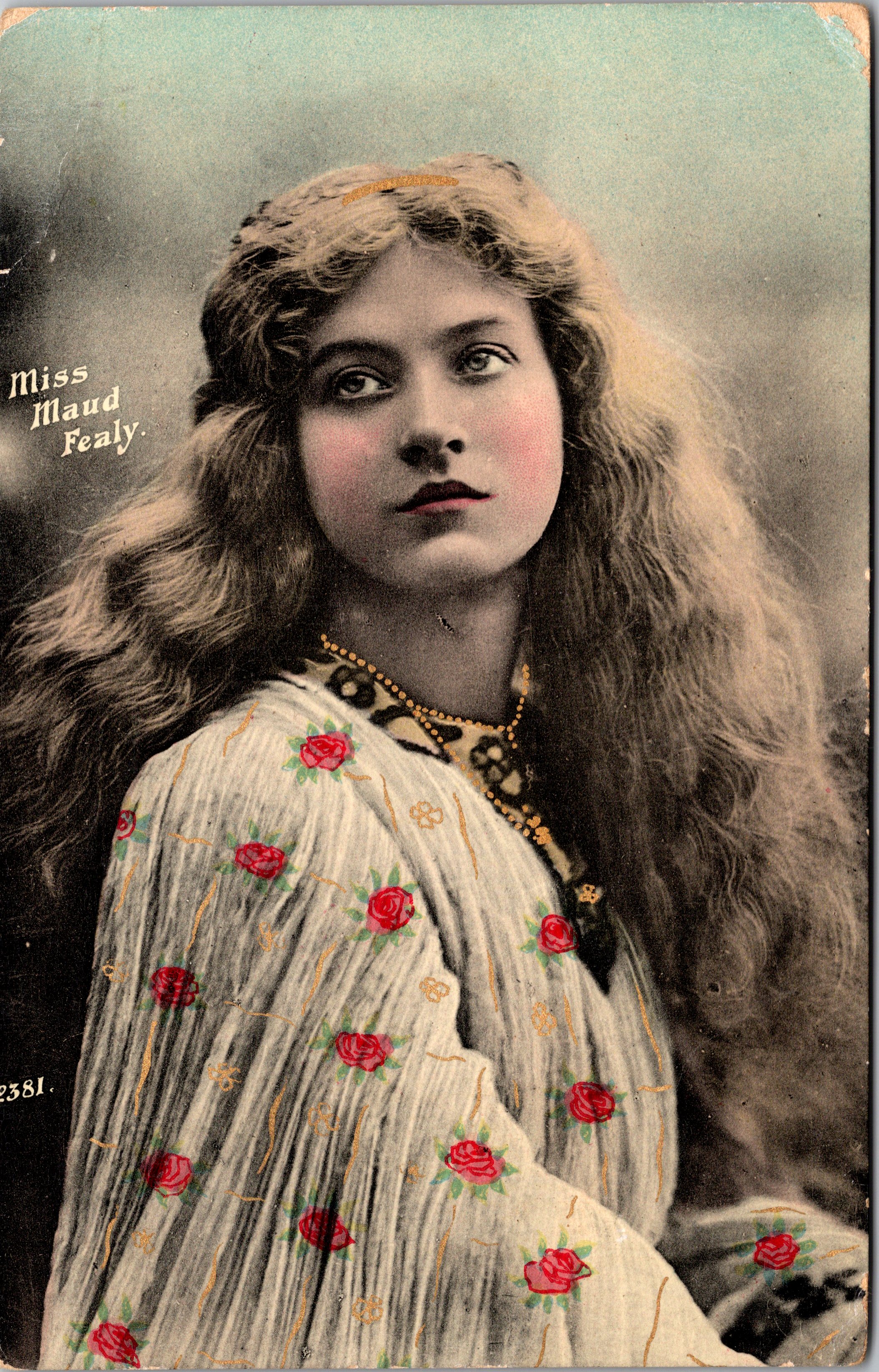
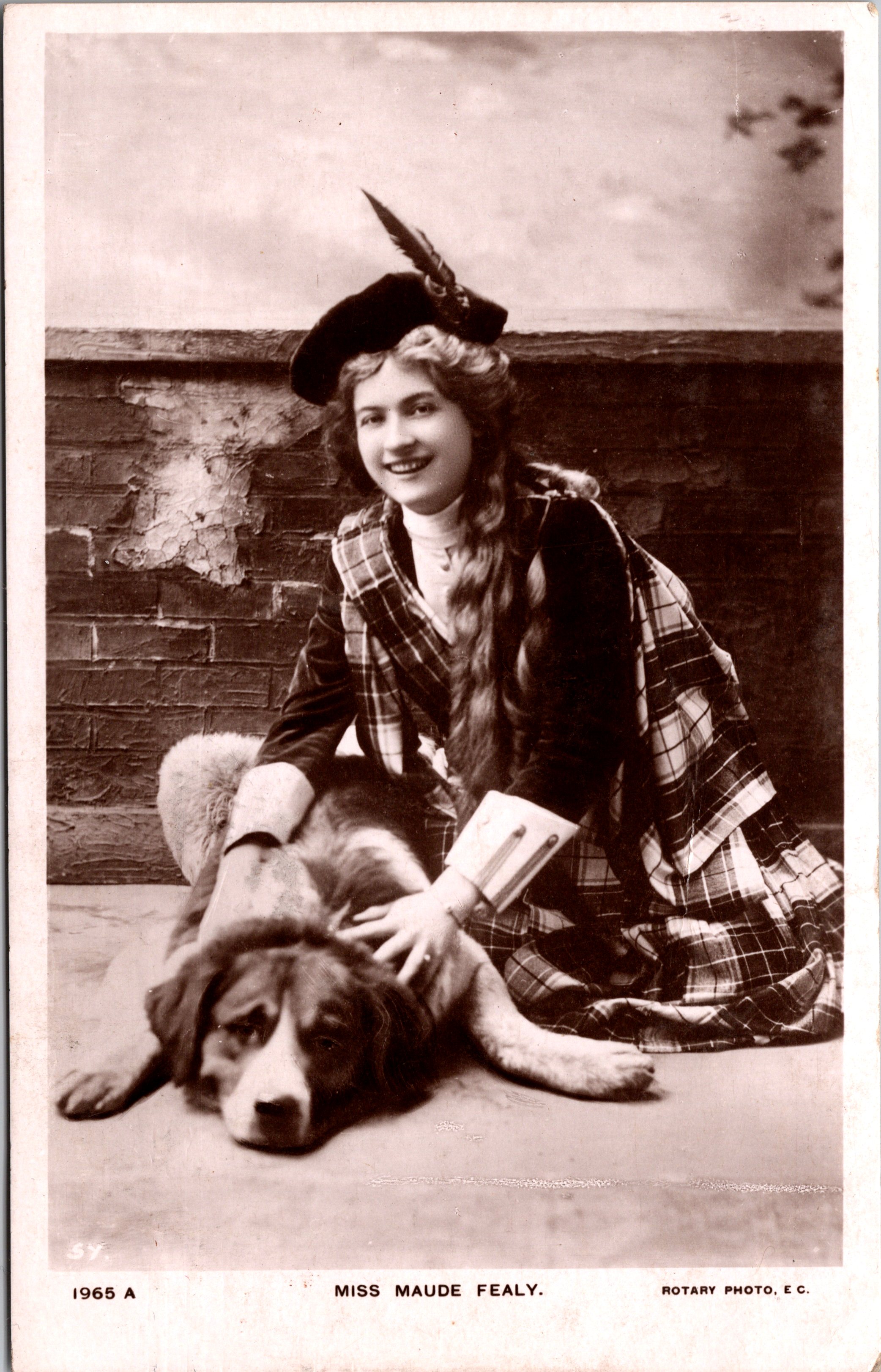
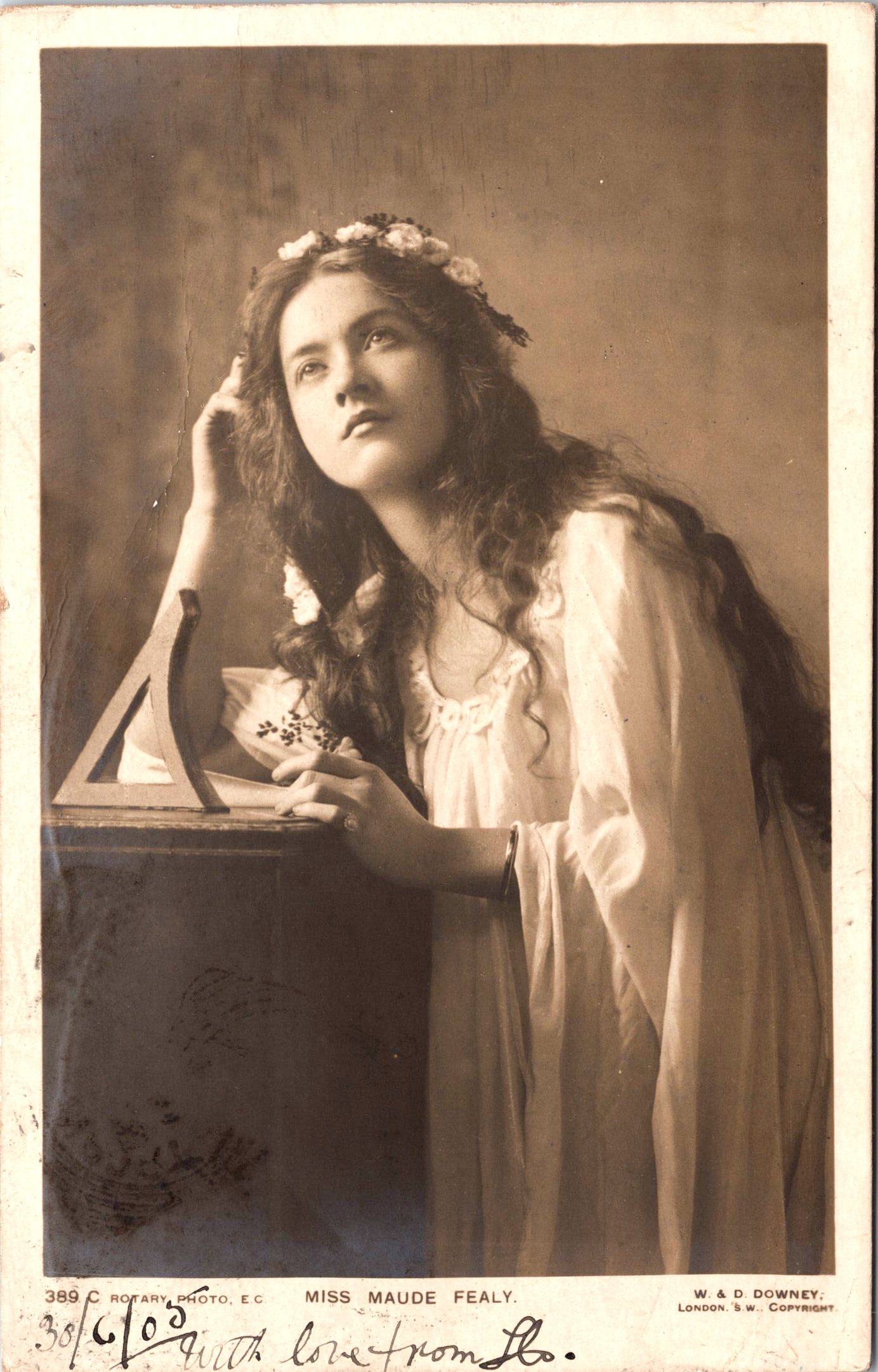
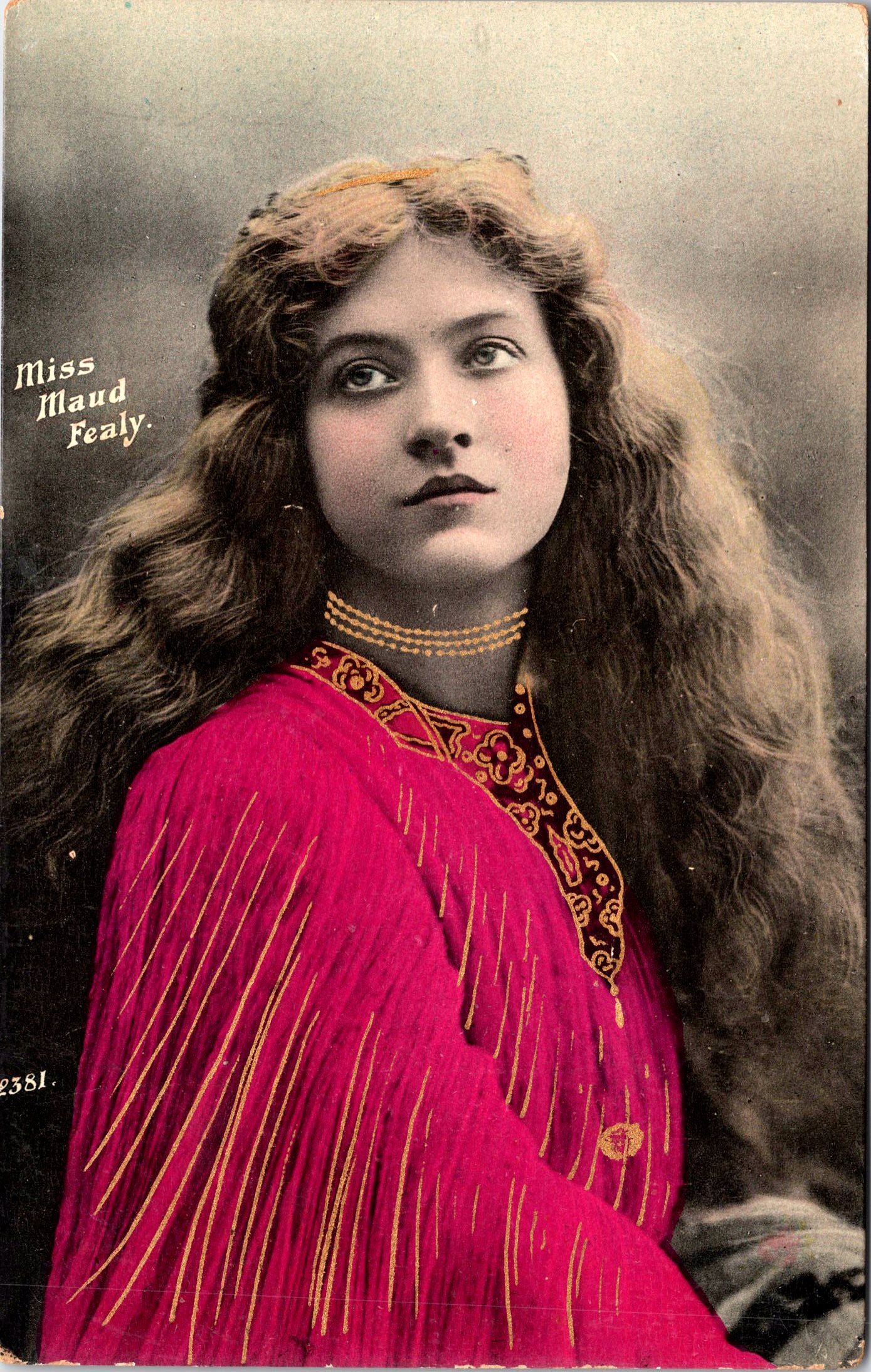
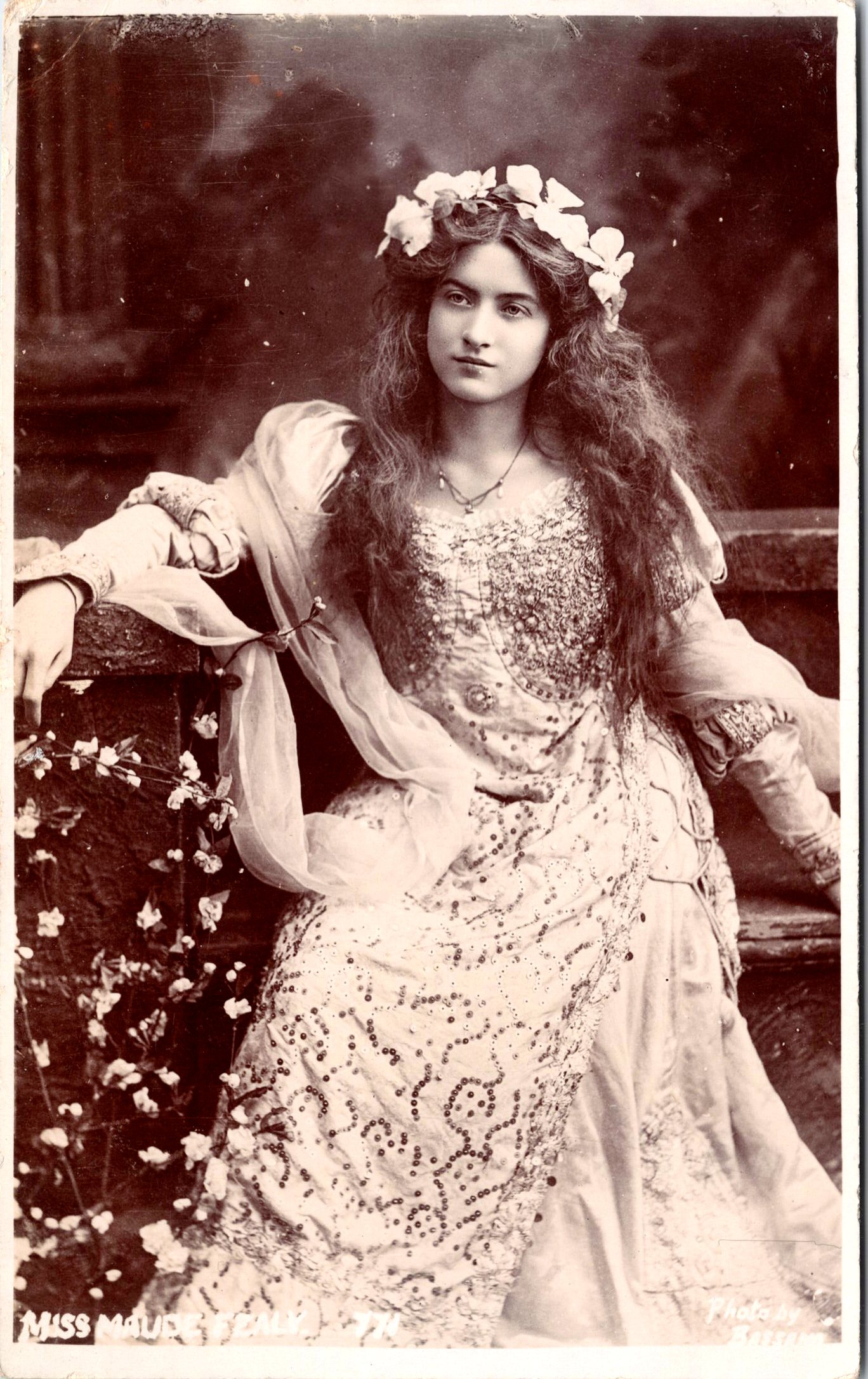
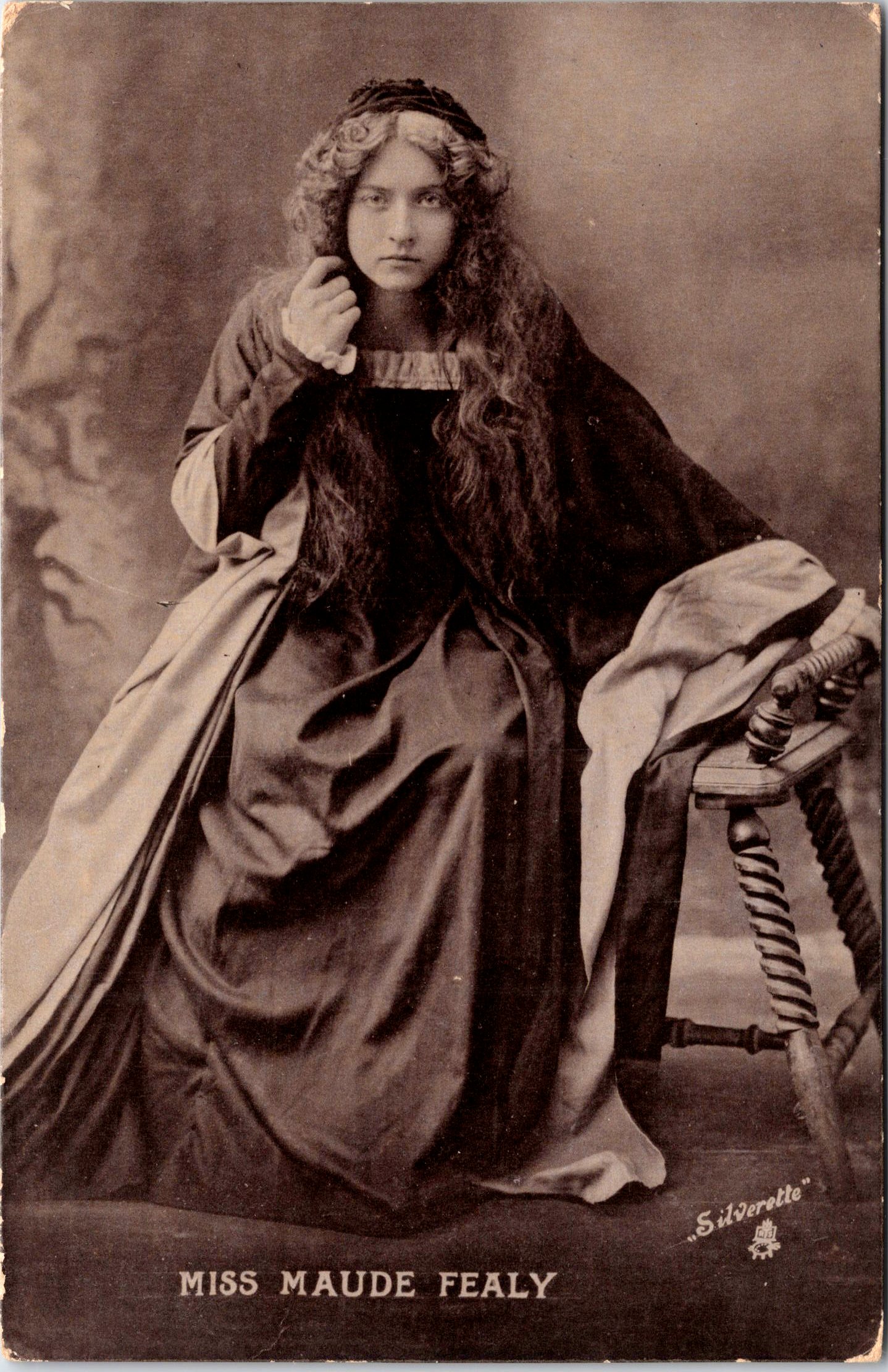
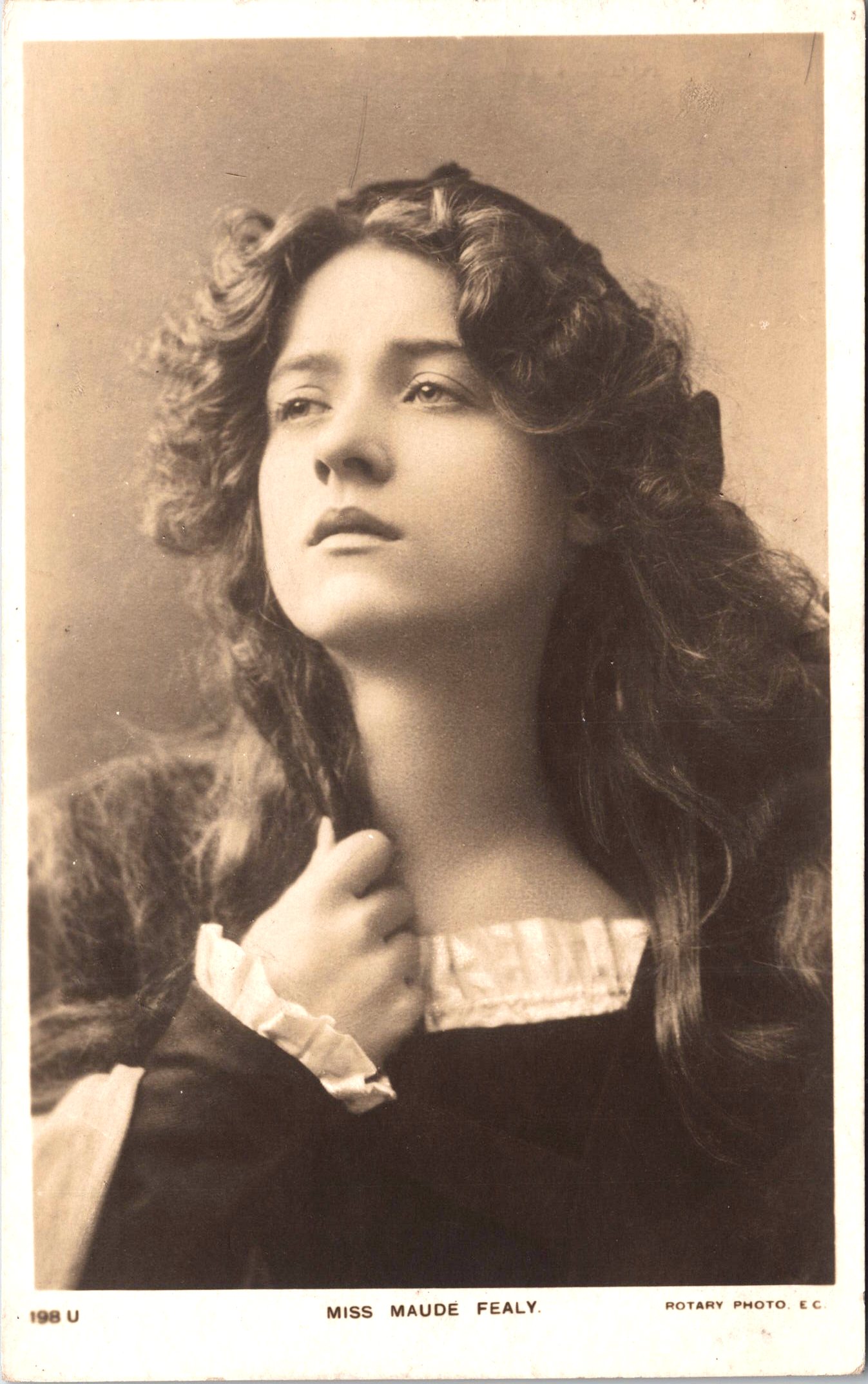
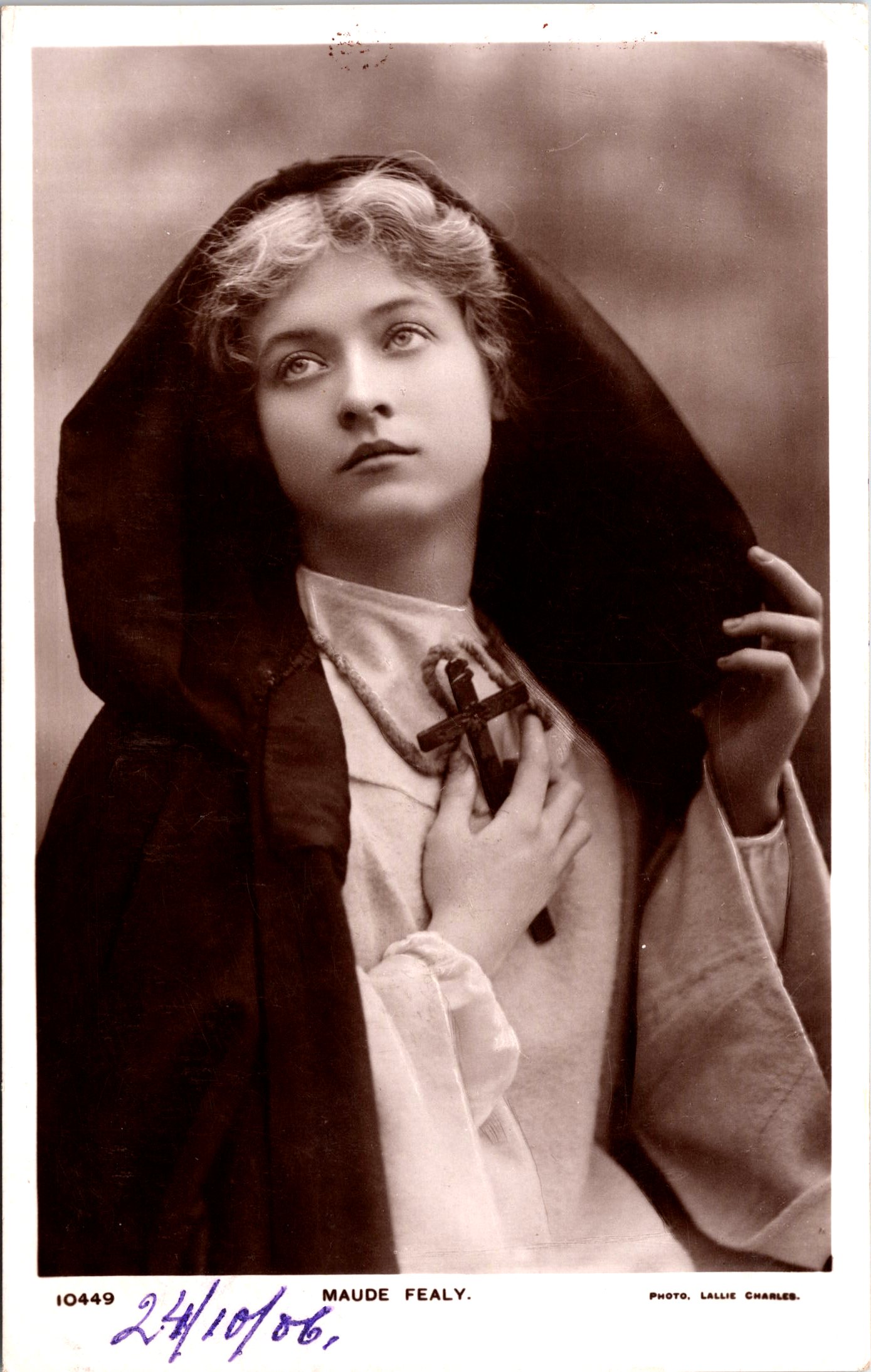
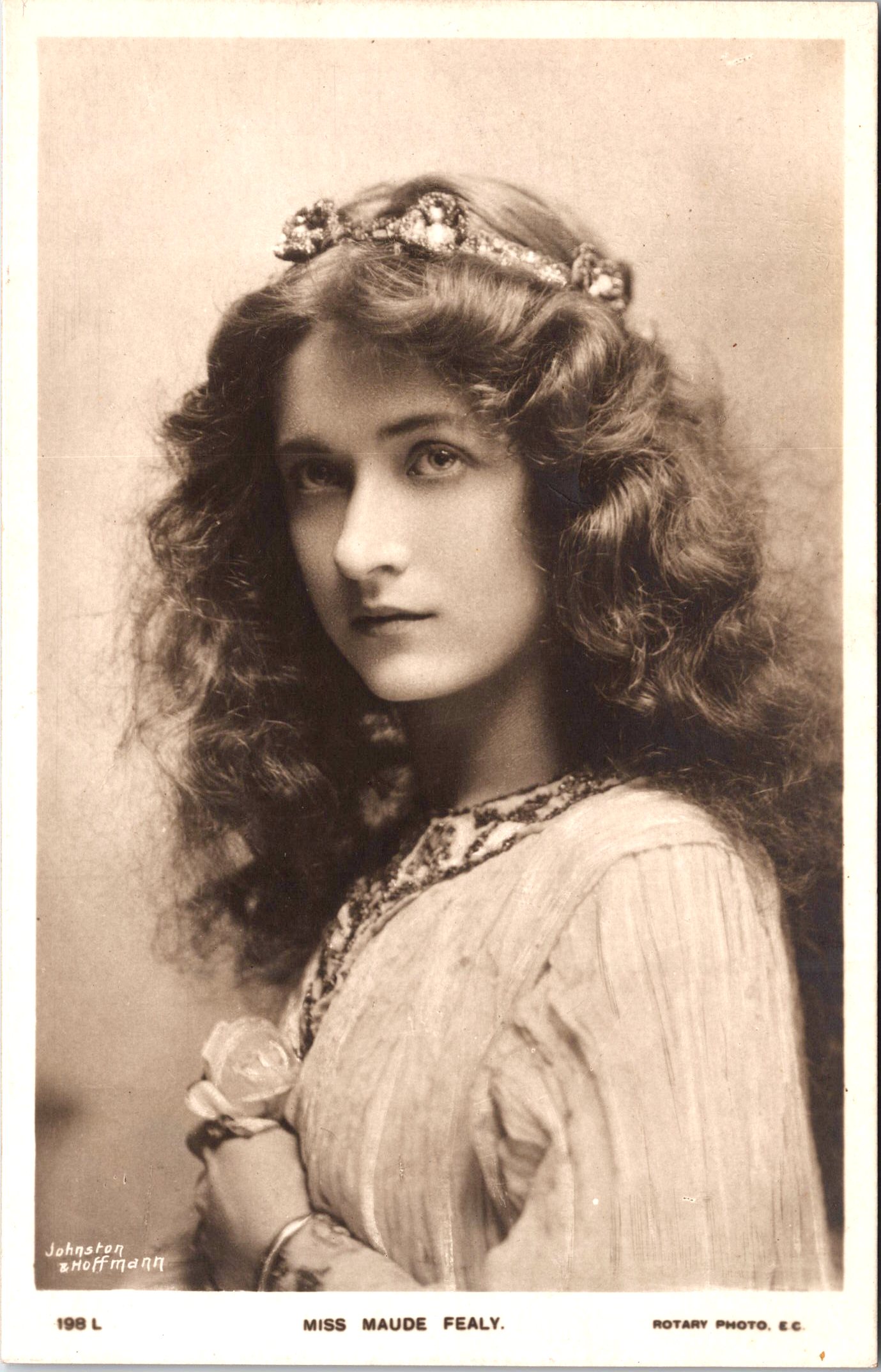
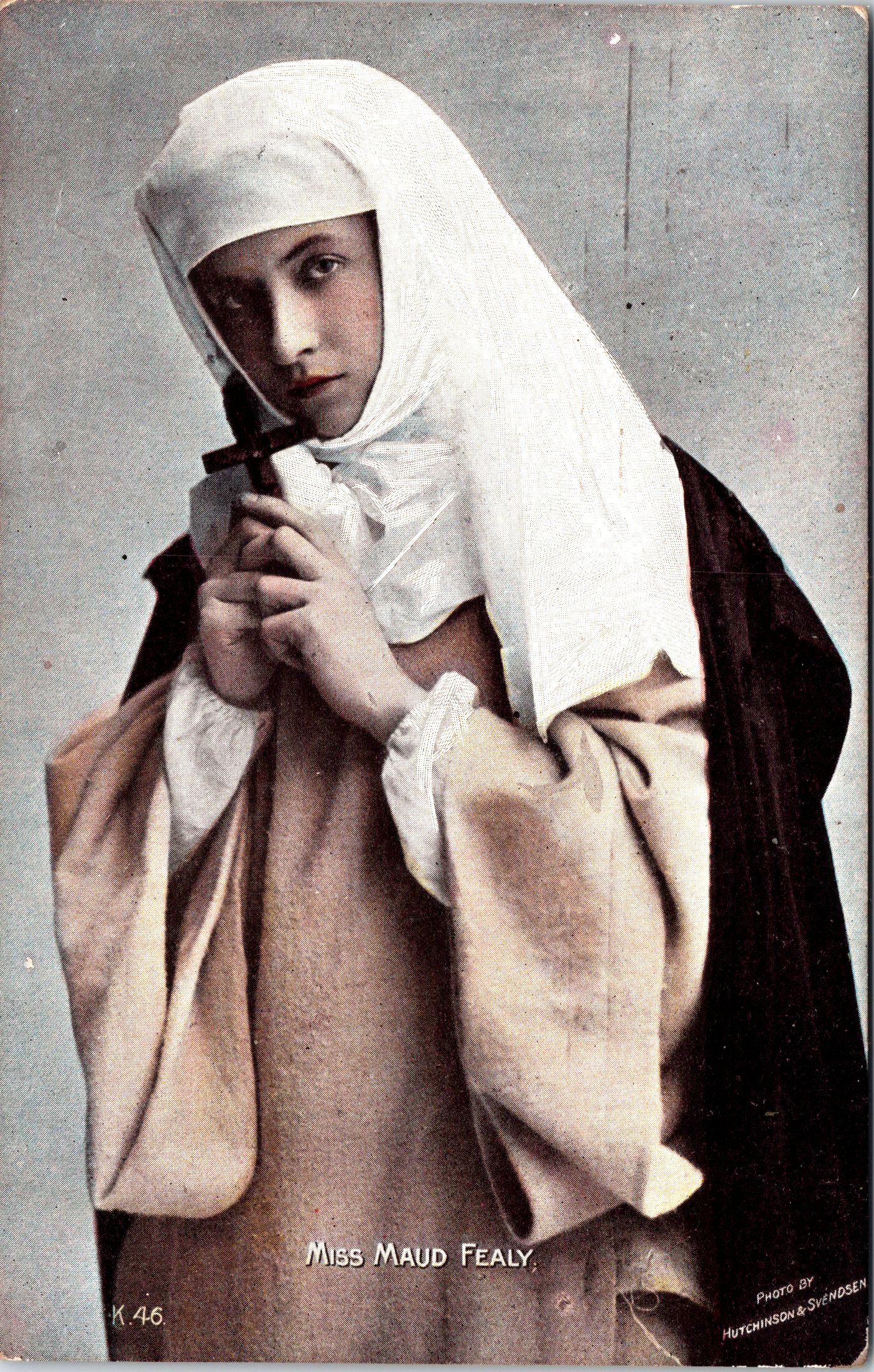
This vintage real photo postcard features American stage and silent and sound film actress, Maude Fealy (1883-1971). Maude was born in Memphis, Tennessee. Her mother was an actress and acting coach. After her mother remarried, she moved to Colorado where Maude called home for much of her life. She made her stage debut at the age of three. she performed at the Elitch Theater numerous times during her childhood. In 1905 she began to be the featured actress in a number of productions. She worked alongside stock player Cecil B DeMille and the pair developed a friendship that lasted many decades. In fact, he cast her in his film “The Ten Commandments” (1956). This postcard illustrates Miss Fealy’s beauty. Her photo postcards were very popular and collectable during her era, as well as today.
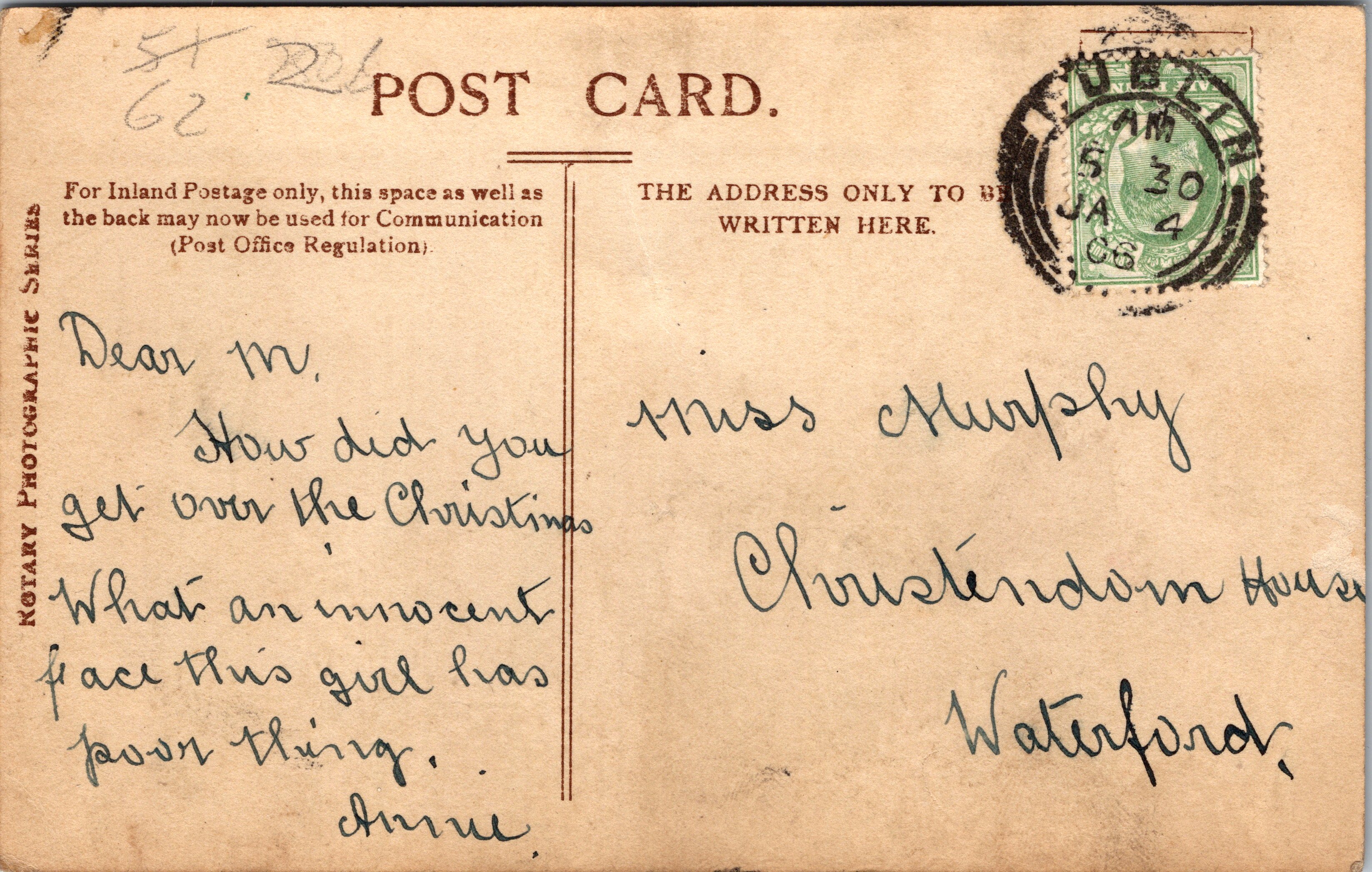
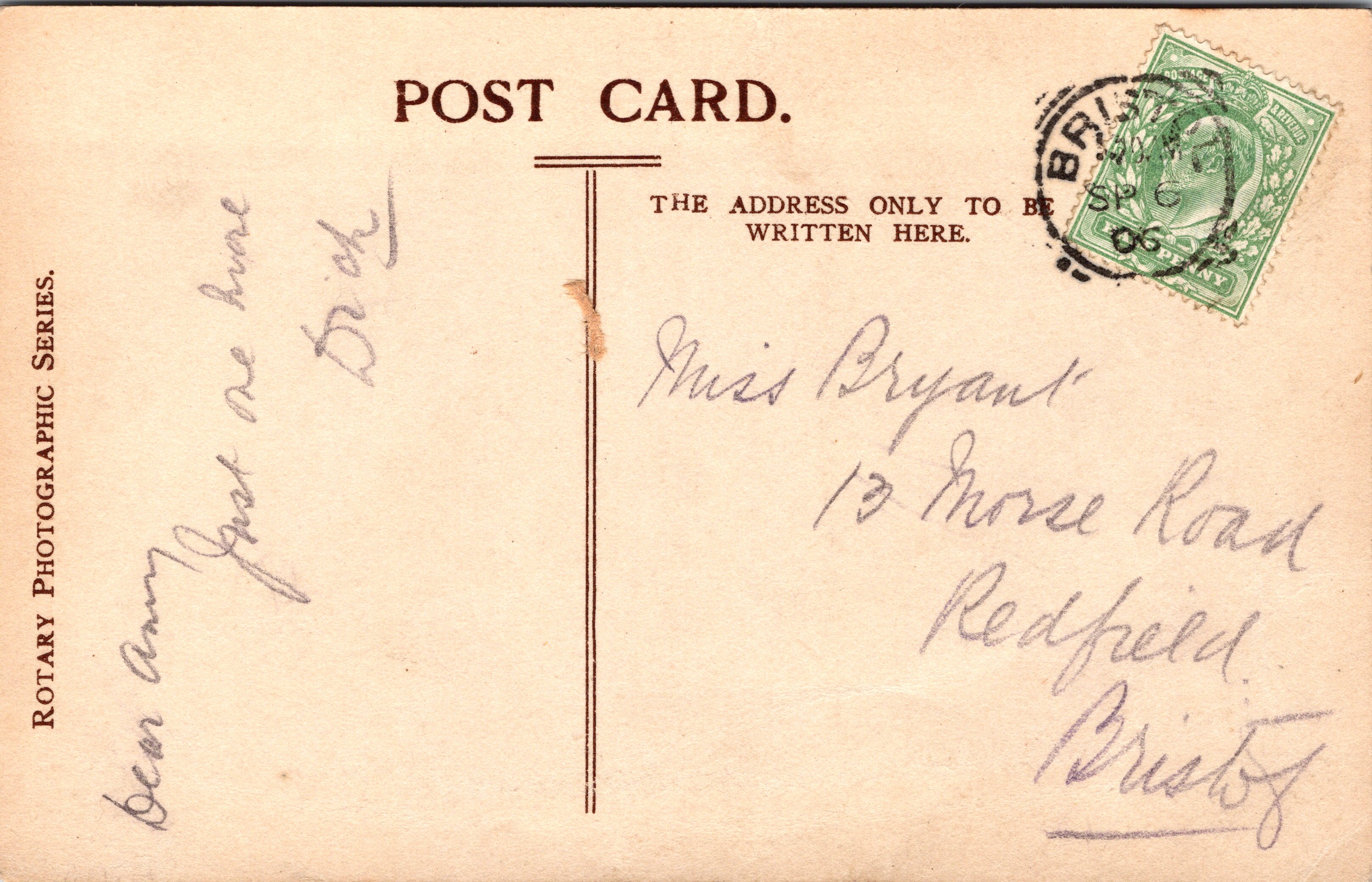
Postcard 1 is uncommon. The card was published by Rotary Photo as part of a series (no.1965J), The postcard is of British origin. Note that this postcard is hand tinted and postmarked in Dublin (1906). The card has an interesting message. The writer proclaims “What an innocent face this girl has. Poor thing”. Since when is “innocence” something to pity? (SOLD)
Postcard 2 demonstrates that Miss Fealy was fashionable and quite beautiful. Her photo postcards were very popular and collectable during her era, as well as today. This particular postcard is rare. The portrait for this postcard was taken by the London Stereo Company. The card was published by Rotary Photo as part of a series (no.1965J), The postcard is of British origin. (SOLD)
Postcard 3 was published by Davidson Brothers as part of a series (no.1378), The postcard is of British origin and demonstrates that Maude Fealy was fashionable as well as beautiful. (SOLD)
Postcard 4 is uncommon. The card was published by Raphael Tuck in 1904 as part of the “Stage Favorites: series (no.5058), The postcard is of British origin. (SOLD)
Postcard 5 is rare. The card was published by Rotary Photo as part of a series (no.1928C), The postcard is of British origin. (SOLD)
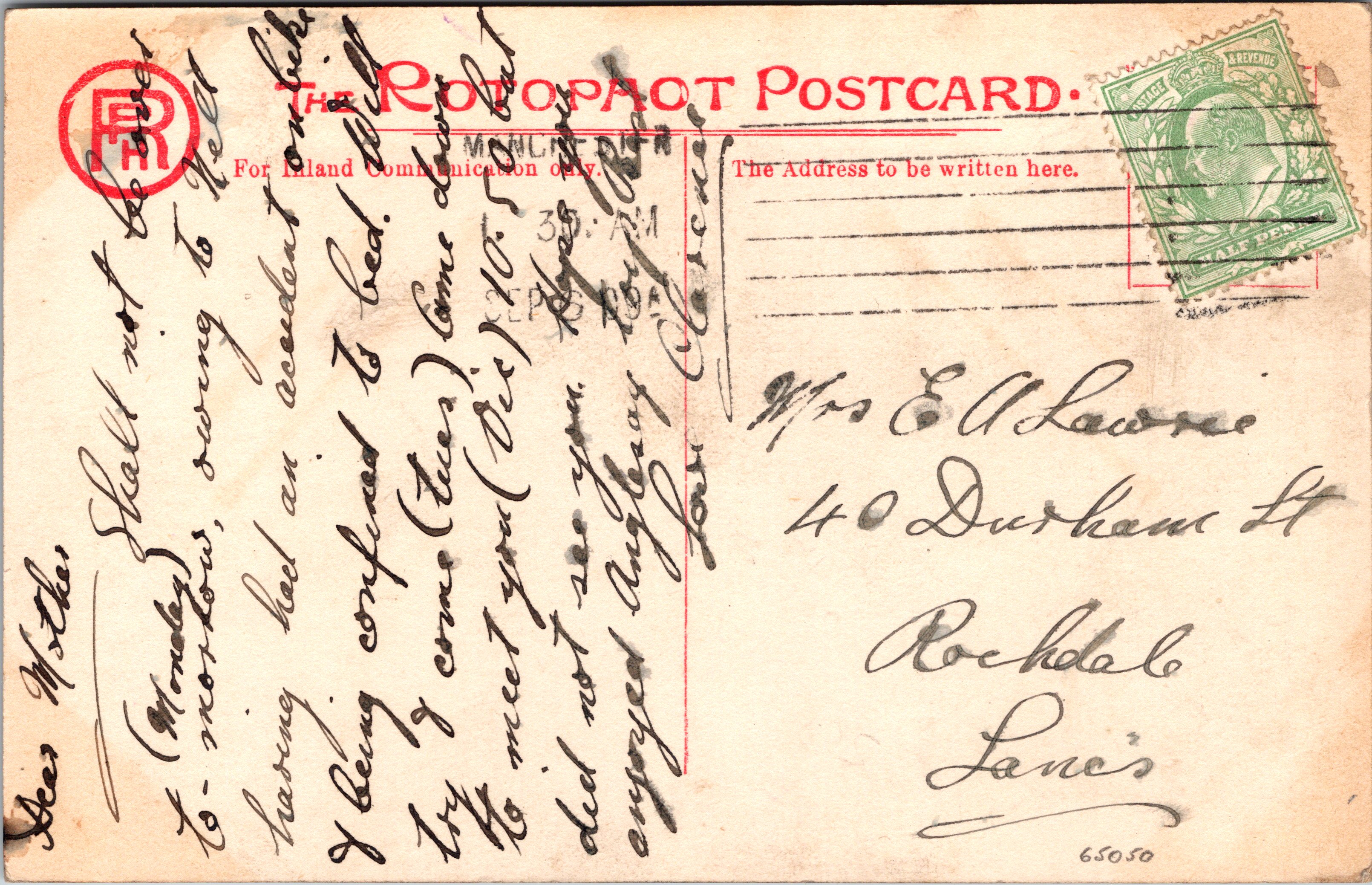
Postcard 6 is rare. The card was published by Germany’s Rotophot (no.0756). (SOLD)
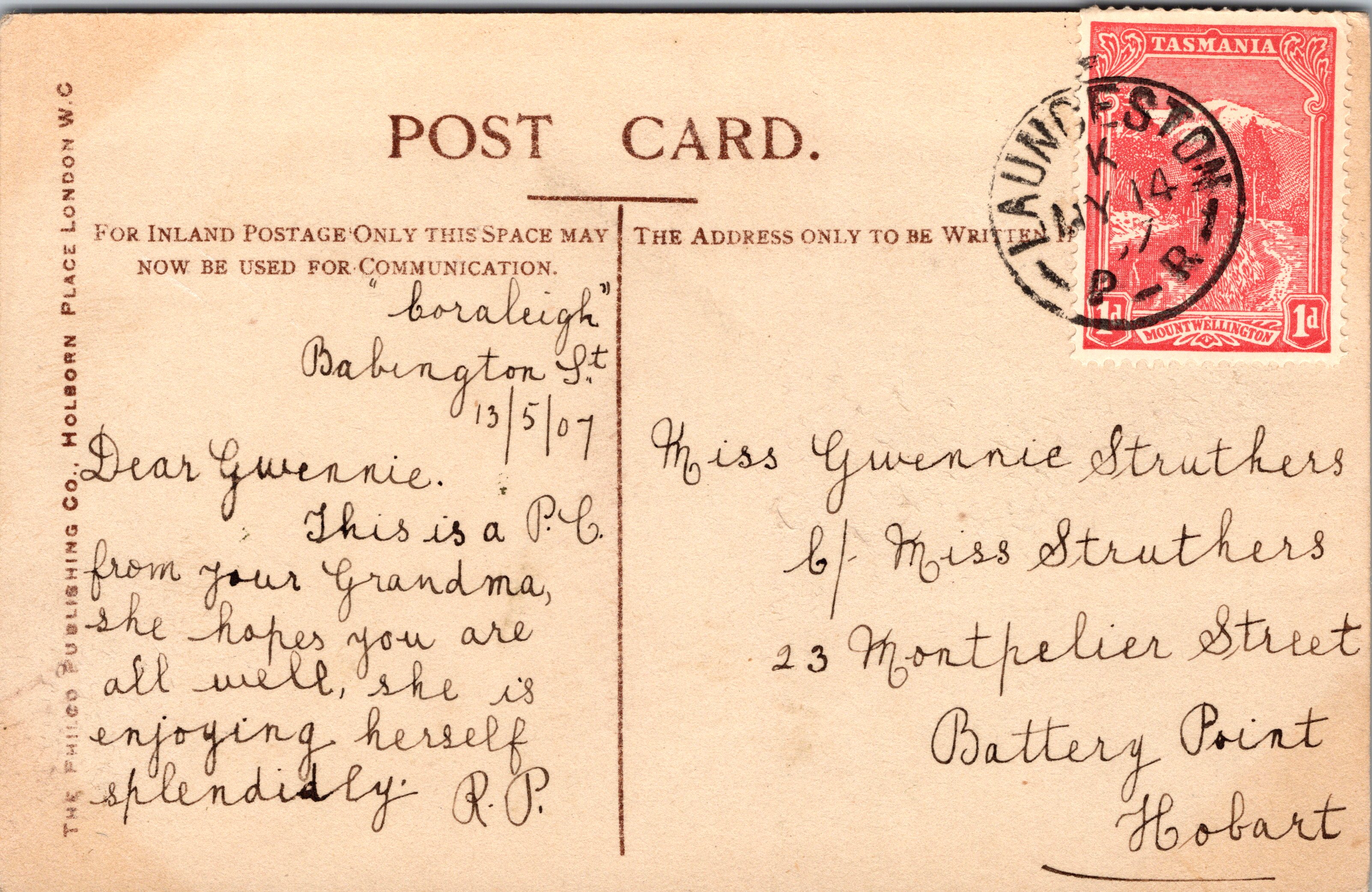
Postcard 7 was published by Philco as part of a series (no.3107F). The card is beautifully hand colored. The postcard is of British origin. The postcard was postmarked in 1907. (SOLD)
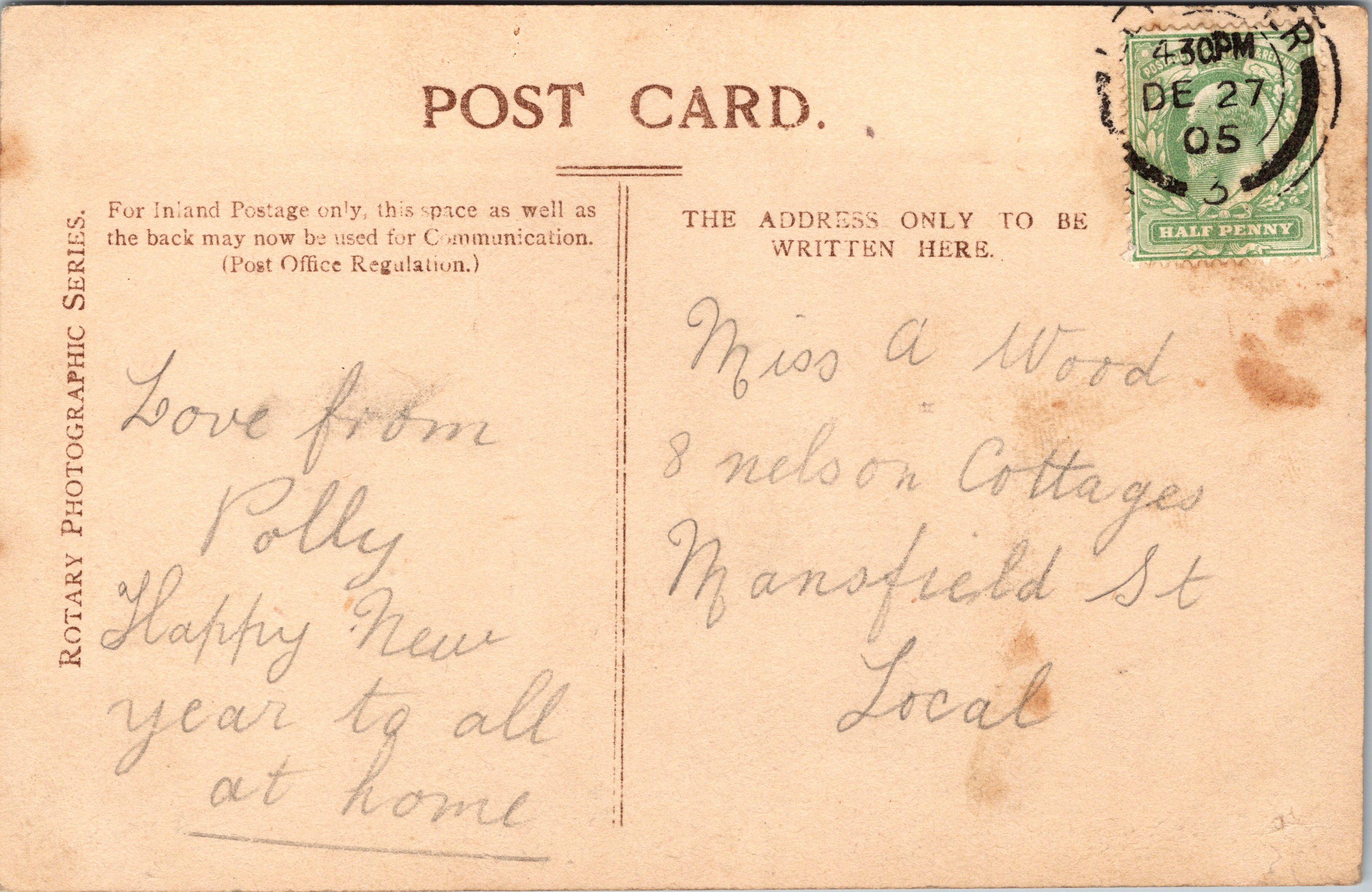
Postcard 8 was published by Rotary Photo as part of a series (no.1861M), This particular card is rare. The postcard has a 1905 postmark and is of British origin. (SOLD)
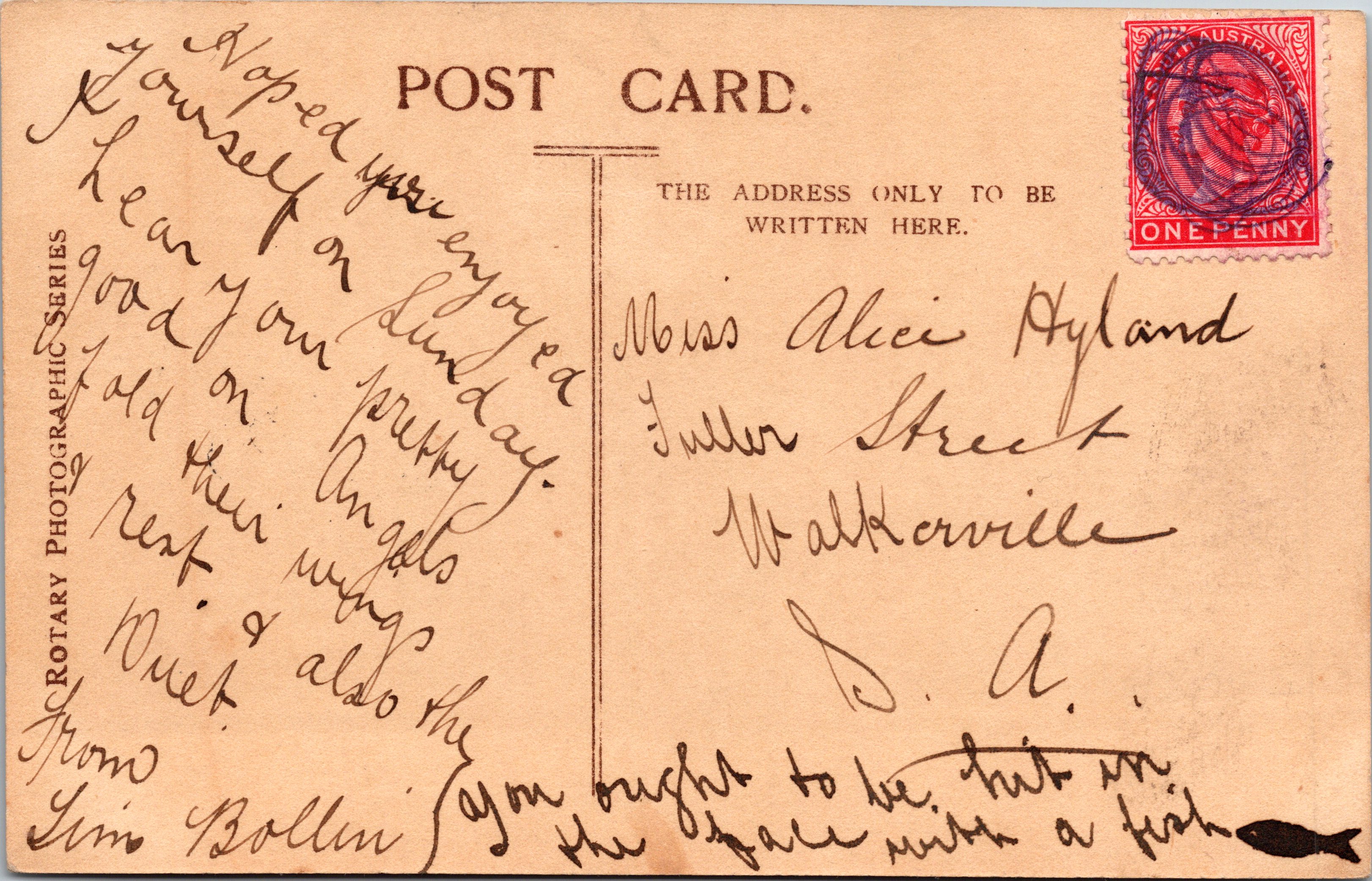
Postcard 9 has a notable message. The card was written from a man to a woman. The last line of the gentleman’s note states “You ought to be hit in the face with a fish”. He topped it off by drawing a fish at the end of the sentence. He certainly must have been joking but the comment is quite odd by today’s standards. The card was published by Rotary Photo as part of a series (no.1965D). (SOLD)
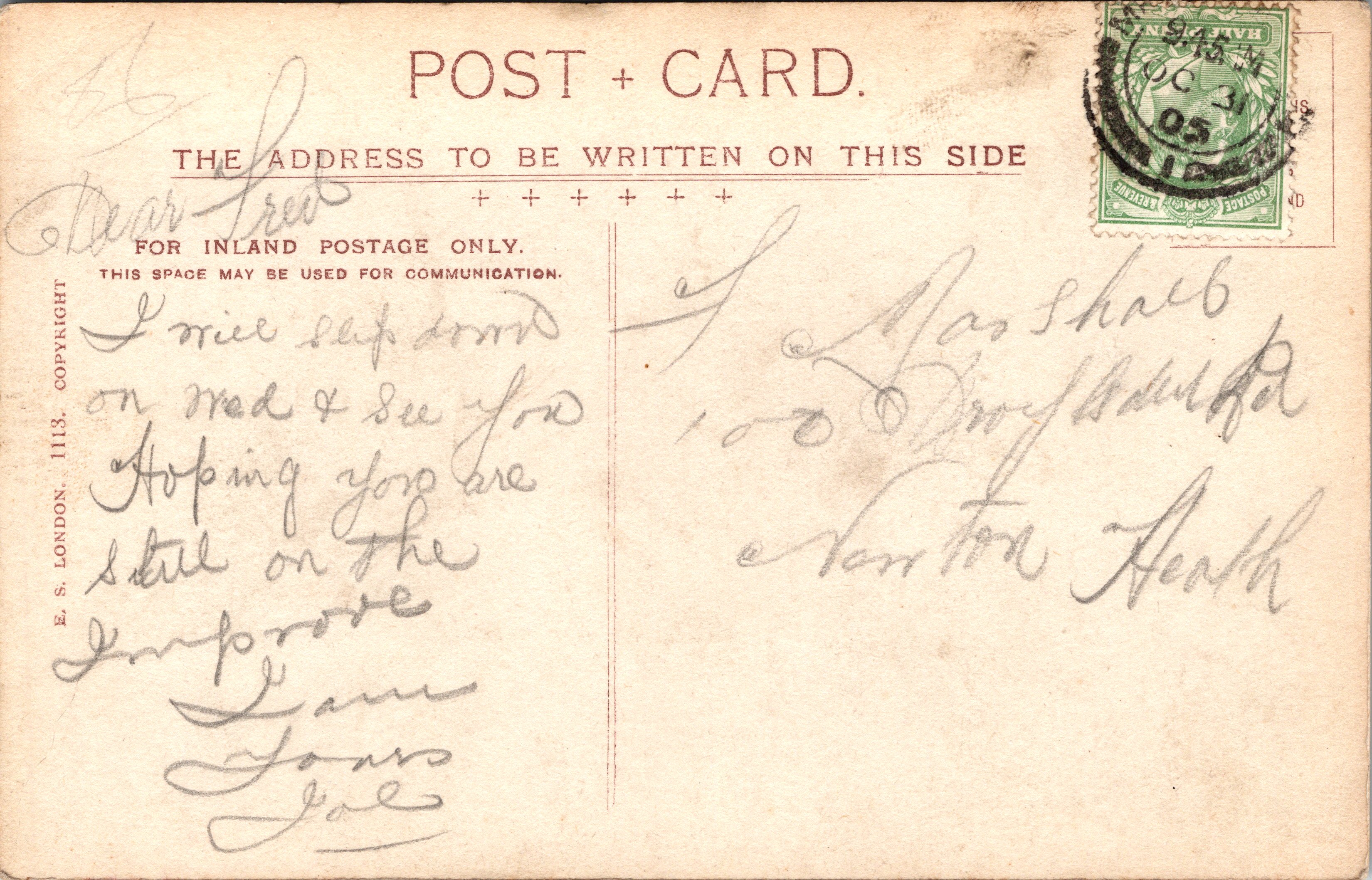
Postcard 10 is uncommon. The card was published by E. S. London as part of a series (no.1113). (SOLD)
Postcard 11 is rare. The card was published by RotoPhot as part of a series (no.0175). The card is beautifully hand colored. (SOLD)
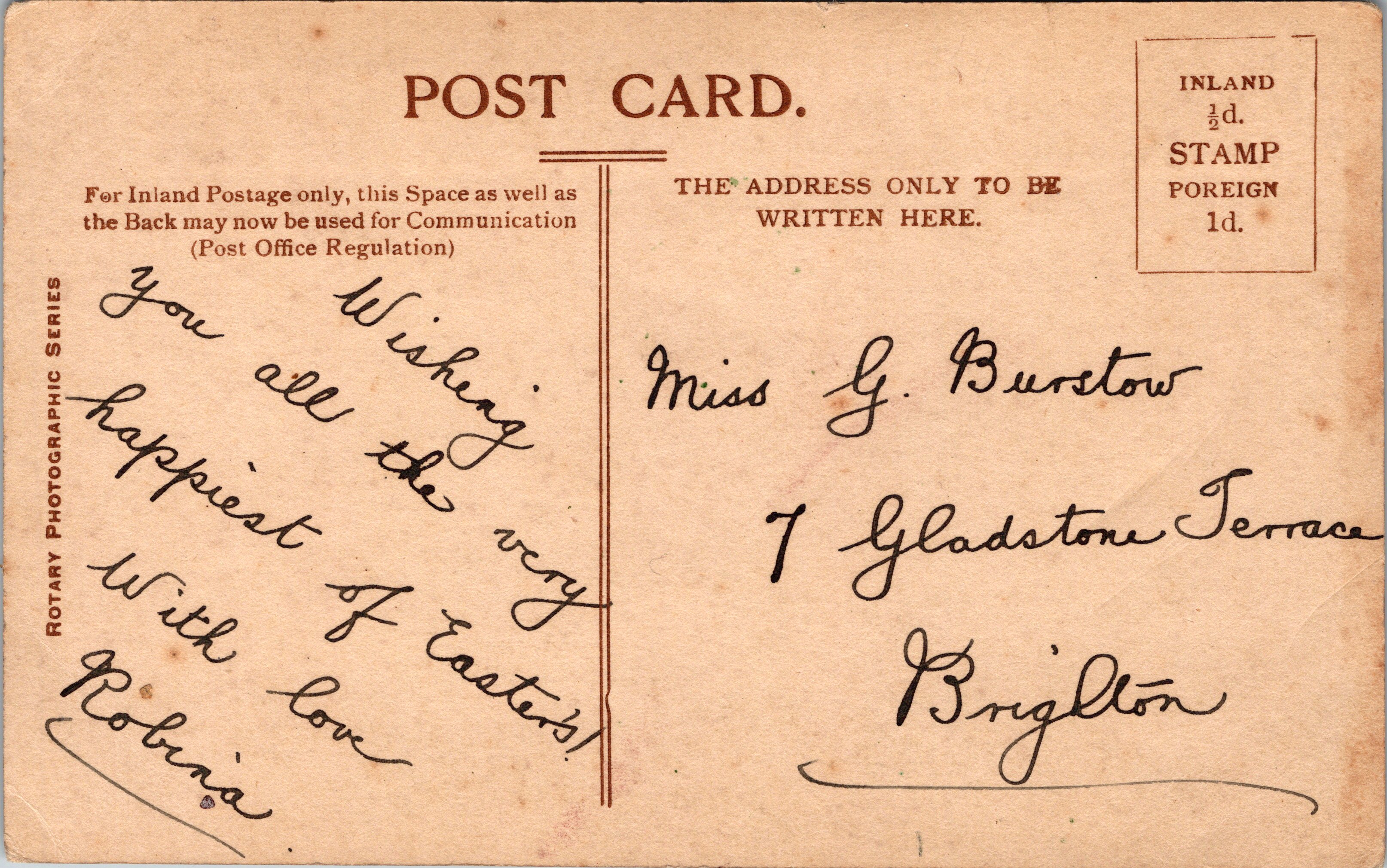
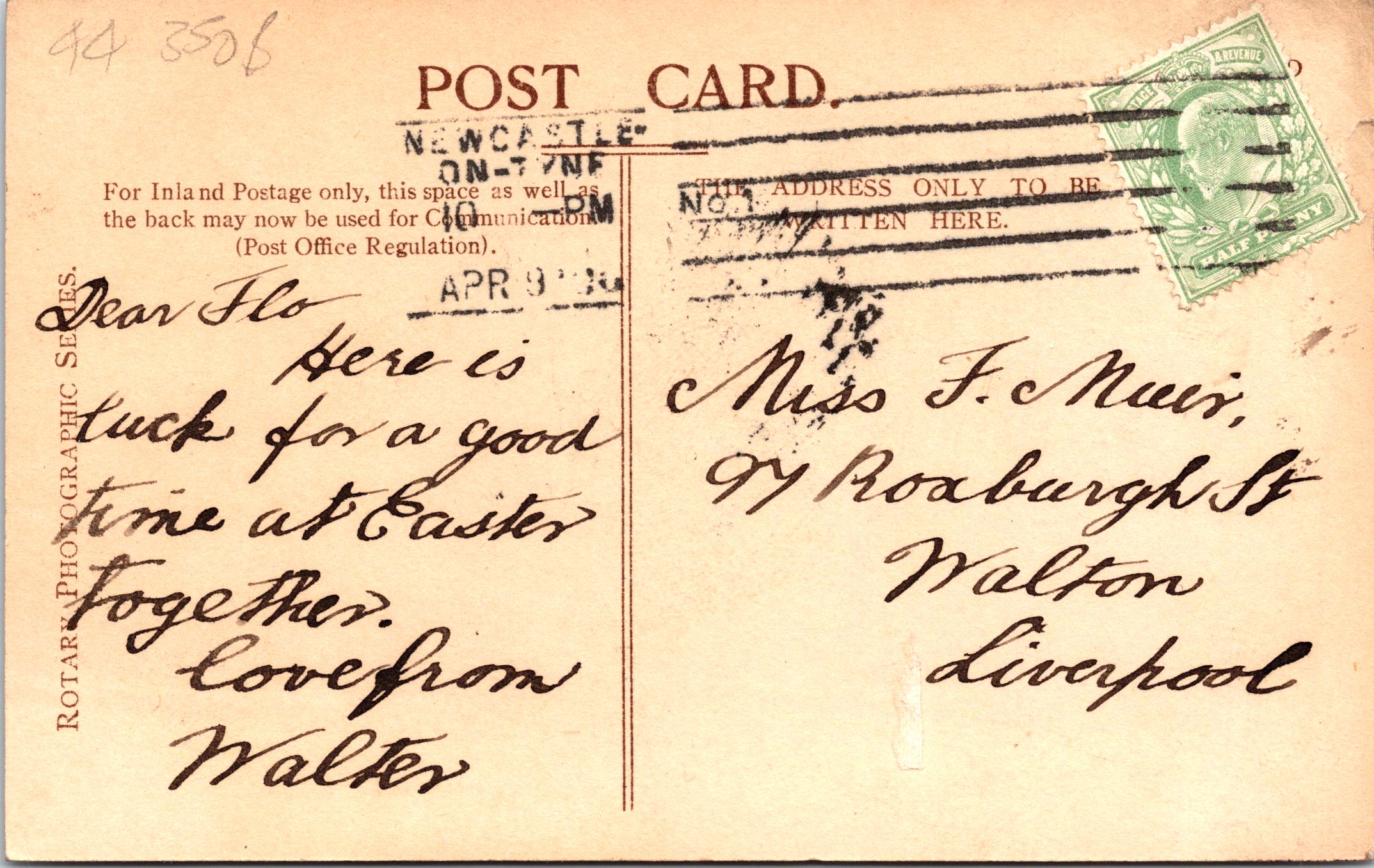
Postcard 12 is uncommon and the card was published by Rotary Photo as part of a series (no.198 V)), The message on this postcard is an Easter greeting.
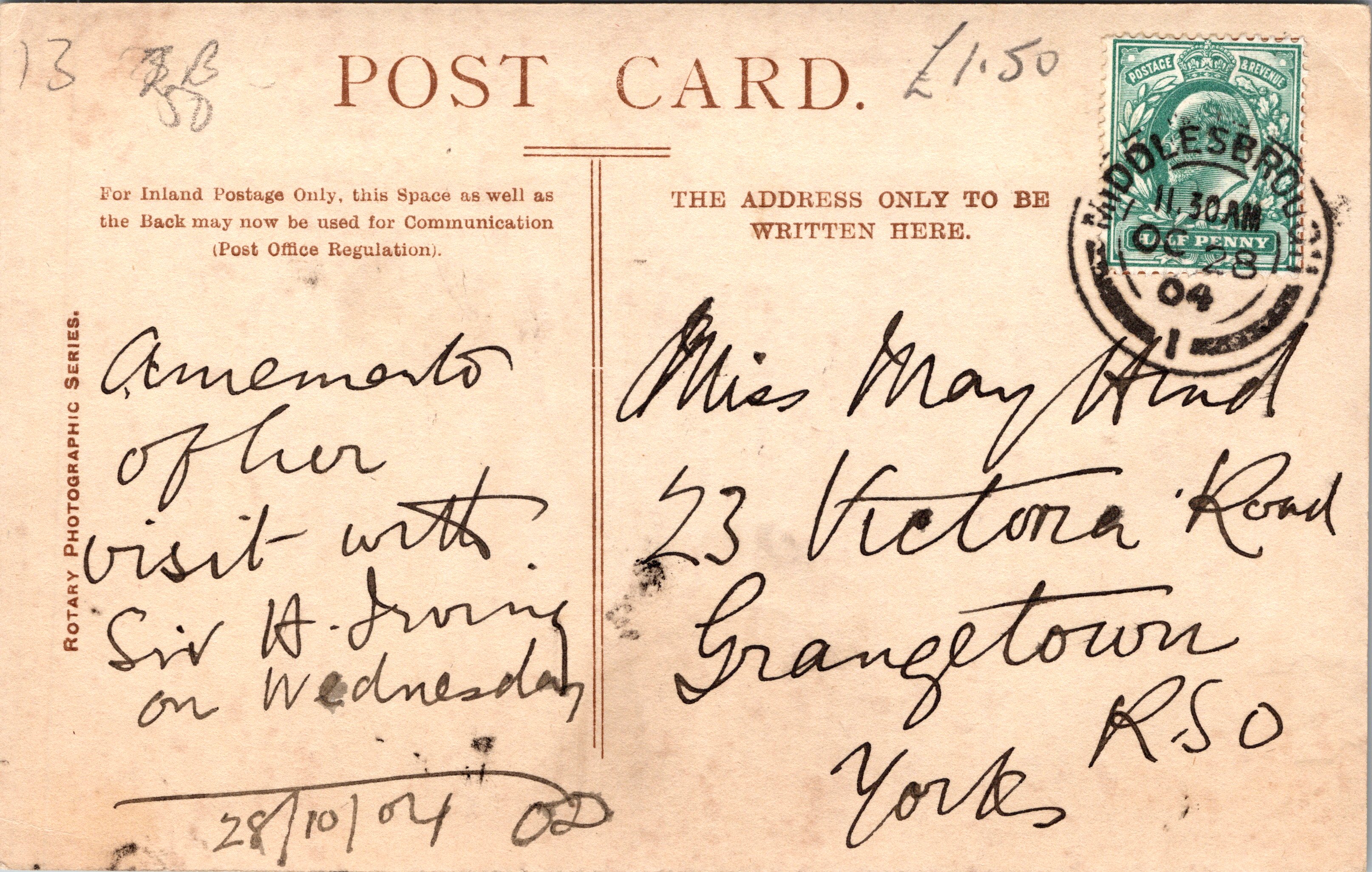
Postcard 13 demonstrates that Miss Fealy was fashionable and quite beautiful. Her photo postcards were very popular and collectable during her era, as well as today. This card has a 1904 postmark.It was published by Rotary Photo as part of a series (no.198D), (SOLD)
Postcard 14 was published by J. Beagles 7 Co. as part of a series (no.365H). Miss Fealy’s photo portrait was taken by esteemed celebrity photographers, W & D Downey. The uncommon postcard is of British origin. (SOLD)
Postcard 15 was published by P. F. B. as part of a series (no.4037). P. F. B. is likely a Berlin firm named Paul Finkenrath. However, a second Berlin company named Paul Fink went by the inititials PFB which certainly creates some confusion among postcard collectors. This vintage postcard is uncommon. (SOLD)
Postcard 16 was published by Rotary Photo as part of a series (no.2381). (SOLD)
Postcard 17 is rare. The postcard offers a view of Miss Fealy petting a large dog. It appears to be some type of hound. Maude is flashing a pretty smile and is wearing a feathered hat and a plaid dress and jacket. The card was published by Rotary Photo as part of a series (no.1965A), The postcard is of British origin. (SOLD)
Postcard 18 is rare. The card was published by Rotary Photo as part of a series (no.1861F), The postcard is of British origin and it’s postmark is appears to be from 1906. (SOLD)
Postcard 19 is rare. The card was published by Rotary Photo as part of a series (no.389C). Miss Fealy’s photograph was taken by the esteemed W & D Downey studio. The postcard is of British origin and it’s postmark is from 1905. (SOLD)
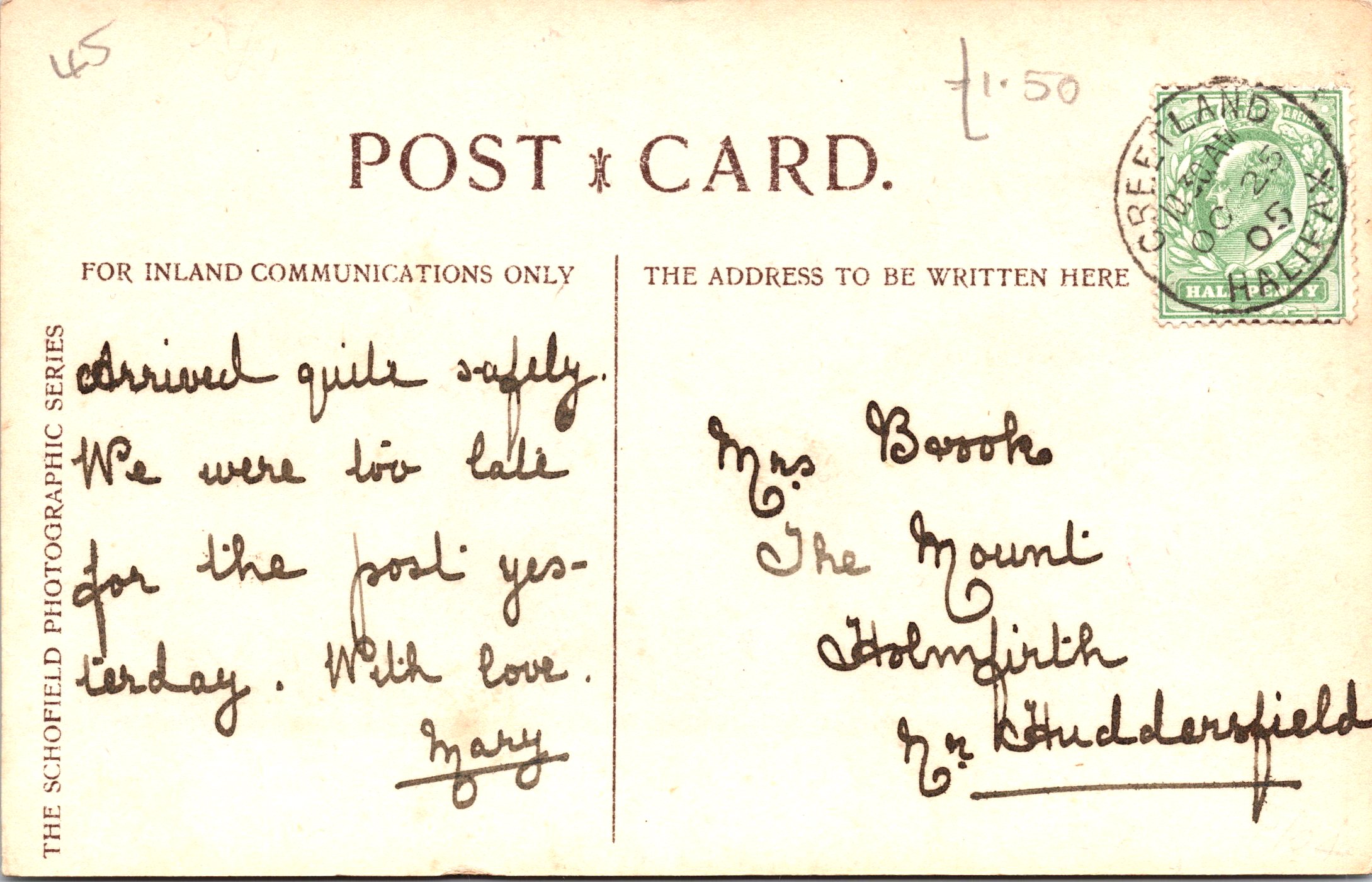
Postcard 20 is rare. The card was published by the Schofield Photographic Series (no.428). Three actress portrait postcards from this series can be found in England’s National Portrait Gallery. Miss Fealy’s photograph was taken by the esteemed Johnston & Hoffman studio. The postcard is of British origin and it’s postmark is from 1905. (SOLD)
Postcard 21 is of British origin and is generously hand tinted. The card is identical to Postcard 16 except for the two different hand tintings. (SOLD)
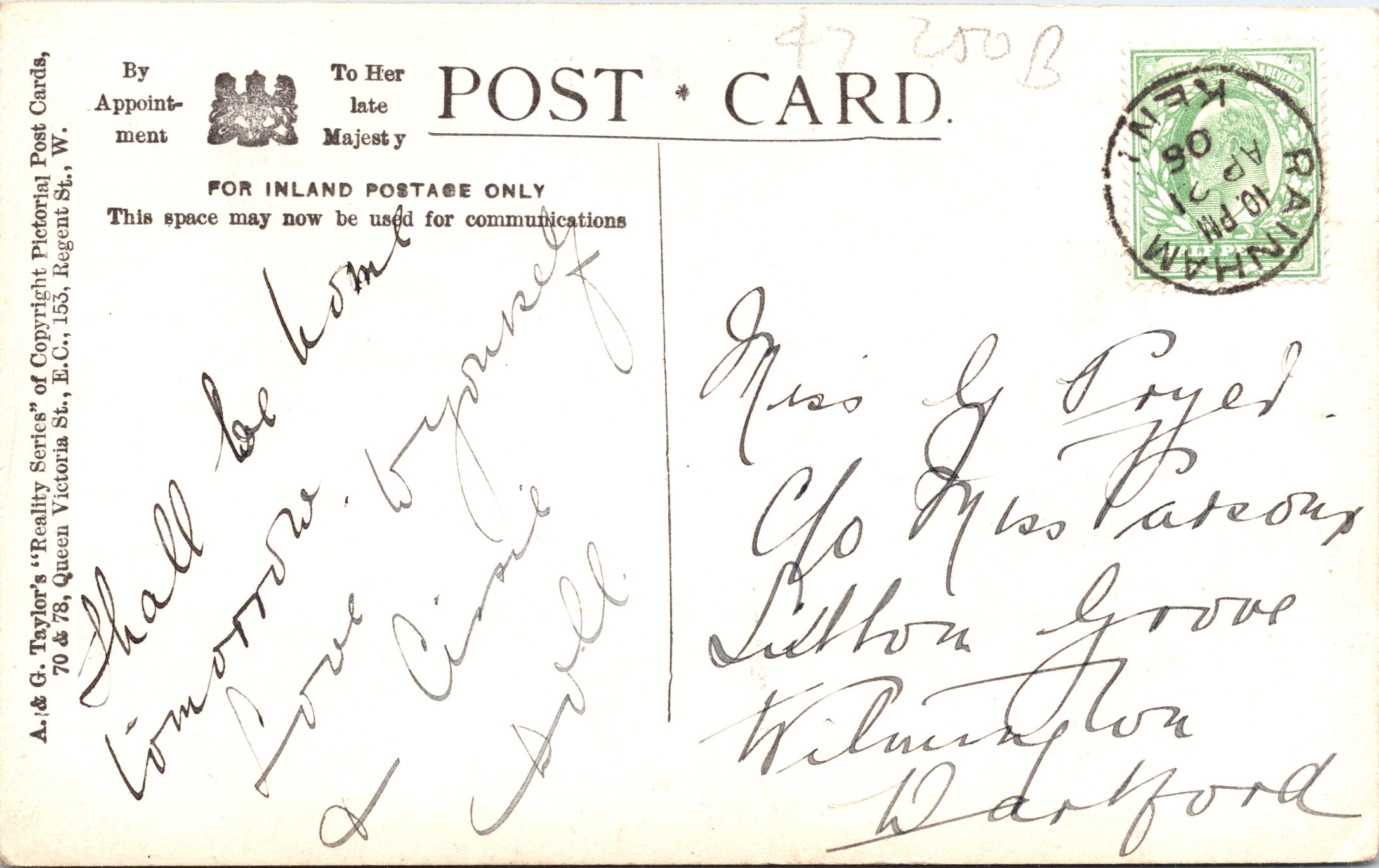
Postcard 22 is uncommon. The card was published by A & G Taylor as part of the “Reality Series”. Miss Fealy’s portrait was taken by the Bassano studio. The postcard is of British origin. (SOLD)
Postcard 23 is uncommon. The card was published by J. Beagles & Co. as part of a series (No.365). The postcard is of British origin (SOLD)
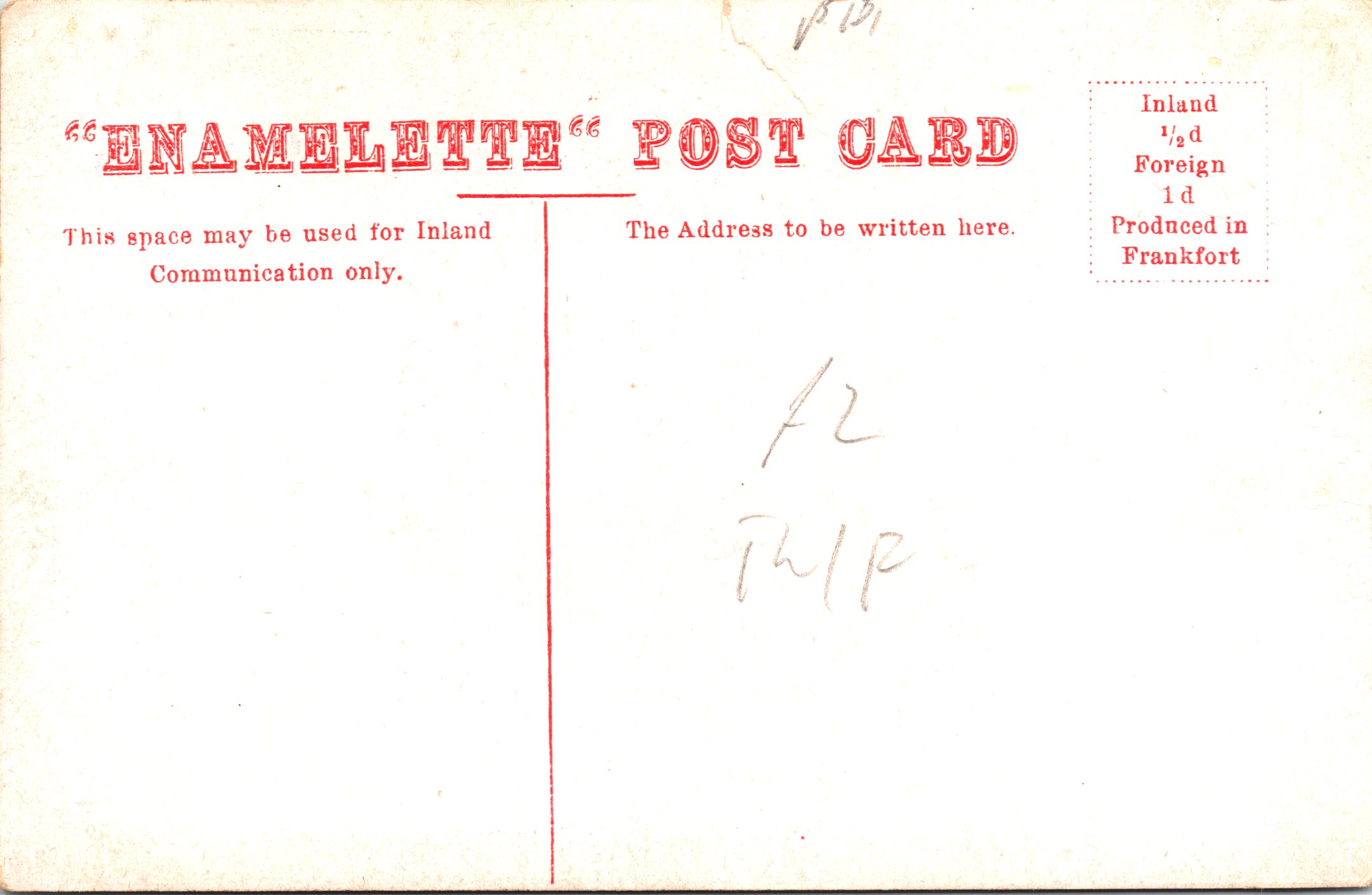
The photo portrait on Postcard 24 was taken by the Johnston & Hoffmann studio. The card is an example of an “Enamelette Postcard”. (SOLD)
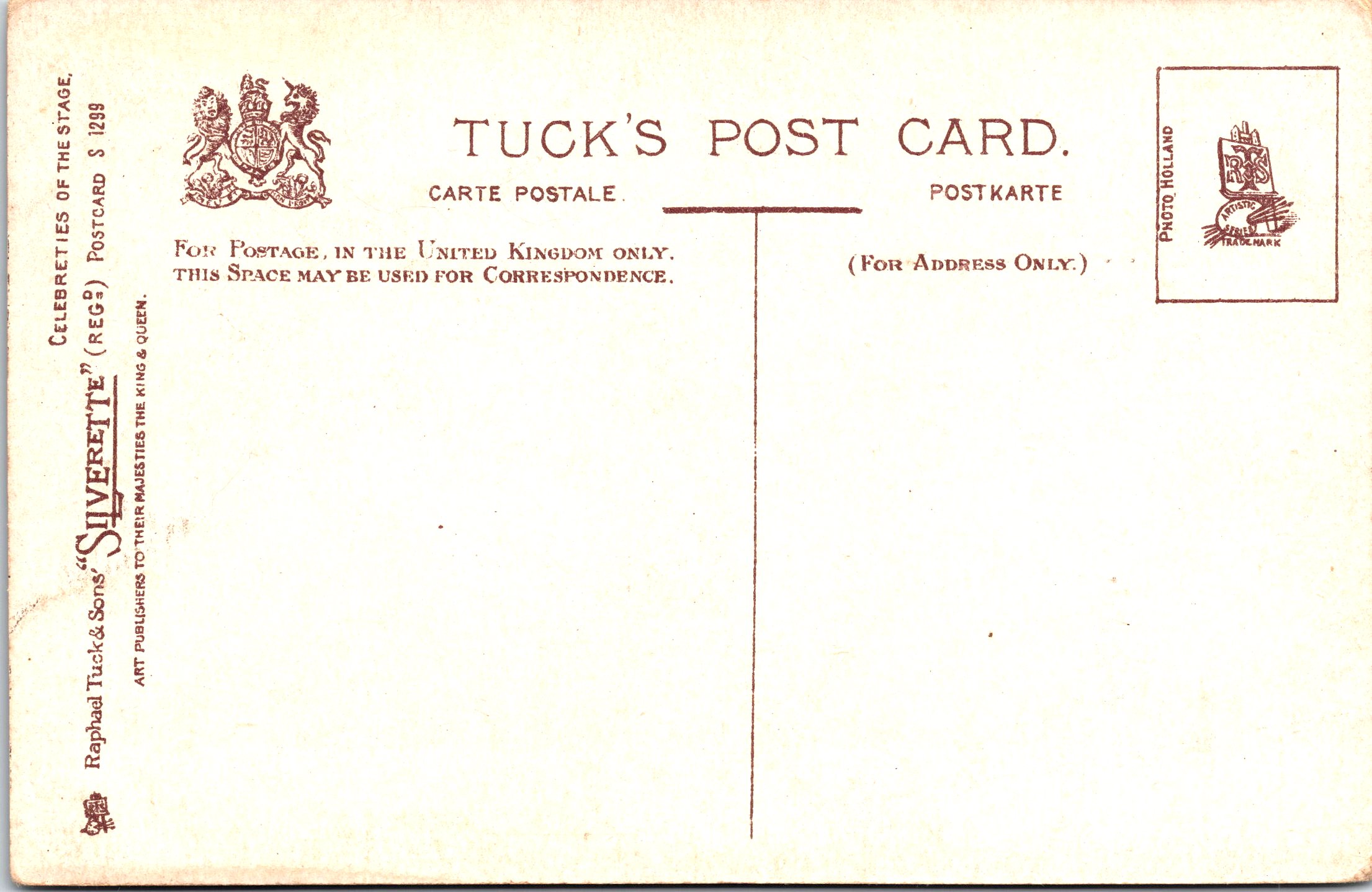
Postcard 25 is color tinted and was published by Raphael Tuck as part of the “Celebrities of the Stage” series (no.S1299). The card is an example of an “Silverette Postcard”. (SOLD)
Postcard 26 is an uncommon color tinted vintage lithographic card. It was published by Rotary Photo as part of a series (no.198U). (SOLD)
Postcard 27 is uncommon. The card was published as part of the Wrench series (No.10449). Miss Fealy’s portrait was taken by the famous female celebrity photographer, Lallie Charles. The postcard is of British origin and has a 1906 postmark. (SOLD)
Postcard 28 was published by Rotary Photo as part of a series (No.198L). Miss Fealy’s photograph was taken by the Johnston & Hoffmann studio. (SOLD)
Postcard 29 was published by Giesen Brothers & Co. as part of a series (no.K46). The photographer of Maude’s portrait was the Hutchinson & Svendsen studio. The National Portrait Gallery asserts that this pair of photographers were active in London between 1905 and 1906. (SOLD)
Postcard 30 was published by Giesen Bros. (GB).Miss Fealy’s photograph was taken by R. Thiele. Reinhold Thiele is known for his photographical talent. Thiele (1856-1921) also used the name “Karl Anton”. Seven of his photo portraits can be found in Great Britain’s National Portrait Gallery. He was born in Germany and learned about photography there. He came to London in 1878 and after a stint with photographer, William Henry Prestwich, he was hired by the London Stereoscopic Company (1880). In 1894, he established a studio known as Simmons & Thiele. Initially, Thiele specialized in photographing football teams. He is considered to be one of the early press photographers. Later, he operated a studio in London. He photographed many theatre stars. This postcard is of British origin. (SOLD)
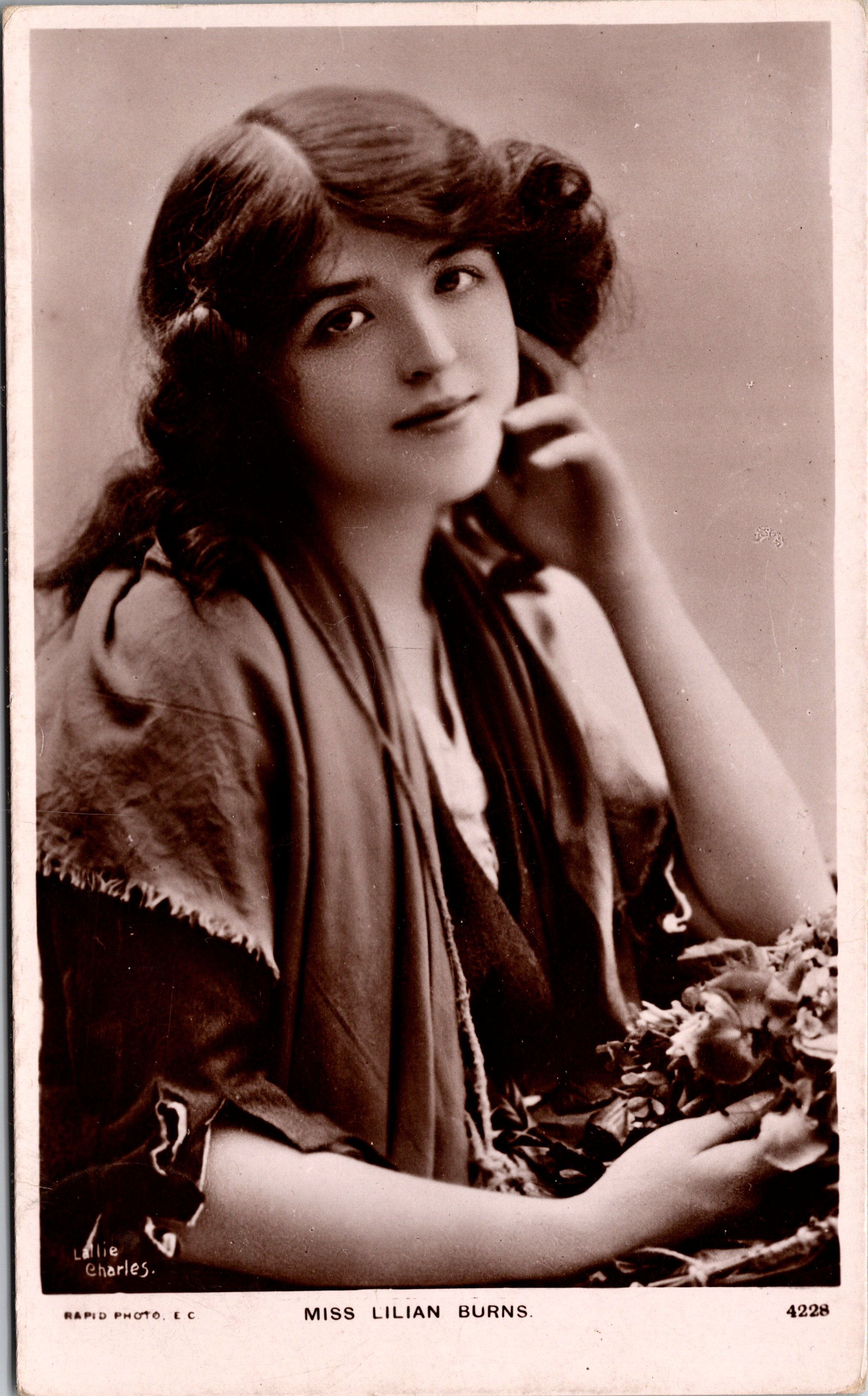
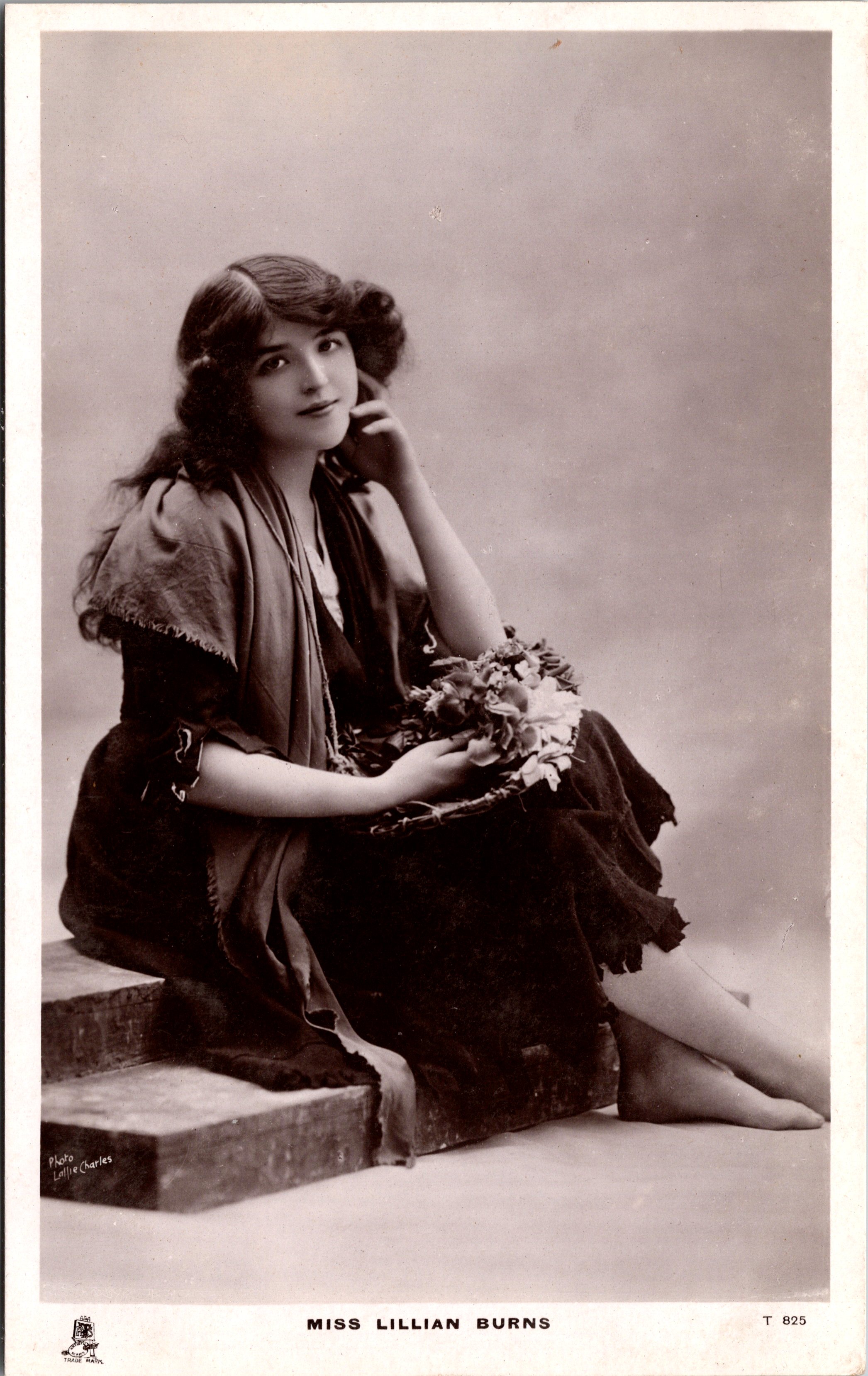
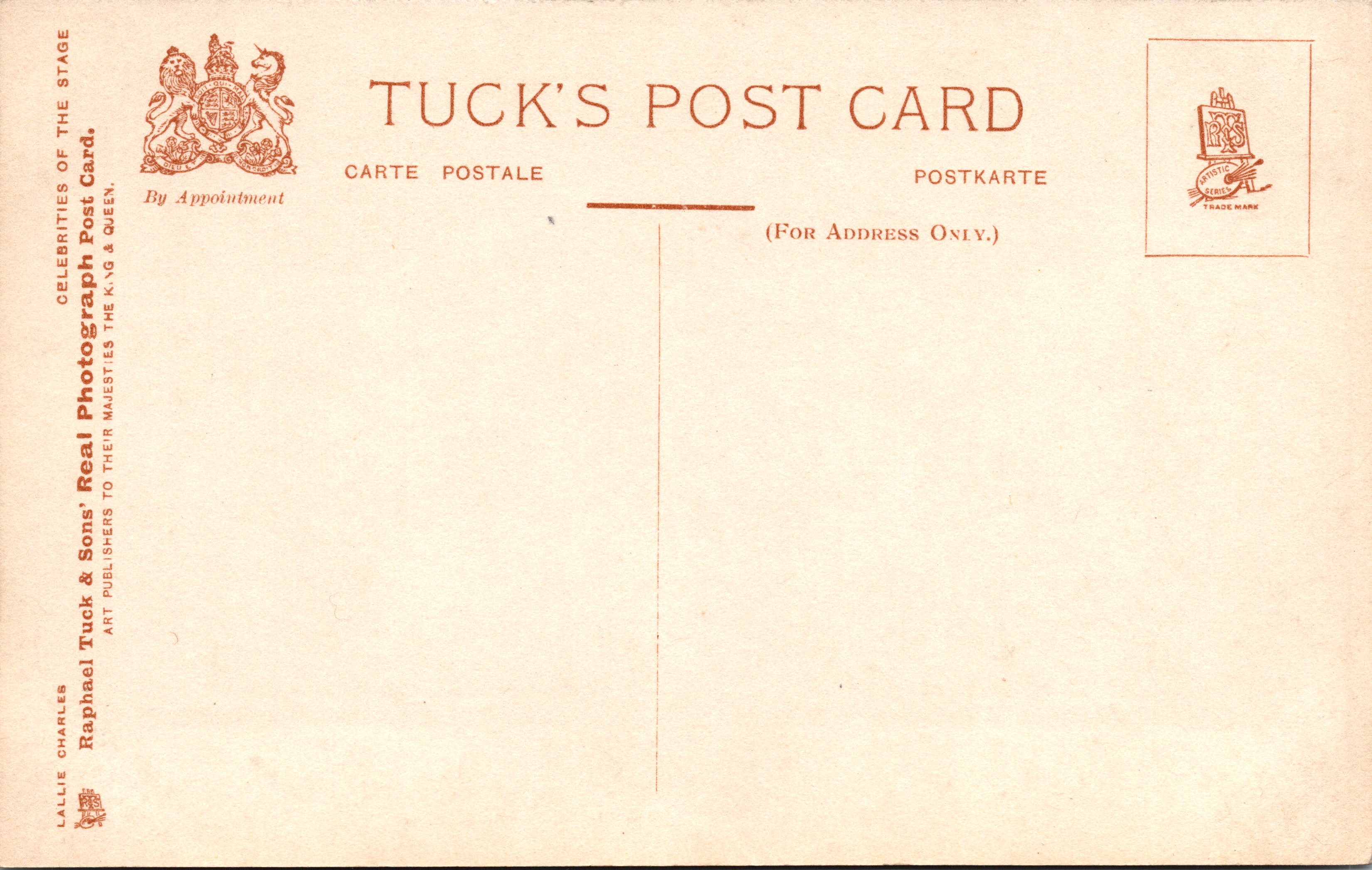
Postcard 1 features pretty film actress Lillian Burns (1903-1998). Burns was an American stage actress hailing from Illinois. She is most known for performing in “A Florida Enchantment” (1914), “The Goddess” (1915), and “The Shop Girl” (1916). She was an acting coach for MGM from 1937 until the early 1960’s. Her filmography includes 41 credits from 1912 through 1916. This photograph was taken by celebrity photographer Lallie Charles (1869-1919). She and her sister, Rita Martin, were the most commercially successful female photographers of their time. The pair were from Ireland. They took photographs of many of celebrities of their era. This photograph was published by Raphael Tuck as part of a series (no.T825). The series was entitled “Celebrities of the Stage”. This postcard is in excellent condition (see scans).
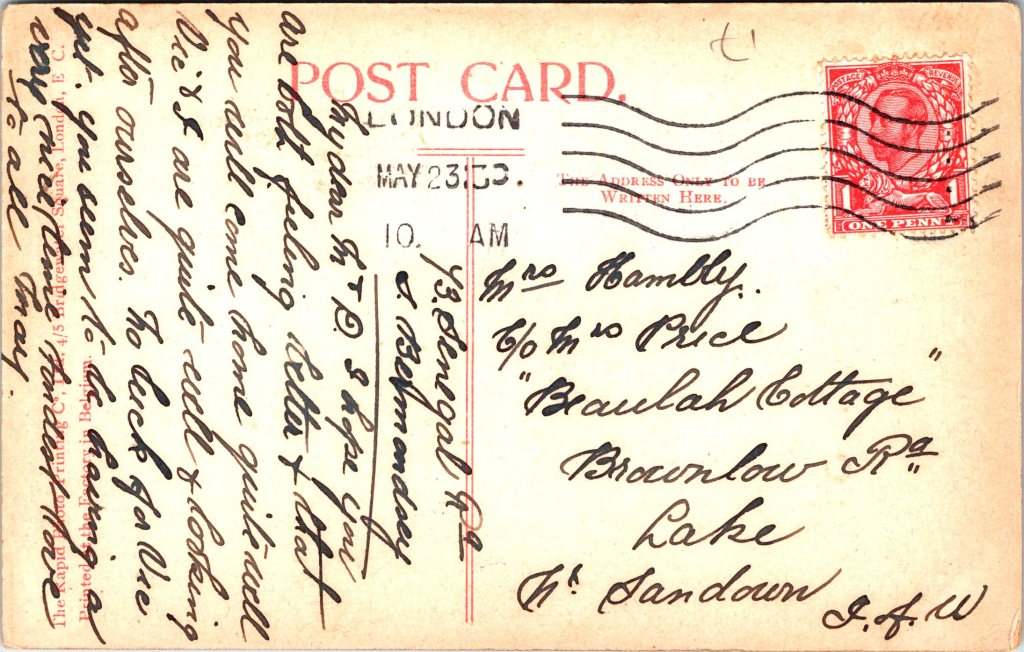
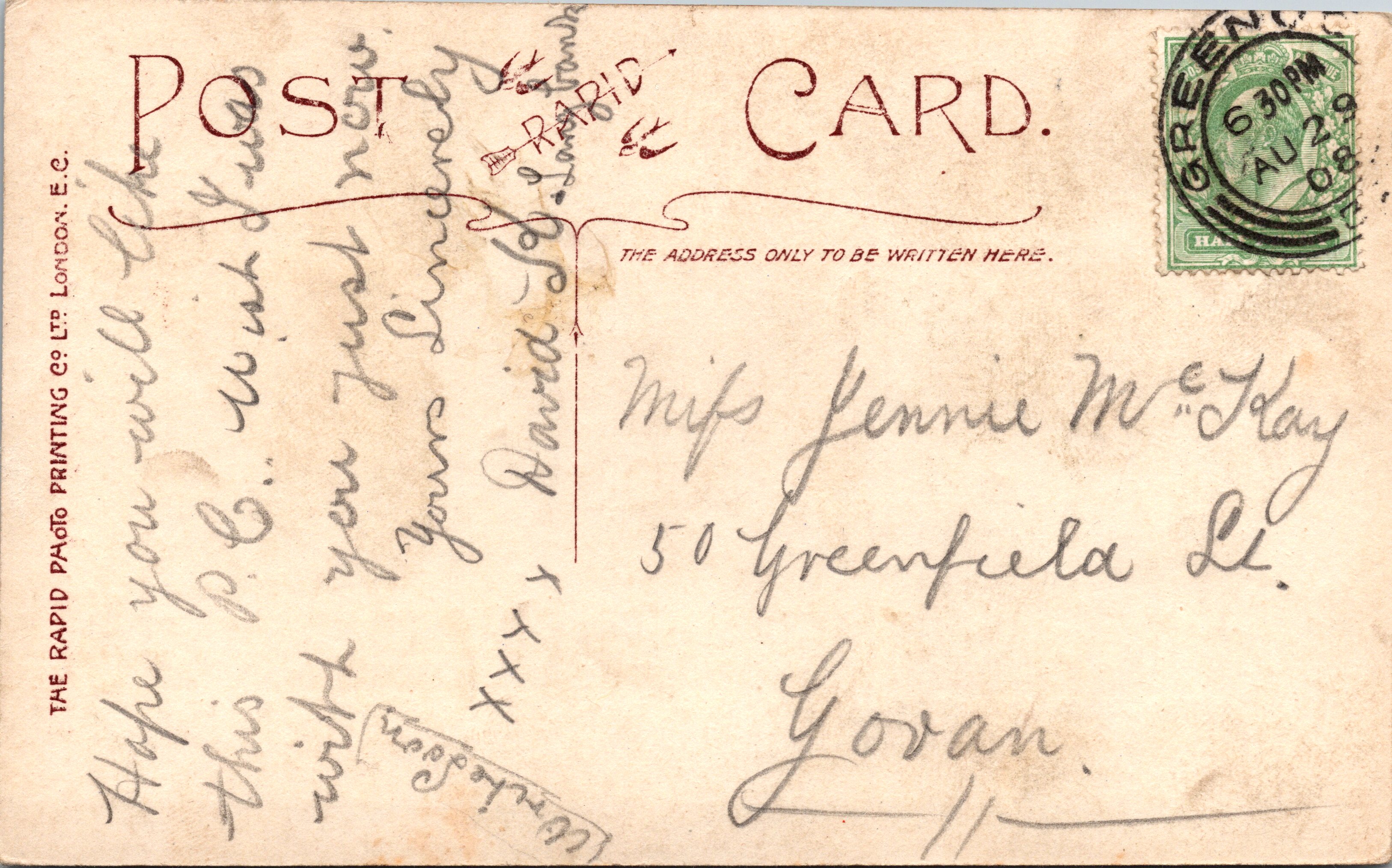
Postcard 2 was also taken by Lallie Charles . This photograph was published by Rapid Photo Co. as part of a series (no.4228).The card was postmarked in 1908.
Buy this Vintage Real Photo Postcard (includes shipping within the US) #3808
To purchase this item, click on the Pay with PayPal button below
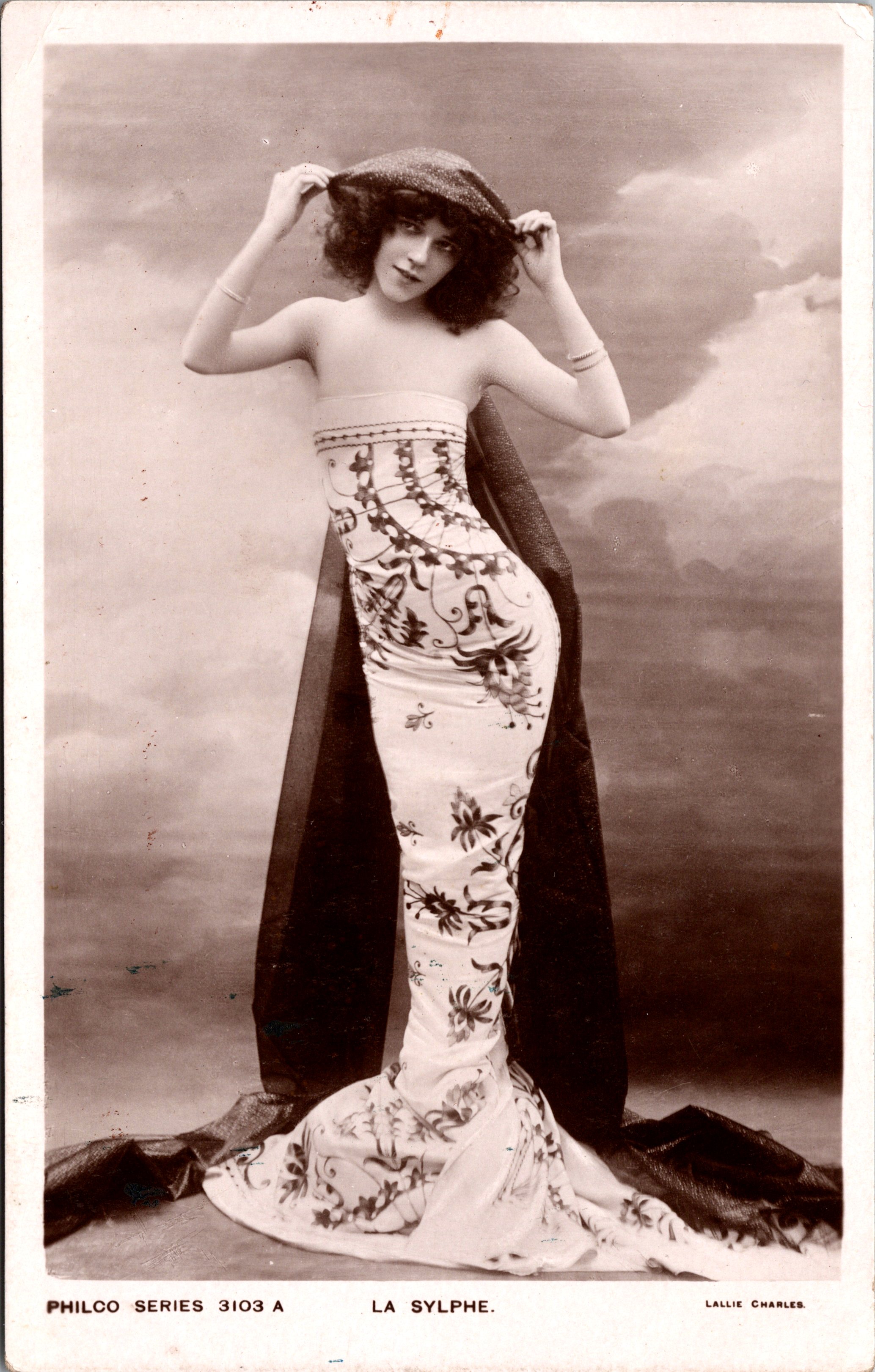
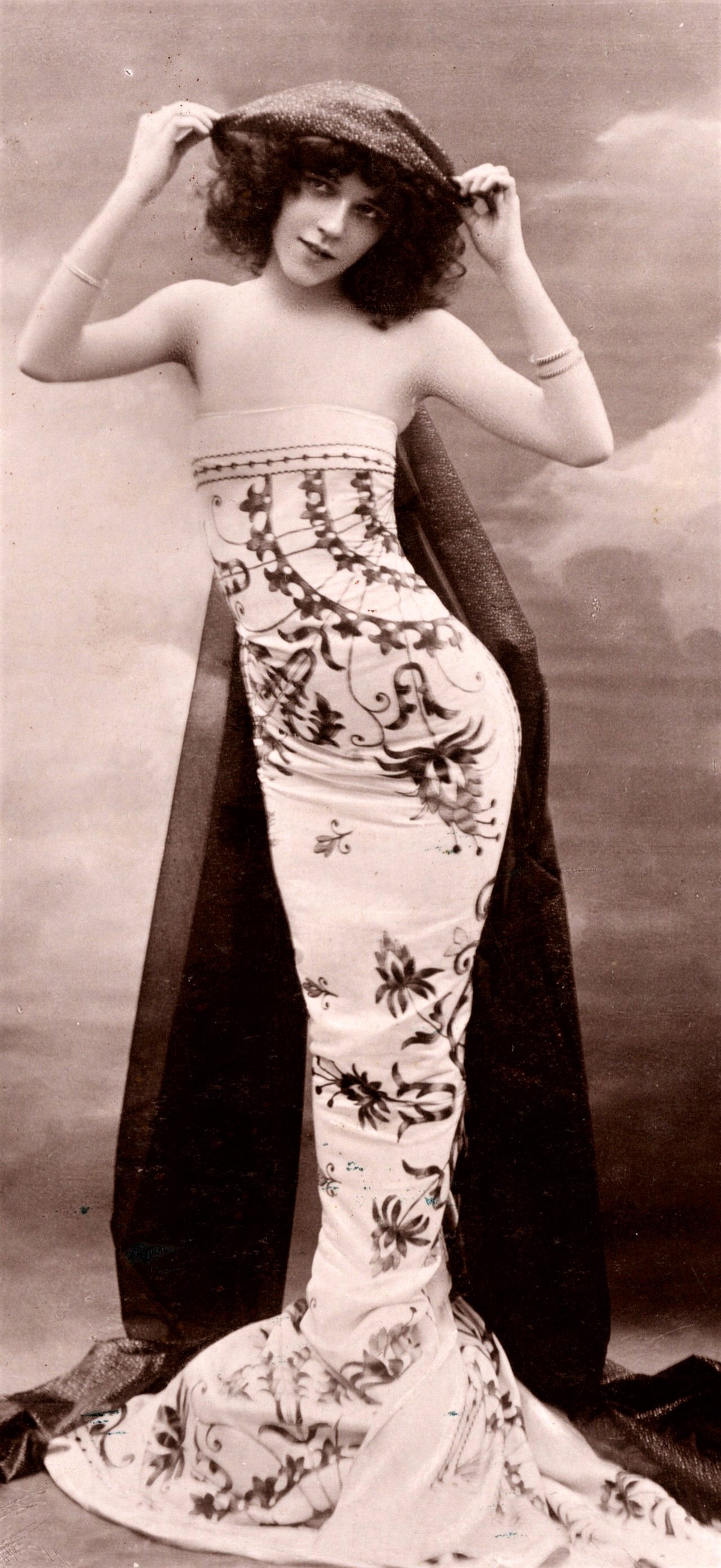
This vintage real photo postcard features American actress exotic dancer, La Sylphe. Her off stage name was Edith Lambelle Langerfeld (1883-1968). She attracted a great deal of attention in the 1890’s while performing at the Folies Bergere. She was born in New York City. Her father was German and her mother was Irish.Her father invented a machine used in the mining of coal. Edith was a dancer, but US laws prevented her from performing on stage due to her young age. The laws were more liberal abroad so when Edith turned six, she was taken abroad by her mother. She travelled around the world for eight years, spending the majority of her time performing in Europe. She became fluent in five language. During her second world tour, she was the primary dancer at the Alhambra Theatre in London. Next, she performed at the aforementioned Folies Bergere. Her debut in the US occurred when she was fourteen. In 1899, she introduced her rendition of “The Vision of Salome” dance. When “Salome” was banned by the Metropolitan Opera in 1907, La Sylphe’s popularity in the US soared. She named her performances “The Remorse of Salome”. She adopted the Far East body dance, otherwise known as “the houchee kouchee”. She began performing in vaudeville. She did toe dances, spanish castanet dances, muscle dances (belly dances), and of course, the Salome dance. She also performed what she called the Devil dance. Some of her performances were risque. In one skit, her mid waist was covered by only pearls. In other performances she wore tights, picket fence skirts and a gossamer (light and thin) bodice. Her performances in New York shocked the public but the shows were tame compared to her routines in Europe. Some of her New York shows were attended by plainsclothes police officers to ensure that she did not cross over the morality boundary.. In 1919 and 1920, La Sylphe was in the cast of “George White’s Scandals”. Her performances included an Acrobatic act, as well as a Contortionist act. After 1928, she began performing in ballets. In one interview, La Sylphe expresses an interesting opinion about matrimony. In an article from “The Evening World” (1908), she states that being an old maid is a good idea. She asserts that she is going to be one. “Marriage is fine for men, but it’s rotten luck for a woman, This vintage real photo postcard was published by Philco as part of a series (No.3103A). The photo was taken by noted celebrity female photographer, Lallie Charles. (SOLD).
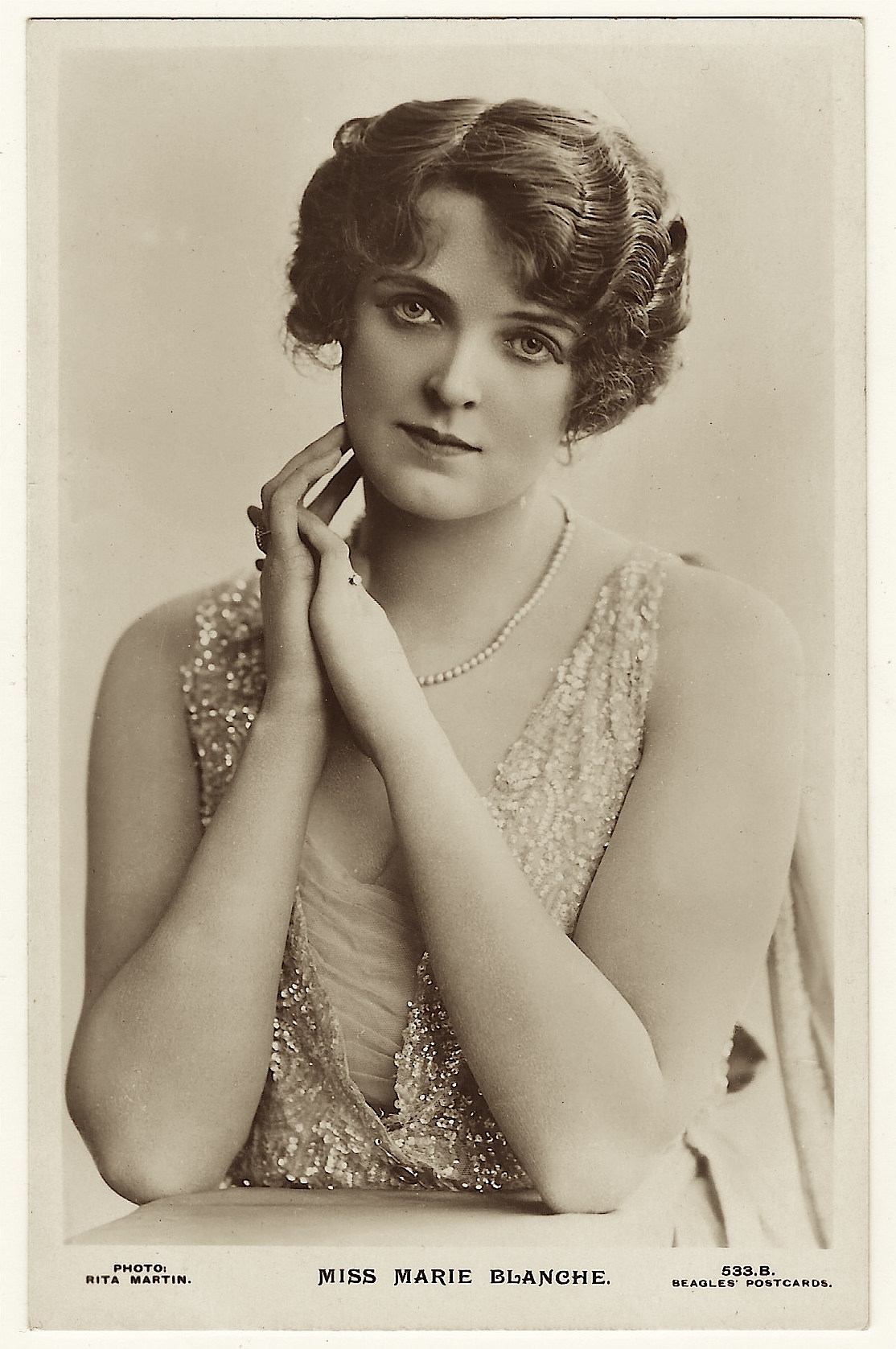
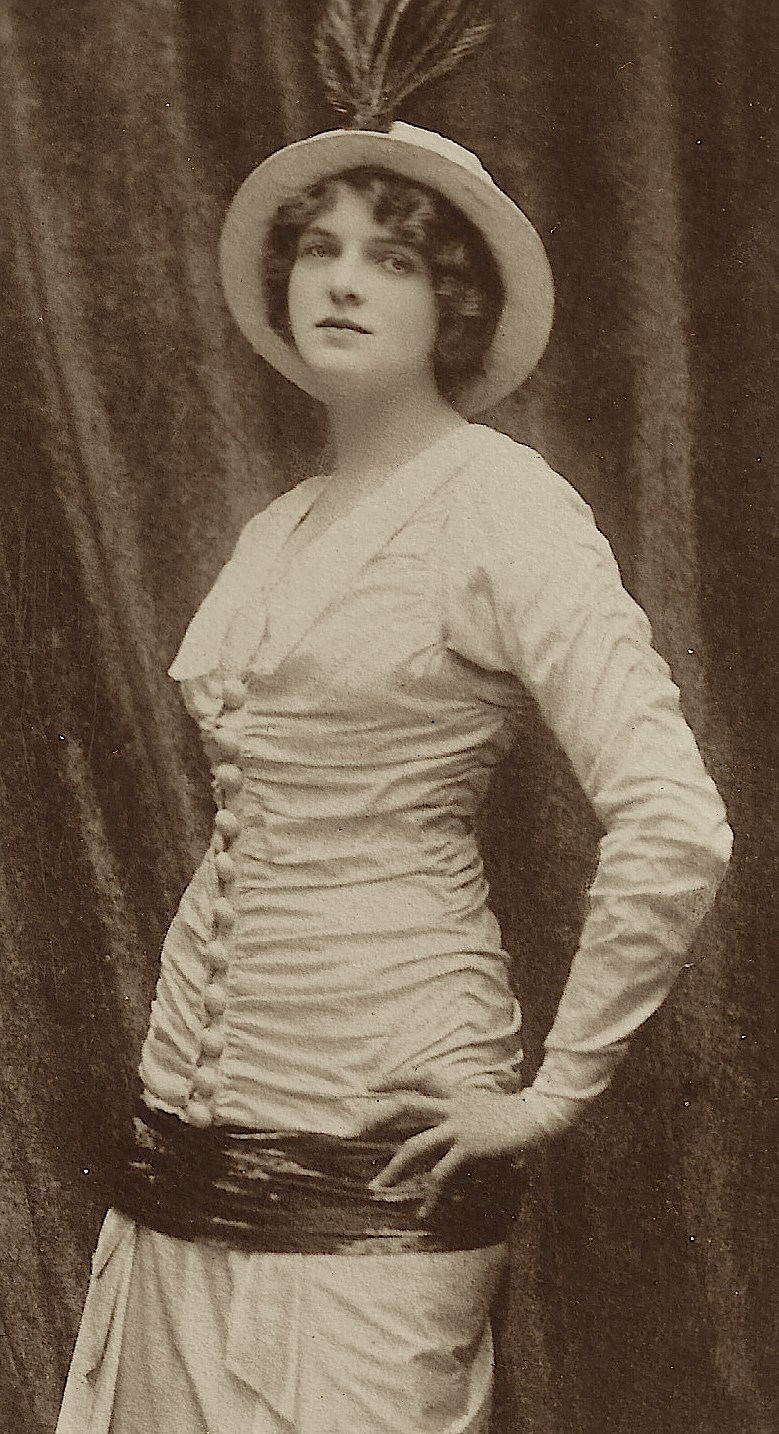
–The pretty actress seen in these vintage real photo postcards, is Miss Marie Blanche (c 1893-1973). Her birth name was Marie Peacock and she was born in Scarborough, England. Her father was stage actor William Peacock. She was a child stage actress in the early 1900’s. Later she became a starlet when she appeared in a few comedy and drama films. One of her important roles was in the silent film drama, “The Great Impostor” (1918). In 1919 she appeared in “The Elusive Pimpernel” for the Stoll Film Company. She was married to E. Lewis Waller (1884-1951), a stage and screen actor. Blanche’s IMDb filmography reveals that she appeared in four films between 1918 and 1924. She was a sitter in eight portraits that are part of the National Portrait Gallery’s collection.
–The portrait of Miss Blanche seen in Postcard 1 was photographed by Rita Martin. Miss Martin was well known for her expertise in taking portraits of theater stars and other celebrities. She was considered one of the best British photographers of her time. She opened her studio in 1906. Martin’s sister, Lallie Charles was an esteemed society photographer. The Cabinet Card Gallery has several photographs by Rita Martin. Place her name in the search box to peruse them. Postcard 1 was printed and published by J. Beagles & Company of London, England. The company was started by John Beagles (1844-1909). The company produced a variety of postcards including an extensive catalog of celebrity (stage and screen) portrait postcards. After Beagle’s death, the business continued as J. Beagles & Co. until it closed in 1939.(SOLD)
-Postcard 2 provides a more complete view of Miss Blanche. She is dressed very fashionably. Her dress has a sash-like belt worn below the waist which I believe is quite unusual. Note her feathered hat. The photographer and publisher of the postcard are unidentified. The postcard is in excellent condition.
Buy this Vintage Real Photo Postcard (includes shipping within the US) #3029
To purchase this item, click on the Pay with PayPal button below
$15.49
Buy this Vintage Real Photo Postcard (includes International shipping outside the US) #3029
To purchase this item, click on the Pay with PayPal button below
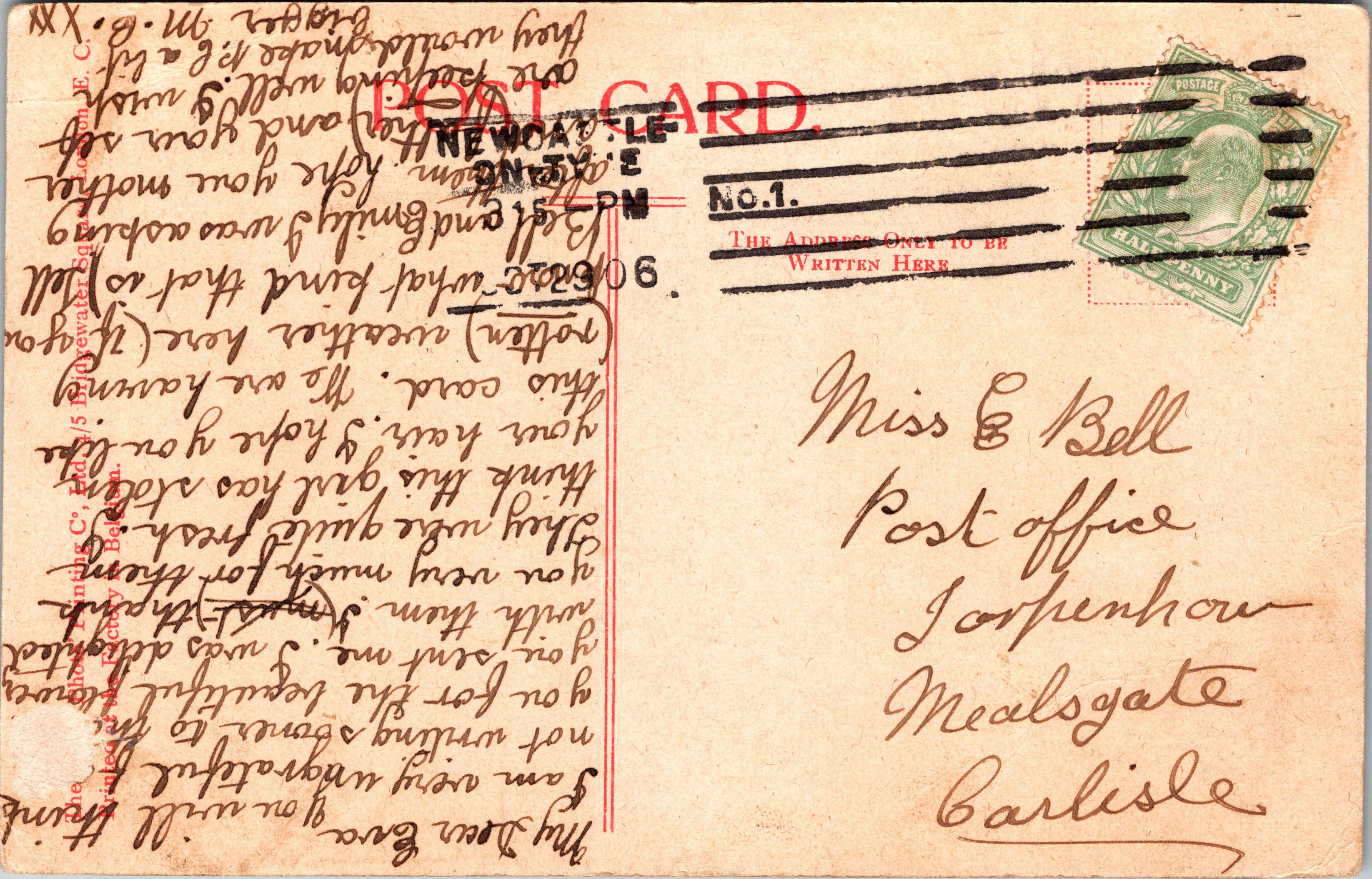
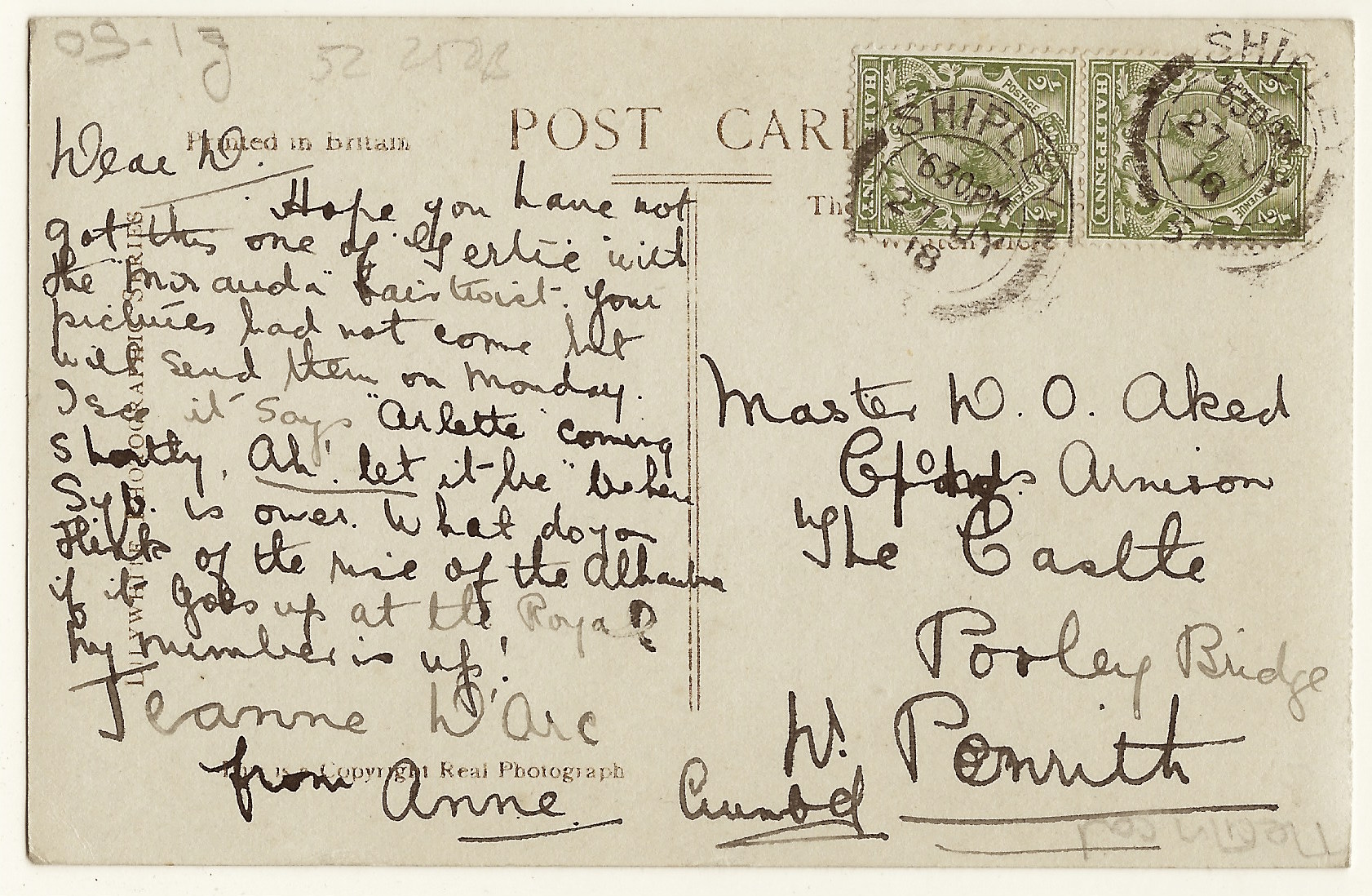
This vintage real photo postcard features beautiful English actress and singer Gertrude (Gertie) Millar (1879-1952). She was well known for her performances in Edwardian musical comedies. She began acting as a child (age 13) and was a well known star of musical comedies for two decades. Her first husband, Lionel Monckton, was the composer of many of her shows and songs. Monckton died in 1924 and Millar later married the 2nd Earl of Dudley, making her the Countess of Dudley. Some of Millar’s earlier appearances involved roles in “A Game of Cards” (1897), “Cinderella” (1899), “The Messenger Boy” (1900), and “The Toreador” (1901) at the Gaiety Theatre. By this time some of the songs she performedad become big hits. Gertie Millar was quite beautiful and was one of the most photographed women of the Edwardian period. Evidence of her popularity is the fact that there are 88 photographs of Miss Millar in England’s National Portrait Gallery. Many of these images appeared on postcards which became a popular collectors item.Gertie Millar was tall, thin and attractive with dark hair and large and very clear eyes. In addition she has been described as tough, determined and ambitious. Miss Millar appeared in many theatrical productions as the twentieth century progressed. In fact, between 1901 and 1910 Millar was the leading star of the Gaiety Theatre. Millar’s appearances included “The Orchid” (1903), “The Girls of Gottenberg” (1907), and “Our Miss Gibbs” (1909), “Gipsy Love” (1912). Gertie Millar went to the United States to star in the “Girls of Gottenberg” (1908) on Broadway. In 1914 she appeared in a film entitled “The House of Bondage”. After appearing in a number of less successful theatrical productions, Gertie Millar left the stage in 1918. Her husband died in 1924 and two months later she married the 2nd Earl of Dudley. The speed at which she remarried may reflect the unhappy state of her relationship with Mr. Monckton. The website “Stage Beauty” informs us that this theatrical couple had problems for many years. In fact the couple had unfortunate theatrics in their personal life. Mr Monckton was a jealous man and Miss Millar was a woman who attracted lots of male attention. This was a bad combination. A major dramatic incident occurred in 1905 when a young German nobleman who was infatuated with Gertie, broke into her marital residence and committed suicide by shooting himself in the head at her dressing table. Gertie denied any involvement with the obsessed man but her husband refused to believe her denial. In 1910 her romantic life was in the news again because of speculation about her involvement with the Duke of Westminister. This publicity was considered a major cause of the Duke’s estrangement from his wife. This postcard portrait was taken by celebrity photographer, Rita Martin. She is considered one of the best British photographers of her time. Rita had a specialty in photographing actresses. Her sister was celebrated society photographer Lallie Charles. To learn more about Rita Martin and to view more of her photographs, click on the category “Photographer: Rita Martin”. This postcard portrait is part of the “Lilywhite Series” (no. L 22). The postcard has a postmark from Shipley, England (1918) and is addressed to someone in Penrith, England. The postcard has an interesting message which includes the following first line; “Hope you have not got this one (postcard) of Gertie …..”. Click on the you tube video below to hear Gertie Millar sing “Moonstruck” from the musical comedy “Our Miss Gibbs” (1909). SOLD
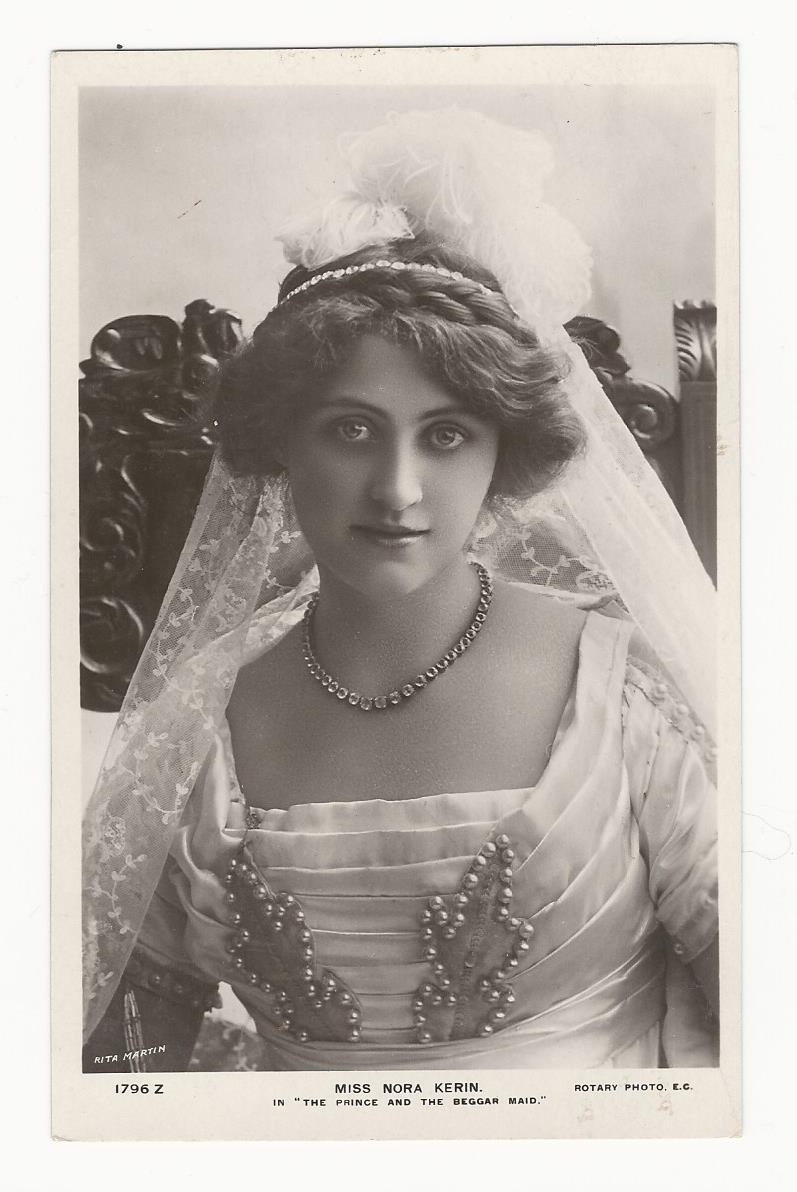
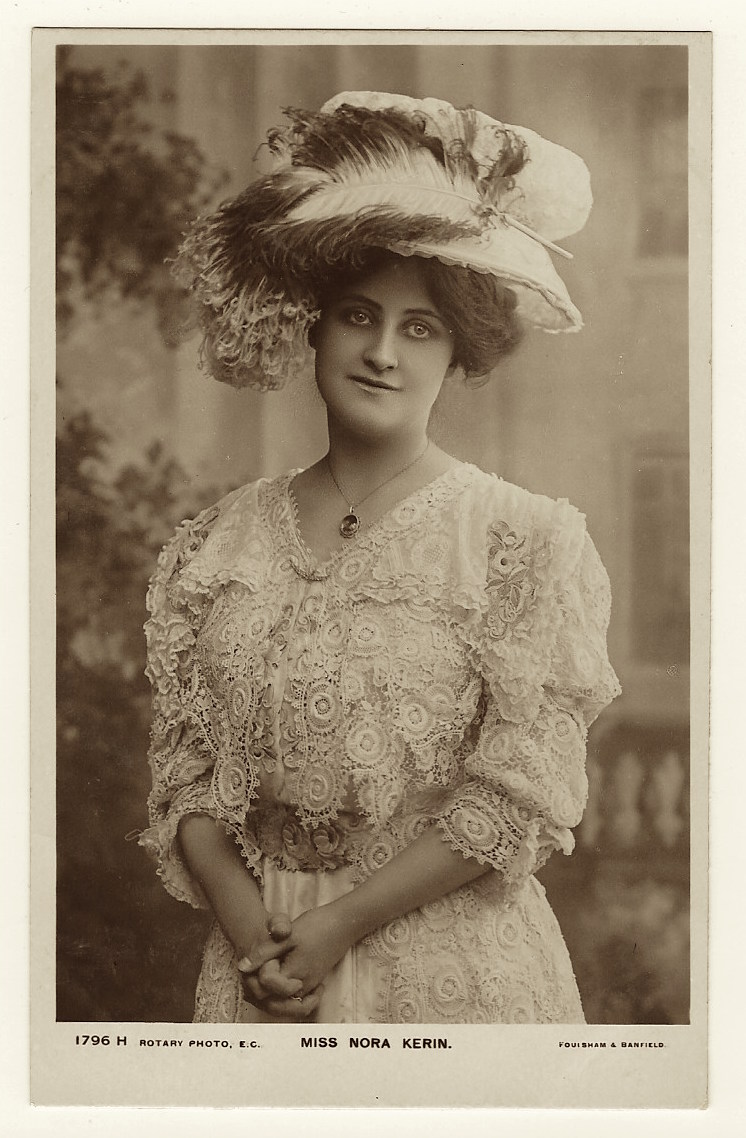
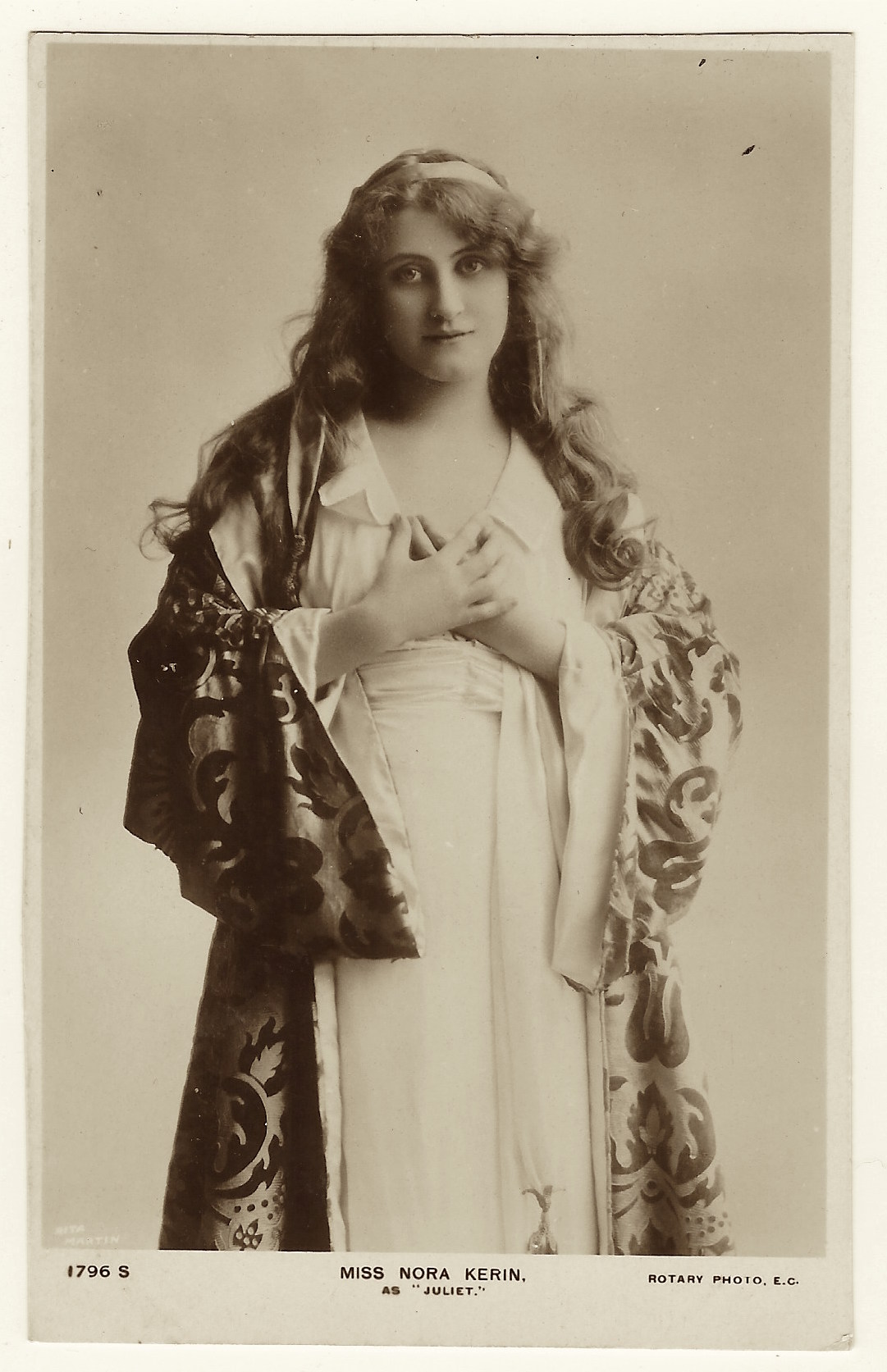
The top vintage real photo postcard features actress Miss Nora Kerin (1883-1970) as she appeared in the theatrical production of “The Prince and the Beggar Maid”. The actress is absolutely beautiful as is her costume. The play opened at the Lyceum in June of 1908 and ran for 82 performances. Miss Kerin played Princess Monica. The actress was born in London and her family was chock full of actresses including sister, Eileen Kerin and cousing Julia Neilson, Lily Hanbury, and Hilda Hanbury. Photographs of Miss Neilson and Mis Lily Hanbury can be found elsewhere in the Cabinet Card Gallery. Nora Kerin made her stage debut in 1899. In conducting my preliminary research about Nora Kerin, I was struck by the number of negative reviews of her acting that I encountered. One review concerned her performance as Juliet in “Romeo and Juliet”. The production was at the Lyceum Theater in 1908 and the review appeared in London’s “Daily Mail”. The reviewer wrote “‘Oh, Juliet. Juliet, wherefore art thou Juliet?’ This is, of course, an inversion and a parody; but, seriously, the Juliet of Miss Nora Kerin cannot be taken so. She declaims in the conventional old-fashioned style. She somehow destroys – on the stage – her own personality, and instead of looking the pink of charm and youth (as she is when “taking a call”) she manages to conceal both. Many of her lines were badly spoken, falsely intonated and punctuated. She had moments … melodramatic outbursts … but she is not the personality … she has not the witching simplicity of the real Juliet”. Clearly, Miss Kerin was not a luminary actress of her time. However, she was quite pretty and fifteen portraits of her can be seen in the National Portrait Gallery. The photographer of this postcard image was Rita Martin, a celebrated female photographer. She is considered one of the best British photographers of her time.Her studio was in an exclusive neighborhood at at 74 Baker Street, Marylebone. She was born Margareta Weir Martin in Ireland. Margareta “Rita” Martin started her career in photography in 1897 by assisting her elder sister Lallie Charles in running her studio. In 1906 Rita opened her own studio. She had a style of photographing subjects in pale colors against a pure white background and she tended to avoid photographing men and older boys. Rita had a specialty in photographing actresses including Lily Elsie and Lily Brayton. She was also well known for her child studies which often involved children of well known actresses. Lily’s sister, Lallie Charles was more known as an excellent society photographer. Many of Rita Martin’s photographs can be found in the National Portrait Gallery. A photograph of Rita Martin, by Rita Martin can be seen below. This vintage real photo postcard was produced by the Rotary Photo Company and was part of a series (no. 1796 Z). The second postcard portrait of Miss Kerin is also a good representation of her beauty. In addition she is wearing a beautiful lace dress and an extraordinary hat. The photographers of this terrific image, Foulsham & Banfield were well known celebrity photographers. Frank Foulsham and A. C. Banfield operated a studio in the 1900’s through the 1920’s. This postcard is part of the Rotary Photographic Series (no. 1796 H) and is of English origin and is postmarked 1907. The third postcard features Nora Kerin in her role as Juliet in “Romeo and Juliet”. Unlike the first two portraits, in this image she is wering her hair down and is projecting an air of innocence through the placement of her hands and her vulnerable expression. Just like the top postcard, this image was photographed by Rita Martin and the postcard was part of the Rotary Photographic Series (1796 S) by the Rotary Photo Company. SOLD














 POSTCARD 1 (SOLD)
 POSTCARD 2
 POSTCARD 2
 POSTCARD 1 (SOLD)
 POSTCARD 2
 POSTCARD 1
 POSTCARD 2
 POSTCARD 3 SOLD
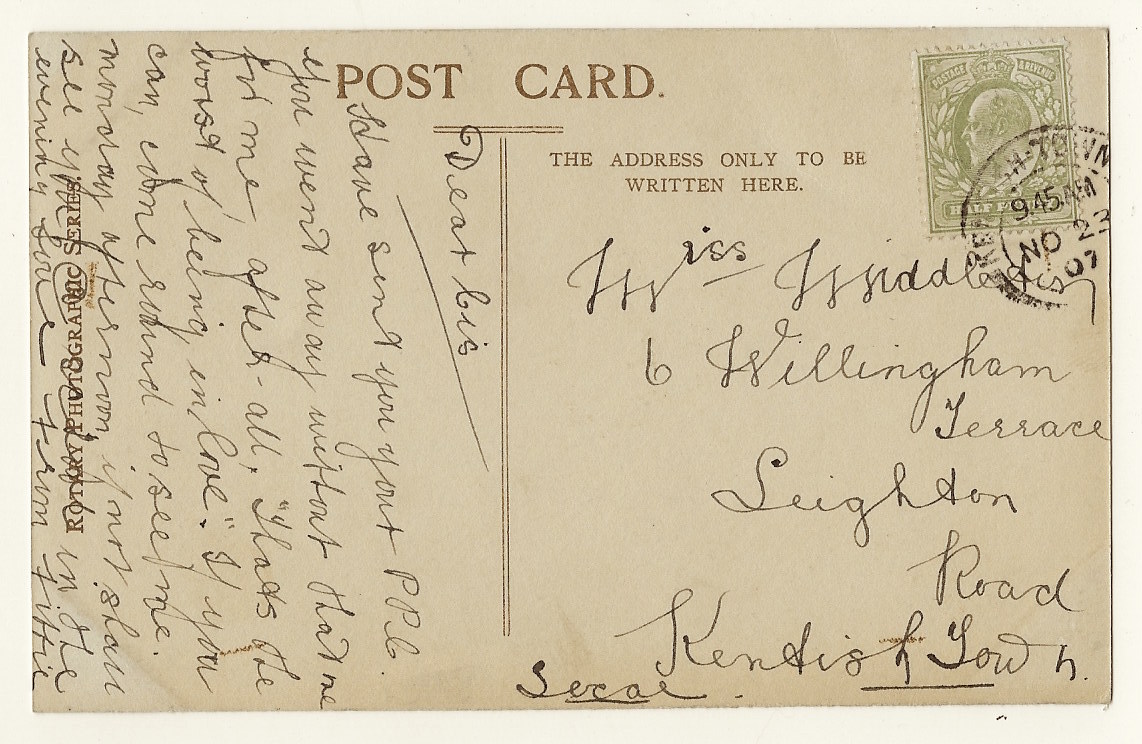 REVERSE OF SECOND POSTCARD


 THE CABINET CARD GALLERY