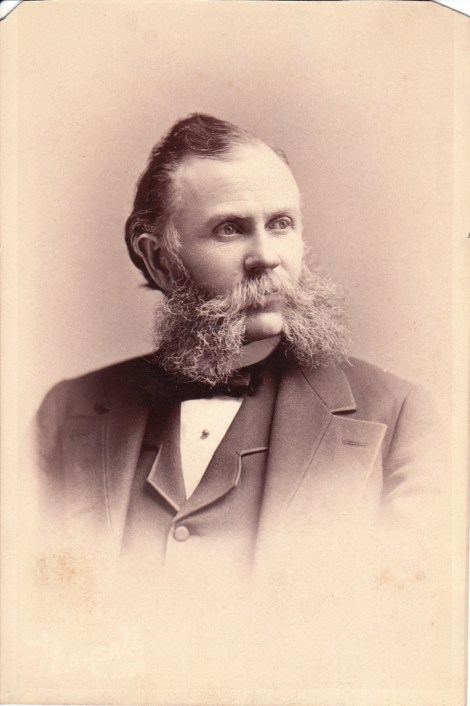
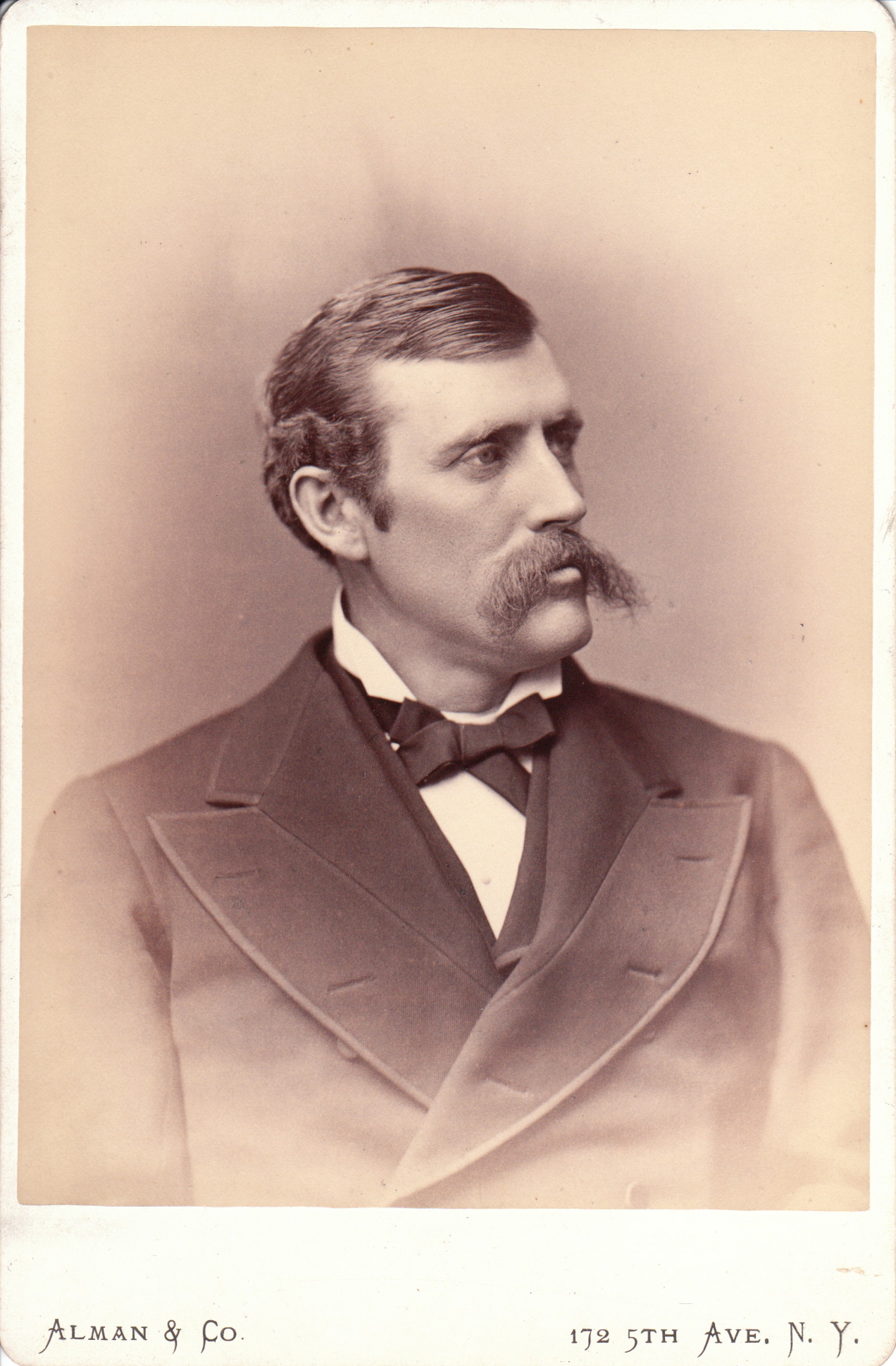
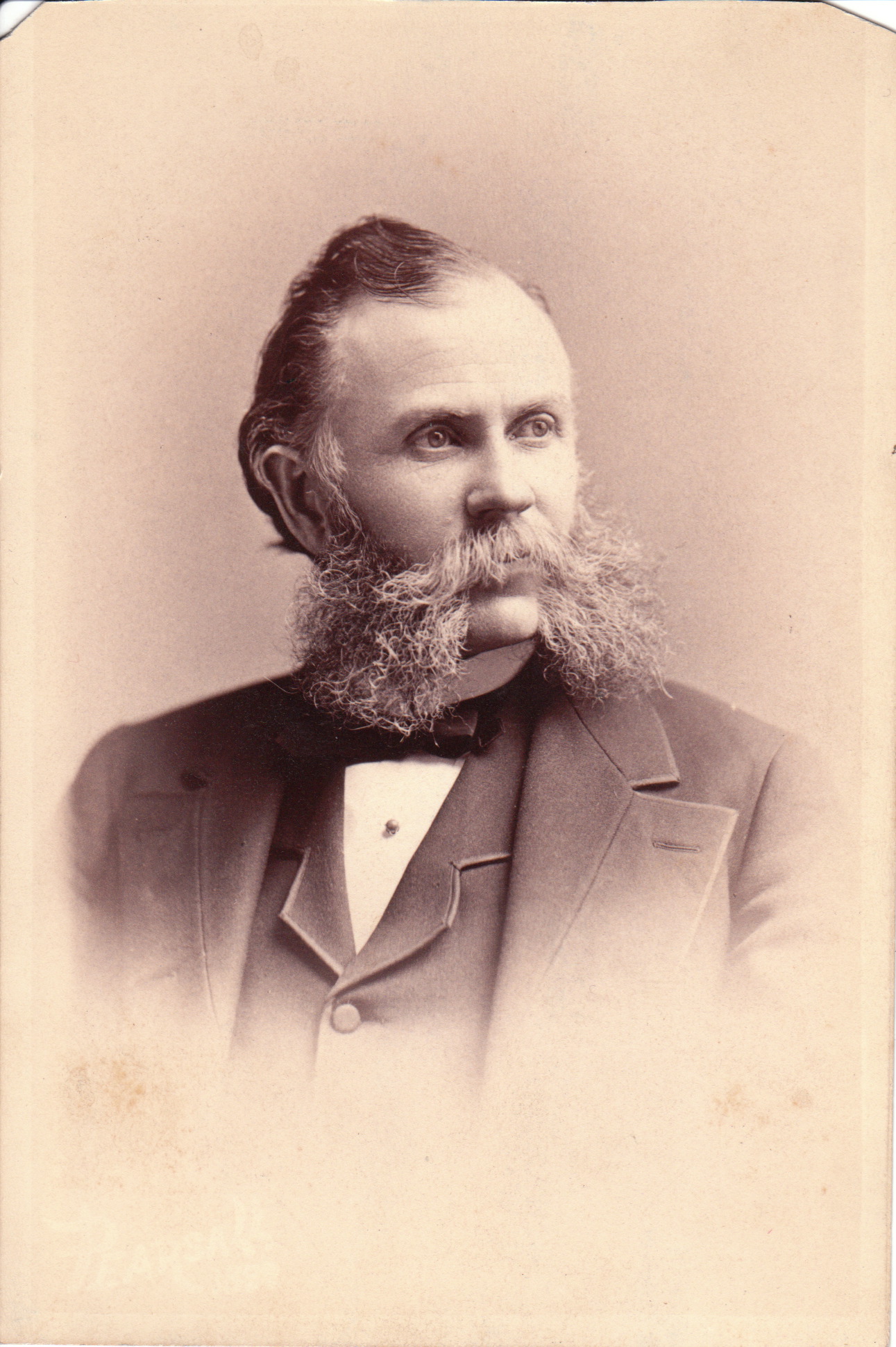
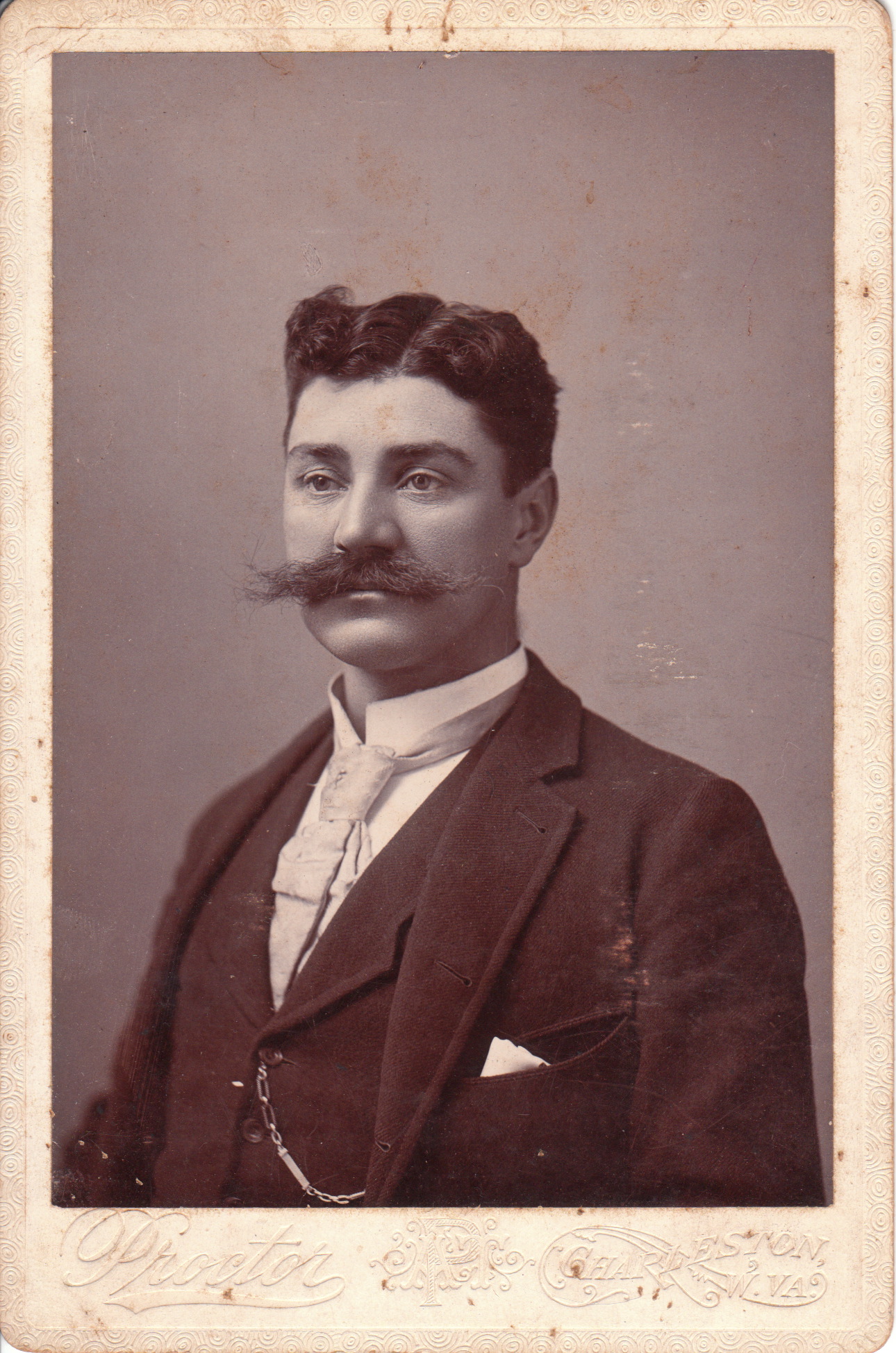
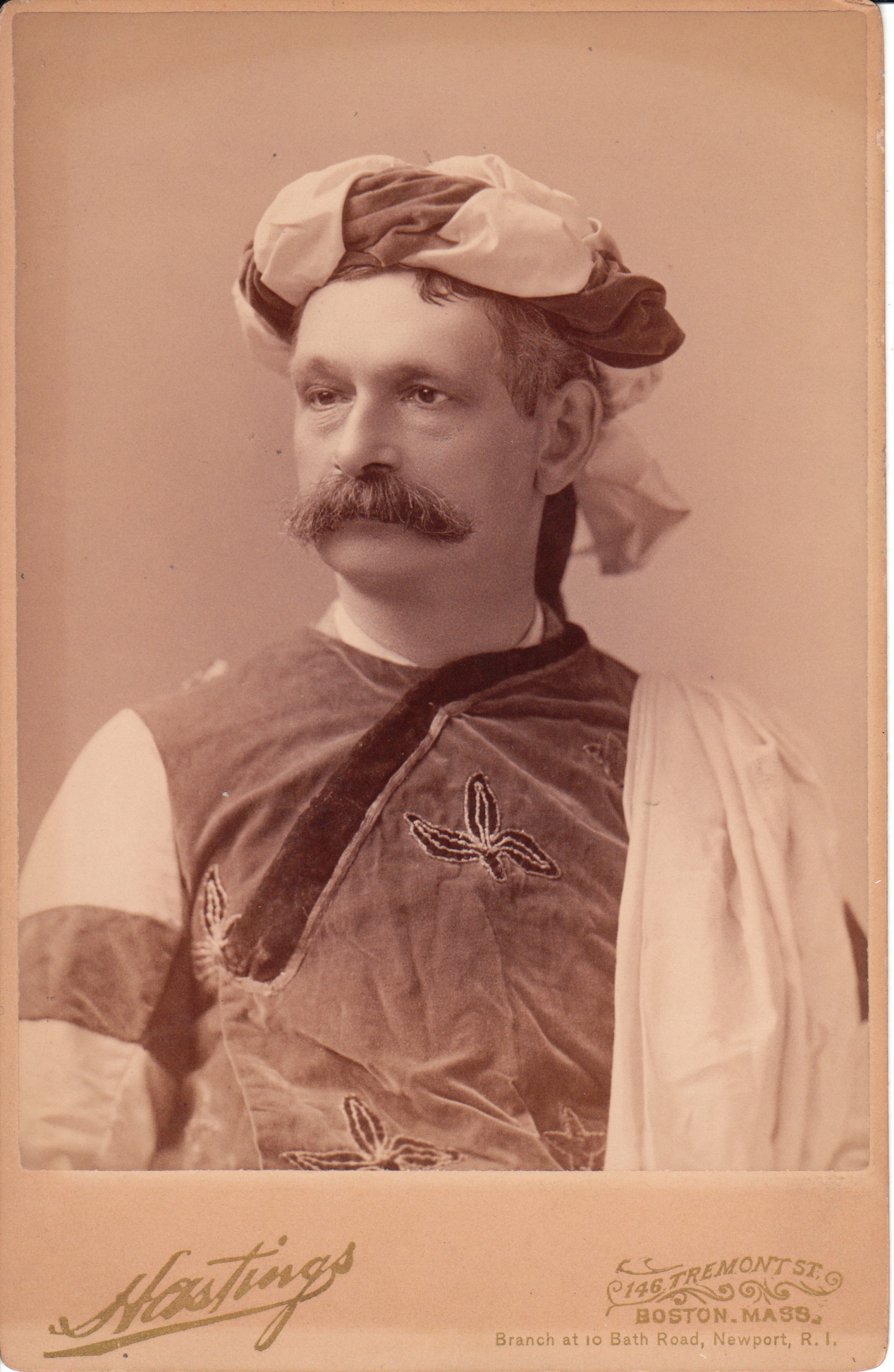
 A man with a partial beard, mutton chops, and a very bushy mustache is captured by photographer George Frank E. Pearsall. The address of Pearsall’s studio was 298 Fulton Street in Brooklyn, New York. This portrait earns a spot in the cabinet card gallery’s category “Mustaches (Only the Best)”. Take a look at the category for some very interesting facial hair images. Frank Pearsall was born in New York City. His father was a life boat builder. Pearsall’s parents died when he was young and he and his two brothers were raised by an aunt in Saratoga, New York. In 1852 he began to learn about the photography business from his uncle who operated a gallery. After two years, his uncle left for Australia and the business failed despite Pearsall’s aunt’s efforts. Frank and his older brother left for an adventure and they spent eight years in such places as Cuba, West Indies, Venezuela, and elsewhere. In 1862 he returned to New York and worked as a positionist with celebrated New York City photographer Benjamin Gurney (see category “Photographer: Gurney”). He refined his skills working in the Gurney studio. In 1866 he married Long Islander Elizabeth Conrow. In 1870 he opened a photographic studio in Brooklyn which operated for two years at which point he moved his business to the 298 Fulton Street address. An 1880 advertisement asserted that Pearsall’s studio was the largest one in Brooklyn. Pearsall developed a historic camera in 1883. The camera was called the “Pearsall’s Compact Camera” and was unique in that it came in its own “carrying case” that also housed needed accessories. This design was imitated by all of the major camera manufacturers through the 1920’s. The British Journal of Photography (1876) published an article pertaining to a court case involving Pearsall. The case, Pearsall vs Schenck. was followed by photographers through out the United States because it involved a matter of universal importance to their business. The case concerned a couple that set for 17 poses at Pearsall’s studio. He sent them the proofs and they returned them. The couple contended that they did not like the pictures and would not pay for them. Pearsall demanded payment regardless of whether the couple liked the pictures. The journal took the side of Pearsall when they wrote that photography does not make “the human face divine”, it only reproduces it. The journal argued that the photographer does not have the responsibility of the painter to please the sitter for the portrait because the photographer can not control an image the way a painter can control a painting. Photographer can no change their subject’s “bad features”. The nose that is “snubby” will be “snubby” in photographs. “It is too bad to blame the poor photographer for the facial accidents of nature”. Tongue in cheek, the journal suggests the couple should have paid their bill or else the photographer might put their portraits in the gallery’s main display cases to be seen by all visitors. Pearsall won the legal case and the couple was ordered to pay for the photographs. The New York Times (1876) also reported this story but was less supportive of Pearsall. However, their article stated that the photographer should be paid for his time and supplies. The Times also made an analogy concerning the relationship of medical doctor and patient. The article asserted that patients had to pay their doctors even when they were not cured by the doctors efforts. Research revealed two interesting side notes. Pearsall was the President of the Brooklyn Archery club and in 1881 was the Secretary and Treasurer of the National Archery Association. A second bit of trivia is that Pearsall’s brother, Alva Pearsall, was a camera operator for Matthew Brady in 1871.




 THE CABINET CARD GALLERY