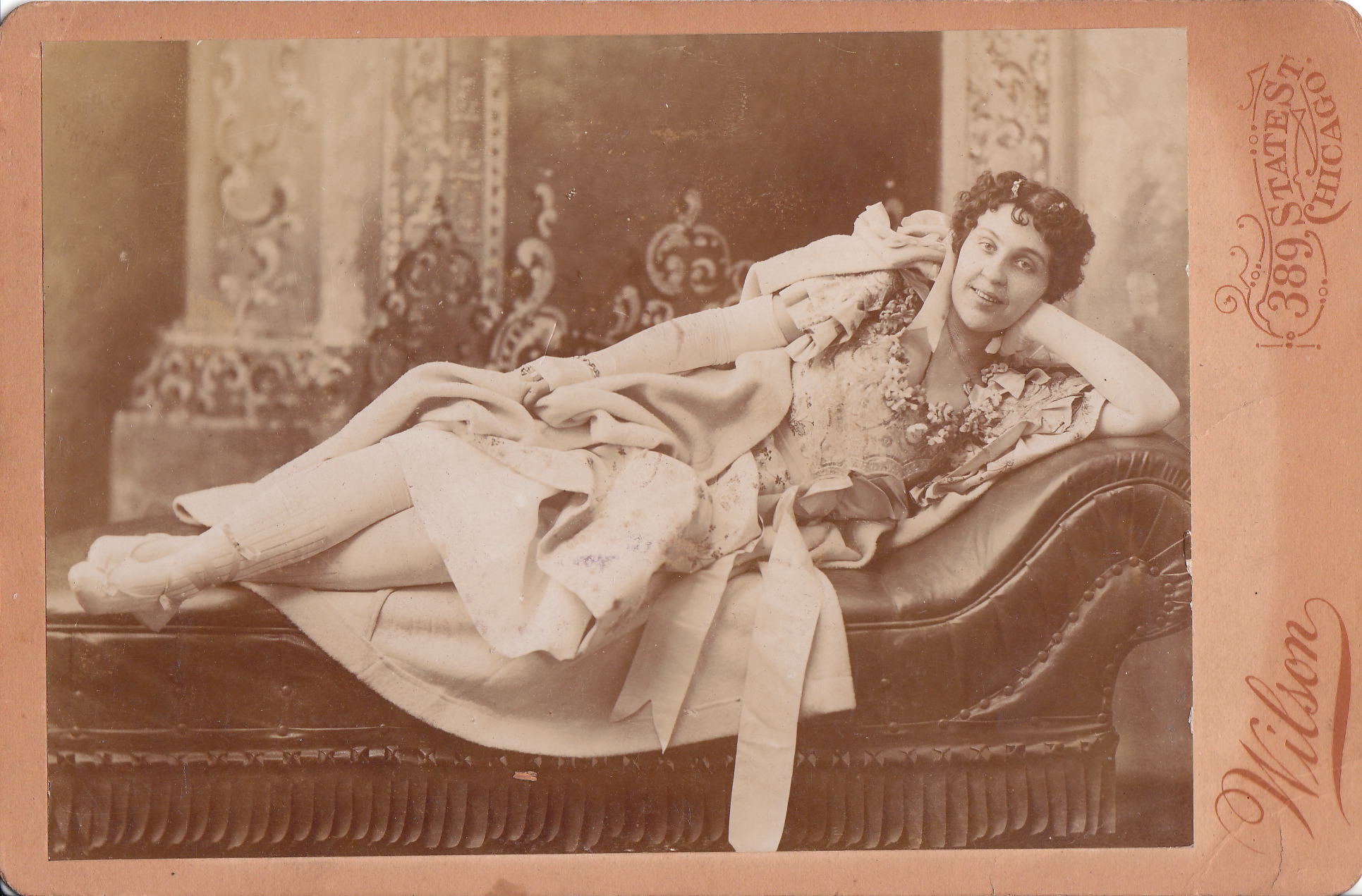
 This cabinet card features a young smiling woman lying on a fainting couch. This image is quite risque for its time. The style and folds of the woman’s dress, her exposed feet, her smile and her body language all contribute to the provocativeness of this image. Fainting couches were popular in the 19th century and used predominately by woman. They are couches with a back that is traditionally raised at one end. There are two major theories as to why these type of couches became popular. The first theory was that some women wore their corsets so tight, that they restricted blood flow; causing fainting. This theory has pretty much been debunked. A second theory was that the couch was popular because many women of that time suffered from “female hysteria”. This medical condition caused symptoms that included faintness, nervousness, and insomnia. The illness was treated by “pelvic massage”. The couch was a great setting for hysterical woman to receive the treatment from visiting physicians and midwives. This female psychiatric illness sounds very much like an anxiety attack, and Xanax and Ativan seem to have replaced “pelvic massage” on a fainting couch. The photographer of this cabinet card was J. B. Wilson of Chicago, Illinois. To view other photographs by Wilson, click on the category “Photographer: Wilson (JB)”. The subject of this photograph may have been an actress.
PROVOCATIVE WOMAN ON A FAINTING COUCH IN CHICAGO, ILLINOIS

RISQUE PORTRAIT OF AN ALLURING WOMAN IN NEW YORK CITY, NEW YORK BY JOSE MORA (ACTRESS JEFFREYS-LEWIS?)
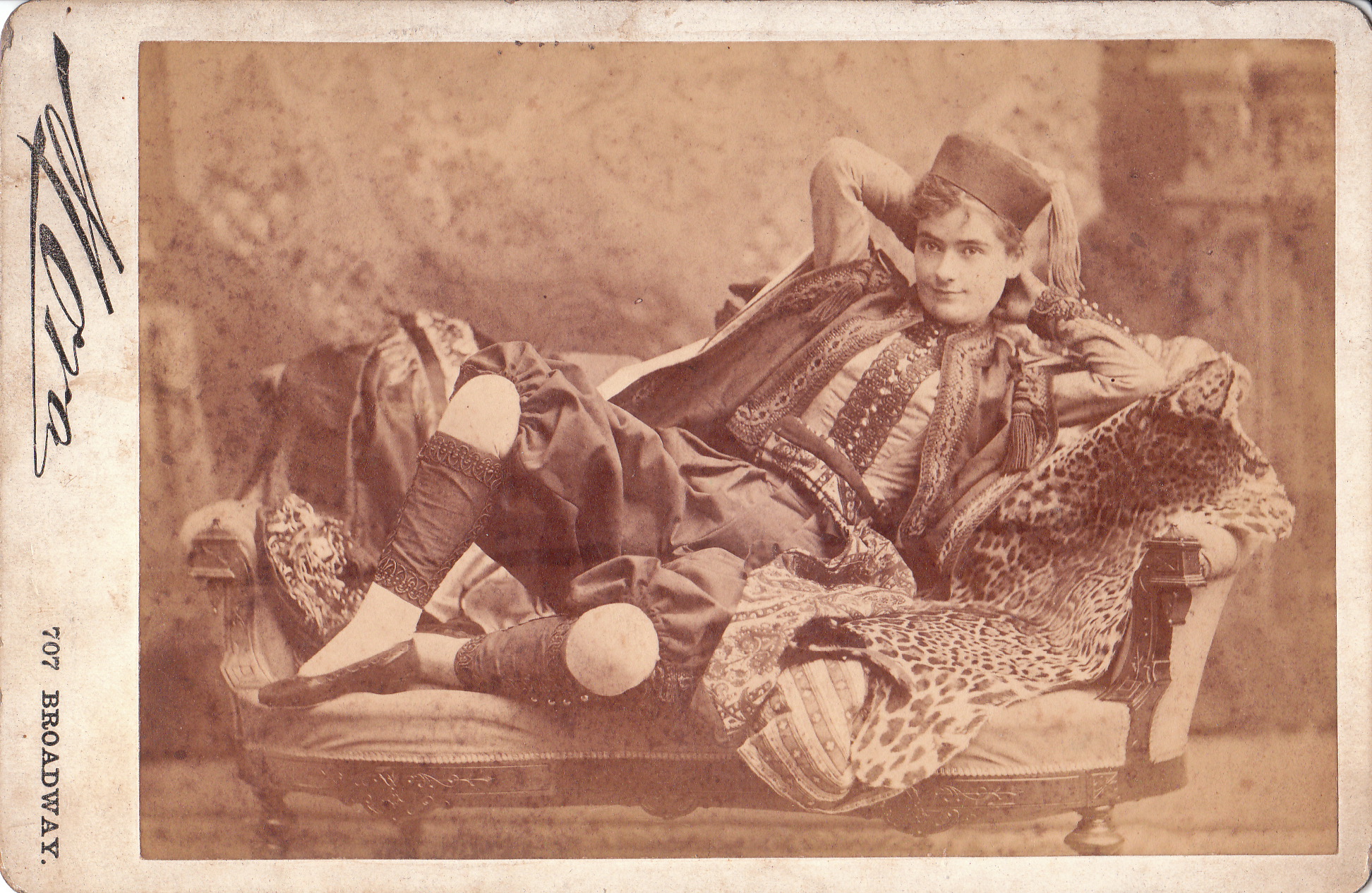 This cabinet card features an alluring woman lying on a divan in a very provocative pose. Note the leopard skin on the divan. This woman is likely an actress. She appears to be dressed like she is part of a harem. Rather than an actress, she may be a member of a circus act. The photographer is the famous celebrity photographer, Jose Mora. This image is risque for the time that it was made. To view other photographs by Mora, click on the category “Photographer: Mora”. ADDENDUM: An informed visitor to the cabinet card gallery has identified the subject of this cabinet card as being actress Jeffreys-Lewis. See the comment below to learn the interesting details.
PORTRAIT OF AN UNIDENTIFIED ACTRESS
 This pretty woman sat for this cabinet card portrait in the New York City studio of celebrity photographer, B. J. Falk. The photograph is a bit risque for its time. The young woman is showing her bare arms and her shoulder is also exposed. To increase the sexual tension in this photograph, the actress is projecting a “come hither look”. To view other photographs by Falk, click on the category “Photographer: Falk”.
CANADIAN MAIDEN POSES IN MONTREAL
 A Canadian maiden poses for her portrait in Montreal, Canada. She clearly is trying to look a bit sexually provocative in this photograph. She manages to succeed in her effort; but one must remember, a respectable turn of the century woman would not assume a more risque pose than the one she has taken in this photograph. Note the wicker furniture in this photograph. The photographers are Larin and Stidworthy of Montreal, Canada (2202 Notre Dame Street). The Larin in this partnership is Henry Larin.
PAULINE MARKHAM: TURN OF THE CENTURY BURLESQUE ACTRESS
 This risque (lots of cleavage shown for this era) cabinet card is a portrait of Pauline Markham (1847-1919), a singer and burlesque dancer during the civil war period in the United States. She was born in England where she made her stage debut as a child. She came to New York and appeared in “Black Crook” and “Pinafore”. She was a member of the Lydia Thompson troupe (British Blondes). After the civil war, she had relations with Northern Generals and Reconstructionists In the 1870’s she formed her own stage company and in 1879 she took her company on a tour of the West during which they performed Gilbert and Sullivan. A member of that troupe was Josephine Marcus, who later married lawman, Wyatt Earp. She retired from the stage in 1889 after breaking her leg. She must have taken the old show business saying of “break a leg” literally. This cabinet card was photographed by Fredricks, of Brooklyn, New York. It is possible that the photographer is Charles DeForest Fredricks (1823-1894) who was an innovative American photographer. Fredricks learned the art of daguerreotypes from the great photographer , Jeremiah Gurney (see category “Photographer: Gurney”). Fredricks worked in South America through the early 1850’s and then he operated out of Charleston, South Carolina; and Paris, France. He was the first photographer to make life-size portraits, which he then hired artists to color them using pastel. He then returned to New York City and rejoined Gurney. In 1854 he developed a new enlarging process and in 1855 he ended his association with Gurney. In the late 1850’s Fredricks ran his studio in Havana, Cuba, and in the 1860’s he opened a studio on Broadway, in New York City. He retired in 1889. Research has not confirmed that Fredricks ever had a studio in Brooklyn, so it is quite uncertain whether the Fredricks who photographed Markham is actually Charles D. Fredricks.
ACCIDENTALLY RISQUE WOMAN IN MCMINNVILLE, OREGON
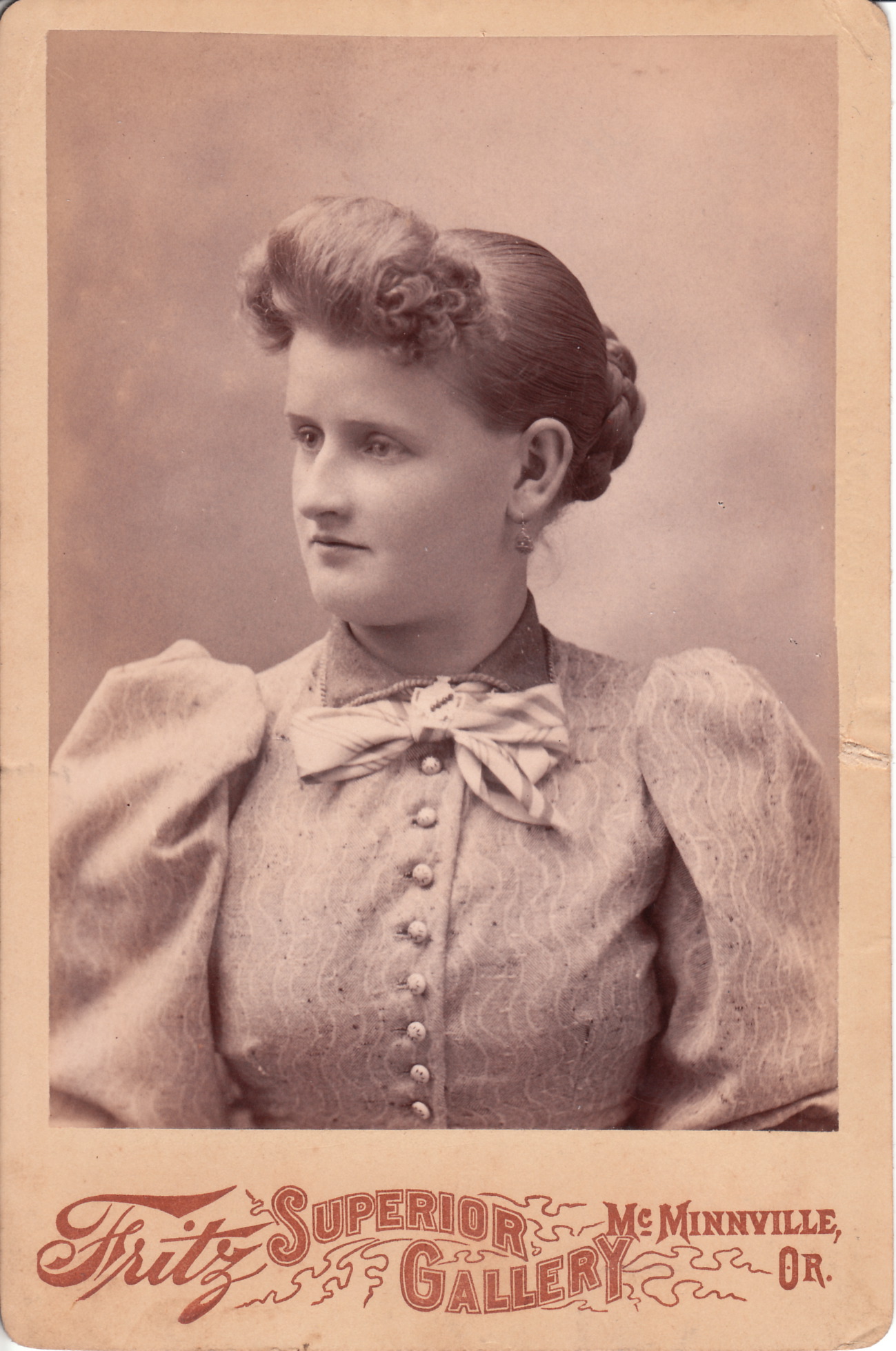 This Cabinet Card is an image of 18 year-old Mary Earhart. The reverse of the card has pencil writing with her identification as well as the information that she was 5 foot and 3 inches, and weighed 137 1/2 pounds. It is unusual to find these statistics on the reverse of a cabinet card.. This image is also unique because it appears that it shows the young woman’s ample bust in too much detail. Risque Cabinet Cards that emphasized a woman’s breasts or cleavage seems to have been typically reserved for women who were prostitutes or actresses; and of course many people did not believe there was a difference between the two occupations. Perhaps this image was saved rather than destroyed by Ms Earhart but kept in a private place. The photographer was Fritz of the Superior Gallery in McMinnville, Oregon.


 THE CABINET CARD GALLERY