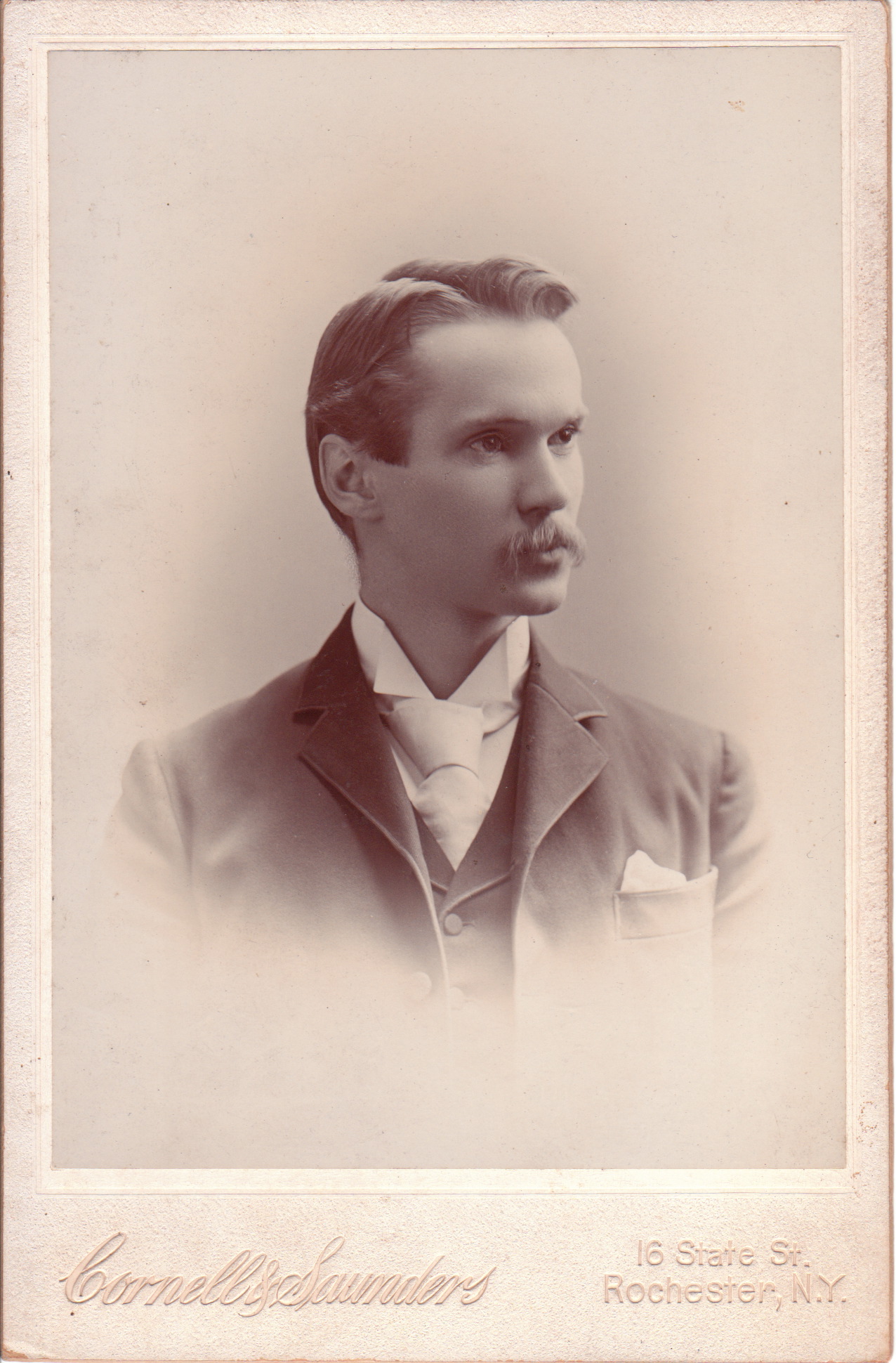
A handsome and well groomed young man poses for his portrait at the studio of Cornell and Saunders, in Rochester, New York. References to Cornell and Saunders were found in photographic journals of 1893 and 1894. SOLD
A handsome and well groomed young man poses for his portrait at the studio of Cornell and Saunders, in Rochester, New York. References to Cornell and Saunders were found in photographic journals of 1893 and 1894. SOLD


This vintage postcard is an interesting example of both Tobacciana and Postal history. This postcard was a calling card sent by Tobacco salesmen to their tobacconist customers. More specifically, the postcard would inform shopkeepers as to the exact date they could expect the salesman to call on them. This postcard was sent by a salesman employed by T Whalen. The firm was located in Rochester, New York. It manufactured Tobacco and Cigars and dealt in Pipes and Leaf Tobacco. The business was established in 1840 by Abraham Van Slyke. In 1864 the firm became Woodbury & Whalen, and a year later,the company evolved into R & T Whalen. This postcard likely dates back to pre 1907, as it is undivided and allows for no message on the address side of the card. SOLD

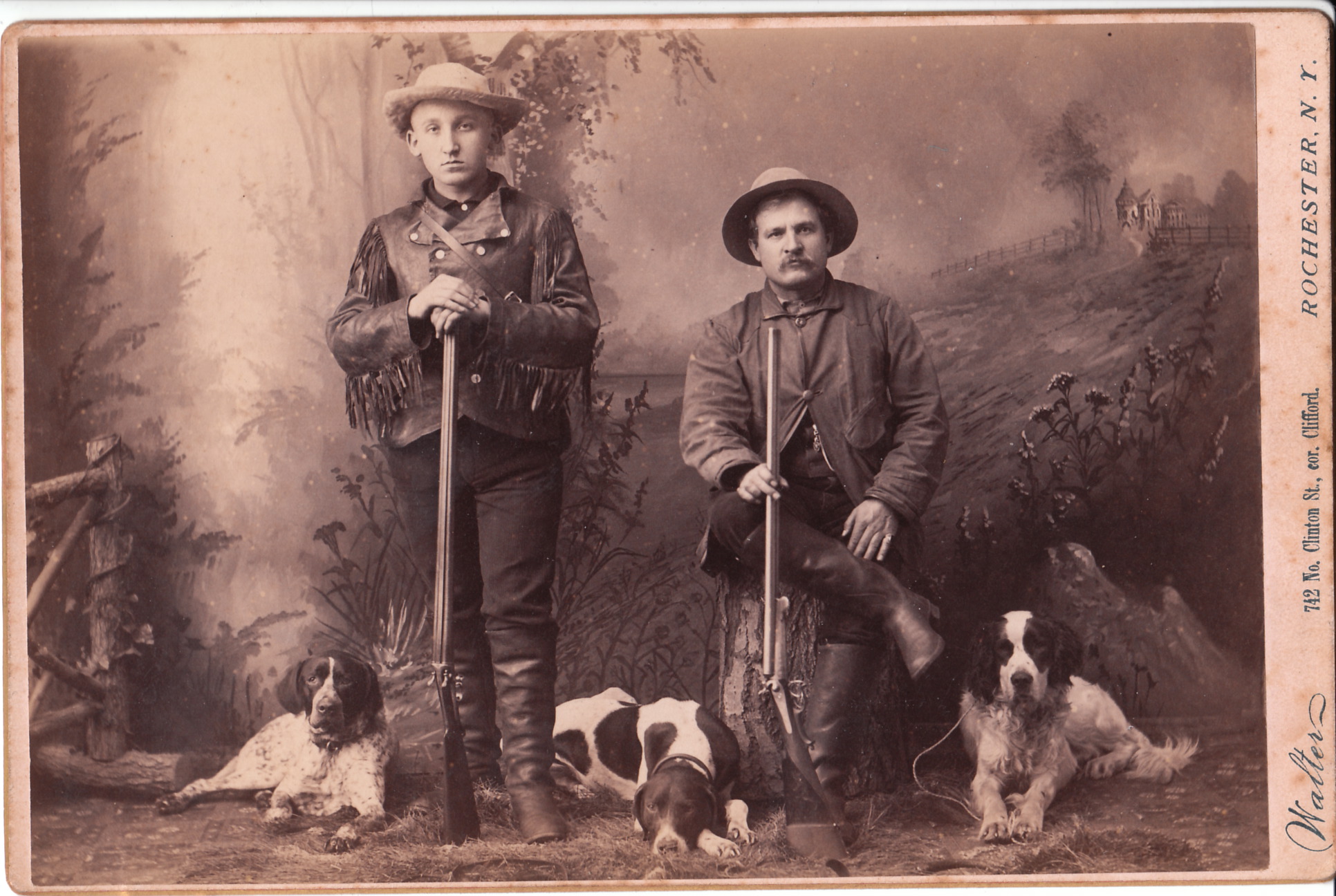 This terrific Cabinet card image shows two Hunters and their three hunting dogs. Both gentleman are wearing boots and are holding rifles. This studio photograph was produced by Walter of Rochester, New York. Notation on the reverse of the card identifies the hunters and is dated 1887. SOLD
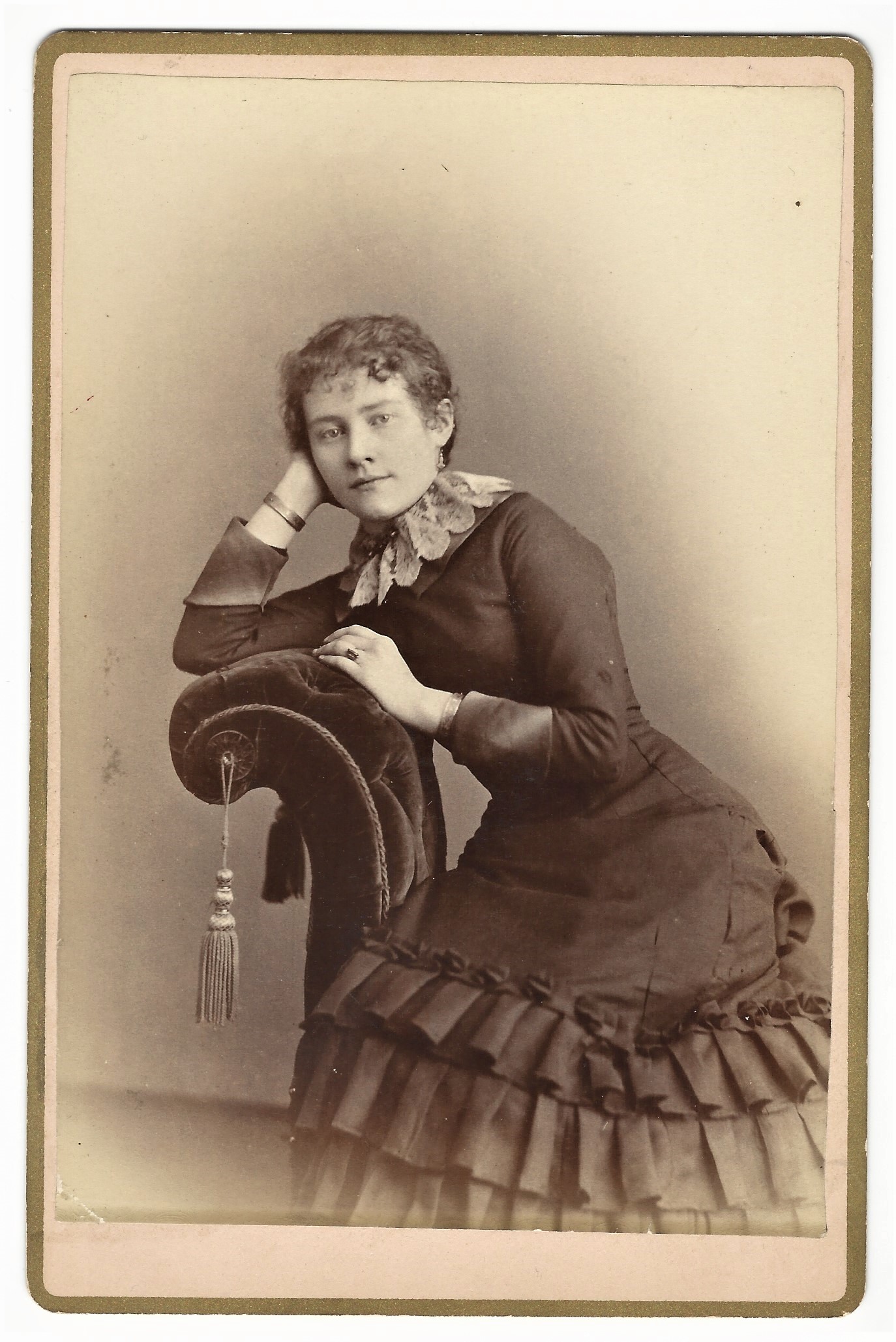
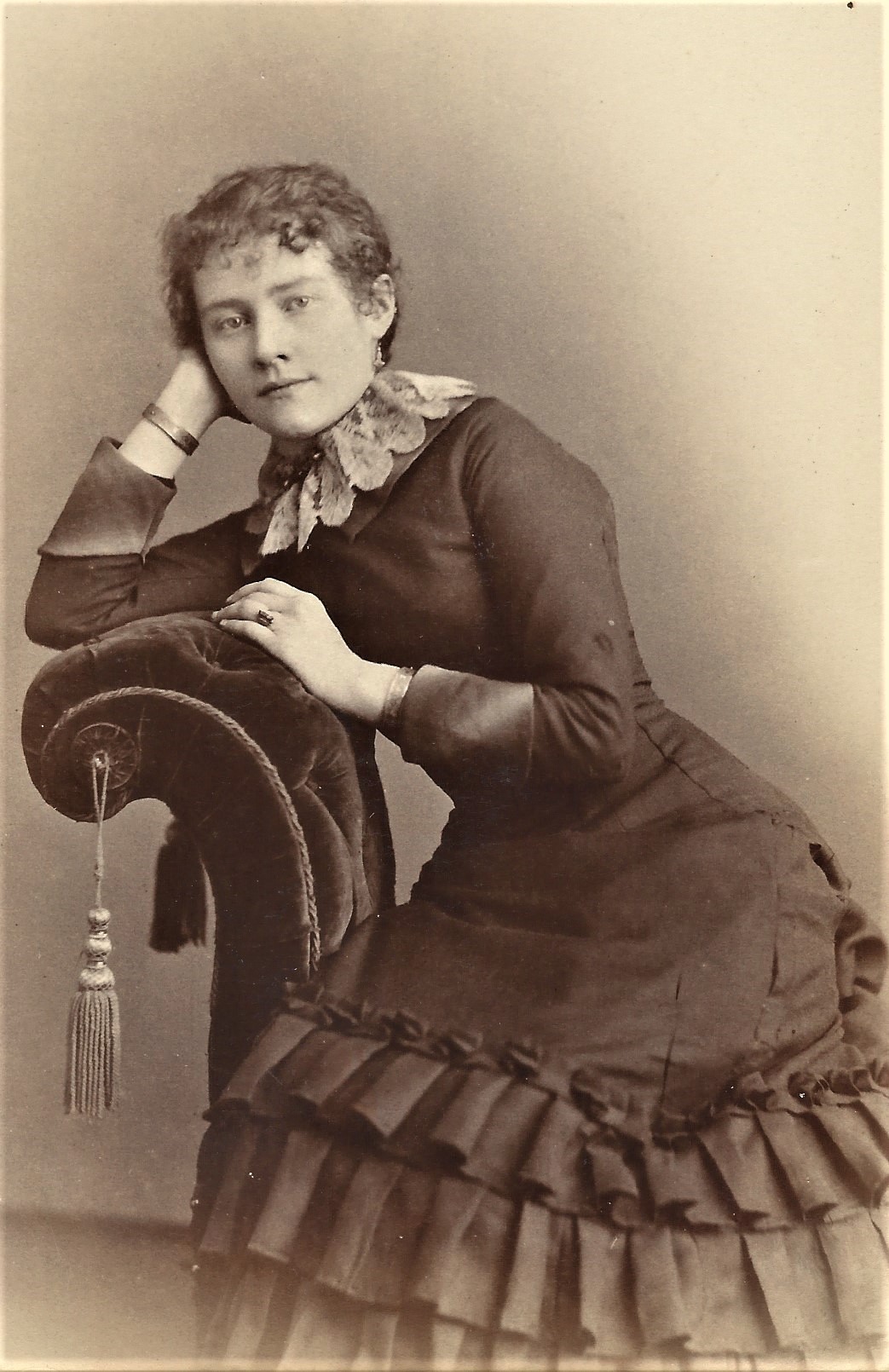
The photographer of this cabinet card is A. L. Lehnkering located at 87 East Main Street in Rochester, New York. She is wearing a gorgeous dress with rows of ruffles at the bottom. Note her tiny waist, likely courtesy of a corset. She is also wearing jewelry including a band around her wrist and a ring. She looks pensive. She is leaning on a chair with tassels. August L. Lehnkering seems to have occupied a few different addresses on East Main Street. In addition to number 87 (listed on the reverse of this image). he also operated out of 87 and 89 East Main Street, as well as 208 East Main Street. He was working out of 87 East Main in 1879, according to the Rochester Business Directory. He is mentioned in the American Journal of Photography (1891) for being awarded a photographic patent, and also in two photography journals published in 1906 for contributing to a charitable fund. This cabinet card portrait has a gold border. (SOLD)

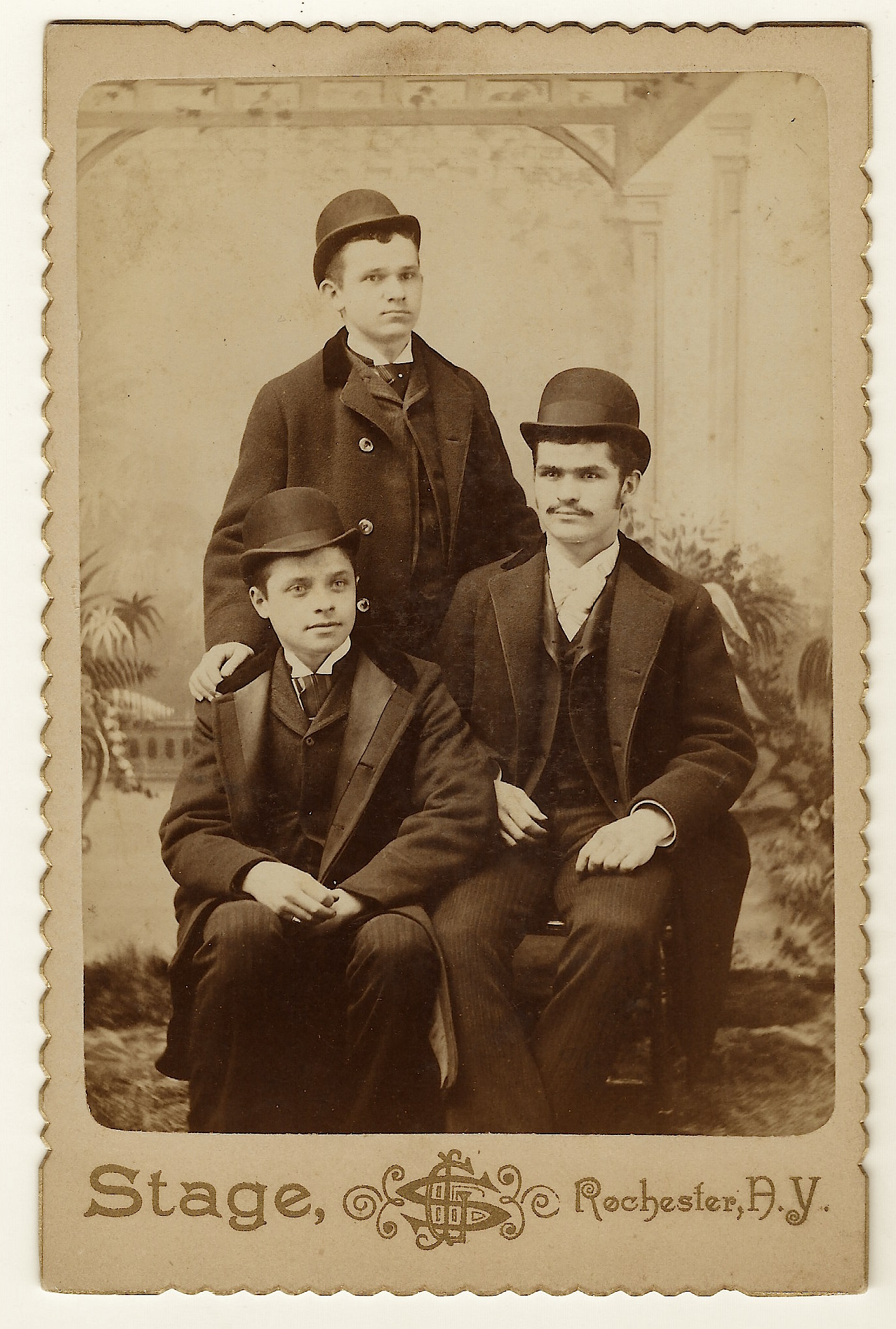
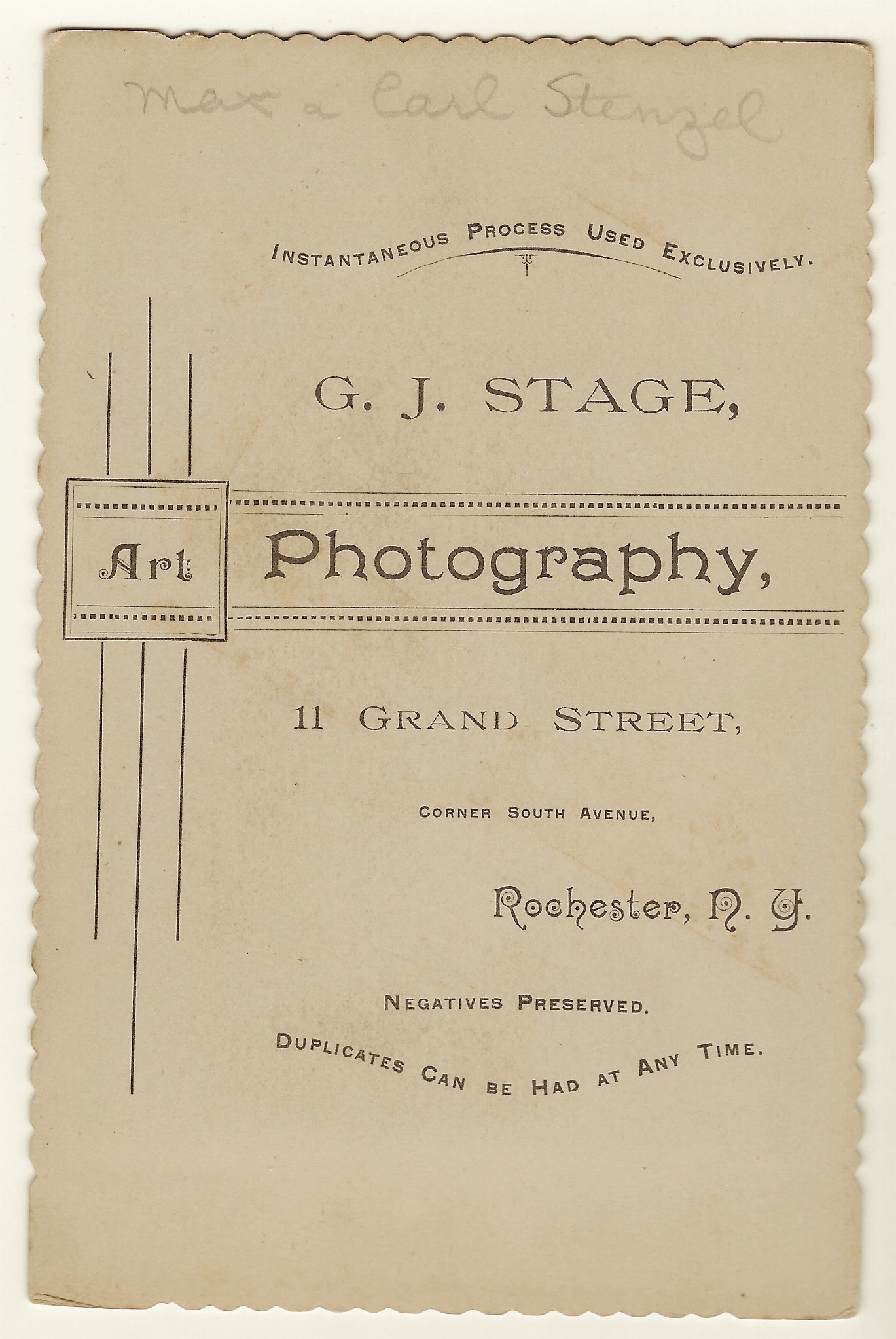
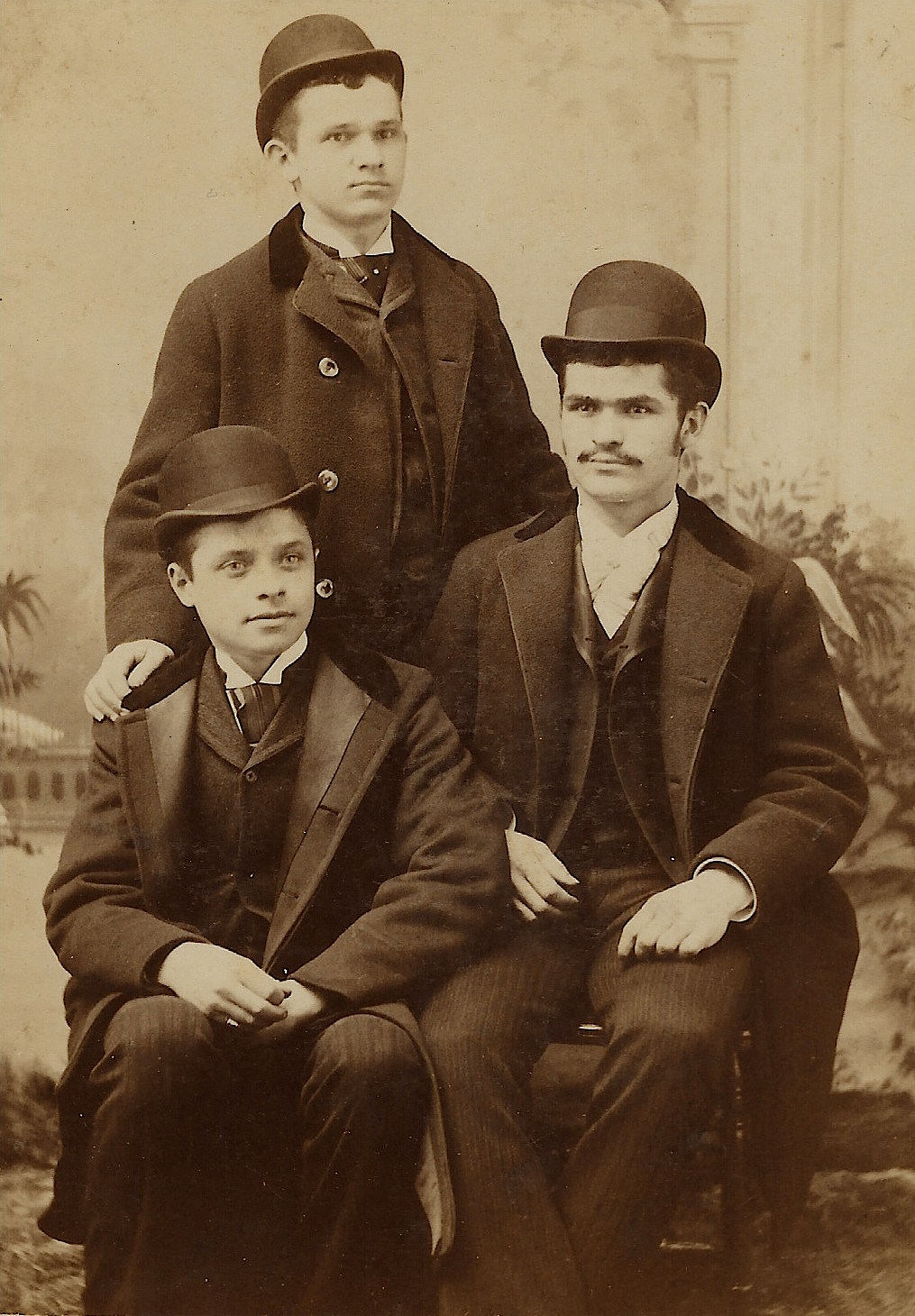 This cabinet card photograph features three well dressed young men wearing derby hats. They are wearing long overcoats over their suits. This photo must have been taken in winter. The young men appear to be in their teenage years. An interesting side note is worth mentioning about derby hats. Derbies are made of hard felt and have a rounded crown. They were created by two London hat makers in 1849. Their last name was Bowler and the hat was named after them. Bowlers (Derbies in the USA) were worn with semi formal and informal clothing. They were worn by working class men during the last half of the 19th century. In later years they were worn by middle and upper class men. Two of the men seen in the photograph are identified. They are Max and Carl Stenzel. Presumably, they are brothers. The photograph was taken by the G. J. Stage Art Photography studio in Rochester, N.Y.. George Stage was born in 1828, He appears in the New York Census (1905) as does his wife (Maggie) and their fourteen year old son. Interestingly, at the time of this census George was 77 years of age and Maggie was just 36 years old. George died in 1910. He is listed as a photographer in the Rochester 1909 directory, indicating he worked until he was 80 years-old. He is also listed as a photographer in the 1887 directory. Therefore he was a photographer for at least 22 years. SOLD
CABINET CARD 1 (SOLD)
CABINET CARD 2 (SOLD)

CABINET CARD 2 (CLOSE-UP) (SOLD)
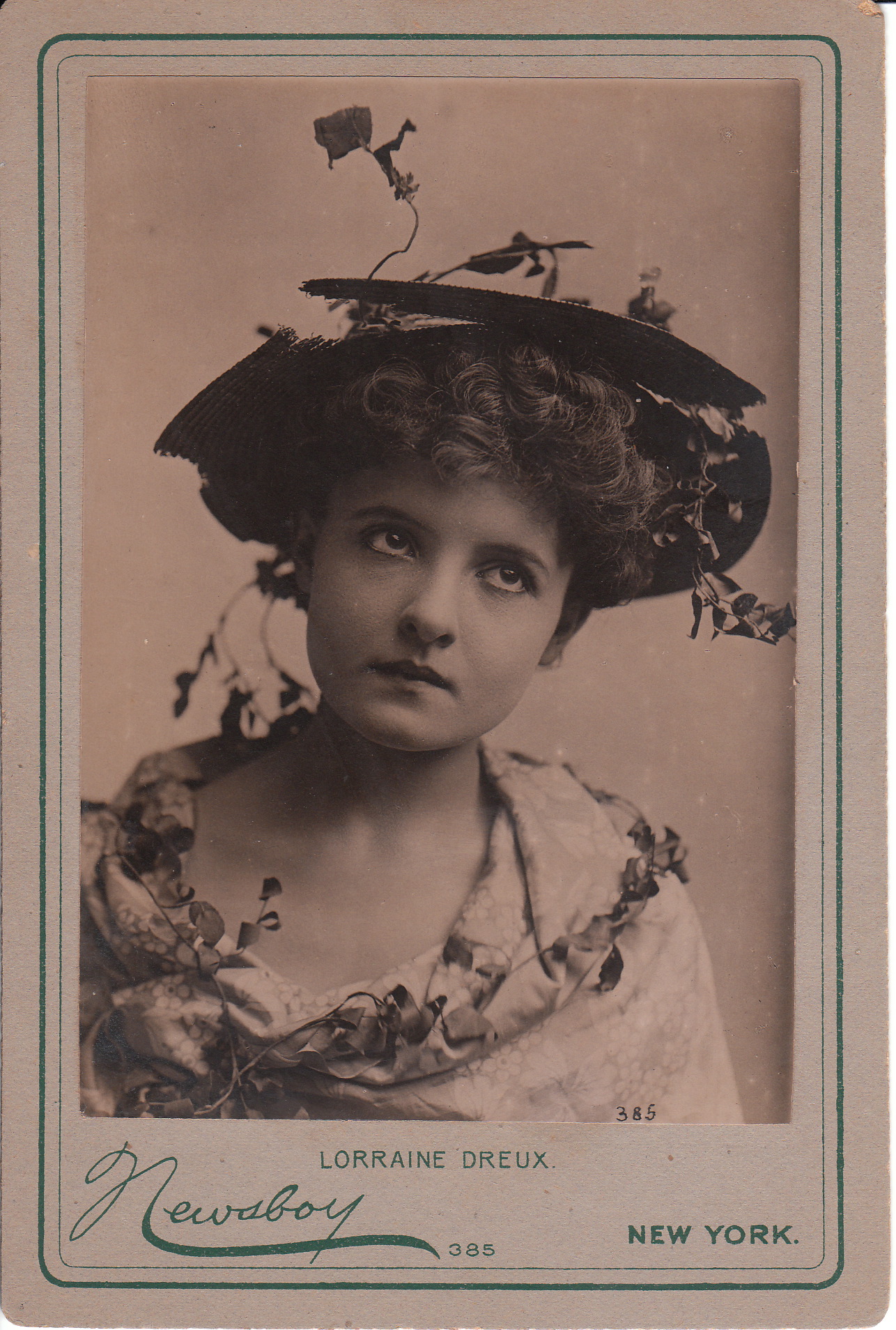
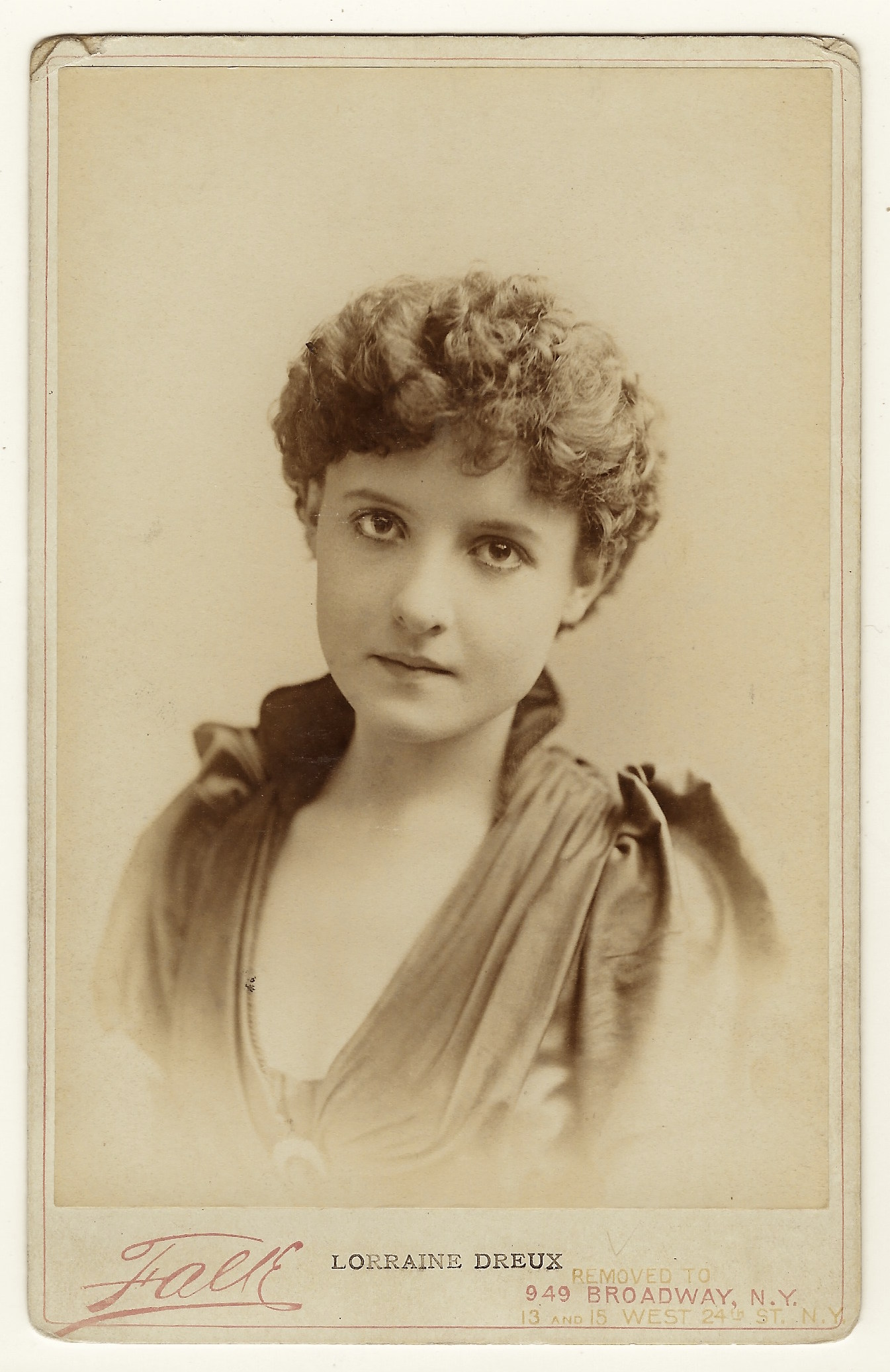
This cabinet card is a portrait of theatre actress, Lorraine Dreux. The image is part of the Newsboy Series (#385) and was published in New York City. The Newsboy series was used for advertising purposes by the Newsboy Tobacco Company. Celebrity photographs were given away as premiums upon the sale of tobacco products.To view other Newsboy photographs, click on the category “Newsboy”. Ms. Dreux looks like she ran through the woods in order to arrive at the photography studio in a timely fashion. She has twigs and leaves on her head and even is wearing a necklace of branches around her shoulders. It seems she is modeling “the natural” look. Her eyes are looking upward, as if to say, “Am I really wearing sticks and leaves?”. Who was Lorraine Dreux? The Illustrated America (1893) describes her as “young and pretty, with soft dark eyes, a tremulous little mouth, and a dazzling complexion”. She was born in Marquette, Michigan, of well to do parents. Her father did a great deal of business in the East and she spent much time on the banks of the Hudson River in New York. She was educated at home by a governess supervised by Dreux’s beautiful mother. She decided that she wanted to be an actress while in her early teens. Her parents reluctantly gave her permission and her first experience acting occurred while she was in London, England, with her mother. She was engaged by Mr Charles Wyndham to play comedy parts in London stage shows. She next joined the London Globe Theatre Stock Company playing sentimental roles. She then joined an English traveling theatre company. She soon returned to America and appeared in a number of plays, including “Ninety Days” with William Gillette. The article closes with the prediction that Dreux would be a successful actress in America because she possessed both beauty and talent. The New York Times (1894) reported on Dreaux’s appearance in “Lem Kettle” at the Bijou theatre. She also appeared in “Rush City” (1894) which was staged in Brooklyn (New York), and also in “Nance Oldfield” (1896) in New York. The latter show starred Rose Coghlan and her portrait can be seen in the Cabinet Card Gallery by placing her name in the “search box”. Dreux appeared in one Broadway production, “The Spectator” (1896). The New York Dramatic Mirror (1908) reported the tragic death of Lorraine Dreux. She was described as a well known and capable leading women of many stock companies outside of New York City. She died in New York’s Bellvue Hospital at age 35. The article reports that she “had fallen on evil days” and was “too proud to let her friends know of her plight”. She let an illness go till it turned into acute pneumonia which led to her death. Her last two engagements were in Worcester, Massachusetts and Rochester, New York. She received excellent reviews for her acting in both productions. However, her wardrobe was stolen and she was criticized for the way she dressed for her part in Rochester. She returned home “down hearted and discouraged” and sick, penniless and homeless. She met an old friend on the streets of New York who took her home to be fed and cared for but her condition worsened. A collection was made from other actors and actresses and the money was used to admit her to Bellvue Hospital where she died. Aid from the Actors Fund paid for her funeral and burial at Evergreen Cemetery. The second cabinet card portrait above, features Lorraine Dreux and her “Bette Davis eyes”. In this photograph, Miss Dreux has remarkable striking eyes. She is gazing directly at the camera. Many cabinet card portraits of actresses captures them with averted gaze. For example, the majority of cabinet card images of Sarah Bernhardt, that I have seen, has the celebrated actress staring away from the camera. Modern neuroscience has demonstrated that people find attractive faces with direct gaze are “more rewarding” than faces with averted gaze. This particular cabinet card is a bit risque as a result of Dreux’s relatively plunging neckline. This portrait was taken by Benjamin Falk, the celebrated New York celebrity photographer. (SOLD)

CABINET CARD 2
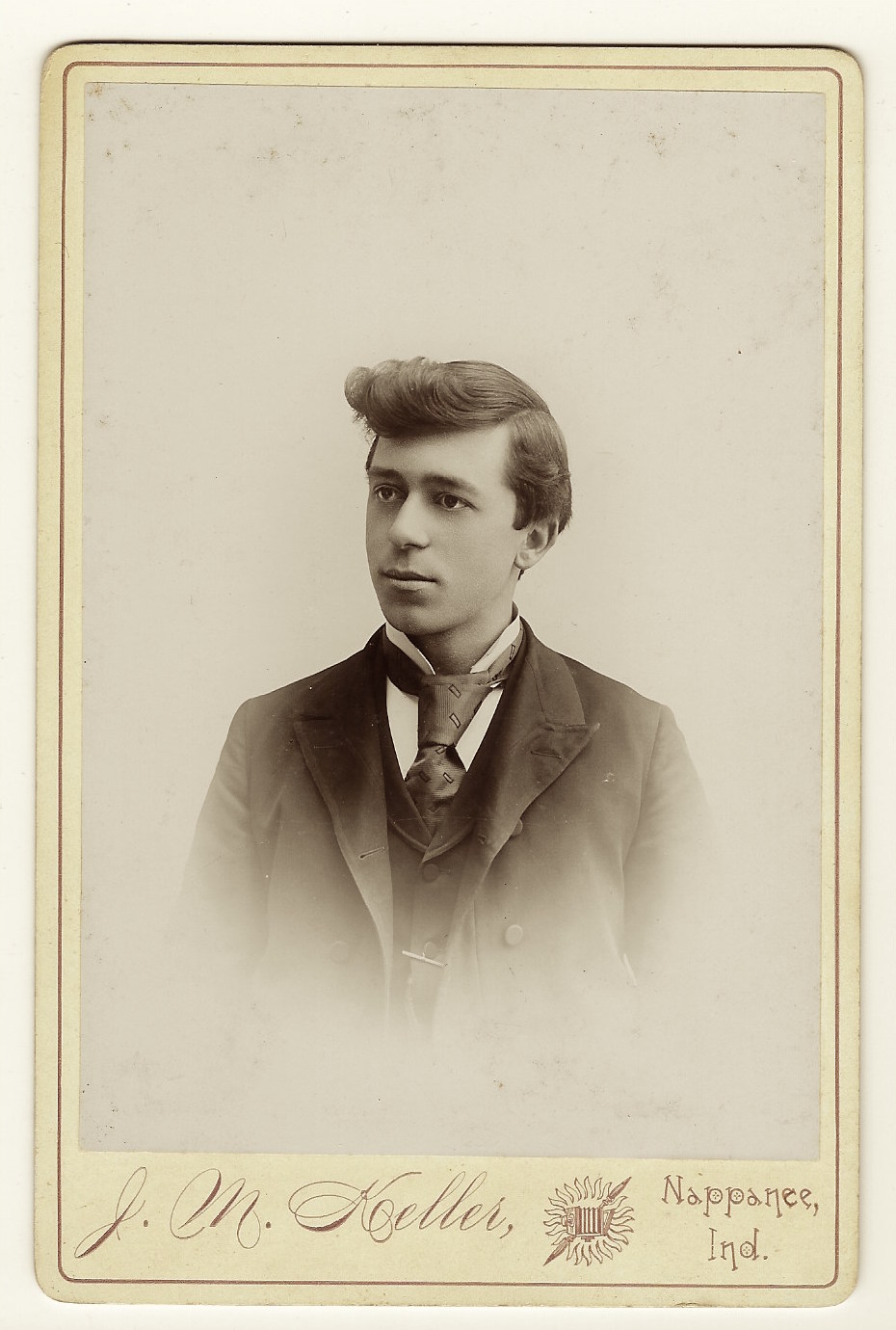
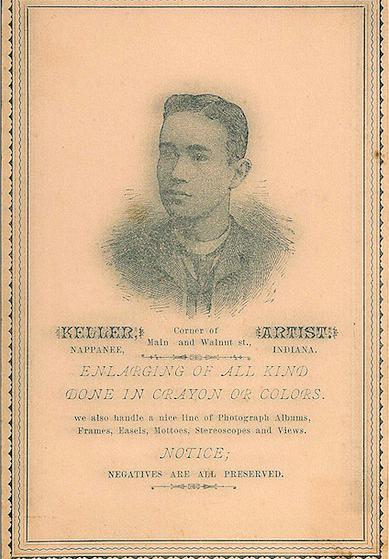
A young man, probably a teenager, poses for his portrait at the Keller studio in Nappanee, Indiana. The young gentleman is well dressed and well coiffed. Either he, or someone else, spent a good deal of time and work to properly arrange his hair. John M. Keller (1867-1943) opened his photography studio in Nappanee in 1897. An ad in the St. Louis and Canadian Photographer (1900) advertised the business as being for sale. The 1900 US census listed him as working as a bicycle dealer. Keller married Clara Burbach in 1891. The 1908 Elkhart (Indiana) business directory reported that he had a store selling bicycles and sundries, as well as repairing sporting goods. By the time of the 1910 US census, Keller had a new occupation. He was working as a garage manager. The Goshen Democrat Newspaper (1912) reported that while Keller was testing an automobile, the flywheel came off and struck him below the knee. The unfortunate accident broke his leg. Interestingly, the newspaper also stated that after injuring Keller, the flywheel continued it’s journey and actually went through the side of the building. The 1920 US census found Keller working as a “garage mechanic” in Frankfort City, Indiana while the 1930 US census lists him as unemployed and living in Rochester, Indiana. It turns out that Keller was a real entrepreneur. According to the Rochester Historical Society, In 1921 Keller built and operated the Keller Inn which was located near the edge of Lake Manitou. He also made lures for fishermen. Apparently Keller had a shady side. During prohibition he made and sold liquor and “locals reported he also ran prostitutes out to an island in Lake Manitou”. Keller died at age 75 from heart disease. Much of the information about J. M.Keller was found at an internet site (http://www.folkartfishingtackle.com/#!john-keller/cadr). The image below was also found there. The image is a back stamp from one of Keller’s cabinet cards. It seems likely that the young man pictured in the image is Keller himself. I can’t resist supplying an interesting fact about the town of Nappanee. It is the longest city name in the US which has each letter in it’s name appearing twice. (SOLD)

W. J. Lee, a photographer in Rochester, New York, produced this wonderful family portrait of a father and his two children. Dad is quite handsome. He is holding his derby hat on his knee. Dad has his arm tucked around the waist of his son. The son is wearing a hard to identify hat/cap. Is it a fez? The photographer did a terrific job of capturing the daughter’s facial expression. She is adorable and she is displaying an interesting “look”. Is she communicating a certain elegance, or is her glance an expression of apathy? One wonders why the children’s mother does not appear in this portrait. W. J. Lee is listed in various Rochester city directories beginning 1887 and ending 1902.
 The little girl pictured in this cabinet card portrait is none too happy to be at J. W. Taylor’s studio in Rochester, New York. In fact, she looks bewildered about the entire experience. She is wearing a pretty dress with a bow tied in the front. To learn more about the photographer and to view more of his photographs, click on the category “Photographer: Taylor JW”.
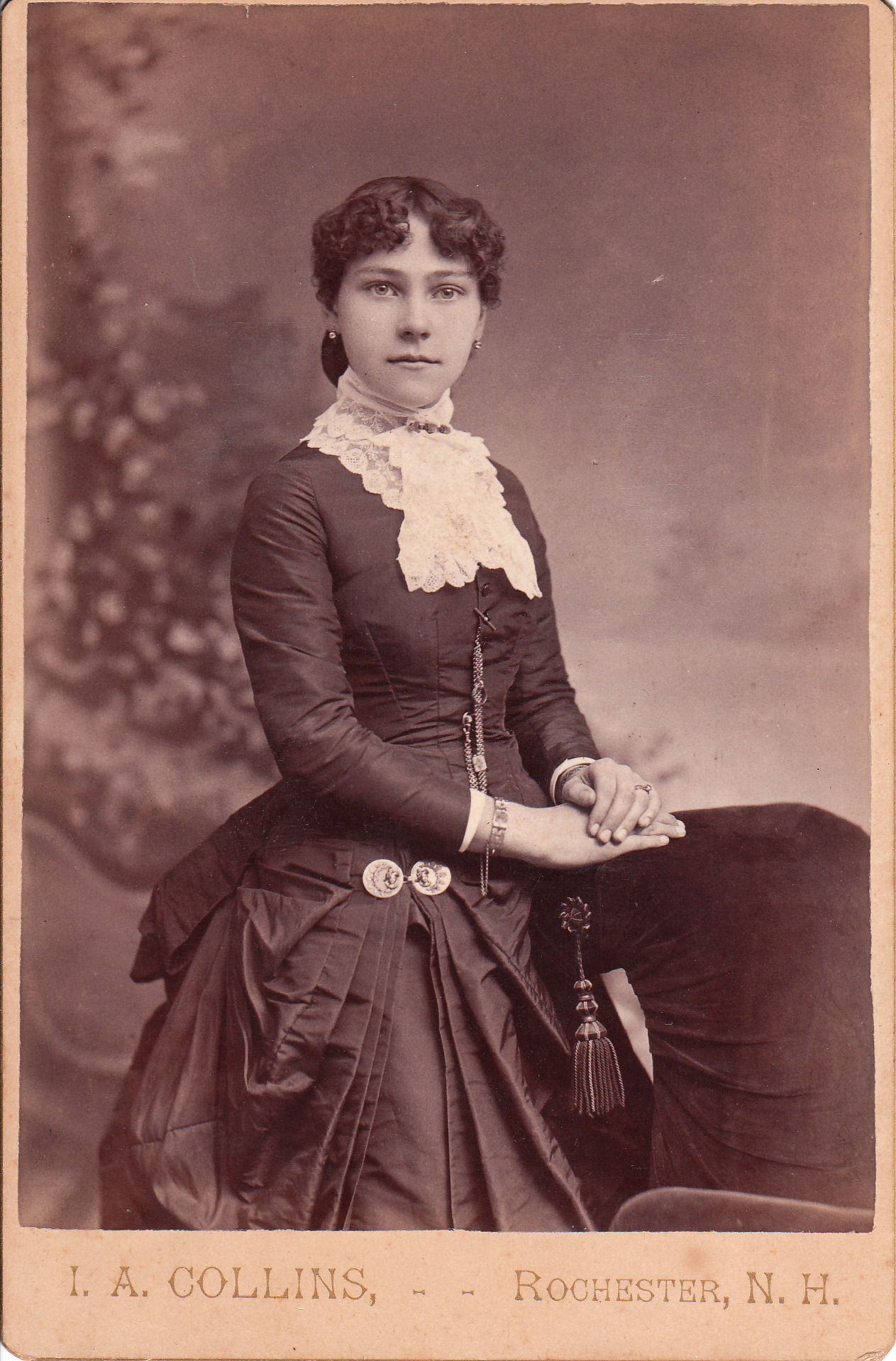
Photographer I. A. Collins of Rochester, New Hampshie, produced this cabinet card portrait of a lovely woman. She is wearing a pretty dress and an abundance of jewelry. Note her bracelet, ring, pin and chains. Her dress has two very large buttons and hopefully one of the fashion experts who visit the Cabinet Card Gallery can explain the purpose of the buttons. It appears as if the buttons are held together by a clasp and serve to keep the skirt portion in position.Very little information could be uncovered about photographer I. Collins. He was listed in the Dover, New Hampshire business directory (1889 and 1891) as a photographer. The directories report that the gallery was located on a street named Hanson.


 THE CABINET CARD GALLERY