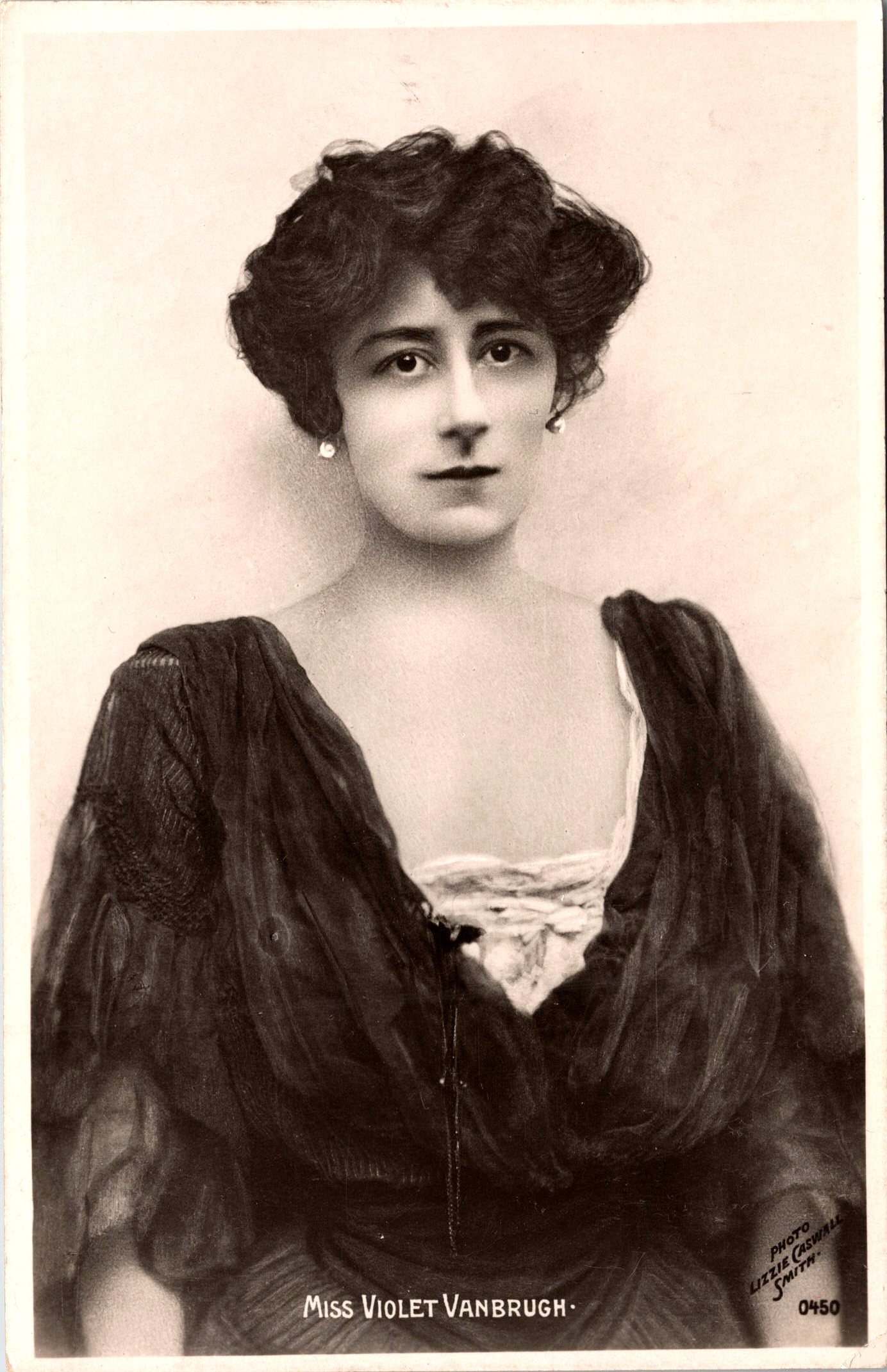
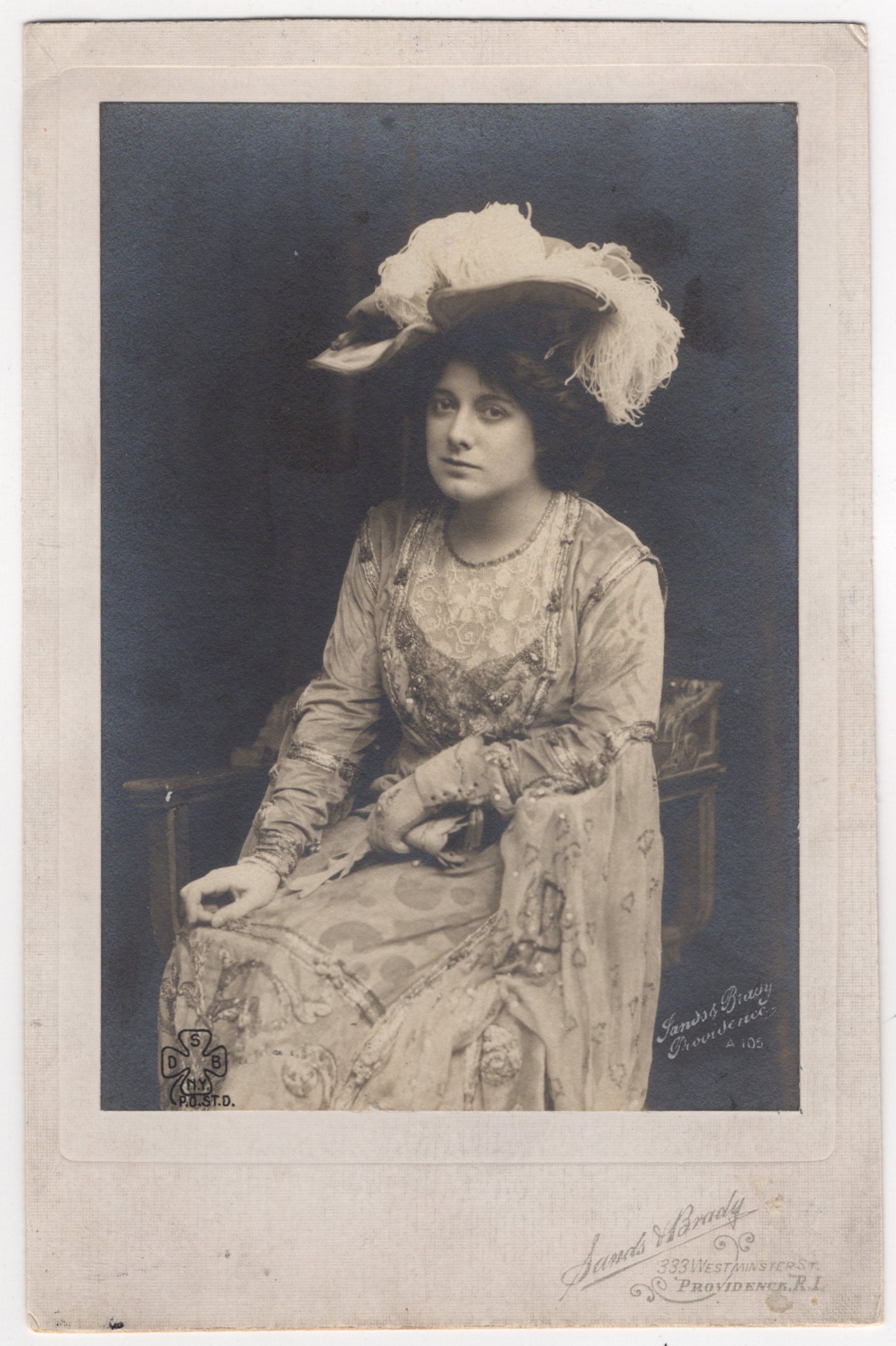
VIOLET VANBRUGH : PHOTO BY LIZZIE CASWALL SMITH : UNCOMMON ROTOPHOT RPPC 1908

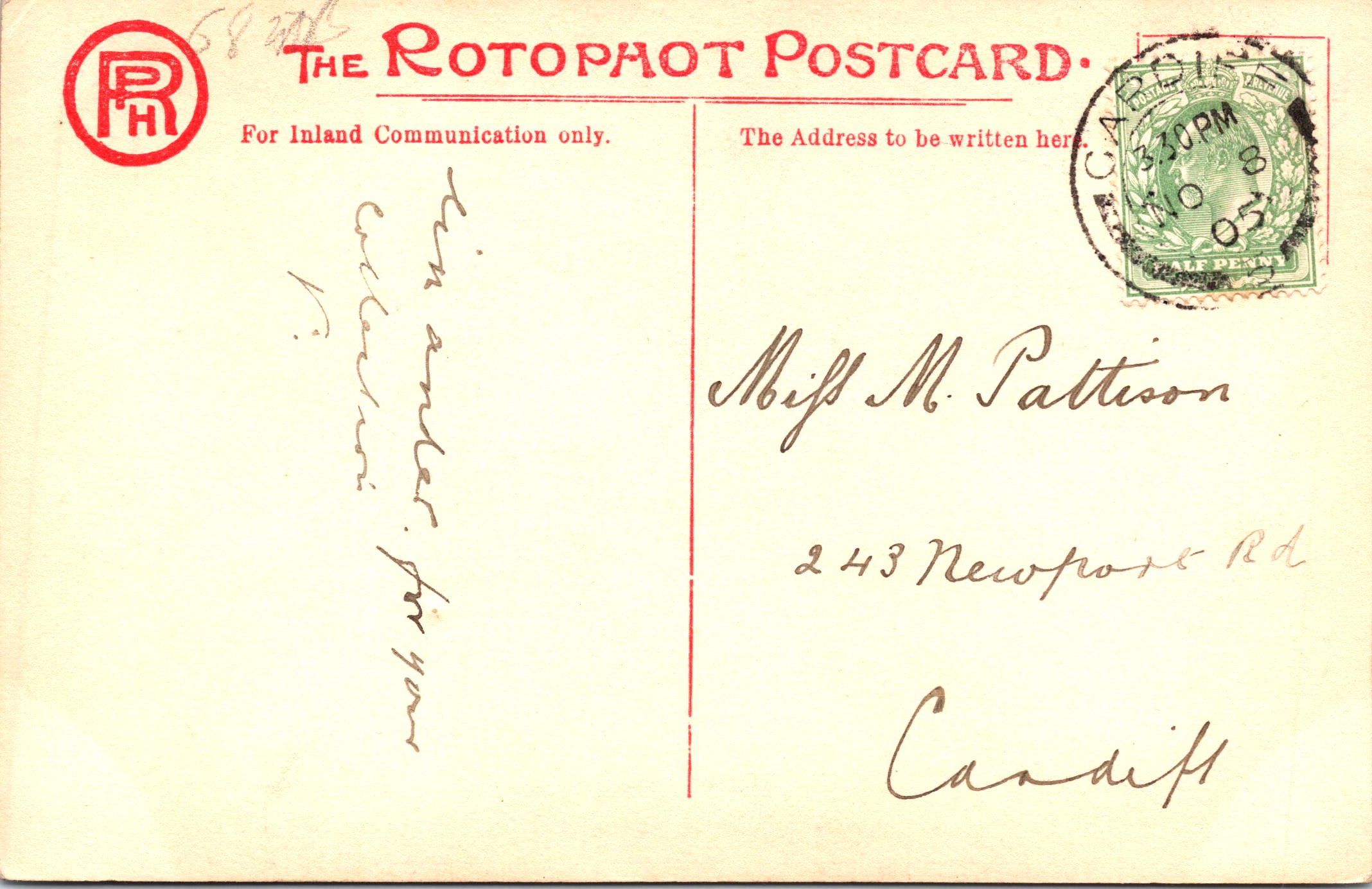
This is a rare and beautifully preserved Rotophot (RP) postcard featuring a striking portrait of the renowned British stage actress Miss Violet Vanbrugh (1867–1942). The postcard, numbered 0450, was published by Rotophot, a German publisher known for high-quality photographic postcards. The portrait itself was captured by Lizzie Caswall Smith, a prominent female photographer of actors and society figures during the early 20th century. This particular image is notable for its excellent clarity and fine detail, showcasing Vanbrugh in an elegant, dark gown with a delicate lace underlayer, her short wavy hair styled fashionably, and wearing simple yet refined pearl earrings. Violet Vanbrugh was part of a theatrical family—her sister, Irene Vanbrugh, was also a celebrated actress. She initially pursued her education at Exeter and developed an interest in drama at a young age. She made her stage debut in 1886 at the Theatre Royal, Margate, before stepping into the London theatre scene. Her breakthrough came when she joined Sir Henry Irving’s company, where she refined her skills and gained recognition for her classical performances. Over the years, she became highly regarded for her portrayals of Shakespearean heroines, including Lady Macbeth, Portia in The Merchant of Venice, and Queen Katherine in Henry VIII. Apart from Shakespeare, she also starred in major productions like “Caste” and “Diplomacy”. Vanbrugh was admired for her commanding presence and emotive delivery, making her a favorite among theatre audiences of the late Victorian and Edwardian eras. Violet Vanbrugh married Arthur Bourchier, a fellow actor, in 1894, and the couple became a theatrical powerhouse, frequently starring together in productions. They also managed the Garrick Theatre in London for a time. However, their marriage eventually ended in divorce. Despite personal setbacks, Vanbrugh remained a distinguished figure in the theatrical world well into the 20th century. She passed away in 1942 at the age of 75. The back of this postcard features the Rotophot logo in red, with a printed divider. It is addressed to Miss M. Pattison of  Cardiff, Wales. The handwritten message, written in cursive along the left margin, reads: “another for your collection”. The sender hopes the postcard will be added to the recipients postcard collection. The postcard bears a half-penny green King Edward VII stamp, which was postmarked in Cardiff in 1908.  (SOLD)

JULIA MARLOWE: ESTEEMED AMERICAN STAGE ACTRESS

CABINET CARD 1

   CABINET CARD 2   (SOLD)

CABINET CARD 3  (SOLD)

CABINET CARD 4

CABINET CARD 5

CABINETCARD 6CABINET CARD 7   (SOLD)

CABINET CARD 8

CABINET CARD 9

MARLOW8

CABINET CARD 10

MARLOWE IN INGAMAR_0003
SPIN MARLOWE_0002

CABINET CARD 11

CABINET CARD 12

BRANSCOMBE

CABINET CARD 13

This image has an empty alt attribute; its file name is julia-marlowe-falk.jpg

CABINET CARD 14   (SOLD)

JULIA MARLOWE: ESTEEMED STAGE ACTRESS : SARONY : CABINET CARD PORTRAIT  c1890 - Picture 1 of 3

CABINET CARD 15 (SOLD)

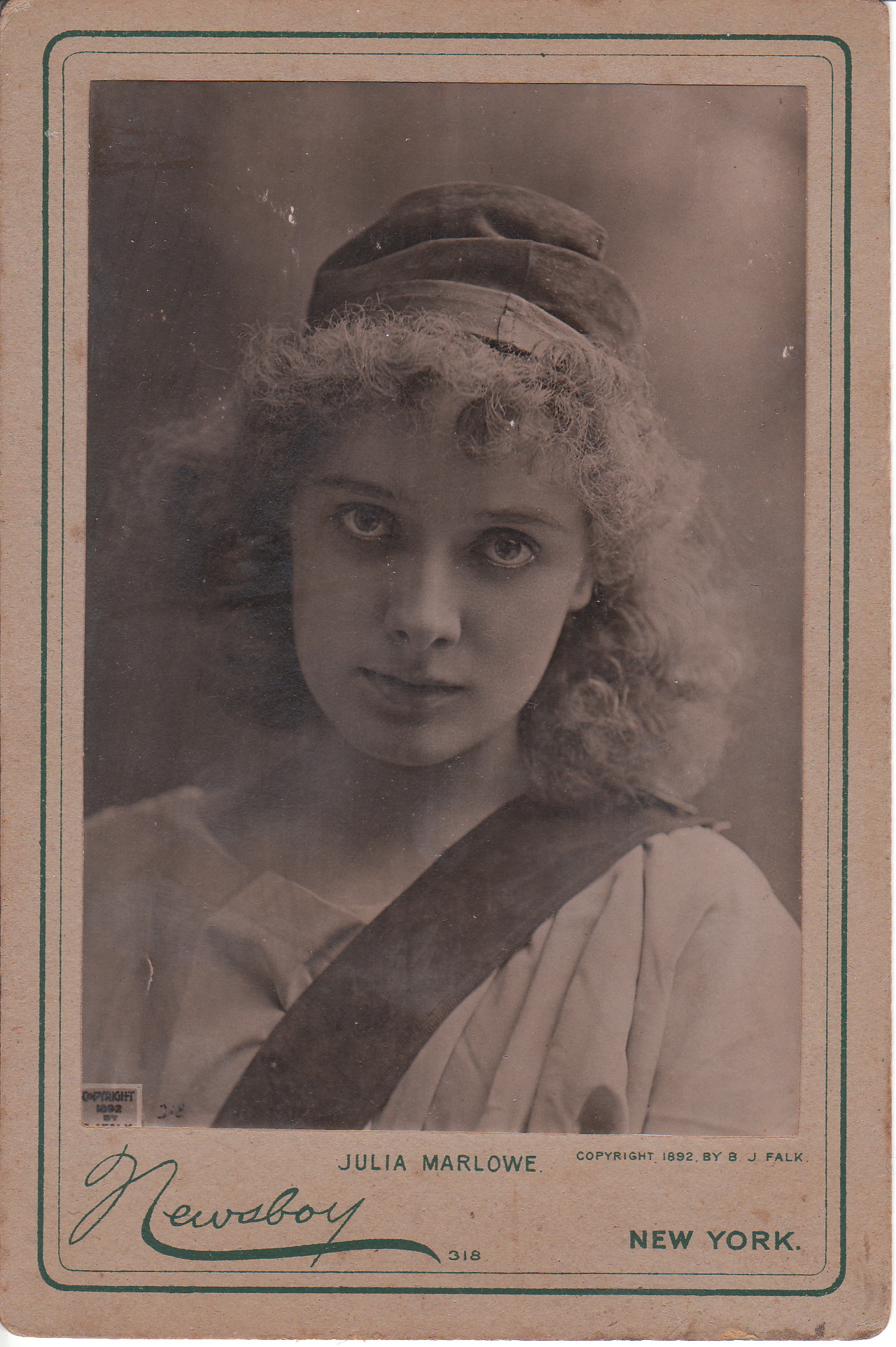
Julia Marlowe (1865-1950) was born in England and as a young child moved to the United States with her family. In her early teens she began her theatrical career with a juvenile opera company. She began playing Shakespeare in her home town of Cincinnati, Ohio. She made her Broadway debut in 1895 and by the end of her career, had appeared in more than 70 Broadway productions. Her first husband was actor, Robert Tabor. Their marriage lasted six years. In 1904 she appeared in “When Knighthood was in Flower”. Great success in this play brought her financial independence. Earlier, in 1903, she appeared in ‘The Cavalier” and “Ingomar”. The New York Sun wrote about her performance in “Ingomar”; “There is not a woman player in America or in England that is – attractively considered- fit to unlace her shoe”. In 1904 she began a partnership with actor E. H. Sothern. They toured the United States performing various plays of Shakespeare. They were managed by Charles Frohman and later, the Shubert brothers. They were considered to be among the major Shakespearian actors of the day. In 1906, Marlowe played in “Jeanne d’Arc” and also as Salome in “John the Baptist”. Later, Sothern and Marlowe played in London but were not terrific box office successes there. In 1911 Marlowe and Sothern married each other. In 1920 and 1921, they made eleven phonograph recordings for the Victor Company. The top Cabinet Card was produced by Newsboy as a premium for their tobacco products. The photographer was Falk and the image is from 1892.

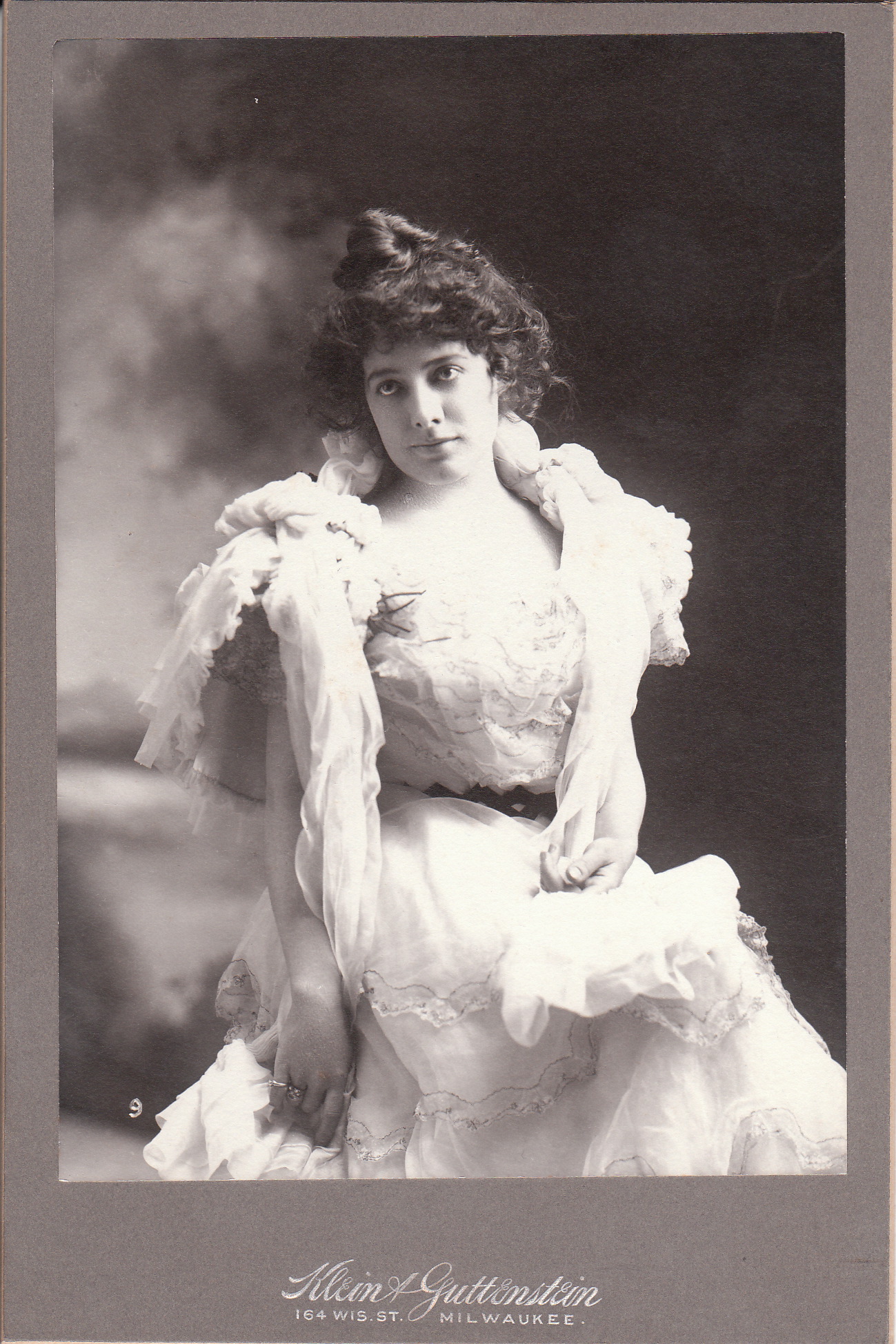
The second portrait of Julia Marlowe has a notation on the reverse of the card stating “Julia Marlowe Tabor”. Therefore, this photograph was likely taken during the time of her marriage to Tabor (1894-1900). The photographic studio that produced this portrait is  Klein & Guttenstein of 164 Wisconsin Street, in Milwaukee,  Wisconsin.  Klein and Guttenstein were leading photographers of their time. Wilson’s Photographic Magazine (1902) reveals that the two men  were very active in the Photographers Association of Wisconsin and other photography organizations. The photographers were considered part of a network of photographers skilled at producing publicity images of theatrical and vaudeville stars to be used in national magazines and other publications. The New York Public Library has a collection of portraits of actress Blanche Bates; produced by Klein & Guttenstein. The University of Pennsylvania Library has one of Klein & Guttenstein’s portraits of Julia Marlowe.  (SOLD)

The third portrait of Julia Marlowe in the cabinet card gallery collection is photographed by Sarony, the famed celebrity photographer located in New York City.  This cabinet card is signed by the actress and dated 1890. Additonal photographs by Sarony can be viewed by clicking on the category “Photographers: Sarony”.  SOLD

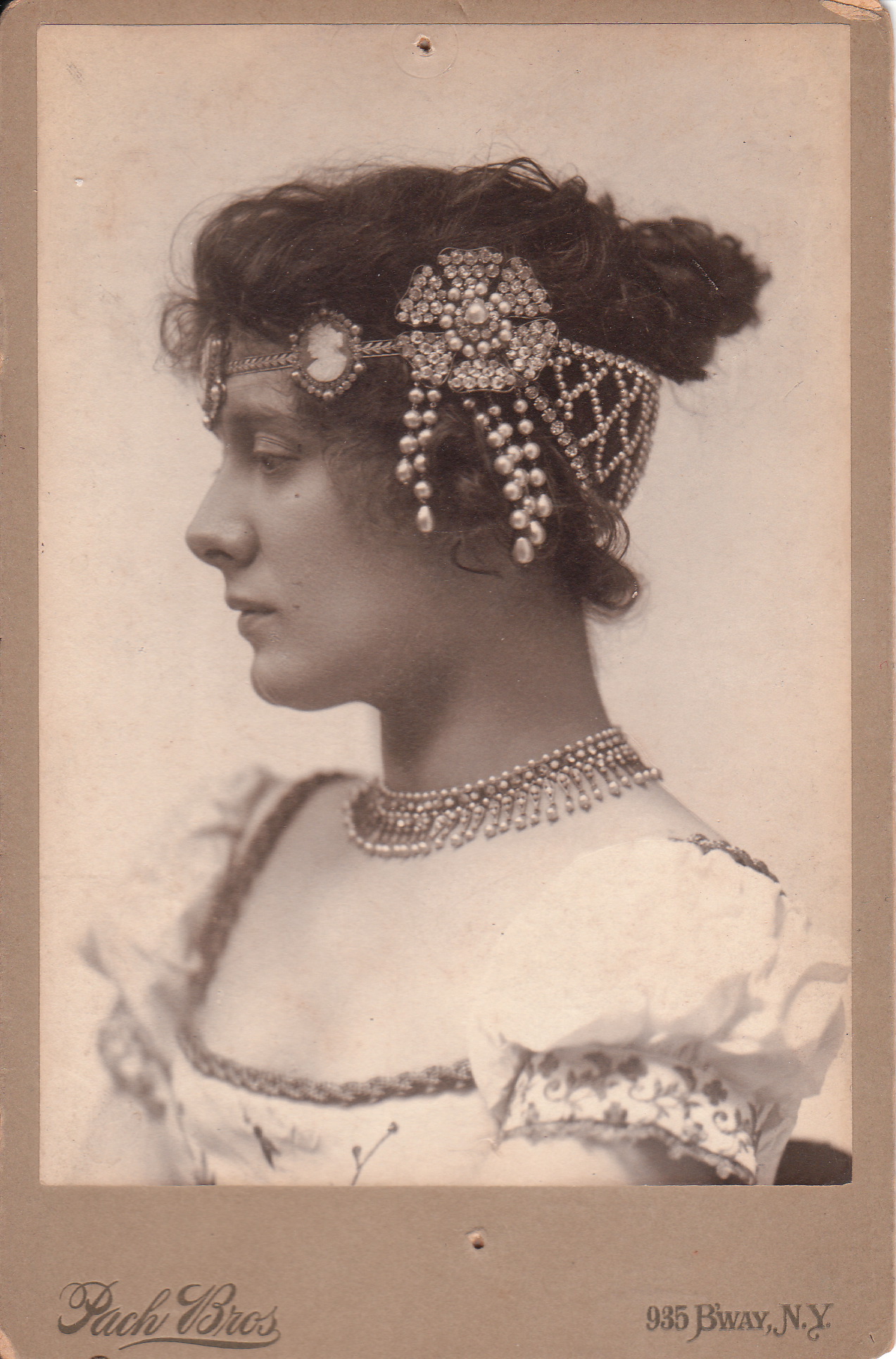
The fourth portrait of Miss Marlow features her in role in the production of “Countess Veleska”. The play was adapted for a German work, “The Tall Prussian”, by Rudolph Stratz. The play opened in New York in 1898 at the Knickerbocker Theatre. The review in the New York Times (1898) stated that the “drama was made wholly interesting by the personal charm and sincerity of Miss Marlowe”. In a sarcastic tone, the reviewer comments about Marlowe’s co star, Bassett Roe. The reviewer states that Roe has only two qualities of the man he was playing, “height and good looks”. The reviewer continues his scathing description of Roe; “The only time he actually warmed up was when he accidentally set his hair on fire. Even then he would have let it burn if Miss Marlowe had not gone to his rescue.” The photographic studio that produced the “Countess Veleska” cabinet card was Pach Brothers of New York City. Pach Brothers were photographers known for their photographs of celebrities of their era. To see additional photographs by the Pach Brothers, click on this site’s category of “Photographers: Pach Brothers”.

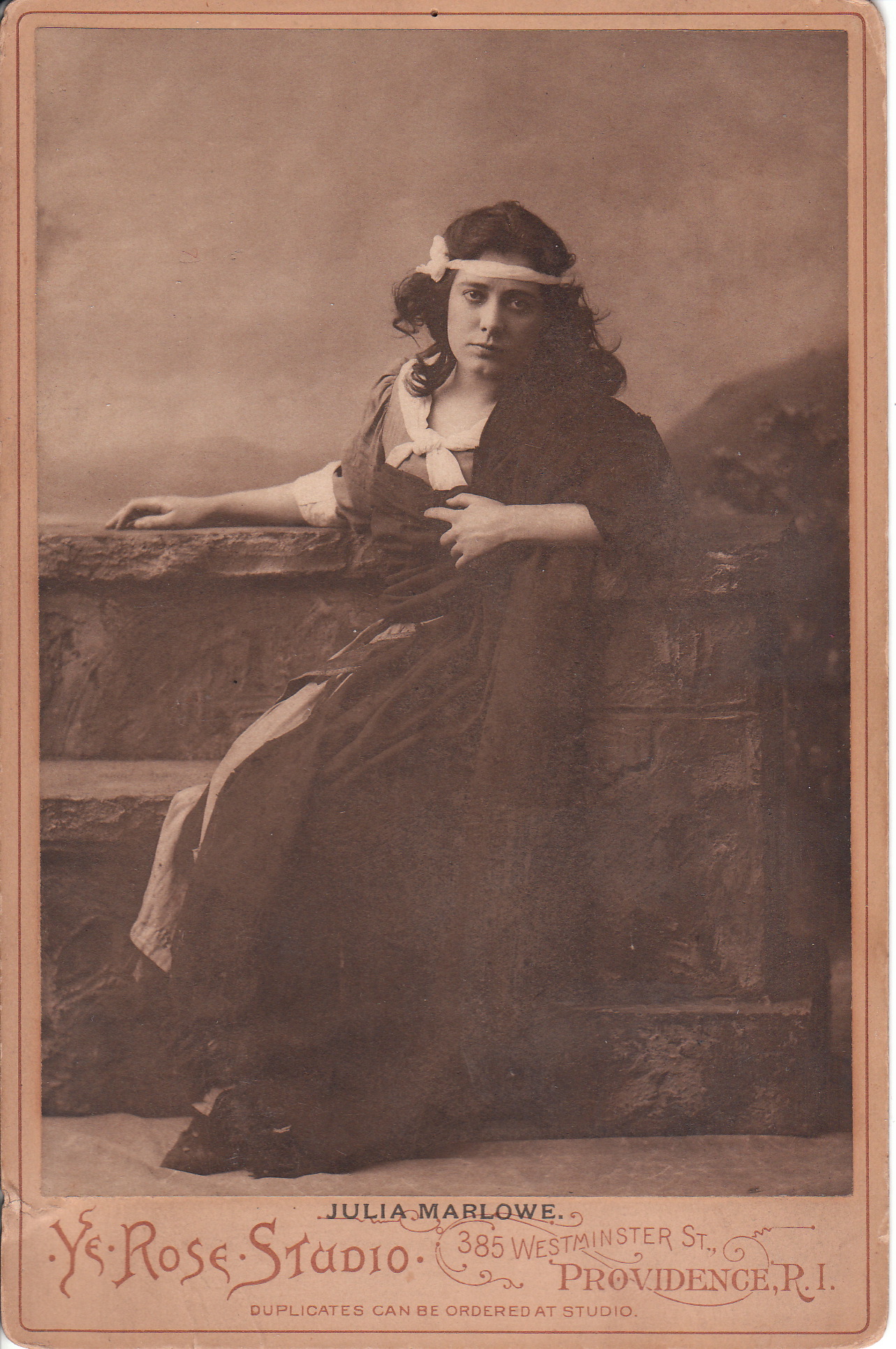
The fifth portrait of Julia Marlowe appears to be a photograph of the actress in costume for an unknown stage production. The image was photographed by Ye Rose Studio of Providence, Rhode Island. The reverse of the card indicated that the studio was opened in 1886. The studio was located in the Conrad building in downtown Providence. The building still exists. Other photographs by the Ye Rose Studio can be viewed by clicking on the category “Photographer: Ye Rose”.

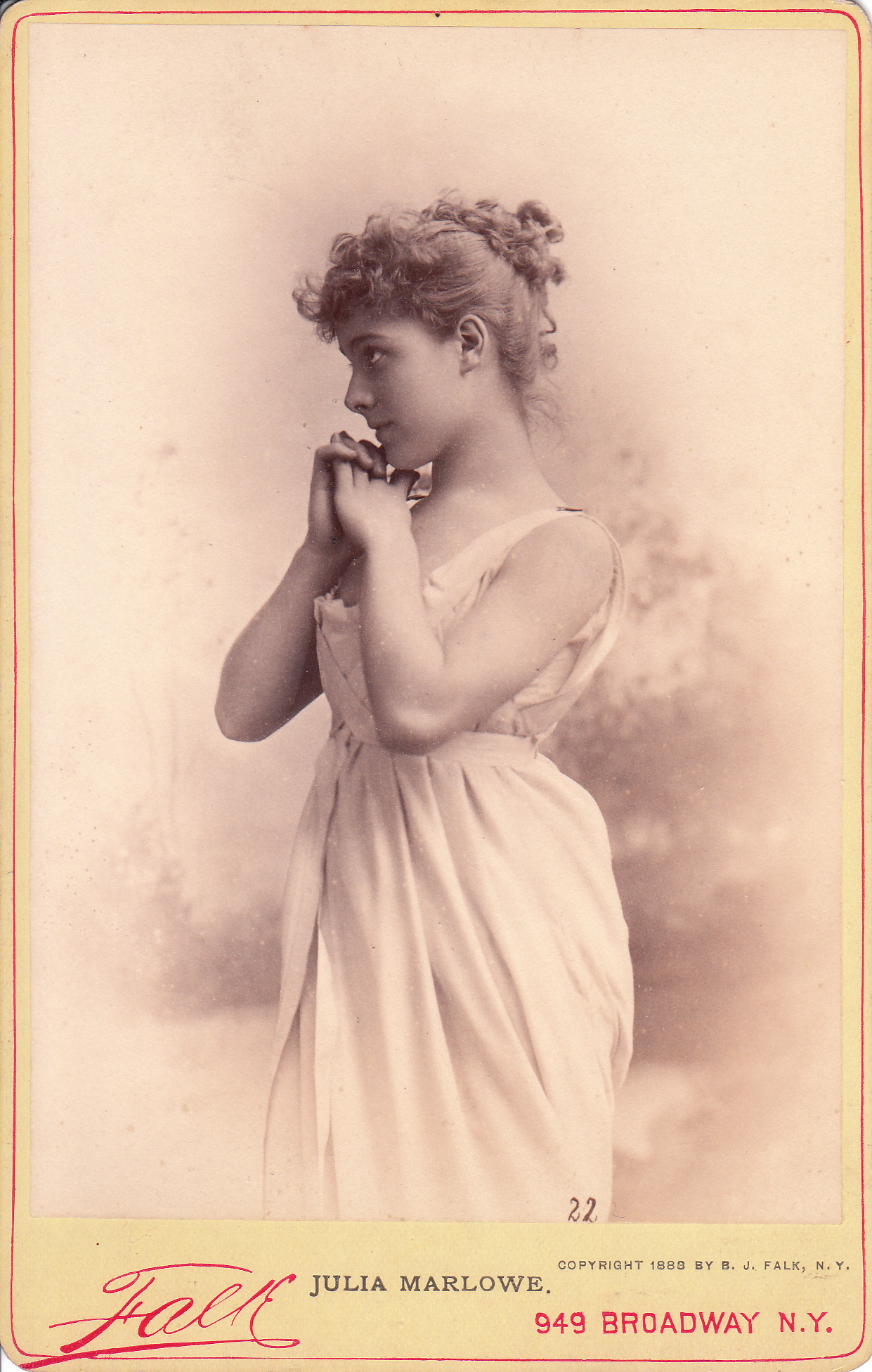
Portrait number six is an excellent example of the beauty of Julia Marlowe. This image, from 1888, captures Ms. Marlowe at the young age of twenty-three. The photographer of this portrait was B. J. Falk, a celebrity photographer located in New York City, New York. To view other photographs by Falk, click on the category “Photographer: Falk”.

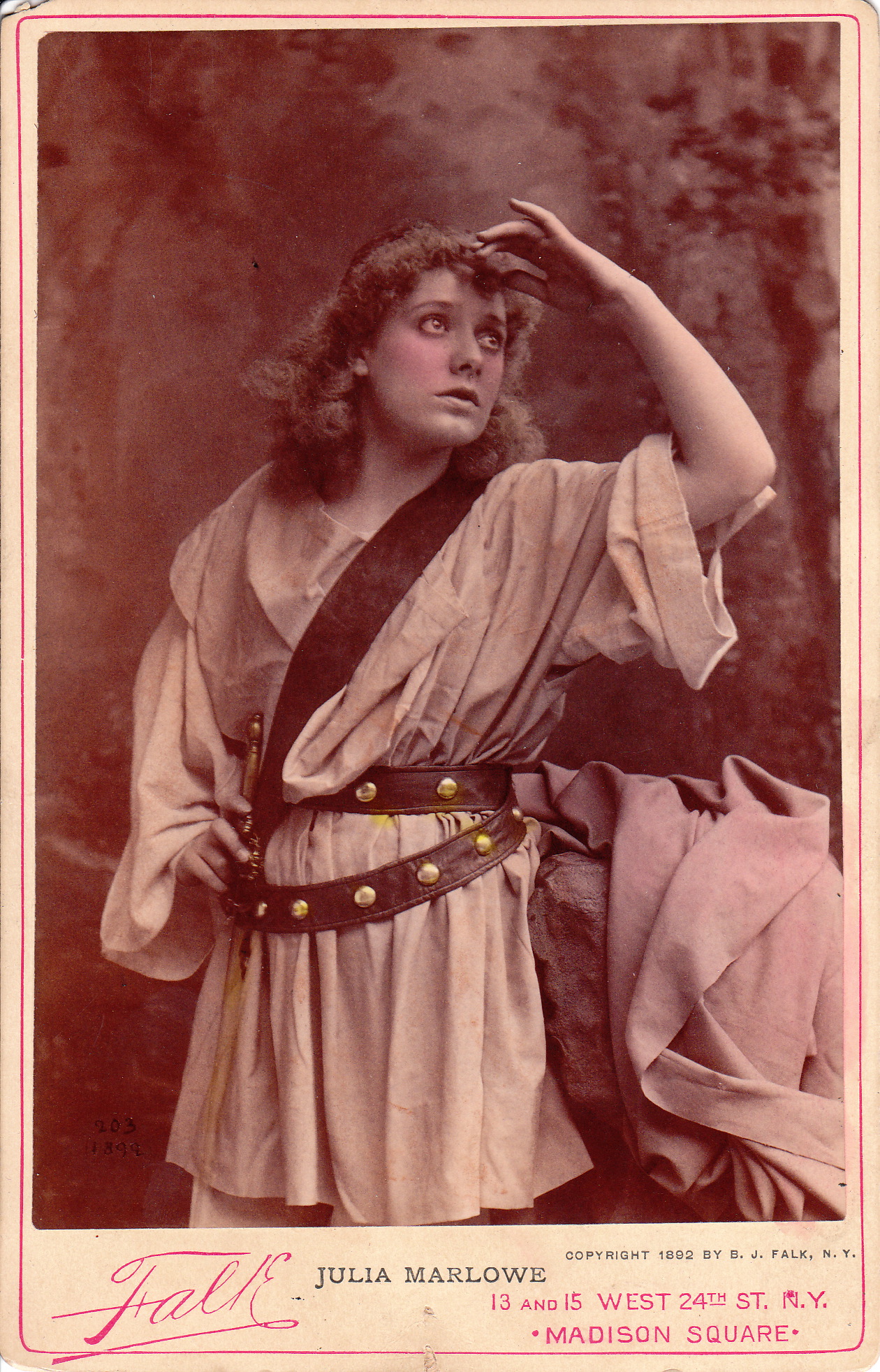
The seventh portrait is another example of a B. J. Falk image. The photograph features a costumed Julia Marlowe in the production of “Cymbeline“. Cymbeline is a play by William Shakespeare that was based on legends about the early Celtic British King,  Cunobelinus. The play deals with themes that include innocence and jealousy. Ms. Marlowe plays Imogen, the King’s daughter. Her expression in the photograph shows fear and concern as she looks at someone or something in the distance. Her left hand shades her eyes while her right hand clutches her belted dagger. A stamp on the reverse of  this cabinet card reveals that it was formerly owned by Culver Pictures of New York City, New York. Culver Pictures has been collecting photographs and illustrations from the 19th and first half of the 20th century, since 1926. These pictures are used in books, films, and other forms of media. At the time that this cabinet card was stamped by the company, Culver Pictures was located in New York City.  (SOLD)

Portrait number eight is a close-up photograph of Miss Marlowe. The photographer of this cabinet card is the studio of Rose & Sands whose gallery was located in Providence, Rhode Island. Note that photograph number five also came from the Rose studio, but at that time, the gallery was called, the Ye Rose studio. The Wilson’s Photographic Magazine (1899) reports that Rose and Sands were the proprietors of Ye Rose. A humorous headline in a photography magazine stated “Providence Provides for All, And Rose Provides for Providence”.  Print on the reverse of this cabinet card reveals that the Rose & Sands studio was opened in 1886 and that it specialized in “High Class Portraits from Cabinet to Life Size”. Also of interest, like photograph number seven, there is a stamp on the reverse of the photograph with the name “Culver Pictures Inc”.

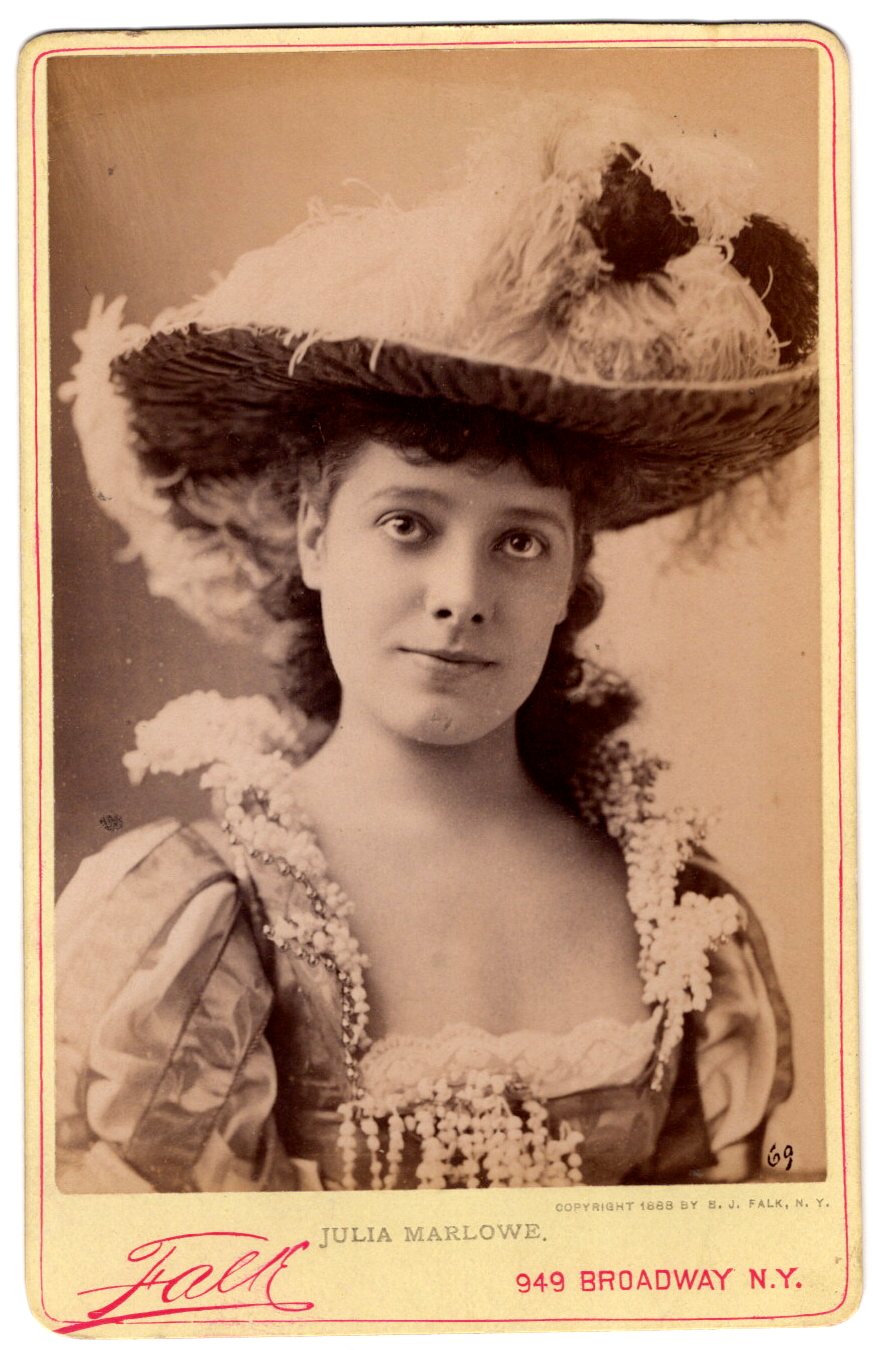
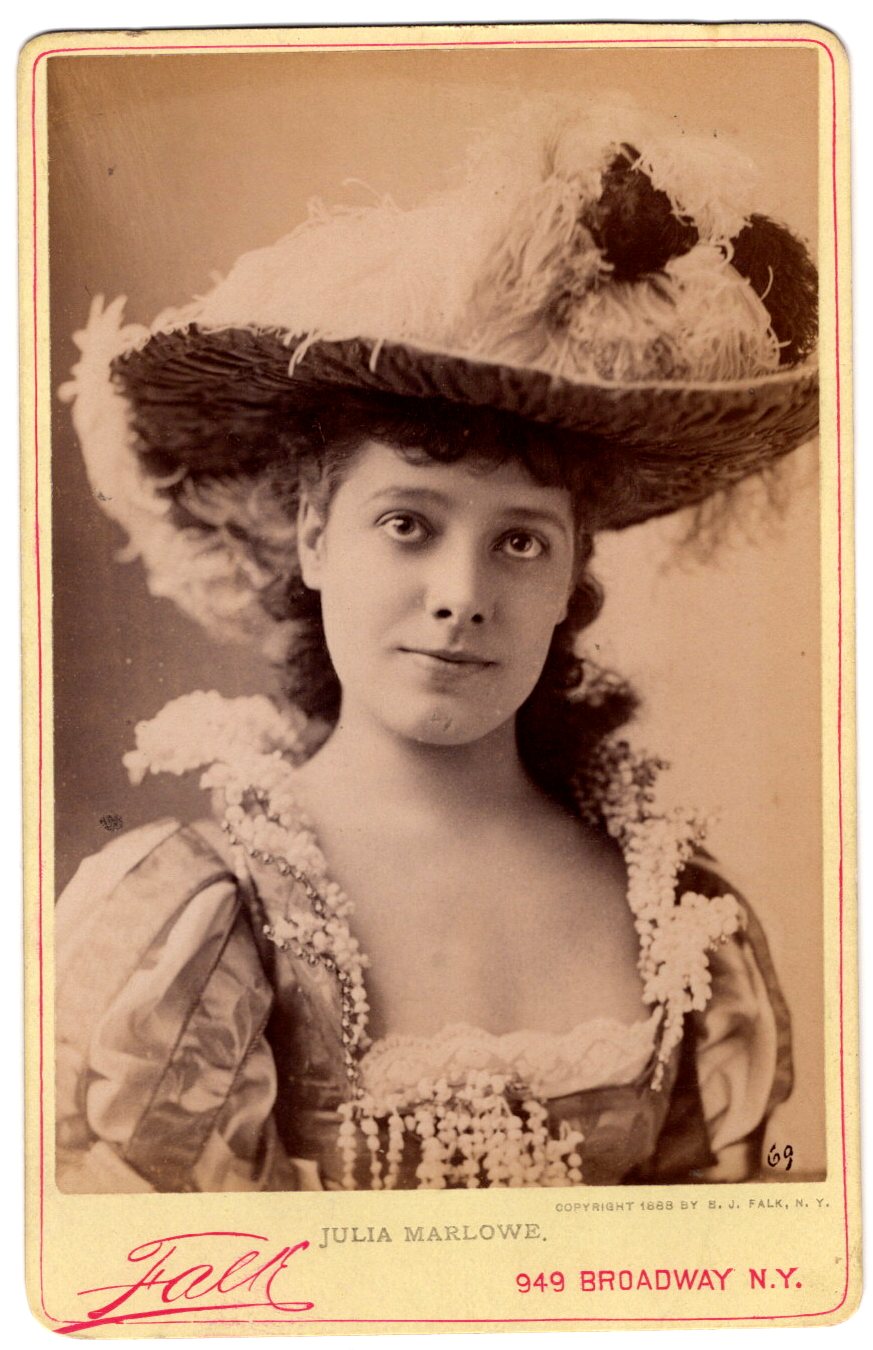
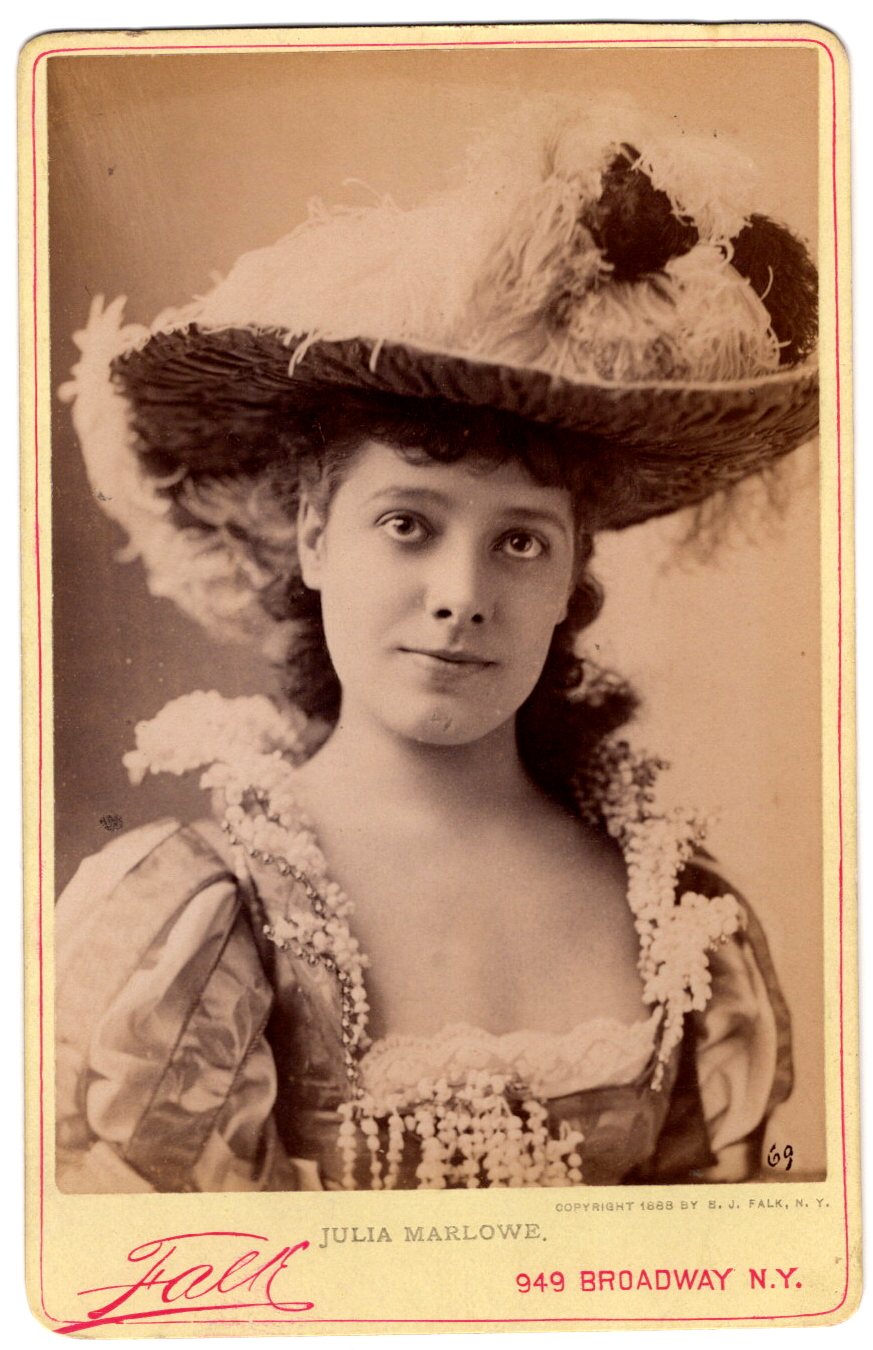
Photograph number nine features the beautiful Miss Marlowe displaying a mischievous smile. Note her engaging large eyes. She is wearing a somewhat revealing dress (for the cabinet card era) and has a wonderful hat atop her head. This cabinet card photograph was published in 1888 by Benjamin Falk of New York City.  The image is marked with the number sixty-nine.

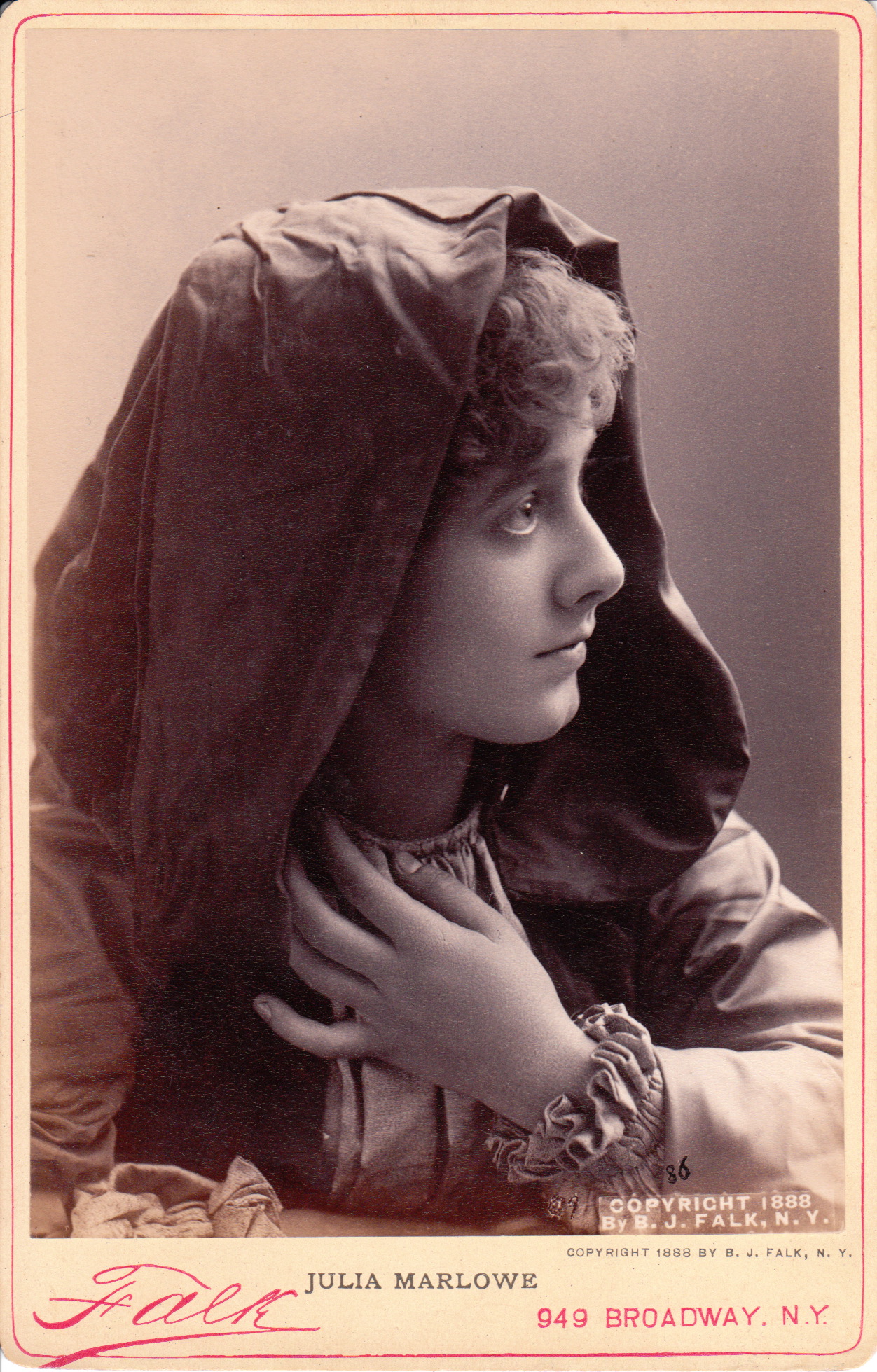
Portrait number ten is a closeup of Julia Marlowe with her head covered, but with her pretty face very visible. She is likely in costume for this photograph. The photograph is taken by B. J. Falk of New York City and has a copyright date of 1888. The cabinet card is marked number “86”.

The eleventh photograph captures Miss Marlowe staring hypnotically at a flower. Someone, has written below her name that the image features her in the role of Parthenia in the production of “Ingomar”.  The New York Times (1904) reviews the play and Miss Marlowe’s performance on opening night at the Empire Theater in New York City. The newspaper reports that Frederick Halm’s play was “impossibly romantic and deliciously sentimental piece of old-fashioned theatrics. Tyrone Power played Ingomar and he was described as “vigourous and picturesque” but the article added that his voice was “not at its best”. The review pointed out that Marlowe’s appearance in this play was to be her last appearance as an independent star before joining E. H. Sothern’s Shakespearean repertory. In regard to Marlowe’s acting in this play, it was written that she played a “dear little prig – adorably dear” (prig can be defined as smug or arrogant) and she presented “a masterpiece of harmonious, modulated, and sustained acting”. The 1904 performance of Julia Marlowe in “Ingomar” marked a return performance for this accomplished actress. The New York Times (1888) wrote a very positive review of the opening night performance in Washington D.C.. The appreciative audience included three Supreme Court Justices and a number of members of the Chinese Embassy. This cabinet card was produced by the previously mentioned Ye Rose Studio of Providence, Rhode Island and it likely dates back to her 1888 performance in the role.

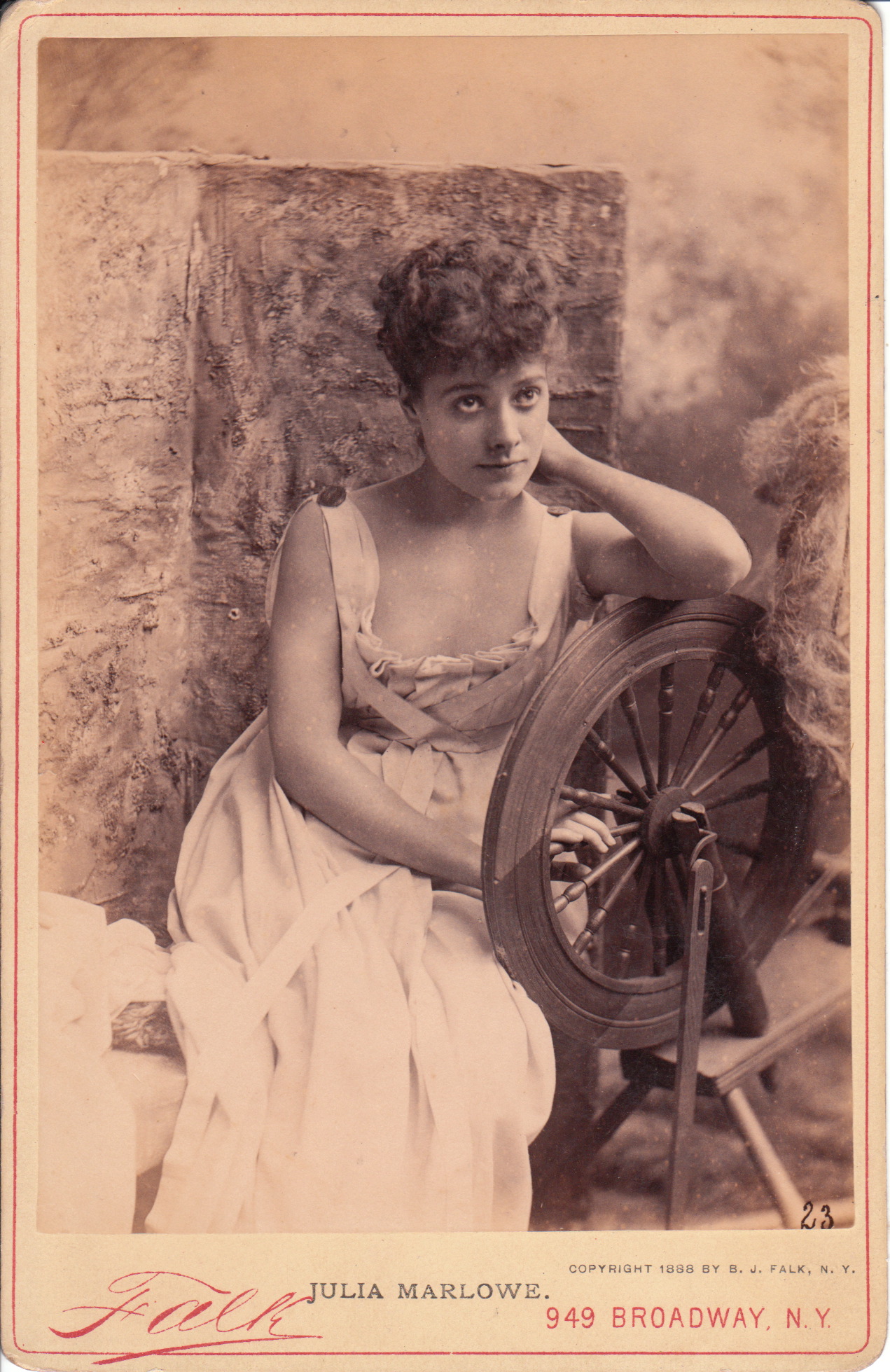
The twelfth cabinet card was produced by Benjamin Falk of New York City. He posed Miss Marlowe next to a spinning wheel. Her low cut dress makes this image a bit risque for the cabinet card era. If Falk or Miss Marlowe thought that looking up at the camera would create a “fetching appearance”, I would contend that their efforts failed. Rather than “fetching”, she appears dazed. The actress was a beautiful woman and provocativeness was not necessary to enhance her image. This photograph was produced in 1888 and was part of a series (#23).

Cabinet Card number thirteen is part of a series that includes Cabinet Card number ten. Both cards were photographed by Benjamin  Falk and have a copyright date of 1888. Both portraits are close-ups but this one is captures Marlowe looking at the camera while number ten offers a profile view. Falk really captured the actresses eyes. Her eyes are beautiful and they are haunting at the same time. This photograph is marked number number 83 of the series.

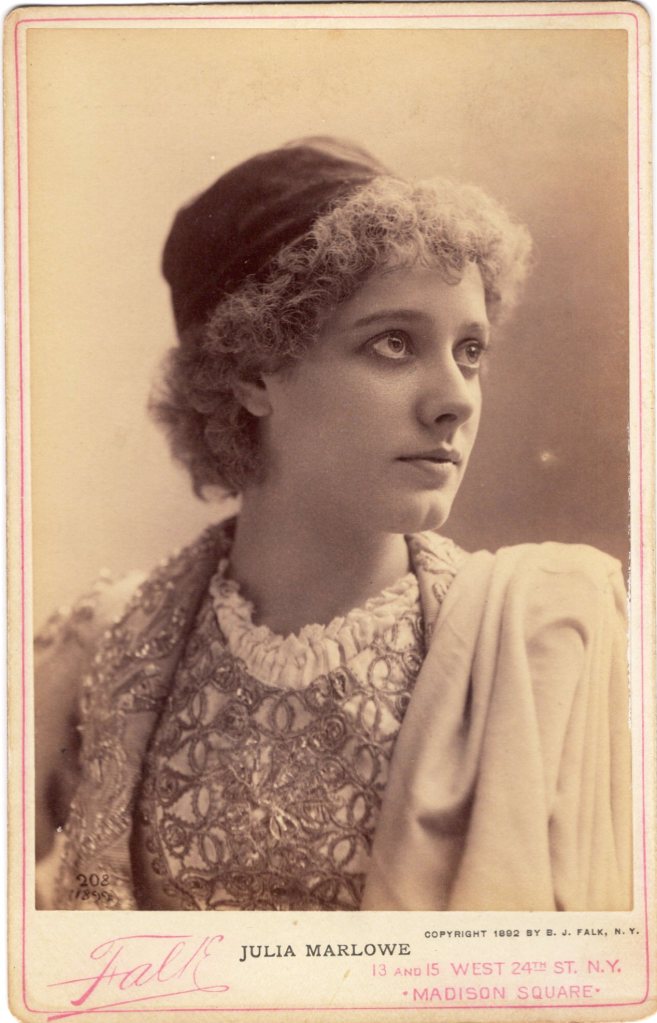
Cabinet Card fourteen features another beautiful portrait of Julia Marlowe. This photograph was taken by Benjamin Falk and was copyrighted in 1892. This cabinet card is uncommon, possibly rare.  (SOLD)

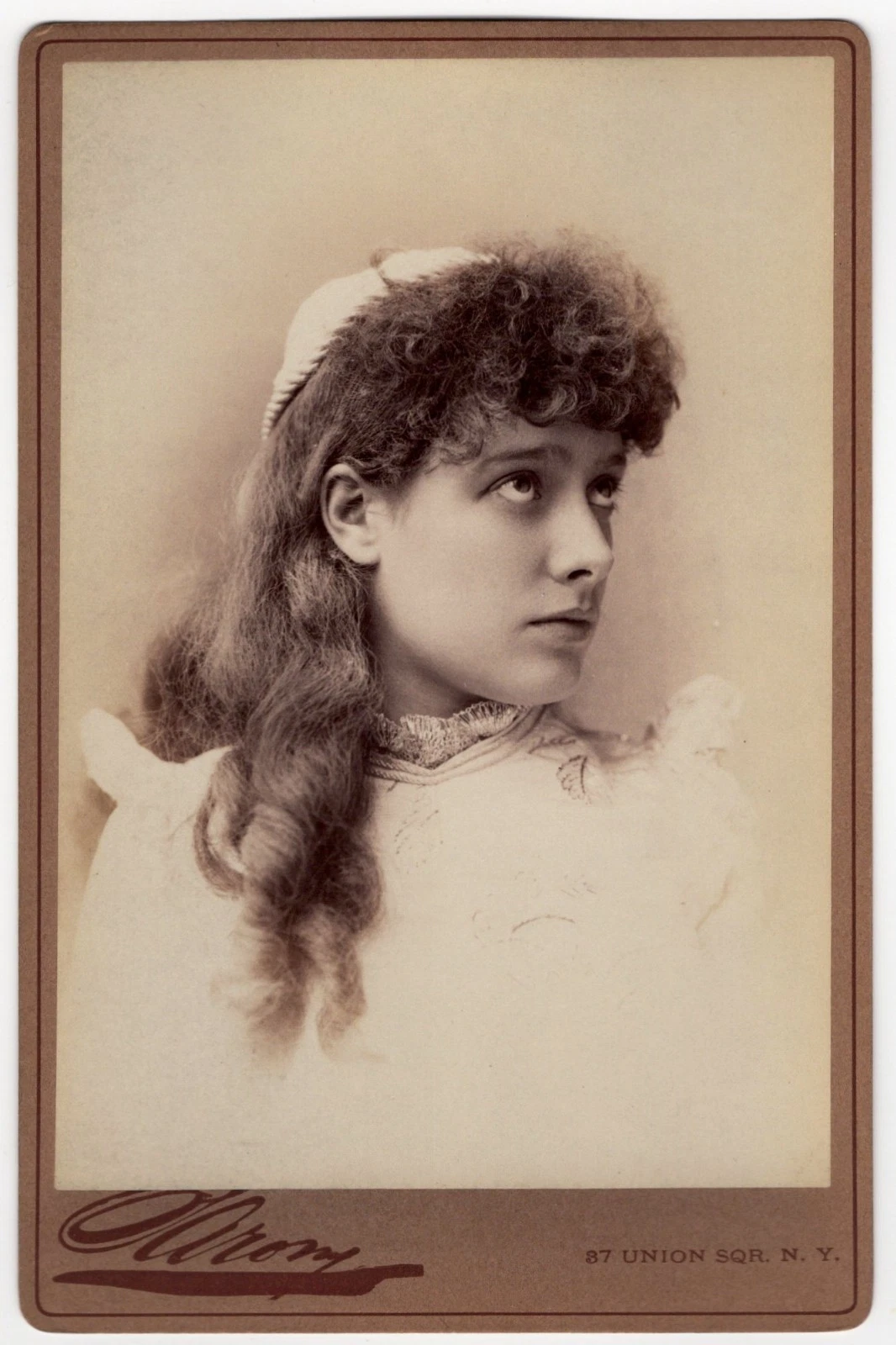
Cabinet Card 15 was photographed by Napoleon Sarony, the famed celebrity photographer located in New York City.  (SOLD)

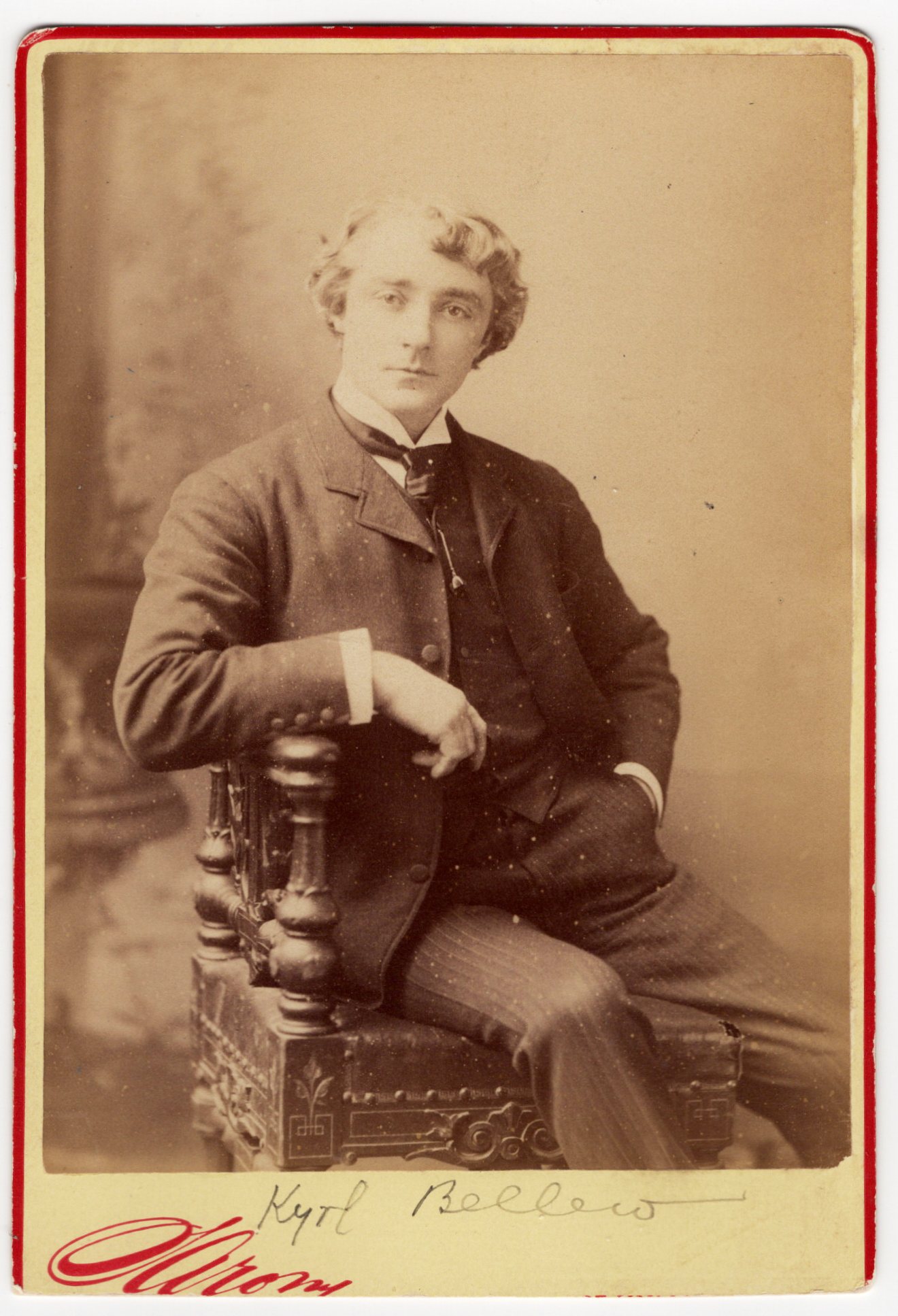
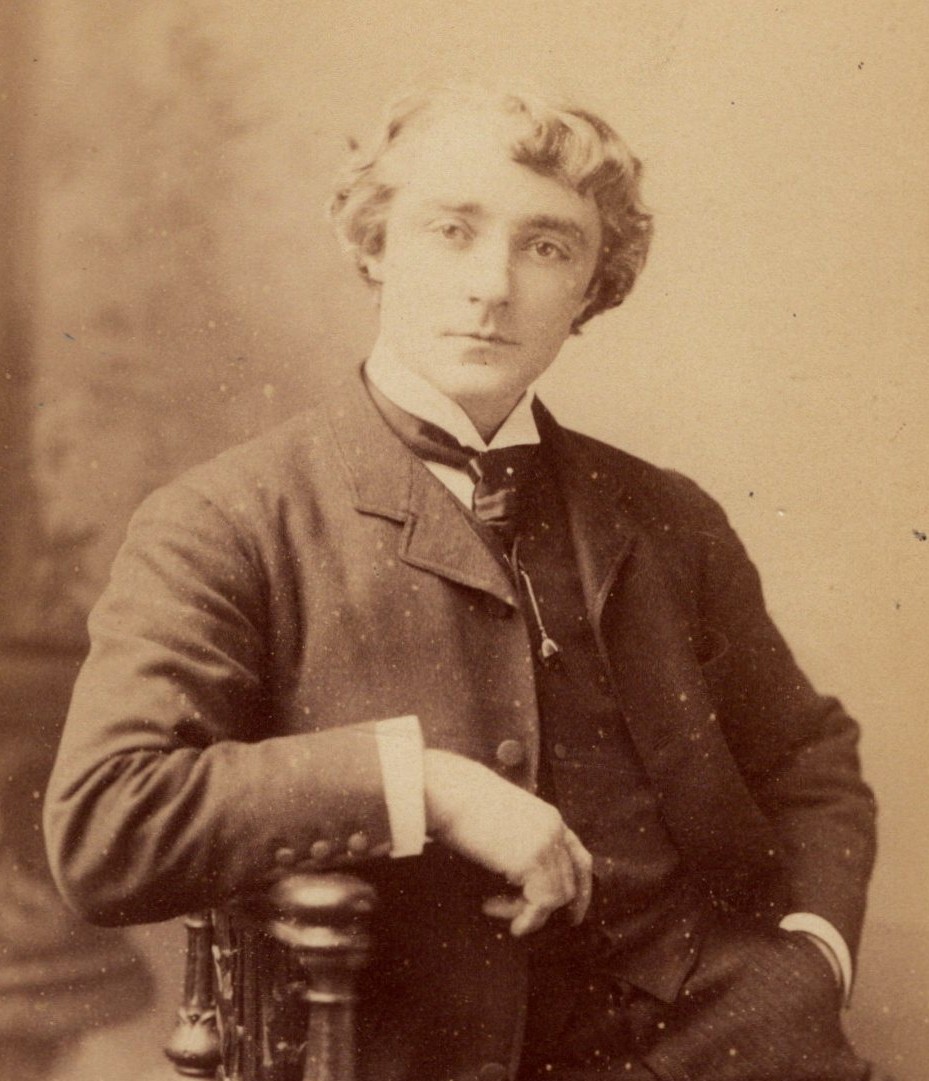
KYRLE BELLEW : STAGE ACTOR : BY NAPOLEON SARONY : NEW YORK CITY : CABINET CARD

This elegant cabinet card features the distinguished English actor Kyrle Bellew, captured in a poised seated portrait by renowned photographer Napoleon Sarony. Bellew is depicted in a formal dark suit with a high-buttoned waistcoat and a crisply starched white collar. His hair is neatly parted, and his mustache is meticulously groomed, reflecting the refined style of late 19th-century theatrical gentlemen. His expression is composed and introspective, with a subtle intensity in his gaze that hints at the dramatic roles he was known for. Bellew is seated in a carved wooden chair with a high back, its ornate design complementing the dignified atmosphere of the portrait. The studio backdrop is understated, ensuring that the focus remains on the subject’s commanding presence. The cabinet card is printed on slightly thinner stock than typically seen. Napoleon Sarony was located in New York City during the late 1800s. He was known for his finely composed theatrical portraits, capturing many prominent actors of the era with a distinctive clarity and elegance. His photography of celebrities went well beyond the theatrical world. He was a flamboyant man and many of his portraits reflected that trait.  Kyrle Bellew (1850-1911) was born in  England and was a celebrated stage actor renowned for his romantic leads and Shakespearean roles. He gained fame touring with actress Cora Brown-Potter in the 1880s and 1890s, performing in classic plays across the United States and Australia. Bellew’s career also included ventures into early silent films, notably starring in Adventures of Sherlock Holmes; or, Held for Ransom in 1905. He died in 1911, in Salt Lake City, Utah, while on tour with the play The Mollusc (SOLD)

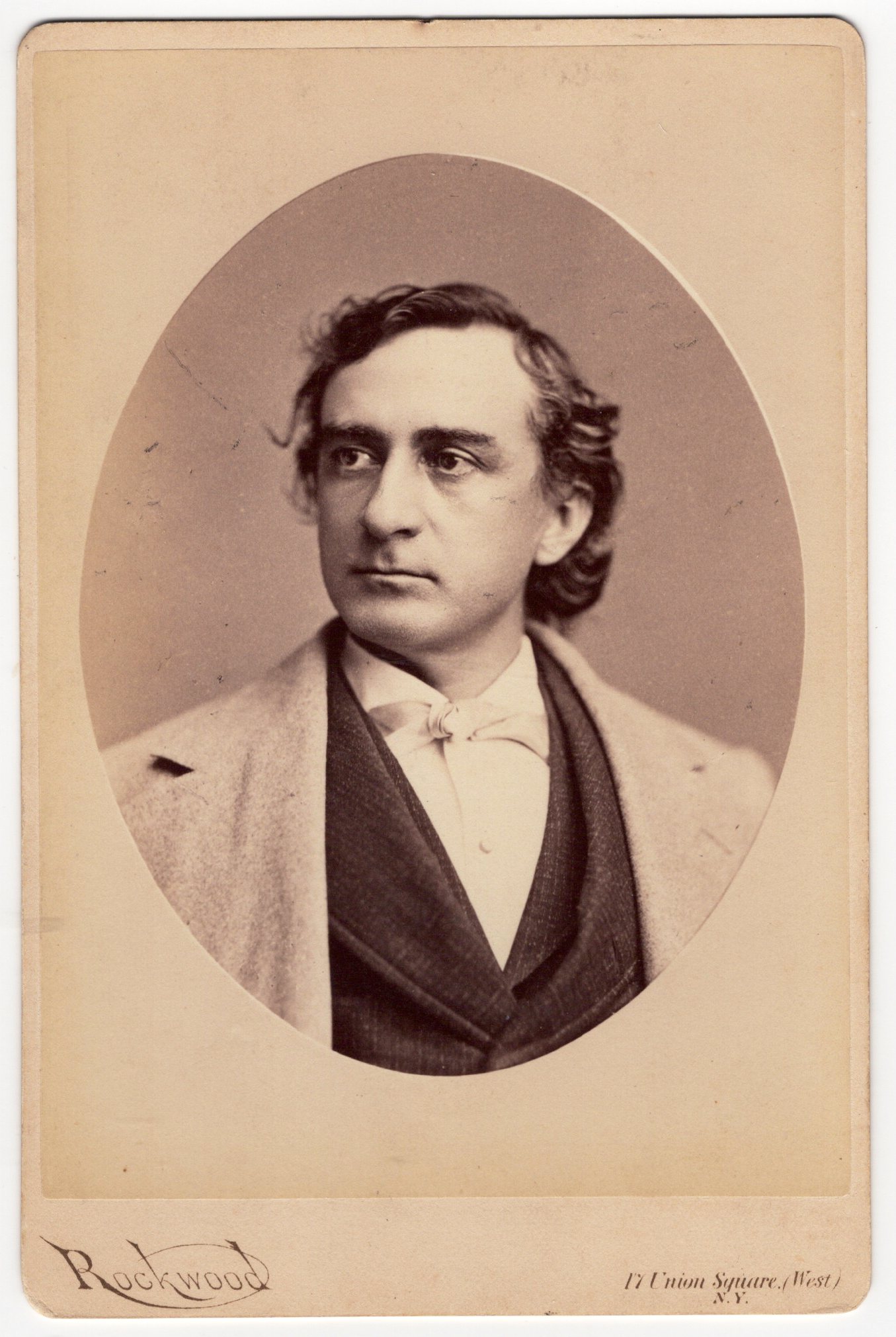
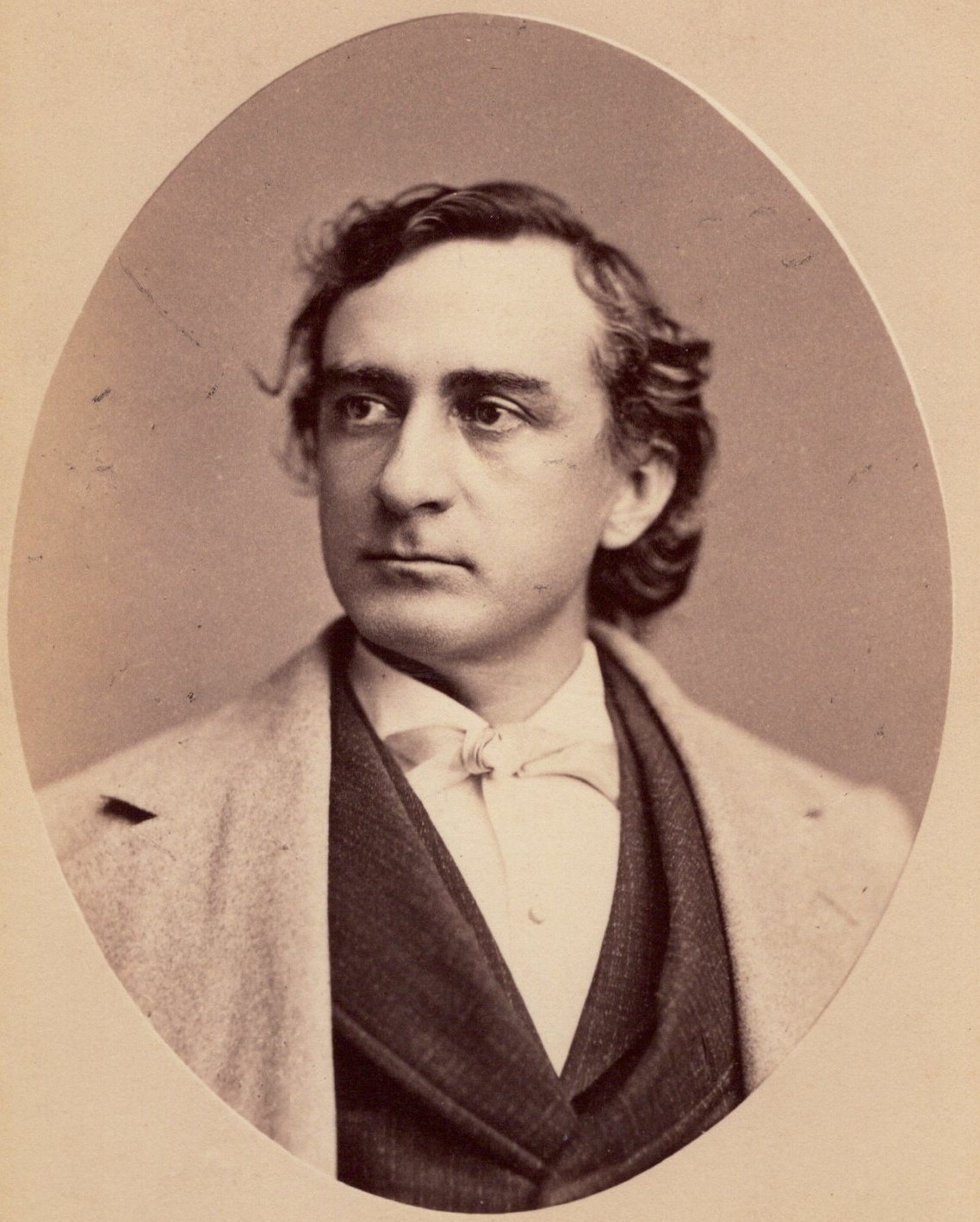
EDWIN BOOTH : RENOWNED STAGE ACTOR : BY GEORGE ROCKWOOD : UNCOMMON CABINET CARD

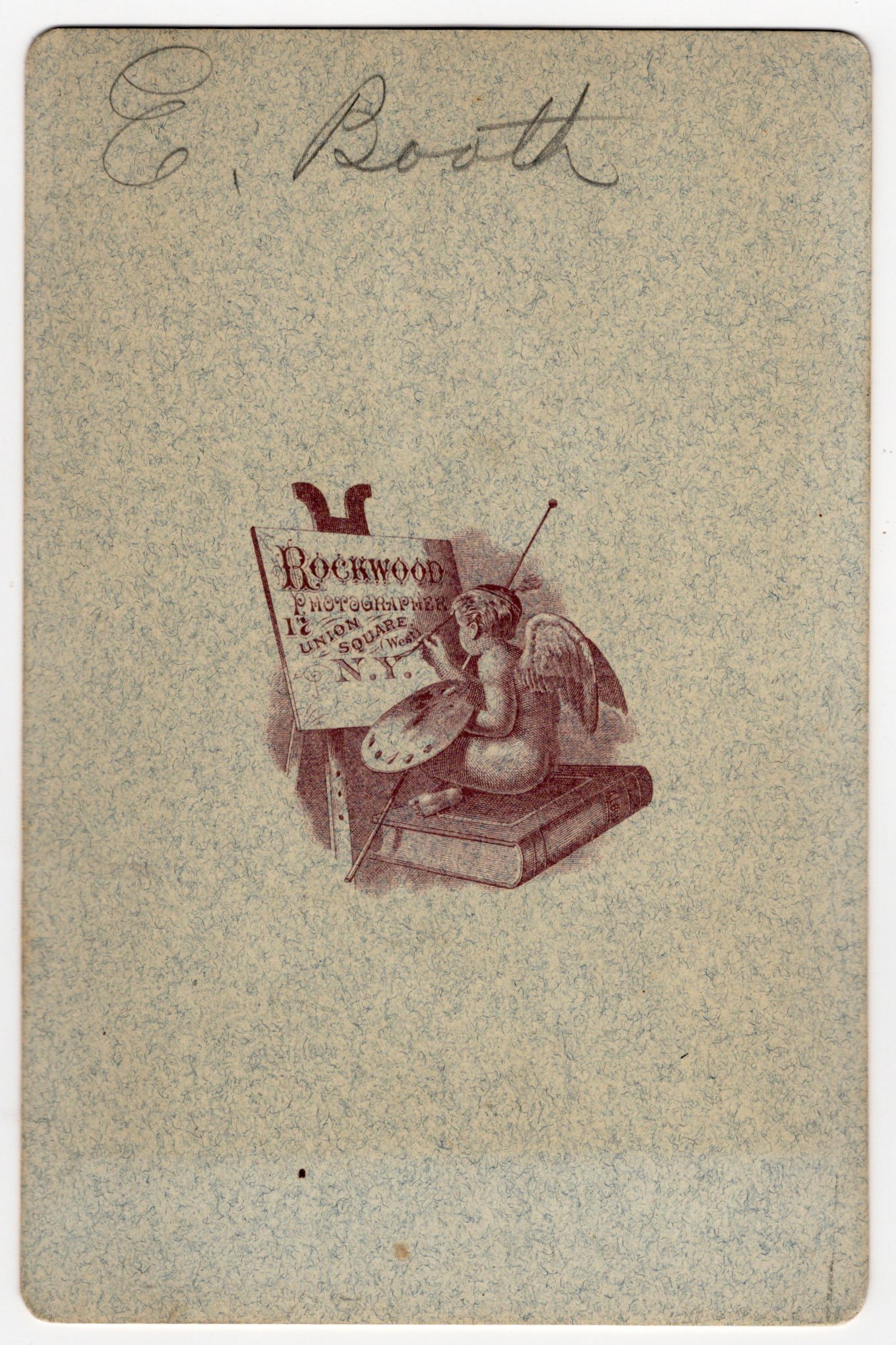
This stunning cabinet card portrait captures Edwin Booth, one of the most celebrated Shakespearean actors of the 19th century. Taken by renowned photographer George G. Rockwood of New York, the image boasts exceptional clarity and sharp detail, making it an outstanding example of 19th-century portrait photography. Booth is dressed in elegant period attire, featuring a high-collared white shirt with a neatly tied bow tie, a dark waistcoat, and a light-colored overcoat draped over his shoulders. His hair, swept back in soft curls, frames his distinguished face, exuding an air of quiet confidence and introspection. His gaze is directed slightly away from the camera, lending a dramatic and contemplative quality to the portrait—a fitting expression for a man known for his deep and emotional performances on stage. The cabinet card is in very good condition, with minimal signs of wear, and the sepia tones remain rich and well-preserved. The reverse of the card is equally impressive, featuring Rockwood’s distinctive studio imprint, which includes a charming illustration of a cherub holding a painter’s palette and brushes, next to an artist’s easel that advertises the Rockwood studio at 17 Union Square (West), New York. Additionally, there is an inscription at the top that reads: “E. Booth,” a reference to the legendary actor. Edwin Booth (1833–1893) was one of the greatest American actors of the 19th century, best known for his Shakespearean roles, particularly Hamlet, which he performed more than 100 times—an unprecedented feat at the time. His extraordinary talent and deep emotional connection to his roles earned him widespread acclaim in both America and Europe. Despite his artistic triumphs, Booth’s life was forever overshadowed by his brother’s infamous act—John Wilkes Booth’s assassination of President Abraham Lincoln in 1865. The tragedy devastated Edwin, who was a staunch Unionist and had publicly opposed his brother’s views. He briefly retired from the stage but later returned, determined to restore his family’s name through his craft. In 1888, he founded The Players Club in New York City, a private social club for actors, which still exists today. The Booth family was a dynasty of performers—Edwin’s father, Junius Brutus Booth, was an acclaimed English actor, and his brothers, John Wilkes Booth and Junius Brutus Booth Jr., also pursued theatrical careers. However, Edwin’s talent and legacy far outshone the rest of his family, cementing his place as one of America’s greatest classical actors. The photographer of Mr. Booth was George Rockwood (1832-1911). He was a renowned photographer whose studio was located in New York City. Rockwood was born in Troy, New York and graduated from college with a PhD, reportedly either from the University of Chicago, or Columbia University. At 21 years of age, he was a newspaper reporter for the Troy Daily Times and at age 23, he was managing editor of the Troy Daily Post. He began working as a photographer in St. Louis and in 1857 opened a studio with his brother Elihu in New York City. He has been credited with bringing CDV’s to America. His obituary in the Washington Post reports that Rockwood photographed  more than 350,000 people. SOLD

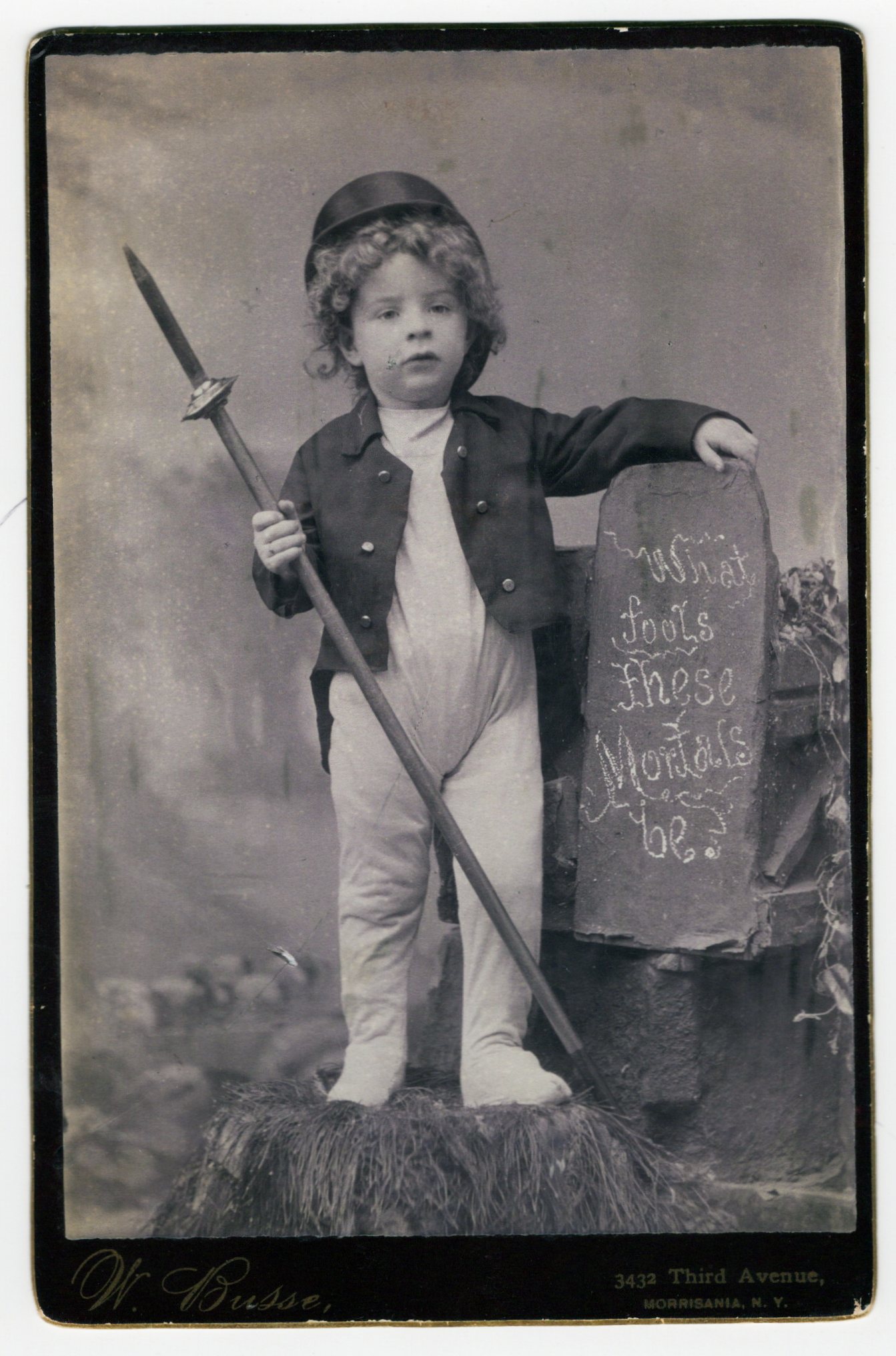
ADORABLE LITTLE BOY : WHAT FOOLS THESE MORTALS BE : MORRISANIA NY : CABINET CARD

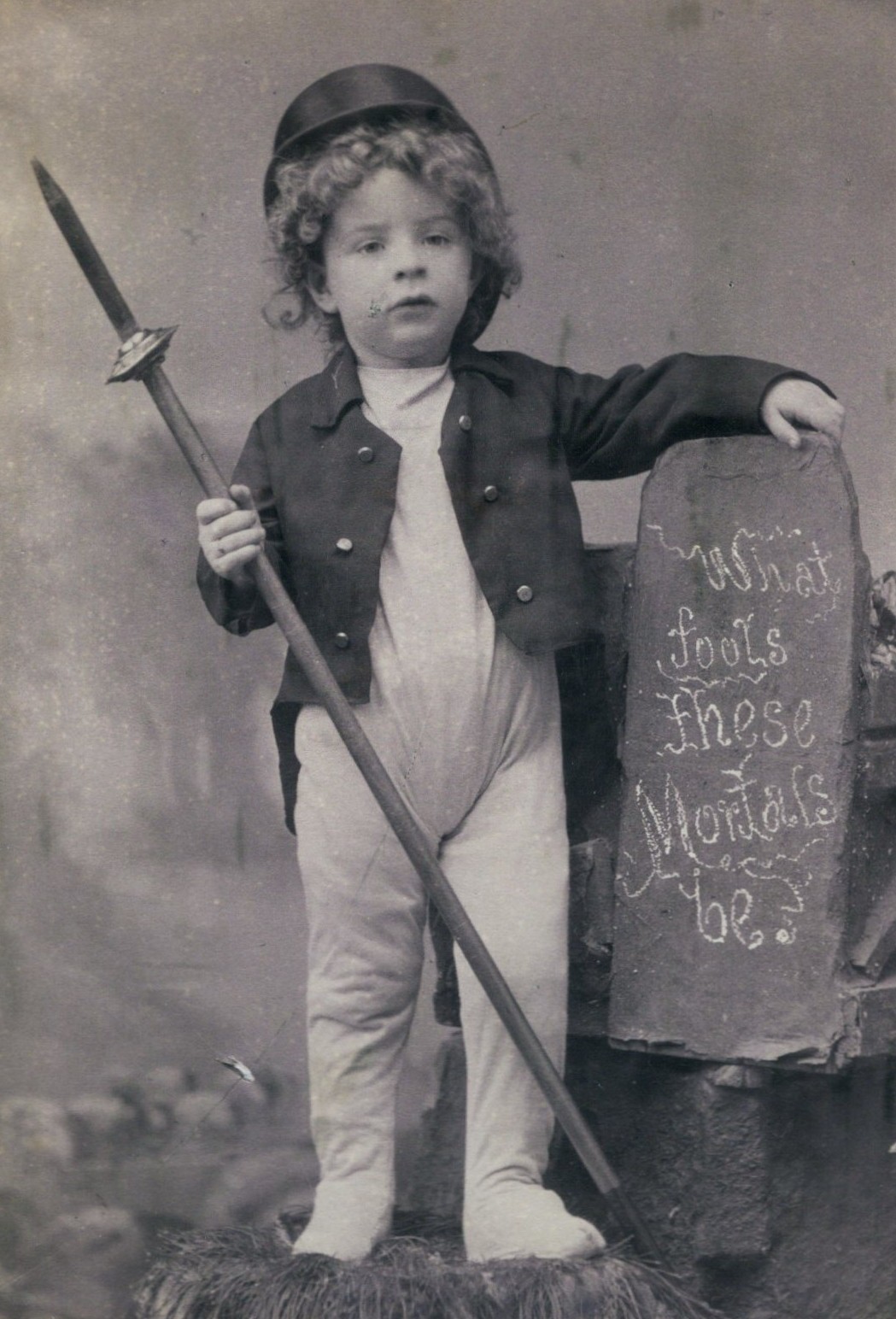
This unusual and uncommon cabinet card features an adorable little boy. He is holding what appears to be a spear. On a slate next to him, there are the words that state, “What Fools These Mortals Be”. This is a line from “A Midsummer Night’s Dream” by William Shakespeare. The line is delivered by the mischievous fairy, Puck. Is the boy in this photograph in costume and taking part in a play? Alternatively, is this photograph just the result of a creative, Shakespeare aware, photographer. The photographer of this cabinet card portrait is W. Busse. His studio was located in Morrisania, New York. Morrisania is a residential neighborhood in the Bronx, New York.  SOLD

JULIA MARLOWE: ESTEEMED AMERICAN STAGE ACTRESS : CABINET CARD PORTRAIT 

This cabinet card features Julia Marlowe displaying a mischievous smile. Note her engaging large eyes. Miss Marlowe was a stage beauty. She is wearing a somewhat revealing dress (for the cabinet card era) and has a wonderful hat atop her head. Julia Marlowe (1865-1950) was born in England and as a young child moved to the United States with her family. In her early teens she began her theatrical career with a juvenile opera company. She began playing Shakespeare in her home town of Cincinnati, Ohio. She made her Broadway debut in 1895 and by the end of her career, had appeared in more than 70 Broadway productions. Her first husband was actor, Robert Tabor. Their marriage lasted six years. In 1904 she appeared in “When Knighthood was in Flower”. Great success in this play brought her financial independence. Earlier, in 1903, she appeared in ‘The Cavalier” and “Ingomar”. The New York Sun wrote about her performance in “Ingomar”; “There is not a woman player in America or in England that is – attractively considered- fit to unlace her shoe”. In 1904 she began a partnership with actor E. H. Sothern. They toured the United States performing various plays of Shakespeare. They were managed by Charles Frohman and later, the Shubert brothers. They were considered to be among the major Shakespearian actors of the day. In 1906, Marlowe played in “Jeanne d’Arc” and also as Salome in “John the Baptist”. Later, Sothern and Marlowe played in London but were not terrific box office successes there. In 1911 Marlowe and Sothern married each other. In 1920 and 1921, they made eleven phonograph recordings for the Victor Company. This cabinet card photograph was published in 1888 by the talented and popular Benjamin Falk of New York City. The image is marked with the number sixty-nine. This cabinet card has excellent clarity and is in very good condition (see scans).

6193

Buy this Cabinet Card Photograph (includes shipping within the US) #6193

To purchase this item, click on the Pay with Paypal button below

$72.00

6193

Buy this Vintage Original Cabinet Card (includes International shipping outside the US) #6193

To purchase this item, click on the Pay with Paypal button below

$82.00

MRS KENDAL : ENGLISH STAGE ACTRESS AND MANAGER : SHAKESPEARE PLAYER : RPPC

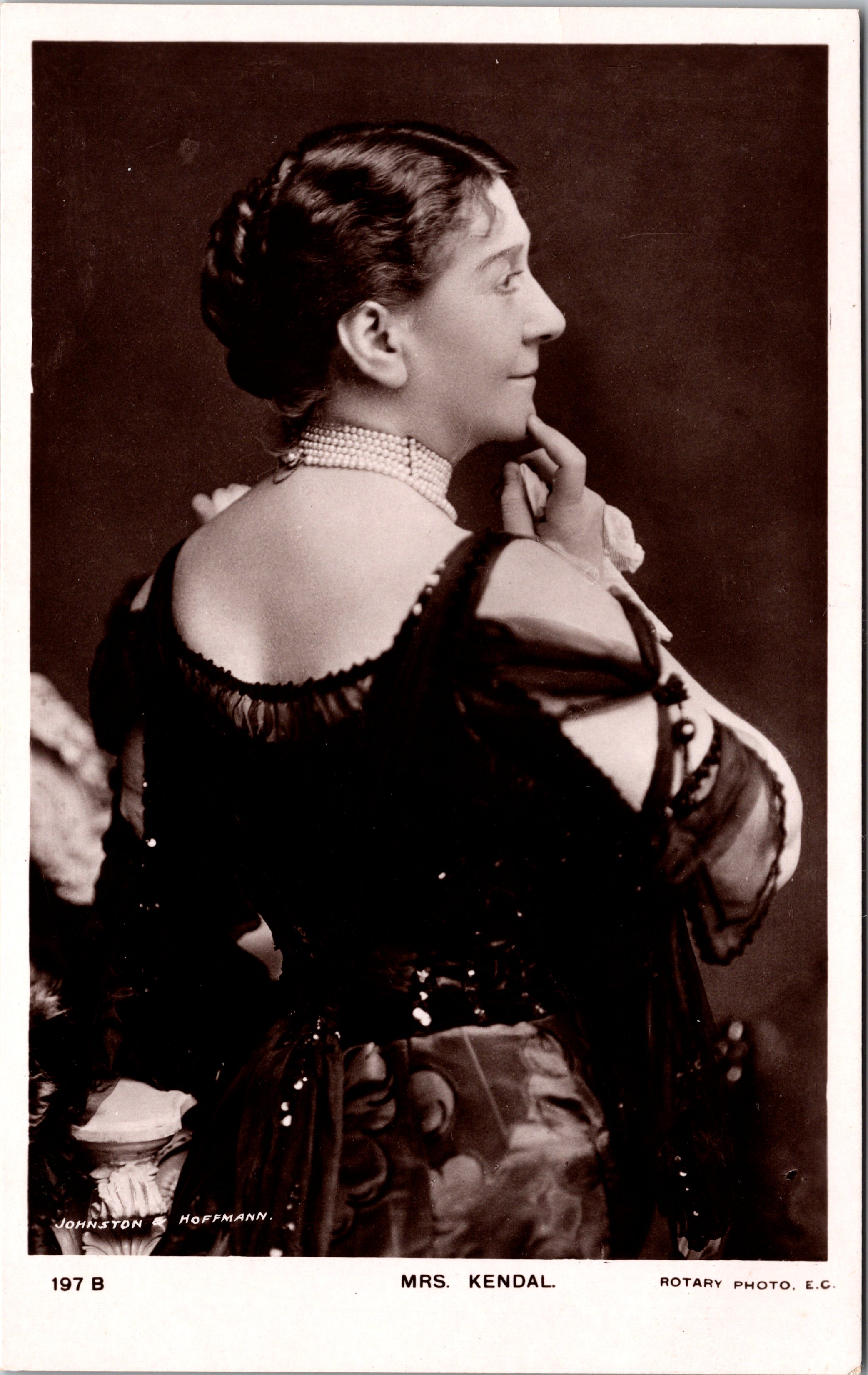
This vintage real photo postcard features English Victorian and Edwardian actress, Dame Madge Kendal (1848-1935).  Her photograph was taken by the Johnston and Hoffmann studio. The postcard was published by Rotary Photo as part of a series (no.197 B). The postcard is in excellent condition (see scans). She appears to be in a stage costume. Mrs Kendal was most well known for her Shakespeare and English comedy roles. Along with her husband, she became a major theater manager. Madge was the product of a theatrical family. Her father ran a chain of theaters. She made her stage debut in London at the age of four. As a teenager she played with major stars in Shakespeare in West End theaters. At 21, she joined the Haymarket theater. She met actor W H Kendal and married him while in the Haymarket company. The pair often played in the same productions and became known as “The Kendals”. After much success in English productions, the couple successfully ran the St James Theater between 1879 and 1888. In the late 1800’s and early 1890’s the couple went of a US tour that played in more than 40 cities. They returned to act in Britain for more that a decade before retiring in 1908. Madge was known for her success at playing comic roles.. She had more mixed reviews when performing in serious parts. She and her husband worked hard to make acing a more socially respectable profession and she became known as “the matron of the English theater”. She was also active in charitable causes. 

Buy this Vintage Real Photo Postcard (includes shipping within the US) #5300

To purchase this item, click on the Pay with PayPal button below

$19.00


Buy this Vintage Real Photo Postcard (includes International shipping outside the US) #5300

To purchase this item, click on the Pay with PayPal button below

$29.00

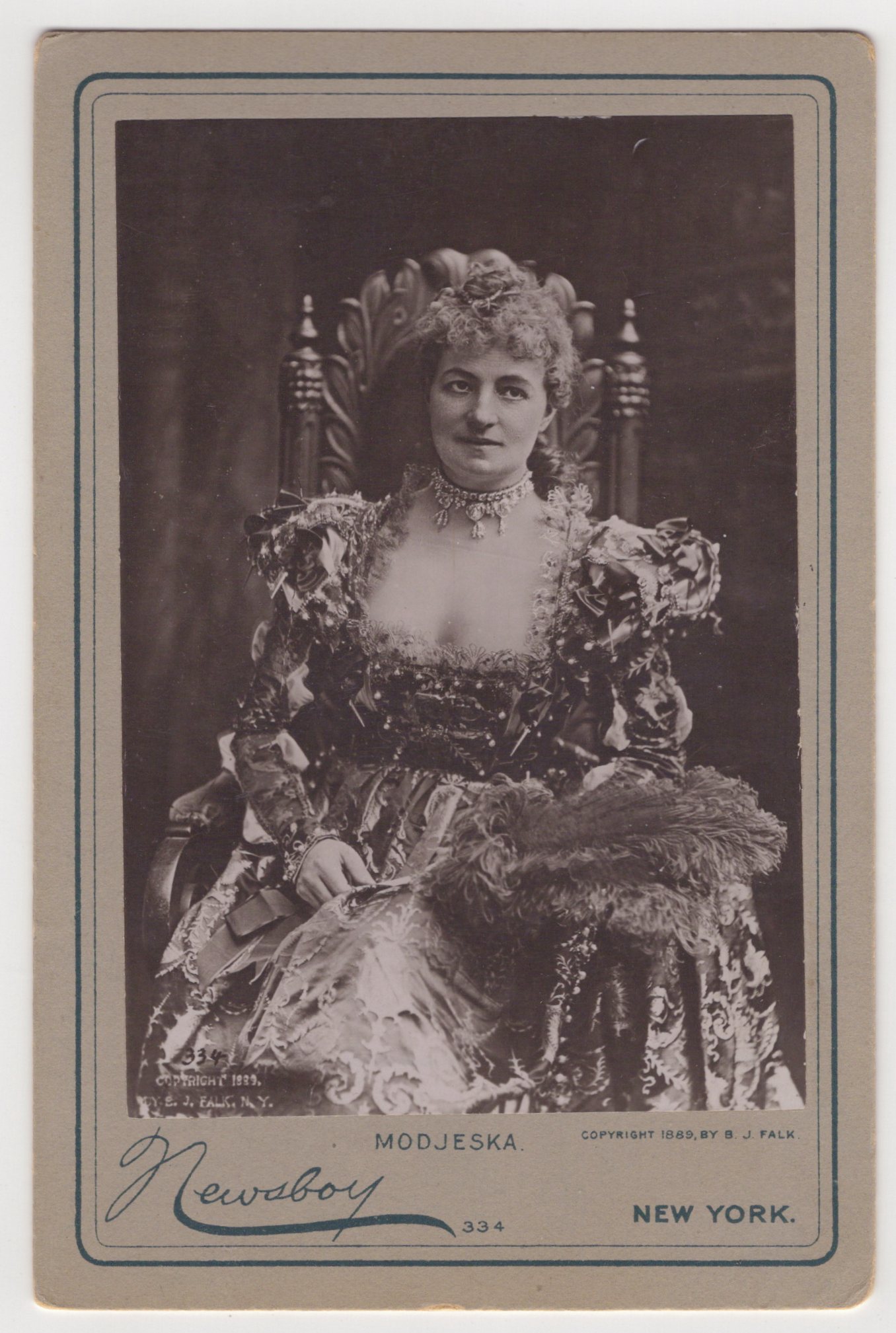
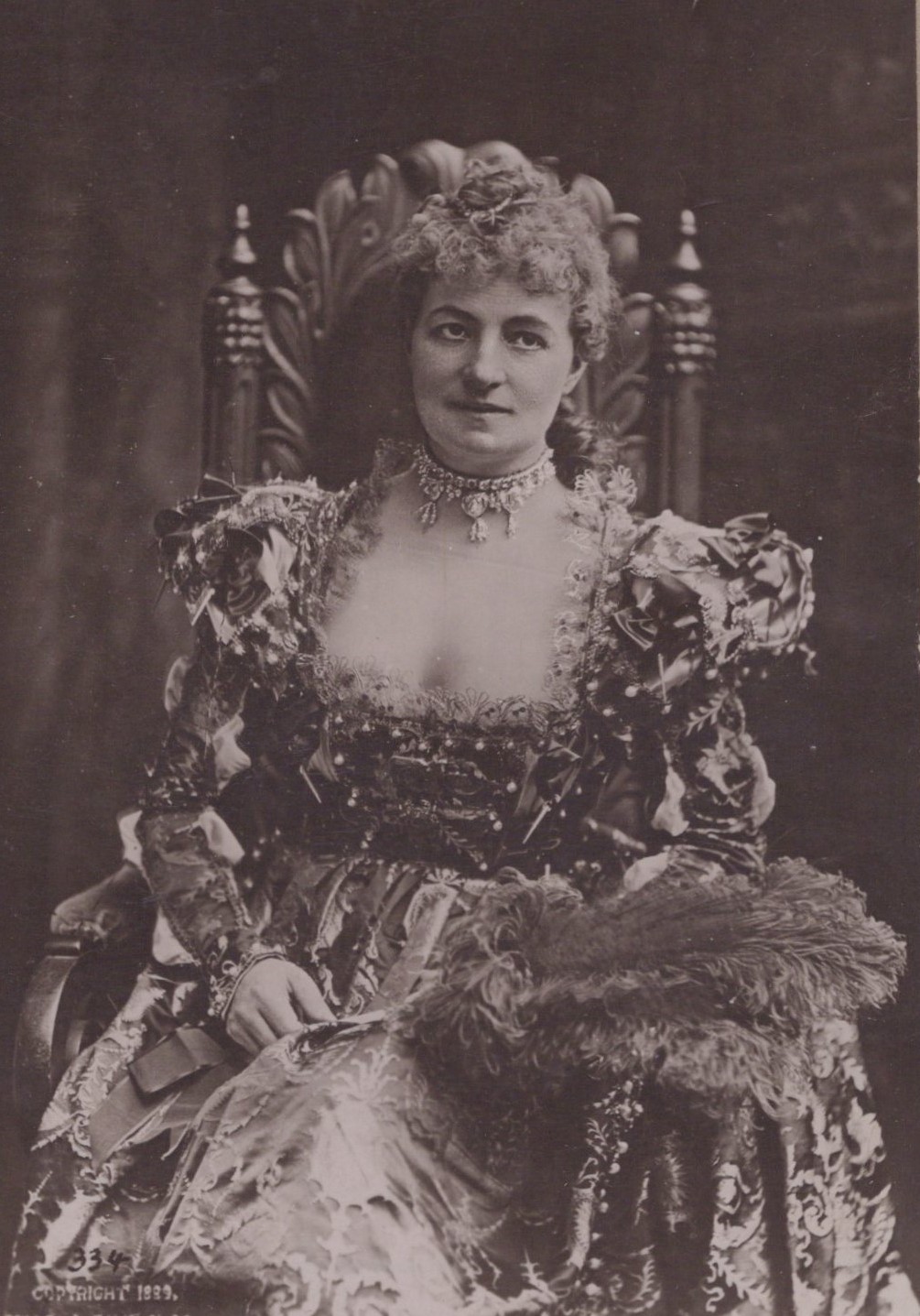
HELENA MODJESKA : POLISH AND AMERICAN ACTRESS : SHAKESPEARE : CABINET CARD 1889

This cabinet card photograph features Polish actress, Helena Modjeska (1840-1909). She was known for her Shakespearean and tragic roles. She began her career on the Polish stage and after emigrating to the United States in 1876, she was successful on both the American and British stage. She is considered the greatest actress in the history of the Polish stage. After marrying Count Karol Bozenta Chłapowski, Modjeska emigrated with him to the United States in 1876. She initially attempted to establish a utopian agricultural community in California. However, the colony struggled, and she turned back to acting to support the venture financially. Modjeska achieved remarkable success on the American stage, learning English and debuting in San Francisco in Adrienne Lecouvreur. She quickly became known for her elegance, refined acting style, and powerful performances in Shakespeare’s plays, such as As You Like It and Othello, which she toured extensively across the U.S. and England. She played twelve Shakespearean parts in this country in addition to other classic and contemporary roles. In 1883 she appeared in America’s first professional appearance of Ibsen’s “A Doll’s House”. This cabinet card was published by Newsboy as a premium for their tobacco products. Miss Modjeska’s photograph was taken by esteemed celebrity photographer, Benjamin Falk in 1889. Some may consider this photo risque because of Modjeska’s low cut dress.  SOLD

OLIVE MAY : AMERICAN STAGE ACTRESS : BROADWAY STAR : SHAKESPEARE : FIVE PHOTO POSTCARDS

POSTCARD 1 (SOLD)

POSTCARD 2 (SOLD)

POSTCARD 3 (SOLD)

POSTCARD 4 (SOLD)

POSTCARD 5 (SOLD)

POSTCARD 6 (SOLD)

POSTCARD 7 (SOLD)

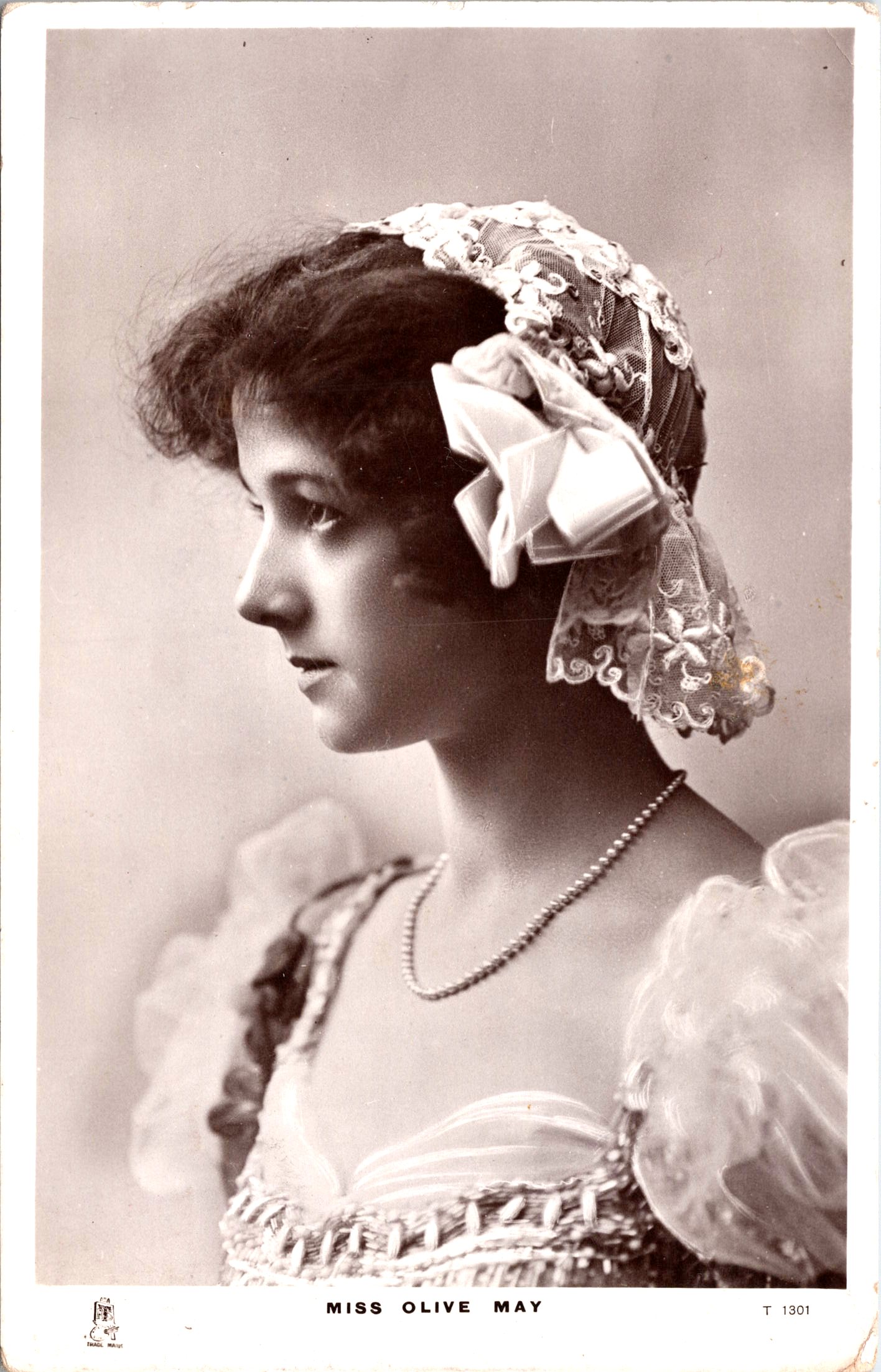
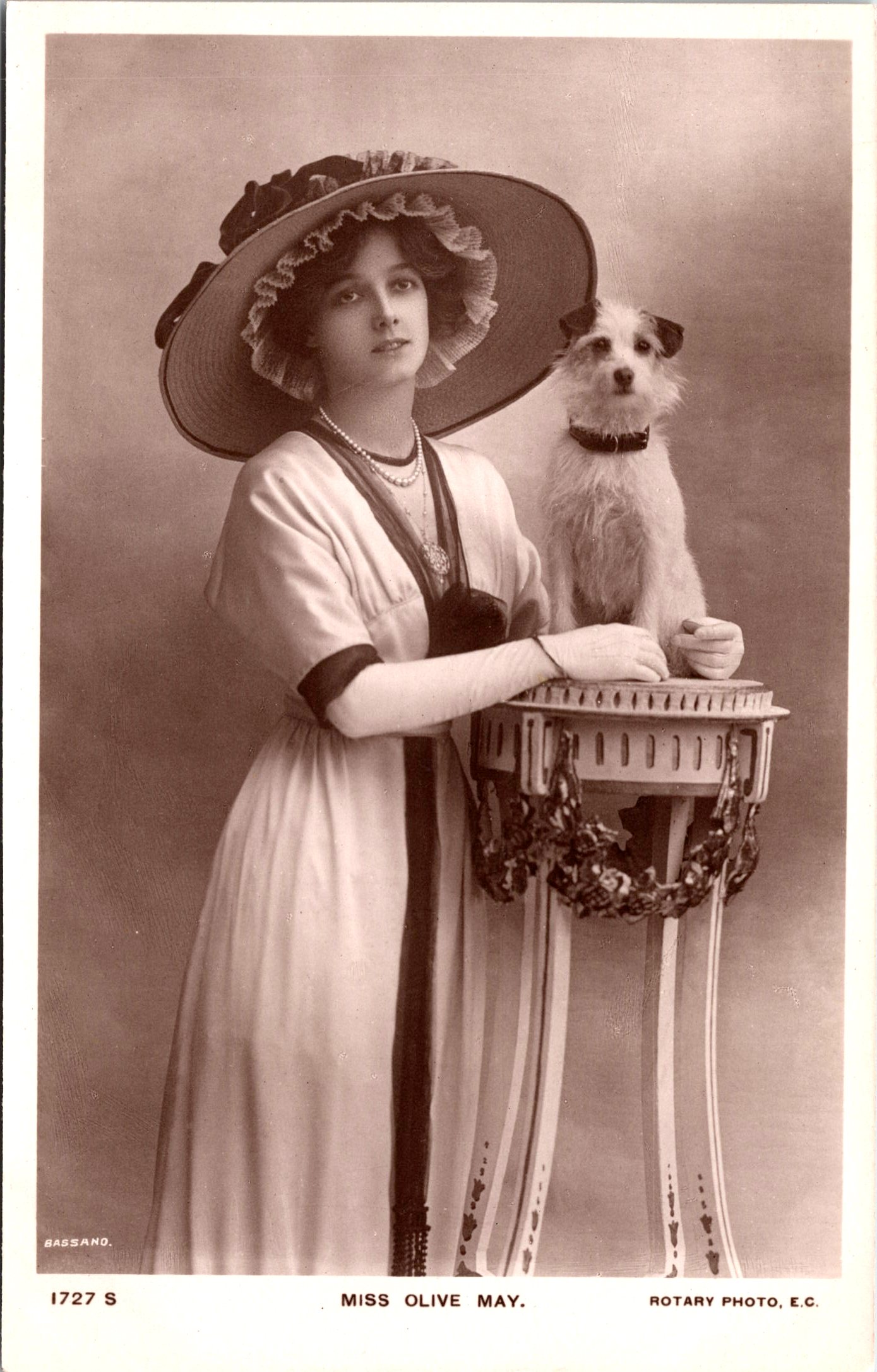
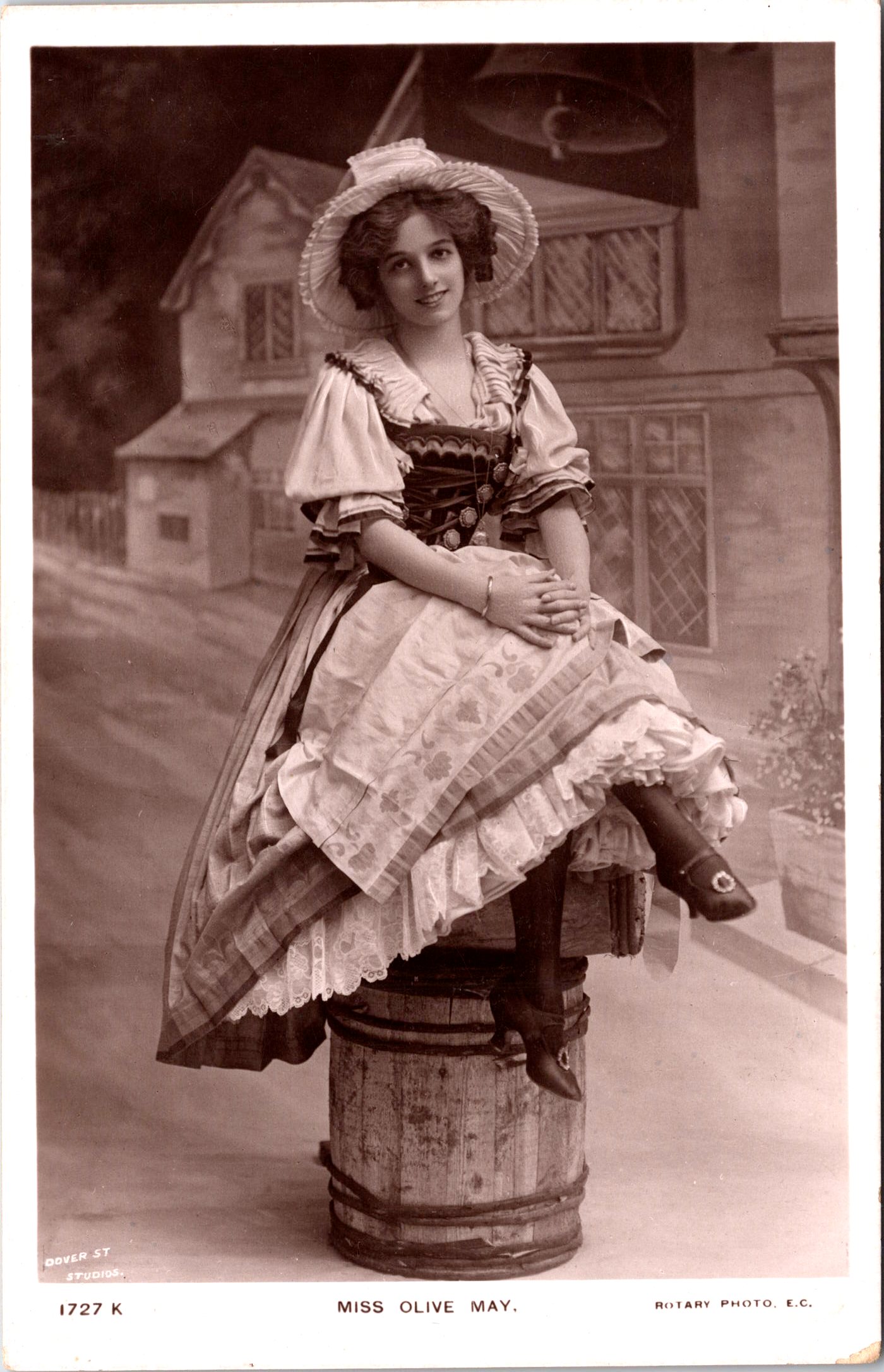
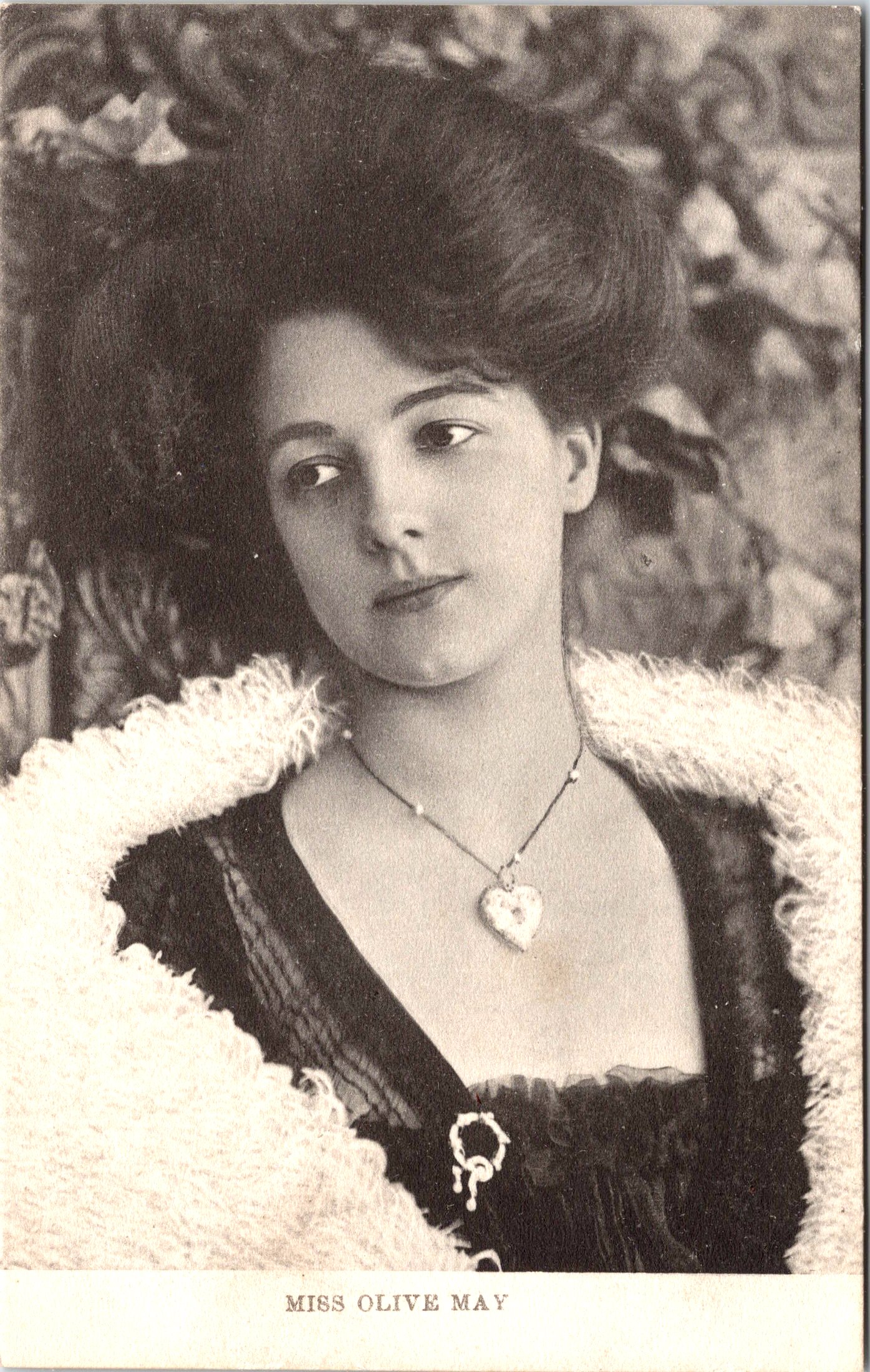
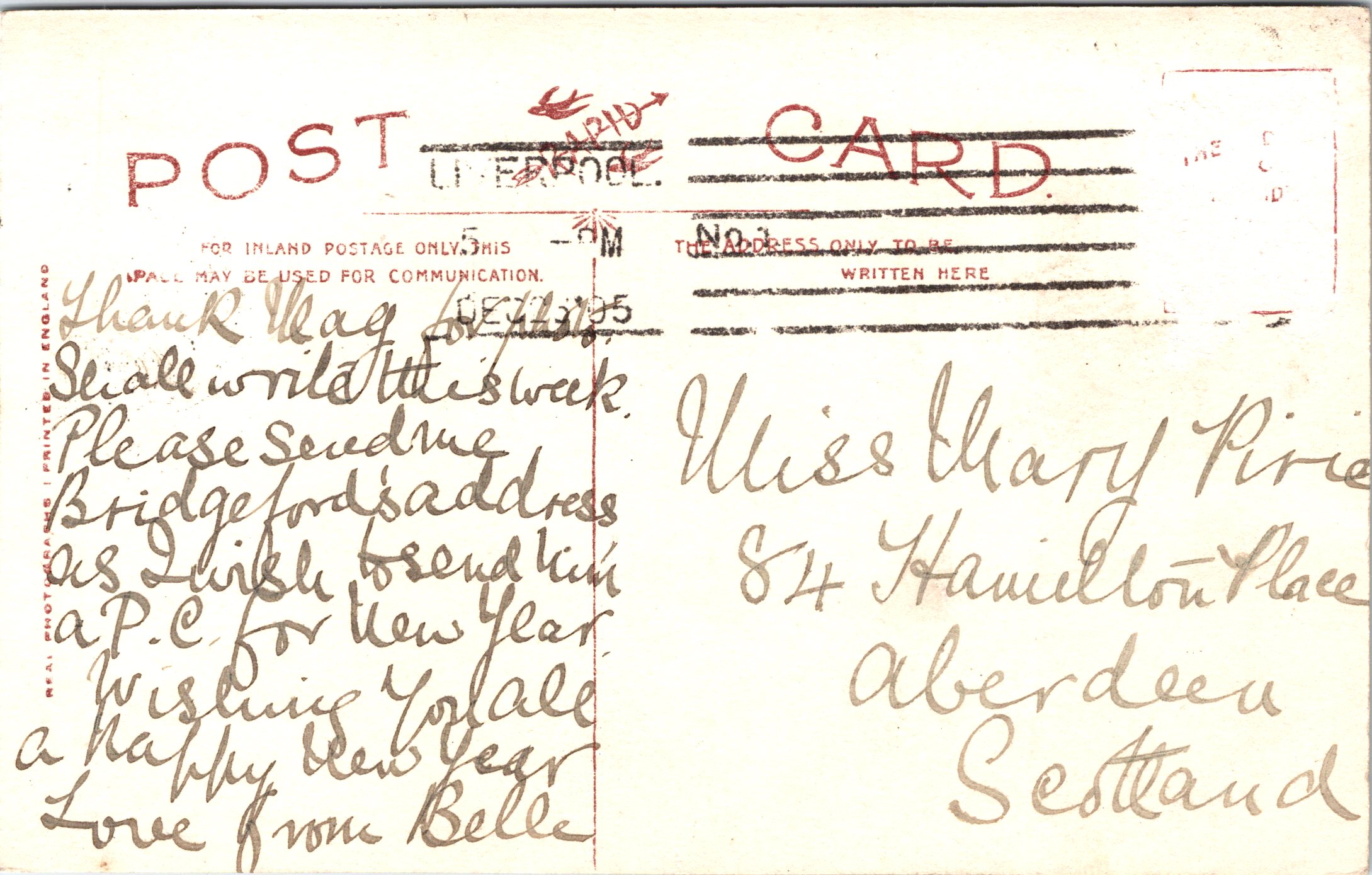
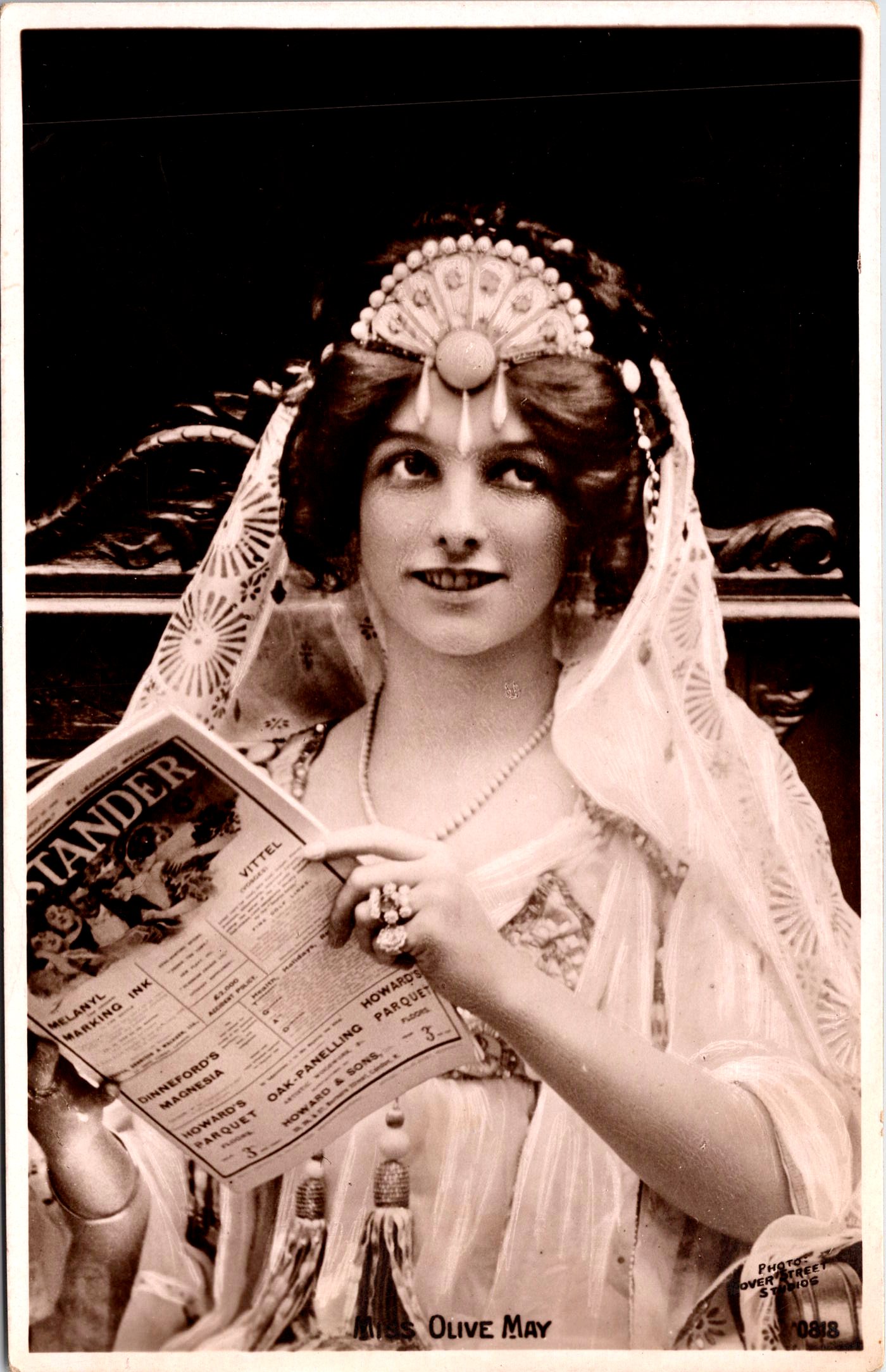
This uncommon vintage real photo postcard, (Postcard 1), features American stage actress, Olive May (1871-1938). She was born in New York City. May made her stage debut in 1893 and quickly became a popular leading lady. She appeared in a number of successful plays, including “Arizona” (1900), “The Merry Widow” (1907), and “The Girl from Utah” (1911). She also was noted for appearing in Maude Adams company and for her Shakespearian roles. The IBDb reports that May appeared in 21 Broadway plays between 1894 and 1928. May was also a popular singer. She was married twice. She had a four year marriage to playwright Henry Guy Carleton and a three year marriage to actor John Albaugh Jr. Widowed at 39 years of age, she never married again. Besides being a talented actress, May was known for her beauty. Many consider her to be one of the prettiest of the real photo postcard actresses of her time. Her beauty is evident in this postcard. She appears to be in costume for one of her theatrical roles. Note her intricate headdress. She is posing with a a copy of “The Bystander” magazine. The magazine began publication in 1903 and covered topics such as theater and literay news, politics, and sports. The magazine also included short stories and cartoons. In 1940 the magazine merged with “The Tatler”. This postcard was published by Rotophot and printed in Germany. Also listed as a publisher was Giesen Brothers & Co. (London). The photograph of Olive May seen on this card was taken by Dover Street Studios.  (SOLD)

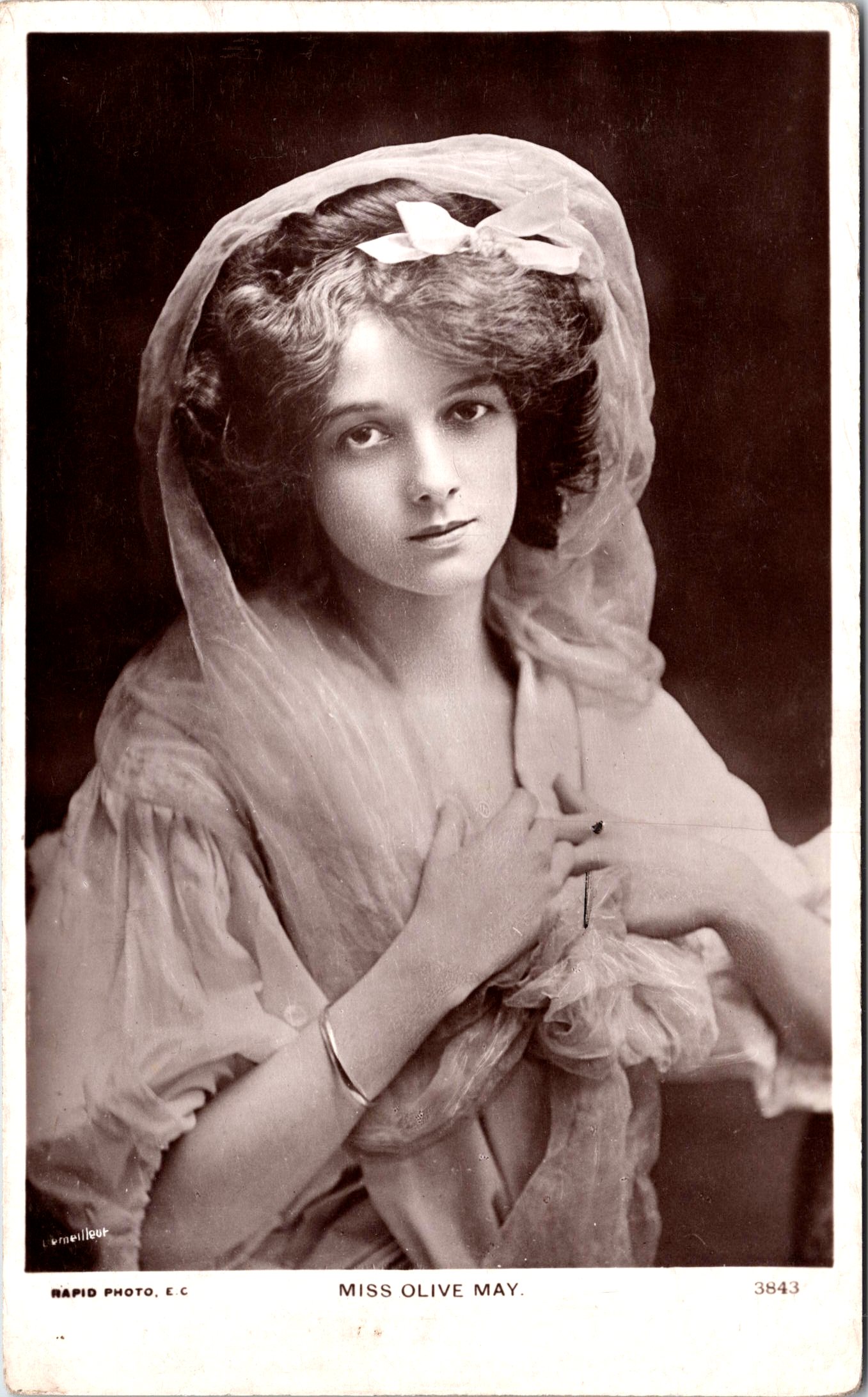
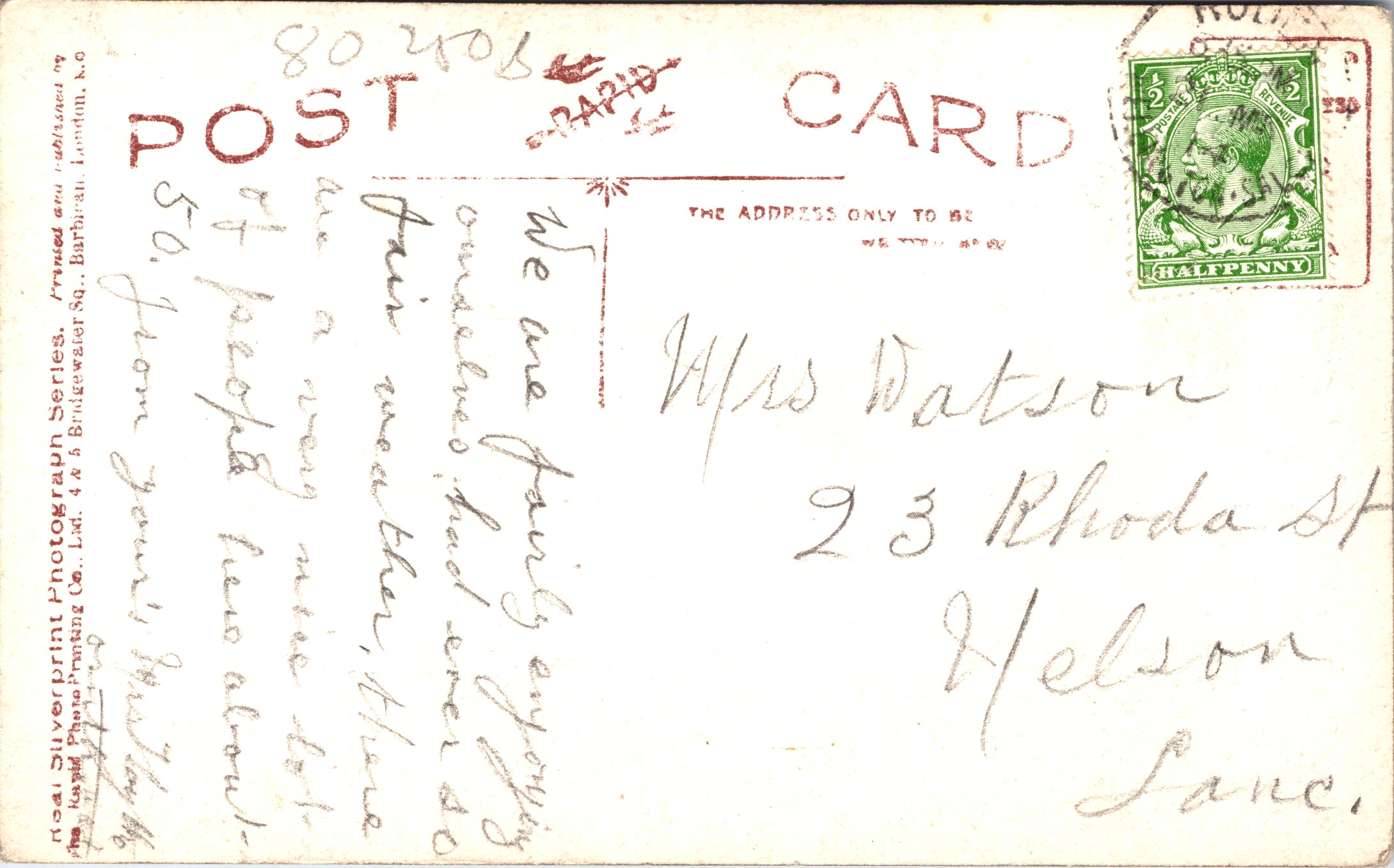
Postcard 2 features Miss May in costume for one of her theatrical roles. Note her intricate headdress. This postcard was published by Rapid Photo as part of the Silverprint Photographic Series (No.3843). It was printed in Great Britain.  (SOLD)

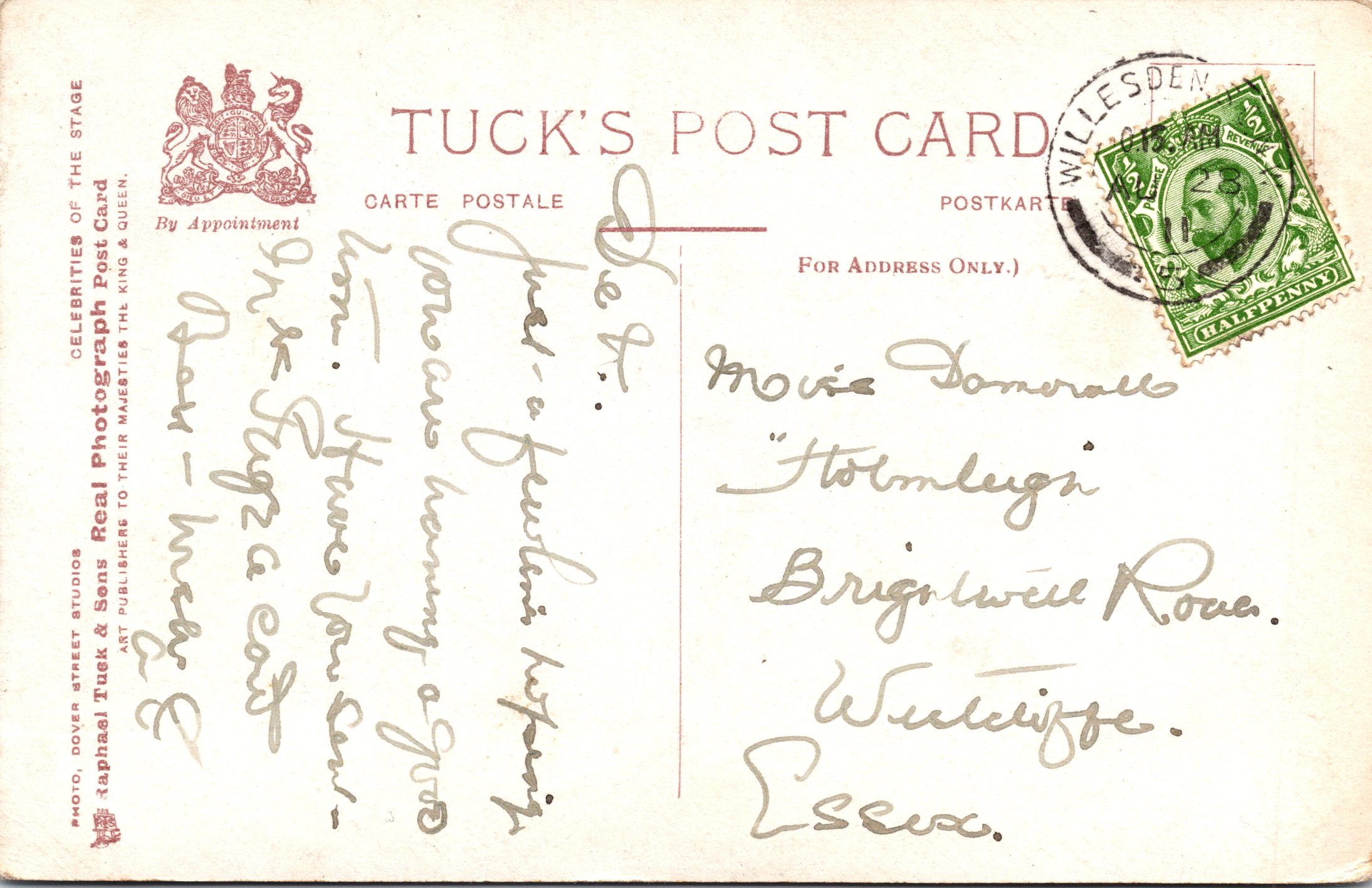
Postcard 3 displays the beauty of Olive May. The photograph on this card captures her in costume for one of her theatrical roles. Note her long white gloves. This postcard was published by Raphael Tuck (No.1727S) as part of the “Celebrities of the Stage” series. It was printed in Great Britain.  (SOLD)

Postcard 4 features Miss May in costume for one of her theatrical roles. Note her pretty lacey hat and pigtails. This postcard was published by Rapid Photo as part of a series (No.2378). It was printed in Great Britain. The card has a 1905 postmark.  (SOLD)
Postcard 5 features Miss May possibly in costume for one of her theatrical roles. Note her long white gloves. Co-starring in this photograph is an adorable little terrier. The dog is sitting on a high stand and Miss May protectively has her hands lightly wrapped around it. The actress was photographed for this card by the esteemed photographer, Alexander Basssano. This postcard was published by Rotary Photo (No.1727S) and was printed in Great Britain.  (SOLD)
Postcard 6 features May in costume for one of her theatrical roles. Note her pretty lacey dress and hat. Miss May’s pose is atypical. She is sitting on a barrel/table. She has a wonderful smile. This postcard was published by Rotary Photo as part of a series (No.1727K). It was printed in Great Britain. Olive May’s photograph was taken by Dover Street Studios. (SOLD)

Postcard 7 illustrates May’s beauty. She is in costume for one of her theatrical roles. This postcard was published as part of the “Empire Series” (London).  (SOLD)
POSTCARD 1 (SOLD)
POSTCARD 2 (SOLD)
POSTCARD 3 (SOLD)
POSTCARD 4 (SOLD)

POSTCARD 5 (SOLD)
POSTCARD 6 (SOLD)

POSTCARD 7 (SOLD)

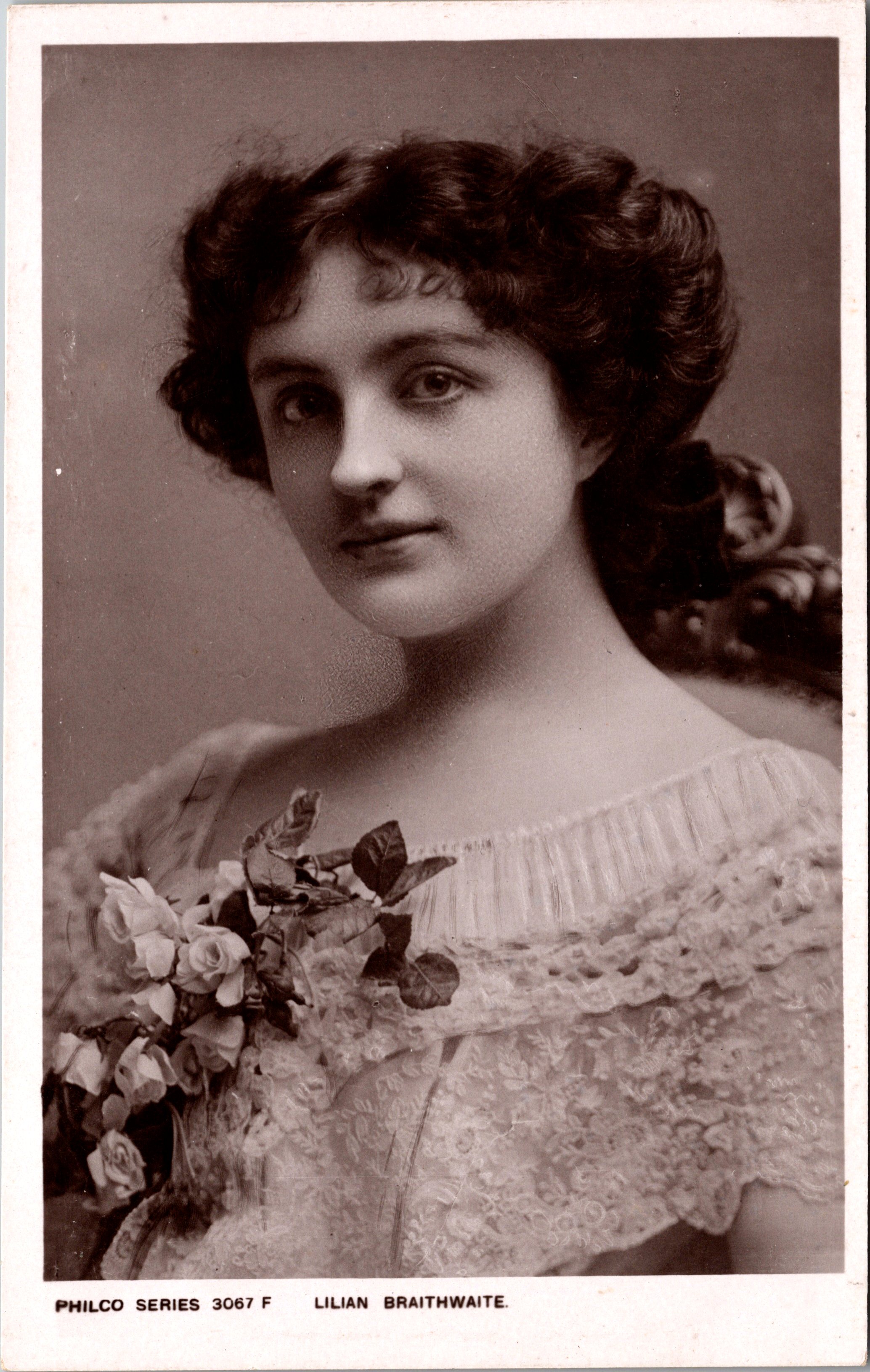
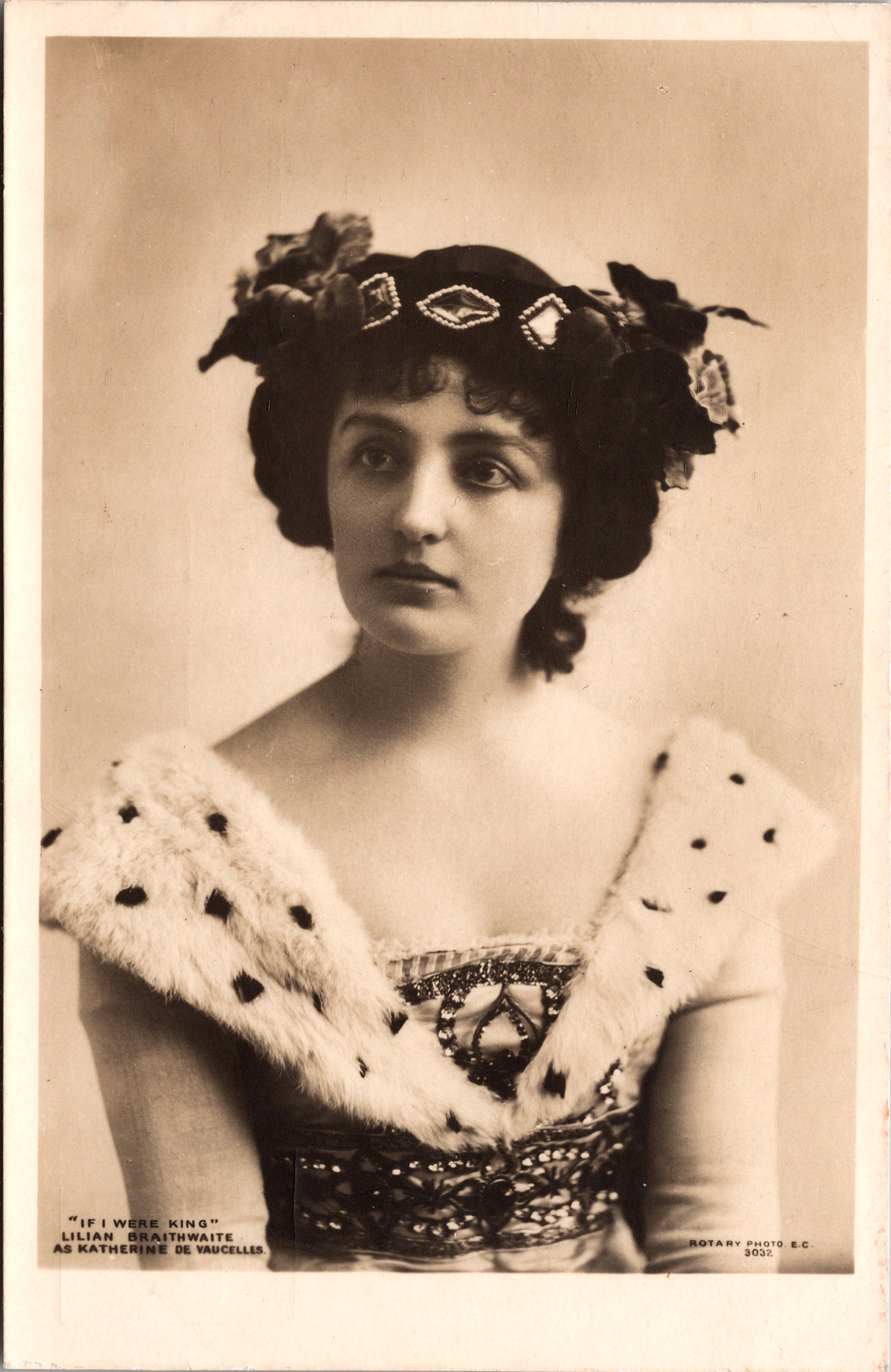
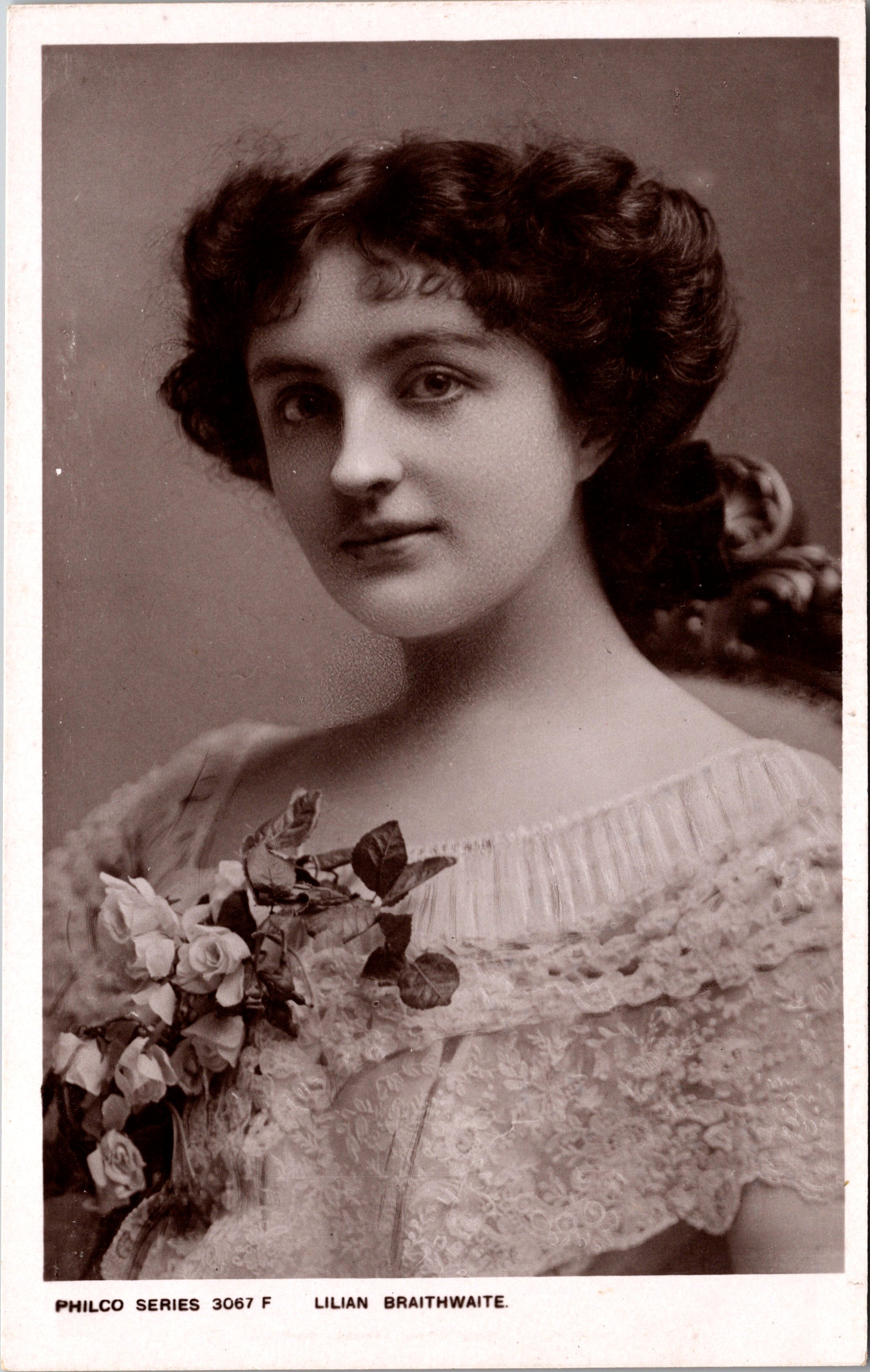
LILIAN BRAITHWAITE : ENGLISH STAGE & FILM ACTRESS : “THE VORTEX” : RPPC

POSTCARD 1

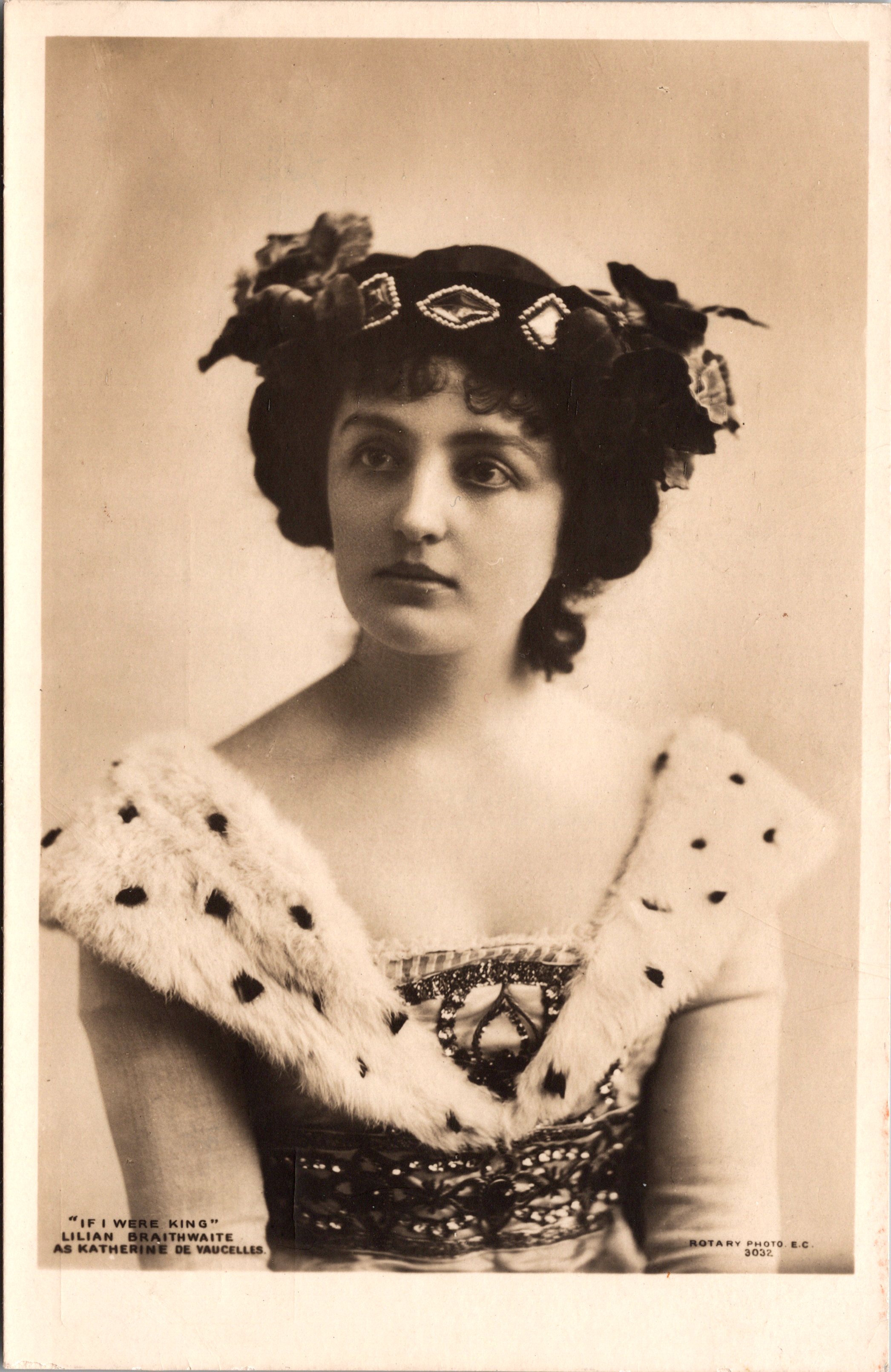
POSTCARD 2

These vintage real photo postcards feature pretty English stage actress Lilian Braithwaite (1873-1948). Lilian’s major focus was the stage but she did appear in both silent and talkie films. Her father was a Vicar (member of the clergy). She first acted with amateur companies and when she decided to become a professional actress, her parents were opposed. Despite the parental opposition, in 1897, she joined a professional Shakespearean company. She married one of her fellow actors, Gerald Lawrence. They divorced in 1905 due to Lawrence’s adultery and desertion. Her first professional London appearance was in “As You Like It” in 1900. She joined a series of other stage companies over the years. Her major noted appearance was as the alcoholic mother in Noel Coward’s drama, “The Vortex” (1924). In 1927, she appeared in Alfred Hitchcock’s film “Downhill”.

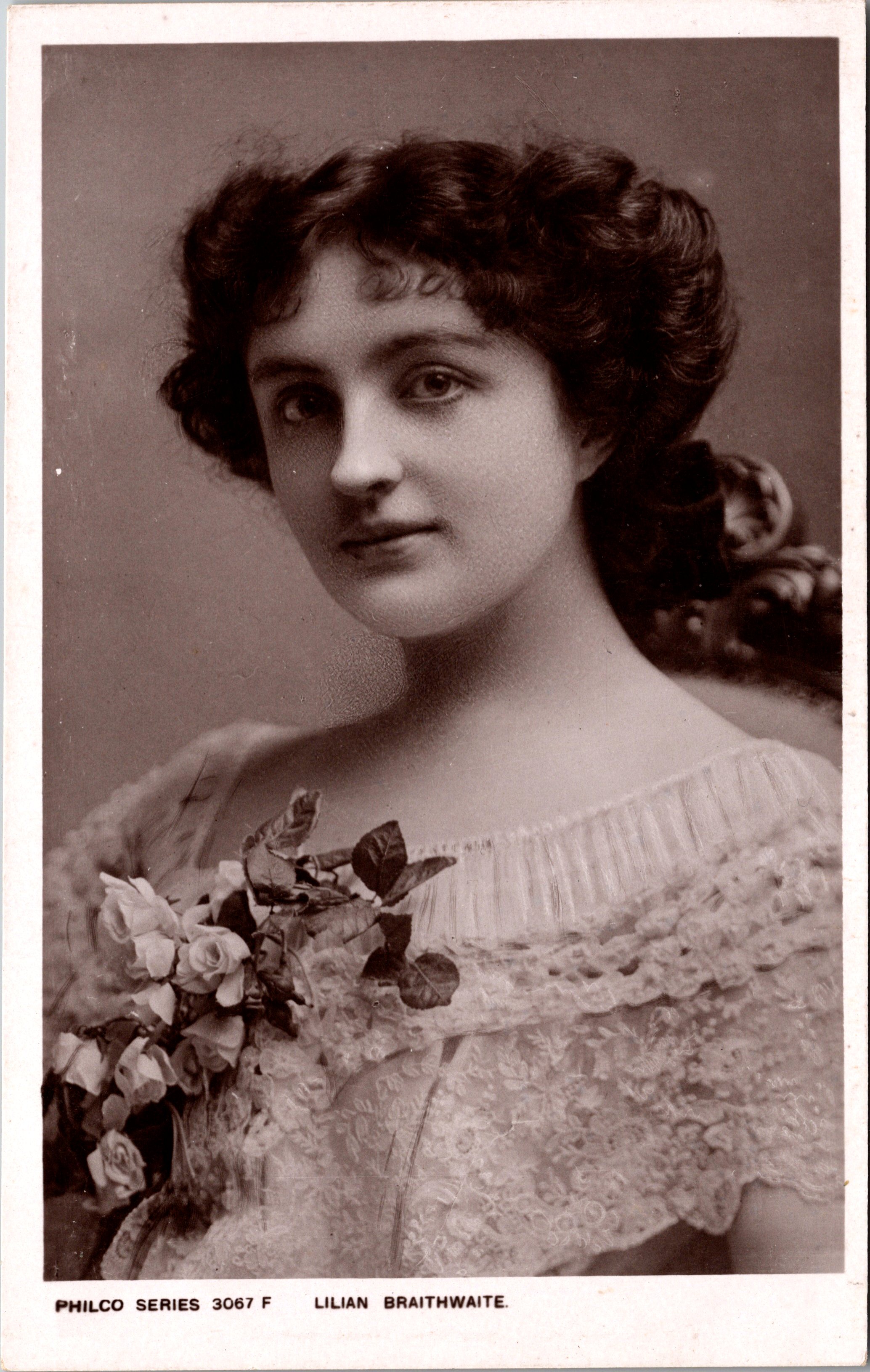
Postcard 1 was published by Philco. The card is part of a series (No.3067F). This unposted postcard is in Very Good condition (see scans).

Postcard 2 features Lilian in her role in the play, “If I Were King”. The publisher of this portrait postcard is Rotary Photo (No.3032). This unposted postcard is in Very Good condition (see scans).

5180_0001

Buy this Real Photo Vintage Postcard (includes shipping within the US) #5180

To purchase this item, click on the Pay with PayPal button below

$14.85

Buy this Vintage Real Photo Postcard (includes International shipping outside the US) #5180

To purchase this item, click on the Pay with PayPal button below

$24.85

5213_0001-1

Buy this Real Photo Vintage Postcard (includes shipping within the US) #5213

To purchase this item, click on the Pay with PayPal button below

$12.48

5213_0001-2

Buy this Vintage Real Photo Postcard (includes International shipping outside the US) #5213

To purchase this item, click on the Pay with PayPal button below

$22.48

POSTCARD 1