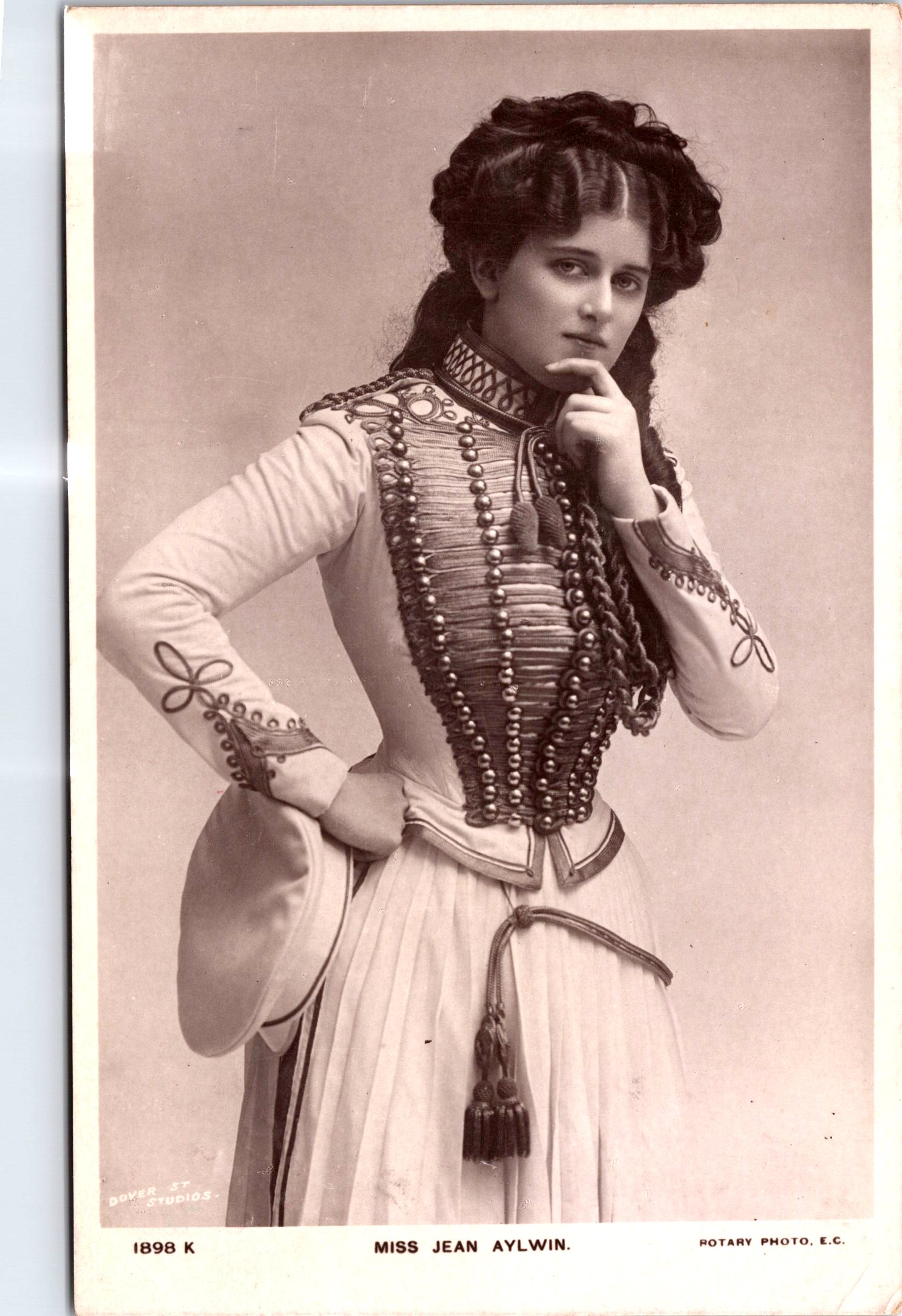
JEAN AYLWIN : SCOTTISH ACTRESS & SINGER : DOVER STREET STUDIOS : RPPC 1908

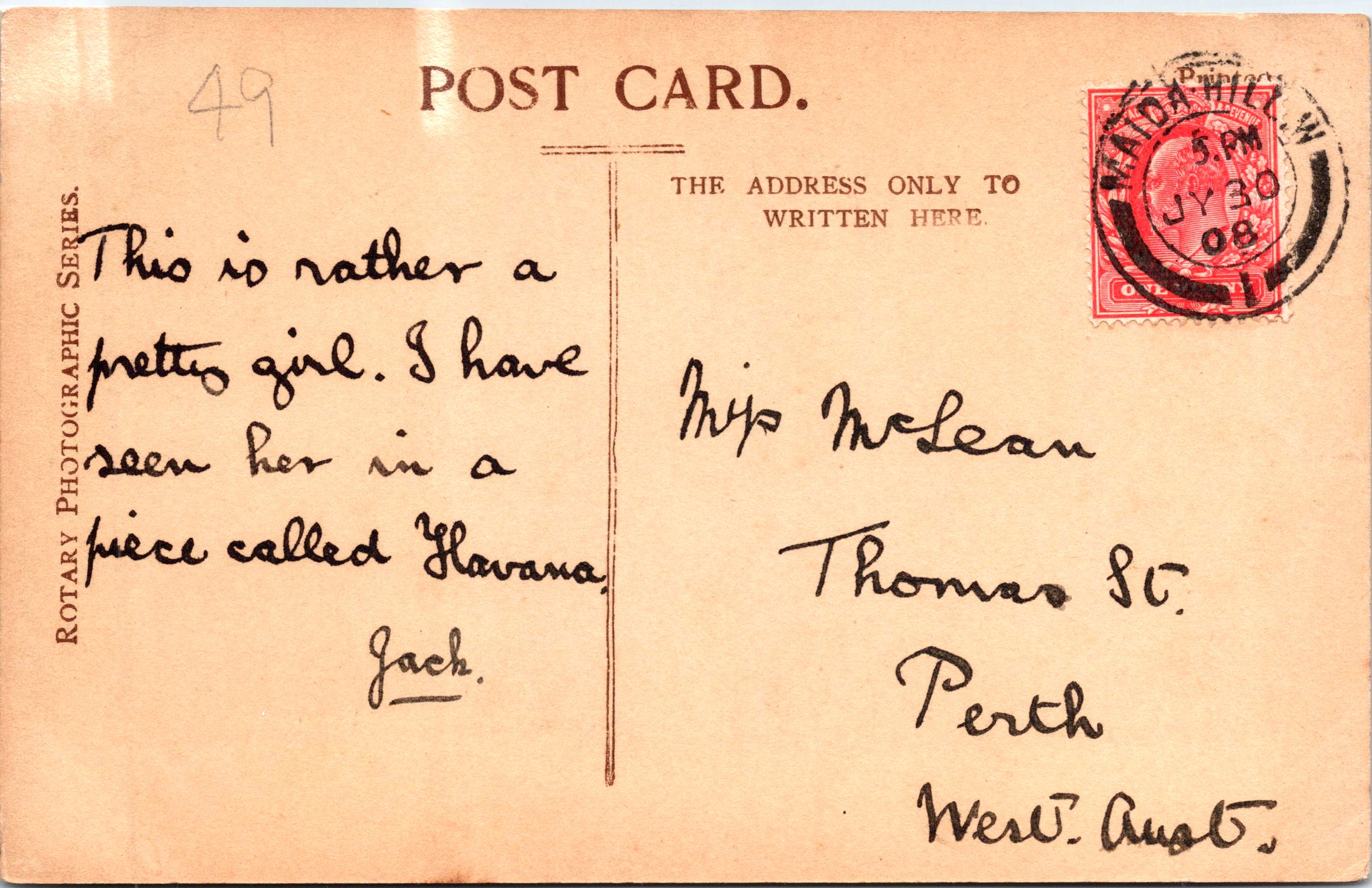
This vintage real photo postcard features a striking portrait of Jean Aylwin (1885-1964), a pretty British actress and singer from the early 20th century. She gained fame for her performances in musical comedies and plays in London and she also toured internationally. Aylwin was associated with the popular Gaiety Theater productions. She had notable performances in several successful productions including “The New Aladdin” (1906), “The Girls of Gottenberg” (1907) and “Our Miss Gibbs” (1909). Aylwin also appeared in two silent films. She married in 1913 but the marriage ended in divorce in 1924. She was accused of adultery with a noted composer of her time. After her divorce, her career declined. She later worked as a housekeeper. In 1926, she briefly worked as a BBC radio broadcaster.  Aylwin looks elegant in this dramatic studio pose. She stands three-quarter length with a thoughtful, hand-to-chin expression, the other hand set firmly at her hip. Aylwin wears a striking military-style costume—a fitted jacket heavily braided with ball buttons and tasselled cords, over a pleated skirt; a matching hat rests at her side. Her hair is dressed in full Edwardian waves, completing the theatrical look. Thd photographer of this portrait is the Dover Street Studios. The card was published by Rotary Photo as part of a series (no1898K). The postcard has a Wandsworth (London) postmark from 1908. The postcard is addressed to someone in West Australia. The message on the card is “This is rather a pretty girl. I have seen her in a piece called Havana. Jack.” The front of this card is has rich, sharp sepia tones. Holding the card at a certain angle, one can see dimples caused by the postmark. (SOLD) 
MAY DE SOUSA : ACTRESS/SINGER :TRAGIC DESCENT FROM STAR TO SCRUB WOMAN : RPPC 1907

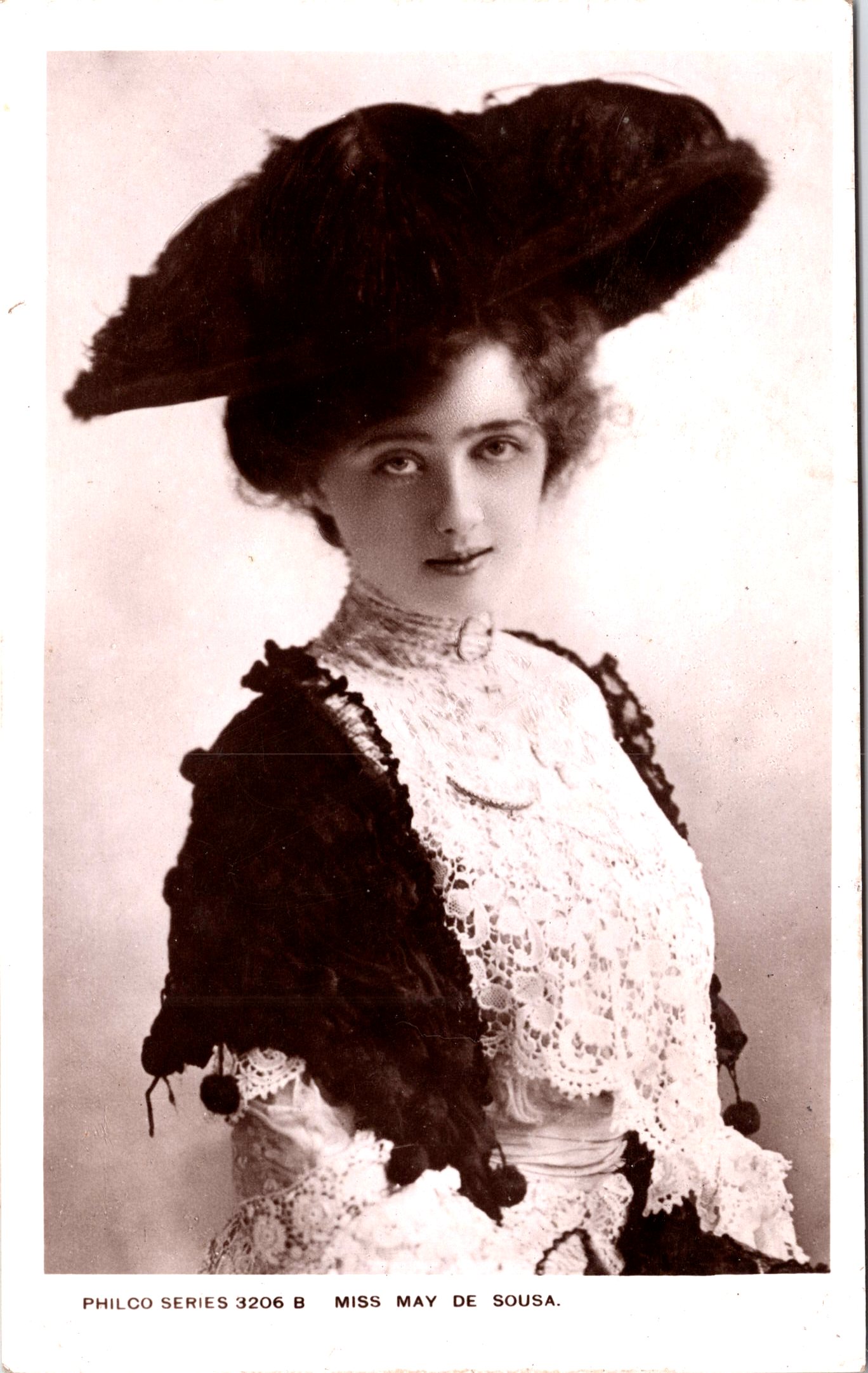
POSTCARD 1 (SOLD)

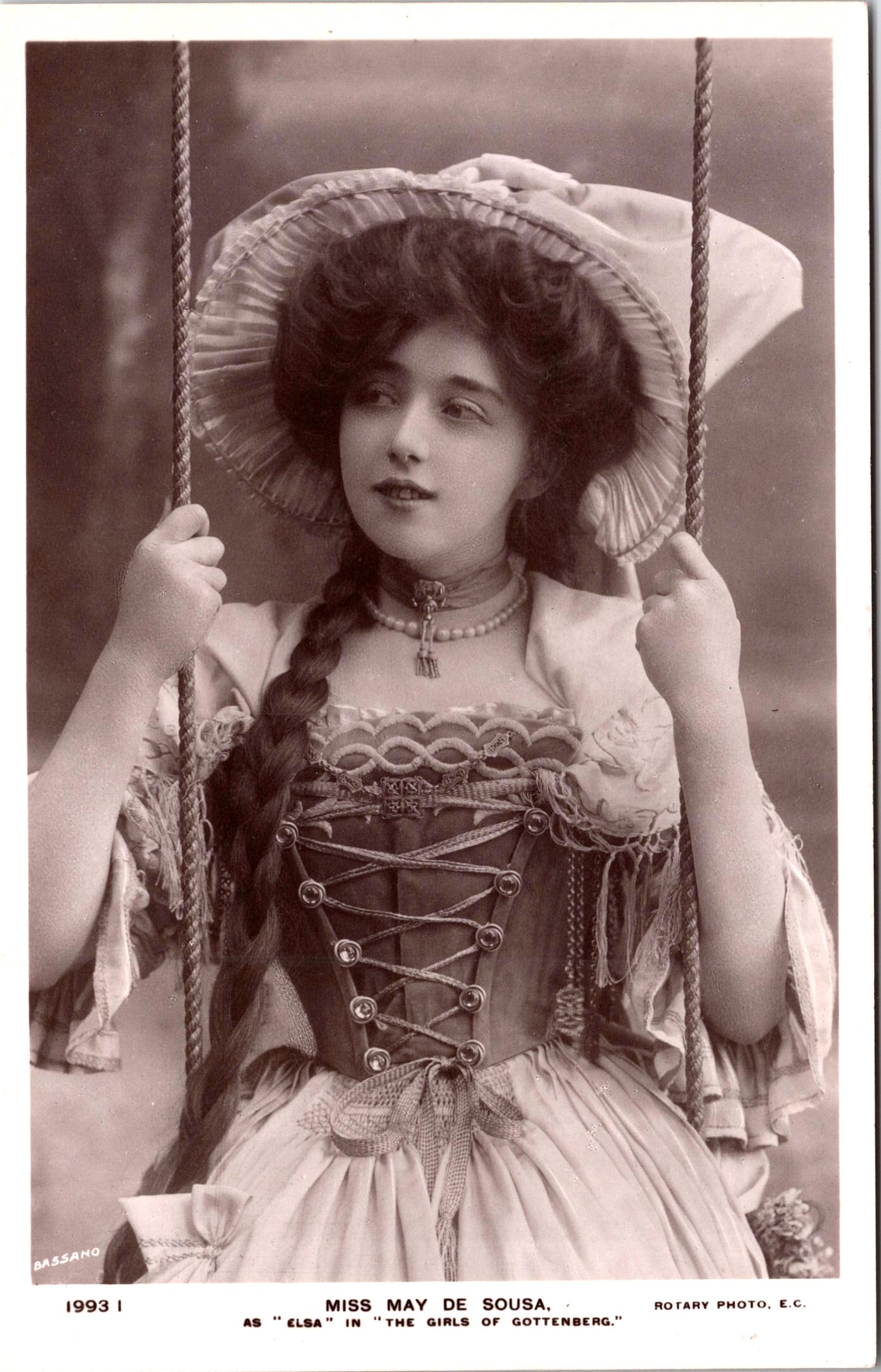
POSTCARD 2 (SOLD)

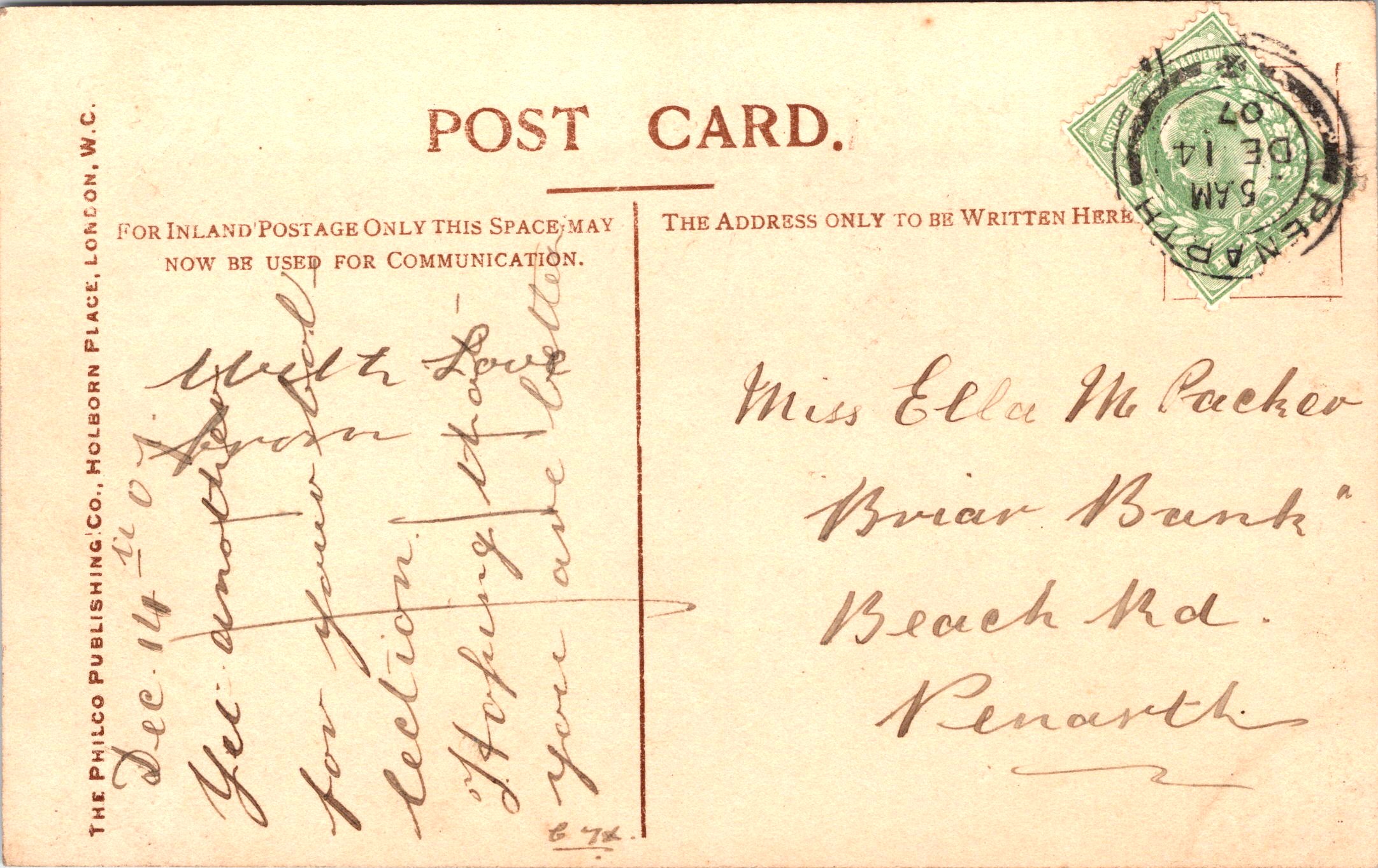
Postcard 1 features American stage actress, and singer, May de Sousa (1884-1948). She had many successes, but she lived a tragic life. Her father was a Chicago police detective. She became famous in 1898, I at about 14 years of age, when she sang “Dear Midnight of Love”. This song was a ballad by bathhouse John Coughlin. He was a Chicago politician and would-be songwriter.  In 1901 she was hired by Frank Perley as one of the principles for his touring company. Next, she became the understudy for Alice Nielson in a San Francisco production. In 1902 she was invited to go to London with the cast of that show, but she turned down the opportunity because she was afraid of the sea voyage. She then joined the cast of the highly successful operatic fantasy, “The Storks”. In 1904 she joined the cast of the Wizard of Oz. That same year, she became part of the cast of “Babes in Toyland”. At this point, she had become a very popular actress. She then went to London to star in a production of Cinderella. She followed that up with other stage successes in London. Although she had much success in light operatic roles, she wanted to display her talent as a dramatic actress. In 1908 she was one of the first American actresses to perform at the Moulin Rouge. While in Paris she was reported missing because she did not contact friends or family for over five weeks. She returned without explanation. She was now a star in both the United States and England. In 1910, her mother was discovered dead in a room filled with gas. It was unknown whether her mother’s death was accidental or by suicide. In 1910, May married a stockbroker. Their marriage was very troubled from its beginning. Her husband had lied about his finances, and the financial burden fell on the De Sousa. In addition, her husband frequently physically, abused her. After two years of marriage, she divorced him on the grounds of cruelty and financial desertion. De Sousa continued her career in both America and Europe. De Sousa appeared in 8 Broadway plays between 1905 and 1915.  She was performing in France shortly before the start of World War I and barely escaped Germany’s invasion of France. In 1913, she was forced to declare bankruptcy. In 1918, she toured Australia with a theatrical company. While there, in about 1919, she married a local doctor and the pair moved to Shanghai. She performed there with amateur companies. In 1941 her husband died, and in around 1943 she was imprisoned for seven months as a civilian intern by the Japanese. When she returned to Chicago, she worked as a scrub woman in a public school. Her health was very much compromised by her internment,  she soon was forced to quit her job due to not being healthy enough to perform her tasks. She became malnourished and died in poverty and alone. She was a charity case in the county hospital when she died in 1948. May DeSosa had risen to become the toast of Europe and America, but died isolated and forgrotten. She was buried in a pauper’s grave. This vintage postcard was published by Philco as part of a series (No.3206B). The card was postmarked in 1907. (SOLD)

Postcard 2 was published by Rotary Photo as part of a series (No.1993I). De Sousa is shown in costume for “The Girls of Gottenberg”. (SOLD)