
This risque vintage real photo postcard features a nude pretty young woman giving the camera a “come hither” look. She is reclining on a chair. This postcard was published by B. M. V. as part of a series (No.31). SOLD
This risque vintage real photo postcard features a nude pretty young woman giving the camera a “come hither” look. She is reclining on a chair. This postcard was published by B. M. V. as part of a series (No.31). SOLD

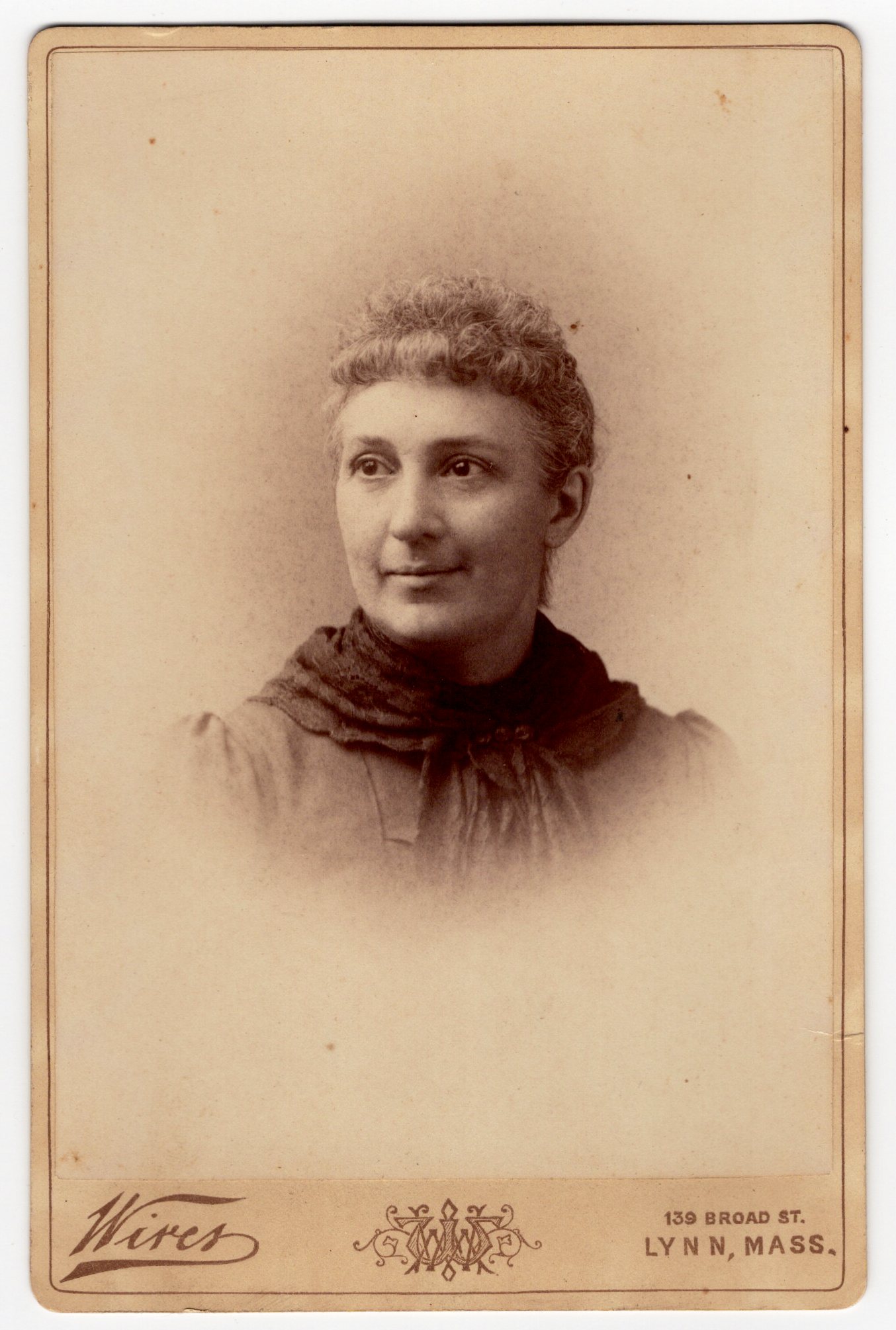
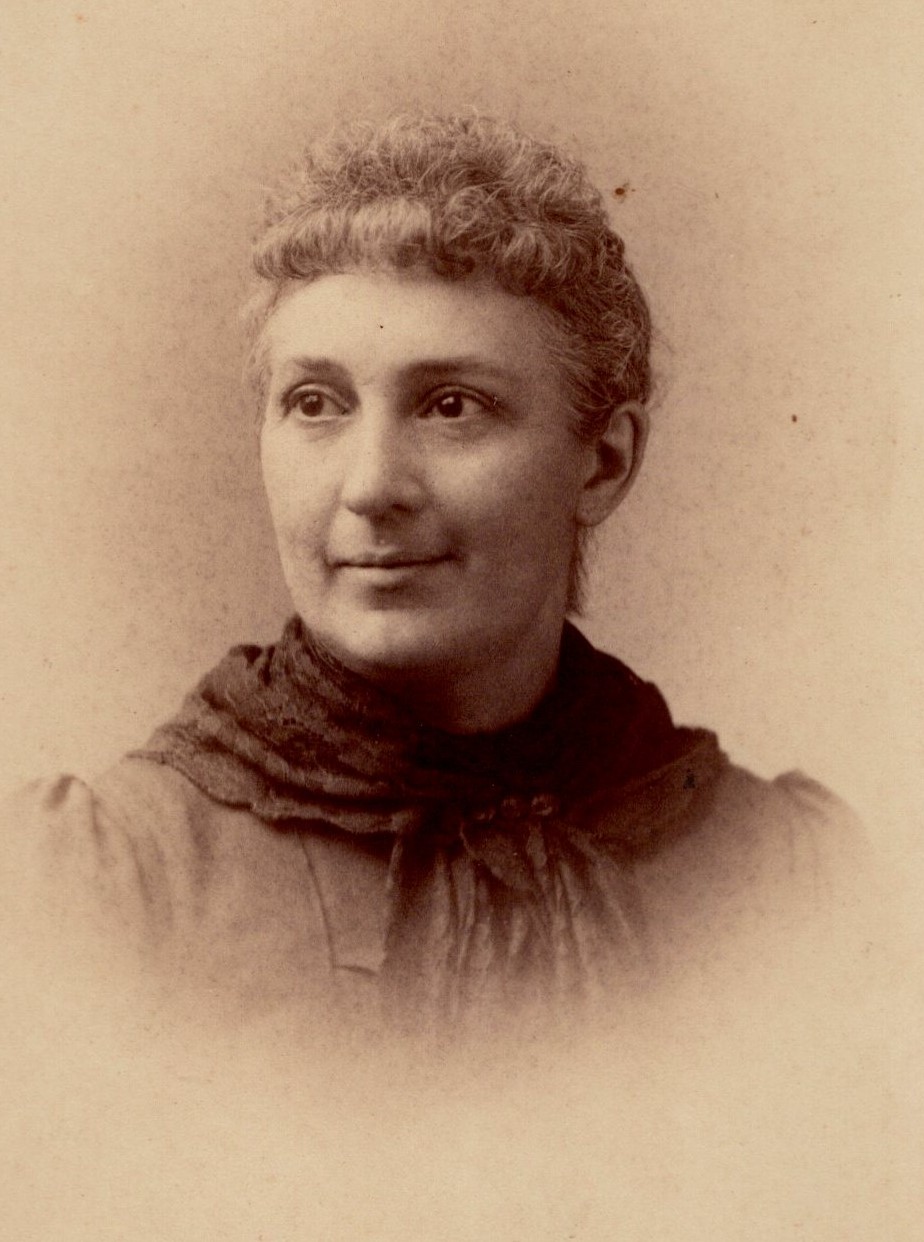
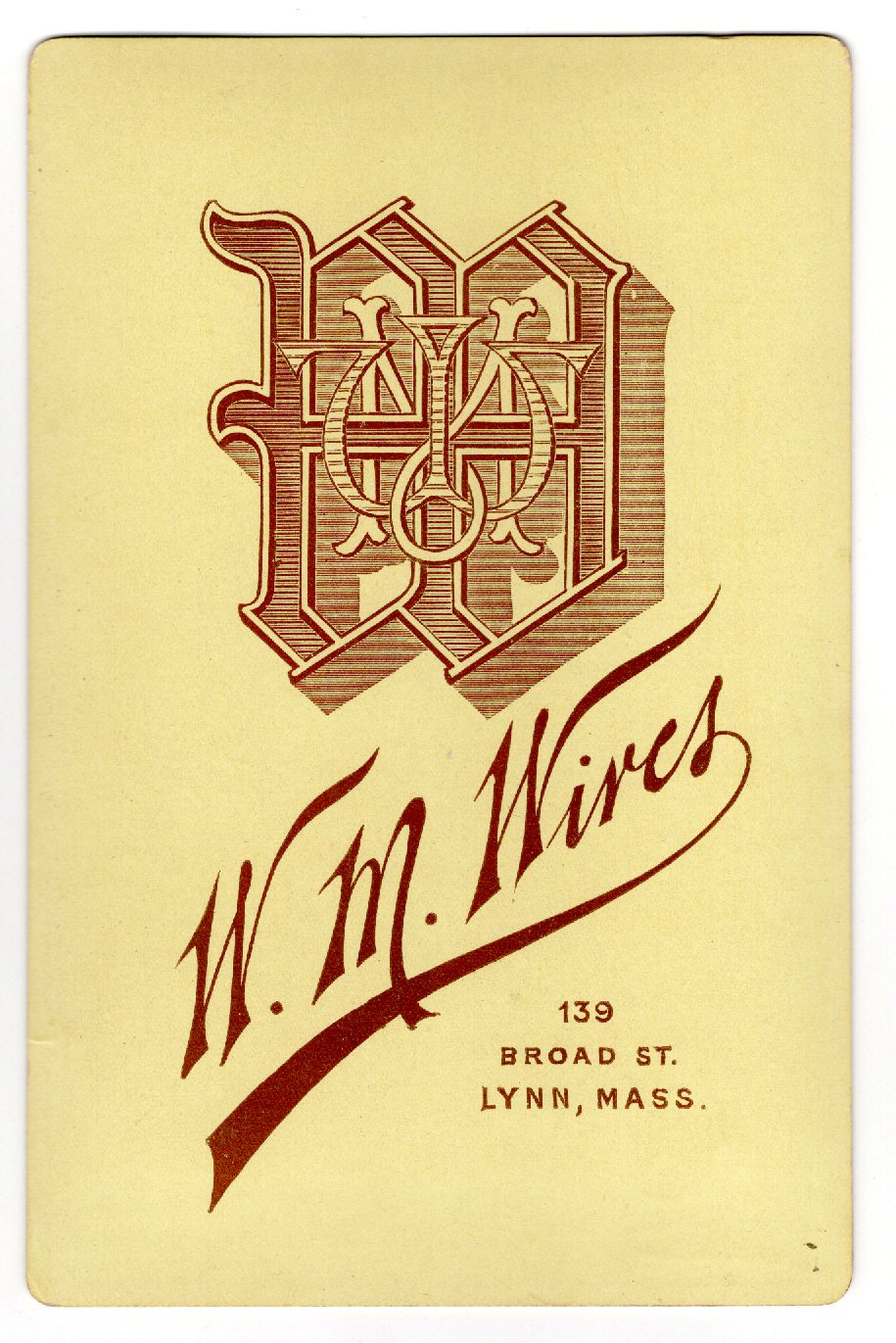
This cabinet card features a young woman posing for her portrait at the studio of William Marshall Wires, in Lynn, Massachusetts. Wires was born in Cambridge, Vermont in 1842. He was a veteran of the American Civil War (originally in Fifth Regiment of Vermont Volunteers). He became a member of the Signal Corps and participated at the battle of Gettysburg. He moved to Lynn in 1872. He was a prominate photographer there from 1873 to at least 1913. He died at the Soldier’s Home in Chelsea, Massachusetts in 1920. He was an active member of the Grand Army of the Republic. SOLD
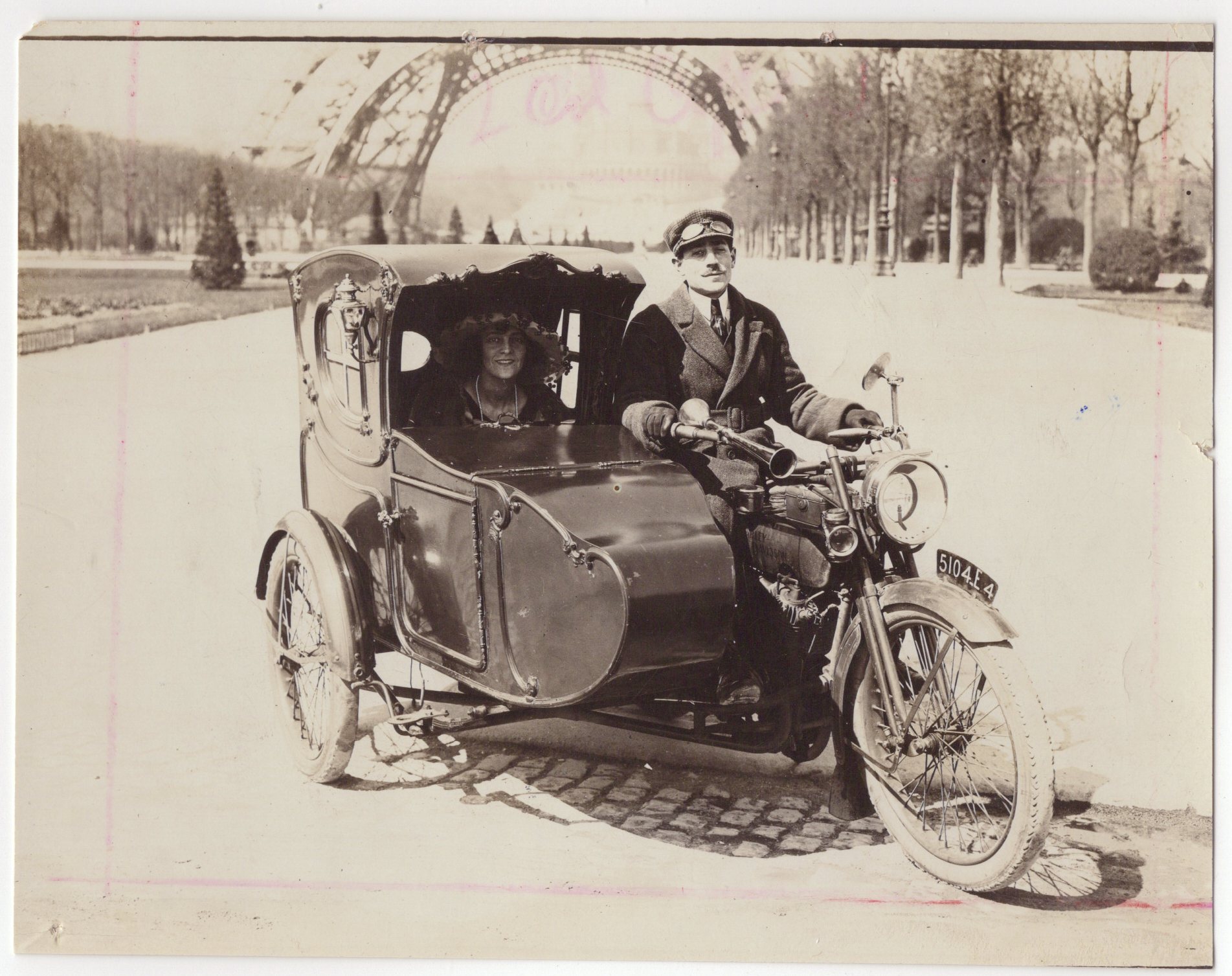
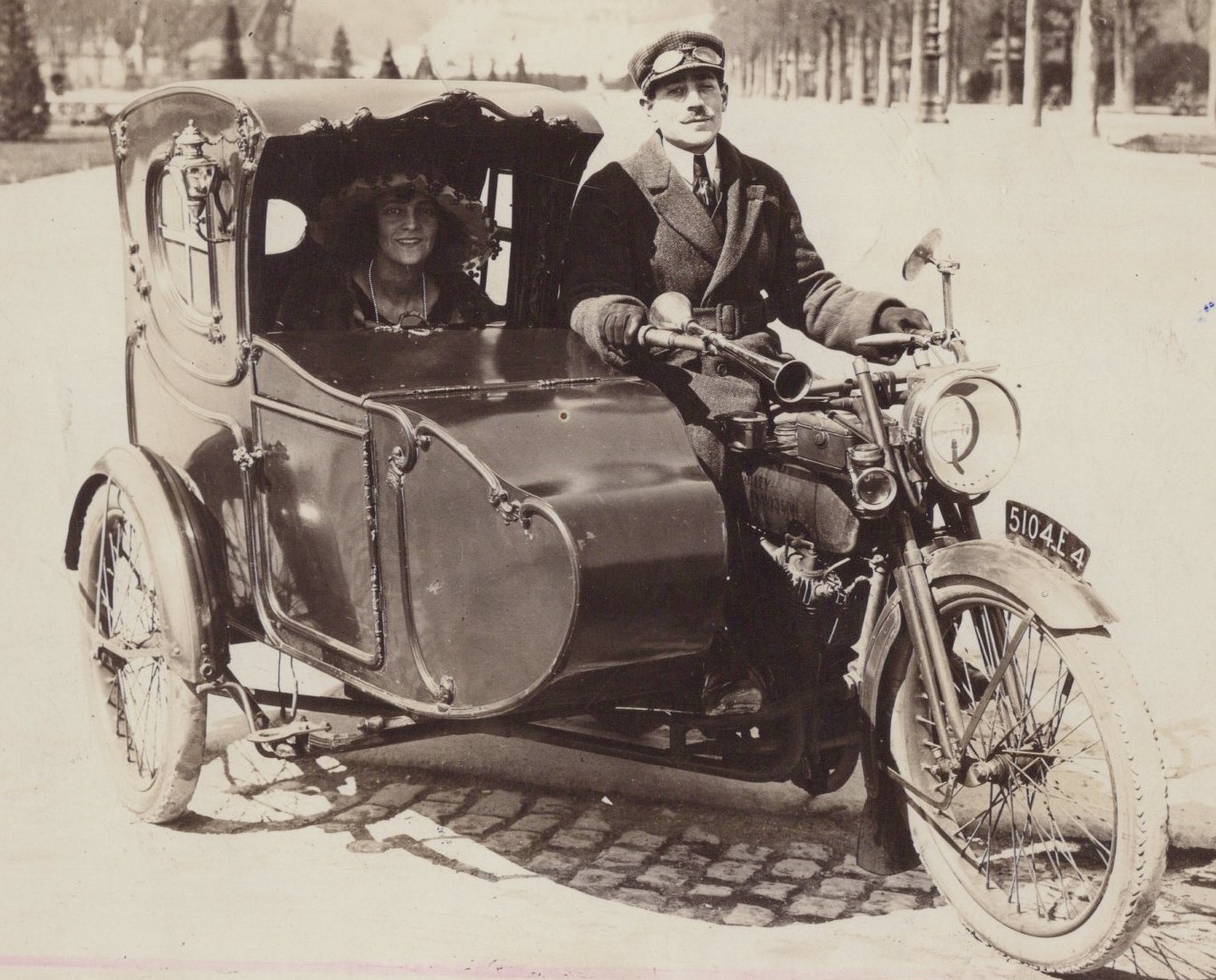
This unique vintage Press Photo features actress, Elsie Janis, riding in a sidecar of a chauffeur driven motorcycle. Note the details of the motorcycle that are visible in this photograph. One can see the cycles horn, headlight, side lamp, rear view mirror, license plate and other parts of the motorcycle. It appears that the photograph was taken in New York City for the Society of Cinematography. The name of the organization is written on the reverse of the photograph. There are also ink stamps on the verso from Brown Brothers, the world’s first stock photo agency. Elsie Janis (1889-1956) was a popular American film and stage actress. She also was a singer, songwriter, screenwriter, and radio announcer. During World War I, Elsie was nicknamed, “the sweetheart of the AEF”. The abbreviation “AEF” stands for “The American Expeditionary Force”. SOLD

POSTCARD 1 (SOLD)
POSTCARD 2 (SOLD)
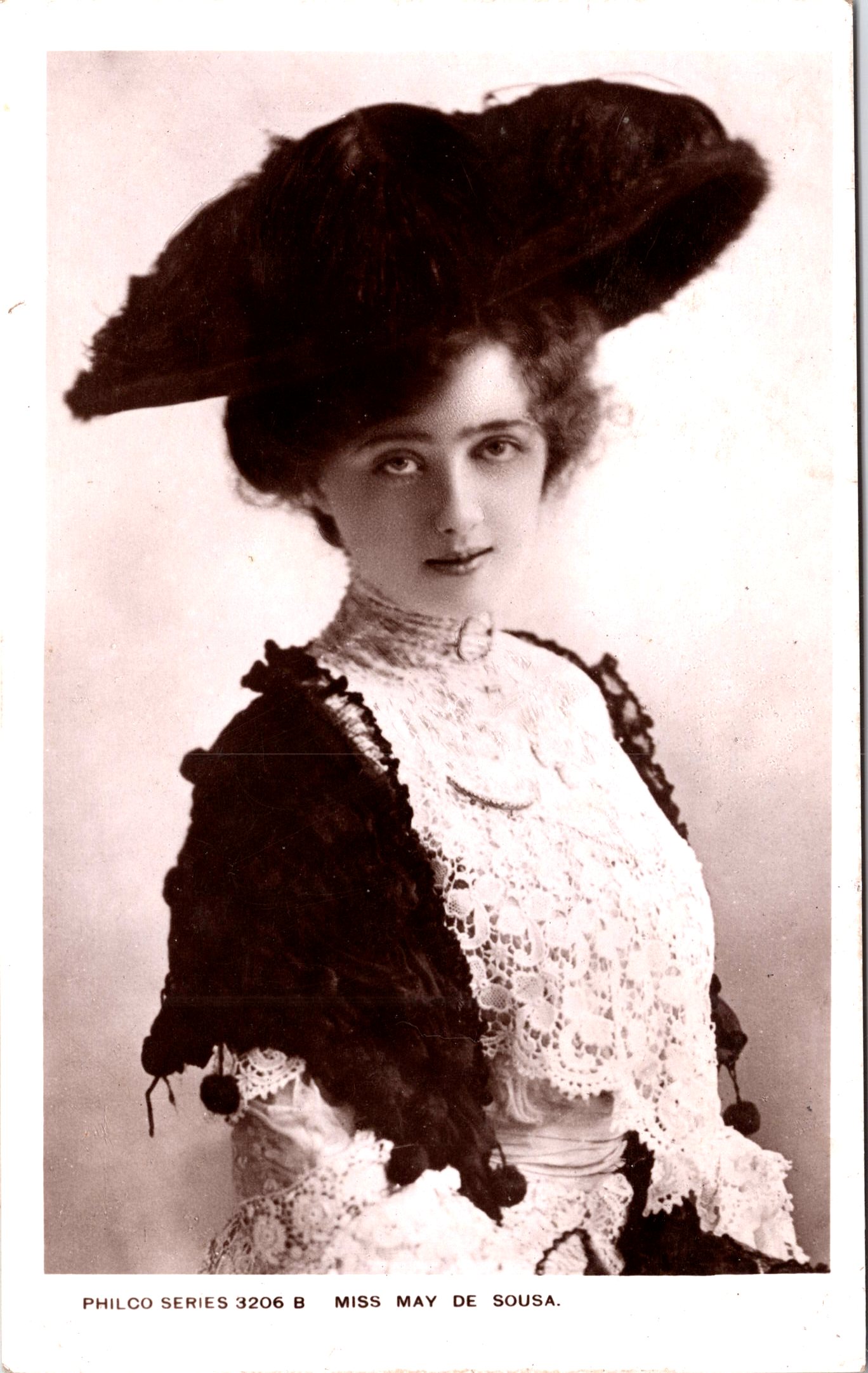
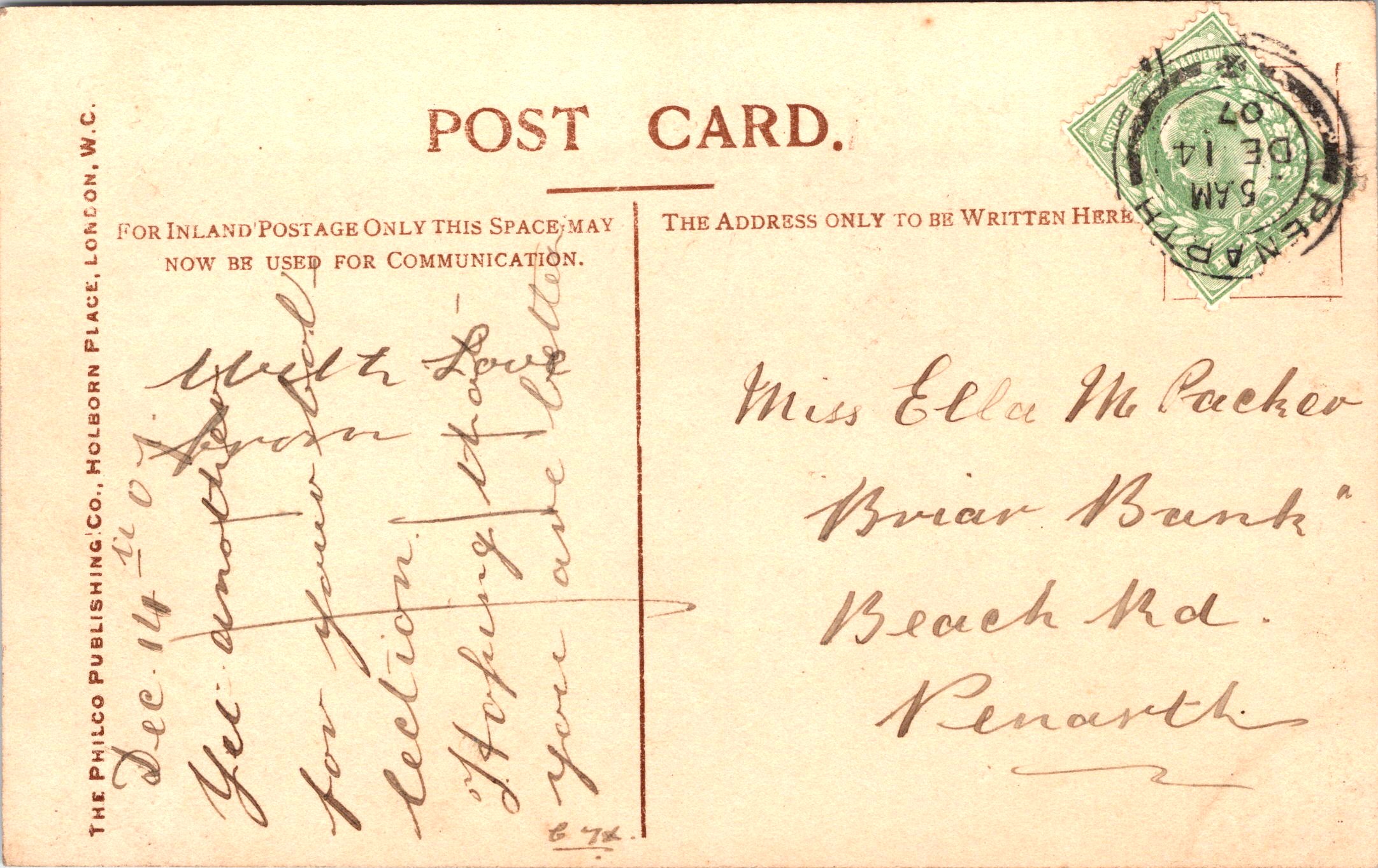
Postcard 1 features American stage actress, and singer, May de Sousa (1884-1948). She had many successes, but she lived a tragic life. Her father was a Chicago police detective. She became famous in 1898, I at about 14 years of age, when she sang “Dear Midnight of Love”. This song was a ballad by bathhouse John Coughlin. He was a Chicago politician and would-be songwriter. In 1901 she was hired by Frank Perley as one of the principles for his touring company. Next, she became the understudy for Alice Nielson in a San Francisco production. In 1902 she was invited to go to London with the cast of that show, but she turned down the opportunity because she was afraid of the sea voyage. She then joined the cast of the highly successful operatic fantasy, “The Storks”. In 1904 she joined the cast of the Wizard of Oz. That same year, she became part of the cast of “Babes in Toyland”. At this point, she had become a very popular actress. She then went to London to star in a production of Cinderella. She followed that up with other stage successes in London. Although she had much success in light operatic roles, she wanted to display her talent as a dramatic actress. In 1908 she was one of the first American actresses to perform at the Moulin Rouge. While in Paris she was reported missing because she did not contact friends or family for over five weeks. She returned without explanation. She was now a star in both the United States and England. In 1910, her mother was discovered dead in a room filled with gas. It was unknown whether her mother’s death was accidental or by suicide. In 1910, May married a stockbroker. Their marriage was very troubled from its beginning. Her husband had lied about his finances, and the financial burden fell on the De Sousa. In addition, her husband frequently physically, abused her. After two years of marriage, she divorced him on the grounds of cruelty and financial desertion. De Sousa continued her career in both America and Europe. De Sousa appeared in 8 Broadway plays between 1905 and 1915. She was performing in France shortly before the start of World War I and barely escaped Germany’s invasion of France. In 1913, she was forced to declare bankruptcy. In 1918, she toured Australia with a theatrical company. While there, in about 1919, she married a local doctor and the pair moved to Shanghai. She performed there with amateur companies. In 1941 her husband died, and in around 1943 she was imprisoned for seven months as a civilian intern by the Japanese. When she returned to Chicago, she worked as a scrub woman in a public school. Her health was very much compromised by her internment, she soon was forced to quit her job due to not being healthy enough to perform her tasks. She became malnourished and died in poverty and alone. She was a charity case in the county hospital when she died in 1948. May DeSosa had risen to become the toast of Europe and America, but died isolated and forgrotten. She was buried in a pauper’s grave. This vintage postcard was published by Philco as part of a series (No.3206B). The card was postmarked in 1907. (SOLD)
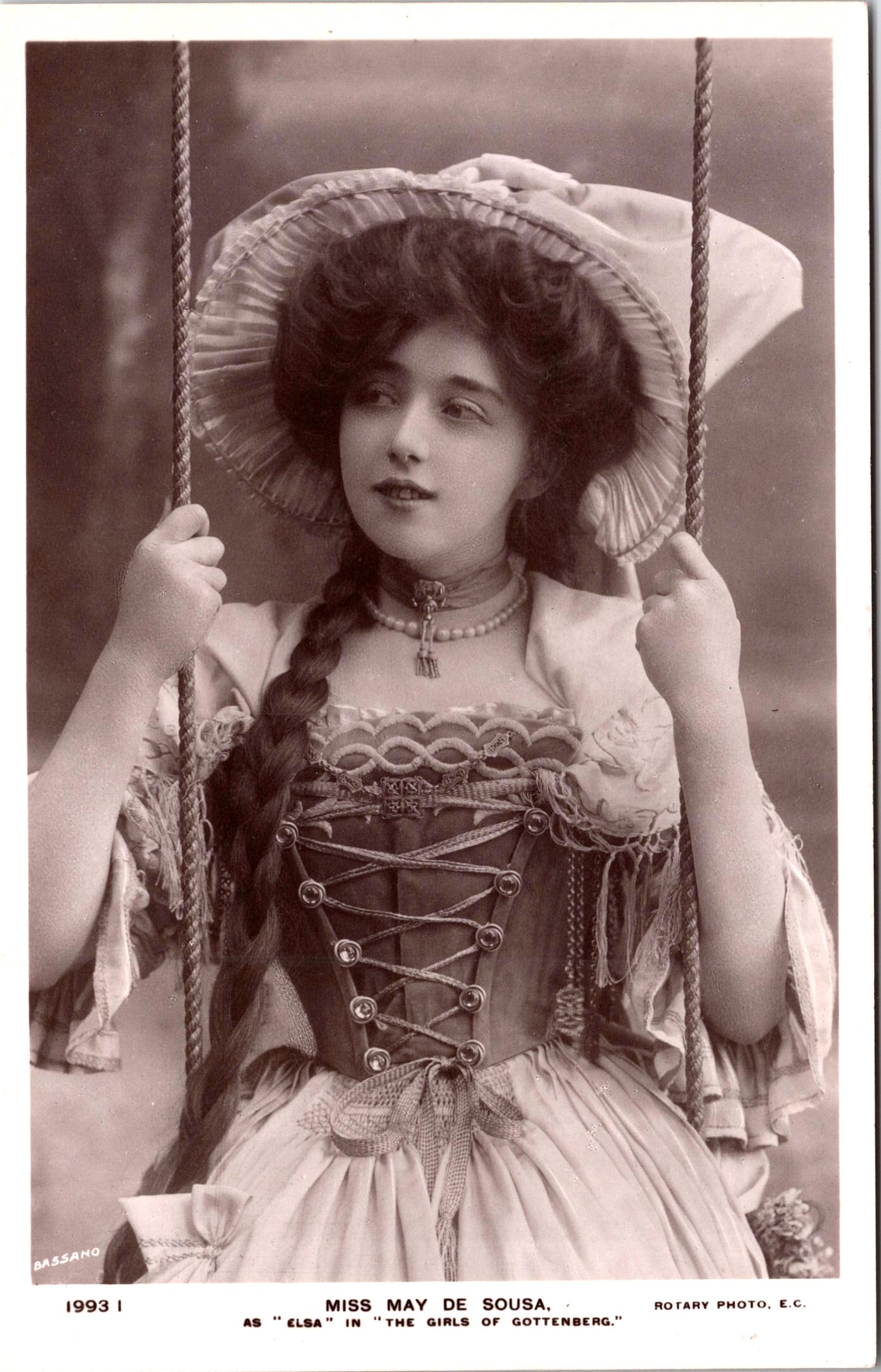
Postcard 2 was published by Rotary Photo as part of a series (No.1993I). De Sousa is shown in costume for “The Girls of Gottenberg”. (SOLD)
POSTCARD 1 (SOLD)
POSTCARD 2
POSTCARD 3 (SOLD)
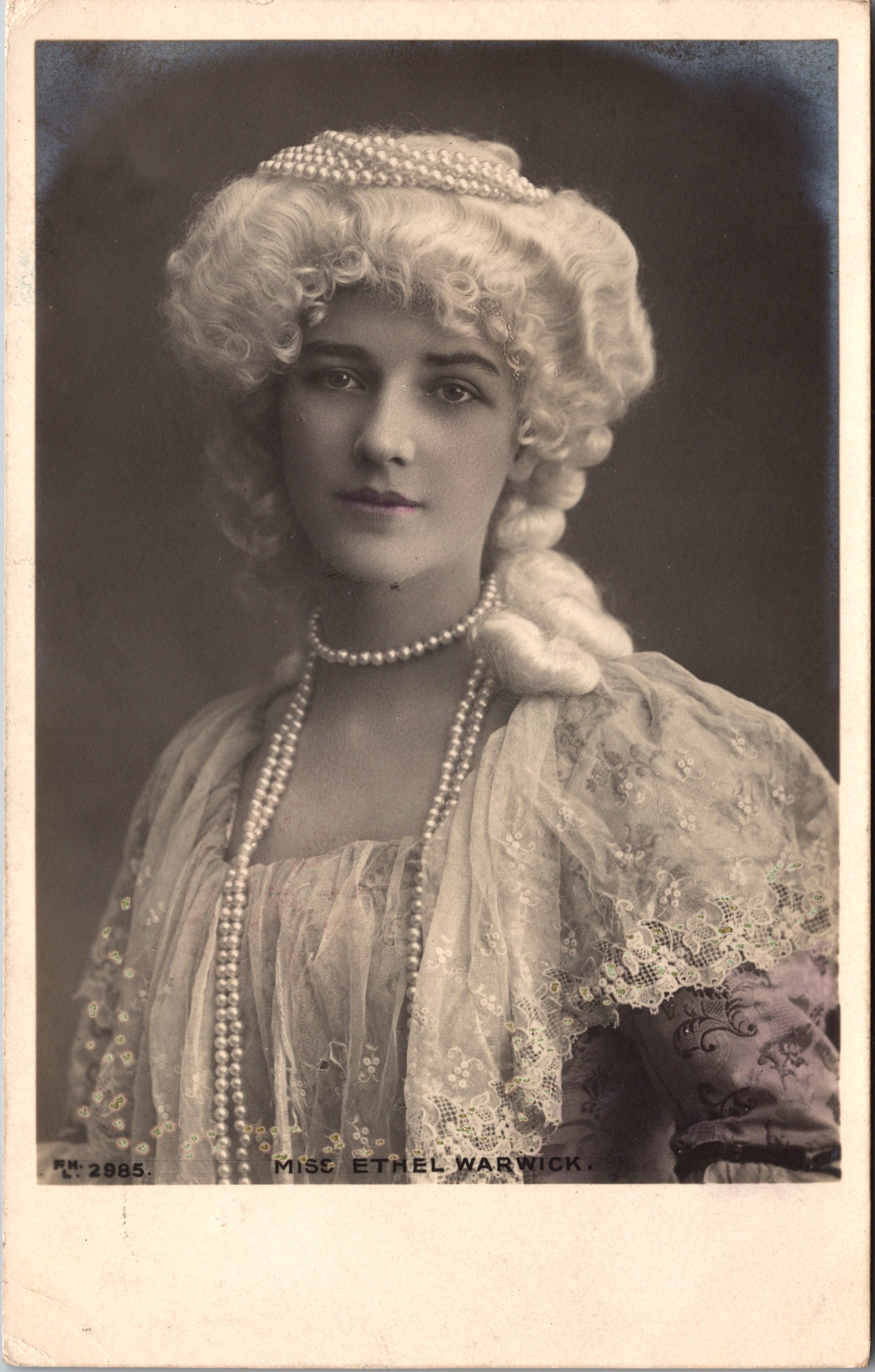
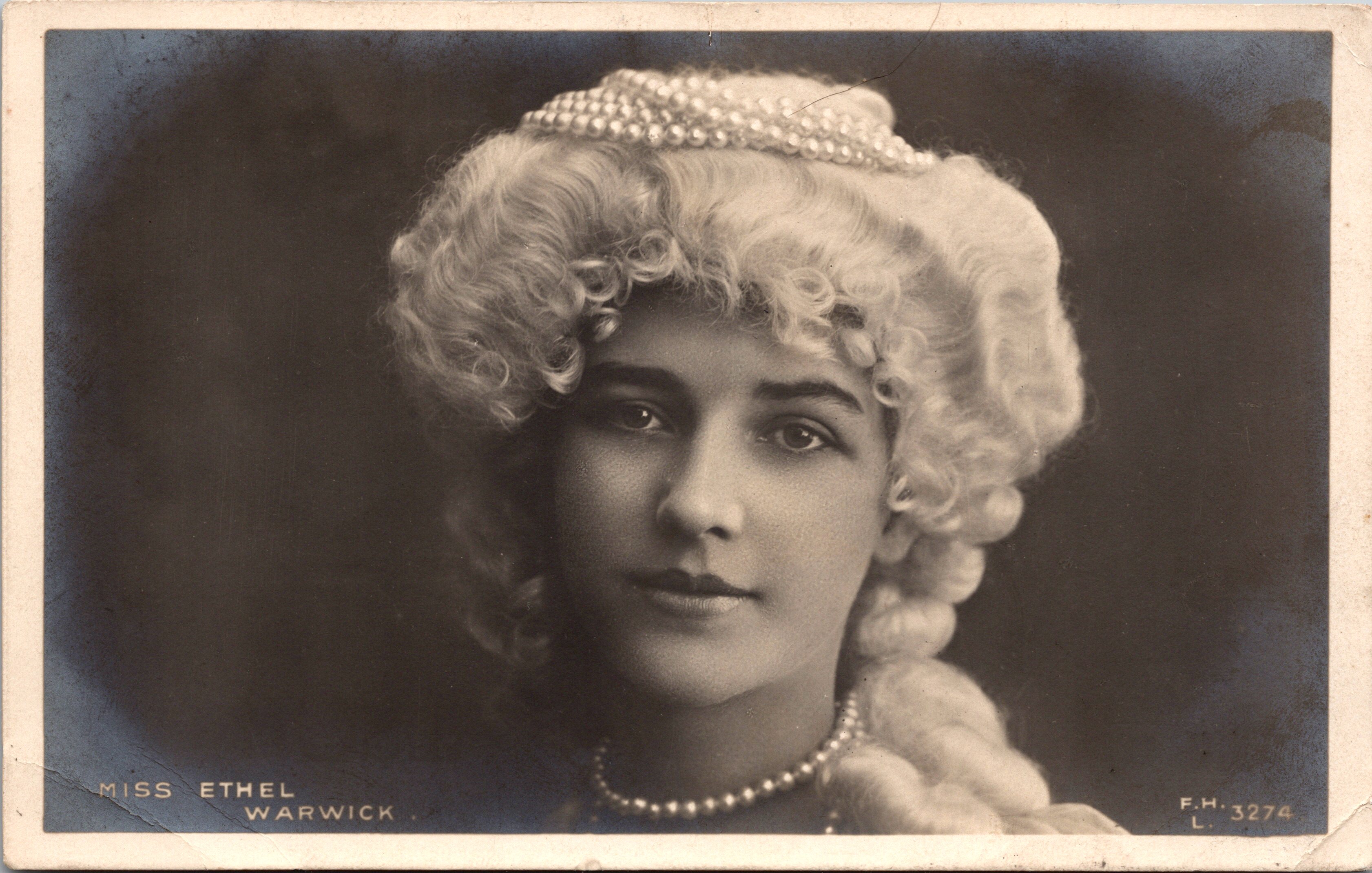
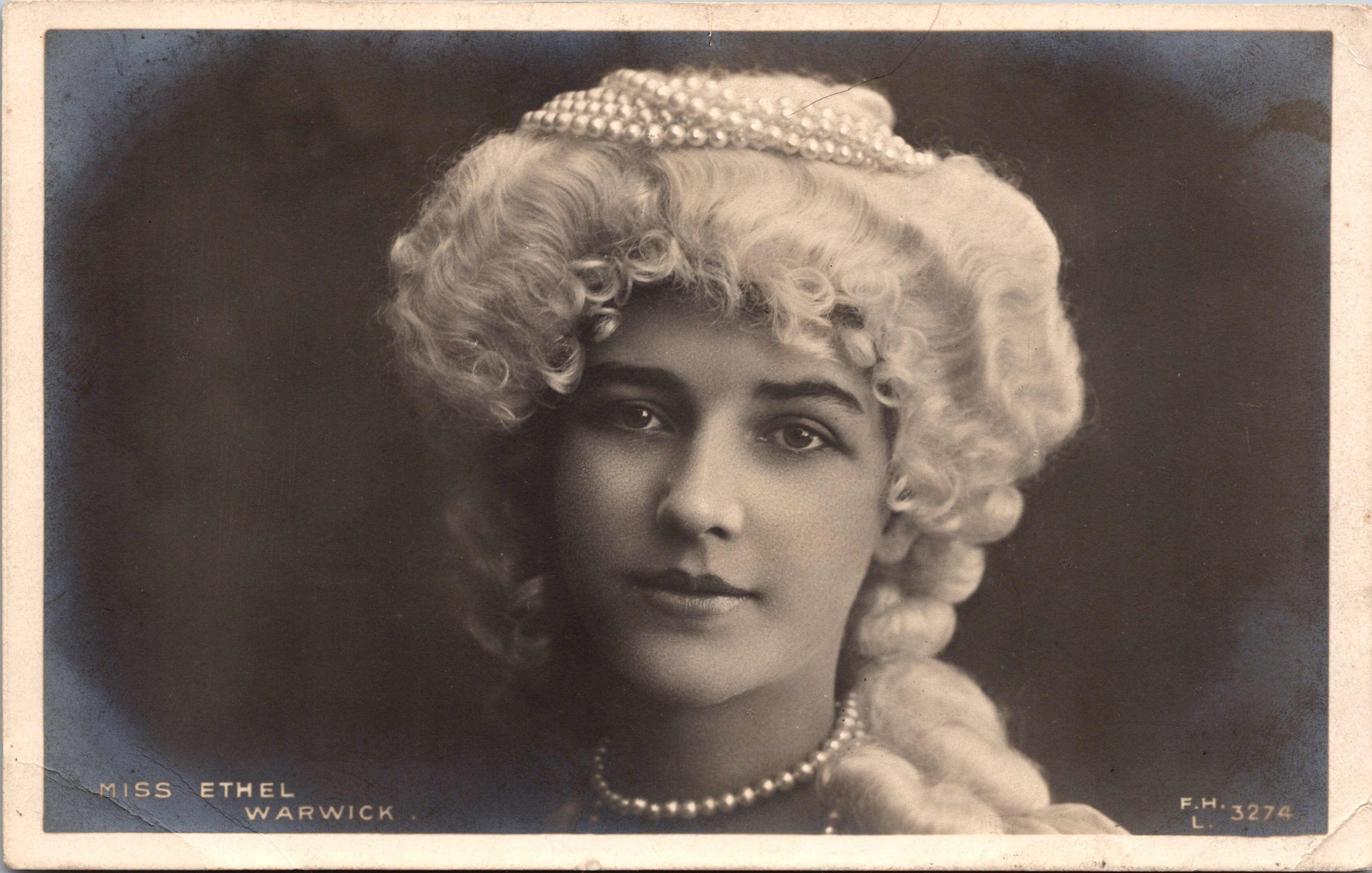
Postcard 1 is a vintage real photo postcard that features beautiful British stage and film actress, Ethel Warwick (1882-1951). Warwick was also an artist’s model (including posing nude). She modelled for some of the most prominent artists of her time. These artists included John William Godward, Herbert Draper, Linley Sambourne,and James McNeill Whistler. During the early 1890’s, Warwick was studying to be an artist at the London Polytechnic. In order to pay for her tuition, she became an artist model. In the late 1890’s, Warwick began acting school and in 1900 she made her acting debut. She continued her modeling until 1906, when she married actor Edmond Lewis Waller. Edmond was the son of celebrated actor, Lewis Waller. Edmond and Ethel embarked on a theatrical world tour ending in London, where the pair took over the management of the Queen’s theater. Warwick divorced Waller in 1915. Post divorce, she lived an extravagant lifestyle which led to bankruptcy in 1923. Ethel continued to act and much of her work was for the New Shakespeare Theater at Stratford-upon-Avon. (SOLD)
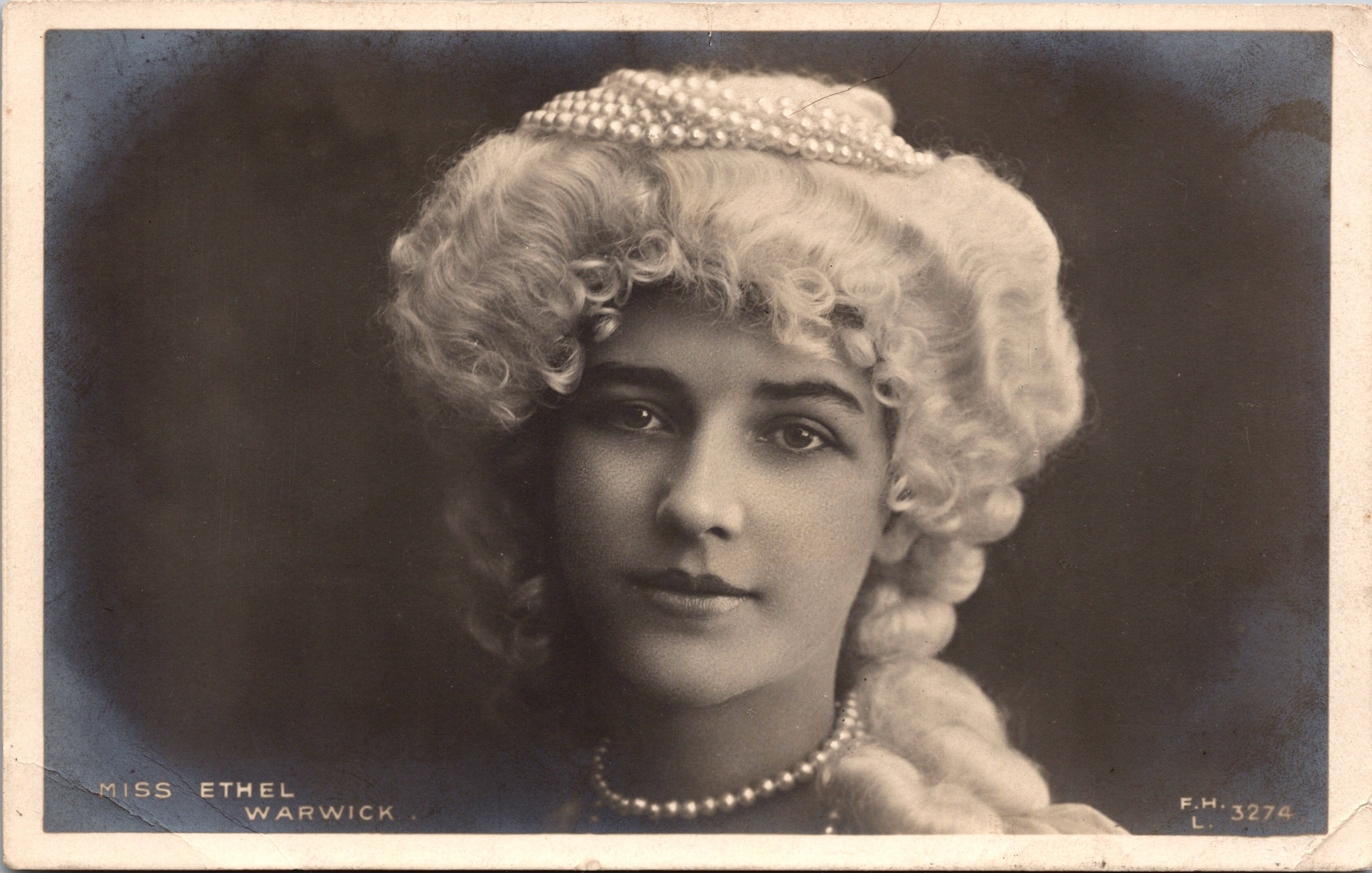
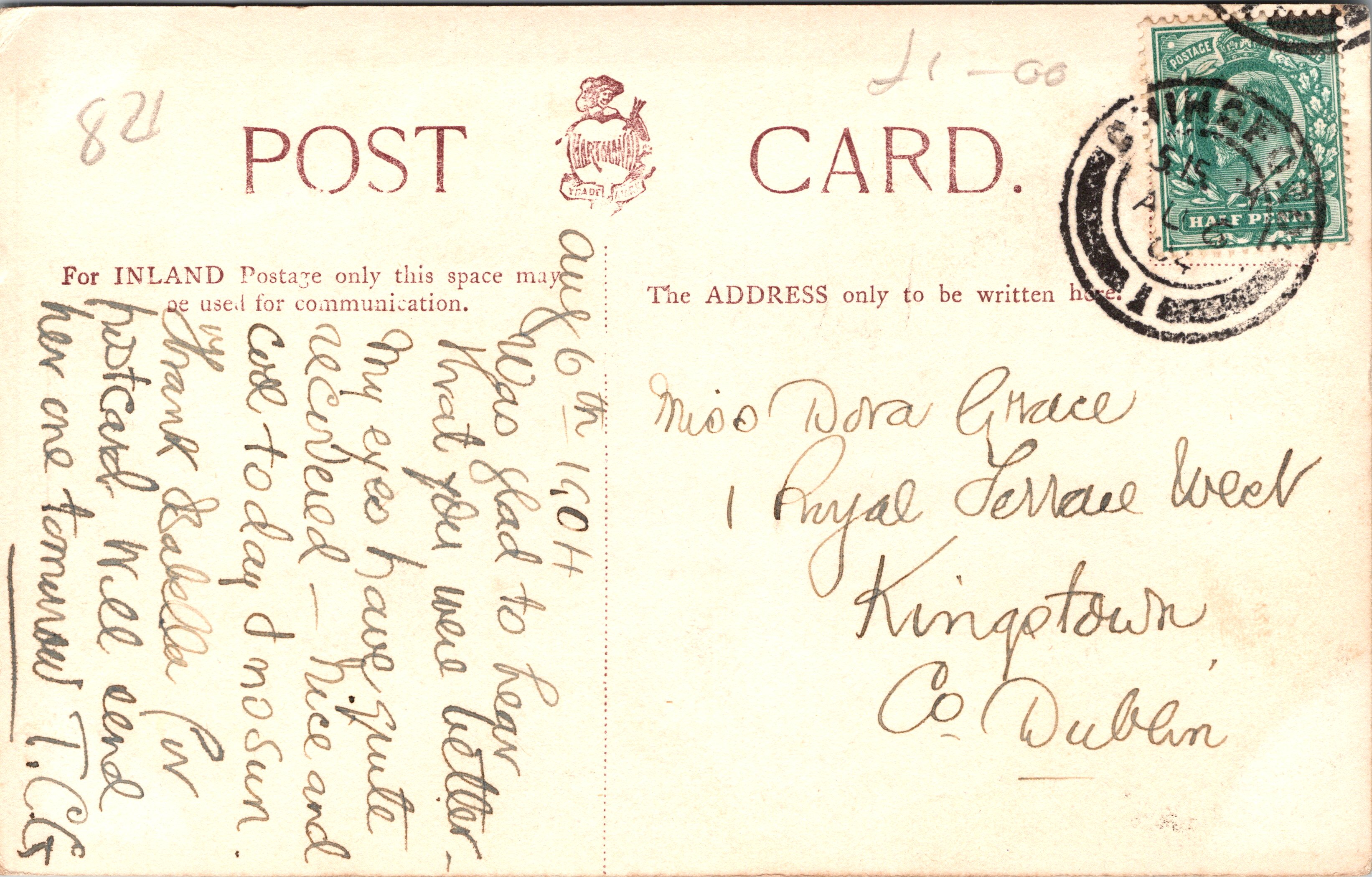
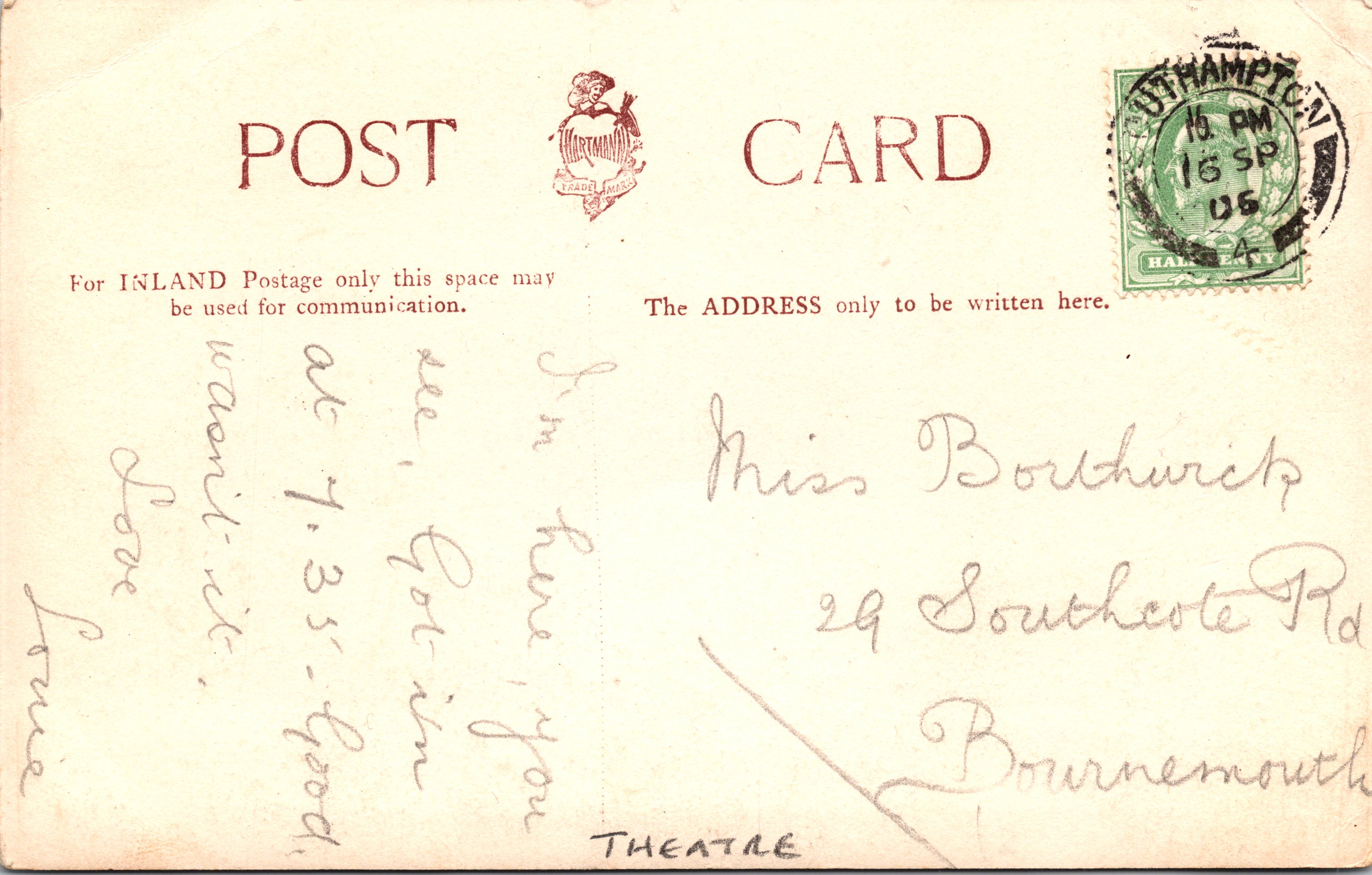
Postcard 2 offers a close-up photograph of Miss Warwick. This vintage real photo postcard has a crease in it’s bottom right and left hand corners. The portrait postcard is in overall good condition (see scans).
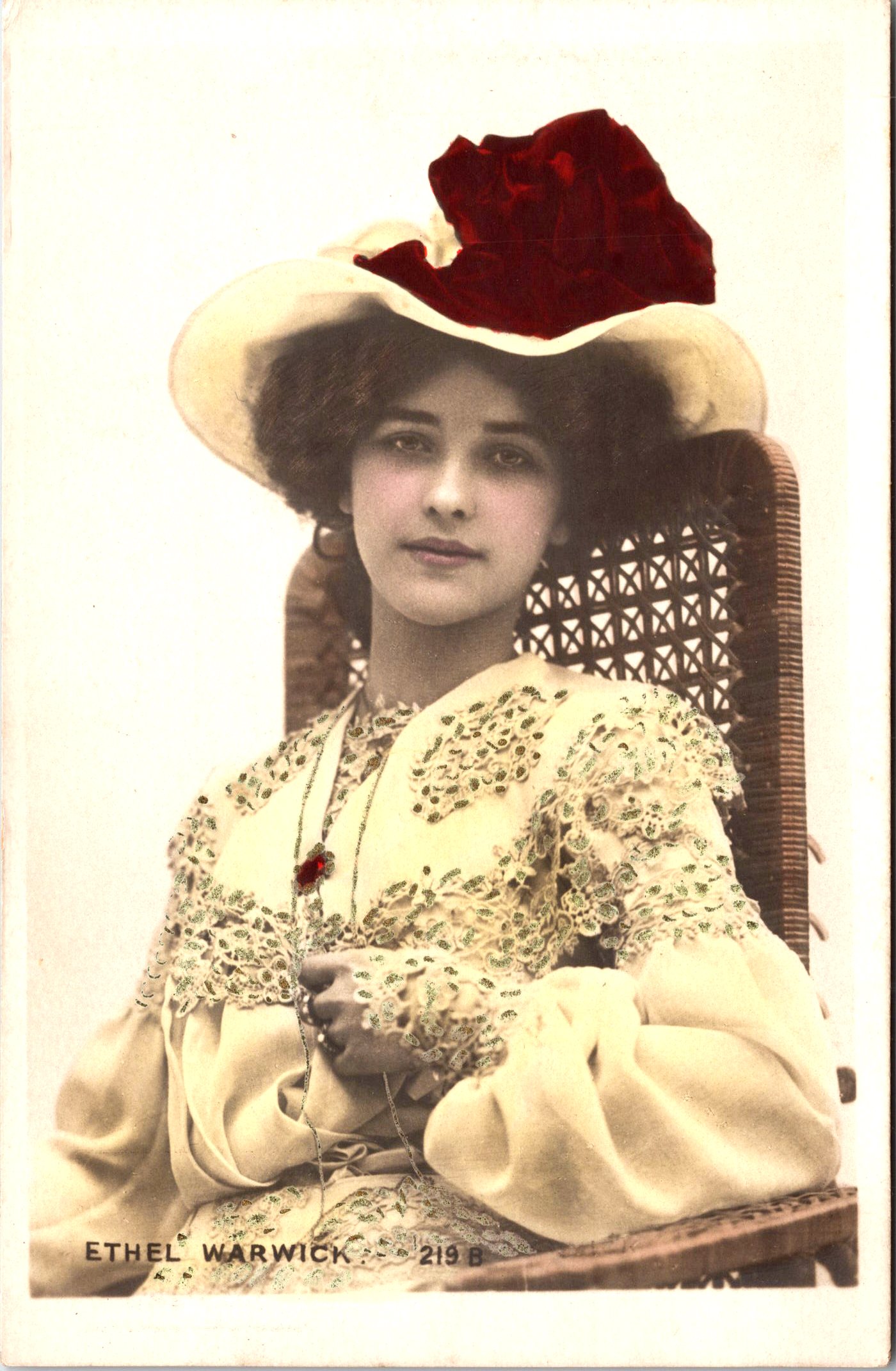
Postcard 3 was published by Rotary Photo as part of a series (No.219B). This postcard has excellent clarity; the details of her dress is impressive. (SOLD)
Buy this Vintage Real Photo Postcard (includes shipping within the US) #5196
To purchase this item, click on the Pay with PayPal button below
$15.00
Buy this Vintage Real Photo Postcard (includes International shipping outside the US) 5196
To purchase this item, click on the Pay with PayPal button below
$25.00
POSTCARD 1
POSTCARD 2
POSTCARD 3
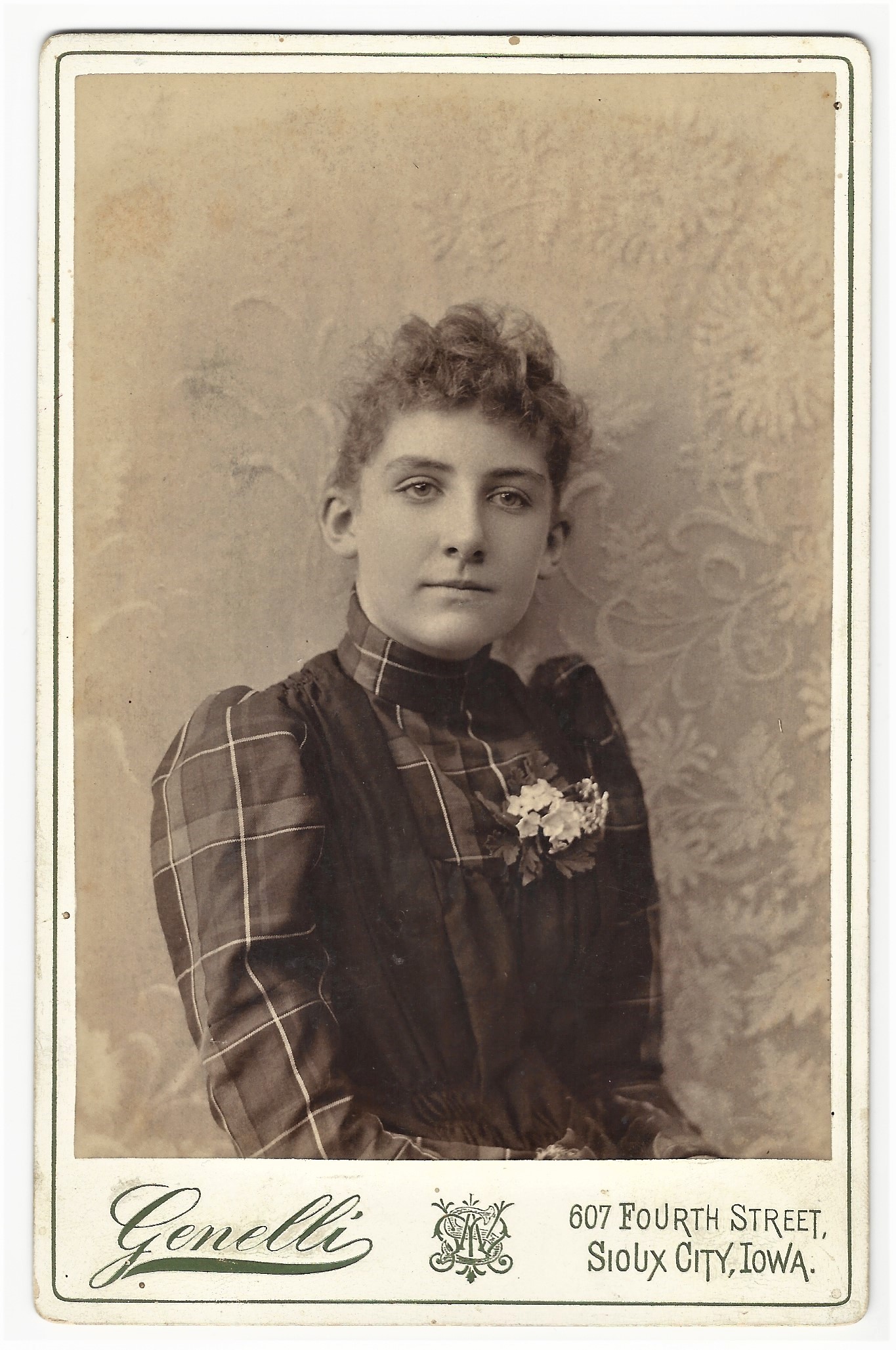
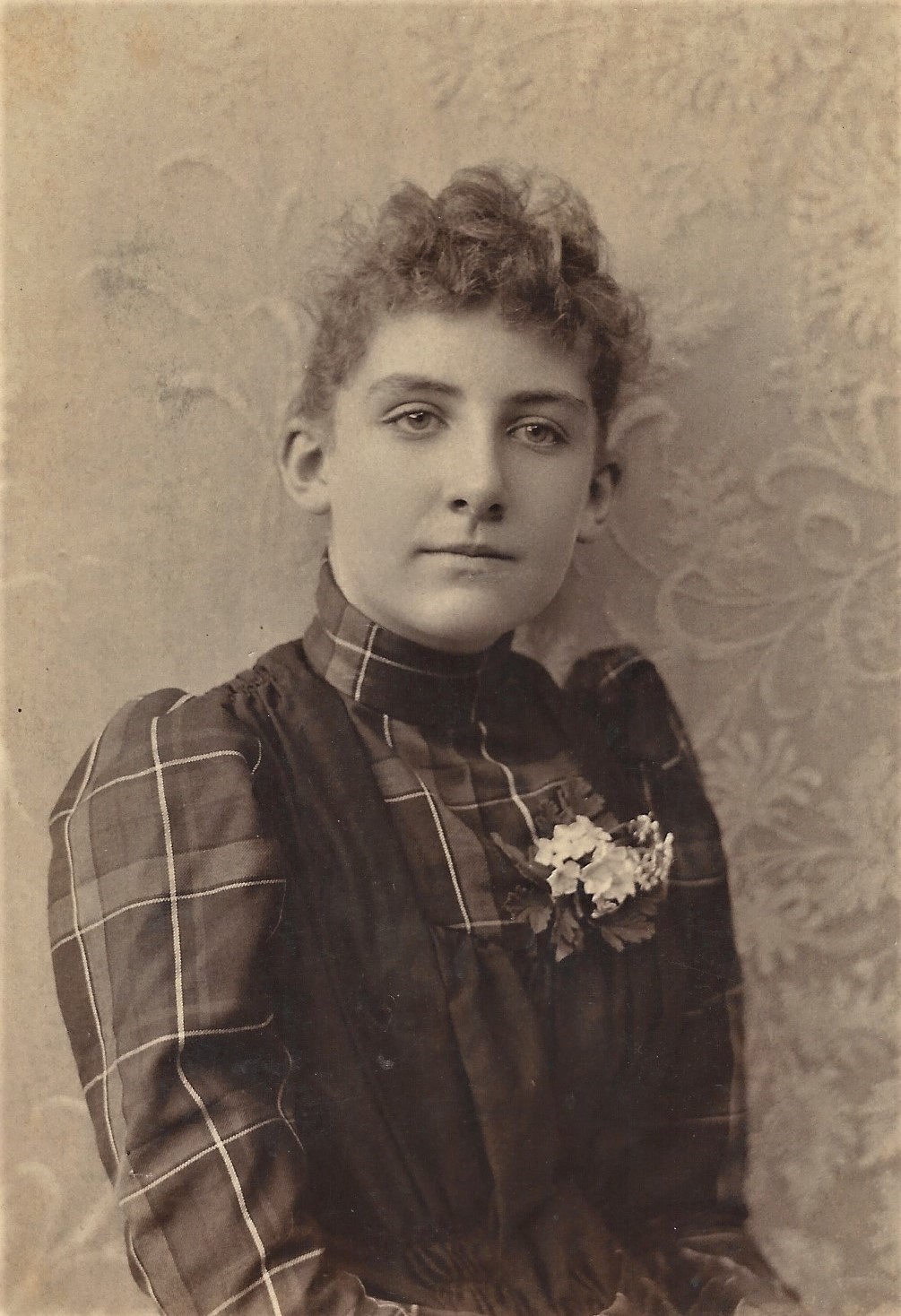
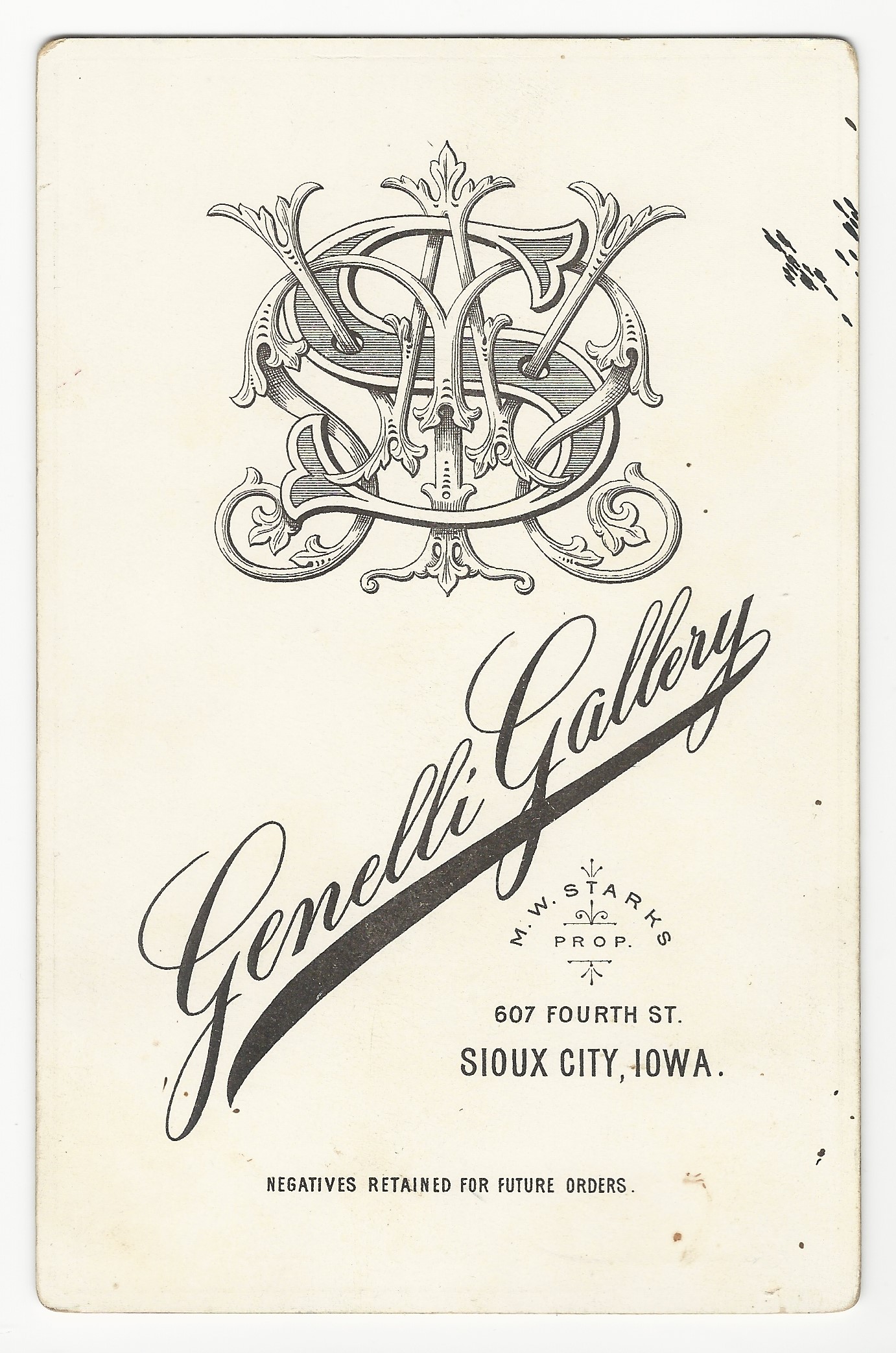
A pretty young woman appears in this portrait photograph from the Genelli studio in Sioux City, Iowa. She is wearing a lovely plaid dress with a corsage. The reverse of the cabinet card indicates that the proprietor of the studio was M. W. Starks. The book, History of the Counties of Woodbury and Plymouth Iowa (1890), reveals that M. W. Starks was born in Bradford, Illinois in 1851. In 1872 he began apprenticing as a photographer and soon entered a career in this field. In 1883 he came from St Louis, Missouri to Sioux City and established the Genelli gallery. In 1884 he married Miss Hattie L. Harvey. SOLD
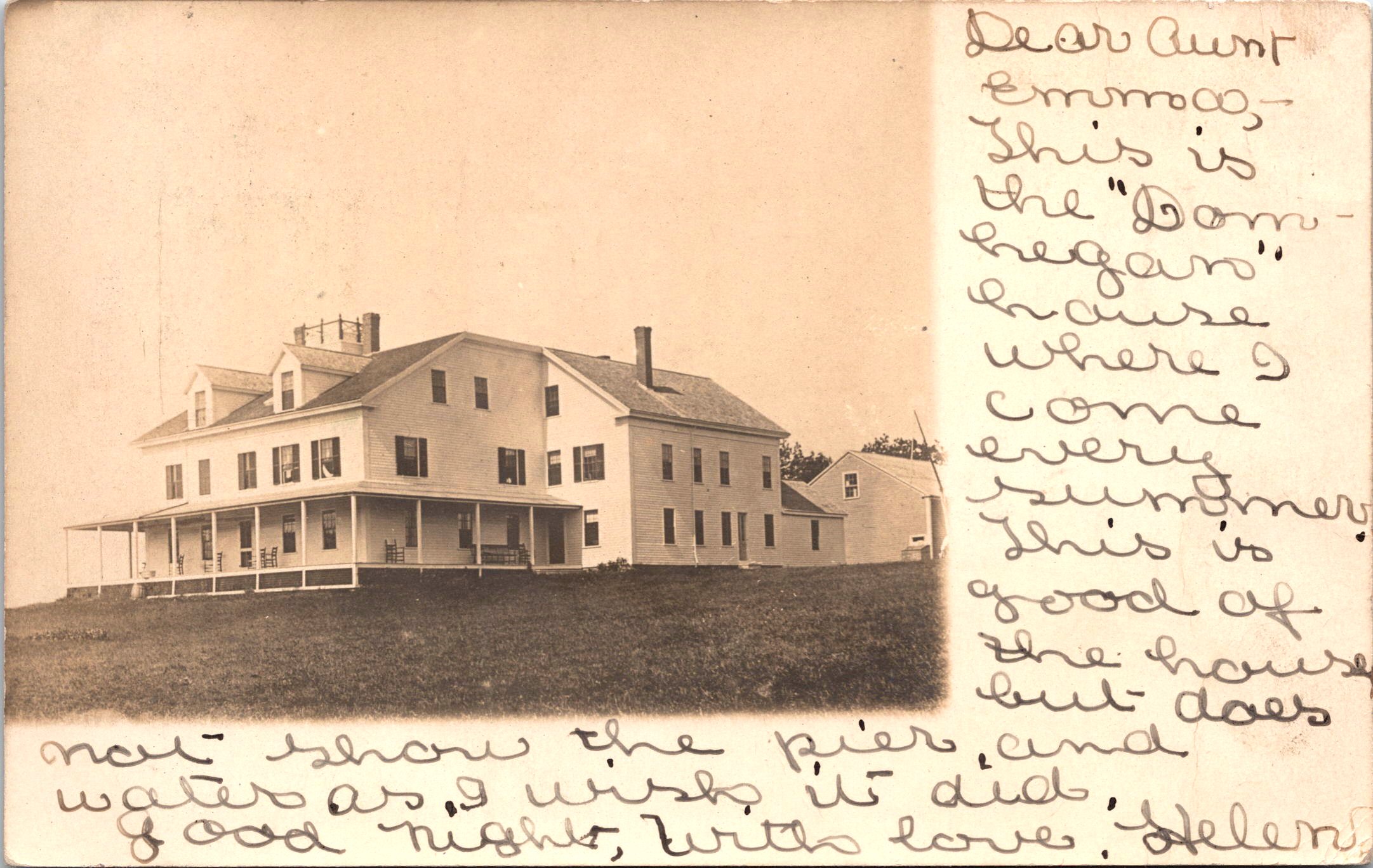
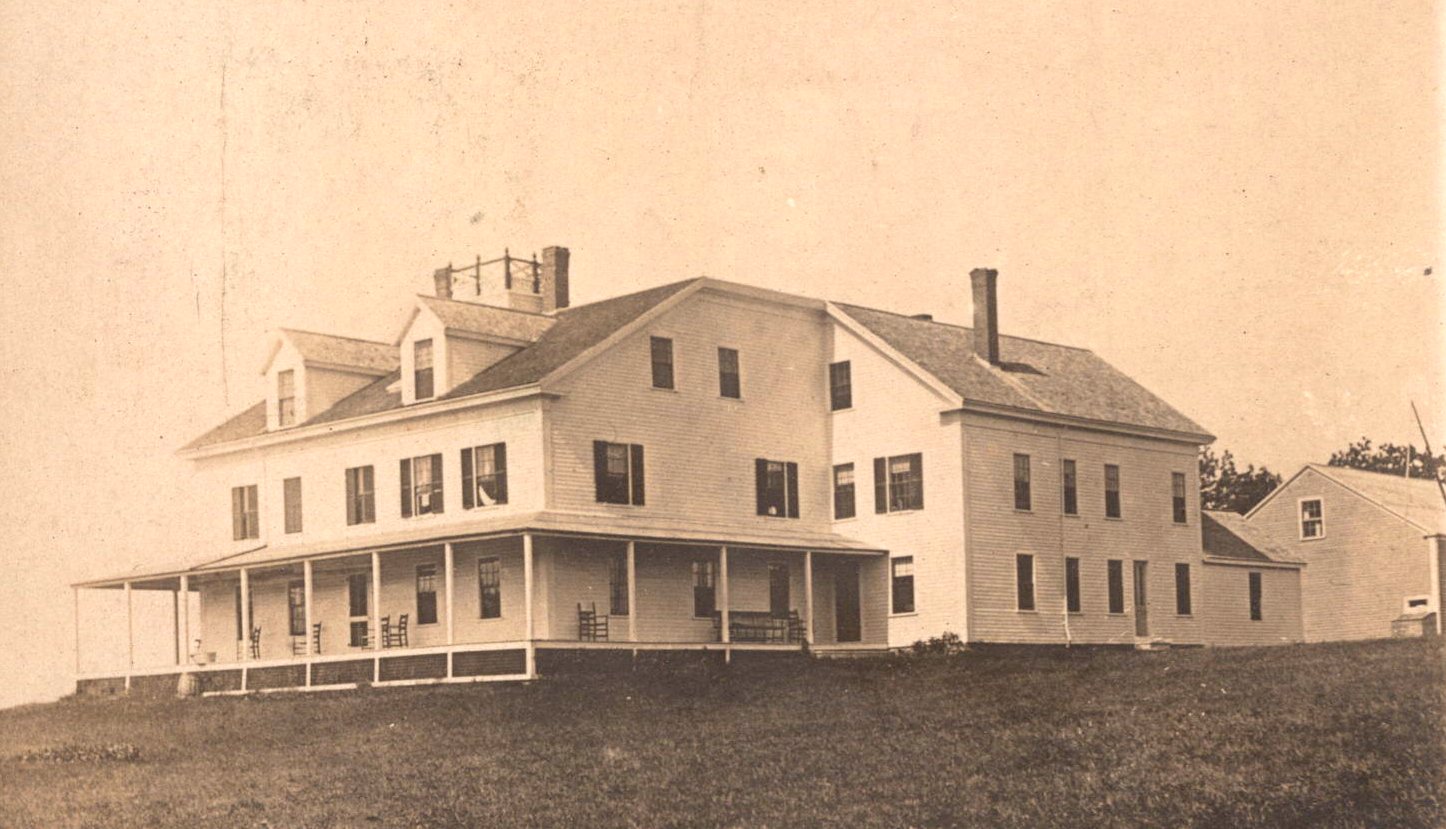
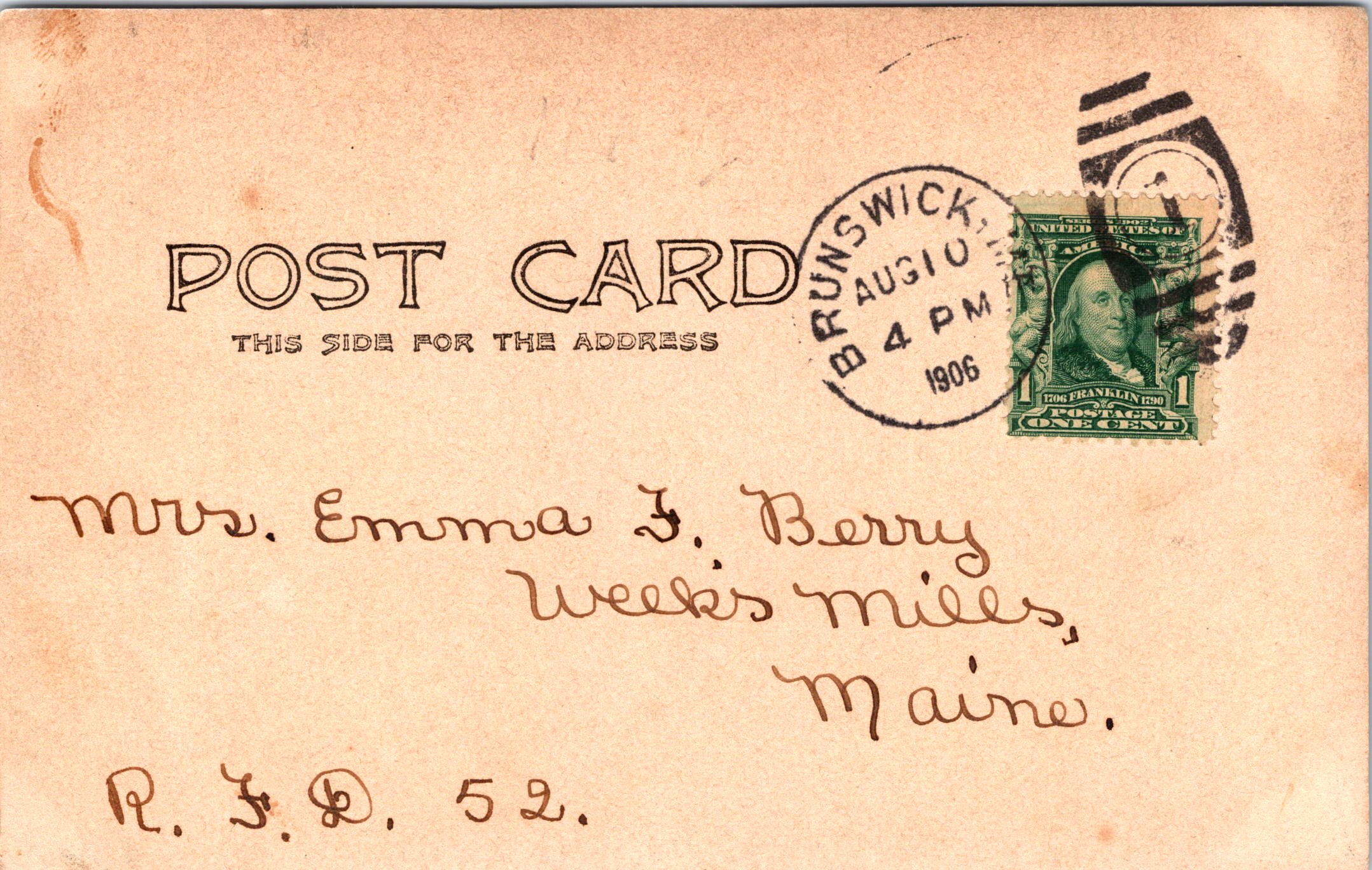
This vintage real photo postcard features a photograph of Domhegan, Joshua Lawrence Chamberlain’s (1828-1914) summer home. Domhegan was located at Simpson’s Point, in Brunswick, Maine. The house was on Casco Bay and Chamberlain enjoyed sailing in the area. He paid one thousand dollars for the property which at the time was a shipyard. He used Domhegan as his summer house and as an artist colony. Chamberlain buried his war horse “Charlemagne” on the Domhegan property. He gave the horse a Christian funeral. Chamberlain was a college professor at Bowdoin college in Maine when the civil war broke out. He joined the Union Army and became a highly respected and decorated military officer. He was one of the major heroes of the battle of Gettysburg, when he led a desperate and surprise bayonet attack against Confederate forces. Chamberlain won the Medal of Honor for his bravery and leadership actions. He left the Army as a Brigadier General. After the war he served four terms as the Governor of Maine and then returned to Bowdoin College to serve as it’s President. He died in 1914 as a result of complications from one of his civil war wounds. Unfortunately, in 1940 Domhegan burned down to the ground. Helen, the writer of this postcard, tells her Aunt Emma, that she stays at Domhegan every summer. She praises the photograph of the house but points out that the property’s pier and water are not visible in the photo. This undivided back postcard was postmarked in 1906. Chamberlain was still alive during Helen’s visits. One wonders if she and her family had some familial or social connection to Chamberlain. SOLD
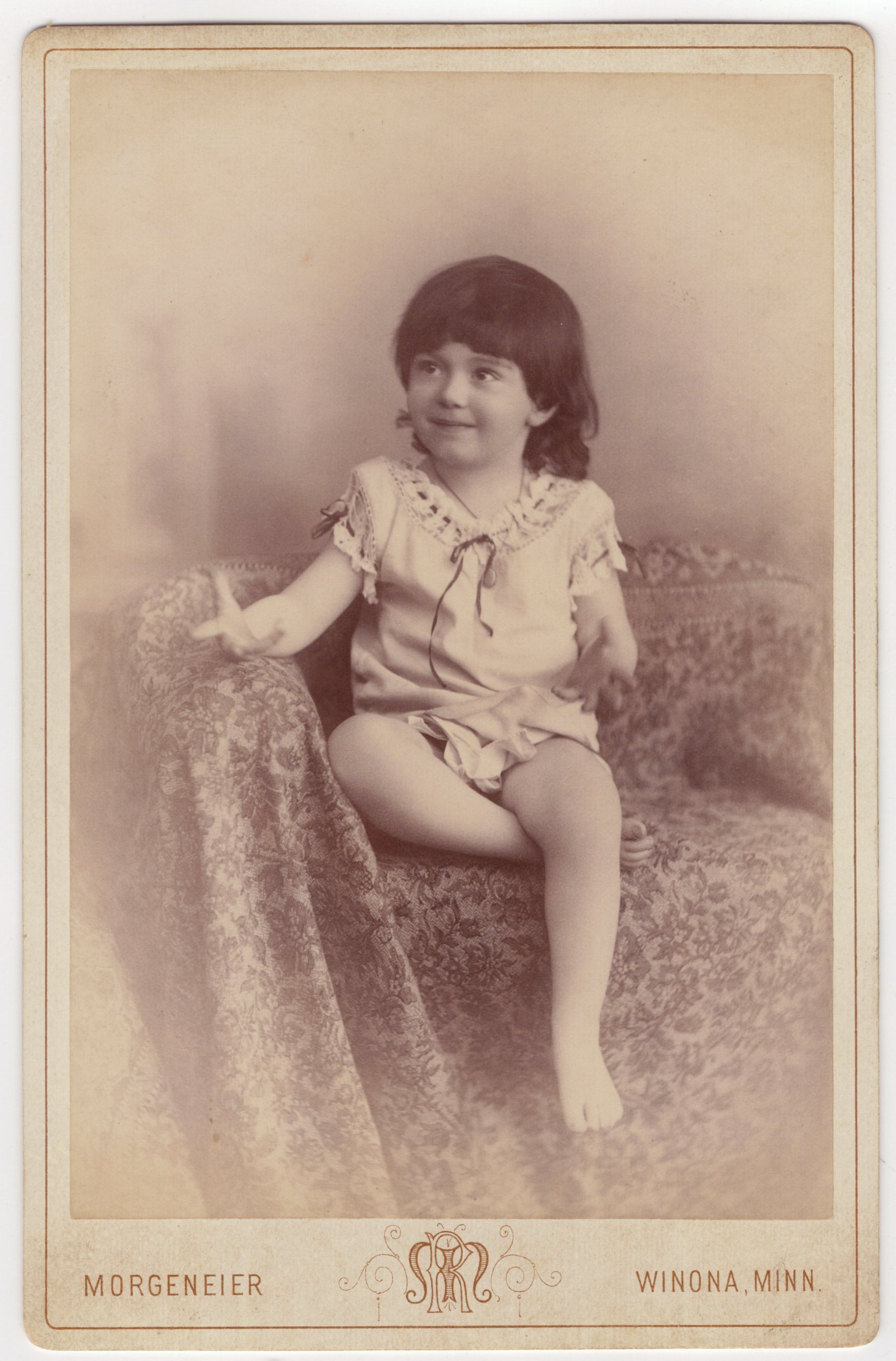
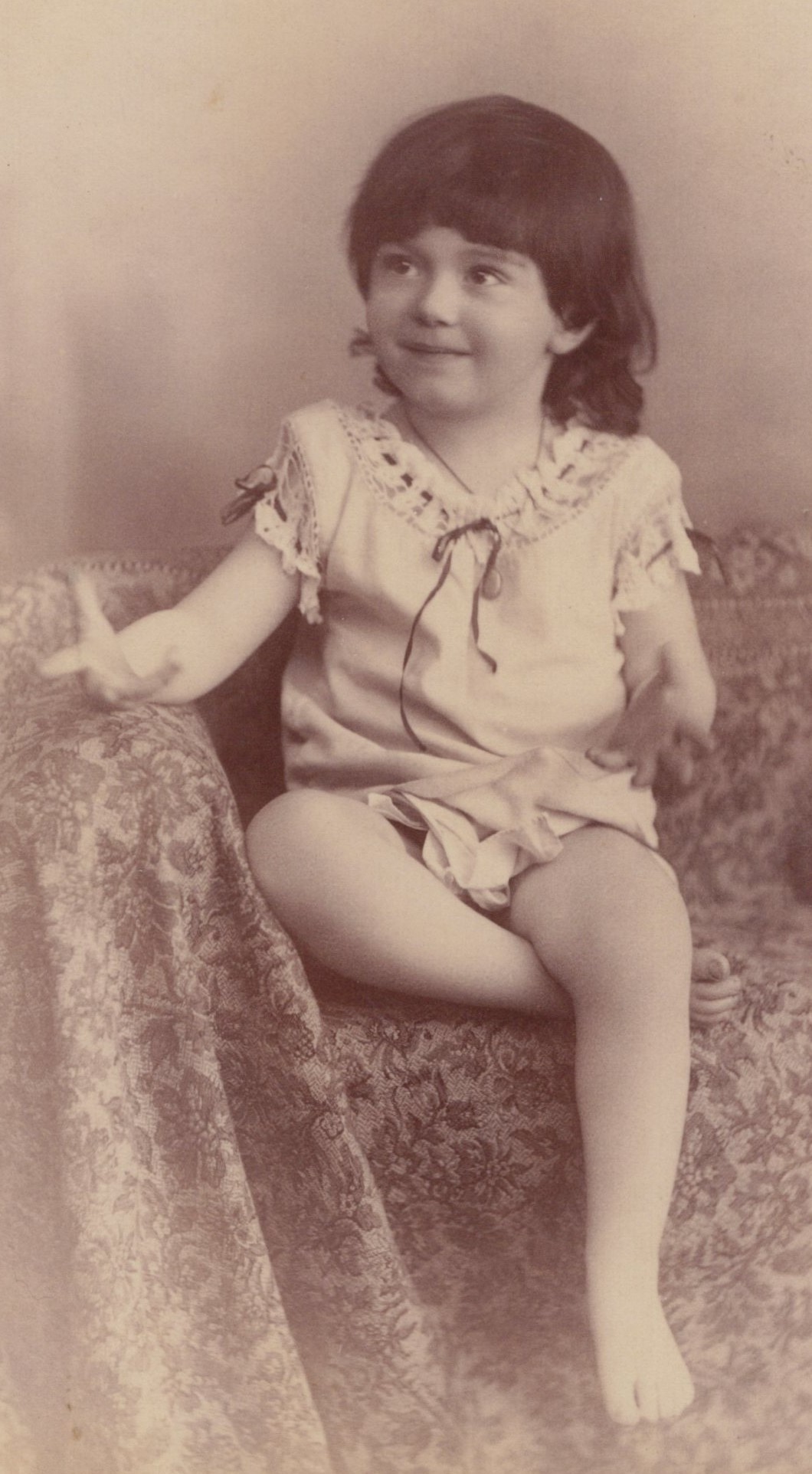
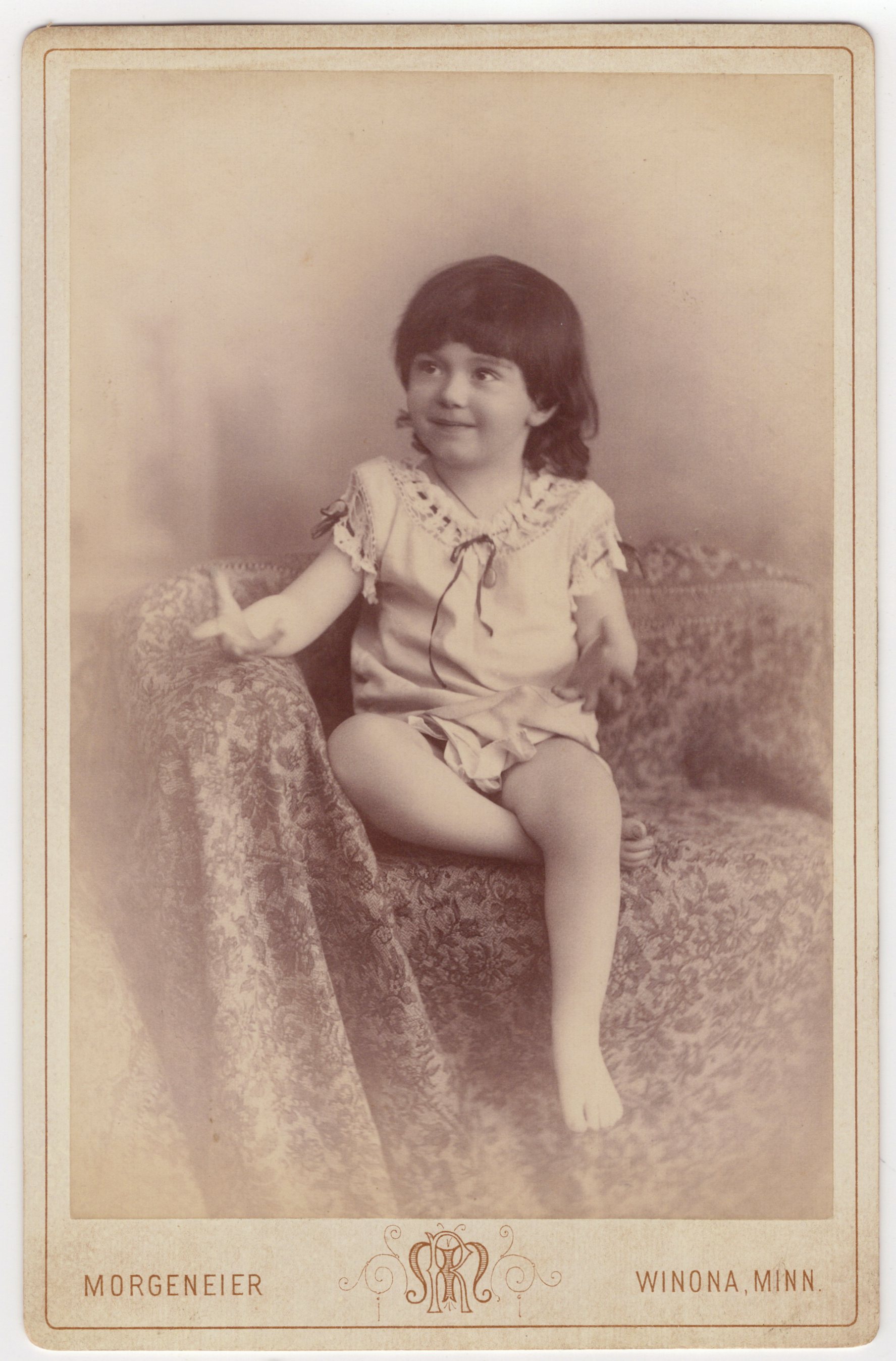
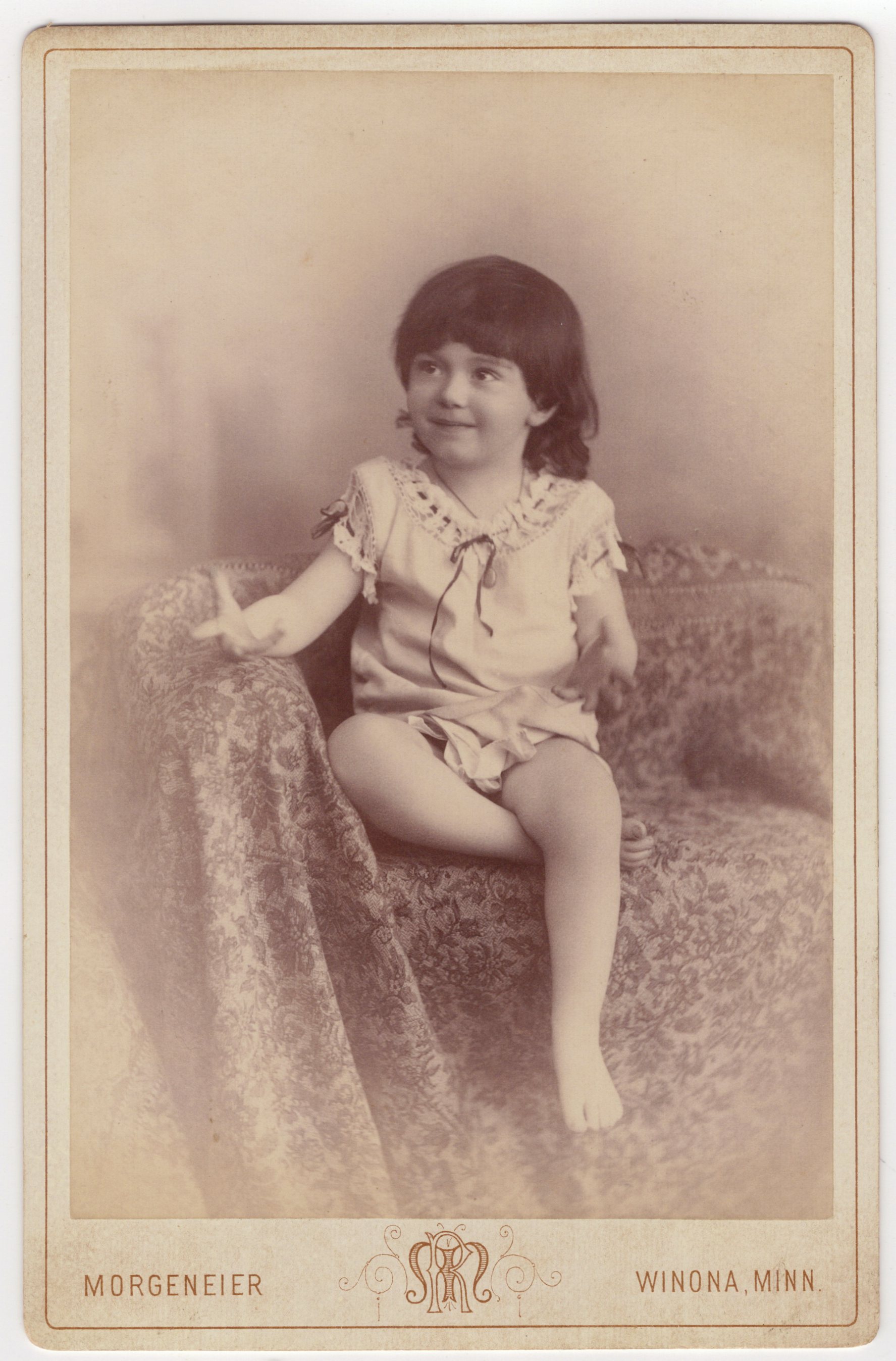
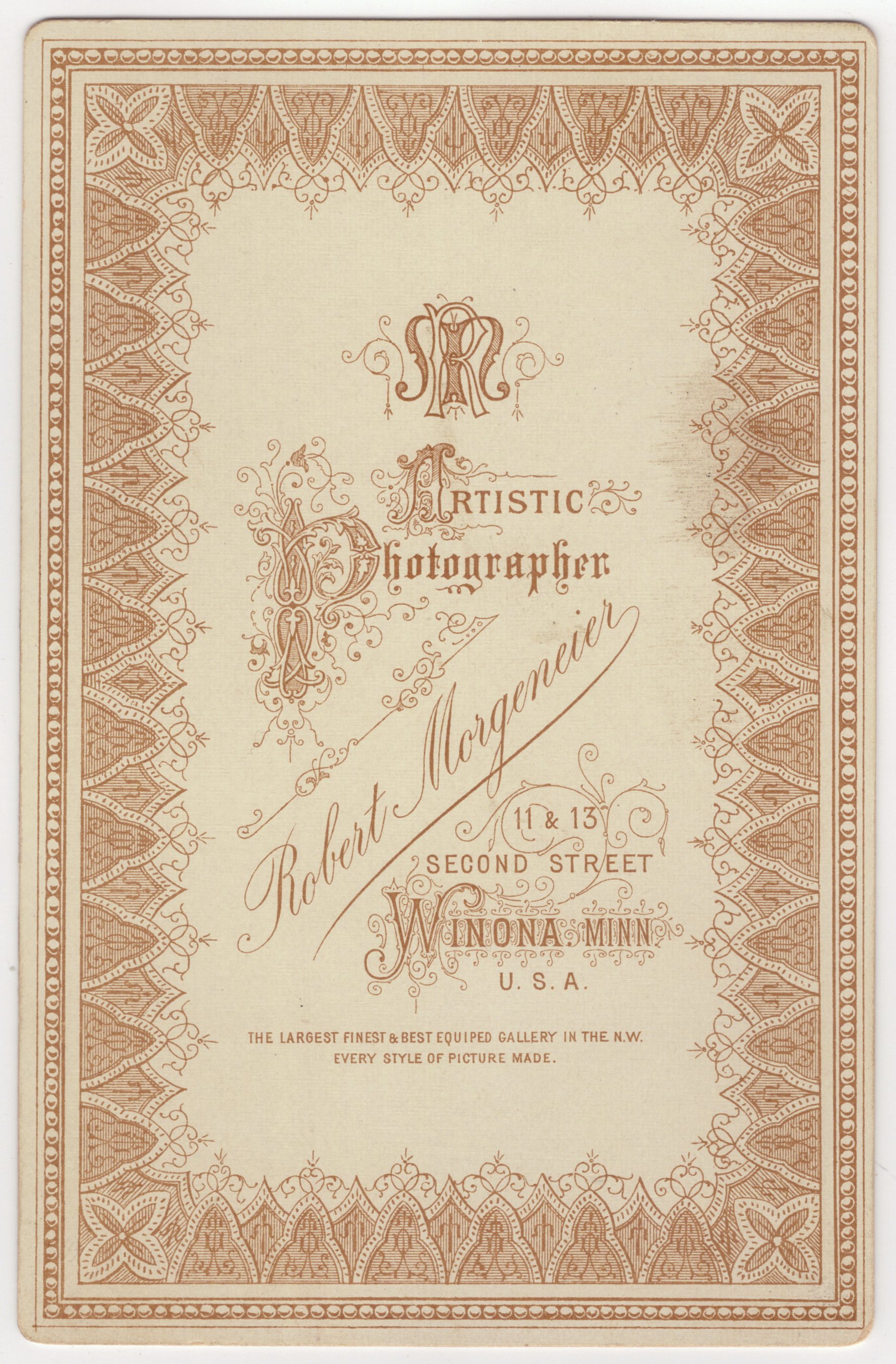
This cabinet card features an adorable little girl displaying an impish expression. She has great eyes and a great smile. The child is definitely not shy in front of the camera. This photograph was taken at the Morgeneier studio in Winona, Minnesota. Robert Morgeneier had his own studio at the time that he shot this photograph. At other times in his career he had partnerships. He worked in Winona in the 1880’s and 1890’s. This photograph was taken from a studio he operated in 1883 and 1884. This cabinet card is in very good condition (see scans).
Buy this Cabinet Card Photograph (includes shipping within the US) #6282
To purchase this item, click on the Pay with PayPal button below
$36.00
Buy this Vintage Original Cabinet Card (includes International shipping outside the US) #6282
To purchase this item, click on the Pay with PayPal button below
$46.00
 | bmarshphd on ELEANOR GAINES : LUBIN SILENT… |
 | phantomfamous0cbbe9d… on ELEANOR GAINES : LUBIN SILENT… |
 | summertime75 on MARY MILES MINTER : SILENT FIL… |
 | beth on WINGS CIGARETTES : ADVERTISING… |
| beth on FOUR CHEERFUL SASSY FRIENDS :… |
 THE CABINET CARD GALLERY