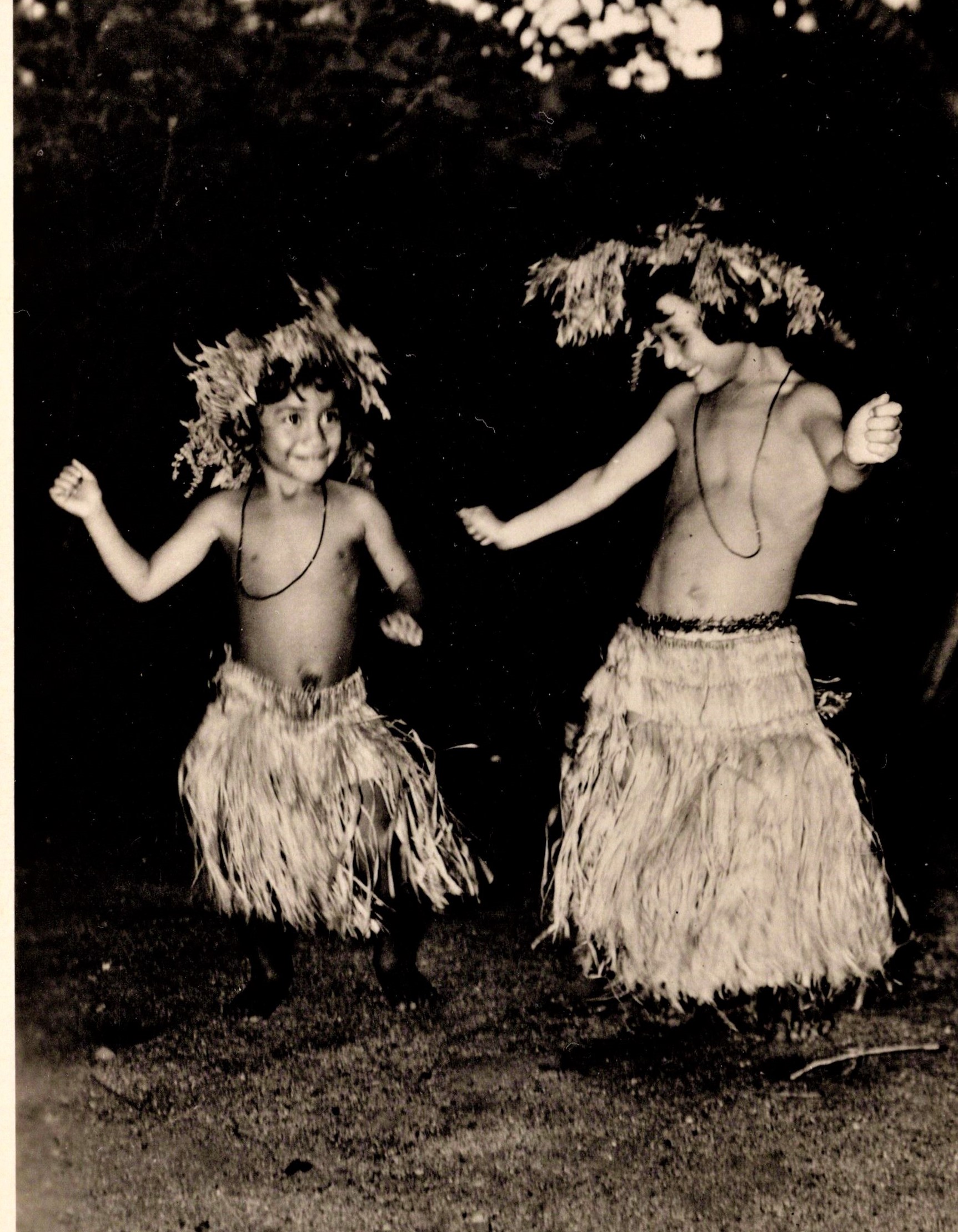
This vintage real photo postcard features two children hula dancing. They are wearing grass skirts as well as infectious smiles. This postcard photo was taken in French Polynesia). More specifically, the setting is Tahiti, and the year is 1955. Note the card’s French Polynesia postage stamp. (SOLD)
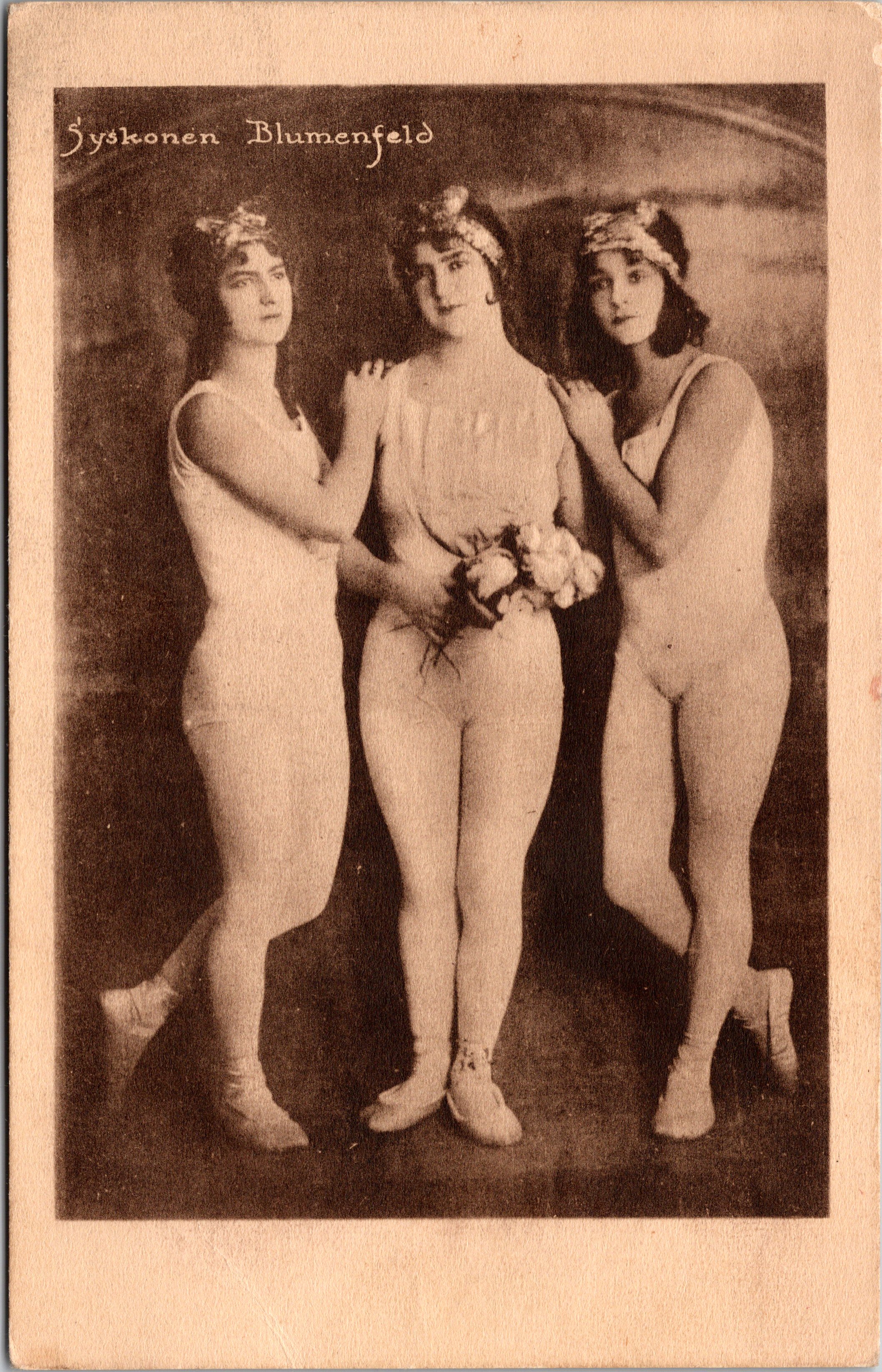
This vintage postcard features the Syskonen Blumenfeld (Blumenfeld Sisters). The pretty young women appear to be ballet dancers. I do not know if they were professionals or amateurs. This photogravure postcard was published by a Swedish company. (SOLD)
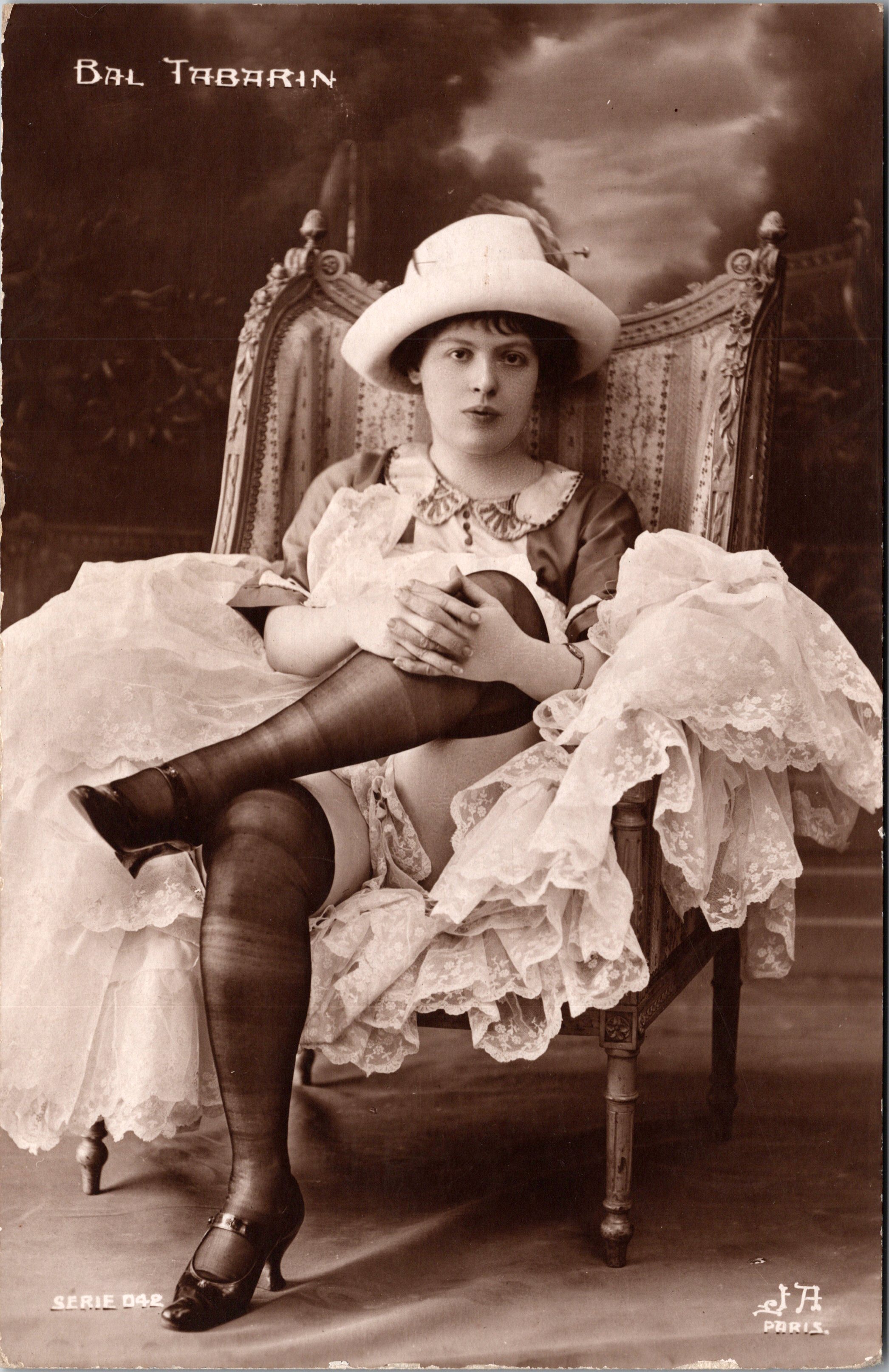
This vintage risque real photo postcard features a pretty young dancer at the Bal Tabarin cabaret. She may be a can can dancer, which is a dance that was known to be performed there. The venue was located in Paris, France. The club was opened in 1904 by Auguste Bosc, a composer and orchestra leader. The Bal Tabarin became very popular immediately after it’s opening. During the occupation of France in World War II, the club was frequently visited by German officers. Florence Warren, a South African dancer, performed there. The Germans did not realize that Warren was Jewish but she was interned as an enemy alien for several months. Upon her release, she returned to the club and partnered with Frederic Acar to become a favorite dance duo. She appeared on stage with successful performers, including Edith Piaf and Maurice Chevalier. Warren also kept busy aiding the French Resisance. After the war, the owners of the Moulin Rouge took over the cabaret and finally closed it in 1953. The young dancer seen in this photo postcard was photographed by Jean Agelou (1878-1921). Agelou was a French photographer of the 1910’s and 1920’s who is best known for his erotic and nude photographs. He was born in Egypt and not much is known about his private life. Agelou generally used models between the age of 20 and 24 years-old. Although the 1900’s was the “golden age” of erotic photograph, photographers who took such risque photos had to use discretion. As a result, Agelou signed his work “JA”. In 1908, nudity in photographs was banned in France and photographers had to cover nude women images with strategically placed undergarments or other materials. Nude images had to circulate on the down low. They were sent in the mail inside of envelopes. Jean Agelou died in 1921; the result of a car accident. (SOLD)
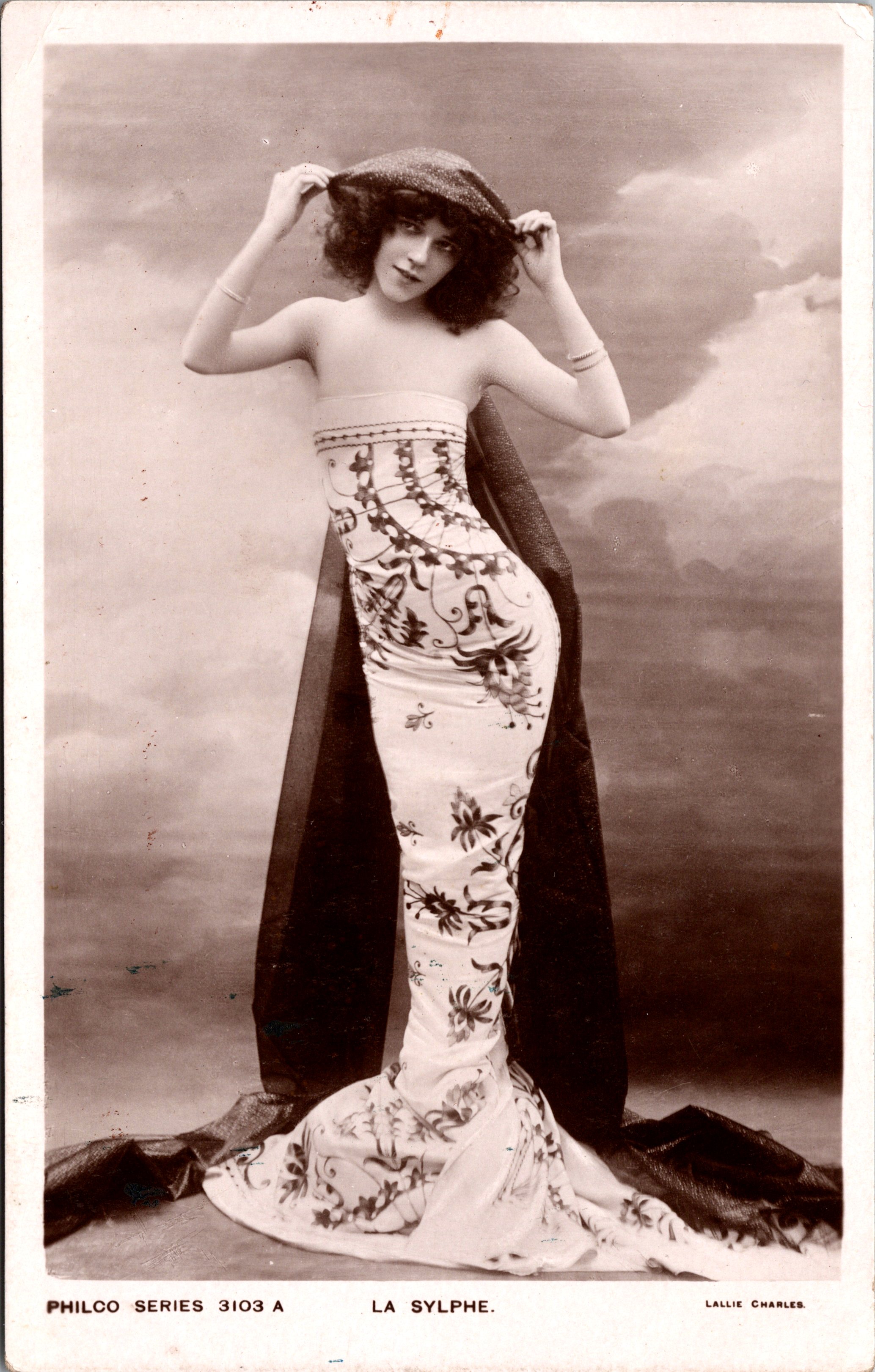
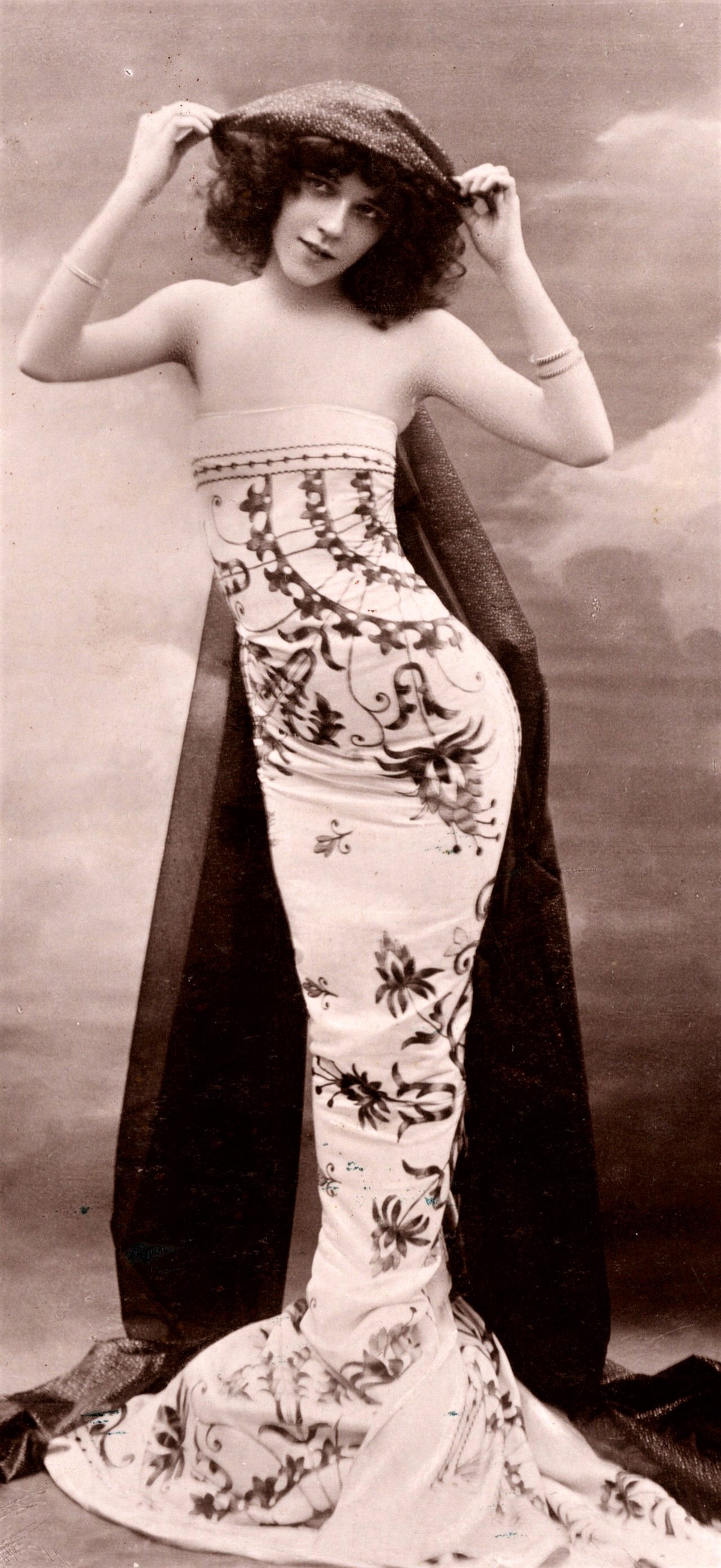
This vintage real photo postcard features American actress exotic dancer, La Sylphe. Her off stage name was Edith Lambelle Langerfeld (1883-1968). She attracted a great deal of attention in the 1890’s while performing at the Folies Bergere. She was born in New York City. Her father was German and her mother was Irish.Her father invented a machine used in the mining of coal. Edith was a dancer, but US laws prevented her from performing on stage due to her young age. The laws were more liberal abroad so when Edith turned six, she was taken abroad by her mother. She travelled around the world for eight years, spending the majority of her time performing in Europe. She became fluent in five language. During her second world tour, she was the primary dancer at the Alhambra Theatre in London. Next, she performed at the aforementioned Folies Bergere. Her debut in the US occurred when she was fourteen. In 1899, she introduced her rendition of “The Vision of Salome” dance. When “Salome” was banned by the Metropolitan Opera in 1907, La Sylphe’s popularity in the US soared. She named her performances “The Remorse of Salome”. She adopted the Far East body dance, otherwise known as “the houchee kouchee”. She began performing in vaudeville. She did toe dances, spanish castanet dances, muscle dances (belly dances), and of course, the Salome dance. She also performed what she called the Devil dance. Some of her performances were risque. In one skit, her mid waist was covered by only pearls. In other performances she wore tights, picket fence skirts and a gossamer (light and thin) bodice. Her performances in New York shocked the public but the shows were tame compared to her routines in Europe. Some of her New York shows were attended by plainsclothes police officers to ensure that she did not cross over the morality boundary.. In 1919 and 1920, La Sylphe was in the cast of “George White’s Scandals”. Her performances included an Acrobatic act, as well as a Contortionist act. After 1928, she began performing in ballets. In one interview, La Sylphe expresses an interesting opinion about matrimony. In an article from “The Evening World” (1908), she states that being an old maid is a good idea. She asserts that she is going to be one. “Marriage is fine for men, but it’s rotten luck for a woman, This vintage real photo postcard was published by Philco as part of a series (No.3103A). The photo was taken by noted celebrity female photographer, Lallie Charles. (SOLD).
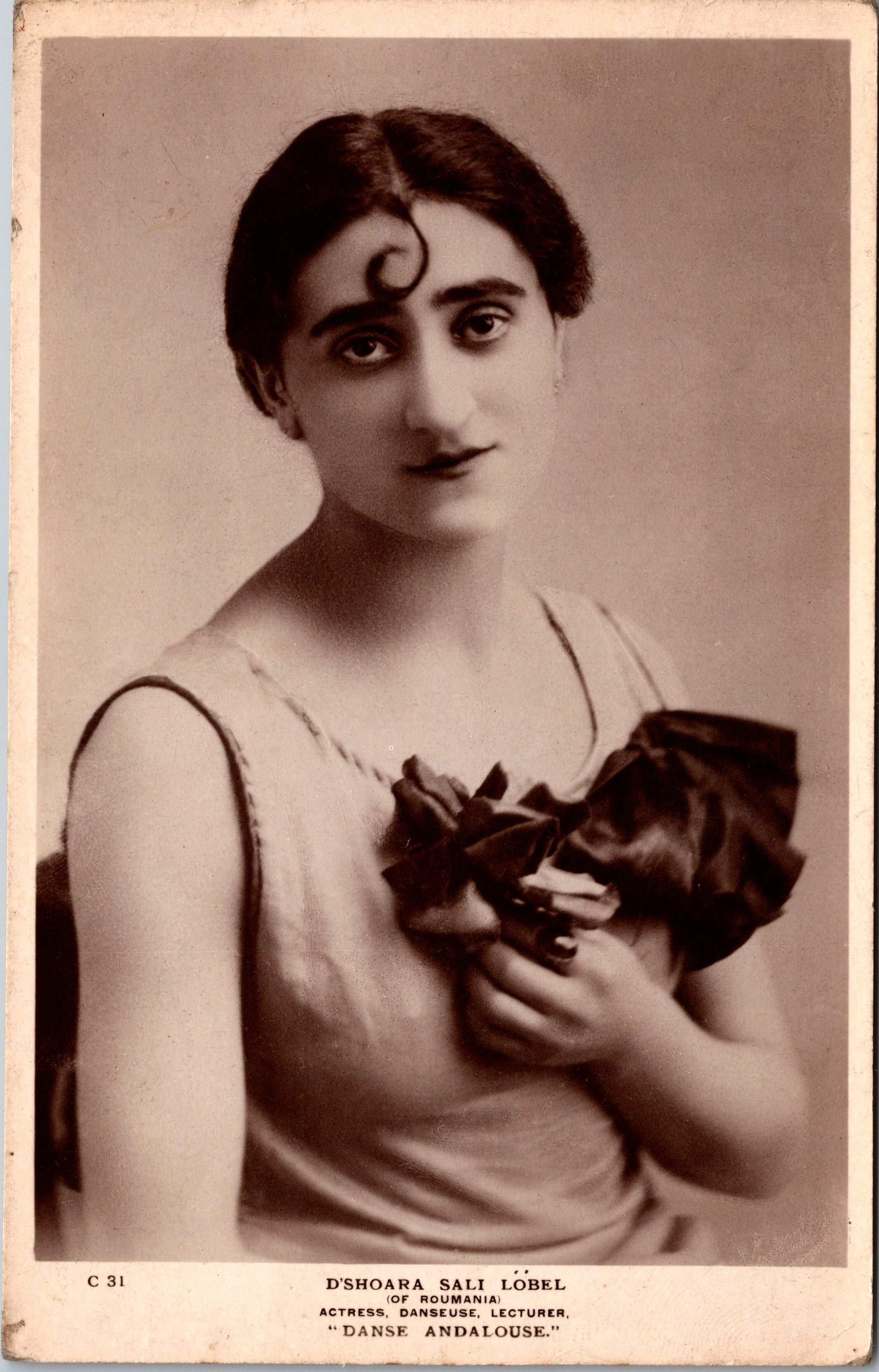
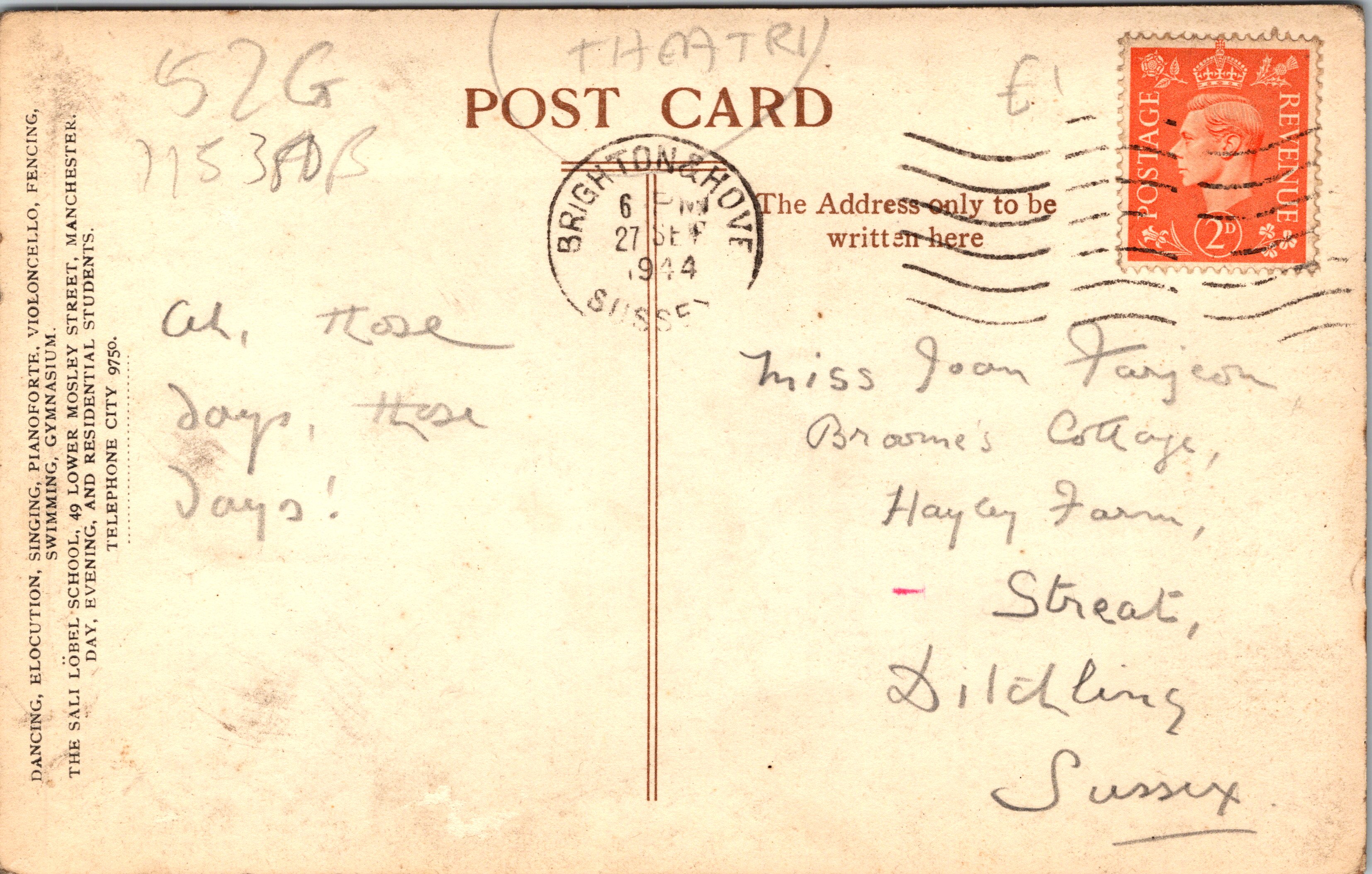
D’Shoara Sali Lobel is the subject of this vintage real photo postcard. She is often cited as “Sali Lobel”. Preliminary research yielded only a small amount of information about this very well rounded woman. She was Romanian born and became known as an actress and dancer. She was also the leader of the Everywoman’s Health Movement. She taught dancing at the movement’s headquarters in London. She was the author of “Glamour and How to Achieve It” (1939). This postcard features a photo of Ms Lobel and on it’s reverse, provides an advertisement for the Sali Lobel School. The school was located in Manchester and offered classes to day, night, and residential students. The curriculum included dancing, elocution, singing, piano, violin, fencing, swimming, and gymnasium. This postcard was postmarked in 1944. This is a rare postcard. In fact, I was unable to locate any other postcard portraits of Sali Lobel. (SOLD)
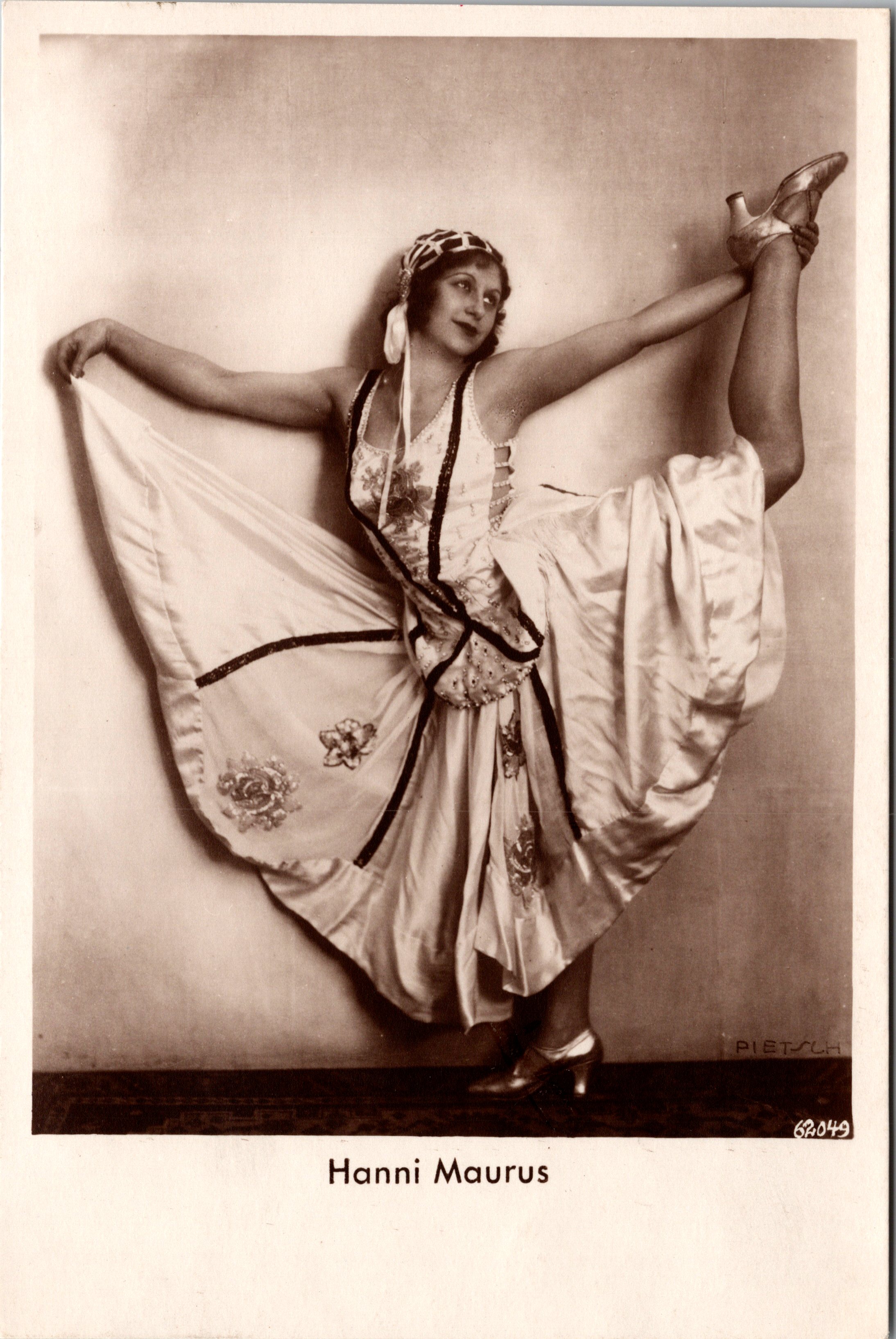
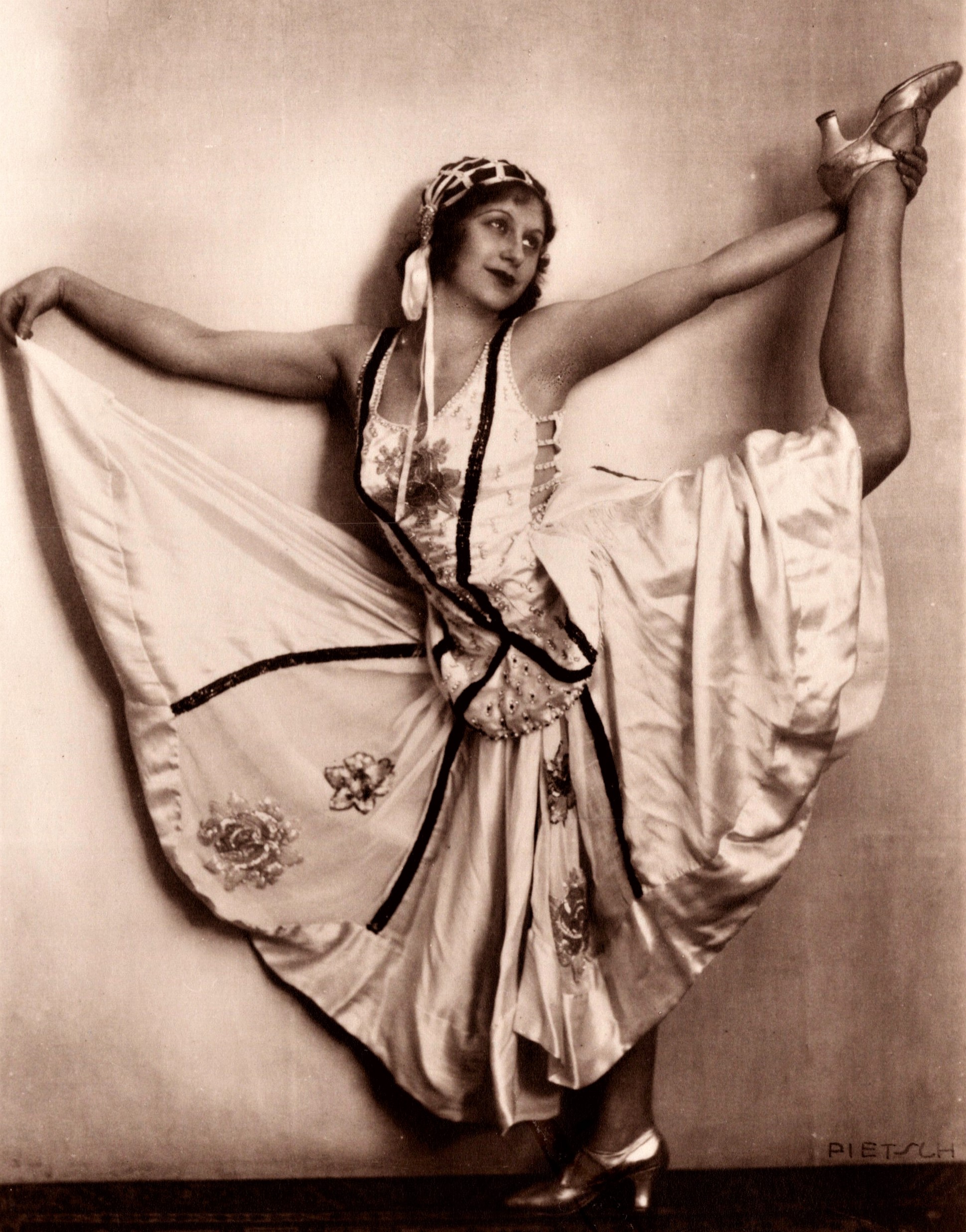
This postcard features a risque portrait of pretty performer, Hanni Maurus. This photograph captures Miss Maurus in costume and performing a dance. This is a rare postcard. I could not find another portrait postcard of this performer. I do not know if Hanni is related to Aurstrian actress Gerda Maurus. This postcard was published by the Garloff Brothers of Mafgdeburg, Saxony, Germany. This cabaret photo was most likely taken by Paul Pietsch and dates back to the 1920’s. (SOLD)
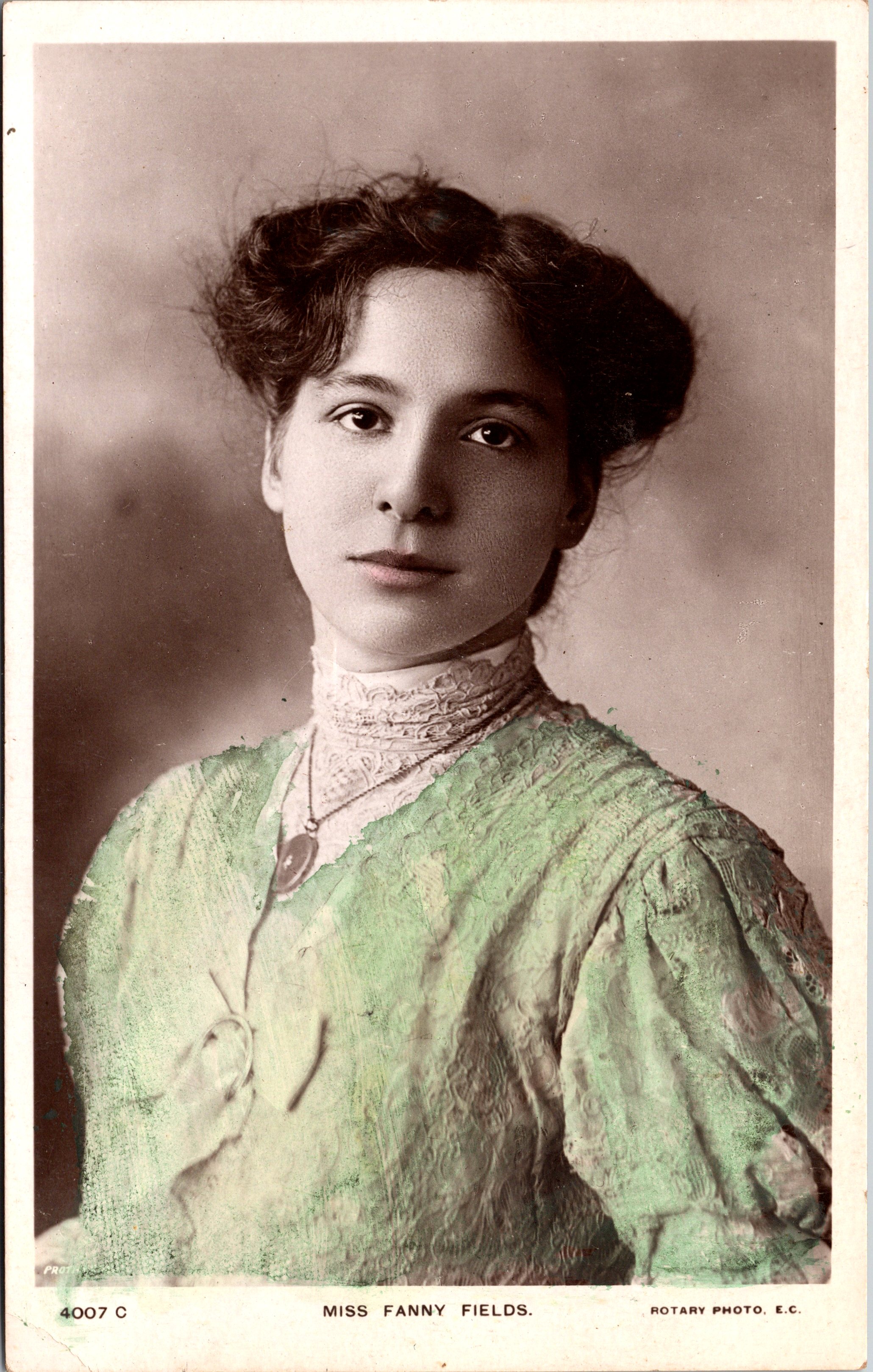
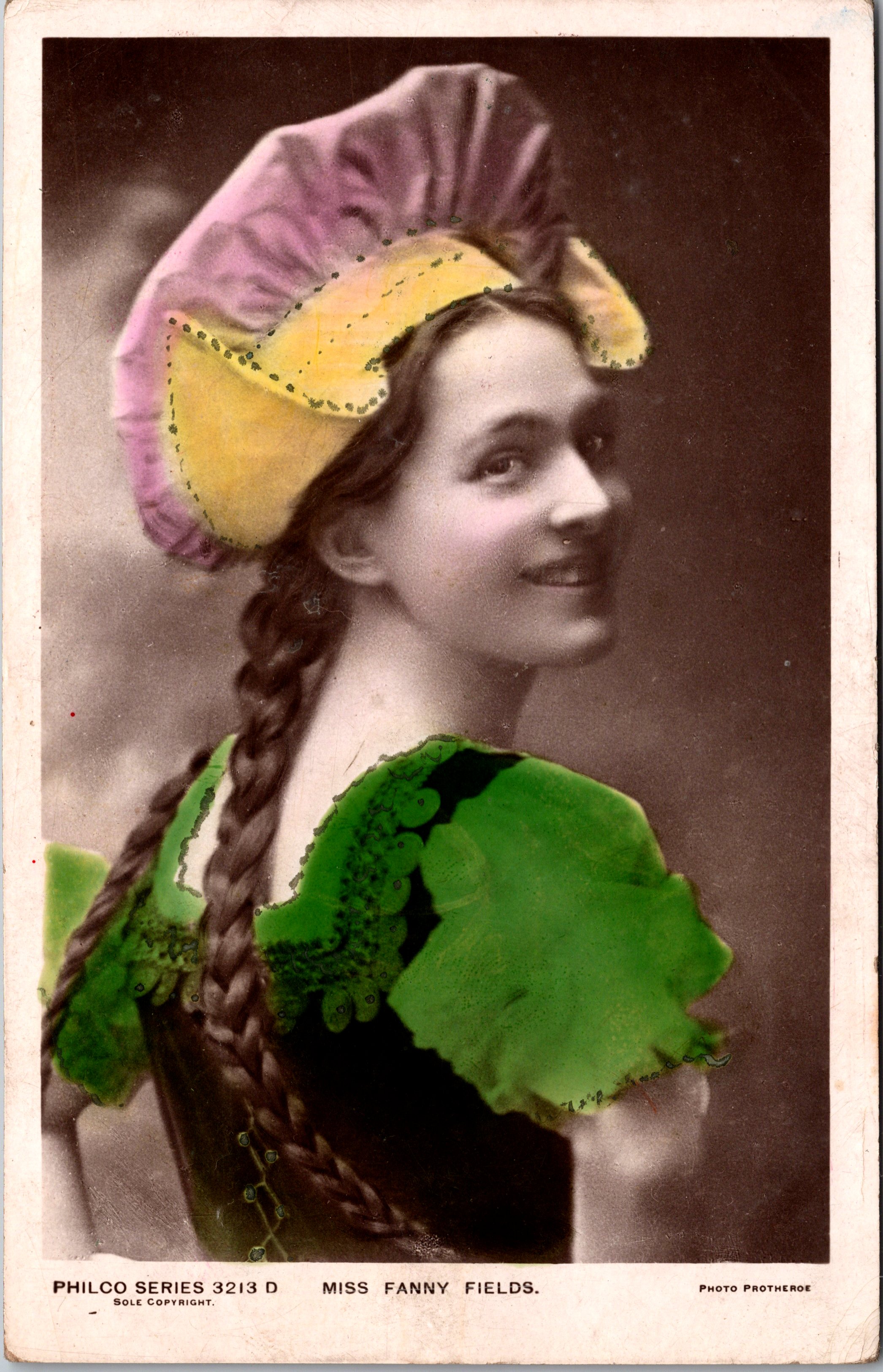
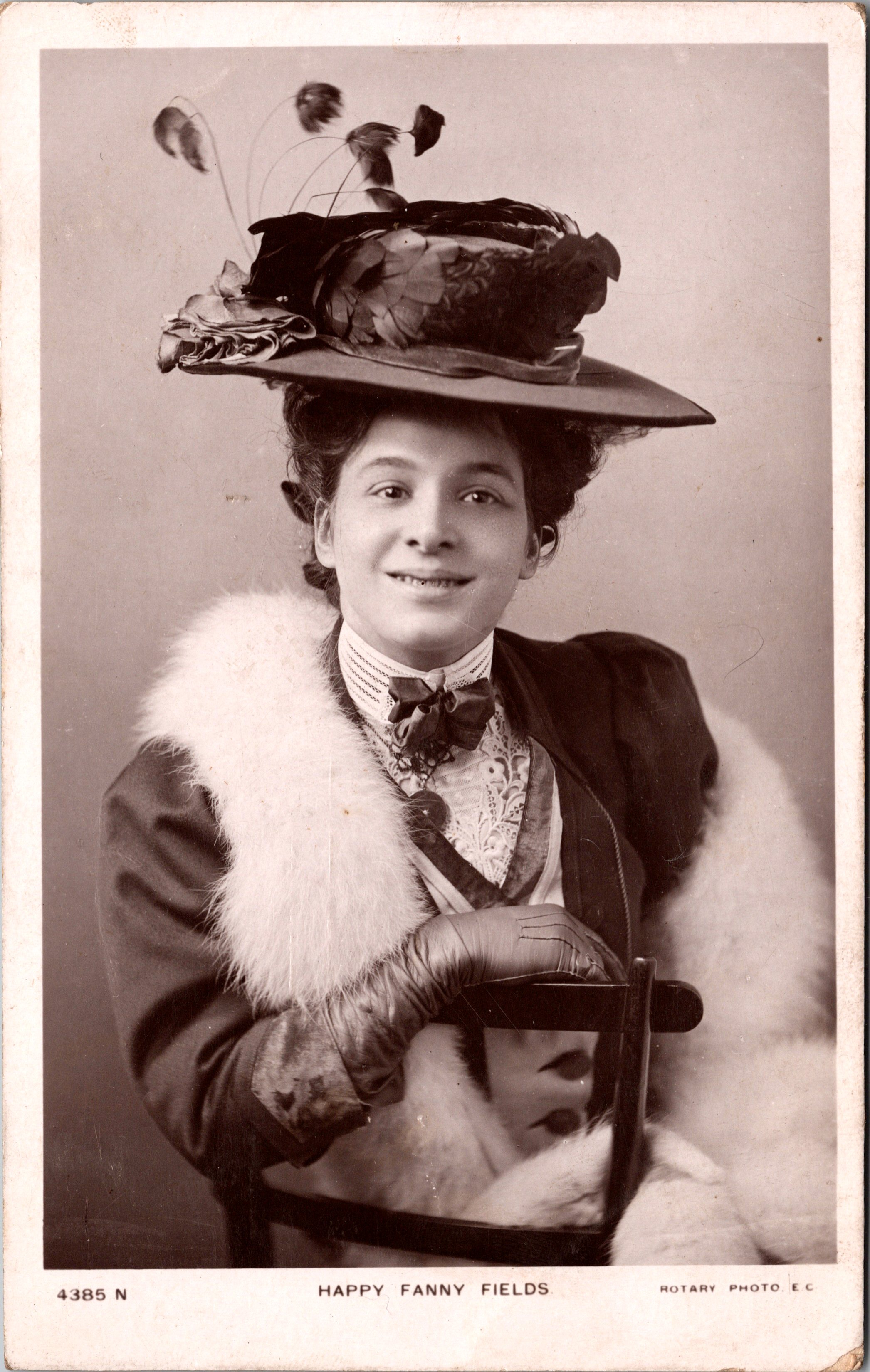
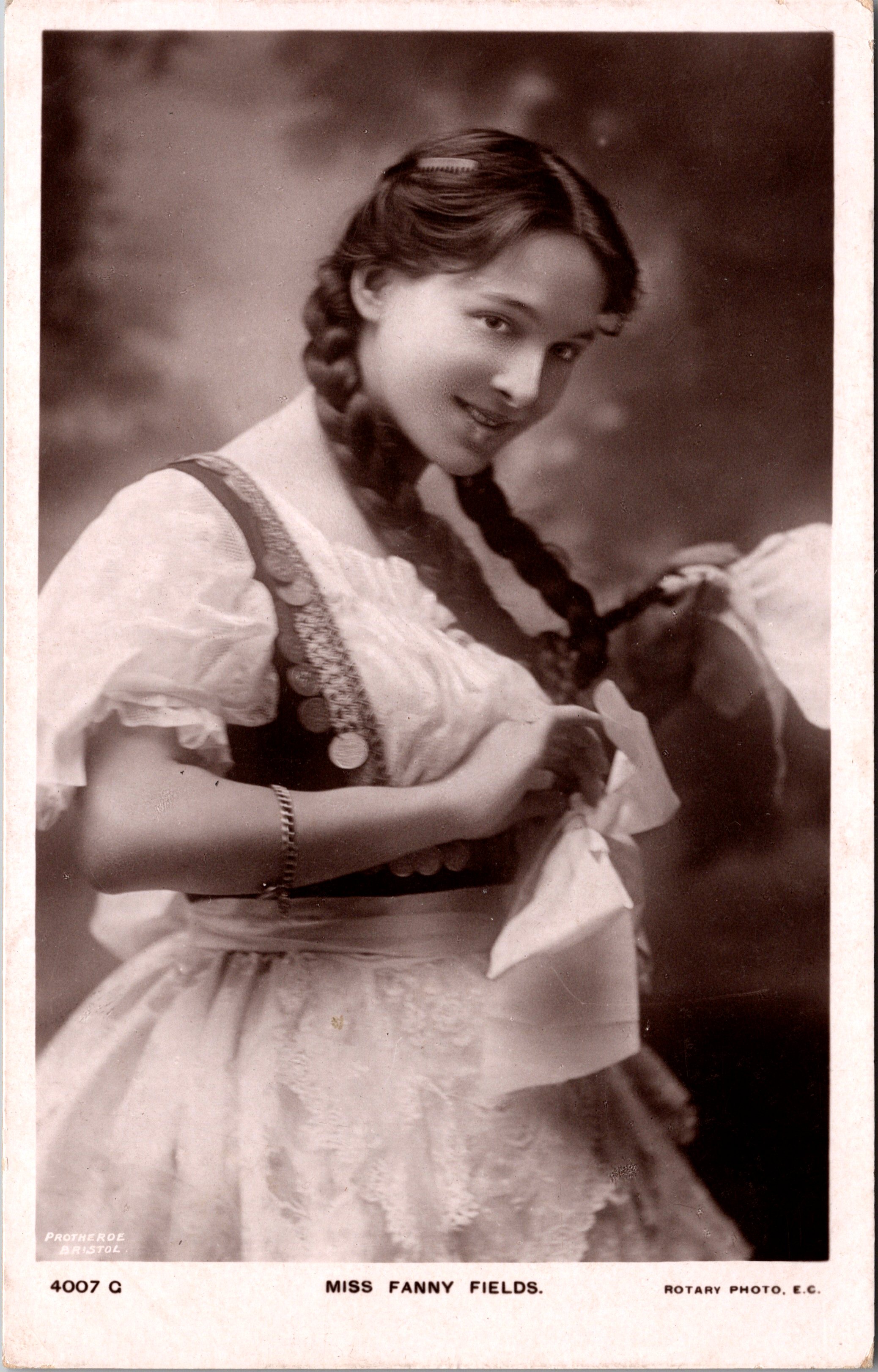
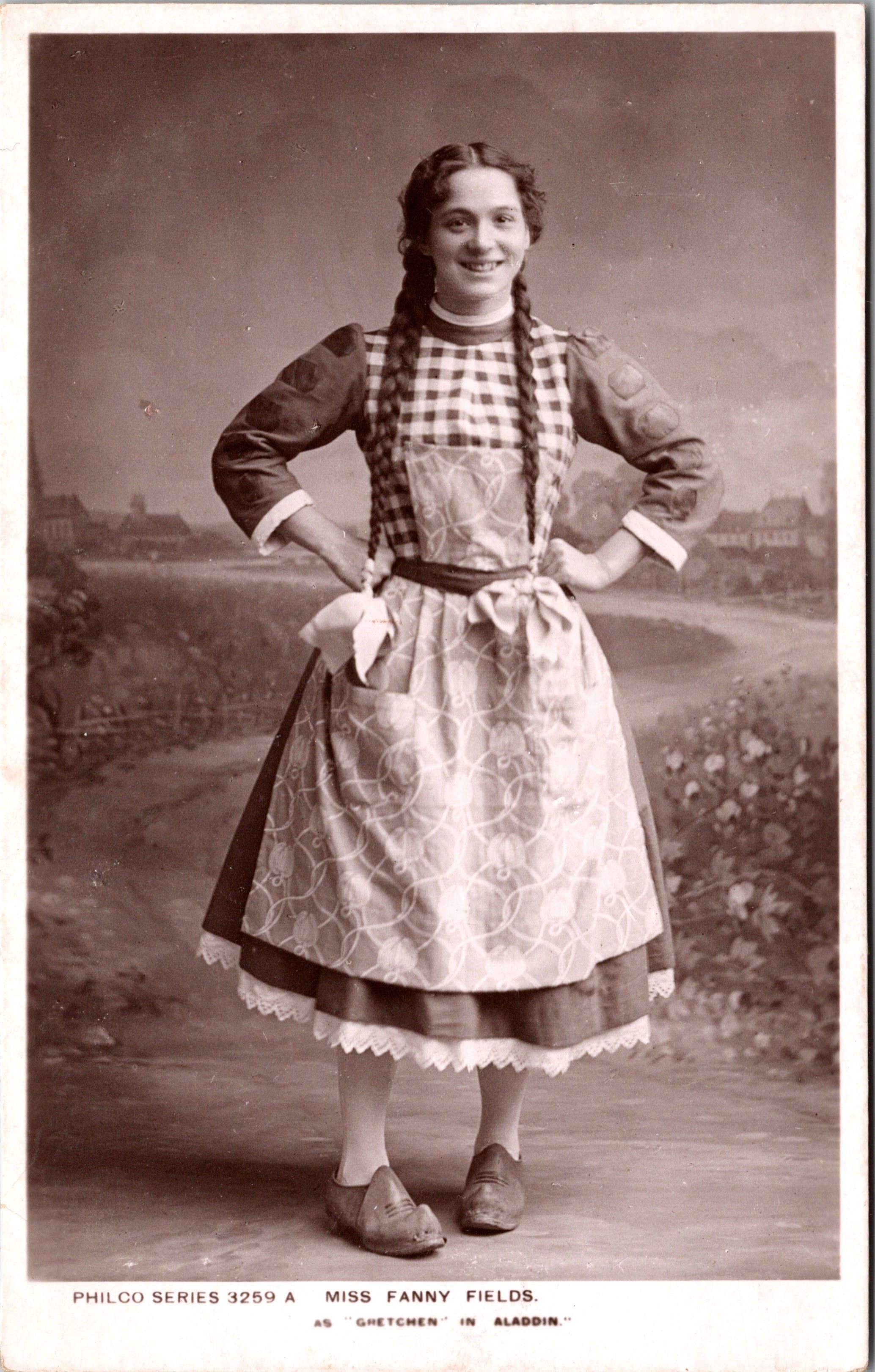
This vintage real photo postcard features American singer, dancer, and comic performer, Fanny Fields (1880-1961), who was a successful performer in British music halls and pantomimes in the early 1900s. During her career she was frequently billed as “Happy” Fanny Fields. She was born, Fanny Furman, in New York City, to a Jewish family. She first appeared in variety shows in NYC sometime around 1899. In her act, she sang and told stories. In 1902, she performed in London and had a very positive reception. One reviewer described her as “one big bubble of mirth and merriment”. She toured with Welsh harpist, Nansi Richards. She also performed “The Suffragette”. In an accompanying monologue, she encouraged woman to make a stand for their rights. In 1912, she performed in front of King George V. She also starred in a silent film short entitled “Happy Fanny Fields and the Four Little Dutchmen” (1913). She retired from the entertainment business in 1913. She returned to the United States and married Dr Abraham Rongy (1878-1949). He was a gynecologist and set up maternity hospitals. In 1933, he published one of the first books proposing the legalization of abortion. Fanny became an active fundraiser for Jewish medical organizations.
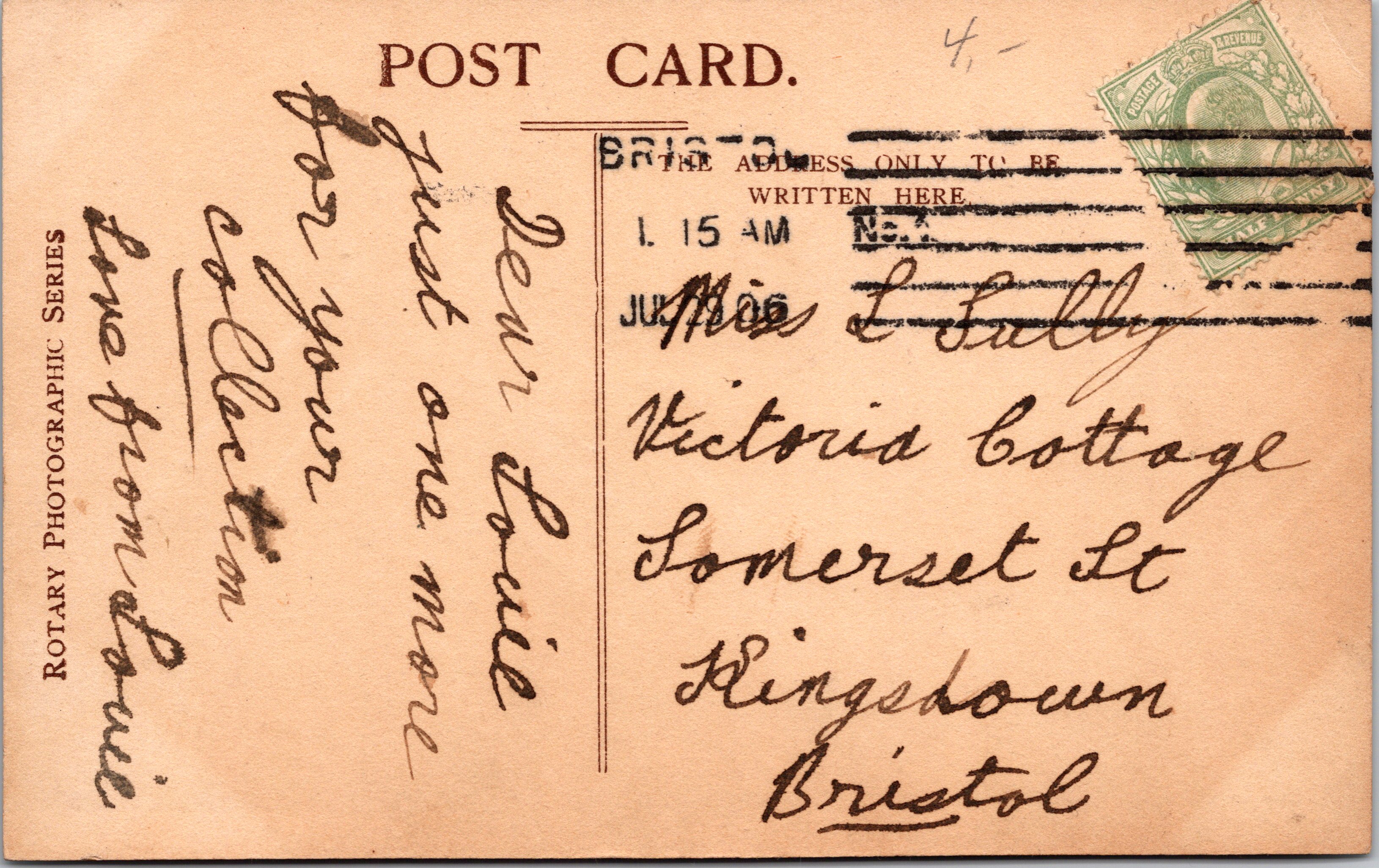
Postcard 1 features a close-up portrait of Fanny Fields. She looks pretty in this color tinted photo postcard. The postcard was published by Rotary Photo as part of a series (no.4007 C). The message on this postcard indicates that the sender sent the postcard for someone to add to their collection. This postcard has a postmark from 1906. (SOLD)
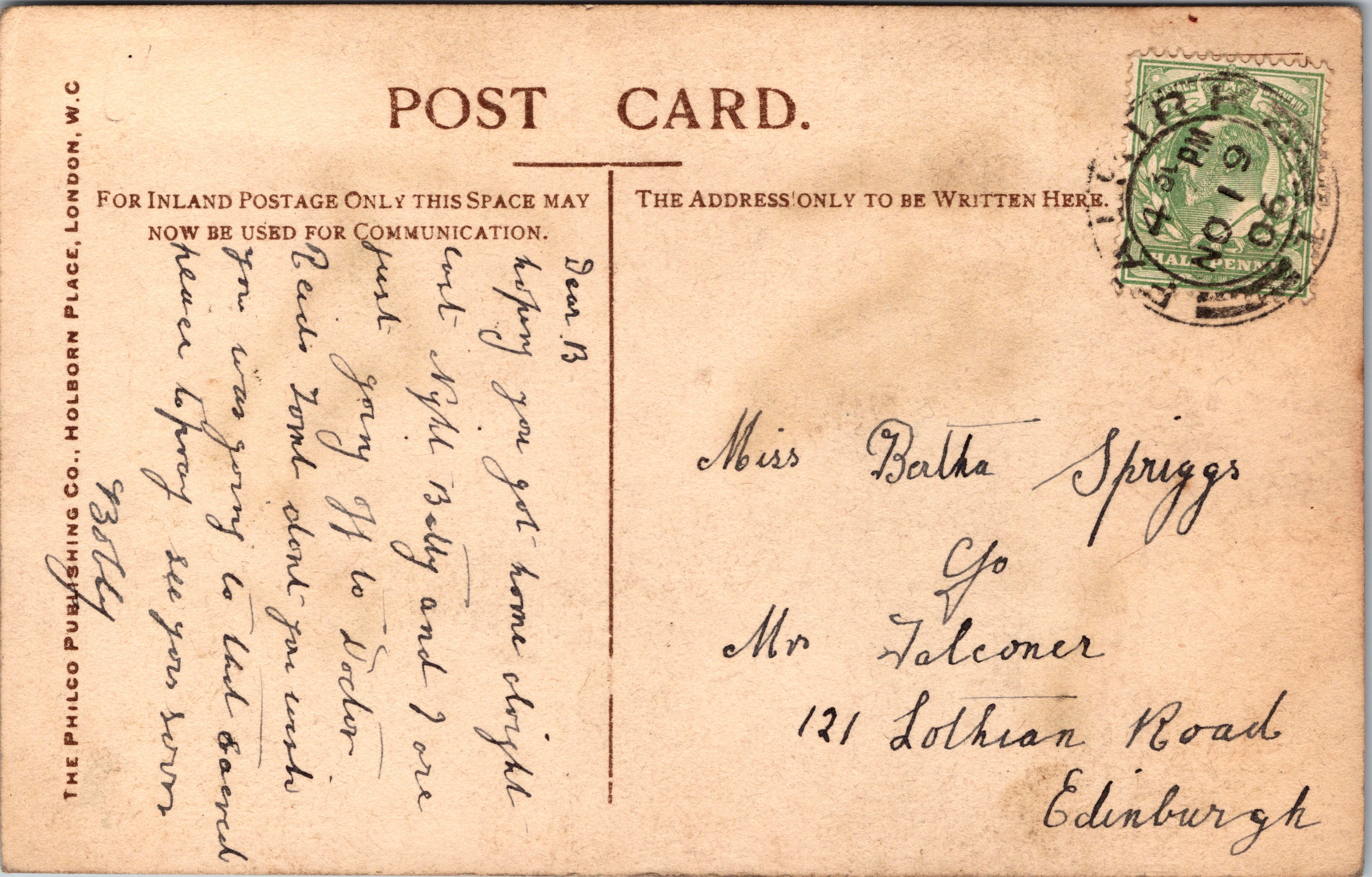
Postcard 2 is a vintage real photo postcard portrait of Miss Fields. The photograph is color tinted. The performer is just beaming for the photographer. Her hat is quite an extravaganza. This postcard was published by Philco (London) as part of a series (no.3213 D). The photographer was Lewis R. Protheroe. He operated a studio in Bristol, England. He was working as a photographer, at least between 1901 and 1917. His father, Thomas Protheroe founded the studio between approximately 1876 and 1900. The postcard has a 1906 postmark. (SOLD)
Postcard 3 is a vintage real photo postcard portrait of Miss Fields. The performer has an adorable smile. Note her long braids. This postcard was published by Rotary Photo as part of a series (no.4385 N). (SOLD)
Postcard 4 features Fanny Fields displaying a warm smile. Note her long braids. Lewis R. Protheroe who operated a studio in Bristol, England. He was working as a phototgrapher, at least between 1901 and 1917. Thomas Protheroe founded the studio between approximately 1876 and 1900 This postcard was published by Rotary Photo as part of a series (no.4007 G). The card is in very good condition (see scans). (SOLD)
Postcard 5 is a vintage real photo postcard portrait of Miss Fields. The performer is once again displaying her wonderful smile. Note her long braids. This photograph captures Fanny in costume, playing the role of Gretchen in “Aladdin”. (SOLD)
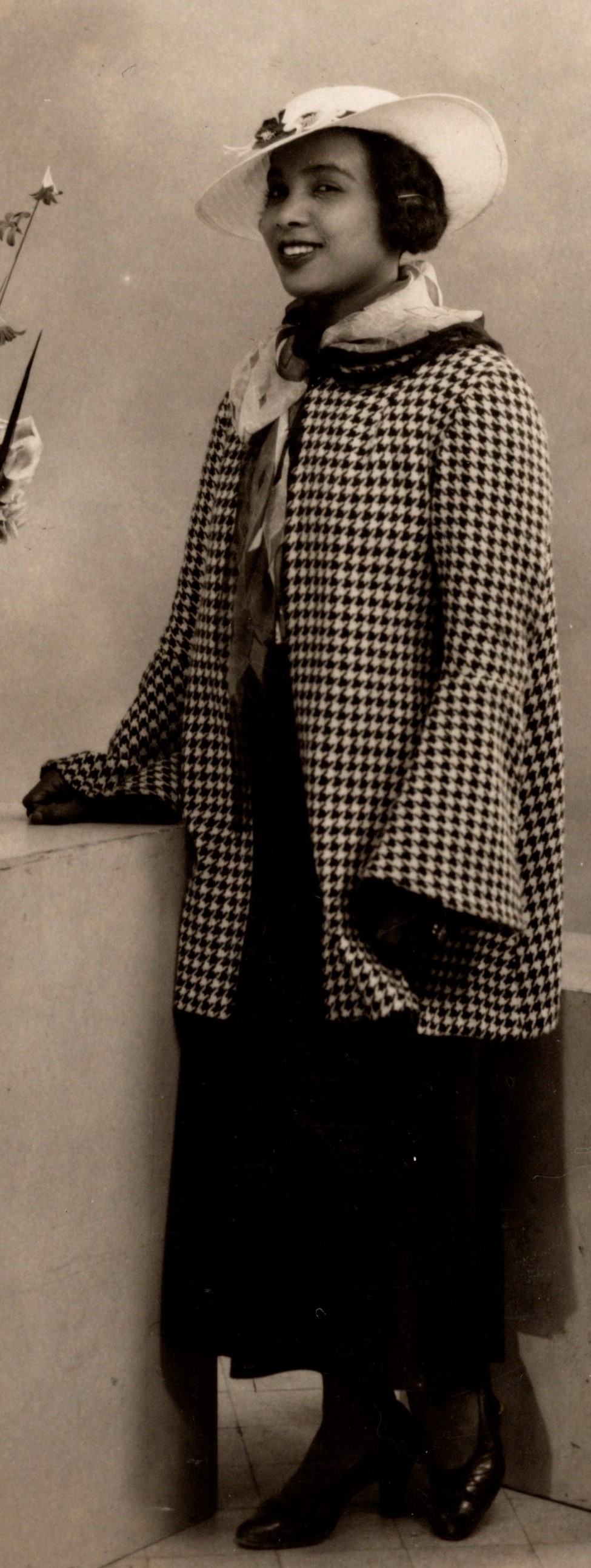
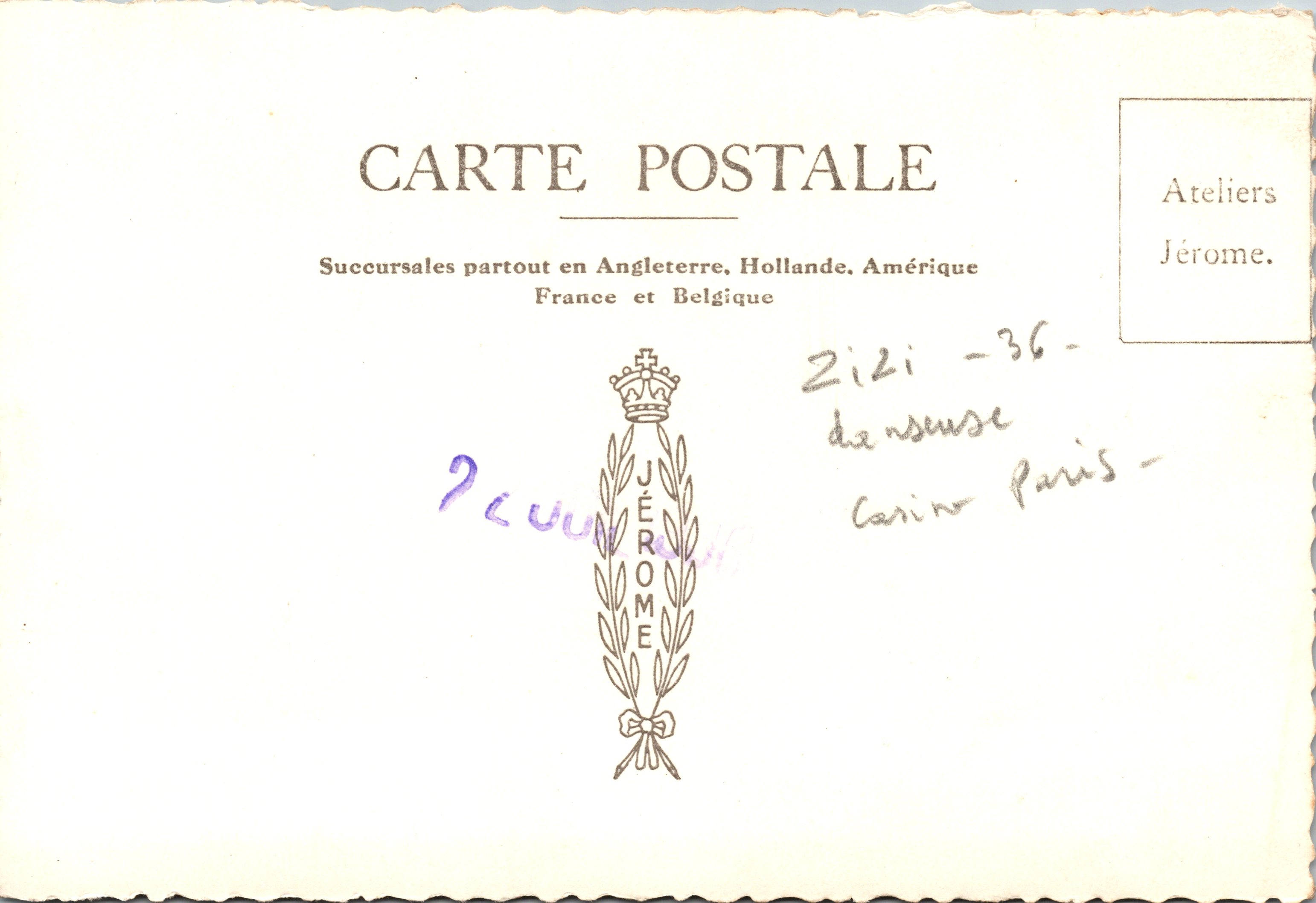
This vintage real postcard features Creole dancer, Zizi. She was a performer at the Casino de Paris. The reverse of the postcard is dated 1936. The card was published by the Jerome studio. SOLD
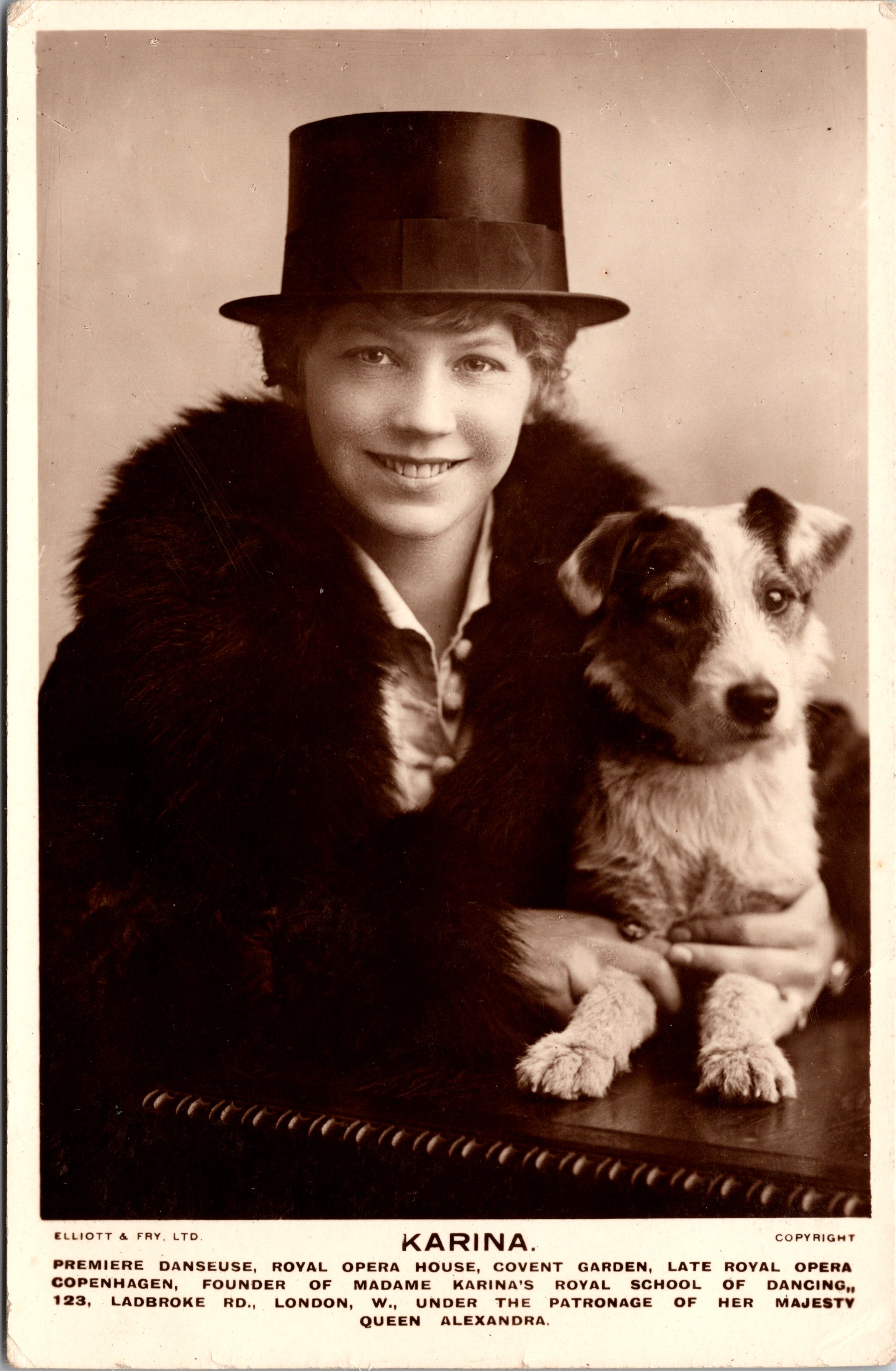
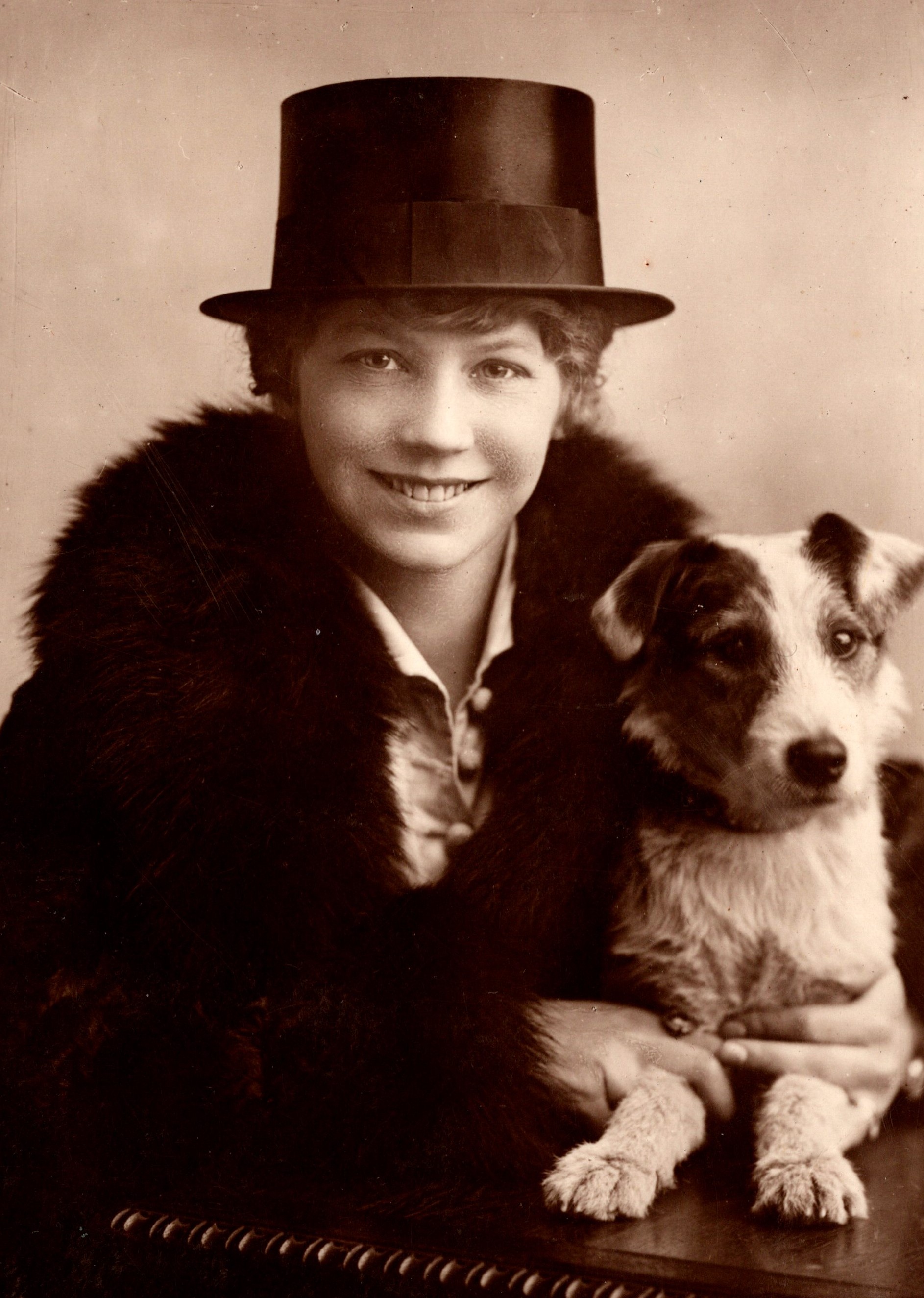
Karina. She was celebrity enough to use only her first name. More modern performers who are recognized by just one name include Elvis, Madonna, and Adele. Who was Karina? As the caption on the postcard asserts, Karina was the premiere dancer at the Royal Opera House and the founder of Madame Karina’s Royal School of Dancing. The school was under the patronage of Queen Alexandra (of Denmark). The Queen was a staunch supporter of the opera ballet from 1913 through the 1920’s. Karina was Danish and active in the 1910’s and 1920’s. Two portraits of Karina can be found in Great Britain’s National Portrait Gallery. The photograph seen on this postcard was taken by the esteemed studio of Elliott & Fry. This Victorian photographic studio and photographic film manufacturer was founded in 1863 by Joseph John Elliott and Clarence Edmund Fry. For an entire century the studio took and published images of leading Victorian luminaries from the fields of science, public service, art, politics, as well as celebrities of the day. SOLD
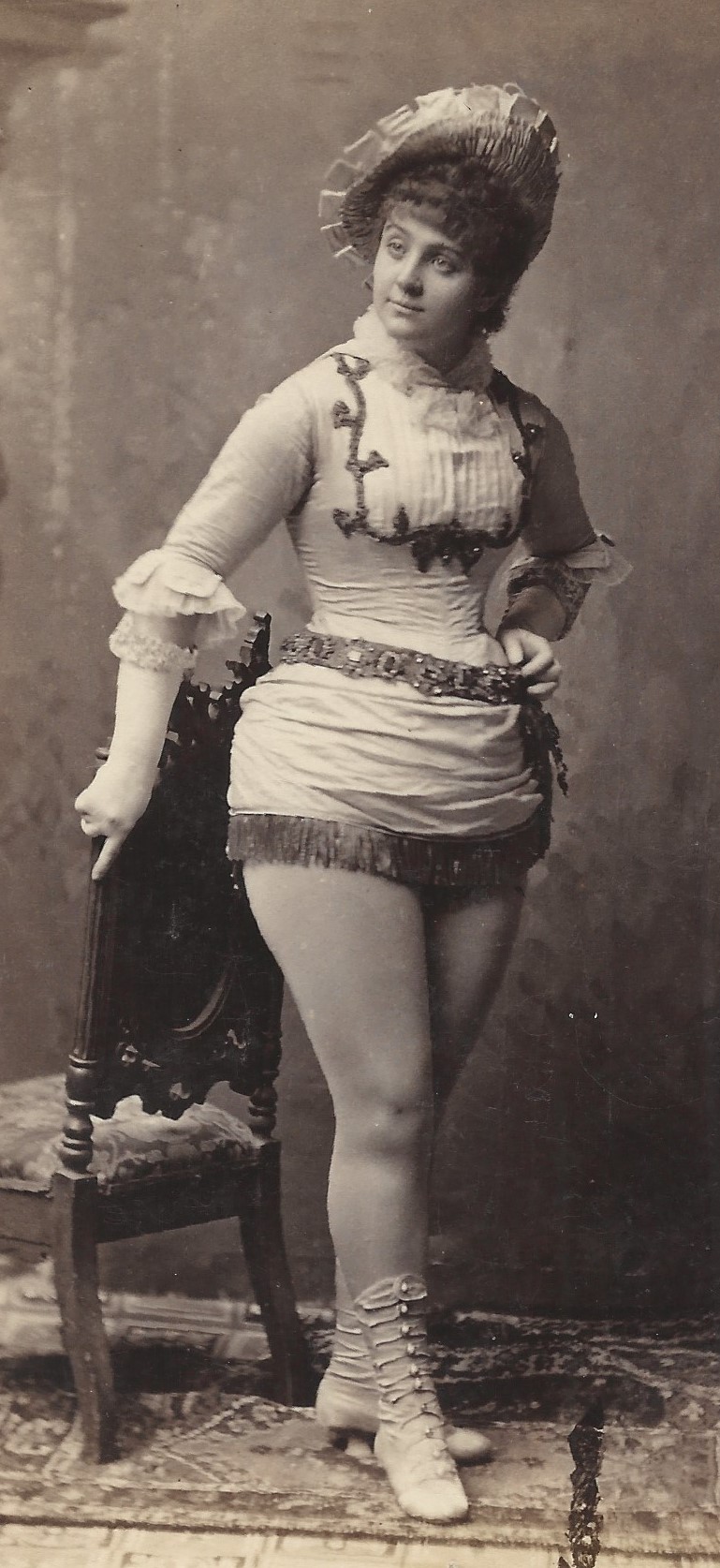
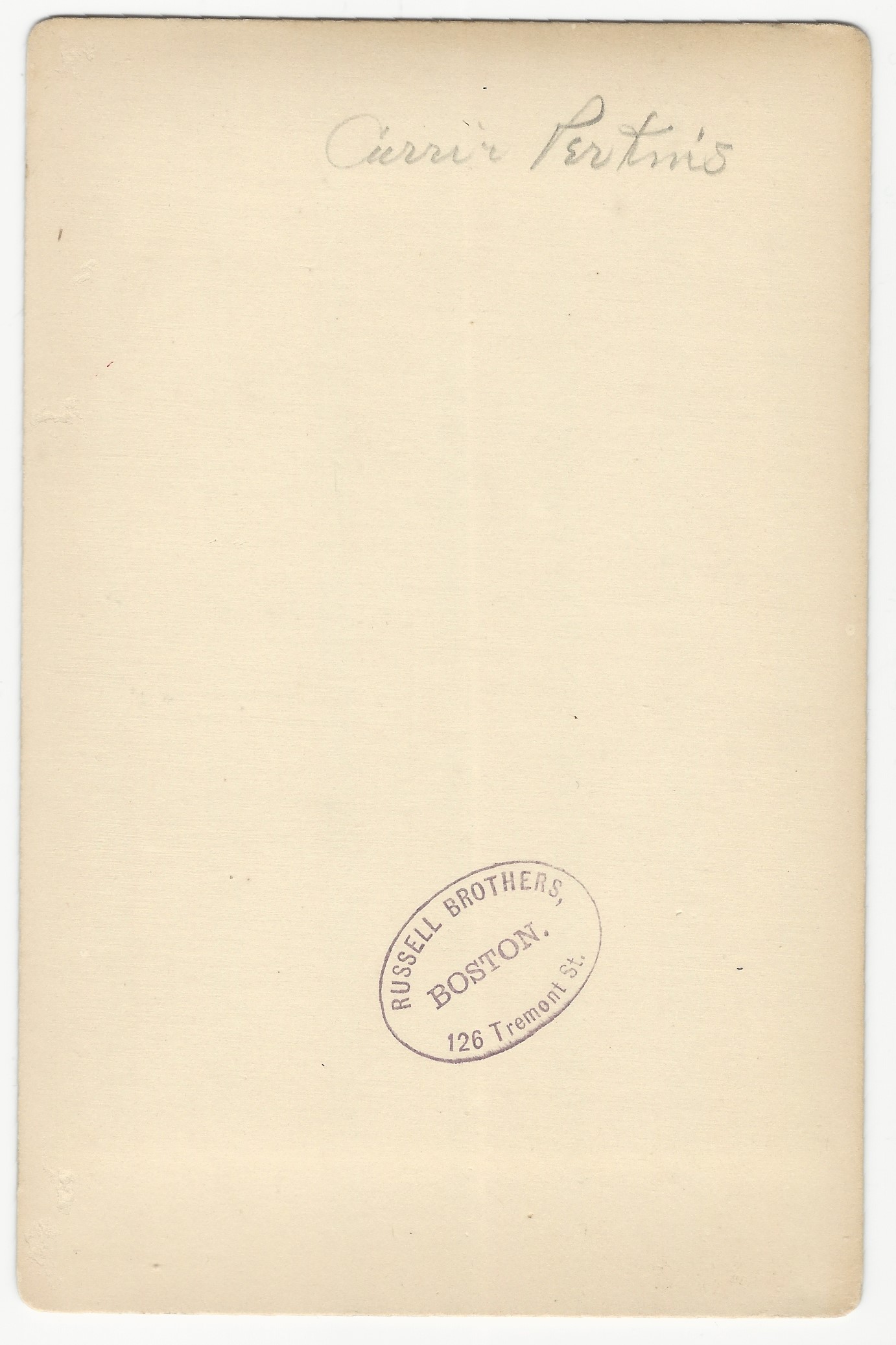
The pretty woman seen in this cabinet card portrait is actress, Carrie Perkins. Her acting included productions on Broadway, as well as, appearances on the Burlesque and Vaudeville stage. One of Perkins’s claims to fame, is that she was considered to be the actress that wore the tightest fitting costumes in all of vaudeville. She appeared in much advertising such as premium cards for cigarette brands. The website, “Broadway Photographs” provides a biography of Miss Perkins. She is described as “a vaudevillian with a trim body and a smart tongue”. The site states that “she plied both the visual and verbal dimensions of entertainment”. Although she was known for her tight gowns, the biographer states that “it was her urban girl wit that won her a ticket to Broadway”. She became known to the theatrical world in Garrick’s burlesque “Thrilby” (1895). She wasn’t considered beautiful enough to play lead roles. Instead she played roles that showcased “feminine audacity”. She appeared in nineteen Broadway productions according to the Internet Broadway Database (IBDB). These appearances occurred between 1888 and 1911. These performances included “Jack and the Beanstalk (1898), “The Casino Girl” (1901), and “The Merry Shop Girl’s” (1905). Her final show was “The Fascinating Widow”. which was a touring production with the popular actor and female impersonator Julian Eltinge. There seems to be agreement that Perkins was long on personality and appearance, but short on talent. Perkins rarely received praise from theatre critics. She found her place on the stage as a supporting actress/dancer/singer. This cabinet card photograph was taken by the Sparks Photo-Publishing Company. The studio was located in Philadelphia, Pennsylvania. The artist/manager of the studio was Elliott Houseworth. The 1880 census lists Elliott A. Houseworth as being born in 1855, residing in San Francisco, California, and working as a photographer. Houseworth also appears in the 1900 census as living in Norwood, Pennsylvania and working as a manager. These demographics fit the photographer of this image, since Houseworth managed Sparks Photography Studio and Norwood is only about eleven miles from Philadelphia. A stamp on the reverse of the image states “Russell Brothers, 126 Tremont Street, Boston”. Perhaps the Russell Brothers were photograph collectors or a photo gallery that sold celebrity photographs. Photographs of Miss Perkins are rare and this image is beautiful remnant of turn of the century Broadway theater. SOLD










 THE CABINET CARD GALLERY