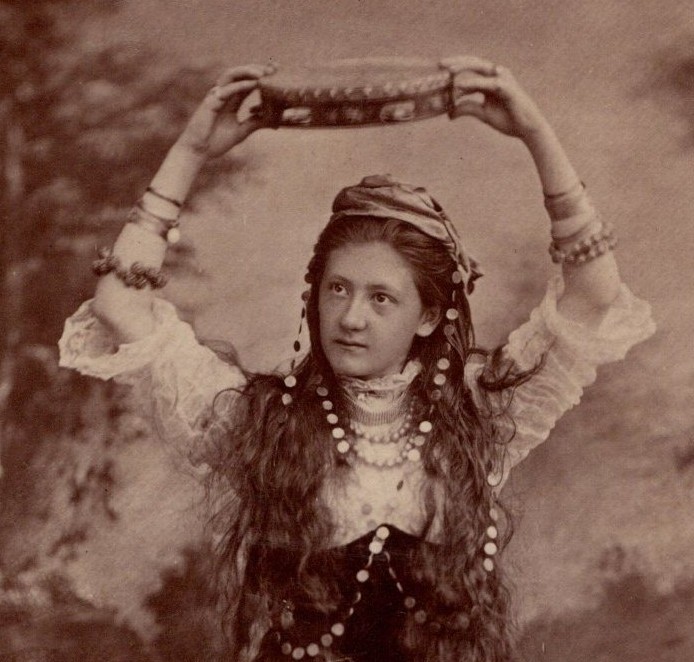
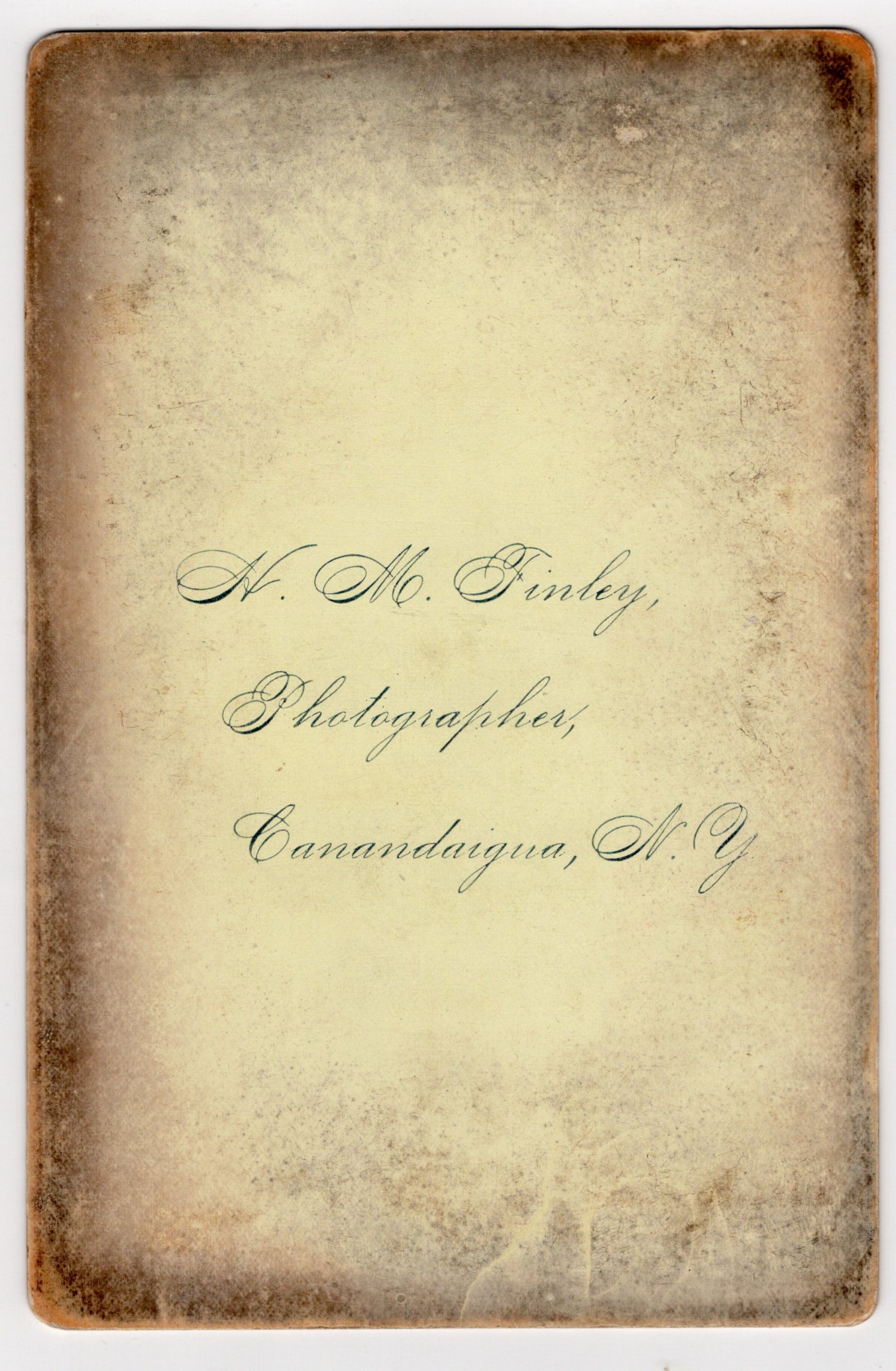
This cabinet card captures a gypsy woman with her tambourine held above her head. She is wearing multiple bracelets and necklaces, as well as linked chains. She is wearing what appears to be a head scarf, stockings, and a very interesting cloth belt. She may be an actual gypsy, or perhaps an actress in costume. The photographer is H. M. Finley of Canandagua, New York. Canandaigua is located in the Finger Lakes region of New York. Horace M. Finley (1839-?) was born in Canandaigua and educated in local schools. After completing school he worked for his father’s photographic studio. His father, Marshall Finley, was a co author of one of the first American photography books (1849). Horace Finley worked as a photographer for many years; he was listed as an artist, or photographer, in the census’s of 1860 through 1900. To view other photographs by Finley, click on category “Photographer: Finley”. SOLD
WOMAN WEARING A GYPSY COSTUME AND SHAKING A TAMBOURINE (CABINET CARD)
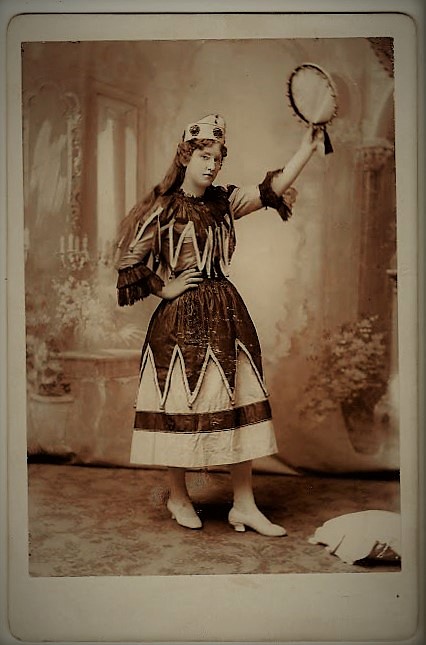
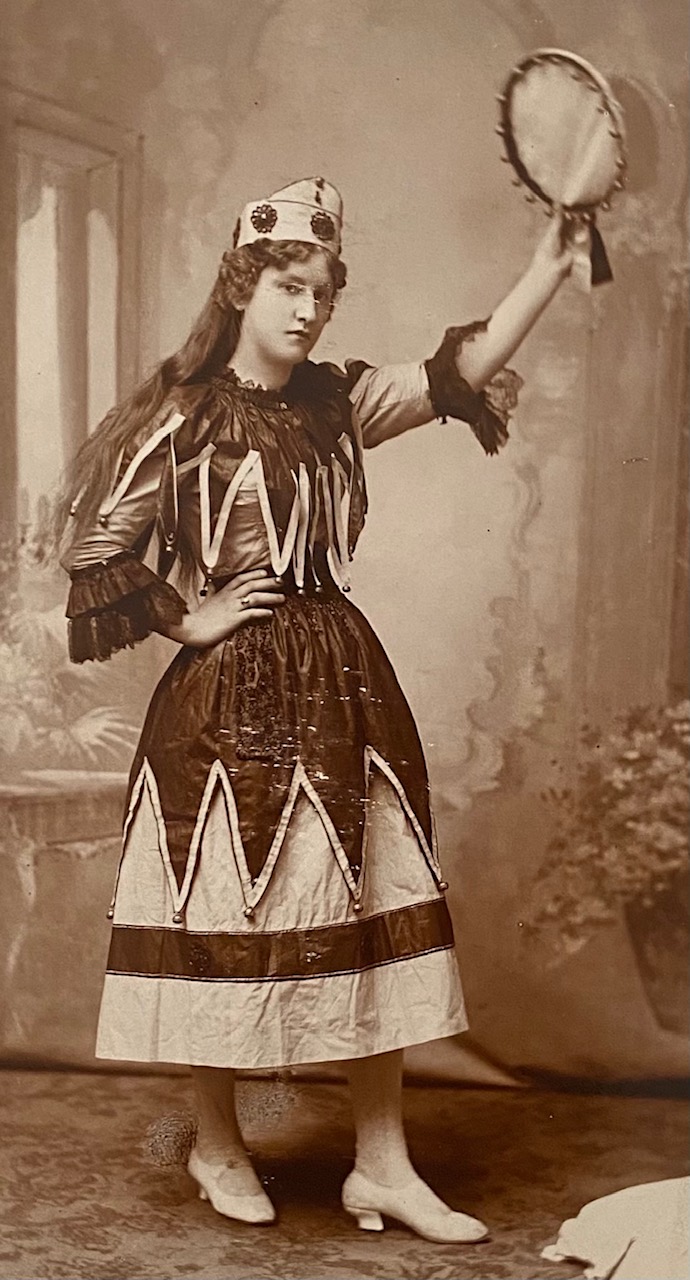
This cabinet card features a young woman dressed in a gypsy costume and waving a tambourine. Note her spectacles. The photographer and the studio’s location is unidentified. Close examination reveals slight scruffing on her dress just below her waist. (SOLD)
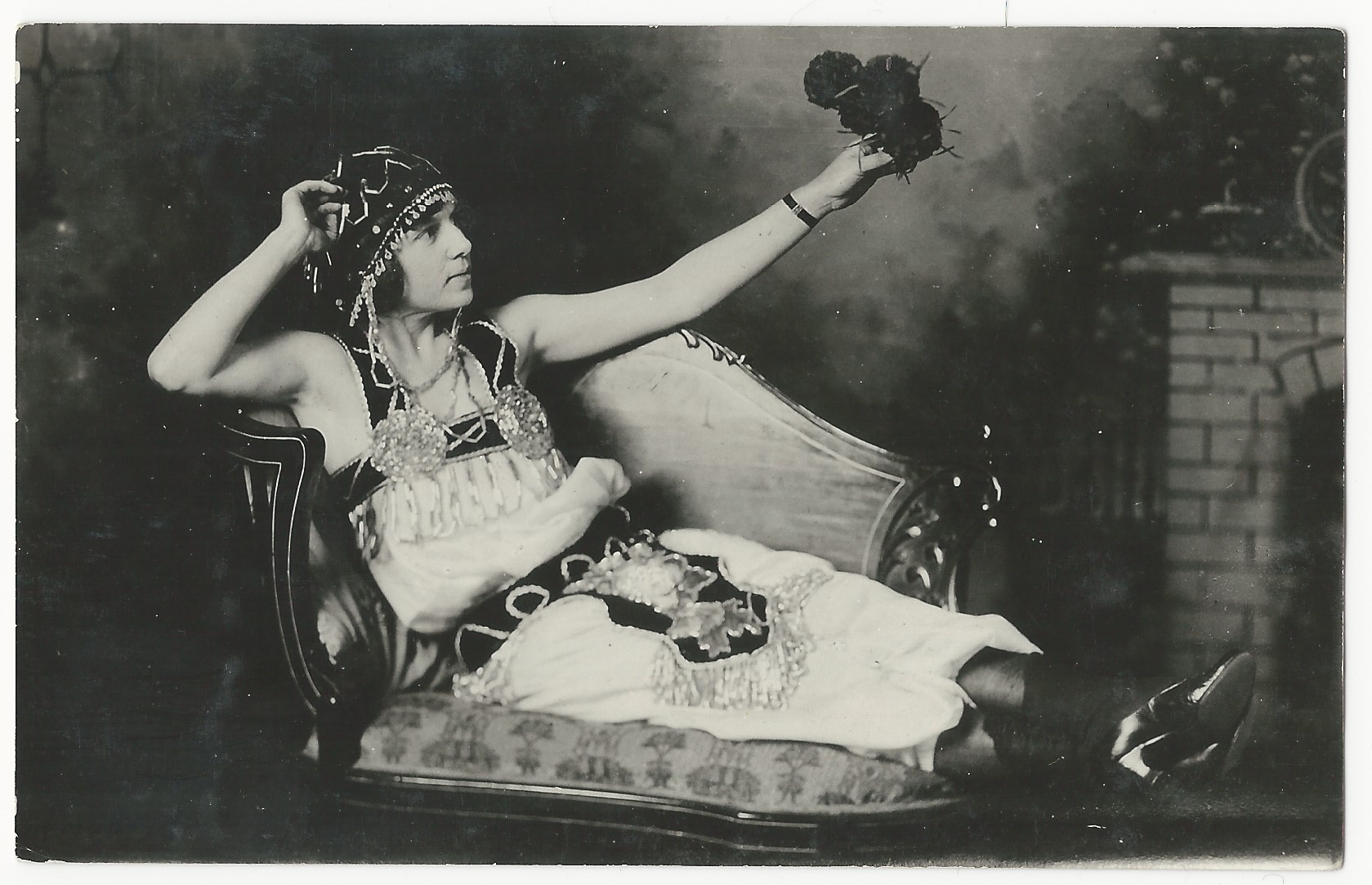
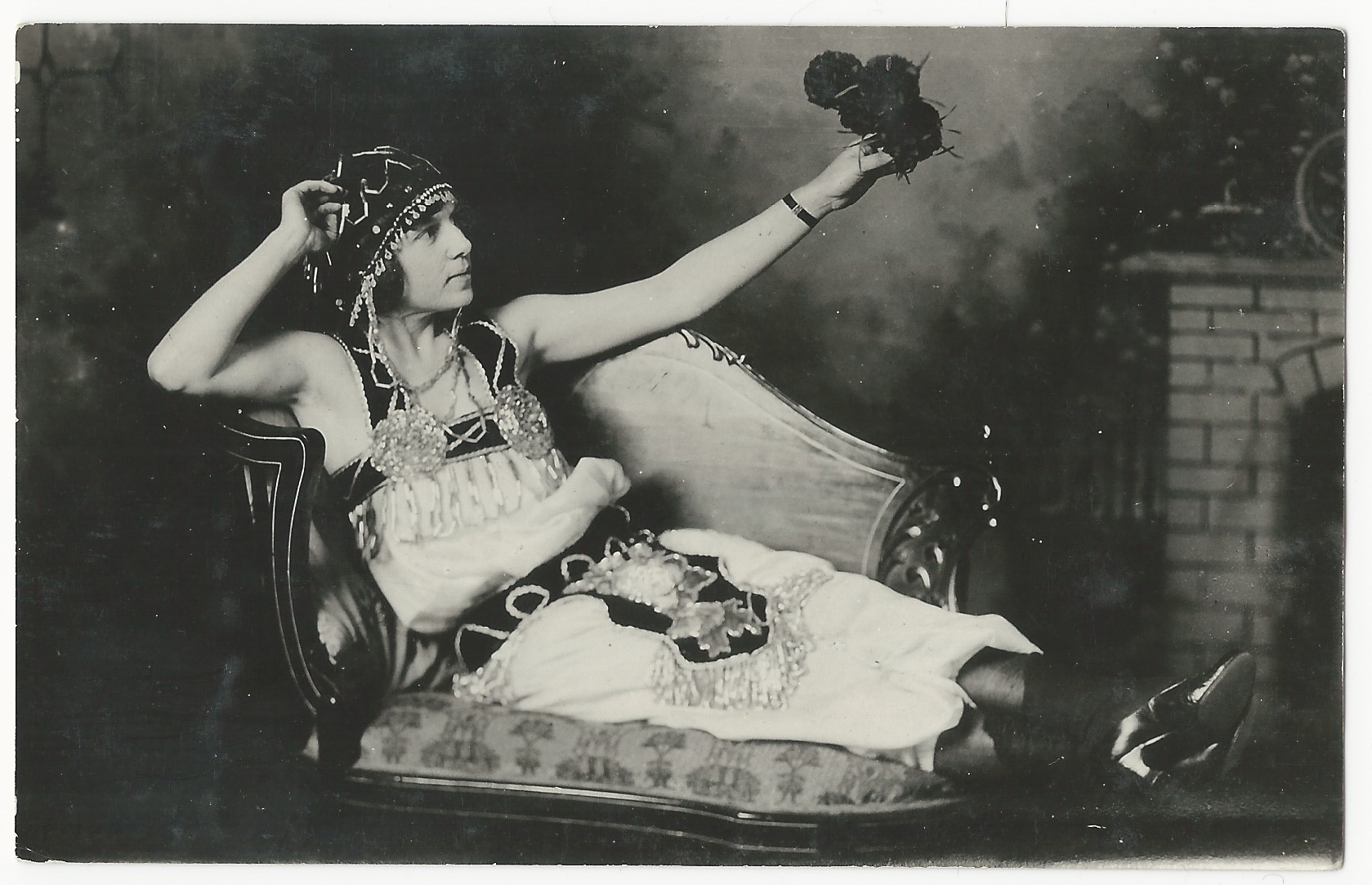
AN ALLURING YOUNG WOMAN BECKONING FROM A LOVESEAT


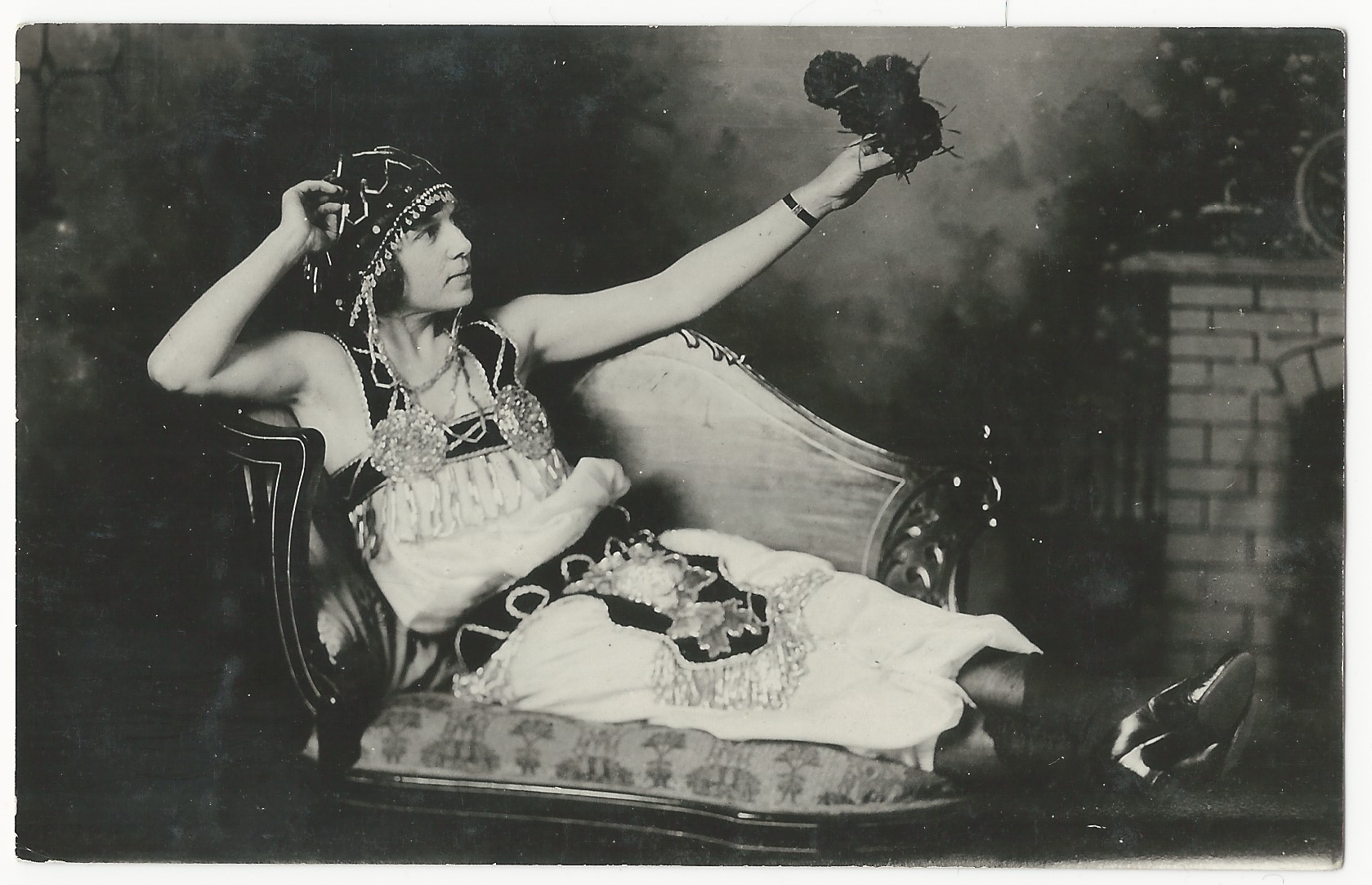
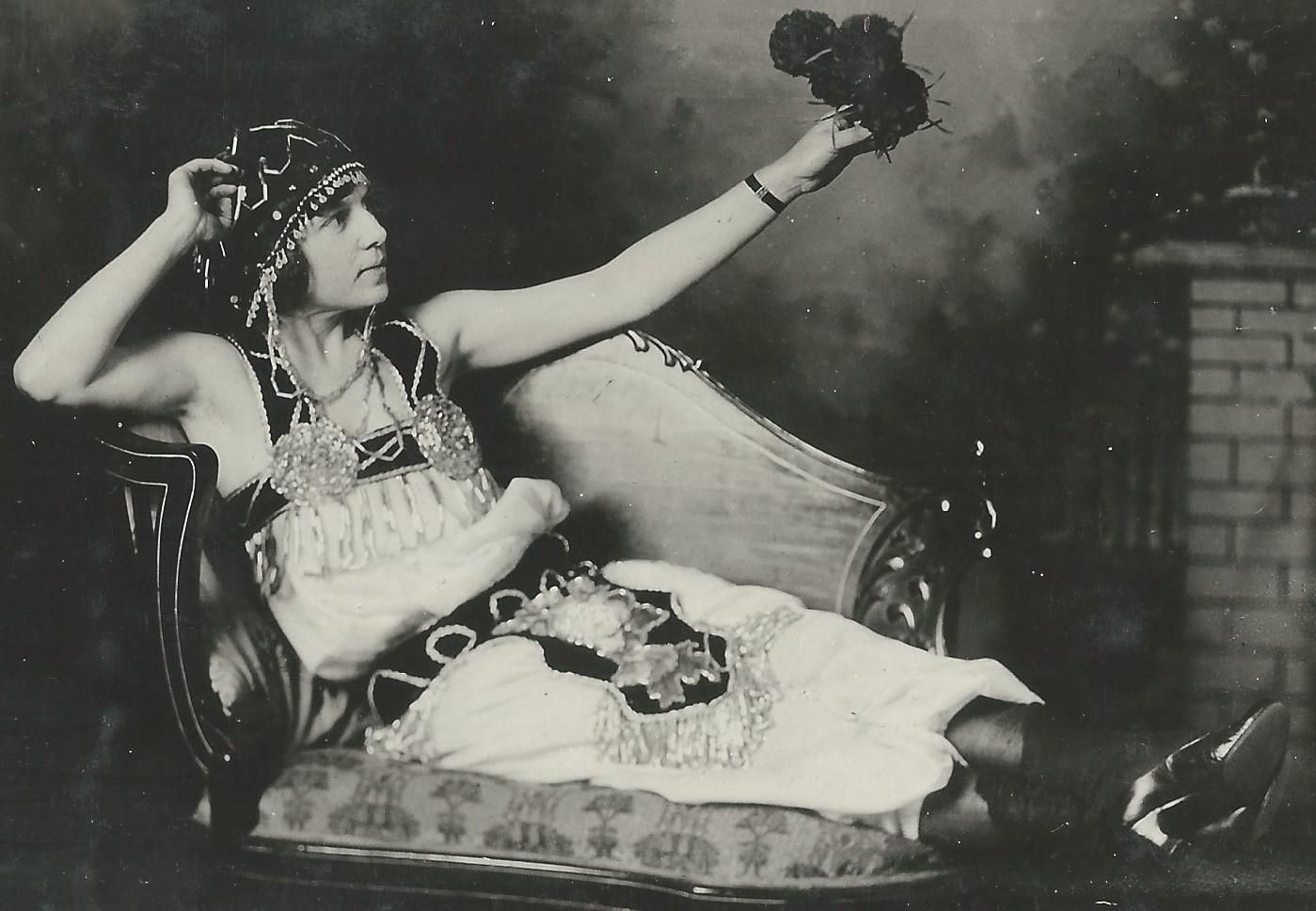
This vintage provocative real photo postcard features a pretty young woman sitting on a loveseat, and beckoning for the attention of someone outside the range of the camera. She is offering that person a bouquet of dark flowers. The woman is dressed in a risque fashion. Her attire is not exactly everyday wear. One wonders if she is wearing a costume portraying a gypsy, or is perhaps, a flapper. The pictured woman is showing more bare skin than would normally be expected from a woman of this era. Note her unusual and interesting head covering. The AZO stamp box on this postcard reveals that it was produced sometime between 1918 and 1930. The postcard is in very good condition (see scans).

Buy this Vintage Real Photo Postcard (includes shipping within the US) #3398
To purchase this item, click on the Pay with PayPal button below
$31.50

Buy this Vintage Real Photo Postcard (includes International shipping outside the US) 3398
To purchase this item, click on the Pay with PayPal button below
$40.50

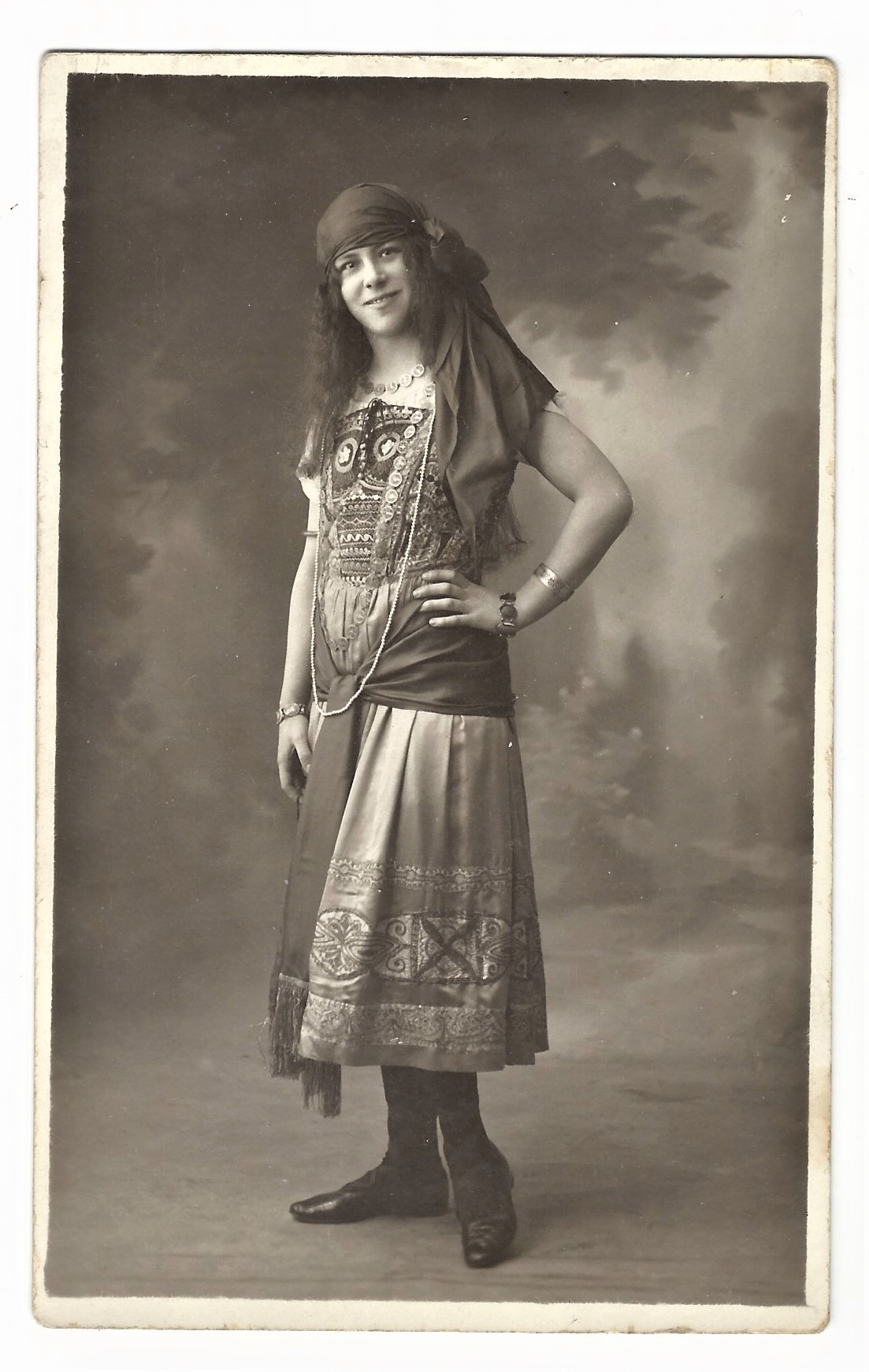
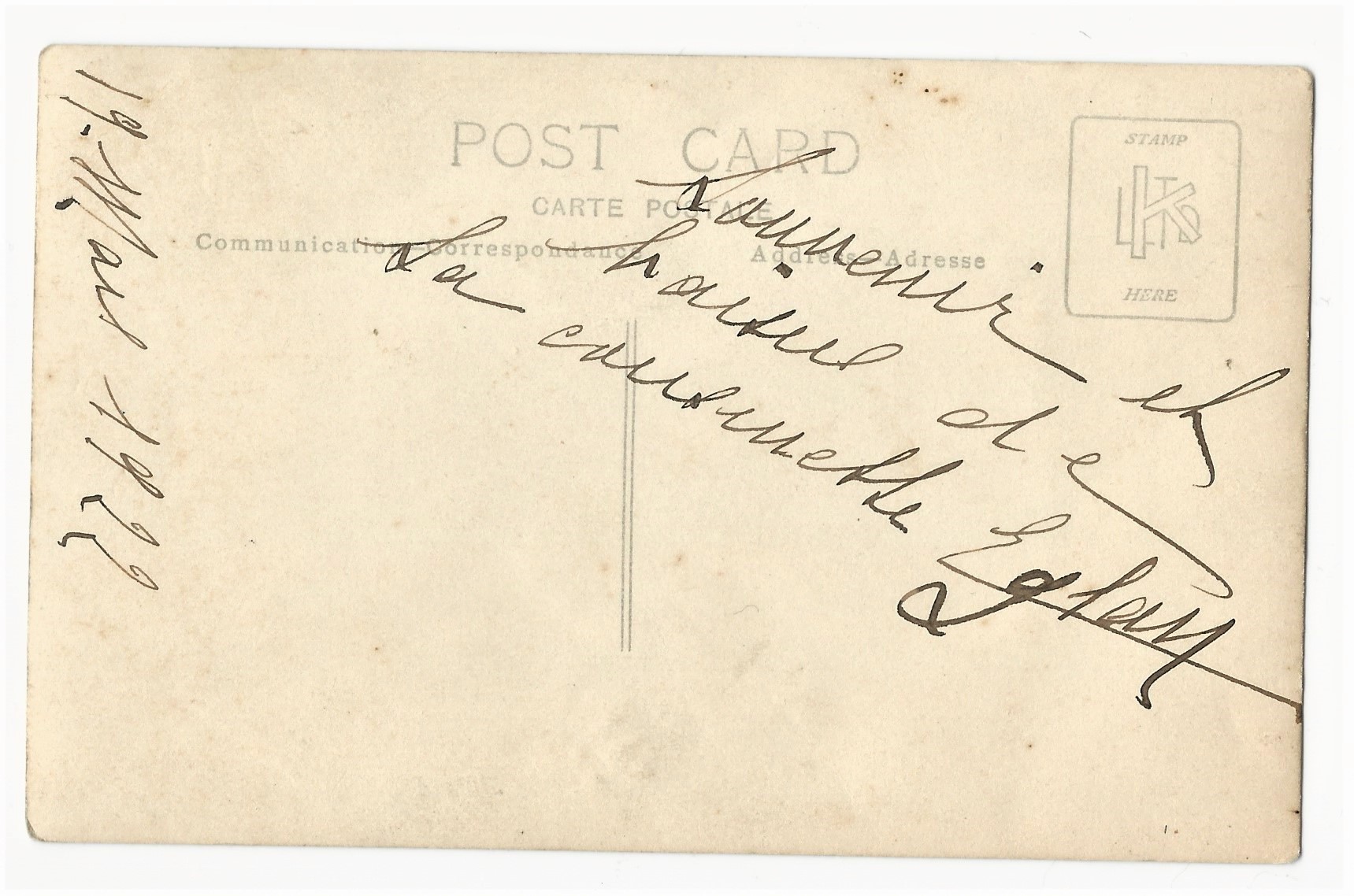
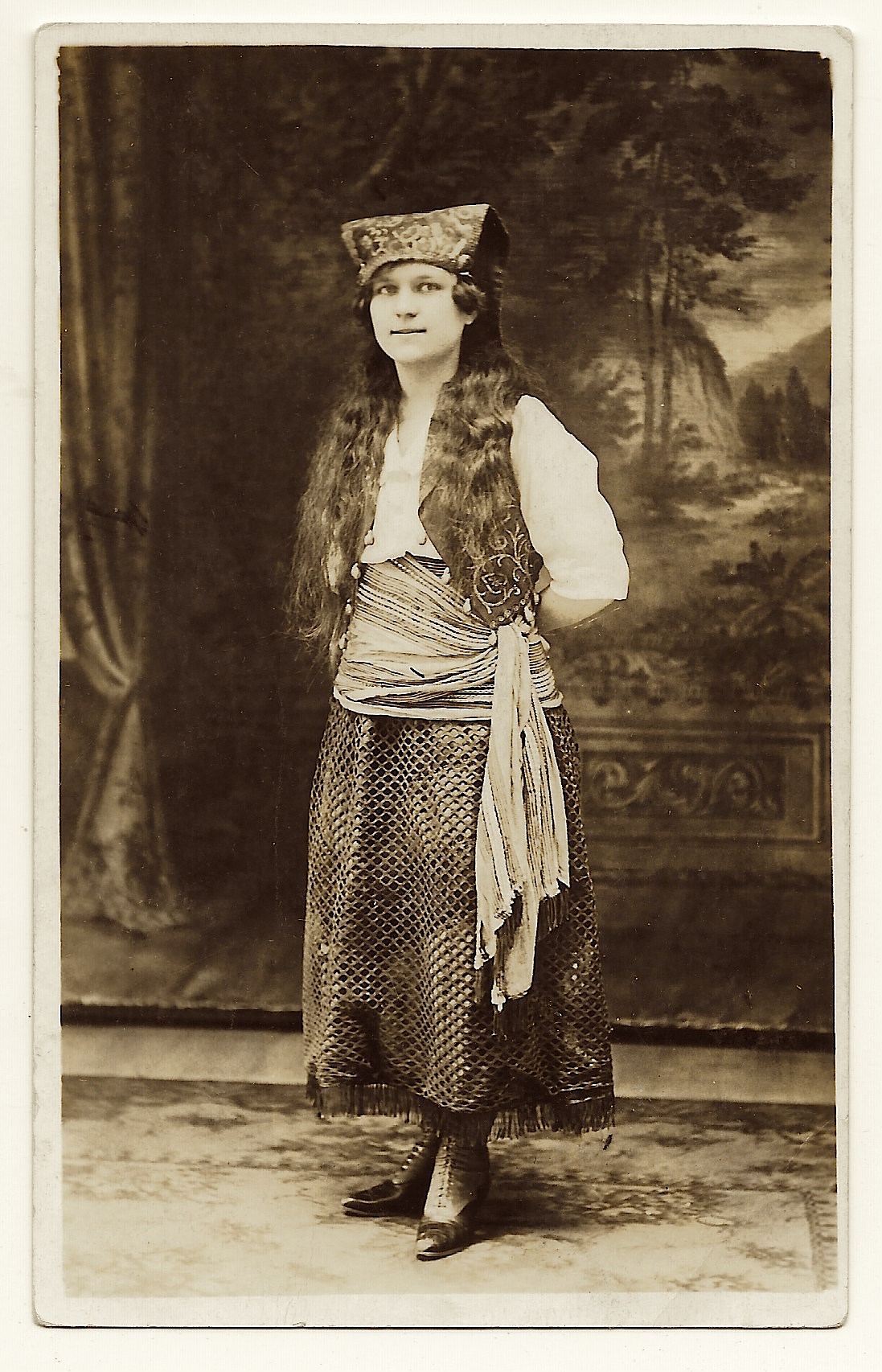
SMILING YOUNG WOMAN WEARING A GYPSY COSTUME

This vintage real photo postcard features a studio portrait of a young woman dressed in a gypsy costume. She is wearing two necklaces and a number of bracelets. Note her head scarf and fabric belt. The stamp box on this postcard reveals that it was produced by K Ltd. which operated between 1918 and 1936. There is a dated inscription on the reverse of the card. This postcard is dated 1922. (SOLD)

SWEET GYPSY WOMAN (RPPC)

“From nowhere through a caravan. Around the campfire light. A lovely woman in motion. With hair as dark as night. Her eyes were like that of a cat in the dark. That hypnotized me with love. She was a gypsy woman.” This vintage real photo postcard features a pretty gypsy woman holding a tambourine. She is wearing flowers in her hair, large hoop earrings, and a beautiful smile. The lyrics in quotes above are from a 1970 song written by Curtis Mayfield and sung by Brian Hyland. The song is named “Gypsy Woman”. I would be remiss to not point out that the woman in this portrait postcard may not be a gypsy at all. Instead, she may be a non gypsy woman wearing a traditional folk costume from whatever country she hails from. (SOLD)

THE GYPSY LADY OF BINGHAMTON, NEW YORK


PRETTY GYPSY GIRL LOOKING OVER HER NEIGHBOR’S FENCE

This vintage real photo postcard features a pretty young girl who is dressed like a gypsy. I would guess that she is in her teenage years. The girl is leaning on, and looking over a wooden fence. She is wearing a lot of jewelry including a bracelet, beads, and a thin chain with a heart shaped charm. I am unsure, but it appears that she is wearing a long necklace with cherries hanging from it. It is also possible the “cherries” are actually pins on her dress. The young lady is very fashionable. Note the fabric sash around her waist. This image was photographed by the Wilson Studio in Astoria, Oregon. Note the imprint on the front of the card with the Wilson Studio credit. The postcard has an Astoria postmark stamped in 1922. The Swedish Finn Historical Society’s website includes a 2016 publication with an article about photographer, Fred C. Wilson. He was born in Astoria in 1888. His parents immigrated from Finland and they settled in Astoria in 1881. Fred became a successful photographer and won many honors. As a young man he was involved in sports, including baseball, football, and golf. He also played in community bands. In 1909 Wilson bought the Carter Photographic Studio. He had previously worked with photographer A. A. Saari. In 1913 he married Agnes Karinen. Fred died in 1943.
SOLD

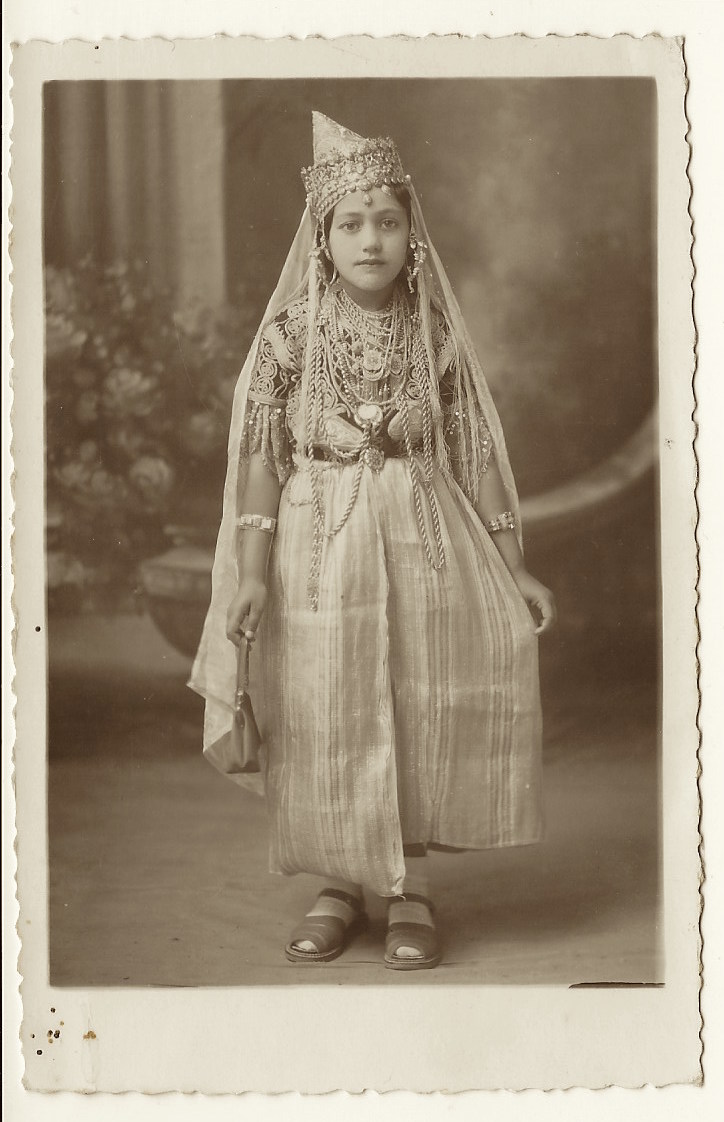
ROMA HISTORY: PORTRAIT OF A LITTLE PRINCESS

This post cabinet card era photograph features a “little princess” bedecked with exotic jewels and headpiece. She is holding a fan and looks bedazzled by her experience of being photographed in her costume. That brings up a question. Is she playing “dress up” and wearing a costume or is she dressed in a way that is normal for her position and culture? Hopefully, some cabinet card gallery visitors will leave their opinion about this matter. Although the identity of this adorable little girl is unknown there is an inscription on the reverse of the image. The phrase “Photo. Roma” can mean countless things. Here is my opinion. The little girl in the photograph is a member of a Roma community. The Roma (Romani) people are an ethnic group living predominately in Europe and who originate from Northern India. However, it is estimated that there are about one million Roma in the United States. They are often known by the term “Gypsies” but many consider the term prejudiced as the word gypsy has become associated with meaning illegal or irregular (ie gypsy cab). This image is pretty and thought provoking. The photograph measures about 3 1/2″ x 5 1/4″ and my estimate is that it dates back to the 1920’s.

TWO TEENAGE GYPSY GIRLS PREPARE FOR CARNIVAL IN CHALON SUR SAONE, FRANCE (VINTAGE REAL PHOTO POSTCARD)
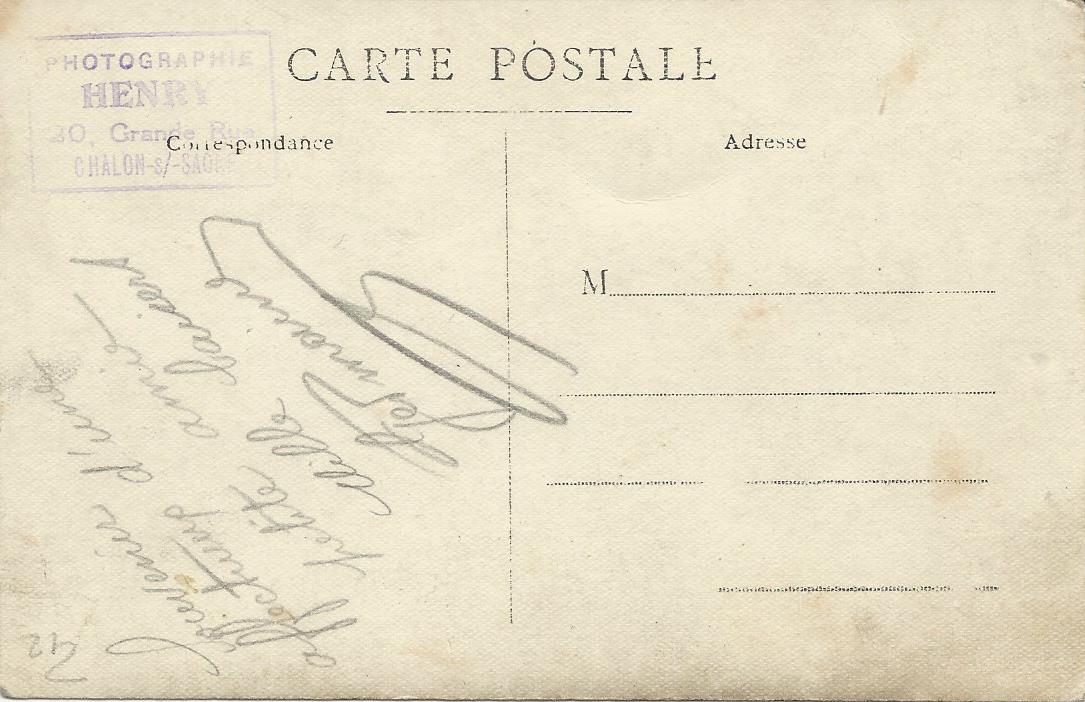
It appears that the two young women seen in this portrait are dressed and ready for the French Carnival. The festival occurs after the “Feast of Fools” and has been a tradition since the sixteenth century or earlier. The girls in the photograph of this vintage real photo postcard are dressed as gypsies and holding stereotypical tambourines. The girls are about in their teenage years. They were photographed by Monsieur Henry of Chalon-Sur-Saone, France. The city is located in the south of the Burgundy region of that nation. I wonder what the fascination is with gypsies? The obsession is apparent when one looks at postcards from around the turn of the century (1800’s to the 1900’s). An observer of these postcards will see gypsies here, there, and everywhere. Perhaps visitors to the cabinet card gallery would like to hypothesize about this cultural phenomenon. I would appreciate your input. Now, back to this postcard. The previous owner of this postcard translated the message as “Remember with affection your little girlfriend. A thousand kisses, Germaine”. My guess is that the shorter woman in this image is Mlle Germaine. SOLD
COUPLE DRESSED AS RAJA AND GYPSY FOR “FANCY DRESS BALL” (INDIA 1894)
This cabinet card offers a fascinating portrait of a couple dressed for a costume party occurring in India. The couple are either in the country on holiday or perhaps the man is assigned to work there by his government. Inscriptions on the reverse of the photograph provide some explanatory information about the image. The photograph was taken 9/24/1894. The couple is wearing the costumes that they wore to a “Fancy dress ball” that was held on 9/20/1894. The gentleman is dressed as a Raja while the woman is dressed a a gypsy. She is holding a tambourine. This photograph was taken by a well know Indian studio. Theodore Julius Hoffmann and P. A. Johnston established a commercial photography studio in Calcutta (1882) and Darjeeling (1890). They also operated a studio in Simla. Johnston and Hoffmann’s photography business was the second largest commercial photography studio in India in that period. Many of their images were of North and Northeast India as well as Sikkim and Nepal. To view other photographs this pair of photographers, click on the category “Photographer: Johnston and Hoffmann”. (SOLD)