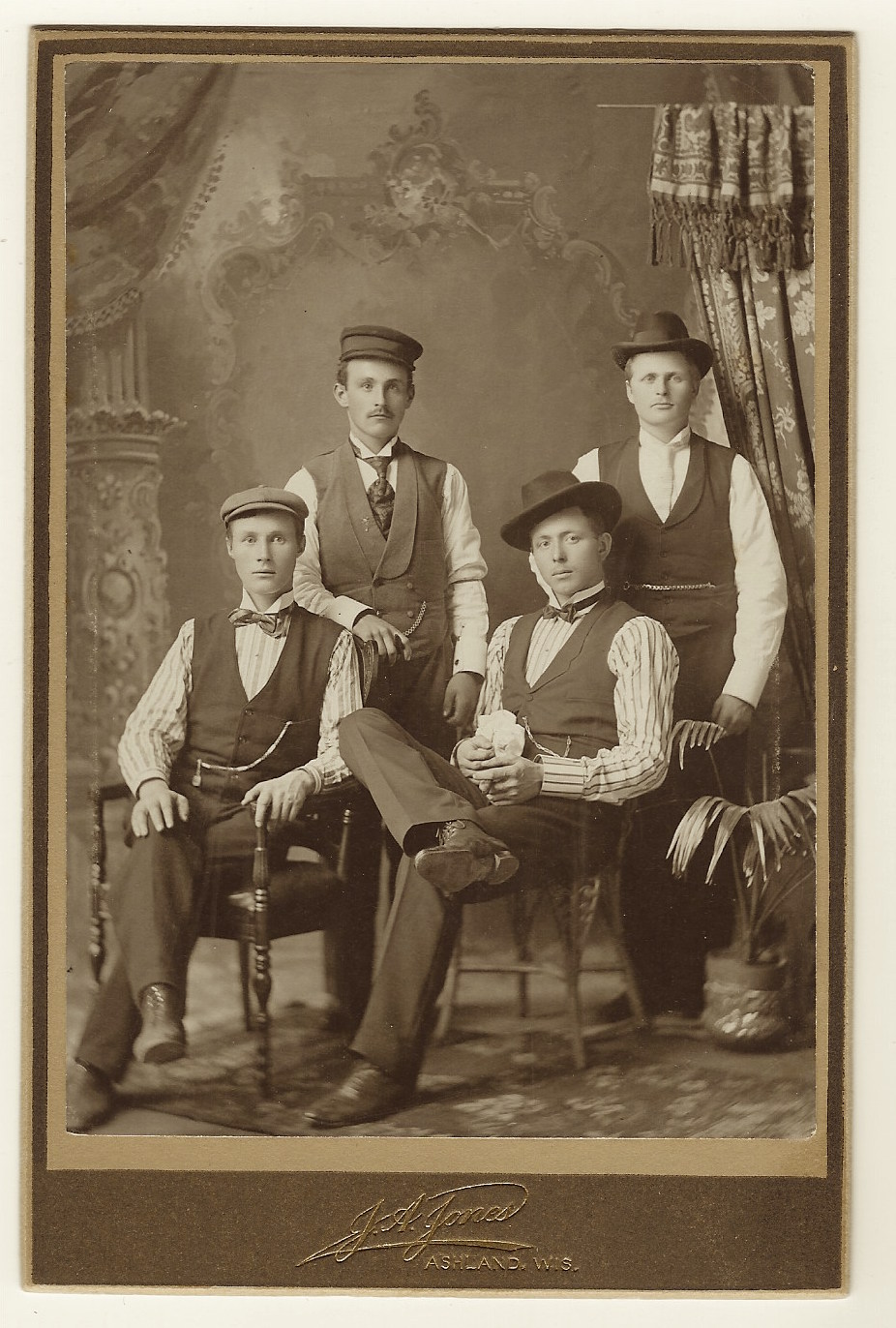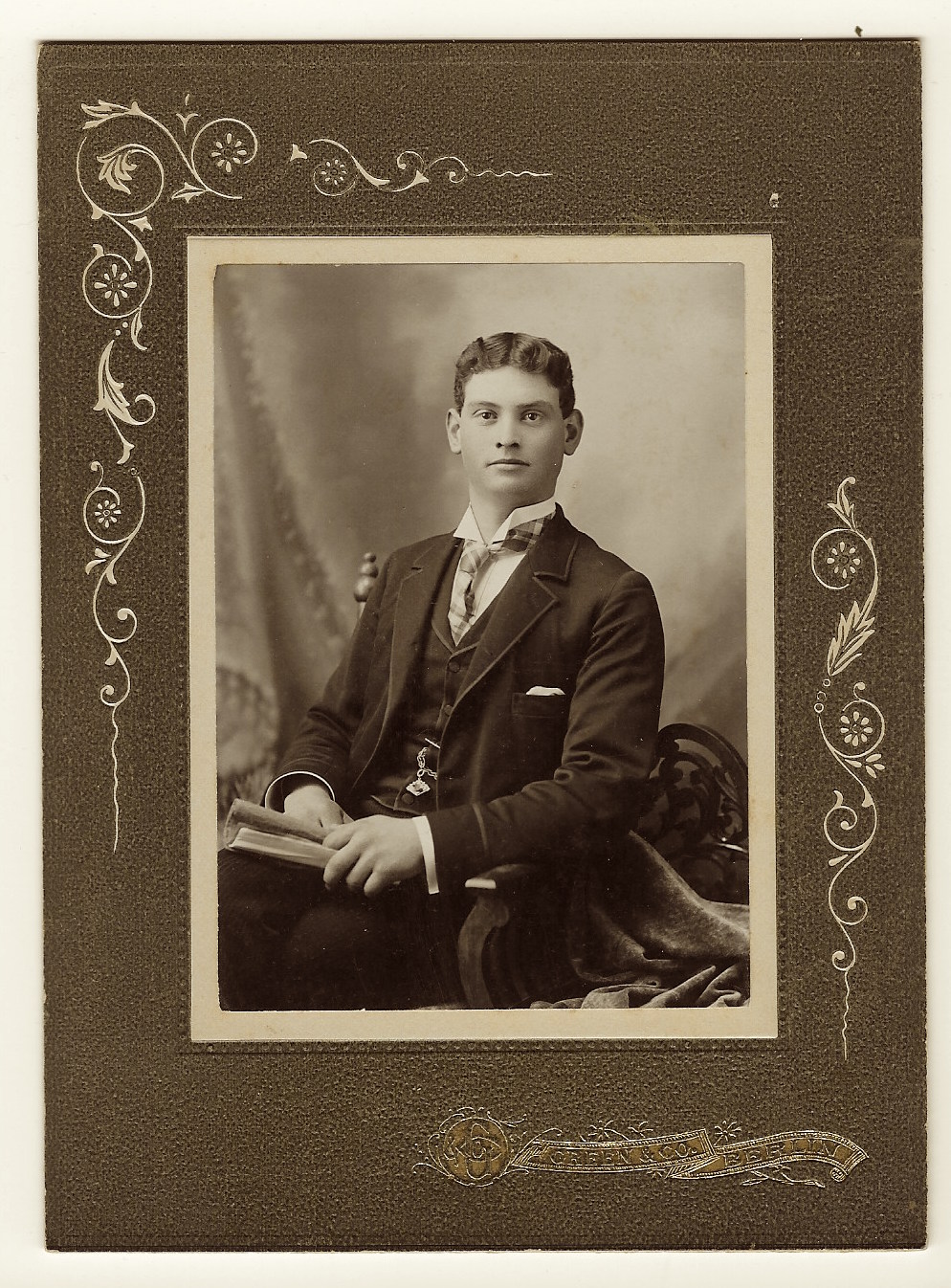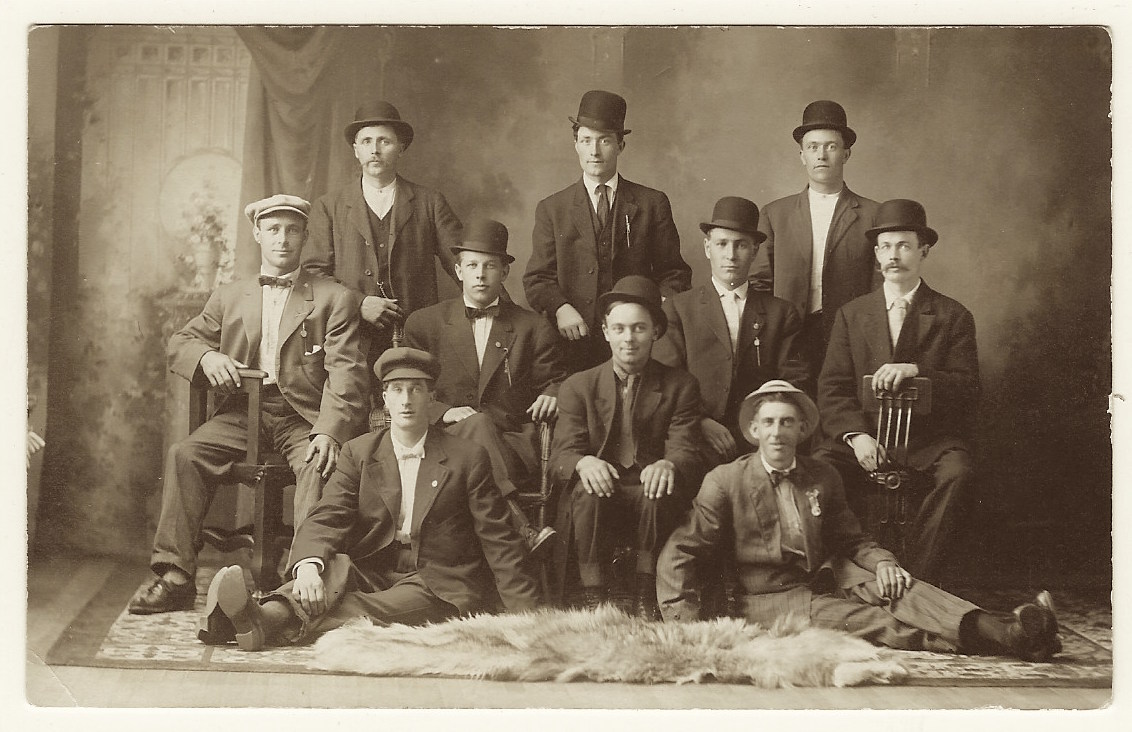
This vintage real photo postcard features a group of well dressed youngish men posing for a group photo.The men are wearing an assortment of types of hats. Most of the guys are wearing some kind of pin on their lapel but their common bond is unclear. Perhaps they are members of a fraternal organization? The postcard was produced on “AZO” paper sometime between 1904 and 1918. The clarity of the image is excellent.
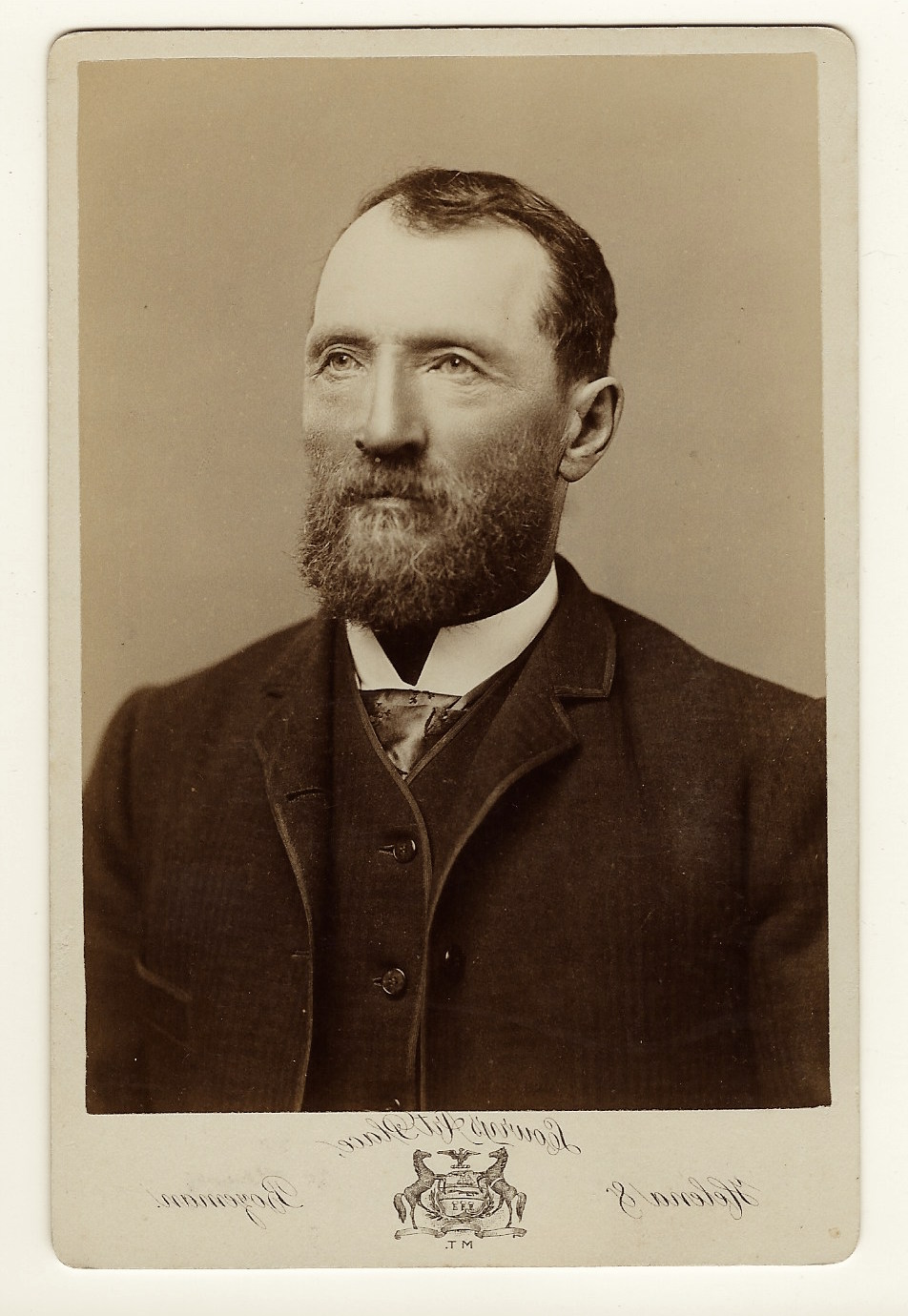
DISTINGUISHED LOOKING GENTLEMAN IN HELENA, MONTANA
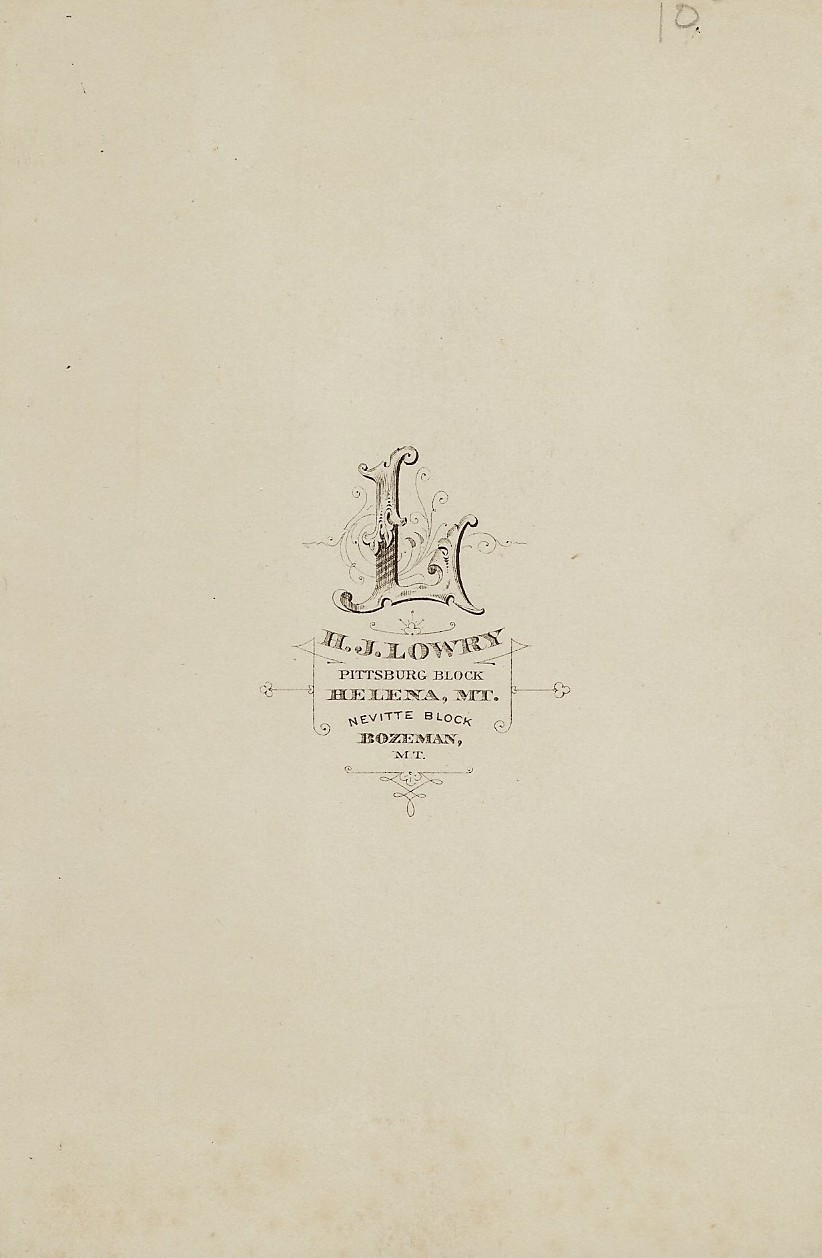
Lowry’s Art Place was the location that the distinguished looking man in this cabinet card portrait had this picture taken. The gentleman pictured is well dressed and well groomed. Though he was likely a resident of a western town, he appears to have made his living with his brain rather than his brawn. Perhaps he is a lawyer or a physician. The photographer of this image is H. J. Lowry, who according to the advertising on the reverse of this cabinet card, had studios in both Bozeman and Helena, Montana. Howard J Lowry is listed in the Helena Business Directories of 1889 through at least 1892 as a “portrait artist” (photographer) and as a teacher of drawing and painting at Helena Business College. (SOLD)
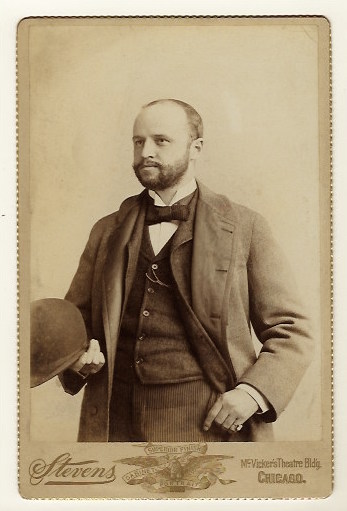
A WELL DRESSED GENTLEMAN HOLDS HIS HAT IN HIS HAND IN CHICAGO, ILLINOIS
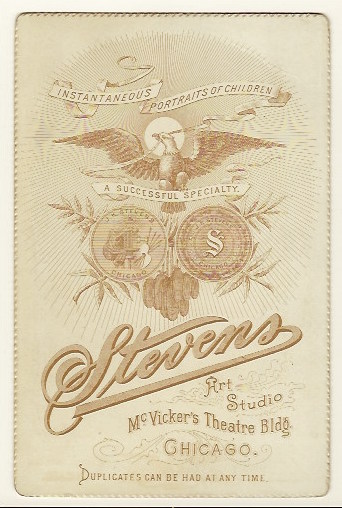
A well dressed man with a relatively close shaved beard and mustache poses for his portrait at the studio of John Kimball Stevens in Chicago, Illinois. He stands with his hat in his hand displaying a half smile. He is wearing a pinky ring and a tuxedo collar type shirt. He looks like a city dweller, perhaps a businessman. To learn more about J. K. Stevens and to view more of his photographs, click on the category “Photographer: Stevens”. The image below shows the reverse of the cabinet card. Note that Steven’s gallery was located in the McVicker’s Theatre Building. SOLD
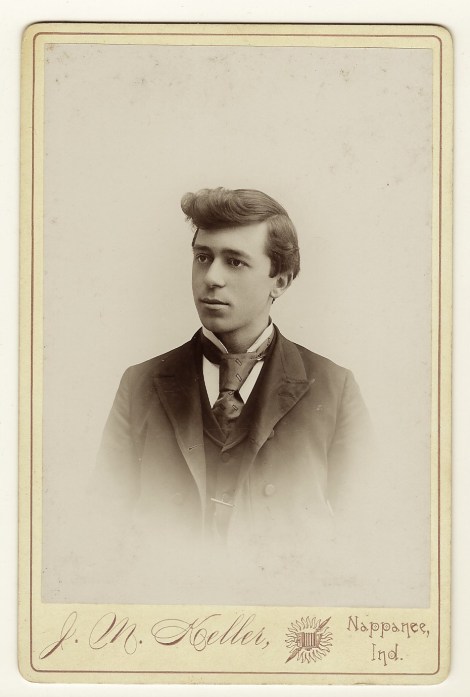
PORTRAIT OF A TEENAGE BOY IN NAPPANEE, INDIANA BY A VERY INTERESTING PHOTOGRAPHER
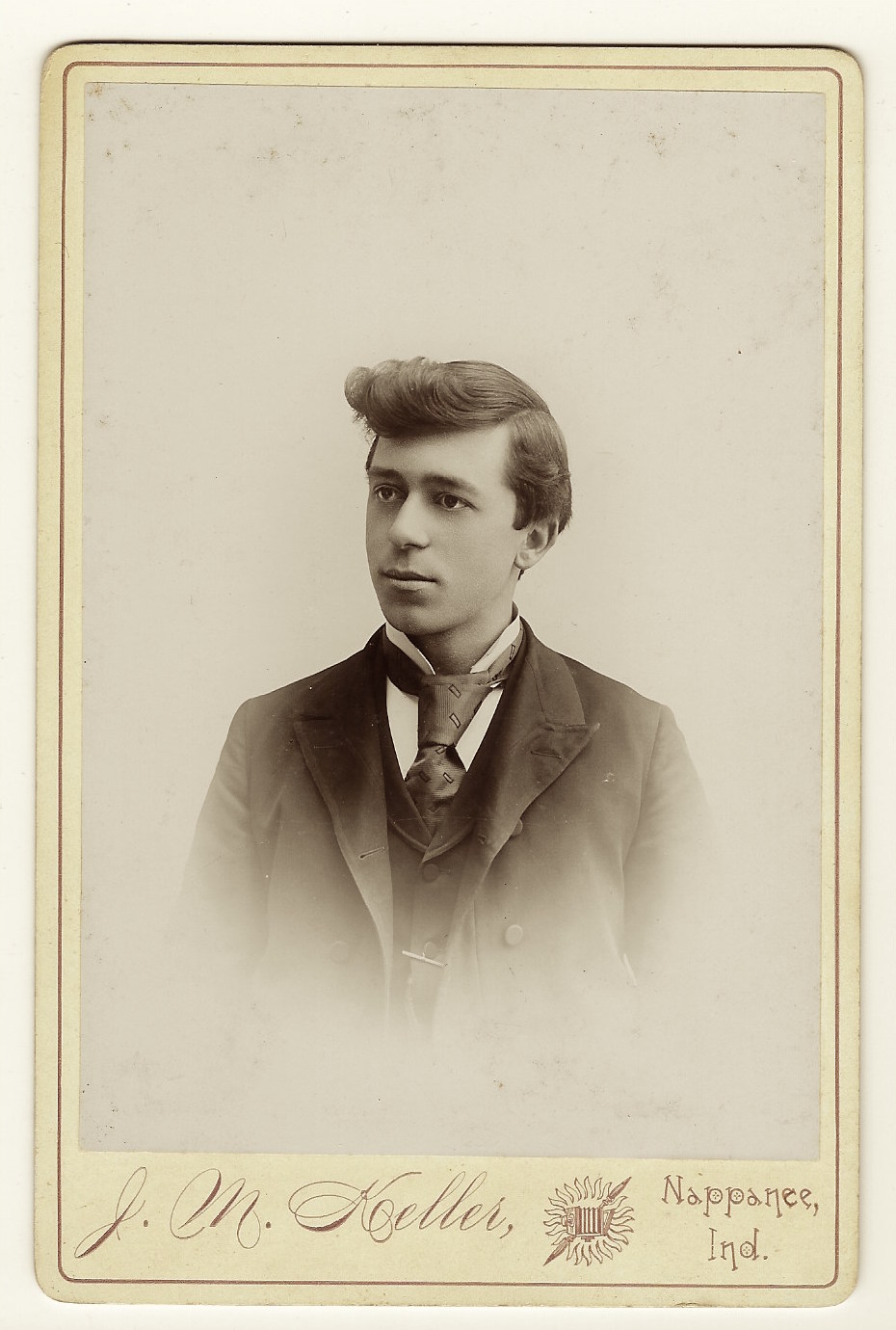
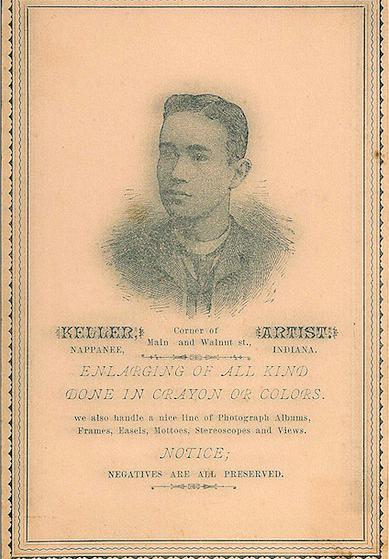
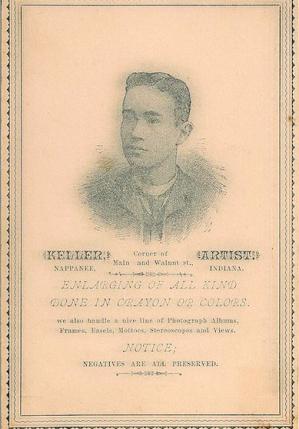
A young man, probably a teenager, poses for his portrait at the Keller studio in Nappanee, Indiana. The young gentleman is well dressed and well coiffed. Either he, or someone else, spent a good deal of time and work to properly arrange his hair. John M. Keller (1867-1943) opened his photography studio in Nappanee in 1897. An ad in the St. Louis and Canadian Photographer (1900) advertised the business as being for sale. The 1900 US census listed him as working as a bicycle dealer. Keller married Clara Burbach in 1891. The 1908 Elkhart (Indiana) business directory reported that he had a store selling bicycles and sundries, as well as repairing sporting goods. By the time of the 1910 US census, Keller had a new occupation. He was working as a garage manager. The Goshen Democrat Newspaper (1912) reported that while Keller was testing an automobile, the flywheel came off and struck him below the knee. The unfortunate accident broke his leg. Interestingly, the newspaper also stated that after injuring Keller, the flywheel continued it’s journey and actually went through the side of the building. The 1920 US census found Keller working as a “garage mechanic” in Frankfort City, Indiana while the 1930 US census lists him as unemployed and living in Rochester, Indiana. It turns out that Keller was a real entrepreneur. According to the Rochester Historical Society, In 1921 Keller built and operated the Keller Inn which was located near the edge of Lake Manitou. He also made lures for fishermen. Apparently Keller had a shady side. During prohibition he made and sold liquor and “locals reported he also ran prostitutes out to an island in Lake Manitou”. Keller died at age 75 from heart disease. Much of the information about J. M.Keller was found at an internet site (http://www.folkartfishingtackle.com/#!john-keller/cadr). The image below was also found there. The image is a back stamp from one of Keller’s cabinet cards. It seems likely that the young man pictured in the image is Keller himself. I can’t resist supplying an interesting fact about the town of Nappanee. It is the longest city name in the US which has each letter in it’s name appearing twice. (SOLD)
PORTRAIT OF A HANDSOME YOUNG MAN IN ATHOL, MASSACHUSETTS
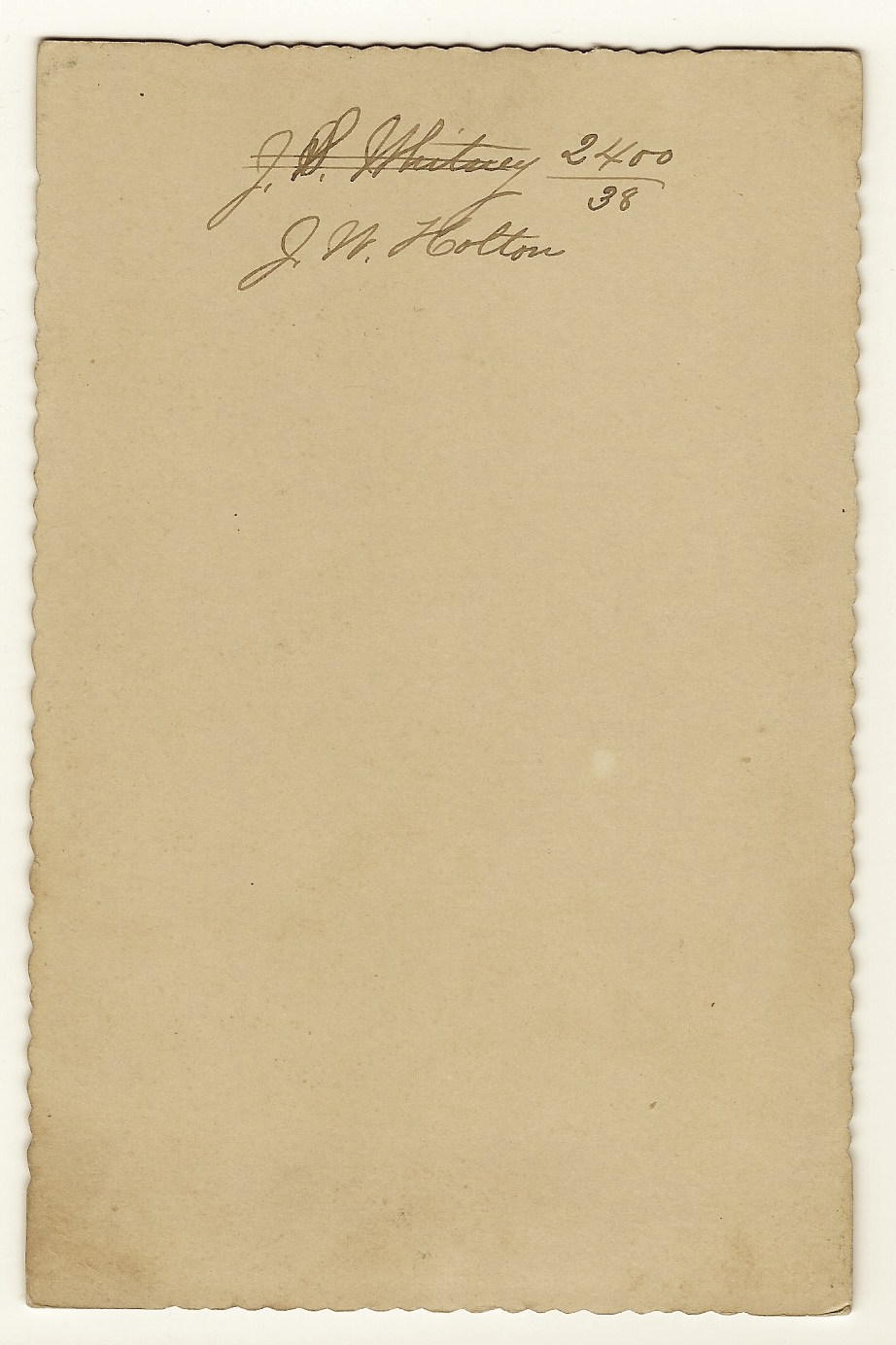
A bright eyed and handsome young man poses for his portrait in the stduio of C. J. Kratt in Athol, Massachusetts. He has neatly combed hair. Besides his mustache, he is very clean shaven. He could pass for a Gillette razor model. The gentleman is dressed for winter. Note his pocket watch chain. The reverse of the photograph has two inscribed names (see below). The top name is crossed out but looks like “J. Whitney”. The second name appears to be J. W. Holton.
PORTRAIT OF A “DANDY” IN GREENSBURG, PENNSYLVANIA
A very good looking man is the subject of this portrait from the Hile studio in Greensburg, Pennsylvania. This gentleman is perfectly coiffed and ready for a photo shoot with “Gentleman’s Quarterly”. Note his pretty and sizable bow tie and the gold chain of his watch visible at the bottom of the image. I wonder if this photograph is a wedding portrait? The photographer of this image, William Hile (1838-1922) operated his studio out of his home at 114 East Pittsburgh Street. His daughter Lilli was also a photographer at the studio. William Hile was married to Lucinda Reamer Hile (1841-1918) and the couple had four children. Today’s Greensburg is part of the Pittsburgh metropolitan area. During the cabinet card era, Greensburg was a railroad stop and a vibrant center of the local mining industry. William Hile is buried at the St. Clair Cemetery in Greensburg (view his grave marker below)

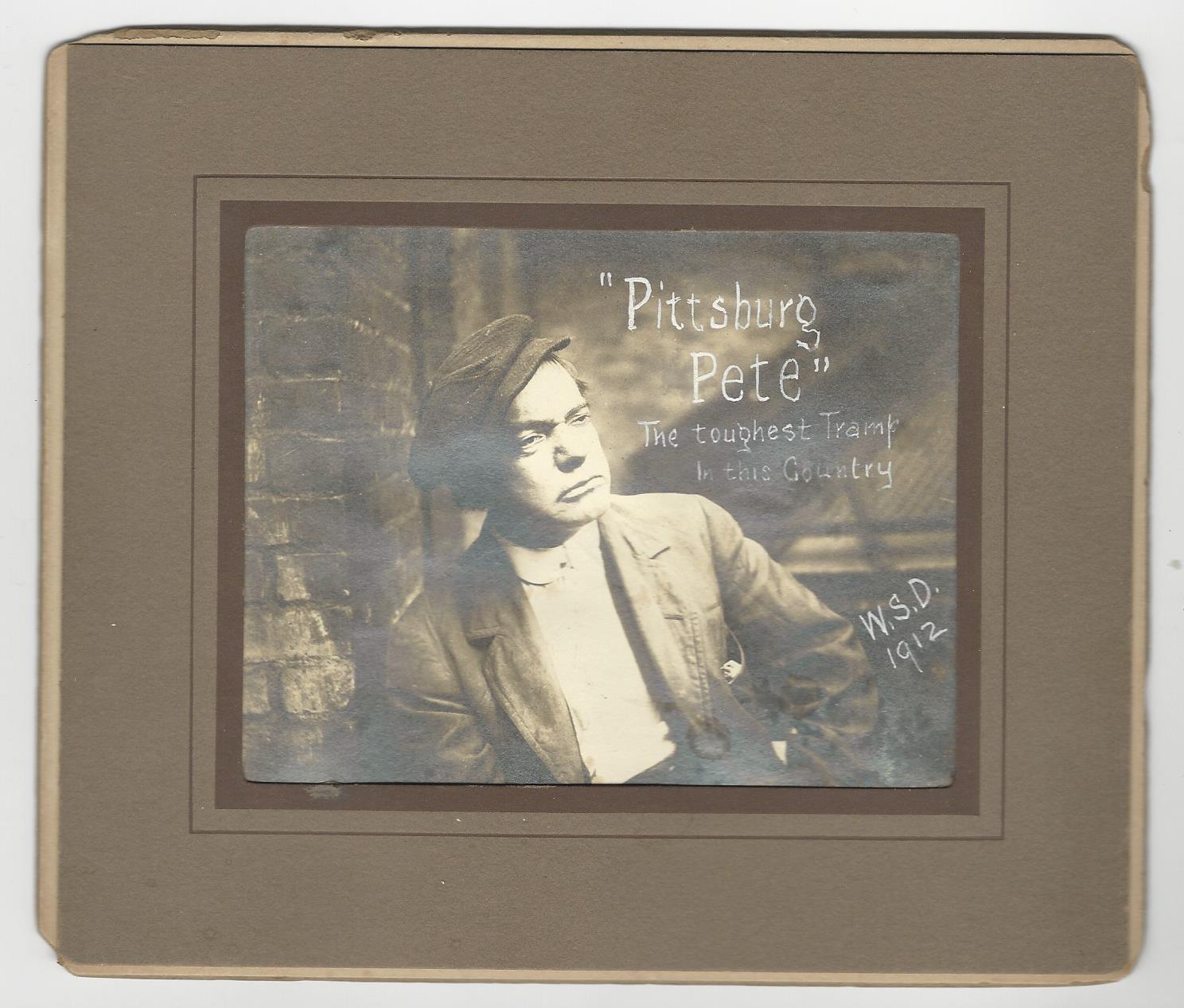
“PITTSBURG PETE”… THE TOUGHEST TRAMP IN THE COUNTRY (1912 PHOTOGRAPH)
According the caption in this image, this photograph is a portrait of “Pittsburg Pete”. He is noted as being “The toughest Tramp in the Country”. The caption also notes that this photograph was taken in 1912. Preliminary research found references to a “Pittsburg Pete” in some articles about “hobos” and “tramps”. In addition, the Urbana Daily Courier (Illinois) has some articles about criminal activities of a man known as “Pittsburg Pete”. A 1914 article reports the arrest and jailing of a man with that moniker. The man is described as a “familiar street character in this city” and his crime was vagrancy. The article states that the man’s actual name was John Reed. It is unknown whether the tough looking guy in this image is the same “Pittsburg Pete” as the “street character” in Urbana. (SOLD)
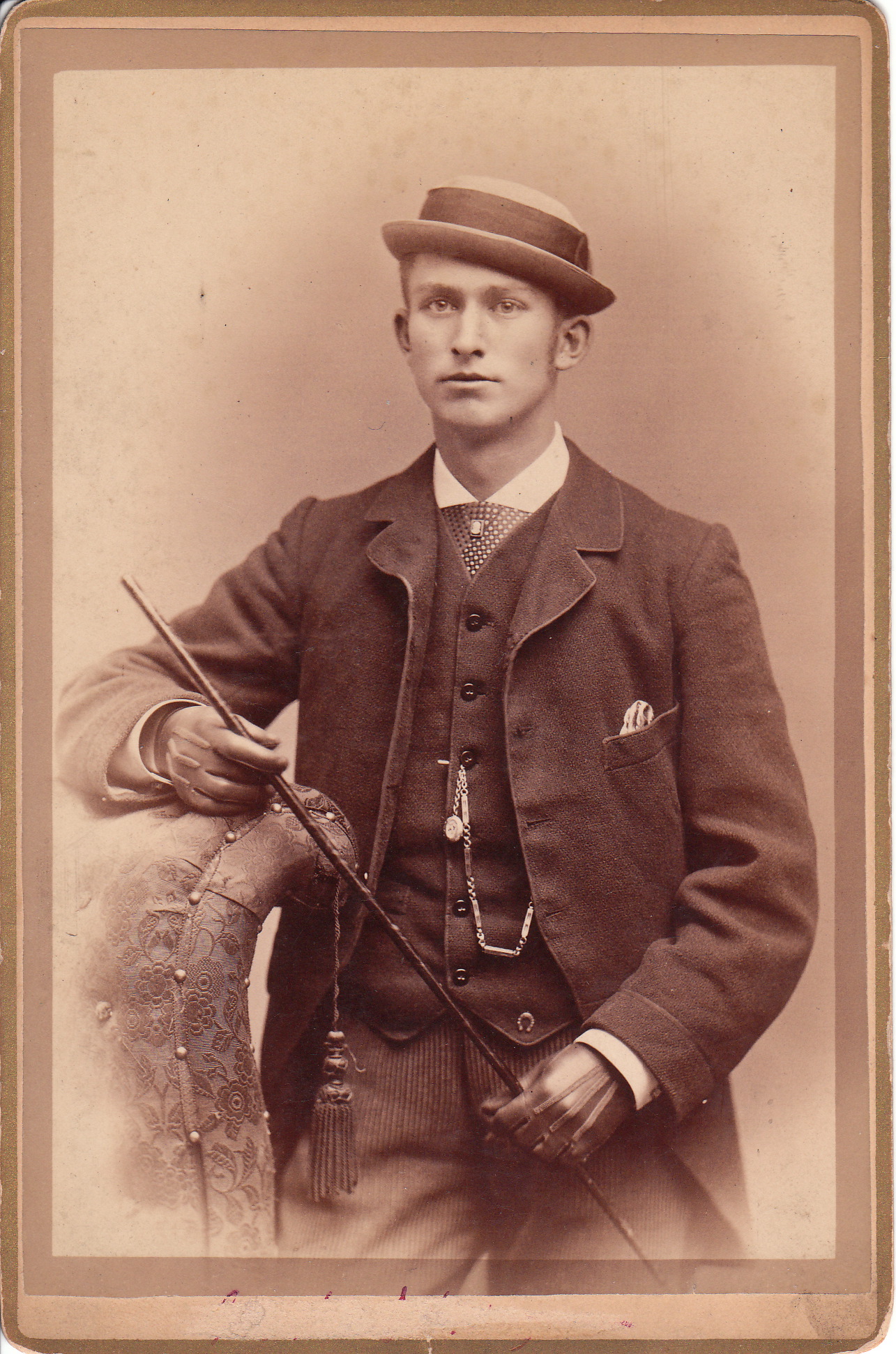
MISTER EQUESTRIAN IN DECORAH, IOWA
This cabinet card features a dandy gentleman holding what appears to be a riding crop in his gloved hands. Is he dressed for riding? Is that a horse shoe pin that he is wearing near the bottom of his vest? Note his pocketwatch and chain. The reverse of the photograph is inscribed by the subject. He wrote “Ever your friend, George L. Stringer”. The reverse of the cabinet card also reveals the name of the photographer. A stamp identifies the portraitist as being A. W. Adams whose studio was located on Water Street in Decorah, Iowa. Research revealed some information about George Lincoln Stringer (1862-1932). The 1880 US census indicates that he was born in Iowa but that his parents were Canadian born. In 1880, he was living in Decorah with his parents. His occupation was hard to decipher but it looked a lot like blacksmith. The 1900 census found him still living in Decorah and married (1884) to Mary Alice Kennedy. The couple had a 15 year-old son named Vernon. Once again his occupation was nearly illegible but it seemed to read “traveling salesman”. George Stringer died in 1932 and is buried in Phelps Cemetery in Decorah. The town of Decorah was settled in 1849 and in its early history had a large number of Norwegian settlers. The Norwegian influence remains there today. The Decorah Posten was the largest Norwegian newspaper in the United States until it shut down in 1972. The town was named after Waukon Decorah, a Winnebago tribal leader, who was a US ally in the Black Hawk War of 1832. The photographer of this cabinet card, Asa W. Adams (1842-1915) operated a photo studio in Decorah between 1863 and 1884. Before moving to Decorah, Adams ran a a studio in McGregor, Iowa (1863). Early during his operations in Decorah he had a partnership with S. R. Shear in the Adams & Shear Gallery. In 1866 he married Emma J. Fuller and the couple had four children. Adams sold his studio to O. E. Borlaug. He next conducted his photography business in Waterloo, Iowa (1884-after 1900). Adams died in 1915 and is buried in Decorah.
HANDSOME GUY WITH SLIGHT MUSTACHE IN SAN JOSE, CALIFORNIA
This photograph features a handsome young man sporting a thin mustache. The gentleman is well dressed and handsome. The photographer of this image is Wilbur Wright. He operated a photography studio in San Jose California. To learn more about Wright and to view more of his photographs, click on the category “Photographer: Wright”.
MR HENRY KLEILIE SCOWLS IN BROOKLYN, NEW YORK
Henry Kleilie sits for his portrait at Hoefle’s Studio in Brooklyn, New York. He doesn’t seem to be having a very good day judging by the prominent scowl seen on his face. He is well dressed and is sitting on a wicker chair. Research yielded no information about Mr. Kleilie and it is possible that I am not deciphering his name correctly from the handwriting on the reverse of the photograph. It is also possible that that the inscriber misspelled the subject’s name. I have provided a scan of the inscription which can be seen above. The Photographic Times (1904) reported the death of Mr. G. Hoefle, the photographer of this cabinet card. Hoefle died in late 1903 of “paralysis of the heart” at sixty years of age.
This cabinet card is available for purchase at my store, The History Peddler, for $22.00
Interested collectors may view the listing here:
https://www.ebay.com/itm/236680105951