MAXINE ELLIOTT : STAGE & FILM ACTRESS : BUSINESS WOMAN : CELEBRITY LOVERS : RPPC

POSTCARD 1

POSTCARD 2
POSTCARD 3 (SOLD)
POSTCARD 4 (SOLD)
POSTCARD 5 (SOLD)
POSTCARD 6 (SOLD)
POSTCARD 7 (SOLD)
POSTCARD 8 (SOLD)

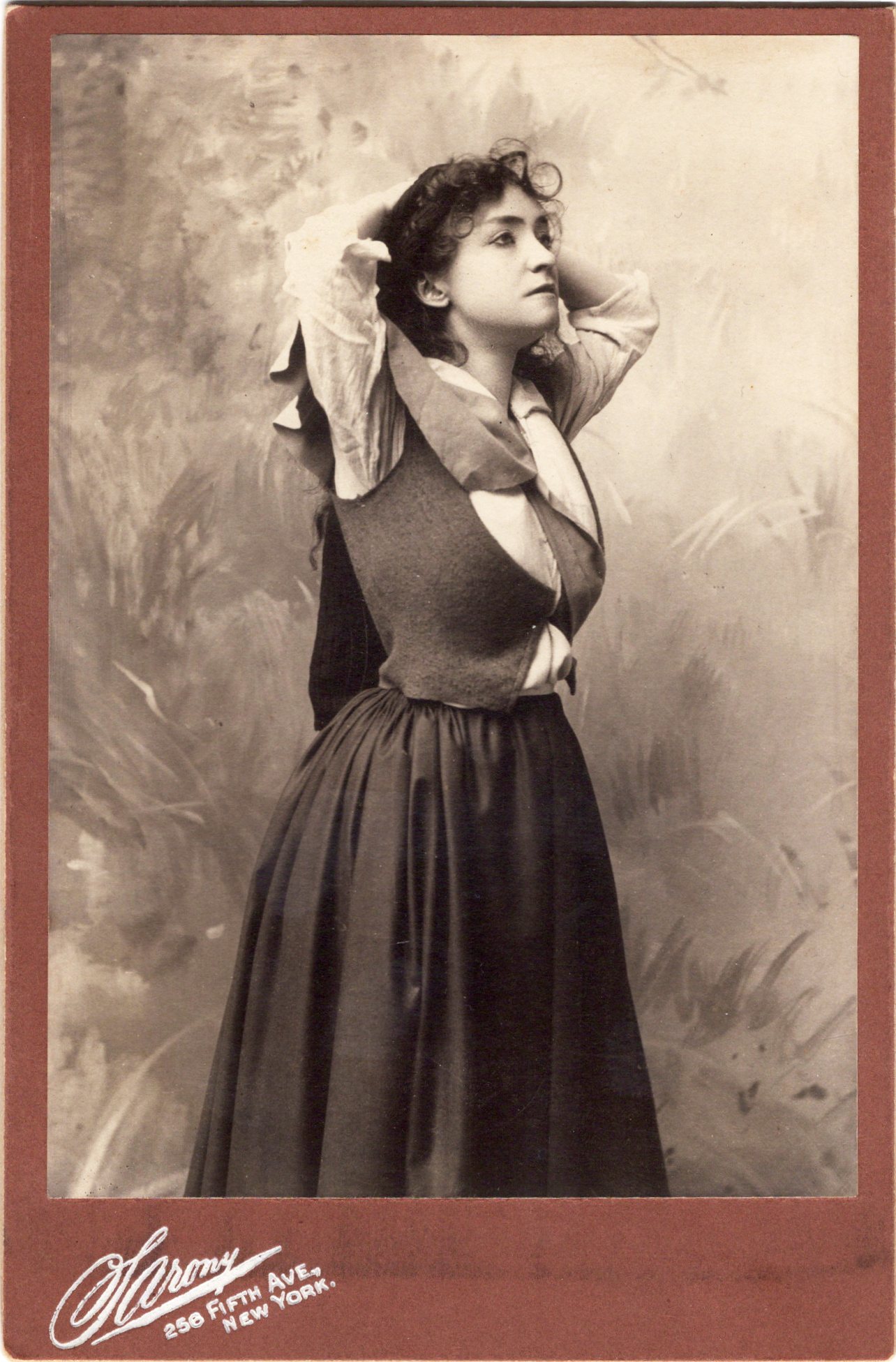
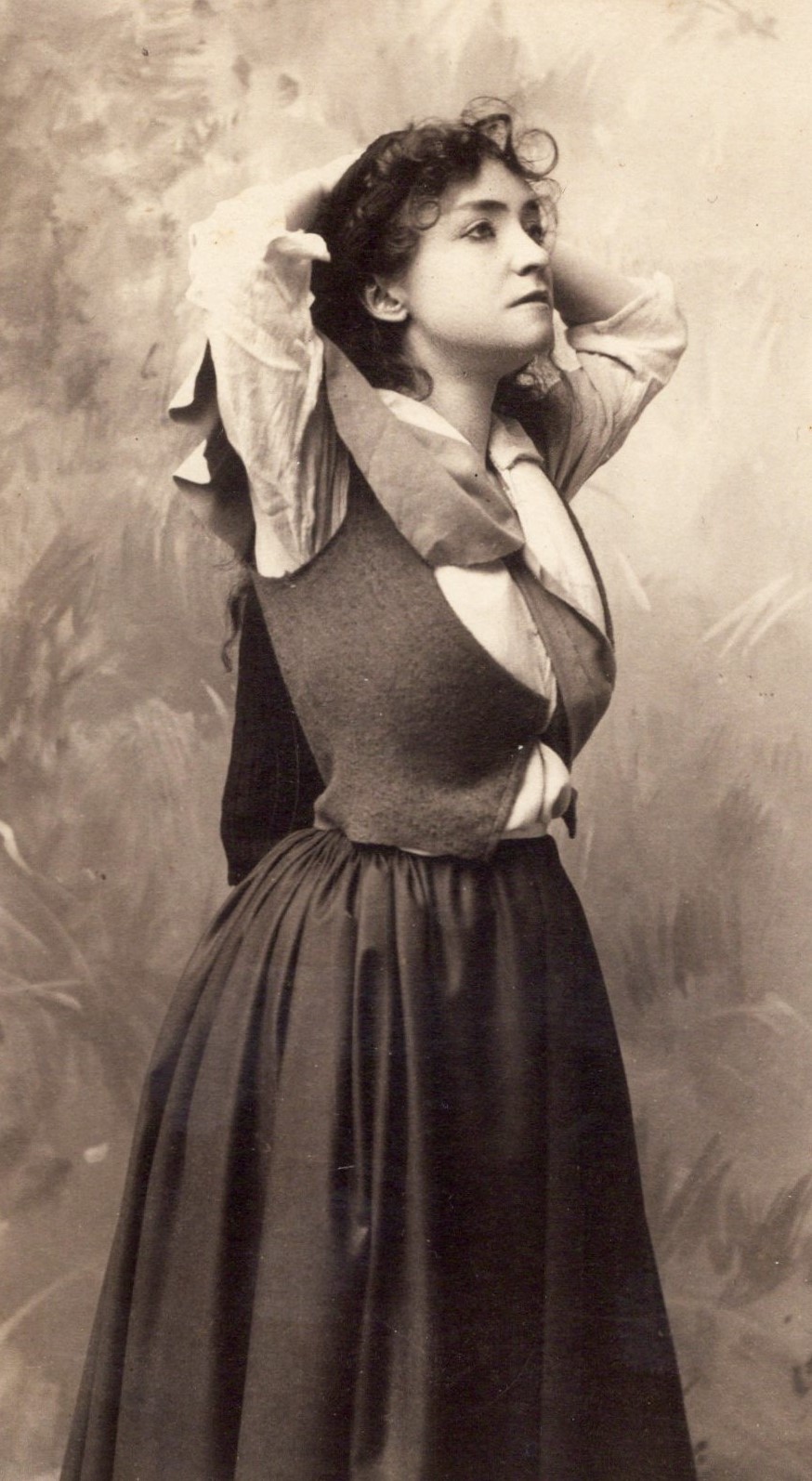
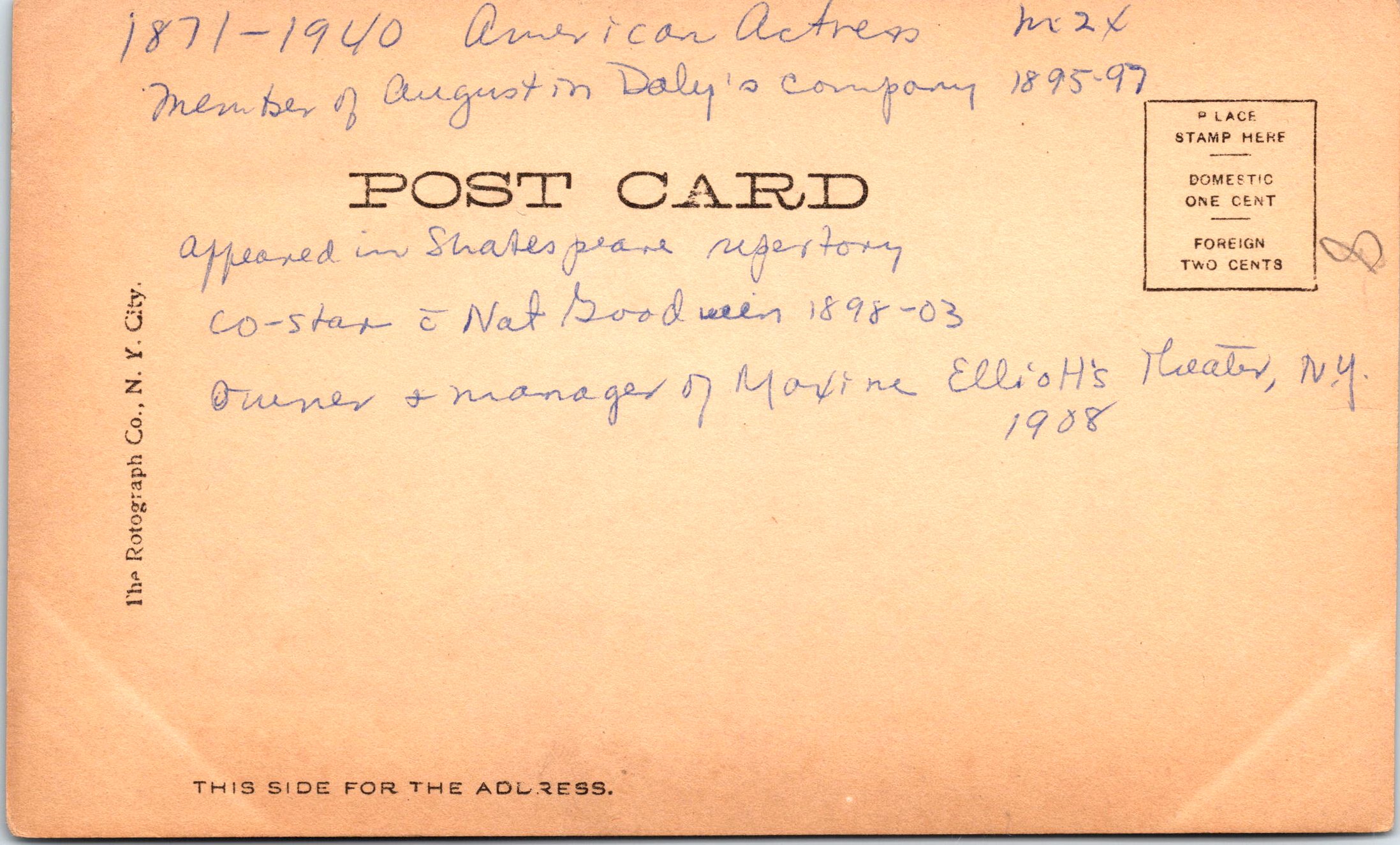
This vintage real photo postcard (Postcard 1) features a portrait of beautiful stage and film actress, and businesswoman, Maxine Elliott (1868-1940). Her photograph was taken by celebrity photographer Benjamin Falk at his New York City studio. Elliott was more than a stage actress. She managed her own theater and experimented with silent films in the 1910’s. Elliott was an extremely popular actress. Apparently she was popular with the men too. It is thought that she had affairs with famous people including King Edward VII and J. P. Morgan. It is also reported that she dated baseball hall of famer, John Montgomery Ward and heavyweight champion Gentleman James Corbett. During World War I she was very involved with the cause for Belgian relief. Elliott was born in Rockland, Maine. Her father was a sea captain. She had at least three siblings including her sister Gertrude Elliott, who also became a successful actress. When Maxine was 15, she was seduced and impregnated by a 25 year-old man. She may or may not have married the man but it is known that she lost the baby. In 1890 she made her first stage appearance. Her big break came in 1895 when she was hired by Augustin Daly to be the supporting actress for the highly acclaimed actress, Ada Rehan. In 1898, after divorcing husband number one, she married comedian Nat C. Goodwin. The two starred together in a number of productions including “Nathan Hale” and “The Cowboy and the Lady”. In 1903, Maxine appeared in the Broadway production of “Her Own Way” (1903). The play launched Maxine into stardom. In 1905, the play went to London where King Edward VII requested an introduction to the pretty actress. They met and then rumors started about the pair having an intimate relationship. In 1908, Goodwin obtained a divorce from Elliott. This is about the time she met 70 year-old J. P. Morgan. They became friends and rumors of their romantic involvement were never confirmed. Financial advice from Morgan helped her become a wealthy woman. The same year as her divorce, she opened her own theater, “The Maxine Elliott” in New York City. She was both the owner and the manager. In fact, she was the only woman in the US, at the time, managing her own theater. In regard to acting on Broadway, Elliott had an extensive resume. She appeared in 22 Broadway productions between 1894 and 1920. In 1913, she began acting in silent films. The IMDb reports that she was in five films including “From Dusk to Dawn” (1913), “Fighting Odds” (1917), and “The Eternal Magdalene” (1919). In 1913, Elliott went to England and started dating tennis star Anthony Wilding, fifteen years her junior. According to one source, the pair planned to marry, but he was killed in action in World War I. As a result, Elliott became obsessed with the war and moved to Belgium where she volunteered her money and time toward Belgian relief. It is reported that she also nursed wounded soldiers. Belgium recognized her by awarding her the Belgian Order of the Crown. Elliott retired from the stage in 1920. She stated that she “wished to grow middle-aged gracefully”. This postcard portrait features a young and beautiful Maxine Elliott. This image is a beautiful remnant of turn of the century theater history. This postcard was published by the Rotograph Company which was based in New York City. The postcard is part of a series (No.B888). SOLD

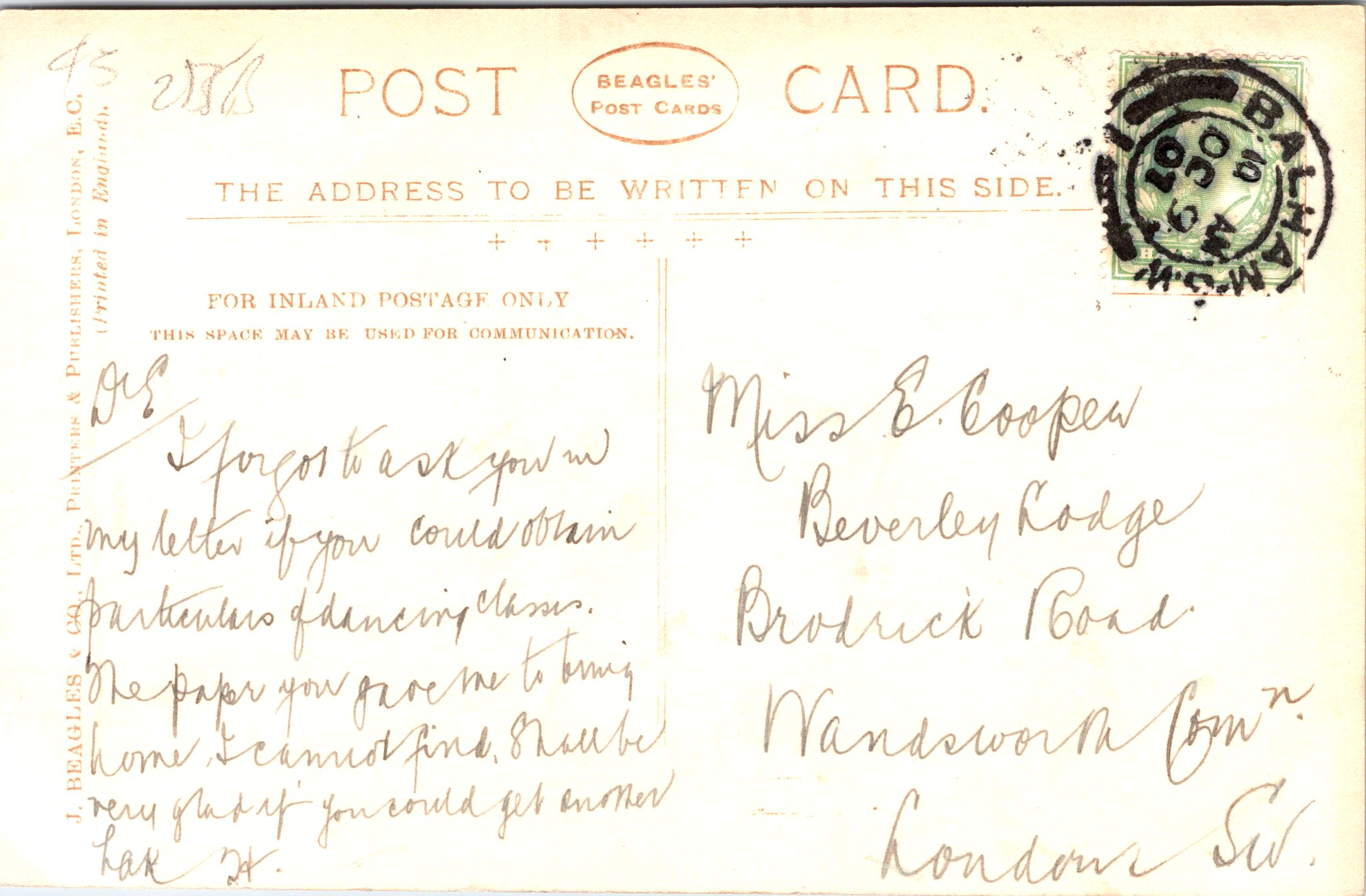
Postcard 2 features a photograph taken by female celebrity photographer, Lizzie Caswall Smith. Lizzie Caswall Smith (1870-1958) was a British photographer who operated in the early 1900’s. She specialized in photographing members of society and celebrities. Many of her photographs were used for postcards. She was involved in the Women’s Suffrage movement and photographed many of the leading suffragettes. She also photographed many actors including Billie Burke and Maude Fealy. She operated the Gainsborough Studio from 1907 through 1920 (309 Oxford Street) and moved to a new location (90 Great Russell Street) where she remained until she retired in 1930 at the age of 60 years-old. Her most famous photograph is a portrait of Florence Nightingale taken in 1910. It was auctioned in 1908 and sold for 5500 pounds which is an equivalent today of nearly 8,000 dollars. The National Portrait Gallery has 84 portraits associated with Lizzie Caswall Smith. This postcard was published by the Rotograph Company which was based in New York City. The postcard is part of a series (No.B636). SOLD

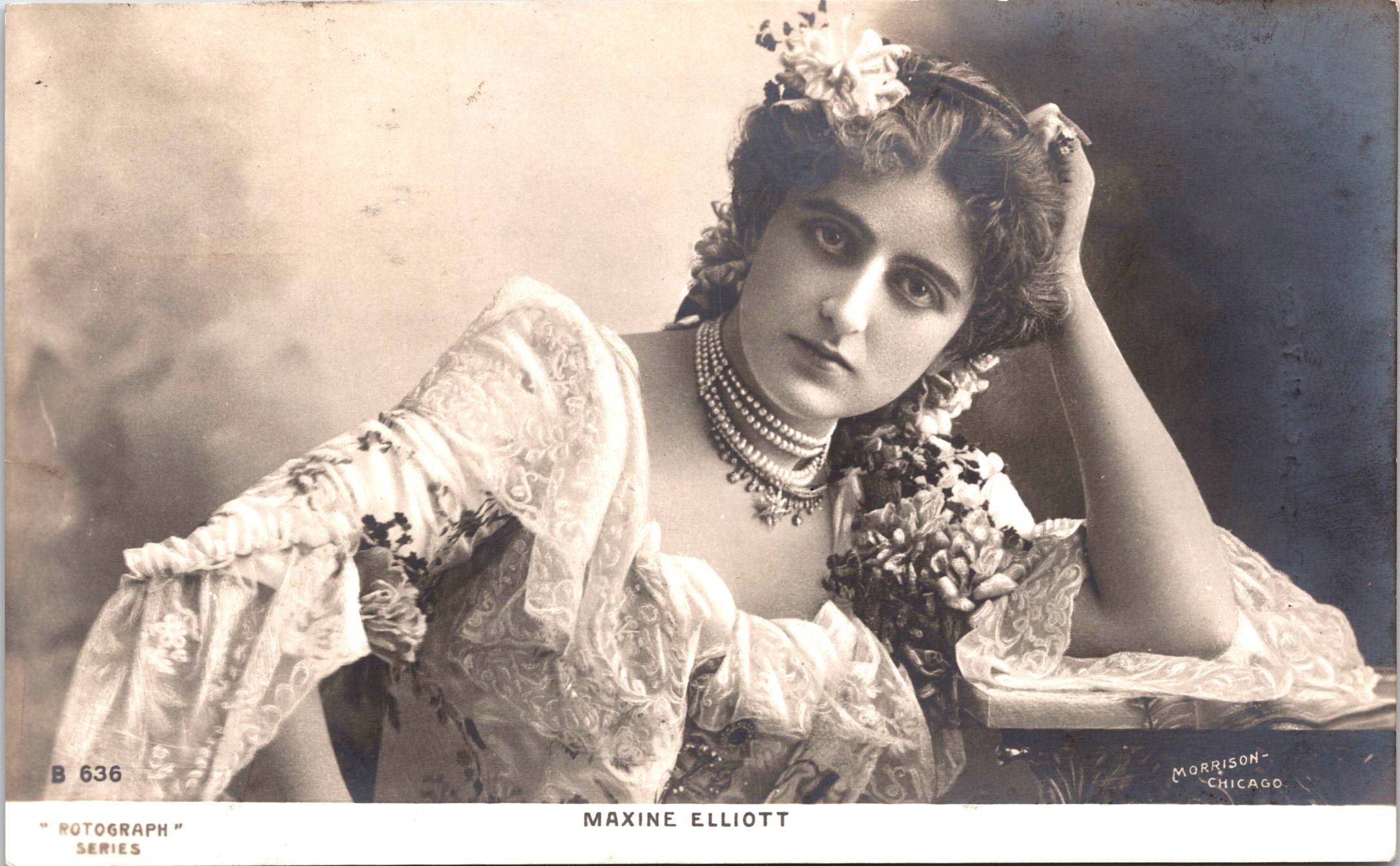
Postcard 3 features a nice portrait of Maxine Elliott. This image, taken by William Morrison (Chicago, Illinois) is a beautiful remnant of turn of the century theater history. This postcard was published by the Rotograph Company, which was based in New York City. The postcard is part of a series (No.B636).  (SOLD)

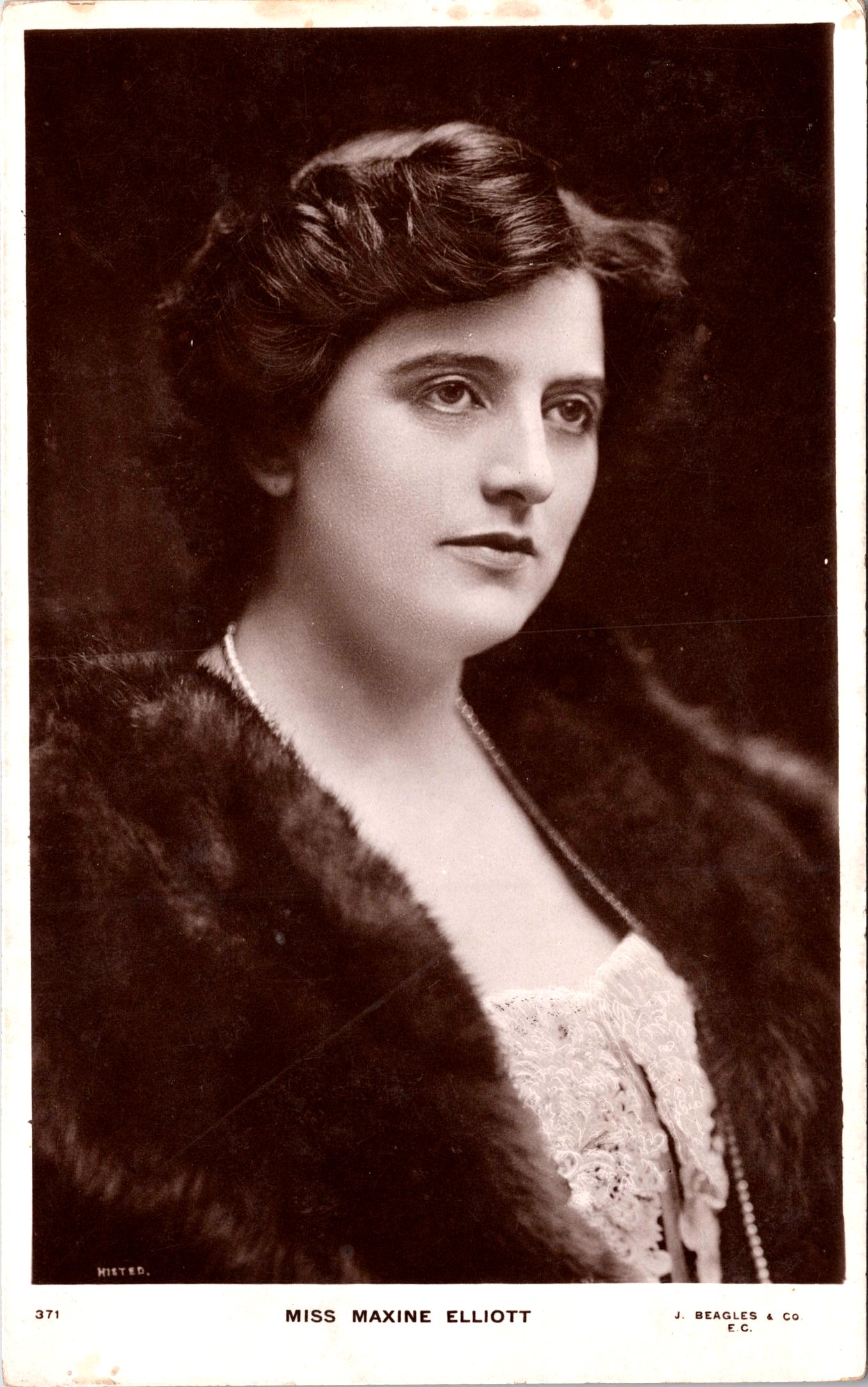
Postcard 4 features Miss Elliott’s portrait by Ernest Walter Histed (1862-1947). Histed was born in England but achieved his success as a photographer in Chicago, and later, in Pittsburgh. He then returned to England and opened a photography studio there. His subjects there included Clara Butt (Opera Star) Pope Pius X, and the Empress of Germany. Histed returned to the US and opened a studio on Fifth Avenue in New York City. He later moved to Palm Beach, Florida and continued his profession until 1934. The Museum of the City of New York has a large collection of his work. The National Portrait Gallery (England) has 32 of his photographs in their collection. This postcard was published by London’s J. Beagles & Co. as part of a series (No. G386).The company was started by John Beagles (1844-1909). The company produced a variety of postcards including an extensive catalog of celebrity (stage and screen) portrait postcards. After Beagle’s death, the business continued as J. Beagles & Co. until it closed in 1939.  (SOLD)

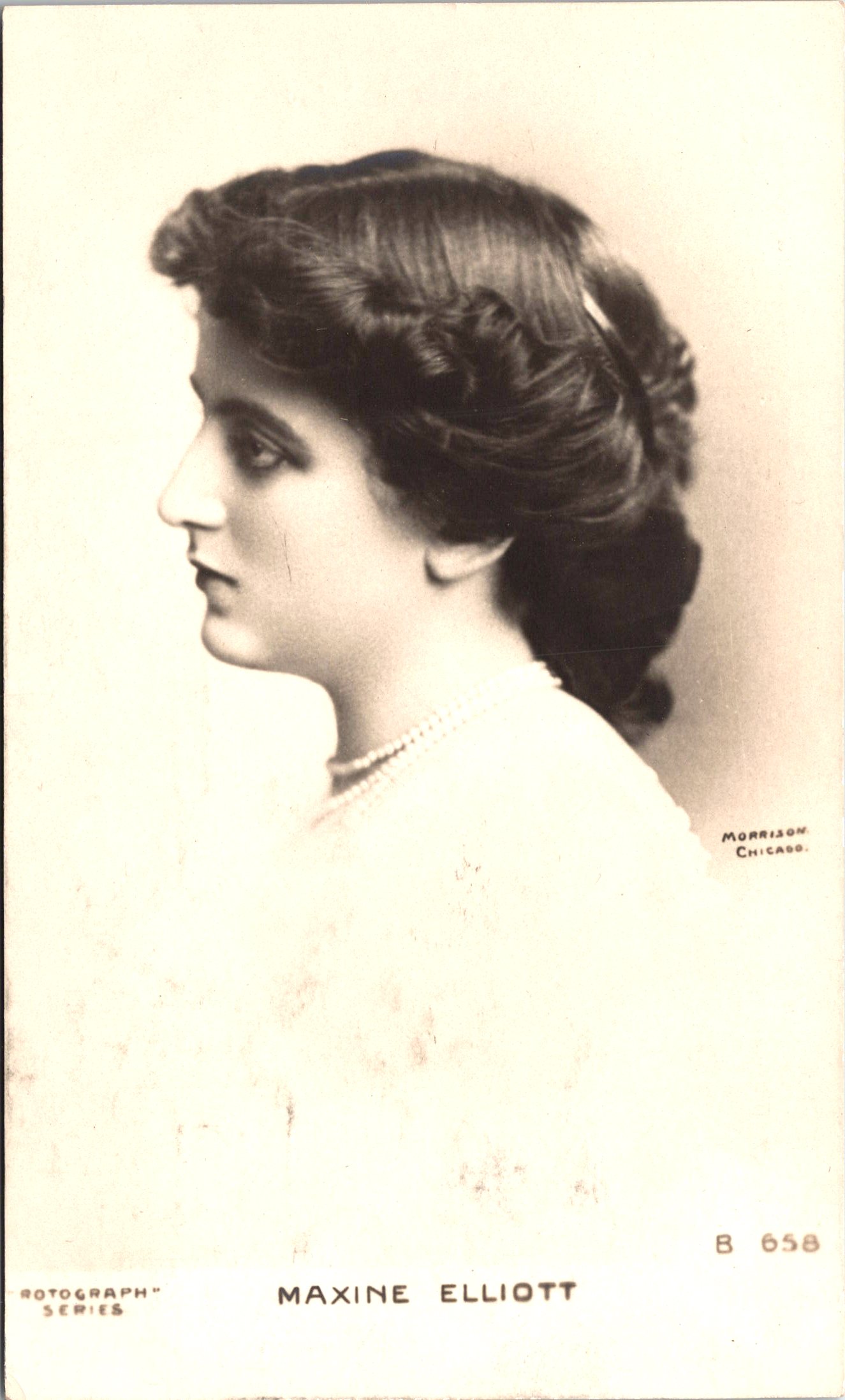
Postcard 5 comes from the studio of celebrity photographer, William McKenzie Morrison of Chicago, Illinois. Morrison’s studio was in the Haymarket  theater building. This postcard was published by the Rotograph Company which was based in New York City. The postcard is part of a series (No.B658).  (SOLD)

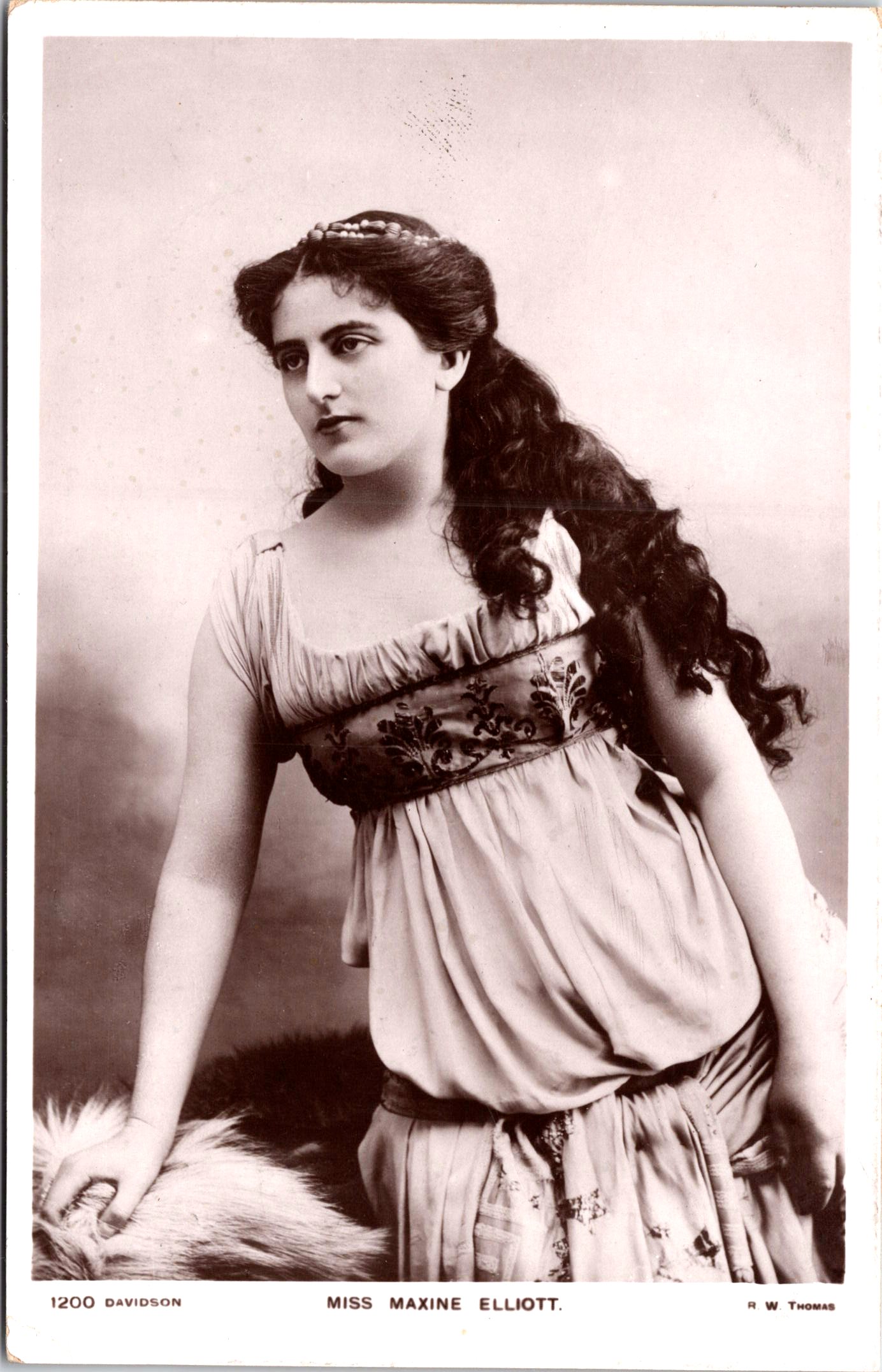
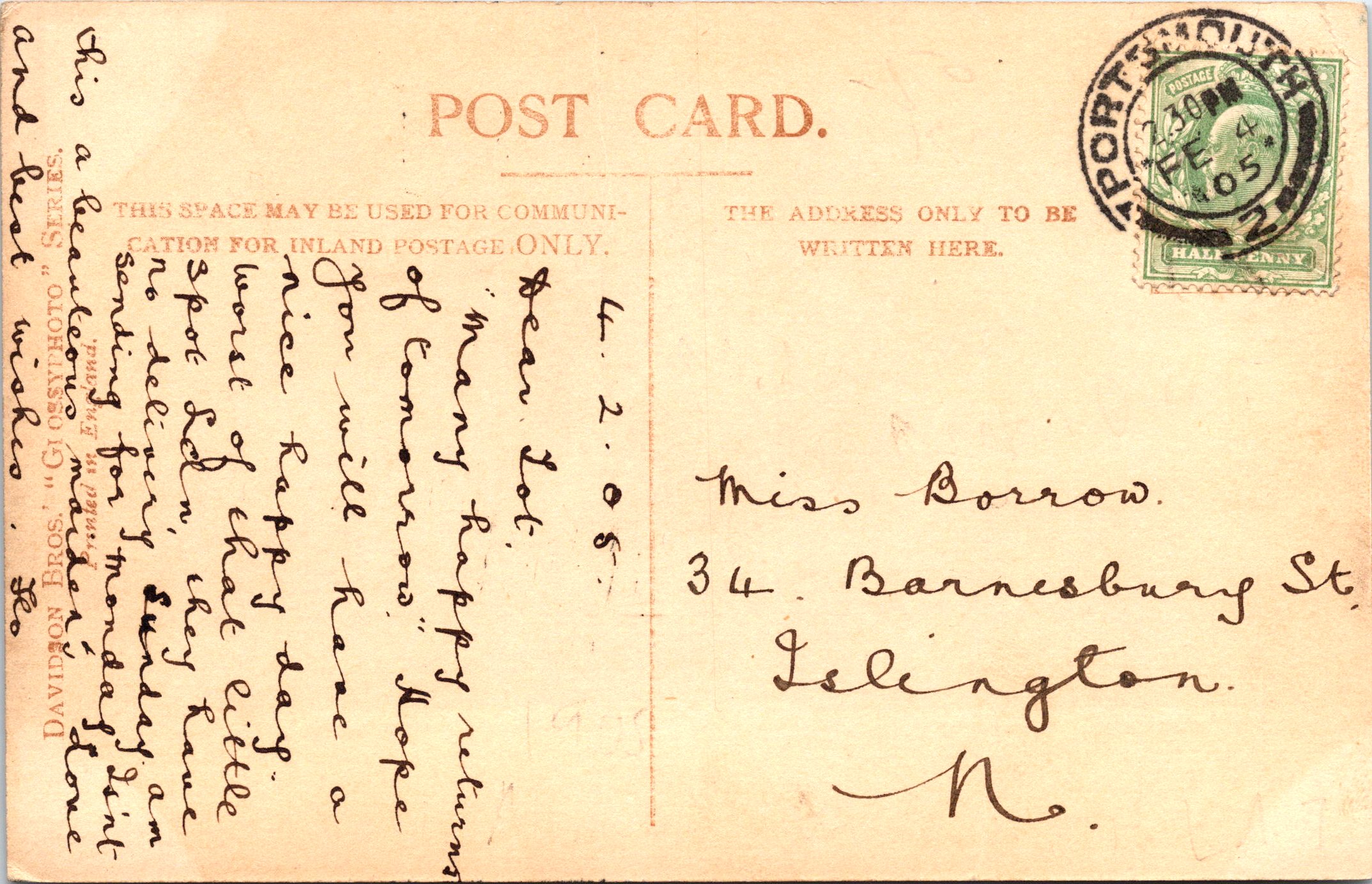
Postcard 6 features a pretty portrait of Miss Elliott taken by R. W. Thomas.  It is likely that he is the same man that authored “The Modern Practice of Photography” (1927).This postcard was published by London’s Davidson Bros. as part of a series (No.1200). The message from the sender of this card introduced me to a new word. The writer asks “Isn’t this a beauteous maiden?”. I looked up the word “beauteous” to see if it existed. I learned that the word exists and means “beautiful”. I also learned that “Beauteous” is a word that is customarily used in literature and not conversation. (SOLD)

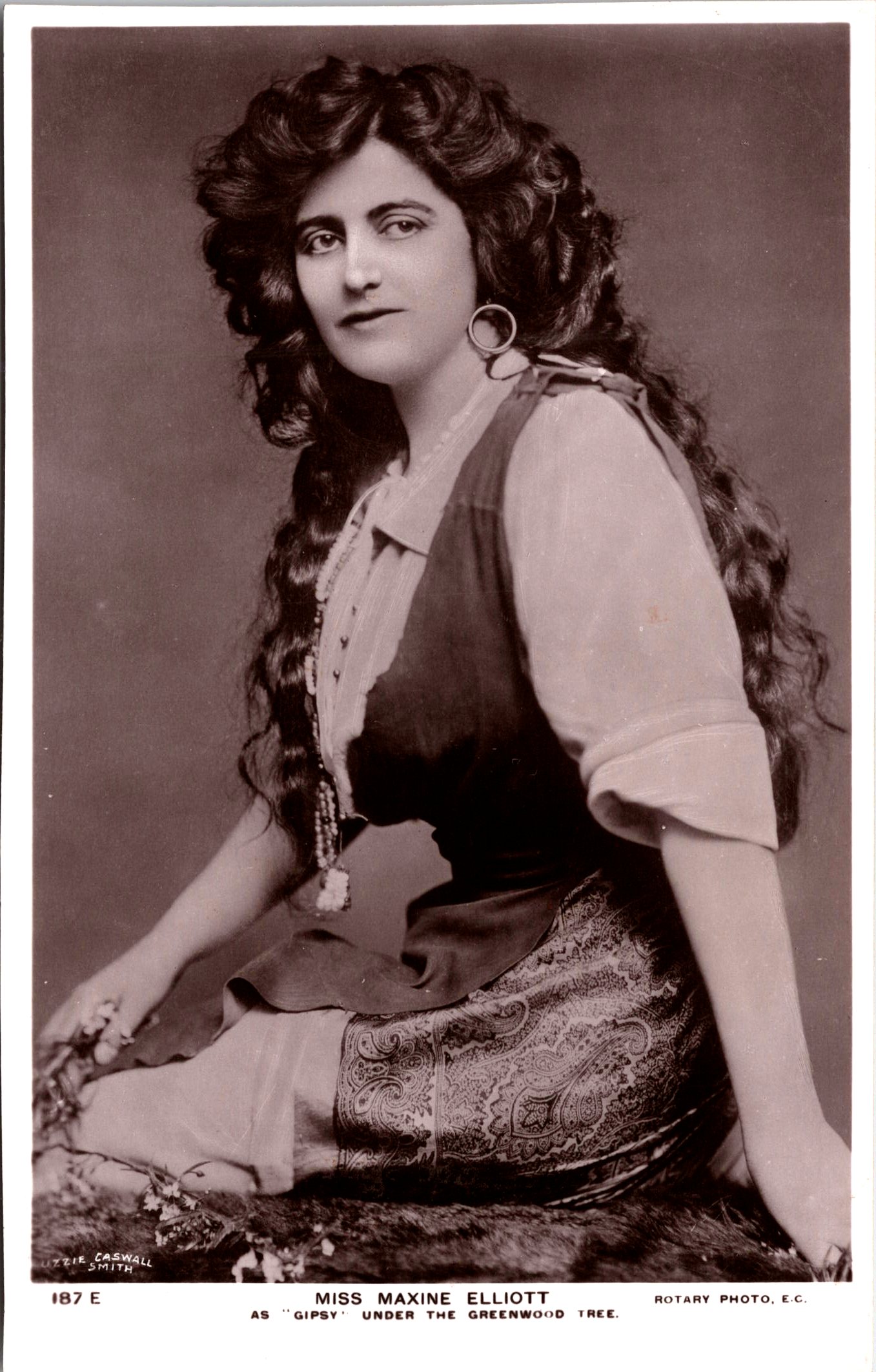
Postcard 7 Elliott photrographed in costume for her role as Gipsy in “Under the Greenwood Tree”. Her photograph was taken by famed celebrity female photographer, Lizzie Caswall Smith. This image is a beautiful remnant of turn of the century theater history. This postcard was published by Rotary Photo as part of a series (No.187E).  (SOLD)

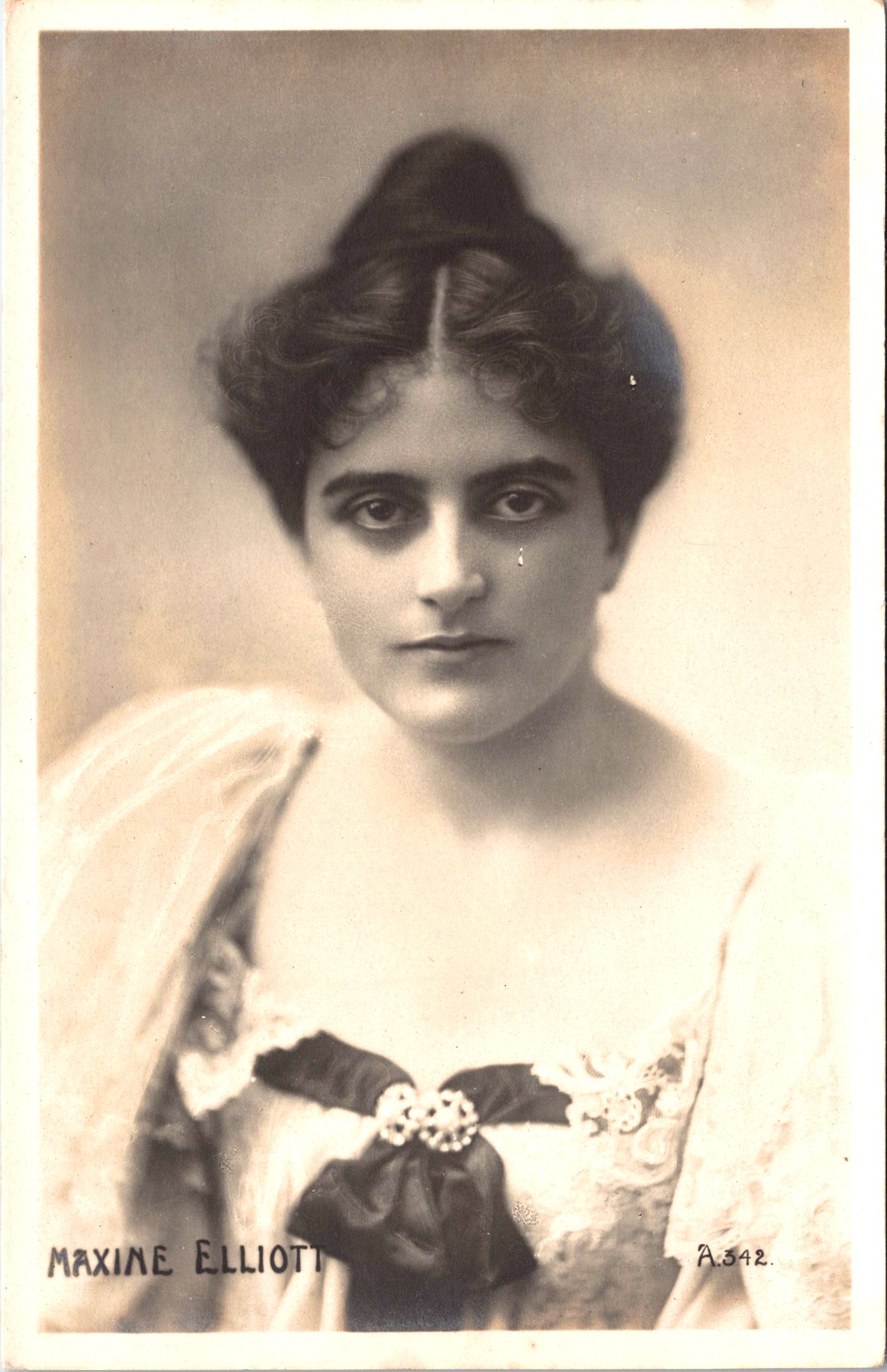
Postcard 8 was published by London’s Ralph Dunn & Co. as part of a series (No. A342). (SOLD)
POSTCARD 1 (SOLD)
POSTCARD 2 (SOLD)
POSTCARD 3 (SOLD)
POSTCARD 4 (SOLD)
POSTCARD 5 (SOLD)
POSTCARD 6 (SOLD)
POSTCARD 7 (SOLD)
POSTCARD 8 (SOLD)

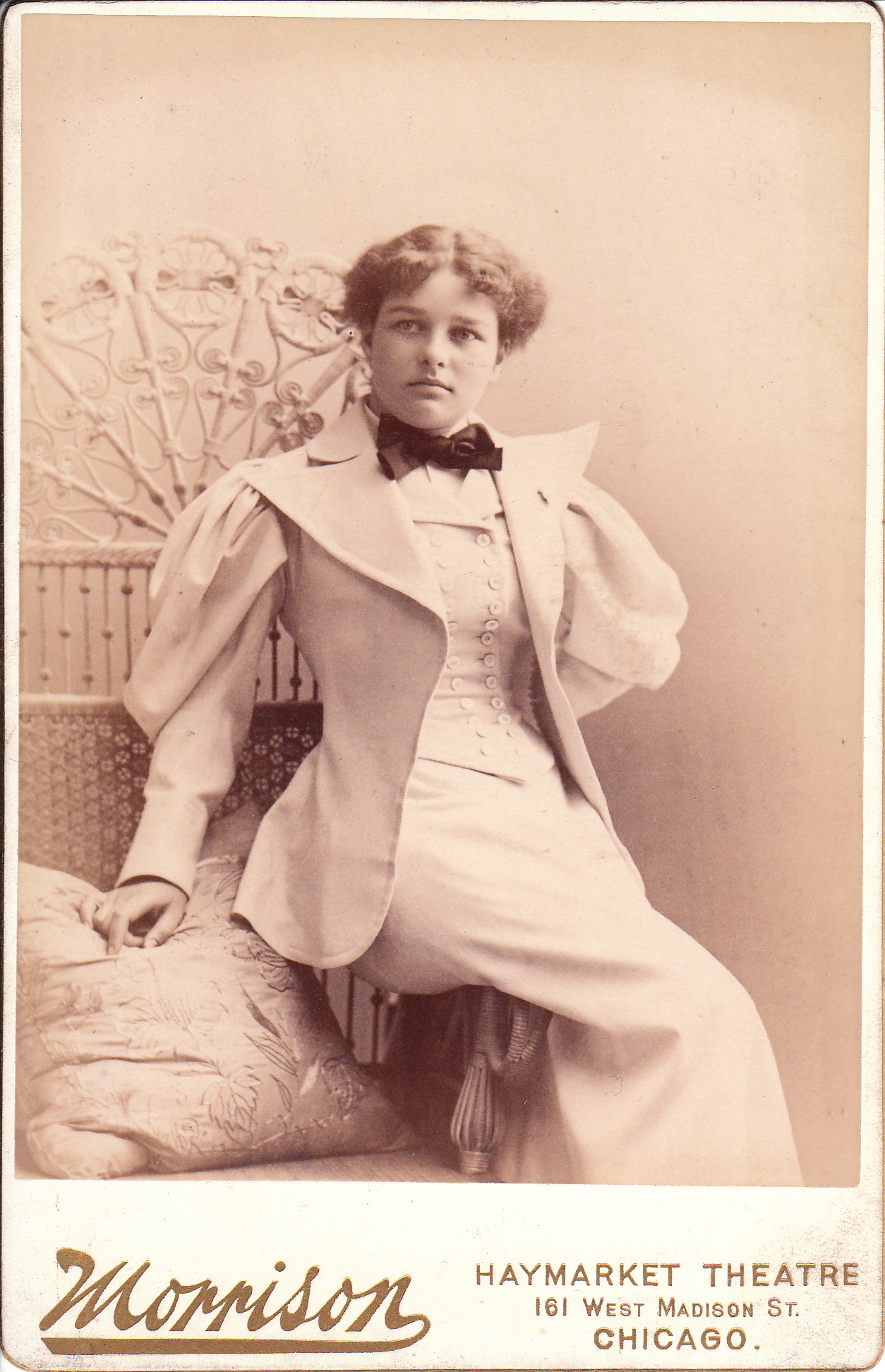
MYSTERY ACTRESS AT THE HAYMARKET THEATRE IN CHICAGO, ILLINOIS (MYSTERY SOLVED)

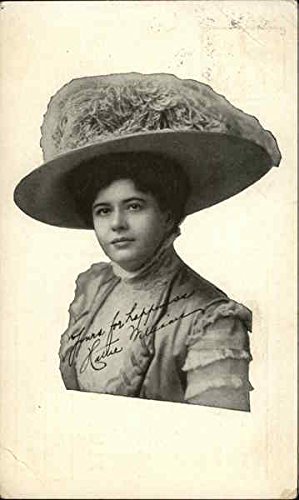
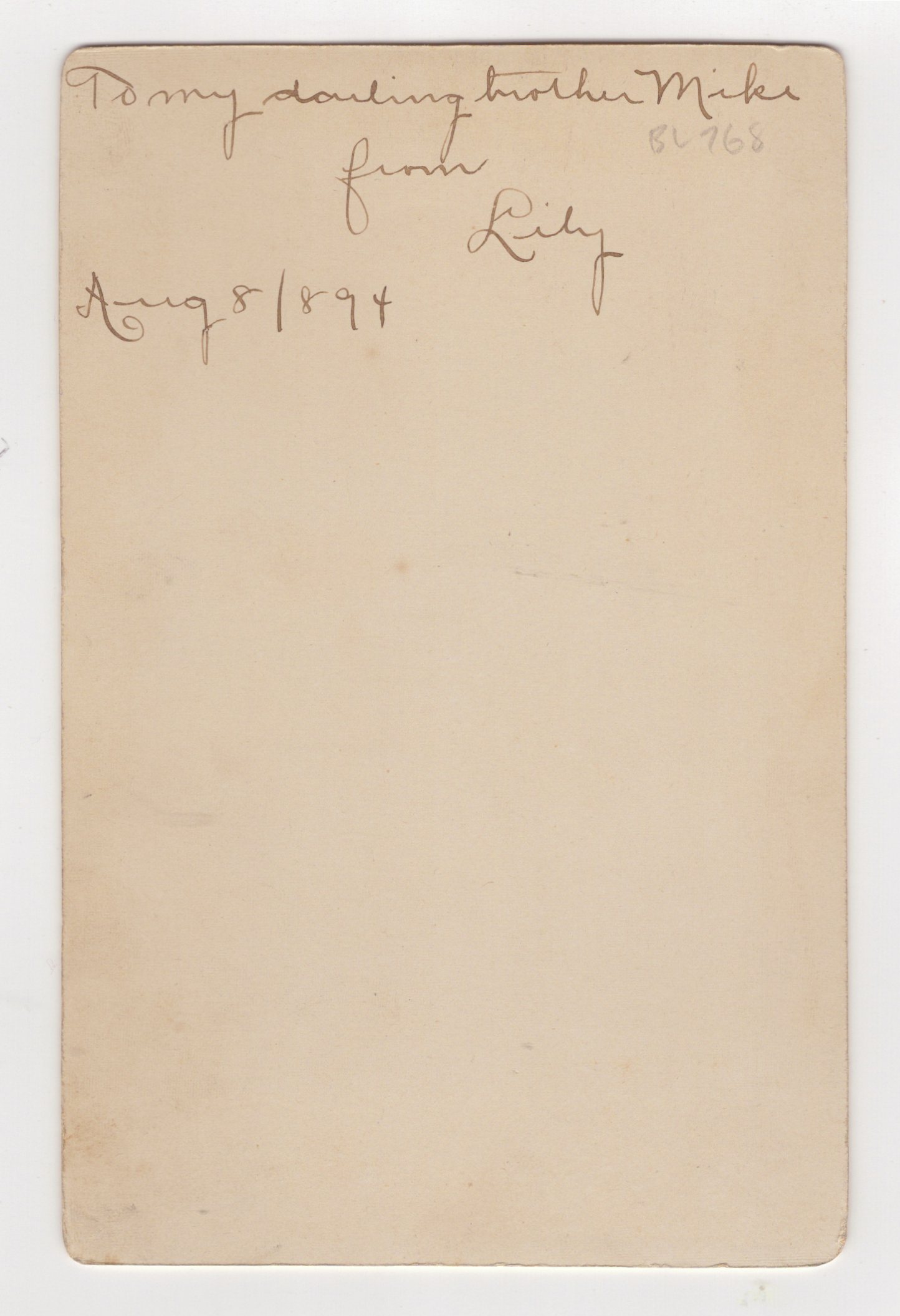
A pretty and nicely dressed woman poses for her portrait from celebrity photographer, William McKenzie Morrison, at the Haymarket Theatre in Chicago, Illinois. The subject of this photograph looks very much like actress, Lily Hanbury (1874-1908). An inscription on the reverse of this image states “to my darling brother Mike, from Lily”. The card is dated “Aug   8, 1894”. There were many actresses in 1894 named Lily; Lily Langtry was likely the most famous of them all. Research failed to provide evidence that this cabinet card photograph features Ms. Hanbury. It is not certain that she ever appeared at the Haymarket, nor is there data to confirm that she had a brother named Mike. To view a confirmed photograph of Lily Hanbury, type her name in Cabinet Card Gallery’s Search Box and click the search button. To view other photographs by Morrison, click on the category “Photographer: Morrison”. ADDENDUM: I am grateful to a cabinet card gallery visitor who left a comment (click comment below) identifying the actress who is the subject of this photograph. Her name is Hattie Williams (1870-1947) and another photo of her can be seen in the form of the photograph found below. Miss Williams was an American stage actress, comedienne, and singer. She was born in Boston. She began her career in the farcical plays of Charles Hoyt. She was a popular actress in vaudeville and with the Charles Frohman Theater Company. At one point in her career she was considered an arch rival to Ethel Barrymore. A photograph of Miss Barrymore is posted in the cabinet card gallery and can be viewed by putting her name in the search box. Williams appeared in one motion picture (1915).   SOLD

41Kcfzc8WGL

ETHEL BARRYMORE: A STAGE BEAUTY

blog1CABINET CARD 1

CABINET CARD 2

                                                                                                                                      brrymore

                                                                 POSTCARD 1  (SOLD)
ethelPOSTCARD 2  (SOLD)
barrymorePOSTCARD 3

barrymore-againPOSTCARD 4   (SOLD)
BARRYMORE PCPOSTCARD 5  (SOLD)

ETHEL BARRYMORE: STAGE BEAUTY : BROADWAY : RPPC  (1906) - Picture 1 of 2POSTCARD 6 (SOLD)

Ethel Barrymore (1879-1959) was an outstanding American actress and a member of the famous theatrical Barrymore family. She was born Ethel Mae Blythe in Philadelphia, Pennsylvania. Her parents were actors and she was the sister of John and Lionel Barrymore.  She was the great aunt of modern day actress Drew Barrymore.

Ethel Barrymore was considered by many to be the greatest actress of her generation. She was a major Broadway performer and first appeared there in 1895. She had roles in A Dolls House by Ibsen (1905).  She was a strong supporter of the Actors’ Equity Association and played a major role in the 1919 strike. She played in Somerset Maugham’s comedy, The Constant Wife (1926). She also starred in motion pictures beginning her film career in 1914.  Notable films included None but the Lonely Heart (1944) and The Spiral Staircase (1946). Around 1900, Winston Churchill proposed marriage to Barrymore but she refused. She later married Russell Griswold Colt in 1909 and had three children. She died of cardiovascular disease in 1959 at her home in California. The Ethel Barrymore Theatre in New York City is named in her honor.

The cabinet card 1 portrait of Ethel Barrymore was photographed by Phillips Photographers of Philadelphia, Pennsylvania. To view other photographs by Phillips, click on the category “Photographer: Phillips”. The second image (cabinet card 2) of the actress was produced by Sarony, the famous celebrity photographer who’s studio was located in New York City. To see other Sarony photographs, click on the category “Photographer: Sarony”.

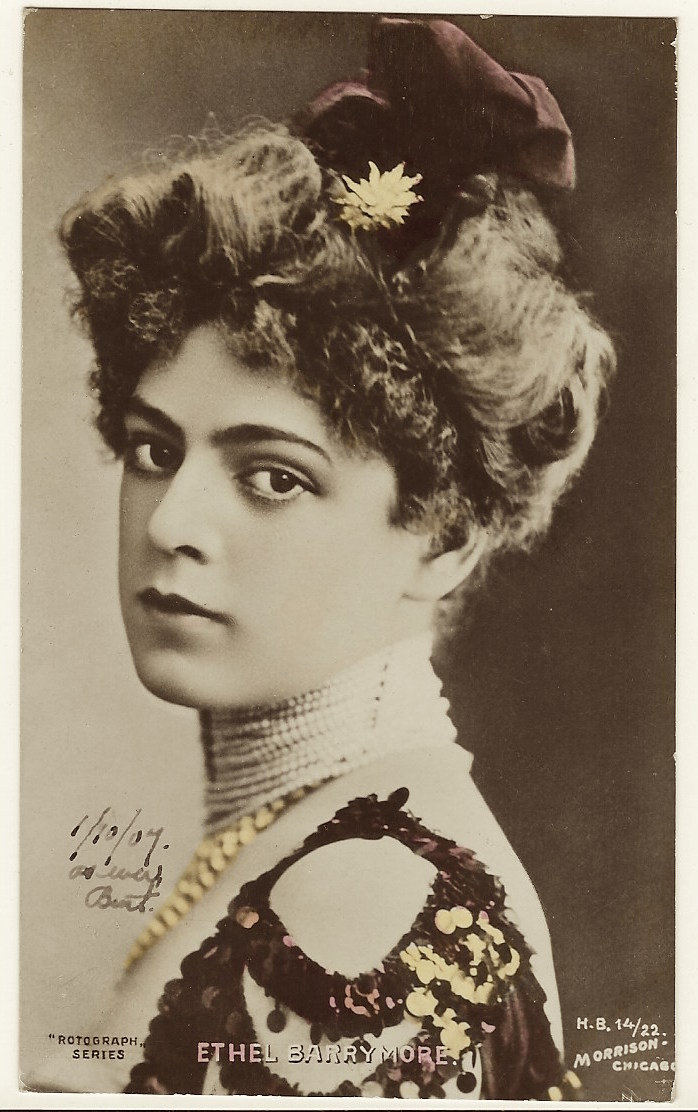
The third portrait of Miss Barrymore appears on postcard 1, published by the Rotograph Company who operated in  New York City and Germany. This postcard portrait was taken by famed Chicago photographer William Morrison. He is well known for his excellent portraits of theatrical stars. He produced both real photo postcards and cabinet cards. This postcard is number HB/1422 of the “Rotograph Series”. The image on this postcard is color tinted. This postcard has been mailed and postmarked (1907). The reverse of this postcard can be seen below.To view other photographs by Morrison, click on the category “Photographer: Morrison”.

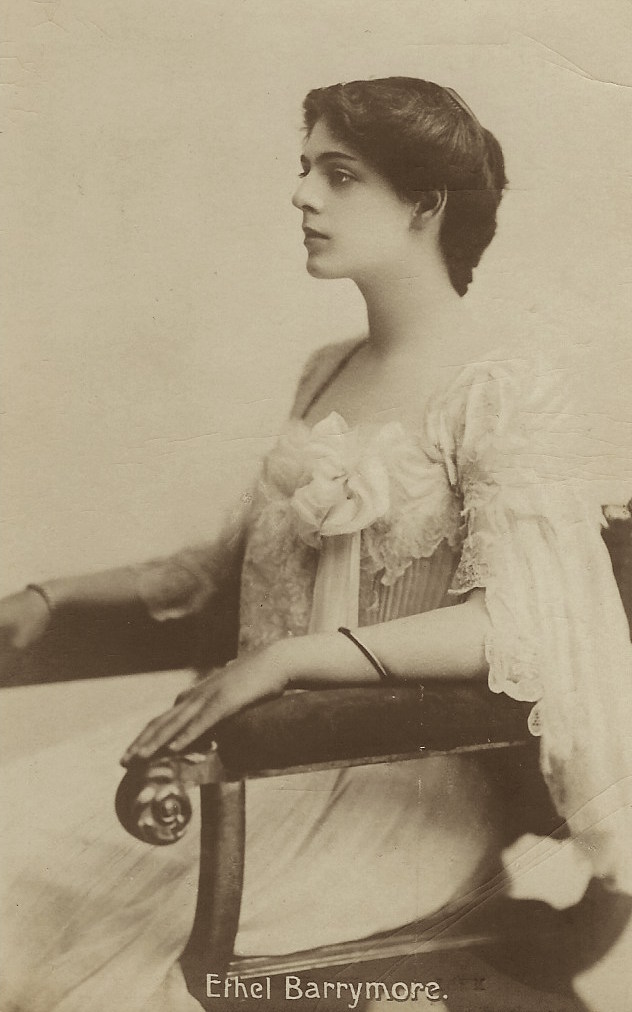
The fourth portrait of Ethel Barrymore is an uncommon one (postcard 2). The image provides a lovely profile view of this legendary actress. If you search for this exact postcard online, you likely won’t find it. This postcard was published by E. Frey & Company who operated in  New York City . Research reveals that postcards displaying the printed name of  “E. Frey” were actually published by the Souvenir Post Card Company which existed between 1905 and 1914. It was located at 268 Canal Street in New York City. The company was purchased by Valentine & Sons and the combined company became Valentine – Souvenir. This postcard was printed in Germany and is in good condition (see scan).

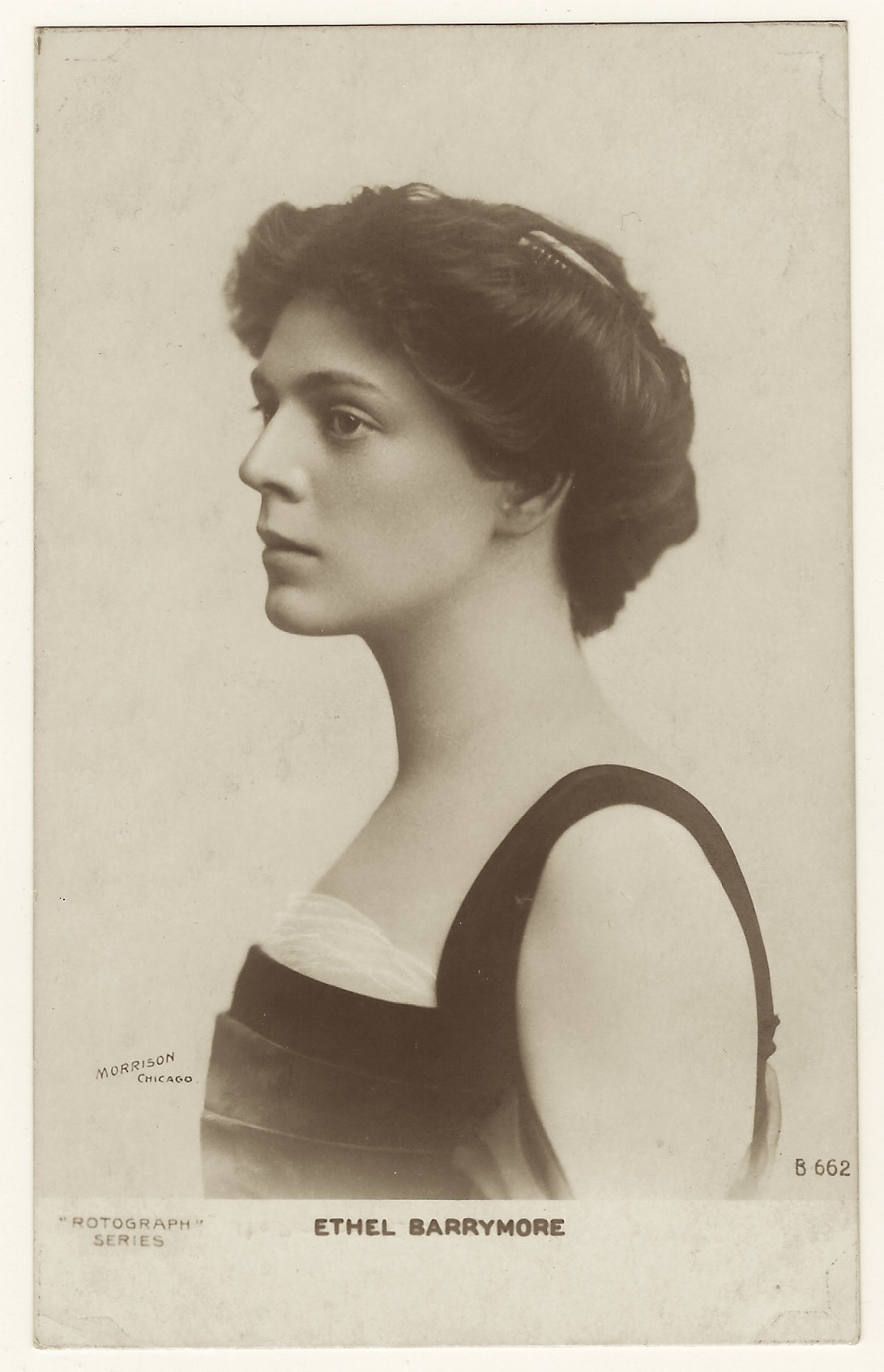
The fifth photograph (postcard 3) of Miss Barrymore was published by the Rotograph Company. This postcard portrait was taken by famed Chicago celebrity photographer William Morrison.This postcard is number B 662 of the “Rotograph Series”. The image has excellent clarity.

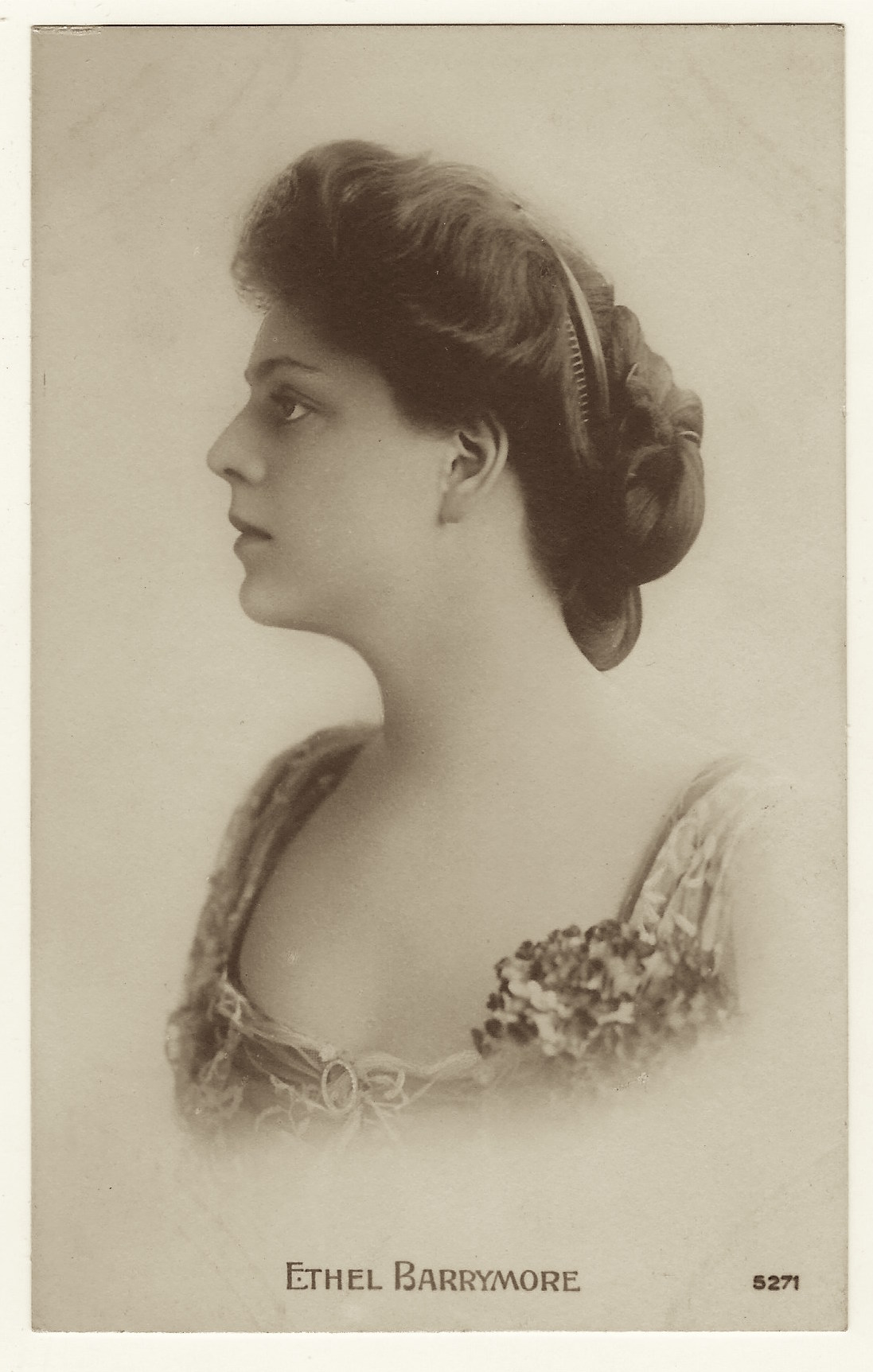
The sixth image (postcard 4) is a vintage real photo postcard portrait of Ethel Barrymore. The postcard was published by Albert Hahn who was based in New York City (200 Broadway) and Hamburg. Hahn operated his company between 1901 and 1919. The postcard was produced in Germany sometime in the decade of 1900-1910. The postcard is part of a series (no. 5271).  (SOLD)

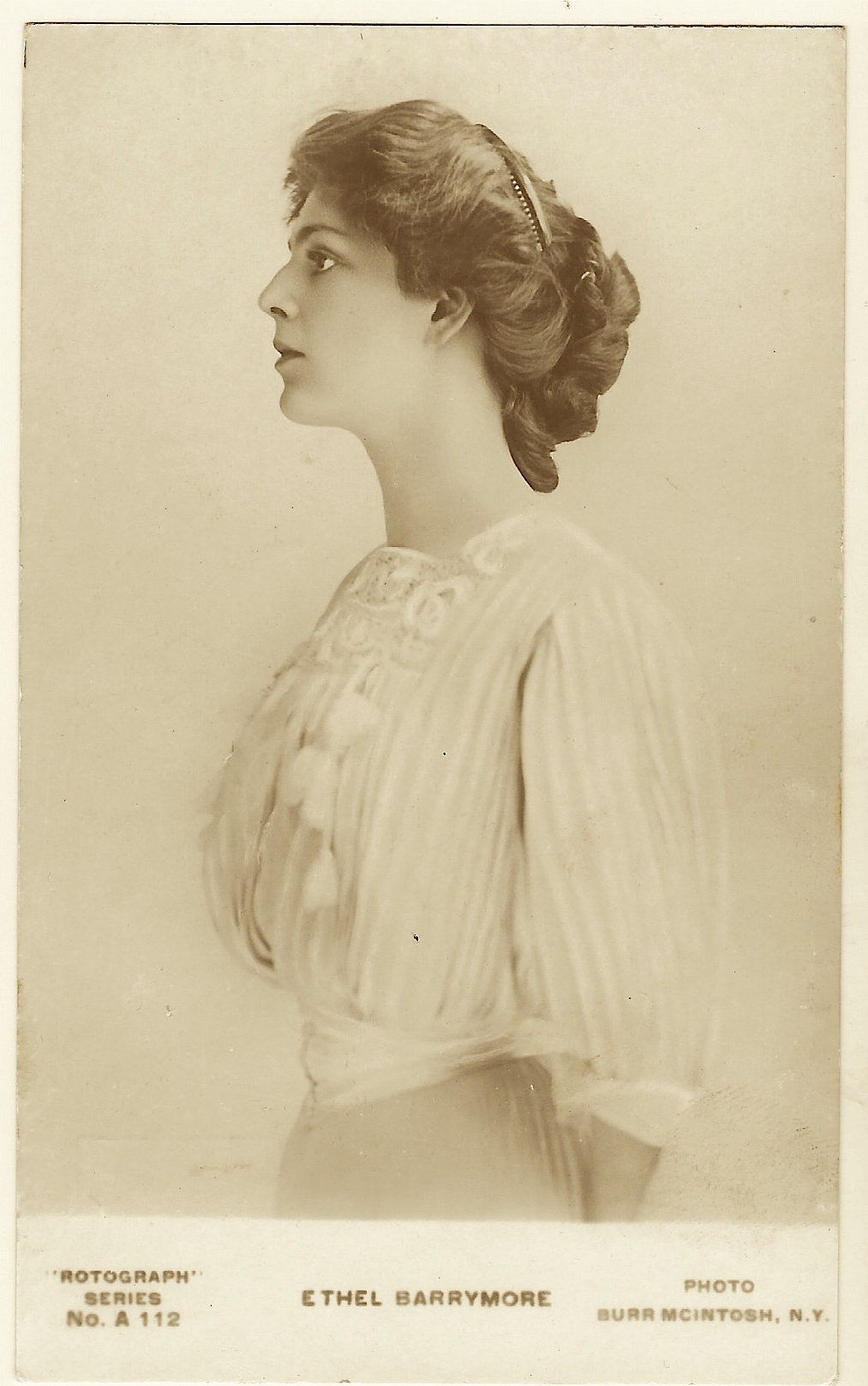
Postcard 5 offers a profile view of Miss Barrymore. The postcard was published by the Rotograph Company as part of the Rotograph Series (No. A 112). The photographer of this image is Burr McIntosh of New York City. William Burr McIntosh (1862-1942) lived an interesting life. Among his job titles listed by Wikipedia, are photographer, lecturer, film studio owner, silent film actor, publisher of the “Burr McIntosh Monthly”, reporter, and radio and early film pioneer. His sister was Nancy McIntosh, a noted operatic soprano. He was a graduate of Lafayette College in 1884. His most noted film role was his appearance in D. W. Griffith’s film, “Way Down East” (1920). Wikipedia notes that he appeared in 53 films between 1914 and 1934. This vintage postcard is in very good condition.

Postcard 6 is a portrait of Miss Barrymore that was postmarked in 1907.   (SOLD)

barrymore AGAIN 1

POSTCARD 4

studholme pc 3

        POSTCARD 5   

ETHEL BARRYMORE: STAGE BEAUTY : BROADWAY : RPPC  (1906) - Picture 2 of 2Postcard 6 (Sold)

MRS FISKE : THEATER STAR : ROTOGRAPH : BY MORRISON CHICAGO : RPPC

CABINET CARD 1(SOLD)

POSTCARD 1(SOLD)

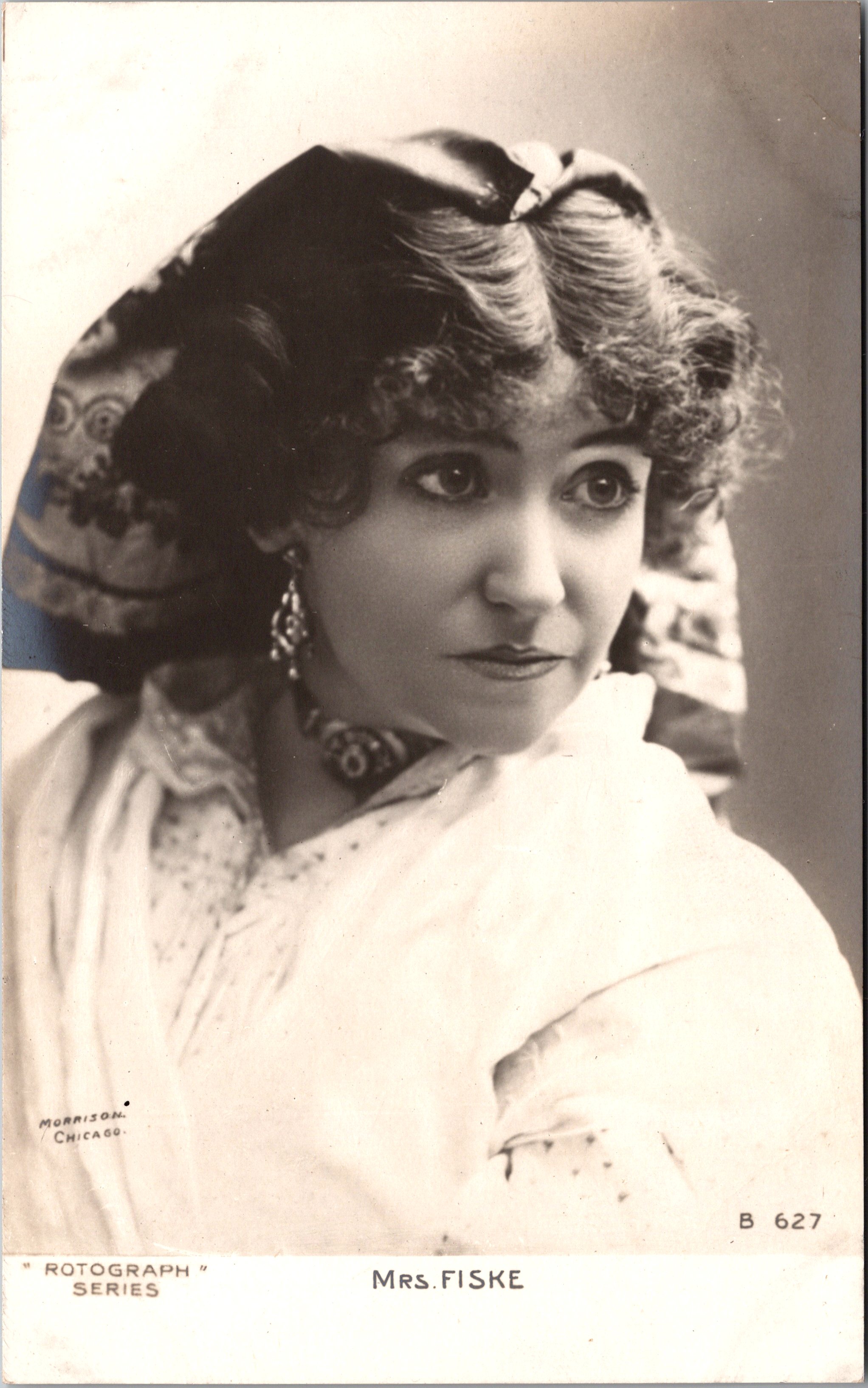
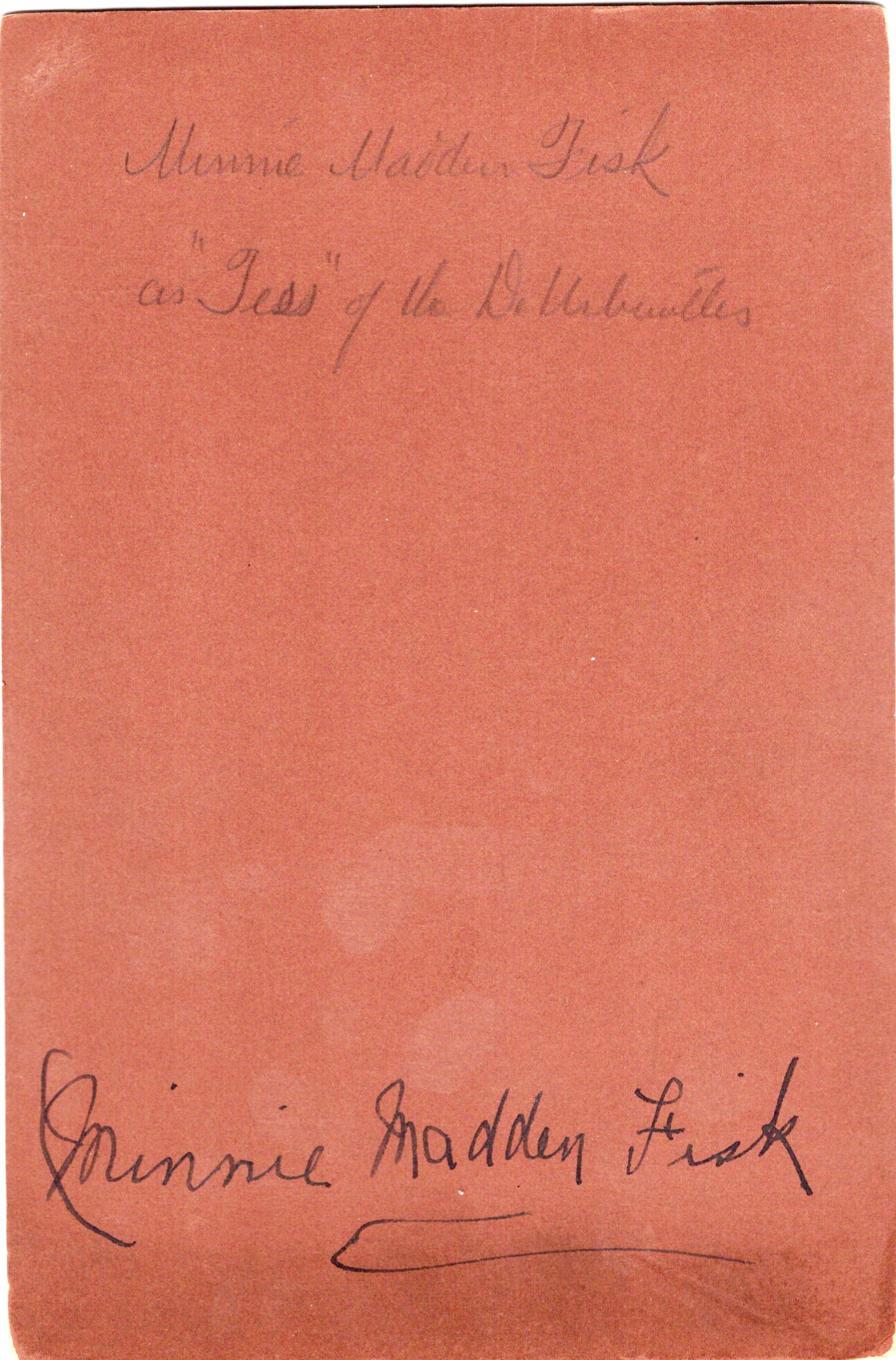
This vintage real photo postcard and this cabinet card features acclaimed theater actress, Minnie Maddern Fiske (1865-1932). When performing, she was often billed as “Mrs. Fiske”. She was one of America’s leading actresses during the late 19th and early 20th centuries. She performed in several Henrik Ibsen plays and is recognized as introducing American audiences to the Norwegian playwright. She was born in New Orleans, Lousiana, to parents that worked in the theater world. Her first professional acting gig was playing a role in a Shakespeare play. She was only three years old. By the age of four, she made her New York debut. Much of her childhood was spent touring with theater companies. At age sixteen, she played leading lady roles. She was recognized for her acting, but also for her beauty and singing voice. In 1890, she married Harrison Grey Fiske, successful playwright and Broadway producer. After takin three years off from acting, she returned to the theater in 1893 as an actor, playwright and director. The IBDb reports that she had 55 Broadway credits, combining her acting, writing, and directing. Among her successes on Broadway were “Tess of the d’Urbervilles (1897), “A Dolls House” (1902), “The Rose” (1905), and “The High Road” (1912). Her Broadway credits spanned from 1871 through 1930. In the mid 1910’s, Mrs Fiske starred in film adaptations of two of her stage successes. Although the films were well received, she believed she was more suited for theater than film. Despite her success in the theater, the talented actress died poverty stricken. Her financial downfall was realted to her battling against a group of producers that organized the Theatrical Trust (or Syndicate). The Syndicate controlled the nation’s best theaters and dictated what plays would appear and which actors would be in the cast. They relegated Mrs Fiske to appear in third rate theaters, churches, and skating rinks. Mrs. Fiske was not to be intimidated. She also was an advocate for animal welfare. She was involved in the activities of the ASPCA and other human leagues. She fought against the fashion craze of decorating hats with bird feathers. Many bird lives were sacrificed, and entire species were nearly wiped out as a result of this fad. She also educated the public about the cruelty involved in trapping animals. Because she was well known, respected and popular, she was able to influence animal reform. Mrs Fiske won a number of humanitarian awards. She was a strict vegetarian and was anti vivisection. During World War II, there was a liberty ship named  the “SS Minnie M Fiske”. Minnie Maddern Fiske was a woman born before her time. She was a feisty activist.

Cabinet Card 1 features acclaimed theater actress, Minnie Maddern Fiske (1865-1932). The photograph captures her in her role in “Tess of the d’Urbervilles (1897). Mrs. Fiske’s photograph for this cabinet card was taken by eccentric celebrity photographer, Napoleon Sarony. (SOLD)

Mrs. Fiske’s photograph on Postcard 1 was taken by William Morrison of Chicago, Illinois. The card was published by Rotograph as part of a series (no.B 627). (SOLD)

DOROTHY RUSSELL : ACTRESS : WILD CHILD OF LILLIAN RUSSELL

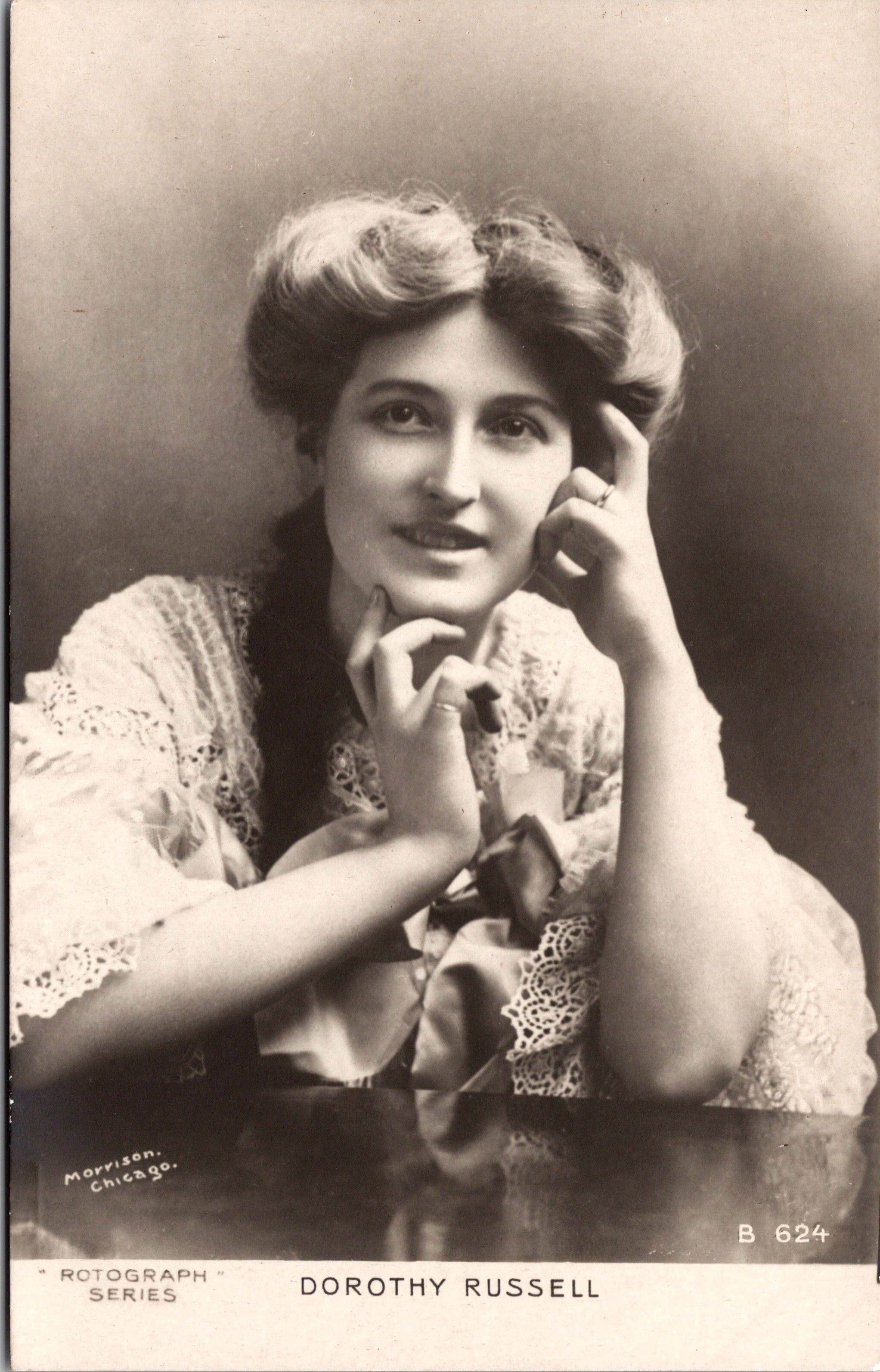
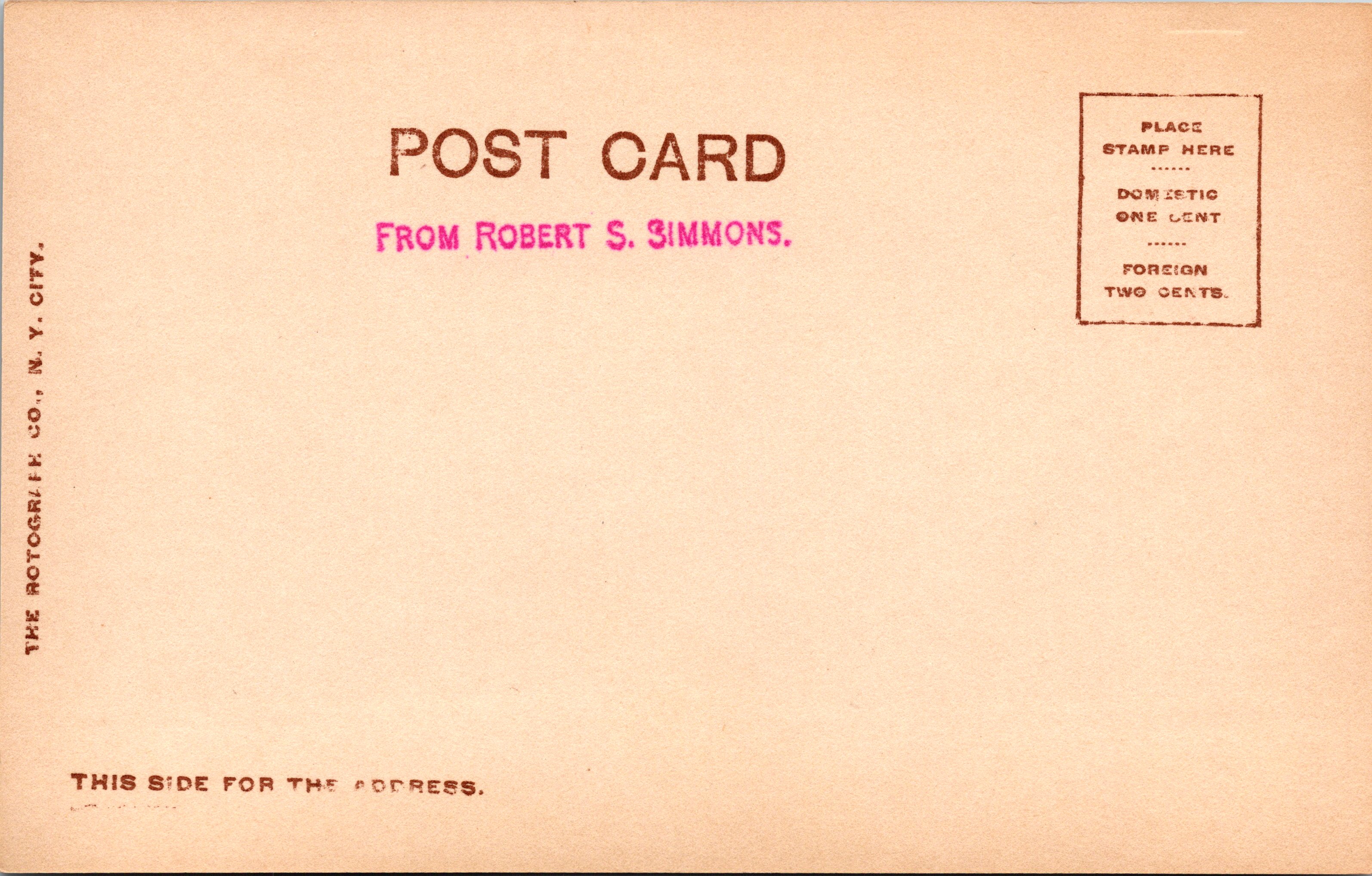
This vintage real photo postcard features actress Dorothy Russell (1883-1954). She was the notorious daughter of the ultimate diva, Lillian Russell (1860-1922). Dorothy was in three Broadway plays between 1904 and 1907. Dorothy’s trademark  was her penchant for sensational hijinks, divorces, and legal fights. Dorothy was married seven times. In one civil suit, she was forced to surrender jewelry given to her mother by “Diamond Jim” Brady. The court insisted that she use the proceeds from the jewelry to pay off personal debts. A stamp on the reverse of the postcard indicates that this card was once the property of Robert S. Simmons. This postcard was published by the Rotograph Company (New York City). It is part of the Rotograph Series (No. B 624), The photographer of this image is William Mckenzie Morrison whose studio was located in the Haymarket  Theatre building in Chicago, Illinois. Morrison was a well known and successful  celebrity photographer.  (SOLD)

PRETTY THEATER ACTRESS ANNIE LEWIS (TWO PORTRAITS BY WILLIAM McKENZIE MORRISON)

PHOTOGRAPH 1 (SOLD)
PHOTOGRAPH 1 (CLOSE-UP) (SOLD)


annie lewis two
PHOTOGRAPH 2

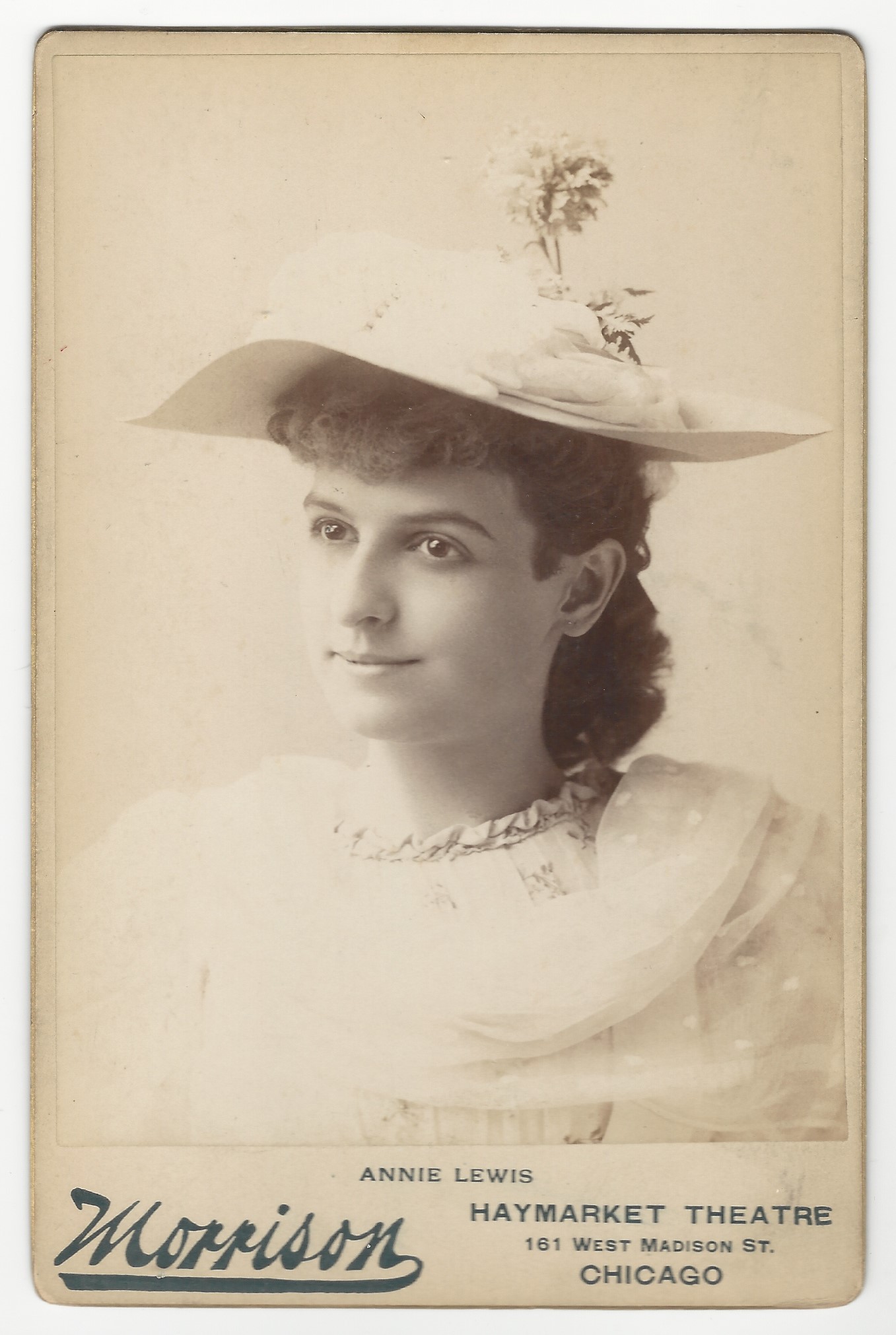
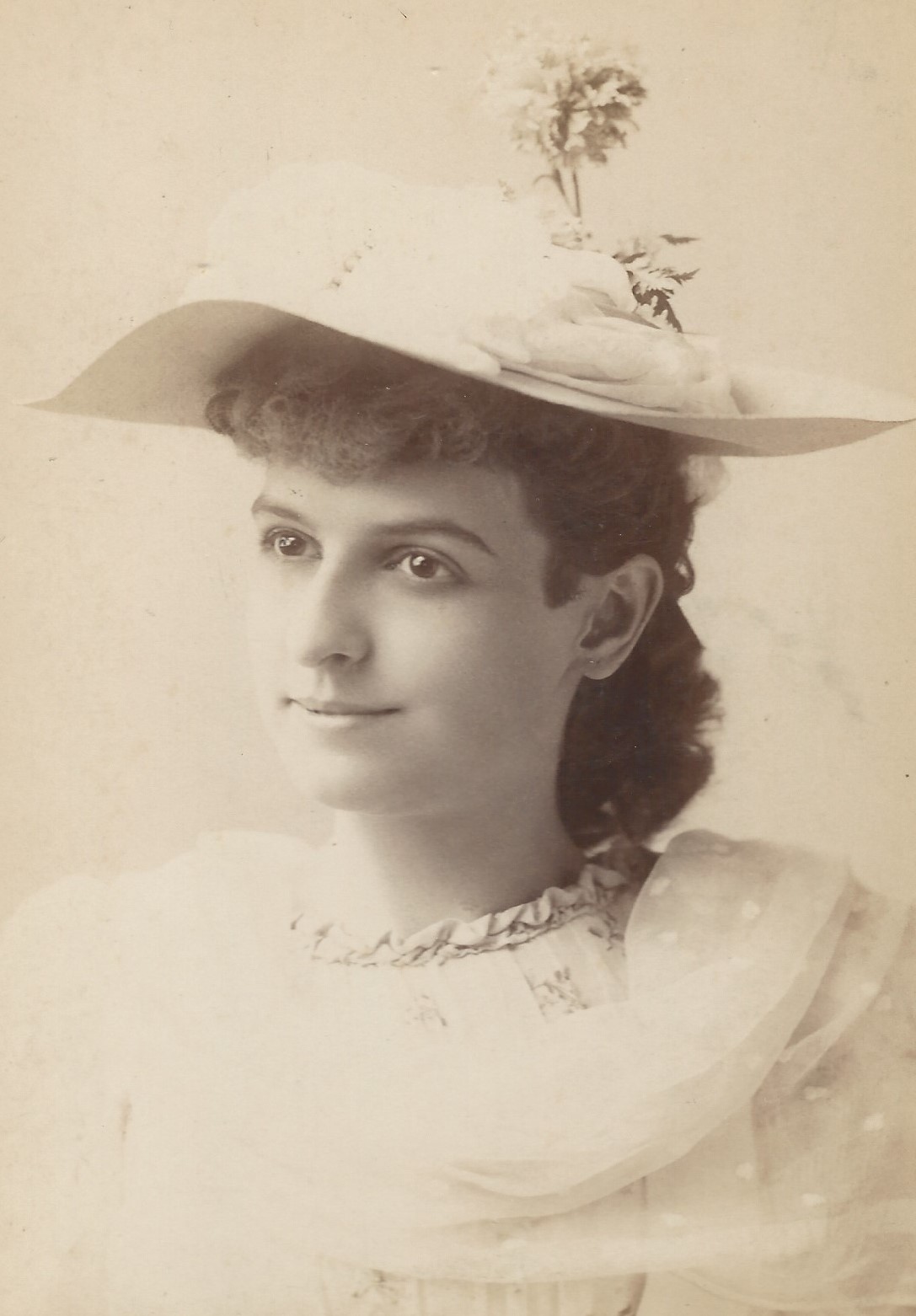
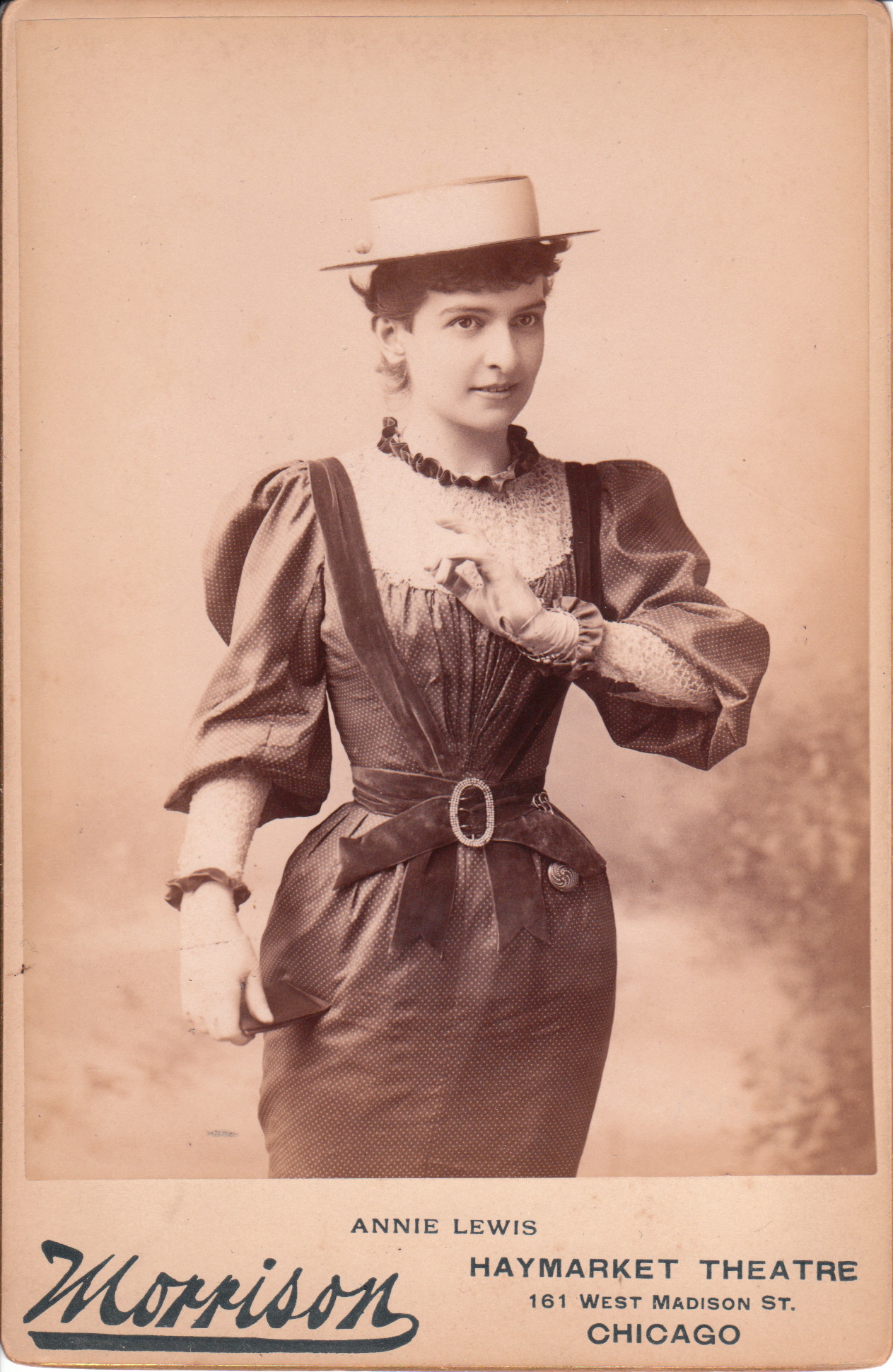
Celebrity photographer, William McKenzie Morrison of Chicago, Illinois, produced these photographic portraits of  actress Annie Lewis (1869-1896). Morrison’s studio was in the Haymarket  theater building. To view more photographs from the Morrison studio and to learn more about him, click on the category “Photographer: Morrison”. Lewis was a soubrette of light operas and musical comedies. She was born and raised in Washington D.C.. Her father was a clerk for the U.S. Treasury Department. Her mother was a former parlor entertainer. As a child, she showed talent for “mimicry”. By the time she was four years old, she was performing on the stage. Actually, during her early years, she often did her singing and dancing atop a piano because that vantage point, allowed her to be seen by her audience.  At the age of sixteen, Lewis was touring the country with her own performing company. She was the soubrette in production called “Little Trump”. Go figure. At seventeen years of age, she married stage actor Wilton Lackaye. He was twenty-five years old at the time and he went on to have a long successful career in both theater and film. Lewis went on to play starring roles in a number of productions. She became a popular enough actress to be mentioned in a number of articles appearing in the New York Times.  The Times (1892) called her the “bright leading lady” of the Yon Yooson company. The newspaper (1892) also reported that she she performed to “standing room only” audiences in Boston’s Bowdoin Theater. In 1893, The New York Times wrote of trouble caused by Annie Lewis at New York’s 14th Street Theater that threatened that evening’s performance of  “The Nutmeg Match”. The management had wanted to add some “specialties” to the performance and Miss Lewis threatened to quit the cast if they made the proposed changes. It was reported that the theater management had looked for an actress to replace Annie Lewis but they were unsuccessful due the extremely short time a new actress would have to prepare for the part. In 1895, she was the supporting actress to Camille D’Arville in the Broadway Theatre production of “A Daughter of the Revolution”. Not long after that appearance, illness forced her to leave the stage, and by October, 1896, Annie Lewis was dead. The cause of death was tuberculosis. She was only 27 years-old. Her obituary appeared in “The Evening Times” (Washington D.C.). The headline of the article was “Little Annie Lewis Dead”. The article reports that she had been sick for nearly a year. She was forced to cancel a number of appearances. Her friends had hoped that a trip to the Southwest and Mexico  would help restore her health. A benefit was held and enough money was raised for the trip and for her care. However, her worsening health did not allow her to travel. The obituary states that Lewis was the mascot of the “National Fencibles”. She was adopted as their “Daughter of the Regiment”. The fencibles were a Washington based militia and drill team. John Philip Sousa dedicated a march to the organization. The obituary laments that the curtain fell way too soon in the life drama of Miss Annie Lewis. 

PHOTOGRAPH 1

Isabel Irving: American Stage Actress

isabel-irving

  irving3_0001


isabel irving two

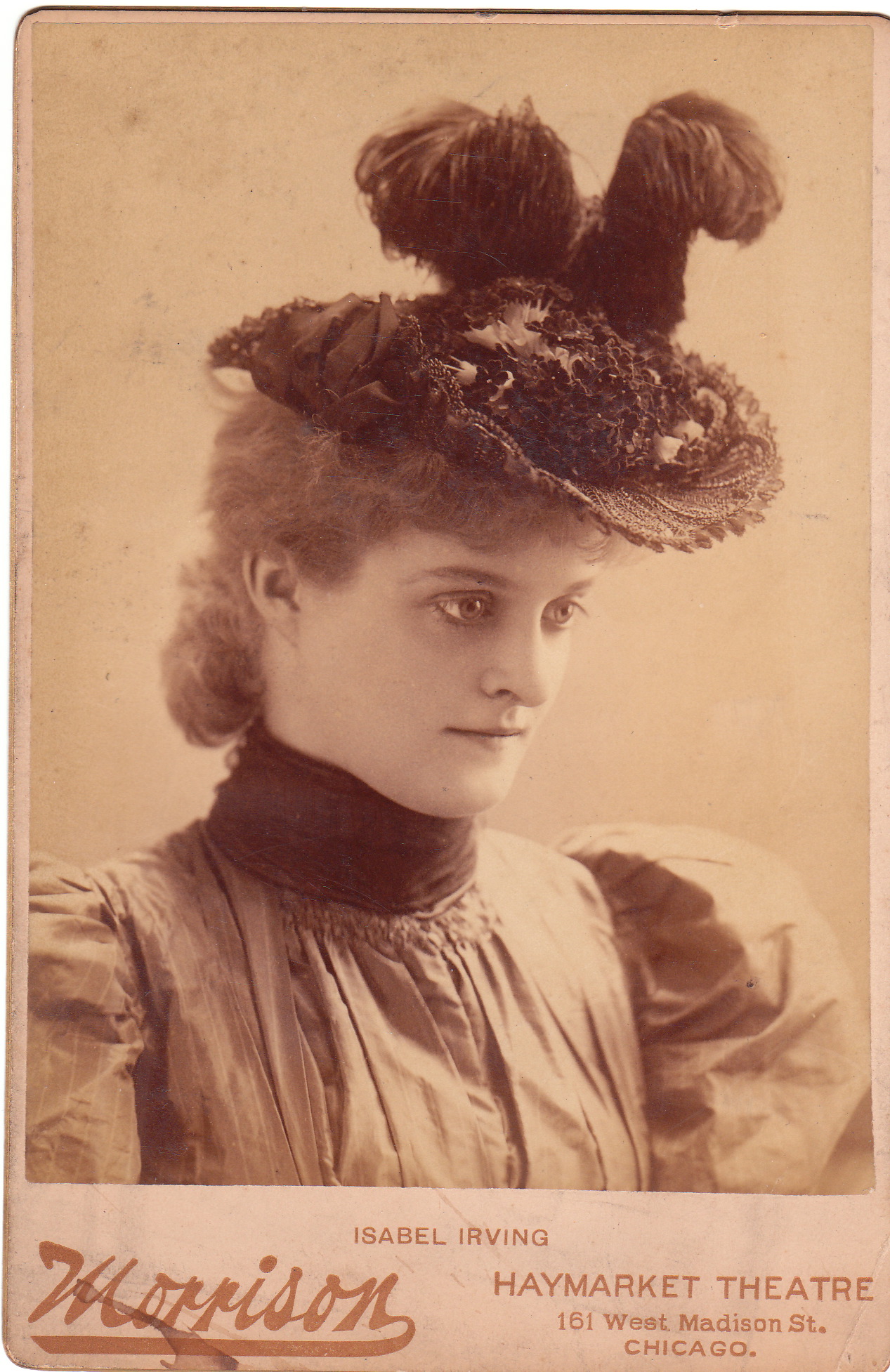
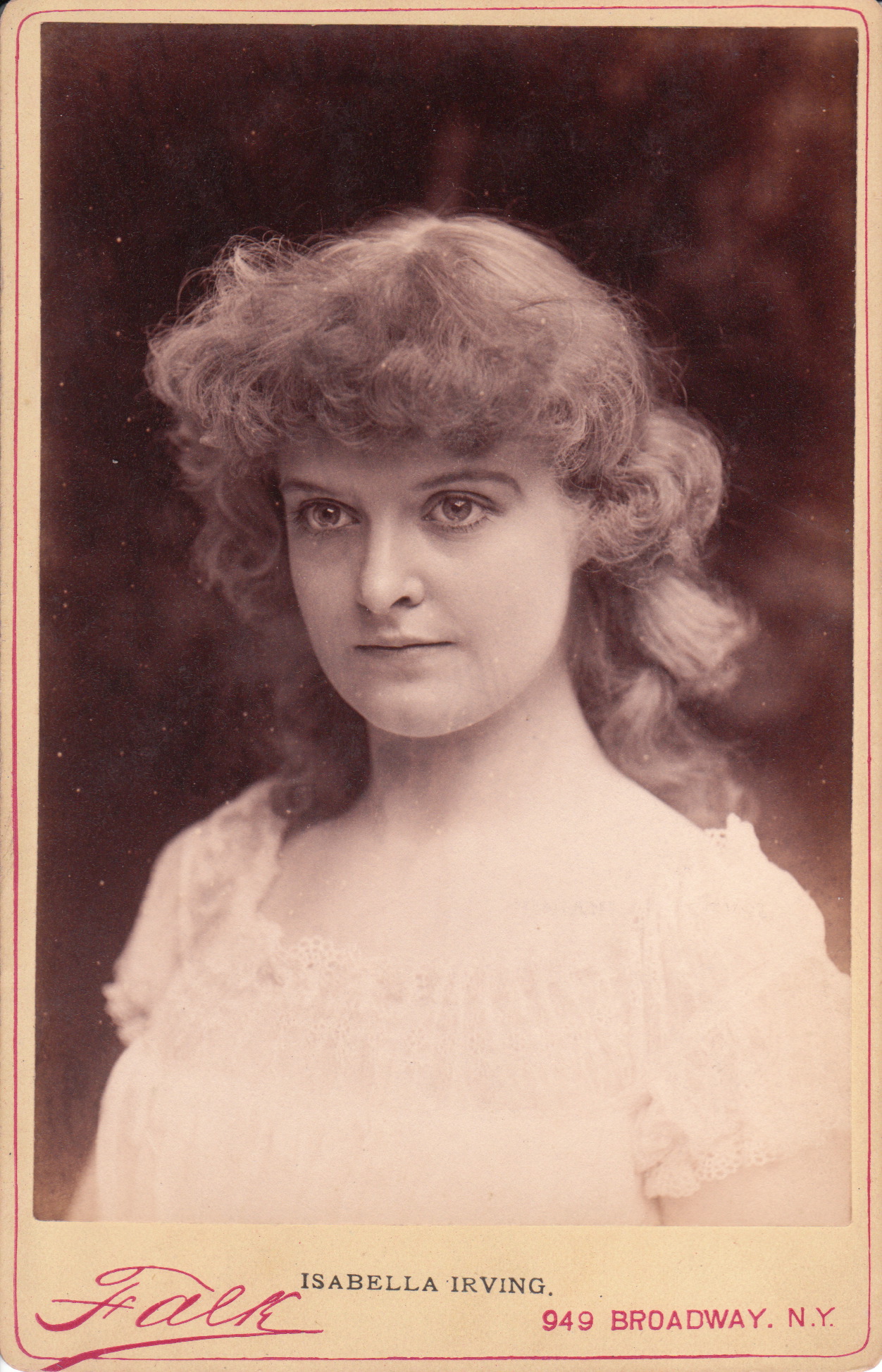
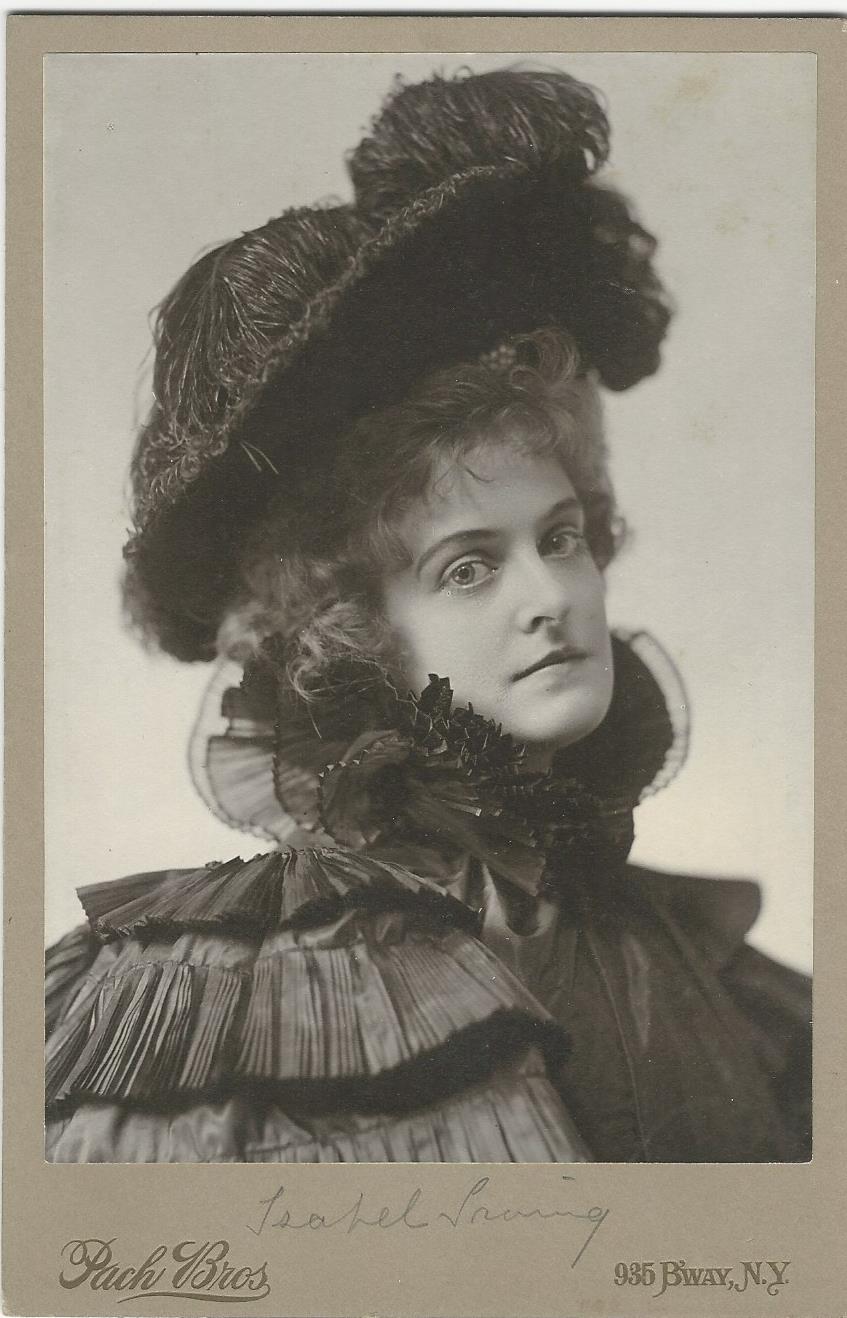
Isabel Irving (1871-1944) was an American actress born in Bridgeport, Connecticut. Her stage career began in 1886. She performed in many performances of Shakespeare. She was also in more than 30 Broadway plays between 1894 and 1936.  These plays included “Merry Wives of Windsor” (1917) and “Uncle Vanya” (1930). The first cabinet photo was done at the studio of Napoleon Sarony in New York.  Sarony was a very famous photographer of his time and known for his photos of theatrical performers and other celebrities. The second photograph comes from the studio of William McKenzie Morrison who was located in the Haymarket Theatre building in Chicago, Illinois. The third cabinet card portrait features Miss Irving photographed by celebrated New York photographer Benjamin Falk. The fourth cabinet card was produced by Pach Brothers studio in New York City. To view a photograph of Isabel Irving’s sister, write “Evangeline Irving” in the search box and press search. To view other photographs by any of the four cited photographers, click on the category “Photographer: Falk, Photographer: Sarony, Photographer: Morrison, or Photographer: Pach Brothers.

PORTRAIT OF STAGE ACTRESS MARY HAMPTON (BY CELEBRITY PHOTOGRAPHER MORRISON IN CHICAGO, ILLINOIS)

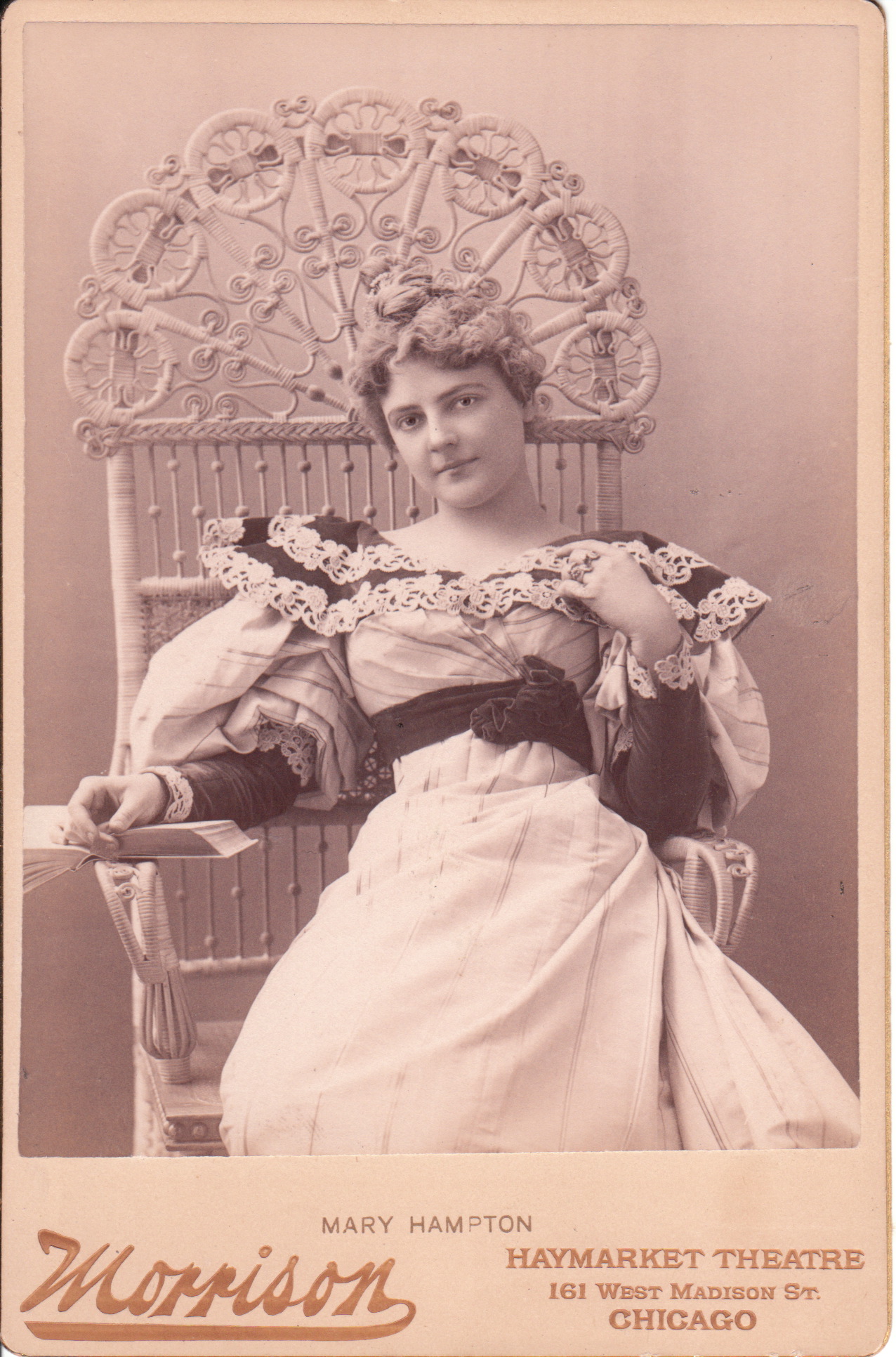
MARY HAMPTONThis cabinet card portrait features slumping actress Mary Hampton photographed by Chicago celebrity photographer William McKenzie Morrison. Miss Hampton was a pretty woman and apparently a very successful actress of her day as there are many references to her, as well as accolades about her,  in theatrical magazines and newspapers. A photograph of her appears in Broadway Magazine (1898). The New York Times (1899) printed a large illustrated portrait of Miss Hampton in her role as Gertrude Ellingson in the play “Shenandoah”. The book “American Women Theatre Critics: Biographies and Selected Writings of Twelve ….”  by Alma J. Bennett (2010) praises Hampton in her role as Rosamund. It is asserted that she played the part “true to the high standard of womanly power and gentleness”. The reviewer also compared her favorably to the great actress Helena Modjeska.  The New York Times (1931) printed an obituary when she died at age 63. To view other photographs by Morrison, click on the category “Photographer: Morrison”.

Published in: on August 1, 2013 at 12:01 am  Comments (1)  

DELLA FOX: AMERICAN STAGE ACTRESS (IMAGES FROM 1893 and 1894)

fox3_0001

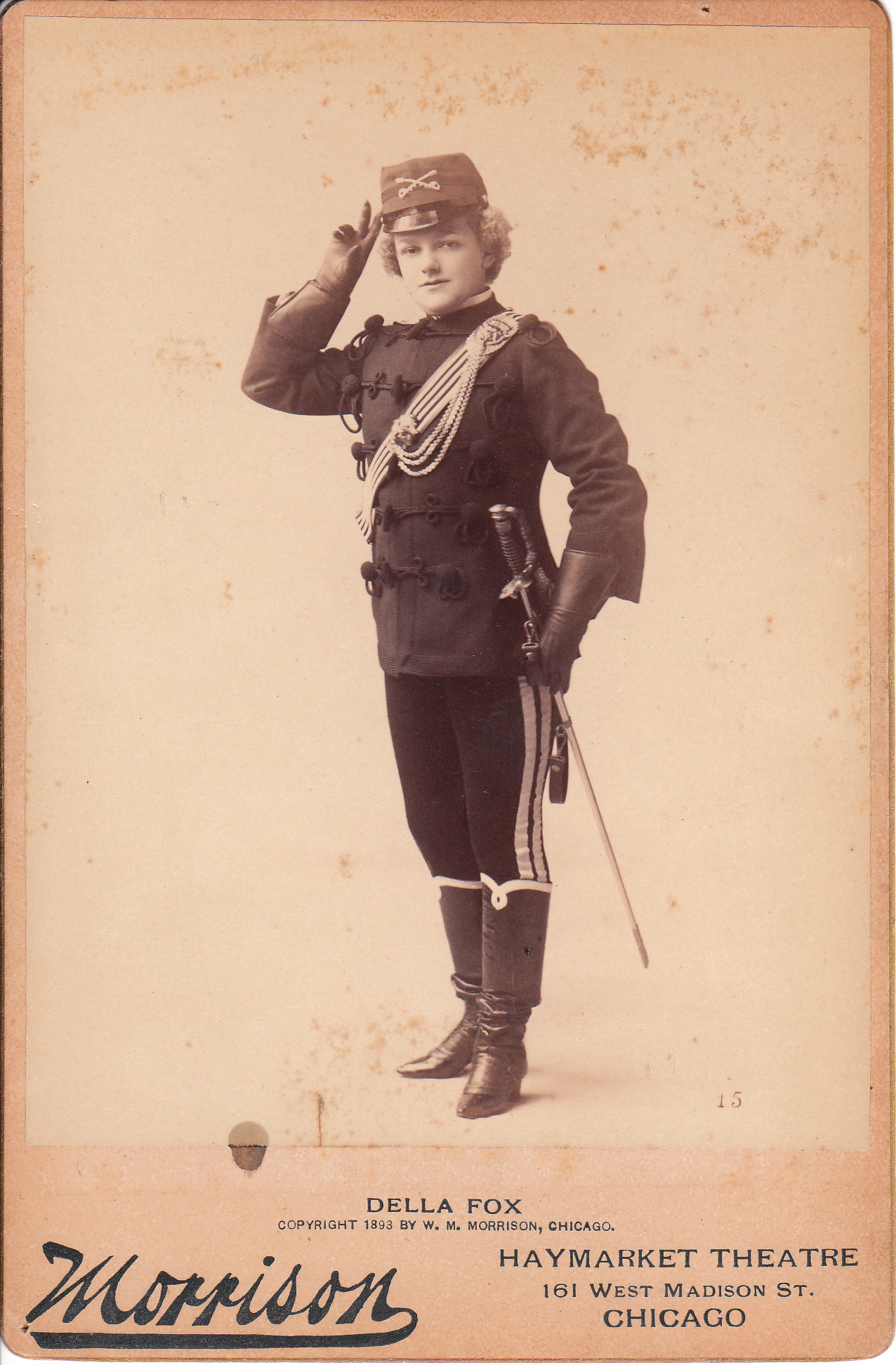
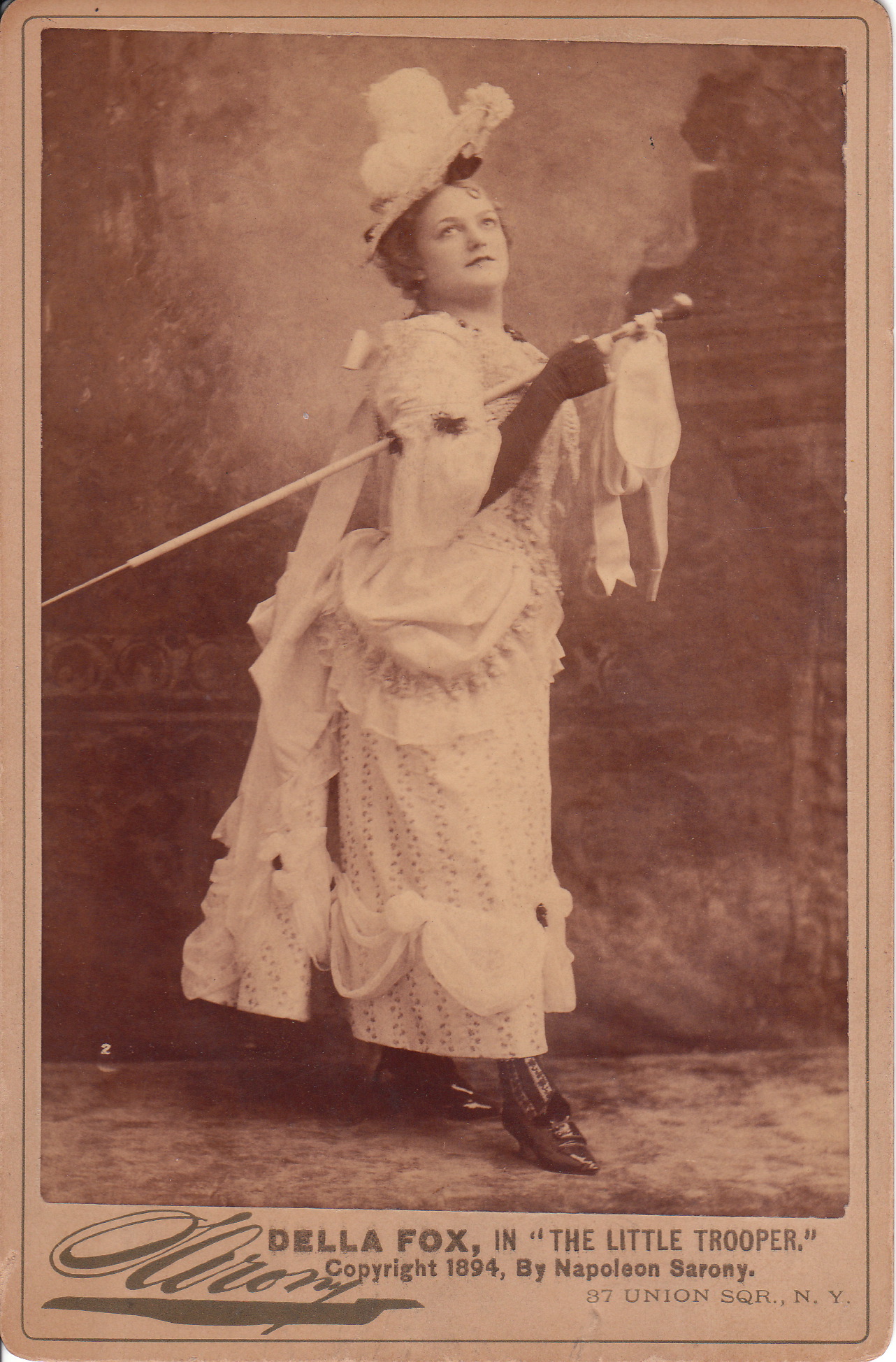
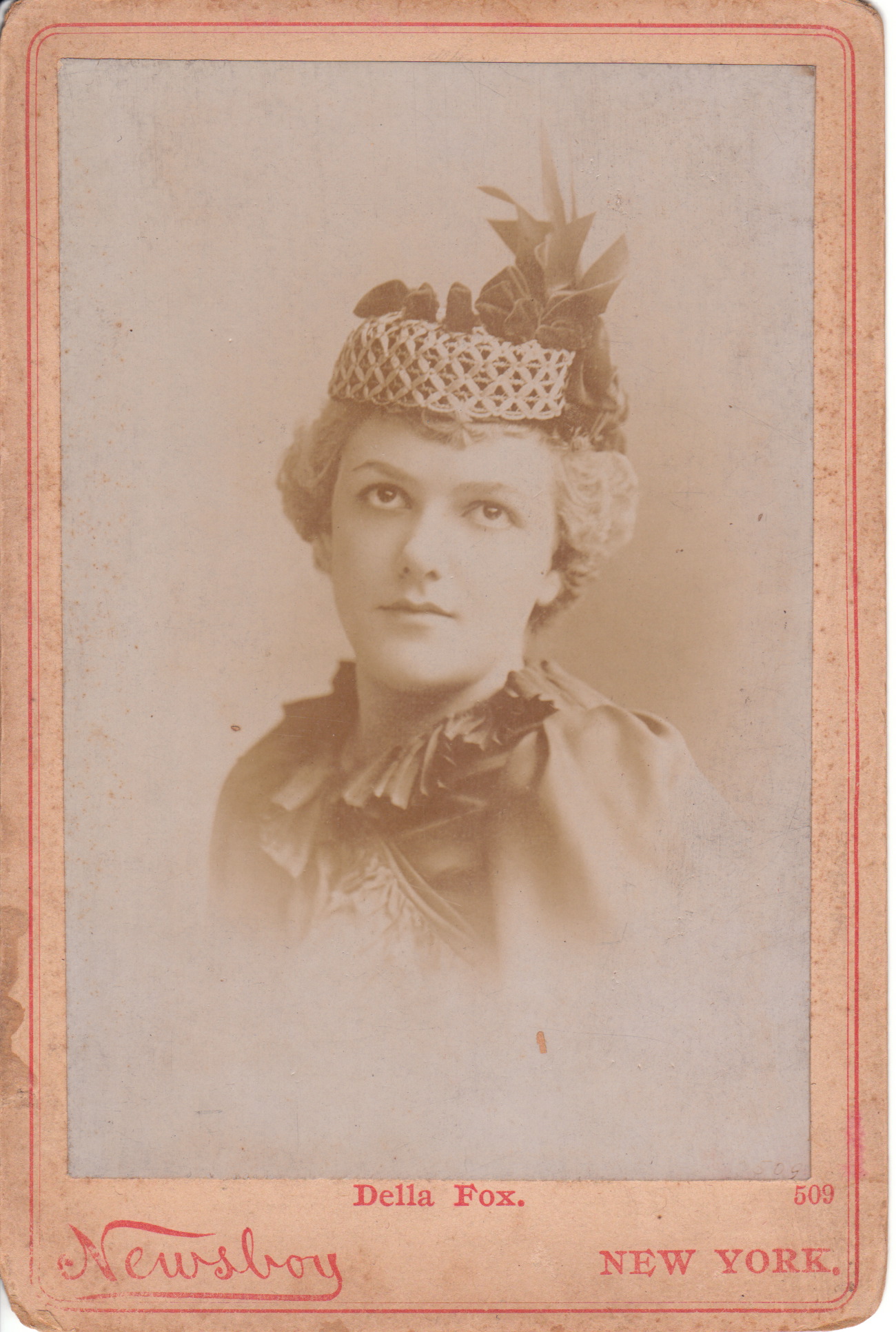
These cabinet cards feature American stage actress, Della Fox (1870-1913). In the top photograph, she is wearing a military costume  for a play that she was appearing in. The photograph is copyrighted in 1893. She began her acting career as a child and became a well known musical comedy actress. Her popularity peaked in the 1890’s when she appeared in several musical with De Wolf Hopper. She also toured with her own theatre company. Her life was plagued with personal problems including alcohol and drug abuse, and mental breakdowns requiring institutionalization. This cabinet card portrait was photographed by Morrison who is known for his portraits of theatre stars and other celebrities. Morrison operated out of the Haymarket Theatre builiding in Chicago, Illinois. Please click on the category “Photographer: Morrison” for more information about Morrison and to view other photographs by his studio.  The second photograph captures Della Fox in costume for the play “The Little Trooper”. The play was by William Furst (1852-1917) and appeared at the Empire Theatre in New York City. The photograph is the work of Napoleon Sarony, famed celebrity photographer of New York City. The reverse of the cabinet card indicates that the photograph was taken on December 25th, 1894. To view other photographs by Sarony, click on Cabinet Card Gallery’s category of “Photographer: Sarony”. The third photograph of Miss Fox was produced by Newsboy as a premium to be given away with their tobacco products. It is number 509 of a series. To view other Newsboy photographs, click on the category “Photographer: Newsboy”.

STAGE ACTRESS NANETTE NIXON IN CHICAGO, ILLINOIS

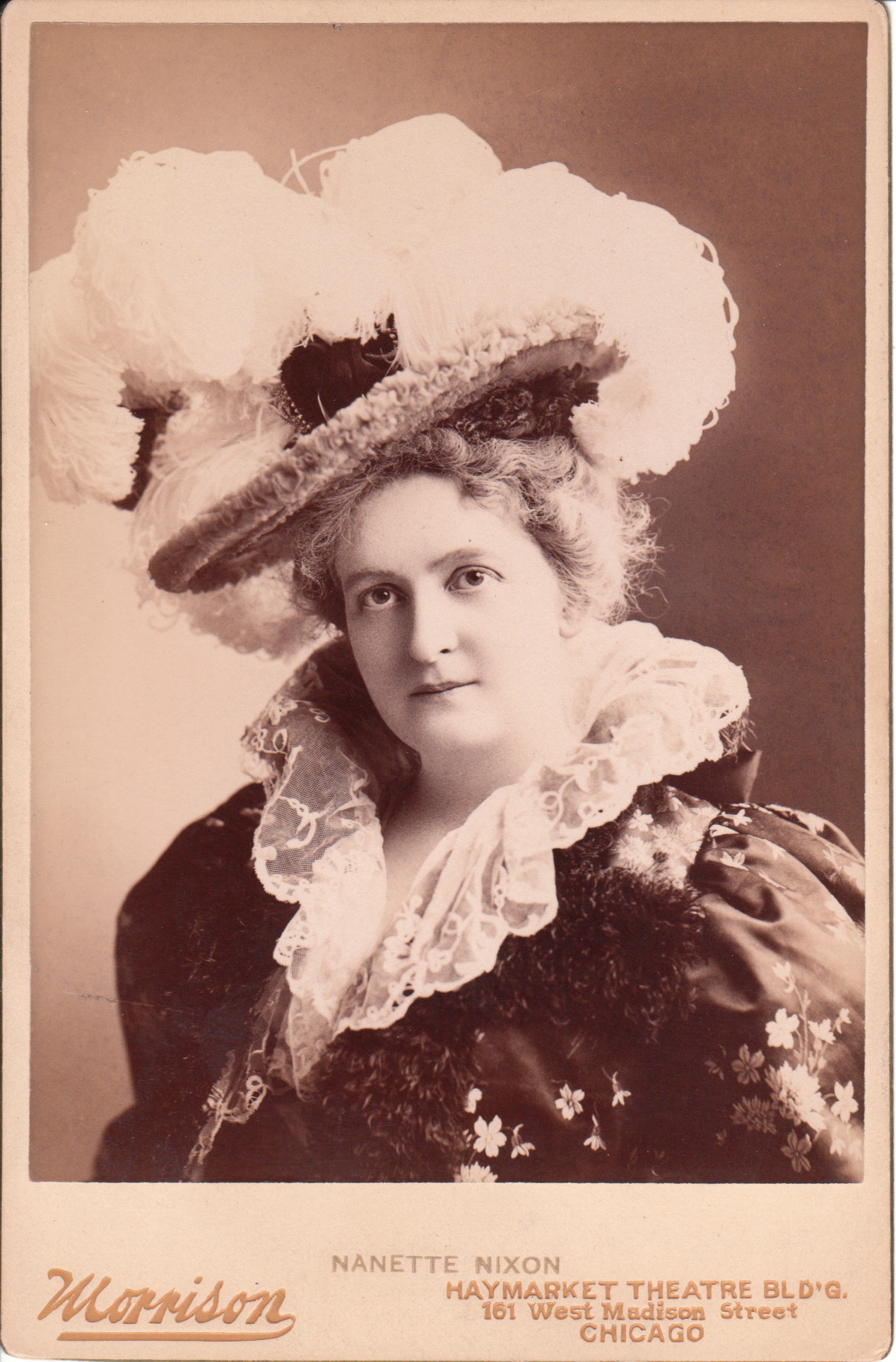
chicago musician This cabinet card features stage actress Nanette Nixon. She is wearing a flower pattern dress with a lace collar. Nixon’s photograph appeared in The Sunday Telegraph (1898) and the text describes her as “soulful and able as an actress”. The brief article reports that theatre goers in New York were looking forward to her upcoming appearances there. Interestingly, the photograph in the Telegraph was taken by the same photographer who produced the photograph appearing on this cabinet card. The photographer of this image is William Mckenzie Morrison whose studio was located in the Haymarket  Theatre building in Chicago, Illinois. Morrison was a well known and successful  celebrity photographer. The reverse of the photograph is illustrated with medals from the Columbian Exposition in Chicago (1893), Photographers Association of America (1894), The Cotton States and International Exposition (1895), and various other competitions. To view other photographs by Morrison, click on the category “Photographer: Morrison”.