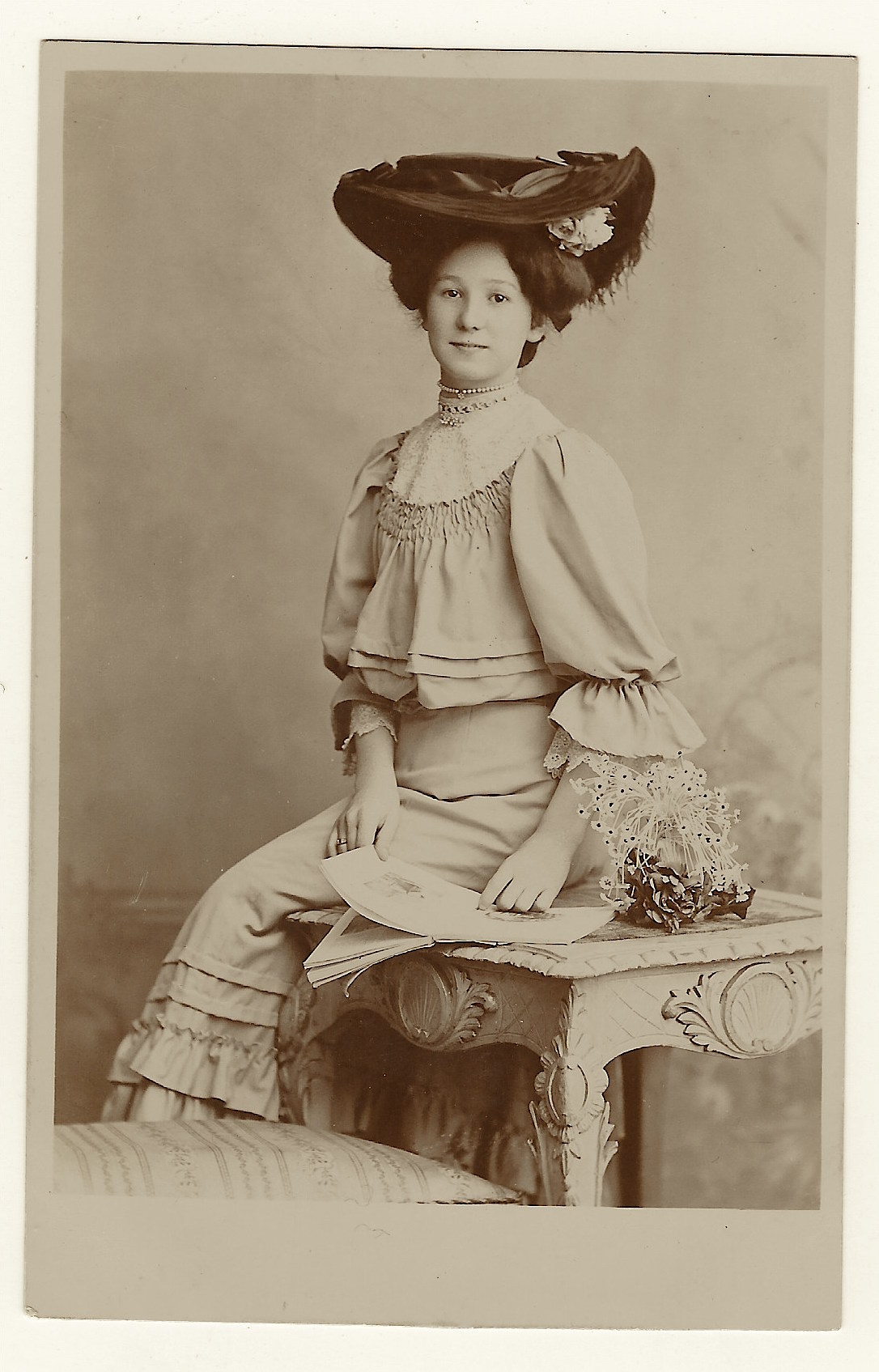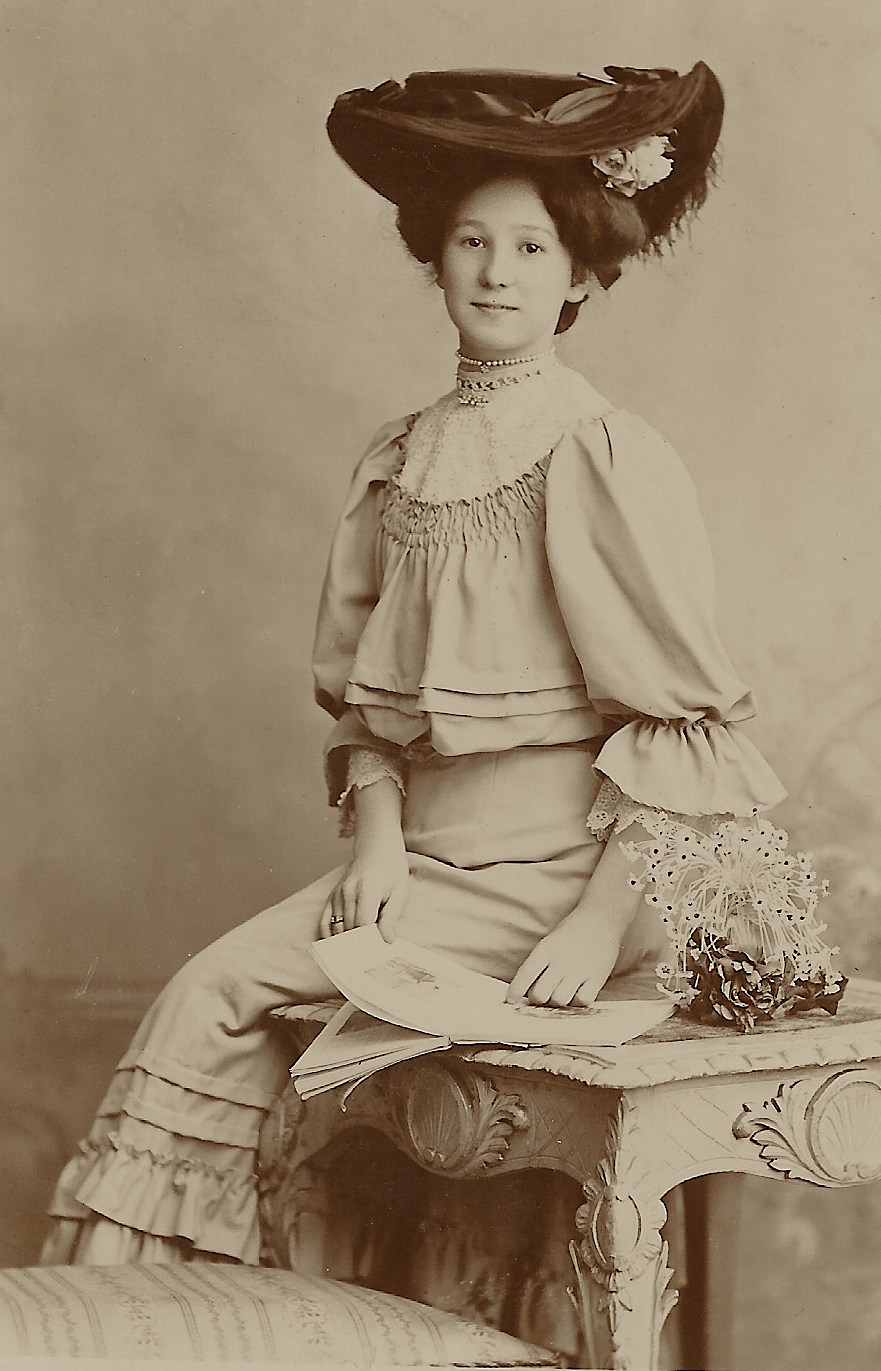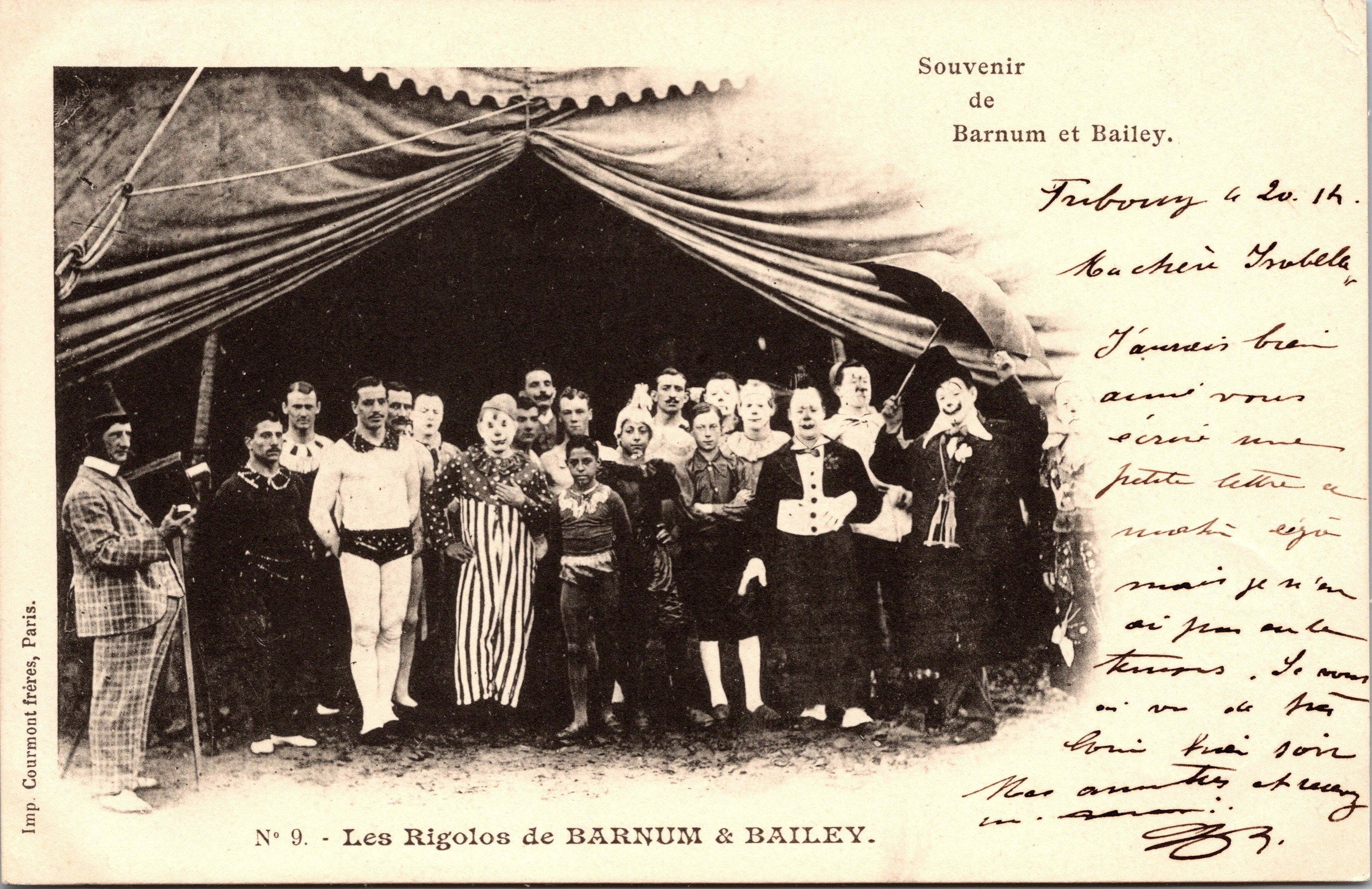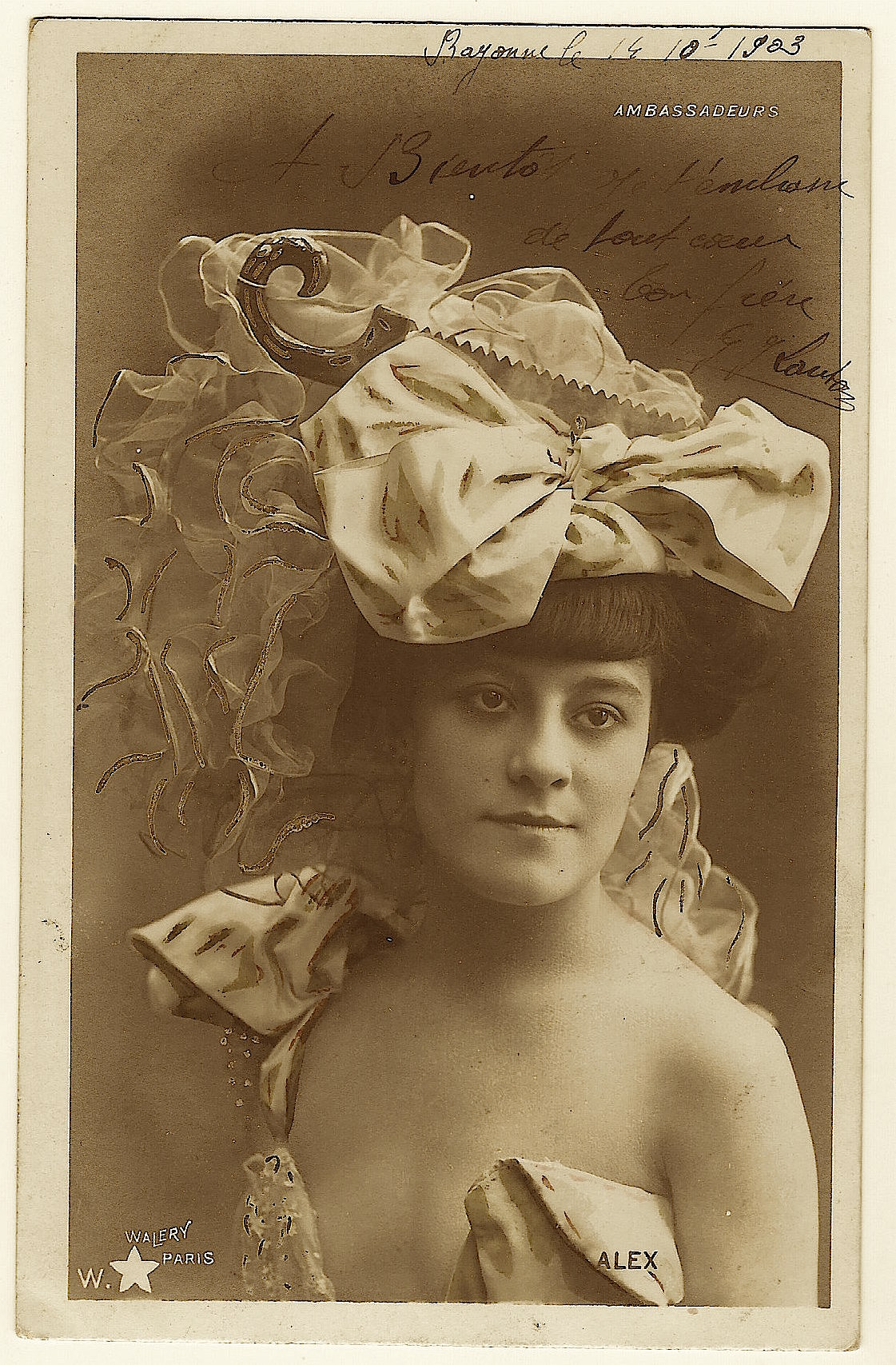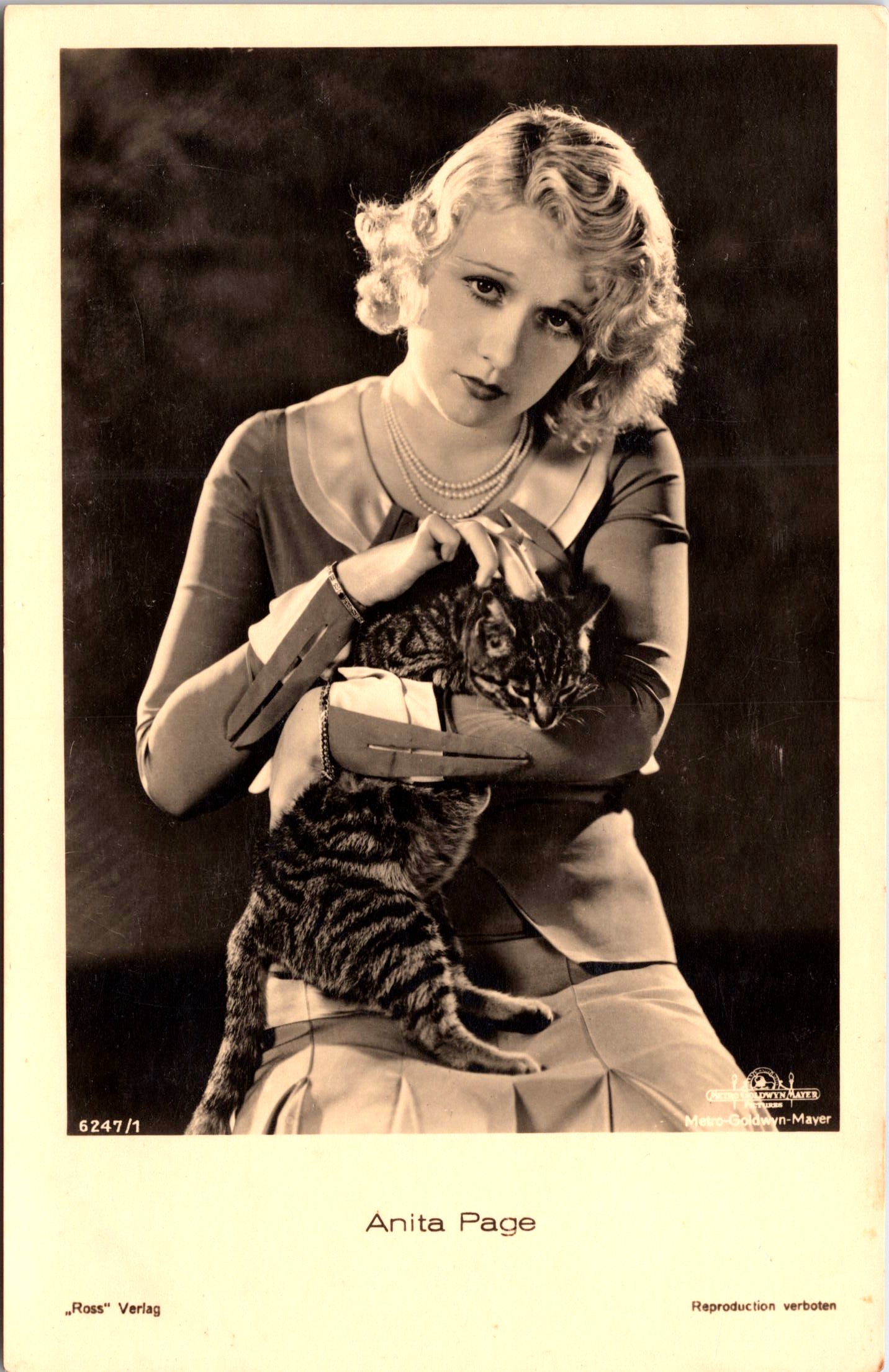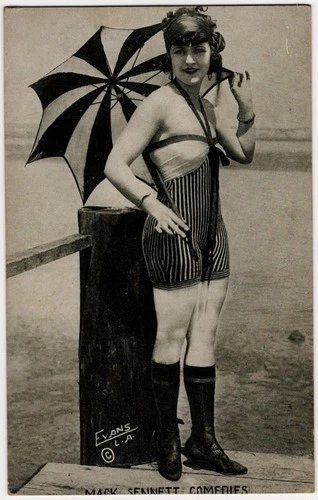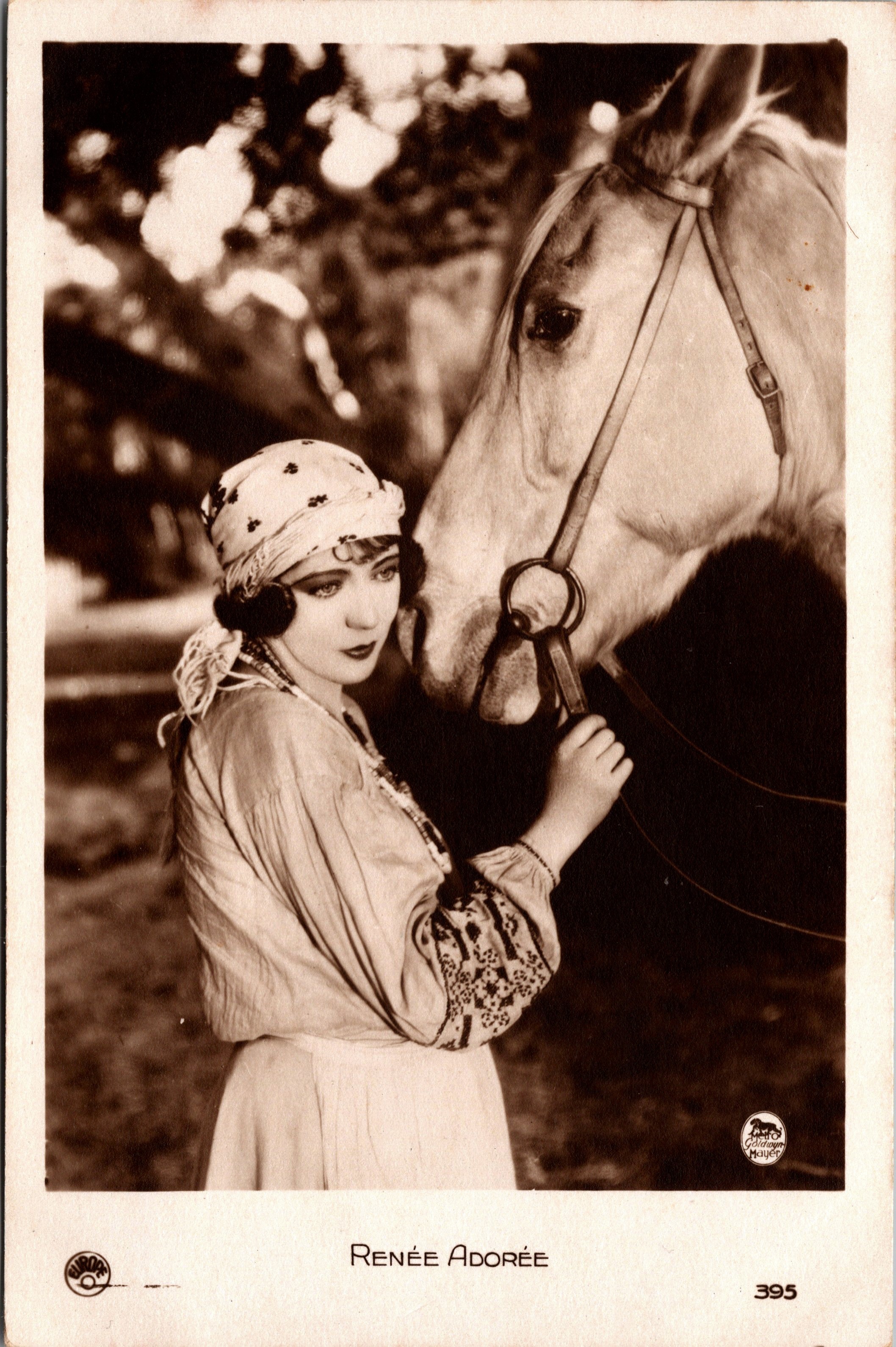
This vintage divided back real photo postcard features a young woman dressed as a Pierrot. Actually, the female version of a Pierrot is “Pierrette”. The girl’s photo was taken by Hilde u. Clown Sarra Musik-Akt. The publisher of the postcard was Graph. Anstalt, located in Magdburg, Germany. (SOLD)
This vintage real photo postcard exudes a form of patriotism that is seldom seen today. The AZO stamp box indicates that this photo was taken sometime between 1918 and 1930. This was an era when it was relatively common for individuals to include flags when having their picture taken. We tend to see a resurgence of exhibiting American flags for short stints during the time of national threat or crisis (ie 9/11). When people chose to pose with flags during the 1910’s and 1920’s, it wasn’t to tout a particular cause. They were just expressing their love and fidelity toward their country. There is faint writing in pencil on the reverse of this postcard. The text states “With love from Mr. and Mrs. Chester McCrumb (?), To our sister Mrs. Jennie Hubbard”. This photo postcard has excellent clarity and is in good condition (See Scans and note bottom right of image). SOLD
This vintage lithographic postcard features a Jewish Temple, located in San Antonio, Texas. Note the two horse and carriages at the curb in front of the temple. The temple appearing on this postcard is “Temple Beth El”. The congregation was founded in 1874 and its first temple was opened in 1875. Many of the temple’s members were German immigrants who came to Texas in the 1850’s and 1860’s. In 1903, the congregation opened another temple to replace the first which was outgrown. The second temple, built on the site of the first, is pictured on this postcard. The second temple was replaced in 1927. This postcard is from the 1900’s or 1910’s. It was published by Paul Ebers, located in San Antonio. SOLD
The image portrays a vibrant downtown block of Colville, Washington. The view looks down a main street lined with parked cars and pedestrians strolling the sidewalk. Most of the automobiles are mid- to late-1940s American models, easily identified by their rounded fenders, grille styles, and size — notably sedans from Ford, Chevrolet, and Plymouth. The cars suggest a post-WWII era, likely no later than 1951. Several business signs appear clearly in the photograph. These signs include advertising for Fonk’s Five & Dime, A & K Meats, Newland’s Tavern, Sterling’s Variety Store, Gamble Store, a traditional barber’s pole, and a Coca Cola sign. The caption on the bottom of the image notes that the photo was by Leo’s Studio and number 449-155 in a series. The stamp box on the reverse contains an EKC (E. C. Kropp Company) logo, which was widely used between 1939 and 1950. When combined with the types of cars shown in the image (none appearing post-1950), a strong estimated date for this postcard is circa 1948–1950.SOLD
This vintage real photo postcard features a beautiful French actress, theater director, and poet, named Cora Laparcerie (1875-1951). Laparcerie looks quite beautiful, and goddess like, in this profile postcard portrait. Note her ornamental hair band. She played various theatrical productions, including classical plays and original French drams. Laparcerie began her career at the Odeon theater in Paris. Soon she was taking on major roles in French theaters. She was married to Jacques Richepin, the son of poet, Jean Richepin. The pair were a notable couple in French artistic circles. Laparcerie managed several prestigious Parisian theatres. In her later career she concentrated on writing poetry, theater columns and early radio dramas. This postcard was published by SIP and Laparcerie’s photograph was taken by Leopold Reutlinger. This is an undivided back postcard (at least pre 1907). SOLD
This vintage real photo postcard features a beautiful geisha. Geishas entertained via song, dance, or playing a musical instrument. Geishas were not necessarily prostitutes, though some were. This postcard is printed on Hinode photo paper. SOLD
This vintage real photo postcard features theater actress and singer, Madge Saunders (1894-1967). She was born in South Africa. She was married twice, both times to actors. She appeared in two film (1918, 1930). There are 47 portraits of Saunders in England’s National Portrait Gallery. This photo portrait of Miss Saunders is one of the images in the gallery’s collection. This photograph was published by J. Beagles & Co. as part of a series (no.253A). Saunders was photographed by a celebrated female photographer, Rita Martin. SOLD
This vintage real photo postcard captures the scene of a man sharing an intimate moment with a pretty blonde woman sitting on a motor scooter. The photographer appears to have caught the man in a lustful moment. I doubt the man is giving tips about motorcycle care and maintenance. I find it unusual that the woman would be riding a motorcycle while wearing a long dress. Finding information to identify the manufacturer of this motorcycle was difficult. I discovered that a company named “Tomos” manufactured a bike whose name included the word “Galeb”. Note that a nameplate on the front of the bike says “Galeb”. Tomos manufactured motorcycles from their factory based in Koper, Slovenia. They still provide various products to their Eastern European market. The language printed on this postcard is from Slovenia. It appears that the photographer was Z. Mirkovic and the publisher was ZK. The postcard is part of a series (no. 2881). This photo postcard measures about 5 5/8″ x 4″ and is in very good condition (see scans).
This vintage real photo Postcard 1 features pretty American actress and dancer, Pauline Chase (1885-1962). She was a regular performer both in the United States and the United Kingdom. She is especially known for her extended starring role in the British production of “Peter Pan, The Boy Who Wouldn’t Grow Up”. Her nickname was the “Pocket Venus of New York”. She was born in Washington D.C. and attended school in New York. She began acting when she was just fifteen years old. In 1901, producer, Charles Frohman recruited her to play in the London production of “The Girl From Up There”. She was just 15 years old. Upon her return to the US, she created a sensation as the “Pink Pajama Girl” in “The Liberty Belles”. She played one of the “lost boys” in the debut of Peter Pan (1904) in London. In 1906 she was chosen by producer, Charles Frohman, and playwright, J. M. Barrie, to play the title role in the production (1906-1913). This role brought her much fame and financial security. While in England, over the years, Chase developed quite a following. Charles Frohman had become her friend and mentor. Chase was a social beauty with many influential friends and admirers. She was a member of the socially elite and lived an extravagant life style. In 1913, Chase retired from the stage to marry a banker. The pair had three children. In 1916, Chase came out of retirement to play in her one and only movie appearance. There are 52 portraits of Chase in the National Portrait Gallery. The film “The Real Thing At Last” was a satirical film, based on MacBeth, written by Barrie. This postcard has a 1907 postmark. The card was published by Rotary Photo as part of a series (No.4083O). Miss Chase’s photograph was taken by the Hutchinson & Svendsen studio. (SOLD)
Postcard 2 was published by Rotary Photo as part of a series (No.4950A). Miss Chase’s photograph was taken by Alexander Bassano. (SOLD)
Postcard 3 has a 1907 postmark. The card was published by Raphael Tuck & Sons as part of a series (No.T30). Miss Chase’s photograph was taken by the Johnston & Hoffmann studio. (SOLD)
Postcard 4 features Chase wearing an interesting lace hat and she has a sweet, pure, and innocent appearance. This postcard was published circa 1909, the date of the cards postmark. The card was published by Rotary Photo as part of a series (No.4856L). Miss Chase’s photograph was taken by the Bassano studio. (SOLD)
This vintage real postcard features a fascinating portrait of “a Yemenite Jew Chief in Jerusalem”. It is my belief that rather than this being a “Yemenite Jew Chief”, this gentleman is the chief rabbi of the Yemenite Jews in Palestine. Arabic and Hebrew text can be found on the reverse of the postcard. The hebrew word on the postcard is “Teimanim” which translates to “Yemenite Jew”. “Palestine”, not Israel, is printed on the reverse of the postcard. “Palestine” is used because Israel was not established until 1948, long after this postcard was printed. The photographer of this portrait is Shlomo Narinsky and the card was published in 1921 by the Jamal Brothers (located in Jerusalem). This postcard portrait is included in the collection of the US Library of Congress. Shlomo Narinsky (1885-1960) was born in Southern Russia (Ukraine). In 1904/1905, he studied photography in Paris and Berlin. He returned to Russia only briefly before immigrating to Palestine. He opened a photography studio in Jerusalem. He produced many postcards focusing on Palestine. He was known for his use of light and shadow in order to give his images a soft and romantic air. Shlomo’s wife, Sonja, was also a very talented and highly esteemed photographer. This postcard has excellent clarity and is in excellent condition (see scans). SOLD