DOLORES DEL RIO : BEAUTIFUL ACTRESS : STAR OF AMERICAN AND MEXICAN CINEMA : RPPC

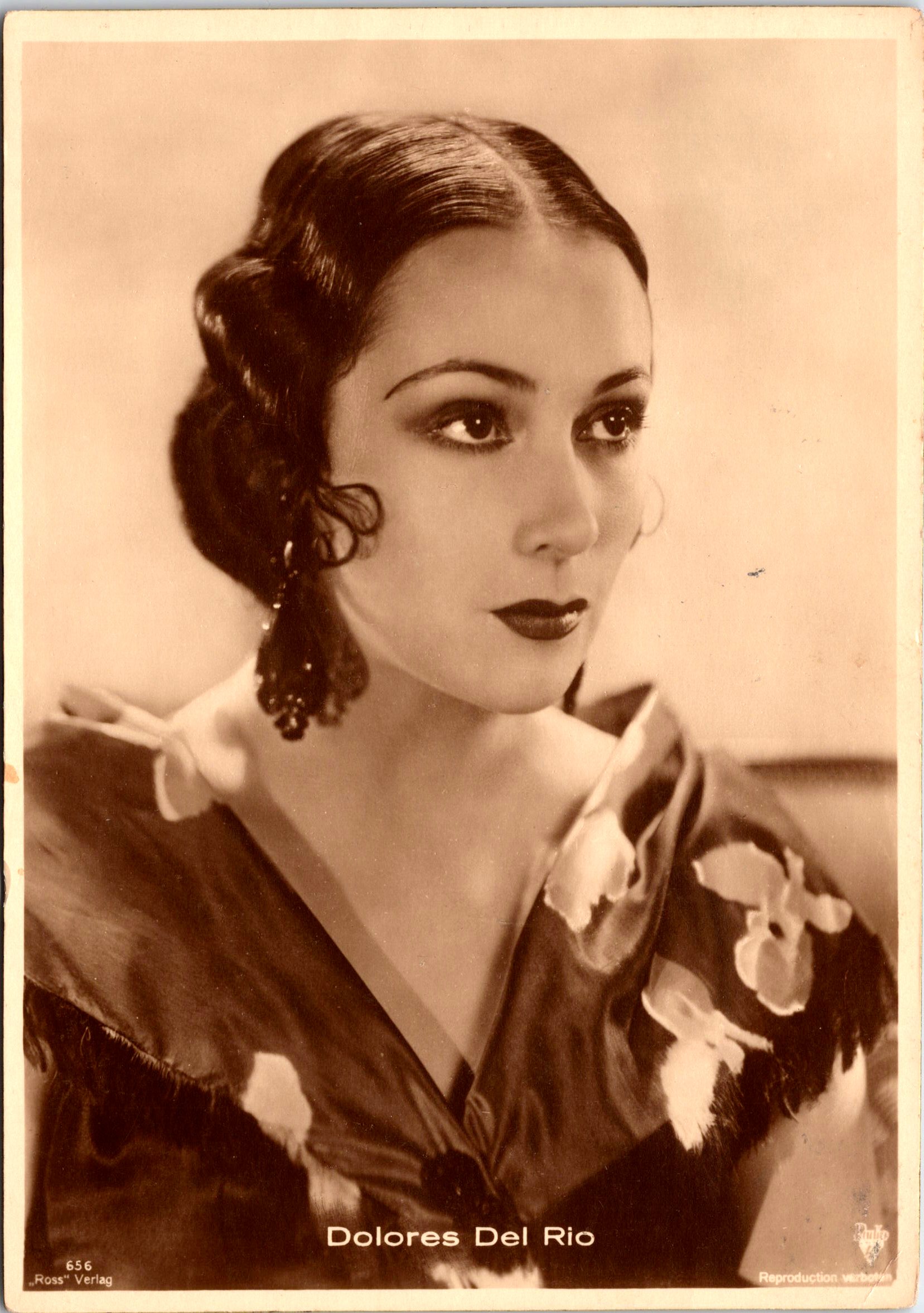
This vintage real photo postcard features pretty Mexican actress, dancer, and singer; Dolores del Rio (1904-1983). Del Rio’s performing career spanned more than half of a century. She was the first major Latin American actress to become an American film star (1920’s & 1930’s). Del Rio was also a major star in Mexican films. Dolores was known for her beauty as well as for her talent. She was discovered in Mexico and her Hollywood film career started in 1925. She began her career with a number of successful films, including “Ramona” (1928) and “Evangeline (1929). During the silent film era, she was considered the female version of “latin lover”, Rudolph Valentino. Del Rio was one of the fortunate actresses whose career was not destroyed by the advent of sound films. She acted in a wide range of film genres. “Bird of Paradise” (1932) and “Madame Du Barry” (1934) were among her successful films of the 1930’s. In the early 1940’s, her Hollywood career began to flounder sparking Del Rio to return to Mexico to become a major star of Mexican cinema. She continued acting in Mexican films through the 1950’s. Beginning 1960 she acted in both Mexican and Hollywood films. During the late 1950’s through the early 1970’s, Del Rio acted in theater and television. Dolores was born in Durango City, Mexico. Her parents were part of Mexican aristocracy whose lineage could be traced to Spain. Dolores was the cousin of actor Ramon Novarro (another silent film”latin lover”), and of Mexican cinema actress, Andrea Palma. During the Mexican Revolution (1910-1920), Dolores’s family lost its fortune. Her family felt threatened by Pancho Villa’s insurgence. It was time to “get out of town”. Her father fled to the United States while she and her mother escaped to Mexico City. Acting was an integral part of Dolores’s getaway. She and her mother felt compelled to dress as peasants to insure safe passage on the train to Mexico City. Her parents reunited there in 1912. Dolores attended a college in Mexico City operated by French nuns. After seeing Russian ballerina, Anna Pavlova perform; Dolores decided to become a dancer and took lessons from a well respected teacher. At age 17, Dolores married Jaime Martinez del Rio. He was from a wealthy family and was educated in England. The couple honeymooned in Europe for two years and Dolores formed close relationships with a number of members of European aristocracy. When the couple returned to Mexico, they settled in Mexico City. In 1925, Dolores met American filmmaker Edwin Carewe, and he was spellbound. He convinced Dolores and her husband to move to Hollywood where he promised to make Dolores a star. Her husband hoped to write screenplays there. When they arrived in Tinseltown, Carewe launched a public relations campaign to raise excitement about his beautiful find. He built up her aristocratic background by saying such gems as Dolores was “the first lady of high Mexican Society” and that she had come to Hollywood with a collection of shawls and combs valued at fifty thousand dollars. Dolores made her film debut in “Joanna” (1925), where she played a vamp of Spanish-Brazilian origin. Her first starring role was in the comedy “Pals First” (1926), directed by Carewe. That same year, Dolores appeared in the war film “What Price Glory?”. The movie was a huge financial success and helped Dolores become one of the “WAMPAS Baby Stars” of 1926. Other members of her “class” were Mary Astor, Joan Crawford, Janet Gaynor, and Fay Wray. By then, her film career was rocketing. Her role in Resurrection” (1927), a popular film based on a Tolstoy novel, further propelled her career. While her career was succeeding, her personal life was a “hot mess”. Her marriage to Del Rio ended in 1928. He had much difficulty being in the shadow of his famous and successful wife. Six months after Dolores filed for divorce, Del Rio died in Germany. While dealing with her grief, she had to deal with constant harassment from her discoverer, Edwin Carewe. He wanted to be more than her agent and her director since he had first launched her career. In 1929, Dolores announced to the press, that despite Carewe’s claims, the pair were just friends and business companions. She added that they had no plans for marriage. Soon thereafter, she cancelled her contract with him. The end result was a legal dispute that was settled out of court. Carewe’s anger did not end there. He disparaged her the press and refilmed “Resurrection” starring Lupe Velez, another popular Mexican film star. In 1930, Del Rio married MGM art director, Cedric Gibbons. They became one of Hollywood’s most followed couples of the early 1930’s. In 1932, the film, “Birds of Paradise”, was released to rave reviews. The film starred Del Rio and actor, Joel McCrea. The movie was a South Seas love story. A scandal arose from the film because of a scene featuring the pair swimming naked. Controversy continued in Del Rio’s appearance in “Flying Down to Rio” (1933). In this film, Del Rio was the first actress to wear a two piece bathing suit on screen. Fred Astaire and Ginger Rogers danced together for the first time on film, in this movie. Del Rio and Astaire also did an “intricate” dance number in the film. Del Rio found herself in political hot water when she and Ramona Novarro and Lupe Velez attended a special screening of a Mexican film which was accused of promoting Communism in California. Del Rio was accused of being a Communist for her attendance at the screening. In 1940, Del Rio began an affair with actor/filmmaker, Orson Welles. The dalliance resulted in Del Rio and Gibbons divorce. In 1954, Dolores was scheduled to co-star in a Spencer Tracy film, but the US government would not give her permission to work in the United States. The government believed she was sympathetic toward communism for attending the aforementioned film screening and for signing a petition supporting a world peace conference. After some time, she was able to remedy the problem by writing a persuasive letter to the US authorities. Later in life Del Rio did express some “political” beliefs. She stated that she wished she could play Mexican roles to show what life in Mexico was really like. She felt such an opportunity could help diminish the ugly stereotypes that existed about Mexicans in American society. She stated that it was her great wish to make fans realize the beauty, wonder, and greatness of Mexicans as a people. She asserted that the great majority of Americans view Mexicans as a “race of bandits, or laborers, dirty, unkempt, and uneducated”. Why do these false negative stereotypes sound so familiar? Del Rio wanted to show “the best that’s in my nation”. It has been pointed out by more than a few writers that Dolores del Rio was no “Latin bombshell”. Instead, she was noted for her elegance. The IMDb reports that Del Rio has 63 film credits ranging from 1925 through 1978. This vintage postcard was published by Ross Verlag as part of a series (no.656). The reverse of the card has a gold seal stating “Ross Splendid”. This postcard has a Netherlands stamp and was postmarked in Rotterdam in 1932. SOLD
RUTH VINCENT : ENGLISH OPERA SINGER AND ACTRESS : RPPC

POSTCARD 1

POSTCARD 2

POSTCARD 3

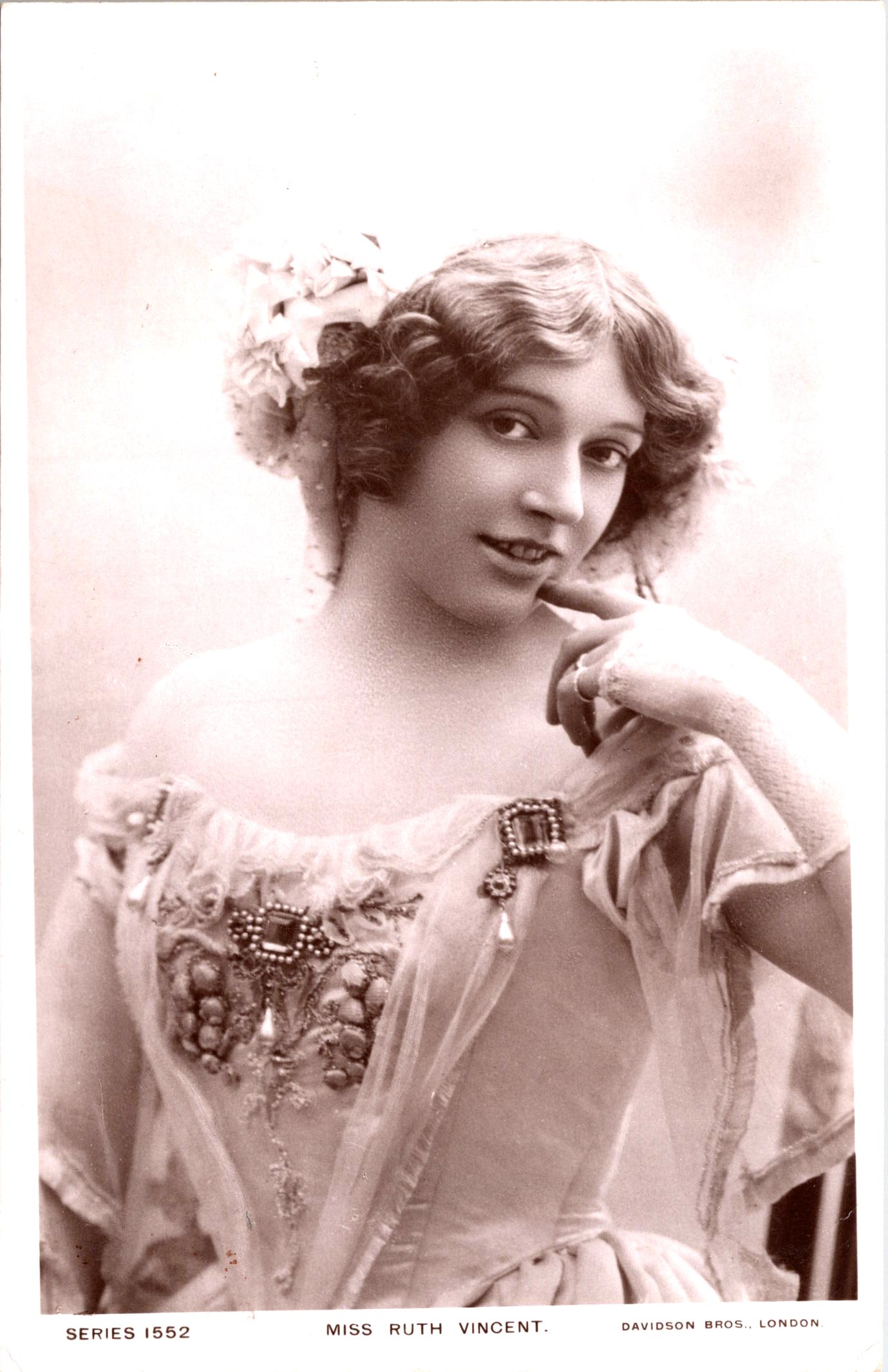
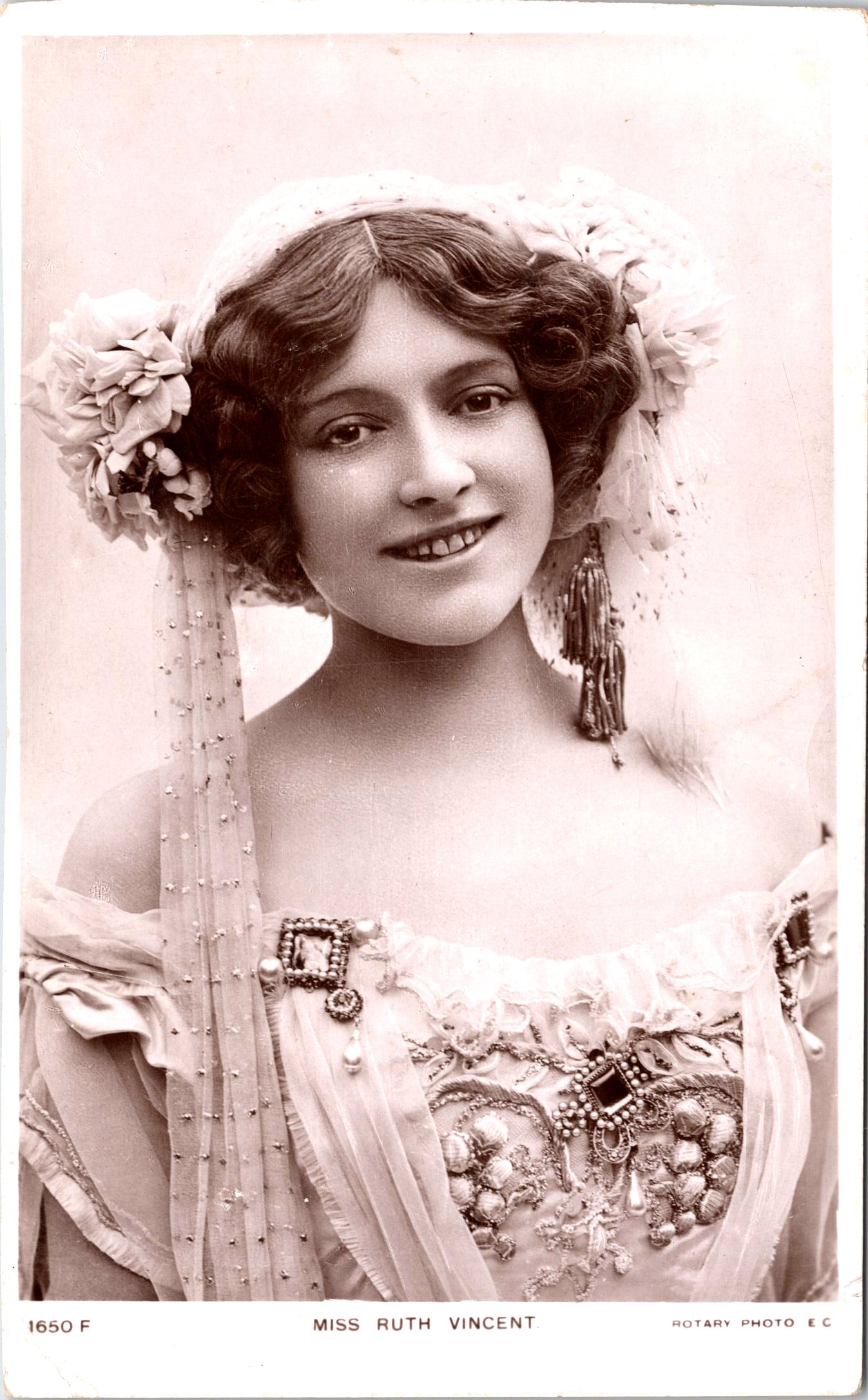
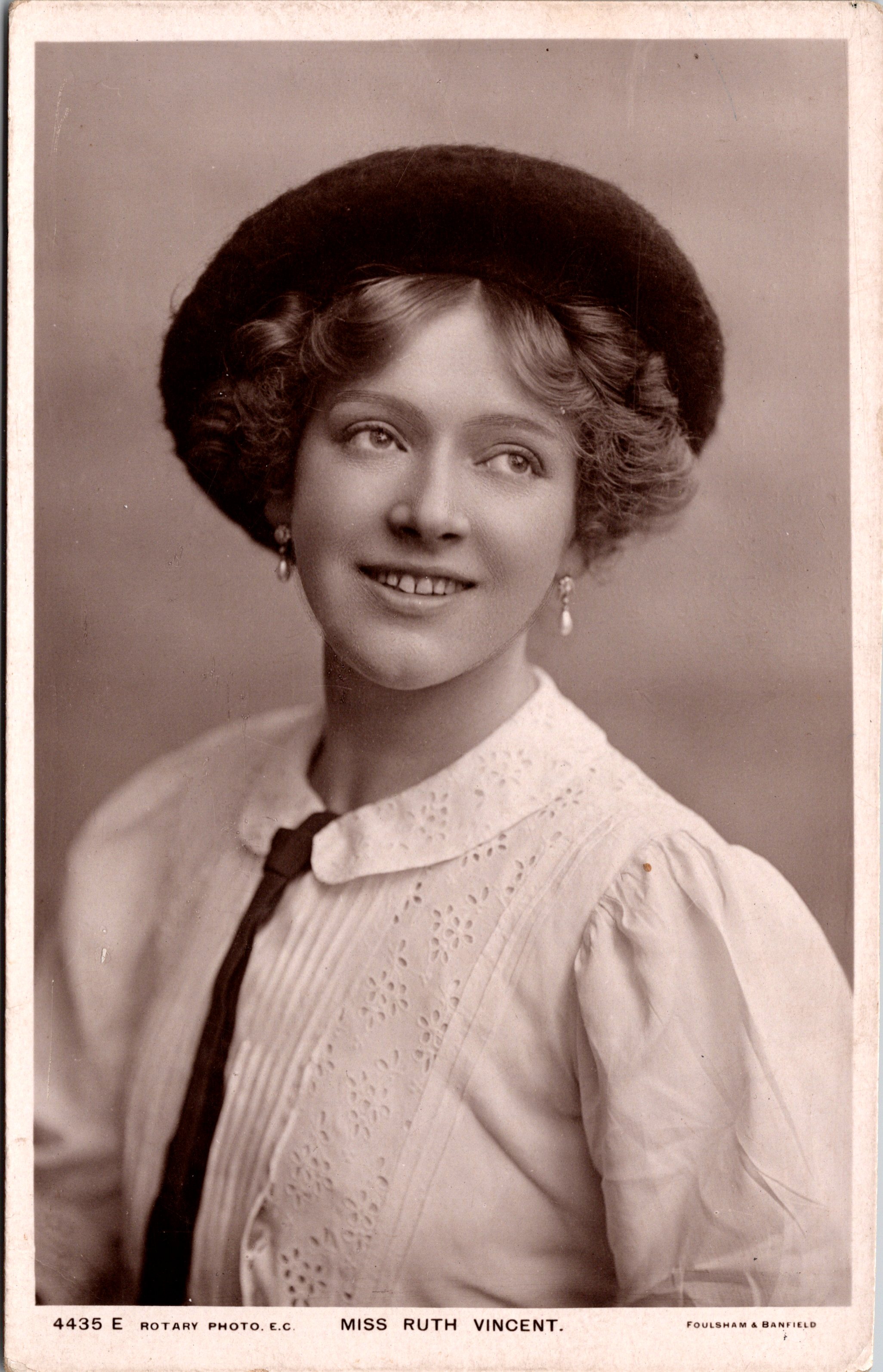
These vintage real photo postcards feature English opera singer and actress, Ruth Vincent (1873-1955). She is most well known for her soprano performances in the Savoy Operas with the D’Oyly Carte Opera Company in the 1890’s as well as in her roles in the West End (London) during the decade after 1900. Most notable was her performance in “Tom Jones”. She joined D’Oyly Carte in 1894, at age 17 as a chorus girl. By 1896, she was playing small roles and quickly was promoted to play leading roles. She left the company in 1899. Her career transitioned into appearing in Edwardian musical comedies, opera, and singing in concerts. Vincent also performed on Broadway. The IBDb reports that she had three Broadway appearances between 1900 and 1905. Vincent continued to sing and act until 1930. 

Postcard 1 : Vincent’s photograph on this card was taken by the Foulsham & Banfield studio. This postcard was published by Rotary Photo as part of a series (4435 E). The firm was located in London. This postcard is in very good condition (see scans). 

Postcard 2 : This postcard was published by Davidson Brothers as part of a series (no.1552). The firm was located in London, England. 

Postcard 3 : This postcard was published by Rotary Photo as part of a series (1650F). The firm was located in London, England. 

Buy this original Vintage Real Photo Postcard (includes shipping within the US) #5217

To purchase this item, click on the Pay with PayPal button below

$12.85

Buy this original Vintage Real Photo Postcard (includes International shipping outside the US) #5217

To purchase this item, click on the Pay with PayPal button below

$22.85

POSTCARD 1

GERALDINE FARRAR : PRETTY AMERICAN OPERA SINGER AND SILENT FILM STAR

POSTCARD 1 (SOLD)

POSTCARD 2 (SOLD)

POSTCARD 3 (SOLD)

POSTCARD 4 (SOLD)

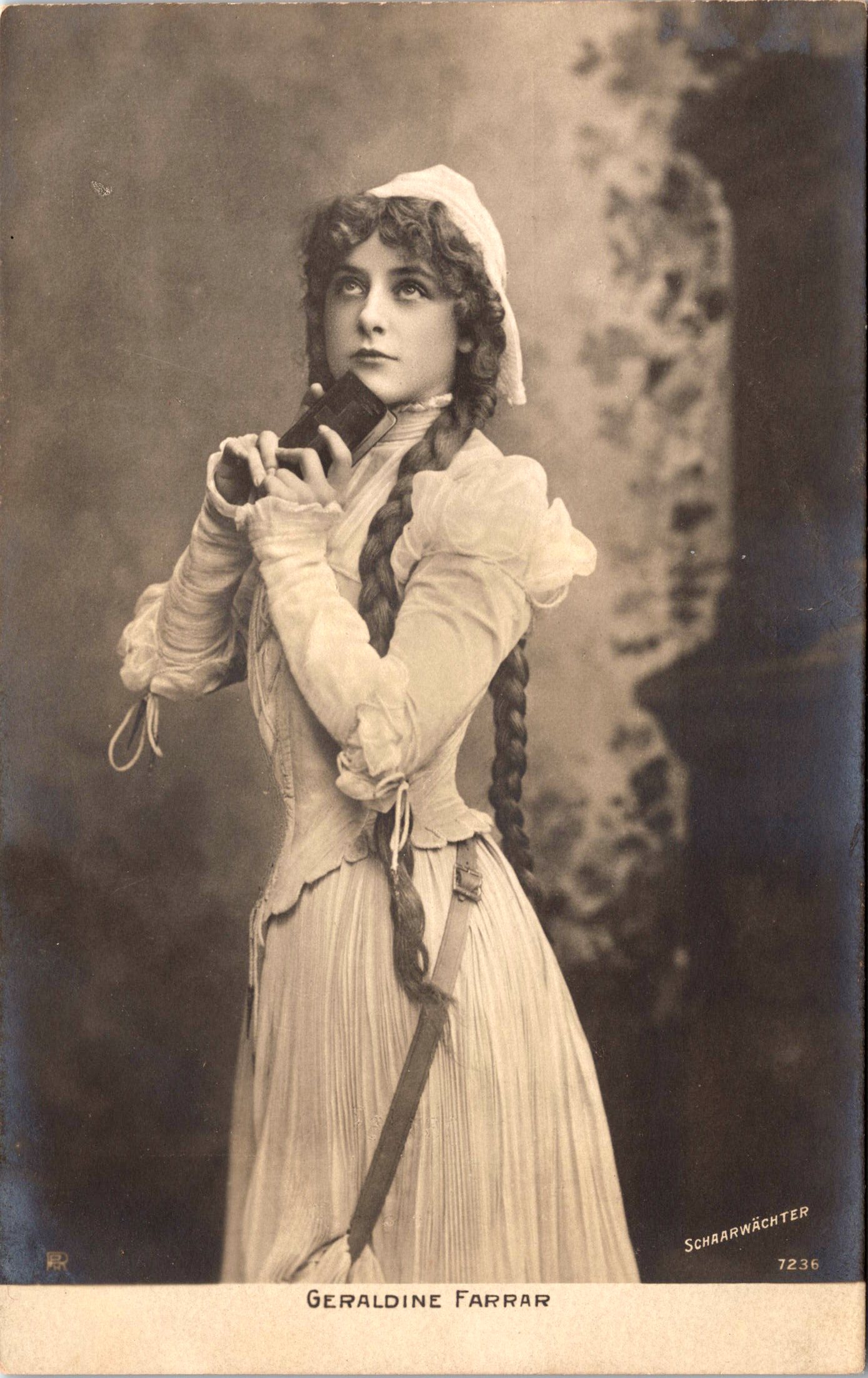
This vintage real photo, Postcard 1, features Geraldine Farrar (February 28, 1882 – March 11, 1967). She was an American soprano opera singer and film actress. She was one of the most popular singers of the early 20th century and she appeared in several silent films as well as on stage. She was also a successful recording artist and a leading figure in the world of opera. She was known for her beauty, as well as her powerful and expressive voice. She was also known for her striking stage presence and her ability to convey emotion through her singing. Farrar had a particularly successful career at the Metropolitan Opera in New York City, where she performed for many years. She also performed in many other major opera houses around the world including La Scala (Milan), The Royal Opera House (London), and the Opera-Comique (Paris). Geraldine Farrar was born in Melrose, Massachusetts, in 1882. She began her career as a singer in vaudeville and later studied voice in Paris. In 1902, she made her debut at the Metropolitan Opera in New York City, where she quickly became one of the most popular singers of her time. Farrar retired from the opera stage in 1922 and settled in New York City. She continued to perform in concerts and recitals for several more years. She also appeared in a few films, including a silent film version of Carmen, in which she played the title role. This postcard photo of Geraldine Farrar was taken by Julius Cornelius Schaarwachter (1847-1904). The photographer has five portraits in Britain’s National Portrait Gallery. Farrar is dressed in costume for her performance in the opera “Faust”, by composer, Charles Gounod. SOLD
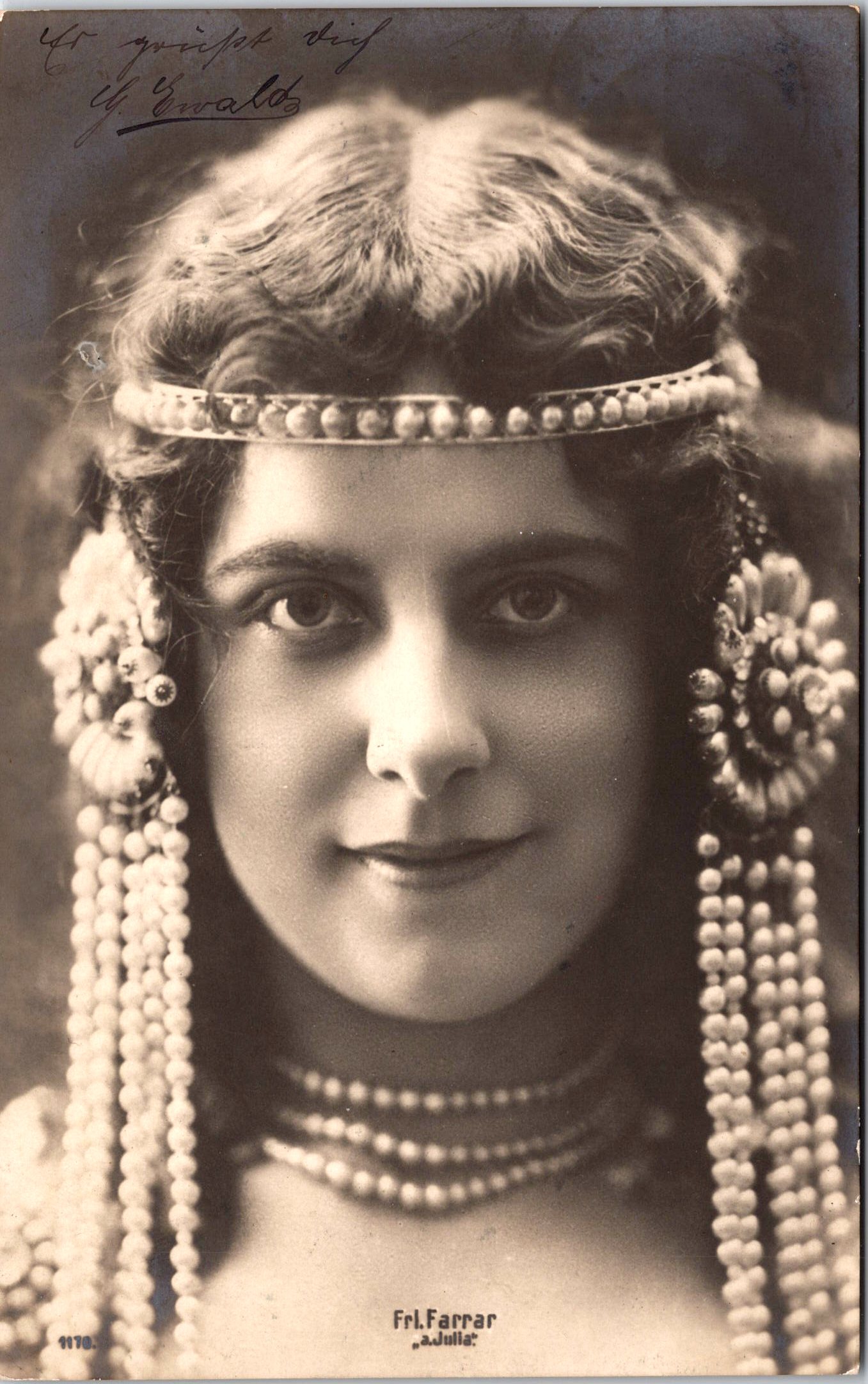
Postcard 2 is a rare close-up portrait postcard of Miss Farrar. SOLD
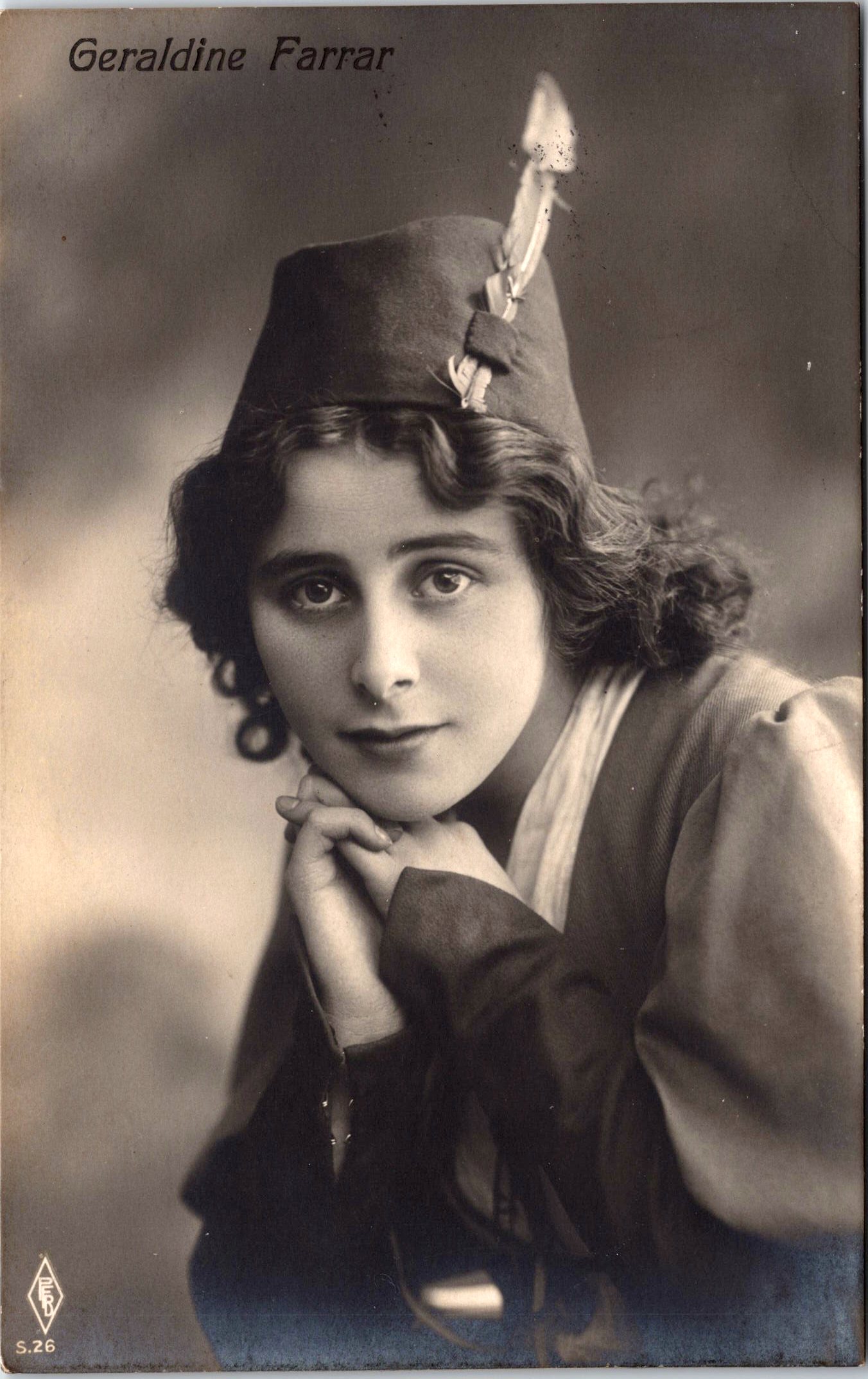
Postcard 3 is a rare photo of Geraldine Farrar that was published by Paul Fink (Berlin) as part of a series (No.S26). The postcard was postmarked in 1911. SOLD
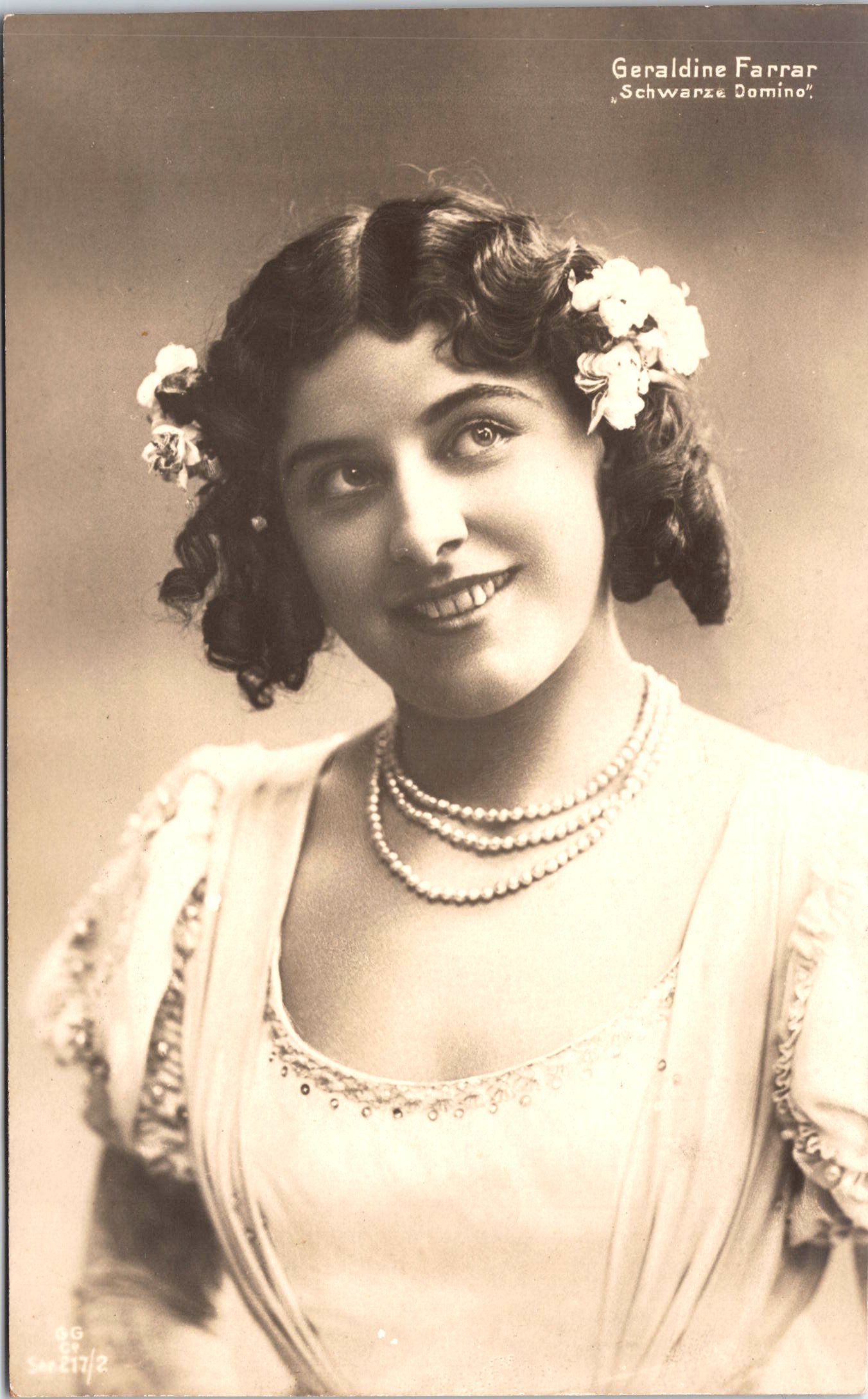
Postcard 4 was published by Georg Gerlach (Berlin) as part of a series (No.217/2). SOLD
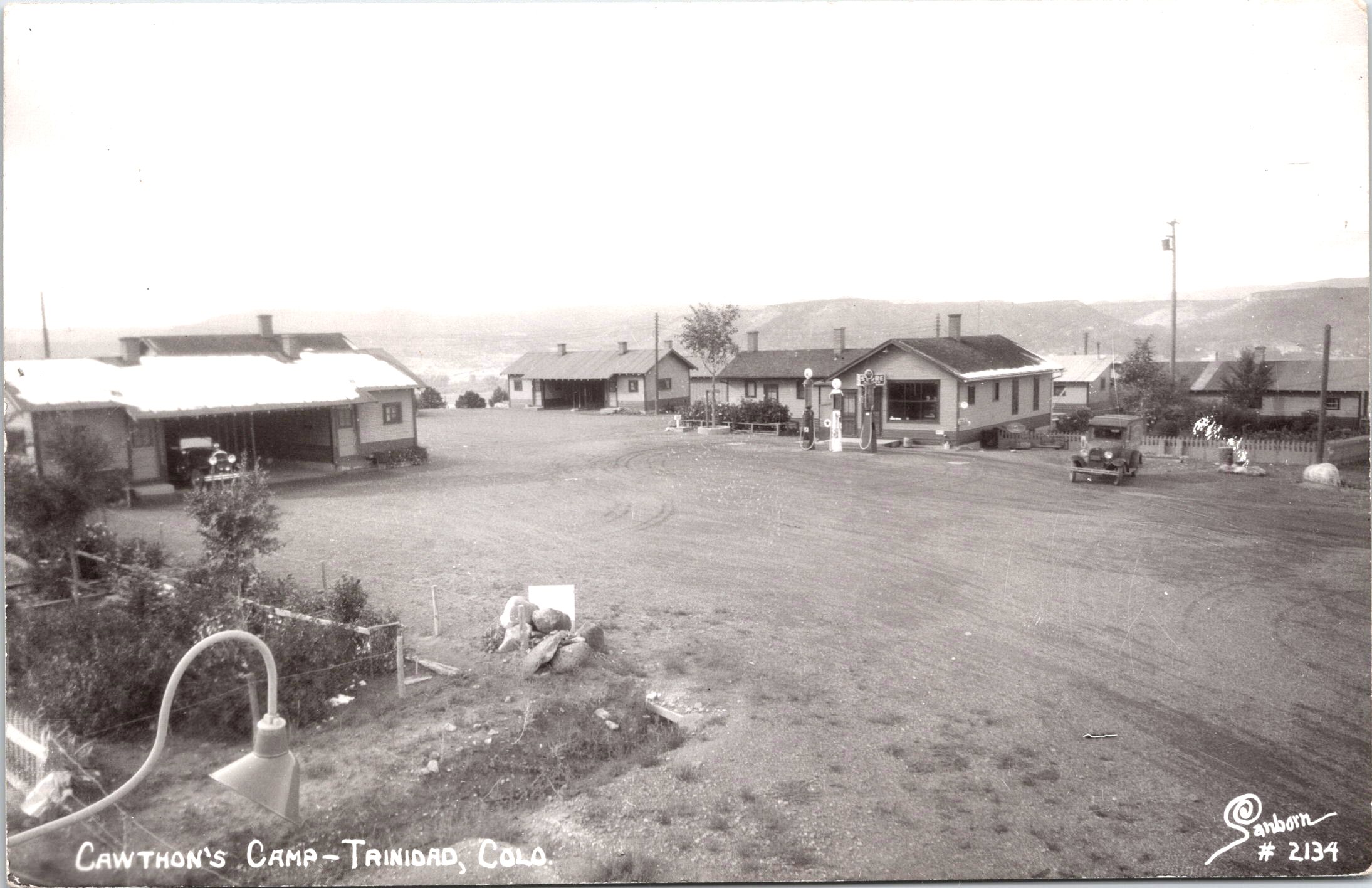
TRINIDAD, COLORADO : CAWTHON’S AUTO CAMP : OLD GAS PUMPS & OLD CARS : RPPC
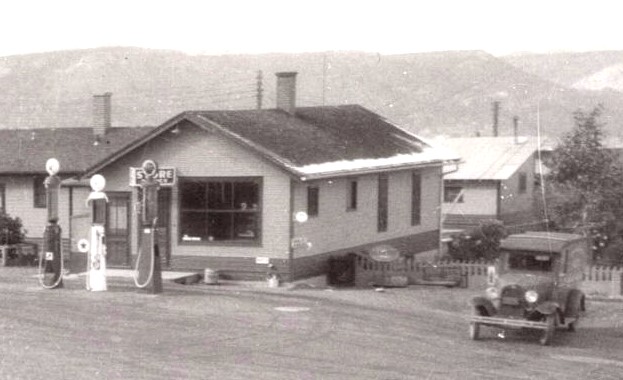
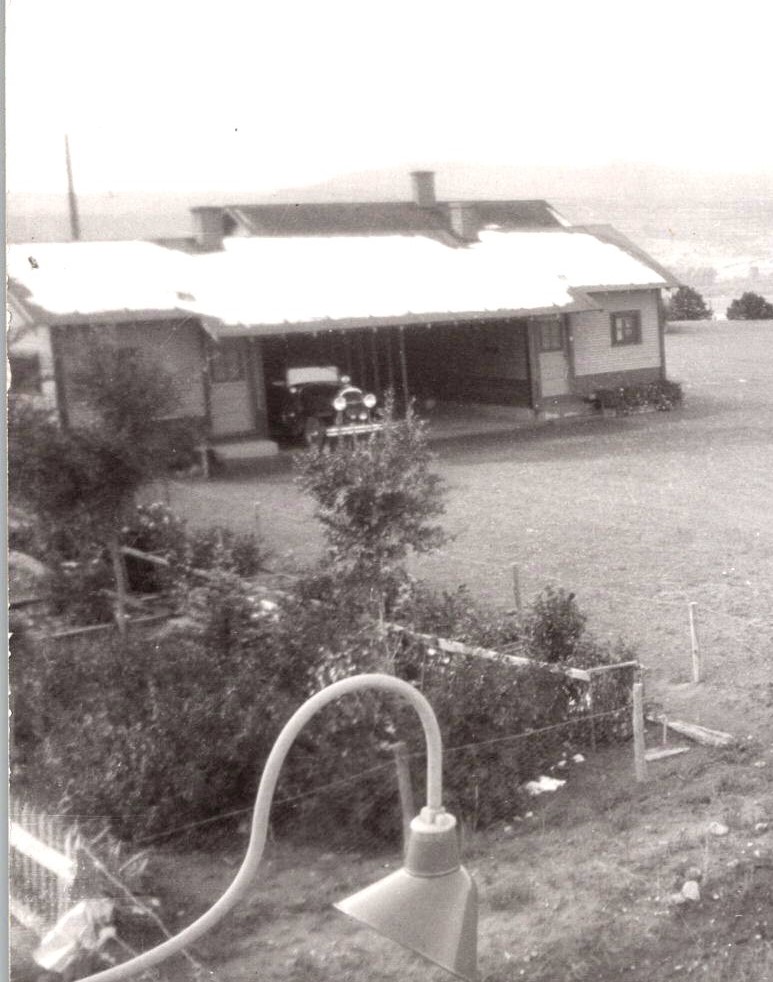
This vintage real photo postcard features a view of Cawthon’s Camp in Trinidad, Colorado. Trinidad was a mining town with a colorful history. Cawthon’s Camp was an auto camp. A place for automobile tourists to stay during their trips. There are two old automobiles as well as old gas pumps seen in this photograph. There are also two large garages evident. This postcard was published by Sanborn as part of a series (No.2134). The Sanborn Souvenir Company was a major postcard publisher in Colorado. They were known for their real photo postcards. The firm was founded by Harold Sanborn who travelled throughout Colorado, Wyoming, and parts of Nebraska taking black and white shots of the western landscape, cityscapes, and landmarks. Harold’s son, William Sanborn joined him in the endeavor. The Sanborn company produced postcards from 1925 to 1957. SOLD

PRETTY YOUNG ALSATIAN WOMAN : LARGE BOW IN HAIR : FAUVETTE : RPPC 1912

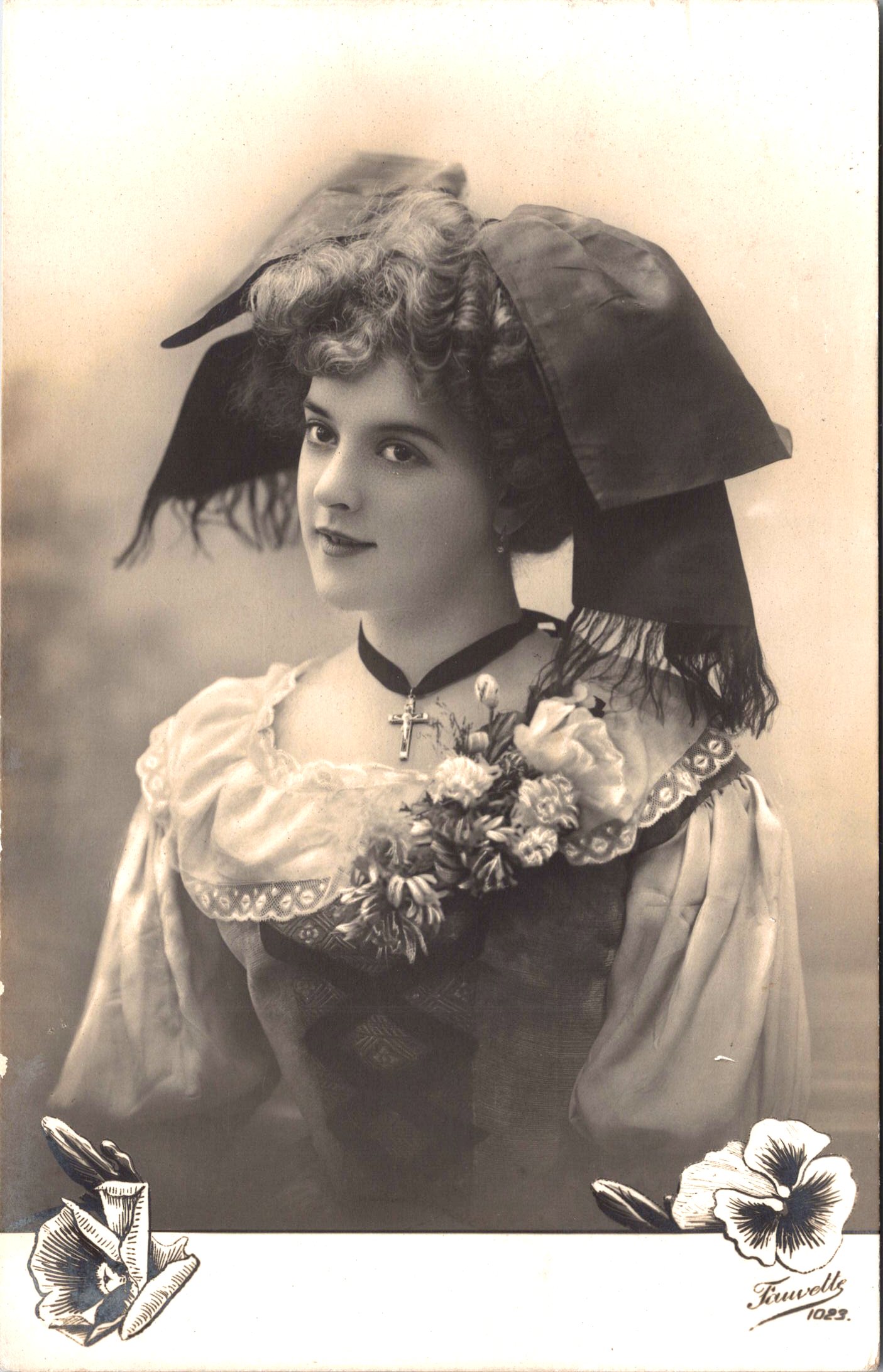
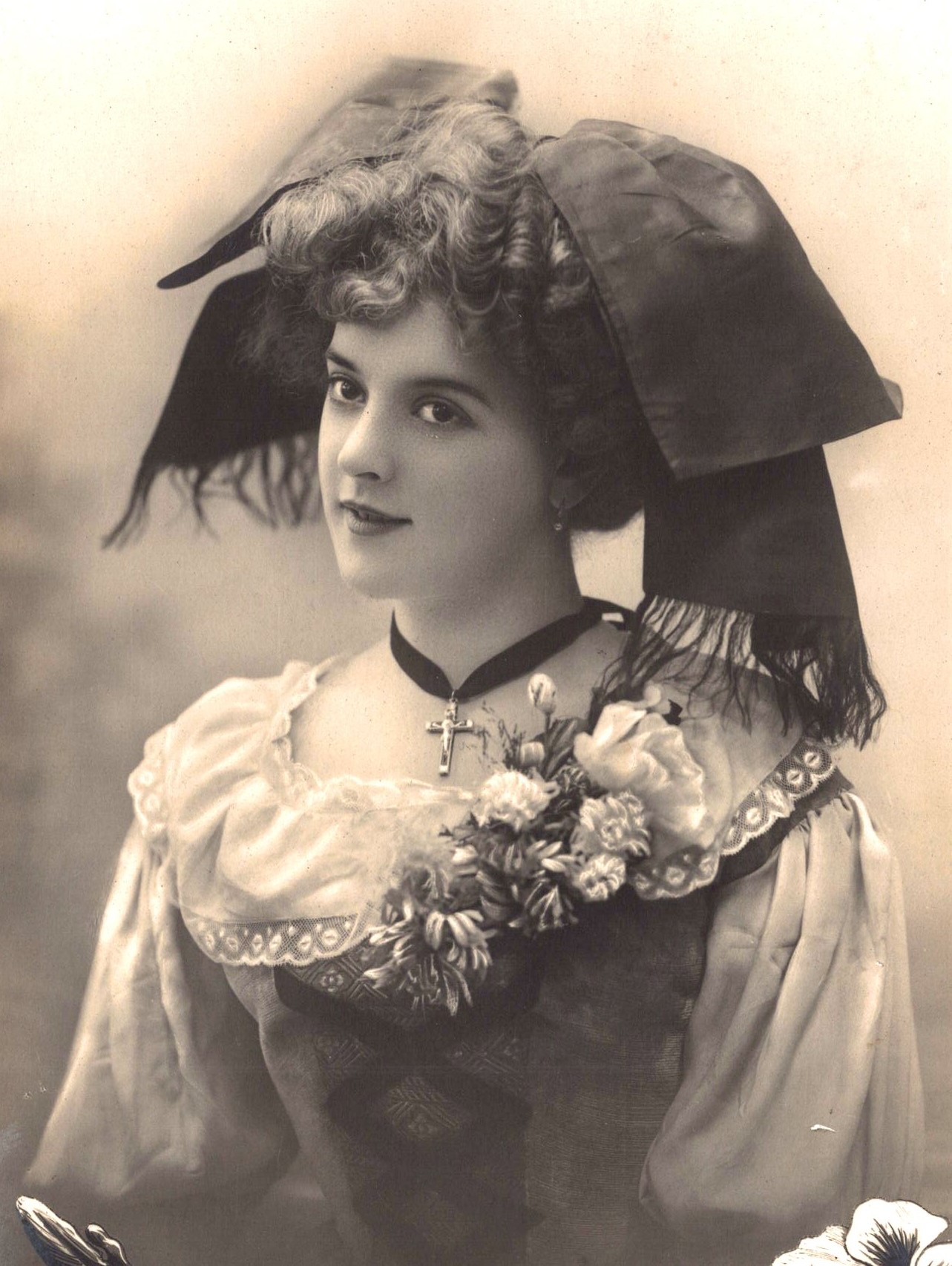
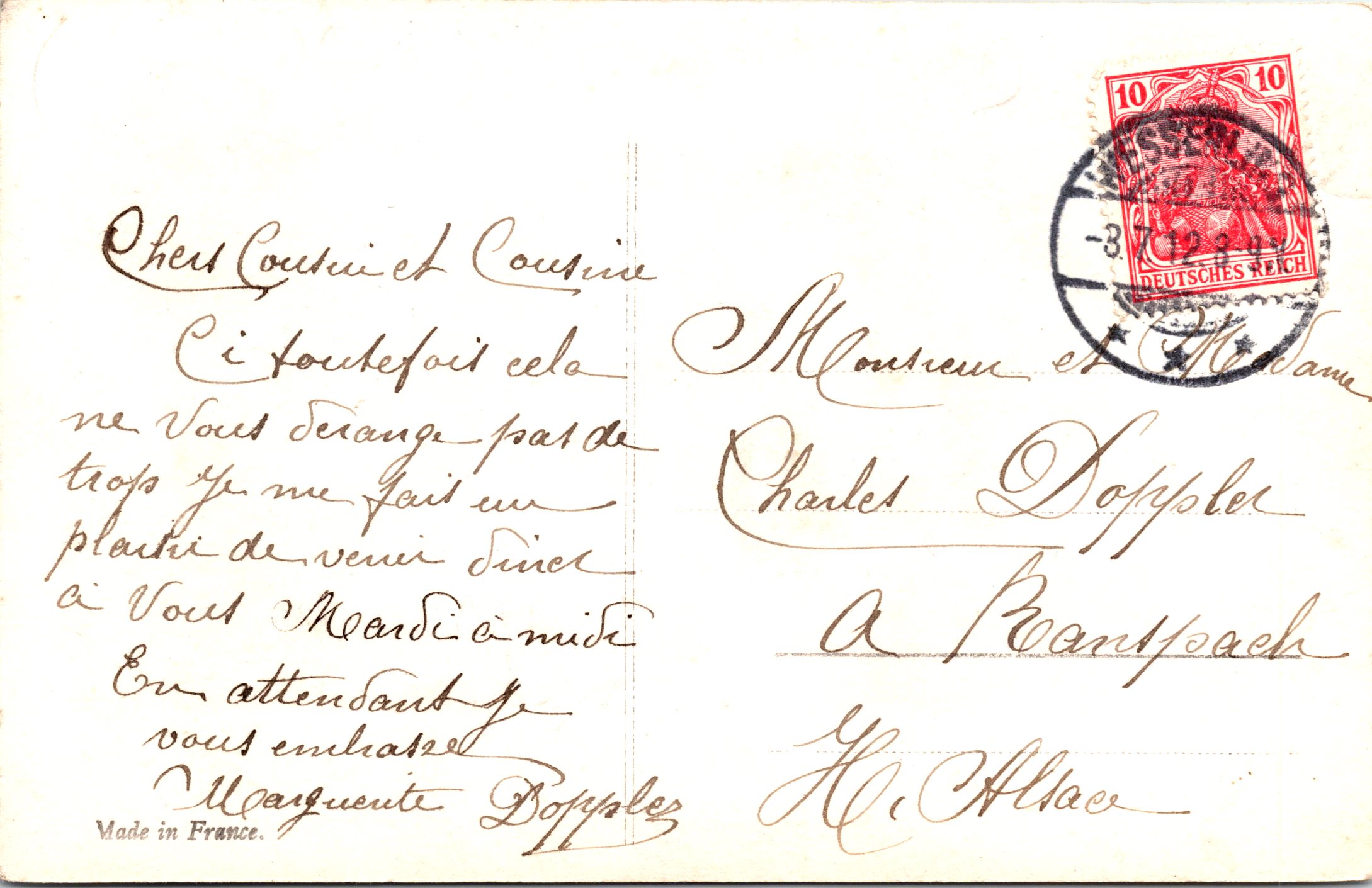
This color tinted vintage real photo postcard features a pretty young Alsatian woman with a large bow in her hair. She is wearing a cross and has lots of flowers pinned to her dress near her neckline. What’s an Alsatian you may wonder. Alsatians are an ethnic group of people who live in the Alsace region of France. They are settled between the Vosges Mountains and the border of Germany. This French postcard was published by Fauvette as part of a series (No.1023). SOLD

Published in: on September 12, 2024 at 12:00 pm  Leave a Comment  
Tags: , , ,

ENID LESLIE: PRETTY STAGE ACTRESS : BROADWAY : LONDON STAGE : RPPC

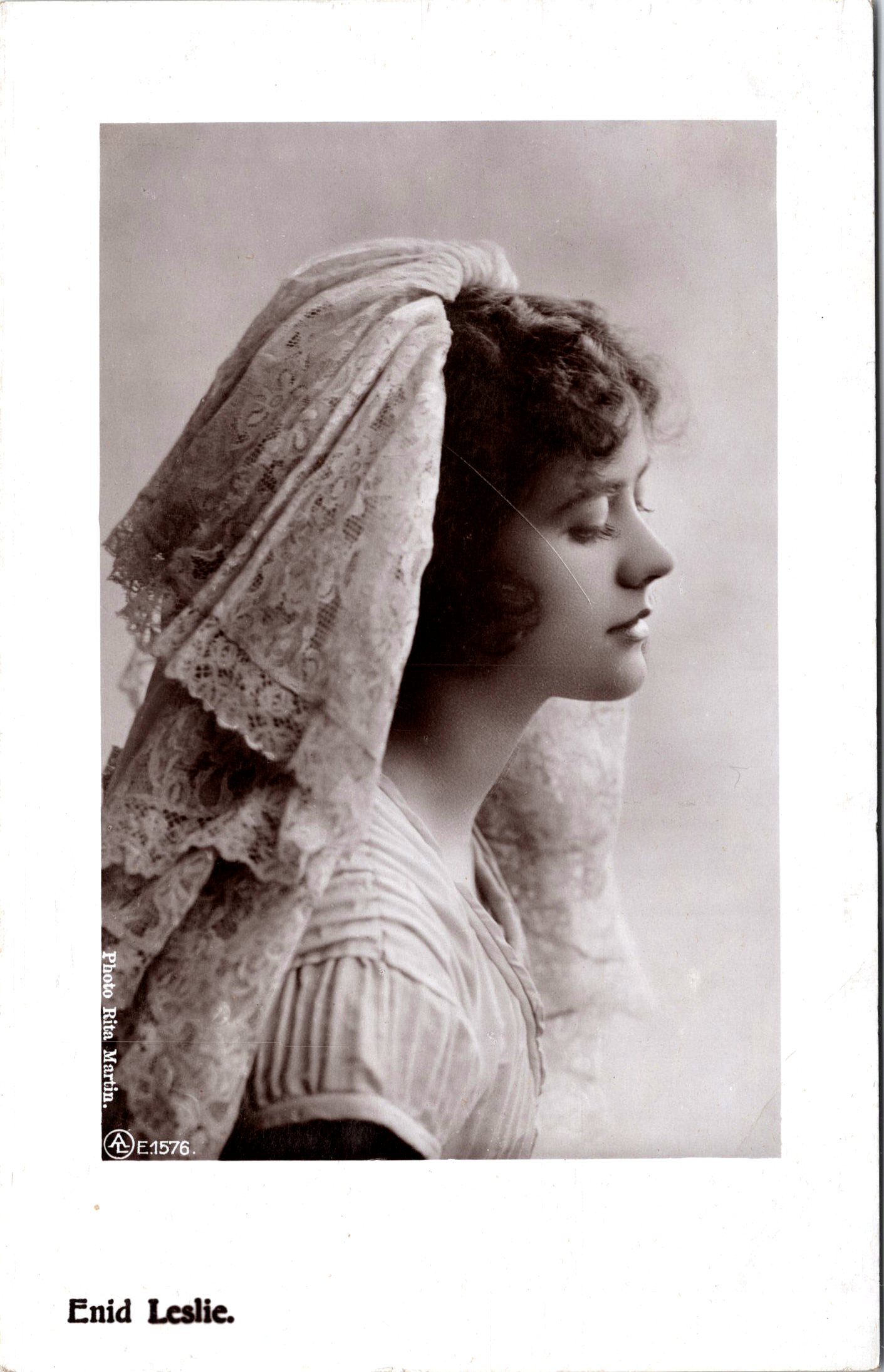
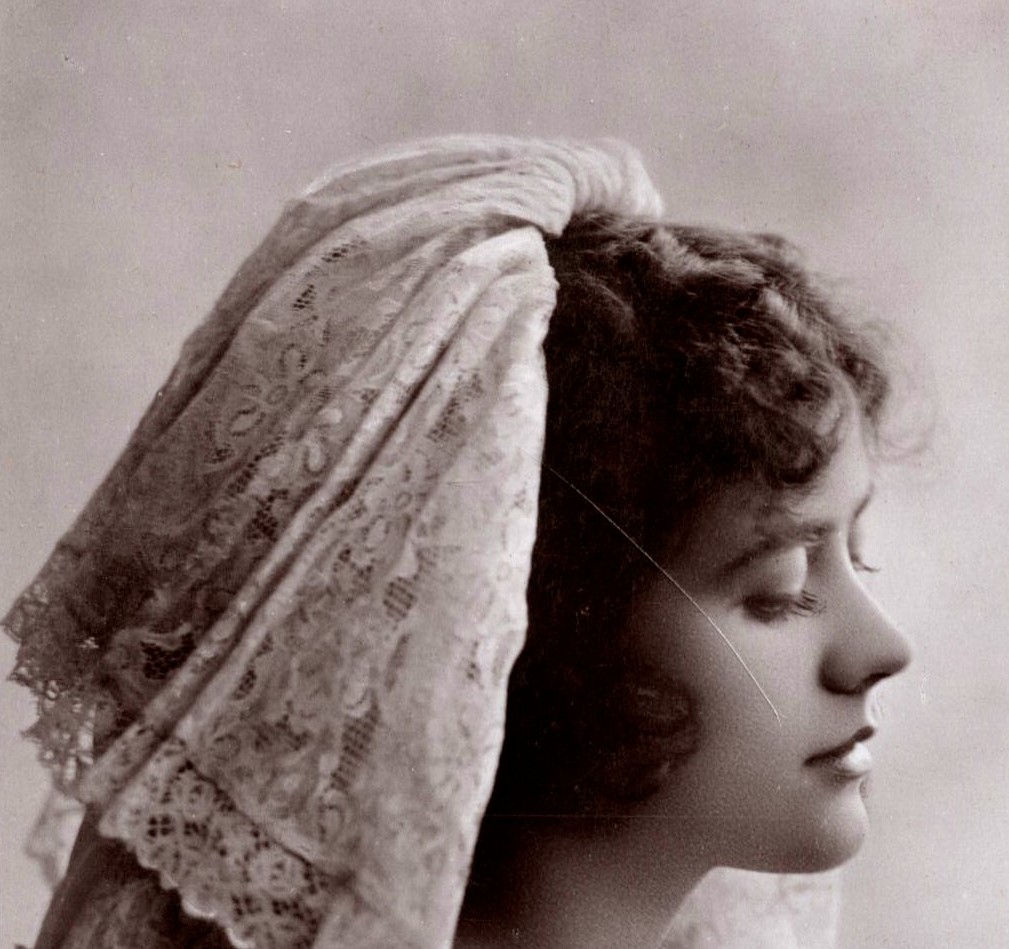
This vintage real photo postcard features actress, Enid Leslie. Her photo was taken by the talented female celebrity photographer, Rita Martin. There is not much biographical information about this performer that is readily available on the internet. However, it is clear that she was an active performer. Theatricalia list 6 London stage appearances for Miss Leslie. The plays were performed between 1909 and 1913. A photograph of Leslie and Nina Sevening can be seen on the front page of “The Illustrated Sporting News” (1908). The IBDd reports that she appeared in two Broadway plays between 1883 and 1912. The Tatler (1916) describes Leslie as a “charming actress”. This postcard was published by Aristophot (London). The company ceased to exist when it was purchased by Iris Verlag (Austria) in 1909. SOLD

PRETTY NUDE YOUNG WOMAN : RISQUE : COME HITHER SMILE : REAL PHOTO POSTCARD

This risque vintage real photo postcard features a nude pretty young woman giving the camera a “come hither” look. She is reclining on a chair. This postcard was published by B. M. V. as part of a series (No.31). SOLD

Published in: on September 10, 2024 at 12:00 pm  Comments (1)  
Tags: ,

MAY DE SOUSA : ACTRESS/SINGER :TRAGIC DESCENT FROM STAR TO SCRUB WOMAN : RPPC 1907

POSTCARD 1 (SOLD)

POSTCARD 2 (SOLD)

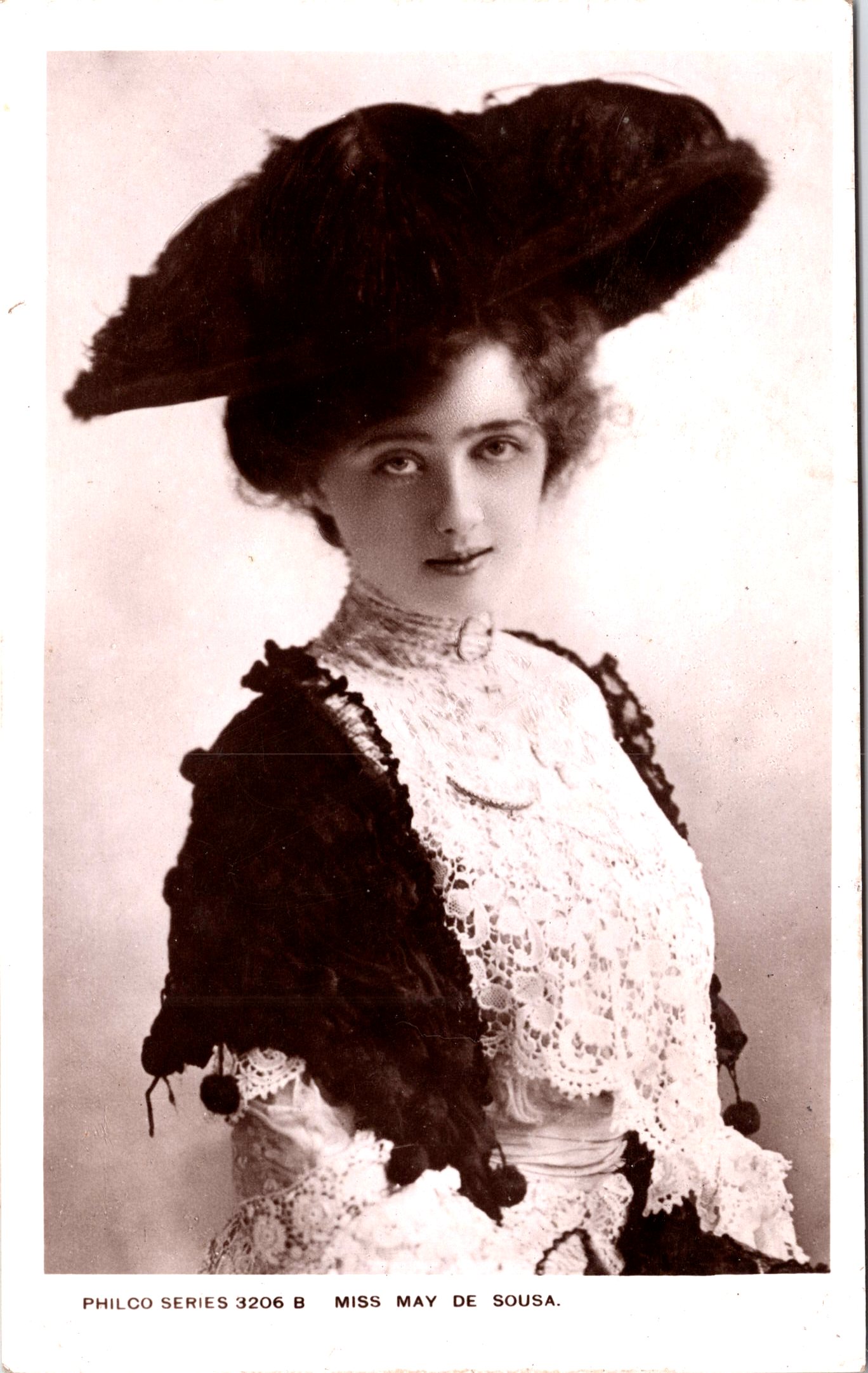
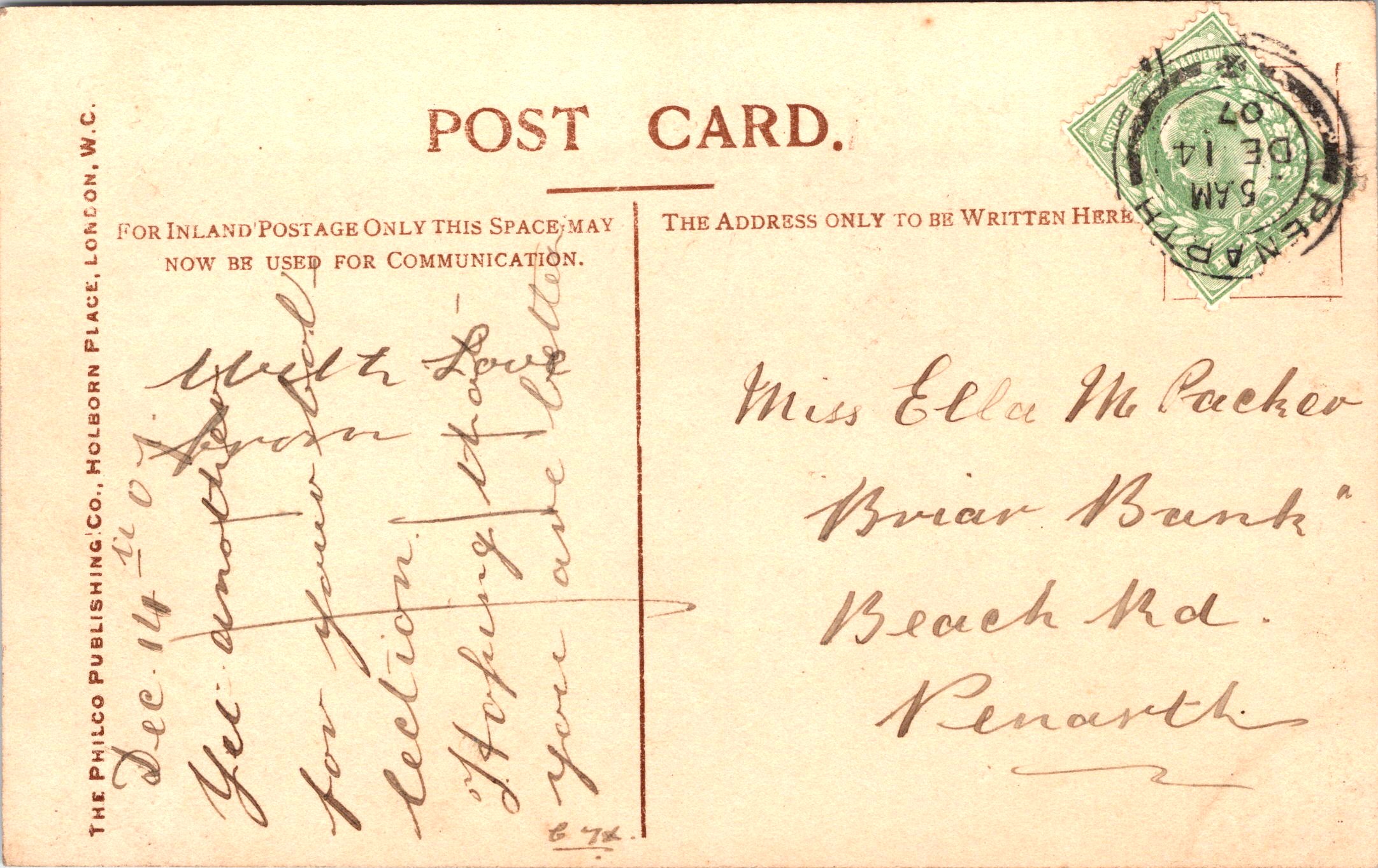
Postcard 1 features American stage actress, and singer, May de Sousa (1884-1948). She had many successes, but she lived a tragic life. Her father was a Chicago police detective. She became famous in 1898, I at about 14 years of age, when she sang “Dear Midnight of Love”. This song was a ballad by bathhouse John Coughlin. He was a Chicago politician and would-be songwriter.  In 1901 she was hired by Frank Perley as one of the principles for his touring company. Next, she became the understudy for Alice Nielson in a San Francisco production. In 1902 she was invited to go to London with the cast of that show, but she turned down the opportunity because she was afraid of the sea voyage. She then joined the cast of the highly successful operatic fantasy, “The Storks”. In 1904 she joined the cast of the Wizard of Oz. That same year, she became part of the cast of “Babes in Toyland”. At this point, she had become a very popular actress. She then went to London to star in a production of Cinderella. She followed that up with other stage successes in London. Although she had much success in light operatic roles, she wanted to display her talent as a dramatic actress. In 1908 she was one of the first American actresses to perform at the Moulin Rouge. While in Paris she was reported missing because she did not contact friends or family for over five weeks. She returned without explanation. She was now a star in both the United States and England. In 1910, her mother was discovered dead in a room filled with gas. It was unknown whether her mother’s death was accidental or by suicide. In 1910, May married a stockbroker. Their marriage was very troubled from its beginning. Her husband had lied about his finances, and the financial burden fell on the De Sousa. In addition, her husband frequently physically, abused her. After two years of marriage, she divorced him on the grounds of cruelty and financial desertion. De Sousa continued her career in both America and Europe. De Sousa appeared in 8 Broadway plays between 1905 and 1915.  She was performing in France shortly before the start of World War I and barely escaped Germany’s invasion of France. In 1913, she was forced to declare bankruptcy. In 1918, she toured Australia with a theatrical company. While there, in about 1919, she married a local doctor and the pair moved to Shanghai. She performed there with amateur companies. In 1941 her husband died, and in around 1943 she was imprisoned for seven months as a civilian intern by the Japanese. When she returned to Chicago, she worked as a scrub woman in a public school. Her health was very much compromised by her internment,  she soon was forced to quit her job due to not being healthy enough to perform her tasks. She became malnourished and died in poverty and alone. She was a charity case in the county hospital when she died in 1948. May DeSosa had risen to become the toast of Europe and America, but died isolated and forgrotten. She was buried in a pauper’s grave. This vintage postcard was published by Philco as part of a series (No.3206B). The card was postmarked in 1907. (SOLD)

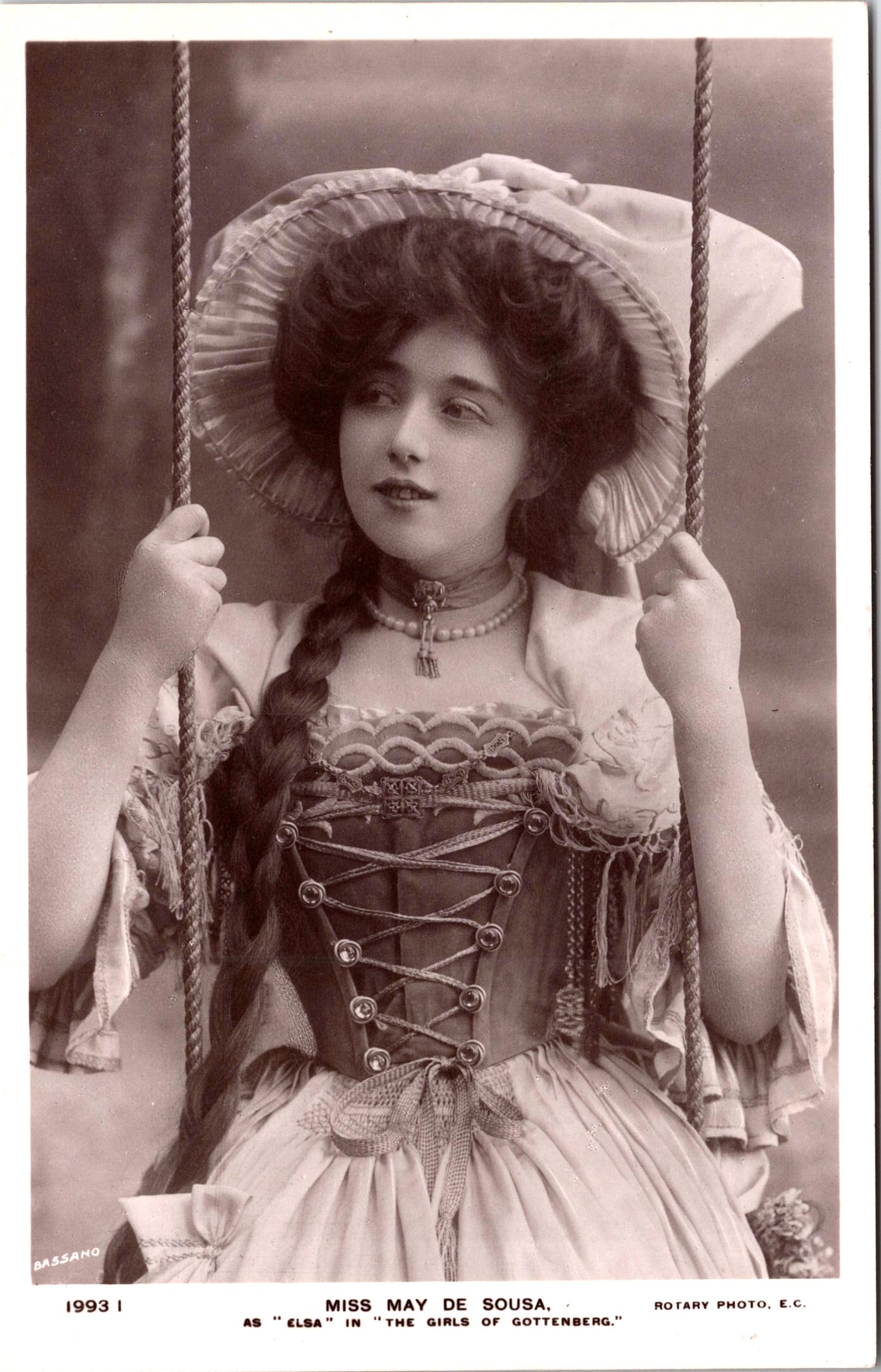
Postcard 2 was published by Rotary Photo as part of a series (No.1993I). De Sousa is shown in costume for “The Girls of Gottenberg”. (SOLD)

ETHEL WARWICK : BRITISH STAGE & FILM ACTRESS : MODELED FOR FAMOUS ARTISTS : RPPC

POSTCARD 1 (SOLD)

POSTCARD 2

POSTCARD 3 (SOLD)

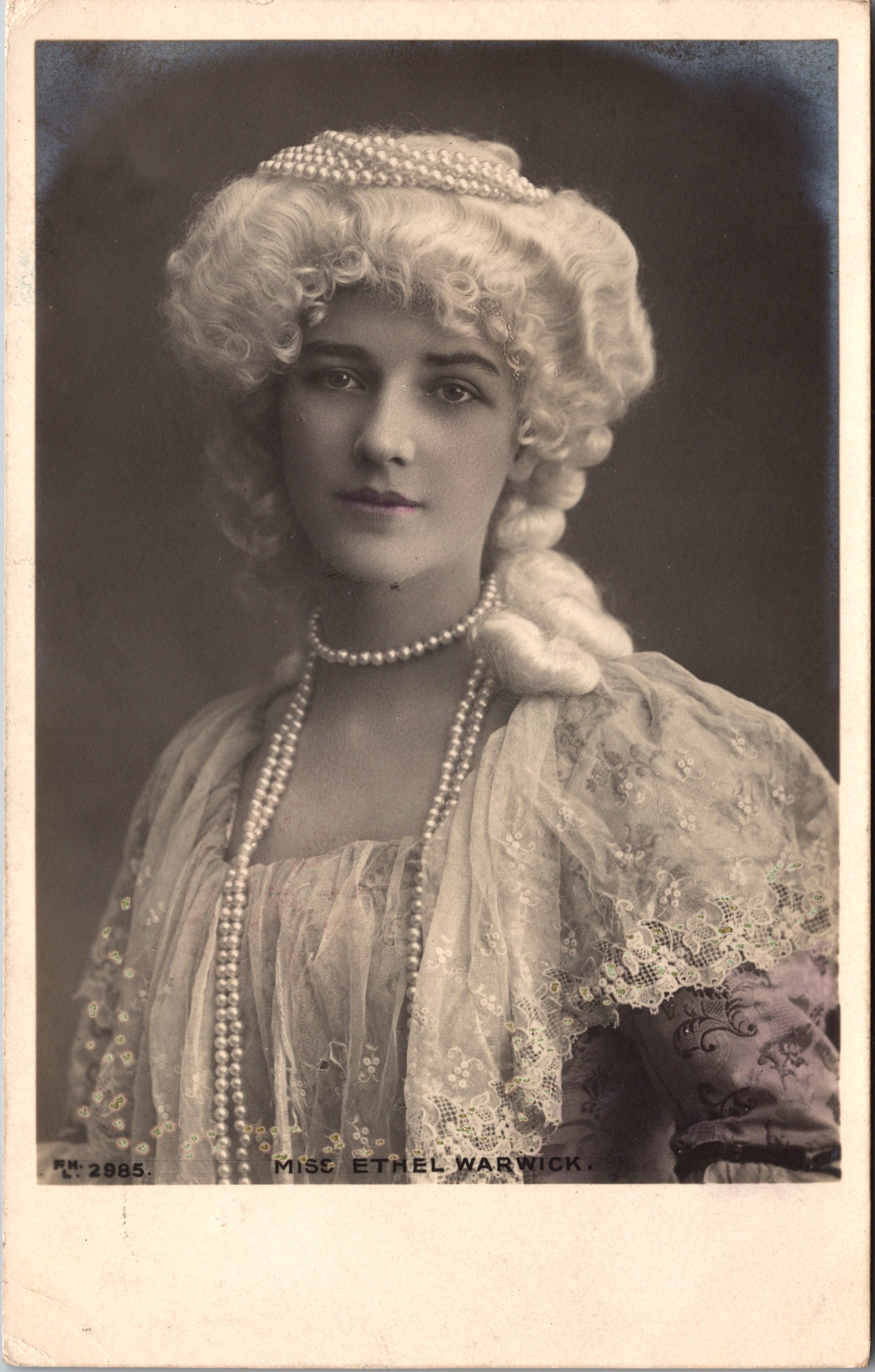
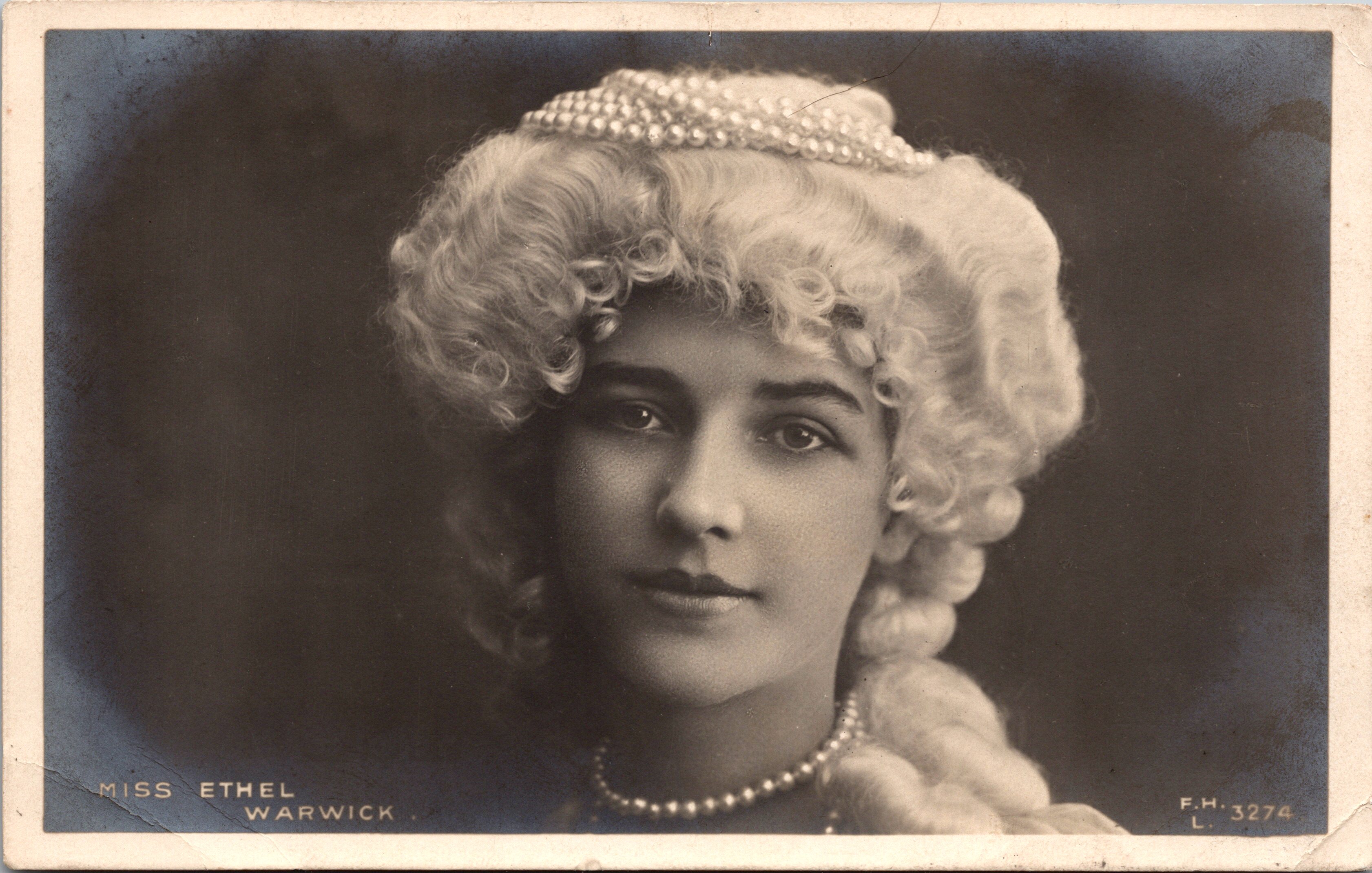
Postcard 1 is a vintage real photo postcard that features beautiful British stage and film actress, Ethel Warwick (1882-1951). Warwick was also an artist’s model (including posing nude). She modelled for some of the most prominent artists of her time. These artists included John William Godward, Herbert Draper, Linley Sambourne,and James McNeill Whistler. During the early 1890’s, Warwick was studying to be an artist at the London Polytechnic. In order to pay for her tuition, she became an artist model. In the late 1890’s, Warwick began acting school and in 1900 she made her acting debut. She continued her modeling until 1906, when she married actor Edmond Lewis Waller. Edmond was the son of celebrated actor, Lewis Waller. Edmond and Ethel embarked on a theatrical world tour ending in London, where the pair took over the management of the Queen’s theater. Warwick divorced Waller in 1915. Post divorce, she lived an extravagant lifestyle which led to bankruptcy in 1923. Ethel continued to act and much of her work was for the New Shakespeare Theater at Stratford-upon-Avon. (SOLD)

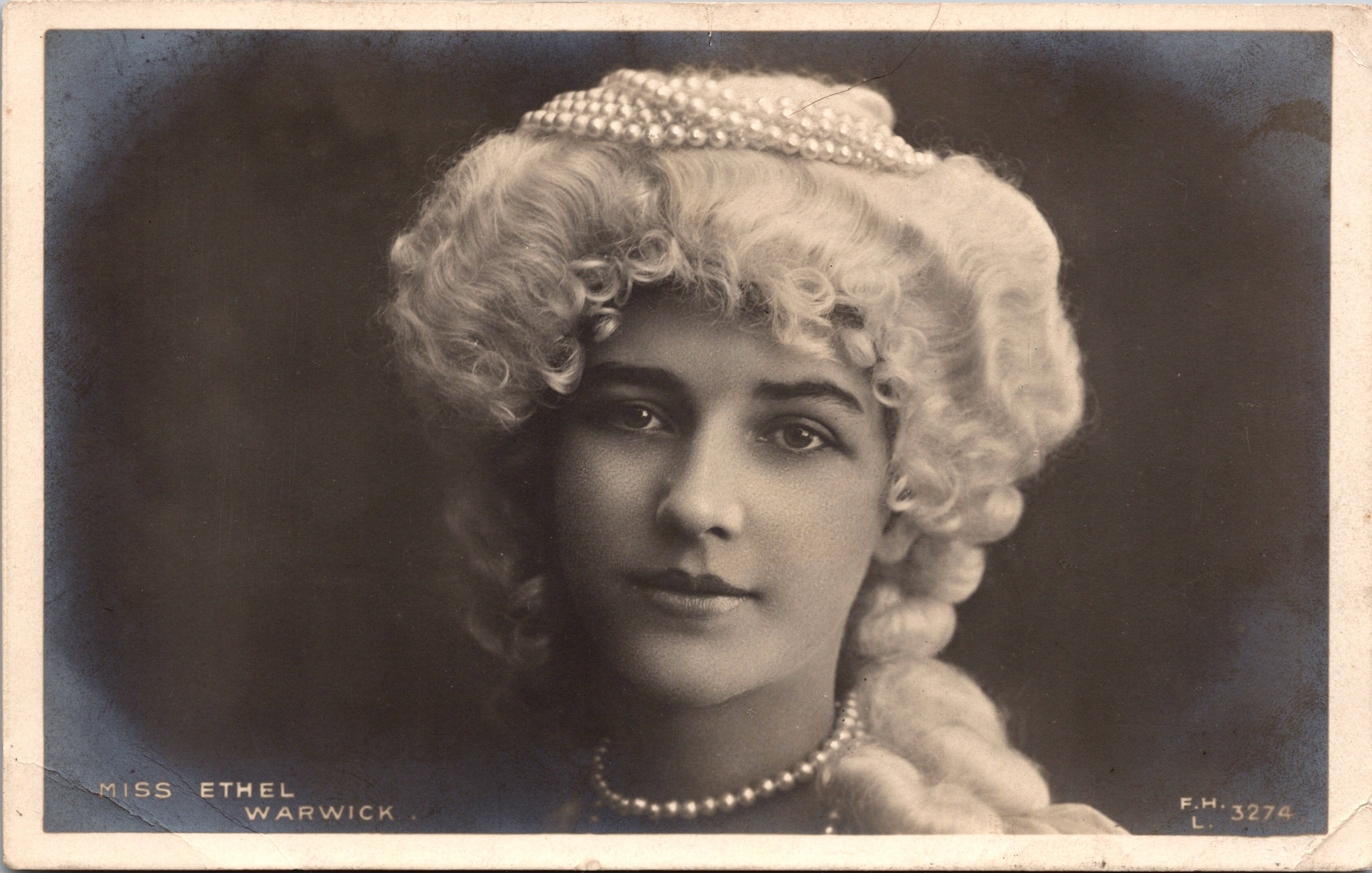
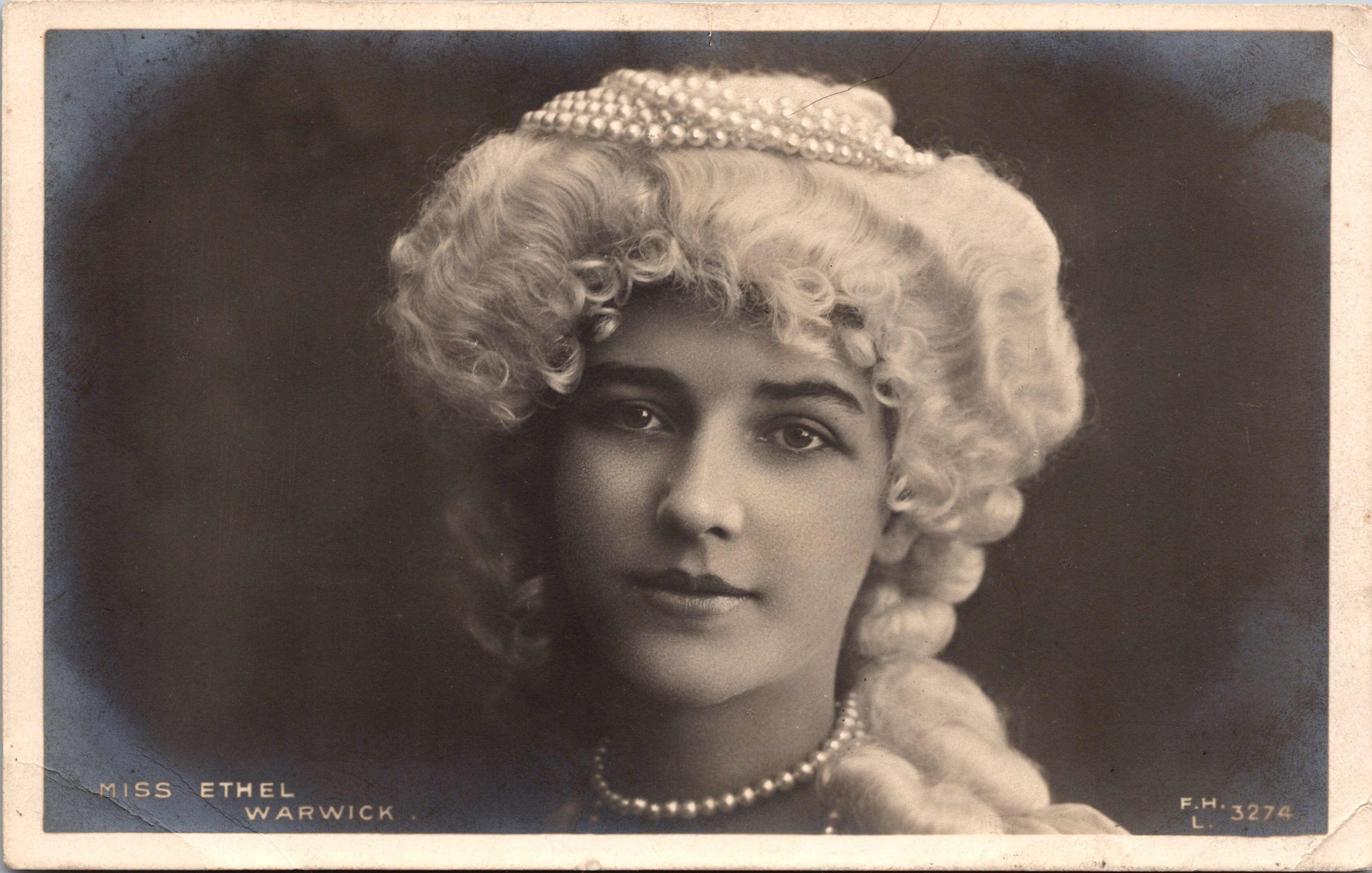
Postcard 2 offers a close-up photograph of Miss Warwick. This vintage real photo postcard has a crease in it’s bottom right and left hand corners. The portrait postcard is in overall good condition (see scans).

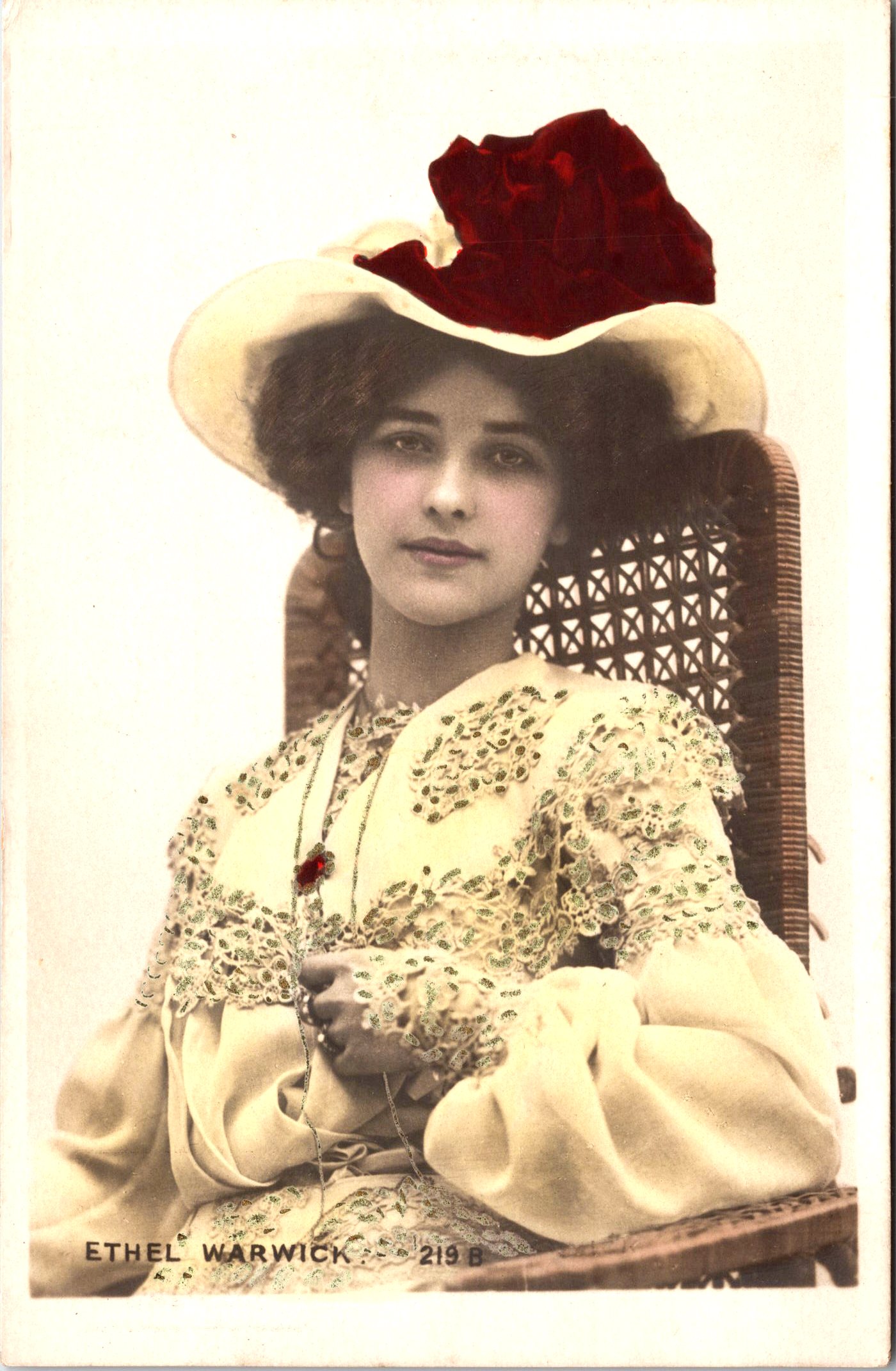
Postcard 3 was published by Rotary Photo as part of a series (No.219B). This postcard has excellent clarity; the details of her dress is impressive. (SOLD) 

Buy this Vintage Real Photo Postcard (includes shipping within the US) #5196

To purchase this item, click on the Pay with PayPal button below

$15.00

Buy this Vintage Real Photo Postcard (includes International shipping outside the US) 5196

To purchase this item, click on the Pay with PayPal button below

$25.00

POSTCARD 1

POSTCARD 2

POSTCARD 3

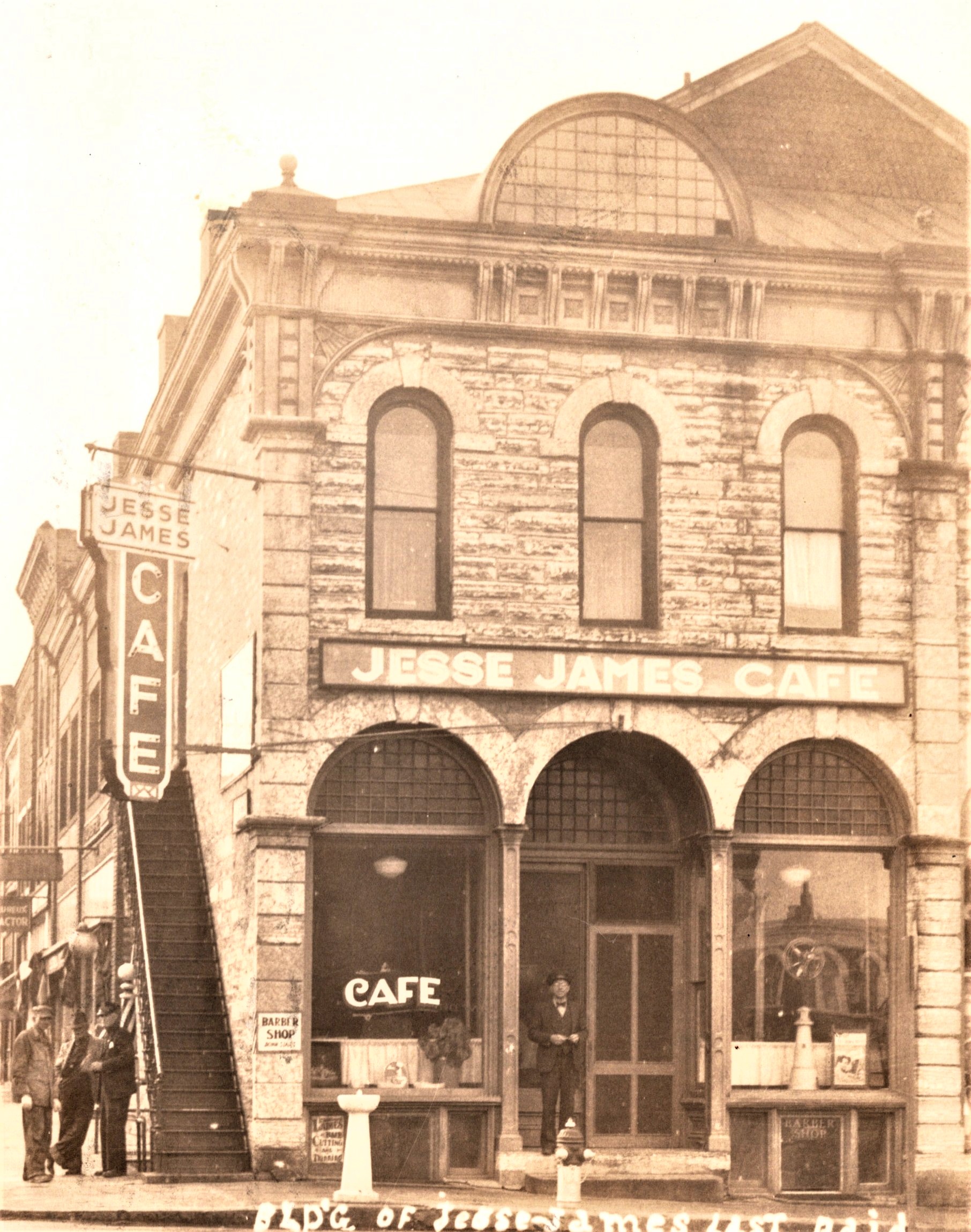
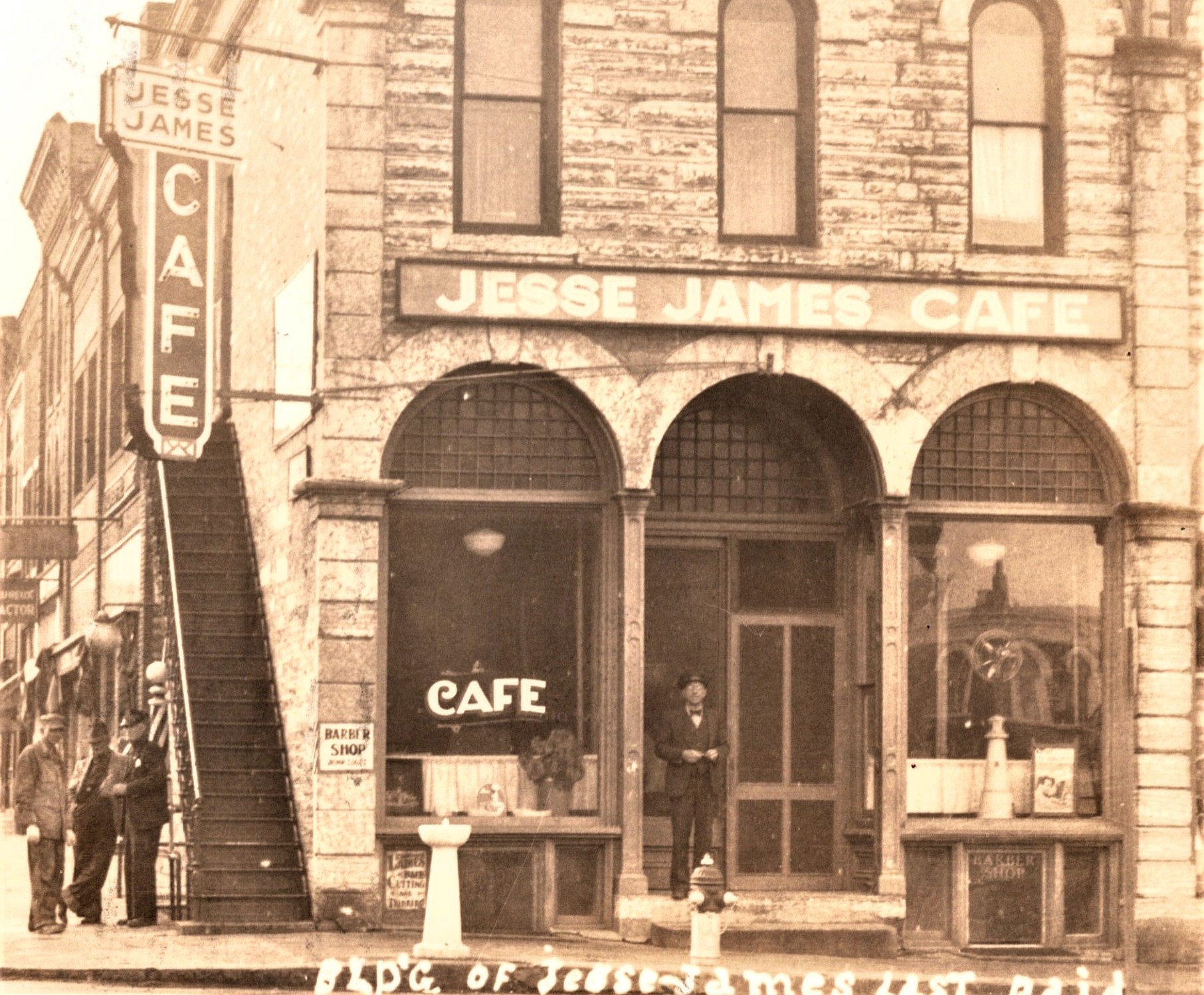
JESSE JAMES : 1st BANK OF NORTHFIELD : MINNESOTA : ROBBERY GONE BAD : RPPC 1939

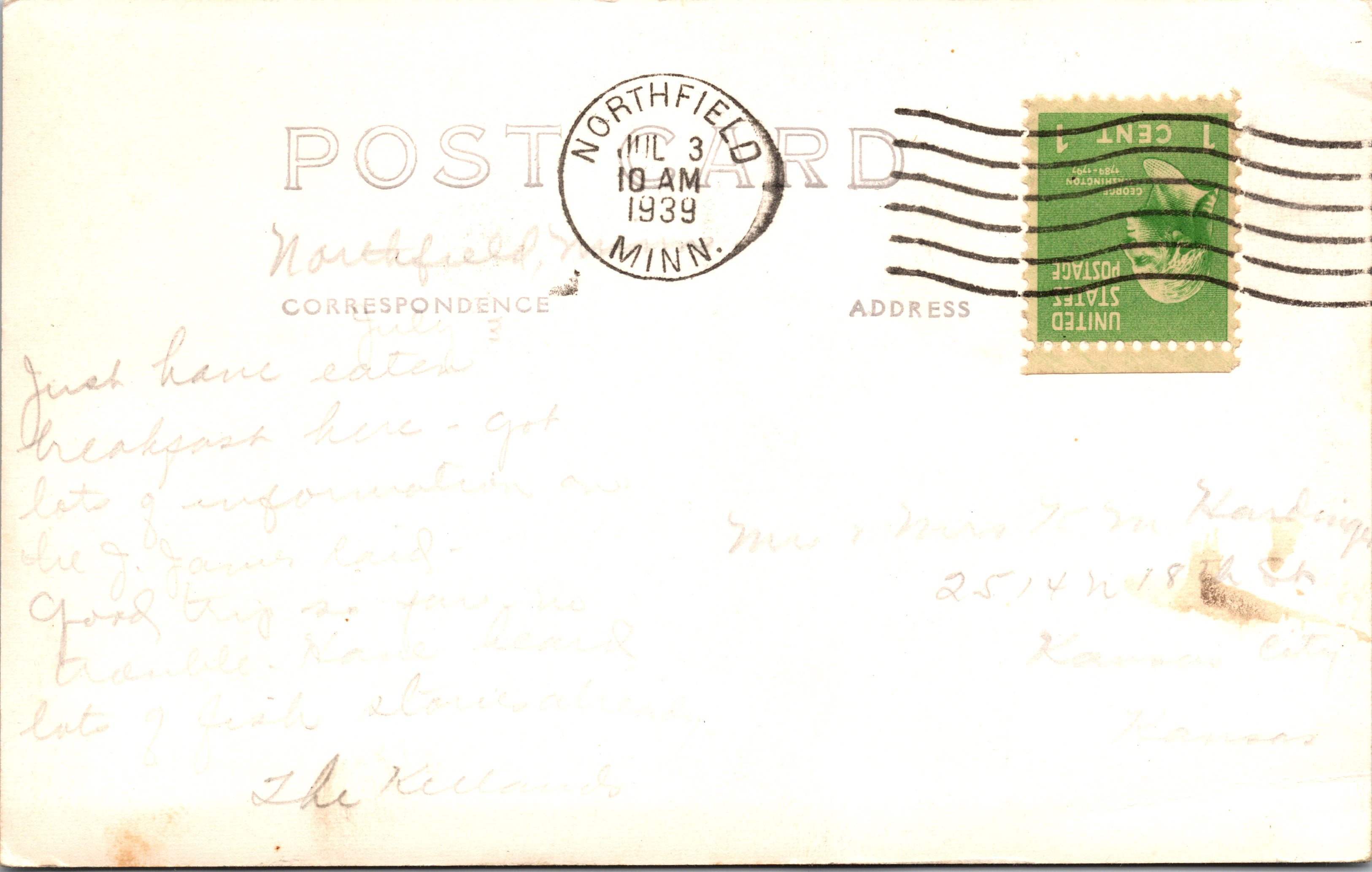
This vintage real photo postcard features a view of the Jesse James Cafe in Northfield, Minnesota. Note the cafe’s sign below the three windows on the buildings second floor. There are also advertising signs evident for a chiropractor and for a barber shop. There is some interesting history attached to the cafe’s building. The building used to house the First Bank of Northfield which was involved in the historic “The Great Northfield, Minnesota Raid”. In 1876, Northfield was a growing Southern Minnesota community. That same year, First Bank of Northfield, became of interest to the notorious gang of bank and train robbers, The James-Younger Gang consisted of Jesse and Frank James; Bob, Jim and Cole Younger, and three others. The robbers rode into Northfield and three of the gang members entered the bank and began the hold-up. Bank employees told them that the safe was locked and could not be opened. When a merchant witnessed the robbery in progress, he warned fellow citizens to arm themselves and fight to stave off the robbers. Gang members outside the bank began to fire their pistols and told the citizens to leave the area. After the ensuing gun fight, two robbers were killed and two were wounded. In addition, the bank cashier was killed when he refused to open the vault. Six of the robbers fled after the failed raid. After some time, the three Younger brothers were captured and another robber was killed in a gun battle. Ultimately, Jesse James (1842-1882) was killed by one of his new recruit gang members. He was killed while standing on a chair dusting off a picture. James was unarmed. His killer was motivated by a reward offered by the Governor of Missouri. This vintage postcard has a 1939 postmark from Northfield, Minnesota. SOLD