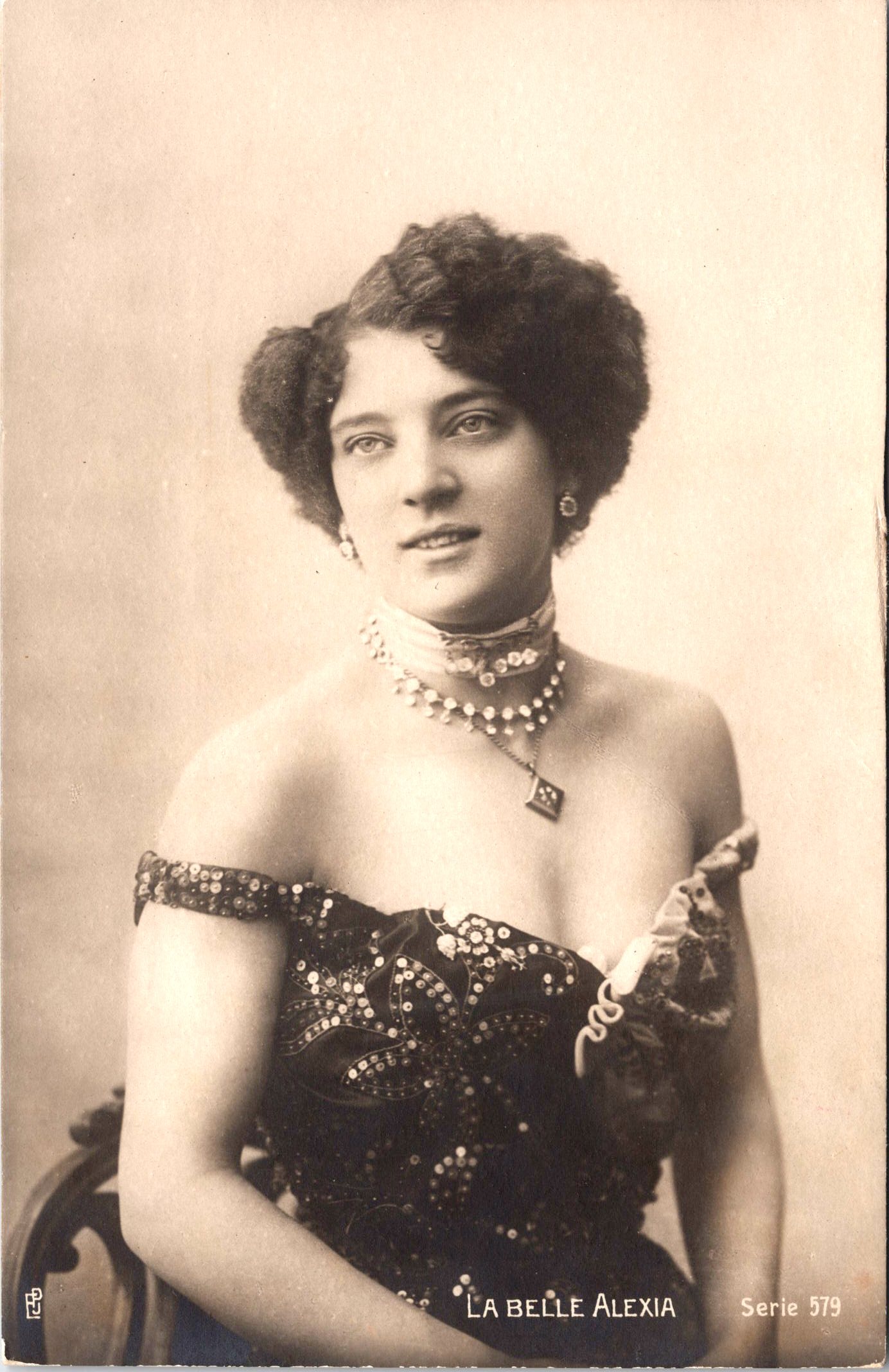
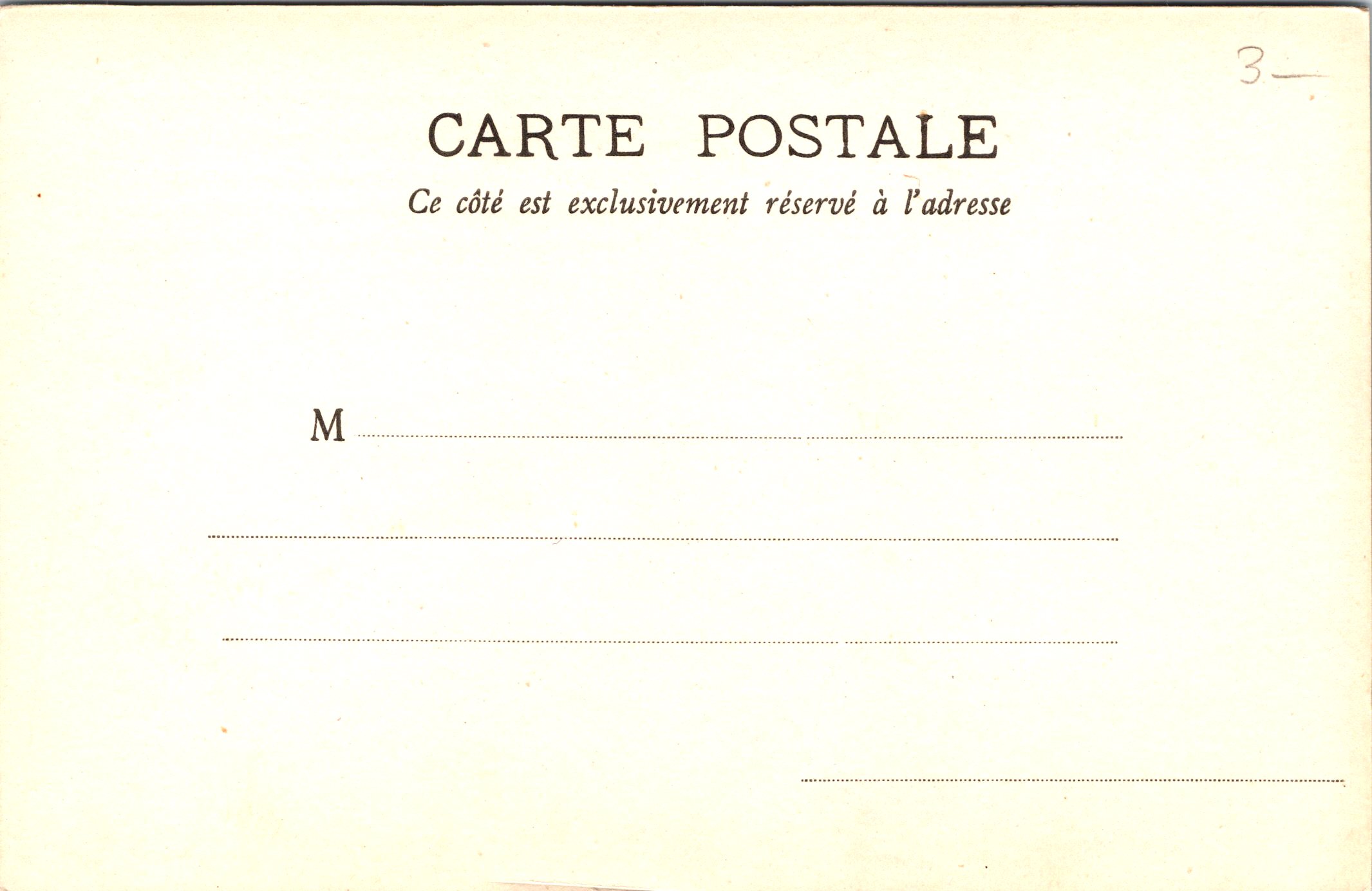
This vintage real photo postcard features pretty performer, La Belle Alexia. She was a dancer and was also likely an actress. Preliminary research found no biographical information. This photograph of Alexia is risque due to her low cut dress. She is wearing a lot of jewelry around her neck. Alexia is flashing a lovely smile. This postcard was published by EPJ (Maurice P Manes, Paris) as part of a series (no.579). SOLD
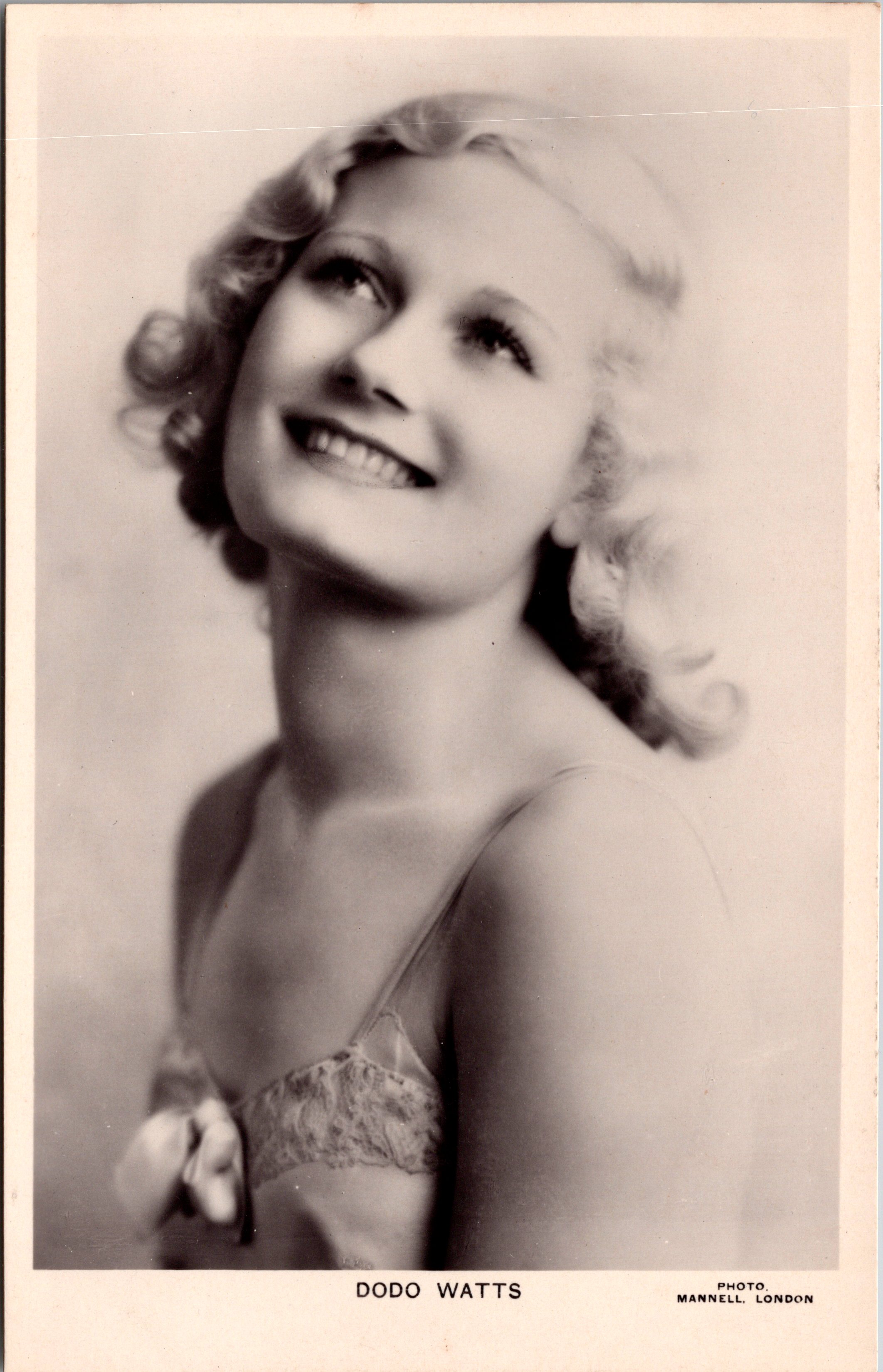
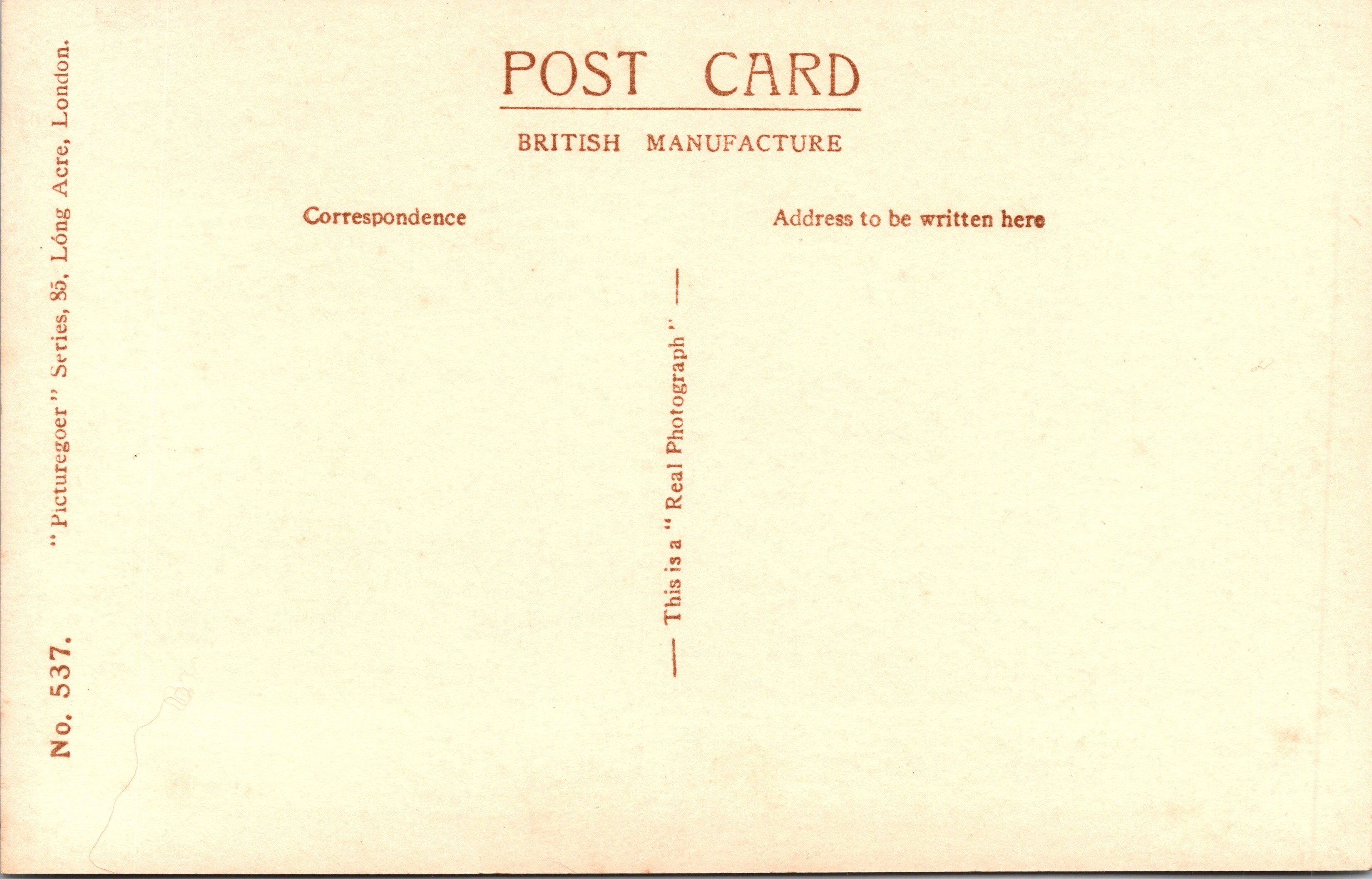
This vintage real photo postcard features British stage and film actress, Dodo Watts (1910-1990), She had one appearance on Broadway in “The Middle Watch” (1929).When she retired from acting, she became a career woman. She owned a successful millinery firm in London. She also worked as a casting director for three films. She cast Diana Rigg in her role in “The Avegers” television series. Watts also worked as a theatrical agent. The IMDb credits her with19 film credits between 1925 and 1953. This card was published by Picturegoer as part of a series (no.537). The photograph seen on this card was taken by George Mannell. His firm was located in London, England. SOLD
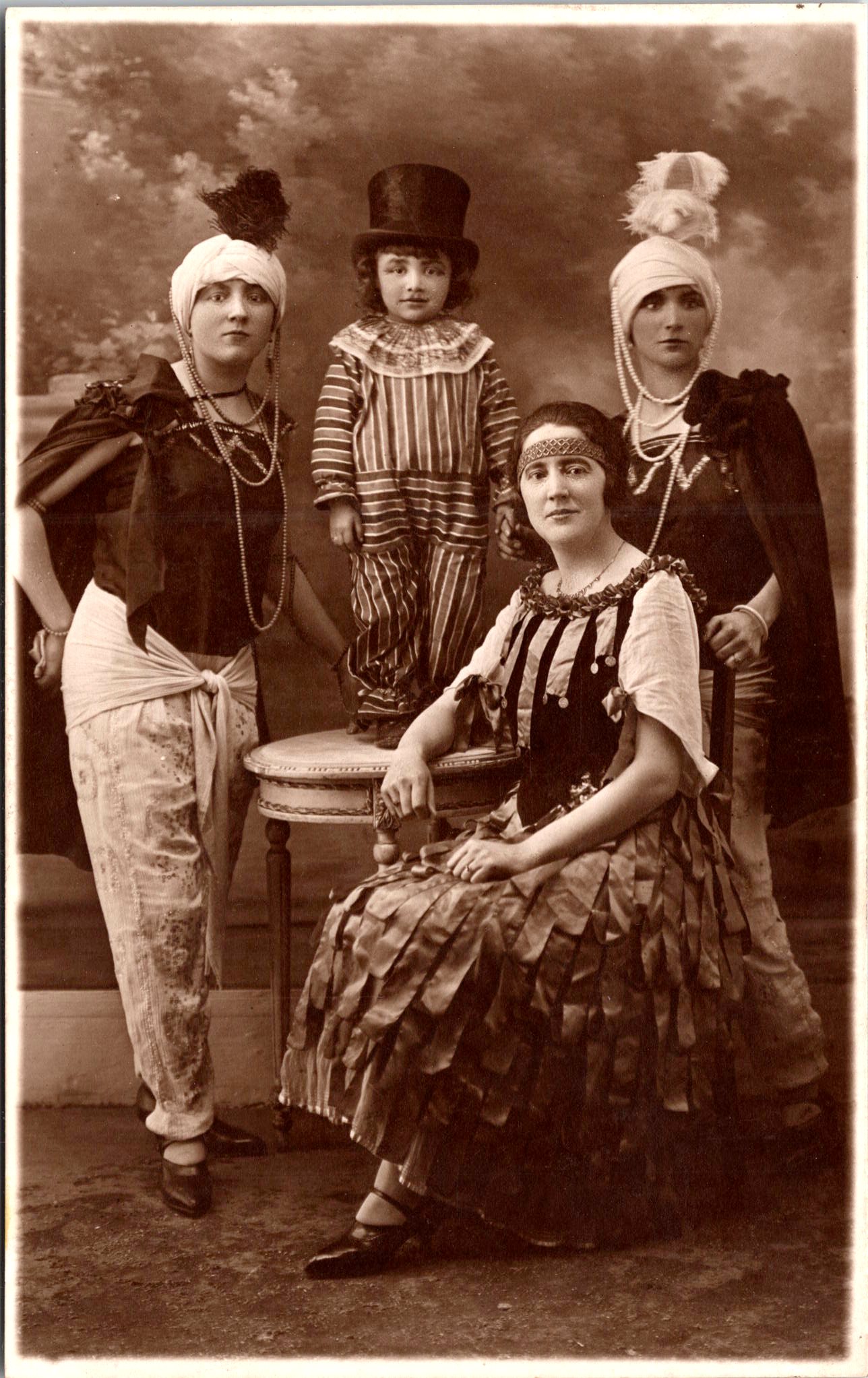
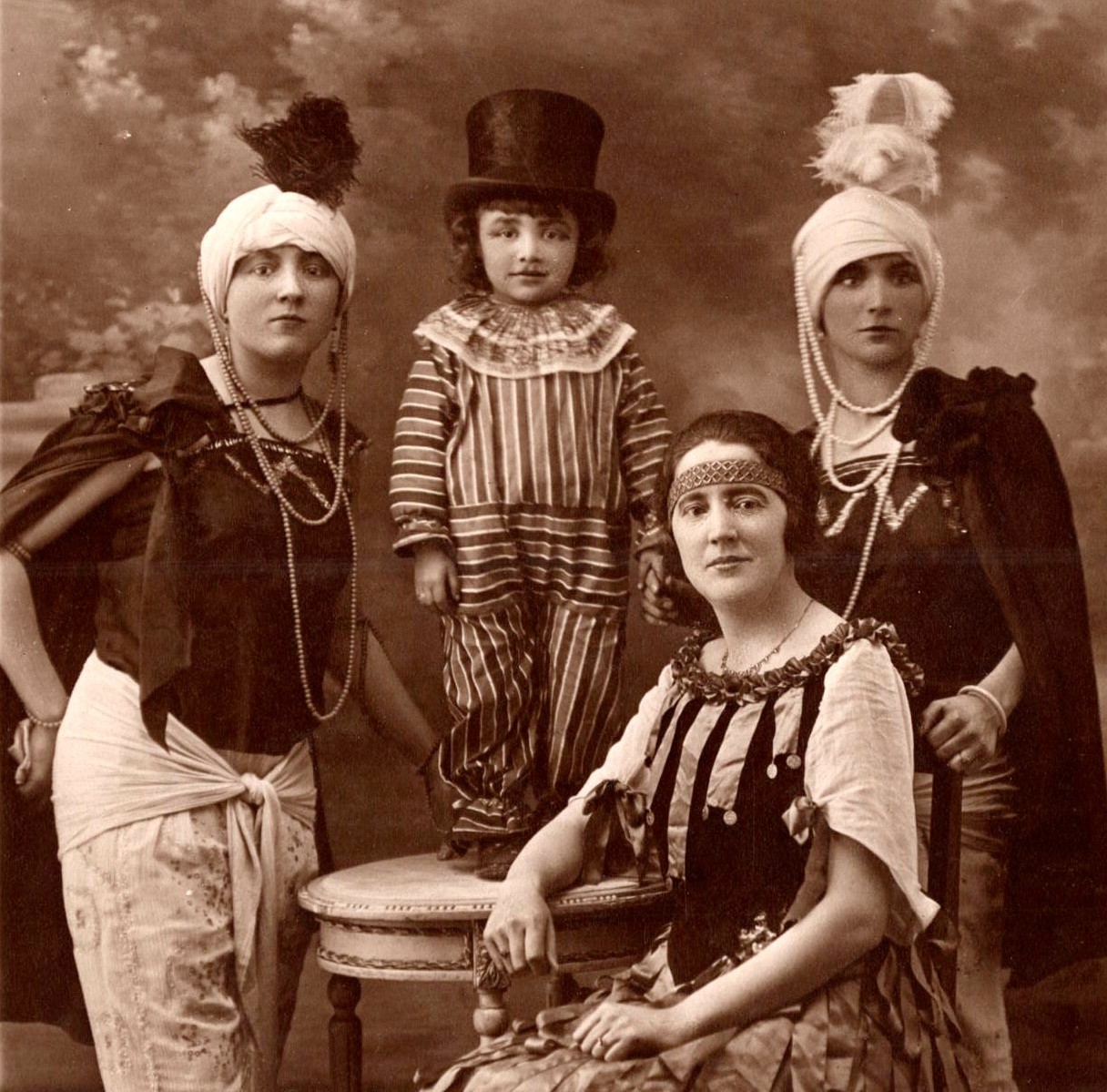
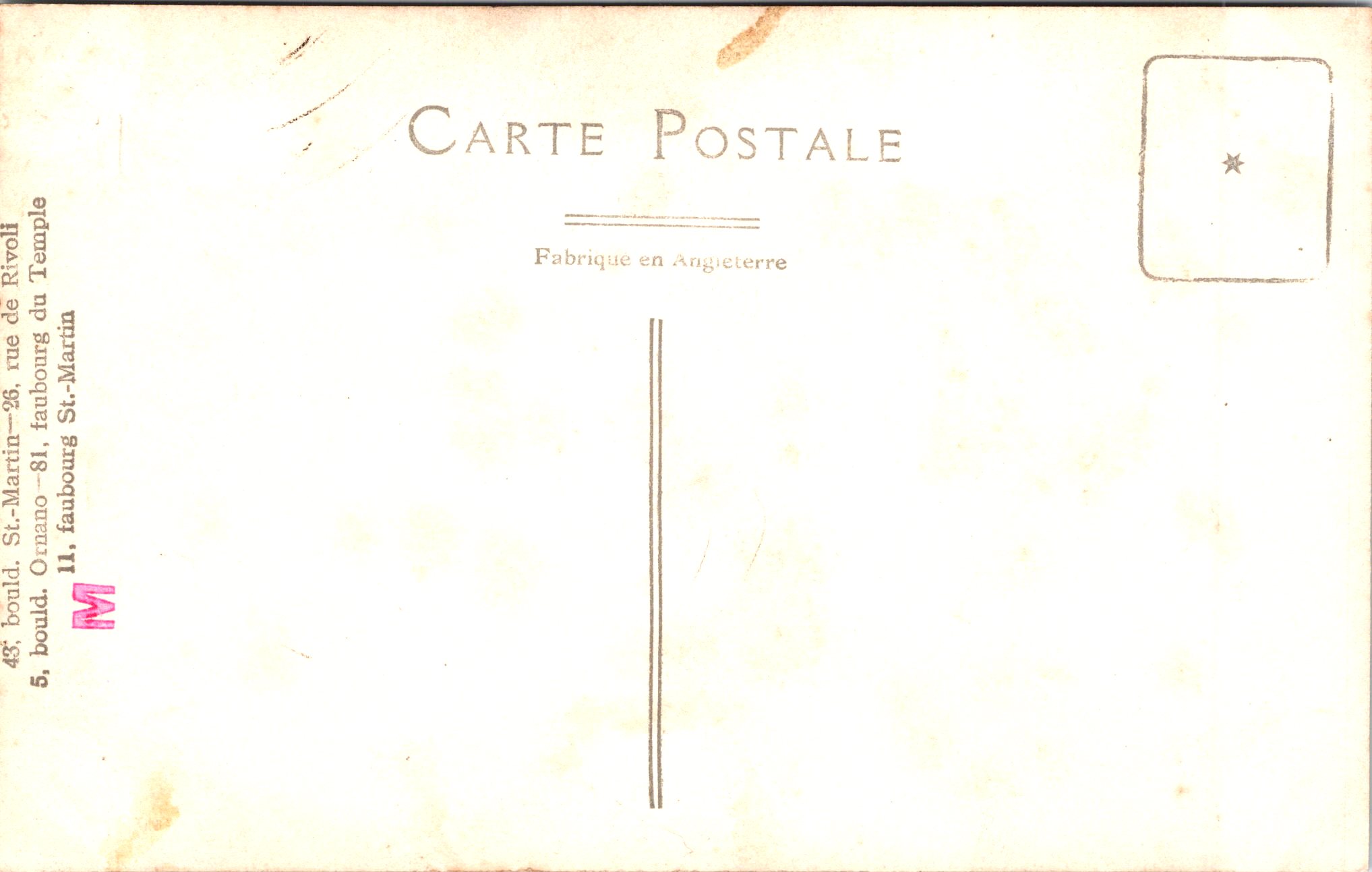
This striking real photo postcard captures a costumed group of three women and one child, posed in a studio setting. The scene has a theatrical, almost carnivalesque quality. Standing proudly atop a small round table, the young child wears a bold striped clown suit with a wide ruffled collar. A tall top hat, much too large for their small stature, dominates the composition and draws the viewer’s attention. The child’s calm, self-possessed gaze truly upstages the surrounding adults. Two women wear exotic turbans adorned with feathers and strings of beads, evoking an “Orientalist” fantasy style popular in the early 20th century. One woman (seated) wears a ribboned dress and jeweled headband, giving her a regal presence. Despite their elaborate costumes and serious expressions, they are visually overshadowed by the whimsical, confident child. The atmospheric painted studio backdrop suggests a cloudy sky, enhancing the theatrical tone of the composition. On the reverse, the postcard is printed with the words “Fabriqué en Angleterre” (Made in England). Along the left edge appear addresses of French distributors. A small star is in the center of the stamp box. The card is unused and unposted. This unusual postcard reflects the playful spirit of costume photography. (SOLD)
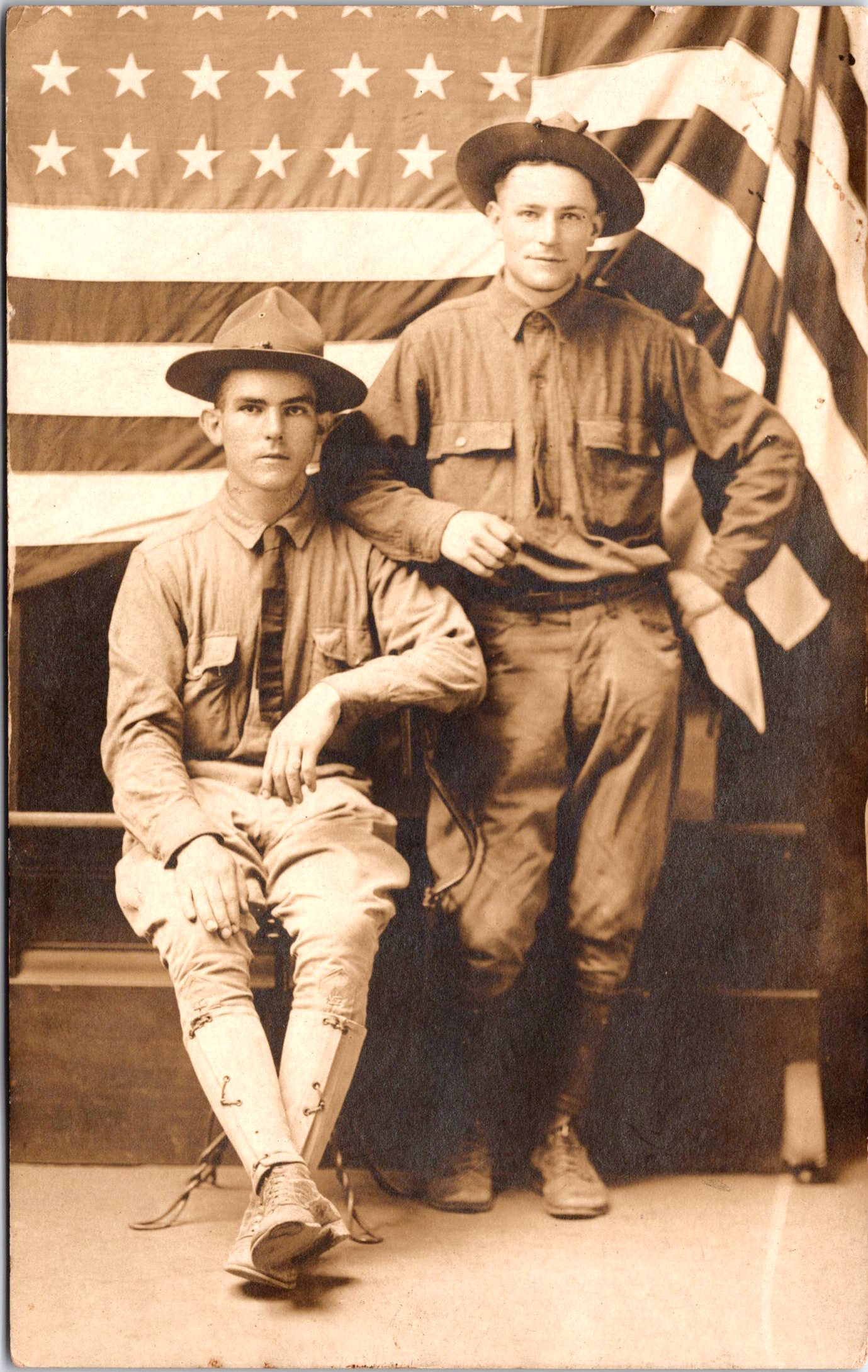
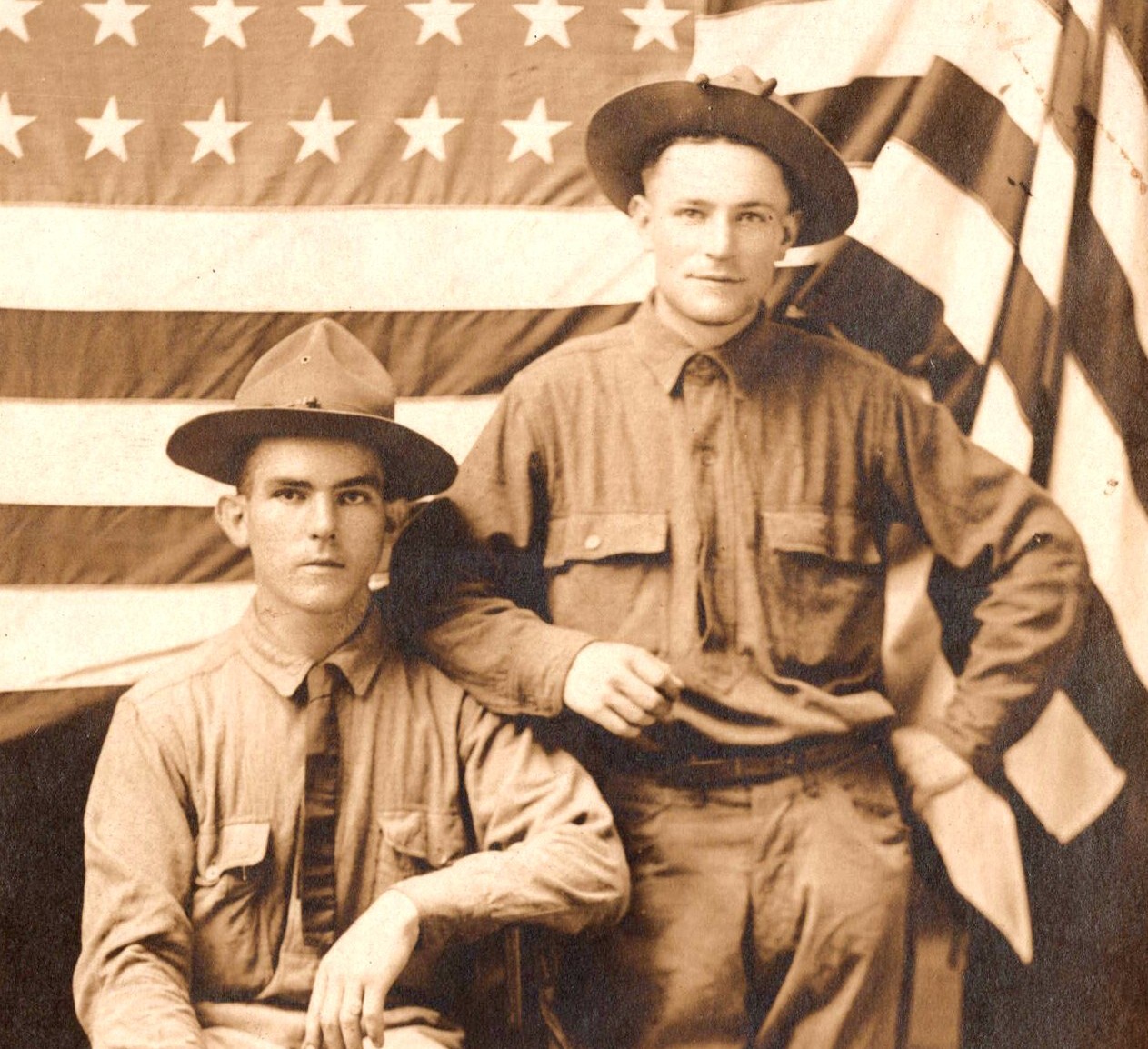
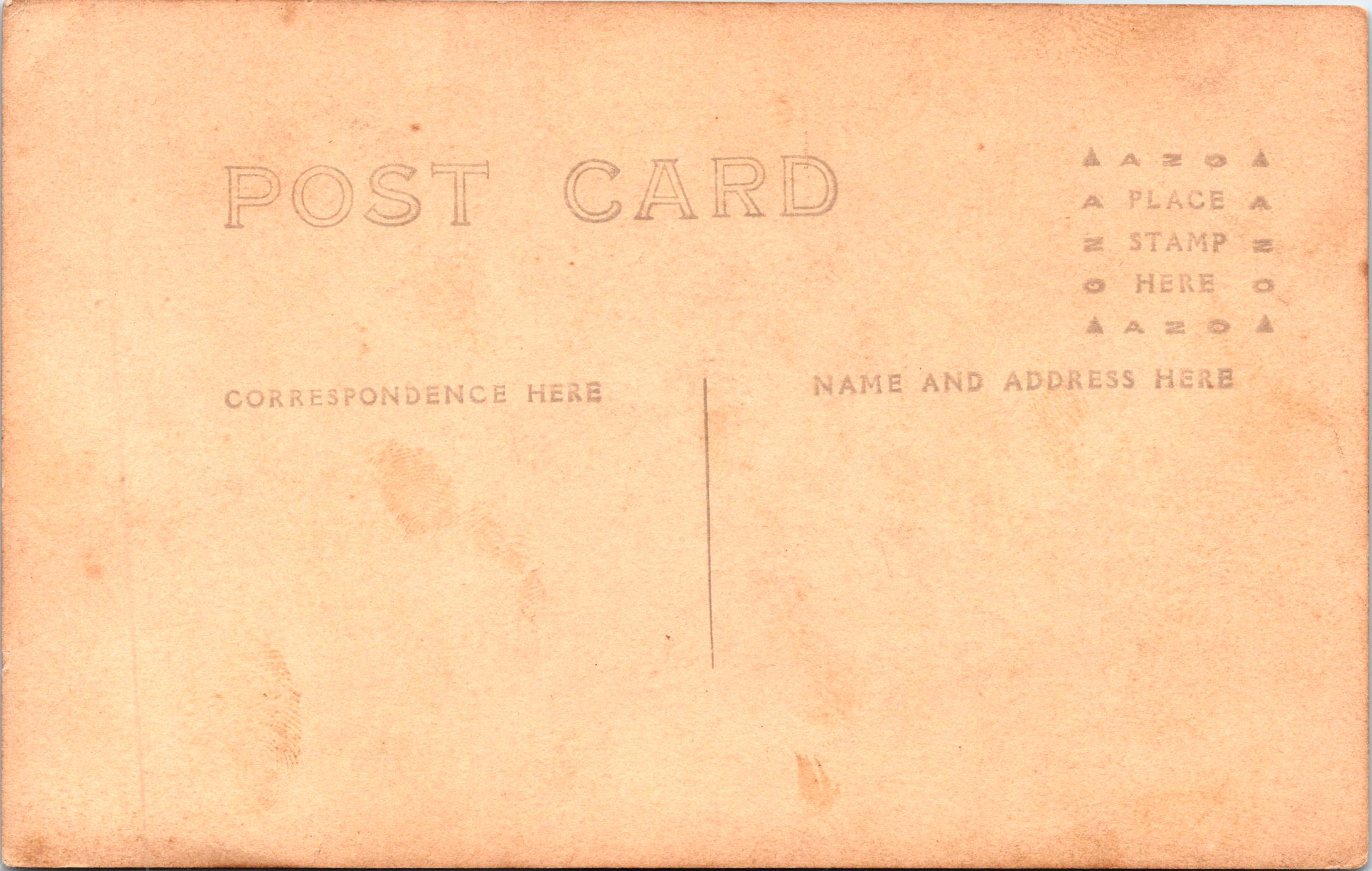
This original real photo postcard captures two World War I-era American soldiers posed proudly in front of a large U.S. flag backdrop. Both men wear their service uniforms complete with campaign hats, buttoned shirts, and breeches tucked into puttees or leggings. The soldier on the left is seated with legs crossed, hands resting naturally, and gazes directly at the camera. The standing soldier rests his hand casually on his comrade’s shoulder, creating a sense of camaraderie. The flag’s stars and stripes fill the background, adding a strong patriotic tone to the image. The reverse of this postcard has an AZO stamp box indicating that it dates back to between 1904 and 1918. The card’s style and subject matter suggest that the postcard likely dates to the World War I period (circa 1917–1919). SOLD
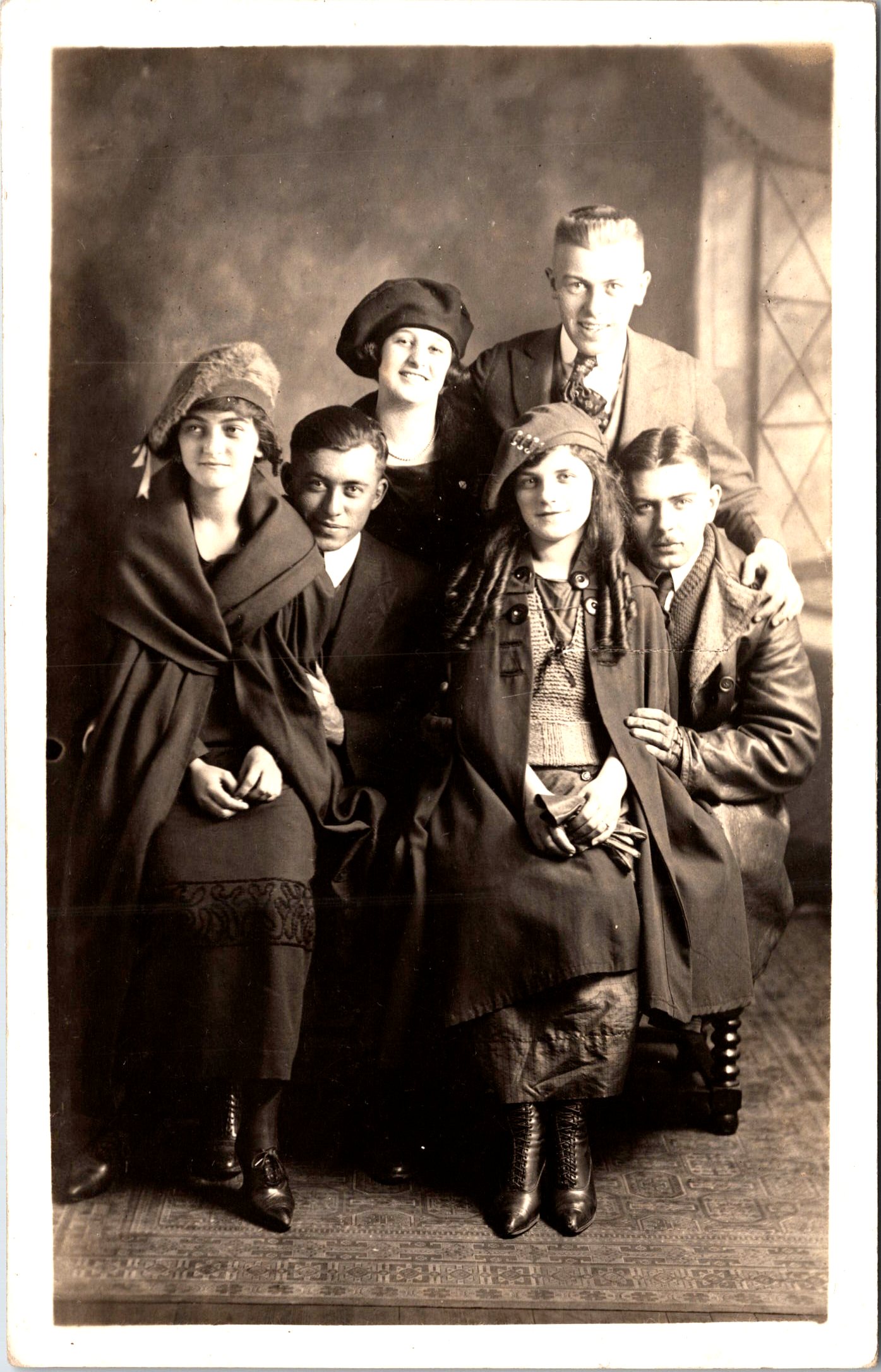
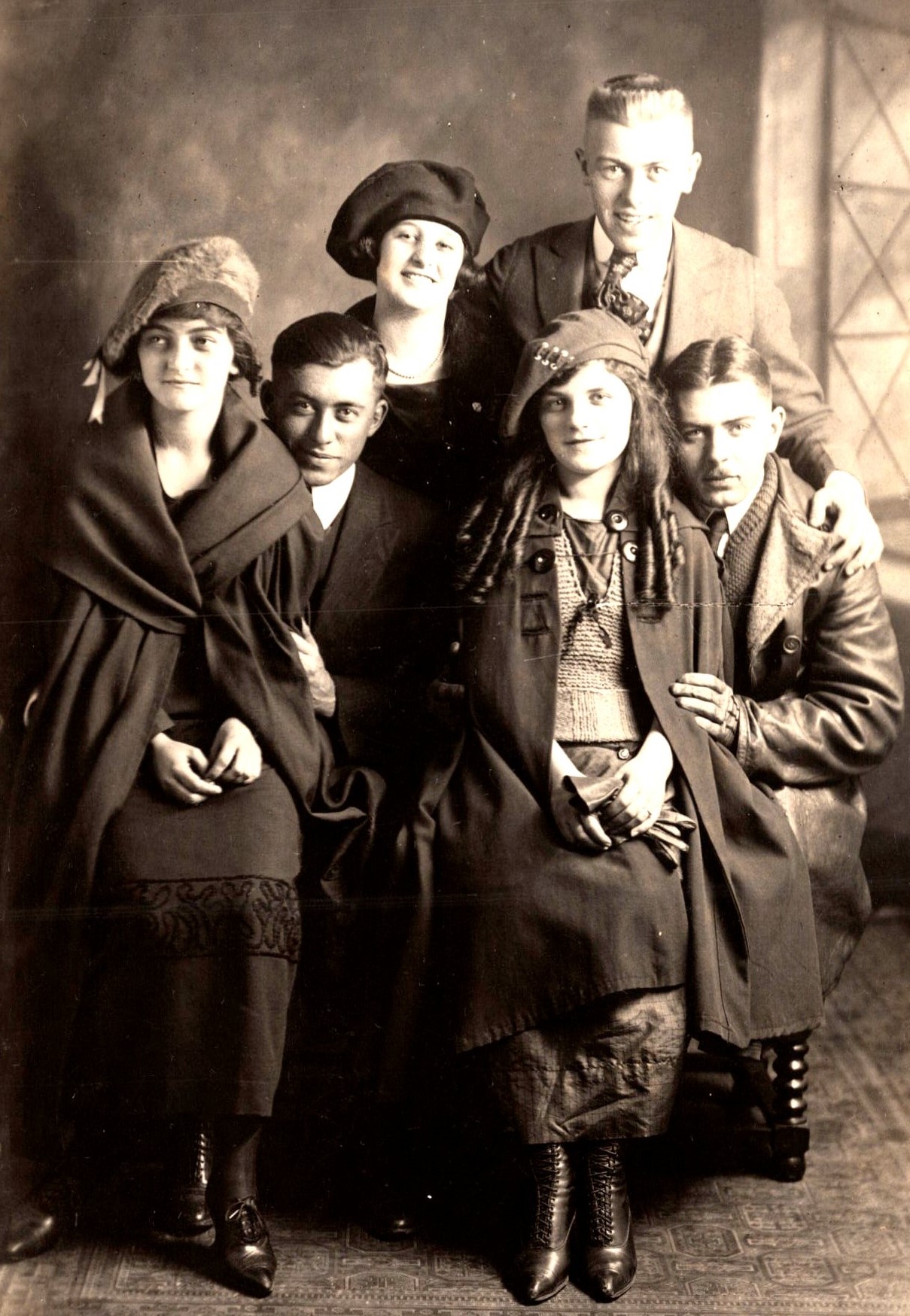
This vintage real photo postcard features three attractive couples posing at an unidentified photography studio. The six men and women in this photograph are chock full of personality. Five of the six are flashing wonderful smiles. The women, in particular, appear to be having fun. All six subjects are fashionably dressed. The women are wearing sporty hats. This is an intimate portrait. The three couples seem to be very relaxed and appear to be good friends. This postcard has an AZO stamp box which indicates that the photo was taken sometime between 1918 and 1930. SOLD
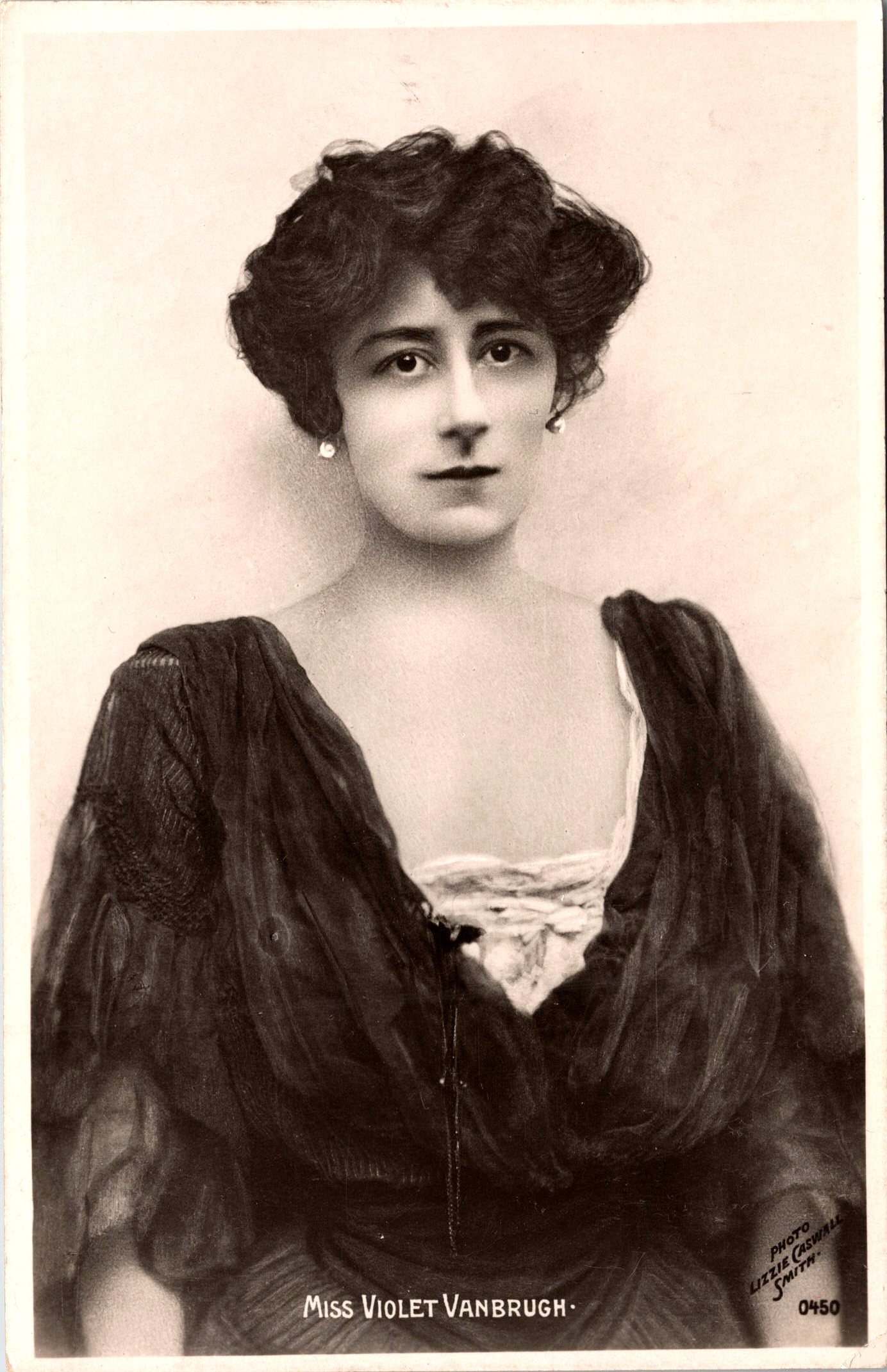
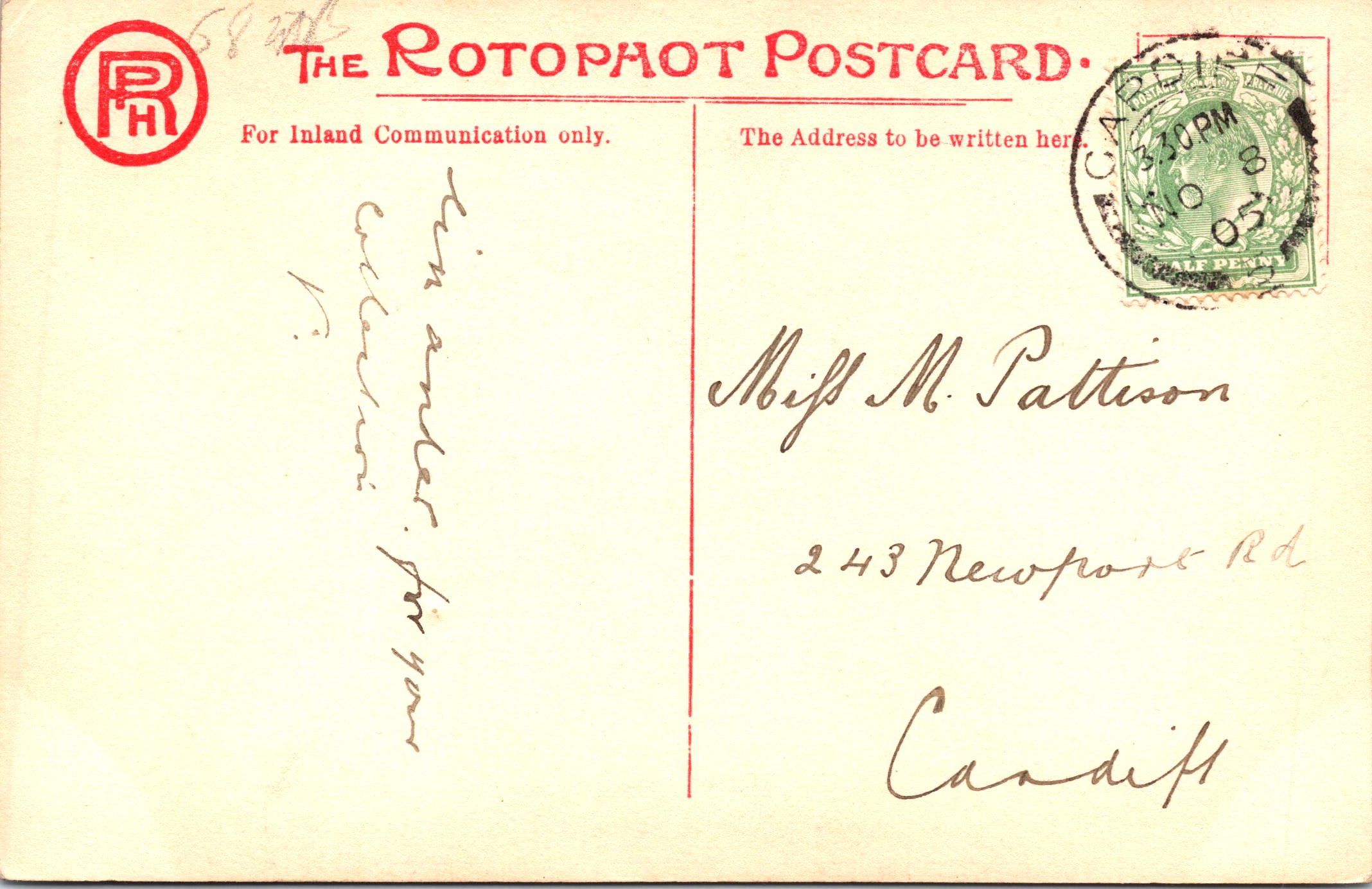
This is a rare and beautifully preserved Rotophot (RP) postcard featuring a striking portrait of the renowned British stage actress Miss Violet Vanbrugh (1867–1942). The postcard, numbered 0450, was published by Rotophot, a German publisher known for high-quality photographic postcards. The portrait itself was captured by Lizzie Caswall Smith, a prominent female photographer of actors and society figures during the early 20th century. This particular image is notable for its excellent clarity and fine detail, showcasing Vanbrugh in an elegant, dark gown with a delicate lace underlayer, her short wavy hair styled fashionably, and wearing simple yet refined pearl earrings. Violet Vanbrugh was part of a theatrical family—her sister, Irene Vanbrugh, was also a celebrated actress. She initially pursued her education at Exeter and developed an interest in drama at a young age. She made her stage debut in 1886 at the Theatre Royal, Margate, before stepping into the London theatre scene. Her breakthrough came when she joined Sir Henry Irving’s company, where she refined her skills and gained recognition for her classical performances. Over the years, she became highly regarded for her portrayals of Shakespearean heroines, including Lady Macbeth, Portia in The Merchant of Venice, and Queen Katherine in Henry VIII. Apart from Shakespeare, she also starred in major productions like “Caste” and “Diplomacy”. Vanbrugh was admired for her commanding presence and emotive delivery, making her a favorite among theatre audiences of the late Victorian and Edwardian eras. Violet Vanbrugh married Arthur Bourchier, a fellow actor, in 1894, and the couple became a theatrical powerhouse, frequently starring together in productions. They also managed the Garrick Theatre in London for a time. However, their marriage eventually ended in divorce. Despite personal setbacks, Vanbrugh remained a distinguished figure in the theatrical world well into the 20th century. She passed away in 1942 at the age of 75. The back of this postcard features the Rotophot logo in red, with a printed divider. It is addressed to Miss M. Pattison of Cardiff, Wales. The handwritten message, written in cursive along the left margin, reads: “another for your collection”. The sender hopes the postcard will be added to the recipients postcard collection. The postcard bears a half-penny green King Edward VII stamp, which was postmarked in Cardiff in 1908. (SOLD)
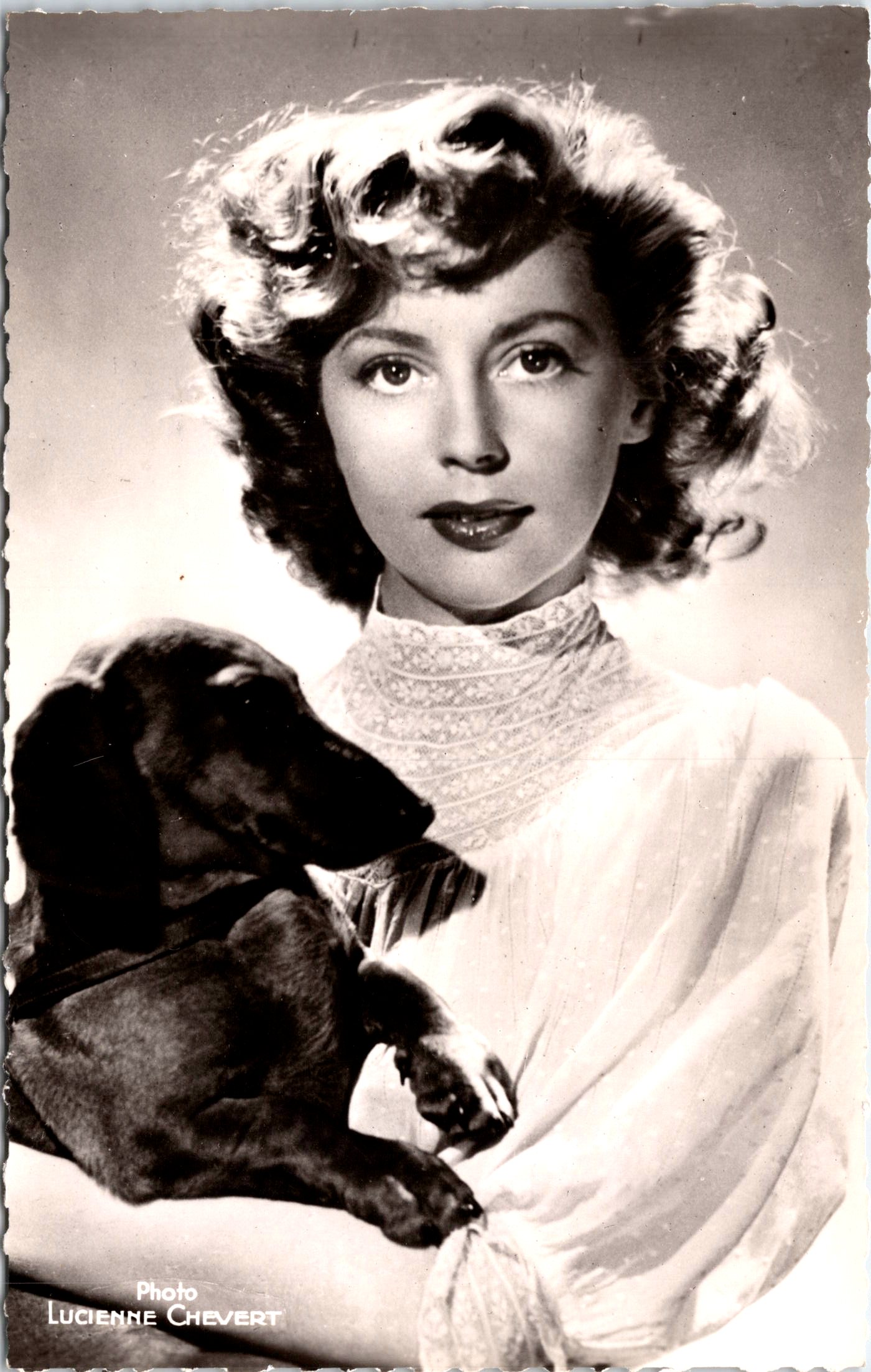
Anne Vernon (1924- ) was a French theatre, television and film actress. She is seen in this vintage real photo postcard, posing with a Dachshund dog. Vernon began her film career in the late 1940s, gaining attention for her elegance, charm, and natural screen presence. Her first notable role was in The Murdered Model (1948), marking her debut during the French occupation. In the post-war years, she became a prominent figure in French cinema, appearing in a variety of genres, including comedies, dramas, and musicals. One of her most significant roles came in Jacques Demy’s The Umbrellas of Cherbourg (1964), where she played Madame Emery, the mother of Catherine Deneuve’s character. Her nuanced performance brought depth to the bittersweet romance of the film, which remains a classic of French cinema. Throughout the 1950s and 1960s, Anne worked with esteemed directors such as René Clair and Julien Duvivier, further solidifying her reputation as a versatile actress. She also appeared in international productions, making her a recognized figure beyond France. Notably, she appeared in the Hollywood film Shakedown (1950), playing the role of Nita Palmer alongside Howard Duff and Peggy Dow. This was her only Hollywood film. Despite this venture into American cinema, she remained less known in the United States compared to her prominence in Europe. Over her career, Anne Vernon appeared in approximately 40 films between 1948 and 1970. Anne Vernon was married three times. Her husbands included French lawyer and politician Robert Badinter and politician Jean-Pierre Prouteau. As of January 2025, Anne Vernon is still alive. She is 101 years-old. Miss Vernon’s photograph seen on this postcard was taken by Lucienne Chevert (1911-1982). She was a Paris based photographer who photographed dozens of French film stars post World War II. She was the partner of the well known celebrity photographer, Sam Levin. This postcard was published by the Globe Edition (Paris) and is part of a series (no.137). (SOLD)
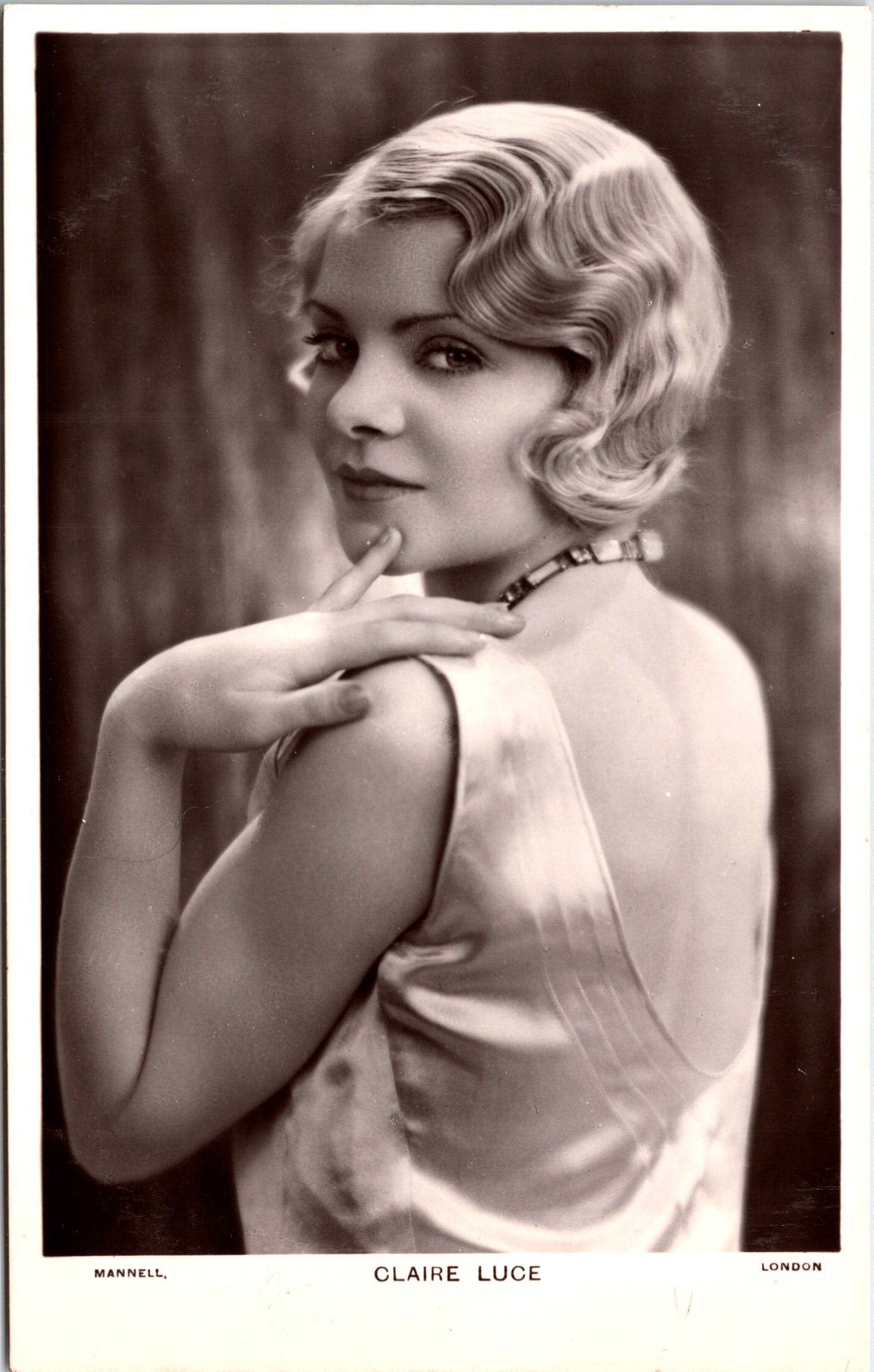
This vintage portrait postcard captures the elegance and sophistication of Claire Luce, a celebrated American stage and screen actress known for her work in theater and Hollywood during the early to mid-20th century. Photographed by Mannell Studio, London, this stunning black-and-white image exudes the classic glamour of the era, likely from the 1920s or 1930s. In this portrait, Claire Luce is seen wearing a sleek satin gown with a low-cut back, reflecting the timeless fashion of the Art Deco period. Her delicate necklace adds a touch of refinement, while her softly curled platinum blonde hair is meticulously styled in the distinctive finger waves that were highly fashionable during that time. Her expression is both confident and alluring, with a slight smile and a captivating gaze that suggests both poise and mystery. She poses gracefully, her fingers resting near her chin in an elegant yet relaxed manner, enhancing the overall sophistication of the composition. Born in 1903, in Syracuse, New York, Claire Luce became a renowned actress known for her work on both stage and screen. She rose to prominence in the 1920s and 1930s, particularly for her performances in Broadway productions. One of her most notable roles was in Gay Divorce (1932), where she starred alongside Fred Astaire. This production later inspired the classic film The Gay Divorcee (1934), though her role in the film was played by Ginger Rogers. Luce also made a mark in Hollywood, appearing in films such as Up the River (1930), The Cohens and the Kellys in Africa (1931), and Over She Goes (1937). However, her true passion remained the stage, and she continued to shine in numerous theatrical productions, both in the United States and the United Kingdom. Aside from her acting career, Luce was admired for her beauty, grace, and sophisticated sense of style. She was often photographed in elegant gowns, embodying the glamour of the Golden Age of Hollywood and theater. Claire Luce was known for her dedication to her craft, and while she had several notable relationships, she was never widely publicized for her personal life. She married Clifford Warren Smith, an English businessman, though details about their marriage remain relatively private. . Claire Luce’s contributions to theater and film continue to be remembered by classic cinema enthusiasts and theater historians. Her connection to Fred Astaire and the Broadway stage solidifies her place in entertainment history. George Mannell (London) is the photographer who took this postcard’s photo portrait. The postcard is relatively uncommon.
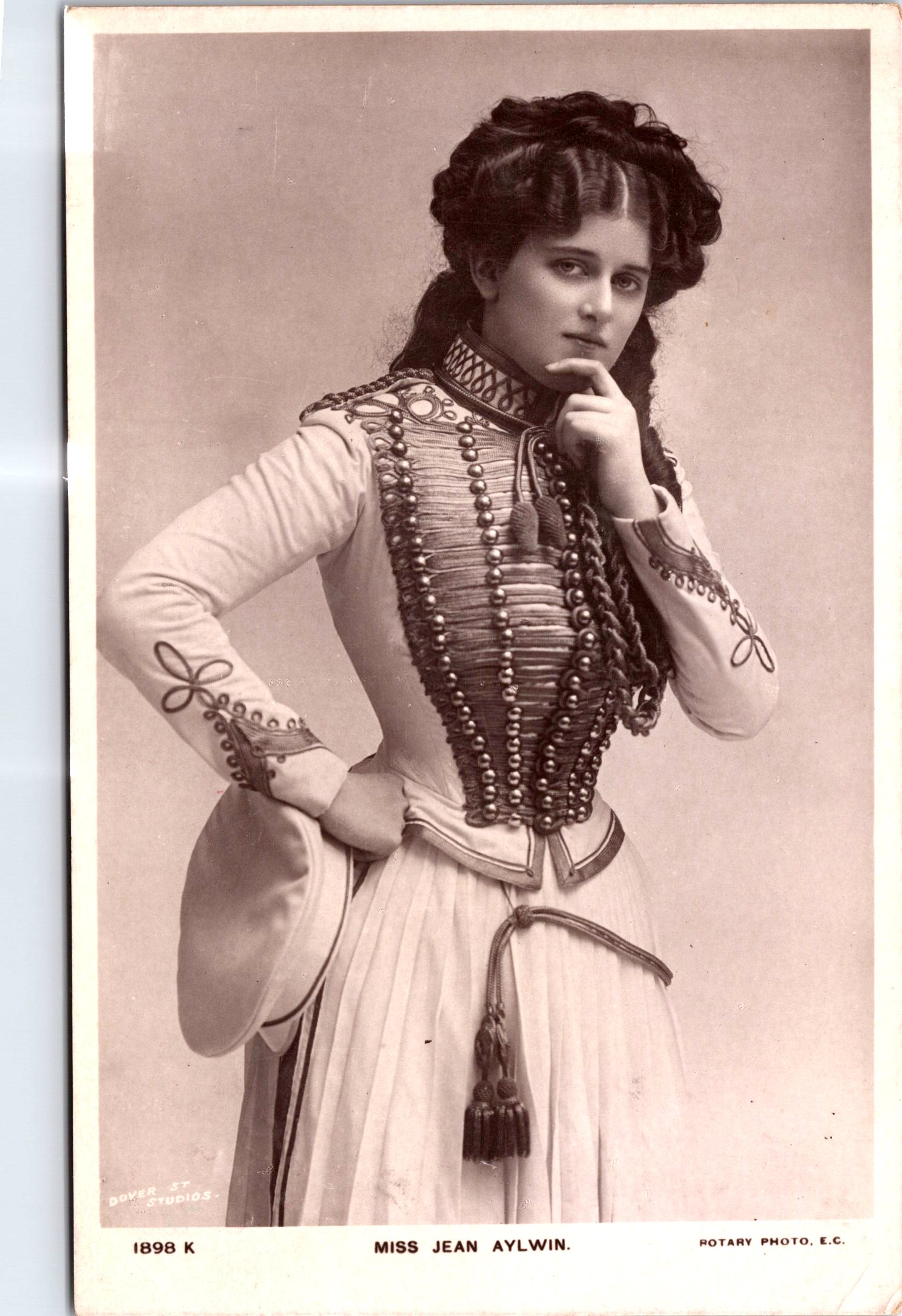
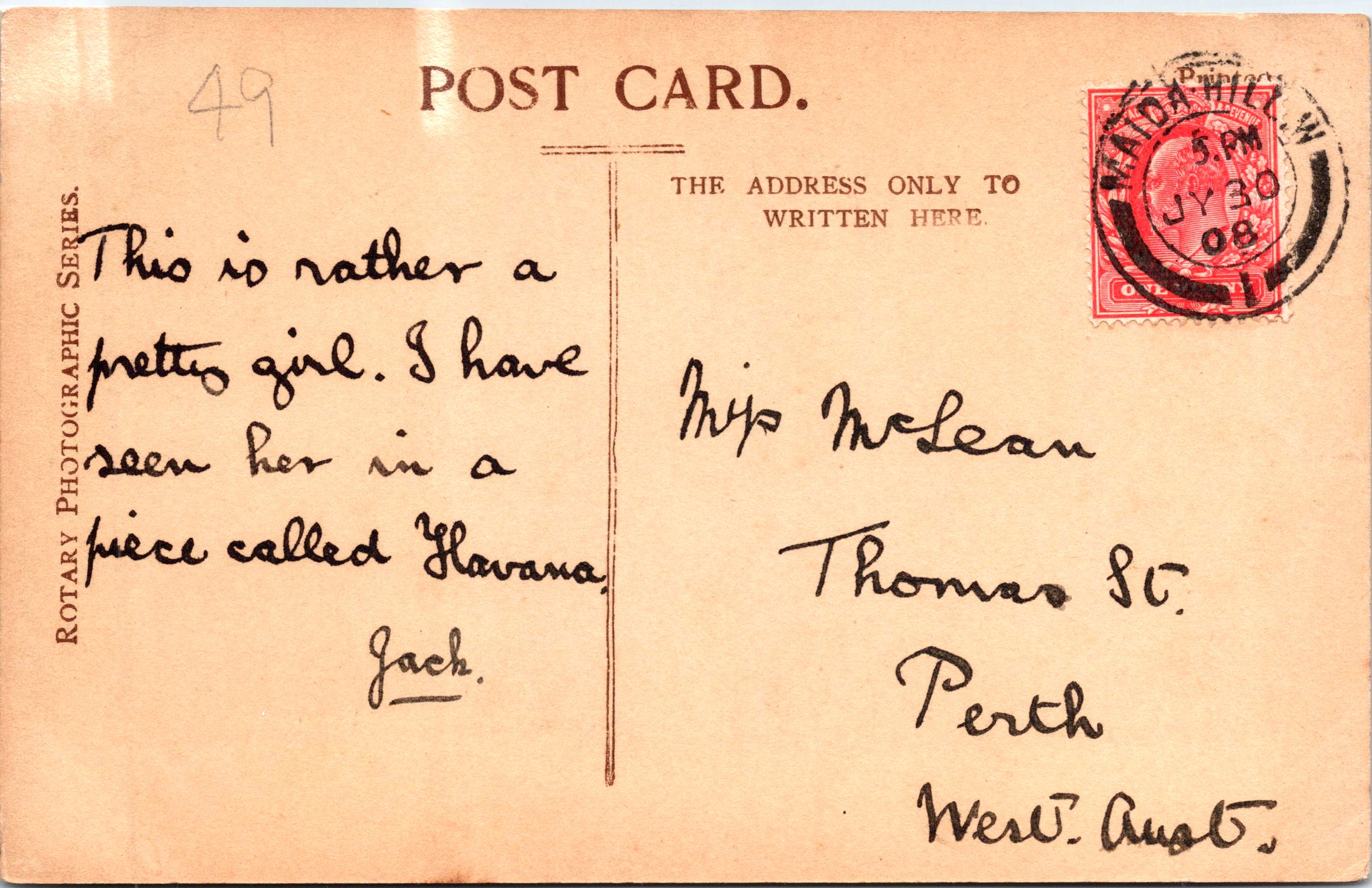
This vintage real photo postcard features a striking portrait of Jean Aylwin (1885-1964), a pretty British actress and singer from the early 20th century. She gained fame for her performances in musical comedies and plays in London and she also toured internationally. Aylwin was associated with the popular Gaiety Theater productions. She had notable performances in several successful productions including “The New Aladdin” (1906), “The Girls of Gottenberg” (1907) and “Our Miss Gibbs” (1909). Aylwin also appeared in two silent films. She married in 1913 but the marriage ended in divorce in 1924. She was accused of adultery with a noted composer of her time. After her divorce, her career declined. She later worked as a housekeeper. In 1926, she briefly worked as a BBC radio broadcaster. Aylwin looks elegant in this dramatic studio pose. She stands three-quarter length with a thoughtful, hand-to-chin expression, the other hand set firmly at her hip. Aylwin wears a striking military-style costume—a fitted jacket heavily braided with ball buttons and tasselled cords, over a pleated skirt; a matching hat rests at her side. Her hair is dressed in full Edwardian waves, completing the theatrical look. Thd photographer of this portrait is the Dover Street Studios. The card was published by Rotary Photo as part of a series (no1898K). The postcard has a Wandsworth (London) postmark from 1908. The postcard is addressed to someone in West Australia. The message on the card is “This is rather a pretty girl. I have seen her in a piece called Havana. Jack.” The front of this card is has rich, sharp sepia tones. Holding the card at a certain angle, one can see dimples caused by the postmark. (SOLD)
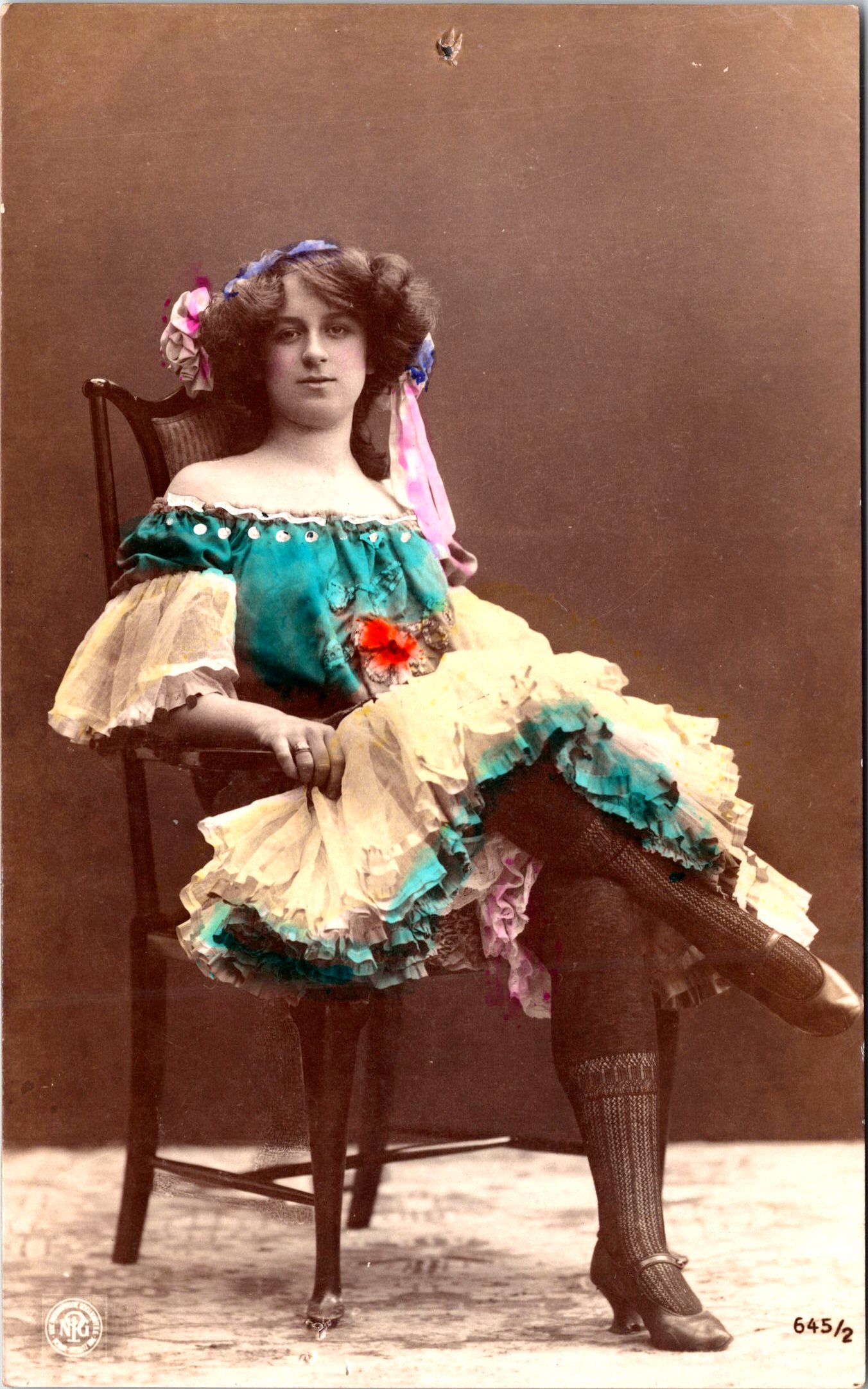
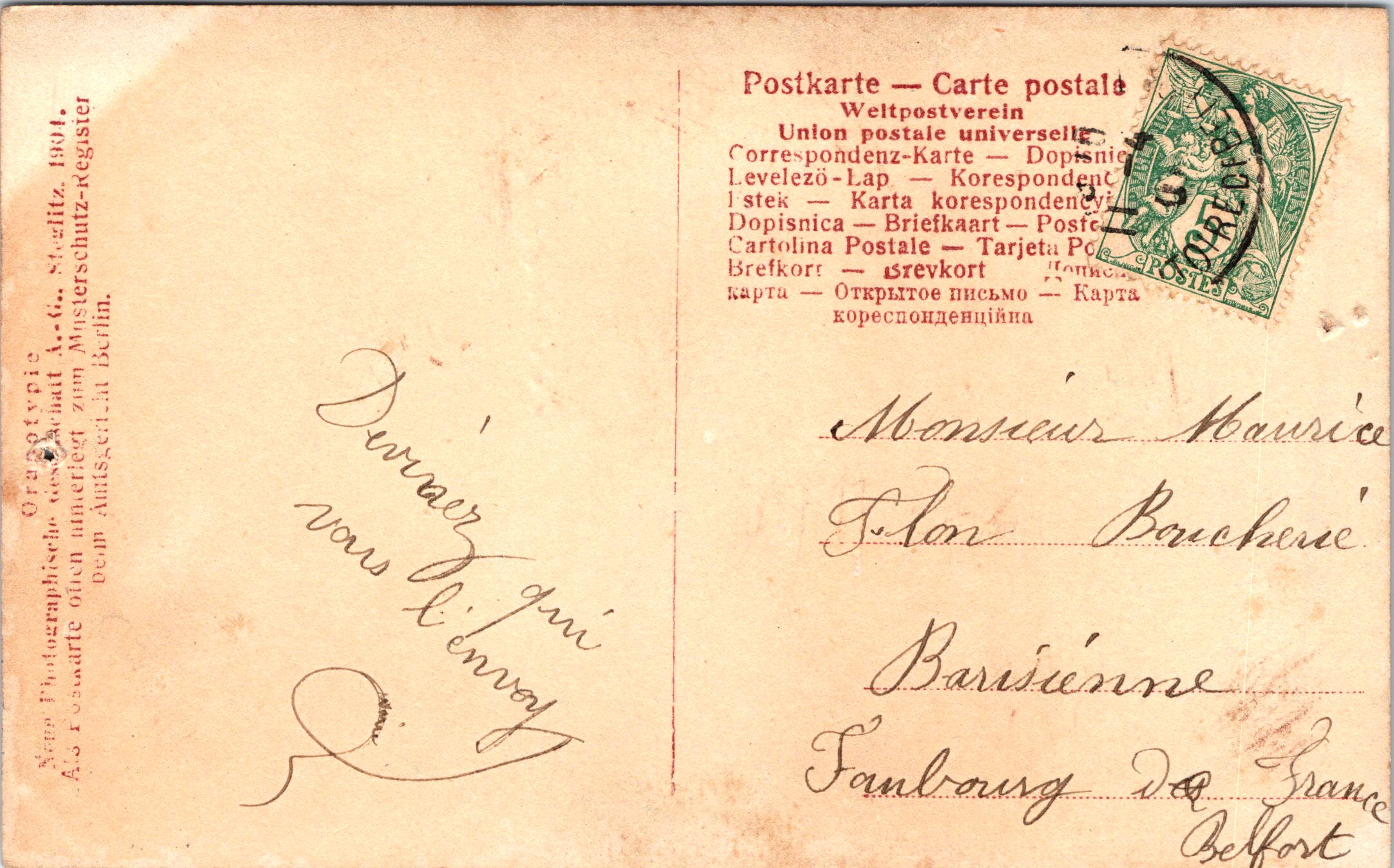
This is a striking hand-tinted real photo postcard (RPPC) featuring a young actress or performer seated confidently on a chair. The card is part of the NPG (Neue Photographische Gesellschaft) series, serial number 645/2, and dates to 1904. It was printed in Berlin, Germany, as indicated on the reverse. The woman in the image has voluminous, dark, curly hair adorned with colorful ribbons, one pink and one lavender. She wears a bold theatrical costume: a bright turquoise satin dress trimmed with cream-yellow ruffled sleeves and skirt, accented by a vivid red flower at the bodice. The layered ruffles of her skirt spill over her lap, giving her a lively, almost playful stage presence. She sits with her legs crossed, her expression calm and slightly defiant, exuding poise and self-assurance. Her dark stockings and buttoned heels complete the look, emphasizing her identity as a stage performer rather than a conventional society portrait sitter. Neue Photographische Gesellschaft A.G. was a leading German postcard and photographic publishing house active in the early 20th century. The left-side imprint, translated, reads: “Original photograph by NP Steglitz refers to the Berlin district where NPG was located, not the photographer’s surname. On the reverse, the postcard carries a green French stamp, confirming that the card was mailed from France, even though it was printed in Germany. The stamp is from the French “Sower” (La Semeuse) series, first issued in the early 20th century. The message on the card, translated from French reads: “Guess who is sending this to you.” SOLD




 THE CABINET CARD GALLERY