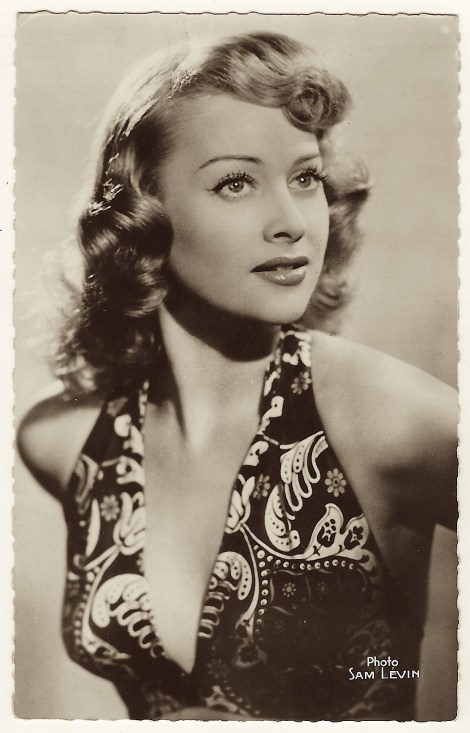
 POSTCARD 1 (SOLD)
 POSTCARD 2
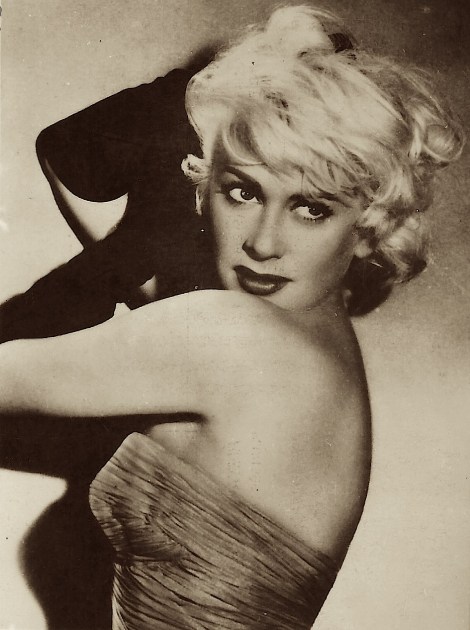 POSTCARD 2
Postcard 1 is a vintage real photo card featuring stunning French actress, Martine Carol (1920-1967). She was France’s major sex symbol of the early 1950’s. “Sex Symbol” is an awful term, but it certainly was spoken without much controversy when this postcard was published. Her popularity was short term. She was succeeded by another beautiful French actress, Brigitte Bardot. Little is known about Carol’s childhood. A random encounter with French film and stage actor, Andre Luguet, led her to seek a career in the theatre. She made her stage debut in 1940. Her first film role was in Wolf Farm (1943) and although she was a photogenic beauty and was at ease in front of the camera; her acting ability was limited. Throughout the 1940’s Martine acted in supporting roles and became a popular pin-up. She also appeared in stage roles. Martine was often considered the French version of American actress, Marilyn Monroe. After an affair with married actor Georges Marechal ended poorly, Martine attempted suicide by overdosing on alcohol and drugs, and jumping into the Seine River. The taxi cab driver that took her to the river, rescued her. The unhappy business of her suicide attempt resulted in renewed fan interest in the actress. In 1950, she had her first major film success in “Caroline Cherie”. At least part of her success was attributed to her semi-nude scenes and displays of “seductive sexuality”. She continued to appear in several films that IMDb refers to as “costumed teasers”. Her last popular role was starring in “Lola Montes” (1955). Later roles failed to peak moviegoers interests and Martine became depressed. A severe accident, and substance abuse in the 1960’s, sabotaged her career. At age 46, Martine died of cardiac arrest in the bathroom of a Monaco hotel. News accounts suggested that she died of a drug overdose but the story was never confirmed. Martine was married and divorced three times and left her fourth husband a widower. Her longest marriage was just short of five years duration. An interesting side note is that she was once kidnapped by French gangster, Pierre Loutrel (AKA Crazy Pete). The kidnapping was brief, and the kidnapper sent her roses the next day as a gesture of apology. Martine Carol’s filmography, according to IMDb, includes 50 film credits between 1941 and 1967. The photographer of this portrait photo (Postcard 1) is Sam Levin (1904-1992). He was born in the Ukraine but emigrated to France when he was two years of age. He is famous for his stage photographs and his portraits of movie stars. His studio was in Paris. Levin was a film photographer for 75 films. He was arrested by the Nazis during World War II and was sent to a camp. His crime was, being Jewish. The fact that he was sent to a detention camp rather than a death camp, indicates there was a high ranking Nazi official acting as his guardian angel. He photographed nearly all the major French and European movie stars of the 1950’s and 1960’s. He is particularly celebrated for his photos of Brigitte Bardot. Levin did over 180 magazine covers in the United States. This postcard was published by the Globe Edition (Paris) and is part of a series (no. 132). To see a video of Miss Carol, look at the clip below which shows her in “Nana” (1955). (SOLD)
Postcard 2 is a vintage real photo card. Martine Carol is throwing a seductive gaze over her left shoulder. She is dressed in clothing that is meant to spark notice. Martine needed to perpetuate the image that made her a “sex symbol”. The postcard has an indecipherable photographer’s stamp on its reverse and is in good condition (see scan). This particular postcard portrait of Martine Carol is uncommon. (SOLD)

POSTCARD 2


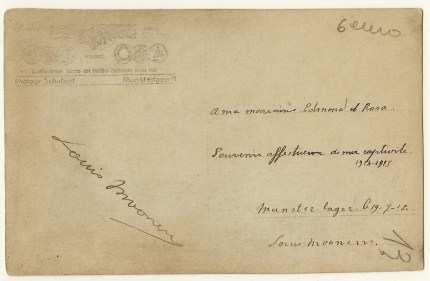
 This vintage real photo postcard features a handsome soldier. He is wearing a military uniform and cap. The pin on his hat indicates that he was a member of the 9th regiment of the infantry. I do not know the soldiers nationality. The message on this card includes the word “captivite”. Captivite, translated from the French means “captivate”. Was the writer of this postcard talking about capturing the town of Munsterlager, or was he referring to himself as being a prisoner of war? Perhaps a visitor to the cabinet card gallery will be able to translate the message for those of us with a French language deficit. This photo was taken in the mid 1910’s by the Schubert studio in Munsterlager. During the first World War (1916), the Breloh Camp was built in Munster by a regiment of gas warfare engineers. The next year there was construction of a facility for gas munitions. In all, three factories were built for the purpose of manufacturing chemical war material and related munitions. (SOLD)

 This vintage real photo postcard features German actress, Else Kupfer (1888-1974) as she appearss in Nestroy’s play, “Revolution im Krahwinkel” (1908) at the Deutsches Theater in Berlin, Germany. She is most known for her performance in “A Dangerous Woman” (1913). The IMDb lists this performance as her only film credit. This postcard portrait of Miss Kupfer presents her wearing a pretty dress and carrying a parasol. She looks adorable. Kupfe was married to Albert Arnold, brother of artist Karl Arnold. The Becker Maass studio photographed Else Kupfer for this postcard. The publisher of this card is Louis Blumenthal. His company operated in Berlin, Germany. (SOLD)
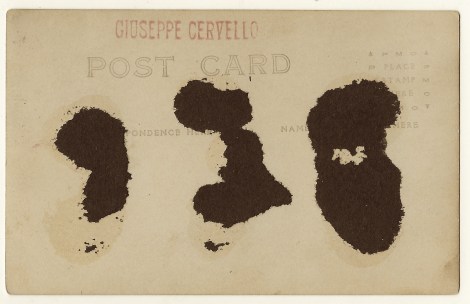
 This vintage real photo postcard features beautiful actress, Berthe Bady (1872-1921). She was born in Belgium but her nationality was French. Berthe Bady attended the Brussels Conservatory and was active on the stage between 1893 and 1913. She was a companion to both Lugne-Poe and Felix-Henri Bataille. Lugne-Poe was a French actor, theatrical director, and scenic designer. He and Bady were involved in symbolist movement of the arts. Bataille was a French dramatist and poet. A brief explanation of symbolism seems to be merited. In theatre, symbolism is a way to bring a greater meaning to something than is apparent at face value. The use of color, characters, movement, props and costumes are all methods of presenting symbolism. In 1897 Bady was the subject of a portrait by Toulouse Lautrec and her death was the subject of a poem by a leading French poet, Louis Aragon. In addition, playwright Fernand Crommelynck dedicated a play to her. Wikipedia credits her with sixteen “notable” play appearances between 1893 and 1913. She appeared in Ibsen’s “The Master Builder” on an international tour. The tour took her to London, Brussels, Amsterdam, Milan, and additional cities. In 1918 she appeared in her one and only film, “Ecce Homo”. This photo of Miss Bady was taken by the studio of Boyer & Bert. Paul Boyer (1861-1908) operated his studio in Paris. He was very talented and won many awards. He produced many portraits of theater performers as well as other celebrities. This postcard was published by F. C. & C. (Frederick Charles Cooper. The firm was located in Eastbourne, England. It was published circa 1905.This portrait postcard is in very good condition (see scans).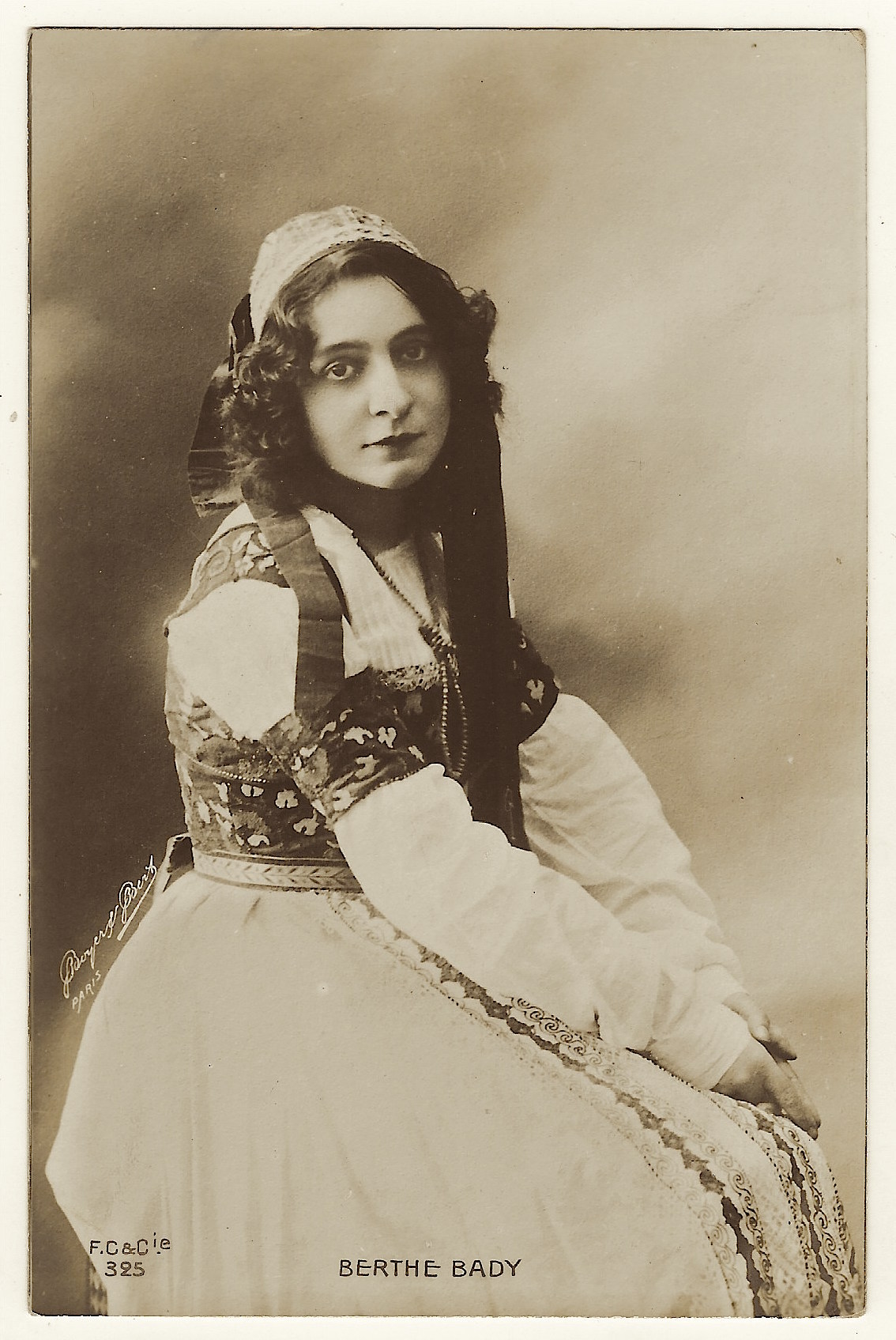

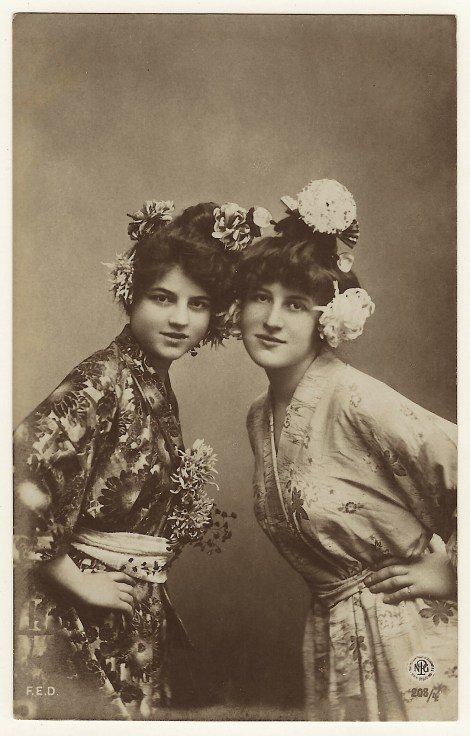
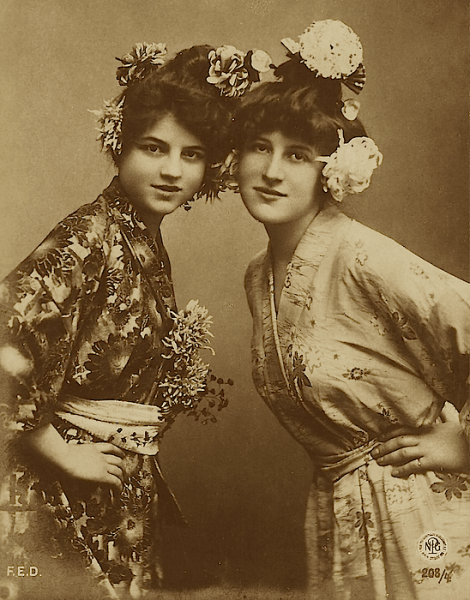 This vintage real photo postcard features two very pretty young women wearing kimono type dresses or robes. The fabric patterns are beautiful. Occasionally, I encounter cdv’s, cabinet cards, and postcards featuring women wearing kimonos. These early photographs document that kimono popularity in the western world was evident as early as the 1880’s. The postcard was published by “NPG” (Neue Photographische Gesellschaft) as part of a series (no. 208/4). The company was a leading bromide photo printing company for many years. A. G. Steglitz, is also noted as the publisher and this photo was published circa 1905 in Berlin, Germany. Note the initial “F. E. D.” at the bottom of the image. The initials stand for Friedrich Eyfried, the printer of this card. The company was located in Dusseldorf, Germany. This postcard is in good condition. Note the slight discoloration in and near the bottom left hand corner of the card. SOLD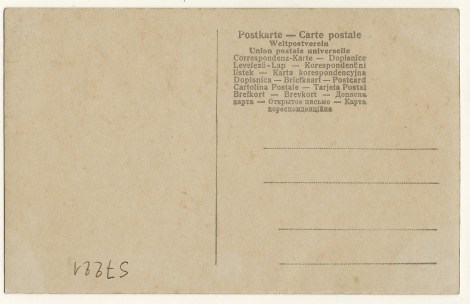
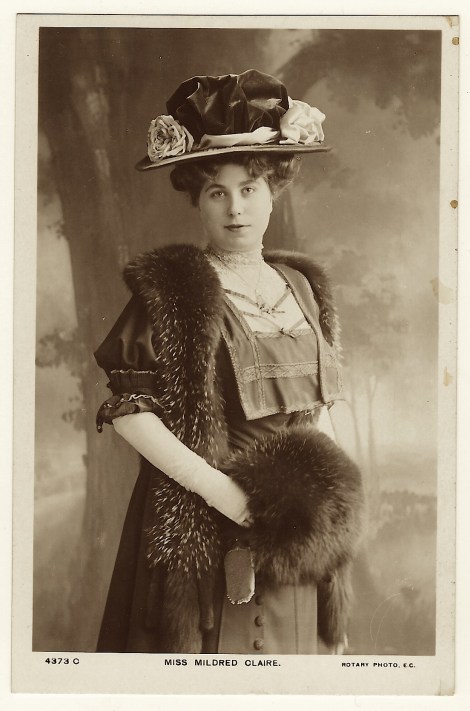
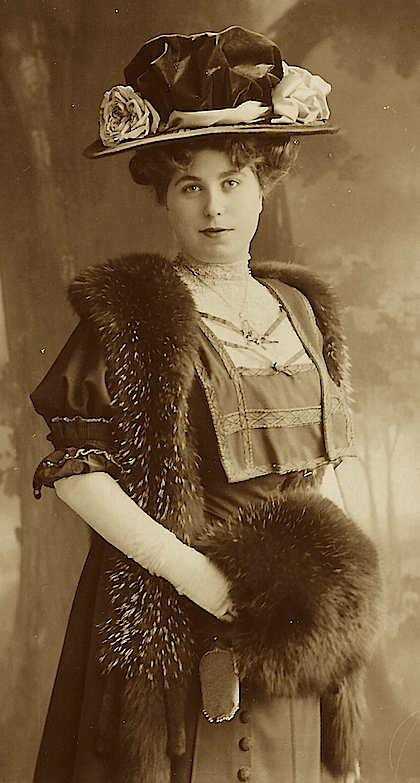 This vintage real photo postcard features actress Miss Mildred Claire. She is quite pretty and is dressed for cold weather (pre global warming). A fur muff protects her hands and a fur stole (pre PETA) wrapped around her shoulders. I could find very little information on this pretty actress. I learned from the Internet Broadway Data Base (IBDb) that Mildred Claire had acted in three Broadway shows between 1900 and 1905. I discovered little else. An actress named “Mildred Clair” appeared in a film titled “Treason” (1918). Perhaps this film actress was our Mildred Claire. There was also an actress named Mildred Claire who changed her name to Claire Rochelle and than had a successful film career. I do not believe the two “Mildred Claire’s” are one and the same person because Claire Rochelle was born in 1908, too late to be an adult when this postcard was issued. This portrait postcard was published by Rotary Photo as part of a series (no.4373 C). It was part of the Rotary Photographic series. The postcard is in very good condition (see scans). (SOLD)
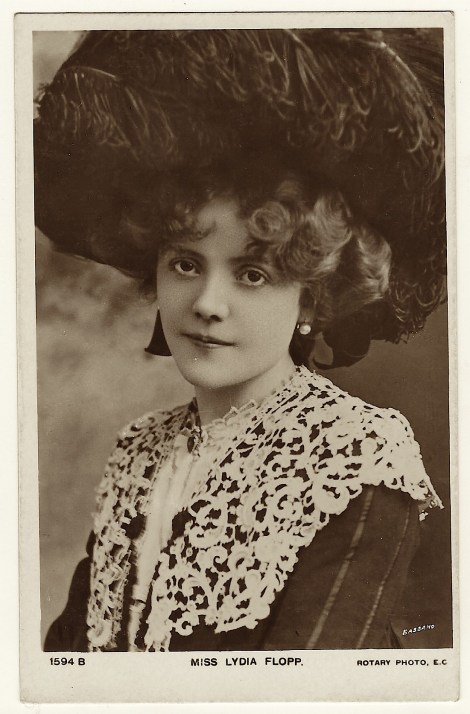 This vintage real photo postcard features theater actress Miss Lydia Flopp (1877-1963). “Flopp” is an unfortunate name for a stage performer. However, it did not get in the way of her success on the stage. Lydia was one of the five “Rudge Sisters”. The women were British actresses and dancers. Some of them were quite successful. The sisters performed as Letty Lind, Millie Hylton, Adelaide Astor, Fanny Dango, and the aforementioned Lydia Flopp. The sisters were primarily dancers but over time developed their singing ability. They performed in pantomime, variety, music hall, and Victorian burlesque realms of theater. Their venues included the Gaiety and Daly theaters in London. Letty Lind was a popular skirt dancer and star of musical comedies. Hylton worked in music halls and theatre and had much success appearing in varieties as a male impersonator. Miss Astor was a West End actress and Fanny Dango worked in London and then launched a successful career performing in Australia. Lydia Flopp’s specialty was pantomime. She was a sitter for two photo portraits in the collection of the National Portrait Gallery. The photographer of Miss Flopp’s portrait is Alexander Bassano (1829-1913). Bassano) was a leading royal and high society photographer in Victorian London. This postcard was published in England by the Davidson Brothers. Davidson Brothers was located in both London and New York City. The firm operated between 1901 and 1911. This postcard is published by Rotary Photo as part of the Rotary Photographic Series (no.1594 B). This vintage postcard portrait has excellent clarity and is in excellent condition (see scans). (SOLD)


 THE CABINET CARD GALLERY