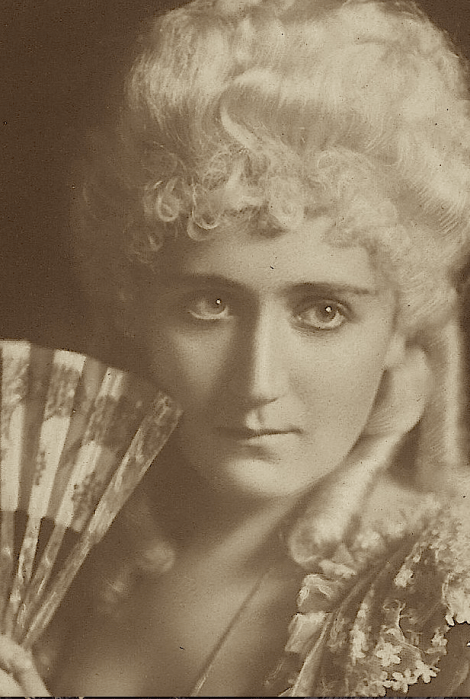
 This vintage real photo postcard features stage and film actress, Blanche Walsh (1873-1915). Walsh was born in the lower east side of New York City. Walsh’s father was a Tammany Hall (New York City) politician and prison warden. His name was Thomas Power “Fatty” Walsh. Miss Walsh was an active actress between 1888 and 1915. Blanche Walsh made her stage debut at 15 years of age in 1888. She joined Charles Frohman’s stock company. She was a supporting actress for the likes of Marie Wainwright and William Gillette. She toured Australia with actor Nat Goodwin in 1896. Walsh became popular playing “emotional” roles and succeeded Fanny Davenport when she became too ill to perform in such roles. In fact, many fans believed that Walsh closely resembled Davenport in appearance. Walsh than began being tasked in more challenging roles such as in her performances in “The Woman in the Case” (1905) and in Tolstoy’s “The Kreutzer Sonata” (1904). Walsh appeared in ten Broadway productions between 1895 and 1907. A reviewer in “Variety” (1918) wrote that Walsh ” was not only a great actress, but an artist enough to subordinate whatever personal charms she might have had to a proper characterization of a role”. Blanche Walsh only appeared in one film. She was a well respected American actress. Her only film was Resurrection (1912). The film was based on one of Leo Tolstoy’s novels. The film helped Adolph Zukor launch his movie company, Famous Players Studio. It later became Paramount. She was one of the first stage stars to appear in a long feature film (over 50 minutes). Miss Walsh had two marriages. Her first husband, Alfred Hickman (1873-1931) was an English actor who appeared in thirty-five films. Walsh had no children. She was one of the original advocates of an American National Theater where people could see major plays at a low price. Walsh had significant health problems during her career. She had several hospitalizations. She died at 42 years of age from kidney problems. This vintage postcard was published by the Rotograph Company as part of the “Rotograph Series” (No. B 506) The photographer was Jacob Schloss (1856-1938) and his studio was located in New York City. Schloss received his education at the Cooper Union in New York City. He graduated in 1872 as an etcher. He joined Benjamin J. Falk’s photography studio and worked there in the mid 1870’s. He left Falk’s employ to open his own studio (54 West 23rd Street) where like Falk, he specialized in theatrical photography. He tended to favor photographing actresses in costume in front of generic studio furnishings. He produced many cabinet card photographs but also was active in the production of magazine images. By the 1890’s he was particularly known for his photographs of beautiful women, much like photographer Jose Maria Mora. Schloss also was an activist for photographers rights. He was very involved in the movement to copyright images. He sued those who used his photographs without crediting or paying him. He was very involved in national photographer associations and was an active photographer until the 1910’s. SOLD


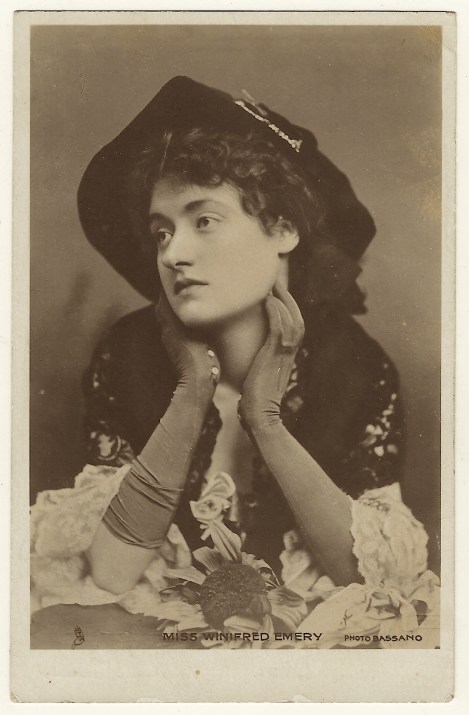
 Miss Winifred Emery (1861-1924) is the subject of this vintage real photo postcard. She was an English actress and actor-manager during the late 19th and early 20th centuries. She was married to actor Cyril Maude (m. 1888). It is not hard to imagine that the fact that she was born into a family of actors, played a role in her career choice. She began as a child actress and during the 1880’s and 1890’s her career blossomed as she played many leading roles in London’s West End theatres. Interestingly, her first London appearance was in 1874 in the pantomime,”Beauty and the Beast”. She later joined Marie Litton’s company, Herbert Beerbohm Tree’s theatre company, Henry Irving’s theatre company, and Wilson Barrett’s company. She eventually started her own touring theatre company with her husband. In 1896, her husband became actor-manager of the Haymarket Theatre and Emery became his leading lady. Among the plays that Emery appeared in are number of productions of Shakespeare. Emery had a successful stage career that spanned over forty years. This postcard was published circa 1910 by Raphael Tuck & Sons’ as part of the “Stage Favourites” Series (No. 5062). The photographer of this portrait of Miss Emery was Alexander Bassano, a very respected celebrity photographer. (SOLD)
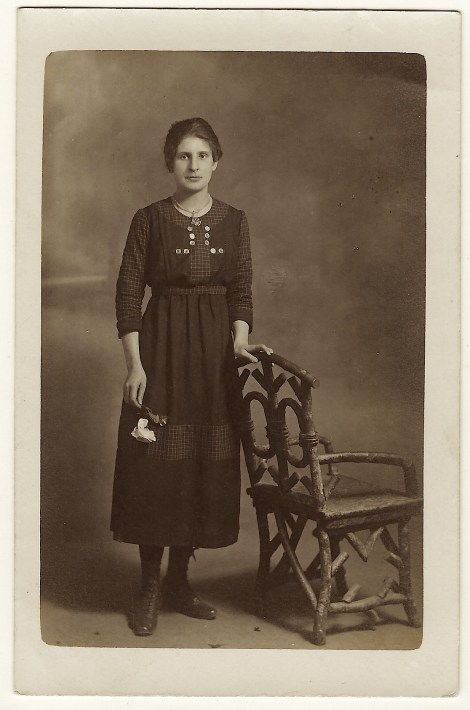
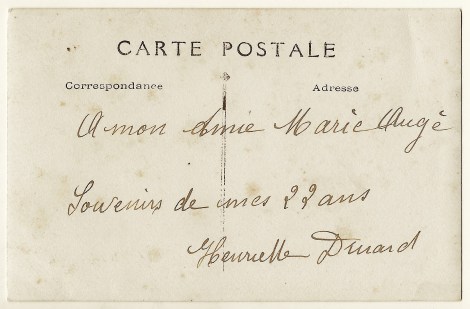
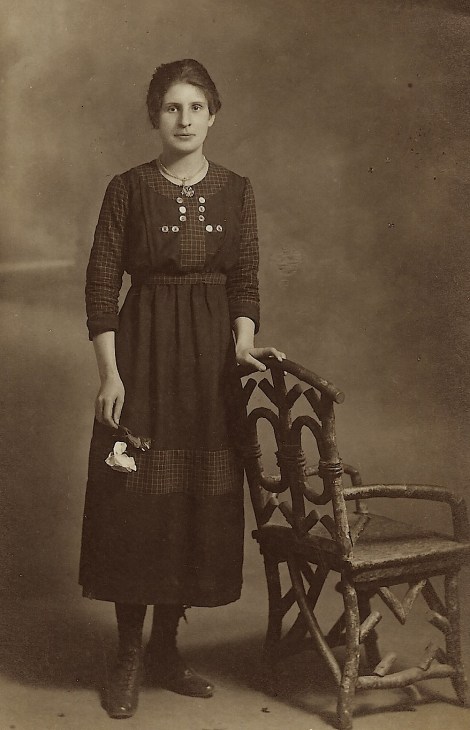 This vintage real photo postcard features a young woman holding a single stem and flower. She is wearing a necklace and pendant. She is dressed in a pretty dress with an abundance of buttons. Note the checkered pattern which appears on her blouse and midway down her skirt. Subtle, but nice. She is holding onto an interesting chair. The message on the reverse of the postcard seems to be introducing the woman as “Annie Marie Auge”. I am unsure if I deciphered her last name correctly. The message also reveals that the woman is twenty-two years old. This postcard is in very good condition (see scans).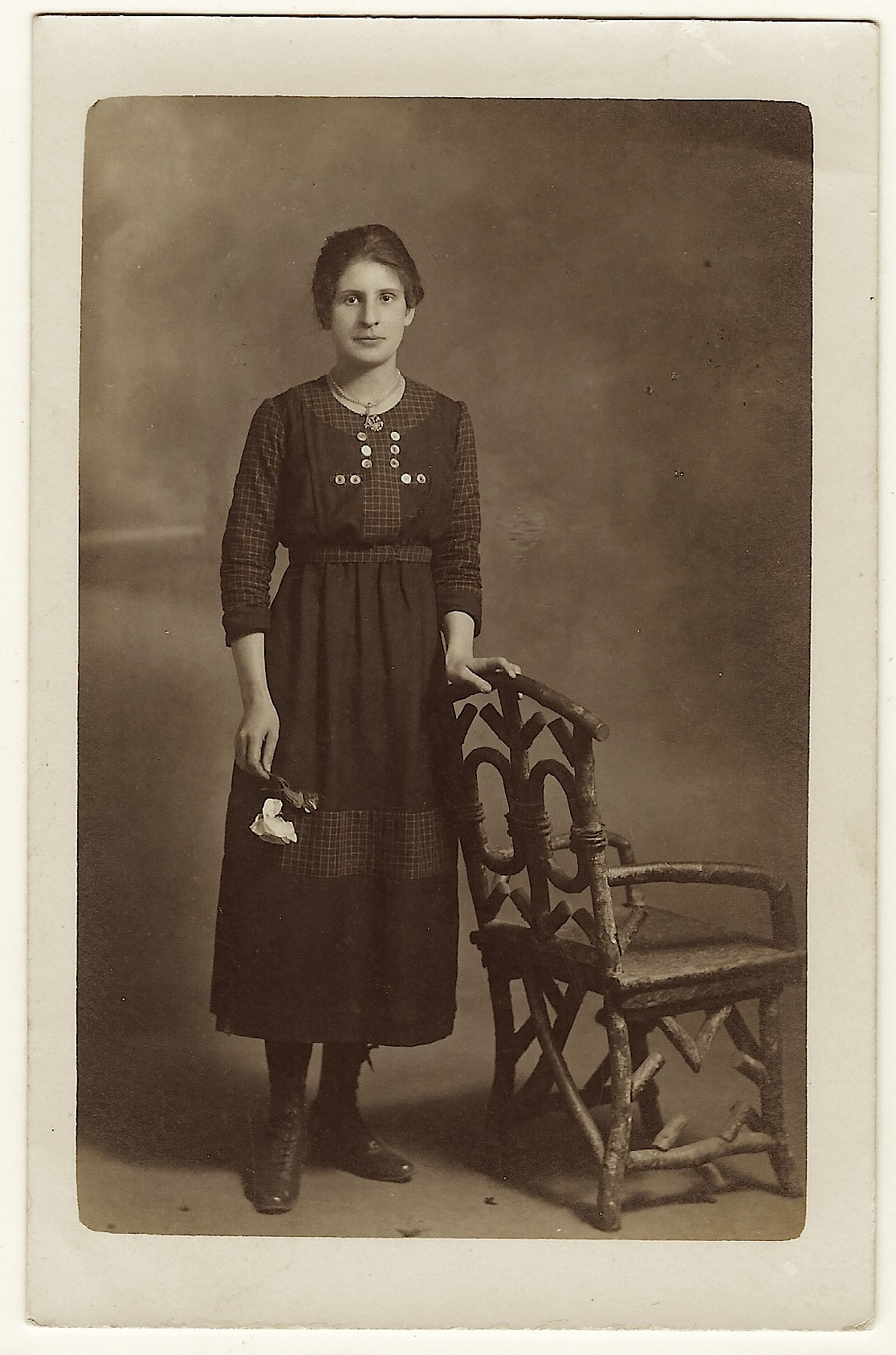

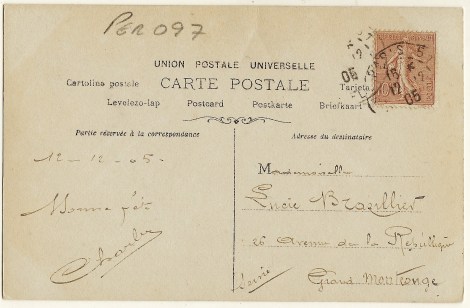
 Miss Dorcy poses for her photograph at the Reutlinger studio in Paris, France. She is quite pretty and has a wonderful smile. The operator of the studio was celebrated theatrical photographer, Leopold Reutlinger. The postcard was published by Societe Industrielle de Photograpie (SIP) of Rueil, France. The Casino de Paris is advertised on the front of the postcard. The Casino de Paris was one of the better known music halls in Paris. Dorcy clearly performed there. I could find little information about this performer. In one article she was referred to as “Paulette Dorcy” but I can not confirm that “Paulette” is her first name. The card has a French stamp that was postmarked in 1905. This vintage postcard is in very good condition (see scans).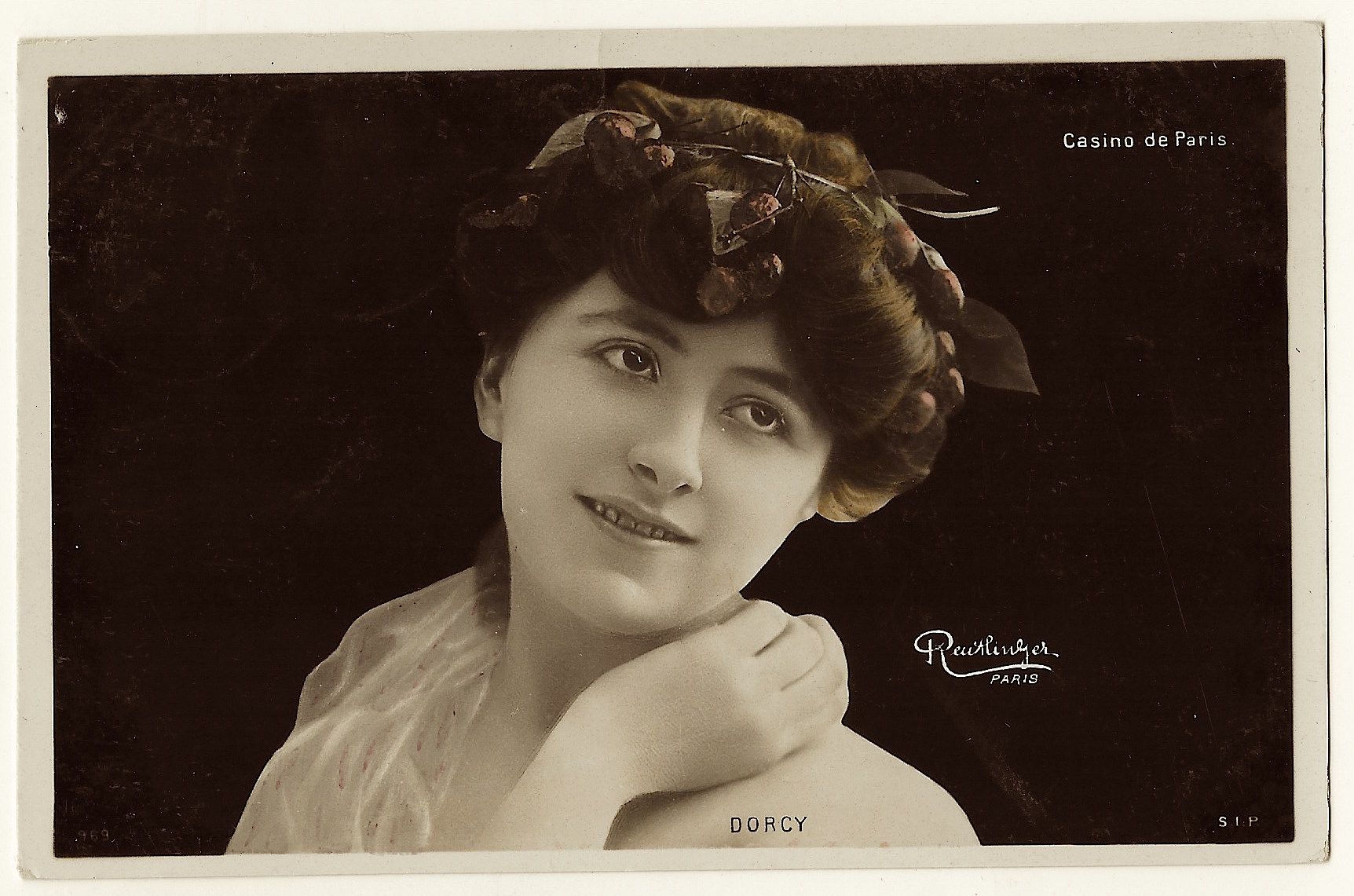
 POSTCARD 1 (SOLD)
 POSTCARD 2 (SOLD)
 POSTCARD 1 (SOLD)
 POSTCARD 2 (SOLD)
 This vintage postcard features an attractive bride and groom. The postcard originates from Bulgaria. The card is in very good condition (see scans).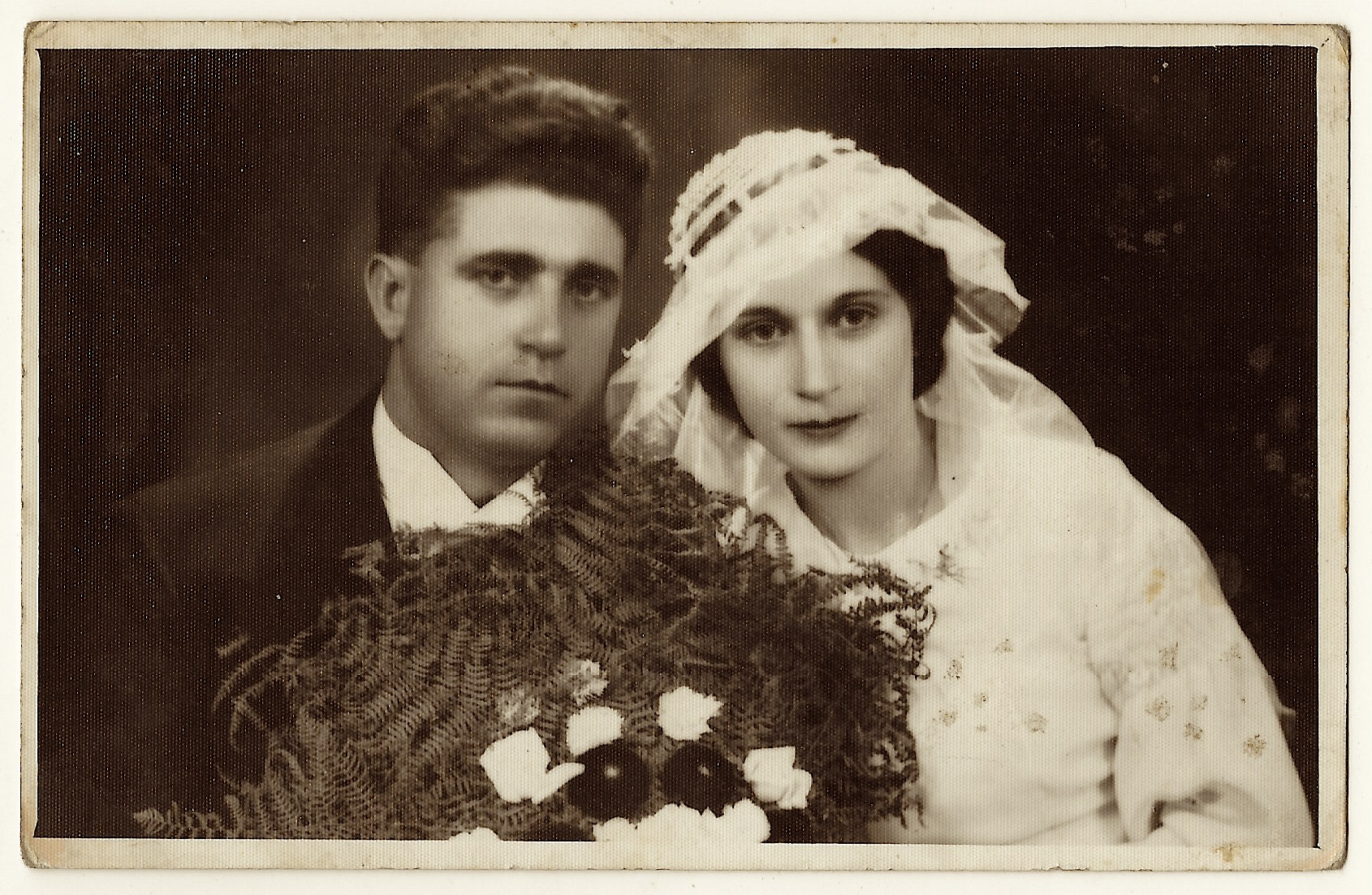

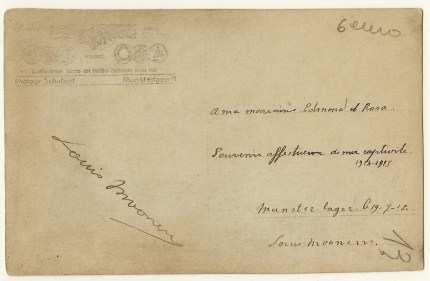
 This vintage real photo postcard features a handsome soldier. He is wearing a military uniform and cap. The pin on his hat indicates that he was a member of the 9th regiment of the infantry. I do not know the soldiers nationality. The message on this card includes the word “captivite”. Captivite, translated from the French means “captivate”. Was the writer of this postcard talking about capturing the town of Munsterlager, or was he referring to himself as being a prisoner of war? Perhaps a visitor to the cabinet card gallery will be able to translate the message for those of us with a French language deficit. This photo was taken in the mid 1910’s by the Schubert studio in Munsterlager. During the first World War (1916), the Breloh Camp was built in Munster by a regiment of gas warfare engineers. The next year there was construction of a facility for gas munitions. In all, three factories were built for the purpose of manufacturing chemical war material and related munitions. (SOLD)