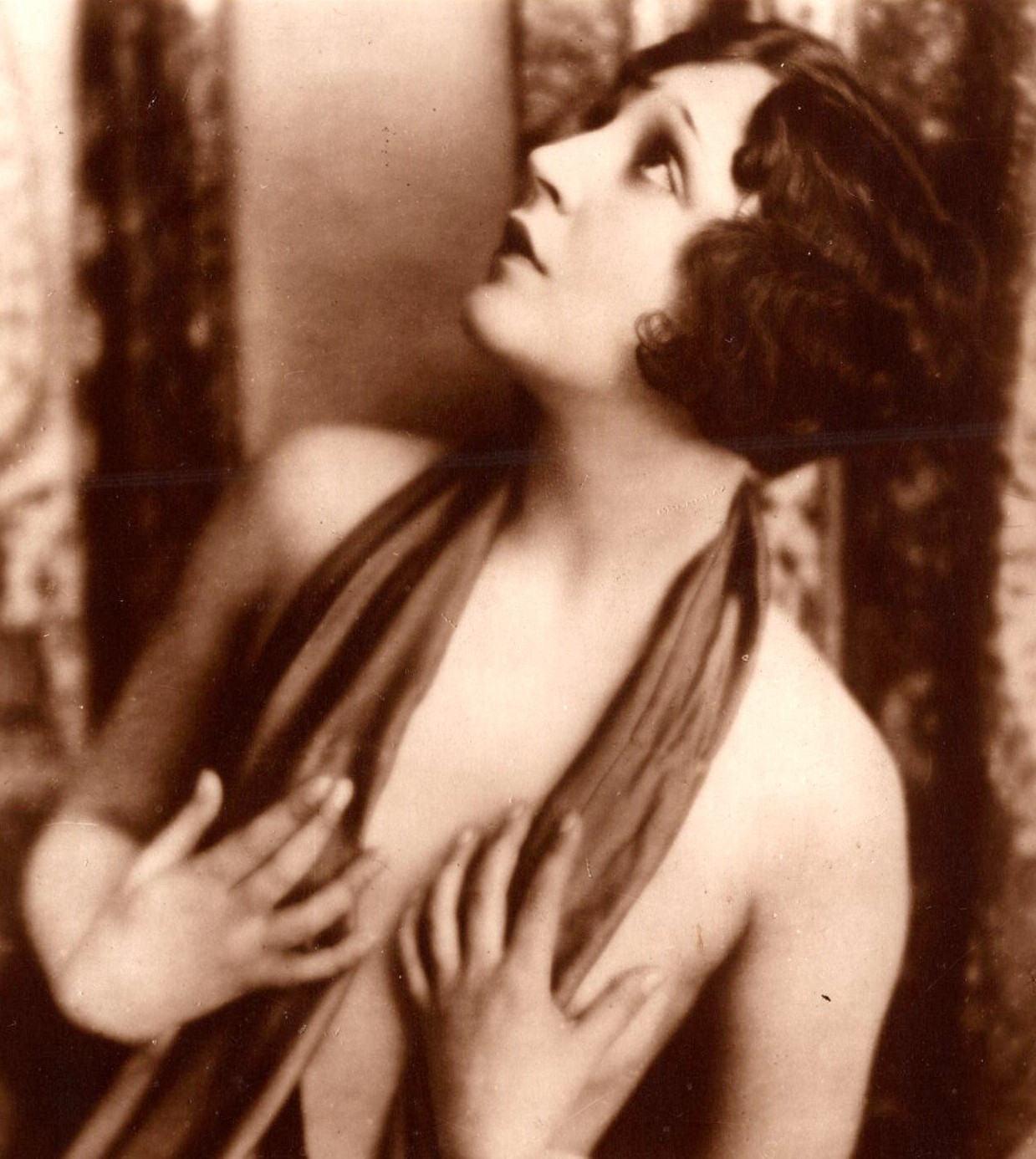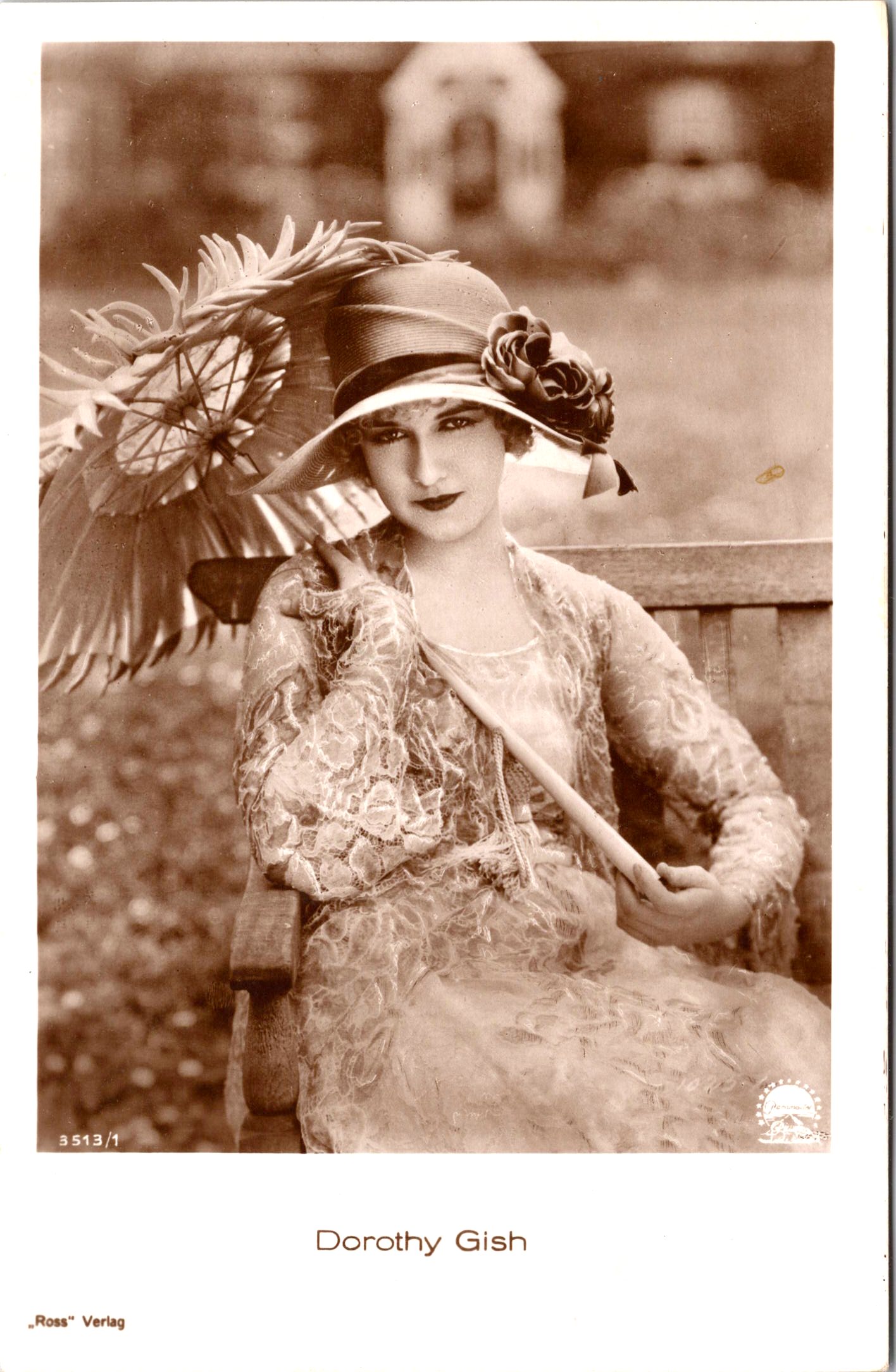
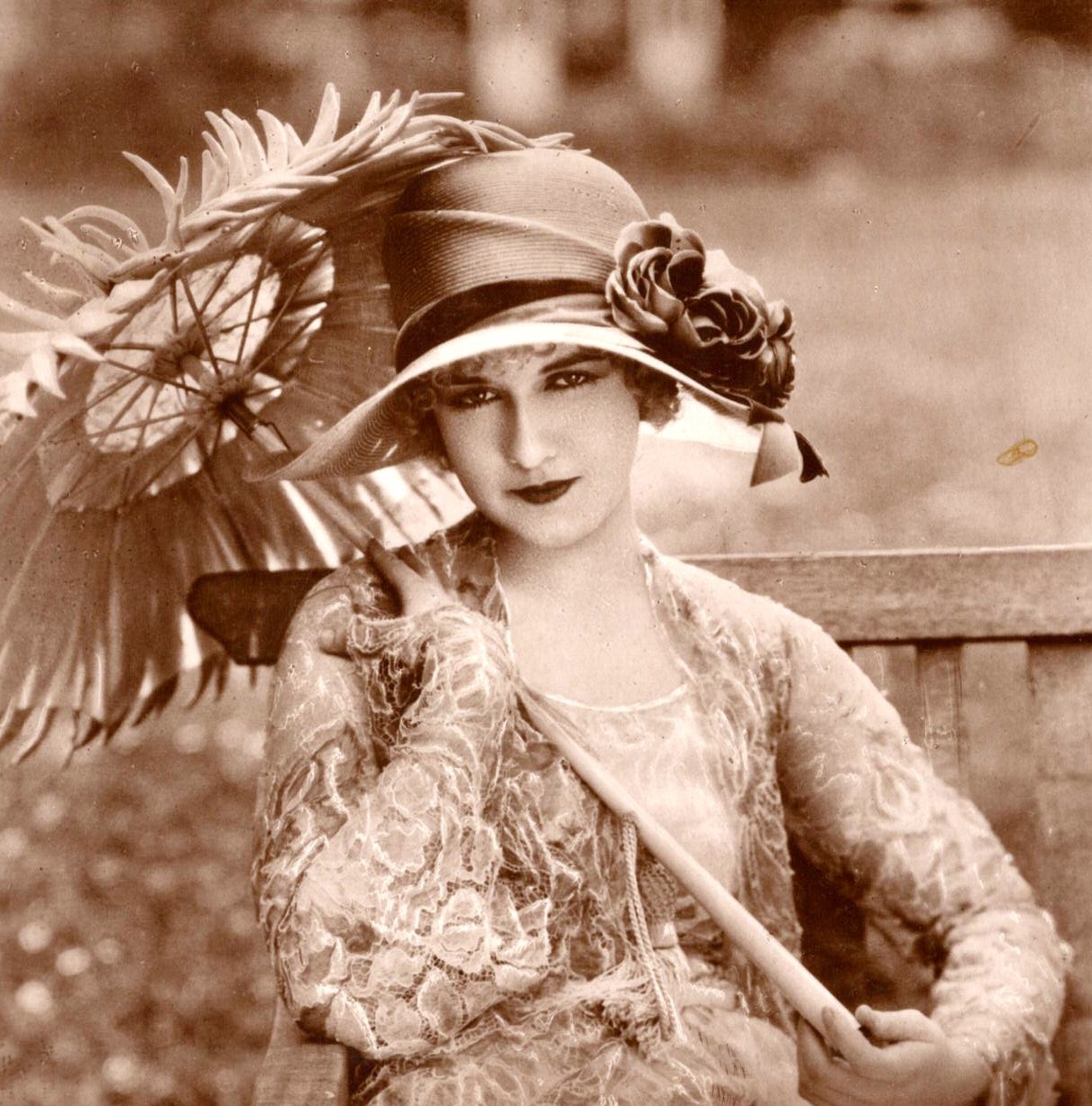
MADAME LE GAI : PANTOMIMIST : VAUDEVILLE : PIN-UP : HOLLYWOOD PHOTO 1918

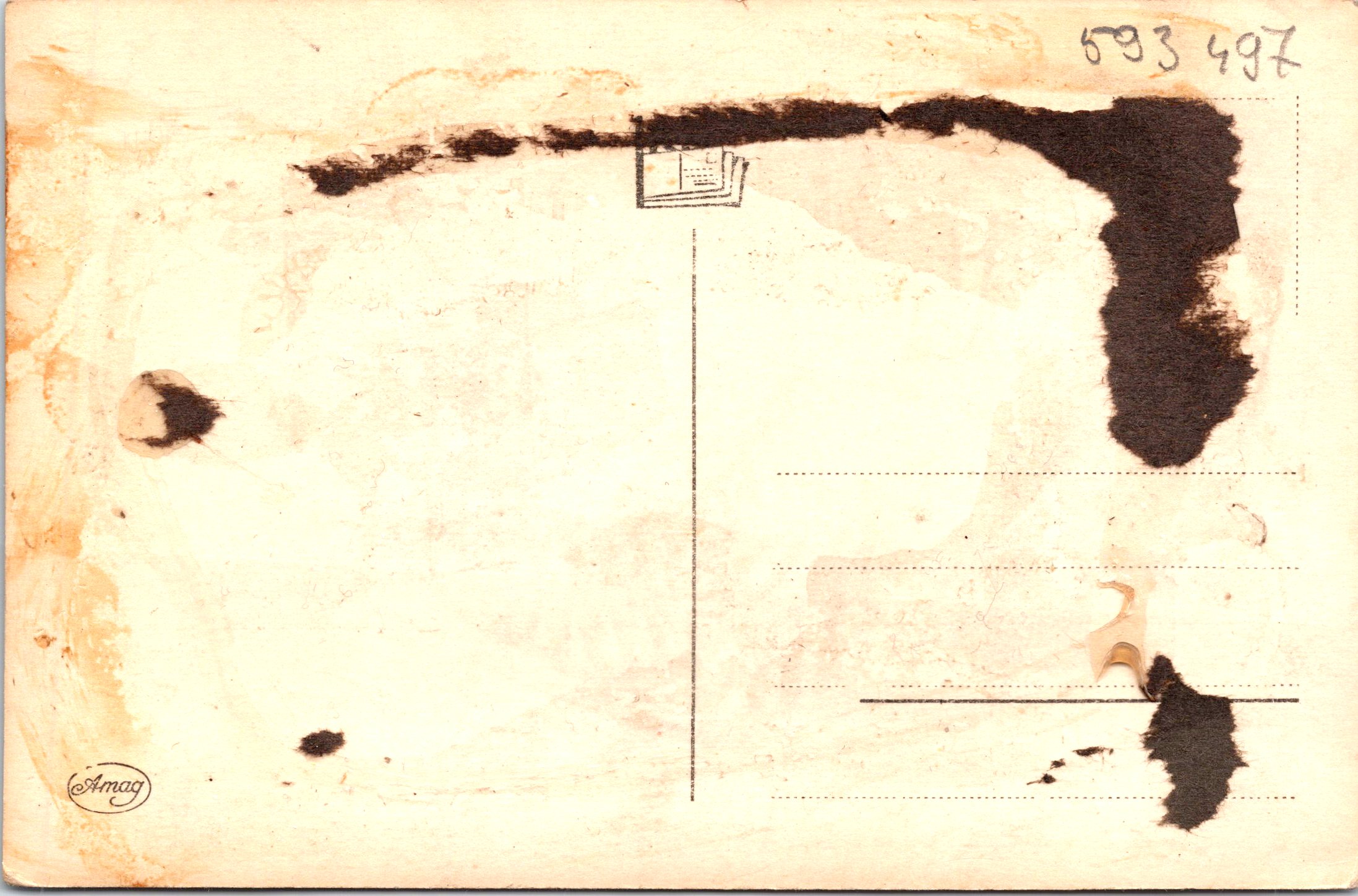
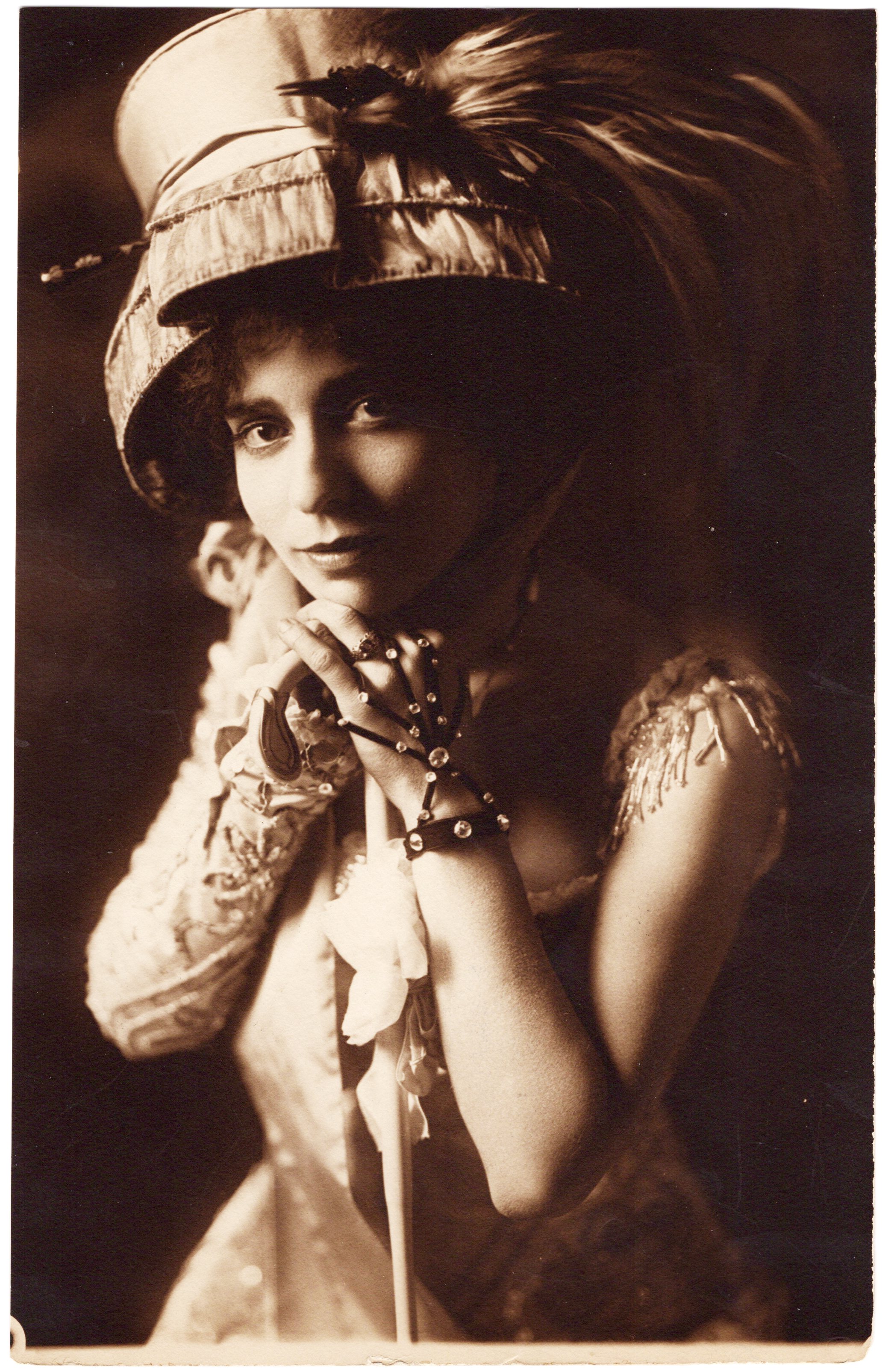
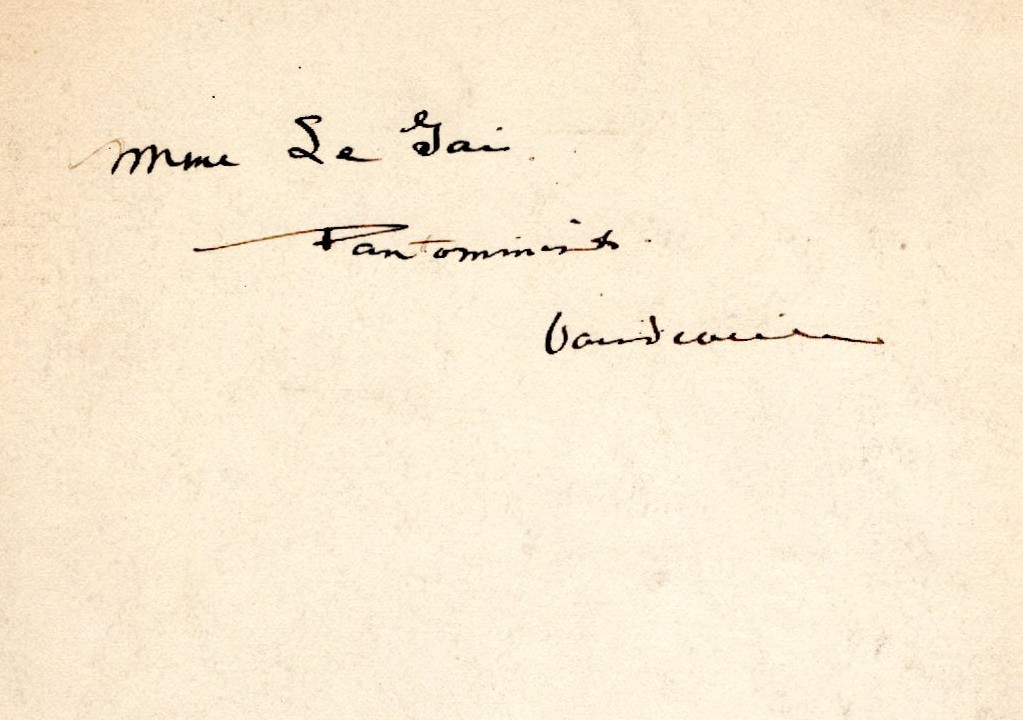
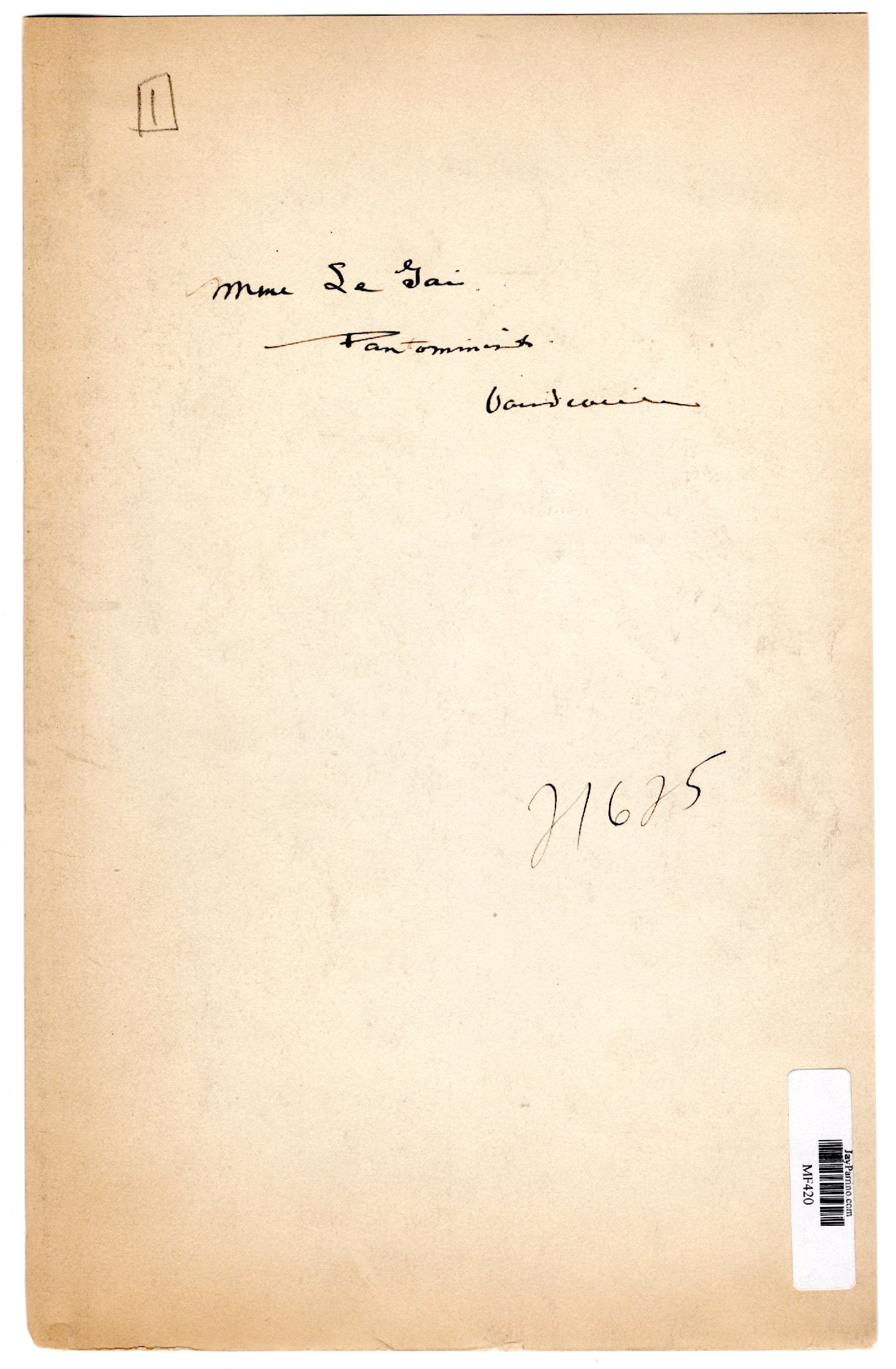
This is a stunning and rare sepia-tone glamour portrait of a woman identified as Mme Le Gai, described on the reverse as a “Pantomimist” and “Vaudevillian.” Believed to date from around 1918, this photograph showcases an elegant, mysterious woman in elaborate costume—perhaps a stage or cabaret performer—gazing confidently into the camera. She wears a richly adorned hat with plumes, a beaded glove-like bracelet, and a delicately embroidered gown with satin and lace textures. Her theatrical pose and sensual expression make this image a prime example of early Hollywood pin-up photography, though its style is also heavily influenced by European cabaret traditions. The handwritten inscription on the back appears to read: “Mme Le Gai / Pantomimist / Vaudevillian.” There is some ambiguity—“Mme” could stand for Madame or Mademoiselle, and the surname may also be interpreted as Le Gai or Le Gaï. The elegant script suggests a deliberate stage name, possibly borrowed from the famed Parisian pantomime houses of the same name. “Le Gai” (French for “the merry” or “joyful”) was also used in naming French performance venues such as Le Théâtre Gai or variations like Le Gai Paris. This connection strengthens the possibility that the subject either performed in or took inspiration from these Parisian theatrical traditions. Though solid biographical confirmation of Mme Le Gai has not yet been found, the visual evidence, style, and inscription point to her role as a vaudeville-era pantomime performer, likely active in the United States or France around World War I. Her alluring presence and costume are consistent with the kind of studio portraiture used for performer promotion, possibly circulated as publicity or collectible pin-up material during the silent film and vaudeville boom.  (SOLD)

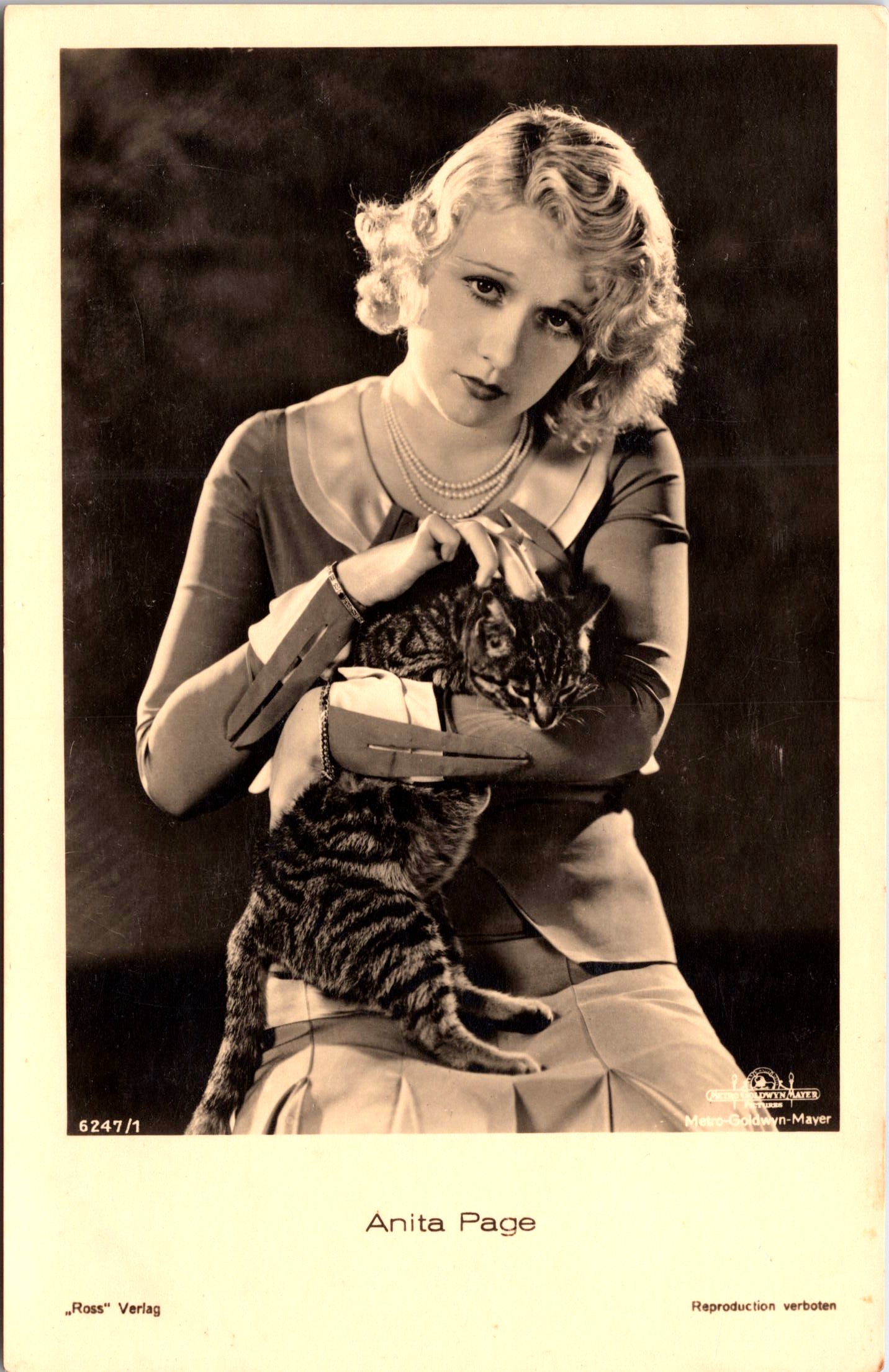
ANITA PAGE w/ CAT : SILENT FILM STAR : MGM : ROSS VERLAG : RPPC 1920s

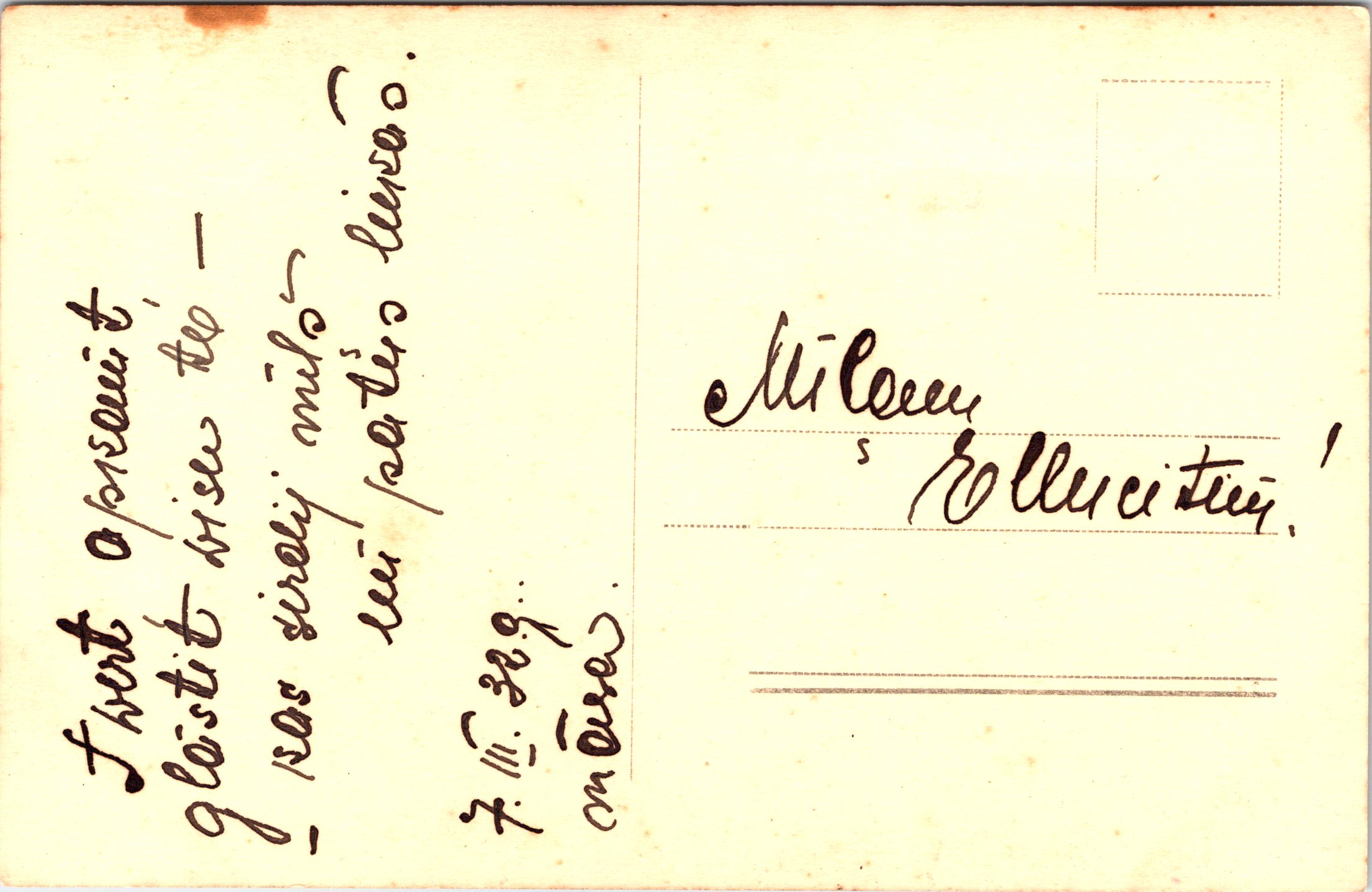
This sepia-toned publicity postcard features Anita Page (1910-2008), an iconic silent and early sound film actress, posing with a tabby cat. She cradles the cat gently in her lap, both arms encircling it protectively. The cat appears calm, eyes half-closed in contentment or sleep, nestled into Page’s arms. Anita is styled with soft, sculpted blonde curls typical of late 1920s-early 1930s glamour. She wears a tailored dress or top with a broad, satin-trimmed collar and decorative slashes on the cuffs, along with a double-stranded pearl necklace and a bracelet on one wrist. Her expression is wistful—perhaps intentionally melancholy or dreamy—a popular aesthetic in studio portraits of the era. Her makeup emphasizes the eyes with dark liner and curved brows, enhancing her expressive gaze. The presence of the cat lends the portrait an intimate and slightly whimsical tone, softening the glamorous studio setting and humanizing the star. It was not uncommon for stars to be photographed with animals to add charm or relatability. The publisher of this postcard is Ross Verlag, a German company based in Berlin. The card is identified as (No.6247/1). The circular logo in the bottom right corner of the card belongs to Metro-Goldwyn-Mayer (MGM), the major Hollywood studio with which Anita Page was under contract. The message on the reverse of the card is written in Czech (or possibly Slovak). A rough translation reads: “Your devoted, Wishes you everything good – Your dear Miloš,  I send you this card for memory. The card is dated 1929. Anita Page was a major screen star in the late 1920s and early 1930s, often called “the girl with the most beautiful face in Hollywood.” She rose to fame starring alongside Joan Crawford in Our Dancing Daughters (1928) and appeared in The Broadway Melody (1929), which won the Academy Award for Best Picture. She retired young in the 1930s but returned sporadically to the screen in later years. She was one of the last surviving stars of the silent film era.  (SOLD)

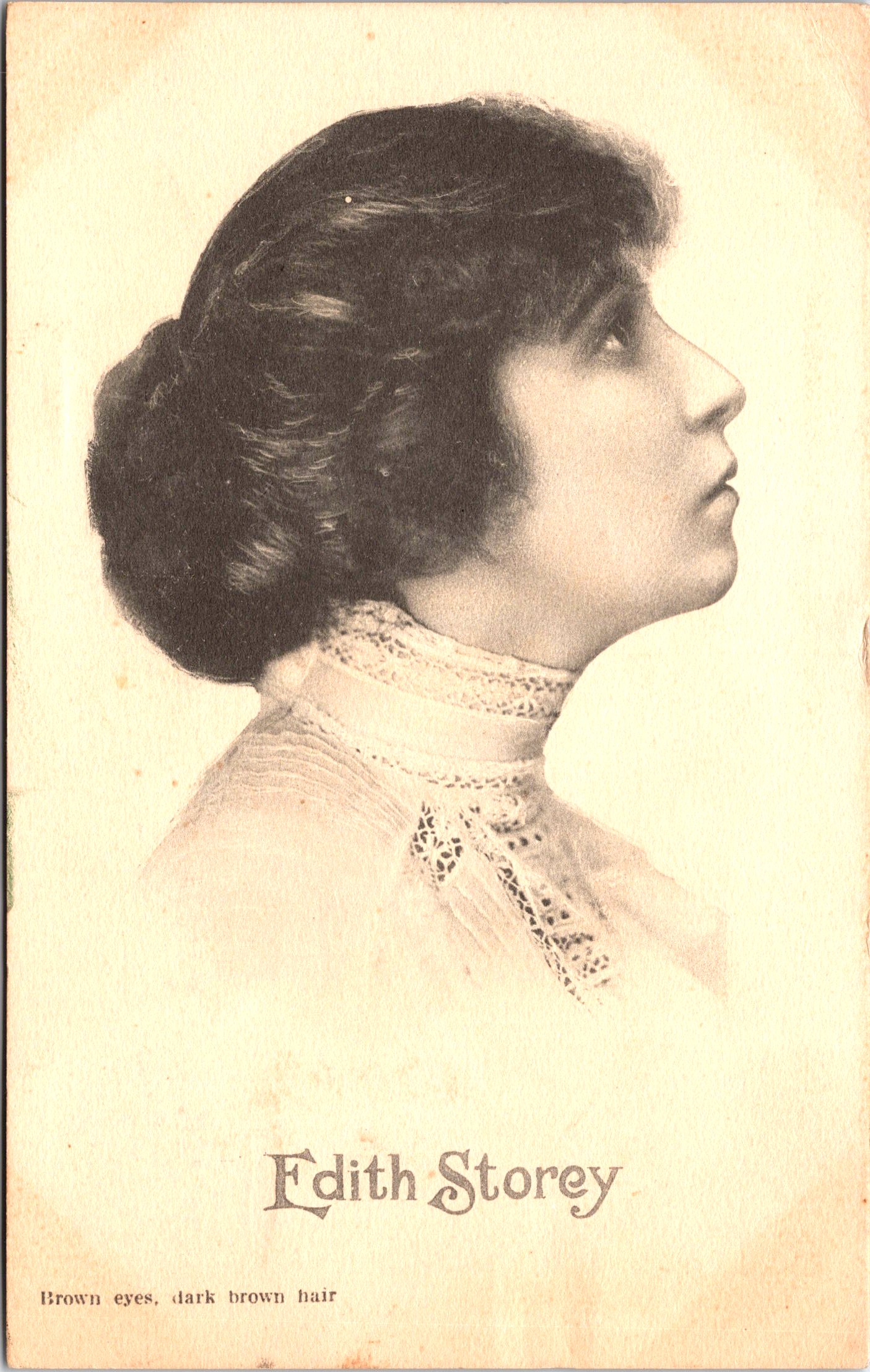
EDITH STOREY : AMERICAN SILENT FILM ACTRESS

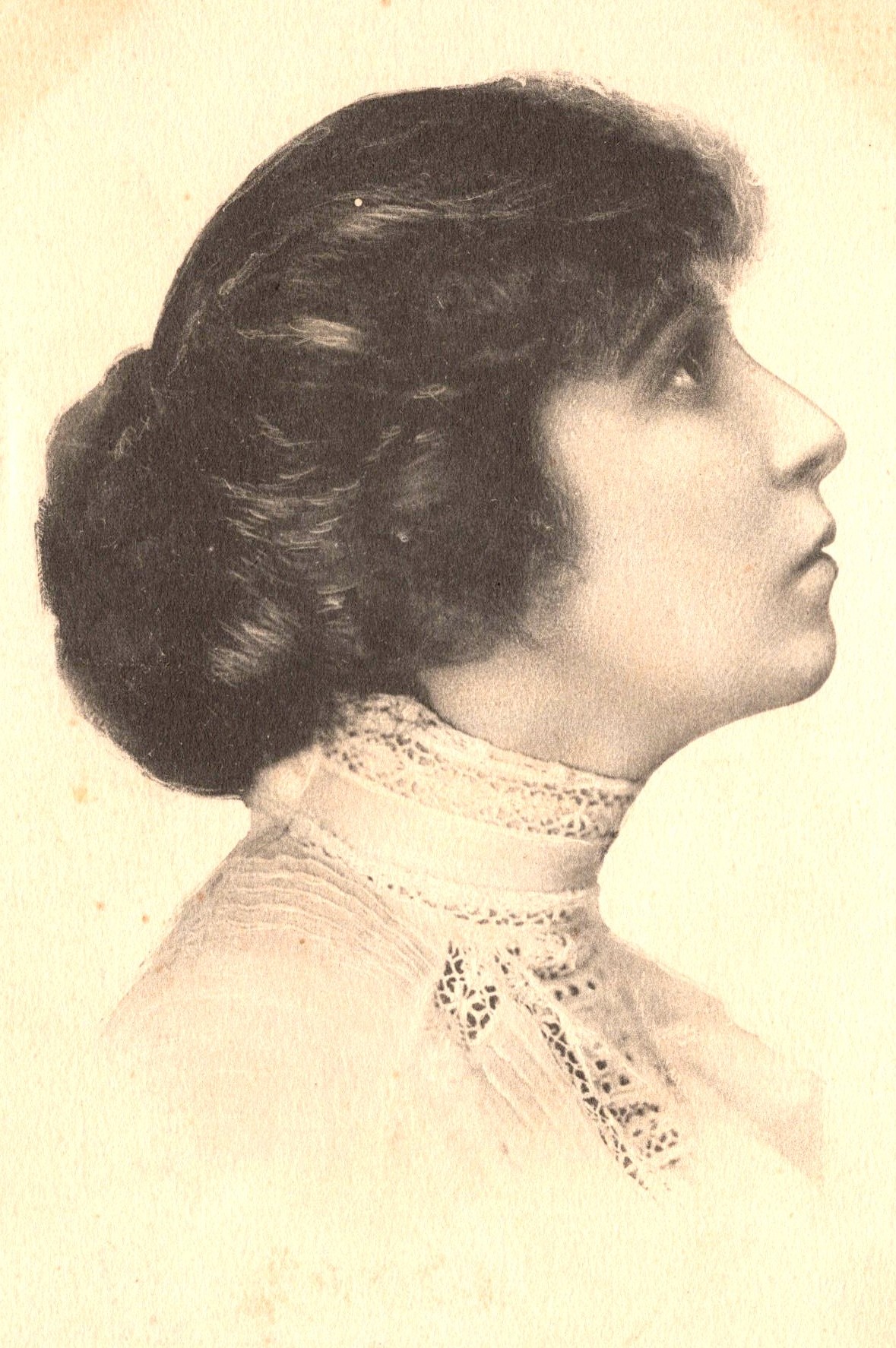
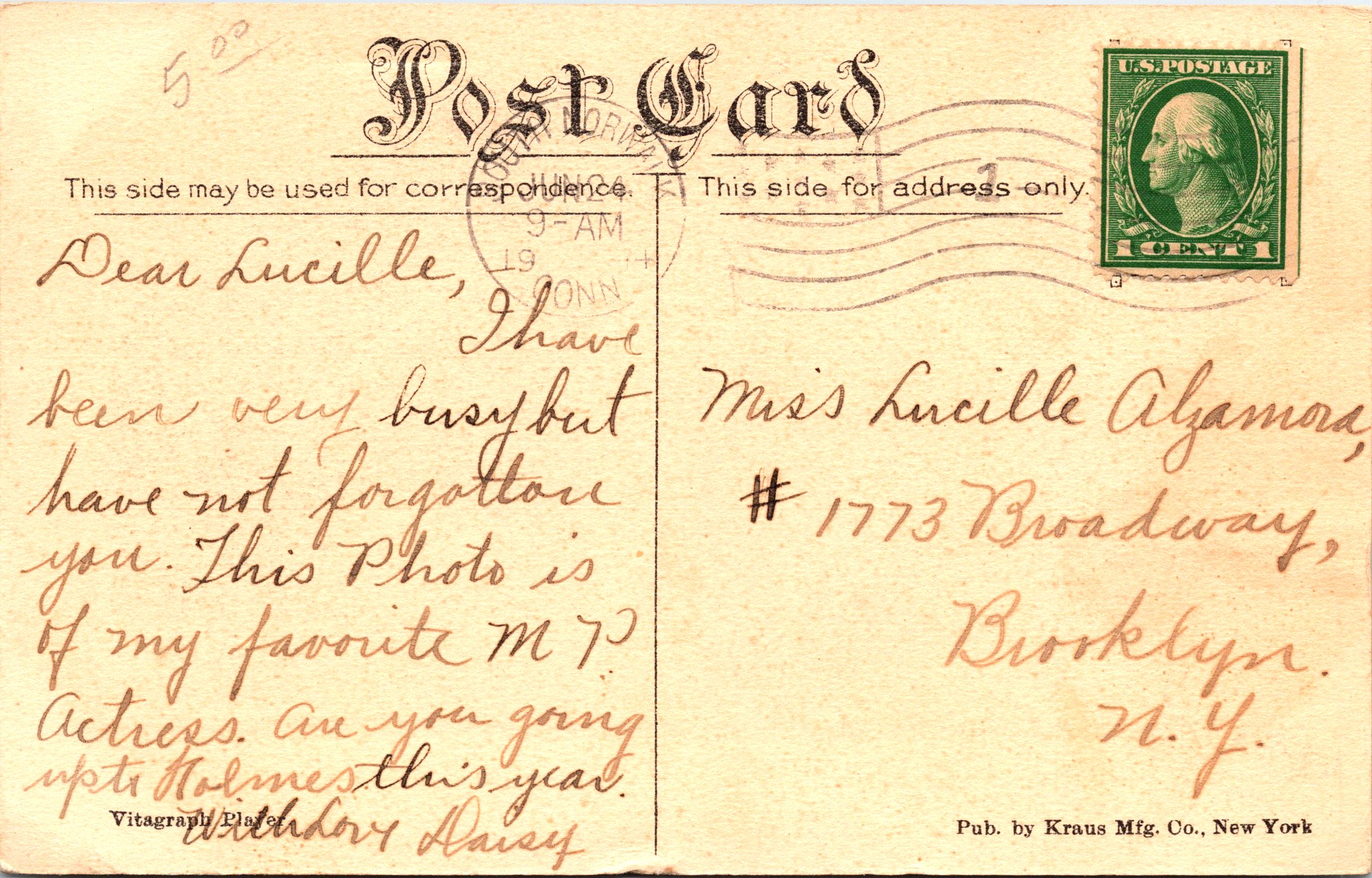
This vintage real photo postcard features American silent film actress, Edith Storey (1892-1967). She was born in New York City and began acting when she was still a child. Her first film was “The Two Brothers” (1908). By 1913, she had appeared in 75 films and between 1908 and 1921 she performed in nearly 150 films. She performed in many Westerns and was noted for her excellent horseback riding skills. She also did her own stunts. She worked for Vitagraph Studios (New York) for the majority of her career. Storey also acted on stage and was noted for acting in a number of male impersonation roles. She appeared in two Broadway plays. The first was in 1903 and the second was in 1904. She retired at the age of 29 in the year of 1921. During the Spanish Flu Epidemic, Storey drove an ambulance in New York City for the National League for Women’s Service. It is also reported that she worked as a hospital night nurse at the height of the epidemic. After retiring she served almost 30 years as village clerk for Asharoken, Long Island. She died at the age of 75 in Northport, Long Island, New York. Within the message on the this postcard, Daisy (the sender) tells Lucille (the recipient) that Edith Storey is her favorite movie actress. A caption on the front of this card states that Storey has brown eyes and dark brown hair. This postcard was published by Kraus Mfg. Co. of New York.  (SOLD)

EXTRA LARGE CABINET CARD : JULIA CALHOUN : SILENT FILM ACTRESS : NEWSBOY : NEW YORK

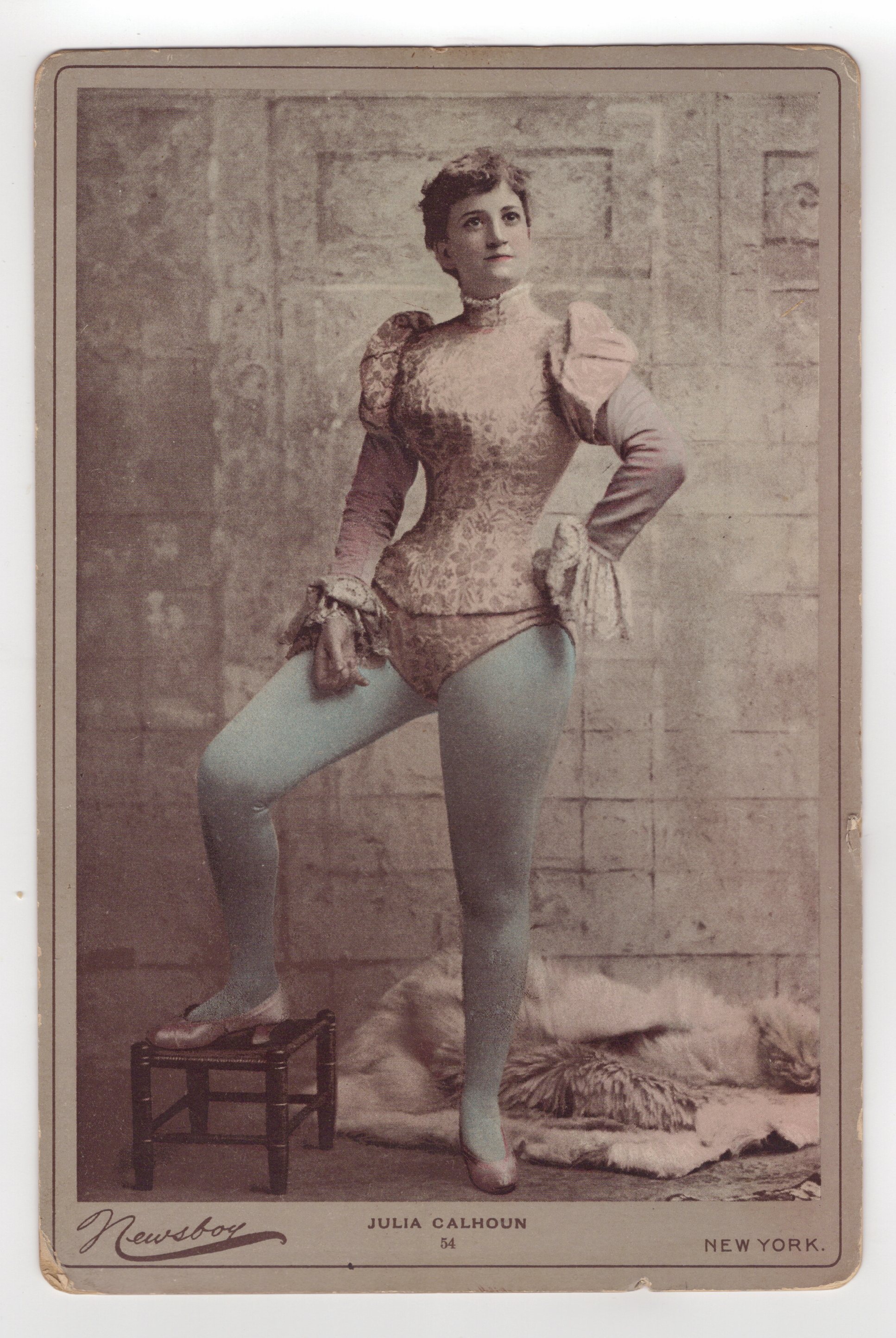
This vintage large format cabinet card features American stage and silent film actress, Julia Calhoun (1870-?). She was adept at playing roles in comedy films including  a number of roles opposite Oliver Hardy from about 1914 into the 1920’s. Her photograph appears in the Billy Rose Theater Collection at the New York Public Library. She was married to Kirkland Calhoun, also an actor. Julia Calhoun, according to the IMDb, appeared in 32 films between 1912 and 1923. Some of her more well known films include “The Human Orchid (1916)”, “The Man that Stayed at Home (1919)”, “The Match-Breaker (1921)” and “Just Like a Woman (1923)”. This cabinet card was published as  part of the Newsboy tobacco advertising collection (No.54). This photograph measures about 6 x 9 inches. SOLD
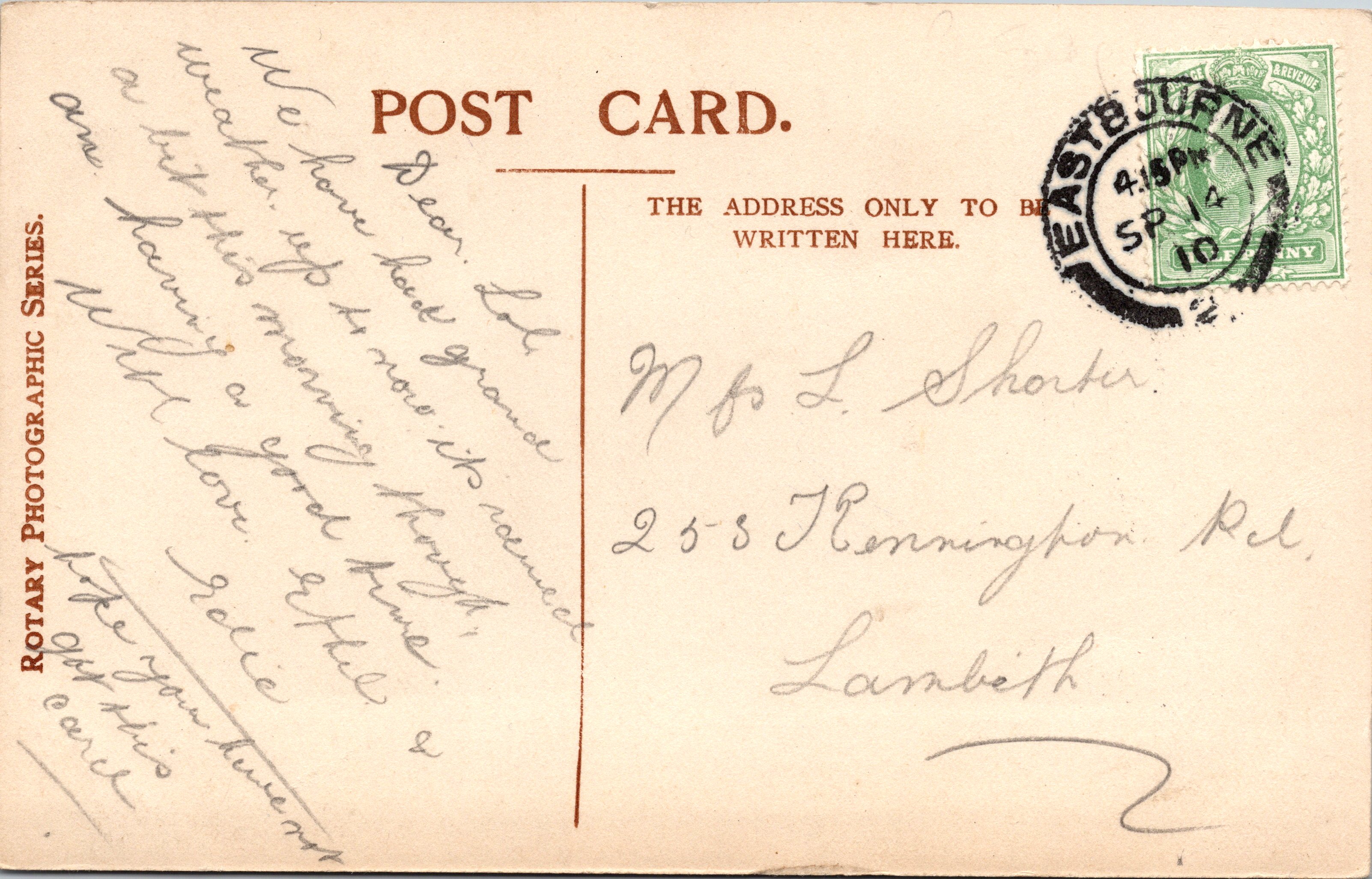
MARY PICKFORD : LES VEDETTES DE CINEMA : CINEMAGAZINE : RPPC (1920’s)

Mary Pickford (1892-1979) was a Canadian-American actress and one of the most influential figures in early Hollywood. She was often referred to as “America’s Sweetheart”. She was a pioneer of silent film and a co-founder of the film industry as we know it today. Pickford’s career began in childhood when she performed in theater productions in Canada and the United States. By the early 1900s, she transitioned to film, working with director D.W. Griffith at Biograph Studios. Her delicate beauty and expressive acting quickly made her a fan favorite, setting her apart in an era when exaggerated stage-style performances dominated silent films. During the 1910s and 1920s, Pickford became one of the highest-paid and most beloved actresses in the world. Starring in films such as Rebecca of Sunnybrook Farm (1917), Daddy-Long-Legs (1919), and Pollyanna (1920), she was known for playing wholesome, spirited young women. Her curly hair and signature on-screen innocence became iconic, but she was also a savvy businesswoman who understood the power of her brand. Pickford was not only a star but also a trailblazer in the film industry. In 1919, she co-founded United Artists alongside Charlie Chaplin, Douglas Fairbanks (her then-husband), and director D.W. Griffith. This revolutionary move allowed filmmakers to control their own productions rather than rely on major studios, changing the industry forever. As the film industry transitioned to “talkies,” Pickford retired from acting in the early 1930s, though she continued to produce films. Her contributions earned her an honorary Academy Award in 1976 for her lasting impact on cinema. Mary Pickford’s influence extends beyond her films. She helped shape the star system, paved the way for women in Hollywood, and co-founded the Motion Picture Relief Fund to support struggling actors. She remains an enduring symbol of early Hollywood glamour and innovation. Mary Pickford was born into a working-class family in Toronto, Canada. Her father, John Charles Smith, was an alcoholic who struggled to provide for the family and died from a workplace accident when Mary was just six years old. Her mother, Charlotte Hennessey Smith, was left to raise Mary and her two younger siblings, Lottie and Jack, on her own. To support the family, Charlotte encouraged her children to enter acting, and Mary began performing in theater at a young age. She soon became the family’s primary breadwinner, and her siblings, Lottie Pickford and Jack Pickford, also pursued film careers. Pickford transitioned from theater to film in the early 1900s, quickly rising to fame with her expressive acting and wholesome on-screen persona. By the 1910s and 1920s, she was one of the most recognizable stars in the world, earning the nickname “Queen of the Movies.” She also helped establish the Academy of Motion Picture Arts and Sciences. Mary Pickford was married three times. Pickford’s first marriage was to silent film actor Owen Moore (1911-1920). Her second and most famous marriage was to fellow silent film actor, Douglas Fairbanks (1920-1936). Her third marriage was to actor Charles “Buddy” Rogers (1937-1979). After retiring from acting in the early 1930s, Pickford focused on producing films and philanthropy. She became more reclusive in her later years, struggling with alcoholism and health issues. Today, she is remembered as a pioneering force in cinema history. Pickford is featured on this postcard. She is seated gracefully on a carved wooden stool, exuding elegance and poise. She is dressed in a flowing, light-colored gown with delicate embellishments on the bodice and sheer fabric draping over her arms. Her signature curls frame her face, a defining feature of her “America’s Sweetheart” image. She wears a subtle yet confident expression, her eyes gazing slightly to the side with a soft, introspective quality. Her arms are relaxed, with one hand resting gently on her lap and the other elegantly extended. Her accessories include a bracelet on her wrist and a ring on her finger, adding to her refined look. The backdrop behind her is a richly textured tapestry, possibly depicting a pastoral scene. This postcard was likely produced in the 1920s, during the height of Pickford’s career. It is numbered 86 and is part of a larger collectible series showcasing cinema stars of the era. This vintage postcard is part of a series titled Les Vedettes de Cinéma (translated as The Stars of Cinema), and it was published by Alfred Noyer (Paris,France), in collaboration with United Artists, the film distribution company that Pickford co-founded. The back of the postcard identifies the publisher as Cinémagazine – Edition and states that it was Made in France / Fabriqué en France, indicating its European origin. (SOLD)

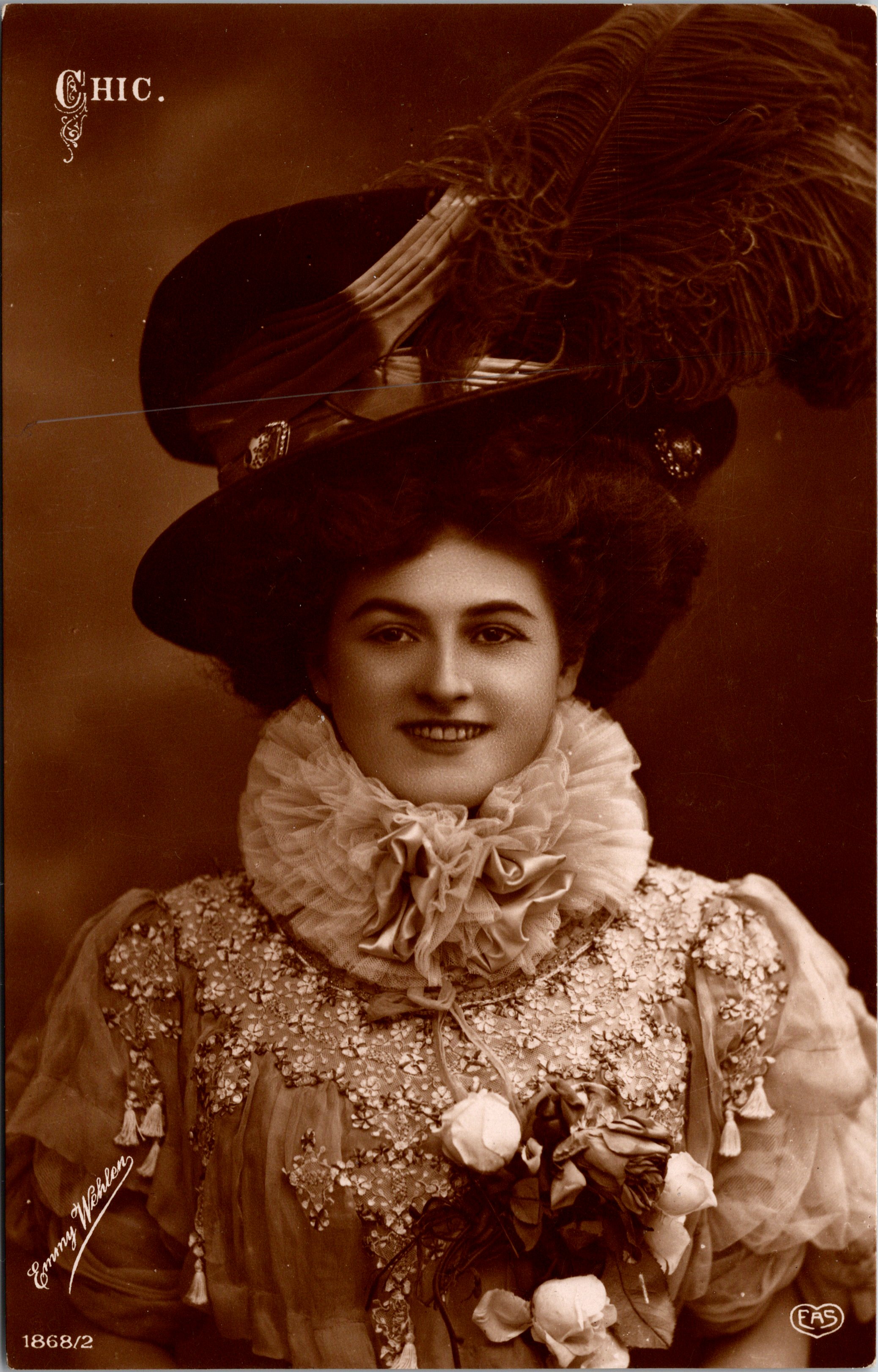
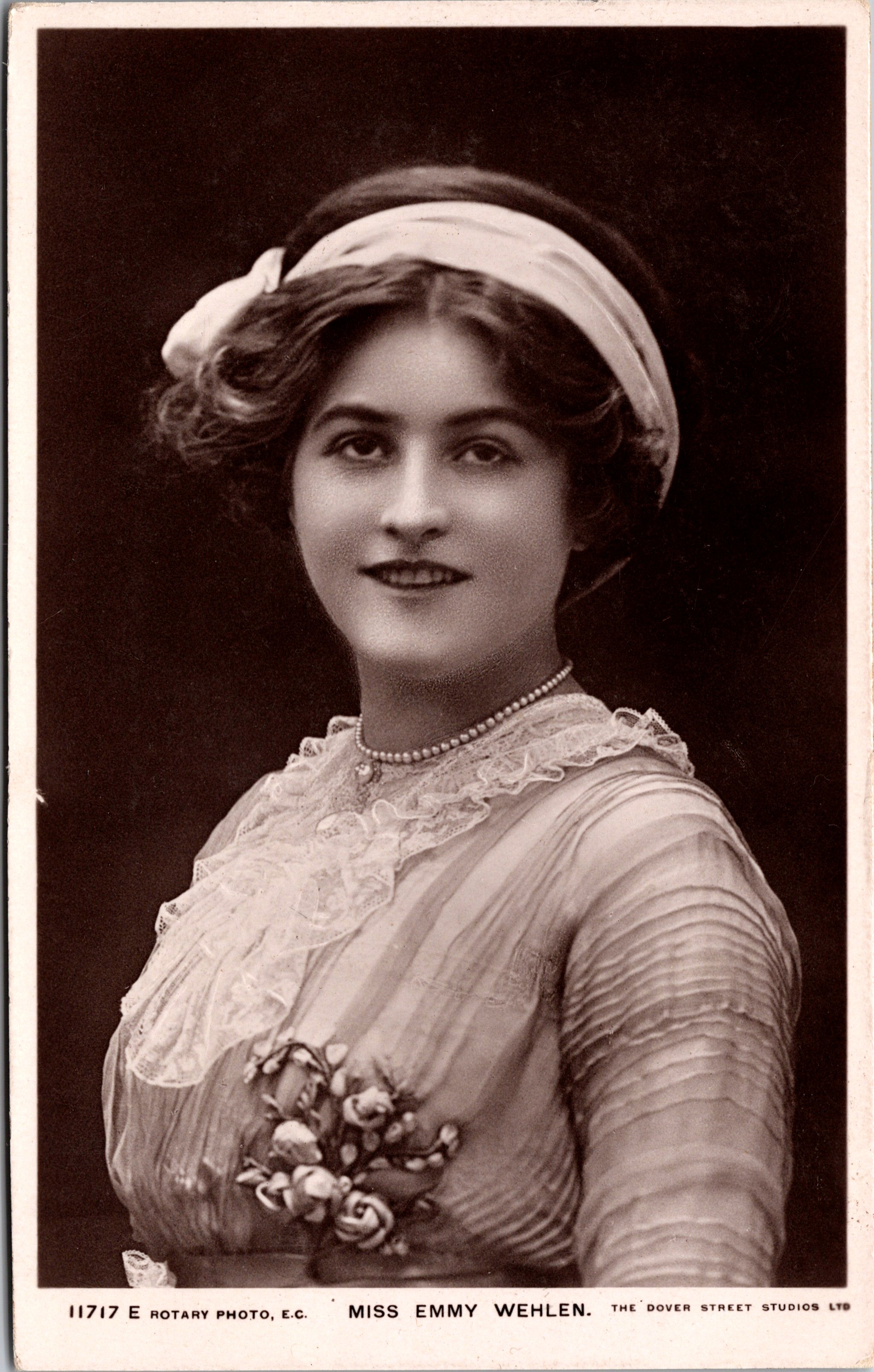
MISS EMMY WEHLEN : PRETTY THEATRE AND SILENT FILM STAR : BROADWAY : RPPC

POSTCARD 1

POSTCARD 2 (SOLD)

POSTCARD 3 (SOLD)

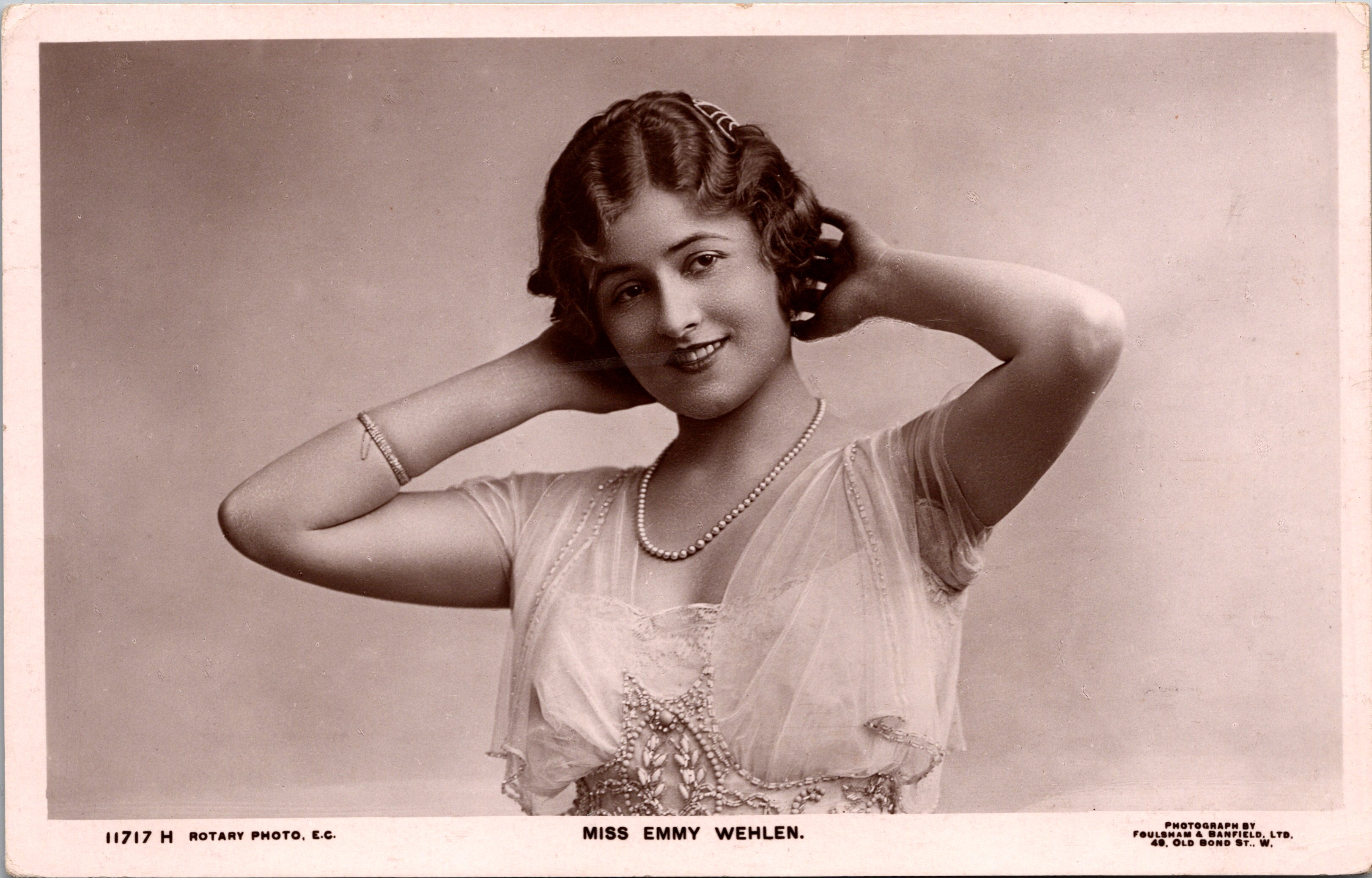
Postcard 1 features German actress, Emily “Emmy” Wehlen (1887-1977). She was a Edwardian musical comedy and silent film actress. She retired from acting at a young age (early 30’s), Wehlen received her musical training at the Mannheim Conservatory. She then joined the Thalia-Theatre and performed in musical comedies in several German cities. She was then invited to London and was considered as a possible successor to Lily Elsie. Wehlen played the lead role in “The Merry Widow” (1909). Later that year she appeared in the hit musical “The Dollar Princess” which ran for 428 performances. Next stop was New York, where she appeared in four Broadway plays between 1911 and 1915. Shortly after her last Broadway appearance, Wehlen left the stage and pursued a film career.  She appeared in over twenty films between 1915 and 1920. “Everybody’s Magazine (1911) reported that Wehlen was very pretty and very graceful. Her acting and voice were also praised. In addition, the article stated that “she has the indescribable charm of personality” and that audiences liked her and wanted her to never leave the stage during a production. Miss Wehlen’s photograph on this postcard was taken by celebrity studio, Foulsham & Banfield. The card was published by Rotary Photo as part of a series (no.11717H).

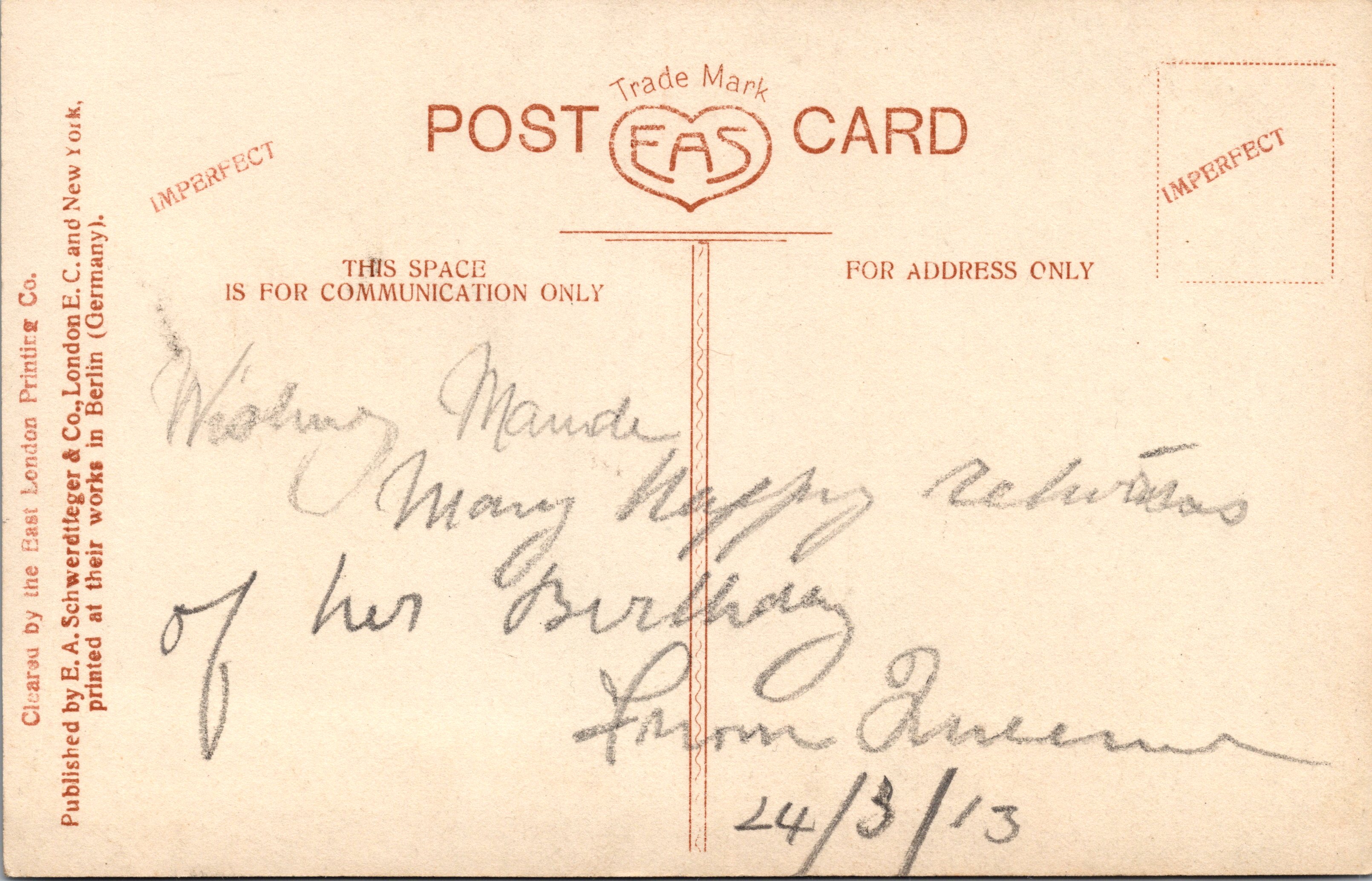
In Postcard 2, Wehlen is beautifully dressed for the portrait appearing on the postcard. She looks a bit clownish with her ruffled collar. There are flowers pinned to the front of her dress and she is wearing a jumbo feathered hat. She has a beautiful smile. The card was published by EAS as part of a series (no.1868/2). The firm was located in London and New York. The postcard was printed in Germany. Interestingly, the word “imperfect” is printed in two places on the front of the card. The word “chic” appears in the upper right hand corner of the image. Emmy Wehlen fits the bill. She is truly chic. The message on the postcard indicates that it was written in 1913.  (SOLD)

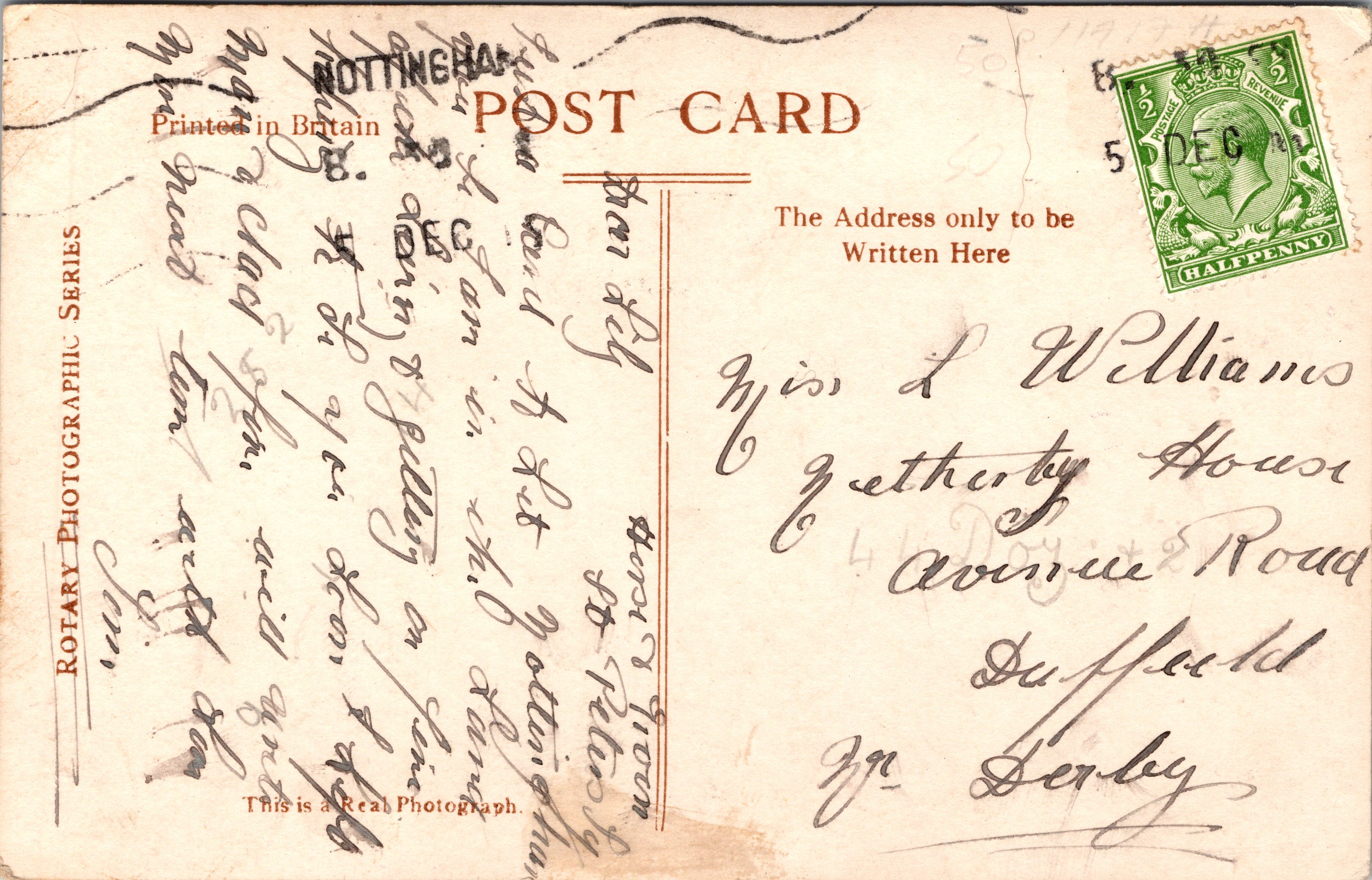
Postcard 3 features Miss Wehlen’s photograph taken by celebrity studio, Dover Street Studios. The card was published by Rotary Photo as part of a series (no.11717E). The message on the card indicates that the sender hoped that this photo postcard was meant to be an addition to the recipient’s postcard collection. (SOLD)

POSTCARD 1

POSTCARD 2

POSTCARD 3

THELMA TODD : MOVIE ACTRESS : GODFREY PHILLIPS : CIGARETTE CARD : 1934

This vintage tobacco card features American silent and talkie film actress, Thelma Todd (1906-1935). She was also a businesswoman. Her nicknames included “The Ice Cream Blonde” and “Hot Toddy”. She appeared in about 120 feature films and shorts between 1926 and 1935. She was known for her comedienne talent. Among the performers she worked with are the Marx Brothers, Laurel & Hardy, and Buster Keaton. In 1934 she opened a restaurant in Los Angeles with two partners. In 1935 she was found dead in her Lincoln automobile. The car was in a garage and had died from carbon monoxide poisoning. Her death was ruled to be accidental but there was much speculation about whether she committed suicide or had been murdered. This cigarette card was published by Godfrey Philips Ltd. The firm was a British tobacco importer and manufacturer of cigars and Cigarettes. The business was established in 1844 and was one of the first tobacco companies to issue cigarette cards. Their first set was published in 1904. The cards were meant to stiffen cigarette packaging, to serve as a collectible, and to advertise the cigarette brand. This cigarette card was issued in 1934.  SOLD

LIL DAGOVER : PRETTY GERMAN SILENT & SOUND FILM STAR : MADAME BOVARY : RPPC 1942

This vintage real photo postcard features celebrated German actress, Lil Dagover (1887-1980). She was renowned for her work in silent films, particularly her collaborations with key figures of German Expressionist cinema. Her striking beauty and ability to convey complex emotions made her one of the most recognizable faces of early 20th-century European cinema. Lil Dagover was born into a well-to-do family in the Dutch East Indies, where her father worked as a forestry officer. After his death, her mother relocated with the family to Europe, and Dagover spent much of her youth in Switzerland and Germany. She was orphaned at 13 years of age and was raised by relatives. She initially planned to become a painter but was drawn to the performing arts, which led her to pursue acting. Dagover’s acting career began on the stage, but her breakthrough came with the advent of film. She made her debut in 1913, though her rise to stardom began in earnest in the early 1920s when she worked with director Robert Wiene in the landmark German Expressionist film The Cabinet of Dr. Caligari (1920). Dagover became a favorite of directors such as Fritz Lang, F.W. Murnau, and Ernst Lubitsch. Her notable silent-era films include “Destiny” (1921), “Dr. Mabuse, the Gambler” (1922), and “The Chronicles of the Grey House” (1925). Her success continued during the sound era, where her aristocratic demeanor and elegance suited roles in historical dramas and comedies. Dagover remained active in German cinema during the Third Reich, a time when the industry was heavily influenced by propaganda. However, she largely avoided overtly political films, focusing instead on character-driven narratives. After World War II, she transitioned to stage work and television, continuing her career well into the 1970s. In regard to her personal life, in 1913 she married Fritz Daghofer, an Austrian officer. They had one child and the marriage ended in divorce. She married for a second time to a German film producer. This postcard was published by Film-Foto-Verlag as part of a series (No.A3735/1). Miss Dagover’s photograph was taken by Baumann between 1941 and 1944. The logo for Terra Film is in the bottom right corner of the image. Terra Film was a Berlin-based film production company. Founded in 1919, it became one of Germany’s largest film production companies in the 1930s under the Nazi regime.  SOLD

MARY FULLER : SILENT FILM STAR & SCREEN WRITER : CHRONIC PSYCH PATIENT : RPPC

This vintage real photo postcard features American film actress Mary Fuller (1888-1973). She was born in Washington DC. Her father was an attorney. By 1906, she was working on stage. In 1907, signed with Vitagraph Studios to make films. In 1910, she signed with Edison Film Company. That same year, she appeared in the first film version of “Frankenstein”. By 1914, she was a major film star. After starting her career in theater, she made her film debut in 1908 when the industry was still in its infancy. Her work with the Edison Manufacturing Company helped establish her as a leading actress, and she quickly became one of the most recognized faces of silent film. One of her most famous roles was in “The Last of the Mohicans” (1911). In addition to her film work, Fuller was known for her appearances in short films and serials. Fuller was also a screenwriter. She penned eight films. When the film industry entered the sound era, Fuller’s popularity waned. After making a few sound films, she retired. In 1947, she suffered a nervous breakdown and spent the rest of her life (26 years) in a Washington DC psychiatric hospital. Her mental decompensation was precipitated by a failed affair with a married opera singer and later exacerbated by the death of her mother. The IMDb reports that Fuller appeared in 230 film roles between 1908 and 1917. This postcard was published by Photo-Play Advertising and Specialty Company. The firm was based in Pittsburg, Pennsylvania. SOLD

ORMI HAWLEY : AMERICAN SILENT FILM ACTRESS : OPULENT ORMI : REAL PHOTO POSTCARD

Ormi Hawley (1889-1942) was a pretty and popular American silent film actress. The IMDb reports that she has 129 film credits between 1911 and 1919. She must have garnered a significant amount of money because her nickname was “Opulent Ormi”. She also earned the nickname of “The Lillian Russell of the Pictures” because she frequently played society or aristocratic roles. Like many silent film actresses, she began her career as a teen on the stage. In 1911, she joined the Lubin Stock Company and over the next five years, she starred in dozens of short films. In 1918, she was the leading lady with opera legend Enrico Caruso. Later in her career, she managed the All-American Girls Symphony Orchestra. Upon marriage, she retired to her farm where she painted portraits and wrote children’s stories. This card was published by Kraus Manufacturing Company (New York) for the Lubin film company. Interestingly, the caption on the front of the card describes Hawley’s appearance. She is said to have blonde hair and gray eyes. (SOLD)