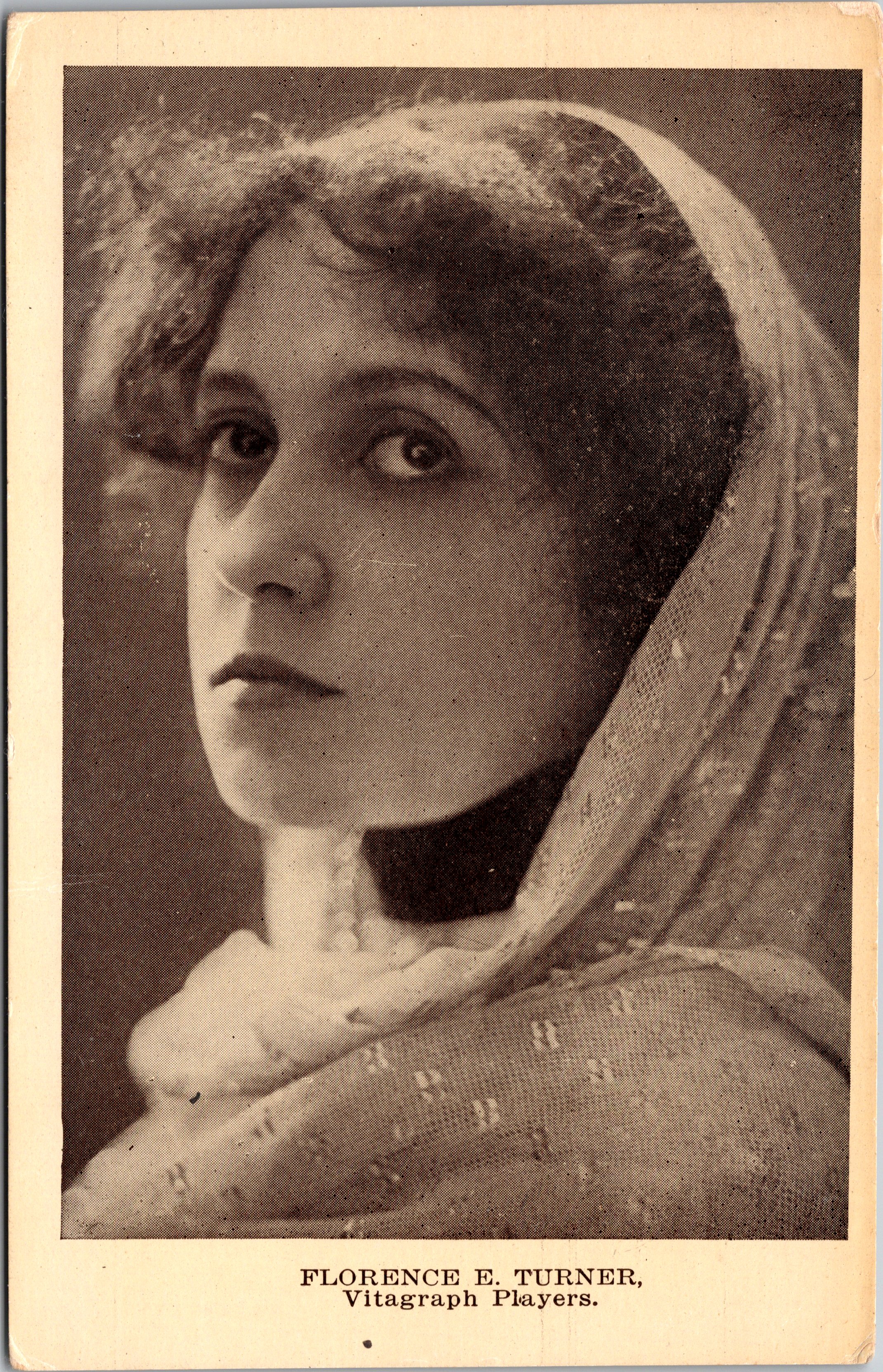
This vintage postcard features a portrait of Florence Turner (1885-1946). She was an American silent film actress known as the “Vitagraph Girl”. She was born in New York City. She began performing on the stage at age three, thanks to a zealous stage mom. In 1906 she was signed by Vitagraph studios to a film contract. She made her movie debut in “How to Cure a Cold” (1907). She became the studio’s leading box office draw. As time went by, more actresses became well known throughout the movie industry. Turner’s popularity waned and in 1913 she moved to England and began performing in music halls. Part of her schtick was impersonating celebrities of the day. Apparently, she had much talent as an impersonator. While in England, she set up her own production company (Turner Films). She wrote screenplays and directed films. In 1924 she returned to the US and pursued acting. She was no longer seen as a film star and she played supporting roles during the 1930’s. Turner has 197 credits to her name, between 1907 and 1943. This postcard was published by the Ess an Ess Photo Company, located in New York City. (SOLD)
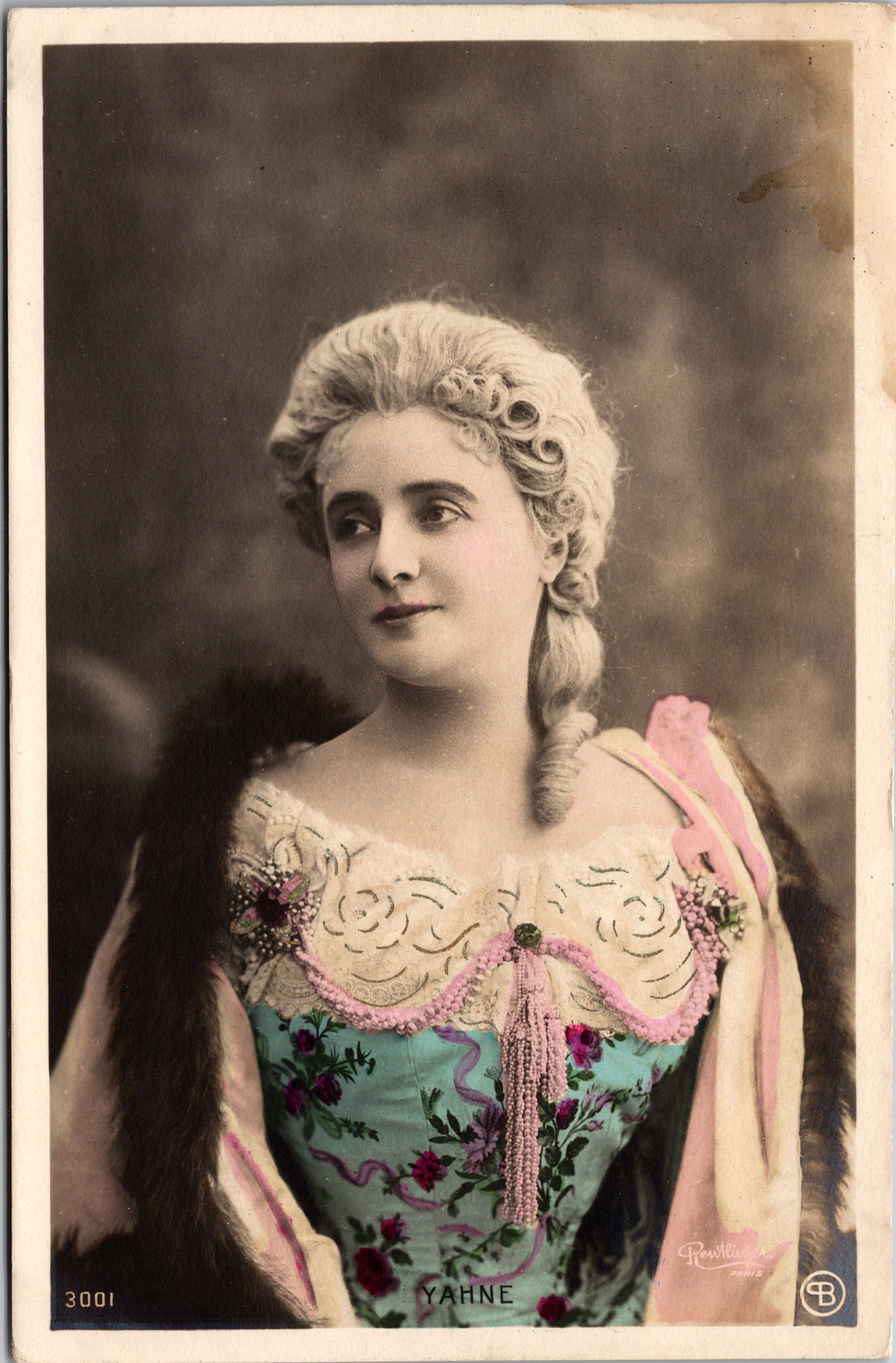
This vintage real photo postcard features French comedic actress, Leonie Yahne (1867-1950). She spent most of her career acting on the stages of Paris. She was an active performer between 1884 and 1917. In 1895, she was drawn in a stage role by Henri de Toulouse-Lautrec. In 1913, Yahne appeared in a silent film short with actor, Max Linder. In 1911, Yahne was a victor in a lawsuit against a Paris entertainer named “Yane”. The lawsuit concerned the other actress using a name too similar to Yahne’s moniker. Yahne was reported to be a society favorite who was expert with foils and horsemanship. It was also noted that Yahne’s driving style made her a terror on the roads of France. The photograph on this postcard was taken by celebrated portrait photographer, Leopold Reutlinger. His studio was located in Paris, France. He photographed many theatrical stars and other celebrities. SOLD
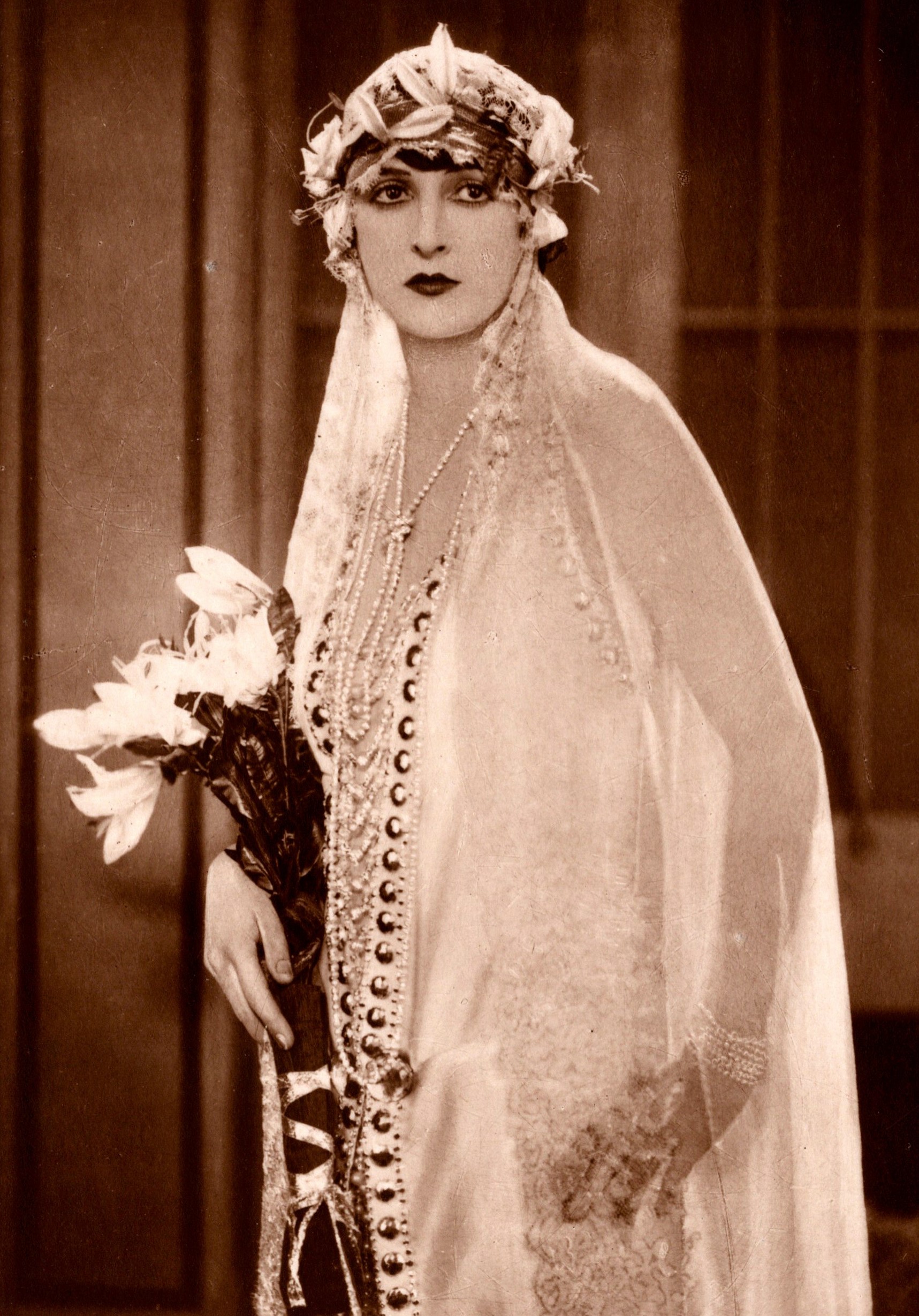
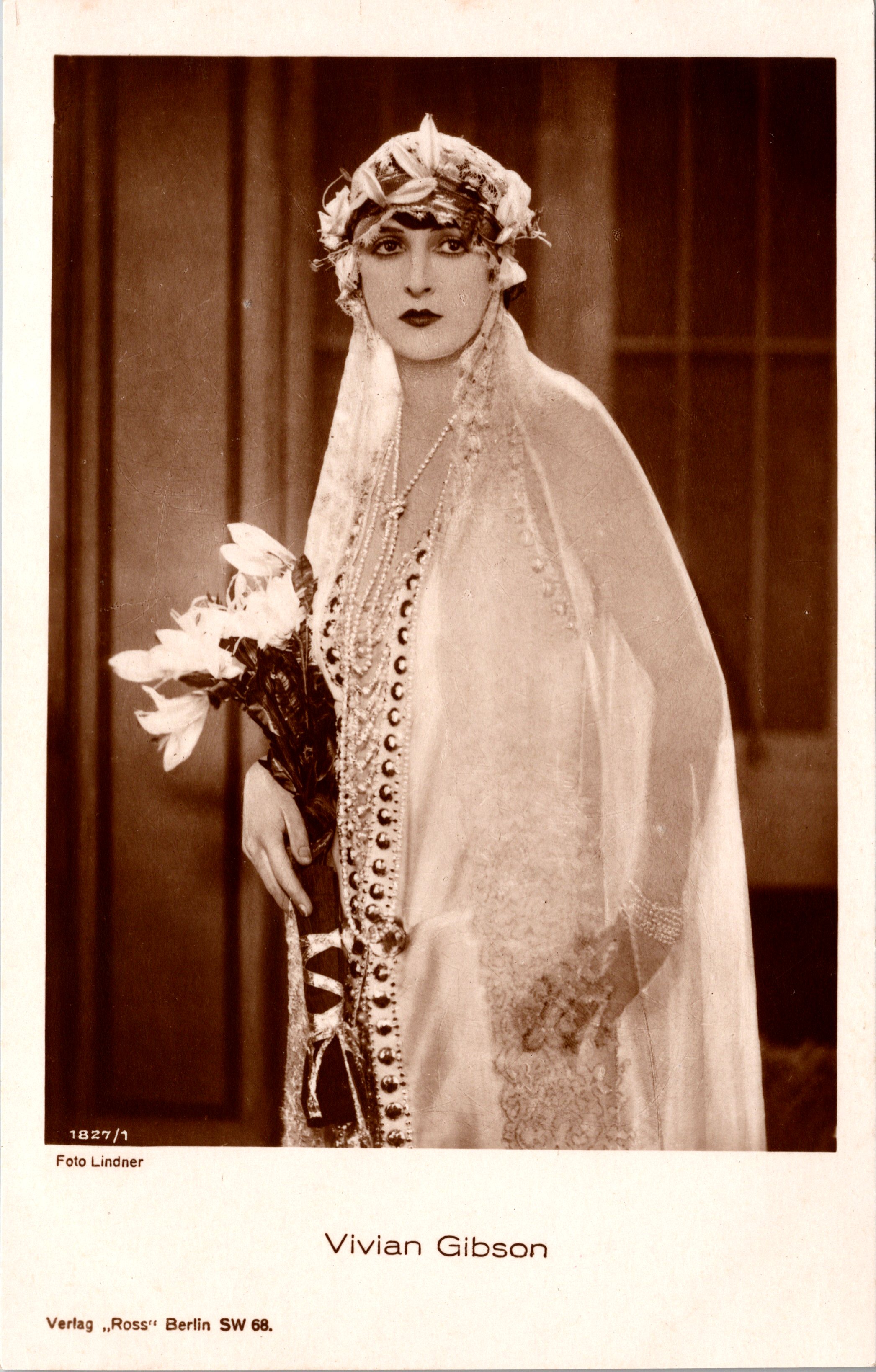
This vintage real photo postcard features British born Austrian film actress, Vivian Gibson (1898-1981). Her early education included dance training. She is most associated with “Tense Moments From the Opera” (1922), “The Man Who Sold Himself” (1925), and “The Gypsy Baron” (1927). She began her film career in England, she also appeared regularly in German productions. Although she was a sucess in silent film, she was unable to make the transition into sound films. She retired and went to Vienna where she authored books. Little is known about her private life beyond that she never married. The IMDb gives Gibson 57 film credits between 1916 and 1932. This vintage postcard was published by Ross Verlag (Berlin, Germany) as part of a series (No.1827/1).Gibson’s portrait for this card was taken by the Lindner studio. He was probably a German photographer but I could not confirm his background. This postcard is in excellent condition (see scans).
Buy this Vintage Real Photo Postcard (includes shipping within the US) #3863
To purchase this item, click on the Pay with PayPal button below
$17.64
Buy this Vintage Real Photo Postcard (includes International shipping outside the US) 3863
To purchase this item, click on the Pay with PayPal button below
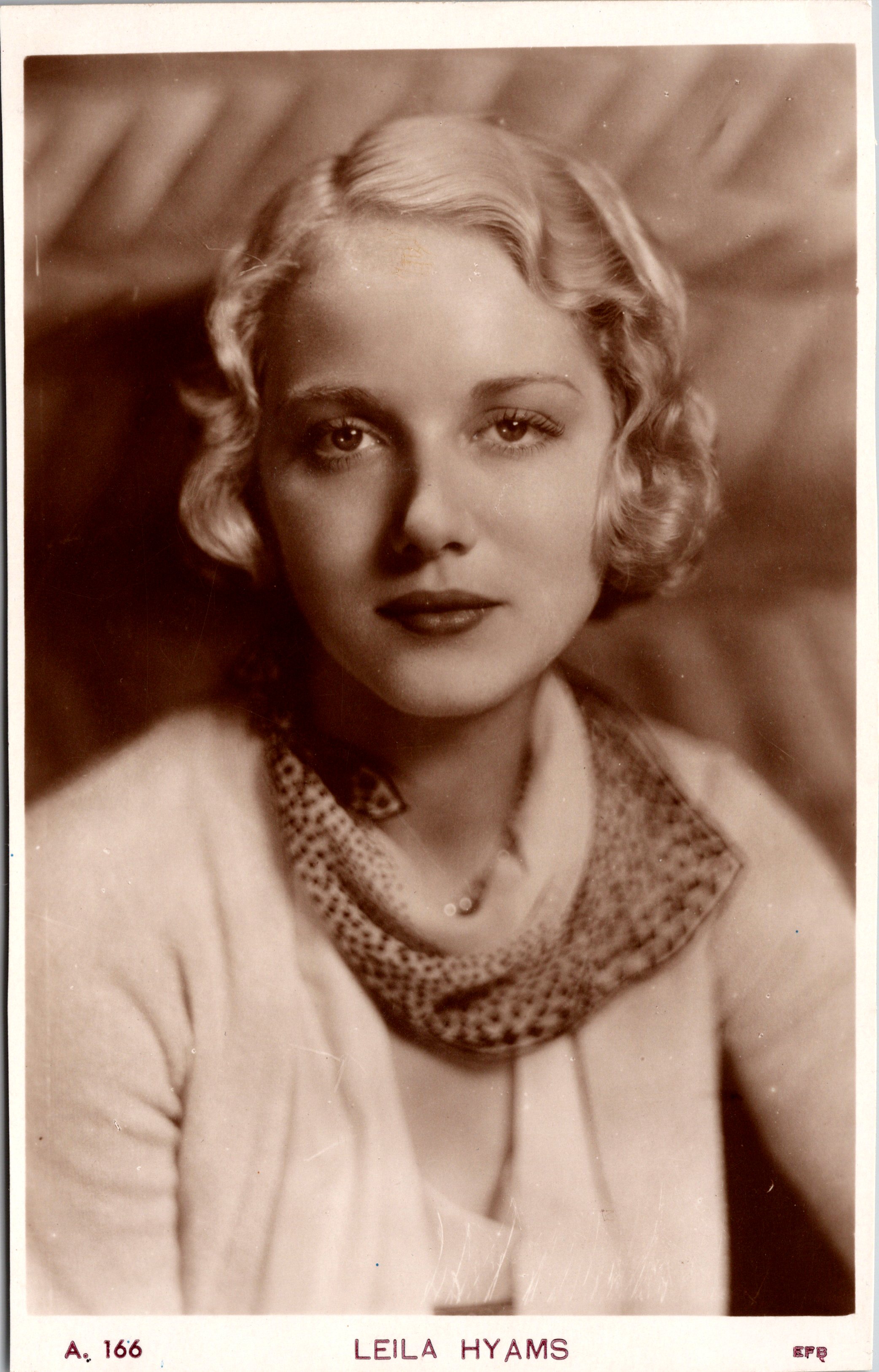
This vintage real photo postcard features American film and stage actress, model and vaudeville player, Lila Hyams (1905-1977). Her parents were vaudeville comedy performers and her mother was also a well thought of actress. Her parents also appeared together in a number of films. Leila began acting on stage as a child. In her teenage years, she worked as a model and became nationally known. She modelled for the first ad for Listerine. Leila’s film career was during the silent film and early talkie era and spanned from 1924 through 1936. Often playing leading lady roles, she appeared in more than fifty films. “Freaks” (1932) was one of best known movies. Leila married her talent agent in 1927 and they stayed together for 50 years. The New York Times wrote in her obituary that she was “an attractive blonde actress who was eminently successful at playing ingenues. This vintage postcard portrait is in very good condition (see scans). SOLD
This vintage real photo postcard features British actress, Alma Taylor (1895-1974). She began her career as a child actress, making her screen debut in 1907. Taylor had brown hair, blue eyes, and a great deal of charm. She appeared in more than 150 film roles during her performing career. She was one of Britain’s major film stars during the 1910’s and early 1920’s. In 1915, she was voted the most popular British performer in a major magazine poll. Charlie Chaplin claimed second place. Most of her silent career was with producer, Cecil Hepworth. He refused to let her wear makeup in any of his films. After 1932, she acted only occasionally. The photograph on this postcard was taken while Taylor was under contract with Hepworth Pictures. (SOLD)
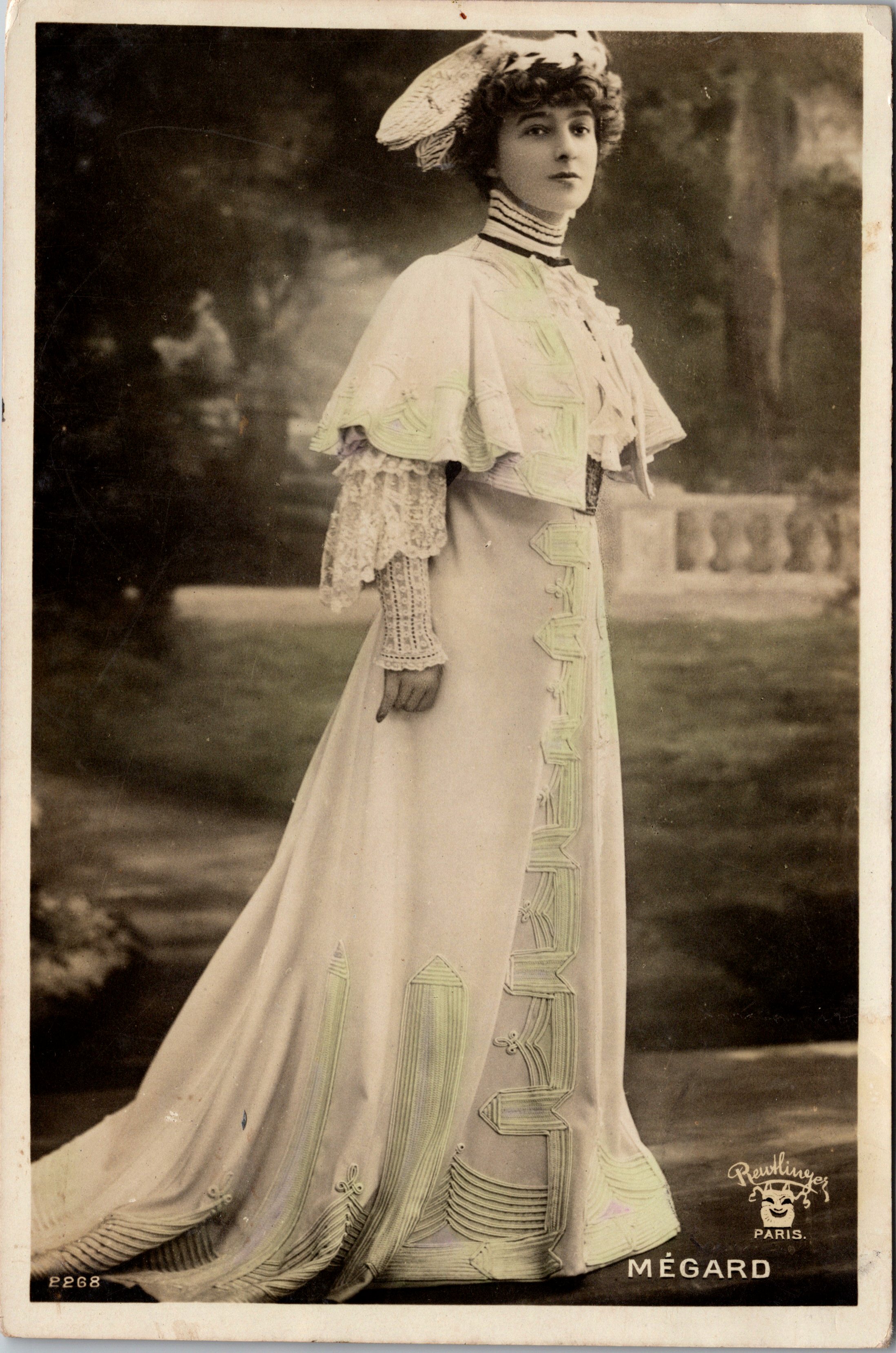
This vintage real photo postcard features a portrait of French actress and stage beauty, Andree Megard (1869-1952). She was born in France. Her parents were “well-off peasents” . At some point, her parents sent her to an Aunt to work in the aunt’s dry goods store. At fifteen years of age, she ran away to Paris. At first, she worked as an artist model. From 1896 to 1925, she appeared on the Paris stage in such works as Shakespeare and plays directed by her husband, Firmin Gemier. In 1913, while playing in Rostand’s Cyrano de Bergerac, she had an affair with Rostand. In 1907, she starred in “Anna Karenina”. In 1909, she appeared in a silent film. Megard was viewed as representing the highest echelon of fashion and beauty. She was considered “tall, graceful, and distinguished looking”. The international public monitored her hairstyle, and her costumes very closely. She was the subject of many magazine and newspaper articles. The portrait of Miss Megard seen on this postcard was taken by Leopold Reutlinger’s studio in Paris, France. It is part of a series (no.2268). Reutlinger was a very popular celebrity photographer. This vintage postcard portrait is in good condition (see scans).
Buy this Vintage Real Photo Postcard (includes shipping within the US) #3796
To purchase this item, click on the Pay with PayPal button below
$18.74
Buy this Vintage Real Photo Postcard (includes International shipping outside the US) 3796
To purchase this item, click on the Pay with PayPal button below
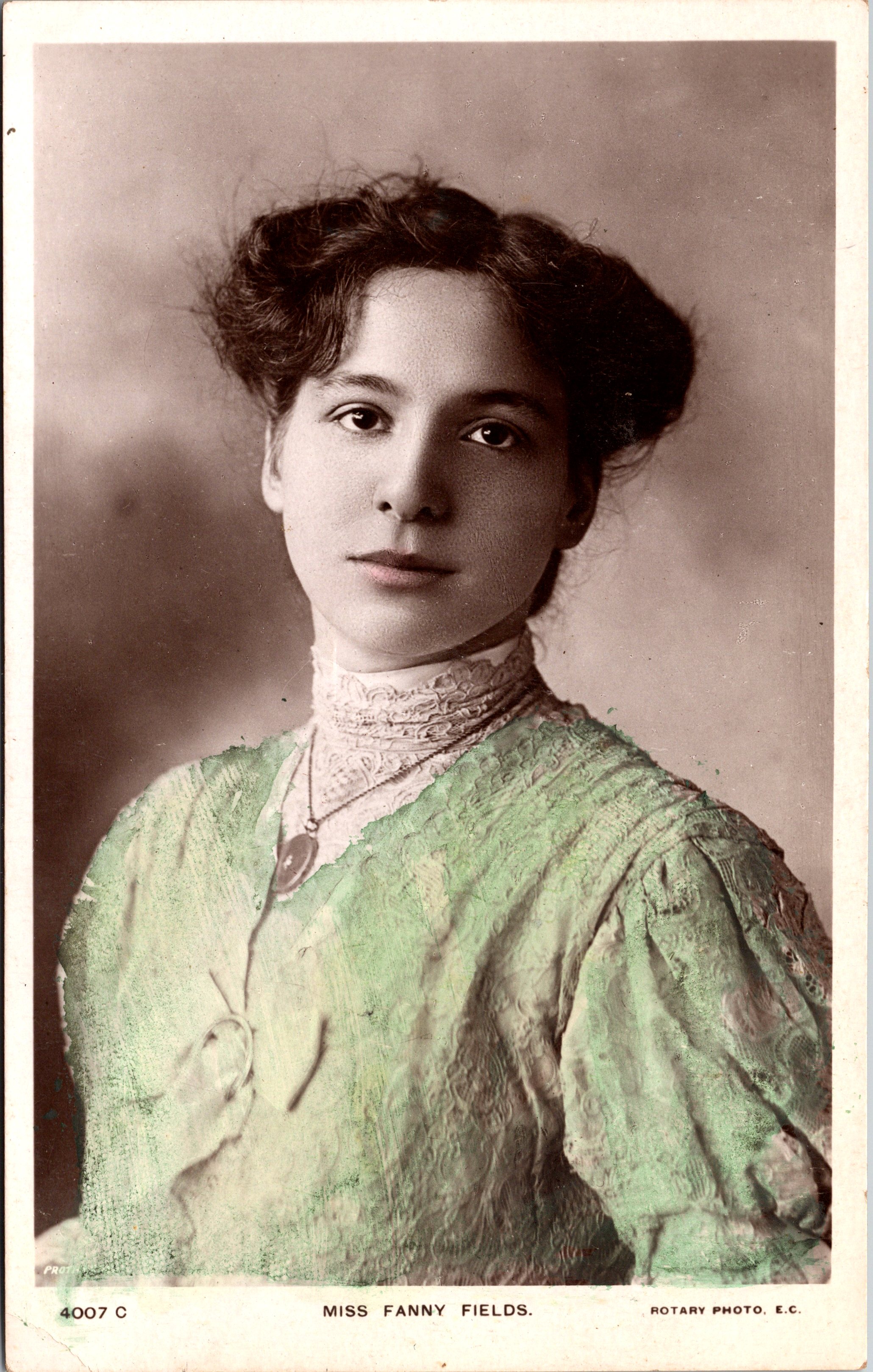
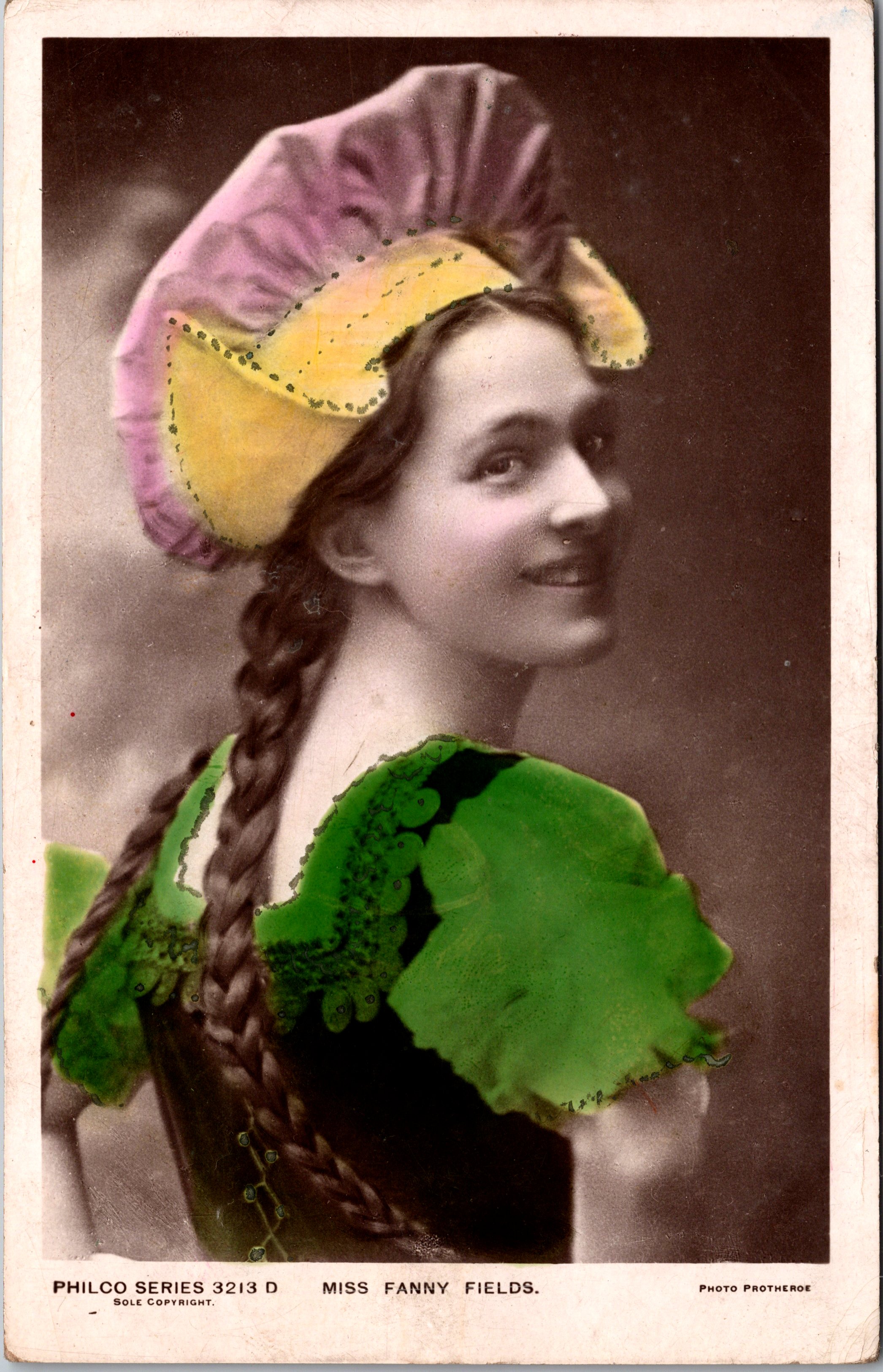
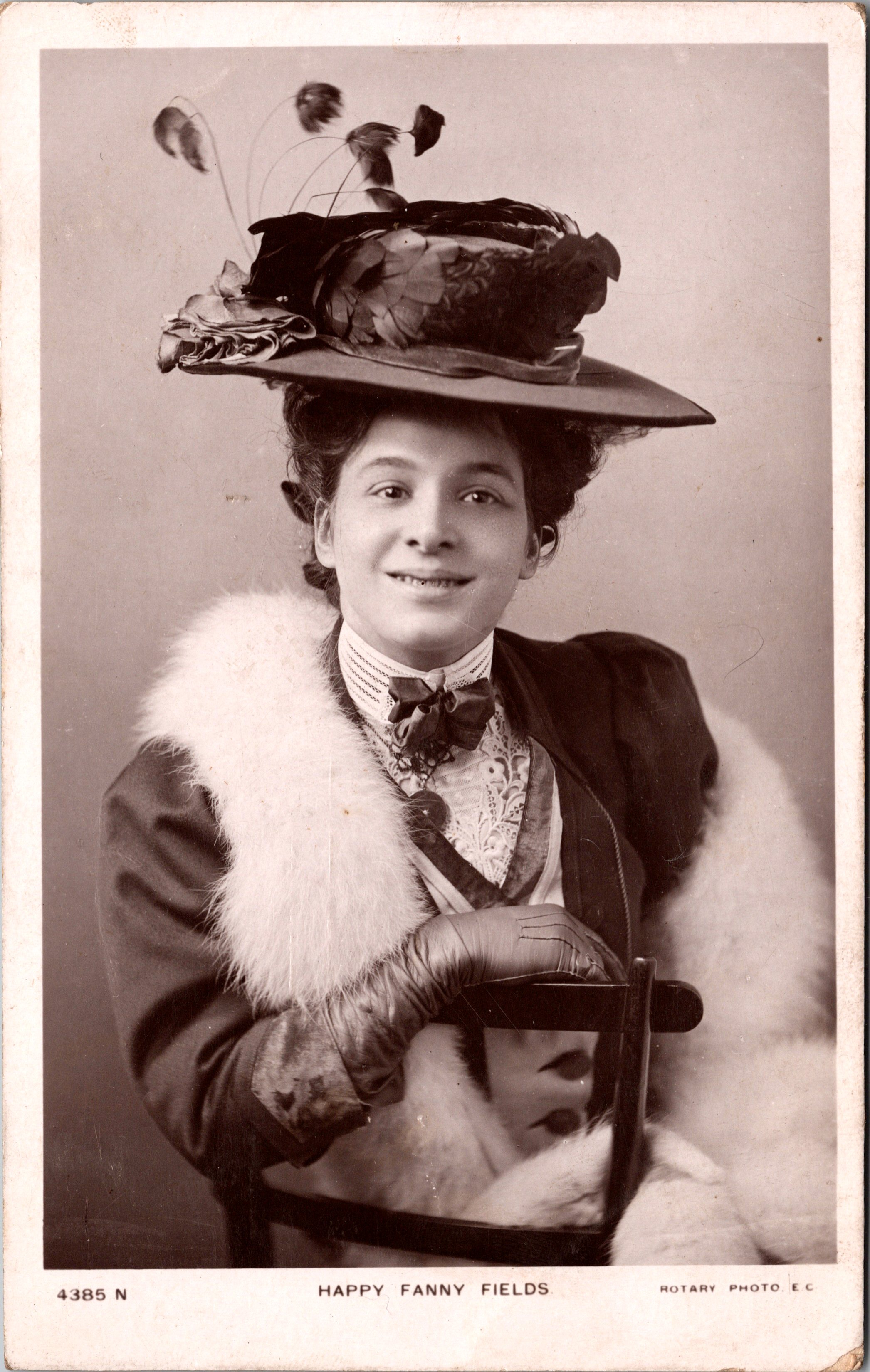
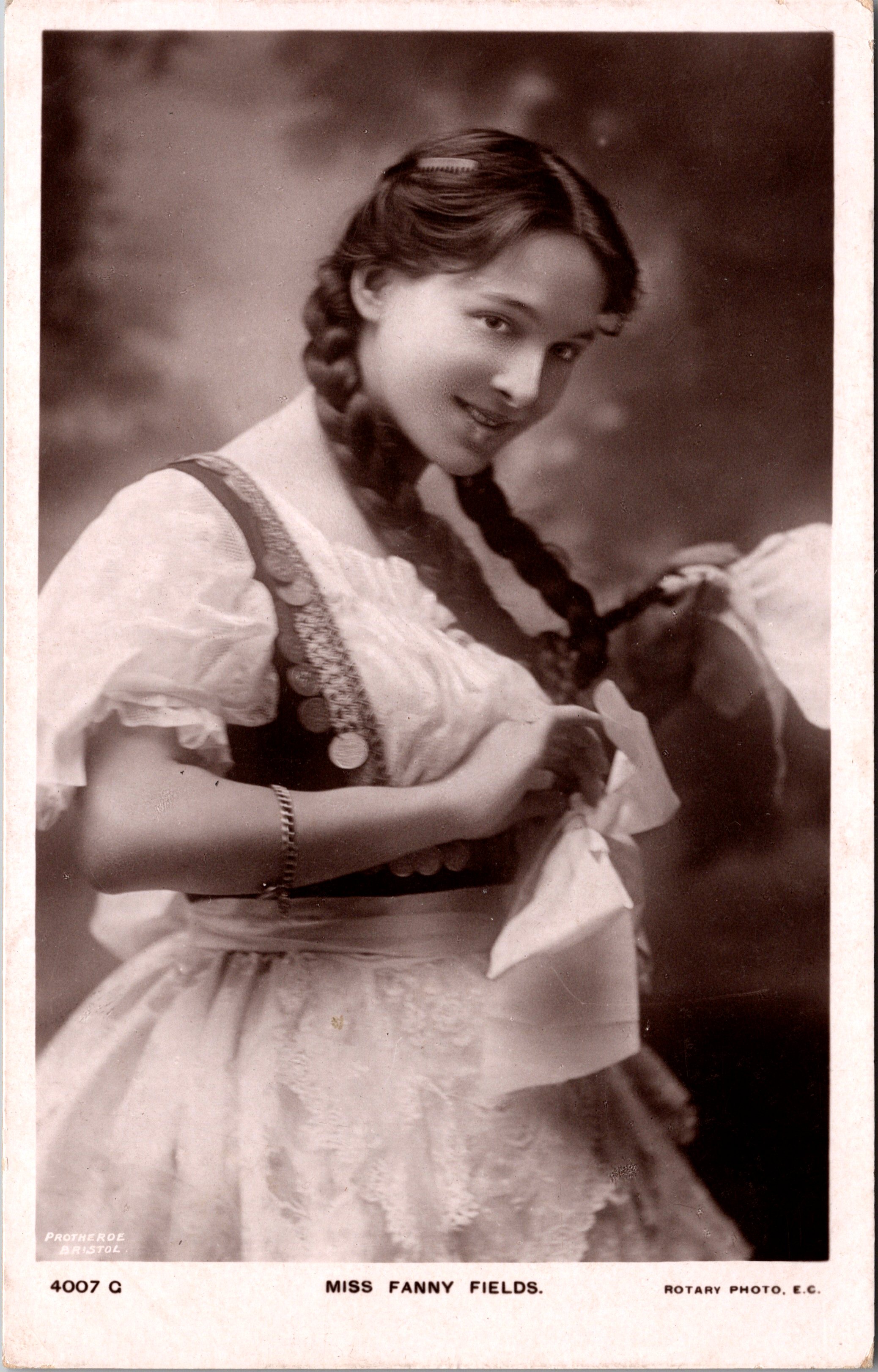
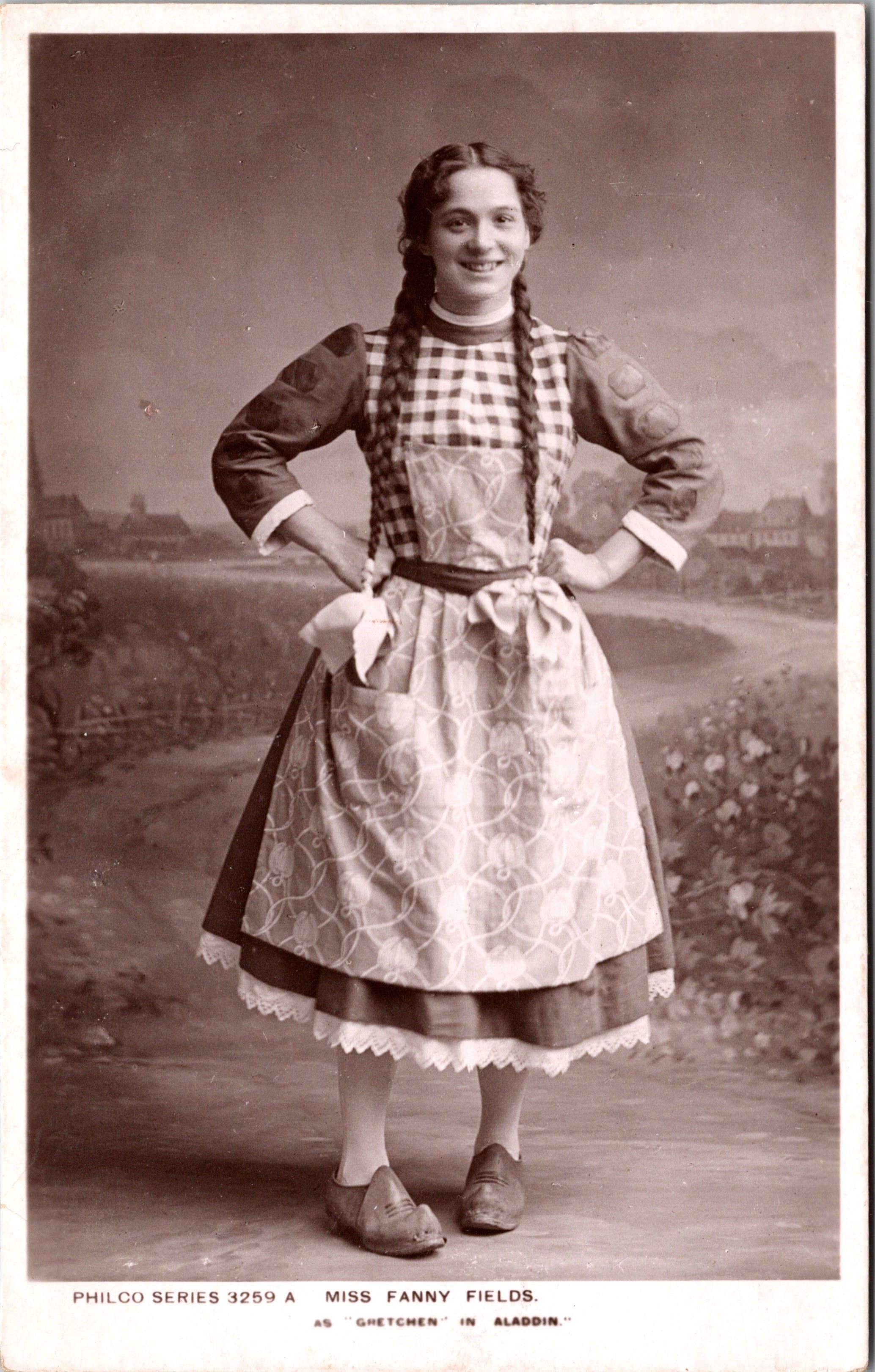
This vintage real photo postcard features American singer, dancer, and comic performer, Fanny Fields (1880-1961), who was a successful performer in British music halls and pantomimes in the early 1900s. During her career she was frequently billed as “Happy” Fanny Fields. She was born, Fanny Furman, in New York City, to a Jewish family. She first appeared in variety shows in NYC sometime around 1899. In her act, she sang and told stories. In 1902, she performed in London and had a very positive reception. One reviewer described her as “one big bubble of mirth and merriment”. She toured with Welsh harpist, Nansi Richards. She also performed “The Suffragette”. In an accompanying monologue, she encouraged woman to make a stand for their rights. In 1912, she performed in front of King George V. She also starred in a silent film short entitled “Happy Fanny Fields and the Four Little Dutchmen” (1913). She retired from the entertainment business in 1913. She returned to the United States and married Dr Abraham Rongy (1878-1949). He was a gynecologist and set up maternity hospitals. In 1933, he published one of the first books proposing the legalization of abortion. Fanny became an active fundraiser for Jewish medical organizations.
Postcard 1 features a close-up portrait of Fanny Fields. She looks pretty in this color tinted photo postcard. The postcard was published by Rotary Photo as part of a series (no.4007 C). The message on this postcard indicates that the sender sent the postcard for someone to add to their collection. This postcard has a postmark from 1906. (SOLD)
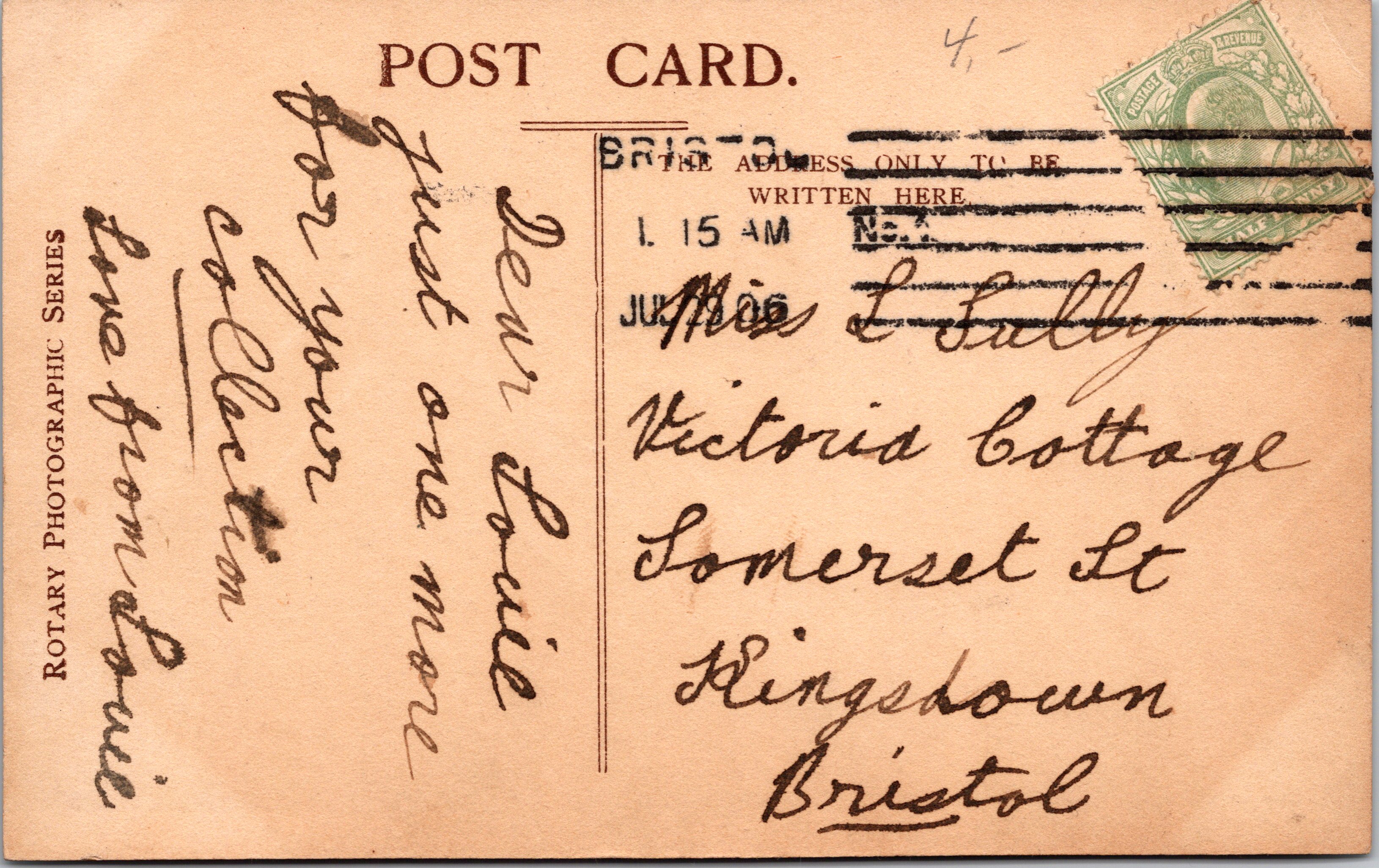
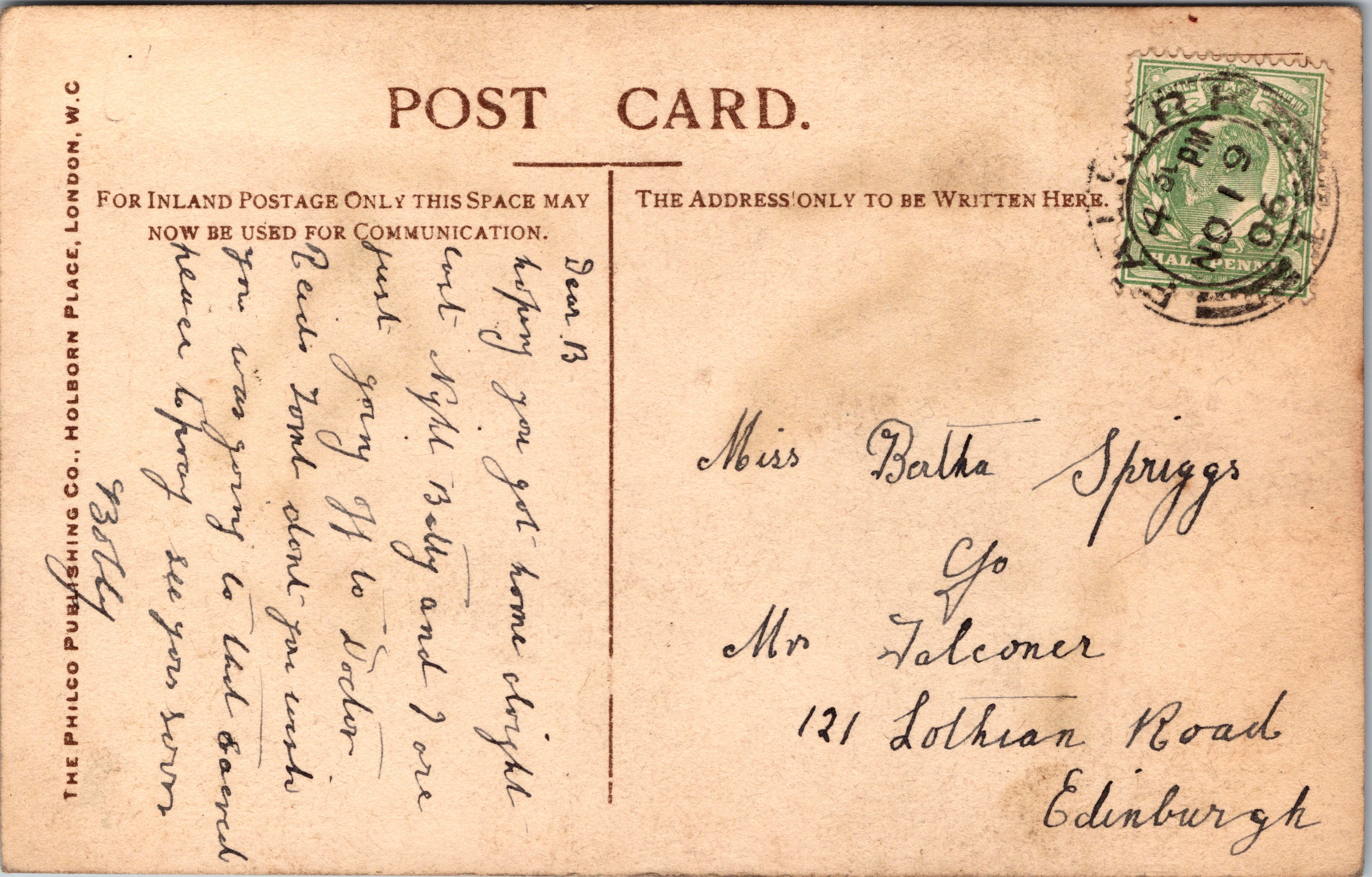
Postcard 2 is a vintage real photo postcard portrait of Miss Fields. The photograph is color tinted. The performer is just beaming for the photographer. Her hat is quite an extravaganza. This postcard was published by Philco (London) as part of a series (no.3213 D). The photographer was Lewis R. Protheroe. He operated a studio in Bristol, England. He was working as a photographer, at least between 1901 and 1917. His father, Thomas Protheroe founded the studio between approximately 1876 and 1900. The postcard has a 1906 postmark. (SOLD)
Postcard 3 is a vintage real photo postcard portrait of Miss Fields. The performer has an adorable smile. Note her long braids. This postcard was published by Rotary Photo as part of a series (no.4385 N). (SOLD)
Postcard 4 features Fanny Fields displaying a warm smile. Note her long braids. Lewis R. Protheroe who operated a studio in Bristol, England. He was working as a phototgrapher, at least between 1901 and 1917. Thomas Protheroe founded the studio between approximately 1876 and 1900 This postcard was published by Rotary Photo as part of a series (no.4007 G). The card is in very good condition (see scans). (SOLD)
Postcard 5 is a vintage real photo postcard portrait of Miss Fields. The performer is once again displaying her wonderful smile. Note her long braids. This photograph captures Fanny in costume, playing the role of Gretchen in “Aladdin”. (SOLD)
Postcard 1 features silent film actress, Ally Kolberg. She is quite beautiful and looks like she is in her teen years when photographed. The message on this card was written in 1915. The postcard was published by RotoPhot. The stamp box indicates that the company was part of the NBC price cartel. (SOLD)
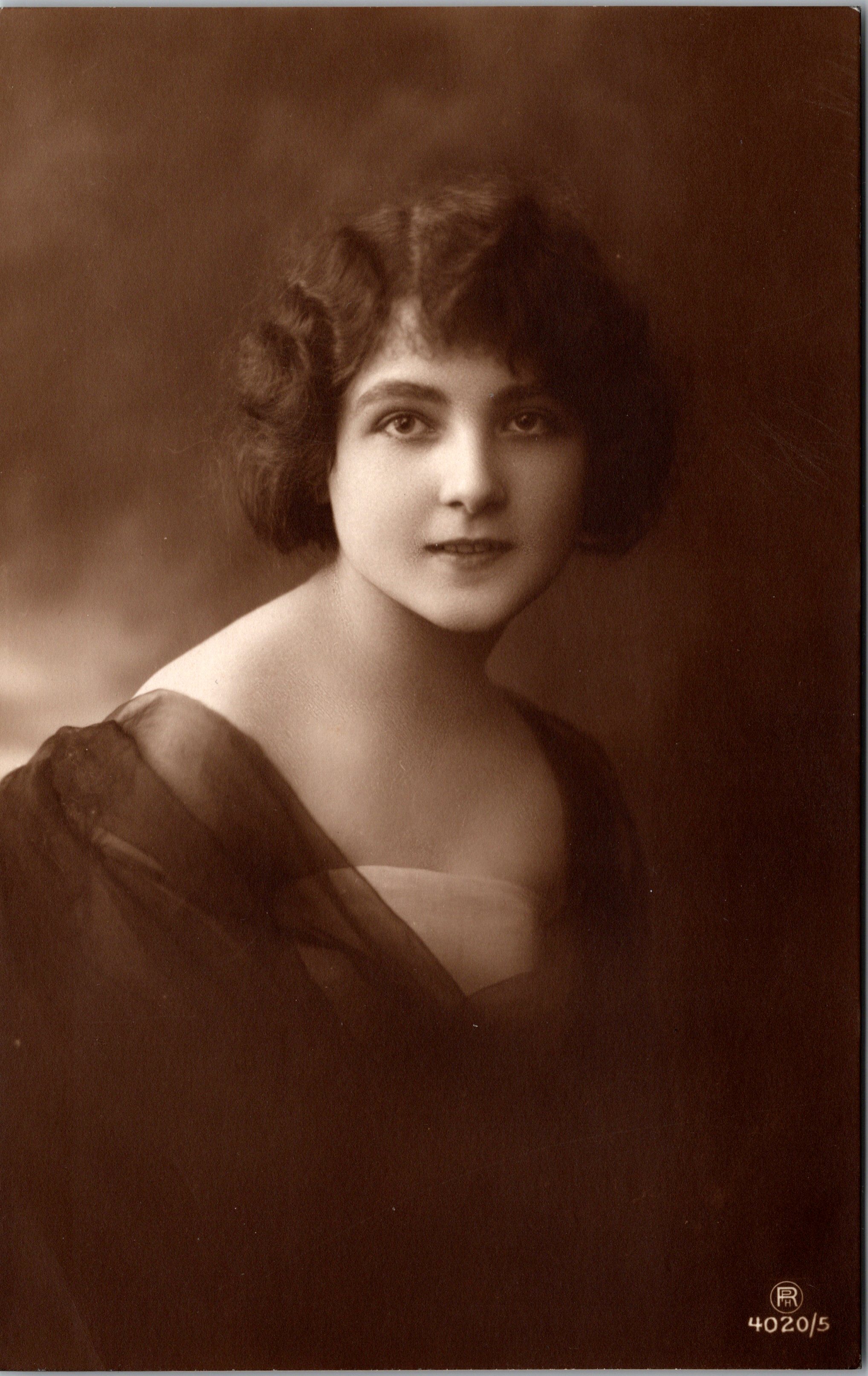
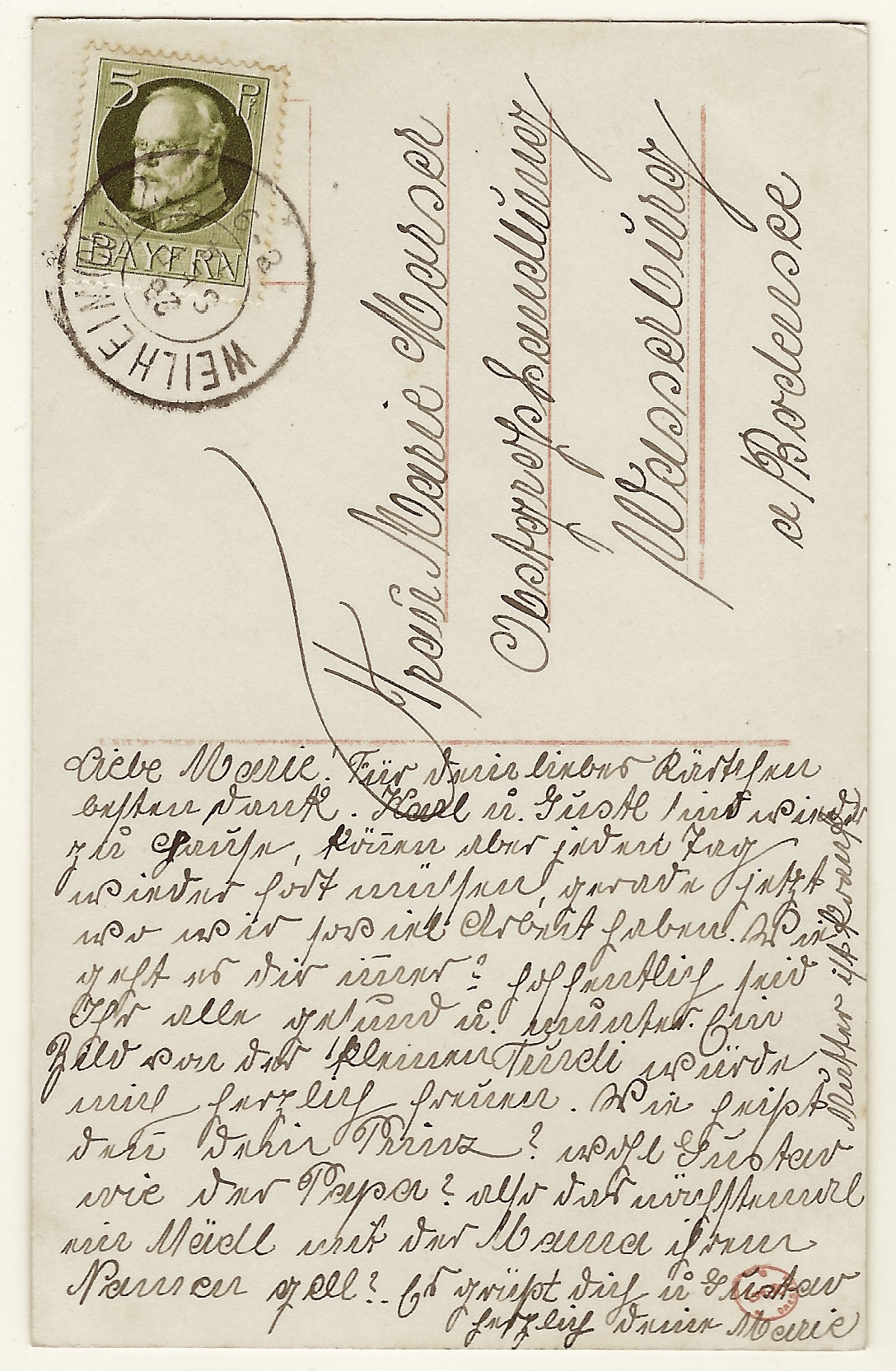
This vintage real photo postcard (Postcard 2) features beautiful German silent film actress, Ally Kolberg. Her movie career was brief. She appeared in films between 1916 and 1923 and they included 16 German films and 1 Swedish production. She was often directed by female directors. During her career she was also credited as Ally Bing and Ally Kay Bing. Initial research revealed very little about the life of Miss Kolberg. More intensive investigation is required. This postcard was published by Rotophot, which began publishing “RPH” postcards sometime around 1916. This postcard is part of a series (no 4794/3). The production of film star postcards was continued by the Ross Verlag company who’s origins can be traced back to the earlier Rotophot postcard company. This postcard has a Bavarian stamp and is postmarked from Weilheim, Bavaria.
* The second postcard (Postcard 3) features a real photo portrait of Miss Kolberg. She is dressed in a more subdued fashion in this photograph than in the first postcard. She is wearing “every day” clothing compared to the high fashion, attention grabbing style seen in the first postcard. In this photo, Ally is posed clasping her hands and looking dreamingly toward heaven. The backdrop behind her could be viewed as sky. As in the first postcard, Miss Kolberg is quite beautiful. This postcard was also, like the first, published by Rotophot and has the “RPH” logo. The message on the reverse of the postcard dates the card to 1913. This date is a bit earlier than when some sources believe RPH began publishing postcards. The sources are close, but incorrect. This postcard was part of a series (no. 3697/5). (SOLD)
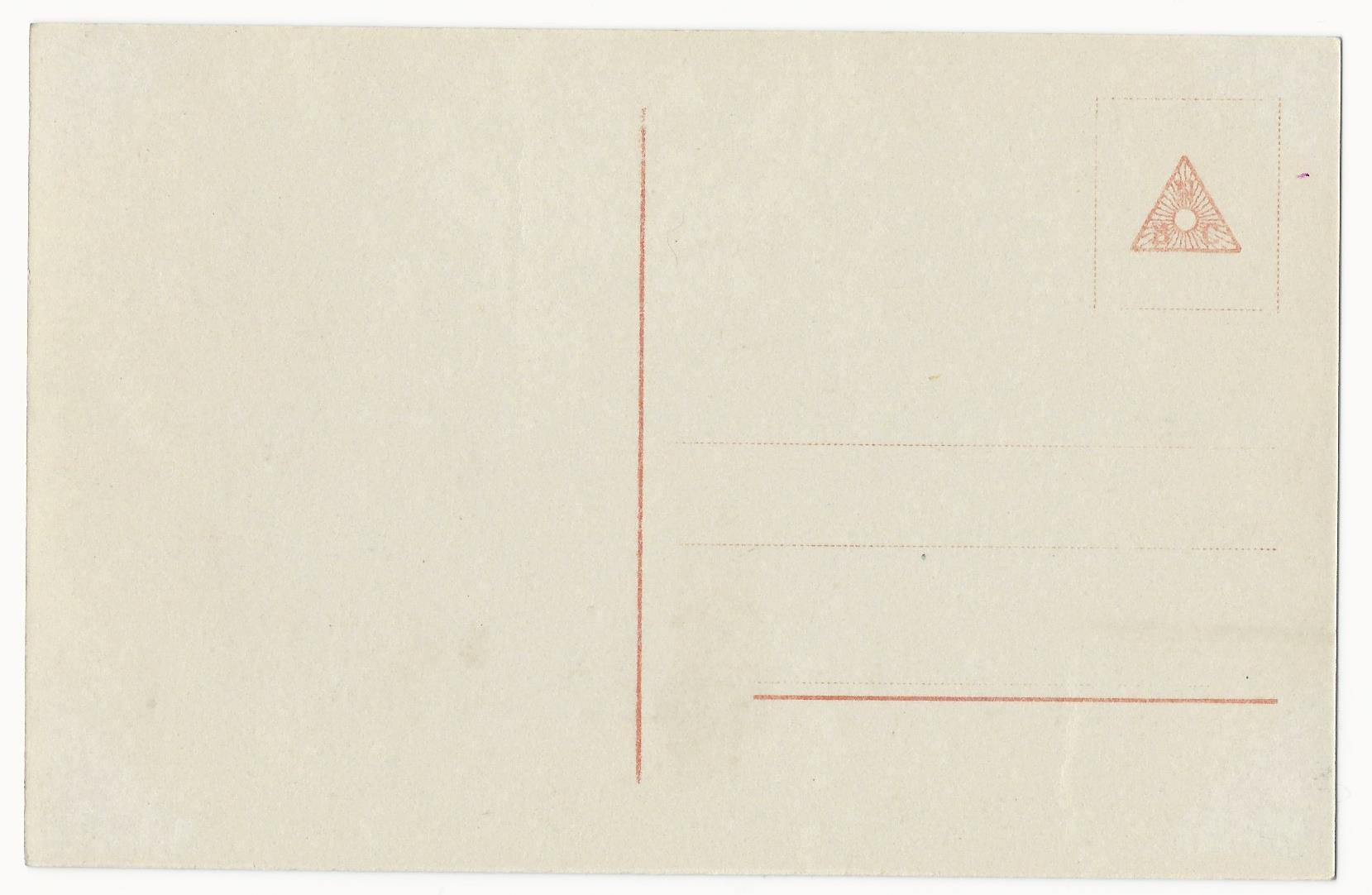
* Ally Kolberg is the subject of this third vintage real photo postcard (Postcard 4). Miss Kolberg’s beauty is apparent in this photograph. She is wearing a long translucent veil and an alluring smile. The stamp box of this postcard has an interesting story. “NBC” (Neue Bromsilber Convention) was a price cartel established in 1909 that continued until the 1930’s. The purpose of the cartel was to ensure that the minimum price charged for postcards was kept at a sufficiently profitable level. A number of postcard publishing companies joined the cartel in an effort to stave off the effect of competition on the pricing of postcards. This postcard is part of a series (no. 119/1). The logo for the motion picture company “Film Sterne” can be seen in the lower left hand corner of the postcard. The photo studio that took this photograph was Becker & Maas. The firm was located in Berlin, Germany. (SOLD)
Buy this Vintage Real Photo Postcard (includes shipping within the US) #3019
To purchase this item, click on the Pay with PayPal button below
$25.50
Buy this Vintage Real Photo Postcard (includes International shipping outside the US) #3019
To purchase this item, click on the Pay with PayPal button below
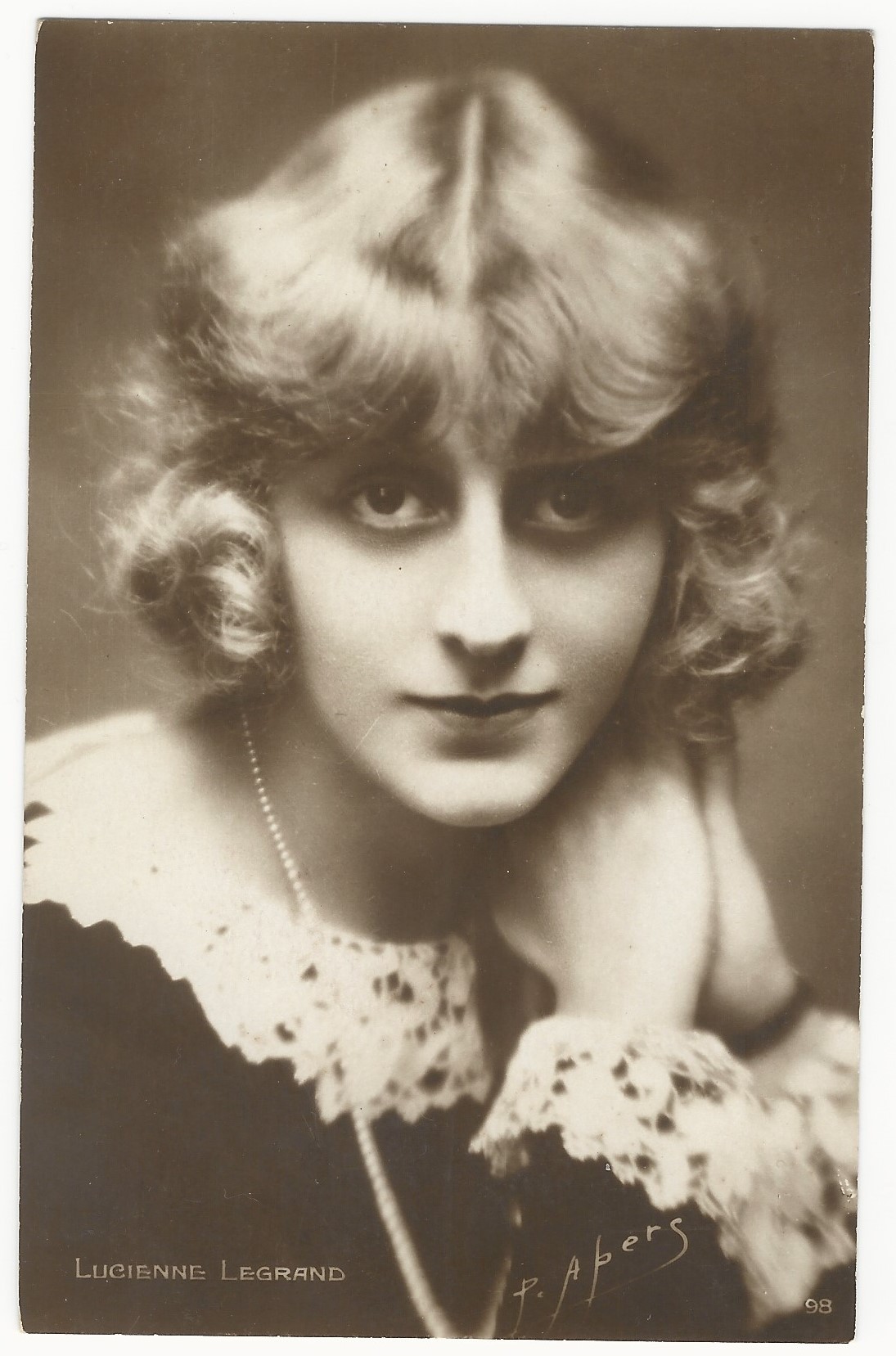
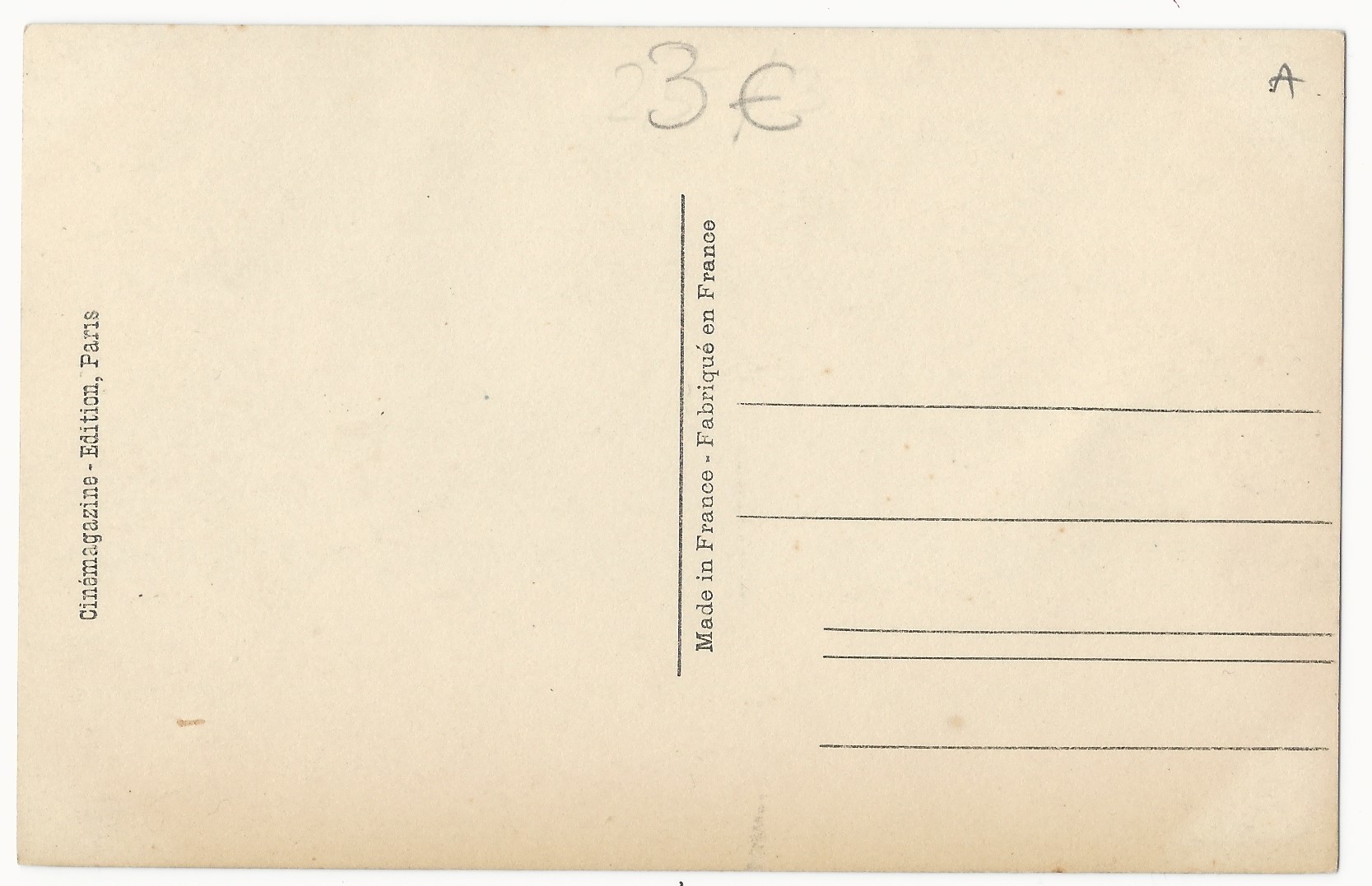
The pretty actress seen in this vintage real photo postcard is Lucienne Legrand (1900-1987). She was French and was active in film between 1921 and 1929. Her work was in silent film and she often worked alongside her actor/director husband, Emile-Bernard Donatien. For clarity sake, note that there was another actress named Lucienne Legrande; but this actress was born in 1920. Lucienne Legrand, pictured on this postcard, has eighteen film credits listed by IMDb. The site states that she is most well known for La chevauchee blanche (1924), Simone (1926), and Le martyre de Sainte-Maxence (1928). This photo postcard was published by Cinemagazine (Paris Edition) as part of a series (no.98). The photograph of Miss Legrand was taken by Pierre Apers. He was a talented French photographer active in the early twentieth century. His studio was in Paris and he specialized in portraiture. The cabinet card gallery is building a nice collection of his photographs. This vintage photo postcard is in very good condition (see scans).
Buy this original Vintage Real Photo Postcard (includes shipping within the US) #3360
To purchase this item, click on the Pay with PayPal button below
$15.50
Buy this Vintage Real Photo Postcard (includes International shipping outside the US) 3360
To purchase this item, click on the Pay with PayPal button below
This vintage real photo postcard features American silent film actress, Fern Andra (1893-1974). Andra was one of Germany’s most popular actresses in German silent film. She also worked as a film director, script writer, and producer. The pretty smiling Miss Andra poses with a Borzoi dog. She was born in Watseka, Illinois. Her father died when she was five years-old and her mother remarried. Fern’s step-dad was a vaudeville actor, circus performer and tight-rope walker. By age four, Fern was part of a tight-rope act. She later trained in dance and singing. In 1899, at age six, she made her first film, a version of “Uncle Tom’s Cabin”. She continued to perform with the circus and toured the United States, Canado, and Europe. She was a member of a famous troupe of wire artists. In Berlin, she took acting lessons from Max Reinhardt, prominent film and theater director. She appeared in several of his plays and films. In 1913, she acted in her first German film. In 1915, she was in her first Austrian film. Some believe Andra was an Allied spy in World War I. To deal with these rumors, she married a Prussian Baron. At some point, she stated that she actually was spying for the allies. This was her first marriage. He was killed in the war. Her second marriage was to a professional boxer. Her appearance in the film “Genuine” (1920) caused a great stir. In this horror film, she wore a costume that was simply, her painted body. She continued to make films in Europe but by the mid 1920’s, her popularity waned in Germany. In 1922, she was widely reported as being killed in a plane crash. In fact, she, and her companion, director Geog Bluen, survived the crash but according to one article, died the next day. However, the pilot, a former World War I fighter pilot and brother of the “Red Baron”, was killed. By 1928, Andra was working in the United Kingdom and the United States. She also expanded her acting to radio and television. Andra was married four times. She was widowed two times and divorced two times. Her fourth marriage, to a General, lasted about 35 years. She had no children. The IMDb gives Andra 51 acting credits between 1913 and 1930. She is also credited as a writer, producer, and director. An interesting side note is that when she was working as a producer, she interacted with a young German playwright named Josef Goebbels. Interestingly, she did propaganda broadcasts into Germany for the allies during World War II. Fern Andra died at age 80, in South Carolina. The stamp box of this postcard has an interesting story. “NBC” (Neue Bromsilber Convention) was a price cartel established in 1909 that continued until the 1930’s. The purpose of the cartel was to ensure that the minimum price charged for postcards was kept at a sufficiently profitable level. A number of postcard publishing companies joined the cartel in an effort to stave off the effect of competition on the pricing of postcards. This postcard is part of a series (no.131/1). The logo for the motion picture company, “Film Sterne” ,can be seen in the lower left hand corner of the image. SOLD








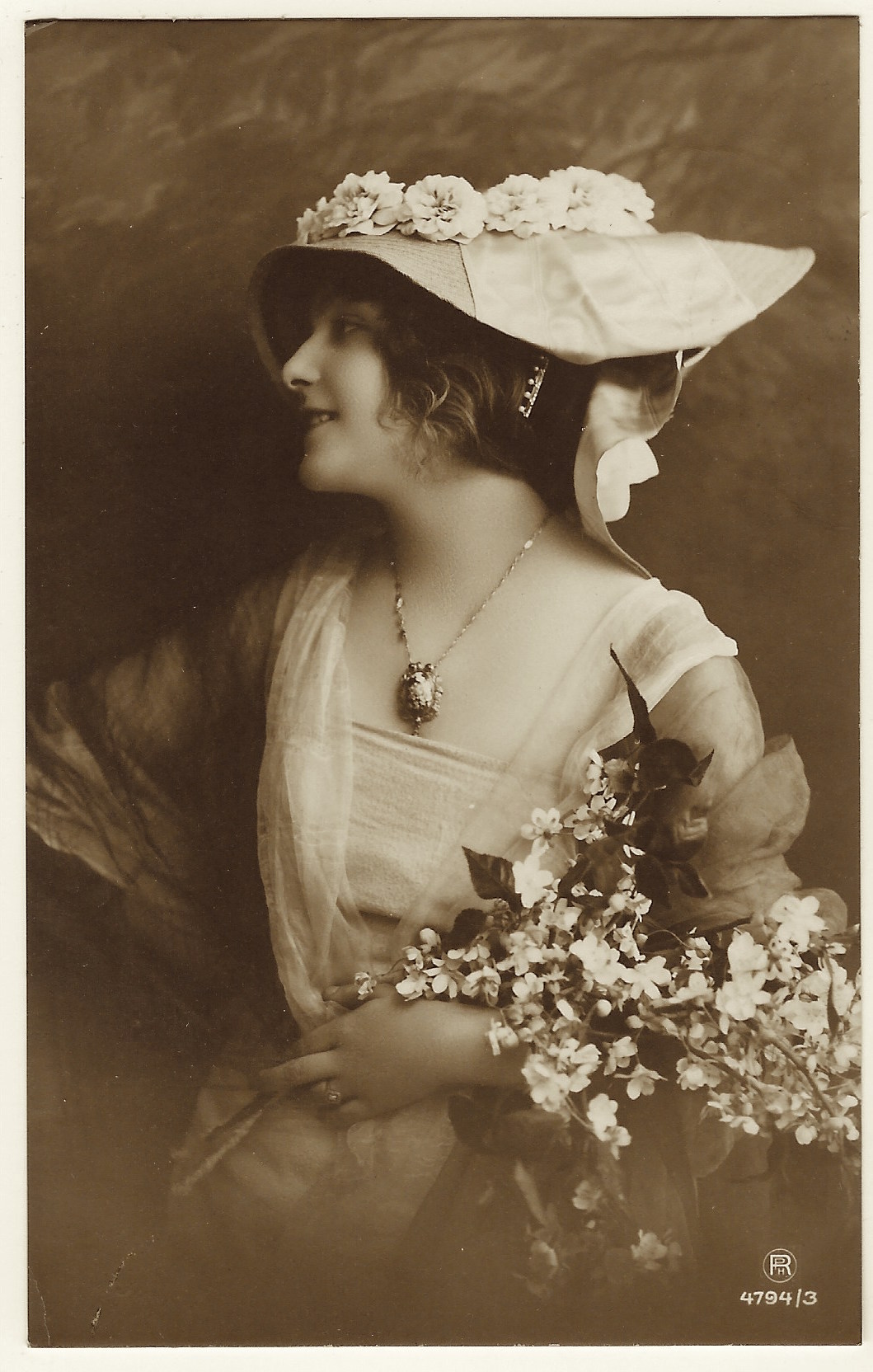 Postcard 2 (#3319)
 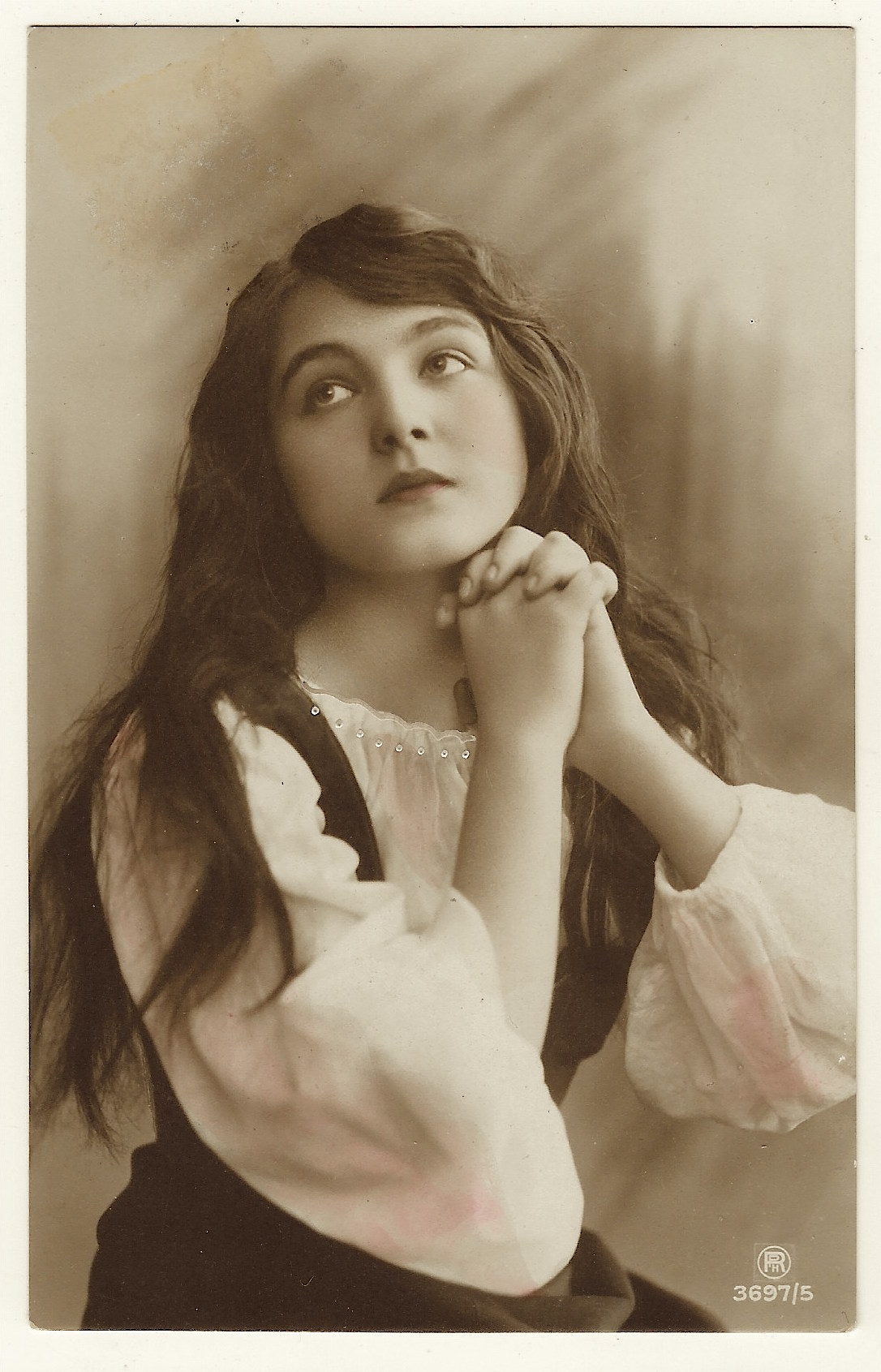 Postcard 3 (SOLD)
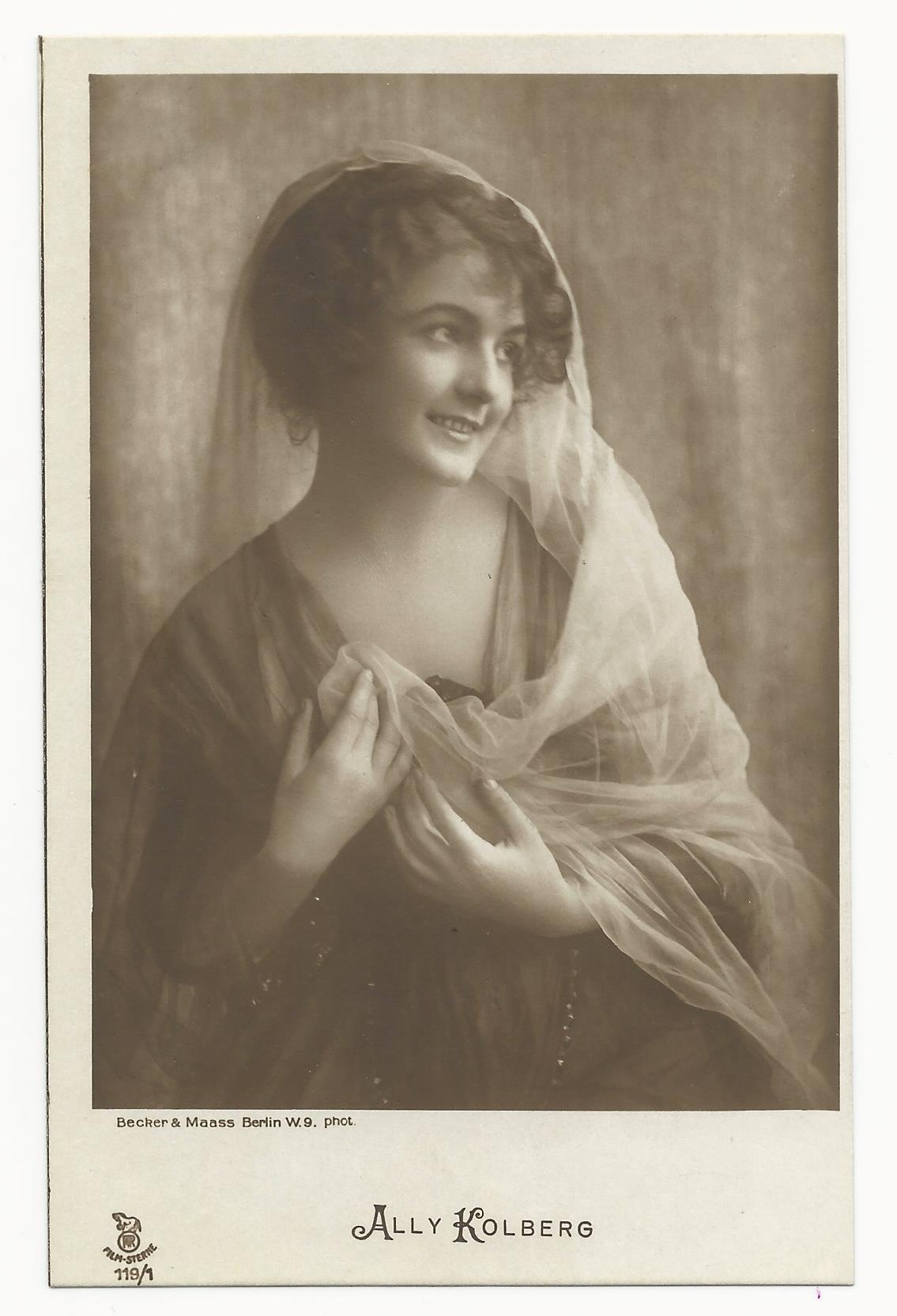 Postcard 4 (SOLD)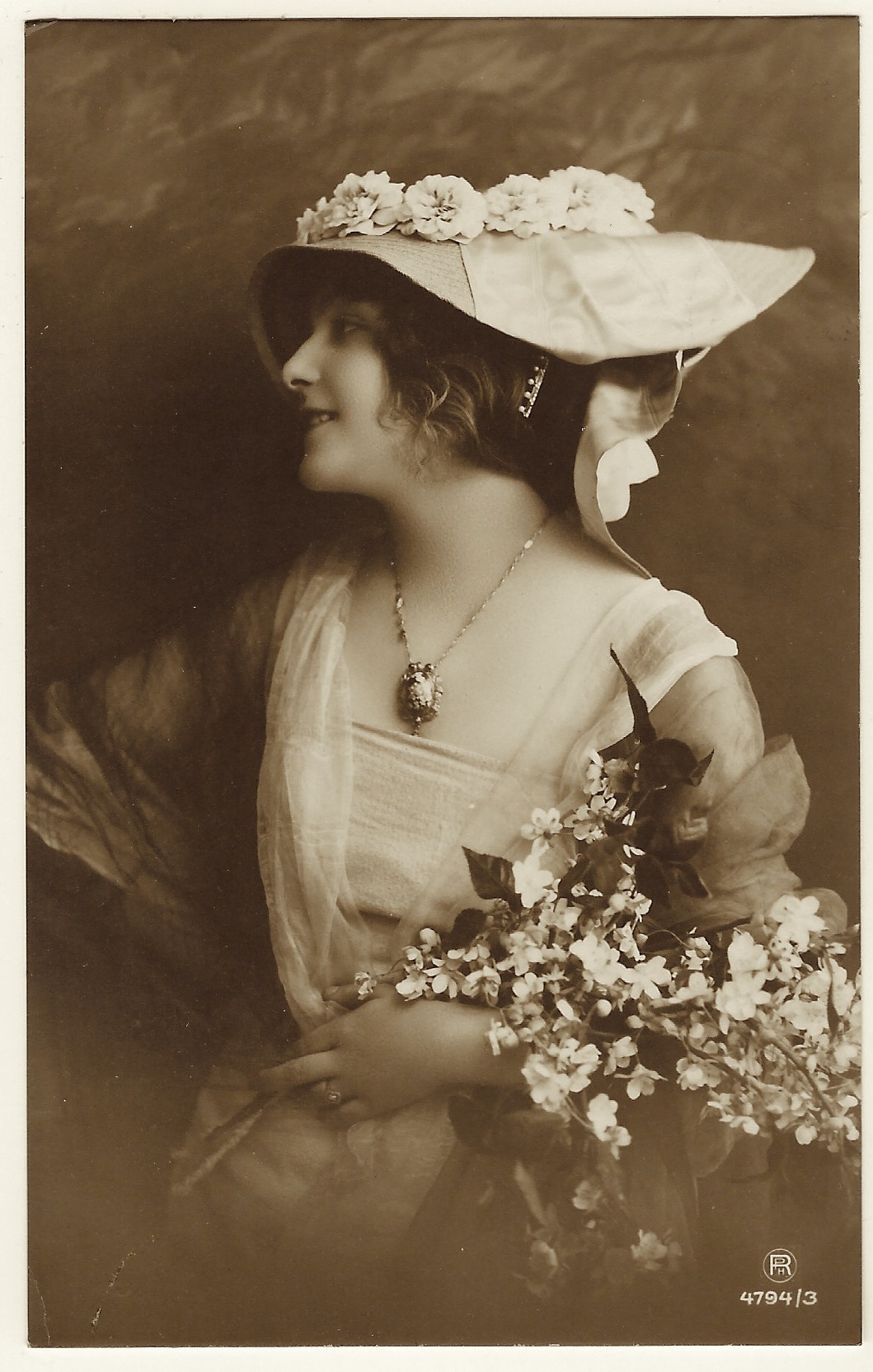
 Postcard 2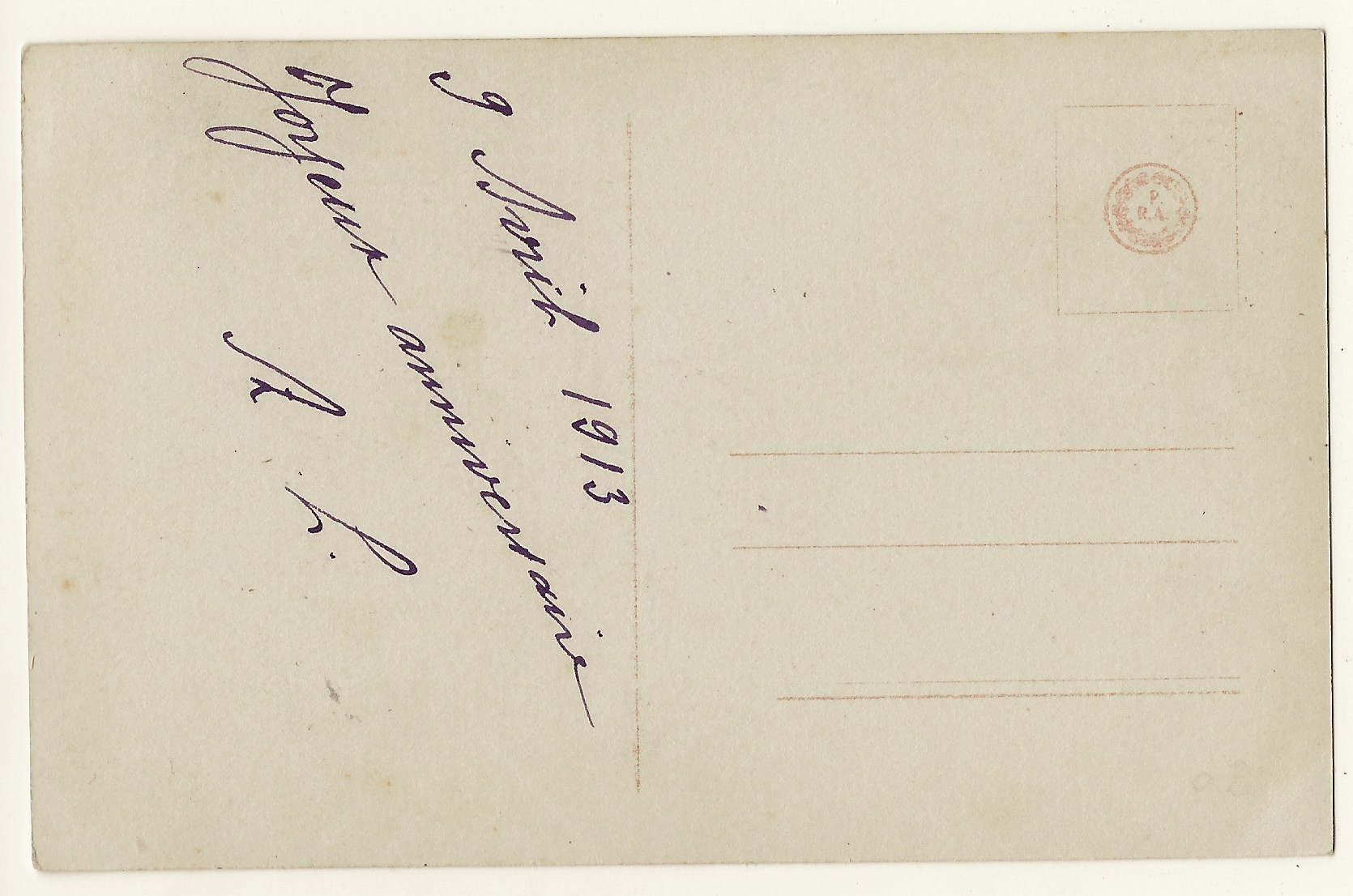
 Postcard 4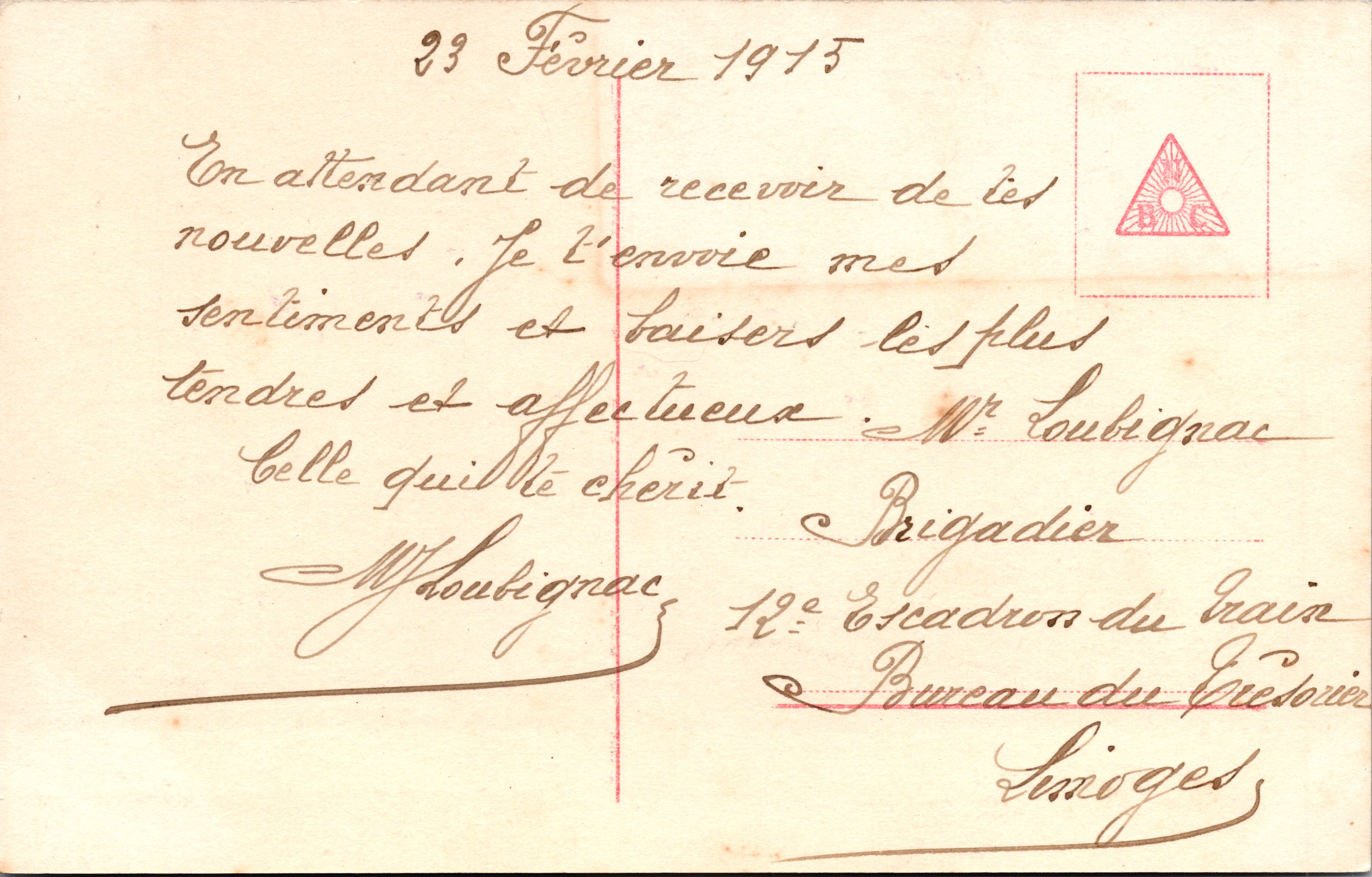



 THE CABINET CARD GALLERY