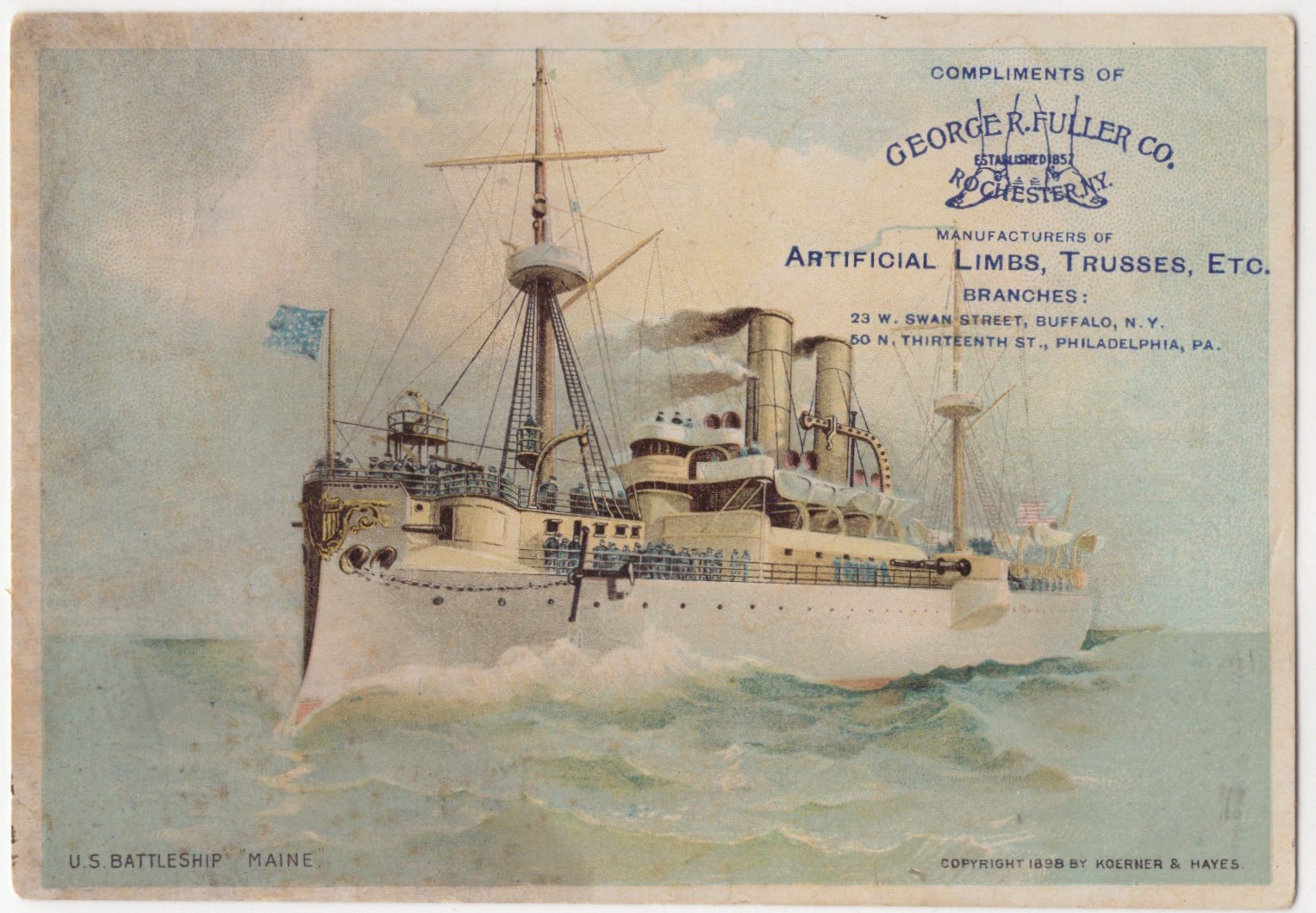
ARTIFICIAL LEGS : GEORGE R. FULLER CO : USS MAINE : ADVERTISING TRADE CARD 1898

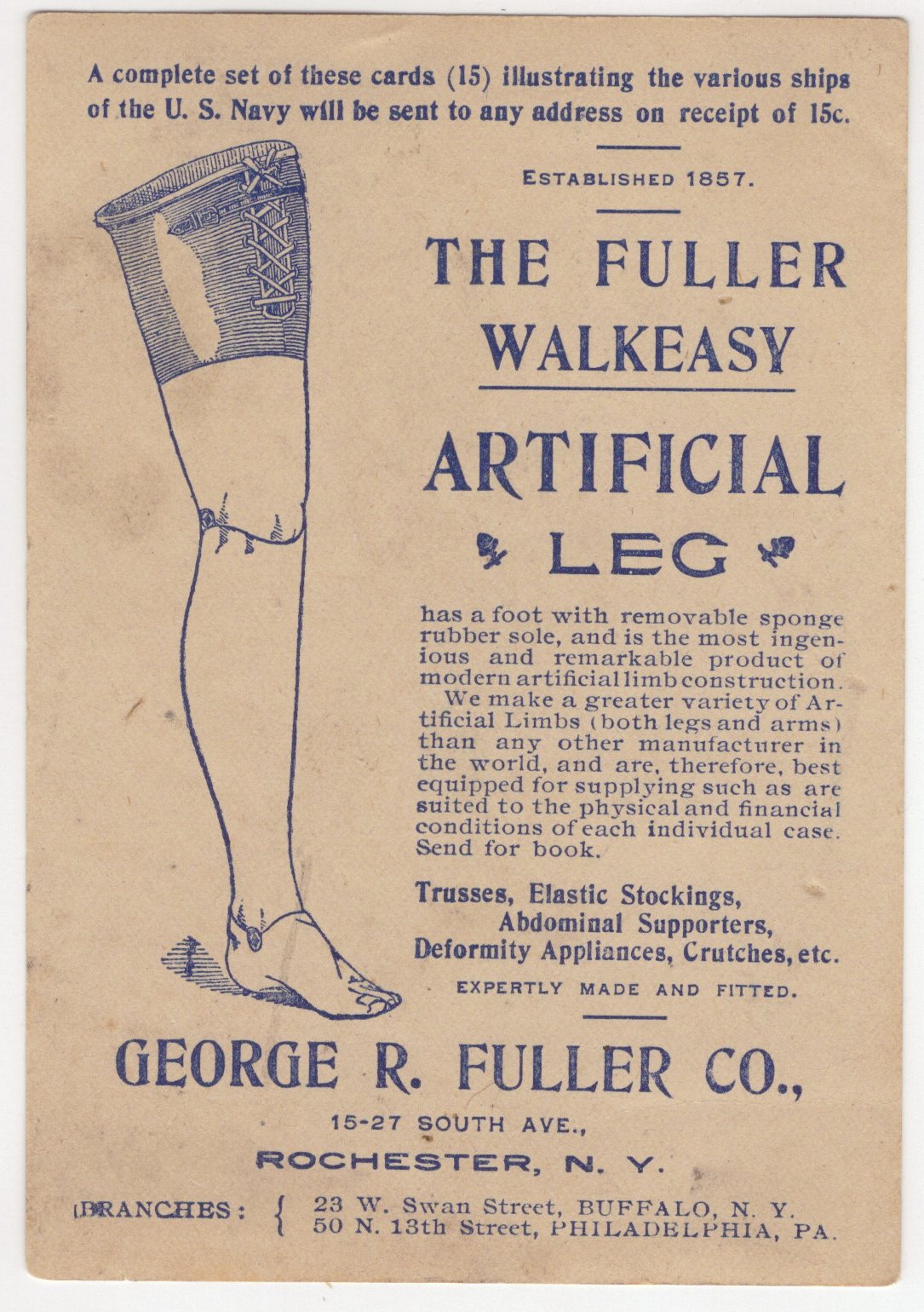
This vintage trade card advertises the George R. Fuller Co., manufacturer of Artificial Limbs, Trusses, and other products. This advertising trade card focuses on “The Fuller Walkeasy” artificial leg. The firm was established in 1857 and was located in Rochester, New York. The firm also had branches in Buffalo, New York and in Philadelphia, Pennsylvania. The company issued a set of 15 cards illustrating different ships of the US Navy. This card features the USS Maine which in early 1898, tragically suffered a massive explosion on board causing the ship to sink in the harbor of Havana, Cuba. Interestingly, this trade card has a copyright from 1898. The card was published by Koerner & Hayes.  SOLD

MRS PRESIDENT FRANCES CLEVELAND : TRADE CARD : ADVERTISING “THE BEST BREWING COMPANY” (IMAGE 1) and CABINET CARD PORTRAIT OF THE YOUNGEST FIRST LADY IN US HISTORY : BY C. M. BELL (IMAGE 2)

IMAGE 1

MRS PRESIDENT FRANCES CLEVELAND :YOUNGEST FIRST LADY :BY C M BELL : CABINET CARD 1 of 3IMAGE 2

Meet “Mrs President Cleveland”. In the era of Grover Cleveland’s Presidencies, wives were just extensions of their husbands and their names, were at times, irrelevant. Mrs President Cleveland was actually Frances Cleveland (1864-1947). Grover Cleveland served two terms as President. He was the 22nd and 24th President and the only President to serve non consecutive terms. He began his terms in 1885 and 1893. Enough about Grover, there is plenty to say about Frances. She was born in Buffalo, New York. Her given first name was “Frank”, but she feminized it later. She was named after an uncle. Her father was an attorney and was a close friend of Grover Cleveland. Cleveland met Frances when she was a baby and he was twenty-seven years old. He watched Frances grow up and showed a caring interest in her. When Frances lost her father in a carriage accident, she was only eleven years-old. Cleveland became the administrator of her father’s estate and this position put him in more contact with her. While Frances was in college, Cleveland developed romantic feeling toward her and in 1885, he proposed to her. At age 21, she was the youngest wife of a President. Frances received much attention from the newspapers and magazines of the time. Her wedding was widely covered. John Phillip Sousa led the Marine band at her wedding. Throughout her husband’s terms, many American women imitated her hairstyle and her fashion taste. The Women’s Christian Temperance Union was very critical of the way Frances dressed. They did not appreciate her baring her shoulders and wearing low cut dresses. They prepared a petition of protest which the first lady ignored. Grover and Frances had five children, three daughters and two sons. She was first first lady to give birth while her husband was President. Her first born, Ruth, died at age twelve of diphtheria. The “Baby Ruth” candy bar was named after her. Grover Cleveland died in 1908. About four years later, Frances married a professor of archaeology at her alma mater, Wells College. When World War I started, she joined the pro-war National Security League and became an officer of the organization. She created much controversy with the league when she claimed that a large segment of the American population was unassimilated and preventing the country from working together efficiently. Adding to the stir was that she recommended that school children should be psychologically indoctrinated to be in favor of the war. All this self initiated commotion caused her to resign in 1919. Frances Cleveland was no friend of the Women’s Suffrage movement. She cemented the disfavor of the movement when she said that “women weren’t yet intelligent enough to vote”. In 1913, she was elected as vice president of the “New Jersey Association Opposed to Woman’s Suffrage”. On a more politically correct note, during the Great Depression she led the “Needlework Guild of America’s clothing drive for the poor. Immediately after her wedding, the facial image of Mrs Cleveland began appearing in advertising aimed at selling various products such as sewing kits, cigars, and women’s perfume. Frances was a perfect model for companies looking to advertise. She was young, pretty, and vivacious.

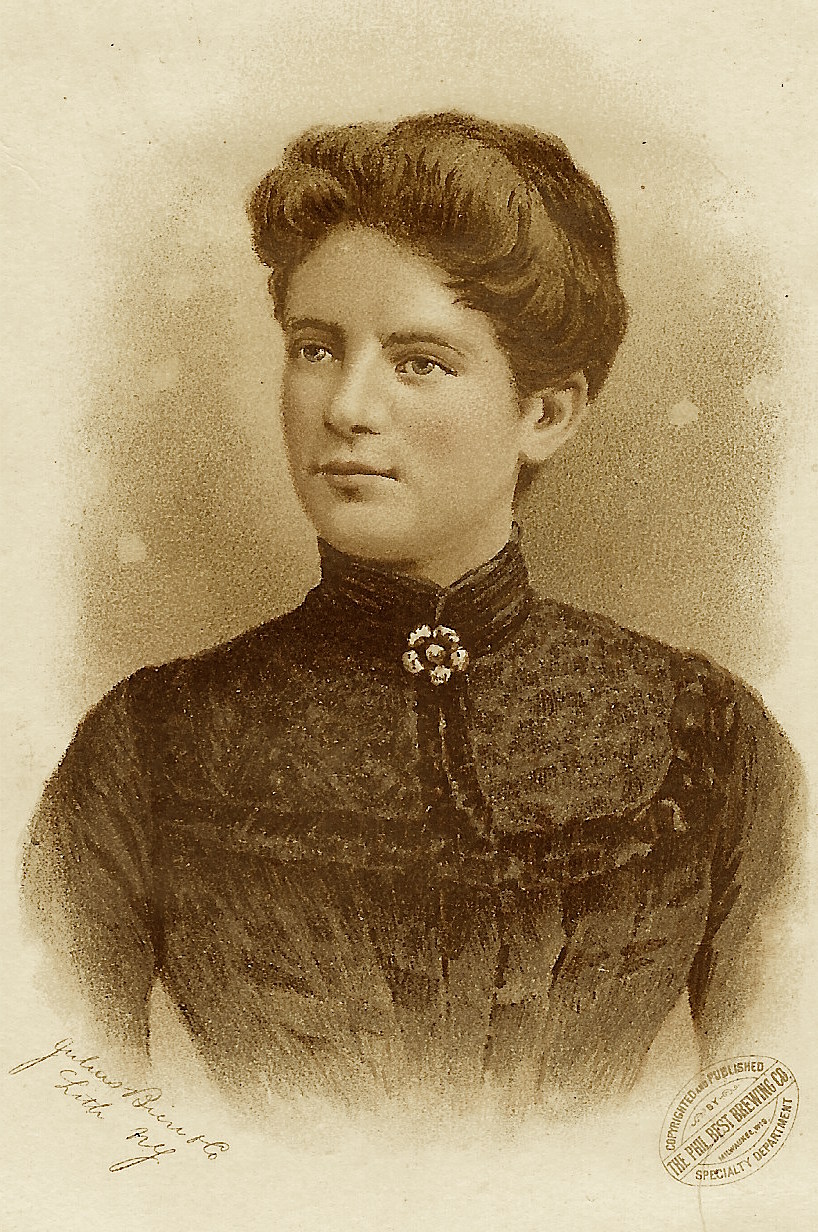
Image 1 is an example of one form of advertising employing Mrs Cleveland’s image to sell products, was trade cards, such as the one seen above. This trade card aims to sell “The ‘Best’ Tonic” which was produced by “The Philadelphia Best Brewing Company”. Advertising on this trade card declares that the brewing company will send a 19″ x 25″ portrait of Frances Cleveland to customers that send in twelve coupons from their “Best Tonic”product.  This trade card was printed by the Julius Bien (1826-1909) Lithograph Company of New York. This vintage trade card is in good condition (see scans).   (SOLD)

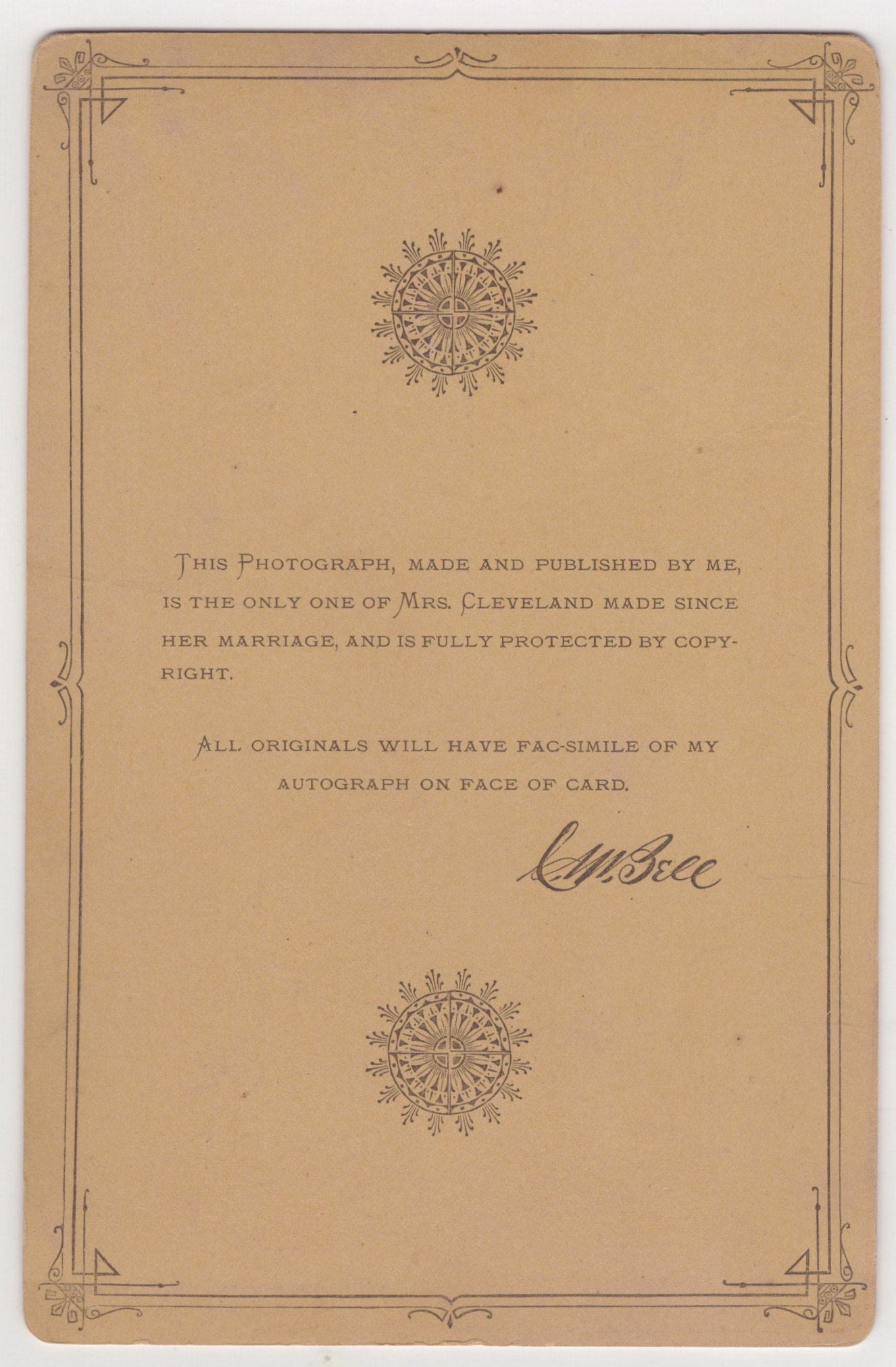
Image 2 is a cabinet card photographed by C. M. Bell.  Charles Milton Bell (1848-1893) was an accomplished man. He was the youngest member of a family of photographers that operated a studio in Washington DC from around 1860 until 1874. He established his own studio on Pennsylvania Avenue in 1873. He quickly became one of the most successful photographers in the city. He was noted for his portraits of Native Americans as well as political figures and celebrities. His subjects included President Chester Arthur, Chief Yellow Bull, and Helen Keller. His photographs can be found in many prestigious institutions including The Library of Congress, Harvard University, Dartmouth University, and the Smithsonian. Bell is also known for his photographs of President Garfield’s assassin, Charles J. Guiteau. He was the only photographer authorized by Guiteau and the Government to take photographs of Guiteau and other people playing roles in his trial. Bell also took medical photographs relating to the assassination and assassin. This cabinet card has a message from C. M. Bell. It is signed with a fascimile autograph.  (SOLD)
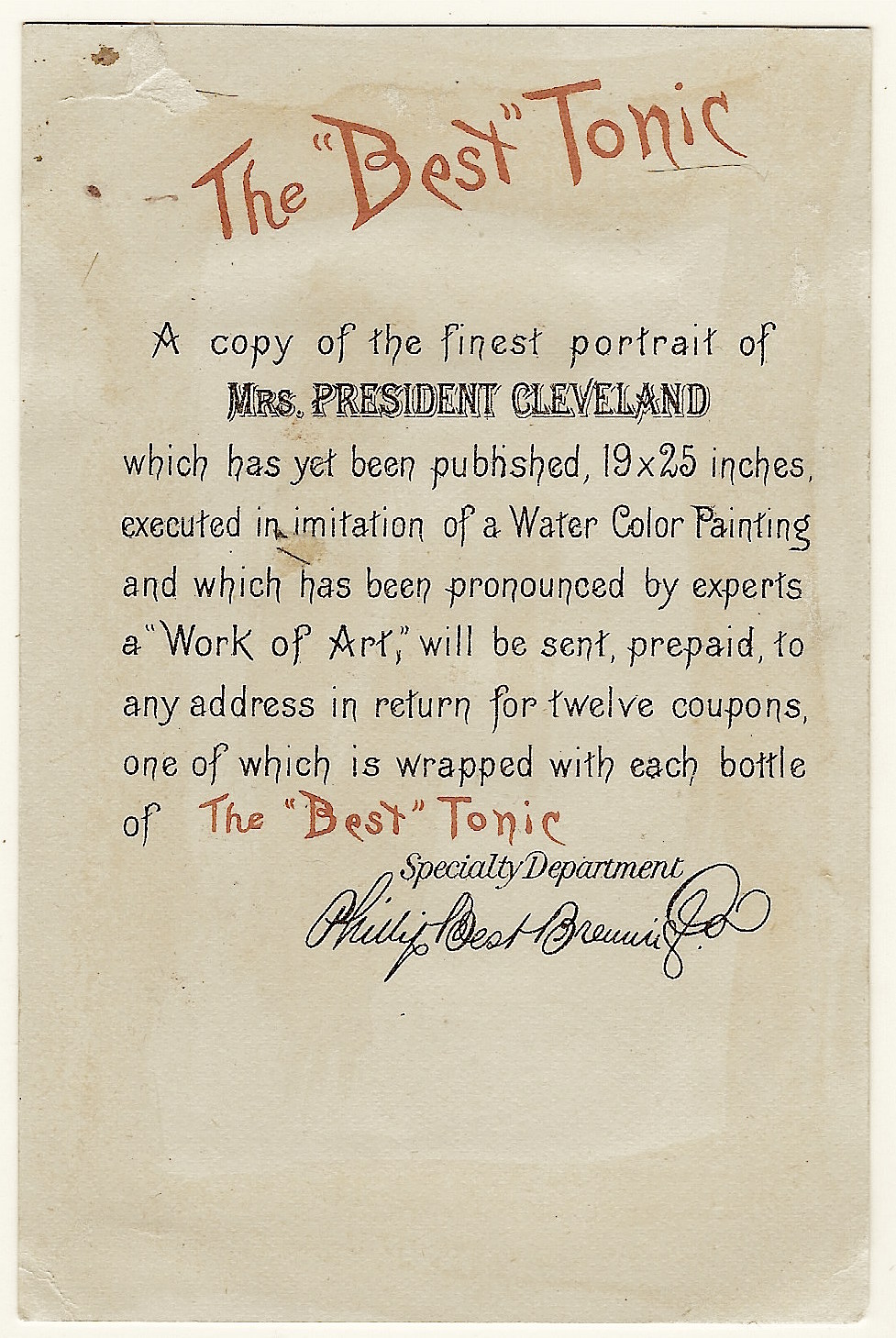
IMAGE 1 (REVERSE)

IMAGE 2 (REVERSE)

DENTIST : DR C. D. RICHEY : YORK , PENNSYLVANIA : ADVERTISING TRADE CARD 1898

This vintage trade card advertises Dr. Richey’s Dental Parlors. Dr. Richey’s practice was located in York, Pennsylvania. The advertising copy could have been written today. Dr C. D. Richey is described as a Crown and Bridge work specialist. In addition, it is claimed that his “new method” of extracting teeth is “without pain”. His secret for painless extraction is somnoforme, an anesthetic. This inhalational anesthetic was developed in 1901 by a French dental professor, Georges Rolland. Due to risk of fire risk when combined with electrosurgery, and due to false advertising claims about the product, the use of somnoforme became steadily less popular and the concoction was totally abandoned in 1931.  SOLD

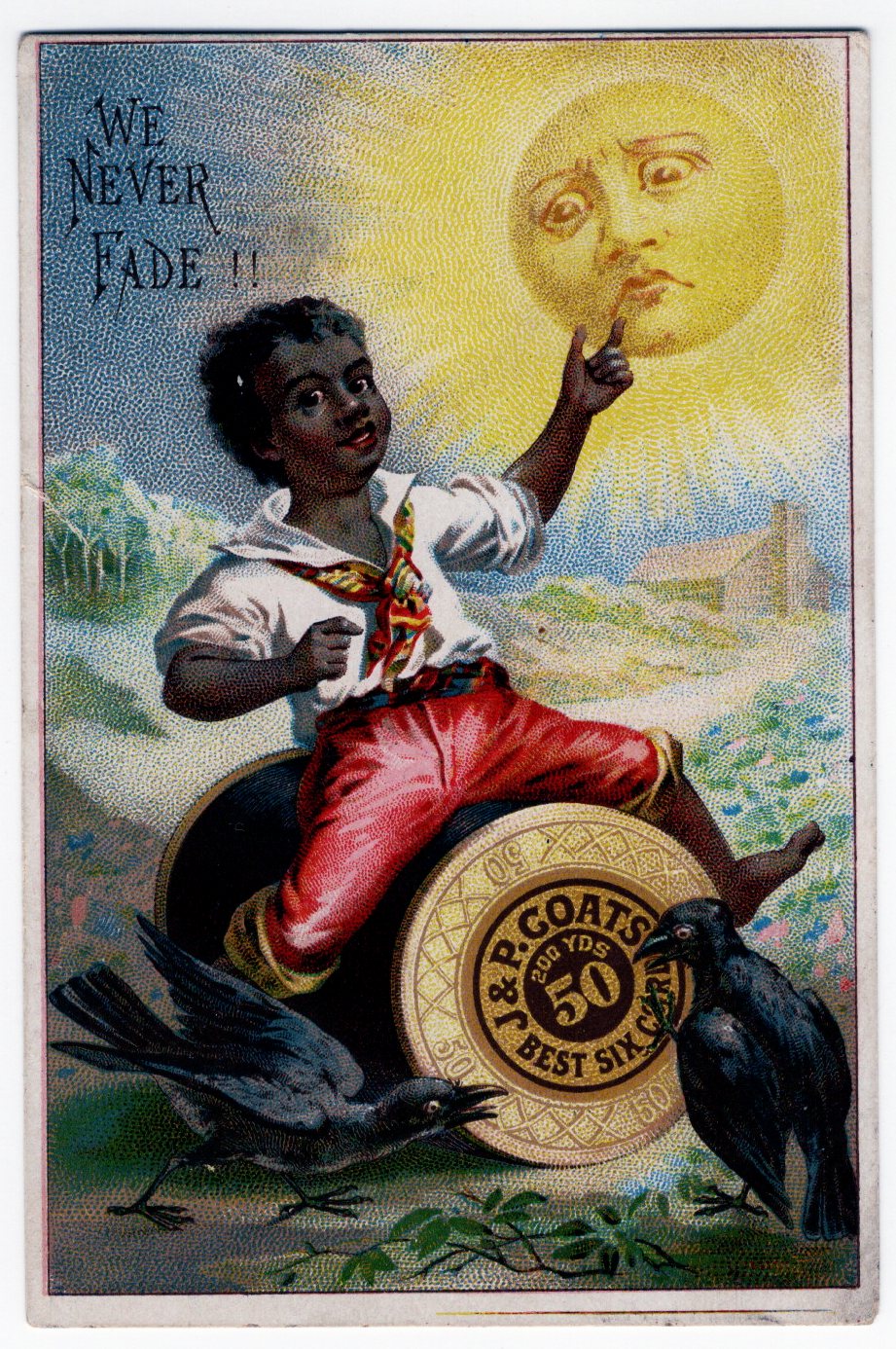
TRADE CARD ADVERTISING : J & P COATS THREADS : BLACK CHILD : CROWS : WE NEVER FADE

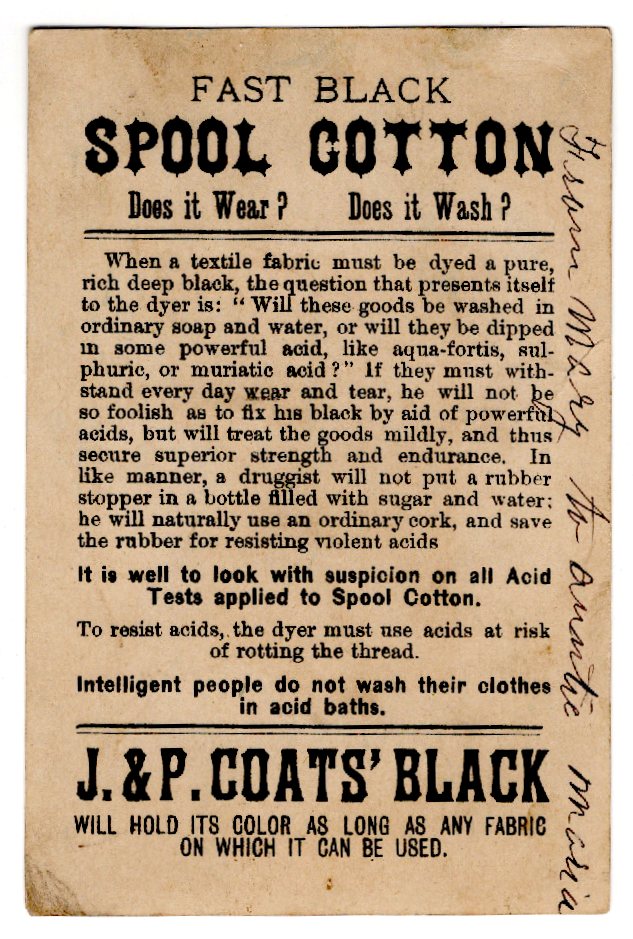
This vintage trade card advertises a major fine-thread company. Their product was effective in holding their color in the wash. In the advertising copy seen on the reverse of the card, the company insults users of their competitor’s product. The copy states “Intelligent people do not wash their clothes in acid baths”. This originally Scottish firm was established by a weaver named James Coats (1774-1857) and his brother, Patrick. The company specialized in making cotton yarns. Later, he added silk yarn to the company’s products. James Coats retired in 1830 and was succeeded by his four sons. The company began to expand their market by selling internationally. In 1866, the firm opened a mill in Pawtucket, Rhode Island where they produced a variety of threads. In the 1880’s J & P Coats opened more mills in the United States and their trade cards became popular. During the twentieth century, the company continued to expand around the world via acquisitions and mergers. Interestingly, embroidery threads are still being produced under the trade name of J & P Coats. It is important to note that this trade card’s advertising copy is unacceptably racist. The heading in front of the card states “We Never Fade”. Below this caption are pictures of a couple of black birds (crows?) as well as a picture of a black child. Obviously, the message is that the company’s black thread holds it’s color just as much as a black bird or a black child hold their own color. Understandably, such racist advertising would not pass muster today.  SOLD

SALTINA BISCUIT : NATIONAL BISCUIT COMPANY : UNEEDA BAKERS : TRADE CARD

This trade card is advertising Saltina Biscuits made by the National Biscuit Company. Appearing on the card is the company’s slogan, “Uneeda Bakers”. The first name-brand saltine cracker was introduced in 1876. The Nabisco Company was known for its advertising slogan “Polly wants a cracker?” Note that this advertising piece is not printed on card stock paper. Instead, it is on thin stock paper. This trade card was a premium that customers could send off to the company and receive a free booklet which provided suggestions of how to use “Uneeda Bakers” products in “choice recipes”. This advertising premium has vivid colors. This advertising item measures about 4″ x 2 1/2″. (SOLD)

Published in: on October 18, 2022 at 12:00 pm  Leave a Comment  
Tags: , , , ,

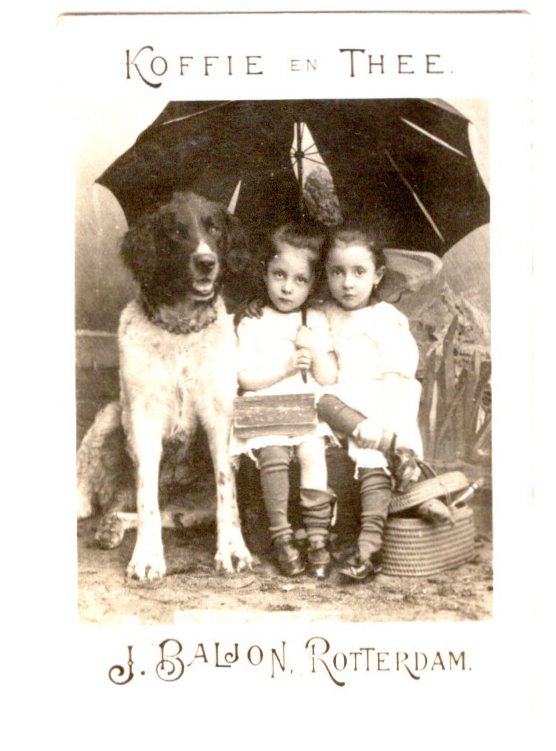
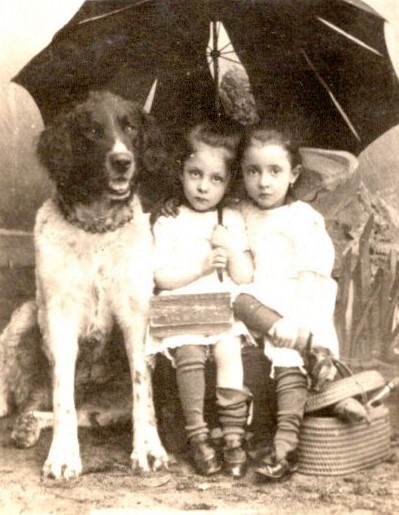
TWO ADORABLE LITTLE GIRLS : BIG DOG : MINI TRADE CARD ADVERTISING COFFEE AND TEA

This mini trade card is advertising J. Baldon coffee and tea. The company was located in Rotterdam, Netherlands. The card features two adorable young girls sitting under an umbrella alongside their large dog. The dog dwarfs them in size.  Note that this advertising piece is not printed on thick card stock paper. Instead, it is on thinner stock paper. This trade card was a premium that likely accompanied the purchase of one of Baldon’s products. This advertising item measures about 1.5″ x 2 25″. (SOLD)

Published in: on July 5, 2022 at 12:00 pm  Leave a Comment  
Tags: , , ,

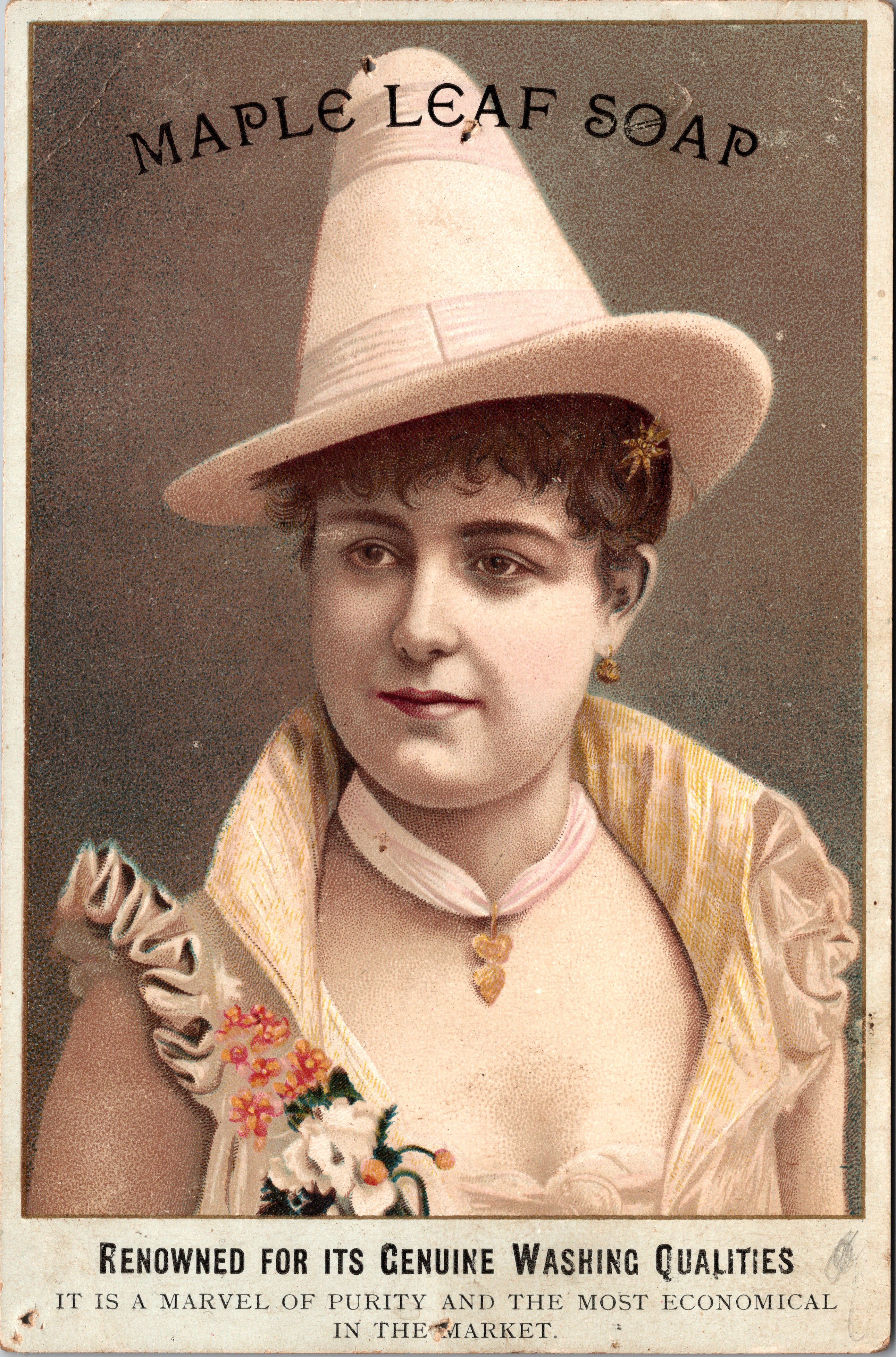
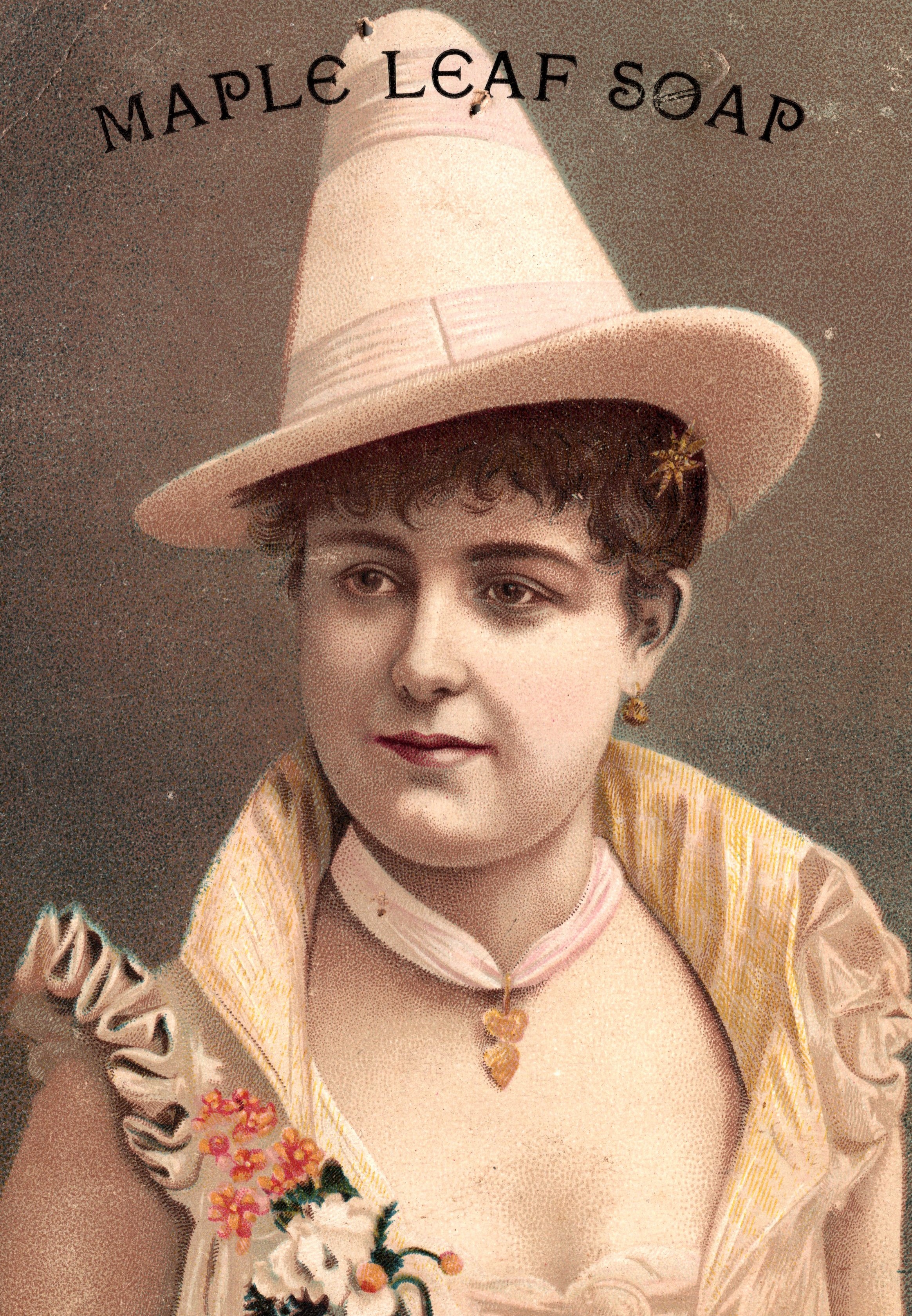
MAPLE LEAF SOAP : MARVEL OF PURITY : LARGE TRADE CARD

This large sized trade card is advertising Maple Leaf Soap. The ad calls the soap “a marvel of purity”. This advertising premium has vivid colors. The card measures about 4.125 x 6.375 inches.  SOLD

Published in: on January 28, 2022 at 12:00 pm  Leave a Comment  
Tags: ,

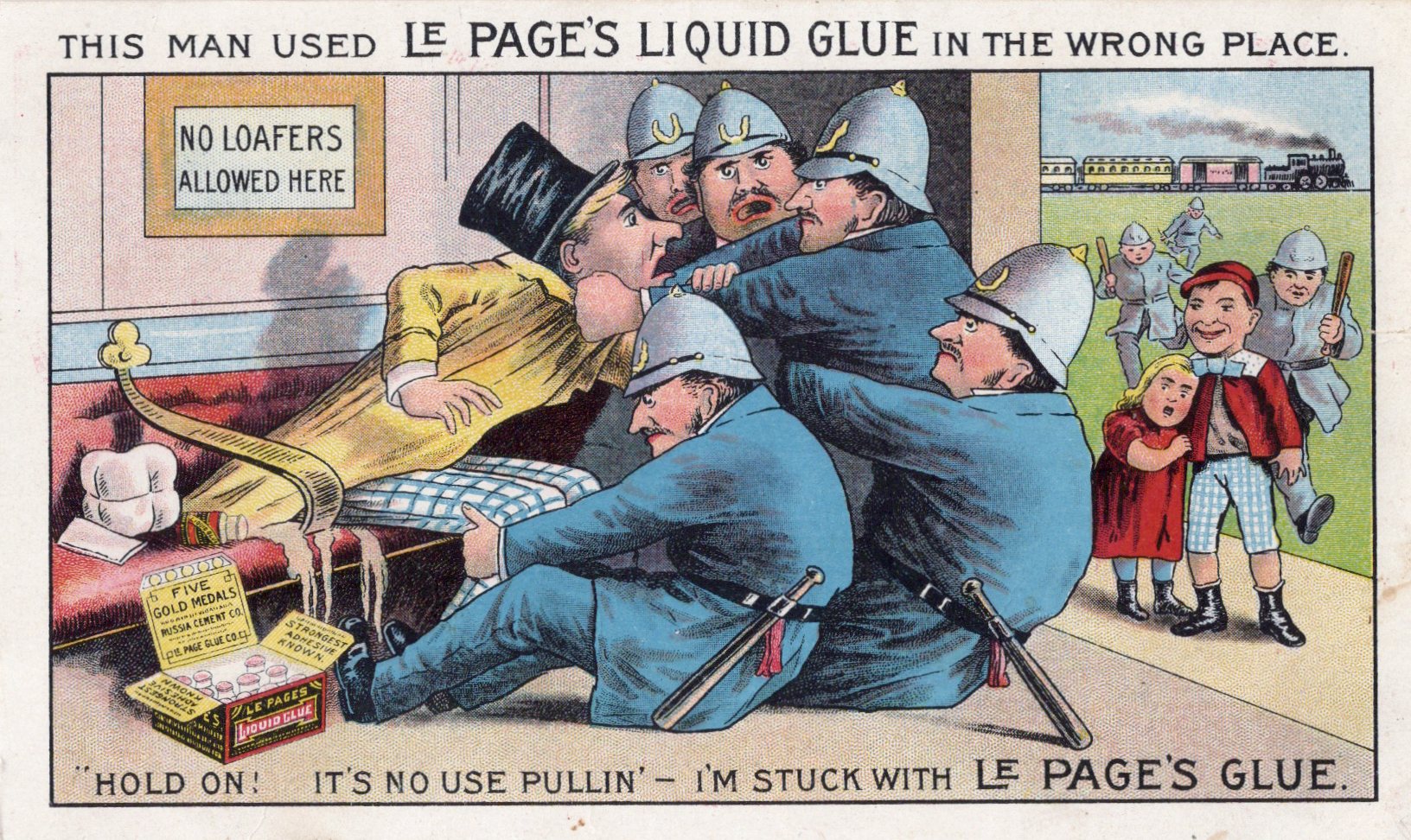
LE PAGE’S LIQUID GLUE : HUMOROUS ADVERTISEMENT : TRADE CARD

This vintage trade card advertises Le Page’s Liquid Glue. The ad takes a humorous approach. It shows a poor gentleman who has accidentally glued himself to a bench. Worse yet, he is in a “no loafing” zone. This glue is portrayed as so powerful, that not even five policemen can get him unstuck. Le Page’s Liquid Glue was manufactured by the Russia Cement Company of Gloucester, Massachusetts. The company was started by William Nelson Le Page (1849-1919). The firm was established in 1876. This lithograph trade card is a nice one. It’s very detailed and very colorful. The colors are quite sharp. There are a number of variants of this card. This trade card is in very good condition (see scans). SOLD

DENTIST TRADE CARD : LANCASTER, PENNSYLVANIA : IMPRESSIVE ADVERTISEMENT

This vintage trade card is an advertisement for “Albany Dentists”. The practice was located in Lancaster, Pennsylvania. Albany Dentists was managed by Dr. N. A. Becker. The advertising copy on this trade card is very astute and interesting. The advertisement counters many of the objections people have about going to the dentist. The card states that “Teeth Extracted Positively Without Pain”. To counter women’s concerns about safety, the trade card asserts that there is a “Lady in Attendance”. For fearful patients, the advertisement states “Special Attention given to the Weak and Nervous”. Note the prices printed on the reverse of the card. An extraction cost twenty-five cents. A set of teeth only cost $5.50. Research discovered that there was a Dr. M. A. Becker that practiced dentistry in Lancaster. His full name was Dr. Michael Augustus Becker (1866-1938). It is very likely that the “N. A.” seen on the trade card is a misprint. This trade card was printed by the Calvert Lithograph Company (Detroit, Michigan). The firm was established in 1863. SOLD

Published in: on September 12, 2021 at 9:33 pm  Comments (1)  
Tags: , ,

ADELINA PATTI SINGS THE PRAISES OF THE CHICAGO CORSET COMPANY (TRADE CARD)

corset

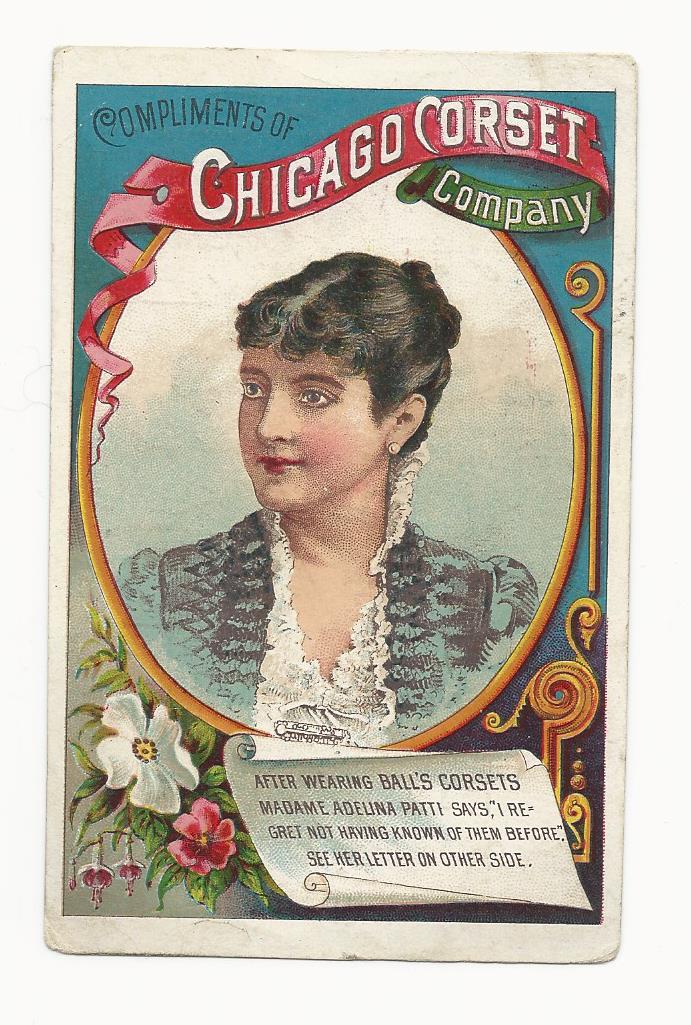
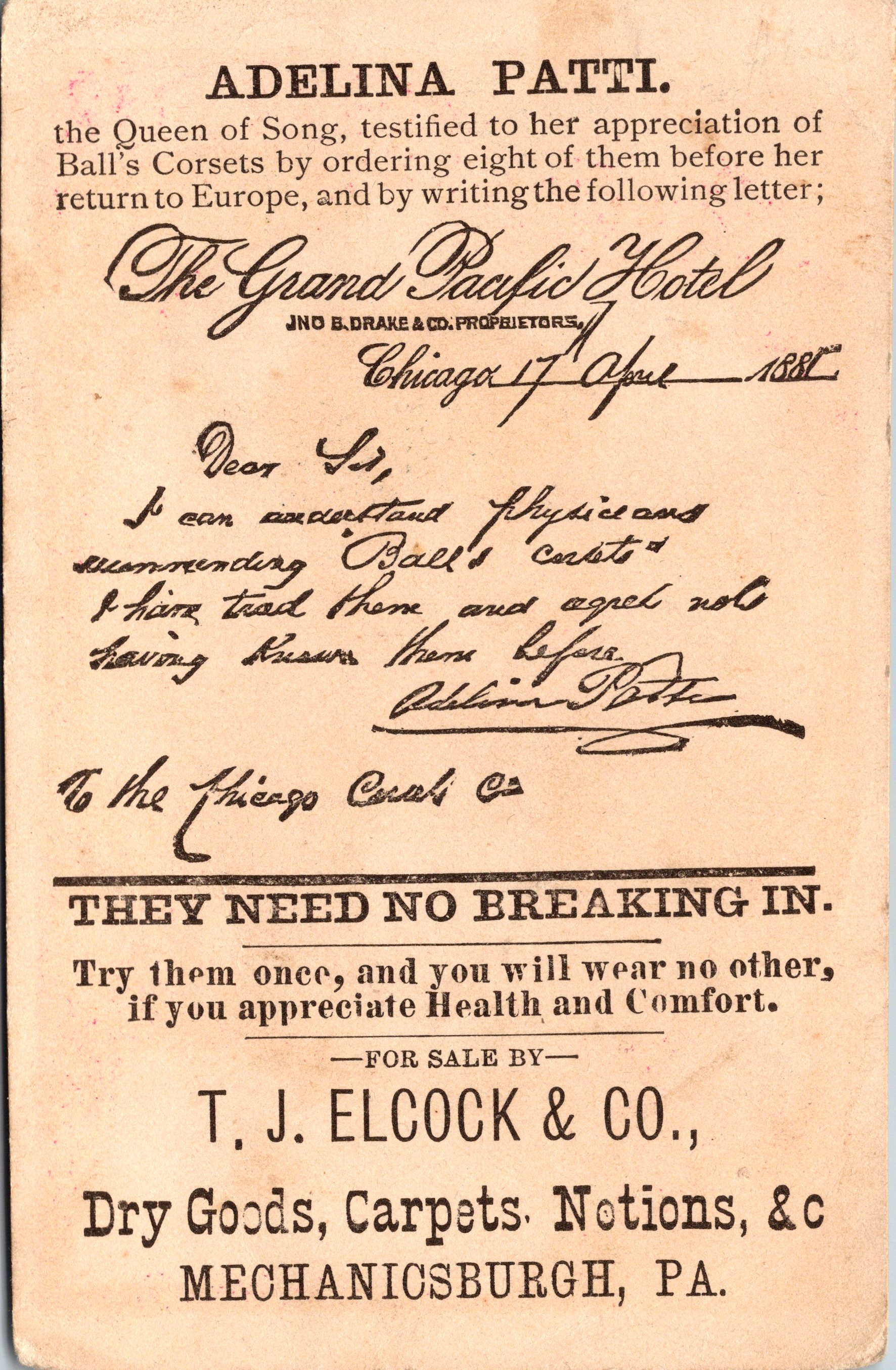
This item is a vintage trade card advertising corsets for the Chicago Corset Company. The card dates back to the 1880’s. The wasp waisted women seen in a number of the photographs of the cabinet card era, didn’t get that way from going to Jenny Craig and the gym. Their secret weapon was wearing a corset. This trade card utilizes a “celebrity spokesperson”.  Adelina Patti, a famous opera singer, sings the praise of Ball’s Corsets which were manufactured by the Chicago Corset Company of Aurora, Illinois. She ordered eight corsets and testified that she wished that she had known about them sooner. The company advertising on the card brags that “they need no breaking in” and that they provide “health and comfort”. This particular trade card is also advertising the T. J. Elcock & Company which was a Dry Goods, Carpet, and Notions store in Mechanicsburgh, Pennsylvania. Here is a little information about the Chicago Corset Company, The business is cited in Robin Shepard’s “The Best Breweries and Brewpubs of Illinois (2003). The author writes that in the late 1800’s and early 1900’s Aurora was considered the corset capitol of the world. There were at least three corset companies operating their factories there and one of the largest was the Chicago Corset Company. In fact, I read elsewhere, that the company was the second largest corset company in the world. At one point, the business employed 600 people and produced 2 million corsets a year. The word “corset” began to be used in the English language in about 1828. “The Ladies Magazine” described it as a “quilted waistcoat”. The primary reason for using corsets was to slim the body and help it conform to a fashionable silhouette. Generally speaking, the corset reduces the waist and exaggerates the bust and hips. Apparently there were “overbust corsets” and “underbust corsets”. Sometimes, corsets were used for medical or for fetish purposes. I’ll refrain from elaborating about the medical and fetish purposes and leave detailed explanation to your imagination. The corset company’s spokesperson on this trade card is Adelina Patti (1843-1919). She was a celebrated 19th century opera singer who earned a great deal of money for her performances at the height of her career. She sang in both Europe and America and is probably one of the most famous sopranos in history. She was born in Madrid. Her father was tenor Salvatore Pattie and her mother was soprano Caterina Barilli. Her parents were Italian and she grew up in the Bronx, New York. She sang professionally from childhood. At sixteen years of age, she made her operatic debut at the Academy of Music in New York City. At age eighteen she began performing in Europe. She later performed “Home Sweet Home” for President Lincoln and his wife shortly after the death of their son, Willie. The bereaved parents requested an encore. She was associated with the song for her entire career. In her prime, Adelina Patti demanded to be paid five thousand dollars a night. She asked to be paid in gold, prior to each performance. She demanded top billing and that her name be in bigger font than others in the company. She also demanded that she not be obligated to attend rehearsals. Did someone say, DIVA? It was reported that she trained her parrot to say “Cash, Cash”. Be sure to look below to see some interesting images pertaining to corsets as well as an image of Miss Patti.   (SOLD)                   

Adelina Patti
Corset Shop Window
Polaire was famous for her tiny, corseted waist, which was sometimes reported to have a circumference no greater than 16 inches (41 cm)
A woman models a corset in this 1898 photograph.

004

Brooklyn Museum Costume Collection at The Metropolitan Museum of Art